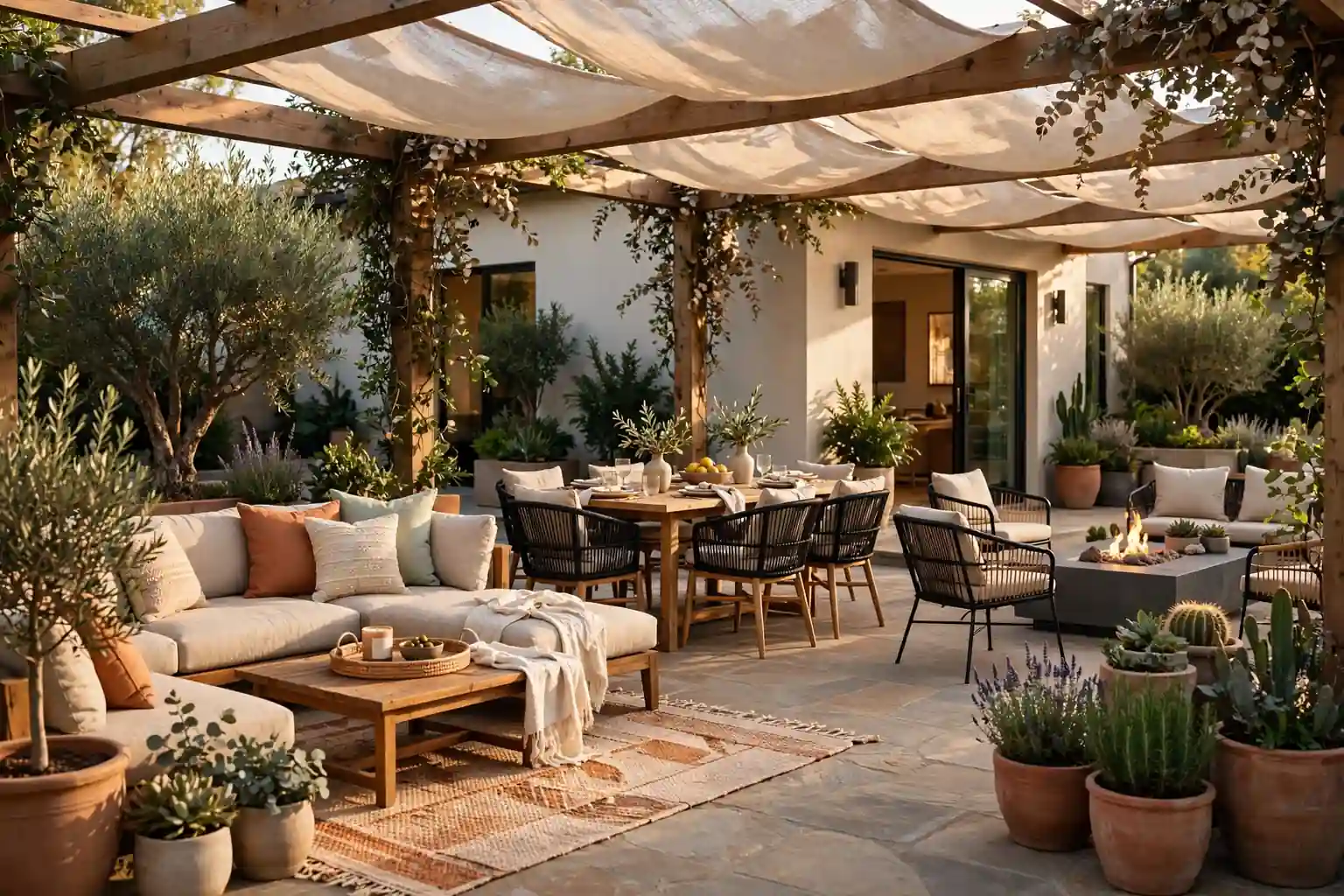
Outdoor patio seating works best when you match the seat to the space and the way you use it: a lounge set for relaxing, a dining set for meals, and one or two movable chairs for small patios. Start with a rug and shade, add weatherproof cushions, then leave room to walk around each seat with ease.
The 21 ideas below cover large patios, narrow balconies, and everything between, so you can pick one seating group for your main use and add a second spot for quiet mornings or evening gatherings. The same layered approach that makes a fall front porch decor plan feel inviting works outdoors too, with cushions and light swapped by season as in exterior decorating for fall.
Key Takeaways
- Match the seat to the main use first: lounging, dining, or gathering around a fire.
- Measure the patio and leave a clear walking path around every chair and table.
- Choose outdoor rated frames and fabrics, or bring cushions indoors in rain, so seating stays tidy.
- Anchor each seating group with a rug, and add shade with an umbrella, pergola, or nearby tree.
- Repeat two or three colors across cushions, throws, and planters so separate seats read as one plan.
- Add movable pieces, such as poufs or folding chairs, so the patio can flex for guests.
1. Deep Seat Lounge Sofa Set
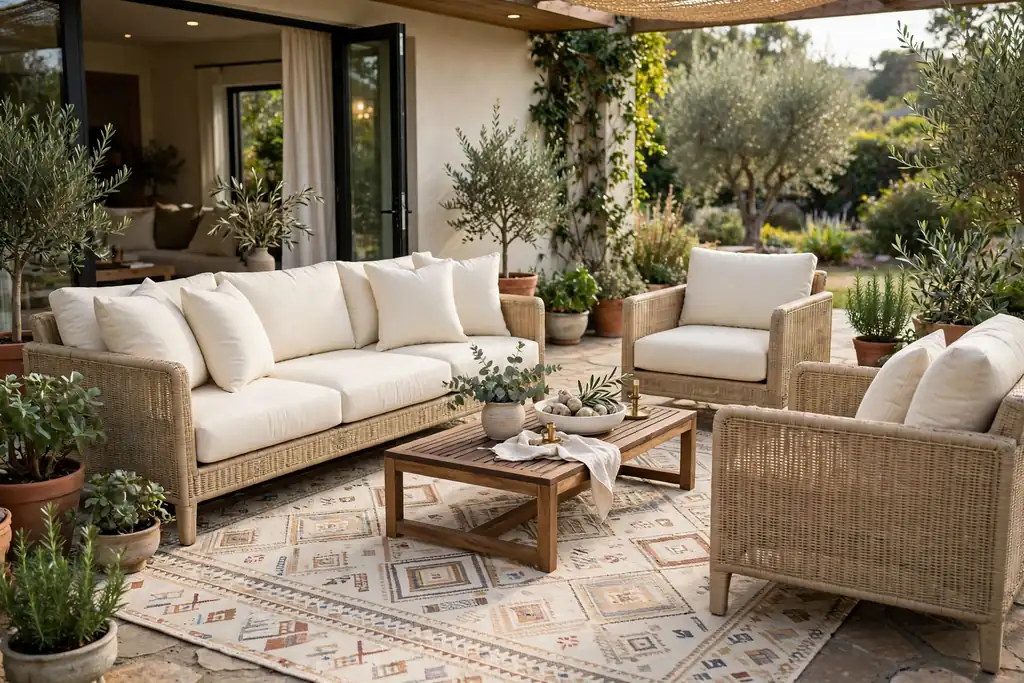
A deep seat lounge sofa set gives a patio the feel of an outdoor living room. A three seat sofa with two matching armchairs and a low coffee table suits a large patio, with thick cushions that invite long sits. Set the group on a flat rug, facing the garden or the best view, and leave room behind each chair for easy movement.
Choose frames in teak, powder coated metal, or all weather wicker, and cushions with removable, washable covers. If your patio is partly uncovered, pick quick dry foam fills or bring cushions indoors at night. Add a small side table at each end so drinks and books always have a place.
2. Wicker Armchairs with a Side Table
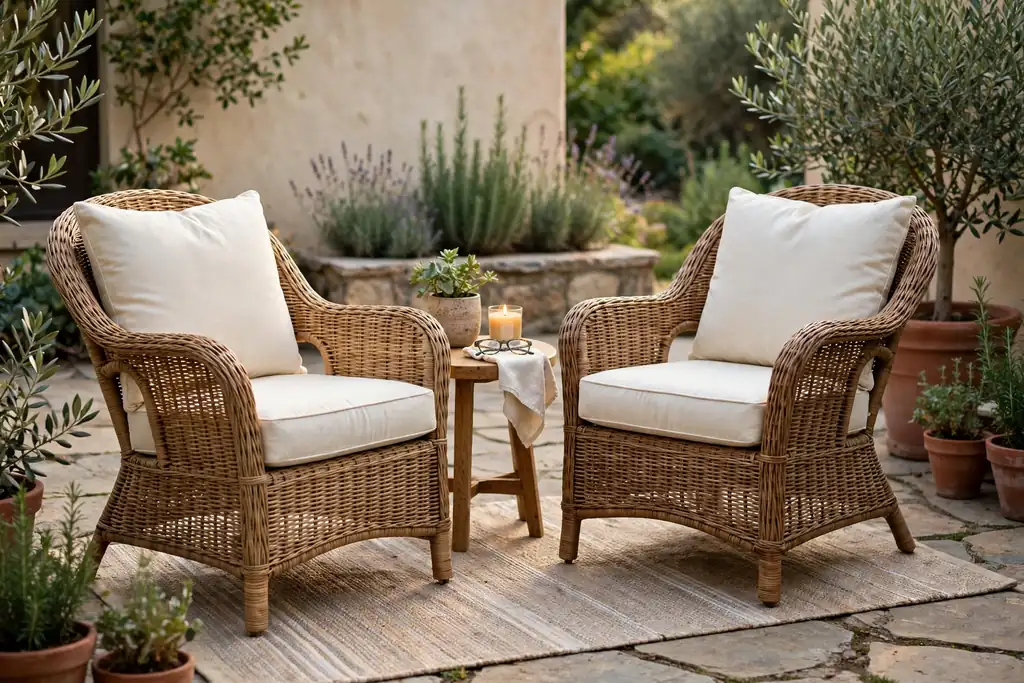
Two wicker armchairs with a small side table make a simple conversation spot that fits most patios. Place the chairs at a slight angle toward each other, close enough for easy talk, with the table between them for drinks. The woven texture warms stone and concrete patios without a large furniture purchase.
Pick cushions in one calm color, such as cream or sage, and add a folded throw over one chair arm for cool evenings. If the chairs sit in full sun, choose fade resistant fabric and rotate the cushions weekly so color wear stays even. This pair also works as a second seating spot beside a larger dining group.
3. Adirondack Chairs Around a Fire Pit
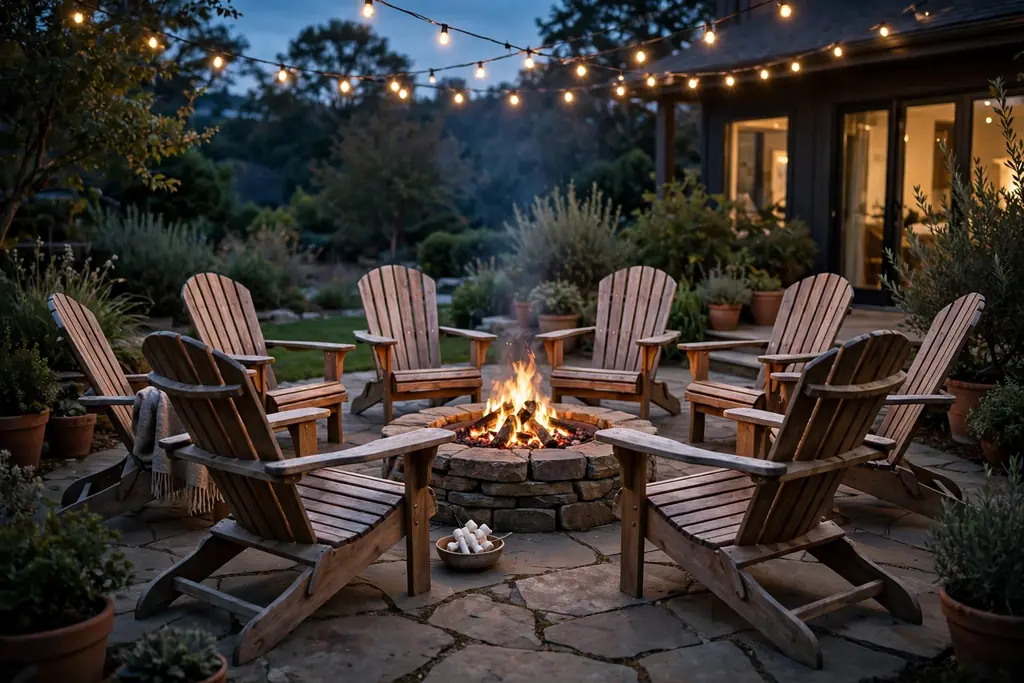
Adirondack chairs around a fire pit turn a patio corner into a gathering place after dark. Set four to six chairs in a loose ring, with enough space between them for a small side table or a footrest. The wide arms hold drinks, so no extra table is needed, and the low, reclined seat suits long evenings.
Check local rules for open flames before lighting a fire, and keep cushions and throws clear of sparks. If the chairs sit on grass, set each leg on a flat stone so they stay level. Wood chairs need an annual oil or seal coat, while molded resin versions need only a wash each season.
4. Metal Bistro Set for Small Patios
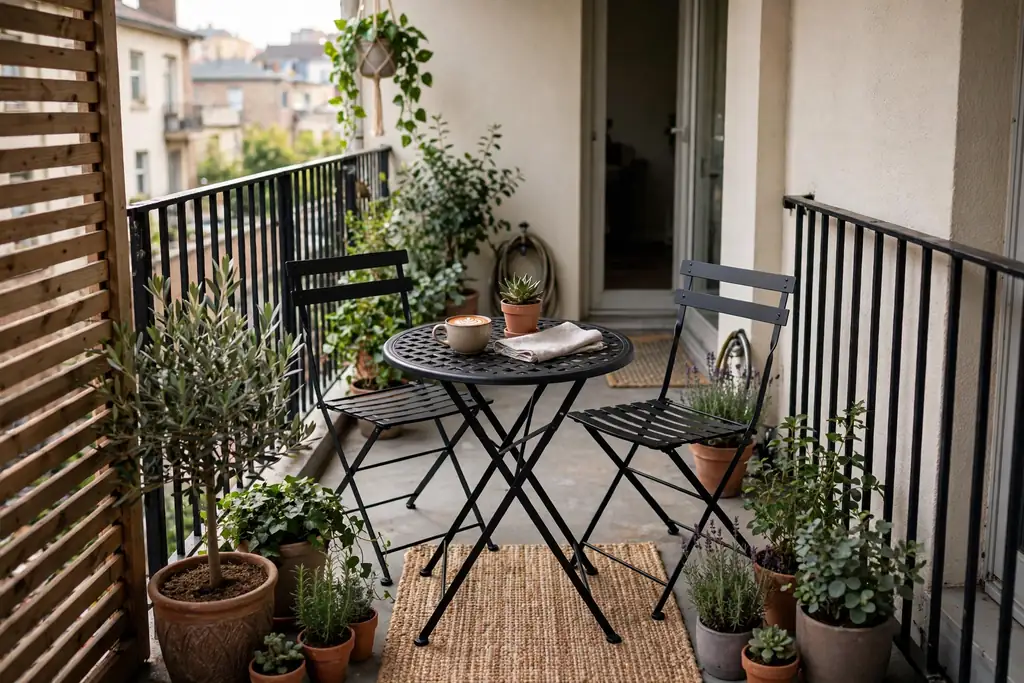
A metal bistro set with two chairs and a small round table fits balconies and narrow patios that cannot hold a full lounge group. Tuck the set into a sunny corner or beside a door, and fold the chairs flat when the space must serve another purpose. The light frame moves with ease, so you can chase shade through the day.
Choose a set with a stable base that does not wobble on uneven pavers, and add one thin seat pad per chair for comfort. If wind is a problem, pick heavier cast metal rather than thin tubular frames. A bistro set also suits a side yard nook where a single chair and table are all the space allows.
5. L Shaped Outdoor Sectional
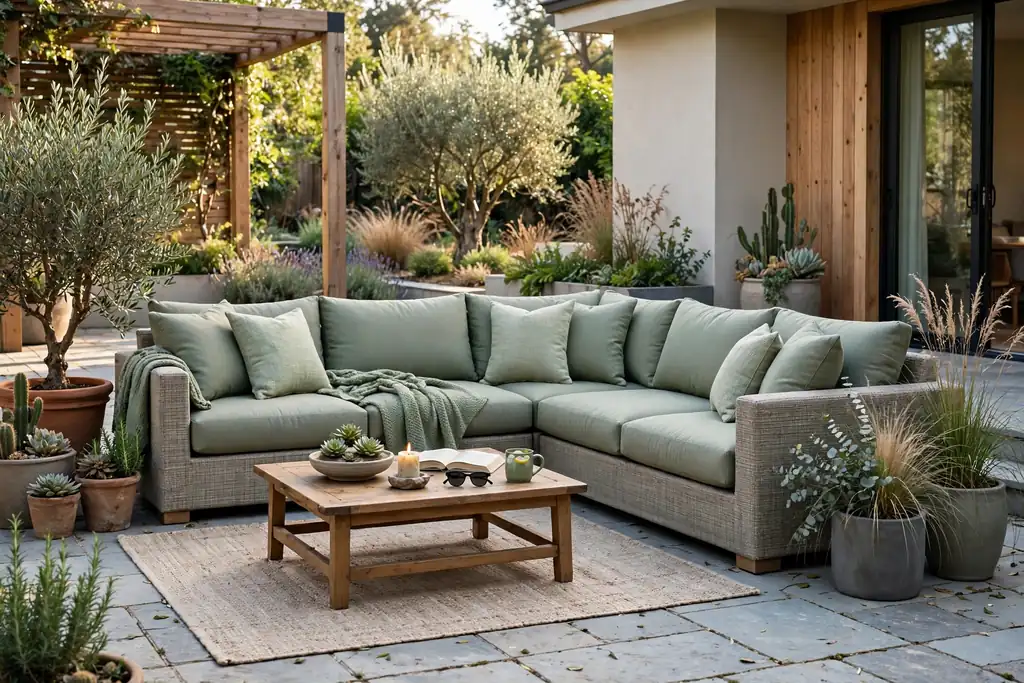
An L shaped outdoor sectional seats a crowd without a room full of separate chairs. Place the long side against a wall or railing, with the short side facing the garden, and add a coffee table or ottoman in the bend. The corner seat becomes the natural spot for reading, while the rest of the sectional serves guests.
Measure the corner carefully before buying, since sectionals are hard to return once delivered. Leave at least two feet of walking space on the open sides, and choose a modular set if you want to split it into a sofa and chaise later. Store loose cushions in a deck box overnight in wet weather.
6. Hanging Egg Chair for One
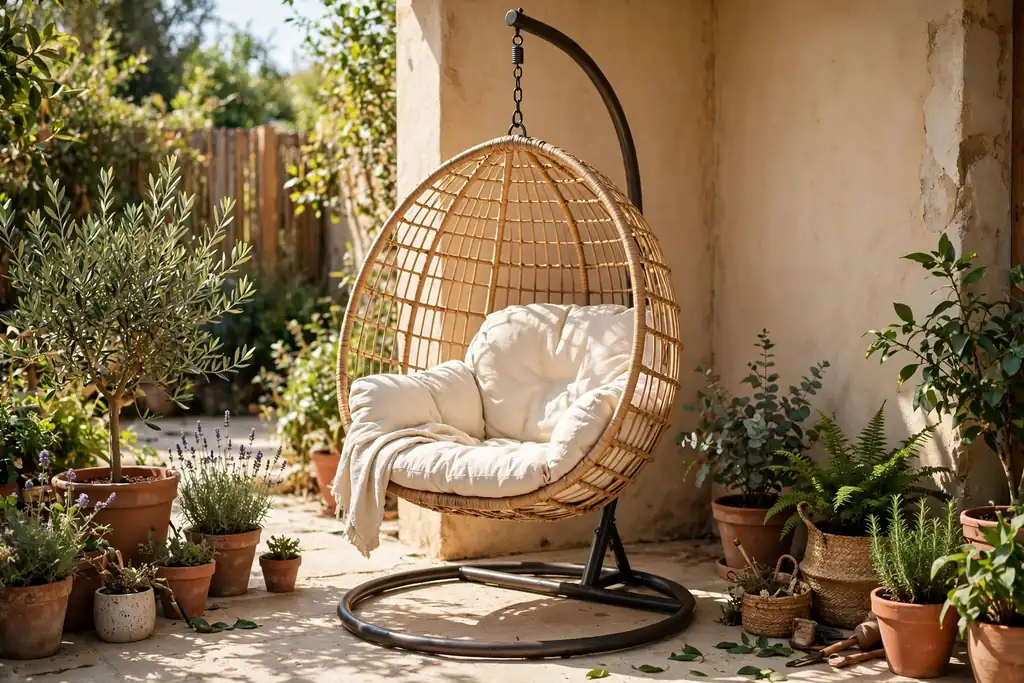
A hanging egg chair gives one person a sheltered, swinging seat on a patio of any size. Hang it from its own stand on a flat surface, with room to swing forward and back without hitting a wall or railing. The curved frame feels private, which suits a reading corner or a quiet morning coffee spot.
Check the weight rating of the stand and chair before use, and place the chair where the base sits fully on solid ground. Add a seat pad and one lumbar cushion, since the curved seat can feel deep without them. If the chair sits outside the roof line, bring the cushion indoors in rain to keep it fresh.
7. Wooden Bench with Cushions
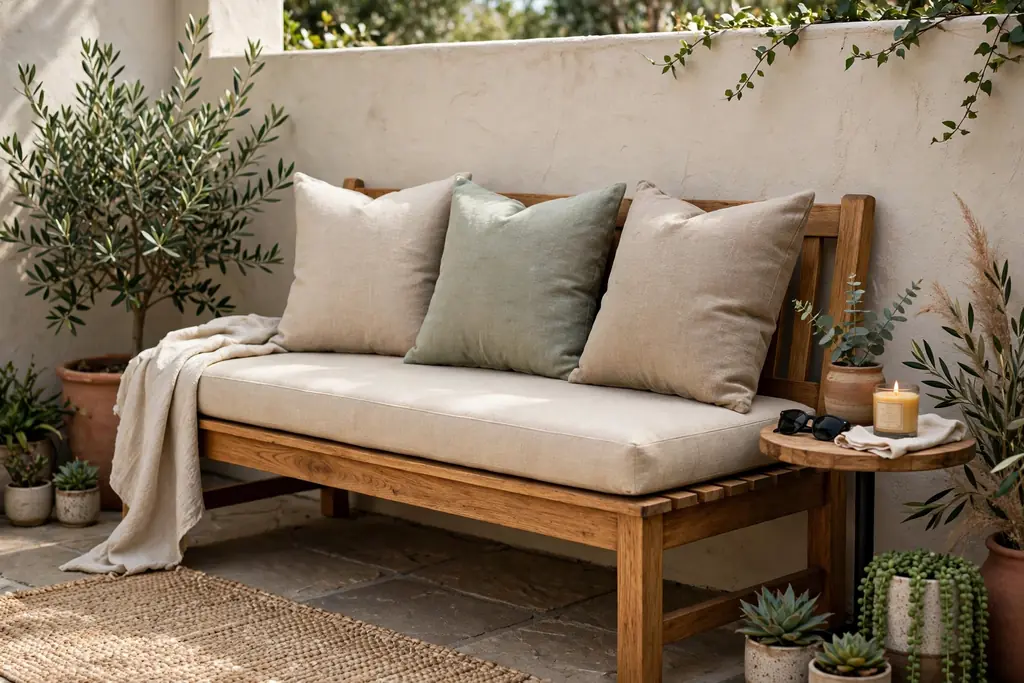
A wooden bench with cushions seats two or three people along a patio edge or under a window. Set the bench against a wall or fence, add a long seat cushion and two or three back cushions, and pair it with a small table for drinks. The straight shape suits narrow patios where armchairs would crowd the path.
Pick a bench in teak, cedar, or powder coated metal, and seal wood each year to slow weather wear. If the bench sits on soil, set its legs on flat stones so they stay level and dry. A bench with a lower shelf or open space below also holds baskets for cushions and throws.
8. Freestanding Hammock for Lazy Afternoons
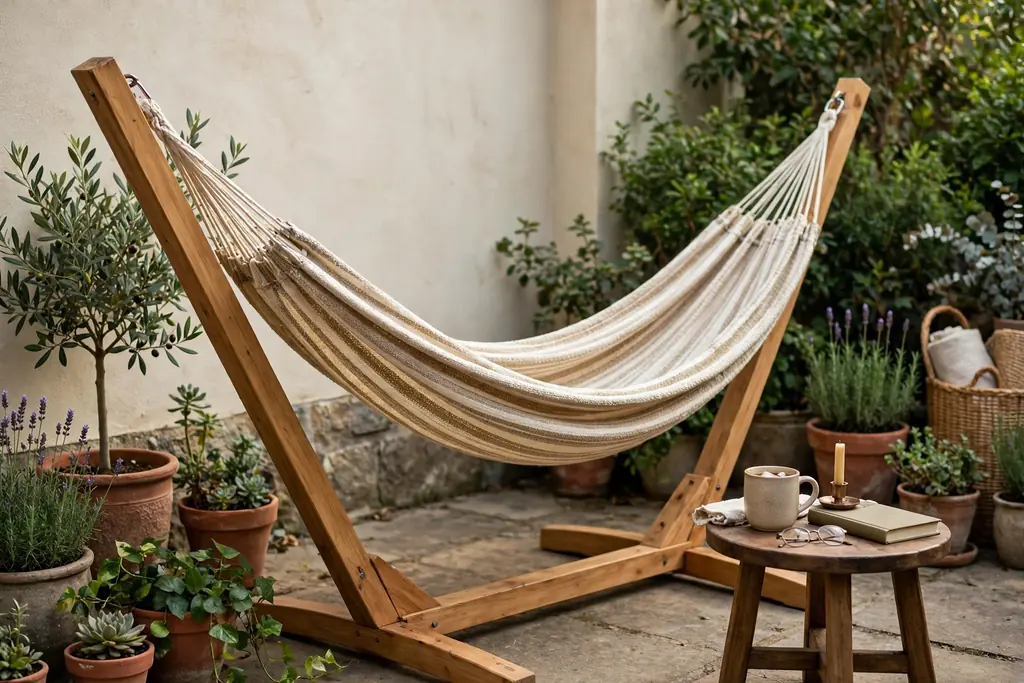
A freestanding hammock gives a patio a lazy, open air seat that needs no trees. Set the stand on level ground away from the main walking path, and hang the hammock with a gentle sag so it cradles rather than pulls tight. One hammock suits a side yard or a quiet patio corner where naps and reading are the point.
Choose a fabric hammock for softness, or a rope style for airflow on hot days, and test the hang height so getting in and out feels safe. Bring the fabric indoors in storms and over winter to extend its life. A hammock pairs well with a small side table for a drink and a book.
9. Dining Table with Six Chairs
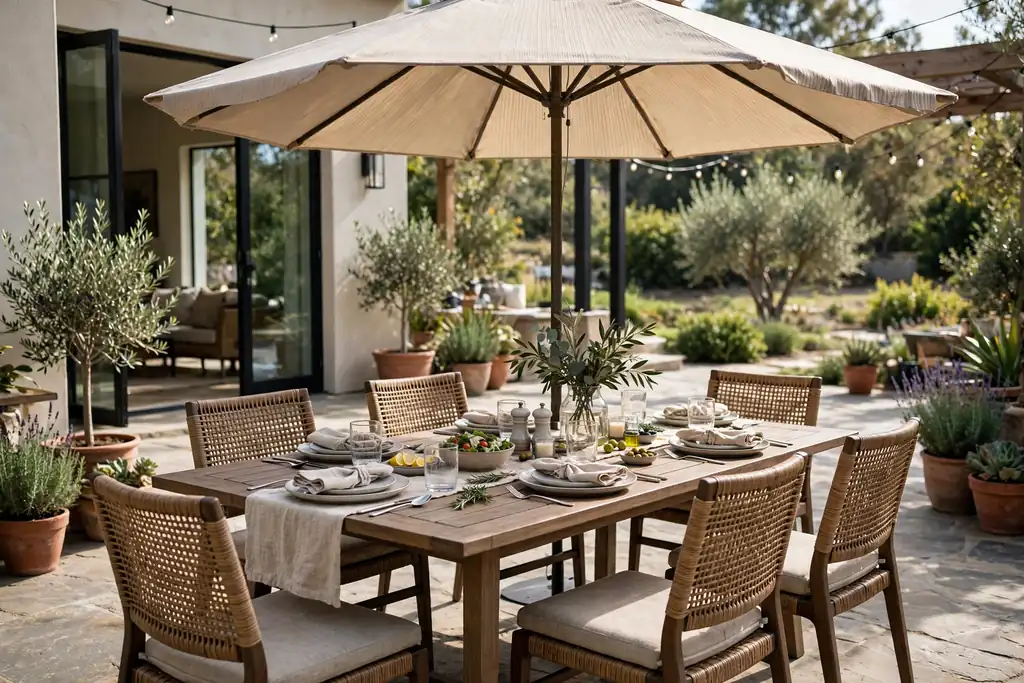
A dining table with six chairs turns a large patio into a place for shared meals. Choose a rectangular table in teak, metal, or stone, with chairs that tuck fully under the edge when not in use. Center the table on a rug or a paved area, and leave at least three feet behind each chair so guests can pull out with ease.
Pick chairs with a seat height that matches the table, and add thin seat pads in a washable fabric for long meals. If the table sits in sun, add an umbrella through the center hole or a freestanding shade beside it. A dining group also works for games and homework on warm afternoons.
10. Bar Height Table and Stools
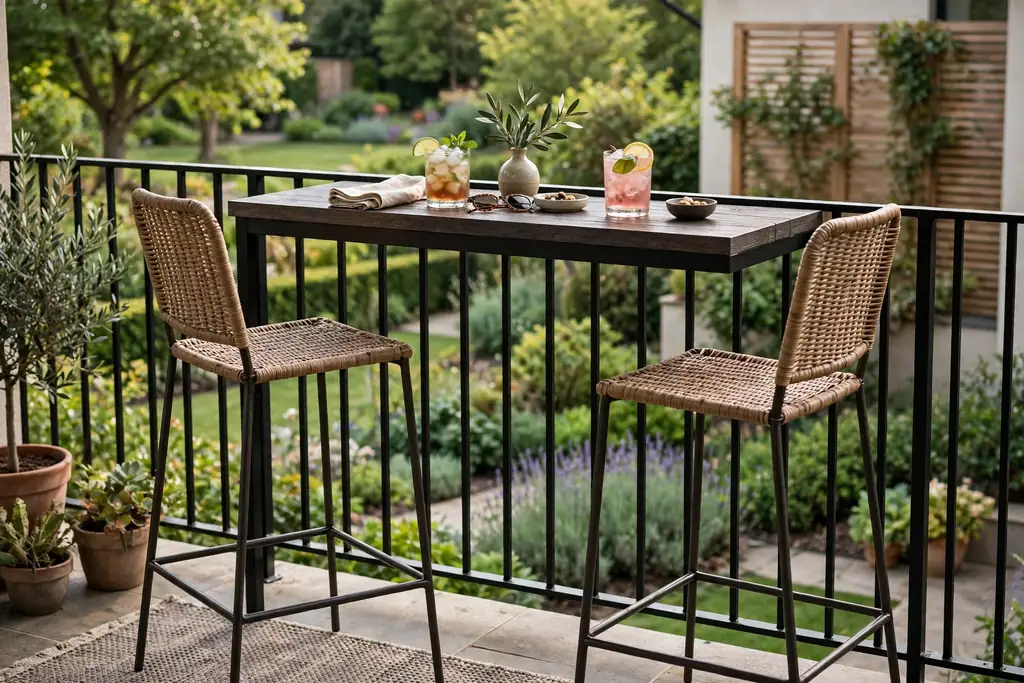
A bar height table with stools suits patios where guests stand, snack, and move between groups. Set a narrow table against a railing or wall, with two to four stools tucked under it, and keep the top clear for drinks and small plates. The tall height suits a view over a railing and saves floor space.
Choose stools with a footrest and a stable base, since tall stools tip more easily than chairs. If children use the patio, keep one lower chair nearby as an option. A bar table also serves as a serving spot during gatherings, with the stools moved aside when food takes over the top.
11. Rocking Chairs on a Covered Patio
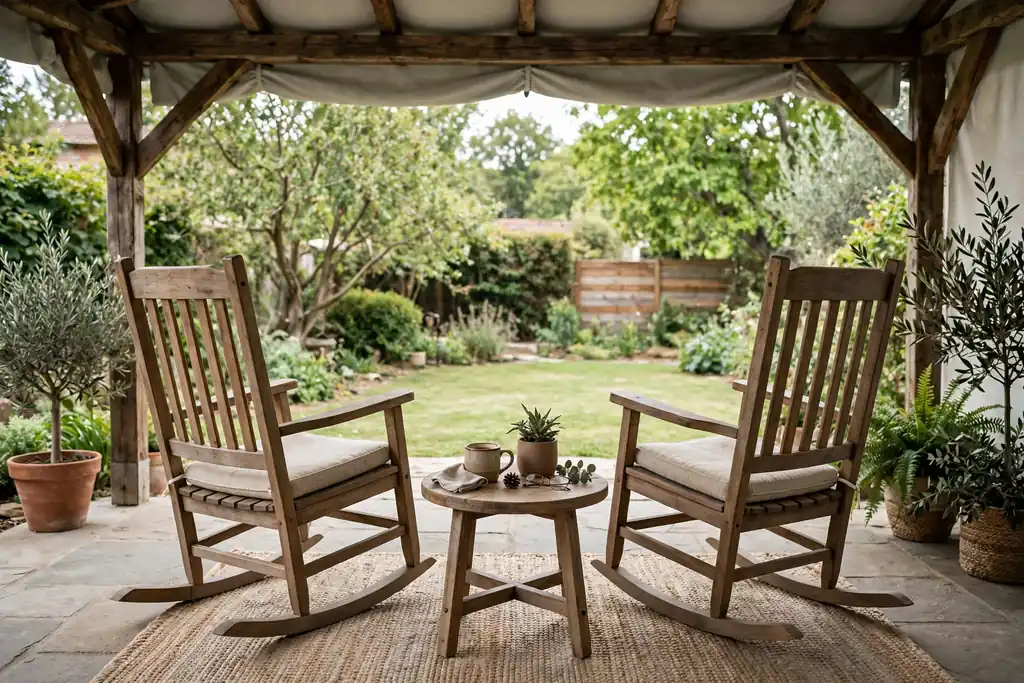
Rocking chairs on a covered patio give a classic, gentle seat for mornings and evenings. Place two chairs side by side near the railing, facing the yard, with a small table between them for drinks. The roof keeps the chairs dry, so wood and woven seats last longer than they would in open weather.
Check that each chair rocks freely without hitting the wall or railing, and set the chairs on a rug or mat to protect the patio surface. Add a thin cushion and a folded throw for cool evenings. One rocking chair alone still works on a small covered porch beside the door.
12. Outdoor Daybed for Lounging
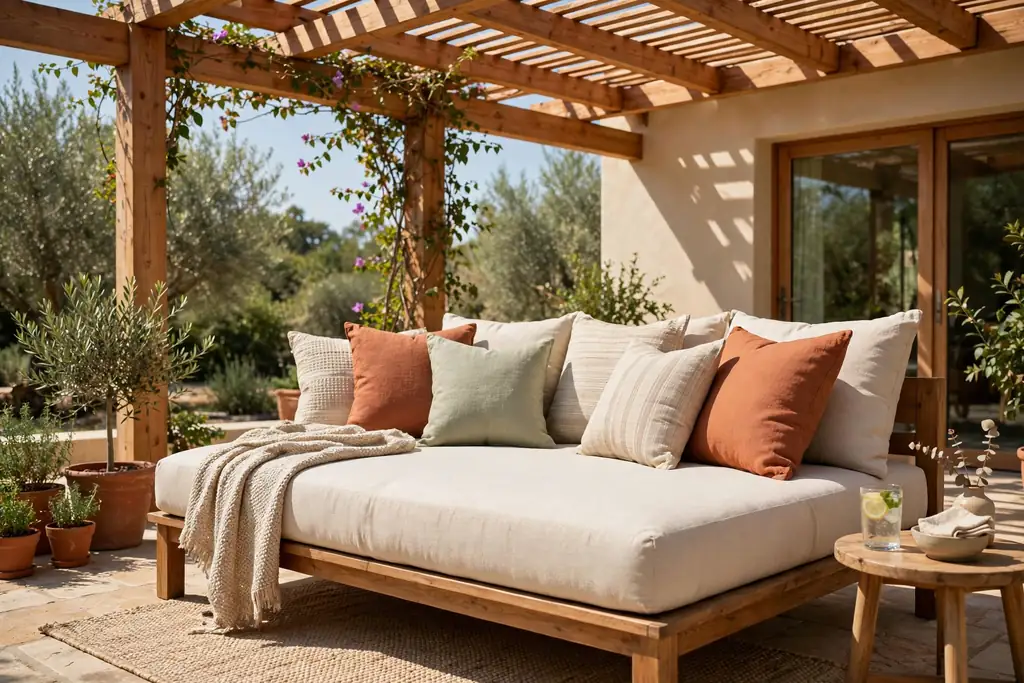
An outdoor daybed gives a patio a lounge bed for naps, reading, and sunbathing. Place it in a sunny corner or under a pergola, with a thick mattress pad and several back cushions along one side. The wide seat suits one person stretched out or two people sitting up with drinks.
Choose a daybed with a canopy or a shade panel if it sits in full sun, and pick a mattress cover that removes for washing. Bring the mattress indoors in heavy rain unless it is rated for outdoor use. A daybed anchors a large patio well, but it needs a wide, flat spot, so measure before buying.
13. Folding Chairs and a Small Table for Tiny Patios
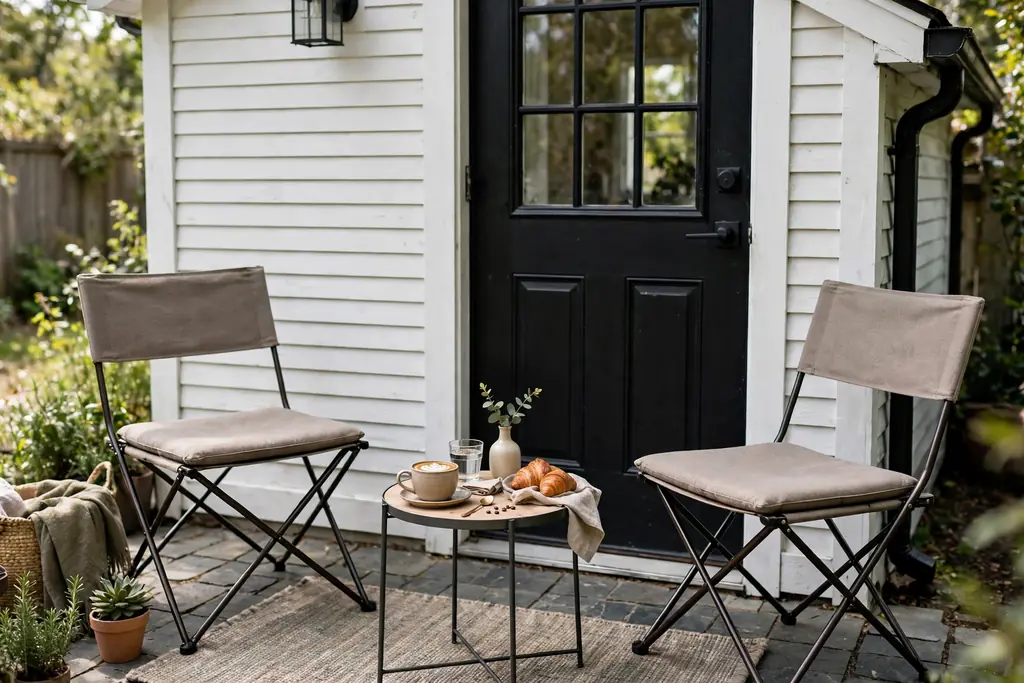
Folding chairs with a small side table give a tiny patio seating that appears only when needed. Keep two folding chairs by the door or in a storage box, and set them out with a lightweight table for morning coffee or an evening drink. When guests leave, the chairs fold flat and the patio returns to open space.
Choose folding chairs rated for outdoor use, with a seat that does not trap water, and add a thin pad for comfort. If the patio is a balcony, check weight limits and keep the total set light. This is the most flexible option for renters, since nothing is fixed to the space.
14. Rattan Peacock Chair as a Statement Seat
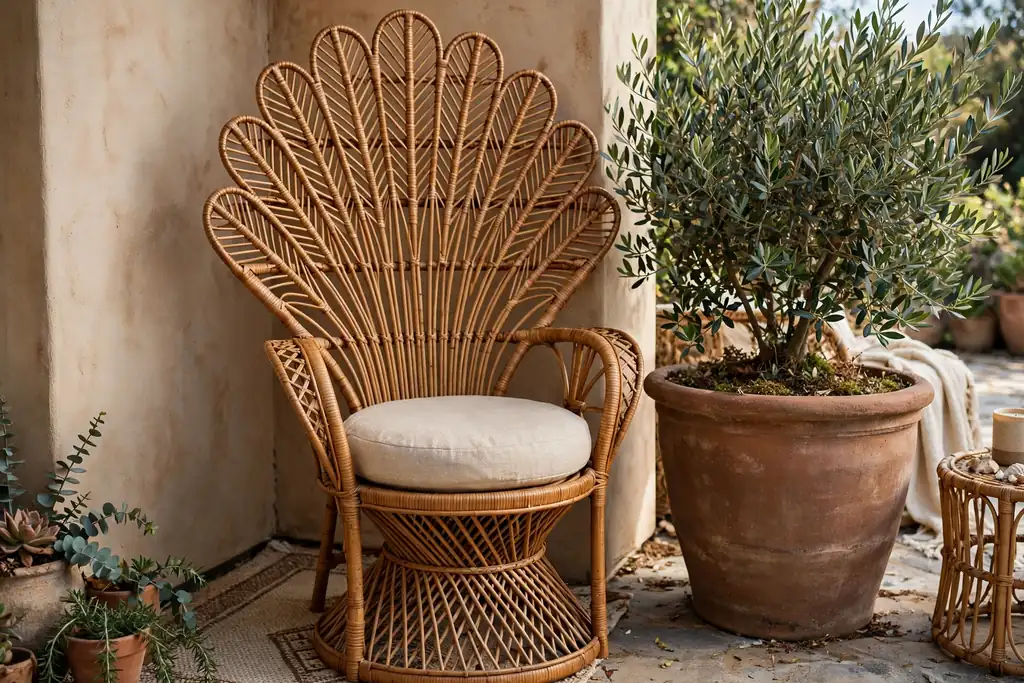
A rattan peacock chair gives a patio a single bold seat that draws the eye. Place it in a corner or beside a planter, with a round cushion on the seat and a small table nearby for a drink. The tall, fanned back suits boho and coastal patios, and it photographs well as a focal point.
Keep the chair under cover when possible, since natural rattan weakens in long rain. If the chair sits in sun, rotate it monthly so fading stays even. Pair it with plainer chairs nearby, so the statement seat stands out rather than competing with other bold pieces.
15. Built In Bench Around the Patio Edge
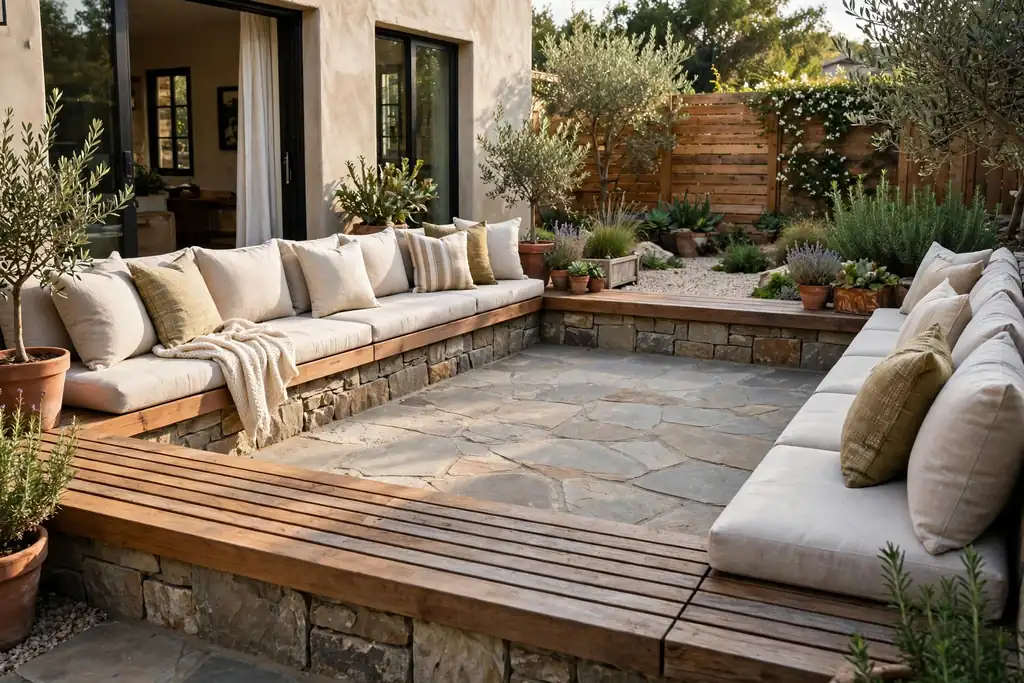
A built in bench around the patio edge seats many people without filling the floor with chairs. Build the bench from wood, stone, or concrete blocks along one or two sides, with a wood top and outdoor cushions for comfort. The fixed seat leaves the center of the patio open for a table, fire pit, or play space.
Plan the bench height near chair height, about eighteen inches, so guests sit and stand with ease. Add storage inside the bench base for cushions and throws if the build allows. A built in bench suits patios that host large groups often, since it never needs to be moved or stored.
16. Swivel Glider Chairs for Easy Talk
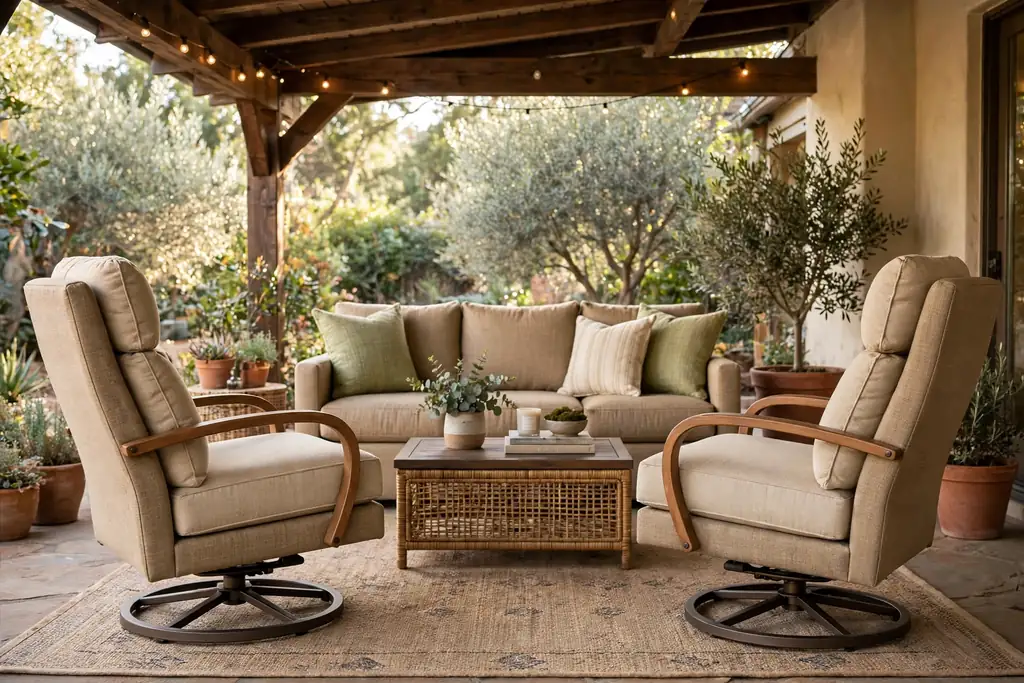
Swivel glider chairs let guests turn toward whoever is speaking, which suits a conversation group. Set two gliders facing a sofa or a pair of chairs, with a coffee table in the middle, and leave room for the chairs to turn fully without hitting the table. The gentle glide suits long talks better than a fixed chair.
Check the swivel base on uneven pavers, and set each chair on a flat rug so it turns smoothly. Add a lumbar cushion, since glider backs can feel upright without one. Gliders work well on covered patios, where the moving parts stay dry and last longer.
17. Poufs and Floor Cushions for Flexible Seating
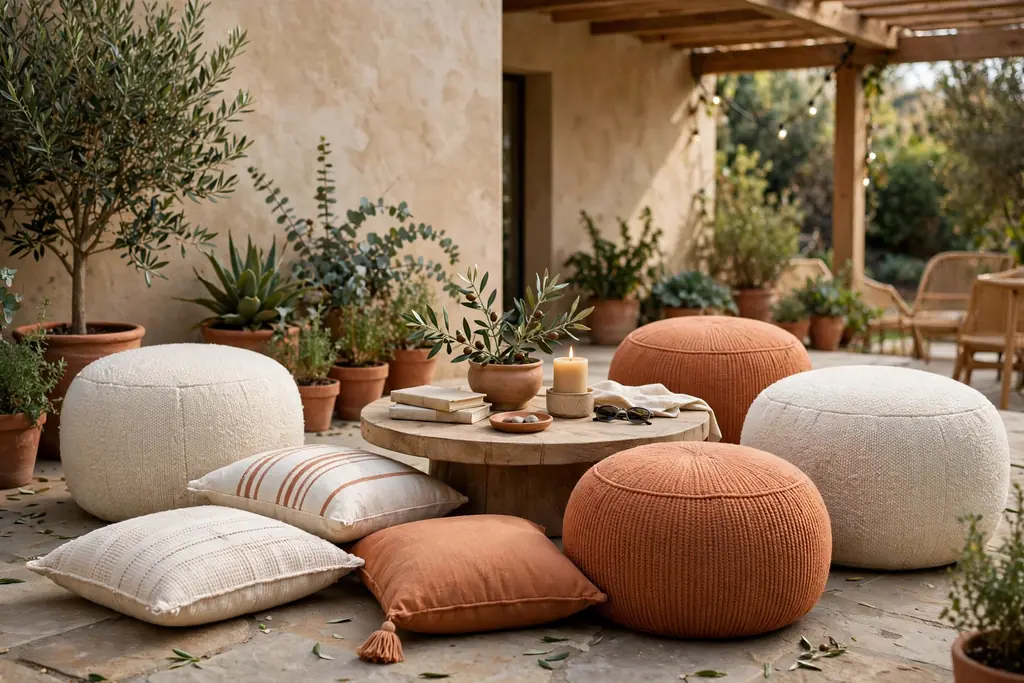
Poufs and floor cushions add flexible seating that moves where guests need it. Scatter two or three poufs around a low table for a casual gathering, or stack them in a corner when the patio needs open floor. The low height suits children and relaxed evenings, and the soft shapes fit patios of any size.
Choose poufs in outdoor rated fabric with a fill that holds shape, and bring them indoors in rain. Mix one pattern with solid colors so the group looks planned rather than random. Poufs also serve as footrests when the main chairs are full, which makes them useful even on small patios.
18. Porch Swing as a Hanging Bench
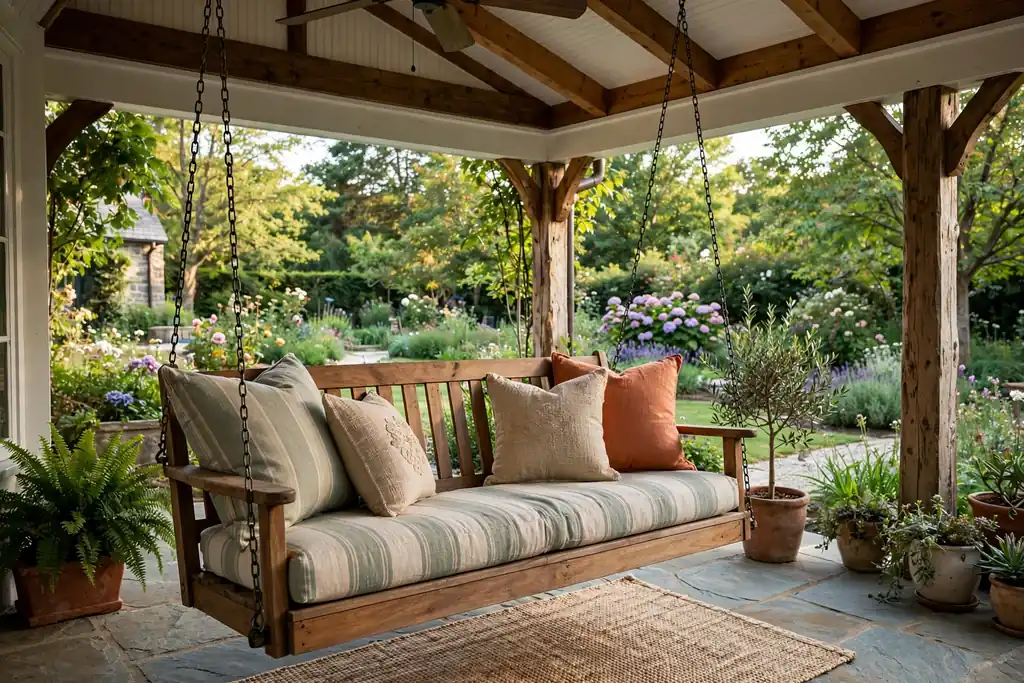
A porch swing gives a covered patio a hanging bench seat for two or three people. Hang the swing from sturdy ceiling joists, with chains rated for the weight, and add a seat cushion and two back cushions. The gentle motion suits evenings, and the swing reads as a feature rather than just a seat.
Check the chains and hooks each season for rust or wear, and tighten them as needed. Keep the swing clear of walls and railings so it moves freely, and leave room to step on and off at one end. If the swing faces rain, use quick dry cushions or bring them indoors at night.
19. Stackable Resin Chairs for Easy Storage
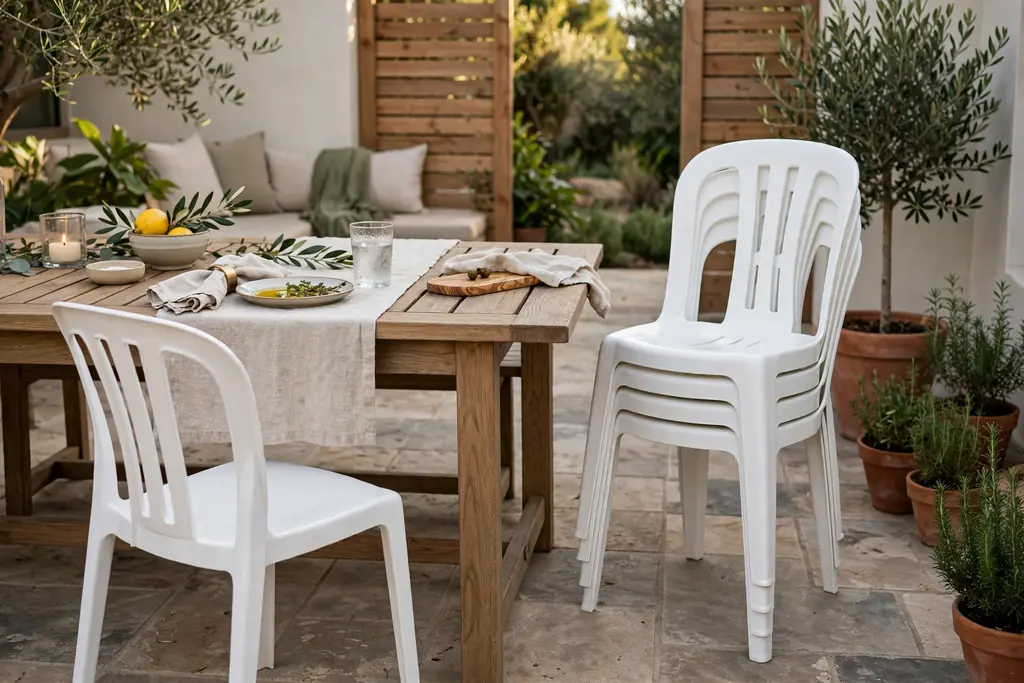
Stackable resin chairs give a patio practical seating that stores in a small footprint. Keep a stack of four to six chairs in a shed or garage, and set them out around a table when guests arrive. The light weight makes them easy to carry, and the stack keeps the patio clear between gatherings.
Choose chairs with a seat shape that stacks without wobbling, and wipe them clean each season since resin shows dust and pollen. Add a thin pad for long meals, held in place with ties so wind does not lift it. Resin chairs suit dining groups best, where comfort matters less than easy storage.
20. Corner Nook with an L Bench and Cushions
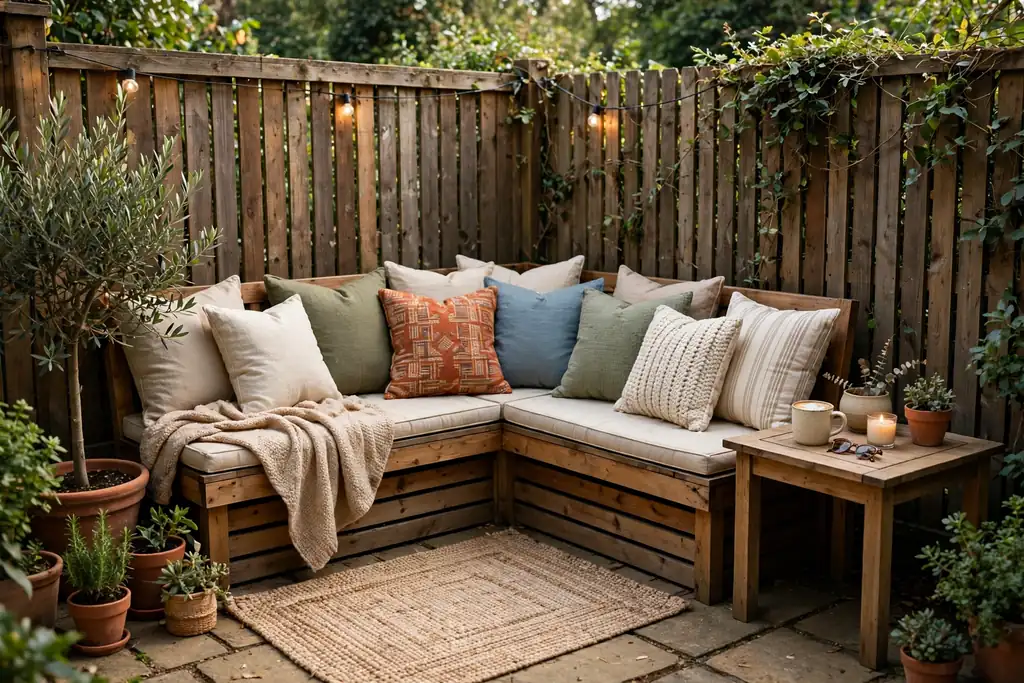
A corner nook with an L bench turns an unused patio corner into a cozy seat for three or four people. Set two benches at a right angle in the corner, add a small square table in front, and pile cushions along both bench backs. The corner shape feels sheltered, which suits a spot near a fence or wall.
Add a planter at the open end of the nook to mark the edge without blocking entry. If the nook sits in shade, choose light cushion colors to keep it bright. This layout suits small and medium patios well, since it uses corner space that single chairs often waste.
21. Conversation Set Around a Fire Table
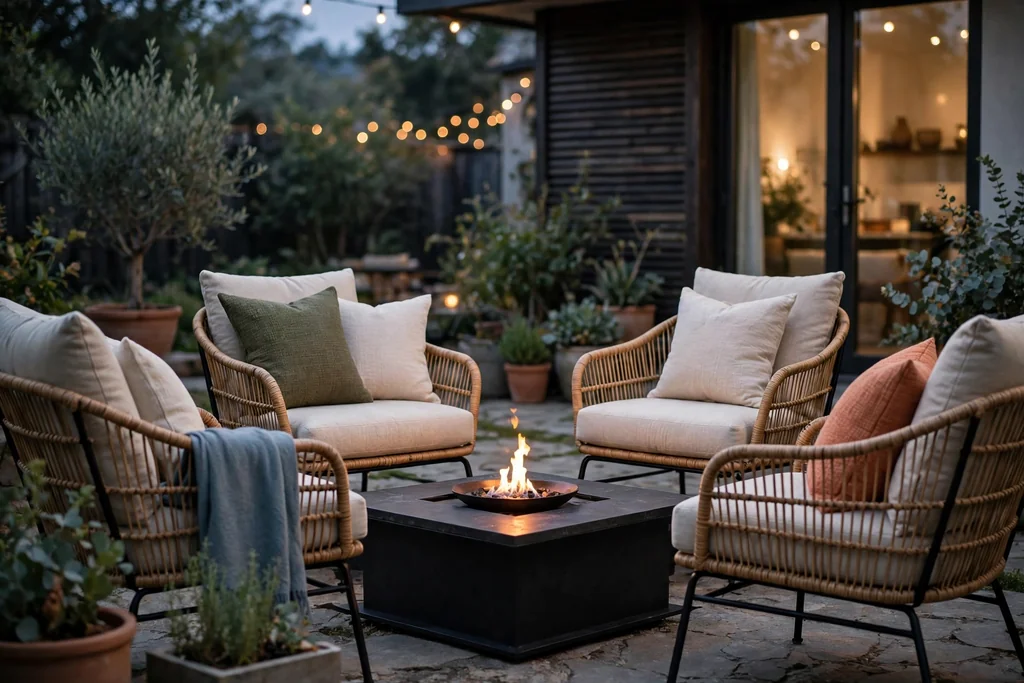
A conversation set around a fire table gives a patio warmth and a focal point in one piece. Arrange four chairs or a small sofa set around a low fire table, with room for feet and drinks on the table edge. The flame draws guests together after sunset, and the table doubles as a coffee table when the fire is off.
Check the fuel type and local rules before use, and keep cushions, throws, and paper items clear of the flame. If the table uses gas, store the tank safely and check connections each season. A fire table suits large patios best, where the seating ring has room to breathe.
Conclusion
Outdoor patio seating comes down to three choices: the main use, the space you have, and the weather your patio faces. Start with one group that serves your most common use, whether that is lounging, dining, or gathering, then add one flexible piece, such as a pouf or a folding chair, for guests. Measure before you buy, leave clear paths around every seat, and choose fabrics and frames that handle your climate with simple care. With those basics in place, the patio becomes a room you use daily, not just on fine weekends.
FAQs
What is the best outdoor patio seating for a small patio?
The best outdoor patio seating for a small patio is a bistro set, a pair of folding chairs with a small table, or a corner bench nook. These options seat two to four people without blocking the path, and folding pieces store flat when the patio needs open space. Measure the patio first, and leave at least two feet of walking room around each seat.
How much space do you need around patio chairs?
You need about two feet of walking space around patio chairs, and about three feet behind dining chairs so guests can pull out with ease. A lounge group needs extra room in front of each seat for a coffee table and foot space. If the patio feels tight, choose fewer, smaller pieces rather than crowding a full set into the space.
What material lasts longest for outdoor patio seating?
Teak, powder coated aluminum, and all weather wicker tend to last longest for outdoor patio seating with simple care. Teak weathers to grey unless oiled, aluminum resists rust, and all weather wicker handles rain better than natural rattan. Whichever frame you pick, bring cushions indoors in heavy rain to extend their life.
Should patio cushions stay outside all year?
Patio cushions should not stay outside all year in wet or cold climates, even when the fabric is rated for outdoor use. Bring cushions indoors during heavy rain and over winter, and store them in a deck box or shed so they stay clean and dry. Quick dry foam helps after summer showers, but it does not replace dry storage.
How do you arrange patio seating for conversation?
Arrange patio seating for conversation by placing chairs facing each other, about four to eight feet apart, with a table in the middle for drinks. Angle the chairs slightly inward rather than in a straight row, so guests can talk without turning their heads. Add a rug under the group to mark the conversation zone.
What is the easiest way to add shade over patio seating?
The easiest way to add shade over patio seating is a freestanding umbrella through or beside the table, since it needs no build work. A pergola or shade sail gives wider cover for a lounge group, while a nearby tree gives natural shade that shifts through the day. Match the shade to the seating group size so every seat gets cover at midday.