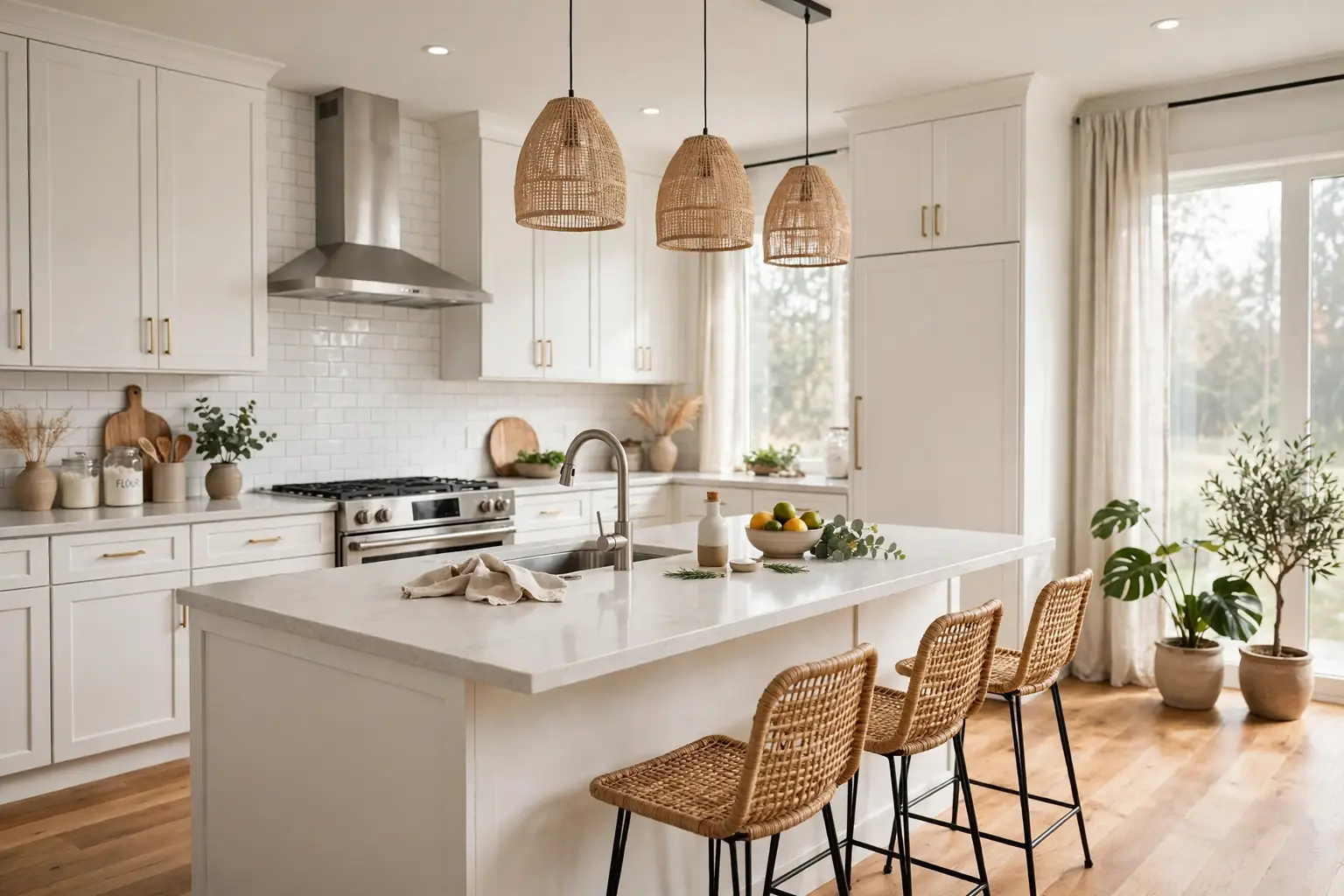
To choose quartz countertops that suit your kitchen, start with your cabinets, flooring, and lighting, then narrow colors and patterns to a few samples you can test at home. Compare finishes, thickness, and edge profiles in that same light, check seams and sink details, and pick the option that stays calm and practical in daily use.
A countertop change touches almost every part of a kitchen. It sets the tone next to cabinets, meets the backsplash and floor, and takes daily work from cooking to homework to morning coffee. That is why a sample that looks right in a showroom can feel different at home. This guide works through the choice in order, so you can compare options side by side, notice what matters in your own light, and settle on a countertop that fits how you actually use the room.
Key Takeaways
- Start with how you use the kitchen, then match color, pattern, and finish to cabinets, flooring, and backsplash.
- Compare finishes, thickness, and edge profiles in person, since each one changes how the surface looks and feels.
- Set a general budget range first, and leave room for layout details such as seams, sink cutouts, and edges.
- Test samples at home in morning, daytime, and evening light before you make a final choice.
- Plan for daily care that fits your routine, and confirm seam and sink details before ordering.
1. Start With How You Cook and Use the Kitchen

Think about a normal week in your kitchen before you look at color charts. A kitchen used for daily family meals, baking, homework, and gathering needs a surface that can handle frequent wiping, hot dishes set down with care, and items moved across it often. A kitchen used mainly for light meals and coffee may allow a paler color or a busier pattern with less worry about daily marks.
List the jobs the counter must do. Note where you prep food, where you set down shopping bags, where children or guests sit, and where small appliances live. A long stretch of clear prep space matters more than a dramatic pattern in a busy kitchen, while a small kitchen may need the counter to stay visually quiet so the room does not feel crowded. This list becomes your test for every later choice.
2. Compare Colors and Patterns Side by Side
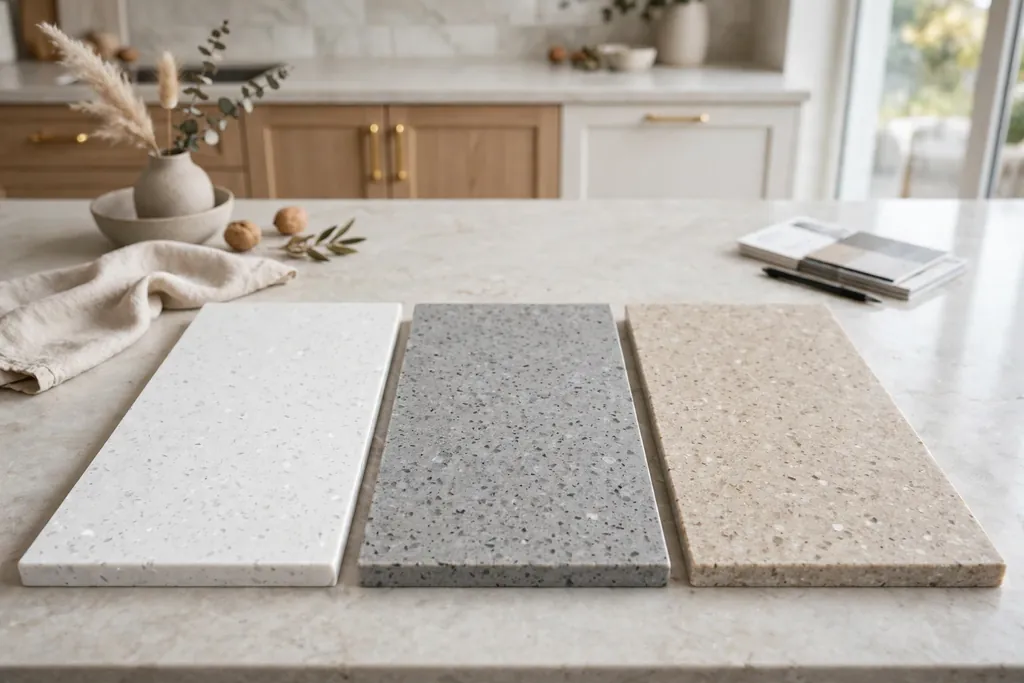
Popular quartz colors range from plain whites and soft grays to warm neutrals, deep tones, and patterns that echo natural stone veining. Plain and lightly speckled options tend to sit quietly beside patterned backsplashes and busy floors, while veined and marbled patterns can act as the main feature in a simpler room. Neither approach is right for every kitchen, so the room around the counter should guide the choice.
Compare two or three options at a time, not a whole wall of samples. Hold a sample next to a cabinet door, a flooring piece, and a backsplash tile if you have them. Step back and look at the group as a whole. A pattern that looks balanced from a few feet away is often a better fit than one that only looks good up close, since you will see the counter from across the room most of the time.
3. Choose a Finish That Suits Daily Use
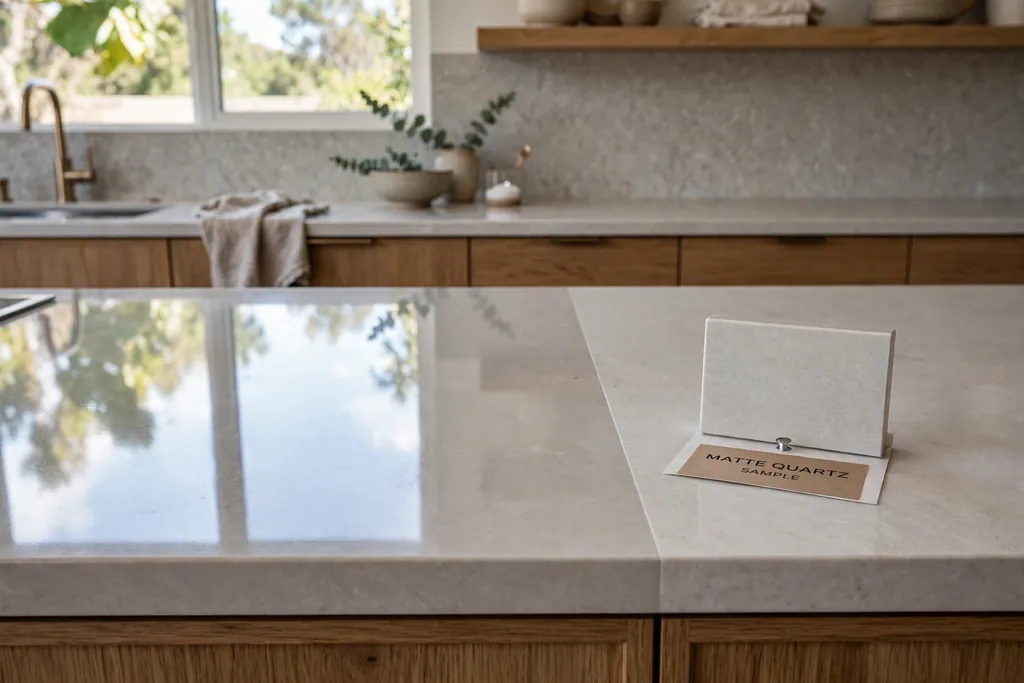
Finish changes how light moves across the surface and how marks show up. A polished finish reflects light and can make a kitchen feel brighter, while a honed or matte finish softens reflections and can hide small smudges and fingerprints more easily. Some finishes also feel different to the touch, which matters on a surface you use many times a day.
Ask to see the same color in more than one finish if that option is available. Run a hand across each sample, look at it under your kitchen lights, and think about cleaning habits in your home. A finish that needs frequent wiping to look its best may suit a household that wipes counters often, while a softer finish may suit a busier routine. Choose the finish you will be glad to live with, not only the one that looks best under showroom lights.
4. Decide on Thickness for the Look You Want
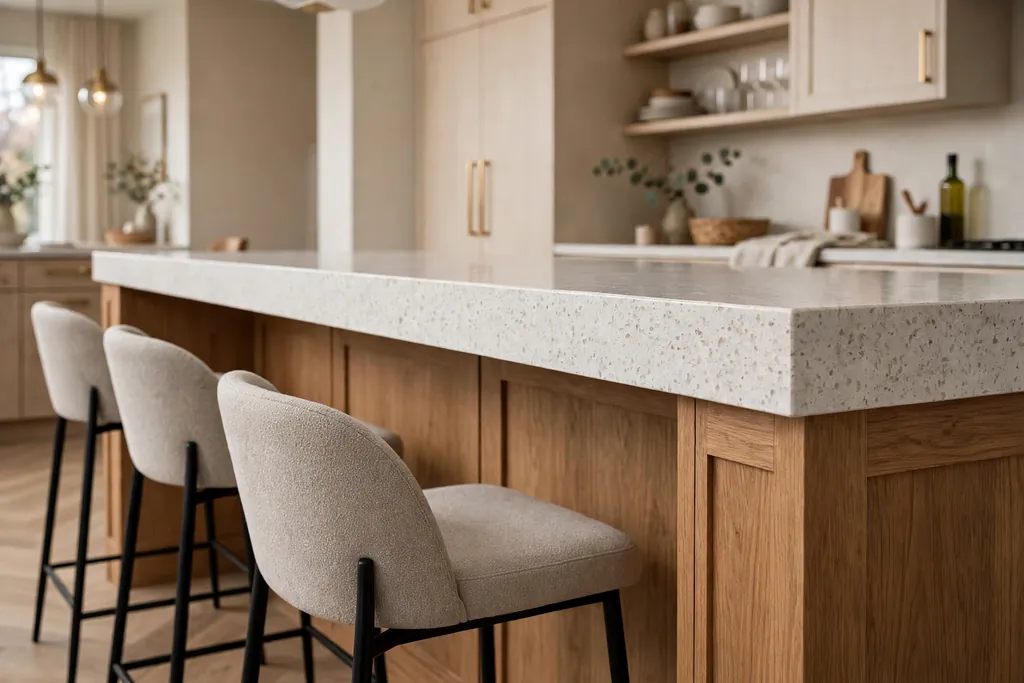
Thickness affects the profile you see from the side of the counter and the overall feel of the room. A thinner slab can look clean and modern, while a thicker slab can look more solid and can suit a traditional or farmhouse kitchen. In some kitchens, a built up edge can give the look of a thicker slab while keeping the main surface at a standard thickness, so ask what options your supplier offers.
Look at thickness in context. A thick edge on a small island can draw the eye and make the island feel heavy, while the same edge on a long run of cabinets can look balanced. Also check how thickness meets appliances, sinks, and seating overhangs. A choice that looks good on its own still needs to work with the heights and clearances already in your kitchen.
5. Compare Edge Profiles
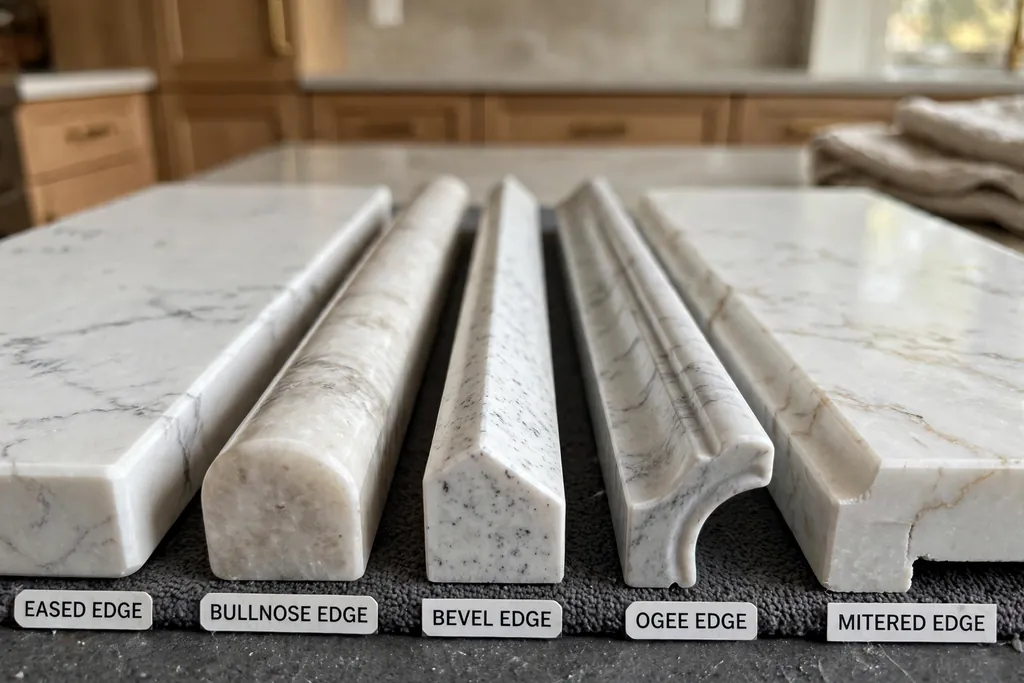
Edge profiles range from simple square and eased edges to rounded, beveled, and more shaped profiles. A simple edge keeps the focus on the color and pattern, and it is easy to wipe clean. A shaped edge adds detail and can suit a traditional kitchen, but it may catch crumbs or need a little more care along its curves and grooves.
Stand at counter height and look at each edge from the side and from above. Think about who uses the counter and how. Rounded edges can feel softer in a kitchen where children lean against the counter, while a crisp square edge can suit a clean, modern room. Keep the edge consistent across the main counters and the island where possible, so the kitchen reads as one planned space.
6. Set a Realistic Budget in General Terms
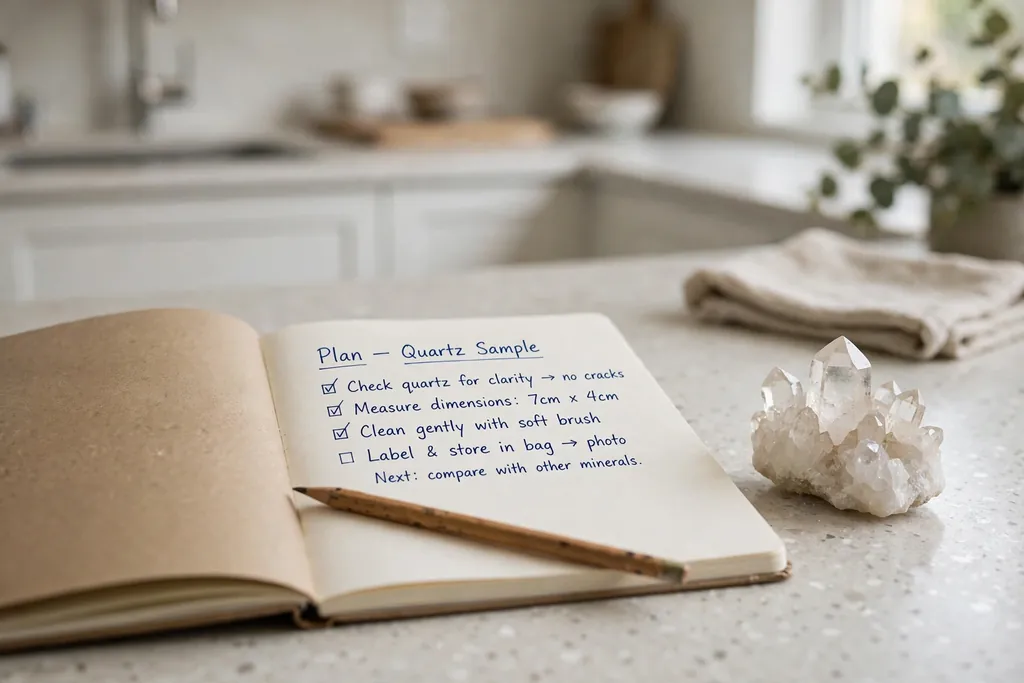
Set a budget range before you fall in love with a specific slab. Countertop costs usually include more than the slab itself, such as measuring, cutting, edge work, sink cutouts, delivery, and fitting. Ask for a clear written breakdown that shows what is included, so you can compare options fairly and avoid surprises late in the project.
Decide where you are willing to spend more and where you can keep things simple. A simpler edge or a more widely available color may leave room in the budget for a better sink detail or a longer run of counter. Keep a small reserve for small changes found during measuring or fitting. A plan that leaves no room for adjustments can turn a small detail into a stressful decision.
7. Pair the Countertop With Your Cabinets
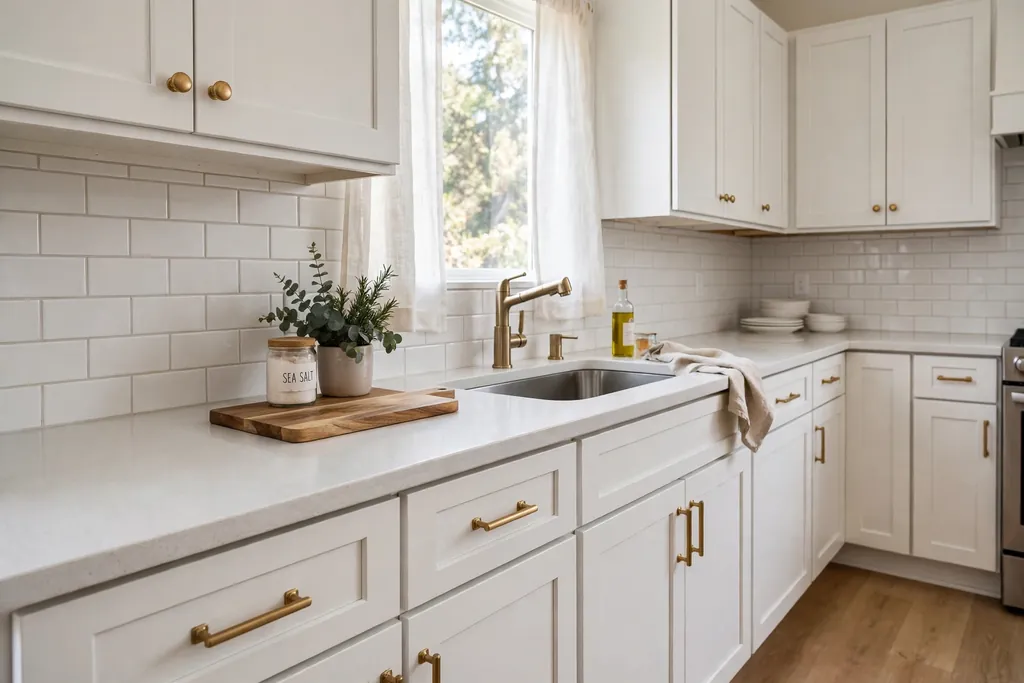
Cabinets cover the largest area in most kitchens, so the countertop should work with them first. White and cream cabinets pair well with a wide range of quartz colors, from plain light tones to soft veining. Wood cabinets bring warmth, so a counter with warm gray or soft beige tones often sits more calmly beside them than a very cool white. Dark cabinets can take a lighter counter for contrast, or a mid tone counter for a quieter, blended look.
Hold samples against the actual cabinet color, not a photo of it. Cabinet paint and wood stain shift in different light, and a sample that matches on screen may clash in the room. If you plan to repaint cabinets later, choose a countertop that works with both the current color and the planned color, or settle the cabinet color first. The countertop will stay in place far longer than a coat of paint.
8. Pair It With Your Flooring
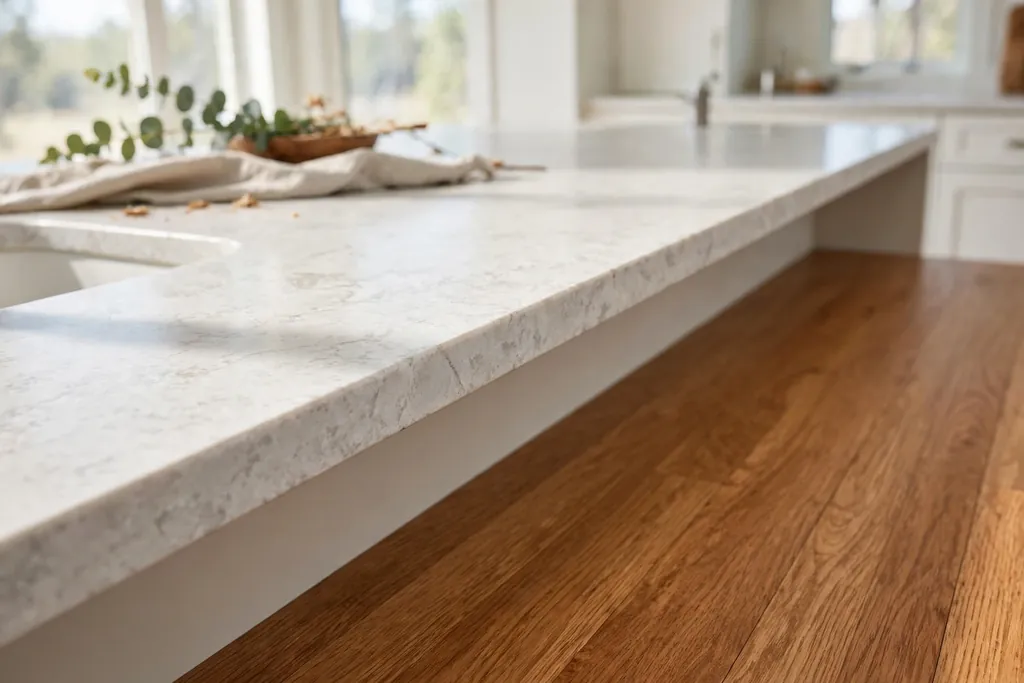
Flooring is the other large surface in the room, and it should not fight the countertop for attention. If the floor already has strong pattern or varied color, a quieter countertop often keeps the room calm. If the floor is plain, a veined or patterned countertop can add interest without making the room feel busy. The goal is one main feature and supporting surfaces, not two competing patterns.
Check the undertones of both surfaces together. A warm wood floor and a cool gray counter can clash in a subtle way that is hard to name but easy to feel. Place a flooring sample and a counter sample side by side on the floor in your kitchen light. If the pair looks settled and easy on the eye, it will likely work at full scale too.
9. Choose a Backsplash That Works With the Pattern
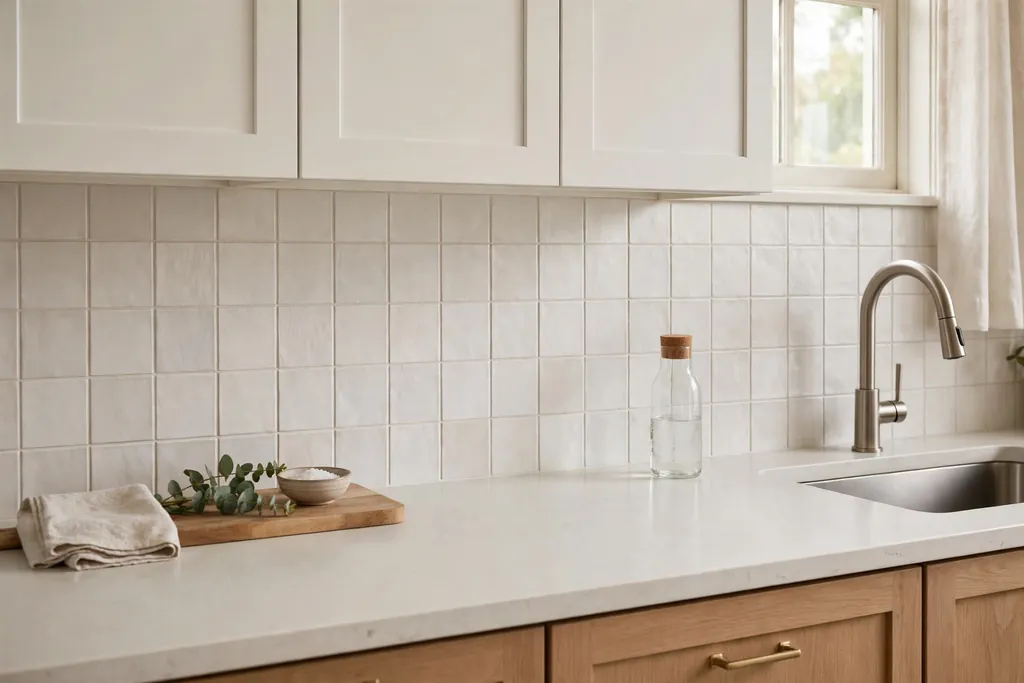
The backsplash meets the countertop along a long seam, so the two should be planned together. A patterned countertop often pairs well with a plain backsplash in a matching tone, which lets the counter pattern show without visual noise. A plain countertop can take a patterned tile, a colored backsplash, or a slab backsplash in the same material for a seamless look.
For ideas on styling the surfaces around a new counter, see these fall kitchen decor ideas for counters and tables that keep one work area clear. Keep grout lines, tile size, and sheen in mind as well. A glossy tile next to a matte counter can look fine if the colors agree, but a busy tile next to a busy counter can make the wall feel crowded. Order backsplash samples with the counter samples and view them together.
10. Test the Look Under Your Kitchen Lighting
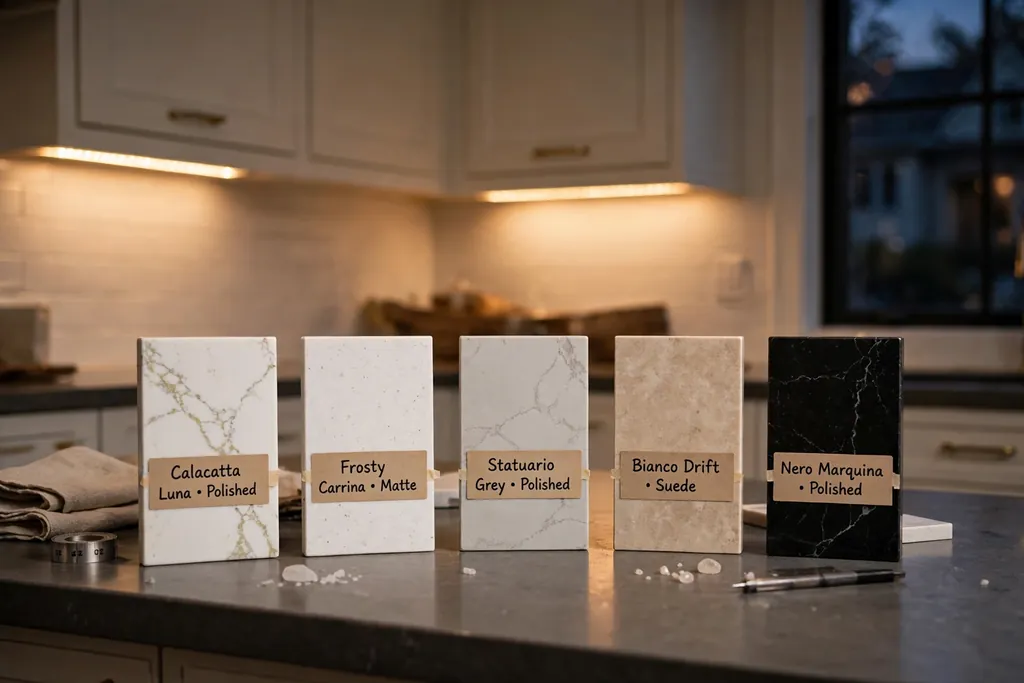
Kitchen lighting changes color more than most people expect. Morning daylight, midday sun, under cabinet lights, and evening lamps can each shift how white, gray, or beige reads. A counter that looks warm white in a showroom may look cool gray at home under different bulbs, so testing in your own kitchen is the most useful step in the whole process.
Place samples on the counter and leave them for a full day. Check them in the morning, at midday, and in the evening with the lights you normally use. Note how the pattern reads from the doorway and from the seating area, not only from directly above. If a sample only looks right in one kind of light, it may not be the best choice for a kitchen used all day.
11. Plan for Everyday Care and Maintenance

Think about care in terms of your real routine, not an ideal one. Quartz counters are generally wiped with a soft cloth and mild soap for daily cleaning, but spills should still be wiped up promptly, and harsh cleaners and abrasive pads should be avoided. Hot pans should go on trivets or mats rather than directly on the surface, and cutting should be done on a board to protect both the counter and your knives.
Ask your supplier for written care guidance for the specific product you choose, and keep it with your kitchen notes. A care routine that fits your household will keep the counter looking good far longer than a routine you plan to follow but never do. If a color or finish shows every water mark in your home, that is useful information, even if you like the look in the showroom.
12. Order Samples and Live With Them First
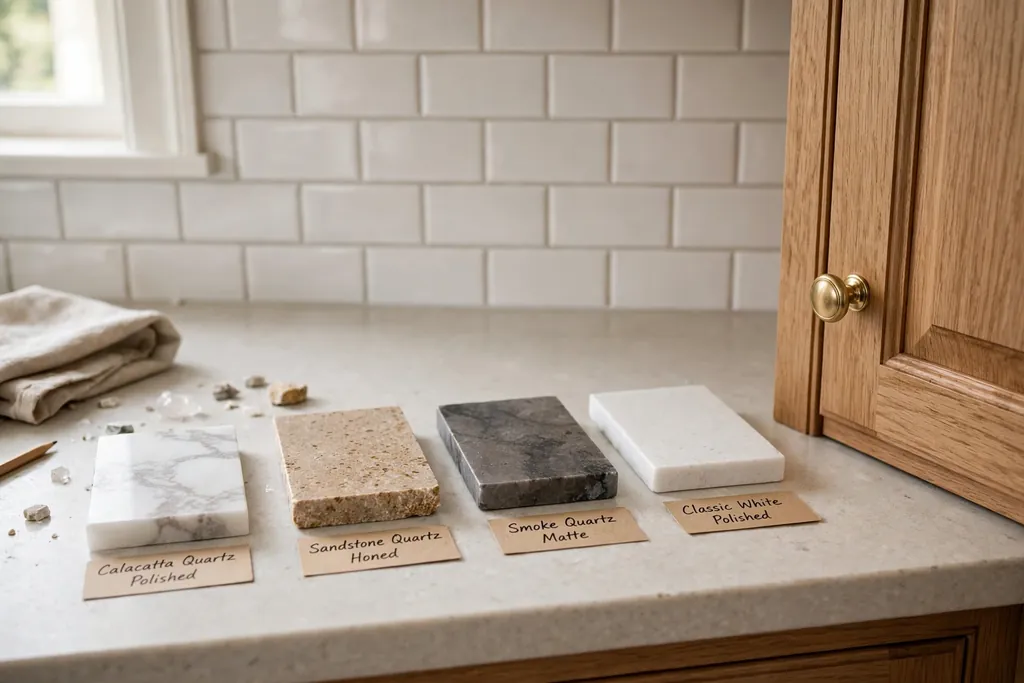
Order full size samples where possible, not only small chips. A small chip can hide how a large pattern repeats across a slab, and veining that looks subtle on a chip can feel strong across a full counter run. Place the samples where the counter will go, and live with them for several days if you can.
Use the samples as you would use the real counter. Set a plate, a board, and a mug on them, and see how the color works with the dishes and tools you use every day. Take photos in different light, and look at them on a phone screen as well as in person. Narrow the choice to one favorite and one backup, so you have a clear second option if the first is not available when you order.
13. Check Layout, Seams, and Sink Details
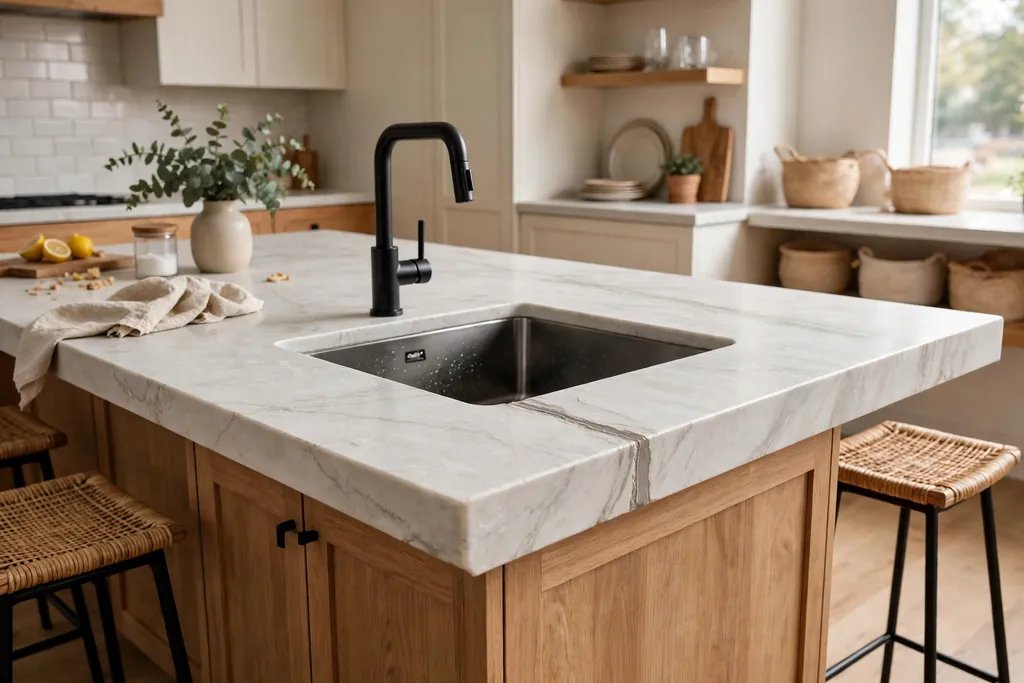
Layout details are easy to miss until the counter is fitted. Ask where seams will fall, especially on long runs, around corners, and on islands. A seam placed in a clear area can be less noticeable than one placed where you prep food every day. Also ask how the pattern will line up across a seam, since veined patterns need careful matching to look continuous.
Check sink details at the same time. Decide whether the sink will sit under the counter, on top of it, or flush with it, and confirm how the cutout will be finished. Ask about faucet holes, draining grooves if you want them, and the overhang for seating at an island or peninsula. These details are hard to change after cutting, so confirm them in writing before work starts.
14. Make the Final Choice With a Simple Checklist

Before you order, run through a short checklist with your samples in hand. Does the color work with cabinets, flooring, and backsplash in your own light? Does the finish suit your cleaning routine? Does the thickness and edge suit the style of the room? Does the budget cover measuring, cutting, edges, sink work, and fitting? Have seams and sink details been confirmed?
If you can answer yes to each question, you have a solid choice. If one answer is no, fix that detail before ordering rather than hoping it will settle once the counter is fitted. A calm, well checked choice is easier to live with than a rushed one, and it keeps the focus where it belongs: on a kitchen that works well and looks settled every day.
Conclusion
Choosing quartz countertops well means working in order: start with how you use the kitchen, compare colors and patterns beside your cabinets and floors, test finishes and edges in your own light, and confirm budget, seams, and sink details before ordering. Samples tested at home will tell you more than any showroom display, and a simple checklist at the end keeps small details from becoming regrets. For more ideas from Dwell Ovell, browse the home page for home decor guides.
FAQs
What is the most popular type of quartz countertop color?
White and soft gray quartz countertops with light veining are widely chosen because they pair with many cabinet colors and keep a kitchen feeling bright and calm. Plain light tones also work well beside patterned backsplashes and floors, while veined patterns suit simpler rooms where the counter can be the main feature.
How do I choose a quartz countertop color for my kitchen?
Start with your cabinets and flooring, since they cover the largest areas, then hold counter samples against them in your own kitchen light. Choose a color that sits calmly with both surfaces, and check it in morning, daytime, and evening light before deciding, since lighting can shift how white, gray, and beige read.
Which quartz countertop finish is easiest to live with?
A honed or matte finish often hides small smudges and fingerprints more easily than a polished finish, while a polished finish reflects more light and can make a kitchen feel brighter. The easiest finish to live with is the one that matches your cleaning routine, so compare the same color in more than one finish if that option is available.
What thickness should I choose for quartz countertops?
Thickness is mainly a style choice, with thinner slabs looking clean and modern and thicker slabs looking more solid and traditional. Check how the thickness meets sinks, appliances, and seating overhangs, and look at it in context, since a thick edge can feel heavy on a small island and balanced on a long run of cabinets.
How do I care for quartz countertops every day?
Wipe quartz countertops with a soft cloth and mild soap for daily cleaning, wipe up spills promptly, and avoid harsh cleaners and abrasive pads. Use trivets or mats under hot pans and cut on a board, and follow the written care guidance from your supplier for the specific product you choose.
Should I order quartz countertop samples before deciding?
Yes, order the largest samples you can and live with them in your kitchen for several days before deciding. Place them where the counter will go, check them in different light, and test them with plates, boards, and mugs you use daily, so the pattern and color are judged at a useful scale rather than from a small chip.