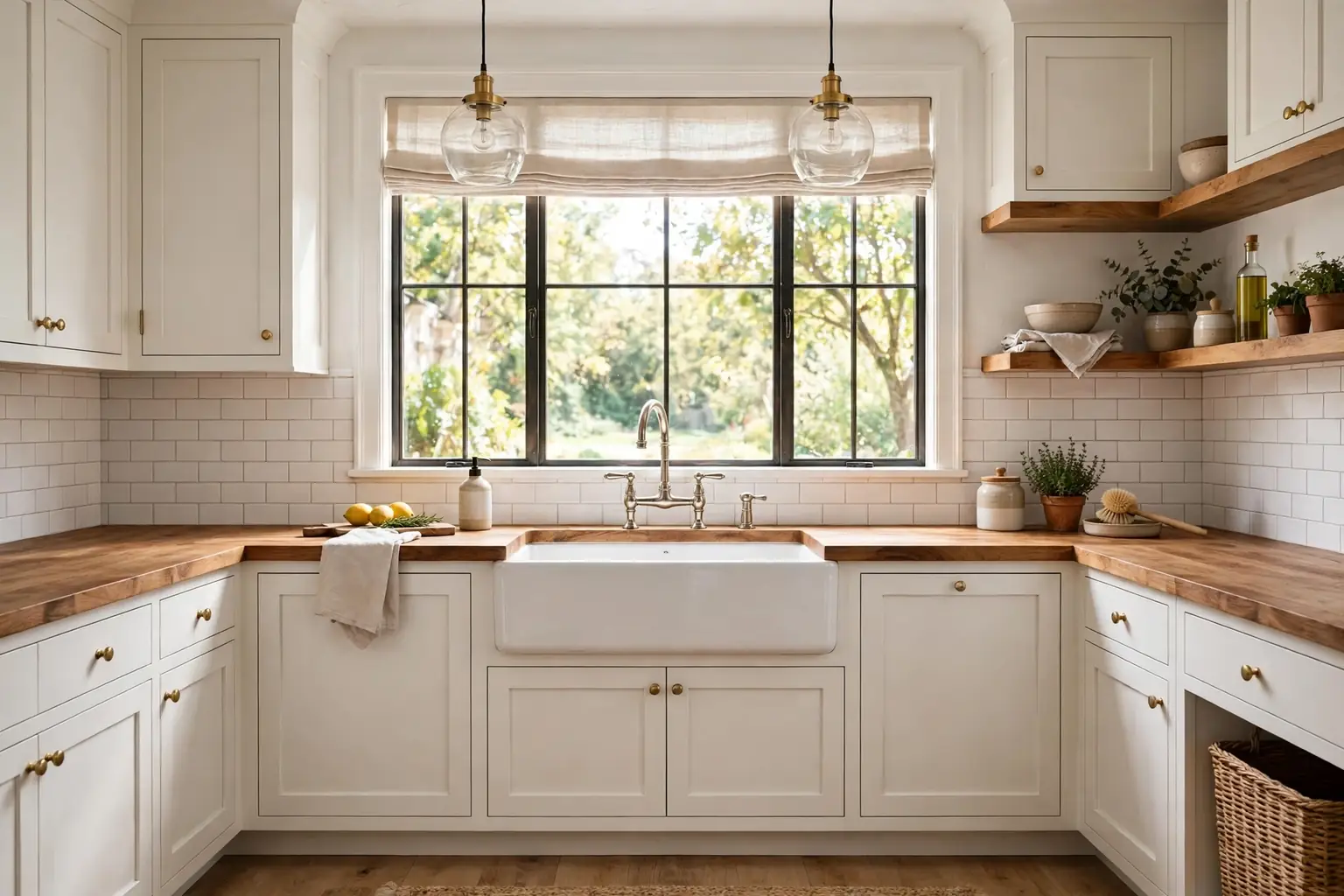
To choose a farmhouse sink, measure your base cabinet first, then pick a material, bowl layout, and depth that suit how you cook and clean each day. Match the apron style and finish to your kitchen, check faucet and drain placement, and confirm the cabinet can support the sink before you buy.
A farmhouse sink, also called an apron front sink, shows its front panel below the countertop instead of hiding it behind a cabinet door. That exposed front is part of its look, but it also changes how the sink fits, how it is supported, and how far you reach when you wash dishes. This guide works through those choices in order, so you can narrow the options to a sink that fits your cabinet, suits your cooking habits, and works with your faucet and plumbing.
Key Takeaways
- Measure the base cabinet inside width, depth, and height before you shop, since the cabinet sets the largest sink you can fit.
- Choose the material for how you cook and clean, not only for looks, and weigh weight, care, and repair options.
- Pick a single or double bowl based on how you wash large pots, rinse produce, and use a drying rack.
- Check apron style, faucet holes, drain placement, and disposal fit early, since those details are hard to change after installation.
- Confirm support, countertop cuts, and plumbing clearances with your installer before you order.
What to Check Before You Buy
- Tape measure and a notebook or phone notes for cabinet, countertop, and plumbing measurements
- The inside width, depth, and height of the sink base cabinet
- The position of drain pipes, water lines, and any garbage disposal
- The faucet style you plan to use and how many holes your countertop or sink deck allows
- The countertop material and whether it needs a new cut for an apron front
- A note of large items you wash often, such as sheet pans, stockpots, and cutting boards
1. Start With Your Cabinet and Measure First
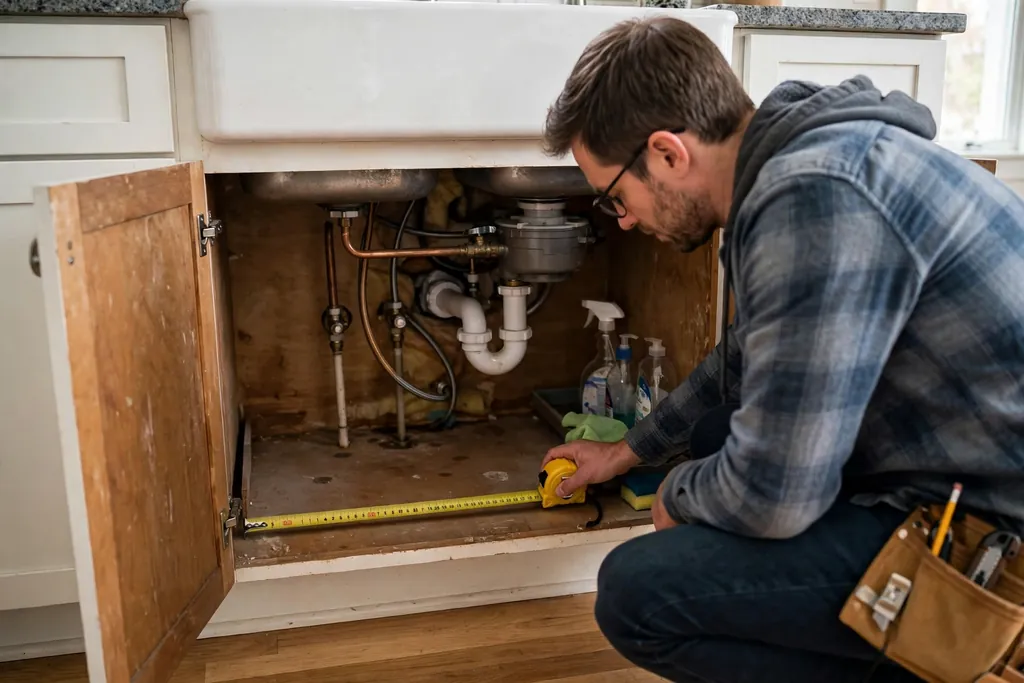
Open the sink base cabinet and measure the inside width from side panel to side panel, the inside depth from front to back, and the clear height under the countertop. Note the position of the drain pipe, water lines, and any disposal, and check whether the cabinet has a center support or a drawer that the new sink would block. These measurements set the real limits for your sink, even if a larger model looks right in a showroom.
Write the measurements down and keep them with you when you compare sinks. A farmhouse sink needs room for its apron front at the front of the cabinet, and the cabinet may need a front panel cut or a modified frame. If the cabinet is narrow, a smaller sink with a well planned layout will serve you better than a large sink that forces awkward plumbing or a weak support frame.
2. Choose the Right Sink Size for Your Kitchen
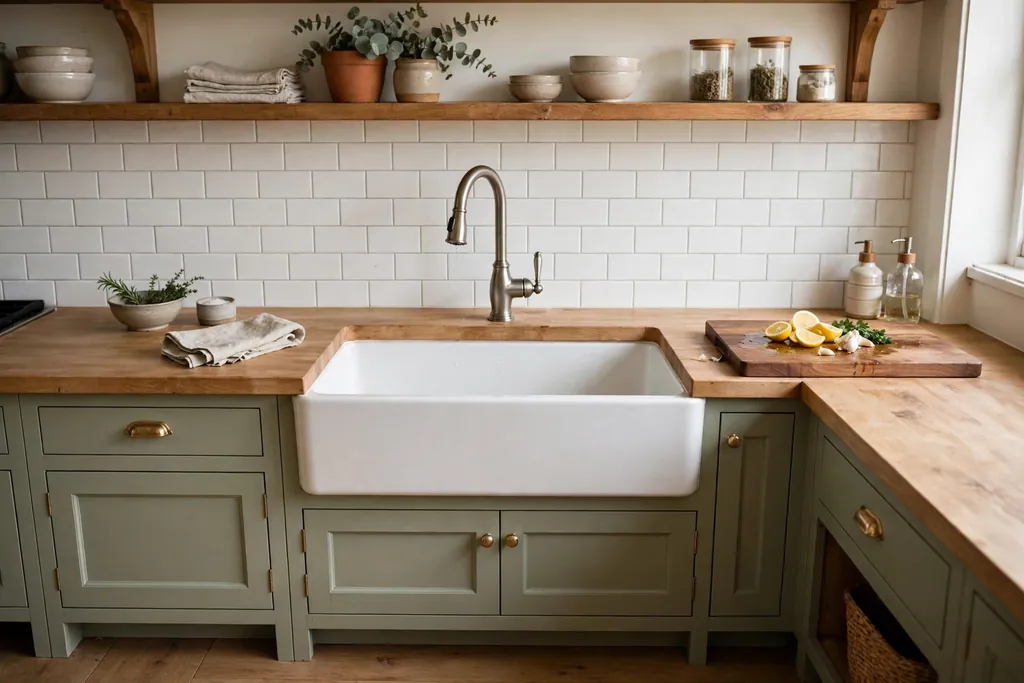
Sink size should follow both your cabinet and your daily use. A wide sink gives room for large pans and baking sheets, while a smaller sink leaves more counter space on either side for prep and drying. Think about the longest item you wash by hand most weeks, and check that it can lie flat or tilt comfortably in the bowl you are considering.
Also think about reach and counter space. A very wide sink can push the faucet farther back and leave less room for a cutting board or a drying rack beside it. In a small kitchen, a moderate sink with a useful layout often works better than the largest sink that fits. Balance bowl room against the counter space you need for everyday cooking.
3. Pick a Depth That Suits Daily Use
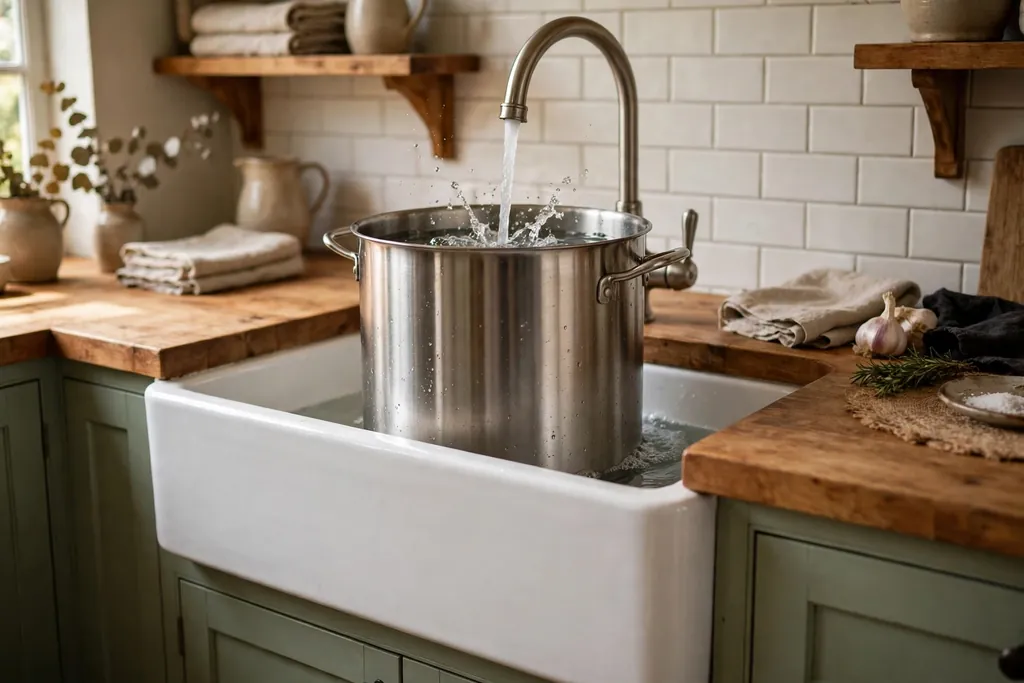
Farmhouse sinks are often deeper than standard sinks, which helps with tall pots and stacked dishes. Depth also affects how far you bend to reach the bottom of the bowl, so the best depth depends on who uses the sink most and for how long at a time. If you wash large pots by hand every day, extra depth can help. If you mainly rinse cups and small items, a shallower bowl may feel easier to use.
Check the clear space under the sink as well, since a deeper bowl leaves less room for plumbing, a disposal, and storage. Measure from the bottom of the bowl to the cabinet floor in your plan, and make sure the drain can still slope correctly to the wall pipe. A sink that fits the cabinet but leaves no room for a disposal or a filter may cause problems later.
4. Compare Fireclay, Stainless Steel, and Cast Iron
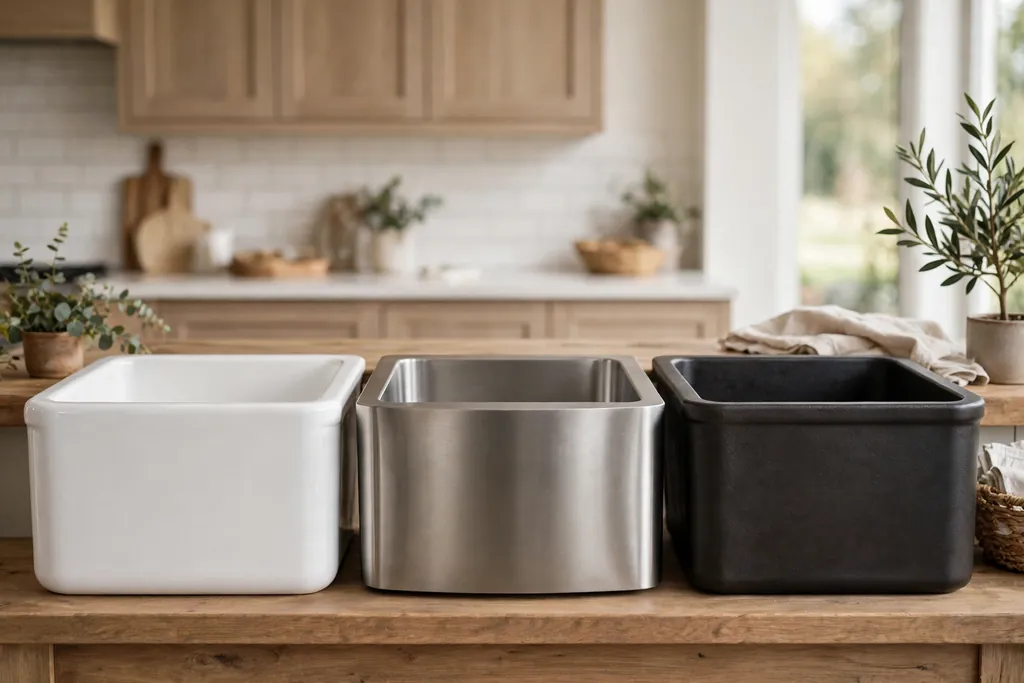
Fireclay, stainless steel, and cast iron are the most common farmhouse sink materials, and each has a different feel and care routine. Fireclay gives a smooth, bright surface and a classic look, and it is usually heavy, so it needs solid cabinet support. Stainless steel is lighter, resists many stains, and suits a wide range of kitchen styles, but it can show water marks and scratches over time. Cast iron with an enamel coating gives a deep, glossy finish and a solid feel, and it is also heavy and needs careful support.
Think about how you use the sink before you pick a material. If you drop heavy pans often, ask how each material handles chips and marks, and whether small marks can be touched up. If you want a quieter sink, check whether the model includes sound dampening pads or a coating on the underside. Choose the material that fits your care habits as well as your kitchen style.
5. Consider Copper, Granite Composite, and Other Materials
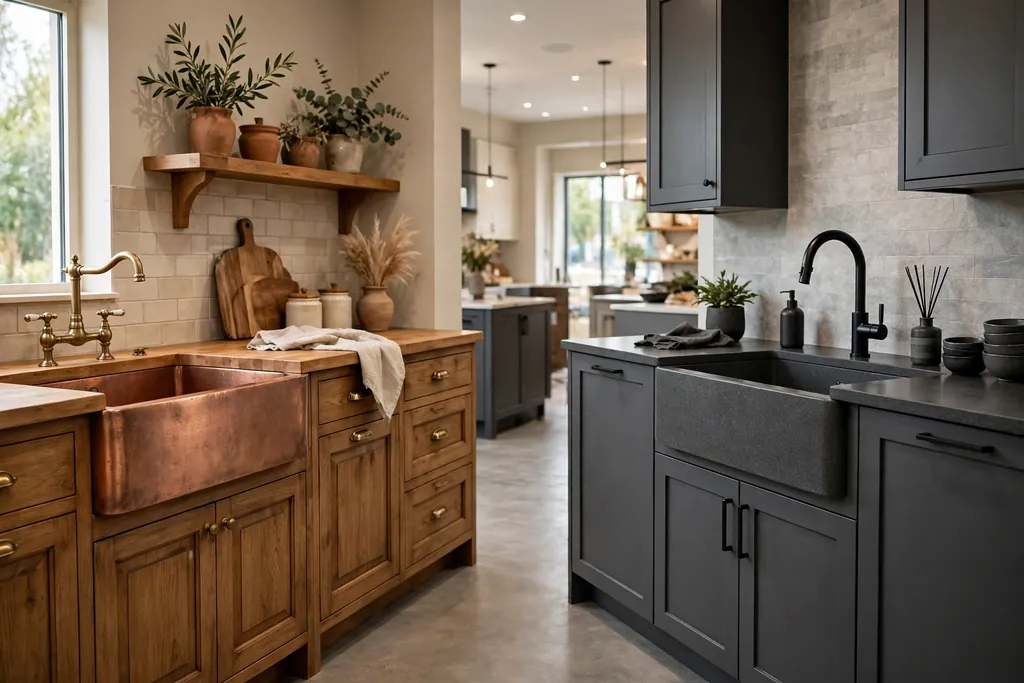
Copper gives a warm, handcrafted look and changes in tone over time, which suits some kitchens and not others. If you like copper, check how it is finished and what cleaning routine the maker suggests, since harsh cleaners can change its surface. Granite composite sinks are made from a mix of stone and resin, give a matte finish, and come in a range of neutral colors that suit many countertops.
Other materials, such as stone or concrete style sinks, can give a distinctive look, but they may need sealing or special care. For any less common material, ask about weight, cleaning, heat tolerance, and how chips or stains are handled. A material that looks right in a photo should also suit the cleaning products and cooking habits in your kitchen.
6. Decide Between a Single Bowl and a Double Bowl
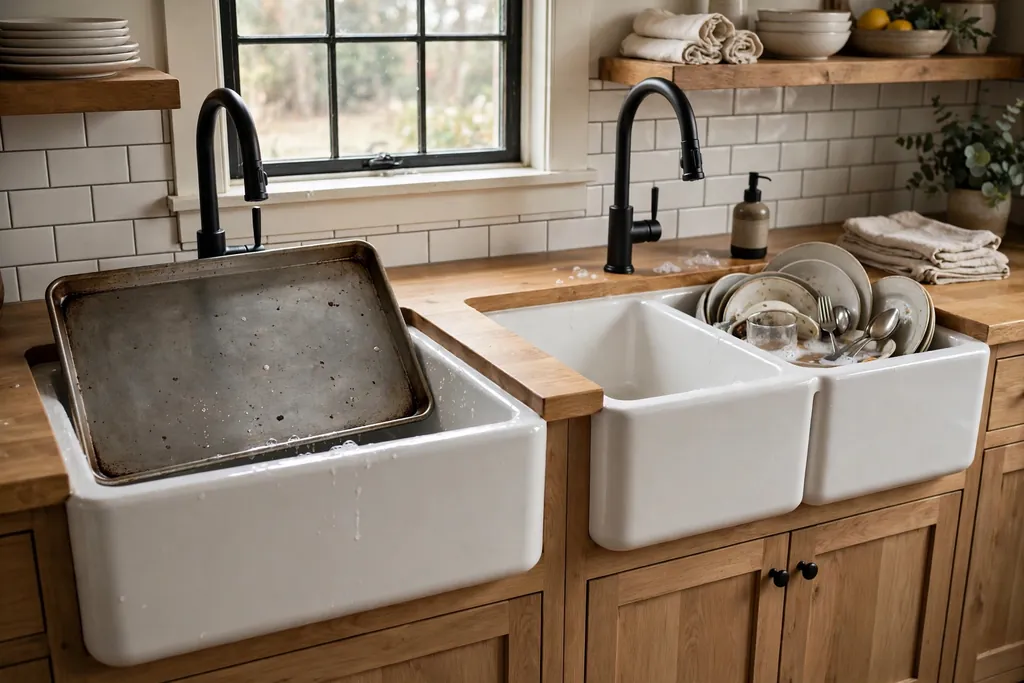
A single bowl gives one large, open space for washing big pots, sheet pans, and roasting trays without a divider in the way. It suits cooks who wash large items by hand, soak baking sheets, or use a dish rack inside the sink. A single bowl can also make rinsing produce and filling large pots simpler, since nothing blocks the space.
A double bowl splits the sink into two areas, so you can wash in one side and rinse or stack in the other. It suits kitchens where two people work at the sink, or where you like to keep dirty dishes apart from clean ones. Check the size of each bowl, not only the total width, since a double bowl with two small sides may not fit a large pan. If you use a disposal, check which bowl the drain and disposal will sit under.
7. Choose an Apron Front Style That Fits Your Kitchen
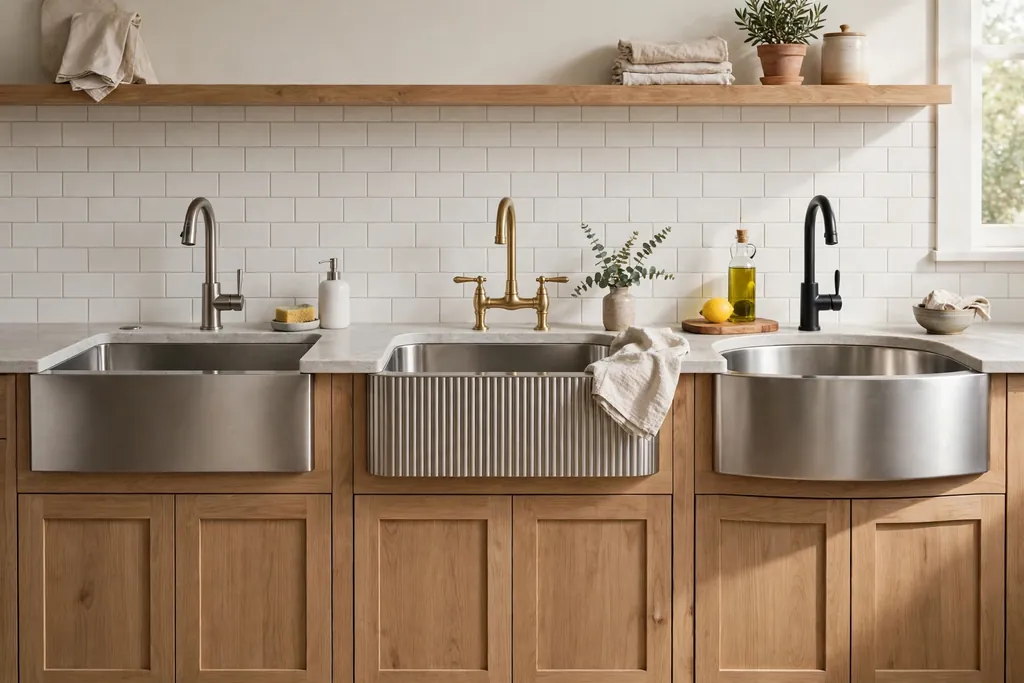
The apron is the exposed front panel of the sink, and its shape sets much of the sink’s character. A flat apron gives a clean, simple line that suits many kitchens. A fluted or paneled apron adds detail and suits a more traditional room. A curved or sloped apron softens the front and can feel less formal. Look at the apron in person if you can, since photos can flatten its shape and depth.
Also check how the apron meets the countertop and the cabinet. Some aprons sit flush with the cabinet front, while others project slightly forward. The projection affects how close you stand to the sink and how water drips from the front edge. Choose an apron that fits the style of your cabinets and countertop, and confirm the cabinet front can be cut or adapted to fit it cleanly.
8. Match the Sink Finish to Your Kitchen Style
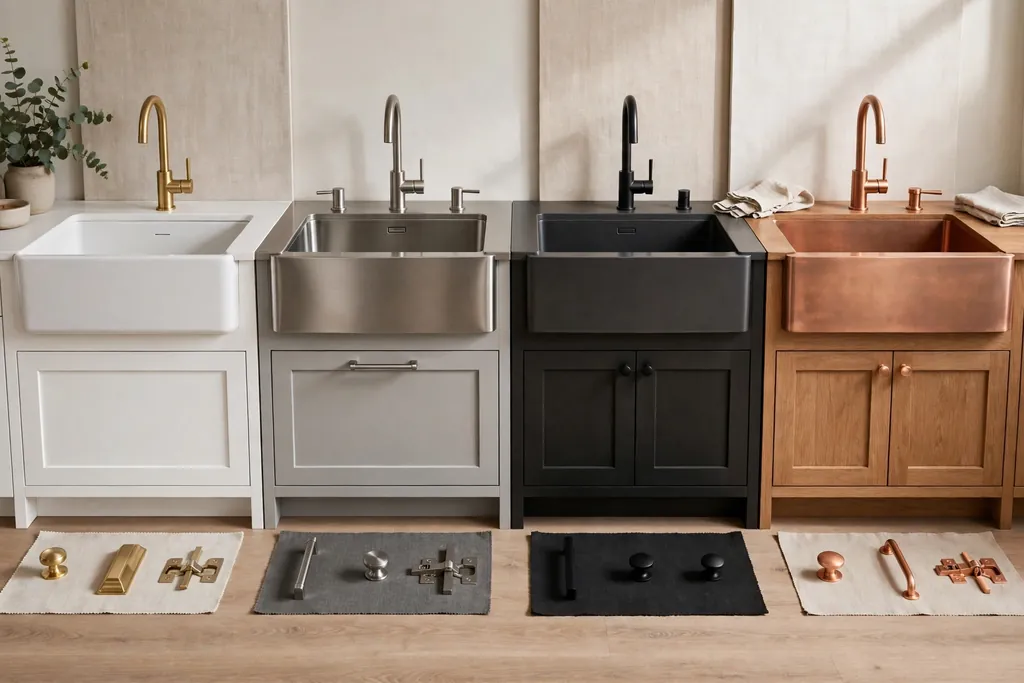
Finish covers color and surface texture, from bright white enamel to brushed steel, dark composite, and warm copper tones. A white sink can brighten a kitchen and suit painted cabinets, while a steel sink can blend with appliances and a modern countertop. A dark sink can anchor a light kitchen, but it may show water spots more clearly, so think about how often you wipe the sink dry.
Match the sink finish to the faucet finish and the cabinet hardware, but do not feel you must match every metal exactly. Mixed finishes can work when they share a similar tone, such as warm metals together or cool metals together. Hold a sample near your countertop and cabinet color in daylight if you can, since kitchen lighting can change how a finish looks at home.
9. Plan the Faucet and Hole Layout
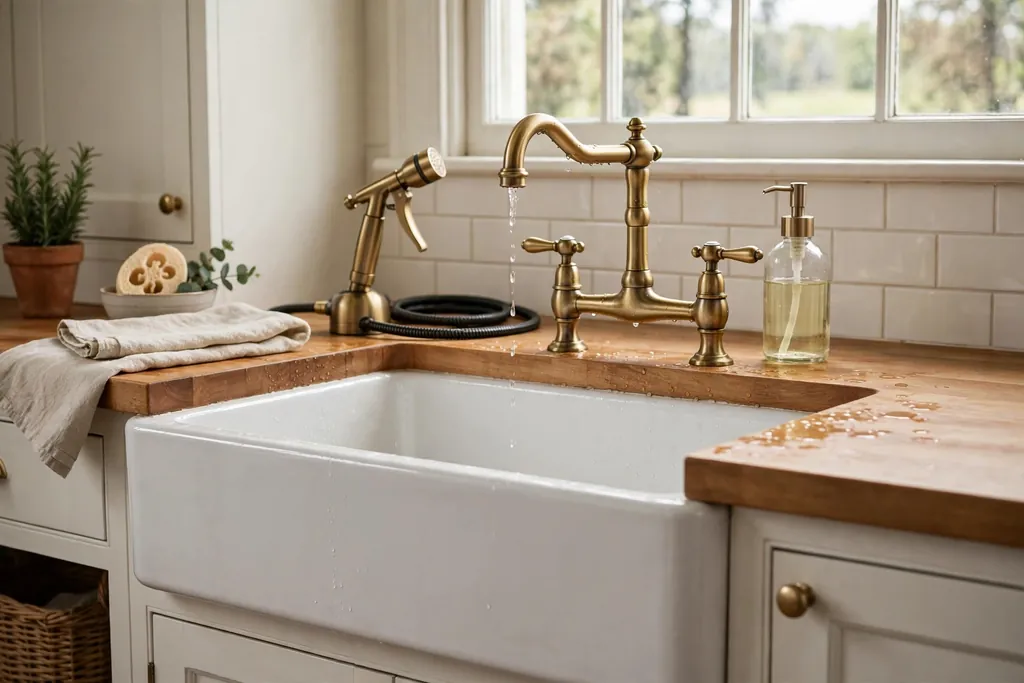
Farmhouse sinks do not always include faucet holes, so check where your faucet will sit. Some kitchens mount the faucet on the countertop behind the sink, some use a wall mounted faucet, and some use a bridge faucet with separate hot and cold handles. Each option needs a different hole layout and a different amount of space behind the sink.
Count the holes you need for the faucet, a sprayer, a soap dispenser, or a filtered water tap, and confirm the countertop or sink deck can hold them. Check the faucet height and reach against the bowl size, so the water stream lands in the center of the bowl and does not splash over the apron. If you plan a tall pot filler style faucet, check the clearance above the sink and any window or shelf behind it.
10. Check Drain Placement and Garbage Disposal Fit
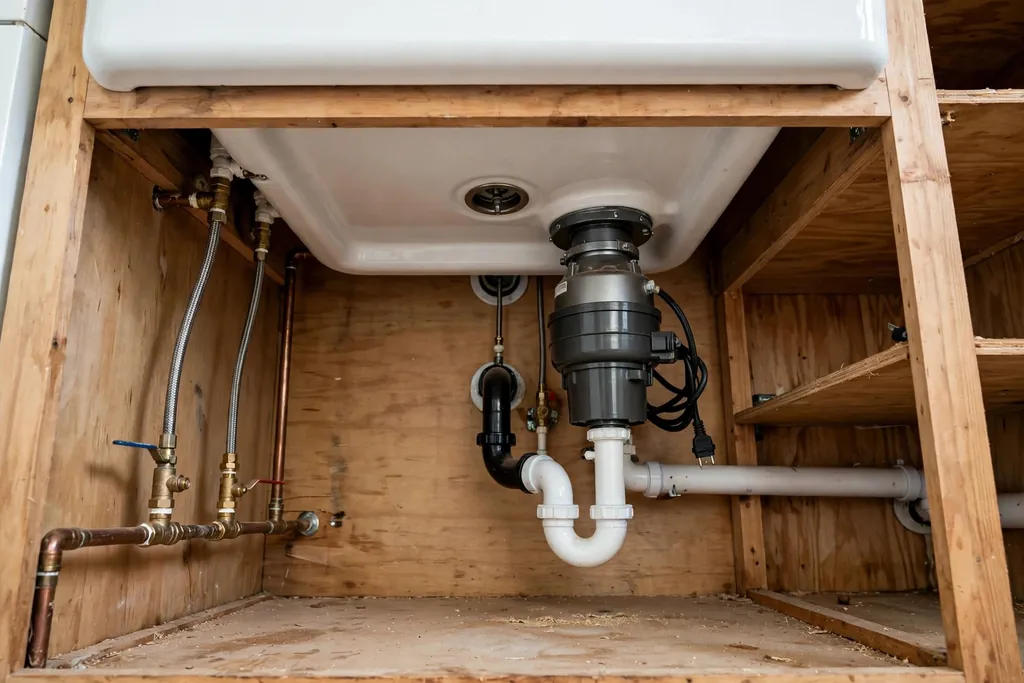
Drain placement affects how the sink drains and how much room is left under it. A rear drain leaves more usable space in the bowl and more room under the sink for a disposal or storage. A center drain can suit a double bowl, with one drain per side, but it may reduce the clear space under the middle of the sink. Check the drain position against your existing wall pipe before you order.
If you use a garbage disposal, confirm that it fits under the bowl you plan to use it with, and that the drain height still allows a correct slope to the wall pipe. A deeper sink can lower the drain outlet, which may leave too little fall for the pipe. Measure the disposal height and the wall pipe height, and discuss any needed plumbing change with your installer before you commit to a sink depth.
11. Understand Installation Types and Support Needs
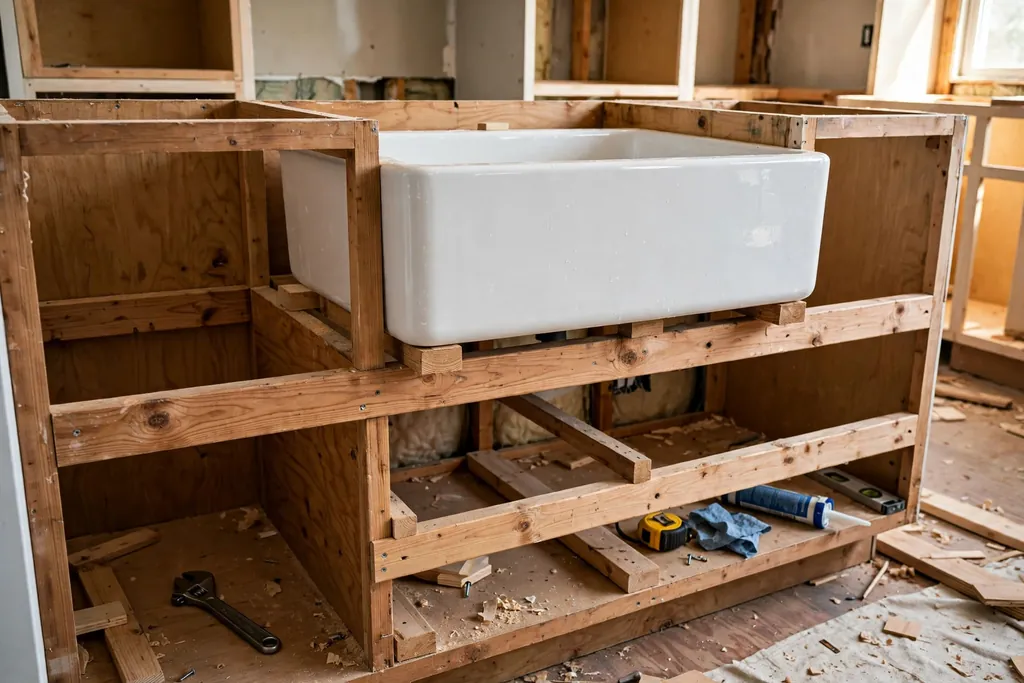
Farmhouse sinks are commonly installed as undermount sinks, where the sink rim sits below the countertop, or as flush mount sinks, where the rim sits level with the countertop. The choice affects the countertop cut, the seal around the sink, and how easy it is to wipe crumbs into the bowl. Ask your installer which method suits your countertop material, since some materials cut and seal more easily than others.
Support is just as important as the cut. Heavy sinks need a sturdy frame or support rails inside the cabinet, not only a seal to the countertop. Ask how the sink will be supported, how the weight will be spread across the cabinet sides, and whether the cabinet frame needs reinforcement. A well supported sink stays level and keeps its seal, while a sink held only by sealant can shift over time.
12. Plan for Accessories That Make Daily Use Easier
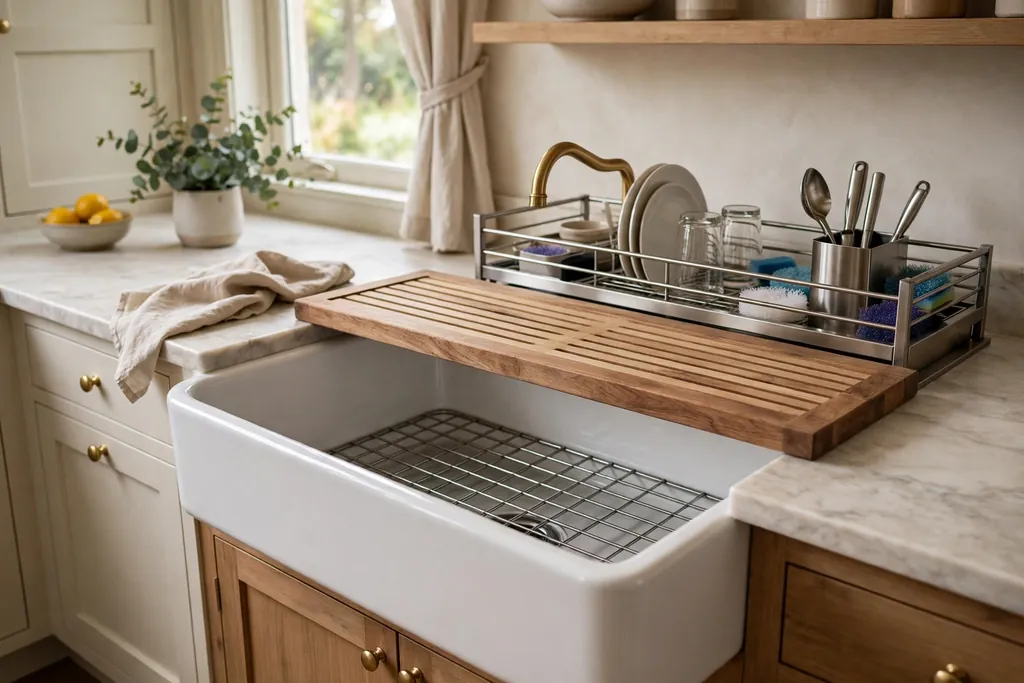
Accessories can change how useful a farmhouse sink feels day to day. A bottom grid protects the bowl surface and keeps dishes off the drain. A cutting board that sits over the sink adds prep space in a small kitchen. A colander insert, a drying rack, and a sink caddy can help with rinsing and drying without taking counter space. Check which accessories are made to fit the exact sink model you are considering, since a grid or board made for another size may not sit level.
Think about storage for accessories when they are not in use, and about cleaning them. A grid needs regular cleaning under its bars, and a wooden board needs drying after use. Choose accessories that solve a real daily task, such as rinsing produce or drying pans, rather than adding pieces that will sit unused in a cabinet.
13. Set a Practical Budget and Check What It Covers

Set a budget that covers the sink, the faucet if it is new, installation, countertop work, and any plumbing changes, not only the sink itself. Apron front installation can involve cabinet work, a new countertop cut, support framing, and plumbing adjustments, and those costs vary with the kitchen. Ask for a written scope that lists each item, so you can compare quotes fairly.
Also check what is included with the sink, such as a grid, a drain assembly, or a mounting kit, and what you need to buy separately. A sink that seems lower in cost may need extra parts, while a higher cost sink may include a grid and drain. Compare the full cost of each option, and keep a small reserve for surprises found inside the cabinet during installation.
14. Care for Your Farmhouse Sink Day to Day

Daily care keeps a farmhouse sink looking good and working well. Rinse the bowl after use, wipe up standing water around the apron and faucet base, and dry the surface if your water leaves spots. Use cleaners suited to your sink material, and avoid harsh abrasives on enamel, copper, and composite surfaces unless the maker suggests them. A soft cloth and a mild cleaner suit most daily cleaning.
Check the seal where the sink meets the countertop from time to time, and look for leaks under the cabinet after installation and after any plumbing work. Clean the drain and disposal as suggested by their makers, and keep heavy items from sitting in the sink for long periods. Simple, regular care protects the finish and the seal, and it keeps the sink a pleasant part of daily kitchen work.
Conclusion
Choosing a farmhouse sink starts with your cabinet measurements, then moves to size, depth, material, bowl layout, and apron style. Faucet holes, drain placement, disposal fit, support, and the full cost of installation all matter as much as the look of the sink. Work through the sections in order, write down your measurements, and confirm the details with your installer before you order. For more ideas from Dwell Ovell, browse the home page for home decor guides.
FAQs
What size farmhouse sink do I need for my kitchen?
The size you need depends on your base cabinet inside width and on the large items you wash most often, so measure the cabinet first and check that your longest pan fits the bowl. A moderate sink often works better than the largest sink that fits, since it leaves more counter space for prep and drying.
What is the best material for a farmhouse sink?
The best material depends on how you cook and clean, since fireclay gives a classic bright surface, stainless steel is lighter and suits many styles, cast iron gives a deep glossy finish, and copper and granite composite give warmer or matte looks. Choose the material whose weight, care routine, and repair options fit your kitchen, rather than choosing on looks alone.
Should I choose a single bowl or double bowl farmhouse sink?
Choose a single bowl if you wash large pots, sheet pans, and roasting trays by hand and want one open space without a divider. Choose a double bowl if you like to wash in one side and rinse or stack in the other, or if two people often work at the sink, and check that each bowl is large enough for your pans.
Do farmhouse sinks need special cabinet support?
Yes, farmhouse sinks often need a sturdy support frame or rails inside the cabinet, especially heavy fireclay and cast iron models, since the sink should not rest on sealant alone. Ask your installer how the weight will be spread across the cabinet sides and whether the cabinet frame needs reinforcement before you order.
Can a farmhouse sink fit in an existing kitchen cabinet?
A farmhouse sink can fit an existing cabinet in some kitchens, but the cabinet front usually needs a cut or a modified frame for the apron, and the countertop may need a new cut as well. Measure the cabinet inside width, depth, and height, check the plumbing and disposal fit, and discuss the cabinet work with your installer before you buy.
How do I clean and care for a farmhouse sink?
Rinse the bowl after use, wipe up standing water around the apron and faucet base, and use a mild cleaner suited to your sink material with a soft cloth. Avoid harsh abrasives on enamel, copper, and composite surfaces unless the maker suggests them, and check the countertop seal and under cabinet plumbing from time to time for leaks.