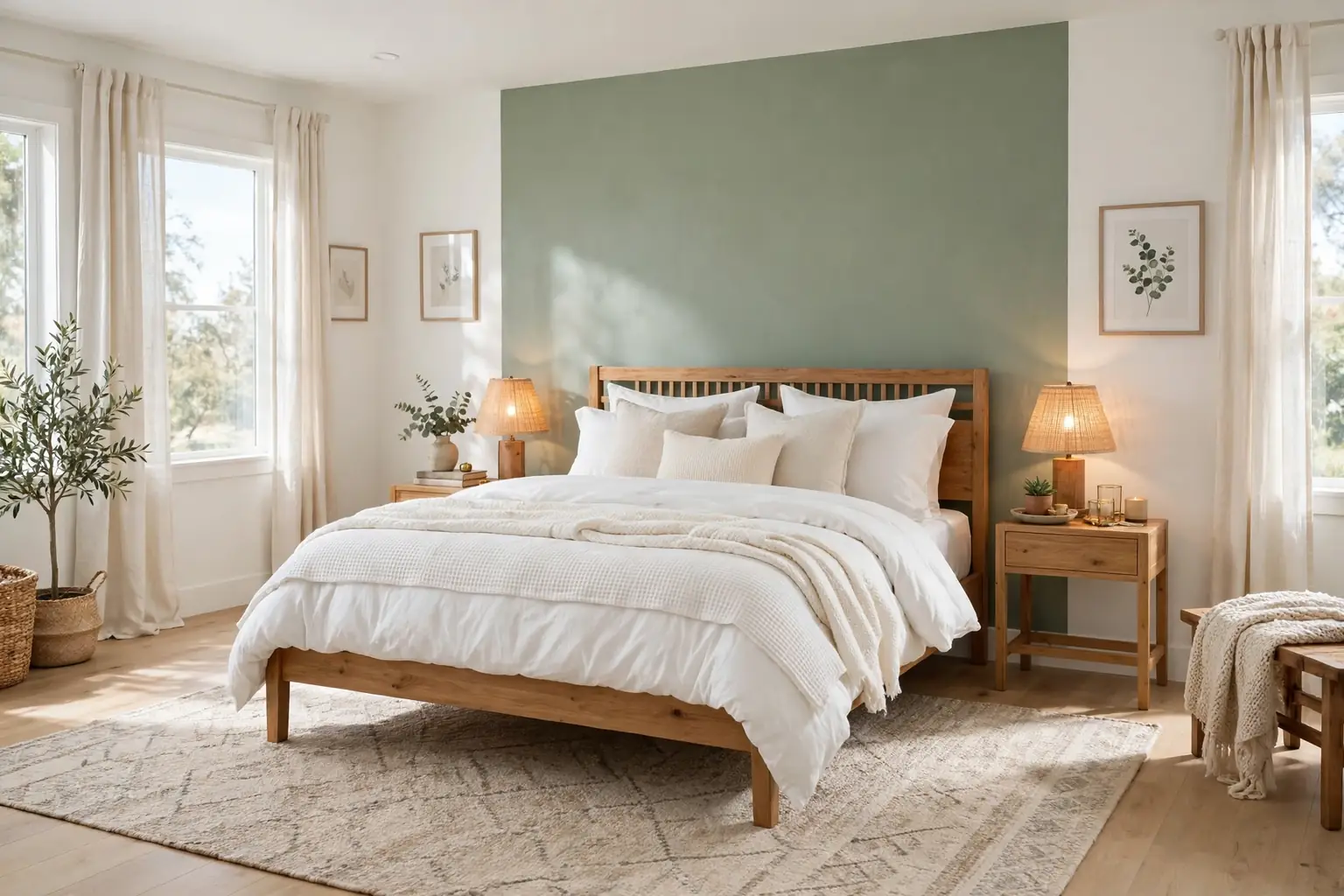
A bedroom makeover works best when you start with the bed, then change one wall, the lighting, and the storage. Pick a calm color palette, add layered bedding, clear clutter, and add one focal point, such as a new headboard or art. These 25 ideas show simple changes you can make room by room, with most needing only a weekend.
The 25 ideas below cover the bed, the walls, the windows, the lighting, and the storage spots that shape how a bedroom feels day to day. You can pick one idea for a quick refresh or combine several for a bigger change, and most ideas work in rented rooms as well as owned homes. For more home decor ideas across rooms, visit the Dwell Ovell home page.
Key Takeaways
- Start with the bed, since bedding, pillows, and a headboard set the tone for the whole room.
- Change one wall at a time, with paint, wallpaper, art, or a mirror, so the room stays calm rather than busy.
- Use warm, layered lighting, with bedside lamps or pendants, instead of relying on one bright ceiling light.
- Give everything a home, with under bed storage, baskets, trays, and shelves, so clutter stays out of sight.
- Repeat one or two colors and one or two materials through the room, so small changes look planned.
- Work in stages, and live with each change for a few days before adding the next one.
1. Layered White and Neutral Bedding
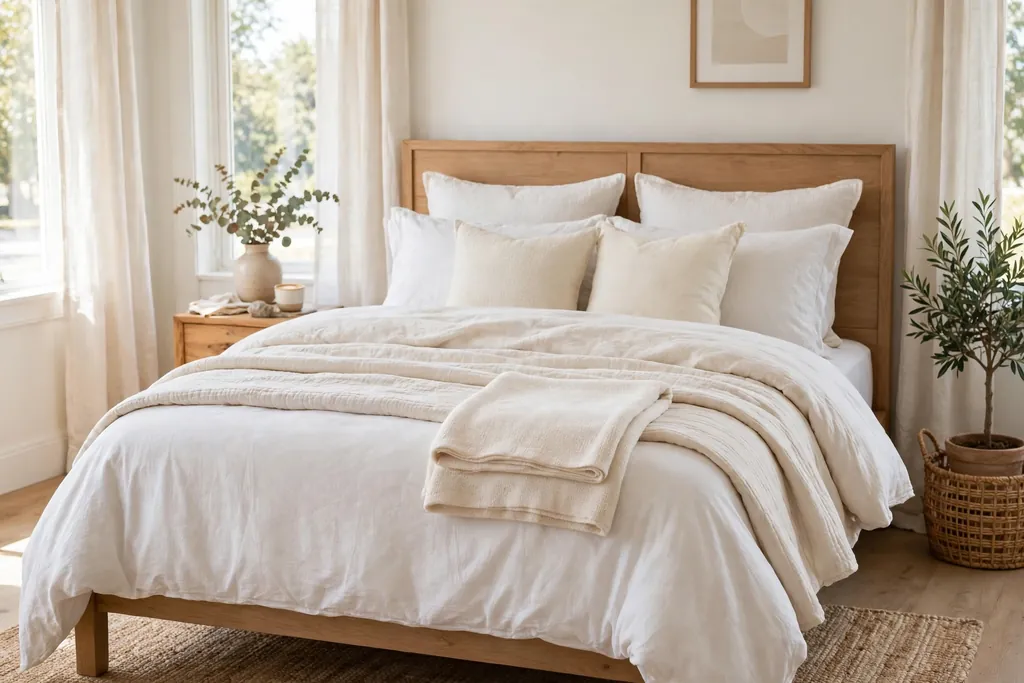
Dress the bed in white or cream sheets, add a light duvet or coverlet, and finish with a folded throw at the foot of the bed. Pale bedding makes the room feel clean and bright, and it gives you a calm base that works with almost any wall color or rug.
Layer a thin blanket under the duvet for cooler nights, and fold the top of the duvet back to show the layers. Keep the throw in a washable fabric, so it can be cleaned often, and choose a texture, such as cotton, linen, or a soft knit, that adds interest without a strong pattern.
2. Paint an Accent Wall Behind the Bed
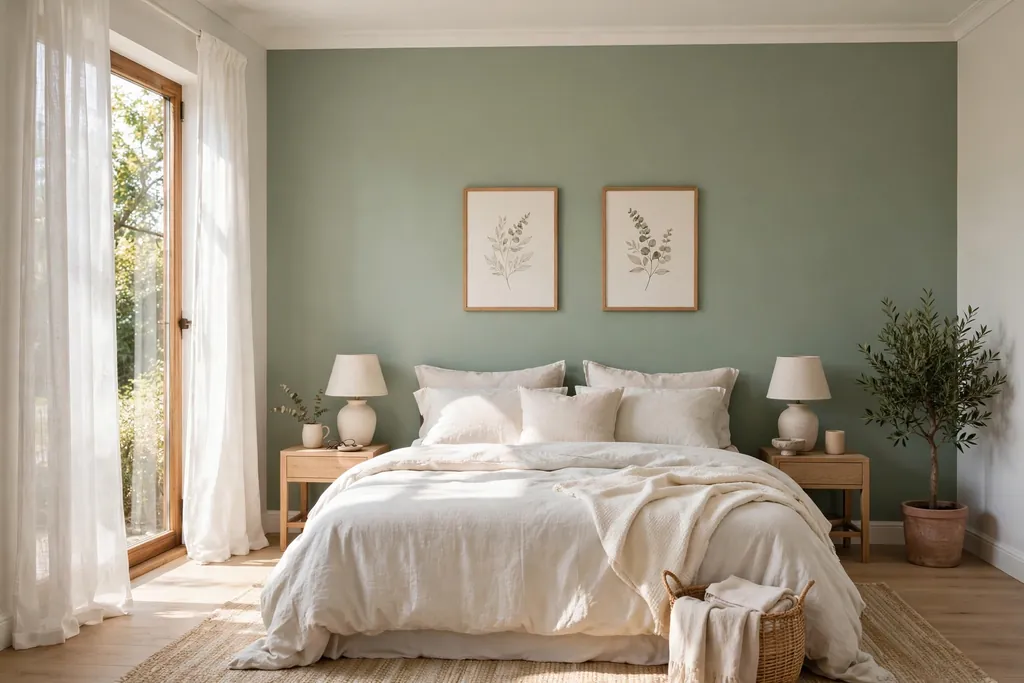
Paint the wall behind the bed in a calm color, such as sage green, soft blue, warm grey, or muted clay, and leave the other walls pale. One painted wall gives the bed a clear backdrop and changes the whole room for the cost of a can of paint and a weekend afternoon.
Test the color on a large board first, and look at it in morning light and evening light before you commit. Paint two coats for even coverage, and keep the bedding and curtains simple while the new color settles, so the wall stays the focus.
3. Add a New Upholstered Headboard

Swap a plain or dated headboard for a padded fabric headboard in linen, velvet, or cotton, in a color that matches your bedding. A soft headboard makes the bed look finished, and it gives you a comfortable backrest for reading in bed.
Measure the bed width before you buy or build, and check that the headboard height suits your pillows when you sit up. Fix it firmly to the bed frame or the wall, so it does not shift when you lean on it, and keep the fabric in a color you can live with for a few years.
4. Warm Bedside Lamps on Both Sides
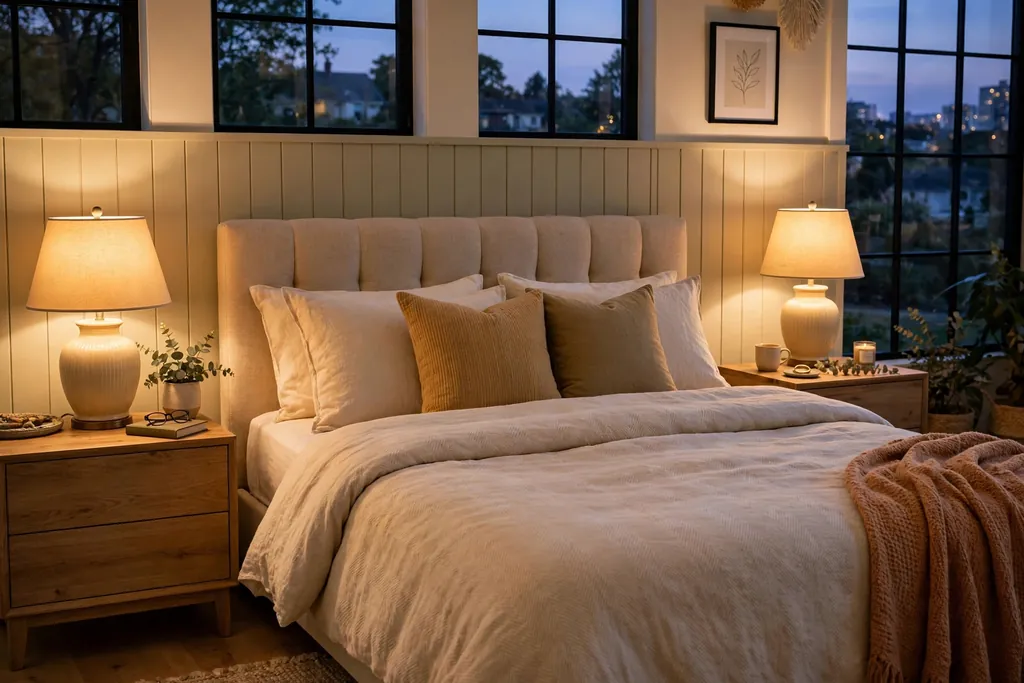
Place a matching pair of lamps on the nightstands, with warm bulbs and shades that glow softly in the evening. Two lamps frame the bed, give each side of the bed its own light for reading, and let you turn off the main ceiling light at night.
Choose lamp heights so the bottom of the shade sits near shoulder height when you sit in bed. Use warm white bulbs, and keep cords tucked behind the nightstand so they do not trail across the floor. If space is tight, a slim lamp or a wall mounted light can give the same effect.
5. Lean a Large Mirror Against the Wall
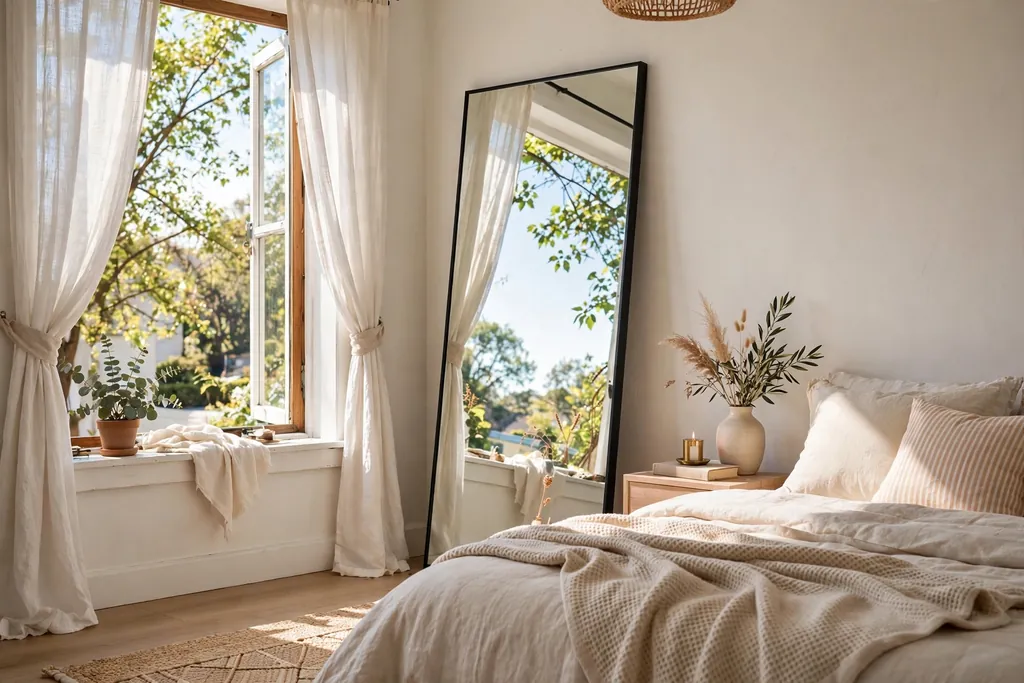
Lean a tall mirror against a bedroom wall, near a window or beside the wardrobe, and fix it to the wall with a proper bracket or anti tip strap. A large mirror bounces daylight around the room, makes a small bedroom feel wider, and gives you a full length view when getting dressed.
Check the reflection from the bed and the door, and move the mirror if it reflects clutter or a bright light straight into the bed. Keep the floor in front of the mirror clear, so the reflection stays open, and wipe the glass often, since a large mirror shows dust quickly.
6. Layer Sheer and Blackout Curtains
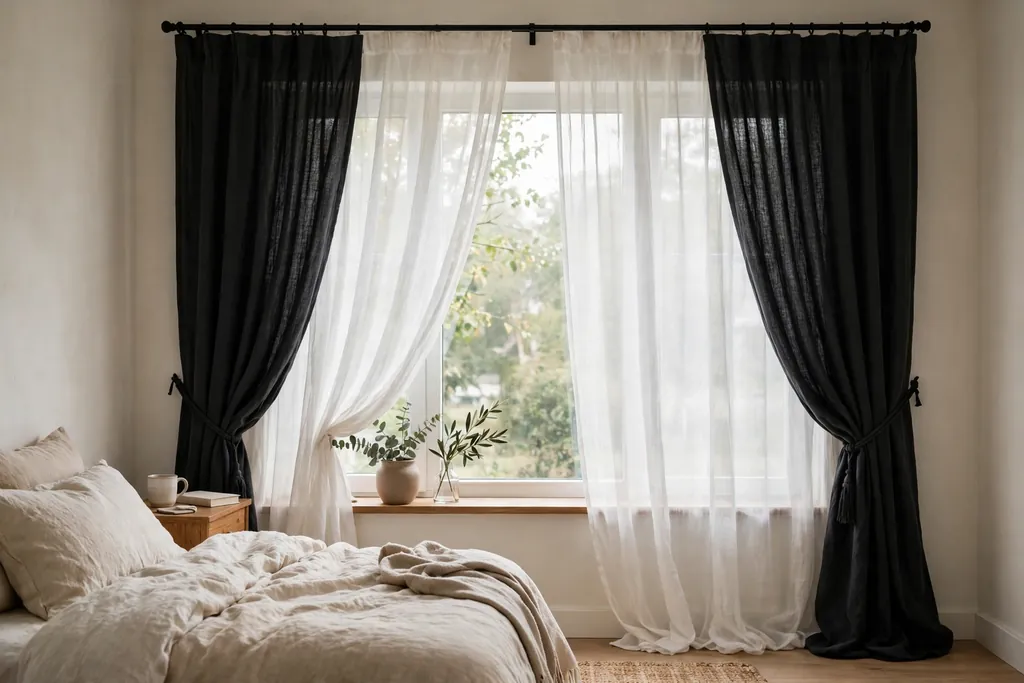
Hang sheer curtains closest to the window for daytime privacy, with blackout curtains or lined drapes on top for sleep. Sheers soften daylight and keep the room private, while the heavier layer blocks early morning light and helps the room feel calm at night.
Hang the curtain rod high and wide, so the curtains frame the window rather than covering it. Use the same rod and rings for both layers, and check that the blackout curtains close fully, with no gap in the middle where light leaks through.
7. Add Under Bed Storage Boxes
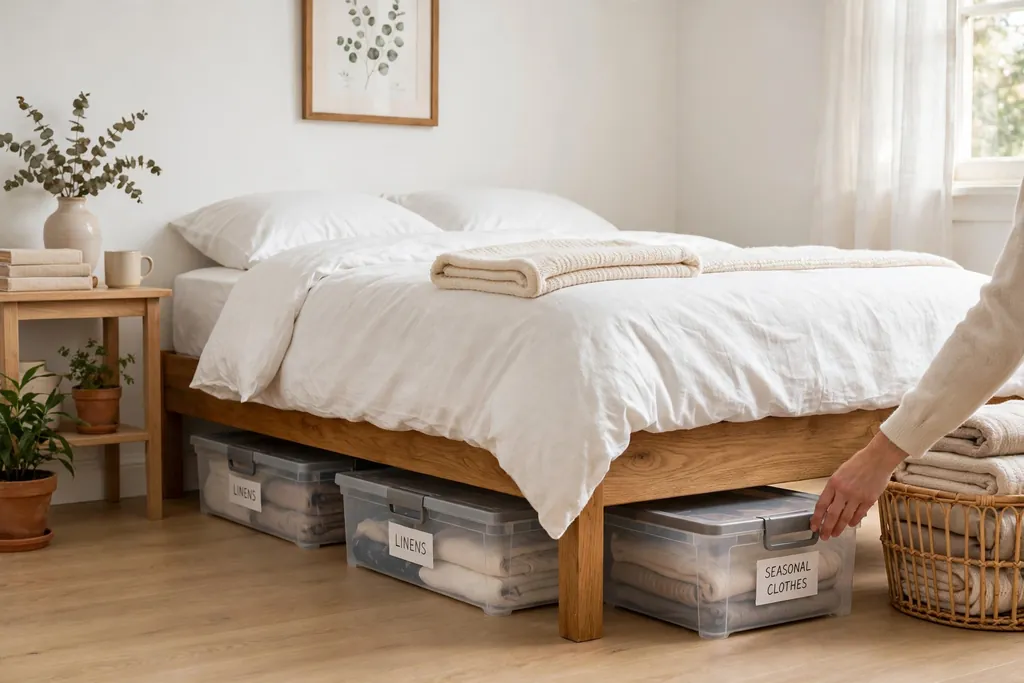
Slide flat storage boxes under the bed for out of season clothes, spare bedding, or shoes, and label each box so you can find things without pulling them all out. Under bed storage uses space that often sits empty, and it clears the floor and the top of the wardrobe in one step.
Measure the clearance under the bed before you buy boxes, and choose boxes with lids to keep dust out. Keep the boxes you use most near the side of the bed you reach easily, and sort them once a season, so stored items do not pile up unnoticed.
8. Lay a Rug That Extends Past the Bed

Place a large rug under the lower two thirds of the bed, so it extends past both sides and past the foot of the bed. A rug softens cold floors in the morning, anchors the bed in the room, and adds color or texture without painting or changing furniture.
Choose a rug large enough that your feet land on it when you get out of bed on either side. Use a rug pad underneath to stop slipping, and pick a low pile rug if the room has a door that swings over it. Vacuum the rug often, since bedroom rugs collect dust and hair quickly.
9. Hang a Gallery Wall of Framed Prints

Hang a group of framed prints above the dresser or along one wall, choosing subjects you enjoy, such as landscapes, botanical prints, or simple abstract shapes, in frames of one or two finishes. A gallery wall fills a blank wall with personality, and it costs less than one large piece of art.
Plan the layout on the floor first, with the largest print near the center and smaller prints around it, then hang the group at eye level. Use picture hooks rated for each frame, and leave a little space between frames so each print can be seen on its own.
10. Paint the Nightstands a Fresh Color
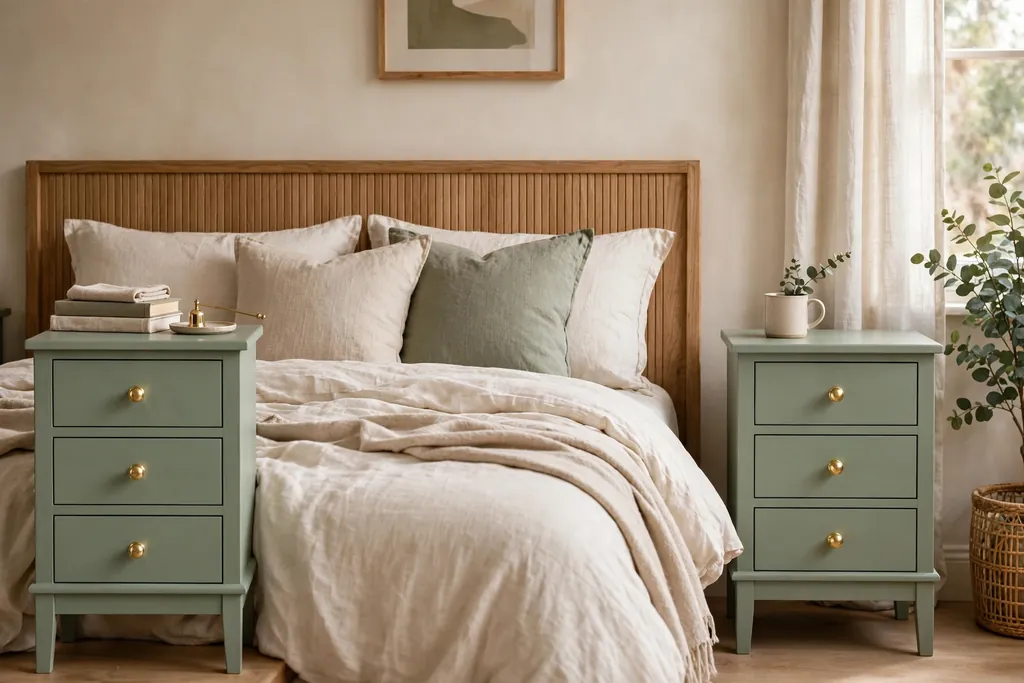
Paint a pair of dated nightstands in a fresh color, such as soft white, sage, navy, or warm grey, and add new knobs to finish the change. Painted nightstands give the bedside a clean look for little cost, and they let you test a color before painting a whole wall.
Clean and lightly sand the nightstands first, so the paint sticks well, and use paint suited to furniture for a hard wearing finish. Let each coat dry fully, and keep the nightstand tops clear while the paint cures, so nothing sticks to the new surface.
11. Make a Reading Corner with a Chair
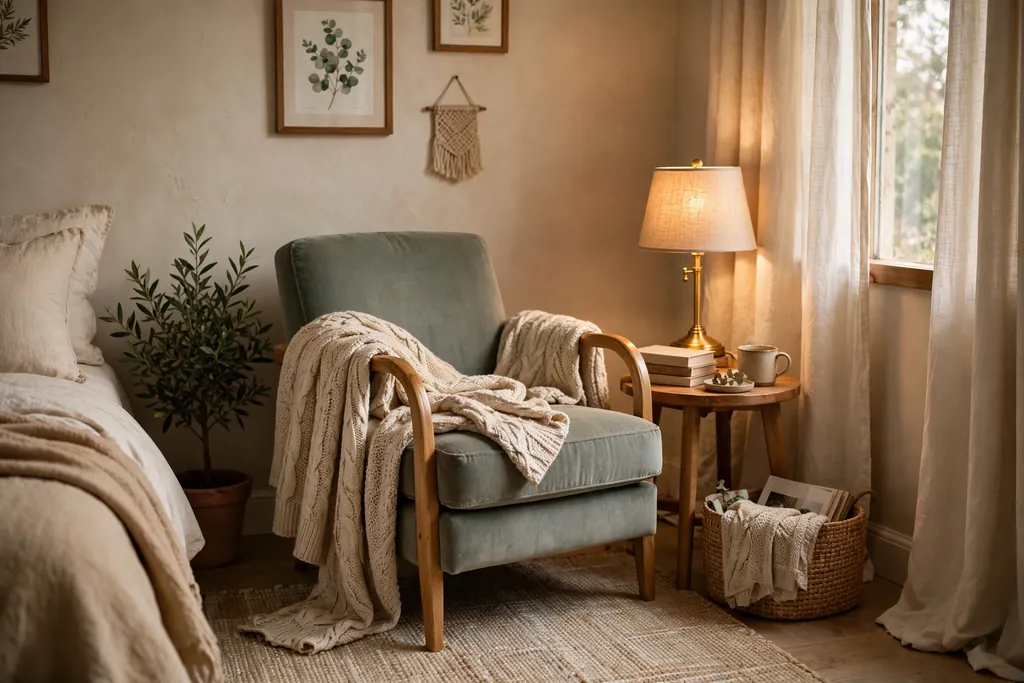
Set a comfortable chair in a bedroom corner, with a small side table, a reading lamp, and a folded throw. A reading corner gives the bedroom a second use beyond sleep, and it turns an empty corner into a spot you will actually sit in each day.
Choose a chair that fits the corner without blocking the door or the wardrobe, and keep the side table large enough for a book and a mug. Place the lamp so light falls over your shoulder, not into your eyes, and keep the throw within reach for cooler evenings.
12. Swap Drawer Knobs and Pulls
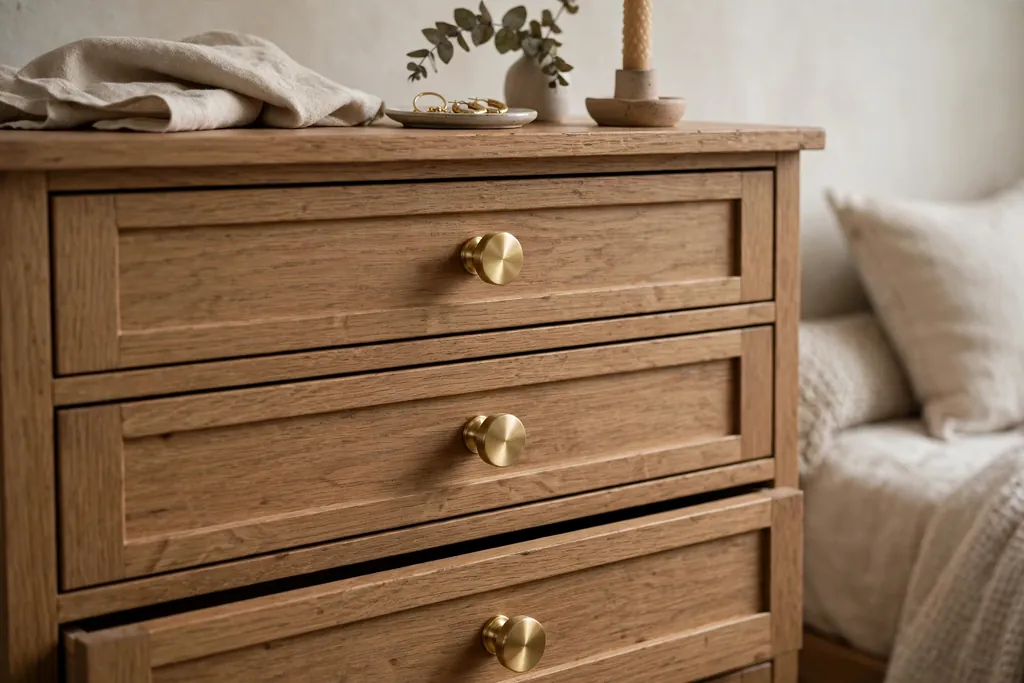
Replace dated knobs and pulls on the dresser, wardrobe, and nightstands with new ones in a finish you like, such as brushed brass, matte black, or plain wood. New hardware changes the look of furniture in minutes, and it is easy to reverse if you move or change your mind.
Remove one knob first and check the screw size and spacing before you buy replacements. Keep the old hardware in a labeled bag, so you can refit it later, and tighten each new knob firmly, so drawers do not rattle when you open them.
13. Add Floating Shelves for Books and Plants
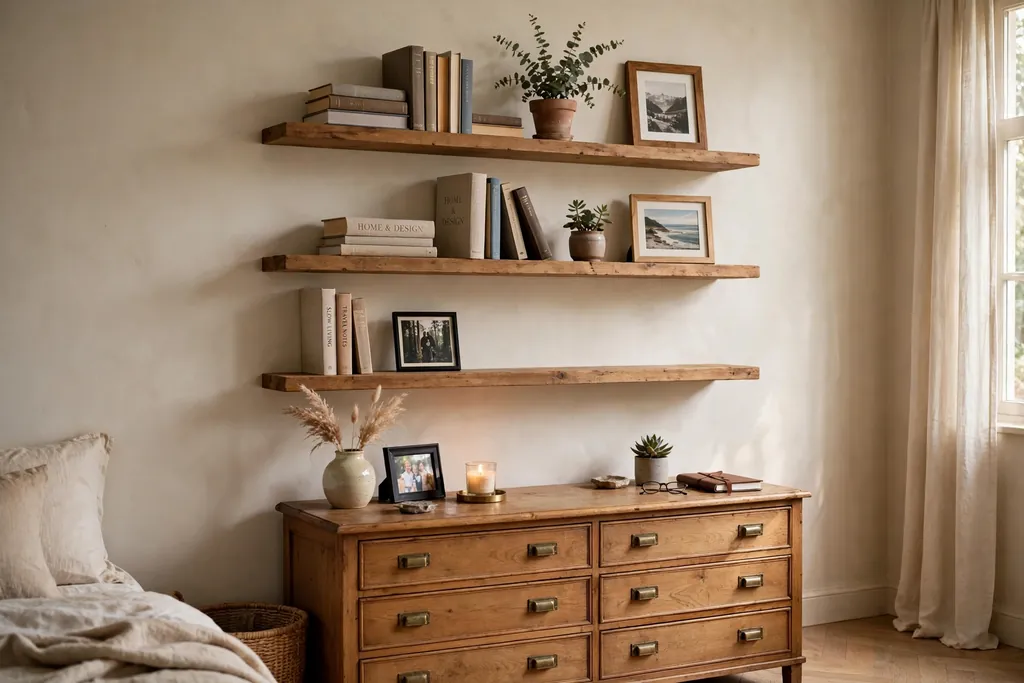
Fix two or three floating shelves above a dresser or a small desk, and use them for books, small plants, and a few framed photos. Shelves use wall space that often sits empty, and they keep books and small items off the dresser top, where they tend to pile up.
Fix shelves into wall studs or use fixings rated for the weight, and keep heavier books on the lowest shelf. Leave some empty space on each shelf, so the display looks calm, and keep plants where they get enough light and where watering will not drip onto books below.
14. Place a Bench at the Foot of the Bed
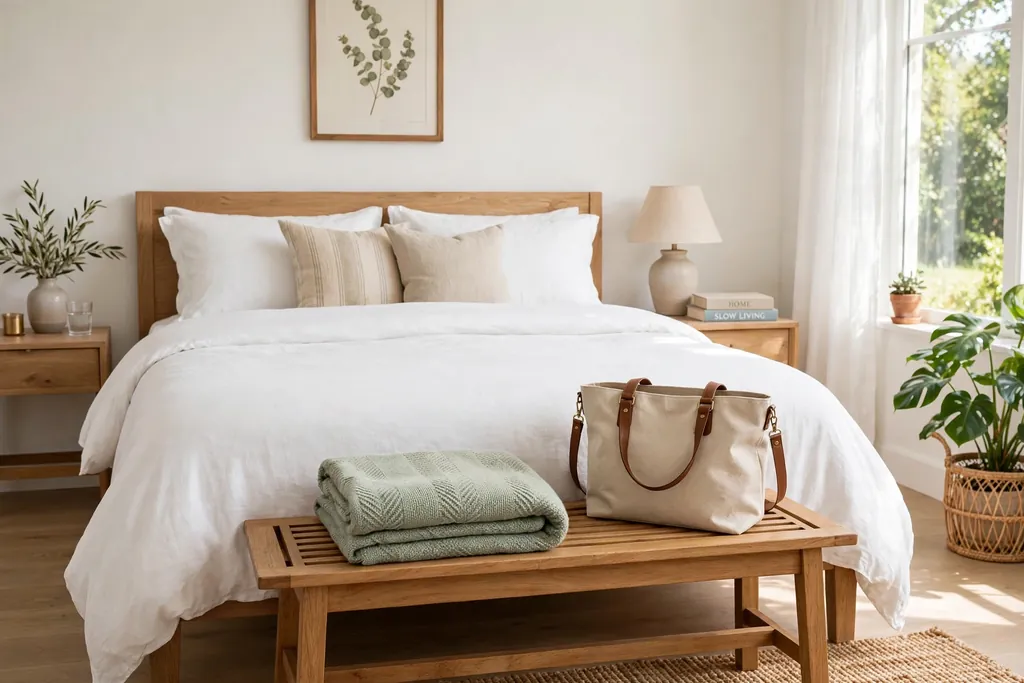
Set a bench at the foot of the bed, in wood, fabric, or woven rattan, to hold a folded throw, a bag, or clothes laid out for the next day. A bench finishes the bed visually, gives you a seat while getting dressed, and adds storage without a new piece of large furniture.
Measure the bed width and leave a clear path around the bench, so you can walk past it easily in the dark. Choose a bench height near the mattress height, so it looks balanced, and keep the top mostly clear, so it stays useful rather than becoming another clutter spot.
15. Use Peel and Stick Wallpaper on the Bed Wall
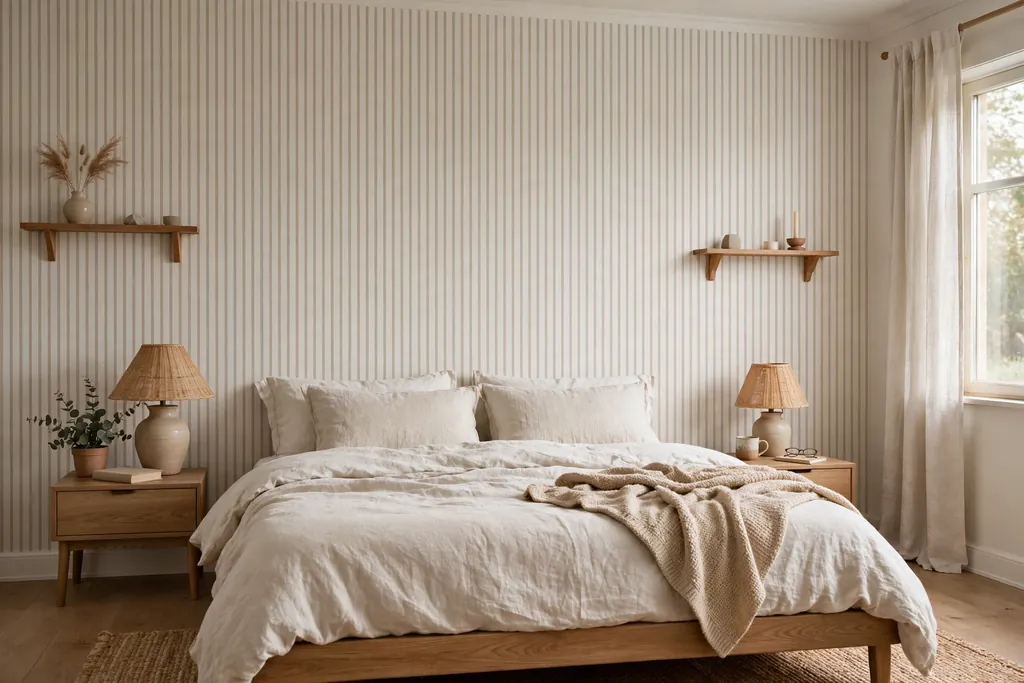
Apply peel and stick wallpaper to the wall behind the bed, in a pattern you like, such as subtle stripes, small florals, or a soft geometric print. Peel and stick paper gives the bed wall pattern and color without paste, and it suits rented rooms, since it can be removed later.
Start at one corner, smooth the paper as you go, and use a sharp blade for clean edges at the ceiling and skirting. Match the pattern at each join, and keep the rest of the room plain, so the patterned wall stays the focus. For a softer seasonal wall idea with pink tones, see Pink Christmas Decor.
16. Add Potted Plants to the Windowsill and Dresser
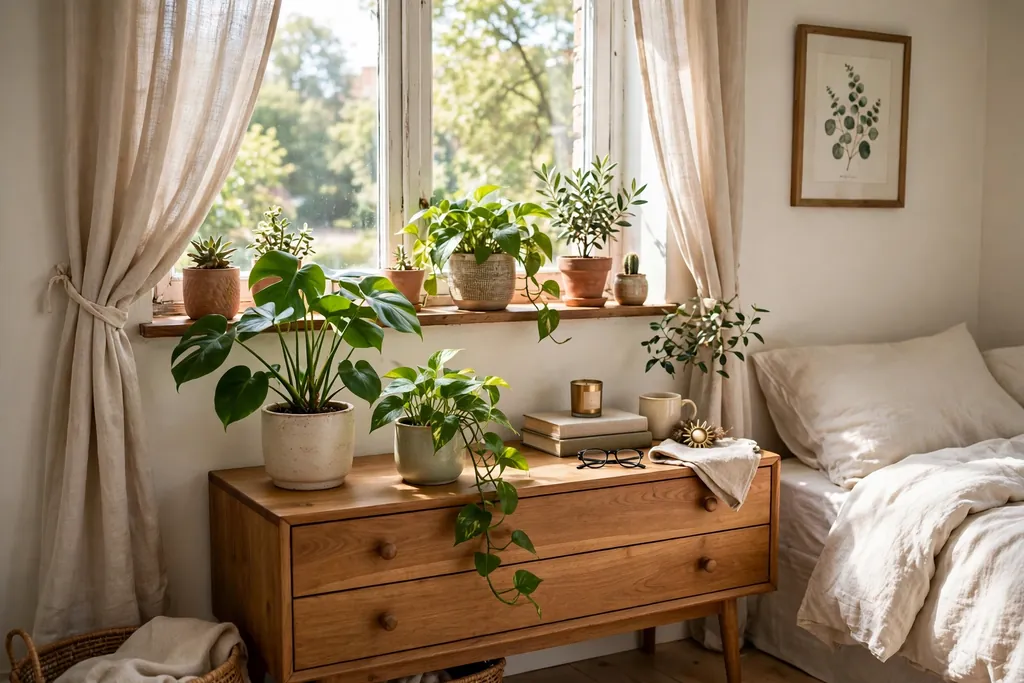
Place two or three potted plants on the windowsill, dresser, or a small plant stand, choosing plants that suit your light, such as pothos, snake plants, or peace lilies for lower light rooms. Plants add green color and life to a bedroom, and they soften hard furniture edges.
Check the light each spot gets through the day, and water only when the soil feels dry, since overwatering harms most indoor plants. Use pots with drainage holes and a tray underneath, so water does not mark the dresser or the sill, and rotate plants now and then, so they grow evenly.
17. Hang Pendant Lights Beside the Bed
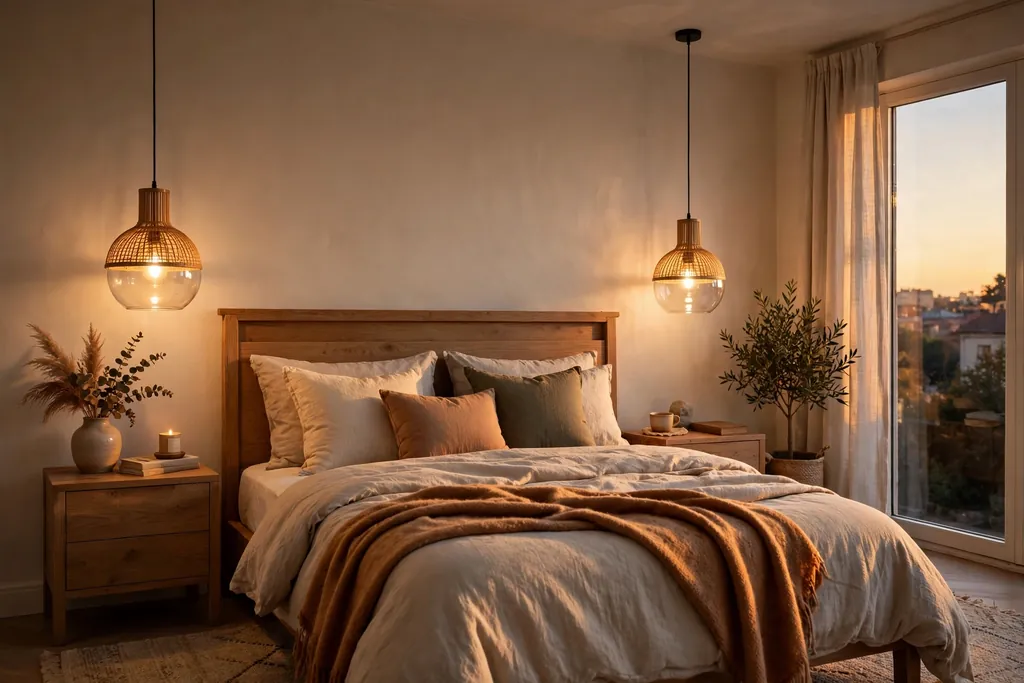
Hang a pair of pendant lights from the ceiling on either side of the bed, instead of table lamps, to free up nightstand space. Pendants give focused light for reading, add a clean look above the bed, and leave the nightstand top clear for a book, a glass of water, and a phone.
Hang pendants so the bottom of each shade sits just above head height when you sit in bed, and keep both pendants at the same height. Use warm bulbs, and have the wiring done safely, with cords or ceiling mounts fixed firmly, so the pendants hang straight and steady.
18. Create a Small Vanity or Dressing Corner
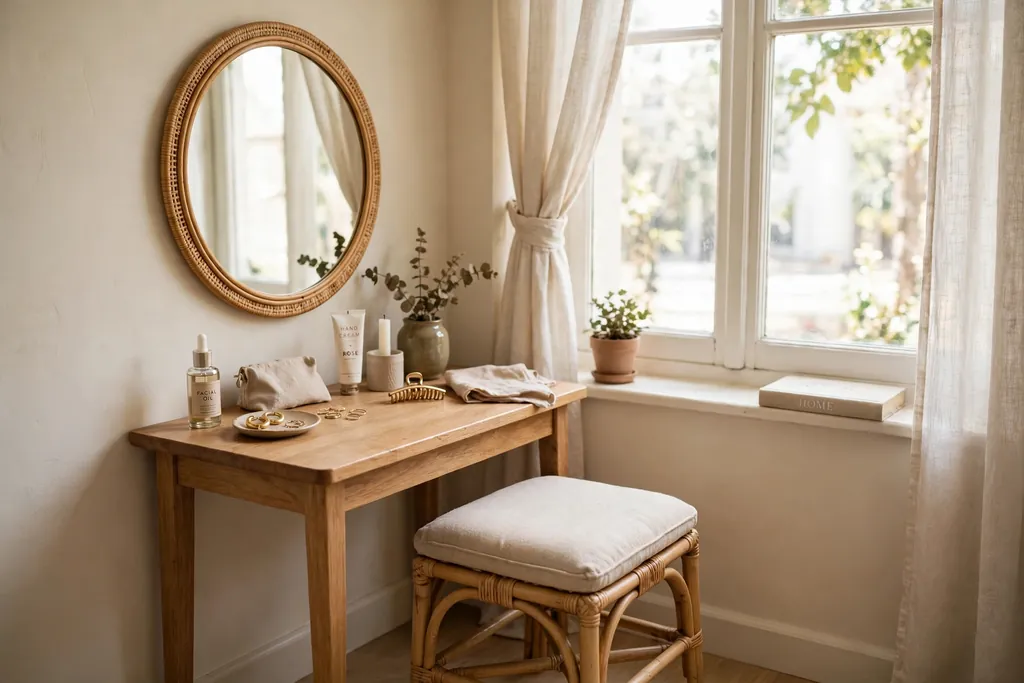
Set a small table and a mirror in a corner or beside the window, with a stool tucked under, to make a dressing corner for morning routines. A vanity gives makeup, jewelry, and hair tools one home, and it keeps those items off the dresser and out of the bathroom queue.
Keep only daily items on the tabletop, such as a brush, a small tray, and one vase, and store the rest in a drawer or a box nearby. Sit at the vanity in daylight to check that the mirror height works, and keep the stool clear, so the corner stays inviting rather than crowded.
19. Use Woven Baskets for Laundry and Loose Items

Place woven baskets around the bedroom for laundry, spare blankets, toys, or loose items that tend to collect on chairs and floors. Baskets hide clutter in a soft, natural material, and they are easy to carry when you need to tidy a room quickly before guests arrive.
Label or assign each basket a job, such as laundry, blankets, or charging cables, so items do not mix. Choose baskets with lids for items you want hidden, and open baskets for blankets you reach for often. Empty and sort baskets once a week, so they do not become hidden clutter.
20. Hang One Oversized Piece of Art Above the Bed

Hang one large piece of art above the bed, sized about two thirds of the bed width, in colors that echo your bedding or rug. One large piece gives the room a clear focal point, and it looks calmer than many small frames competing for attention on the same wall.
Hang the art so its center sits at eye level when you stand, and keep the wall around it plain. Check the hanging fixings for the weight, and step back to view it from the door, since that is the view you see most often when you enter the room.
21. Set Up a Tidy Bedside Charging Spot
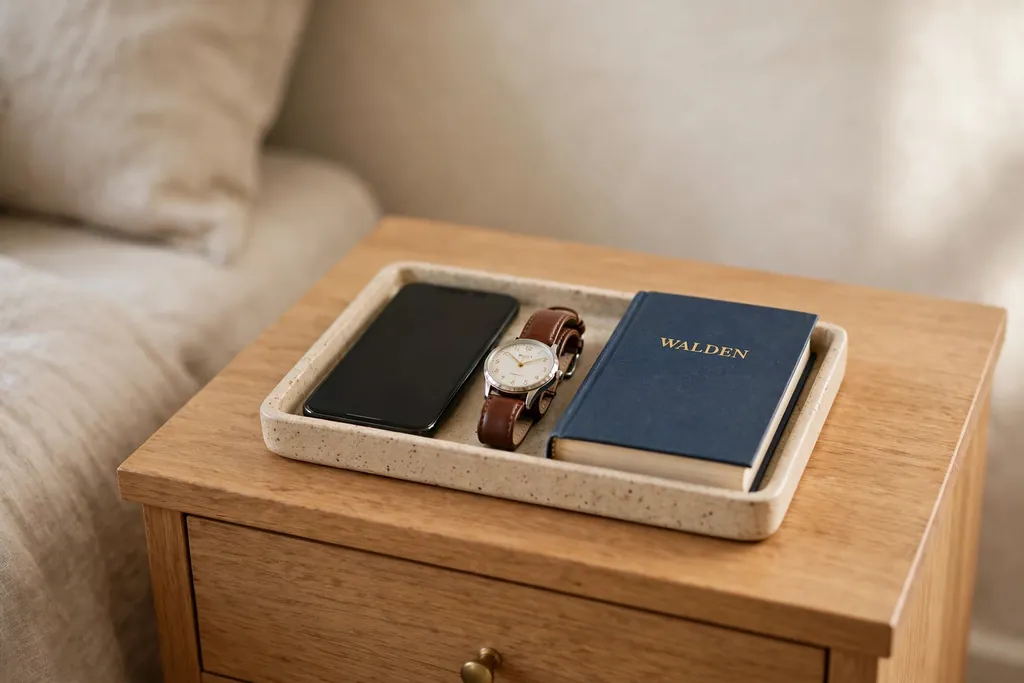
Keep a small tray or a cable organizer on one nightstand for a phone, a watch, and a book, with cables routed behind the nightstand. A set charging spot stops cables from tangling on the bed, keeps the nightstand clear, and helps you put the phone down at night.
Use one short cable per device, and a small tray to hold the phone and watch together. Keep the tray away from water glasses, and charge devices before bed, so the nightstand stays calm through the night and the morning routine starts without searching for cables.
22. Refresh the Pillow Mix with Euro Shams and a Lumbar

Rebuild the bed pillows with sleeping pillows at the back, euro shams in front of them, and one lumbar pillow at the front for color. A layered pillow mix makes the bed look styled and inviting, and it gives you options for sleeping, sitting up, and reading.
Use pillow covers in washable fabrics, and keep the total count low enough that making the bed each morning stays quick. Repeat one color from the rug or art in the lumbar pillow, so the bed ties in with the rest of the room, and store spare pillowcases in the same place each time.
23. Swap a Dated Bed Frame for a Simple Wooden Frame
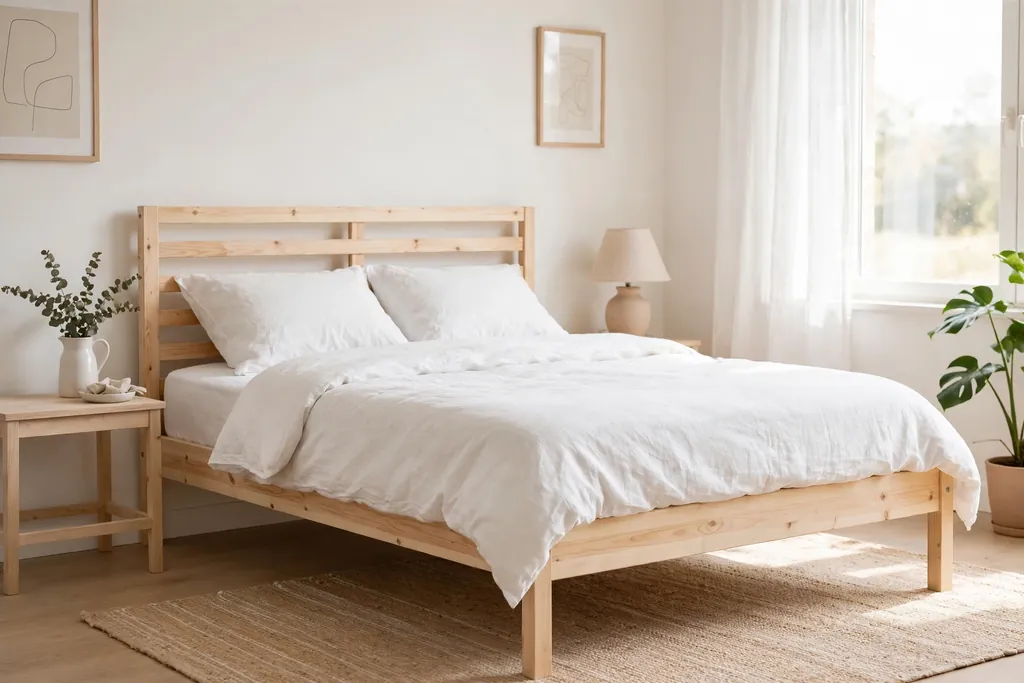
Replace a dated or wobbly bed frame with a simple wooden frame in oak, pine, or a painted finish that suits your room. A clean frame changes the look of the whole bed, and a sturdy frame stops squeaks and gives better support for the mattress.
Measure the mattress and the room before you buy, and check that the frame leaves room to walk on both sides. Assemble it on a rug or a blanket to protect the floor, tighten all fixings, and test it by sitting and lying on each side before adding bedding.
24. Add a Small Work Nook with a Fold Down Desk
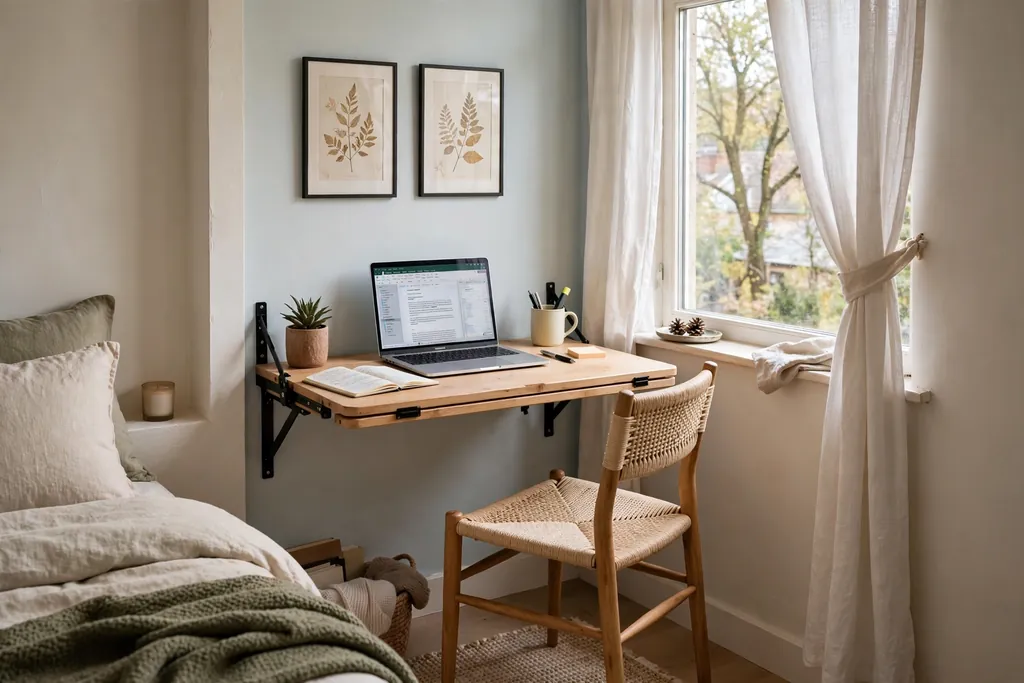
Fix a small fold down desk or a slim writing table in a bedroom corner, with a chair that tucks under it, for a work nook that closes away after the day. A nook gives you a place to write, study, or plan, without turning the whole bedroom into an office.
Keep the nook near a power outlet and natural light if possible, and store papers and cables in a small box or drawer, so the desk can fold away cleanly. When work ends, close the desk and return the chair, so the room feels like a bedroom again in the evening.
25. Corral Small Items on a Dresser Top Tray
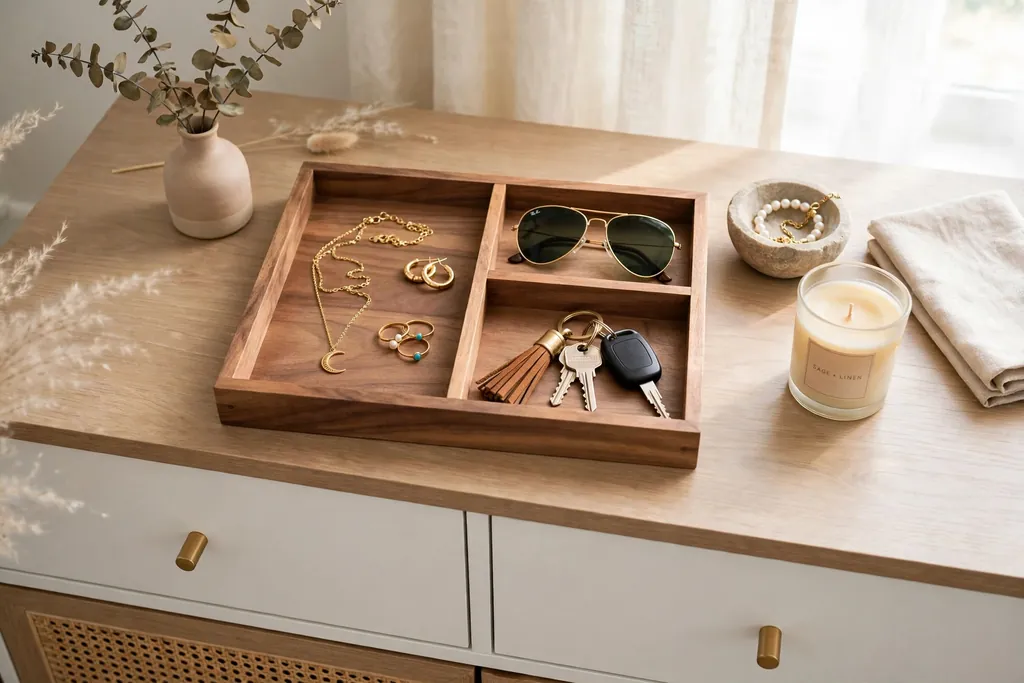
Place a tray on the dresser top for jewelry, keys, sunglasses, and small daily items, so they sit in one group instead of spreading across the surface. A tray makes the dresser look tidy at once, and it lets you lift the whole group in one move when you clean.
Choose a tray that fits the dresser without crowding it, in a material that suits the room, such as wood, ceramic, or woven rattan. Keep only items you use daily on the tray, and return other items to drawers, so the tray stays a useful landing spot rather than a new pile.
Conclusion
A bedroom makeover works best when you change the bed first, then one wall, the lighting, and the storage, and stop before the room feels crowded. Start with layered bedding and a calm color, add one focal point such as a headboard, a mirror, or a large piece of art, then choose two or three ideas from this list that suit your room, your budget, and your daily routine.
Keep the room easy to live in by leaving walking paths clear, choosing washable covers for pillows and throws, and giving every item a home in a basket, a box, or a tray. Revisit the room after a week, remove anything that feels crowded, and keep only the changes you notice and enjoy each day. Save this list to come back to when you are ready for the next stage, whether that is paint, new lighting, or a bigger furniture change.
FAQs
Where should I start a bedroom makeover?
Start with the bed, since bedding, pillows, and a headboard set the tone for the room, then move to one wall, the lighting, and storage, in that order, so each change builds on a calm base.
How can I make over a bedroom on a small budget?
Focus on bedding, paint for one wall or the nightstands, new drawer knobs, and a rug, since these changes cost less than new furniture and change how the room looks and feels the most.
What colors work best for a calm bedroom?
Soft white, cream, sage green, pale blue, warm grey, and muted clay work best for a calm bedroom, with one deeper accent color repeated in pillows, art, or a throw, so the room stays restful.
How do I make a small bedroom feel bigger?
Use a large mirror, pale walls, a rug that extends past the bed, under bed storage, and floating shelves, and keep the floor and the nightstand clear, so light and open floor space do more of the work.
Do I need to paint to refresh a bedroom?
No, you do not need to paint to refresh a bedroom, since new bedding, curtains, a rug, art, plants, and a tidy storage plan can change the room without paint, though one painted wall gives the biggest change for the lowest cost.
How long does a bedroom makeover take?
Most bedroom makeovers in this list take a weekend or less, with bedding, hardware, and storage taking an afternoon, and paint, wallpaper, or a new bed frame taking a full day including drying and assembly time.