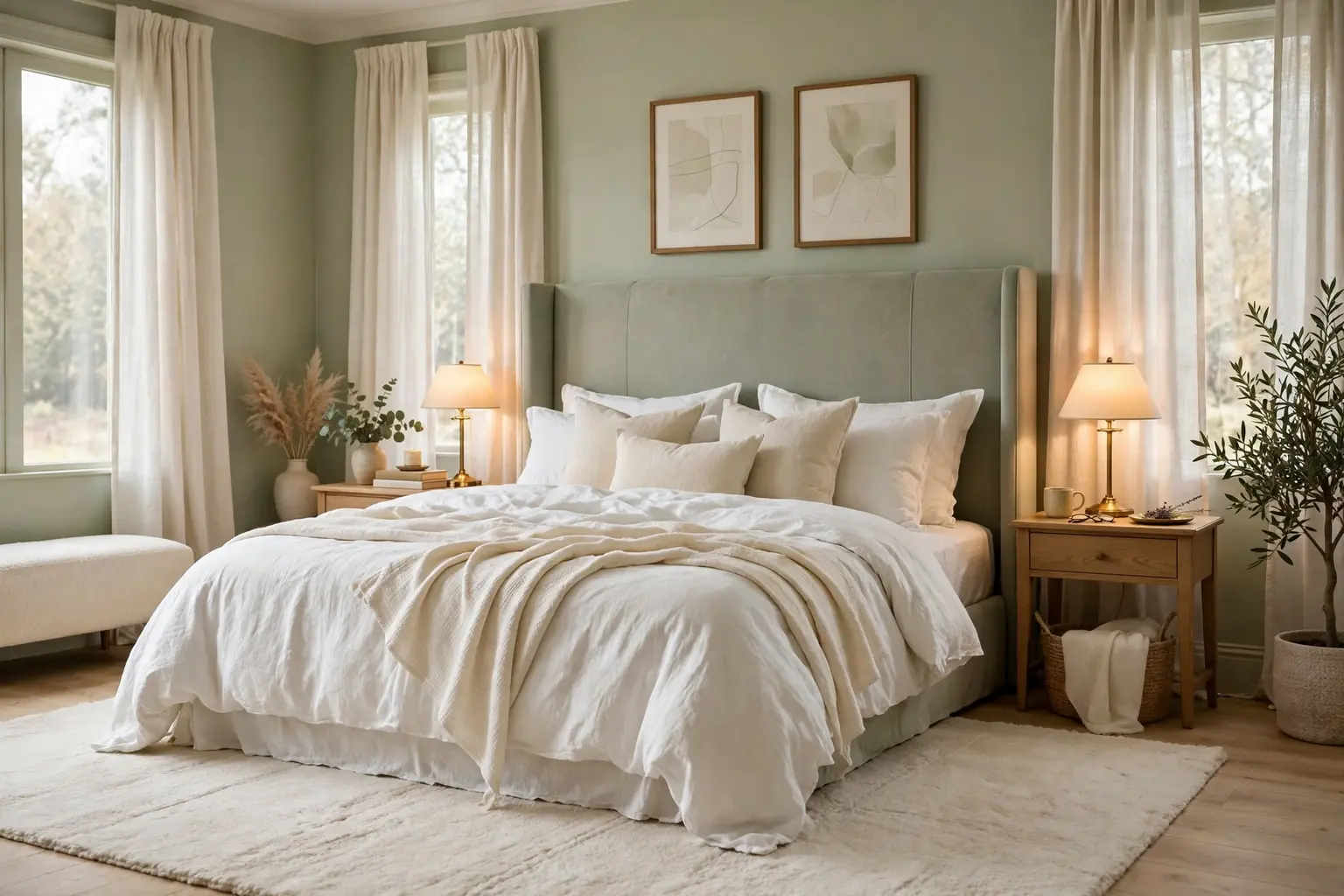
Decorating a primary bedroom for rest starts with a calm palette, layered bedding, soft low light, and clear surfaces, so the room feels quiet at night and easy to use in the morning. Choose one restful color, repeat it in bedding, curtains, and a rug, and keep paths, nightstands, and the dresser partly clear.
The 21 ideas below cover the bed, the windows, the walls, the floor, storage, and the small corners that make a primary bedroom work day to day. Each idea works on its own, so you can start with bedding and light, then add storage or a reading spot when you have time. For calm palette ideas in another room, see Fall Living Room Decor, and for the home page overview, visit the Dwell Ovell home page.
Key Takeaways
- Start with a calm base of white, cream, or soft grey, then add one restful color, such as sage, dusty blue, or warm oat, in bedding, curtains, and a rug.
- Layer bedding in washable pieces, so the bed looks full but stays easy to make each morning.
- Use low, warm light at night, with bedside lamps and a dimmer or low ceiling light, and keep bright overhead light for cleaning and getting dressed.
- Keep nightstands, the dresser top, and the floor paths partly clear, with closed storage for clothes and daily items.
- Give the room one comfortable place to sit and read, away from the bed, so the bed stays linked with sleep.
- Repeat each color and material at least twice, so the room looks planned rather than collected at random.
1. Layered White and Linen Bedding

Dress the bed in white cotton sheets, a linen duvet in oat or soft white, and two or three sleeping pillows in matching cases, then fold a light blanket across the middle of the bed. White and linen keep the bed looking fresh, and the natural texture adds warmth without a strong pattern.
Keep decorative pillows to two or three, so making the bed stays quick and the pillows have a chair or bench to sit on at night. Wash the top layers often, and choose a duvet cover with a simple closure, so changing the bedding does not become a chore.
2. A Tall Upholstered Headboard
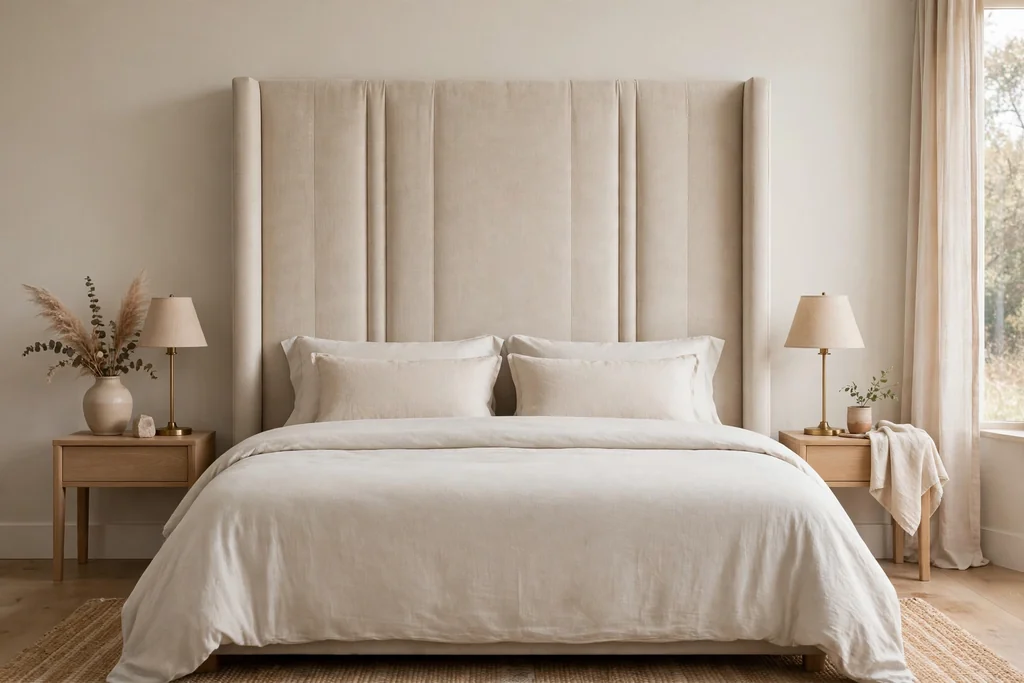
Choose a tall upholstered headboard in a soft neutral fabric, sized to the bed width, as the main focal point behind the bed. The headboard gives the room a finished shape, supports sitting up to read, and softens a plain wall without art or pattern.
Fix the headboard firmly to the bed frame or the wall, and check that pillows sit against it without sliding down behind it. Keep bedding pale against a mid tone headboard, or choose a pale headboard with deeper bedding, so one of the two gives the bed its contrast.
3. Matched Nightstands with Clear Tops
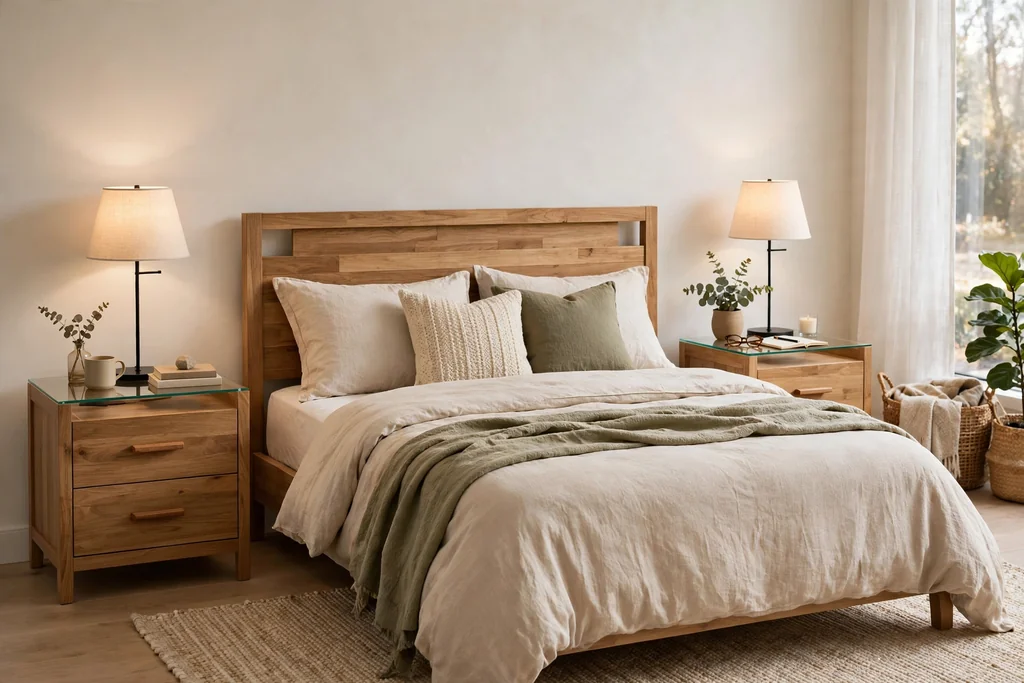
Place a matched pair of nightstands, one on each side of the bed, each with a drawer or a closed shelf for small items. Matching tables give the bed a balanced look, and closed storage keeps chargers, medicines, and small items out of sight.
Leave each nightstand top mostly clear, with room for a lamp, a glass of water, and a book only. If a nightstand has no drawer, use a small lidded box inside it or on a lower shelf, so loose items do not spread across the top.
4. Warm Dimmable Bedside Lamps
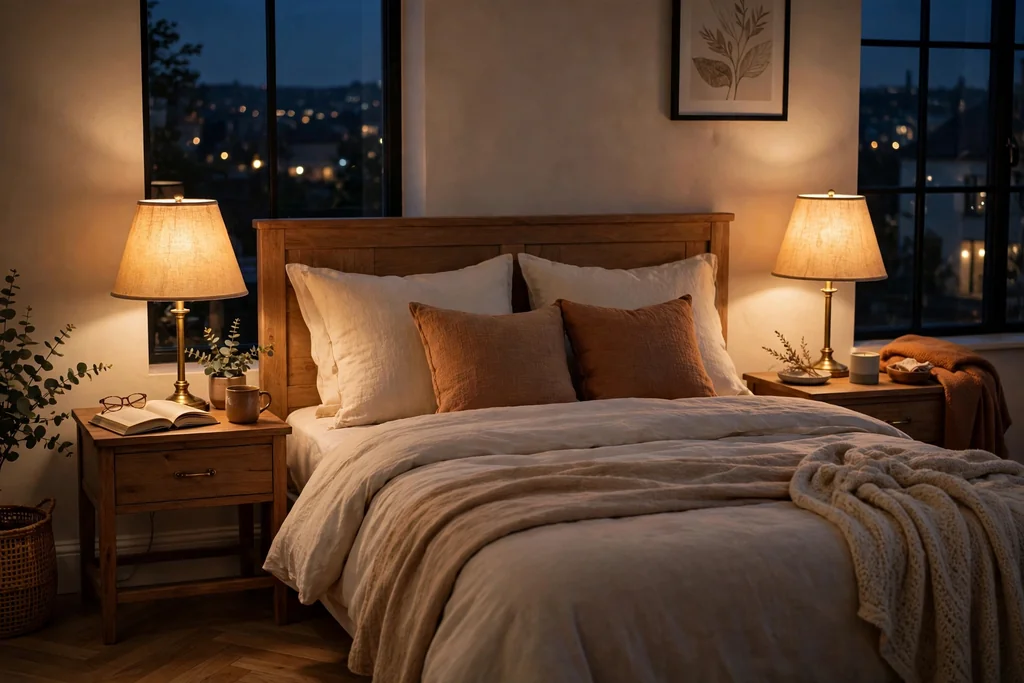
Set a bedside lamp on each nightstand, with warm bulbs and a shade that glows softly, and use a dimmer or a low wattage bulb for evening light. Warm low light helps the room feel settled at night, and two lamps give even light on both sides of the bed.
Check that each lamp switch is easy to reach from the bed, and that the shades sit at the same height. Keep lamp bases clear of the bed edge, and use a shade that hides the bare bulb from the pillow, so the light does not glare into the eyes.
5. Sheer Curtains with Blackout Panels
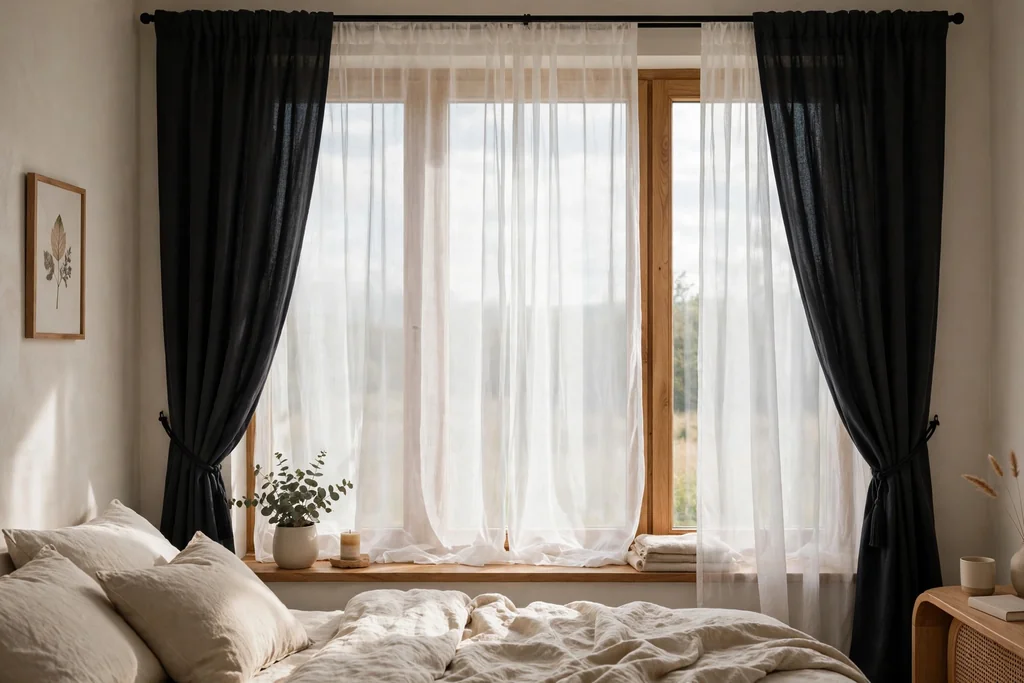
Hang sheer white curtains at the bedroom window for soft daylight and privacy, with blackout panels behind or beside them for night. Sheers keep the room bright during the day, while blackout panels help block street light and early morning sun.
Hang the curtain rod high and wide, so the panels stack clear of the glass when open and the window looks larger. Close the blackout panels at night, and open both layers in the morning, so the room gets full daylight before the day starts.
6. A Large Soft Rug Under the Bed

Lay a large soft rug under the bed, extending past both sides and the foot, so feet land on a warm surface in the morning. A rug in a calm neutral links the bed to the rest of the room and softens hard floors and footsteps.
Choose a rug with a non slip pad under it, and a pile that vacuums easily. Check that wardrobe and bedroom doors clear the rug edge, and keep the rug size large enough that it does not look like a small mat beside the bed.
7. Soft Sage Walls with White Trim
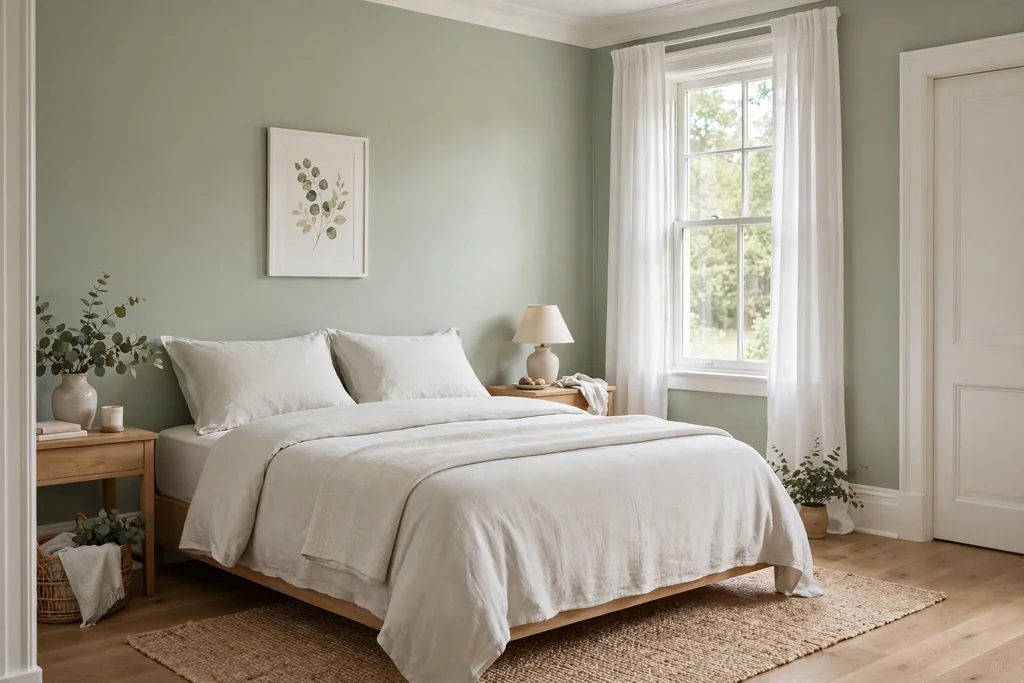
Paint the bedroom walls in a soft sage, warm greige, or dusty blue, with white trim on doors, skirting, and window frames. A muted wall color calms the whole room at once, while white trim keeps the edges crisp and the room bright.
Test a large sample on the wall behind the bed in daylight and in evening light, since muted tones can look grey or green under different bulbs. Keep the ceiling white, and repeat the wall color in one or two smaller items, such as a throw or a cushion, so the color feels planned.
8. A Wooden Bench at the Foot of the Bed
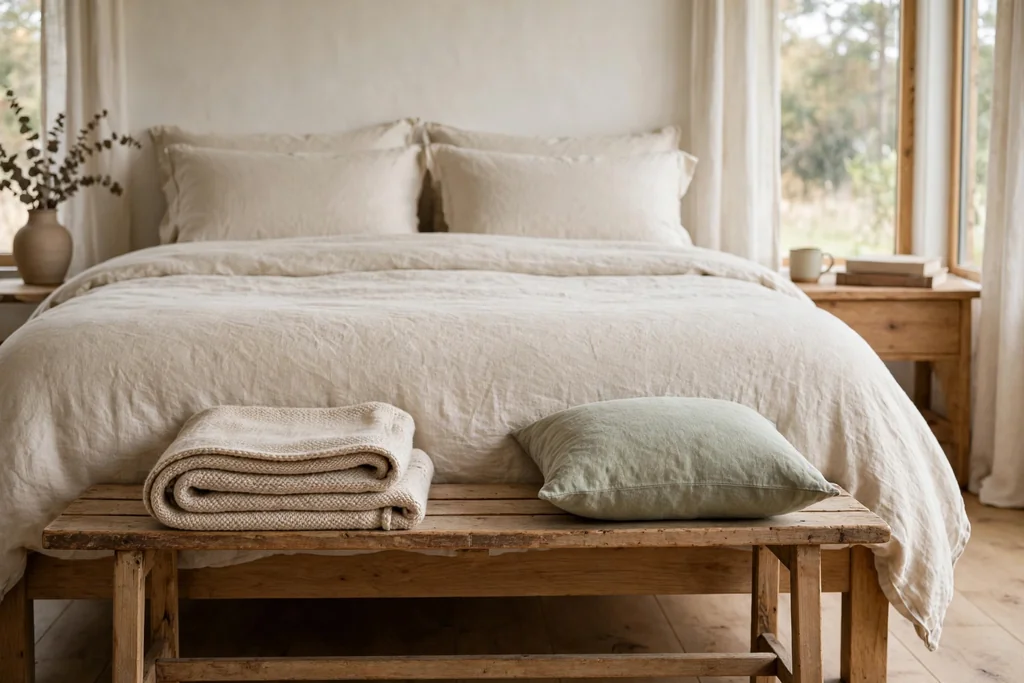
Place a simple wooden bench at the foot of the bed, with a folded throw on one end and a cushion on the other. The bench gives a place to sit while dressing, holds the decorative pillows at night, and marks the end of the bed clearly.
Keep the bench clear of laundry and bags, so it stays a seat rather than a storage pile. Check that the bench leaves a clear walking path around the foot of the bed, and choose a bench height close to the mattress height, so sitting on it feels natural.
9. A Reading Chair with a Floor Lamp
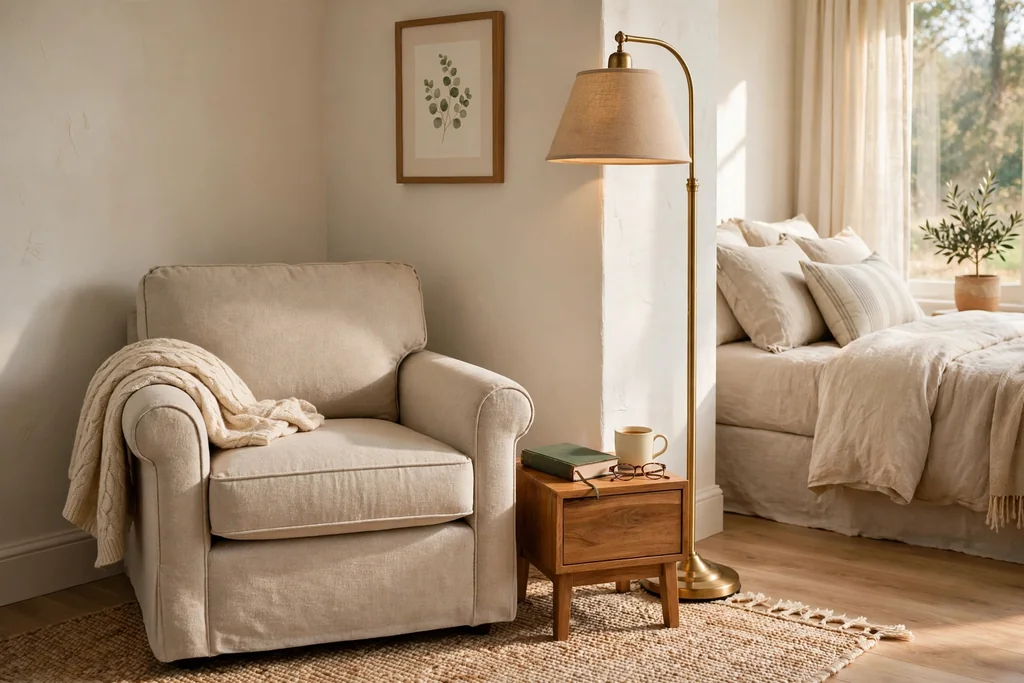
Set a comfortable armchair in a bedroom corner, with a floor lamp behind one shoulder and a small side table beside it. A reading chair gives the bedroom a second place to sit, so reading and resting do not always happen in bed.
Keep the chair near the window or the lamp, with a throw folded over one arm and a book on the side table. Leave the seat clear each evening, and choose a chair size that fits the corner without blocking the wardrobe or the door.
10. A Small Dressing Table by the Window
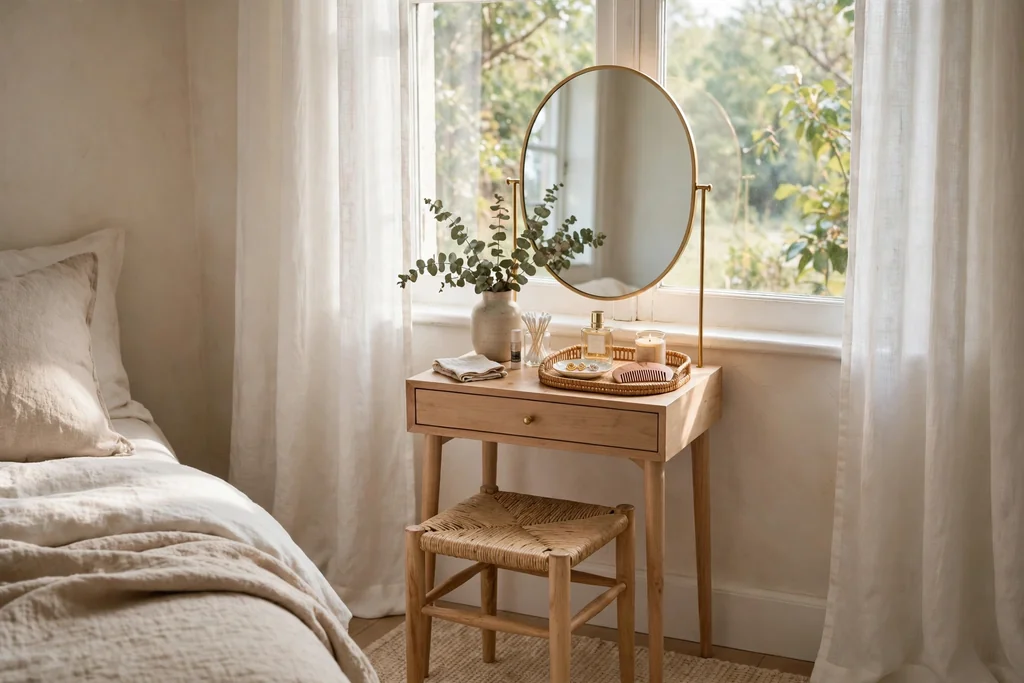
Place a small dressing table by the window, with a mirror above it, a stool tucked under, and a small tray for daily items. Daylight at the window suits a dressing table, and a small table fits a primary bedroom without taking the place of a nightstand or a chair.
Keep only daily items on the table top, such as a brush, a small tray, and one vase or candle holder, and store the rest in a drawer or a box. Sit at the table in daylight to check the mirror height, and keep the stool pushed in when not in use.
11. One Large Calm Landscape Print

Hang one large landscape print above the dresser or on the main wall, in soft greens, blues, or neutral tones, in a simple wood or white frame. One large calm print gives the room a focal point without a busy gallery wall, and it suits a restful room better than many small competing pieces.
Hang the print at eye level from the bed and the door, and fix it with hooks rated for its weight. Keep the wall around it plain, so the print can breathe, and choose a scene that feels quiet, such as fields, water, or soft hills, rather than a bright or busy image.
12. Closed Wardrobe Doors for a Tidy Look
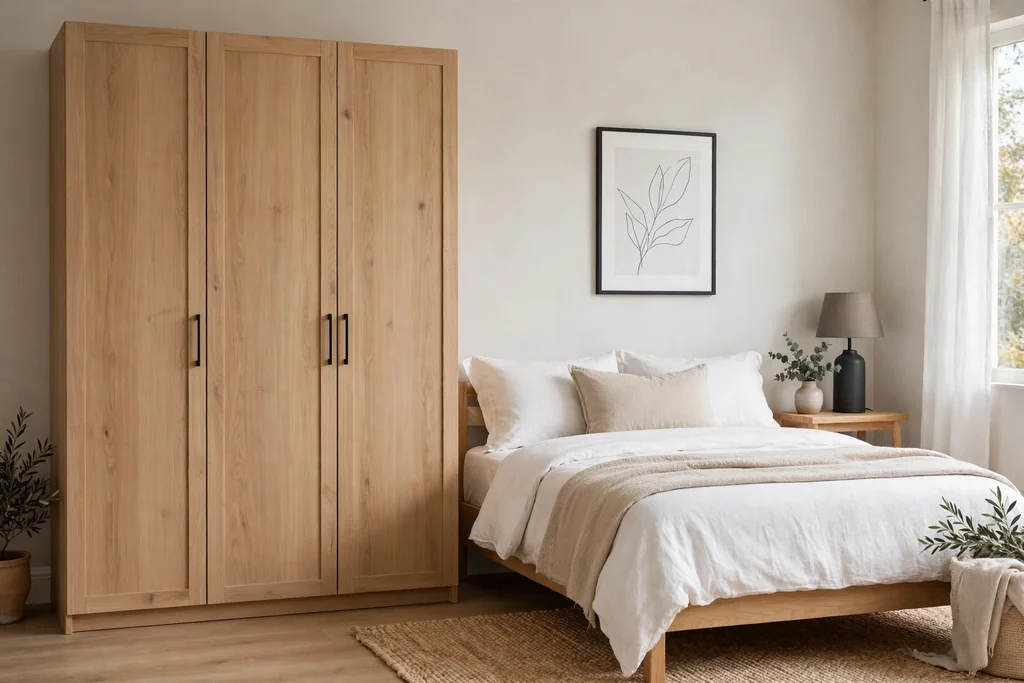
Use a wardrobe with closed doors, rather than open rails, for most bedroom clothes, so the room looks tidy even when the wardrobe is full. Closed doors hide color and shape clutter, and they give the room a calm wall of plain panels.
Fix tall wardrobes to the wall, and check that the doors open fully without hitting the bed or a chair. Keep one small open hook or rail inside the wardrobe door for the next day outfit, so clothes do not end up on the chair or the bench.
13. A Basket of Folded Throws by the Bed

Place a woven basket beside the bed or near the reading chair, filled with two or three folded throws in the room palette. Throws in a basket stay easy to reach on cool nights, and the basket itself adds a natural texture to the room.
Fold the throws neatly, with the top one showing a clean edge, and keep the basket size modest, so it does not block the walking path. Wash the throws now and then, and keep only throws in the basket, so it does not become a place for stray clothes.
14. A Tray on the Dresser for Daily Items
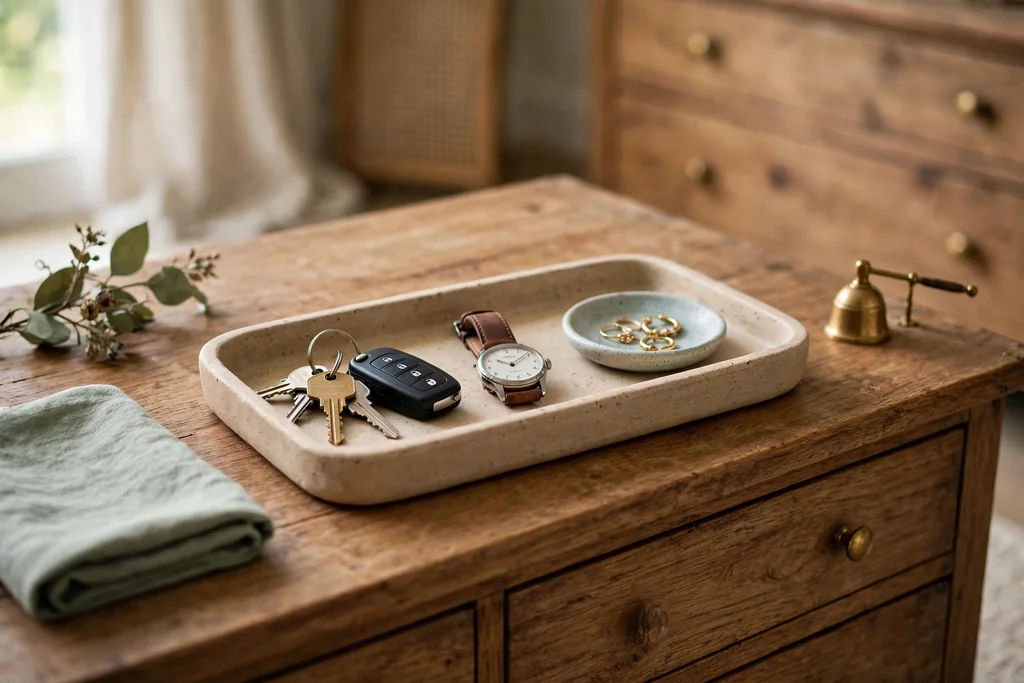
Set a shallow tray on the dresser for daily items, such as keys, a watch, a small dish for rings, and a hand cream. A tray gives small items a clear home, so the dresser top stays tidy and nothing small gets lost among larger pieces.
Keep the tray to one per dresser, and leave the rest of the top mostly clear, with room for one vase or one framed photo. Lift the whole tray aside in one move for dusting, and empty it weekly, so old receipts and loose items do not build up.
15. A Leaning Floor Mirror by the Wardrobe
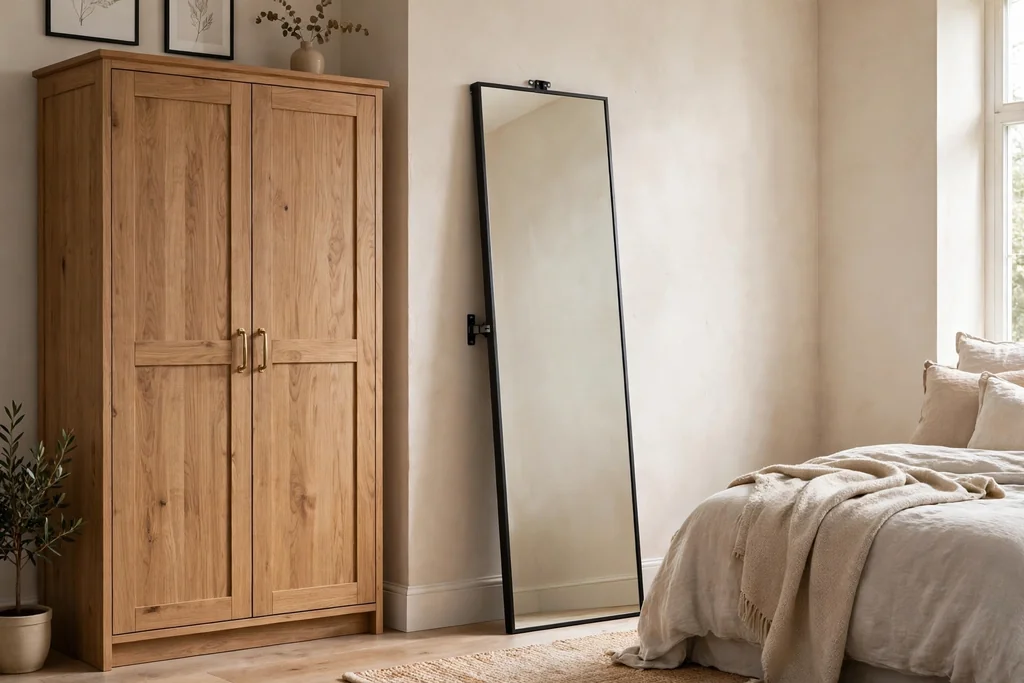
Lean a tall floor mirror against the wall near the wardrobe, where it can be used for dressing and where it bounces daylight into the room. A tall mirror helps a bedroom feel larger, and it saves wall space above the dresser for art.
Fix the mirror to the wall with a proper bracket or anti tip strap, since a tall mirror can fall if it is only leaned. Check the reflection from the bed and the door, and move the mirror if it reflects clutter or bright light straight into the bed.
16. A Quiet Ceiling Light with a Fabric Shade
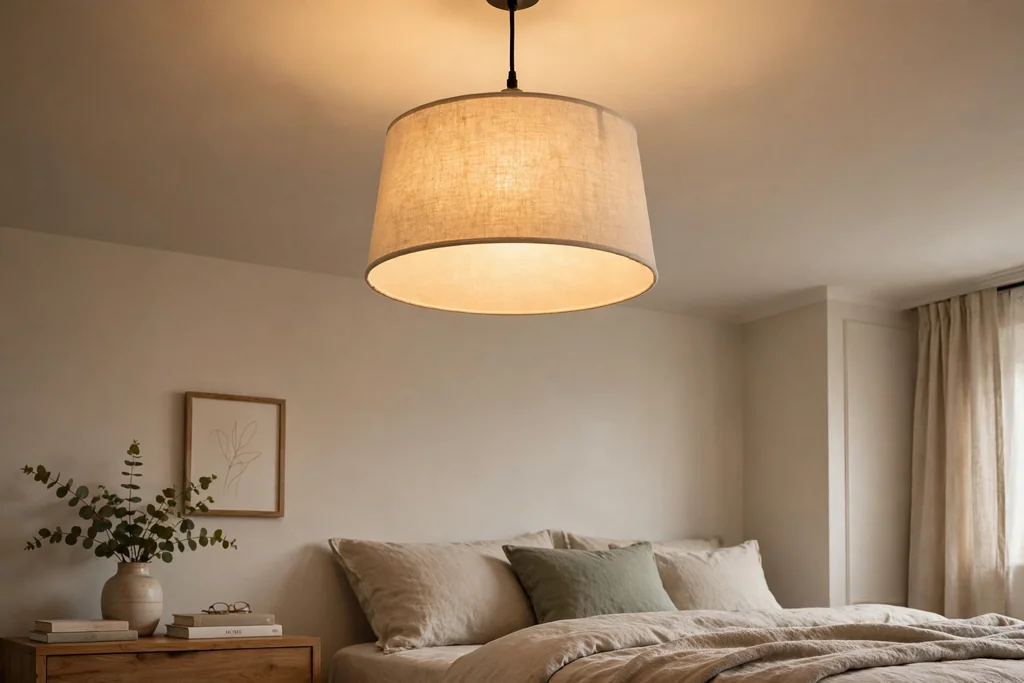
Fit a ceiling light with a fabric shade or a frosted cover, in a simple shape that suits the room, for bright light when cleaning or getting dressed. A fabric shade softens the overhead light, so the ceiling fixture does not glare when it is on.
Use warm bulbs in the ceiling light, and switch it off in the evening in favor of bedside lamps. Check that the fixture hangs clear of tall wardrobe doors, and dust the shade now and then, so the light stays even and soft.
17. A Low Bookcase for Bedtime Books
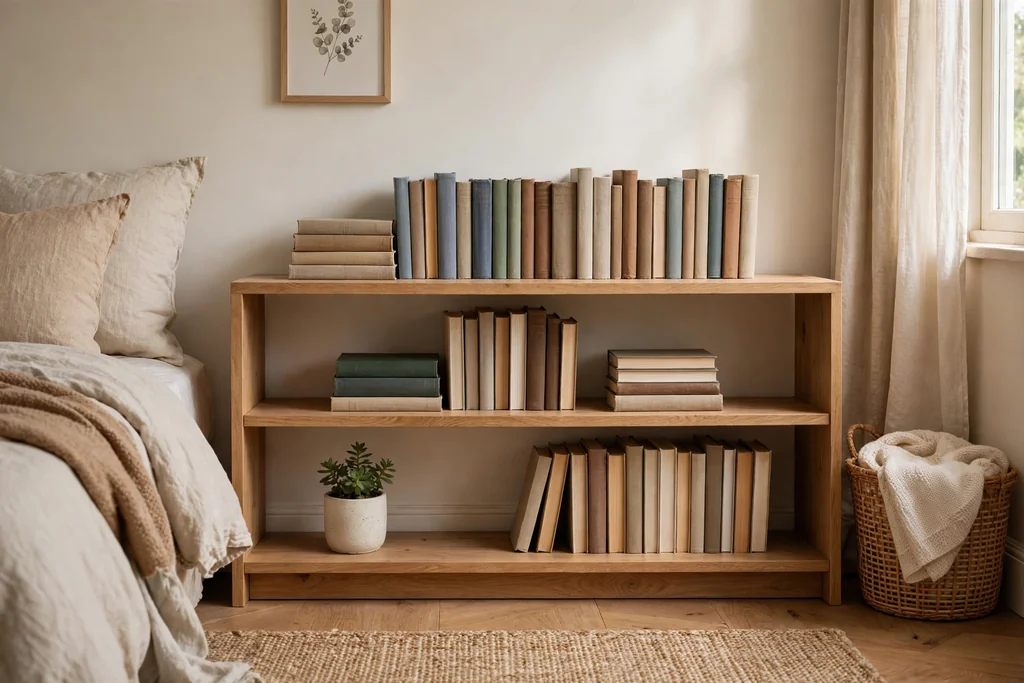
Place a low bookcase or a short shelf unit along one wall, with bedtime books, a small plant, and one or two calm objects. A low bookcase keeps books easy to reach from the bed or the reading chair, and its low height keeps the wall feeling open.
Group books in short rows by height or color, and leave some shelf space empty, so the bookcase does not look crowded. Keep the top of the bookcase mostly clear, with one small plant or one framed photo, and dust the shelves weekly.
18. Potted Greenery on the Windowsill
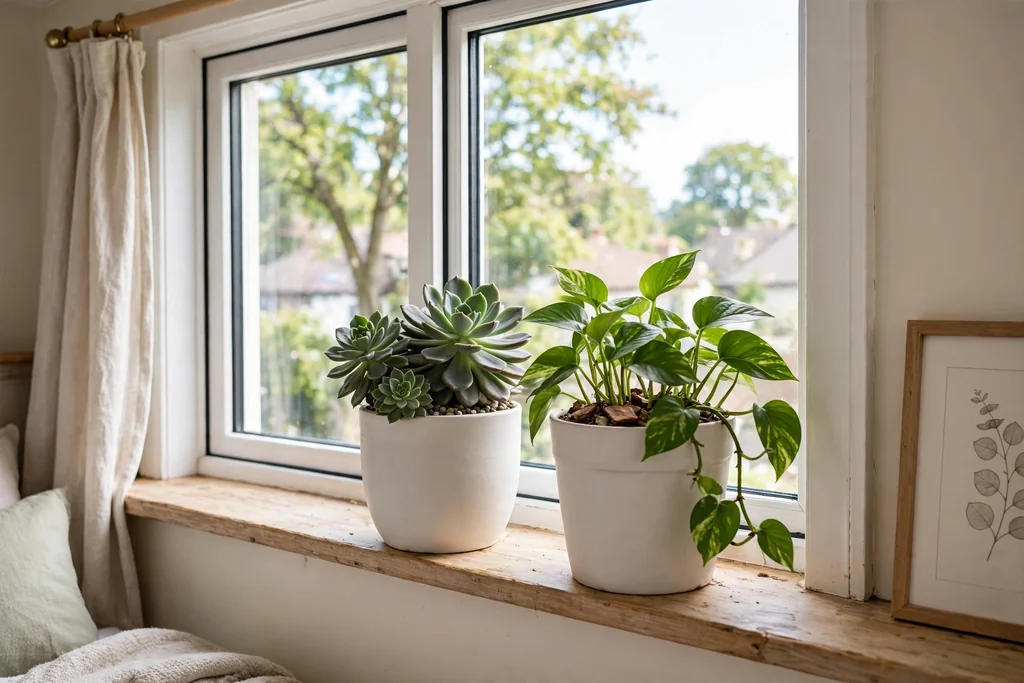
Place two or three potted plants on the windowsill, in plain ceramic or terracotta pots, choosing plants that suit the light in the room. Greenery softens the window frame, adds a living note to a calm room, and needs only a small amount of care.
Check the light and water needs of each plant before placing it, and use saucers under the pots to protect the sill. Keep plants clear of curtains and blackout panels, and trim dead leaves weekly, so the plants stay tidy.
19. A Window Seat Cushion for Morning Light
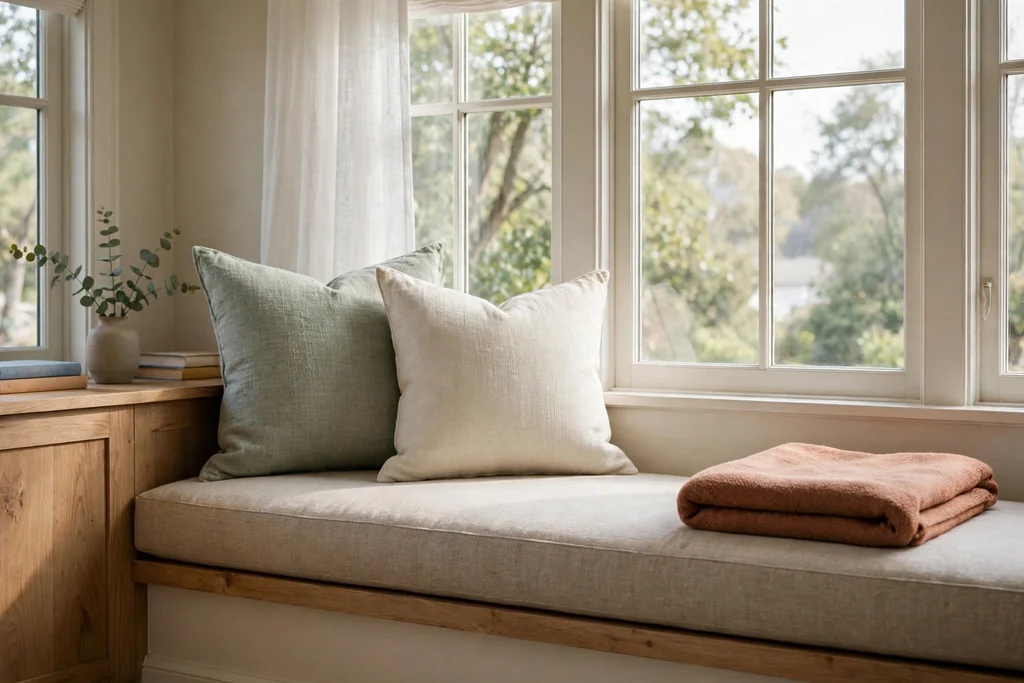
Style a window seat, or a wide sill with a bench below it, with a firm seat cushion, two pillows in the room palette, and a folded throw at one end. A window seat gives the primary bedroom a bright morning spot for coffee, reading, or quiet time.
Keep the seat cushions in washable covers, since a window seat gets sun and daily use, and leave one end clear for sitting down easily. Check that pillows do not block the window handle, and keep the throw folded, so the seat stays tidy.
20. A Small Desk Nook for Notes and Planning
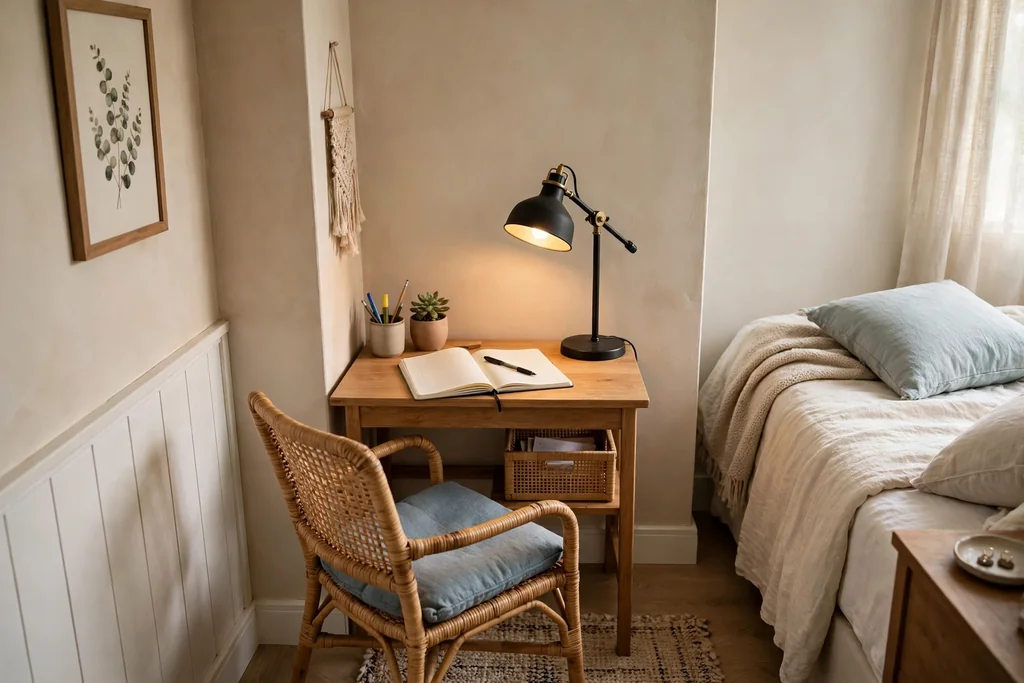
Set a small desk in a quiet corner, with a chair, a lamp, and a tray for a notebook, pens, and a few papers. A desk nook gives the primary bedroom a place for morning notes, lists, and planning, without turning the whole room into a workspace.
Keep the desk top mostly clear, with only the notebook and the lamp in daily use, and store papers in a drawer or a folder. Face the desk toward the room or the window, rather than a blank wall, if space allows, and switch the desk lamp off at night.
21. A Clear Landing Spot by the Bedroom Door
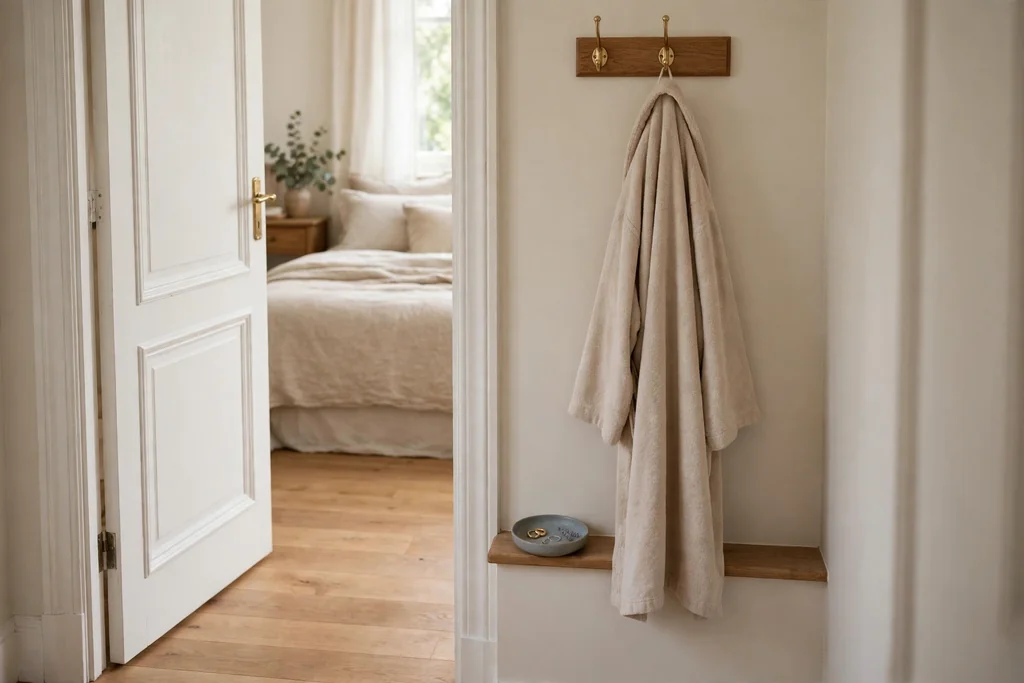
Create a small landing spot just inside the bedroom door, with a hook for a robe, a small dish for keys, and a clear floor area for shoes. A landing spot keeps items that enter the room from spreading to the bed, the bench, and the chair.
Keep the landing spot to one hook and one dish, and clear it each evening, so the door area stays open. Check that the door opens fully without hitting the hook or the dish, and keep the walking path from the door to the bed clear at all times.
Conclusion
A restful primary bedroom comes from a calm palette, layered bedding, soft low light, and clear surfaces, repeated in a few places rather than spread across every surface. Start with the bed and the light, add one rug and one calm wall color, then choose storage, seating, and reading spots that suit how you use the room each day.
Keep the room easy to live in by washing bedding and throws often, clearing nightstands and the dresser weekly, and removing anything that ends up on the chair or the bench. For calm palette ideas in another room, see Fall Living Room Decor. Revisit the room after a week, remove anything that feels crowded, and keep only the pieces you use and enjoy each day.
FAQs
What colors make a primary bedroom restful?
Soft sage, dusty blue, warm greige, cream, and white make a primary bedroom restful, because muted tones lower visual noise and pair well with wood, linen, and soft light. Pick one muted color as the main accent, use white or cream as the base, and repeat the accent in bedding, curtains, and a rug.
How do I make a primary bedroom feel calm without redecorating fully?
You can make a primary bedroom feel calm without redecorating fully by clearing nightstands and the dresser, adding layered white bedding, switching to warm bedside lamps, and closing wardrobe doors. These four changes calm the room at once, and they cost less and take less time than painting or buying new furniture.
What bedding is best for a restful primary bedroom?
White cotton sheets with a linen or cotton duvet in a soft neutral are best for a restful primary bedroom, because they feel cool, wash well, and look calm without a strong pattern. Add a light blanket for cool nights, keep decorative pillows to two or three, and choose washable covers, so the bed stays fresh and easy to make.
How should I light a primary bedroom at night?
A primary bedroom should be lit at night with warm, low bedside lamps on both sides of the bed, with the bright ceiling light switched off. Use a dimmer or a low wattage bulb for evening light, keep lamp shades at the same height, and keep switches within reach of the bed, so the light can be lowered without getting up.
How much storage does a primary bedroom need to stay tidy?
A primary bedroom needs enough closed storage for clothes, bedding, and daily items, such as a wardrobe with doors, a nightstand drawer on each side, and a tray or box on the dresser. Closed storage matters more than open shelves for a restful look, because it hides color and shape clutter and leaves surfaces clear.
Can a small primary bedroom still feel restful?
Yes, a small primary bedroom can still feel restful when you choose a calm palette, one large rug, matched nightstands, and closed storage, and keep the floor paths clear. Use mirrors and sheer curtains to keep daylight moving through the room, and limit seating to one chair or bench, so the room does not feel crowded.