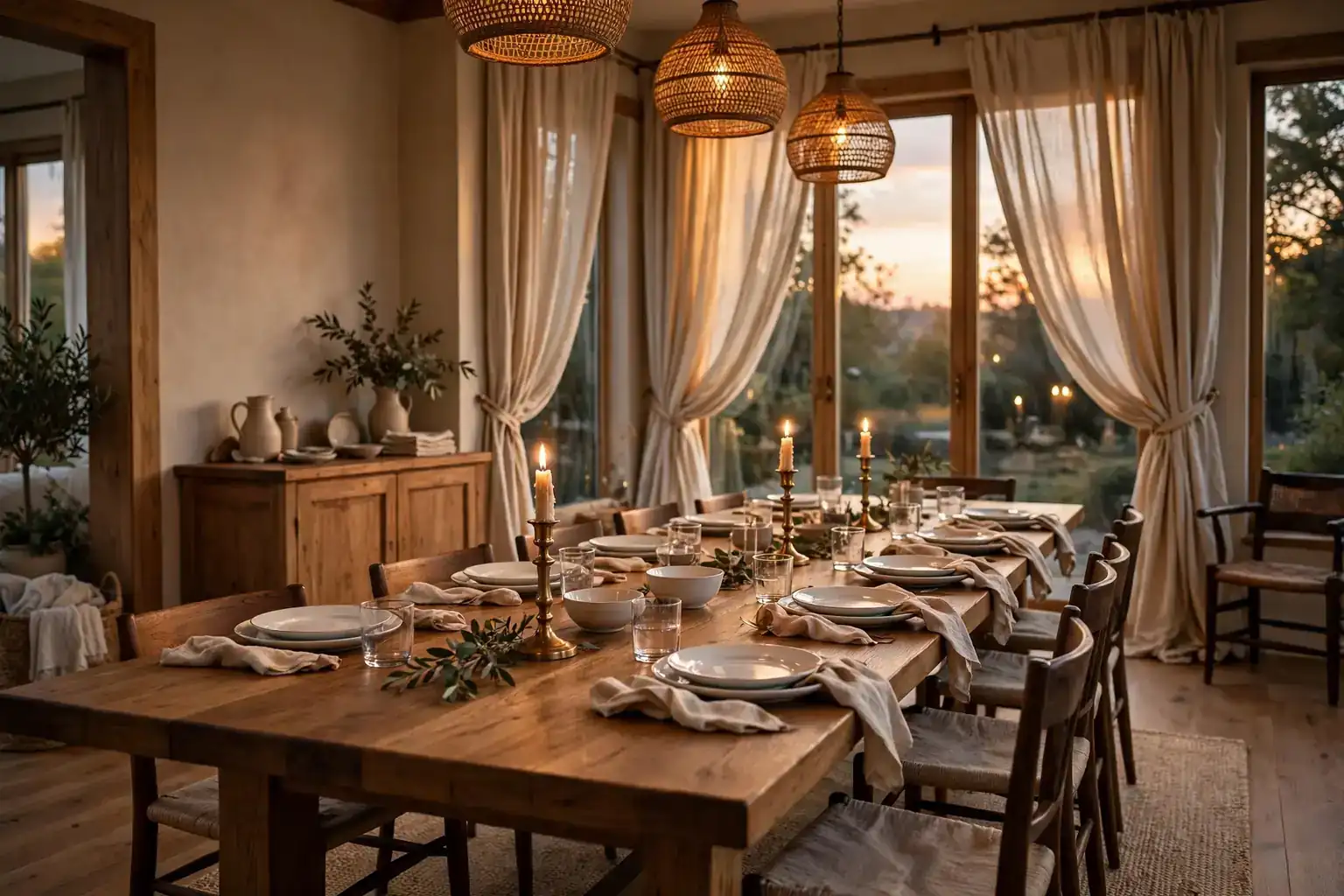
A Nancy Meyers dining room is a warm, collected room built around a wood table, soft linen, white dishes, and candlelight, where guests linger over a long meal. Start with a sturdy table, comfortable chairs, one low centerpiece, and layered light, then keep place settings simple. The 17 ideas below build that look for everyday dinners and larger gatherings.
Start with the pieces you already own: a wood table, plain white plates, clear glasses, and cloth napkins in white or cream. Then add one warm layer at a time, such as a linen cloth, brass candlesticks, or a bowl of lemons on the sideboard. Keep the centerpiece low enough to see across, leave room for serving dishes, and choose pieces that can stay out for daily use rather than pieces saved only for formal meals. For seasonal table layers that pair with this room, see fall table decor ideas, and for room ideas beyond the table, see fall living room decor.
Key Takeaways
- Anchor the room with a warm wood table and chairs guests can sit in for a long meal, not chairs chosen only for looks.
- Keep the palette calm: warm white, cream, soft blue, natural wood, and brass, with one quiet pattern repeated at least twice.
- Use layered light: a chandelier or pendant on a dimmer, plus sconces or lamps, so evenings glow without harsh overhead light.
- Keep the centerpiece low and simple, and move taller pieces to the sideboard, windowsill, or wall.
- Mix old and new pieces, such as a worn wood table with plain white dishes, so the room looks collected over time.
- Set the table for real use: space for plates, glasses, serving dishes, and elbows, with cloth napkins and a carafe of water within reach.
1. A Long Warm Wood Table as the Room Anchor
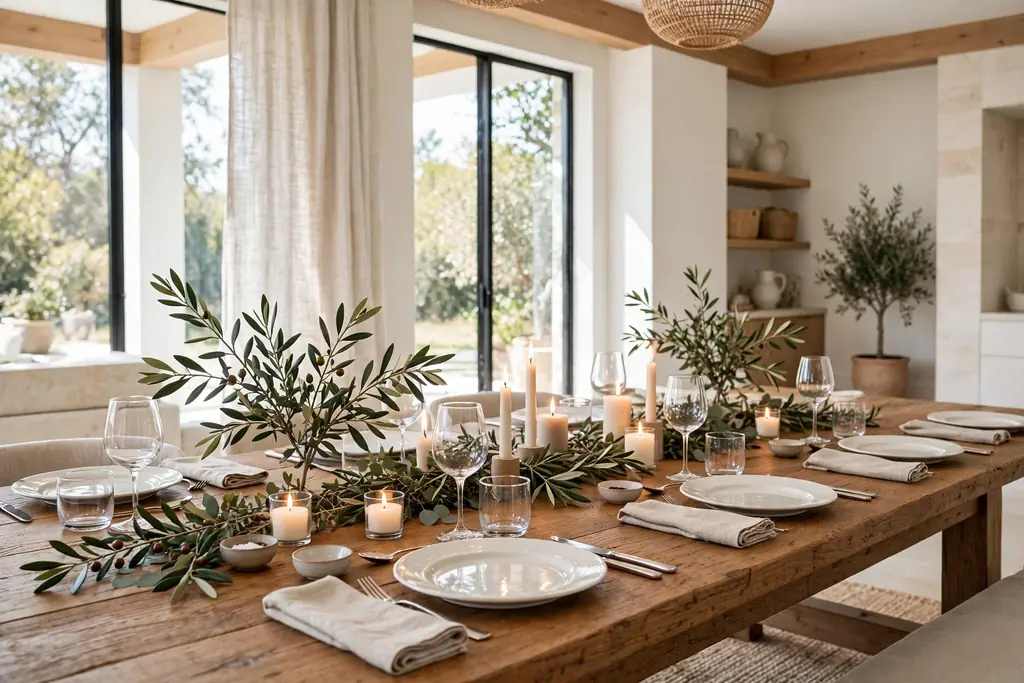
Choose a long wood table in a warm, worn tone, such as aged oak or mahogany, and let it set the scale for the whole room. The table should seat the household plus a few guests without crowding, with room at each end for a serving dish or a carafe. A wood top with visible grain suits white dishes, linen, brass, and glass, and it looks better with use than a glossy top that shows every mark.
Leave the wood bare for everyday meals, or cover it with a linen cloth for gatherings, and wipe it after meals so spills do not mark the grain. Use placemats under plates if the wood marks easily, and keep the centerpiece to one low group so the wood still shows. A long table also suits family style serving, since platters can sit down the middle and guests can pass food without standing.
2. Mixed Chairs with Upholstered Armchairs at the Heads
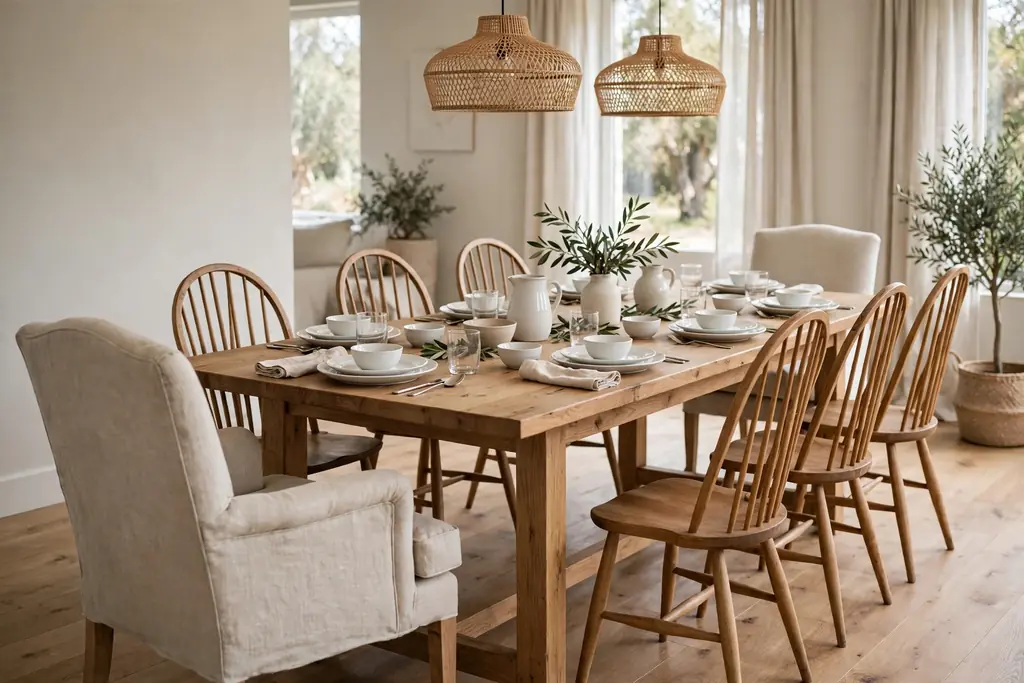
Mix side chairs with two upholstered armchairs at the heads of the table, so the ends feel like host seats and the room looks gathered over time rather than bought as one set. Use Windsor or ladder back chairs along the sides for a light, classic shape, and choose armchairs with a simple linen or cotton cover in cream, soft blue, or a quiet stripe. The mix keeps the table from looking too formal while still giving guests a comfortable seat.
Keep seat heights close, so the table line stays even, and test that armchairs slide under the table without catching the cloth. Use the same cushion fabric or the same wood tone on both armchairs, so the pair reads as planned. If chairs wobble, tighten joints and add felt pads, since a steady chair matters more at a long meal than a matched set.
3. A Round Pedestal Table for a Small Dining Nook
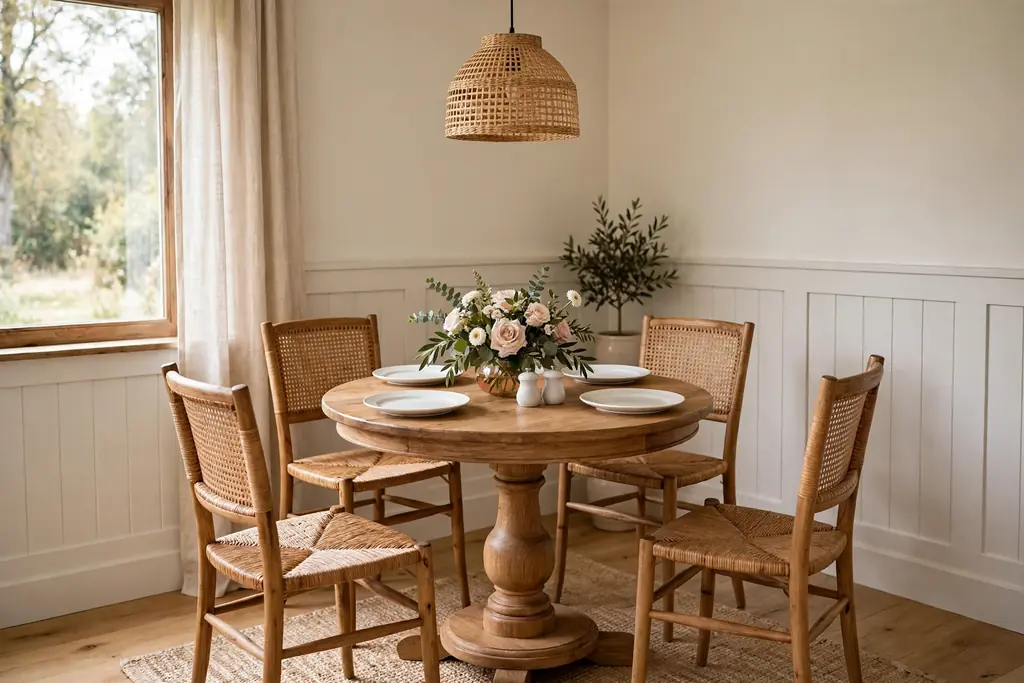
Use a round pedestal table in a small dining nook or a corner of the kitchen, where a long table would block the walkway. A single center leg leaves room for chair legs and feet, and a round top lets every guest see each other, which suits conversation at a small gathering. Choose a wood top in a warm tone, with four or five chairs that tuck in close when the table is not in use.
Keep the setting simple on a round table: one low centerpiece, plain white plates, and cloth napkins, with no runner that needs centering. A round table also works well for breakfast and homework, since it clears fast and needs only one cloth or a set of placemats. Measure the room before buying, and leave at least enough space behind each chair to pull out and stand up with ease.
4. White Dishes Layered with Blue and White Accent Plates
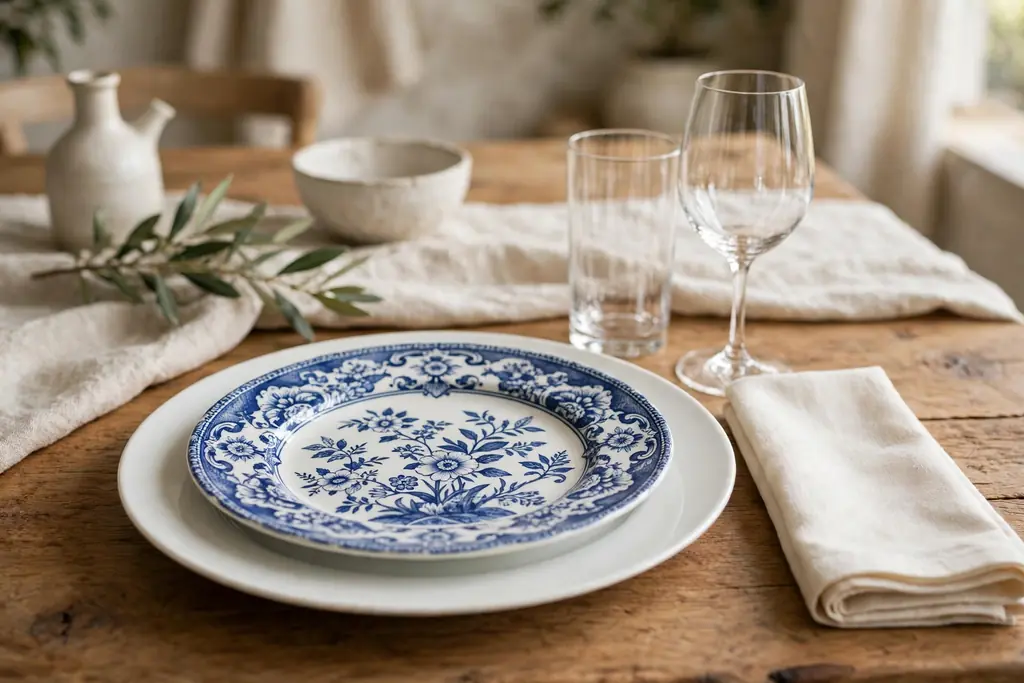
Set plain white dinner plates as the base, then layer one blue and white accent plate or salad plate on top at each place for a classic, collected look. The white base keeps the table calm and lets the pattern show without needing a patterned cloth or colored glasses. Repeat the blue at least twice, such as accent plates with a blue napkin or a blue and white bowl at the center, so the color looks planned.
Use the same accent plate at every place for a gathering, and keep the rest of the setting plain: clear glasses, simple cutlery, and a cream napkin. White dishes also mix well with wood, brass, and linen, and they suit everyday meals as well as guests. Wash patterned plates by hand if the maker advises it, and stack them with care so rims do not chip.
5. A Relaxed Linen Tablecloth for Gatherings
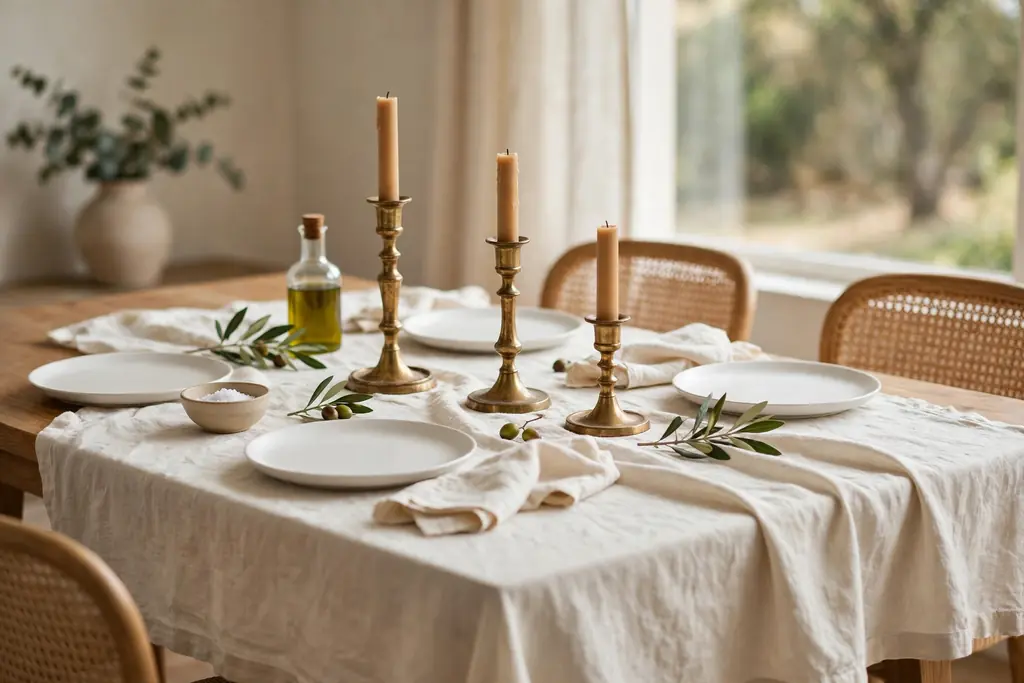
Lay a linen tablecloth in white, cream, or soft natural flax over the table for gatherings, and let it hang evenly at both ends without ironing out every crease. Linen wrinkles are part of the look here, and a relaxed cloth suits a wood table far better than a stiff, shiny cloth. Choose a cloth long enough to cover the top with a drop at each end, but short enough that it does not catch on chair legs.
Wash the cloth before a gathering and fold it flat for storage, so it stays soft and ready to use. For everyday meals, skip the cloth and use placemats instead, so the table clears fast. If the cloth is light, set a thin pad or a second cloth underneath to guard the wood from heat and damp, and keep hot dishes on trivets.
6. Brass Taper Candles Down the Center
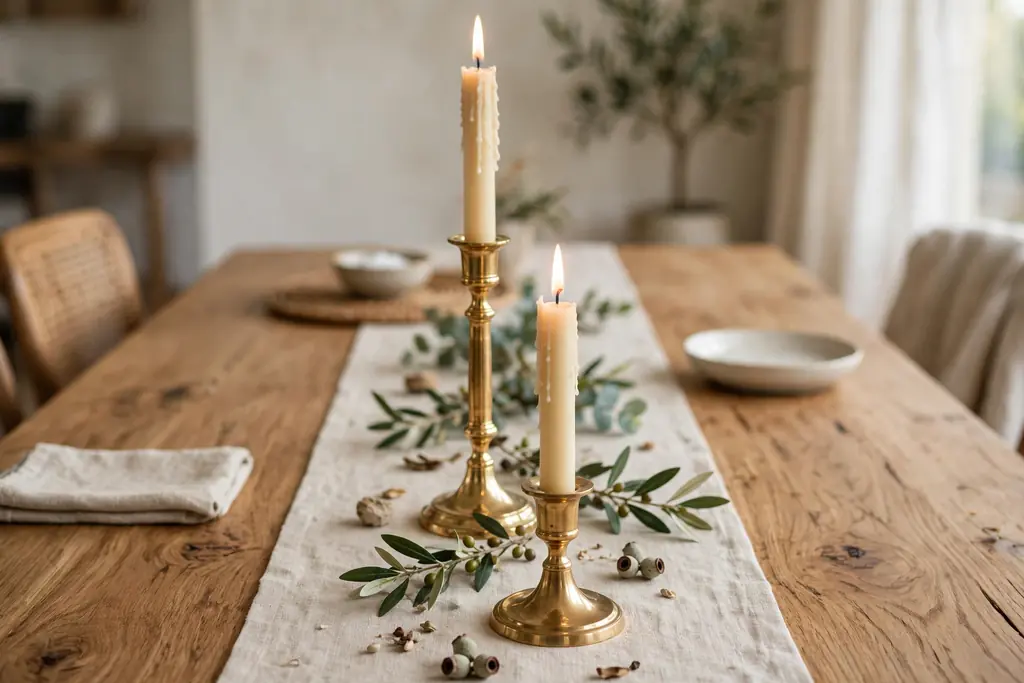
Set brass candlesticks of two heights down the center of the table, with cream taper candles in each, and keep the rest of the centerpiece simple. Brass adds a warm metal note that suits wood, linen, and white dishes, and candlelight gives evening meals a soft glow that overhead light cannot match. Space the candlesticks evenly, with room between them for serving dishes.
Check that candlesticks sit level and that tapers fit snugly, so candles do not lean or drip onto the table. Use a tray or small plates under the candlesticks if wax drips are a concern, and trim wicks before lighting. For a table with children, use flameless tapers in the same brass holders for the same look without a flame, and never leave real candles burning unattended.
7. A Sideboard Styled as a Serving Station
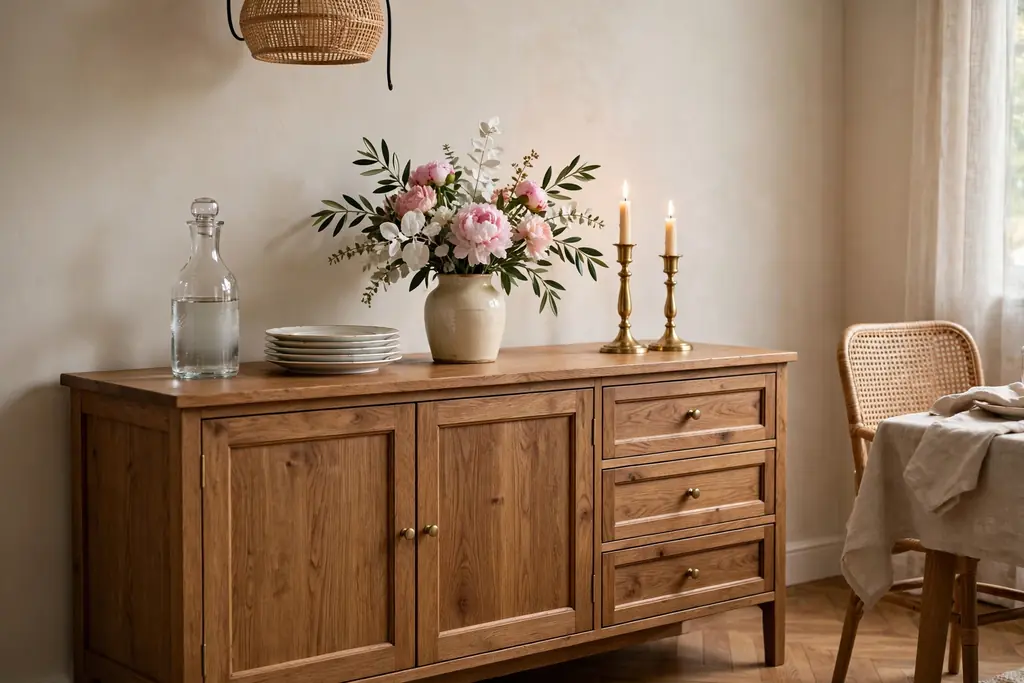
Use a wood sideboard against the main wall as a serving station, not just a display shelf, with space on top for a carafe, extra plates, and a platter waiting its turn. A sideboard keeps the table clear for guests, since serving dishes, drinks, and dessert plates can wait there instead of crowding the center. Choose a sideboard in a warm wood tone that matches or tones with the table, with drawers for napkins, candles, and place cards.
Keep the top calm: one low vase of flowers, a pair of candlesticks, and one clear stretch for serving. Inside, group like items together, such as table linens in one drawer and candles in another, so setting the table takes minutes. Wipe the top after meals, and return serving pieces to the sideboard at once, so the room stays ready for the next meal.
8. Layered Window Treatments with Sheers and Drapes
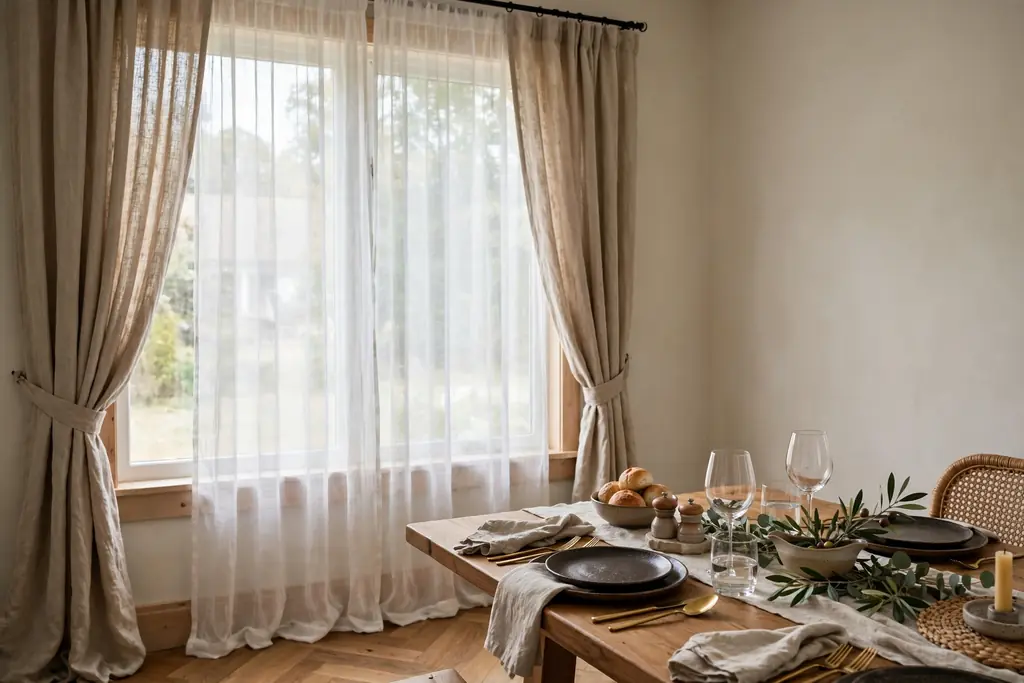
Hang sheer curtains next to the glass for daytime privacy and soft light, then add full drapes in linen or cotton on the outside, so the window looks finished day and night. Sheers soften bright light and keep the room from feeling bare, while drapes frame the window and add warmth in the evening when they are drawn. Choose drapes in cream, soft white, or a quiet stripe that tones with the table linen.
Hang the rod high and wide, so the window looks larger and the drapes clear the glass when open. Tie drapes back during the day for light, and draw them in the evening for warmth and privacy. Keep drape fabric clear of candles, radiators, and heaters, and wash or brush the panels before the season, since dust shows more on light fabric in daylight.
9. A Warm Chandelier Hung Low Over the Table
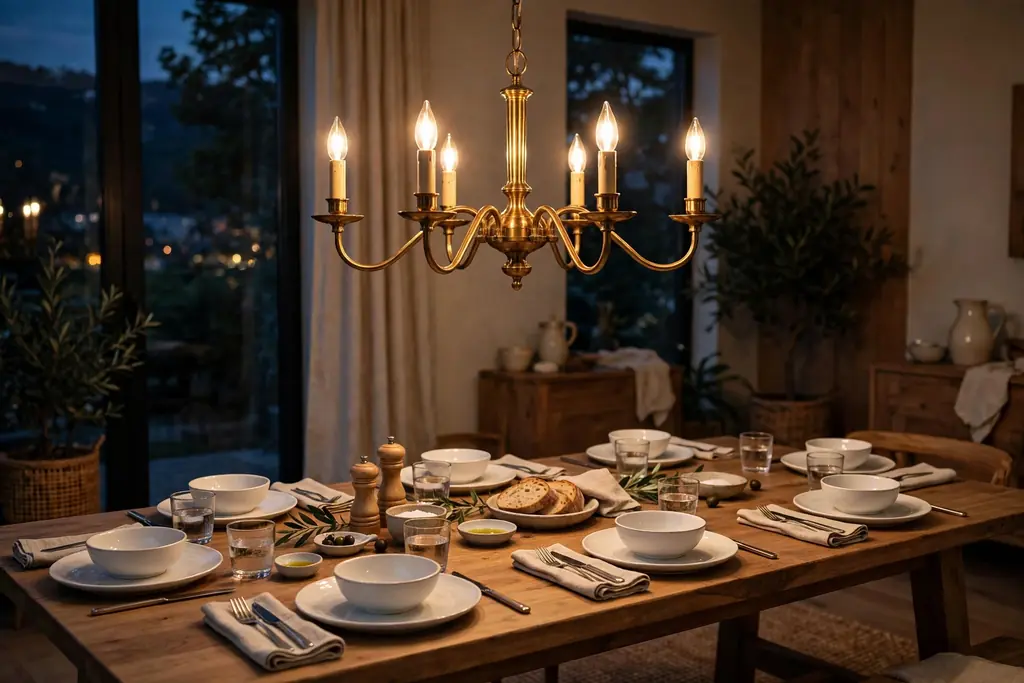
Hang a chandelier or a large pendant over the center of the table, with the bottom of the fitting low enough to pool light on the table but high enough to see across. A brass, aged metal, or wood and glass fitting suits this room better than a sleek chrome fitting, and warm bulbs keep wood, linen, and skin tones looking soft. Put the fitting on a dimmer, so the same light works for a bright family dinner and a quiet evening meal.
Measure before hanging: center the fitting over the table, not just over the room, and check the height from seated eye level. If the table moves for a large gathering, center the fitting over the usual table spot and use candles to fill the ends. Dust the fitting before a gathering, since dust shows in warm light, and keep the fitting clear of tall centerpieces and hanging greenery.
10. Sconces and Table Lamps for Layered Evening Light
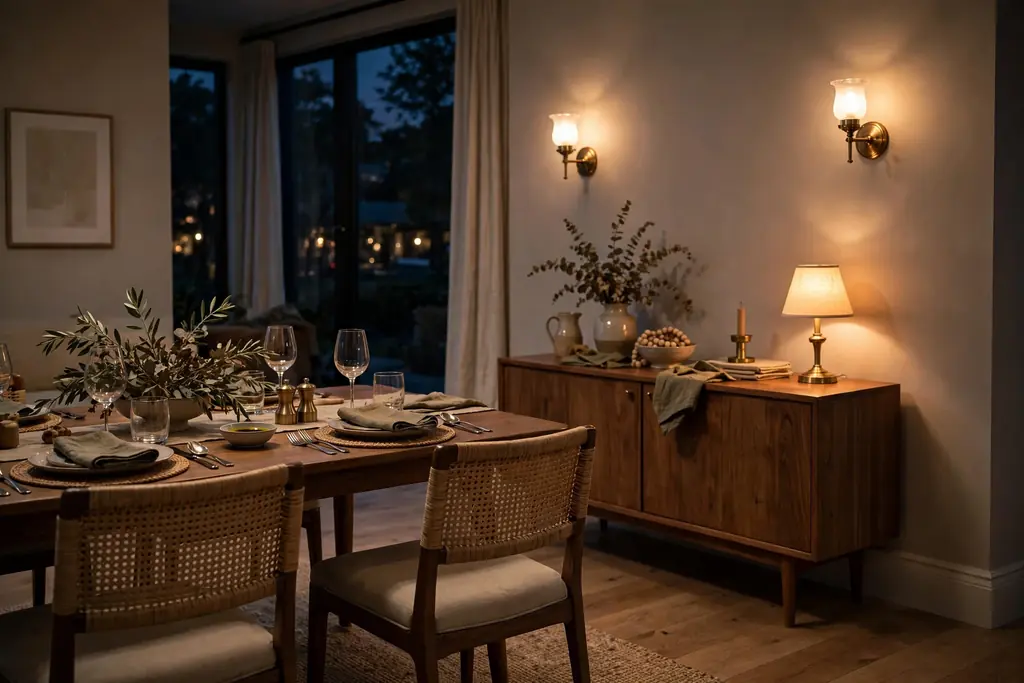
Add wall sconces on the main wall or a small table lamp on the sideboard, so the room does not rely on the chandelier alone in the evening. Low, warm light at two heights makes the room feel settled after dark, and it lets guests see each other without a bright overhead glare. Choose sconces or lamps with warm bulbs and simple shades in cream or linen, and keep the finish consistent with the chandelier, such as aged brass.
Place one lamp or one pair of sconces where they will not block art or a mirror, and keep cords tidy behind the sideboard. Use a dimmer or a low watt bulb for the lamp, so it glows rather than glares. In the daytime, the lamp and sconces act as quiet decor, so choose shapes that suit the room even when switched off.
11. A Built In Banquette for Casual Family Meals
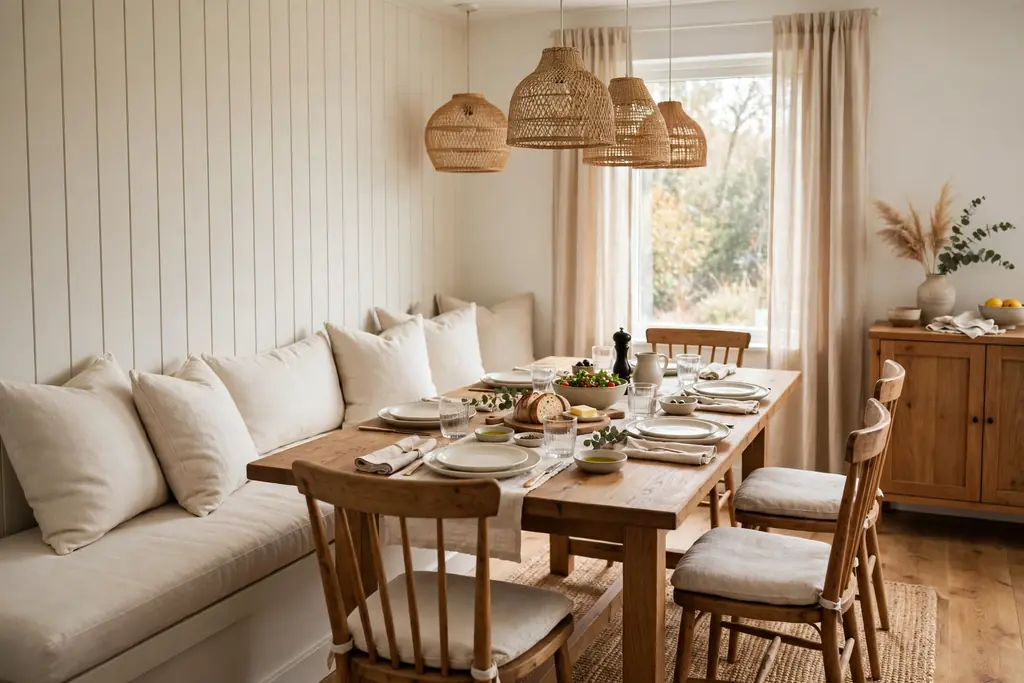
Build or place a banquette bench along one wall, with a wood or upholstered base and loose cushions in a washable fabric, so everyday family meals feel relaxed and the room seats more people in less space. A banquette suits a nook or a long wall, since guests slide in and the table can sit close to the wall without a row of chairs behind it. Add a cushion in cream or a quiet stripe, with one or two back pillows for comfort.
Keep the table at a height that lets guests slide in with ease, and choose a bench depth that supports sitting without feeling like a sofa. Use washable cushion covers, since a banquette gets daily use, and keep the area under the bench clear or fitted with drawers for table linens. For a gathering, the banquette seats children well, while adults take the chairs on the open side.
12. A Glass Front Hutch for Everyday Dishes on Display
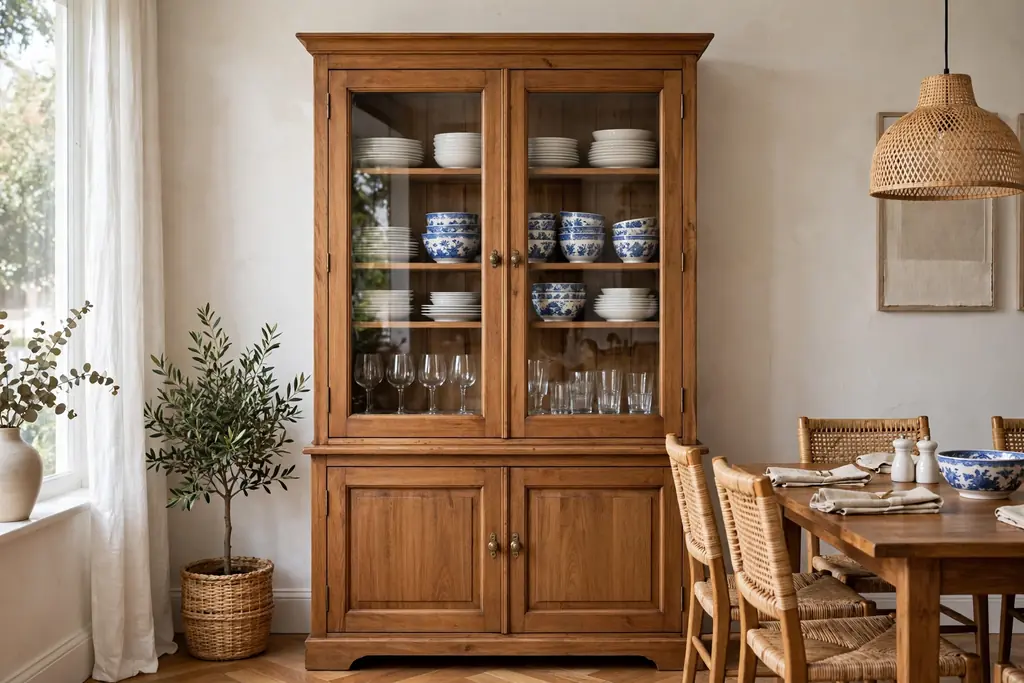
Use a glass front hutch or a pair of open shelves to display everyday dishes, bowls, and glasses, so the room looks lived in and setting the table takes only a few steps. White dishes, blue and white bowls, and clear glasses look calm behind glass, and they are easy to reach for daily meals. Choose a hutch in a warm wood tone, with shelves spaced for plates, bowls, and a few serving pieces.
Keep the display light: group dishes by type, leave space between groups, and put the most used pieces at hand height. Dust the shelves before a gathering, and keep fragile pieces behind glass rather than on open shelves near a walkway. If the hutch doors stick, adjust hinges and add felt pads, since doors used daily should open with one hand.
13. A Patterned Rug That Grounds the Table Group
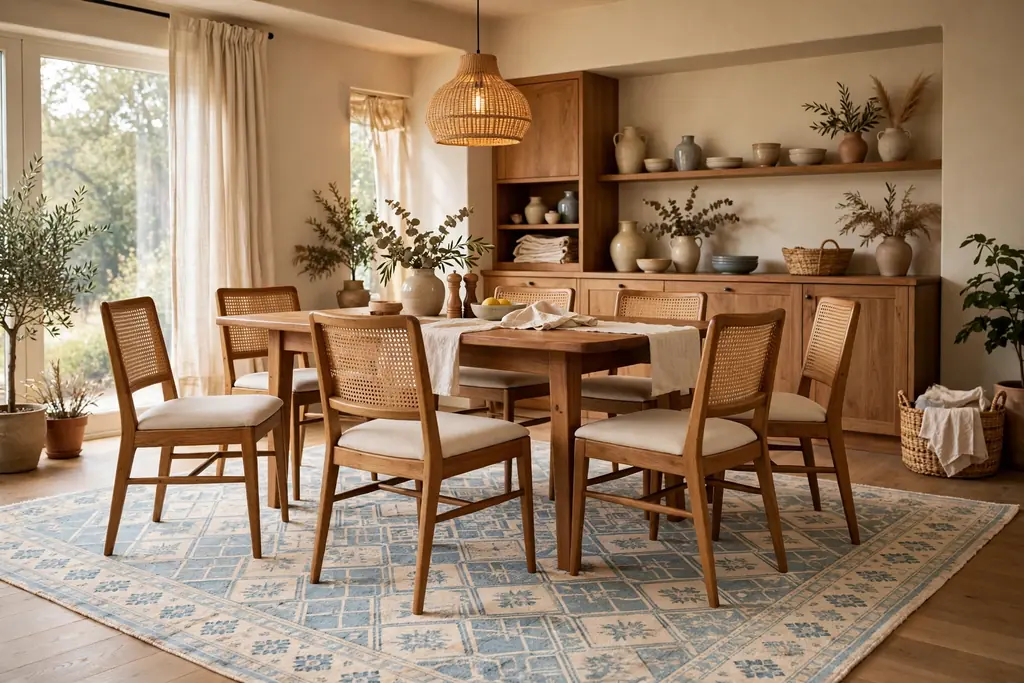
Lay a patterned rug under the dining table, large enough that chairs stay on it when pulled out, with a non slip pad beneath. A rug in a muted pattern, such as a soft blue and cream floral, a quiet stripe, or a traditional medallion in warm tones, grounds the table group and adds warmth at floor level. The rug also softens sound in the room, which helps conversation at a long meal.
Choose a flat weave or a low pile rug, so chairs move with ease and crumbs shake out. Measure the table plus chair pull out space before buying, and center the rug under the table, not just under the room. Vacuum the rug weekly and blot spills at once, since food and drink reach a dining rug often, and use a washable rug in a home with young children or pets.
14. A Gallery Wall and Mirror Above the Sideboard
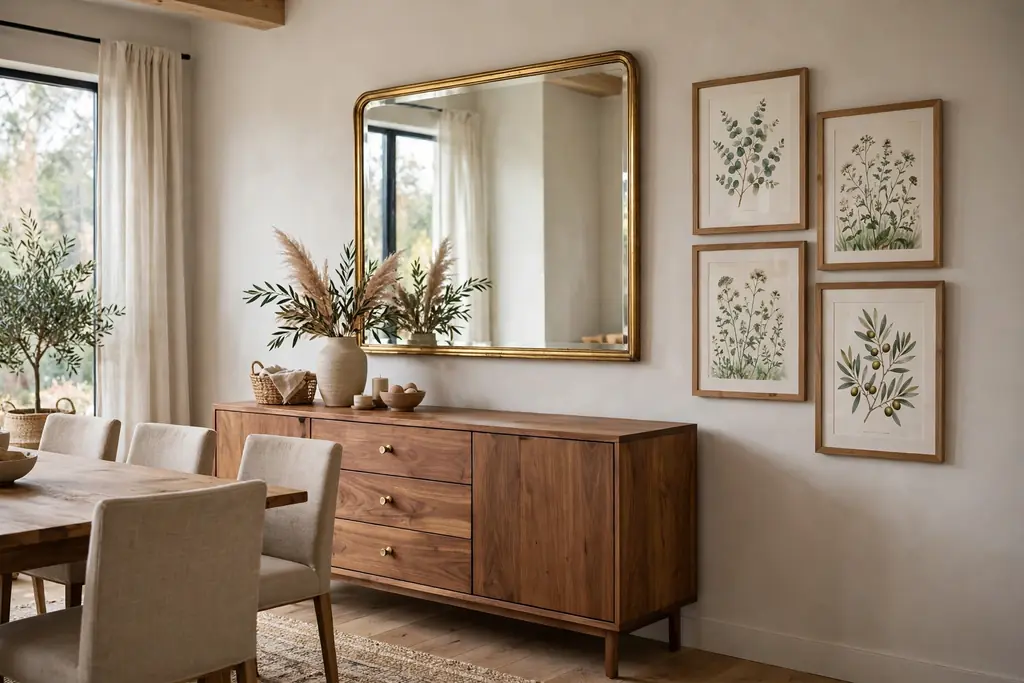
Hang a mirror above the sideboard to reflect light and make the room feel larger, then group framed prints beside it, such as botanical studies, landscapes, or simple line art in plain frames. A mirror doubles candlelight in the evening, and a small gallery gives the wall a collected feel without needing a large, costly piece. Keep frames in one or two finishes, such as wood and brass, so the group reads as one display.
Hang the mirror centered over the sideboard, with its bottom edge clear of items on the top, and hang prints at seated eye level where possible. Leave space between frames, and check the group from the table seats, since that is where it will be seen most. Dust frames before a gathering, and keep the mirror glass clean, since smudges show more in candlelight.
15. Family Style Serving at the Center of the Table
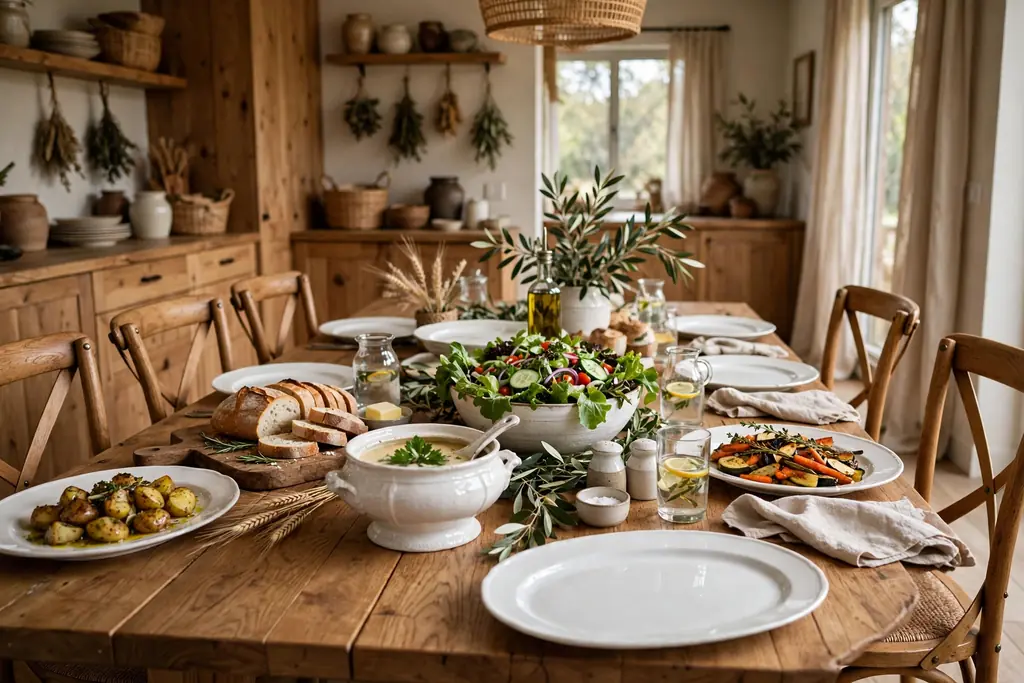
Serve meals family style, with platters, a soup tureen, a bread board, and a salad bowl down the center of the table, so guests pass food and help themselves. Family style serving suits this room, since it keeps the meal relaxed and the table becomes the center of the gathering rather than a formal stage. Use platters in white or cream, with one wood board for bread, so the serving pieces tone with the place settings.
Leave room at each place for a plate, a glass, and elbows, and set serving spoons with each dish before guests sit down. Keep hot dishes on trivets, and refill platters from the sideboard rather than crowding the table with spares. At the end of the meal, clear serving pieces to the sideboard in one pass, so the table can stay set for dessert and coffee.
16. A Low Centerpiece That Changes with the Season
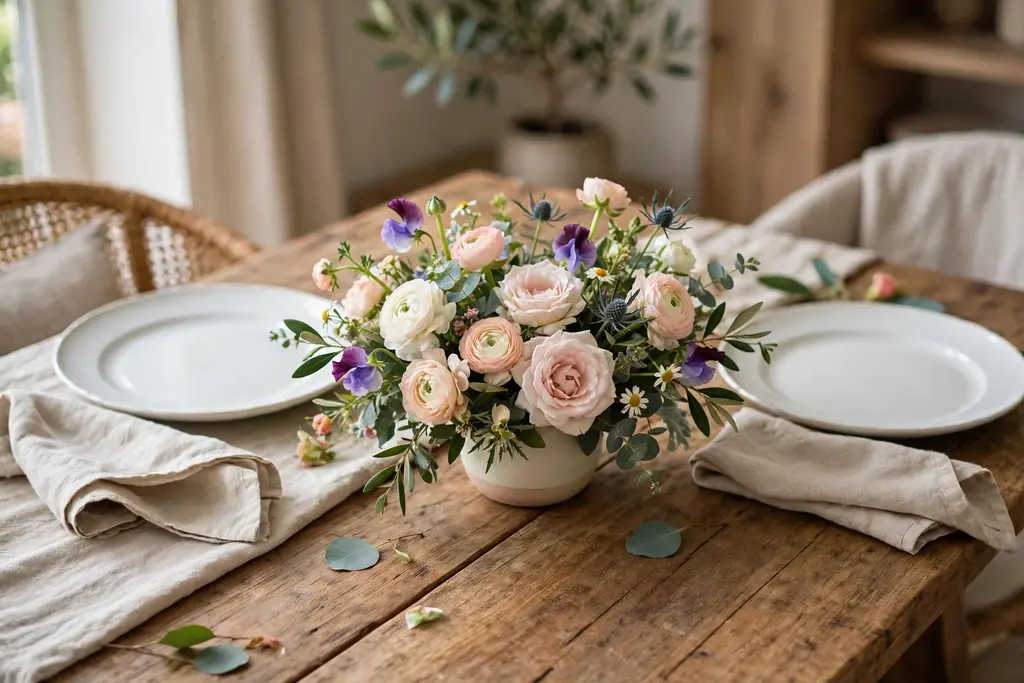
Use one low centerpiece that changes with the season, such as fresh garden flowers in spring, a bowl of lemons in summer, greenery in winter, or a small vase of dried stems in fall. A single changing piece keeps the table fresh without a new table setting each season, and it suits a room that already has wood, linen, and brass as its base. Keep the piece low and narrow, so guests can see across, and set it on a tray or a wood board so it lifts off in one move.
Change the water for fresh flowers every day or two, and remove any stem that wilts, since one cloudy vase can spoil the group. For fruit, check pieces every few days and move any soft piece to the kitchen. Keep the centerpiece clear of candles and serving paths, and move taller seasonal pieces to the sideboard, where they can be seen without blocking conversation.
17. Host Ready Details for a Relaxed Gathering
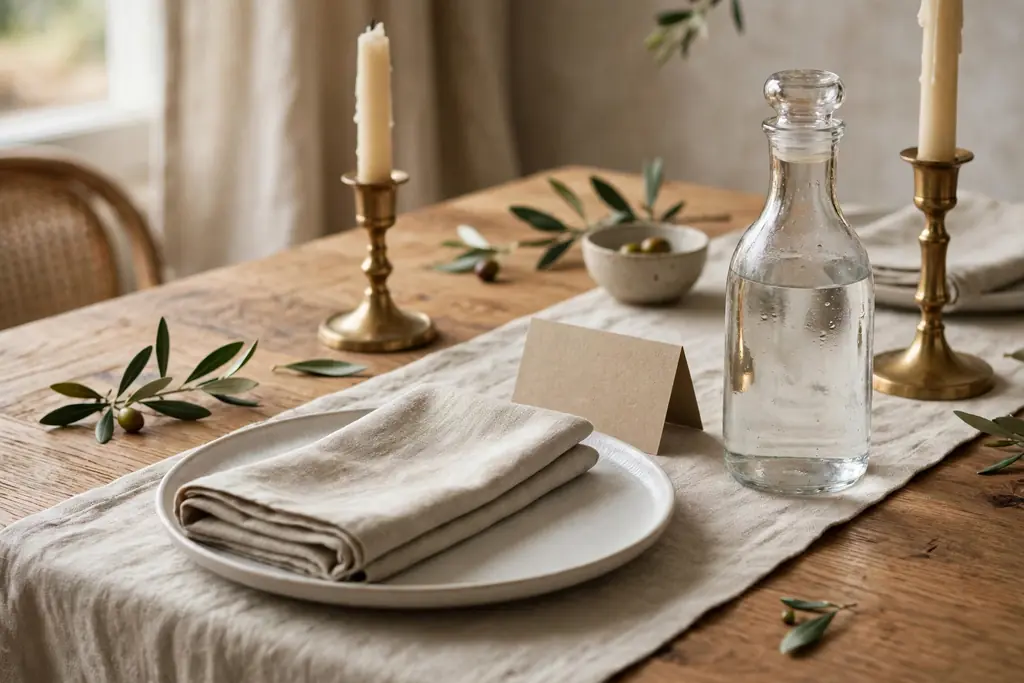
Add small host details that help guests settle in: cloth napkins folded in a simple rectangle, a water carafe and glasses within reach, a place card or a short menu card at each place, and a candle lit before guests arrive. These details take minutes, yet they make a gathering feel planned without making it feel formal. Use the same napkin fold and the same card style at every place, so the table looks matched from the end of the room.
Write place cards in clear, large lettering, and keep the note short, since a long note will be read once and then set aside. Set the carafe where guests can reach it without standing, and keep a spare napkin and a cloth nearby for spills. For a larger gathering, add a drink station on the sideboard, so guests can help themselves without leaving the room, and keep the table clear for food and conversation.
Conclusion
A Nancy Meyers dining room works when the table is sturdy, the chairs are comfortable, the light is soft, and the setting stays simple enough for daily use. Start with a warm wood table, white dishes, linen, and brass candles, then add one collected layer at a time, such as a sideboard, layered curtains, or a rug under the table. Keep the centerpiece low, leave room for serving dishes, and let the room look lived in rather than staged.
For table ideas in a seasonal palette, see fall table decor ideas, for a holiday table to pair with this room, see Christmas table setting ideas, and for room ideas beyond the table, see Christmas decor in the dining room. Save this list on Pinterest for your next gathering, and work through it one idea at a time, starting with light and seating before adding decor.
FAQs
What is a Nancy Meyers dining room?
A Nancy Meyers dining room is a warm, collected dining room built around a wood table, soft linen, white dishes, and candlelight, where the room feels lived in and comfortable for long meals. It favors classic pieces, natural materials, and layered light over sleek finishes or formal, matched sets.
What colors work best in a Nancy Meyers dining room?
Warm white, cream, soft blue, natural wood, and brass work best together, because they suit wood tables, white dishes, and linen in both daylight and candlelight. Repeat each color at least twice, such as blue accent plates with a blue napkin, so the room looks planned. Keep one quiet pattern, such as blue and white, and let the rest stay plain.
How do I make a dining room feel warm without a full renovation?
Start with layered light, a linen cloth or placemats, and comfortable chairs, since those three changes shift the room more than new wall color alone. Add a rug under the table, sheers and drapes at the window, and brass candlesticks at the center, then keep the palette to warm white, cream, wood, and brass. Work through one layer at a time, and keep pieces you use daily within reach.
What kind of table suits a Nancy Meyers dining room?
A warm wood table suits this room best, such as a long aged oak or mahogany table for gatherings, or a round pedestal table for a small nook. Choose a table that seats the household plus a few guests, with room for serving dishes down the center, and a top that can be wiped after meals. A worn wood top suits this look better than a glossy top that shows every mark.
How do I mix dining chairs without the room looking mismatched?
Mix chairs by keeping one thread consistent, such as the same wood tone, the same seat height, or the same cushion fabric, while letting chair shapes differ. Use Windsor or ladder back chairs along the sides and upholstered armchairs at the heads, so the mix looks gathered over time. Test that every chair slides under the table and sits steady, since comfort matters more than a matched set.
How do I set a Nancy Meyers table for everyday meals?
Start with plain white plates, clear glasses, and cloth napkins, then add one low centerpiece, such as brass candles or a small vase of flowers, and leave room for serving dishes. Use placemats instead of a full cloth for daily meals, so the table clears fast, and keep a water carafe within reach. Save the linen cloth, accent plates, and place cards for gatherings, so everyday settings stay quick to lay out and clear away.