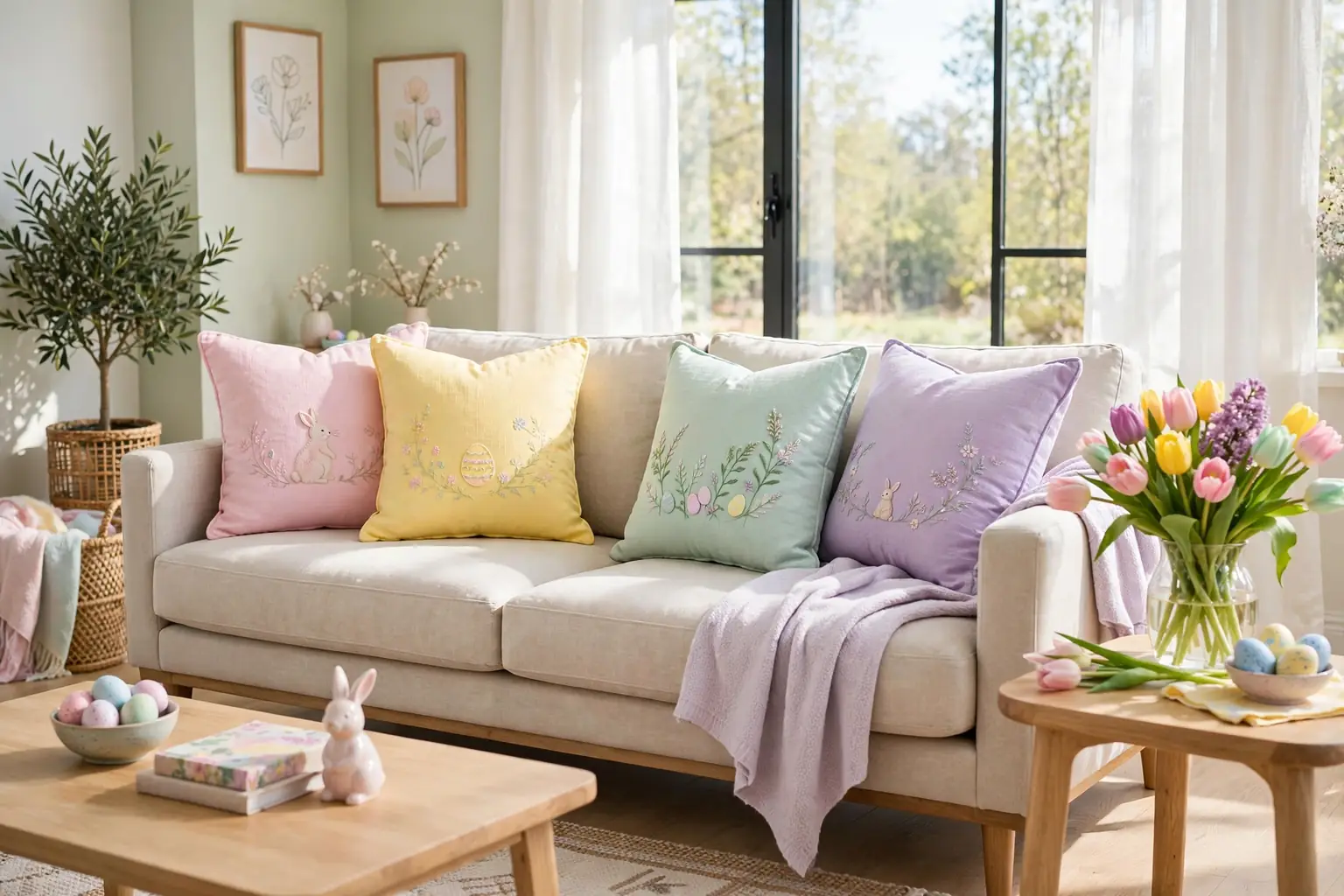
The best Easter pillow covers use soft pastels, one clear motif, and a washable fabric, so a sofa, bed, or porch bench feels fresh for spring without a full room change. Choose two or three covers in pastel pink, yellow, mint, or lilac, pair them with plain covers you already own, and keep one motif as the focus.
Start by checking the insert size, since a cover one or two inches smaller than its insert looks fuller on a sofa or bed. Pick a palette of three pastel colors at most, and repeat one of them in a throw or a small vase of spring flowers nearby, so the new covers connect with the rest of the room. For more seasonal pillow styling, see Fall Pillow Covers: 17 Cozy Ideas to Refresh Your Sofa, and browse the Dwell Ovell home page for ideas for every room.
Key Takeaways
- Limit the Easter palette to three pastel colors, and repeat one color elsewhere in the room so the covers look planned.
- Use a cover one or two inches smaller than its insert for a full, plump shape on sofas and beds.
- Keep one motif as the focus, such as bunnies or eggs, and pair it with plain or striped covers.
- Choose washable cotton or linen covers for sofas and porches used every day, and save velvet or embroidered covers for lighter use.
- Mix two solids, one pattern, and one texture so an Easter sofa looks layered rather than busy.
- Store Easter covers clean, dry, and folded flat, with tissue between embroidered covers, so they keep their shape for next spring.
1. Pastel Bunny Silhouette Covers on a Sofa
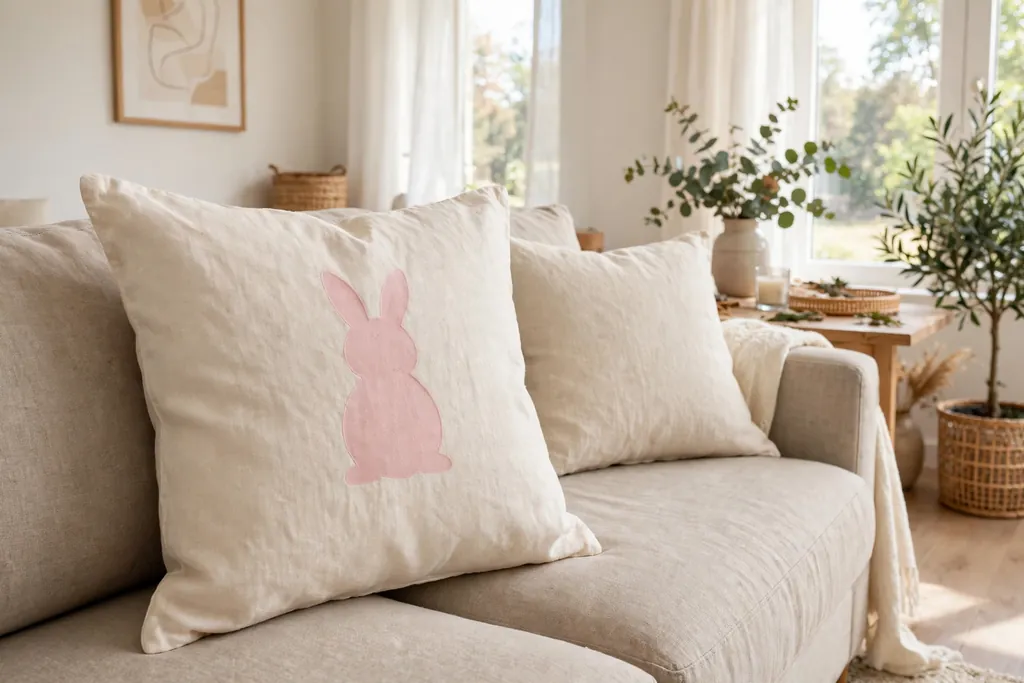
A single bunny silhouette in soft pink, mint, or grey on a cream linen cover gives a sofa a clear Easter note without a loud print. Place two silhouette covers at the ends of a neutral sofa, with plain cream or pale grey covers between them, so the motif reads from across the room.
Silhouette covers suit a living room because the simple shape stays calm next to other spring decor. Choose a printed silhouette for easy washing, or an appliqued felt bunny if you want a little texture. Keep the rest of the sofa plain, so the bunny shape stays the focus.
2. Embroidered Egg Covers in Soft Colors
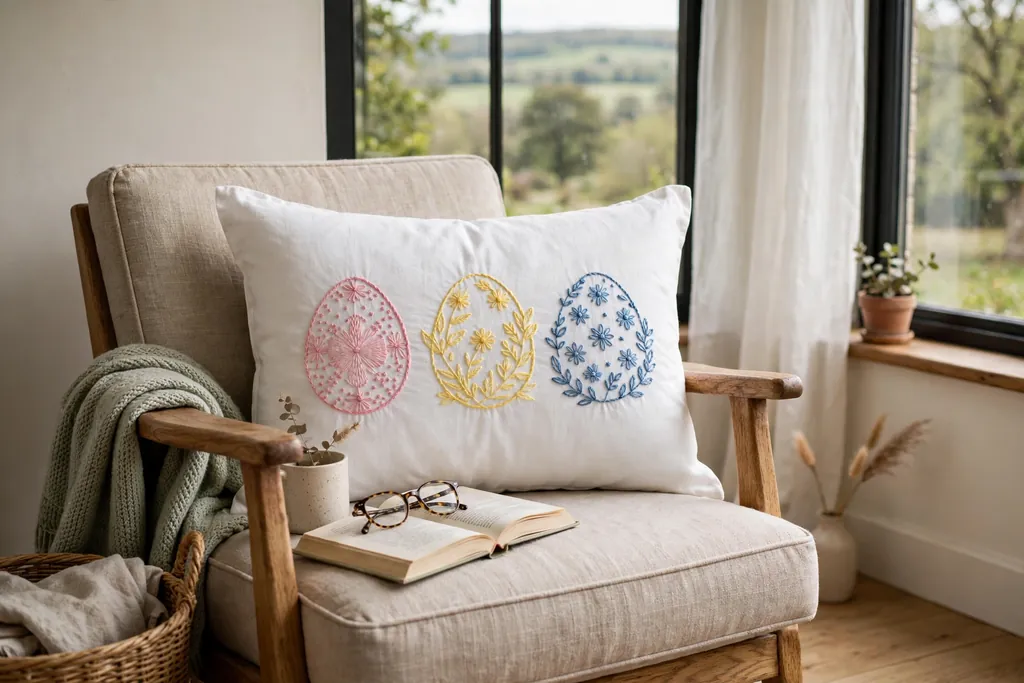
Embroidered eggs in pastel thread on a white or oatmeal cover add a crafted detail that suits a sofa or a reading chair. Look for eggs stitched in pink, yellow, and blue thread, spaced evenly across the cover, with a plain border so the stitching stands out.
Embroidery reads best up close, so these covers work well on chairs and small sofas where guests sit near the pillows. Wash them gently inside a laundry bag, and press from the back if ironing is needed, so the raised threads keep their shape. Pair embroidered covers with solid linen covers in one of the thread colors.
3. Gingham Check Covers in Spring Pastels

Pink, mint, or butter yellow gingham covers bring a fresh, cottage feel to a sofa or a bedroom bench. The small, even check reads as a pattern without competing with a bunny or egg motif nearby, which makes gingham a good partner cover.
Use gingham on one or two pillows per sofa, and pair it with solid covers in cream or white. Gingham suits farmhouse, cottage, and traditional rooms, and it also works in a modern room when the rest of the palette stays pale. Wash gingham with similar colors, and check that the dye is colorfast before the first wash.
4. Carrot Patch Print Covers for a Kitchen Bench
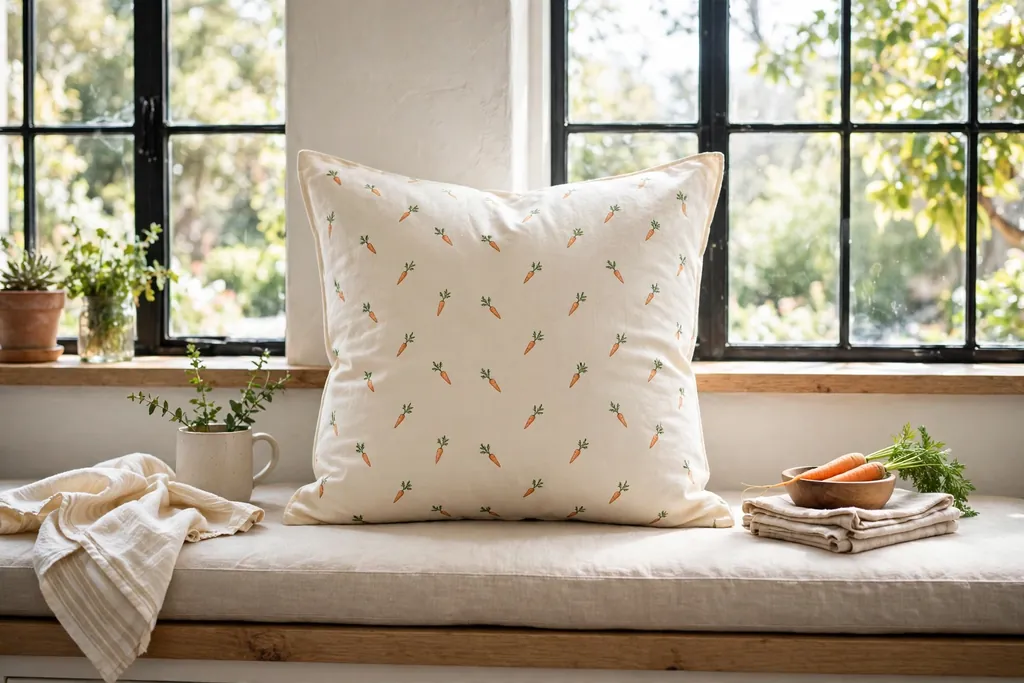
A carrot print in soft orange and green on a cream or natural cotton cover adds a playful Easter note to a kitchen bench or breakfast nook seat. The vegetable motif feels right in a kitchen, where it can sit near a bowl of fruit or a small potted herb.
Keep the carrot print to one or two covers, and pair it with plain cream covers so the print does not crowd the bench. Cotton covers wash well, which matters in a kitchen where spills happen. If orange feels strong for the room, choose a print with small carrots and plenty of cream ground showing between them.
5. Watercolor Spring Floral Covers for a Bedroom
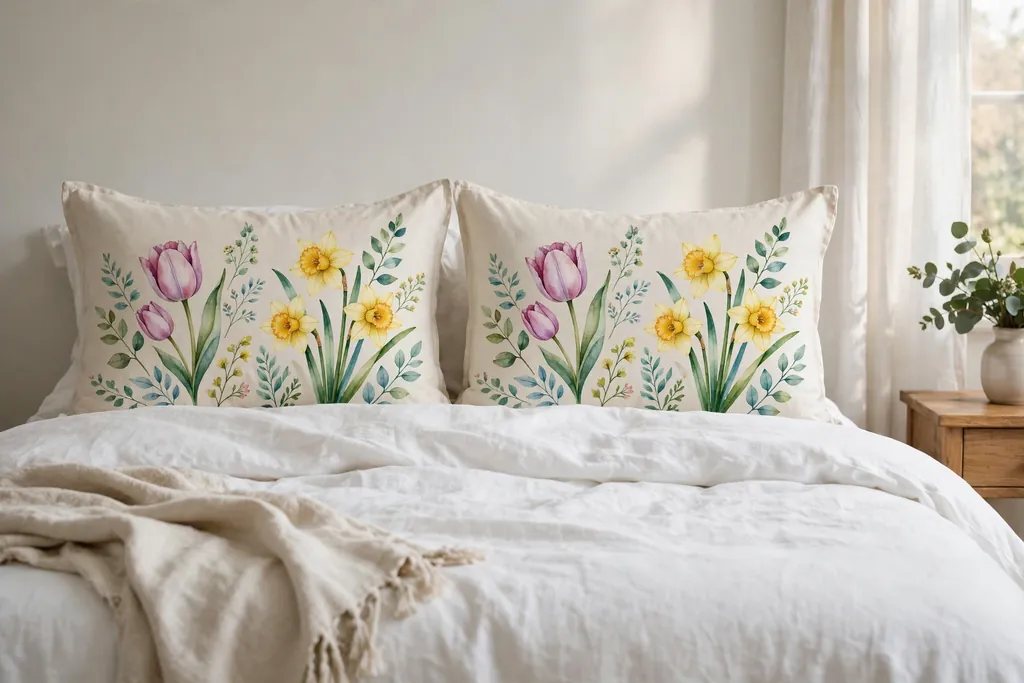
Watercolor tulips, daffodils, and cherry blossom on a pale cover bring Easter color to a bedroom without a holiday motif. Place two floral covers in front of plain white sleeping pillows, so the bed looks dressed for spring but still calm enough for sleep.
Floral covers suit a bedroom because the soft, painted look pairs well with white bedding and light wood furniture. Choose a print with a pale ground, such as cream or blush, and repeat one flower color in a throw at the foot of the bed. Wash floral covers with similar colors to keep the soft tones from fading.
6. Pom Pom Trim Covers in Butter Yellow
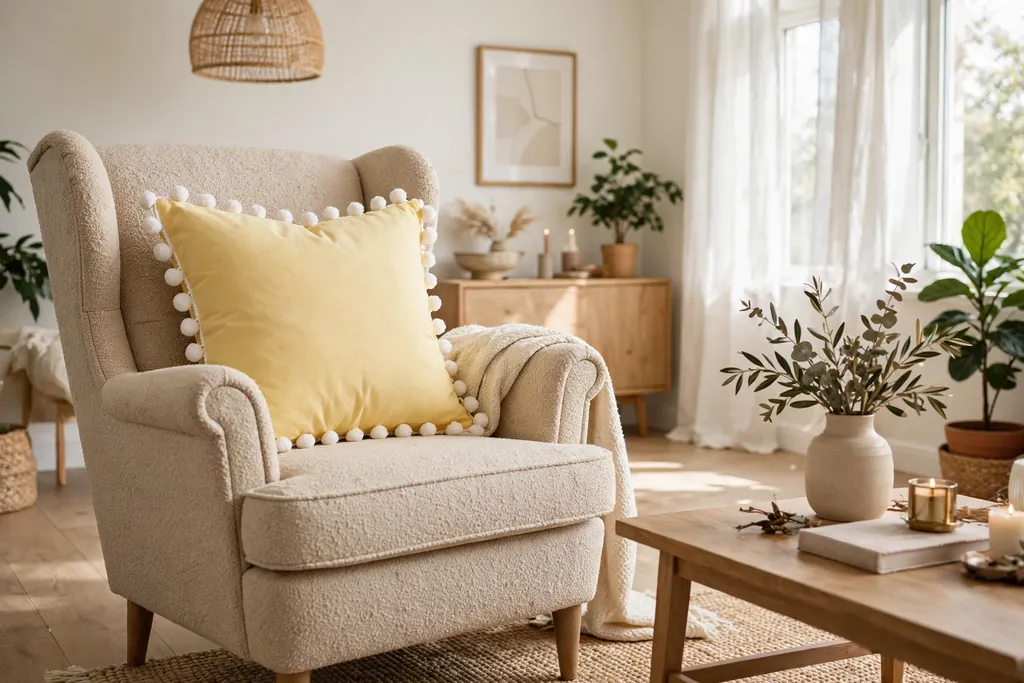
Butter yellow covers with small white pom pom trim add a light, cheerful edge detail to a sofa or an armchair. The trim outlines the cover and gives a solid color cover a finished look, which helps it stand out next to plain linen covers.
Use pom pom trim covers as single accent pillows, since the trim is a strong detail on its own. Wash them gently in a laundry bag, so the trim does not tangle or flatten, and dry them flat, fluffing the pom poms by hand once dry. Butter yellow pairs with cream, mint, and soft grey covers for a balanced spring palette.
7. Appliqued Bunny Ear Covers for a Family Room
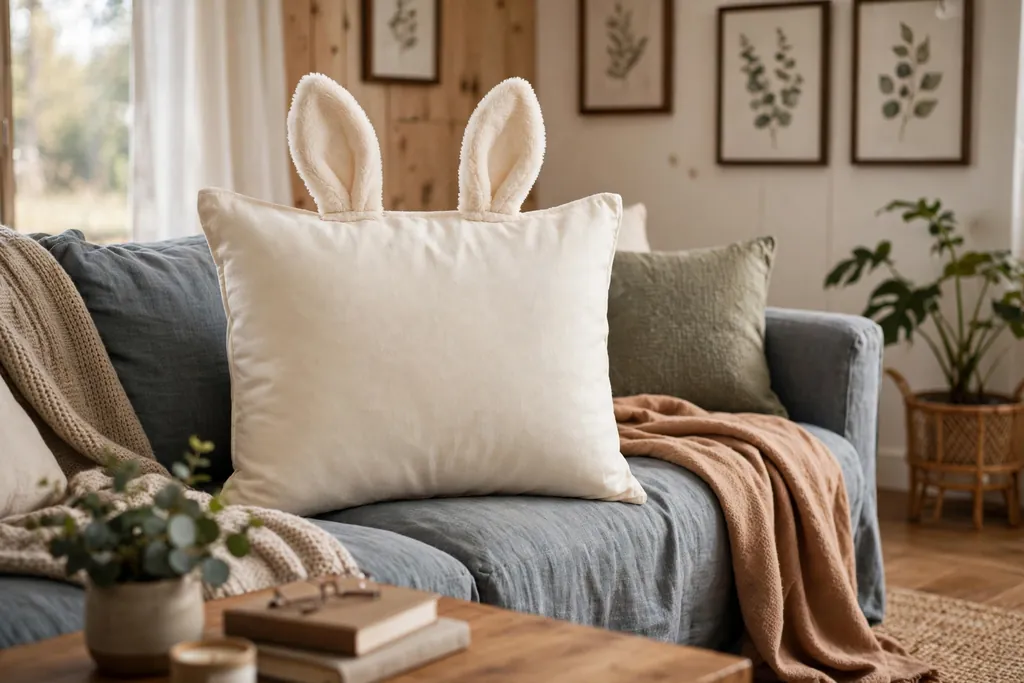
Covers with soft bunny ears stitched or sewn onto the top edge make a fun Easter pillow for a family room or a child’s bedroom. The ears stand up from the pillow, so the cover works best on a sofa or bed where the pillow sits upright against a back cushion.
Choose bunny ear covers in cream, grey, or soft pink, with ears in a matching or slightly darker tone. Keep the rest of the bedding or sofa plain, since the ears are the feature. Wash these covers gently, and reshape the ears while damp so they dry standing upright.
8. Sage and Cream Ticking Stripe Covers with Egg Embroidery
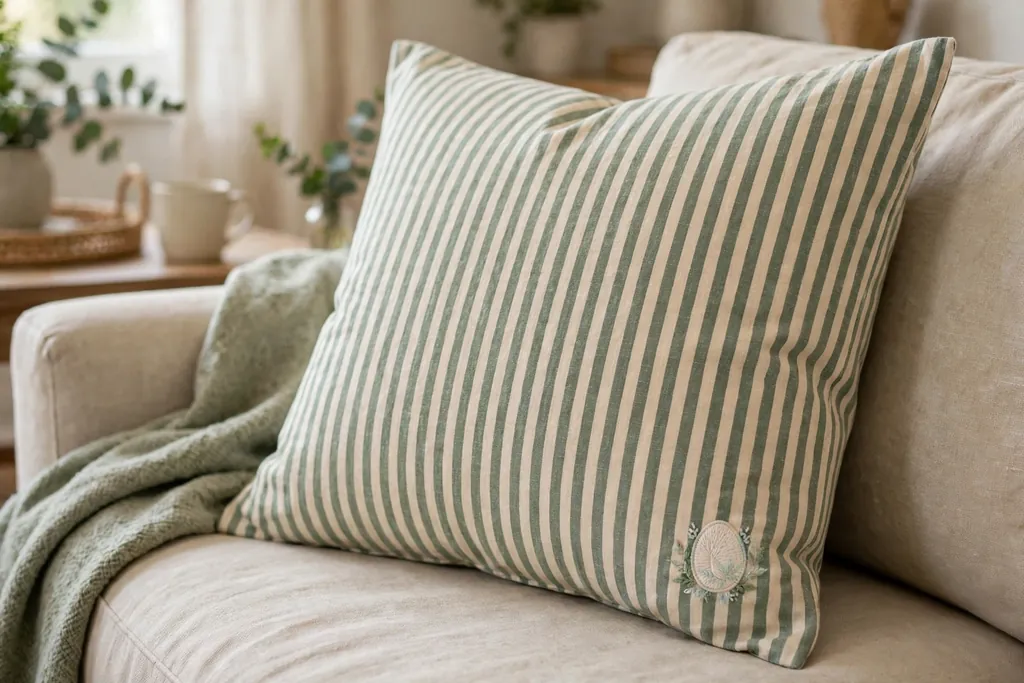
Narrow sage and cream ticking stripes with a small embroidered egg at one corner give a sofa a quiet Easter detail. The stripe is calm enough for everyday use, while the single egg marks the season without turning the whole cover into a holiday print.
Ticking stripe suits rustic, farmhouse, and traditional rooms, and it bridges the gap between a solid cover and a bold print on the same sofa. Use it on one or two pillows, and repeat the sage in a solid cover elsewhere on the sofa. Cotton ticking washes well, and a medium iron setting keeps the stripes crisp.
9. Happy Easter Typography Covers for an Entryway Bench
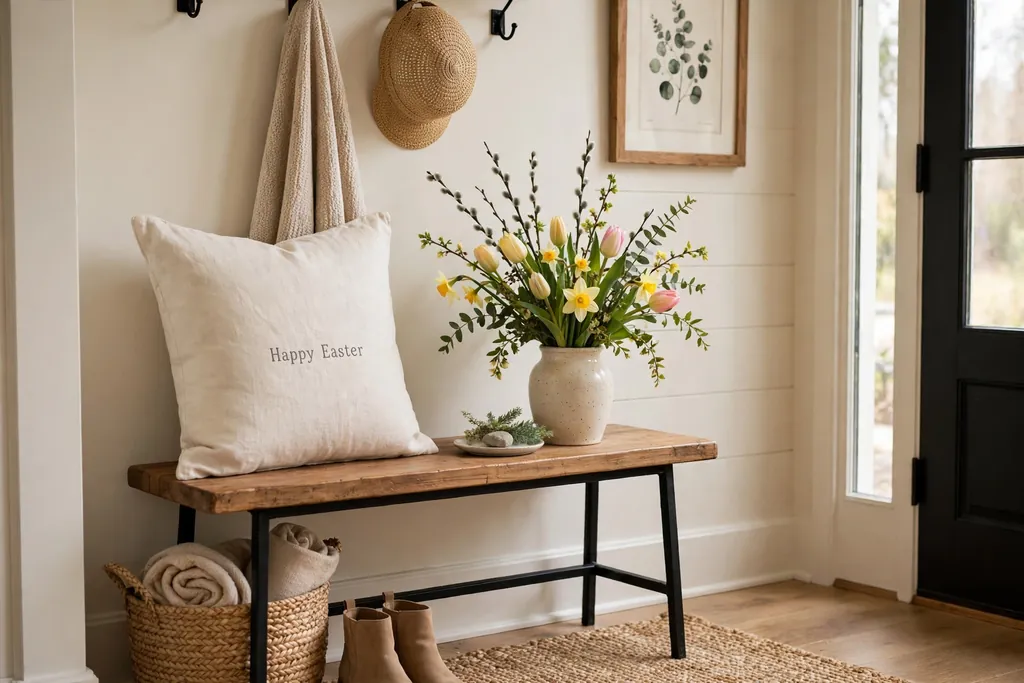
A simple “Happy Easter” message in soft grey or sage lettering on a cream cover suits an entryway bench, where guests see it as they arrive. Keep the lettering small and centered, with plenty of plain fabric around it, so the cover reads as welcoming rather than loud.
Typography covers work well in an entryway because the message is read at a glance. Pair the message cover with a plain pastel cover beside it, and add a small basket or a vase of spring stems nearby. Choose a printed message for easy washing, since entryway pillows get frequent handling.
10. Seersucker Covers in Pastel Blue for a Sunroom

Seersucker covers in pastel blue or mint add a light, crinkled texture that suits a sunroom or a bright living room. The puckered weave feels cool and casual, which fits rooms that get warm in spring sun.
Use seersucker on the pillows you lean against most, since the texture is comfortable and the fabric breathes well. Pair seersucker with smooth cotton covers in white or cream, so the crinkle stands out as a texture contrast. Wash seersucker gently and skip heavy ironing, since the puckered texture is part of the look.
11. Crochet Edge Covers for a Vintage Bedroom
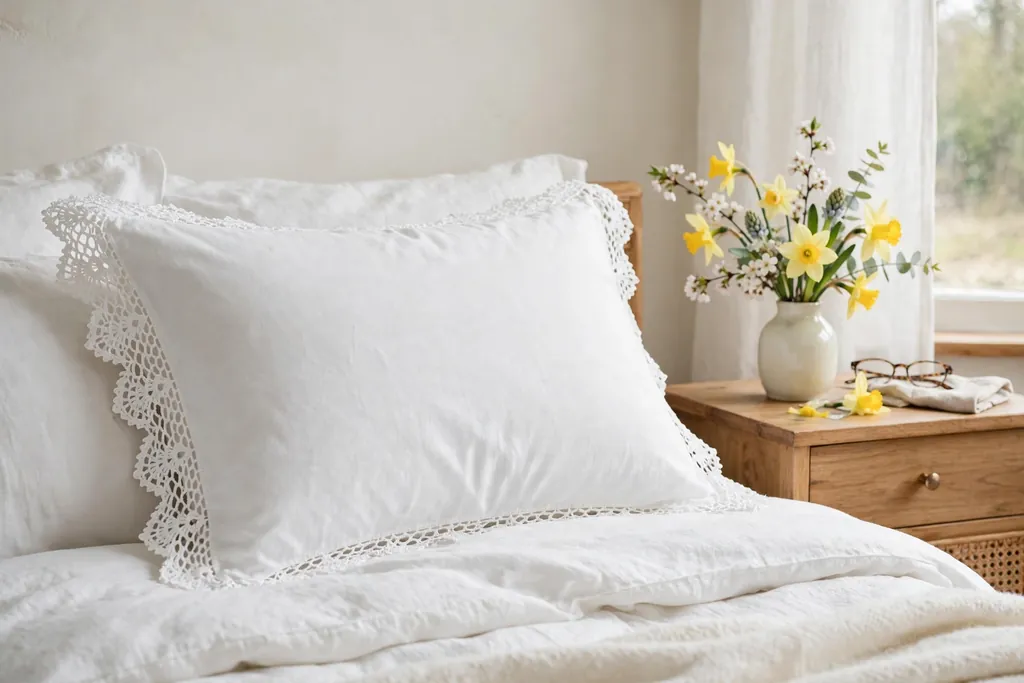
Cream or white covers with a crochet or lace edge bring a vintage note to a bedroom or a guest room bed. The handmade edge softens a plain cover and pairs well with white bedding, light wood, and small spring flowers on a nightstand.
Crochet edge covers suit a bed because they are seen up close, where the edge detail can be appreciated. Place them in front of sleeping pillows, with a pastel solid cover behind them for a layered look. Wash them gently in a laundry bag, and dry them flat so the edge keeps its shape.
12. Speckled Egg Print Covers for a Modern Living Room
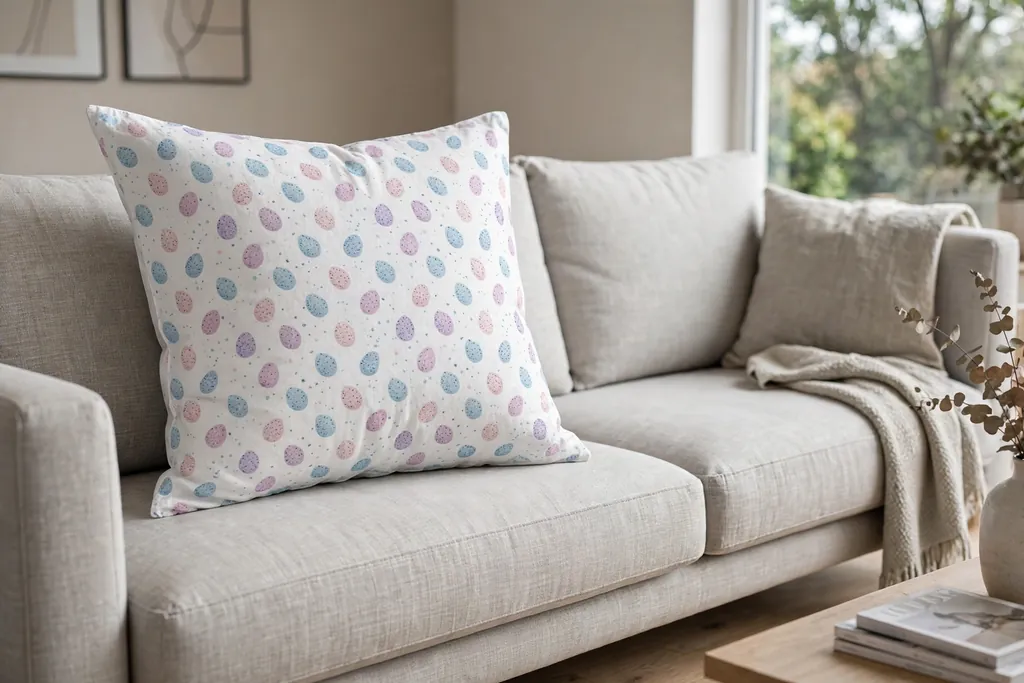
Small speckled eggs in soft blue, pink, and lilac on a white or pale grey cover give a modern living room a subtle Easter pattern. The small scale of the print keeps it calm, which suits rooms with clean lines and little other pattern.
Use speckled egg covers on one or two pillows, with solid covers in white, grey, or one pastel from the print. The small print also works on a lumbar pillow in front of larger square covers. Choose a cotton or linen blend for everyday use, and wash with similar colors to keep the pale ground bright.
13. Soft Lilac Velvet Covers for an Elegant Sofa

Soft lilac velvet covers add a gentle spring color and a smooth, rich texture to a sofa in a more formal living room. Velvet catches light softly, so lilac reads as elegant rather than bright, especially next to cream and pale grey covers.
Use velvet covers on pillows that get light use, since the pile shows pressure marks where people lean. Brush the pile lightly after use to keep it even, and keep velvet covers away from long stretches of direct sun, which can fade the color unevenly. Pair lilac velvet with a cream boucle or linen cover for texture contrast.
14. Outdoor Pastel Covers for a Porch Bench
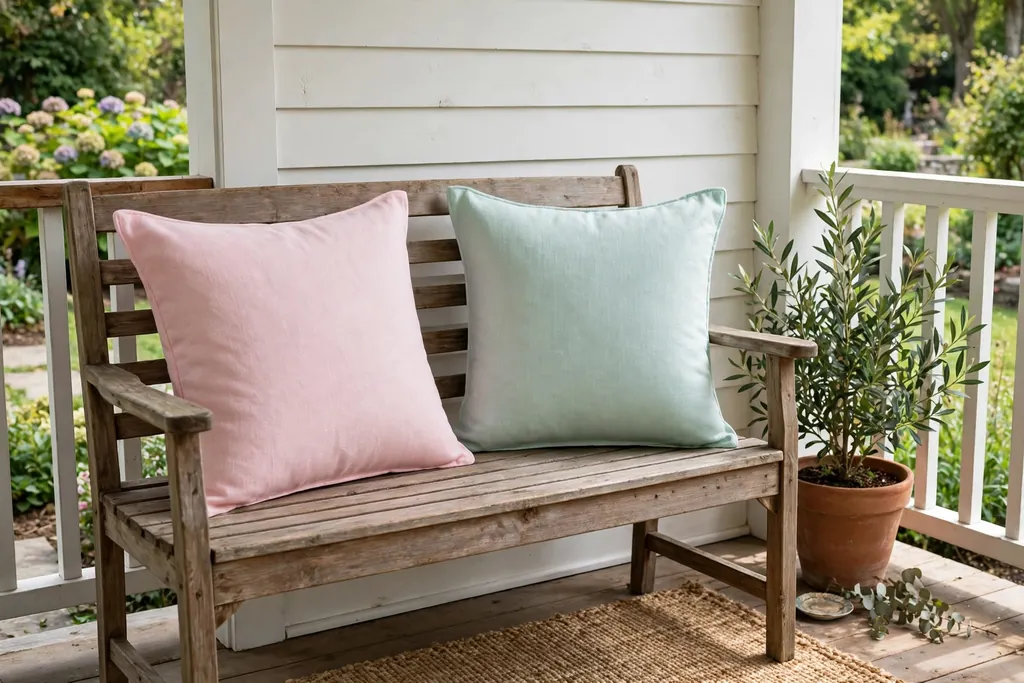
Pastel covers in a weather resistant fabric bring Easter color to a porch bench or patio chair without worry about spring showers. Look for covers in soft pink, yellow, or mint with a wipe clean or quick dry finish, and a hidden zipper that keeps rain out of the insert.
Outdoor covers suit a porch because they can stay out through the Easter season, then be stored for summer. Pair a pastel outdoor cover with a plain cream outdoor cover, and add a small potted plant nearby to echo the spring palette. Shake outdoor covers outside between washes, and store them dry at the end of the season.
15. Mix and Match Easter Lumbar Covers for a Bed or Bench
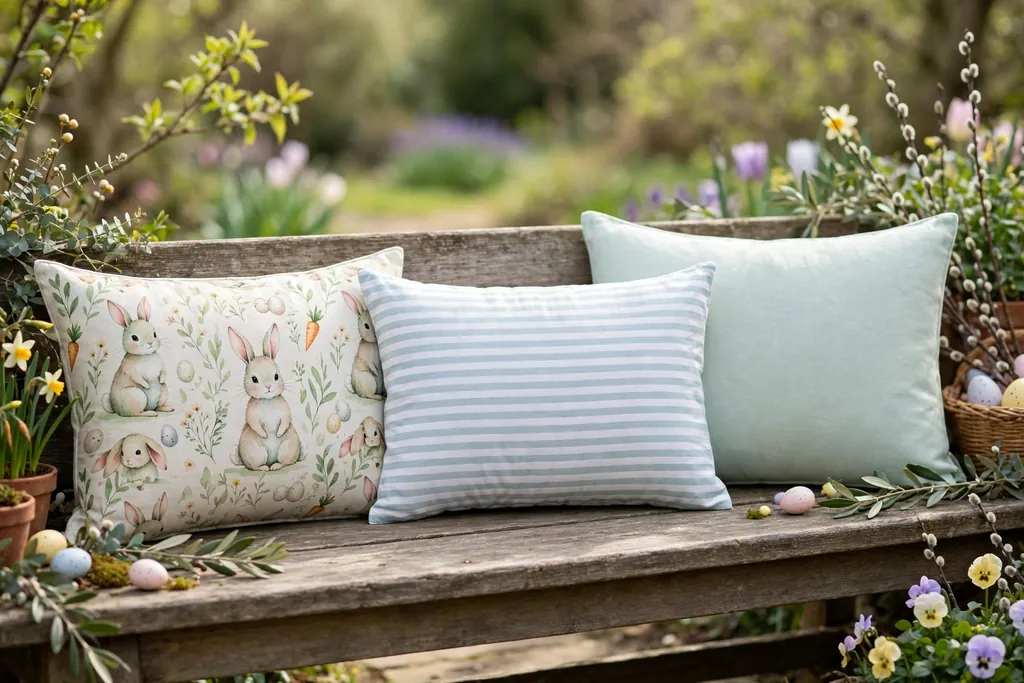
A set of lumbar covers in mixed Easter patterns, such as one bunny print, one stripe, and one solid pastel, gives a bed or a long bench a styled look in one step. The long rectangular shape breaks up a row of square pillows and runs neatly along the back of a bench.
Place the lumbar in front of square sleeping pillows on a bed, or centered on a bench, with plain covers at each end. Keep the three lumbar patterns in one pastel family, such as pink, cream, and mint, so the mix looks planned. Lumbar covers also suit a window seat, where their low shape does not block the view.
Conclusion
Easter pillow covers work best when the palette stays soft, one motif leads, and the fabric suits the room. Start with two or three covers in pastels you already like, pair them with plain covers you own, and check the insert size before ordering. Swap the covers out after Easter, store them clean and dry, and the same set will be ready for next spring. Save the ideas you like, and try one new combination each year to keep the seasonal refresh feeling fresh.
FAQs
What colors work best for Easter pillow covers?
Pastel pink, yellow, mint, lilac, and soft blue work best for Easter pillow covers, since they read as spring colors without overpowering a room. Limit the mix to three pastel colors, and pair them with cream or white covers so the sofa or bed stays calm.
How many Easter pillow covers should I use on a sofa?
Two or three Easter covers are enough for most sofas, paired with plain covers you already own. Place one patterned cover at each end of the sofa, or use a single feature cover in the center, so the Easter motif stays a highlight rather than covering every pillow.
Are Easter pillow covers washable?
Most cotton and linen Easter pillow covers are washable, but embroidered, appliqued, and velvet covers often need gentle washing or dry cleaning. Always check the care label before washing, and wash patterned covers with similar colors to protect the print or stitching.
What size Easter pillow cover should I buy?
Buy a cover one or two inches smaller than your insert, so the pillow looks full and plump rather than flat. Measure the insert before ordering, and check whether the cover size given is the finished cover size or the recommended insert size, since brands label them differently.
Can I use Easter pillow covers outdoors?
Yes, you can use Easter pillow covers outdoors if they are made from a weather resistant fabric with a quick dry or wipe clean finish. Standard cotton or velvet covers should stay indoors, since rain and strong sun can stain or fade them, and damp inserts can develop odors.
How do I store Easter pillow covers after the season?
Store Easter covers clean, dry, and folded flat, with tissue paper between embroidered or appliqued covers to protect the detail. Keep them in a closed box or bag away from damp and direct sun, and they will hold their color and shape until next spring.