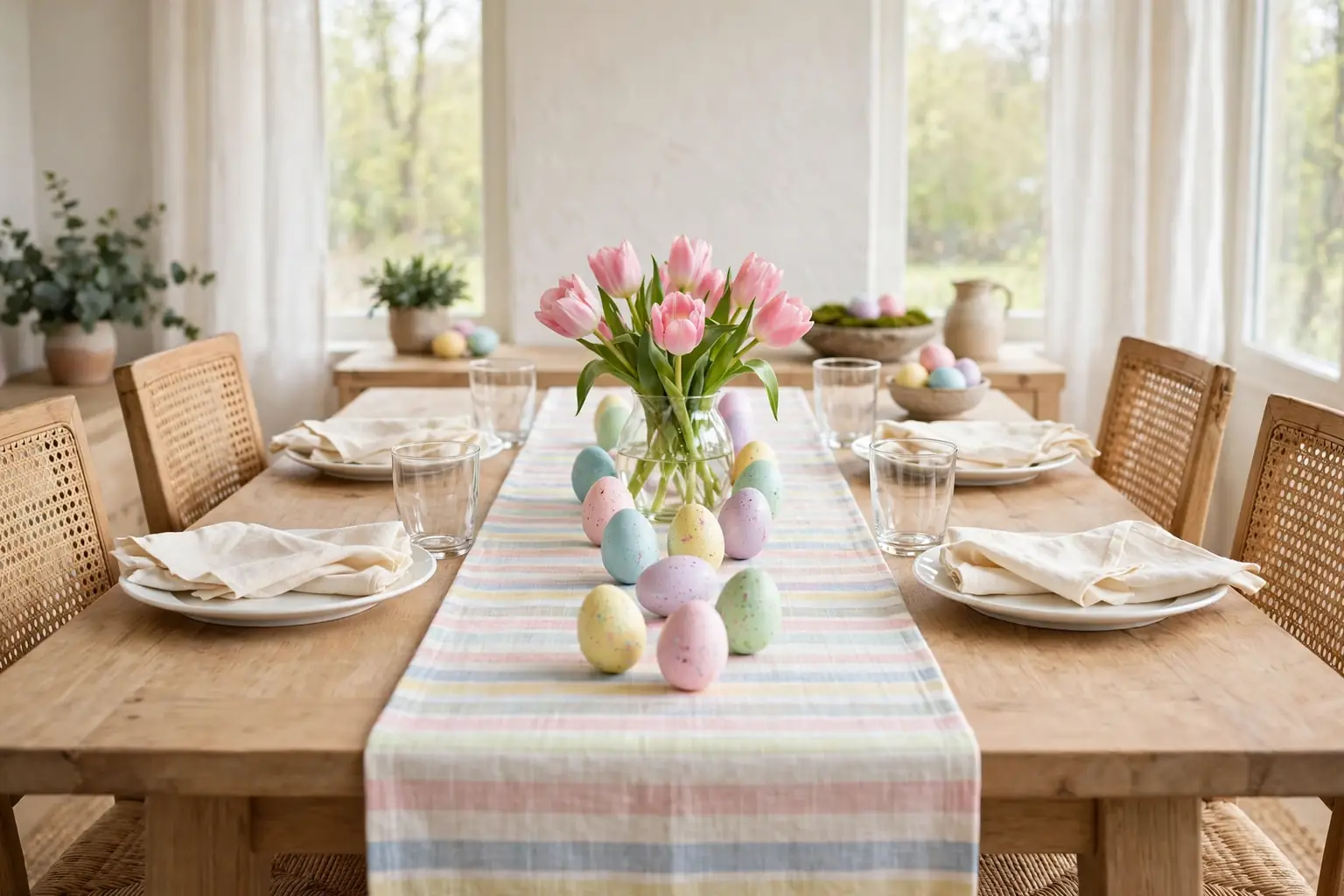
The best Easter table runner is a washable runner in a soft spring palette that leaves room for plates, glasses, and one low centerpiece. Choose pastel stripes, plain linen, or gingham for brunch, add eggs, tulips, or candles down the center, and keep the ends clear for serving dishes. The 15 ideas below cover brunch, family dinners, and kids tables.
Start with the base you already own: a plain tablecloth or bare wood table, everyday plates, and cloth napkins in white or cream. Then add one runner and one seasonal layer at a time, such as a small egg bowl, a tulip posy, or a set of taper candles. For low centerpiece ideas in a different seasonal palette to compare, see Fall Table Decor. Keep the centerpiece low enough to see across, leave room for serving dishes, and choose a runner you can wash after the meal.
Key Takeaways
- Pick a runner in a soft spring palette, and repeat one of its colors in the napkins or flowers so the table looks planned.
- Keep the centerpiece low and narrow, so guests can see each other and serving dishes still fit.
- Choose a washable runner for meals with children, eggs, or chocolate, and save delicate lace for adult gatherings.
- Lay the runner so it hangs evenly at both ends, and leave the ends clear for serving dishes.
- Use one main pattern on the table, and keep plates, glasses, and napkins plain if the runner is bold.
- Use flameless candles near paper, dried material, and children, and keep real flames clear of fabric and eggs.
1. Pastel Striped Cotton Runner
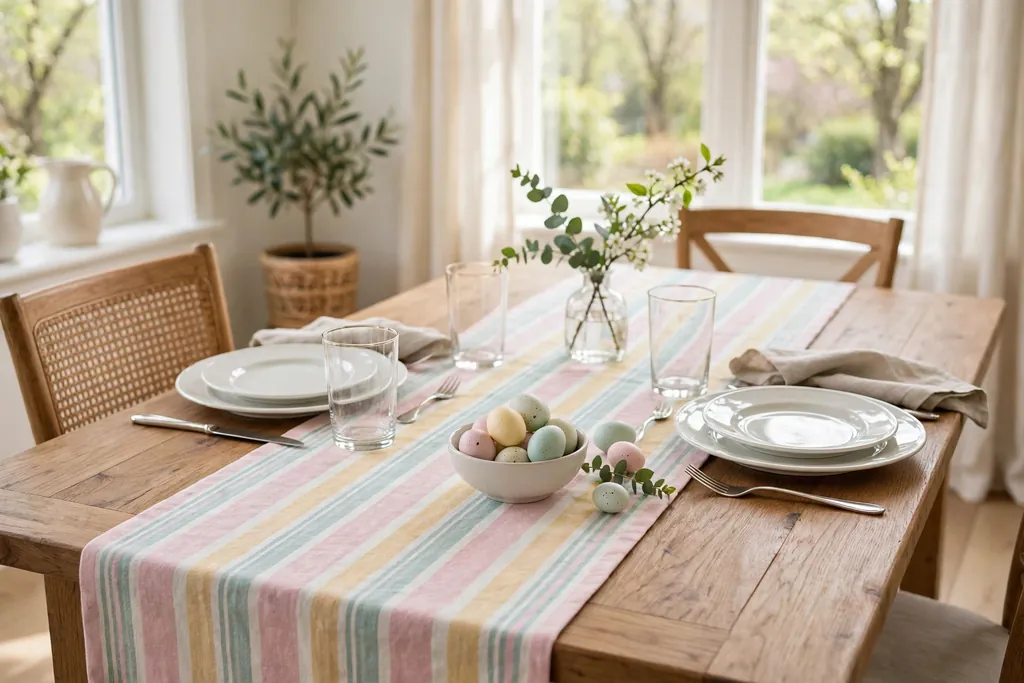
Lay a cotton runner in soft pink, yellow, and mint stripes down the center of the table, then set white plates and clear glasses at each place. The stripes carry the Easter color, so the rest of the table can stay plain, and cotton washes well after a meal with eggs or chocolate.
Choose narrow stripes for a small table and wider stripes for a long dining table, so the pattern stays in proportion. Iron or smooth the runner before a gathering, since creases show more in stripes than in a plain weave. If the runner is thick, use it alone and skip a tablecloth, so plates sit level.
2. White Linen Runner with an Embroidered Bunny Border
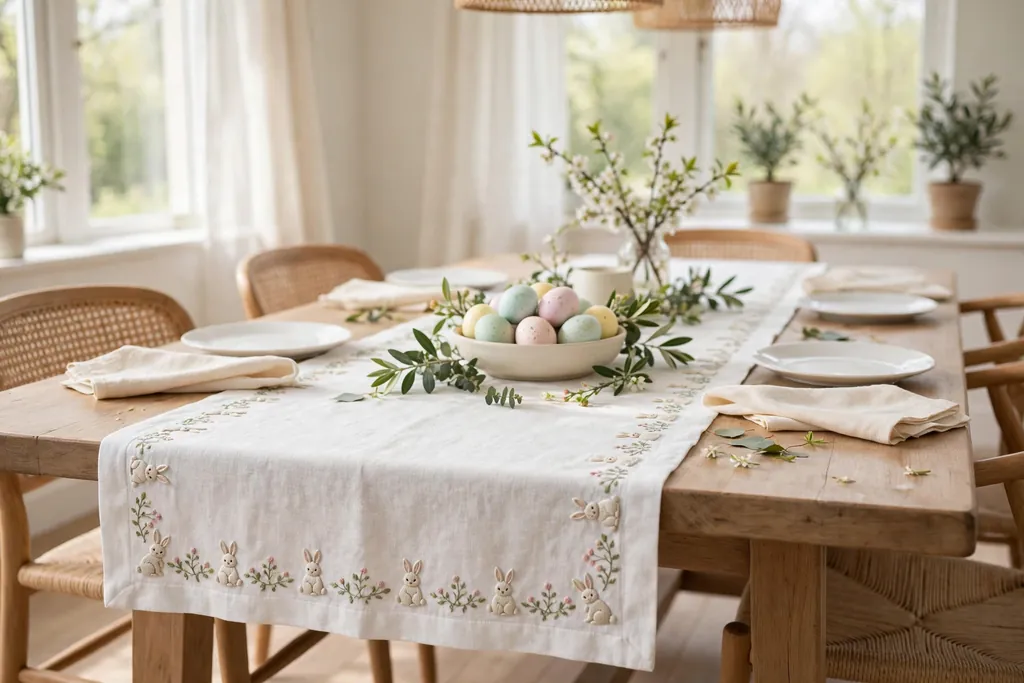
Set a white linen runner with a small embroidered bunny or egg motif along the border, and pair it with cream napkins and simple white plates. The white base suits a formal Easter dinner, while the small border motif keeps the theme clear without a busy pattern.
Keep the rest of the table quiet, with one low bowl of pastel eggs or a short tulip posy in the center. Wash linen on a gentle cycle and dry it flat or on a line, since high heat can set creases and shrink the fabric. If embroidery feels too delicate for your table, use the runner for the main meal only and swap in cotton for everyday use.
3. Sage Green Runner with Fresh Eucalyptus Sprigs
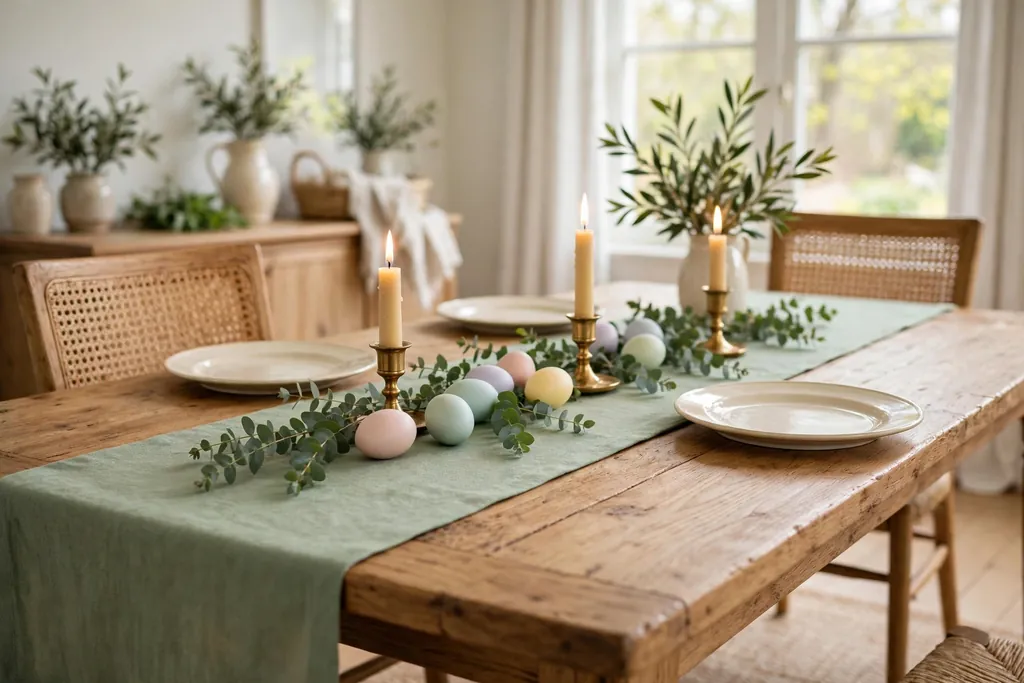
Lay a sage green runner down the table, then tuck short fresh eucalyptus sprigs along it at uneven intervals, with a few pastel eggs between them. The soft green reads as spring without pink or yellow, and it pairs well with wood tables, cream plates, and brass candle holders.
Trim the sprigs so they stay inside the table edges and do not brush plates or glasses. If fresh stems dry out and shed, switch to faux eucalyptus you can wipe clean, or use short sprigs tucked into napkin rings instead of a full row. Keep eucalyptus clear of real flames, and use flameless candles along the runner.
4. Yellow Gingham Runner for Easter Brunch
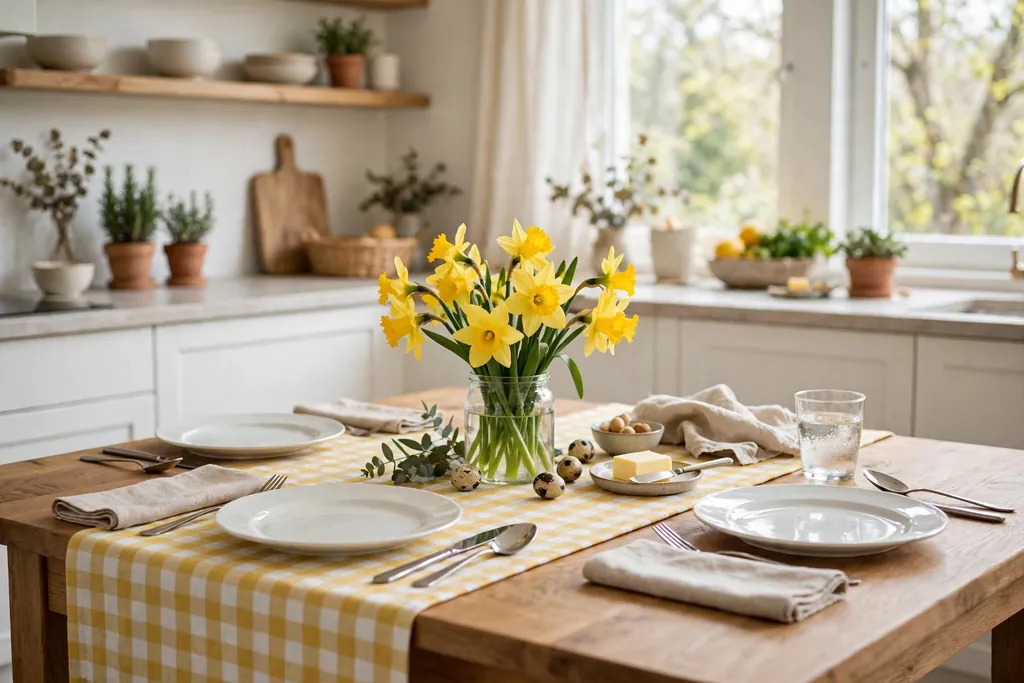
Dress a brunch table with a yellow and white gingham runner, then add plain white plates, simple cutlery, and a low jar of daffodils. Gingham suits a kitchen table, a family meal, and a casual gathering, and it hides small marks better than a plain white runner.
Iron or smooth the runner before a gathering, since creases show in a check pattern. Keep the rest of the decor simple, with one candle group or one jar of blooms, so the check stays the main pattern. For a larger table, use a wider check; for a round breakfast table, use a small check.
5. Natural Burlap Runner with Mini Carrot Bundles

Lay a plain burlap runner down the table, then set two or three small bundles of mini carrots tied with twine along it, with a few pastel eggs between them. Burlap adds texture without pattern, so it suits tables that already have patterned plates or colored glass.
Use the carrot bundles as a playful Easter note, and keep them clear of plates and food, since they are decor rather than part of the meal. Shake the runner outside after the meal, since burlap sheds fibers. If burlap feels too rough for your table, layer it over a cream cloth so the texture shows at the center only.
6. Floral Tulip Print Runner
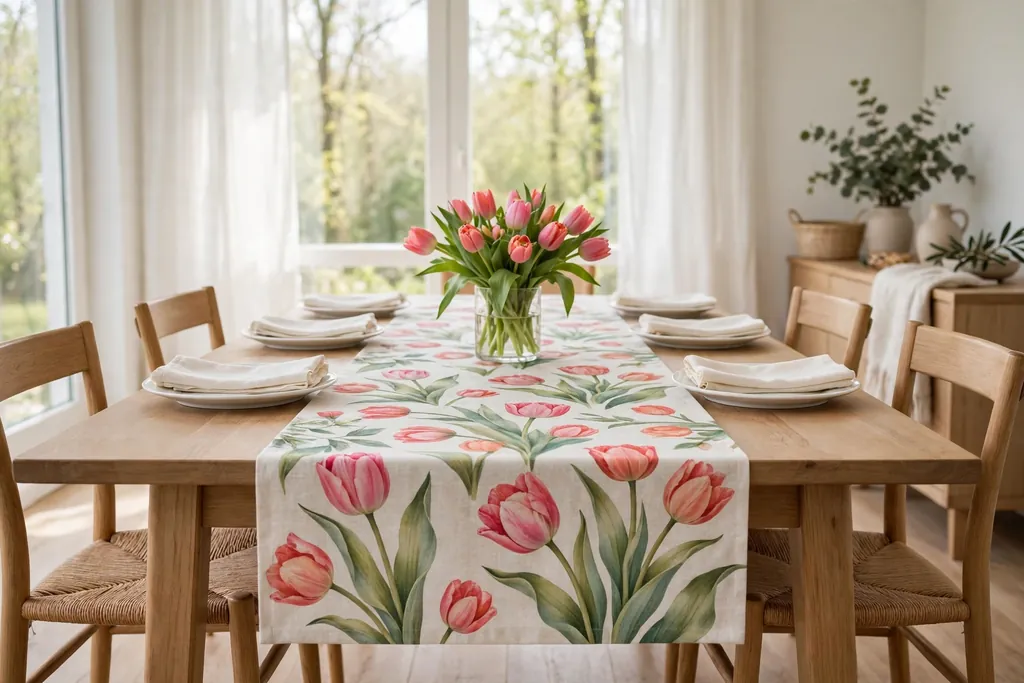
Choose a runner printed with tulips in pink, coral, and soft green, and pair it with plain white plates and cream napkins so the print stays the single pattern. A floral runner suits a spring lunch or dinner in a bright room, and it needs little extra decor beyond a short vase of matching tulips.
Keep the centerpiece to one low group, such as a small tulip posy or a bowl of eggs, so the print and the flowers do not compete. If the print is large scale, use it on a long table where the full pattern shows; on a small table, a small scale print will look less crowded.
7. Vintage Lace Runner on a Wood Table
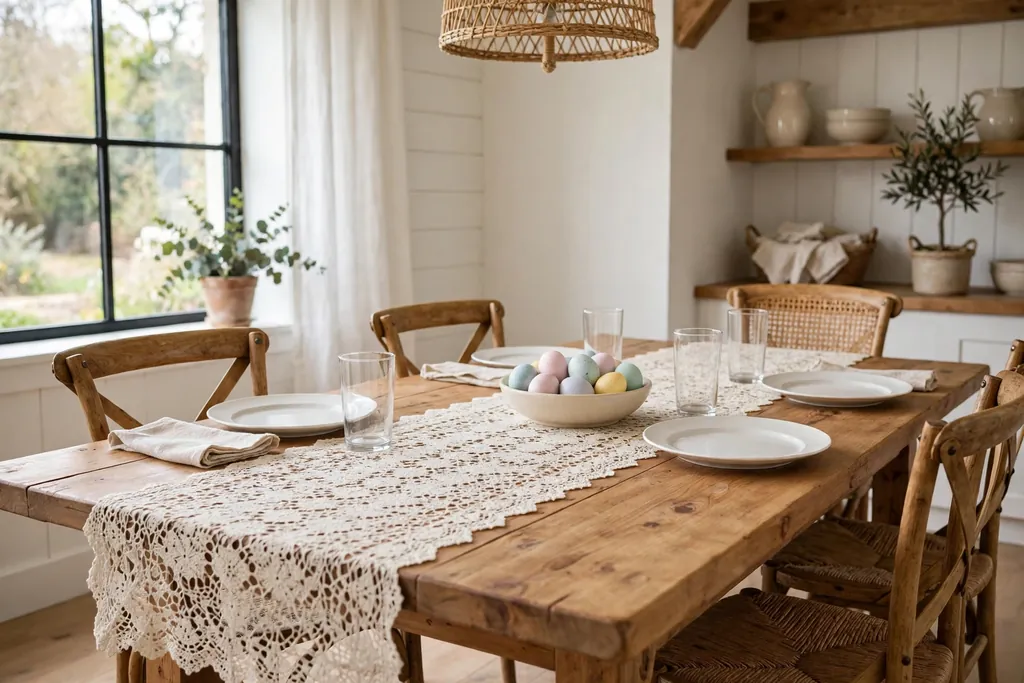
Lay a cream or white lace runner directly on a bare wood table, so the wood grain shows through the open weave at the sides. Lace suits a farmhouse or vintage dining room, and it pairs well with white plates, glassware, and a low bowl of pastel eggs.
Use placemats under plates if the wood marks easily, and keep the centerpiece to one low group so the lace still shows. Wash lace gently and dry it flat, since it can snag in a machine cycle with heavier items. Save lace for adult gatherings, and use cotton or gingham for tables with young children.
8. Soft Pink Runner with Gold Egg Accents
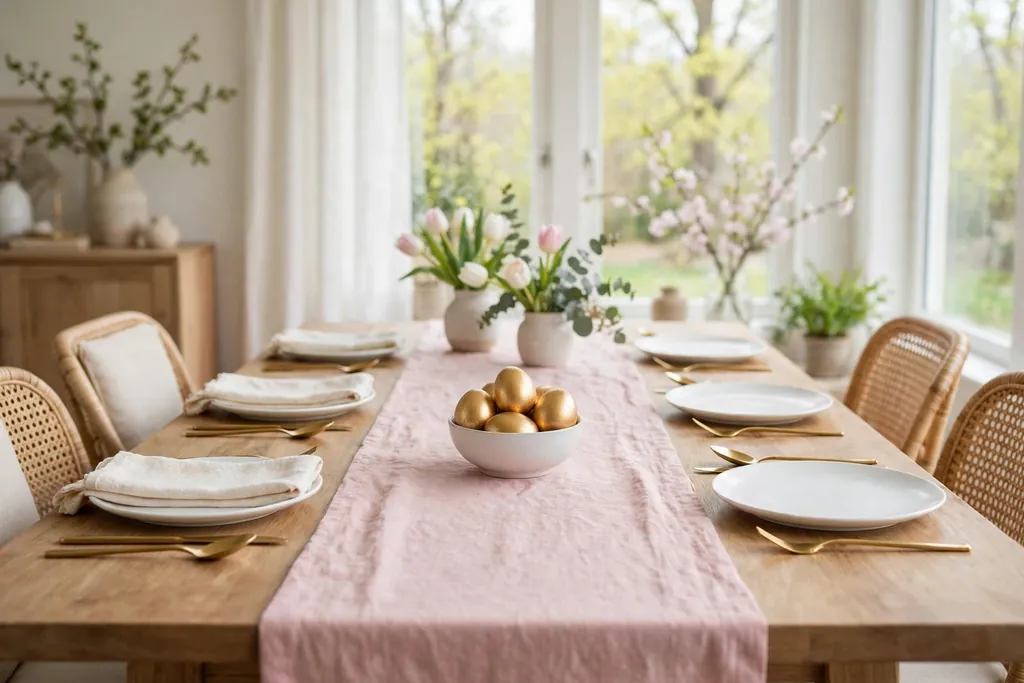
Set a soft pink runner down the center of the table, then place a few gold painted eggs in a small bowl or scattered lightly along it, with white plates and gold toned cutlery at each place. The pink keeps the table springlike, while the gold adds a dressier note for Easter dinner.
Repeat the gold at least twice, for example eggs plus cutlery, so it looks planned rather than random. Keep the rest of the table plain, with cream napkins and clear glasses, so the pink and gold stay the single accent. Use faux gold eggs if the table will be set hours ahead, since painted real eggs can mark light fabric.
9. Blue and White Checked Runner for a Calm Table
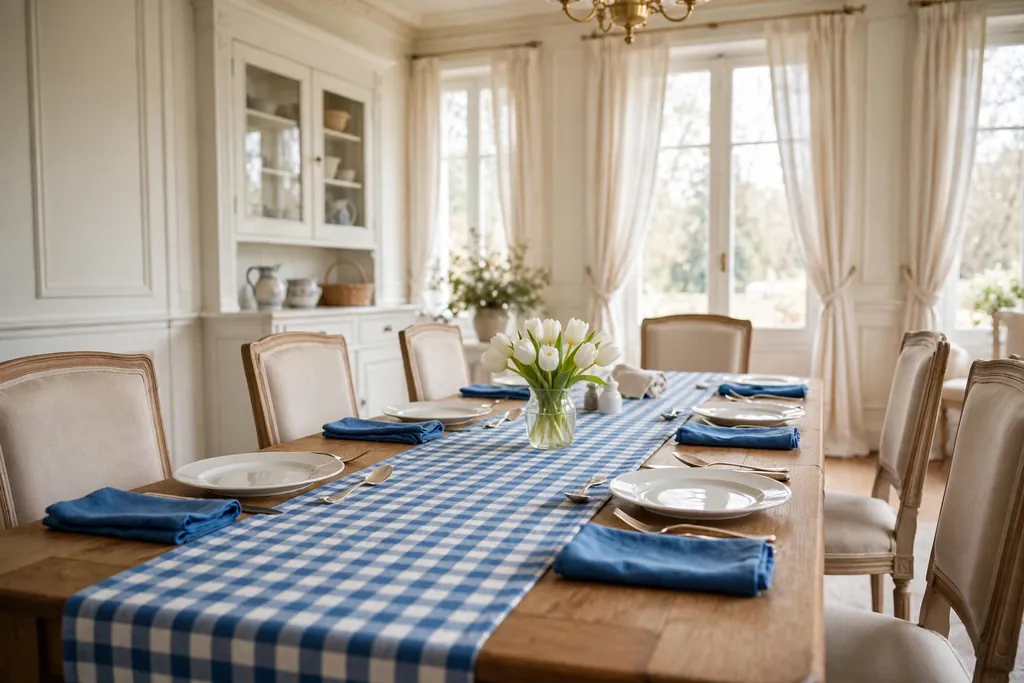
Lay a blue and white checked runner on the table for a calm Easter setting, and pair it with white plates, blue napkins, and a small vase of white tulips. The blue and white palette suits a coastal or classic dining room, and it works well when the rest of the room already has strong color.
Choose a small check for a round table and a larger check for a long table, so the pattern stays in proportion. Keep the centerpiece low, with one vase or one egg bowl, so the check stays visible along the runner. If blue feels too cool for your room, add one warm note, such as a wood board or brass candle holders.
10. Layered Runner over a Cream Tablecloth
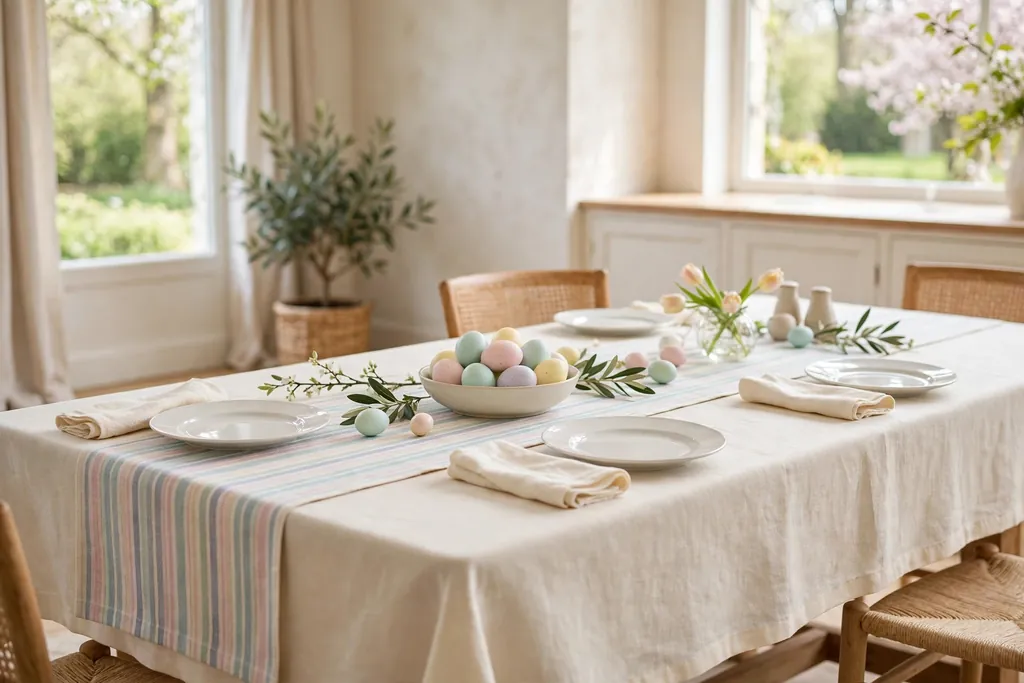
Lay a cream tablecloth first, then center a narrower patterned runner on top of it, such as pastel stripes or a floral print, so the table gains two layers of color and texture. Layering suits a formal Easter dinner, since the cloth protects the table and the runner adds the seasonal pattern.
Center the runner so the same amount of cloth shows on each side, and smooth both layers before setting places. Use a runner that is clearly narrower than the cloth, or the layers will look like one thick cloth. If the table is small, skip the cloth and use the runner alone, so plates sit level and the table does not look crowded.
11. Kraft Paper Runner for a Kids Decorating Table
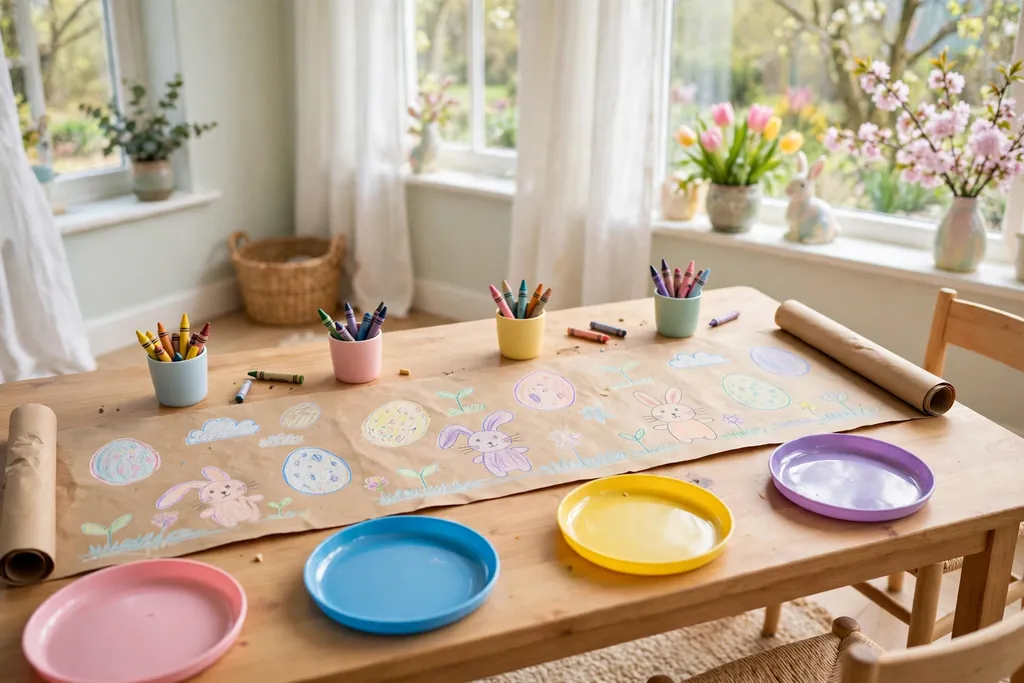
Roll kraft paper down the center of a kids table as a runner, and set out crayons or markers so children can draw eggs, bunnies, and spring flowers on it during the meal. The paper runner doubles as an activity, protects the table from spills, and can be recycled after the meal.
Tape the paper ends under the table so it does not slide when children lean on it, and keep markers clear of plates and food. Use washable markers for younger children, and set a small cup of crayons at each place so children do not need to reach across the table. For an adult table, use the same kraft runner with a handwritten menu down the center instead of drawings.
12. Light Blue Seersucker Runner
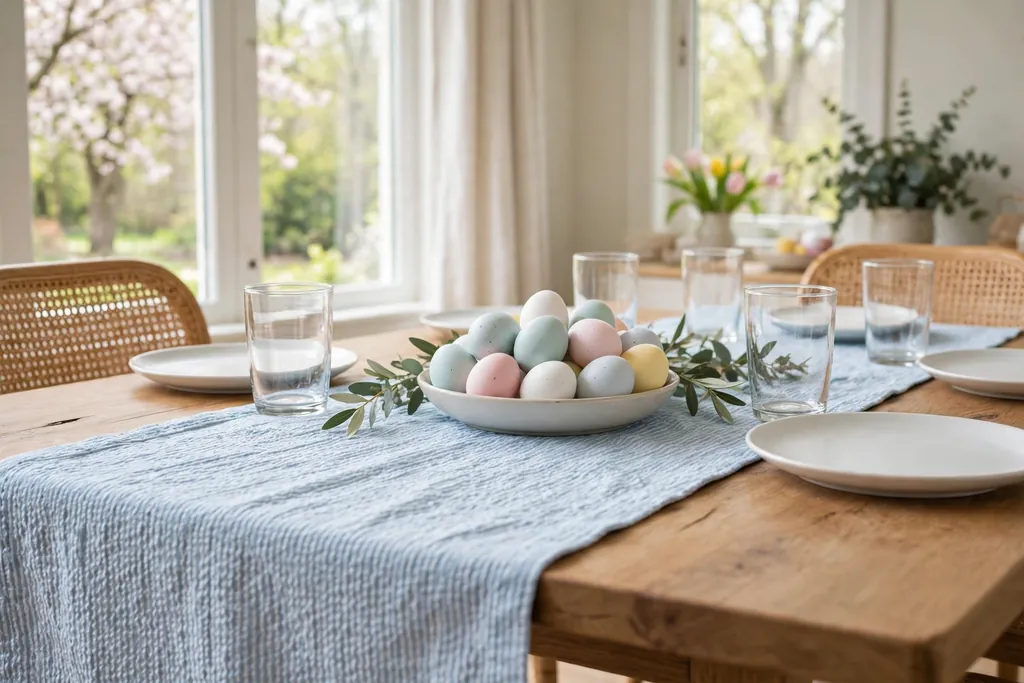
Choose a light blue seersucker runner for a fresh, casual Easter table, and pair it with white plates, clear glasses, and a low bowl of white and pastel eggs. Seersucker has a light puckered texture that suits spring, and it needs little ironing, which helps when the table is set at short notice.
Keep the rest of the table simple, with one short flower posy or one candle group, so the texture shows. Wash seersucker on a gentle cycle and skip heavy ironing, since pressing flattens the puckered weave. If the runner is pale, use placemats under plates for meals with sauces or chocolate.
13. Woven Jute Runner with a Pastel Egg Scatter
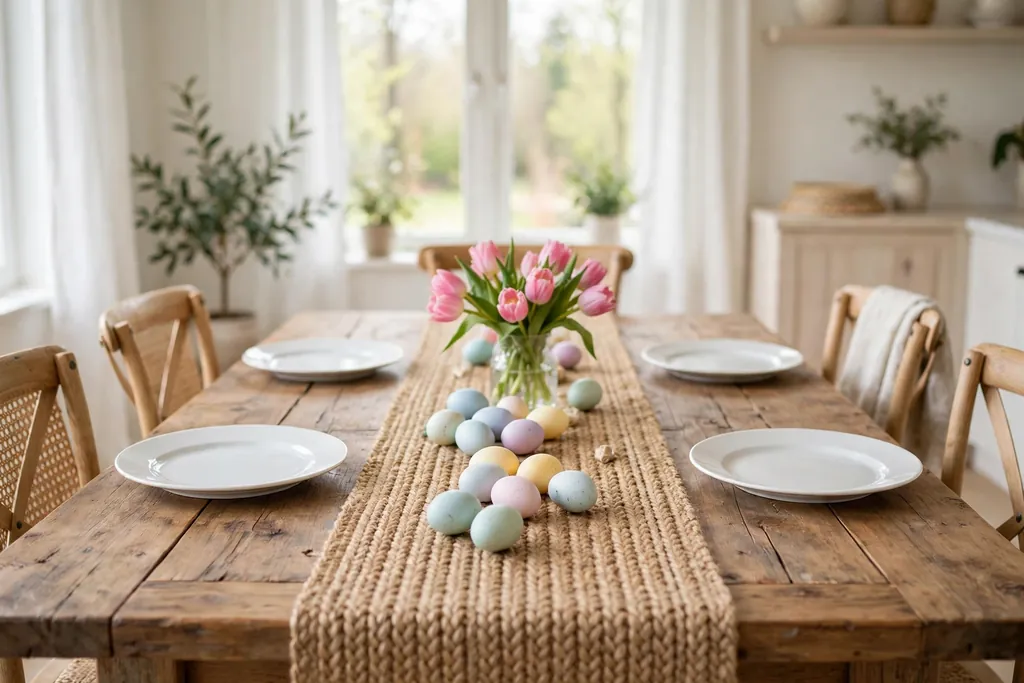
Lay a woven jute runner down the table, then scatter a small number of pastel eggs lightly along it, with one low candle group or a short tulip posy to anchor the center. Jute adds a natural, rustic texture, and the pastel eggs give the Easter color without a printed pattern.
Scatter eggs sparingly, about one egg per place setting length, so they do not end up near food or glasses. Use faux eggs if the table will be set hours ahead, since real dyed eggs can mark light fibers. Shake the runner outside after the meal, since jute sheds fibers, and store it rolled rather than folded so it does not crease.
14. Runner with a Row of Small Egg Cups
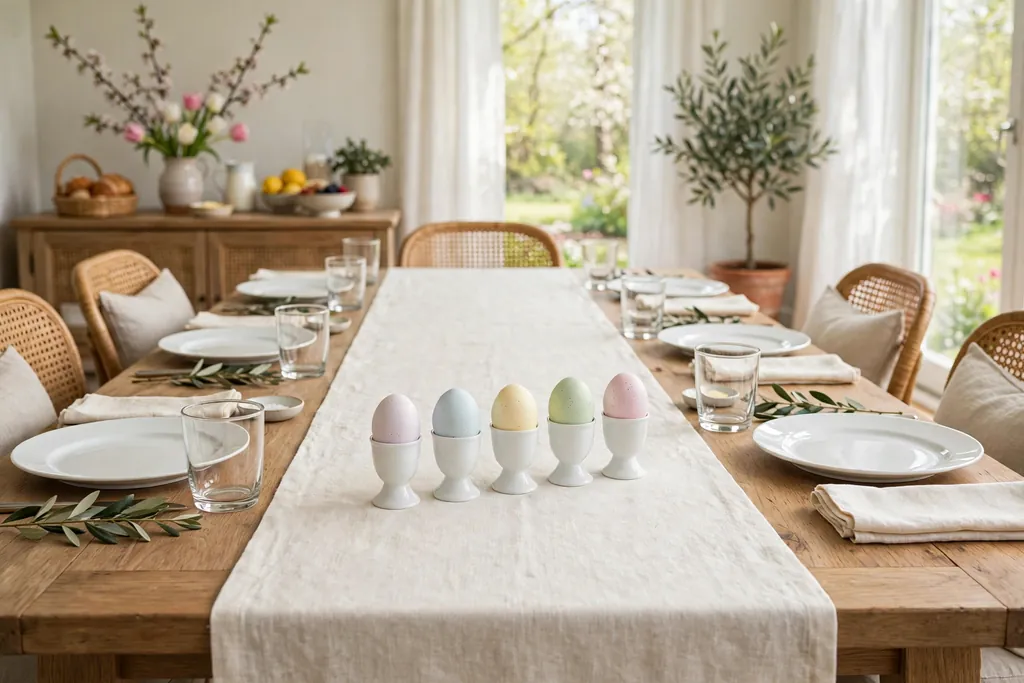
Set a plain cream or white runner down the table, then place a row of small egg cups along it, each holding one pastel egg, so the runner becomes a low centerpiece in itself. This idea suits a brunch table, where boiled eggs are part of the meal, and it keeps the centerpiece at plate height so guests can see across.
Use egg cups in one material, such as white ceramic or wood, so the row looks matched, and keep the cups clear of serving dishes at each end. If the table is long, use two shorter rows with a gap in the middle for a serving bowl. After the meal, lift the cups off in one move and wash the runner as usual.
15. No Sew Stenciled Runner
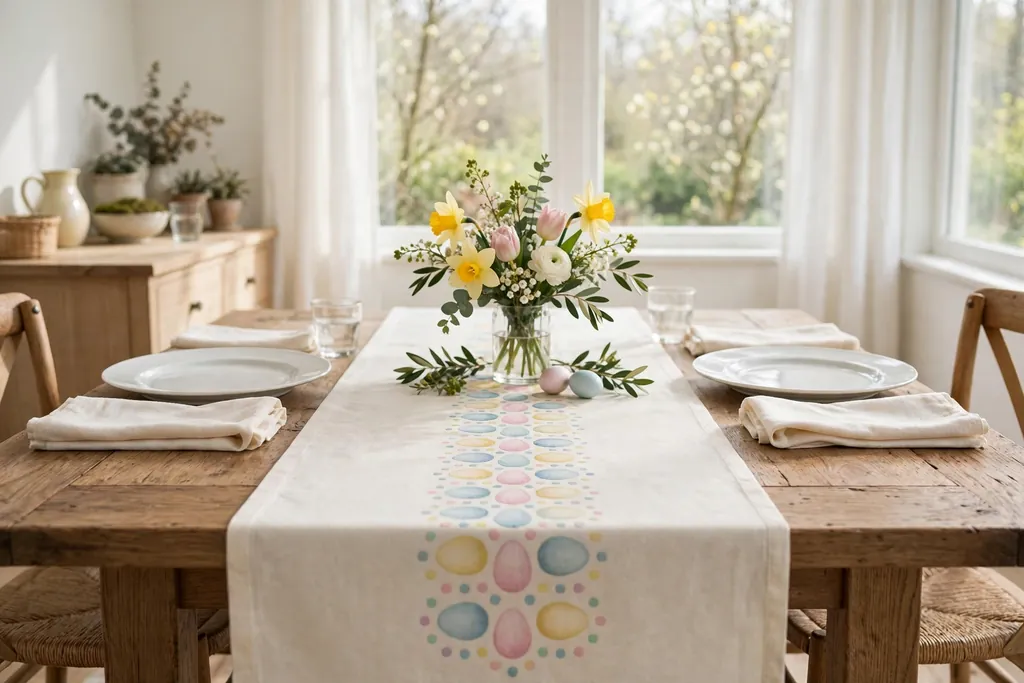
Make a simple runner from plain cotton or drop cloth fabric, and stencil a row of eggs, dots, or small bunnies down the center in pastel fabric paint. A no sew runner suits a crafter who wants a custom size or color, and it costs little, since plain fabric and one stencil cover a long table.
Cut the fabric to your table length plus an even hang at each end, and hem the edges with iron on tape if you do not sew. Let the paint dry fully before laying the runner out, and wash it gently after the first use to check that the paint holds. If stenciling feels too fussy, paint a simple dot border instead of full egg shapes, and the runner will still read as Easter themed.
Conclusion
An Easter table runner works best when it does one job well: it sets the spring palette, leaves room for plates and serving dishes, and pairs with one low centerpiece. Start with a washable runner in a soft color, repeat one color in the napkins or flowers, and keep the ends clear for serving. Whether you choose pastel stripes, linen, gingham, lace, or a simple DIY runner, the table will feel fresh and ready for brunch or dinner without a large centerpiece or a new dinner set.
FAQs
1. What color runner is best for Easter?
A soft pastel runner in pink, yellow, mint, sage green, or light blue suits most Easter tables, since pastels read as spring and pair with white plates. If your room already has strong color, use a plain cream or white runner and add Easter color through eggs and flowers instead.
2. Should an Easter table runner match the napkins?
The runner does not need to match the napkins exactly, but repeating one color from the runner in the napkins makes the table look planned. For example, pair a pastel striped runner with napkins in one of its stripe colors, and keep the plates plain so the table does not look busy.
3. How long should an Easter table runner be?
A runner should run the length of the table plus an even hang of about 15 to 30 centimeters at each end, so it frames the table without dragging on chairs or the floor. Measure your table before buying or cutting fabric, and leave the ends clear for serving dishes.
4. Can I use a table runner without a tablecloth?
Yes, a runner works well on its own, especially on a wood table where the grain adds warmth. Use placemats under plates if the table marks easily, and choose a runner thick enough to protect the surface from hot dishes and spills.
5. What centerpiece goes with an Easter table runner?
A low bowl of pastel eggs, a short tulip posy, or a small candle group pairs well with most Easter runners, since all three stay below eye level. Keep the centerpiece narrow and in the center of the runner, and leave room at each end for serving dishes.
6. How do I wash an Easter table runner after the meal?
Wash cotton and gingham runners on a normal cycle, wash linen and lace gently and dry flat, and shake jute or burlap runners outside before spot cleaning. Treat egg dye or chocolate marks promptly with cold water, and check the care label before using heat, since high heat can set stains and shrink linen.