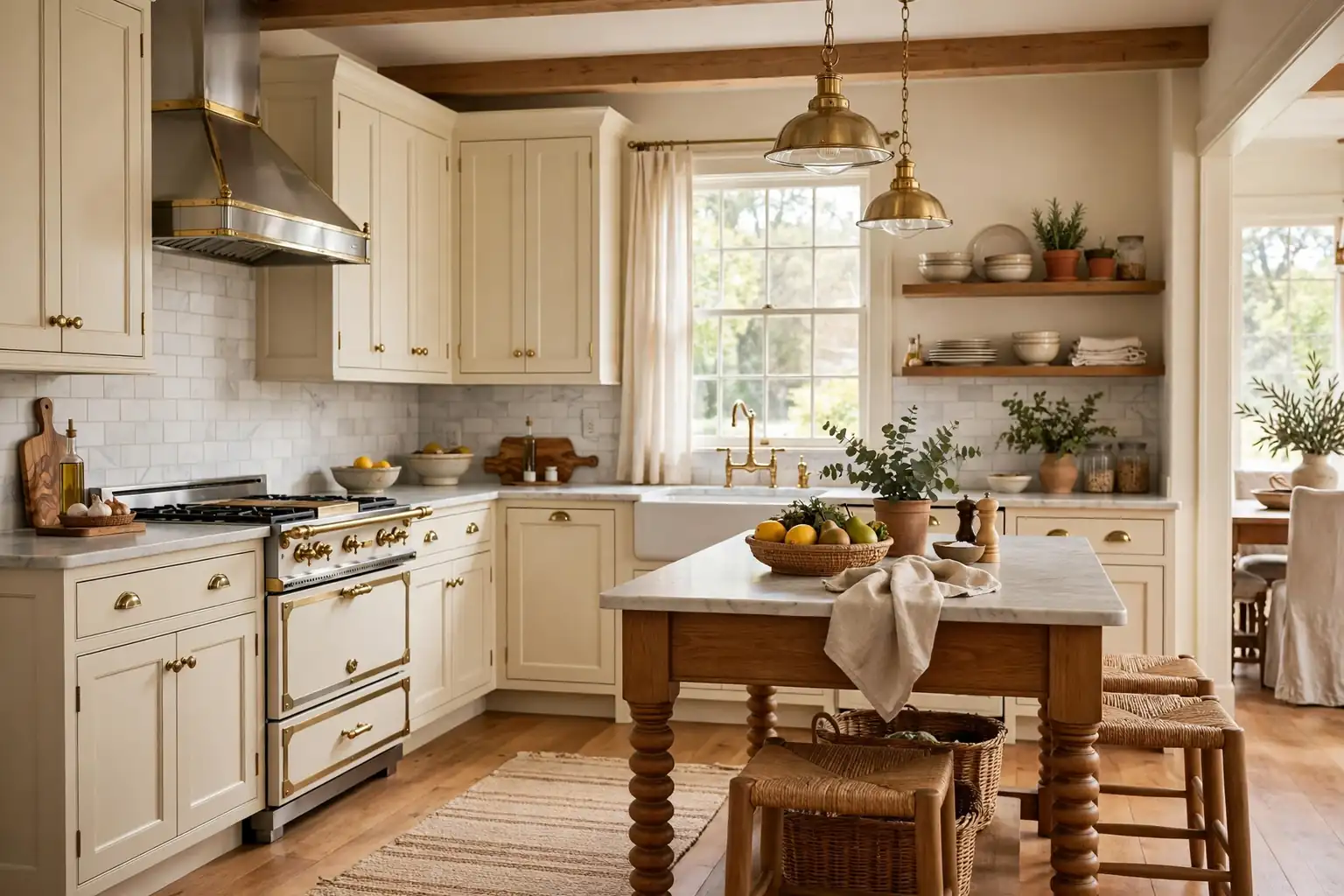
A traditional kitchen earns its warmth from details that have been used for generations: framed cabinet doors, natural wood, stone counters, and hardware you can grip with wet hands. Nothing here needs a full renovation. Many of these ideas work as a single weekend change, such as new cup pulls or a fresh backsplash, while others, like a farmhouse sink or a furniture style island, are worth planning into a larger remodel. Pick the ideas that fit your room, your budget, and the way you cook, and let the rest wait. A kitchen that feels settled usually comes from a few well chosen pieces repeated with care, not from changing everything at once.
Key Takeaways
- Start with the largest surfaces first: cabinet style, counters, and flooring set the tone for everything else.
- Repeat two or three warm materials, such as wood, brass, and marble, so the room reads as planned.
- Choose hardware, lighting, and storage that are easy to use every day, not just pleasant to look at.
- Mix closed storage with one or two display spots, such as glass front cabinets or a plate rack, to keep the room warm without clutter.
- Keep practical details in mind: wipeable finishes near the stove, clear work zones, and good task lighting over counters.
1. Choose Shaker Cabinets in a Soft Cream
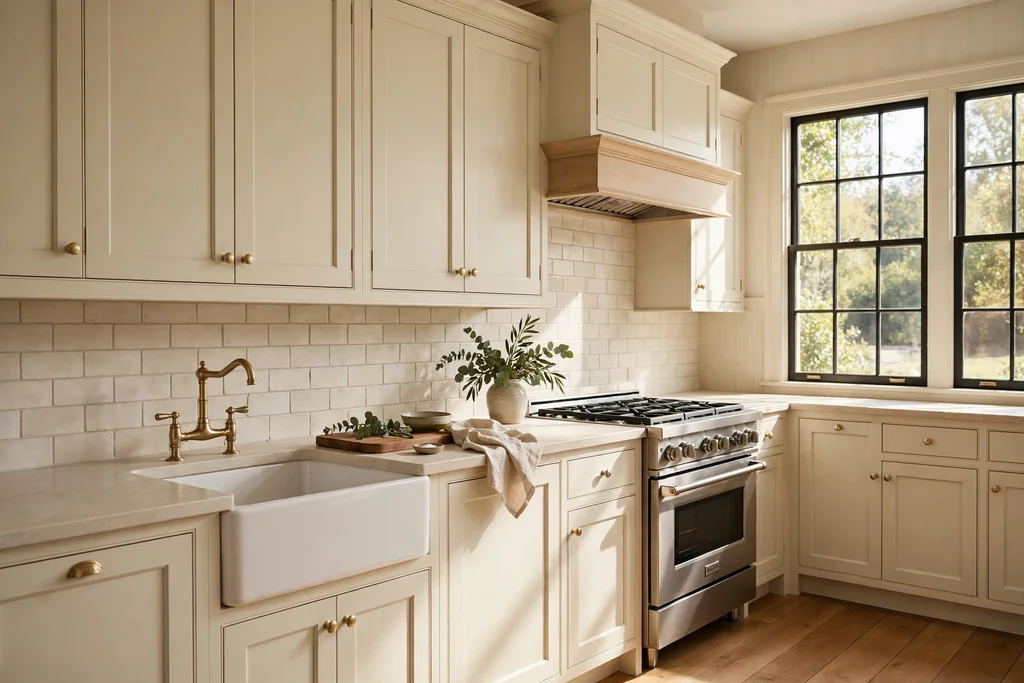
Shaker doors, with their flat center panel and simple square frame, are the backbone of many traditional kitchens because they suit almost any house and never look fussy. A soft cream paint keeps the room bright while adding more warmth than a stark white. Order one painted door sample and check it beside your floor and counter in morning and evening light before you commit. Pair cream Shaker doors with a pale stone counter and simple knobs for a calm base you can dress up with brass or wood later. For help choosing a shade, these kitchen cabinet colors compare warm whites, creams, and deeper tones side by side.
2. Add Raised Panel Cabinets in Warm Wood
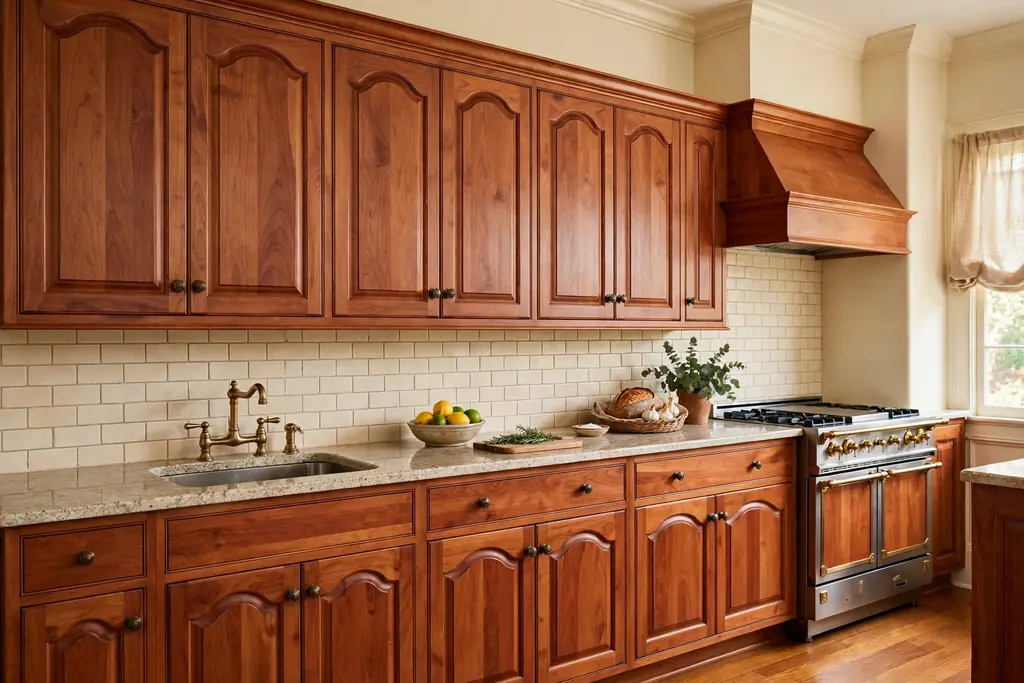
If painted cabinets feel too plain for your room, raised panel doors in cherry, walnut, or warm oak add depth through their shaped center panels and visible grain. The raised profile catches light and shadow, which gives a large run of cabinets a crafted look without extra decoration. Keep the finish in a mid tone rather than very dark, so the room stays bright, and protect the wood near the sink and dishwasher from standing water. Raised panel wood works well with cream walls, a stone counter, and brass hardware, and it suits houses where wood trim already appears in other rooms.
3. Top Counters With Marble in a Soft Vein
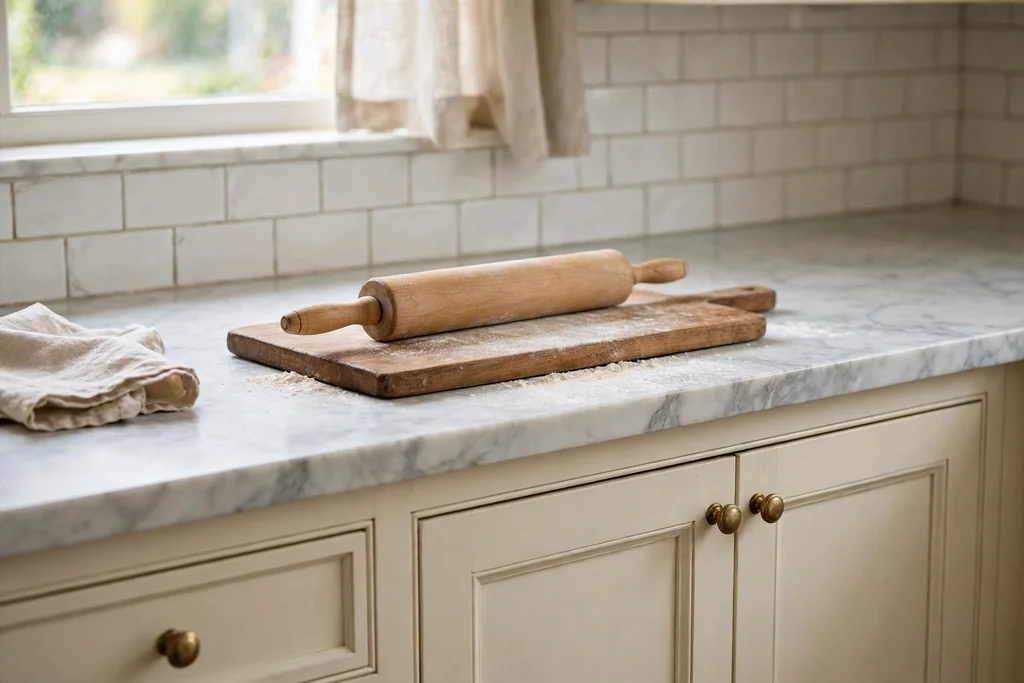
Marble has been a traditional kitchen counter for good reason: its cool surface suits rolling pastry, and its soft gray veining adds pattern without a busy print. Choose a slab with gentle, spaced veining rather than heavy contrast, and ask the supplier about sealing and care before installation. Marble can stain and etch, so use boards for citrus and tomato prep, wipe spills promptly, and keep a trivet near the stove for hot pans. If daily upkeep worries you, use real marble on the island or pastry area only, and a harder stone on the main prep run.
4. Fit a Farmhouse Apron Front Sink
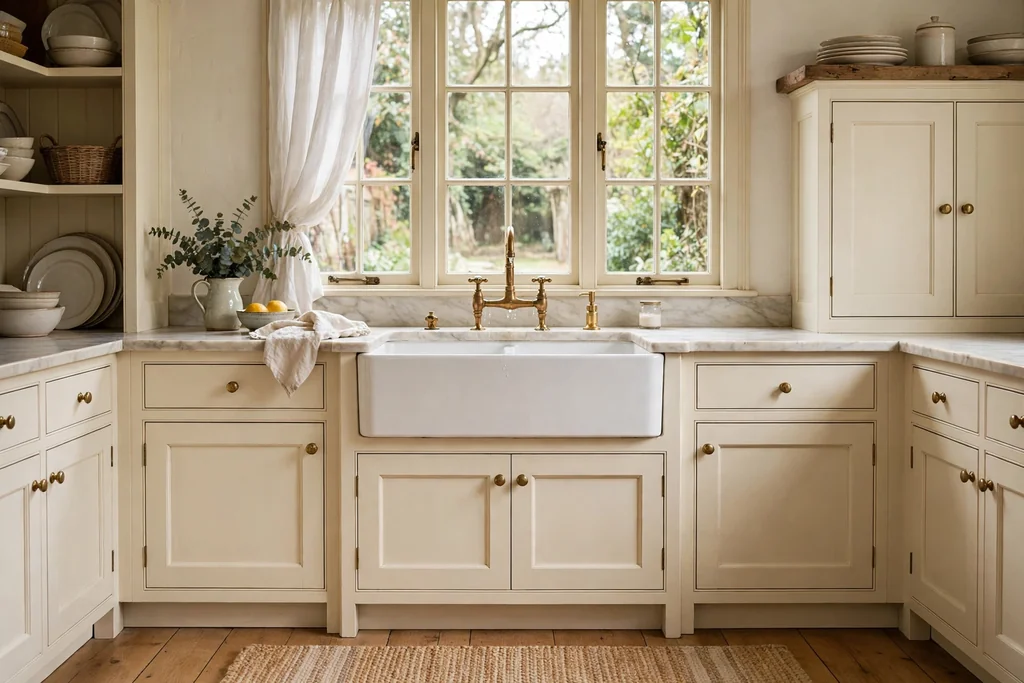
An apron front sink sits forward of the cabinet front, so you can stand closer to the basin without leaning over a counter edge. That small change matters when you wash large pots or stand at the sink for a long stretch. Choose a fireclay or cast iron model sized to your base cabinet, and check that the cabinet maker cuts the front panel to fit the apron exactly. Pair the sink with a bridge faucet or a simple high arc faucet in brass or nickel. Keep the area under the sink clear of stored chemicals, and wipe the apron front as part of your daily routine so splashes do not dry on the finish.
5. Lay a Classic Subway Tile Backsplash
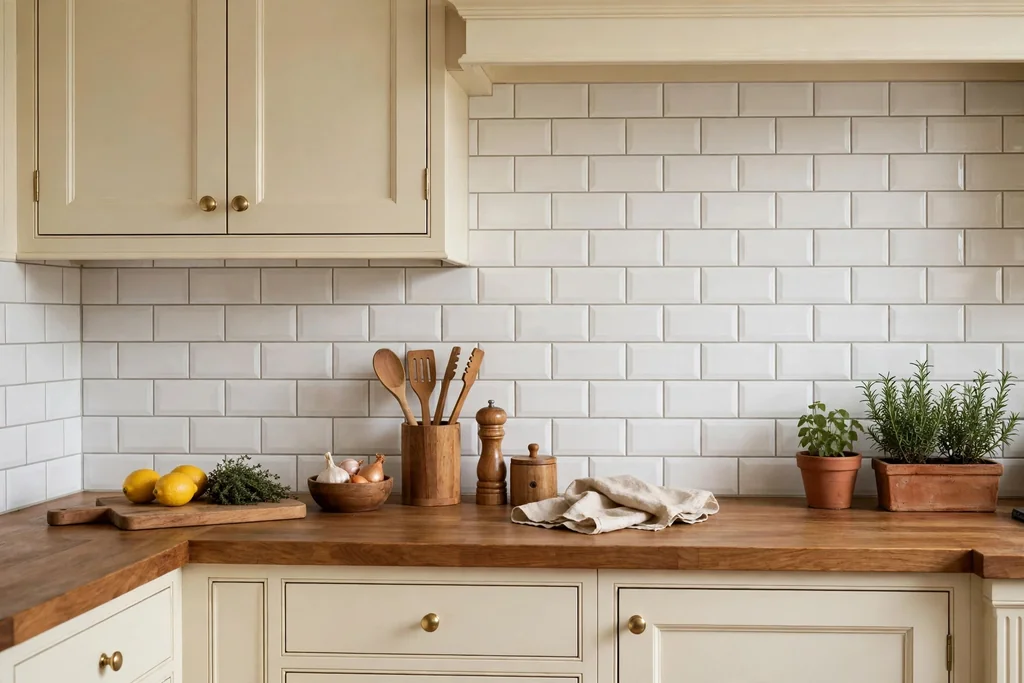
White or cream subway tiles in a running bond pattern give a traditional kitchen a clean wall that is easy to wipe and easy to repair. The simple rectangle shape suits both painted and wood cabinets, and it lets the counter and hardware take the focus. Use a grout color close to the tile for a quiet look, or a light gray grout if you want the brick pattern to show. Seal the grout in the cooking zone, and keep a spare box of tiles from the same batch for future repairs. Run the tile to the underside of the upper cabinets, and finish exposed edges with a matching trim tile.
6. Swap in Brass Cup Pulls and Knobs
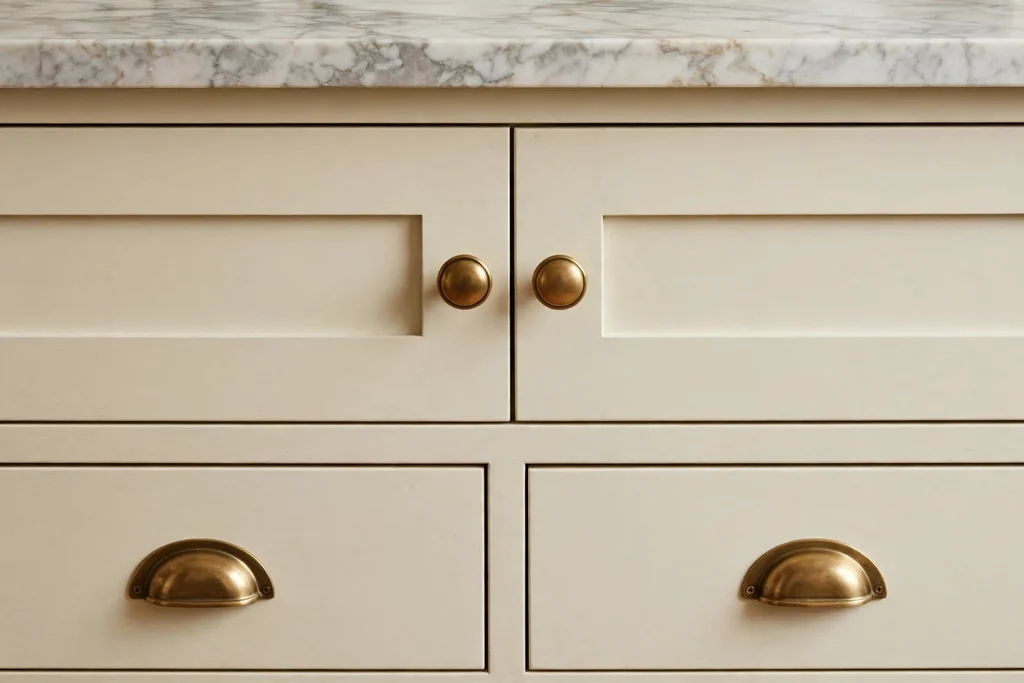
Hardware is the fastest traditional update in a kitchen, and brass cup pulls on drawers with matching knobs on doors give an instant period feel. Cup pulls suit wide drawers because you can grip them from below, while round knobs work well on doors and small drawers. Measure your existing hole spacing before ordering, since cup pulls come in fixed widths, and buy one sample first to check the brass tone against your faucet. Aged or unlacquered brass will darken with use, which many people like, while lacquered brass keeps a steady shine. Tighten screws after the first month, as new hardware can settle.
7. Build a Furniture Style Island With Turned Legs
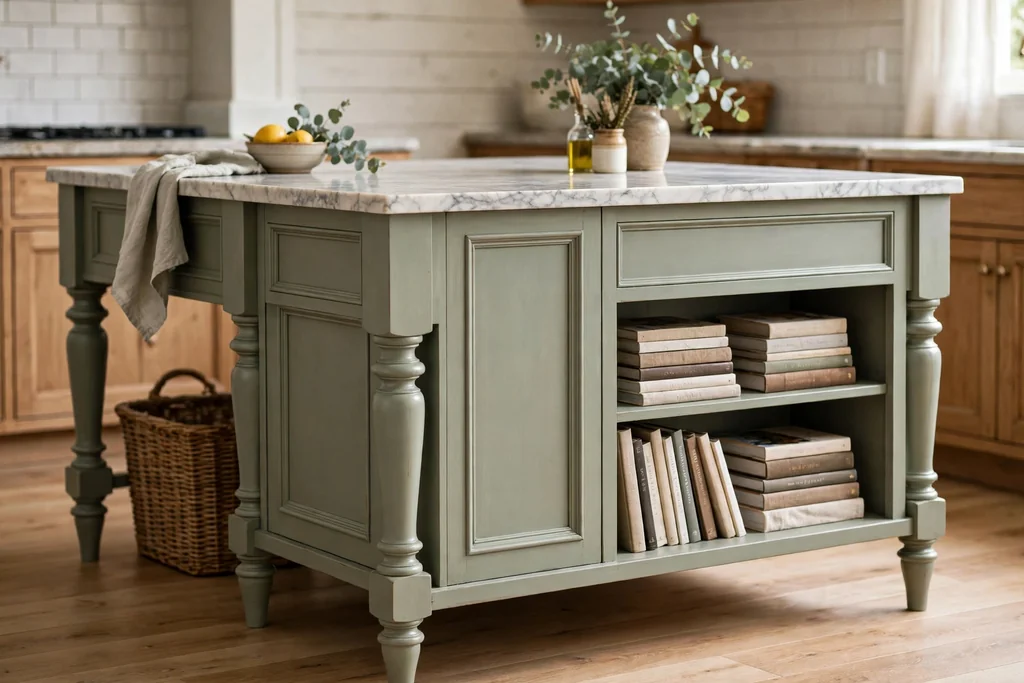
A traditional island should look like a piece of furniture, not a plain box. Turned legs at the corners, a paneled side, and a slightly overhanging counter give it that character, and an open shelf at one end holds cookbooks or a basket within reach. Plan seating on one side only, with at least 24 inches of counter depth for knees if stools will tuck under, and leave clear walkways of about 36 inches around the island. Paint the island a deeper tone than the wall cabinets, such as sage or navy, for a classic two tone scheme, and keep the counter in the same stone as the rest of the room.
8. Use Glass Front Cabinets With Mullioned Doors
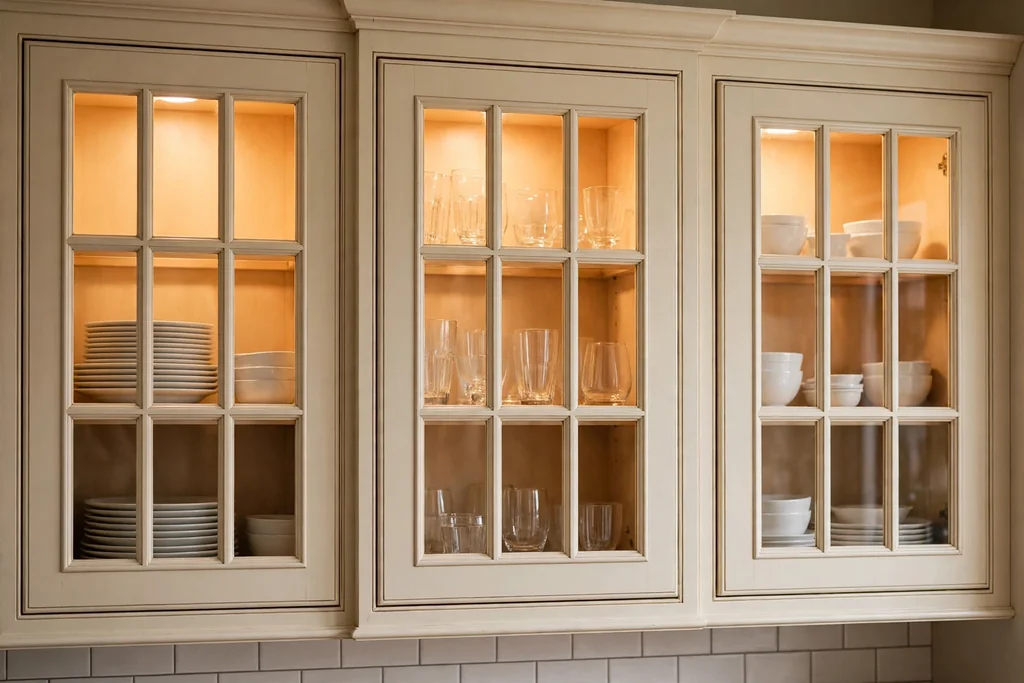
Glass front upper cabinets break up a long run of solid doors and give you a place to show everyday dishes, glassware, and a few serving pieces. Mullioned doors, with thin wood bars dividing the glass into small panes, look more traditional than a single large sheet of glass. Keep the contents simple: matching white dishes, clear glasses, and one repeated accent, with space between groups so the cabinet does not look packed. Add a small light inside the cabinet if wiring allows, and keep the glass clean, since fingerprints show more here than on solid doors.
9. Surround the Range With a Wood Mantel Hood
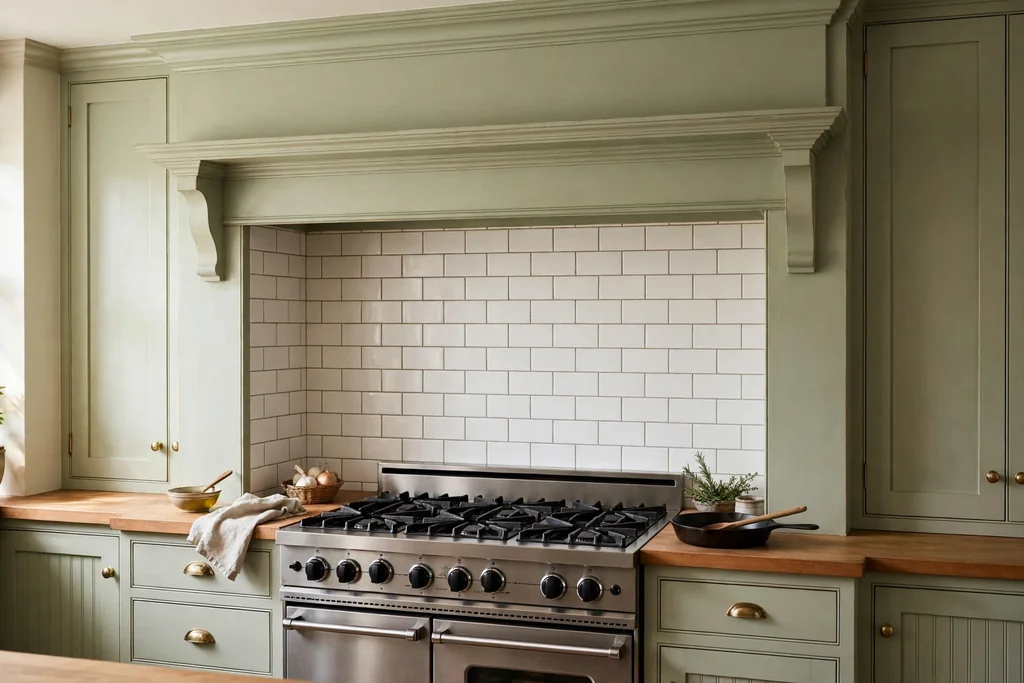
A wood mantel hood turns the cooking wall into the focal point of a traditional kitchen. The surround can be painted to match the cabinets or stained to match the island, with a simple cornice at the top and a plain apron below. Size the hood to cover the range width, and follow the range maker guidance for height above the hob and for extraction power. Keep the surround clear of open shelving and hanging items that could catch heat, and choose a wipeable paint finish, since the area above a range collects grease. A mantel hood pairs naturally with a subway tile backsplash carried up inside the surround.
10. Build a Breakfast Nook With Bench Seating
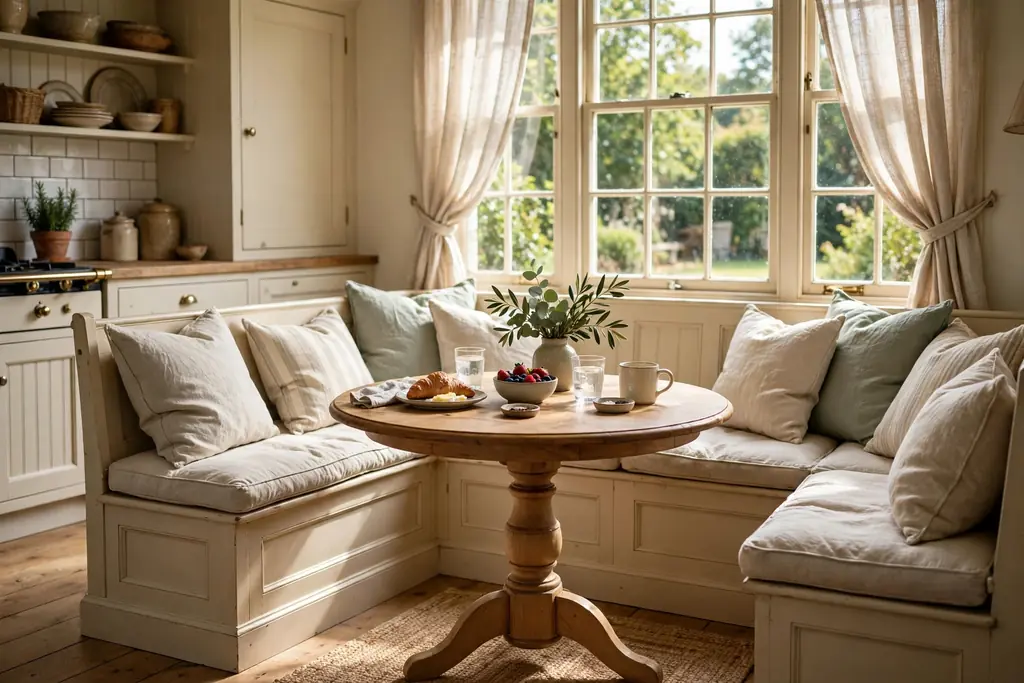
A corner bench seat turns an awkward kitchen corner into the most used seat in the house. Build an L shaped bench with storage underneath for table linens, board games, or rarely used appliances, and pair it with a pedestal table that leaves legroom on all sides. Add loose cushions in a washable fabric, and hang a small pendant or wall light above the table for evening meals. Measure the bench depth at about 18 inches for sitting comfort, and leave a cushion gap at the wall so crumbs do not collect behind the seat back. A nook works best near a window, where morning light makes it a natural gathering spot.
11. Fit a Built In Plate Rack Above the Counter
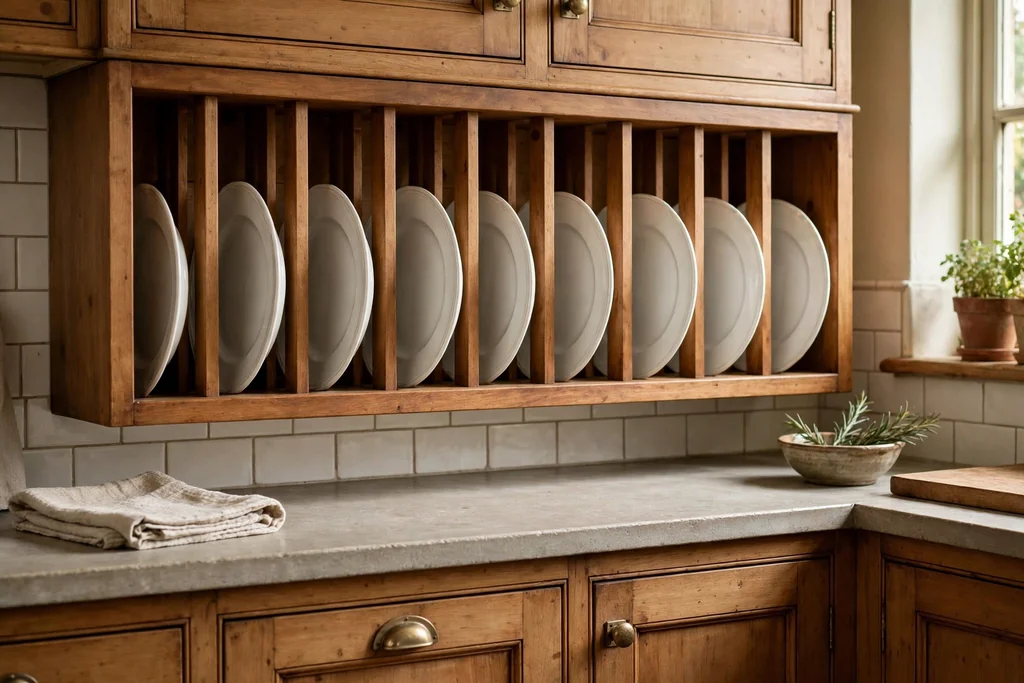
A plate rack built into the wall or into an upper cabinet keeps everyday plates upright, visible, and easy to grab, which suits a traditional kitchen better than stacking plates in a deep drawer. Fit vertical dividers sized to your largest dinner plates, with a grooved shelf below to catch drips from just washed plates. Keep the rack near the dishwasher or the serving area, not over the stove, and limit it to one plate style in a single color so the display reads as calm. The grouping advice in this guide on how to style open shelves applies here too: leave gaps between groups and repeat one material so the display stays tidy.
12. Finish Cabinets With Crown Molding and Furniture Toe Kicks
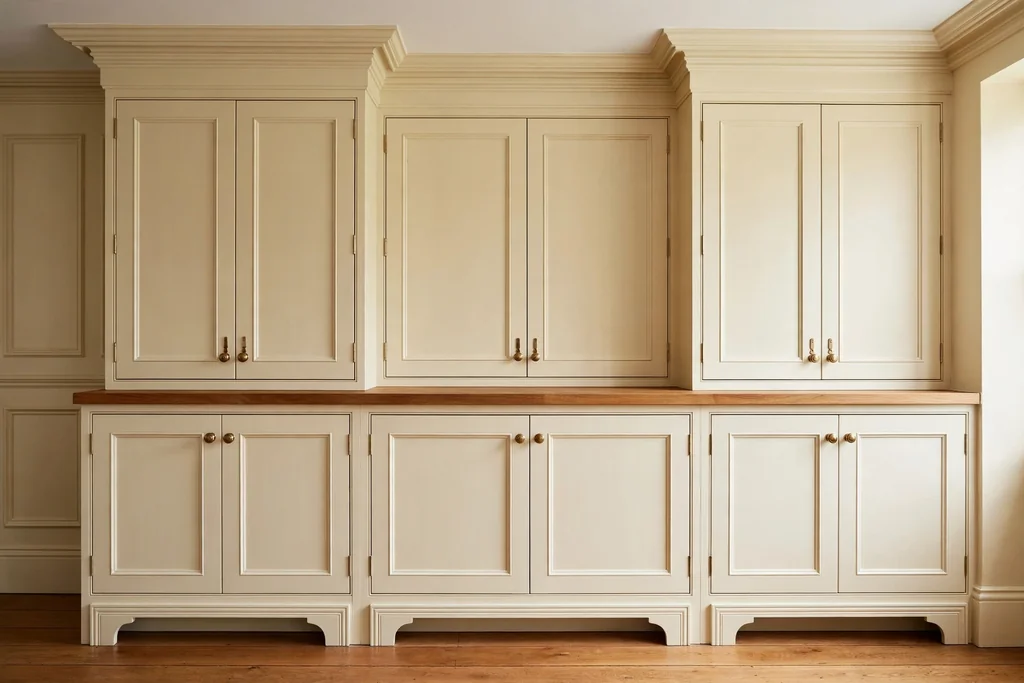
Small carpentry details separate a traditional kitchen from a plain fitted one. Crown molding at the top of wall cabinets closes the gap to the ceiling and gives the run a finished edge, while a recessed furniture style toe kick, sometimes called a furniture base, makes base cabinets read like freestanding pieces. If your ceiling is uneven, a two piece crown with a filler strip hides the variation better than a single large molding. Paint or stain the molding to match the cabinets exactly, and keep the profile simple in a small kitchen, where a very deep crown can crowd the room.
13. Lay Warm Wood Plank Flooring
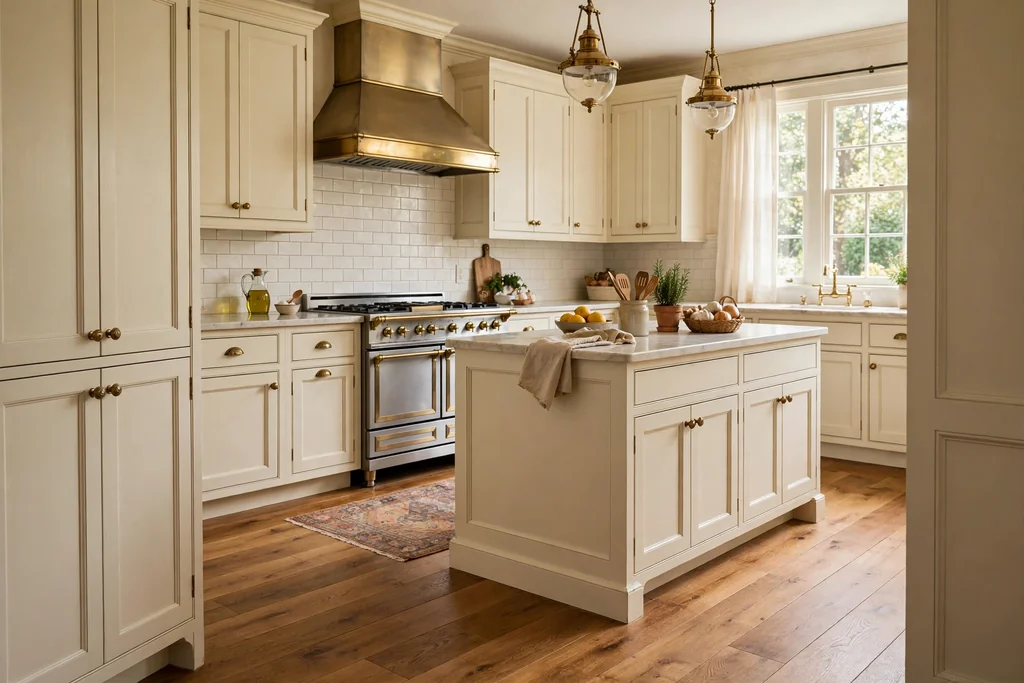
Wide plank wood flooring in oak or a similar warm tone grounds a traditional kitchen and softens the hard surfaces of stone and tile. Choose a matte or low sheen finish, which hides scratches better than high gloss, and run the planks in the direction of the longest wall to make the room feel larger. Protect the floor at the sink and dishwasher with a washable rug or mat, and wipe spills promptly, since standing water marks wood over time. If solid wood feels risky in a busy kitchen, engineered planks with a thick wear layer give a similar look with more stability.
14. Hang Classic Lantern or Schoolhouse Pendants Over the Island
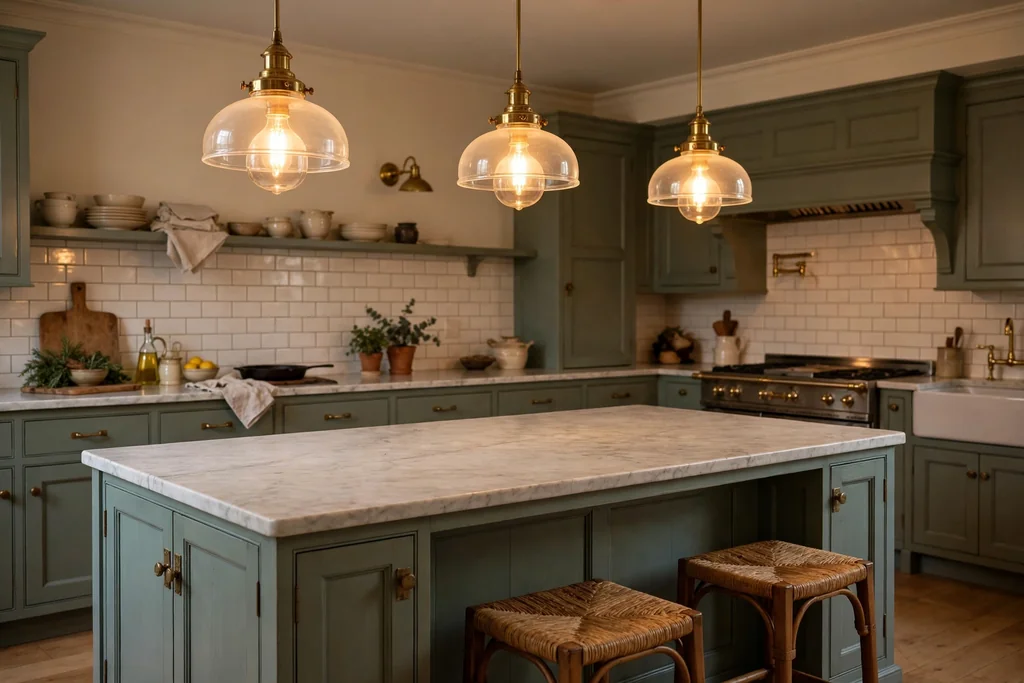
Pendant lights over an island should give task light for prep and a warm glow for meals, and classic lantern or schoolhouse glass shades suit a traditional room without looking themed. Hang two or three pendants spaced evenly over the island, with the bottom of the shade about 30 to 36 inches above the counter, so the light falls on the work surface and the shades stay clear of sight lines. Use warm white bulbs and a dimmer, so the same pendants work for chopping in the morning and for a quiet evening meal. Match the pendant metal to your hardware for a connected look.
15. Add a Wall Mounted Pot Filler at the Range
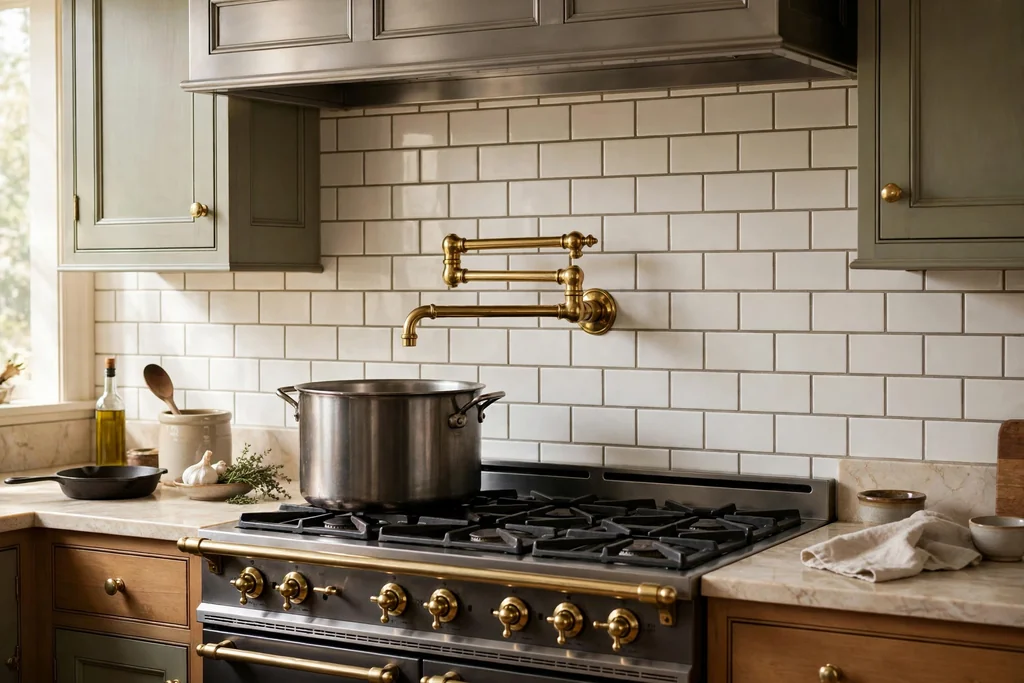
A pot filler is a folding faucet mounted on the wall behind the range, so you can fill a large pot where it sits on the hob instead of carrying a heavy pot across the kitchen. It suits cooks who make stock, pasta, or large batches of soup, and it adds a clear traditional detail to the cooking wall. Plan the plumbing before tiling, since the pipe runs inside the wall, and choose a model with two shut off valves for safety. Keep the filler folded flat against the wall when not in use, and wipe it after cooking, since steam and splashes reach this spot often.
16. Keep a Freestanding Larder Cabinet for Pantry Storage
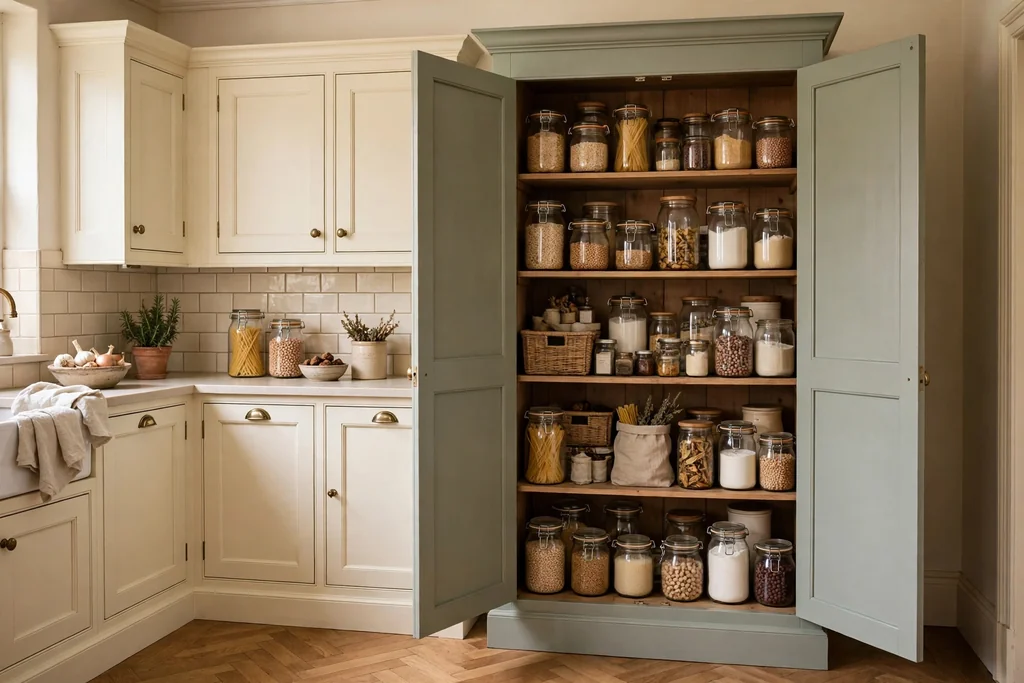
Before built in pantries were common, a tall freestanding larder cabinet held dry goods, baking supplies, and preserves behind closed doors. A larder with adjustable shelves, a few drawers, and door racks for jars and spices gives a traditional kitchen flexible storage without a full remodel. Place it near the prep zone, not across the room, and label shelf edges or use matching jars so the contents stay easy to find. A painted larder in the island color, or a stained wood one that matches the floor, reads as furniture rather than extra cabinetry.
17. Panel the Island Back or a Wall With Beadboard
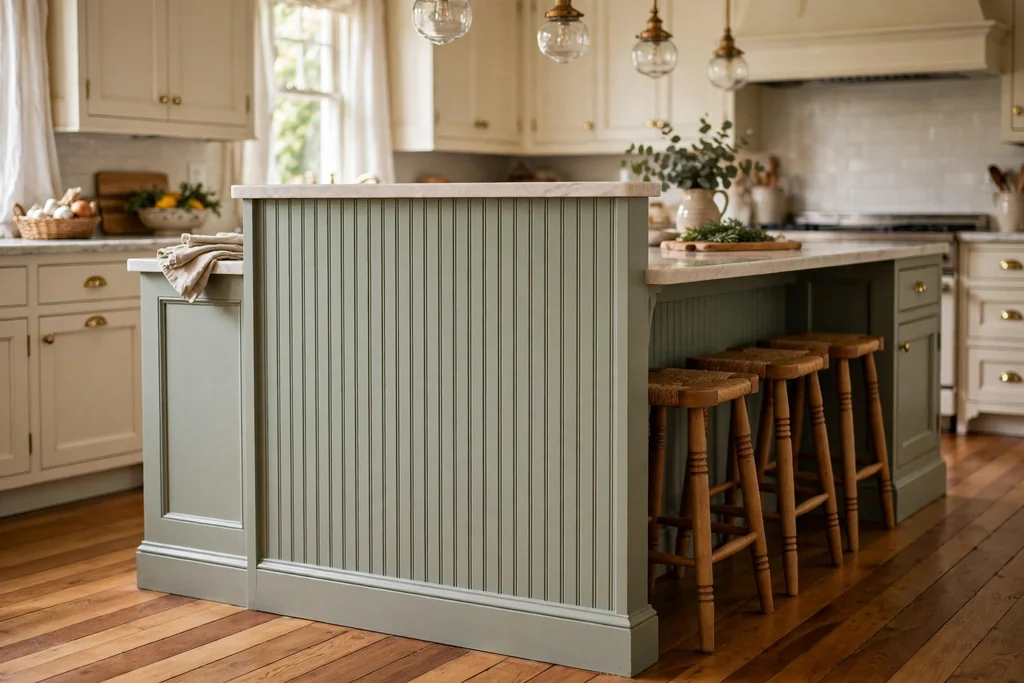
Beadboard, with its narrow vertical grooves, adds texture to a flat island back, a breakfast nook wall, or the side of a tall cabinet, and it has long been used in traditional kitchens and farmhouses. Use paint grade beadboard panels for a smooth painted finish, and seal the joints before painting so the grooves stay crisp. Keep beadboard clear of direct splash zones, such as right behind the sink, unless it is sealed well, and wipe it with a damp cloth rather than soaking it. A beadboard island back in the wall color adds interest without a new color, while a contrasting paint color makes the island a clear feature.
18. Dress the Window With Cafe Curtains and a Roman Shade
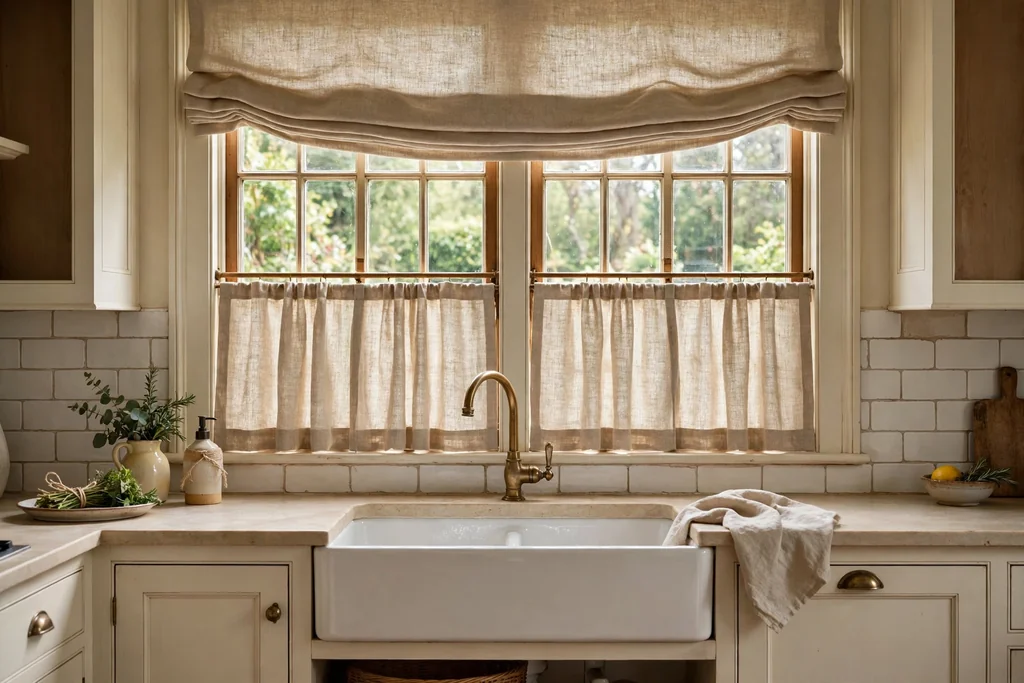
A traditional kitchen window usually needs two layers: privacy at the lower half and soft light control above. Linen cafe curtains on the lower pane give privacy at counter height while the top of the window stays open for daylight, and a relaxed roman shade above adds a tailored finish that folds up out of the way. Choose washable fabric in a color already used on towels or seat cushions, and keep hems clear of the sink and stove. These kitchen window decor ideas cover cafe curtains, roman shades, and other window layers in more detail, including options for renters.
Conclusion
A warm traditional kitchen comes from layering a few honest materials and details, not from copying a showroom exactly. Start with the cabinets and counters, add hardware and lighting that you will enjoy using every day, and finish with one or two display spots that show how you actually cook and gather. Try one idea this weekend, such as brass cup pulls or a plate rack, and live with it before planning the next change. If an idea here fits your kitchen, save this post to your kitchen decorating board on Pinterest so you can find it when you are ready for the next step.
Frequently Asked Questions
What makes a kitchen look traditional rather than modern?
A traditional kitchen usually has framed cabinet doors, such as Shaker or raised panel styles, natural materials like wood and stone, classic hardware in brass or nickel, and decorative carpentry such as crown molding or a mantel hood. Modern kitchens tend to use flat slab doors, handleless fronts, and man made surfaces with little visible detail. You can shift a kitchen toward traditional with framed doors, warm wood, and classic hardware, even without changing the layout.
Can I add traditional details to a kitchen without renovating?
Yes. Hardware, lighting, a backsplash, window treatments, and a freestanding larder cabinet can all change the feel of a kitchen without moving walls or plumbing. Start with cup pulls and knobs, then pendants over the island, and then a tile backsplash if the budget allows. Larger changes, such as a farmhouse sink or a pot filler, need plumbing work, so plan those for a remodel rather than a weekend project.
What is the best countertop for a traditional kitchen?
Marble is the classic choice for its soft veining and cool work surface, but it needs sealing and prompt wiping of spills. Butcher block adds warmth and suits a baking area, while quartz with a marble look gives a similar appearance with less upkeep. Choose based on how you cook: heavy daily cooking with acidic ingredients suits a harder surface, while a pastry area or a low traffic island suits real marble well.
How do I keep a traditional kitchen from looking dark or dated?
Balance warm wood and deep colors with pale counters, a light backsplash, and good lighting at three levels: ceiling light, under cabinet task light, and pendants or lamps. Keep the palette to two or three repeated materials, and avoid filling every surface with decoration. One display area, such as glass front cabinets, plus clear work counters keeps the room warm without feeling crowded or old fashioned.
Are brass fixtures hard to care for in a kitchen?
Lacquered brass keeps a steady shine with simple wiping, while unlacquered brass develops a darker patina over time, which many people prefer in a traditional room. Both types should be wiped after cooking splashes and kept clear of harsh cleaners. If you like a lived in look, choose unlacquered brass and let it age naturally. If you prefer a consistent finish, choose lacquered brass and check the maker care notes before using any polish.
What color should traditional kitchen cabinets be?
Cream, soft white, sage green, navy, and warm wood tones all suit traditional kitchens, and the right choice depends on your light and floor. Cream and soft white keep a small or north facing kitchen bright, while sage or navy work well on an island or in a larger room with pale counters. Test a large painted sample beside your floor and counter in morning and evening light before ordering, since paint shifts noticeably with daylight.