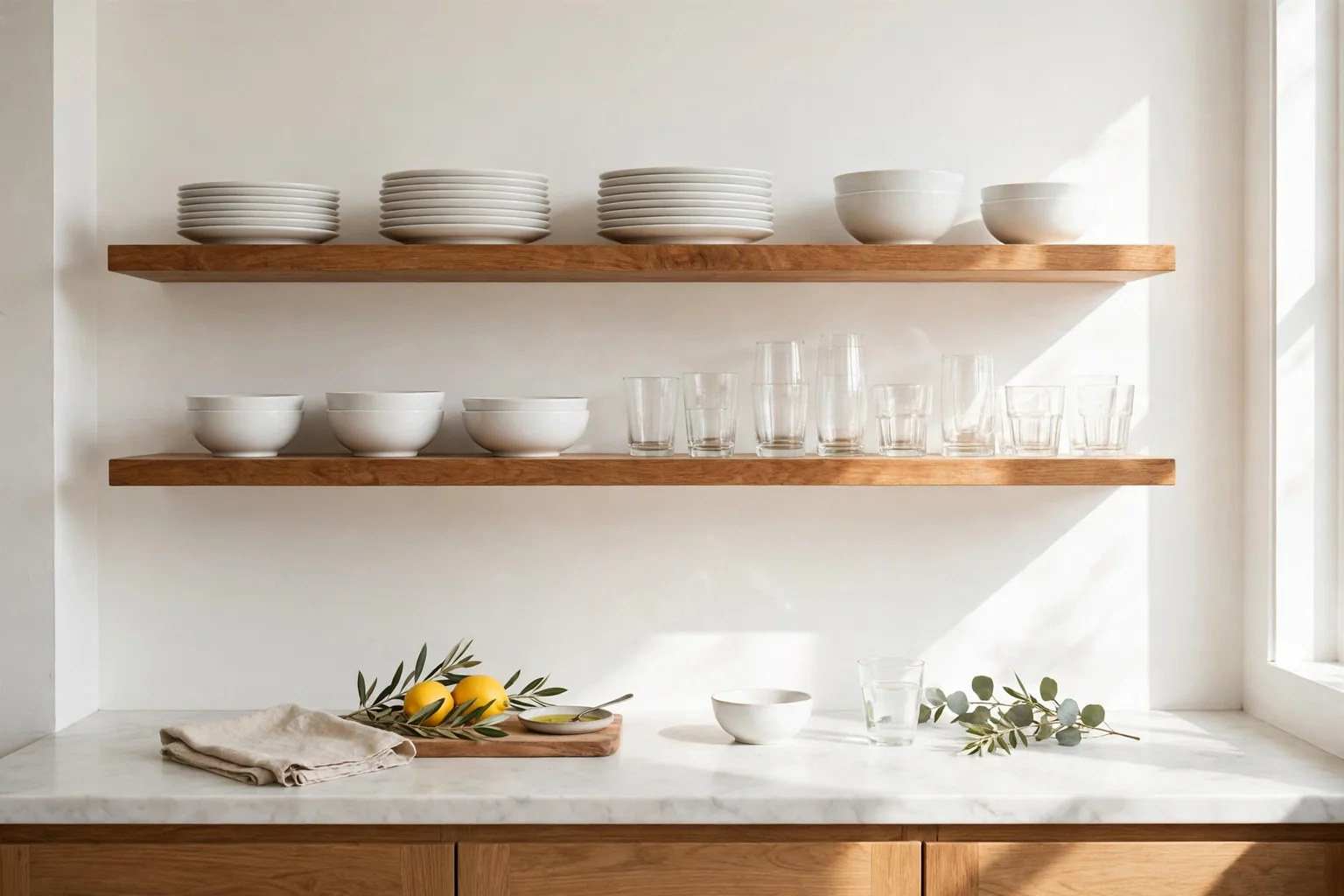
Kitchen walls often sit empty while counters fill up with dishes, tools and jars. Using the wall well can free the work surface, keep everyday items in sight and make cooking feel calmer. These 27 kitchen wall storage ideas cover open shelves, rails, racks, baskets and small wall units, so you can pick one change for a blank wall or combine several for a full refresh. Start with the spot that causes the most clutter, measure before you buy or build, and fix heavy storage into studs or with fixings rated for your wall type.
Key Takeaways
- Start with one clutter point, such as dishes, spices or pans, and give it a clear wall home before adding more storage.
- Keep daily items between eye level and easy reach, and move rarely used pieces higher or into closed storage.
- Fix heavy shelves, rails and racks into studs or with wall fixings rated for the load, and test the hold before loading them fully.
- Mix open and closed storage so the wall looks calm: open shelves for pretty daily pieces, baskets and jars for small or mixed items.
- Leave gaps between groups and a clear stretch of counter below, so the wall helps cooking instead of crowding it.
1. Open Wood Shelves for Everyday Dishes
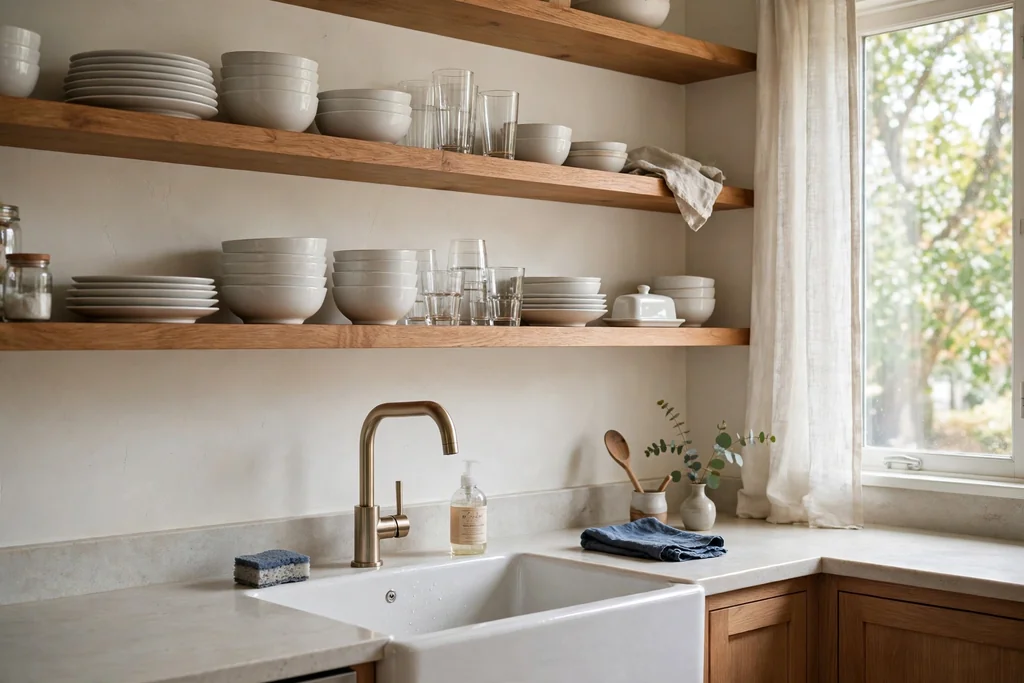
Put your most used plates, bowls and glasses on two open wood shelves near the sink or dishwasher. This keeps the daily set in one visible place and shortens the trip from washing up to putting away. Choose shelves deep enough for dinner plates, with a small lip or raised edge at the back if your wall allows it.
Group plates in one stack, bowls in another, and glasses in a single row, with space left at each end. Our guide to how to style open shelves shows how to leave breathing room so a shelf reads as storage, not clutter. Keep heavy stacks low and limit each shelf to one or two groups.
2. Staggered Floating Shelves Above the Prep Counter
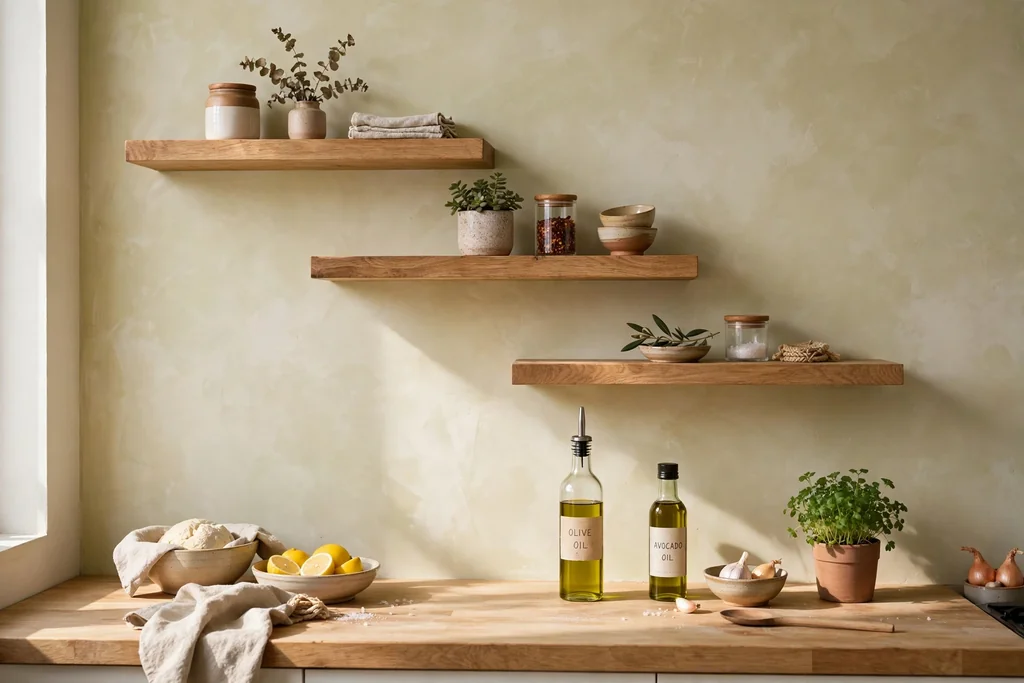
Staggered floating shelves suit a wall with a window, a tall cabinet or an uneven layout, because each shelf can sit at its own height. Place the lowest shelf within easy reach for prep bowls and oils, and use higher shelves for serving pieces and cookbooks you reach for less often.
Keep the shelves the same depth and finish so the staggered line looks planned. Leave at least one shelf partly empty, and avoid placing a shelf where it blocks a window catch or a cabinet door. A small plant or a single jug on the top shelf softens the line without taking prep space.
3. Pegboard Wall for Pans and Tools
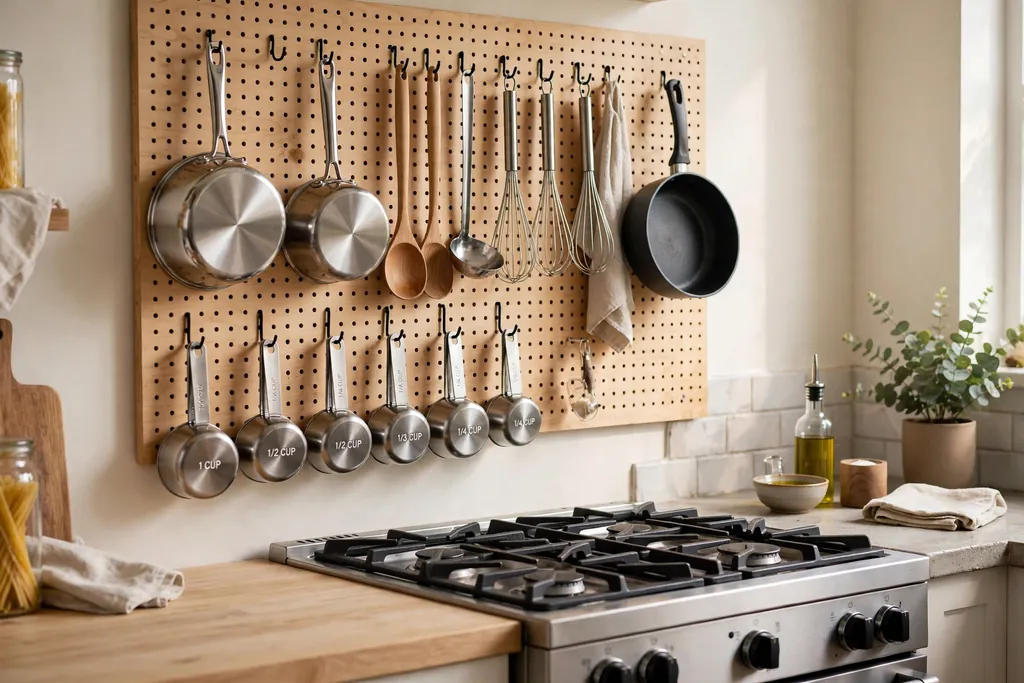
A pegboard turns a blank wall into a flexible tool board. Hang pans, ladles, whisks and measuring cups on hooks, and move the hooks when your tool set changes. Paint or stain the board to match the kitchen, and frame the edges so it looks finished rather than like a workshop offcut.
Plan the layout on the floor first, with the heaviest pans low and near the stove. Leave space around each item so you can lift it off without knocking its neighbour. A small shelf or cup at the base of the board holds a timer, a thermometer and other small tools.
4. Magnetic Knife Strip on the Wall
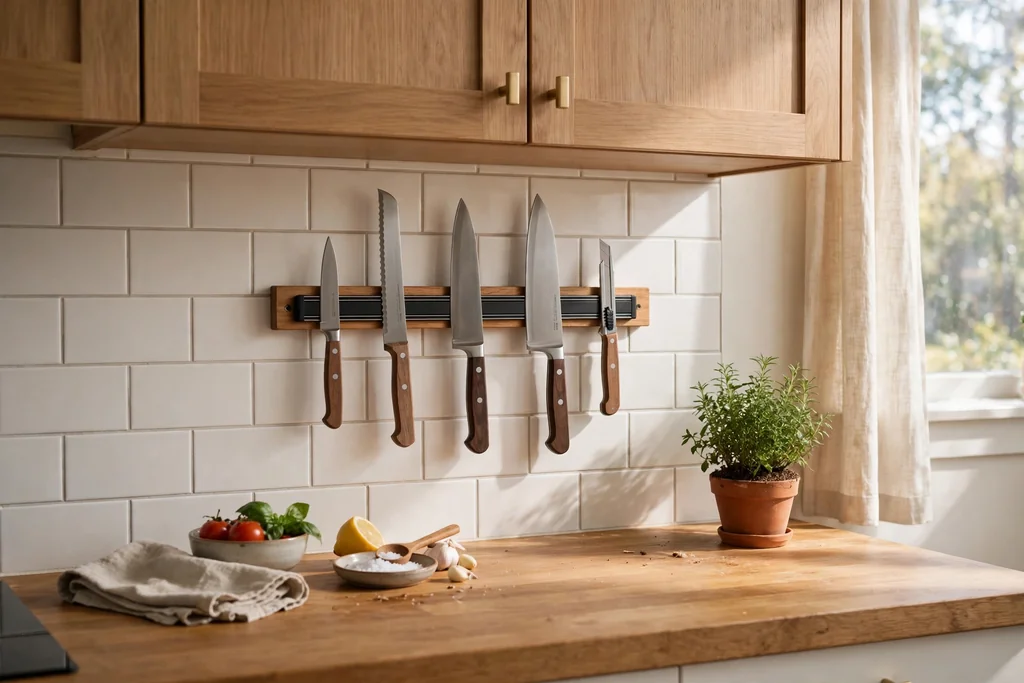
A magnetic strip frees a drawer and keeps knives visible, dry and easy to grab. Mount it at a height where the handles are within reach but blades sit clear of small hands, and away from the main splash zone beside the sink. A wood or steel strip suits most kitchens and wipes clean quickly.
Place the most used chef knife and a paring knife in the middle of the strip, with less used blades toward the ends. Wipe blades dry before returning them, since moisture dulls edges and can mark the strip. If wall space is short, a shorter strip for three knives still beats a crowded drawer.
5. Magnetic Spice Jars on a Steel Board
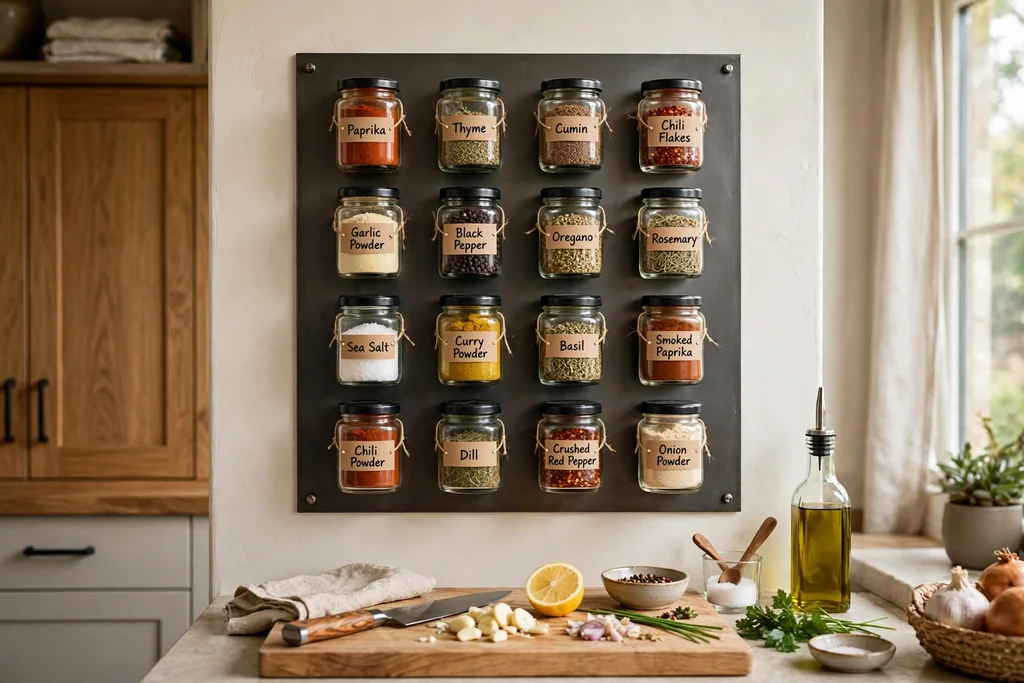
Fix a steel board to the wall and fill it with small magnetic spice jars, each labelled on the lid or side. This keeps spices at eye level, away from stove heat, and lets you see at a glance what needs refilling. Use jars of one size so the board looks tidy and the jars sit flat.
Group spices by use, such as everyday cooking, baking and heat, and keep the board near the prep counter rather than above the stove. Refill jars from larger store packs kept in a cabinet, and check dates twice a year. A board that holds 12 to 20 jars suits most home cooks.
6. Wall Pot Rail With Hooks
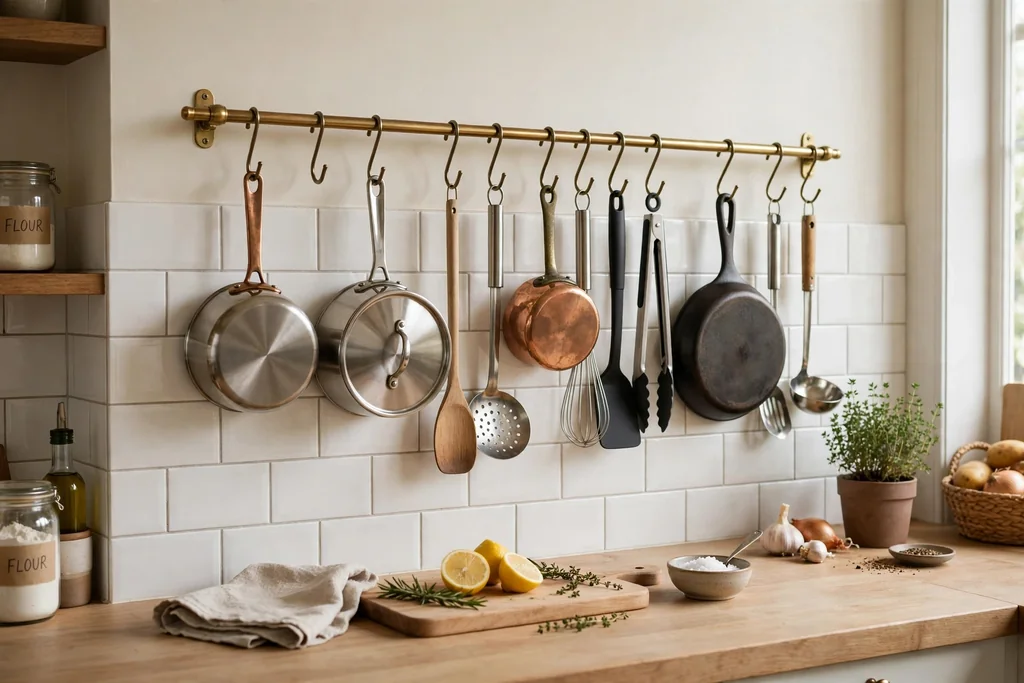
A steel or wood rail with S-hooks holds saucepans, a colander and large utensils where you can reach them fast. Mount the rail below a shelf or on its own, with enough clearance below for the longest pan to hang without hitting the counter. Hooks that slide along the rail let you space pans by size.
Hang the heaviest pan nearest a wall bracket, where the rail is strongest. Keep lids on a separate hook or in a rack, since lids hung with pans tangle and clang. Wipe the rail weekly, because steam and cooking grease settle on horizontal metal near the stove.
7. Wall Mounted Plate and Dish Rack
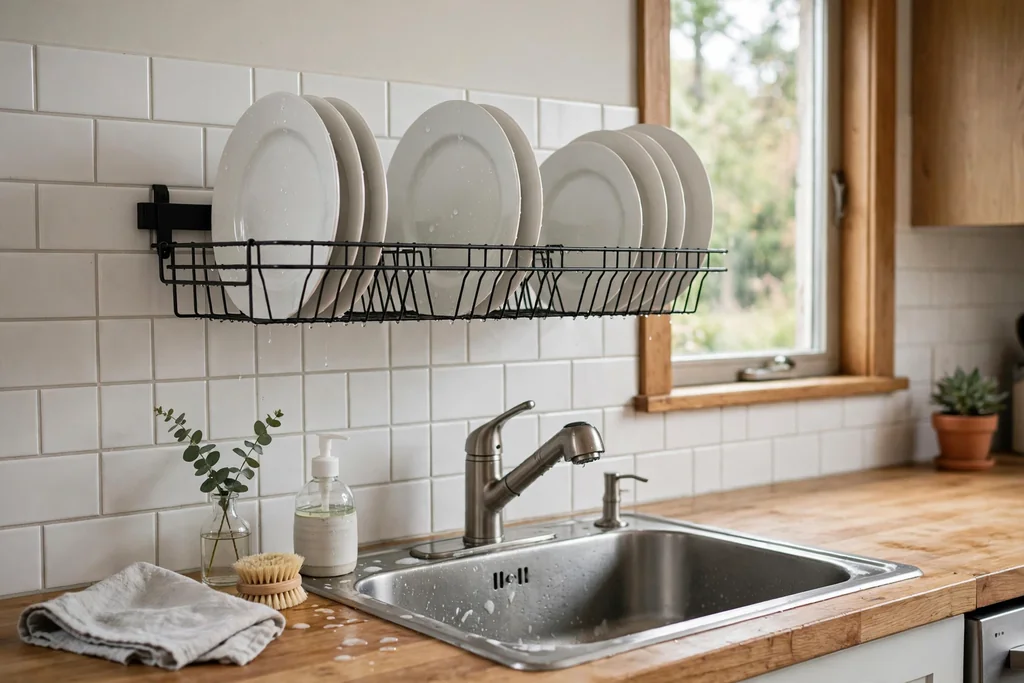
A wall mounted dish rack gives washed plates a drying spot that does not cover the counter. Choose a rack with a drip tray or mount it over the sink so water drains where it should. Stainless or coated wire suits a wet zone, and open sides let air move around the plates.
Size the rack for your daily plate count, not for a full dinner party set, and keep it near the sink for a short carry. Empty it once dishes are dry, so the rack does not become permanent storage for a second set. If space is tight, a narrow rack for plates only still clears a useful patch of counter.
8. Mug Hooks on a Wall Rail
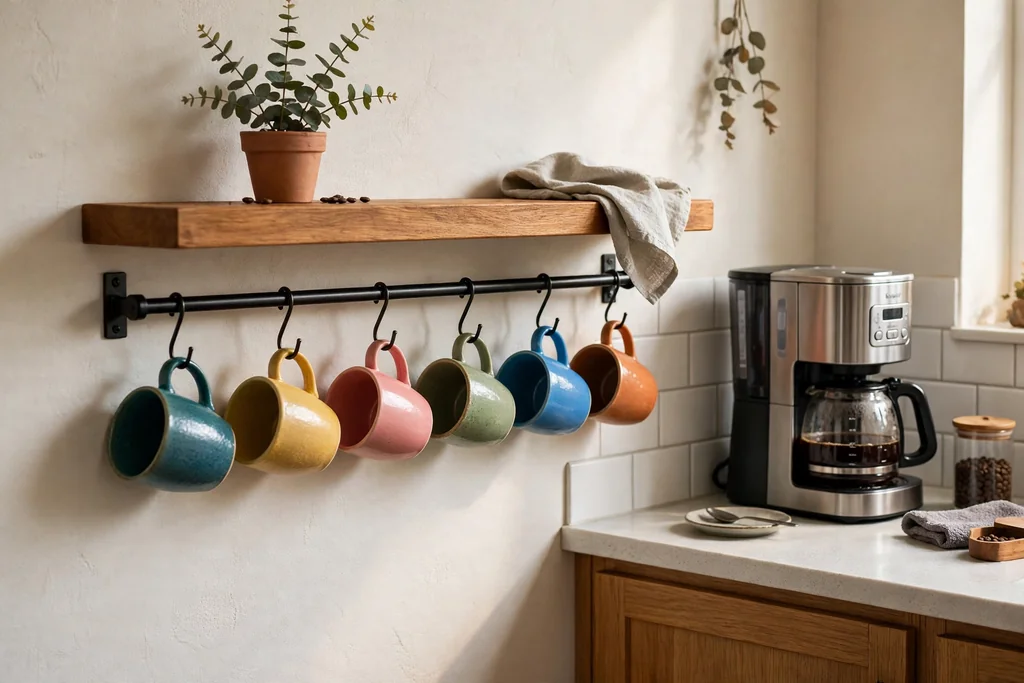
A row of hooks under a shelf or on a wall rail gives every mug a home and stops mugs stacking in a cabinet. Space the hooks wide enough that handles do not lock together, and hang the daily mugs at the front or at easy reach height. A rail with removable hooks makes cleaning and rearranging simple.
Keep the collection to the mugs you actually use, and store spares or souvenir mugs elsewhere. Hang mugs by their handles with the opening facing out, so they dry fully and are easy to spot. This idea works well on a short wall beside a coffee maker or kettle.
9. Cutting Boards on a Wall Rail
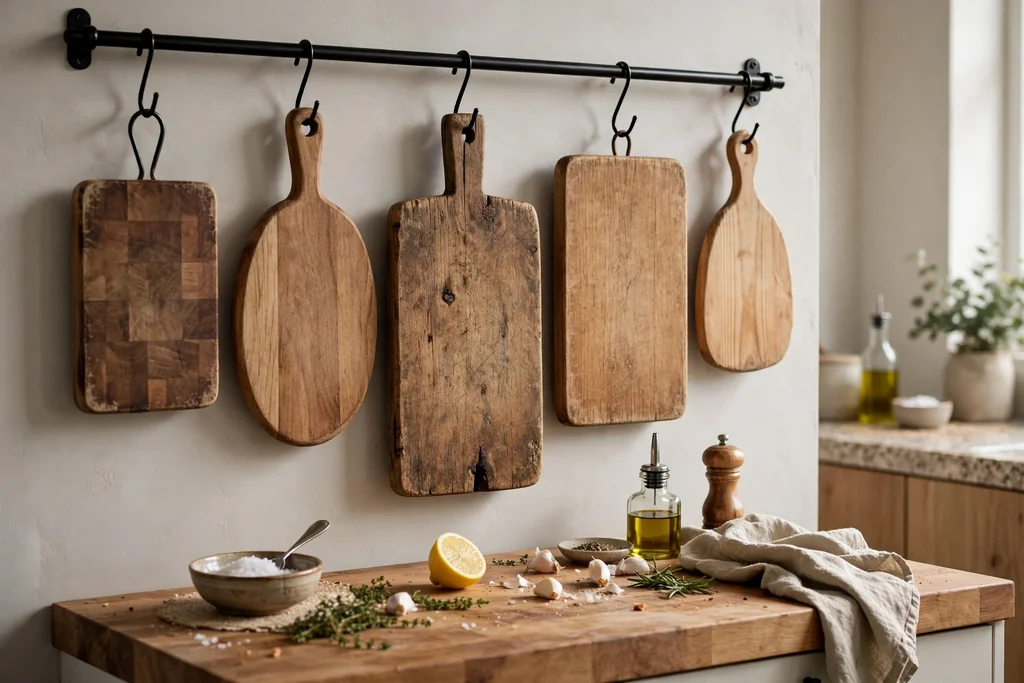
Hang cutting boards from a rail or a row of sturdy hooks, sorted by use: one for vegetables, one for bread and one for cooked meat. This keeps boards dry, visible and off the counter, and makes it easy to grab the right board without pulling a stack from a cabinet. A narrow rail above the prep counter suits boards of different lengths.
Use hooks that grip the hanging hole or a small loop of cord through it. Let boards dry fully before hanging them flat against the wall, and sand any rough edges that could snag a cloth. Replace a board once deep cuts make it hard to clean, no matter how handy its wall spot is.
10. Cookbook Ledge Shelf
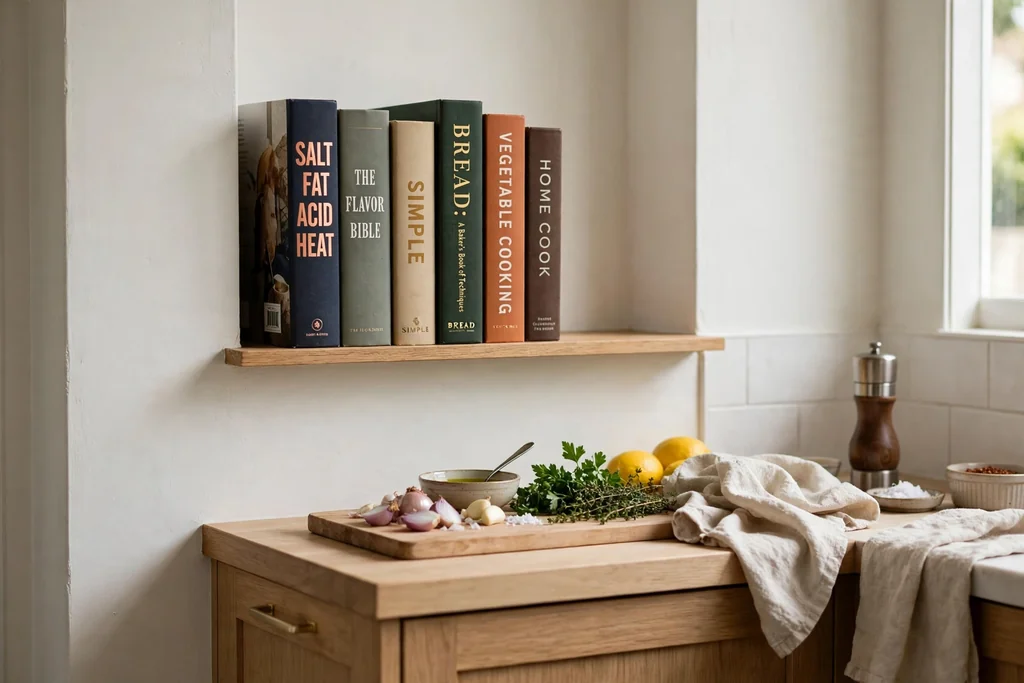
A shallow picture ledge shelf holds cookbooks upright with their spines out, plus one or two books open on display. The ledge lip stops books sliding forward, and the shallow depth keeps the shelf from jutting into the room. Place it near the prep counter but clear of steam from pots and the kettle.
Keep only the books you cook from often, and store the rest on a higher shelf or in another room. Stand a small bookend or a jar at each end to stop the row toppling when you pull one book out. Wipe the shelf often, since kitchen grease settles on horizontal surfaces faster than in other rooms.
11. Wall Herb Planters
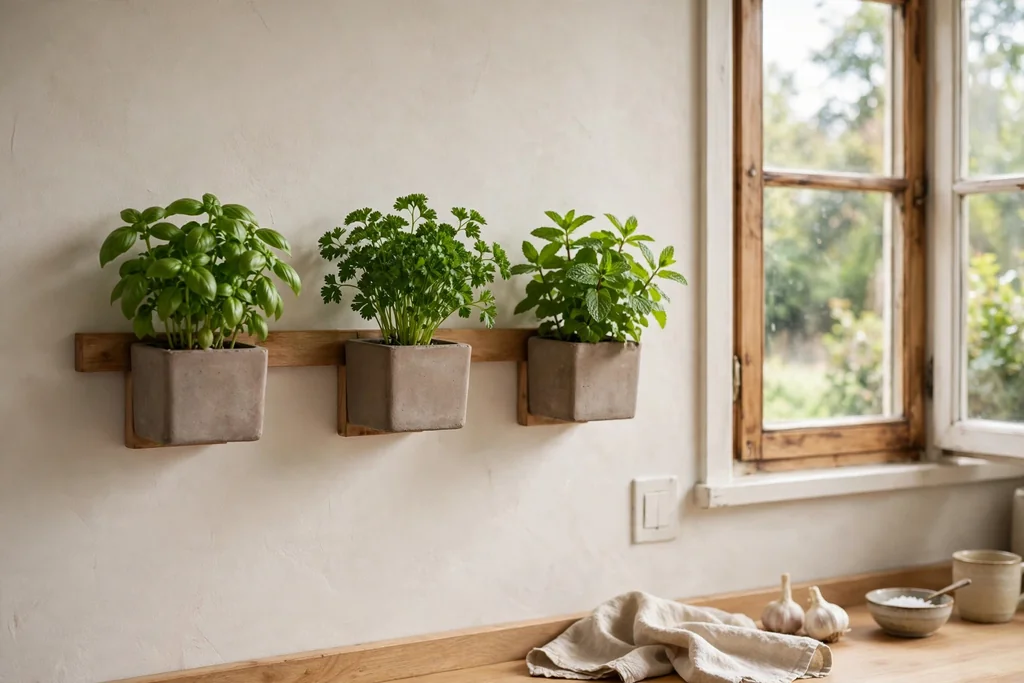
Wall mounted planters or a pocket planter panel put fresh herbs at hand while you cook. Use small pots with drainage, a tray or liner to catch water, and a spot with the best light your kitchen offers, often near a window. Basil, parsley, mint and chives suit small pots and frequent snipping.
Water little and often, and check that no pot drips onto the counter below. Label each pot, since young herbs can look alike, and rotate pots so growth stays even. If natural light is weak, move the planters to a brighter window for part of the week and keep only hardy herbs on the kitchen wall.
12. Chalkboard Planning Wall
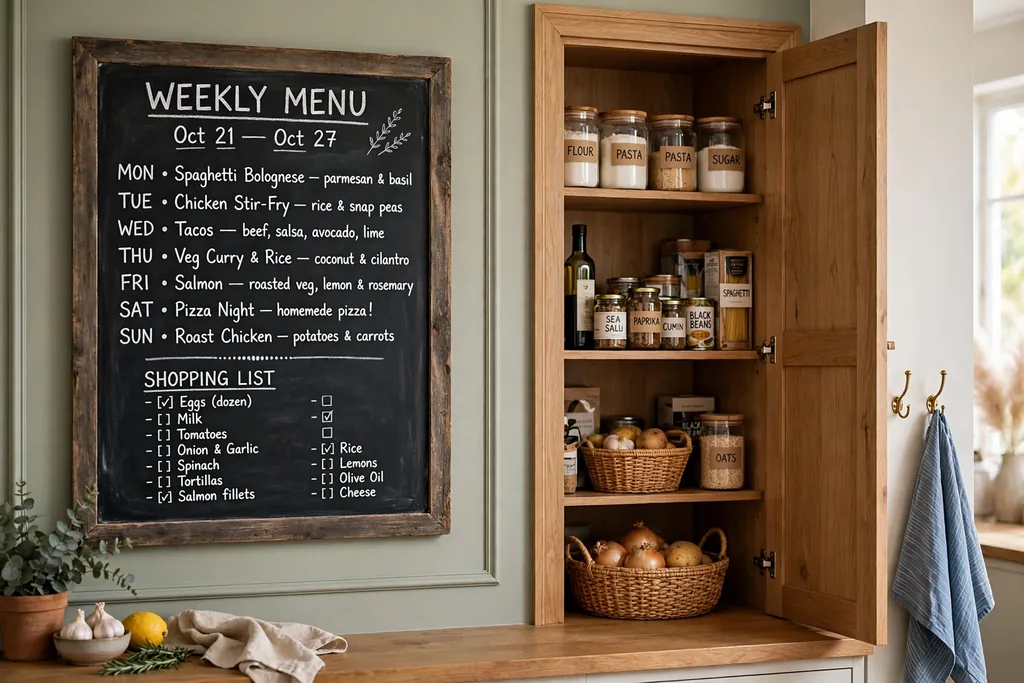
A framed chalkboard or a painted chalkboard panel gives shopping lists, menus and notes a fixed place, which keeps paper off the fridge and counter. Hang it near the kitchen entry or beside the pantry, with chalk or chalk markers in a small cup hung alongside. A weekly menu at the top and a running shopping list below covers most family needs.
Wipe the board clean each week so old items do not linger and get bought twice. Keep the board away from the stove splash zone, and use a damp cloth rather than a dry eraser to avoid chalk dust settling on food. A magnetic chalkboard adds a second use, holding recipes and school notes with magnets.
13. Hanging Baskets for Produce
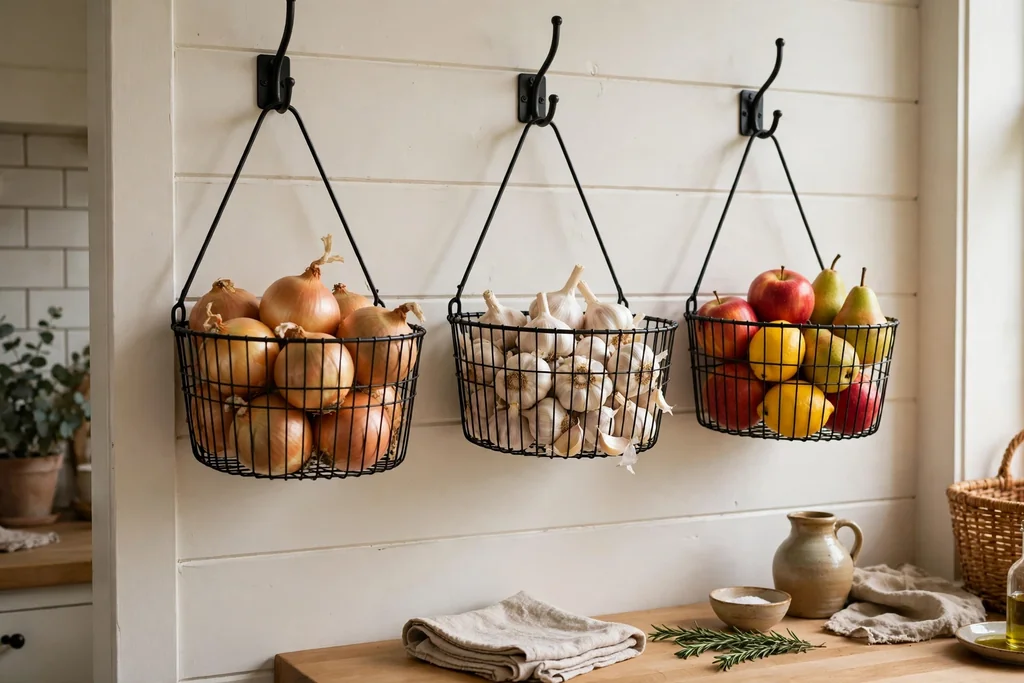
Wire or woven baskets hung on wall hooks hold onions, garlic, potatoes and fruit where air can move around them. Airflow matters for onions and garlic, which spoil faster in a closed bag, and a basket keeps them out of a dark cabinet where they are forgotten. Use one basket per type so you can see stock levels at a glance.
Hang baskets away from the stove and sink, where heat and steam shorten storage life. Line a basket with a cloth if small items slip through the weave, and check contents weekly, removing any soft pieces before they affect the rest. This idea suits kitchens short on pantry shelf space.
14. Wire Grid Panel for Utensils and Notes
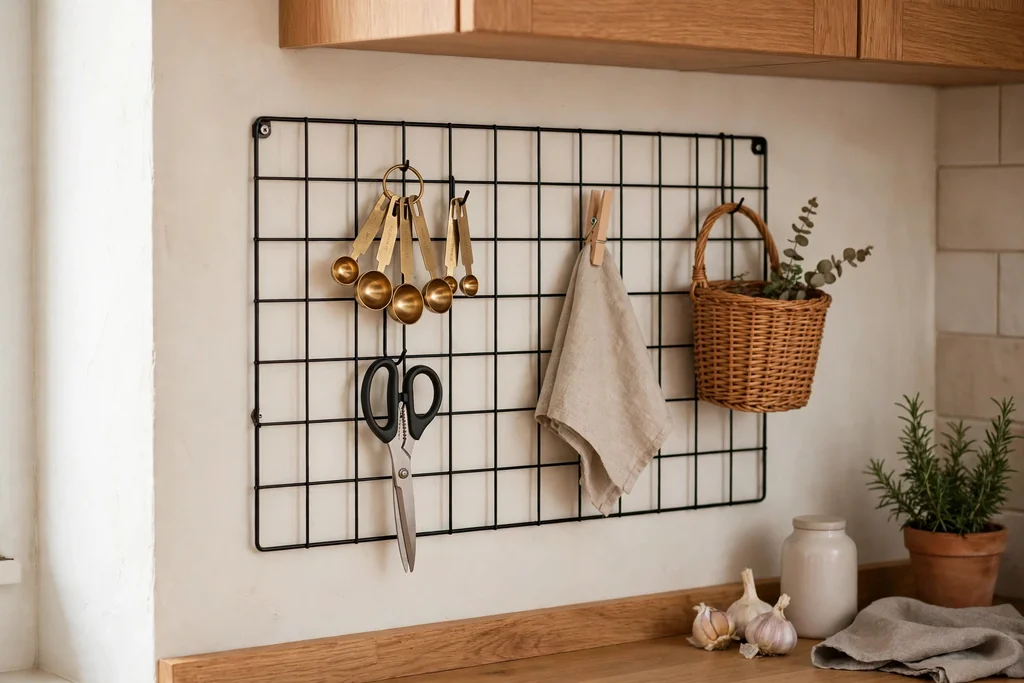
A wire grid panel, fixed to the wall with standoff brackets, holds hooks, clips and small baskets in a layout you can change any time. Hang measuring spoons, scissors, a timer and a small basket for pens and clips, and use the same panel for a recipe card held with clips. The open grid keeps the wall light and lets you see everything at once.
Start with five or six items, then add only when a clear gap remains. Too many small items on a grid quickly look busy, so keep one corner free. Wipe the grid with a damp cloth, since cooking film builds up on wire near a stove, and keep paper notes clear of steam and splashes.
15. Slim Ledge Above the Backsplash
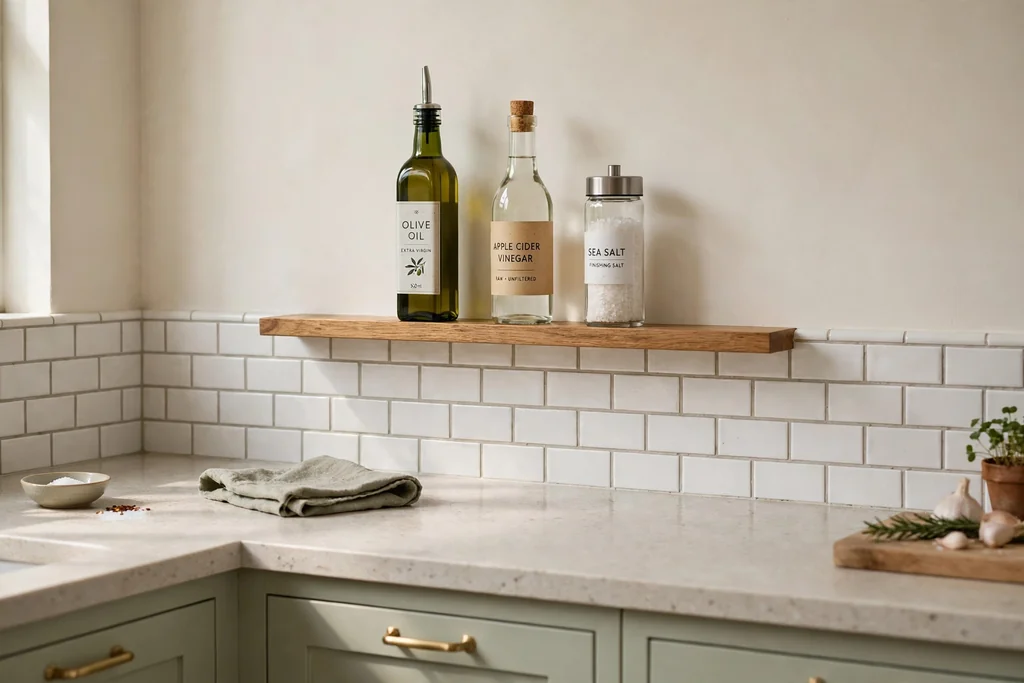
A slim ledge fixed just above the backsplash holds the small items that otherwise crowd the counter edge: olive oil, vinegar, salt and a small jar of wooden spoons. The ledge depth only needs to fit a bottle base, so it adds storage without blocking the work surface below. Keep the ledge clear of the hob so bottles stay away from direct heat.
Limit the ledge to daily items in matching or plain bottles, and move bulk refills to a cabinet. A raised lip or a small rail along the front stops bottles sliding when a cabinet door closes. Wipe the ledge during your usual counter clean, since oil mist lands there first.
16. Leaning Ladder Shelf Against the Wall
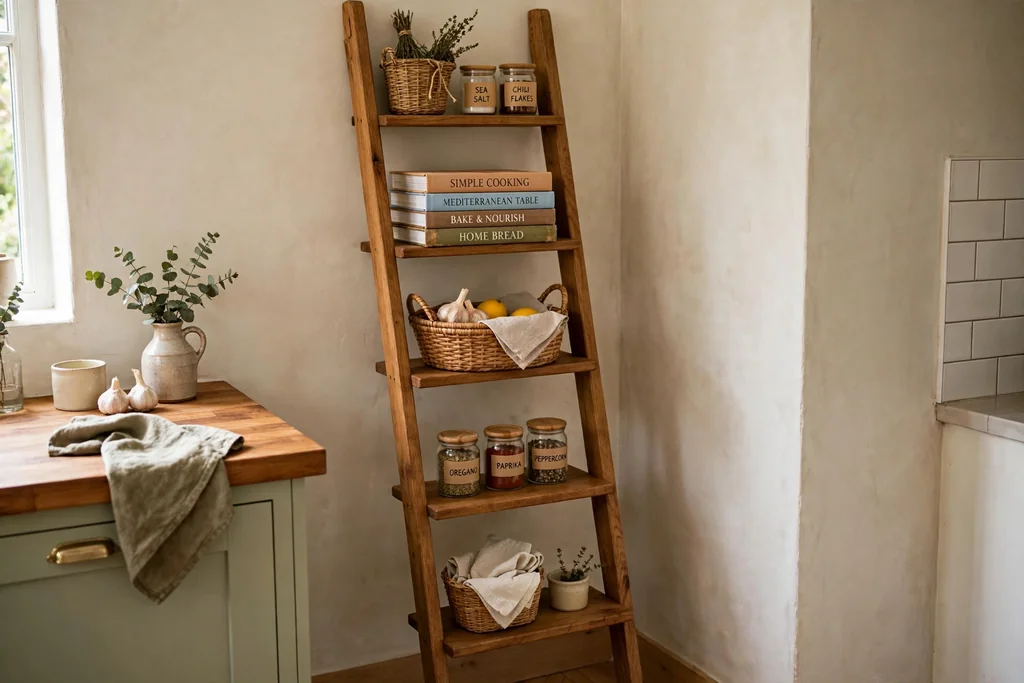
A leaning ladder shelf uses vertical wall space with no drilling into the wall itself, which suits renters. The shallow top shelves hold small jars and plants, while deeper lower shelves hold cookbooks, baskets and a slow cooker. Place it on a flat wall end or beside the fridge, where it does not block a walkway.
Secure the top to the wall with a small strap if the household includes children or pets, since a leaning shelf can tip. Keep heavy items on the lowest shelf and light items up high, and leave one shelf partly empty so the unit does not look packed. A wood ladder shelf warms a plain kitchen wall without a full renovation.
17. Recessed Niche Shelves Between Studs
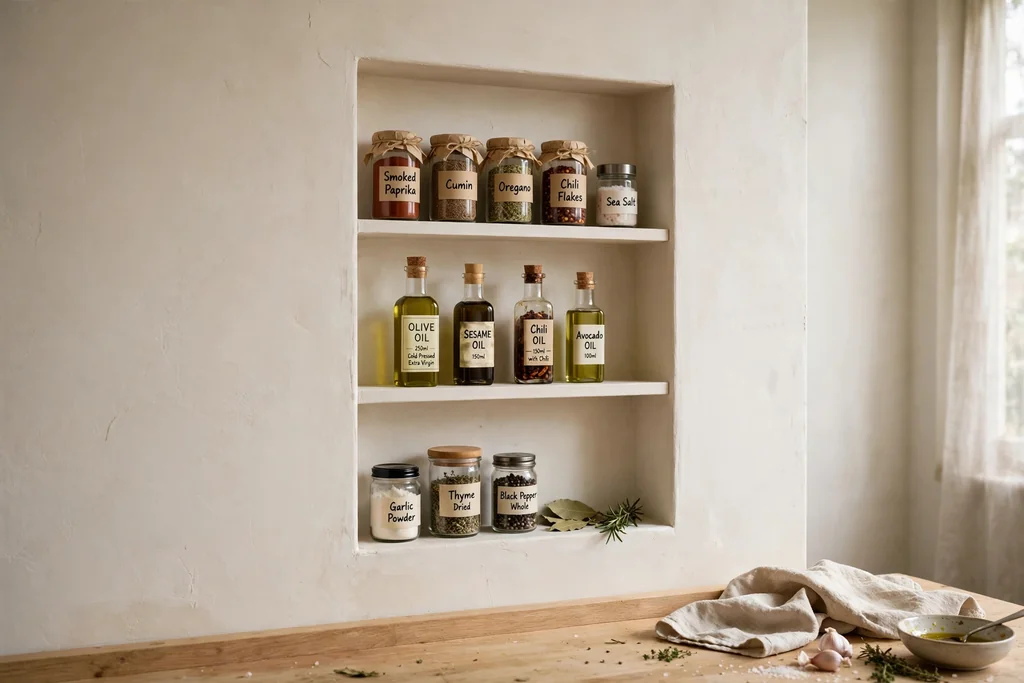
A niche cut between wall studs creates shallow shelves that sit flush with the wall, ideal for spice jars, small oils and tea boxes. Because the shelves use space already inside the wall, they add storage without narrowing the room. This is a bigger job than hanging a shelf, so check for pipes and wires before cutting, and keep the niche away from wet wall areas unless it is properly sealed.
Finish the niche with the same paint or tile as the surrounding wall so it reads as part of the kitchen. Use two or three shelves, spaced to fit the tallest jar you plan to store, and add a small lip so jars do not slide out. Recessed niches suit a wall beside a pantry or at the end of a counter run.
18. Corner Shelves for a Dead Corner
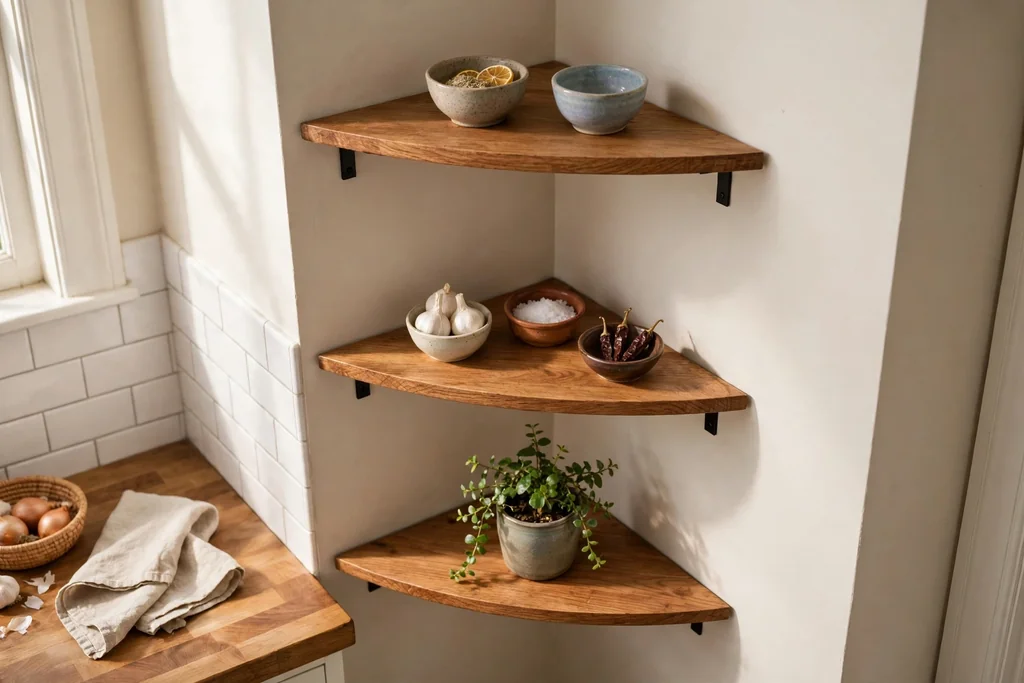
Triangular or L shaped corner shelves use the wall corner that often holds nothing but dust. Two or three shelves in the corner can hold plants, small bowls and a radio or speaker, freeing the main counter for prep. Choose shelves sized to the corner so they do not stick out past the counter edge below.
Keep corner shelves light, since reaching into a deep corner for a heavy item is awkward. Put daily items near the front edge and decorative pieces toward the back, and leave the lowest corner shelf clear if it sits above a small appliance. Corner shelves work best as a small addition, not as the main storage wall.
19. High Shelf Above the Doorway
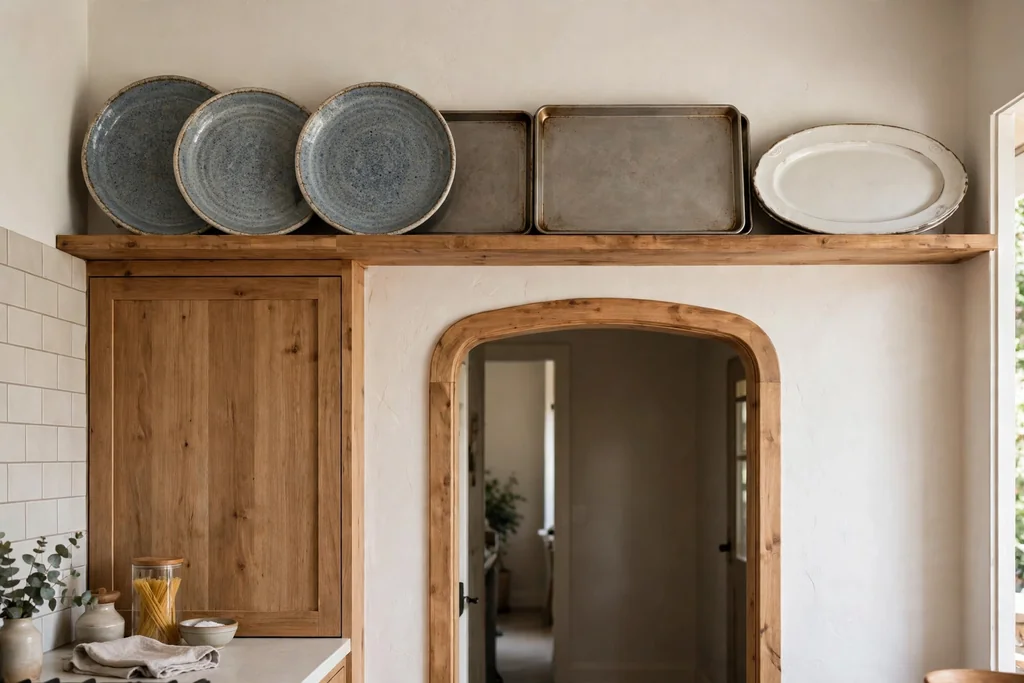
The wall above a kitchen doorway often goes unused, yet it can hold a single long shelf for rarely used pieces: a large serving platter, a picnic set or holiday baking trays. A high shelf keeps these items out of daily cabinets while still visible, so you remember you own them. Use a step stool kept nearby, and store nothing heavy or fragile up high.
Add a small front rail or lip so items cannot slide off when the door closes. Keep the shelf depth modest, so items do not loom over the doorway, and dust it when you clean upper cabinets. This idea suits kitchens with high ceilings and a doorway that is not the main traffic path for tall items.
20. Shelf Spanning Above the Window
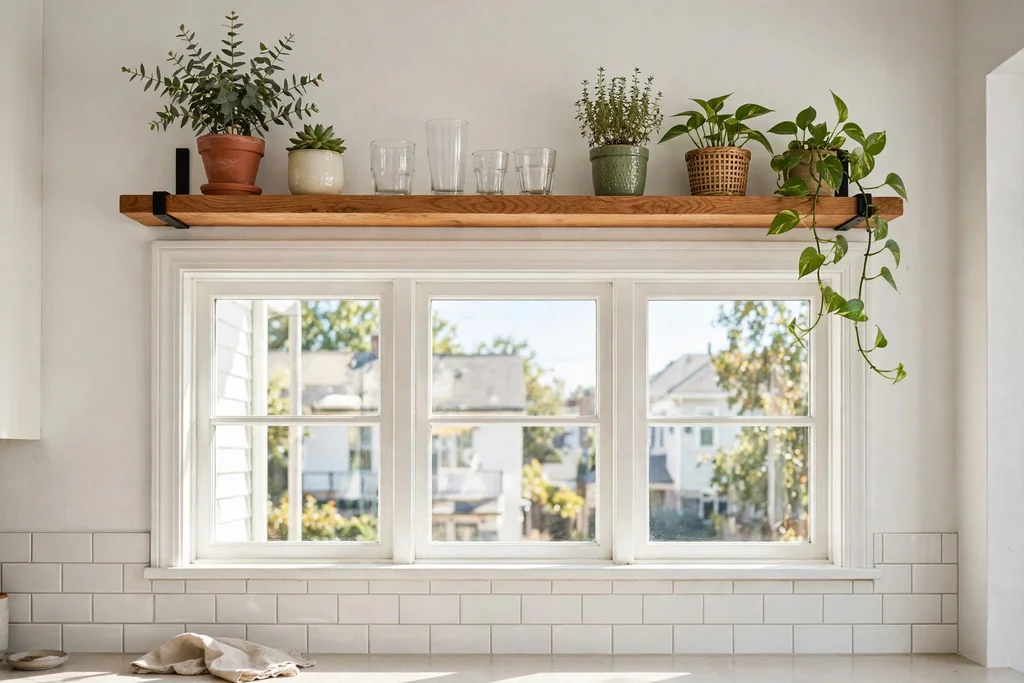
A shelf fixed above the kitchen window uses the wall strip that usually stays bare. It suits plants that like light, glassware that catches daylight, and small serving bowls kept out of daily reach. The shelf should sit high enough that it does not block the window catch or the light, and brackets must clear the window frame.
Keep the load light and the row simple, since a shelf above a window is seen against the light. Plants in plain pots or a short row of matching glasses look calmer than a mixed collection. Water plants over the sink before returning them, so drips do not land on the window frame or sill.
21. Wall Mounted Wine Rack
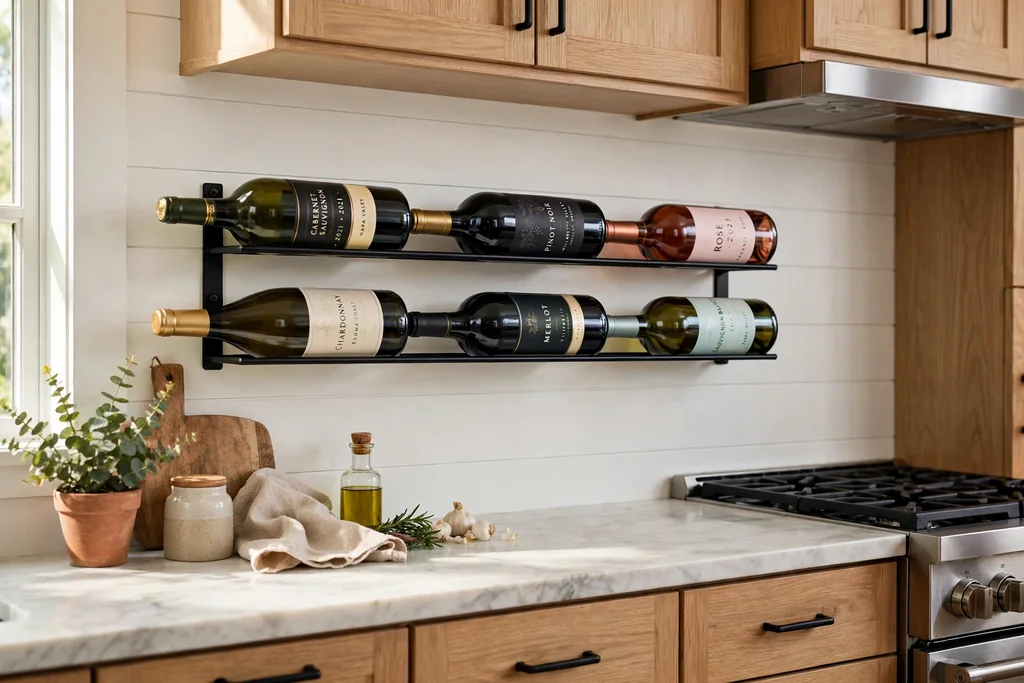
A wall mounted wine rack stores bottles horizontally, which keeps corks moist, in a compact footprint. A small rack for six to twelve bottles suits most kitchens, mounted on a wall away from stove heat and direct sun. Metal or wood racks both work, as long as each bottle sits snugly and cannot roll out.
Label the rack ends or keep a simple list of what is stored, so you do not pull every bottle to find one. Keep everyday drinking bottles at easy reach and longer storage bottles higher up. If the kitchen runs warm, treat the rack as short term storage and keep bottles you plan to age elsewhere.
22. Apron and Towel Hook Station
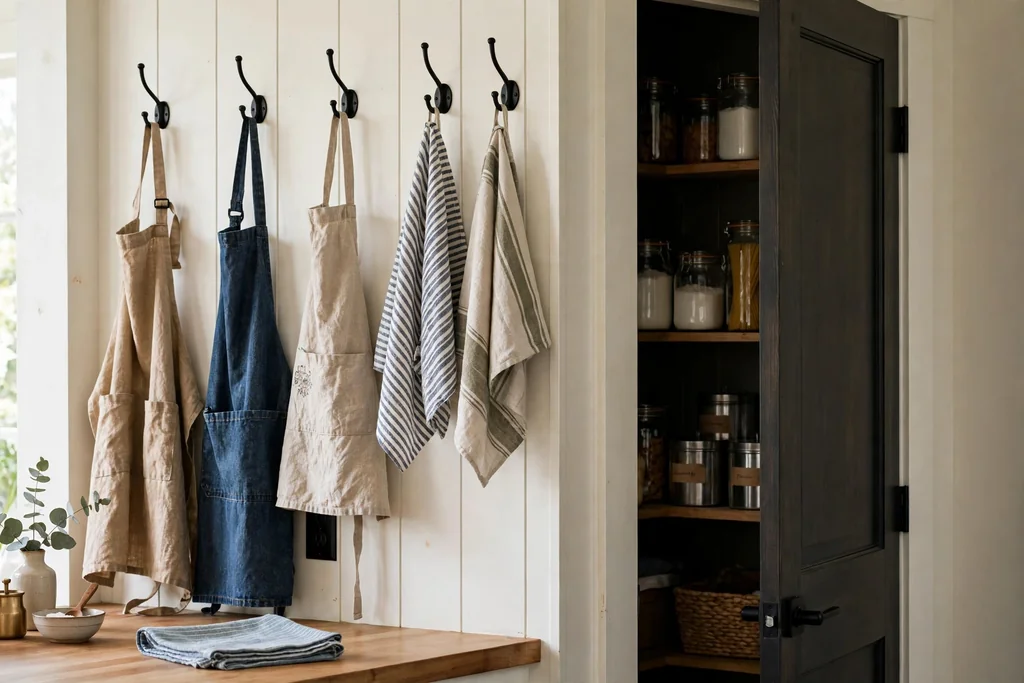
A row of sturdy hooks near the pantry or back door gives aprons, tea towels and a shopping bag a fixed home. This stops aprons draping over chairs and towels landing on the oven handle, where they can scorch. Use hooks rated for damp towels, spaced so items dry rather than bunching together.
Hang one hook per person or per job: cooking apron, cleaning apron and a spare towel hook. A small shelf above the hooks holds a lint roller and a spare roll of bags. Wipe hooks clean when you change towels, since kitchen steam leaves a film on metal near the stove and sink.
23. Fold Down Wall Table for Extra Prep
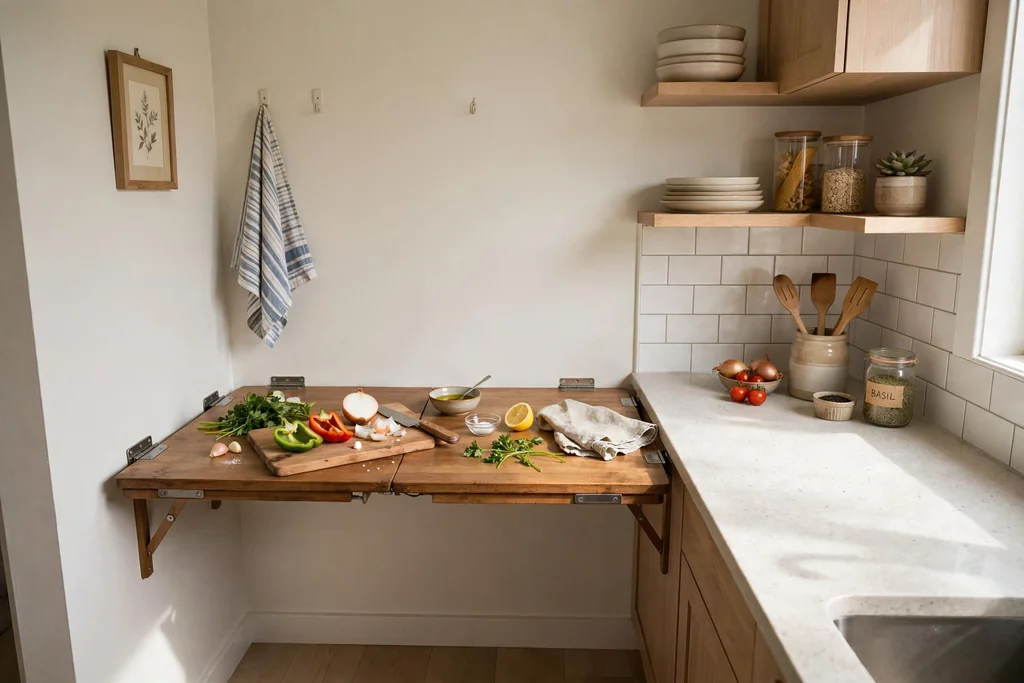
A wall mounted fold down table adds a prep surface only when you need it. Fold it up for chopping, rolling pastry or setting out a buffet, then fold it flat against the wall when the meal is done. Choose a table with a sturdy bracket and a latch that holds it shut, and fix it into studs, since a loaded table puts real weight on the wall.
Keep the folded table clear of door swings and tall appliances, and store a small cutting board and a cloth in a basket beside it so the surface is ready fast. This idea suits small kitchens, galley kitchens and homes where an island would block the walkway. Test the latch and brackets before placing hot or heavy items on the table.
24. Mason Jar Wall Rack for Dry Goods
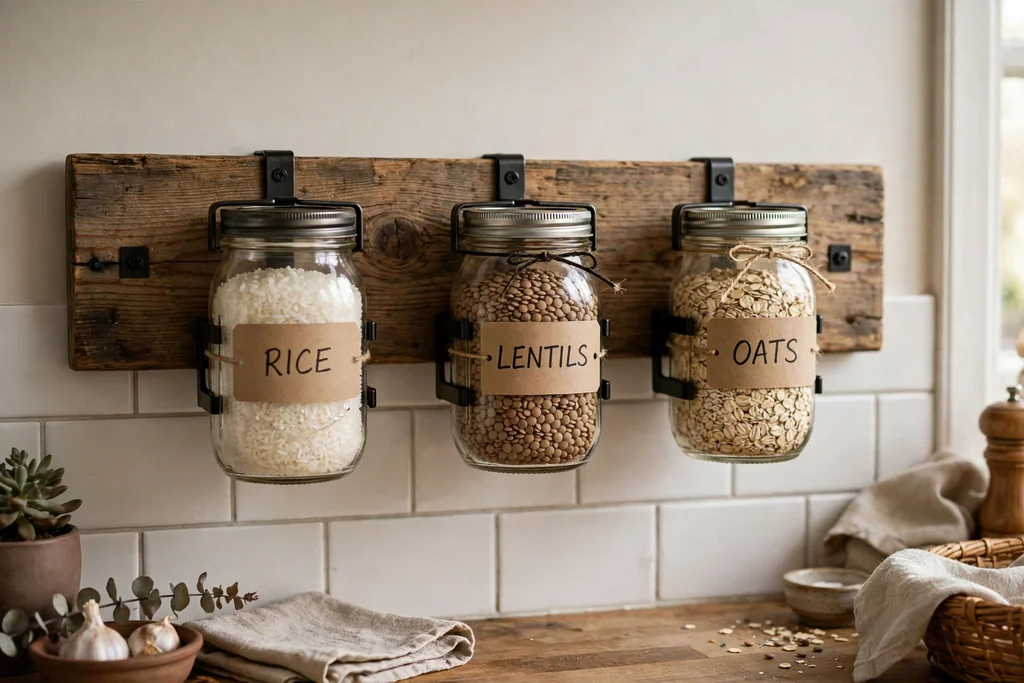
A wood board fitted with jar clamps or a rack of hanging mason jars stores rice, lentils, oats, flour and dried herbs in plain sight. Seeing levels at a glance helps with shopping, and small jars suit a wall that cannot take deep shelves. Label each jar with its contents and the date it was filled.
Use jars with tight lids, and keep the rack away from stove steam, which can soften dry goods. Refill from bulk packs stored in a cabinet, and wash jars fully before refilling with a different food. A rack of eight to twelve jars gives useful storage without turning the wall into a shop display.
25. Vertical Tray and Baking Sheet Rack on the Wall
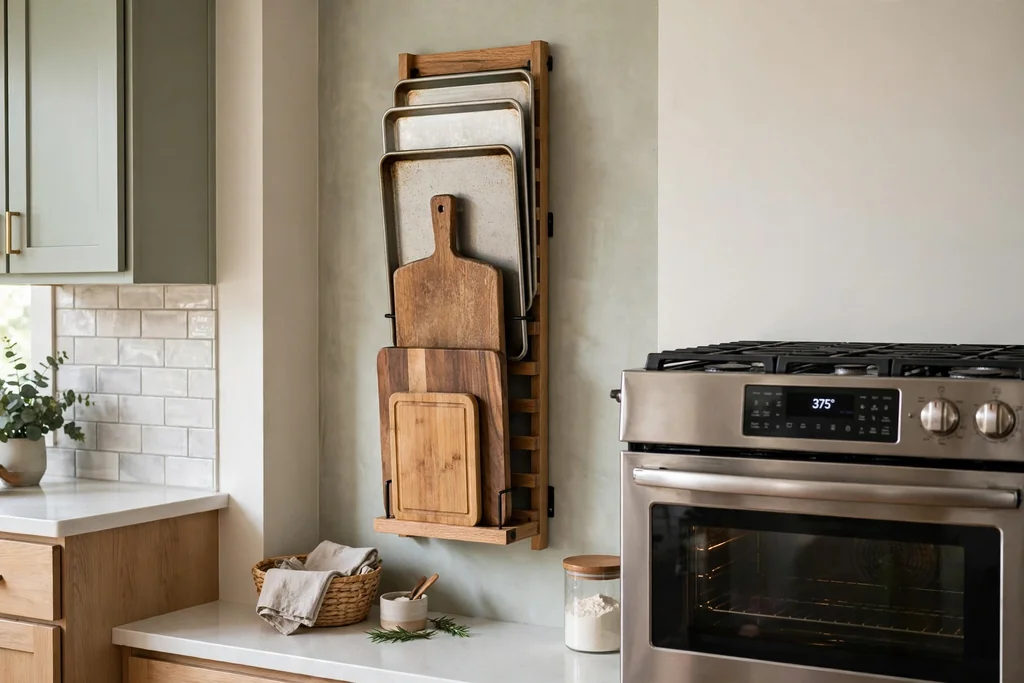
A wall mounted vertical rack with dividers stores baking sheets, chopping boards and cooling racks upright, which stops the noisy stack that falls over in a cabinet. Fix the rack to the wall near the oven, with dividers spaced to fit your widest tray. Slide each tray in from the front so you can pull one out without moving the rest.
Keep the heaviest cast iron tray at the outer end or in a lower slot, where it is easier to lift. Wipe trays before returning them, since grease on a stored tray transfers to its neighbours. If wall space is short, a narrow rack for three or four trays still saves a full cabinet shelf.
26. Stemware Rack Under an Open Shelf
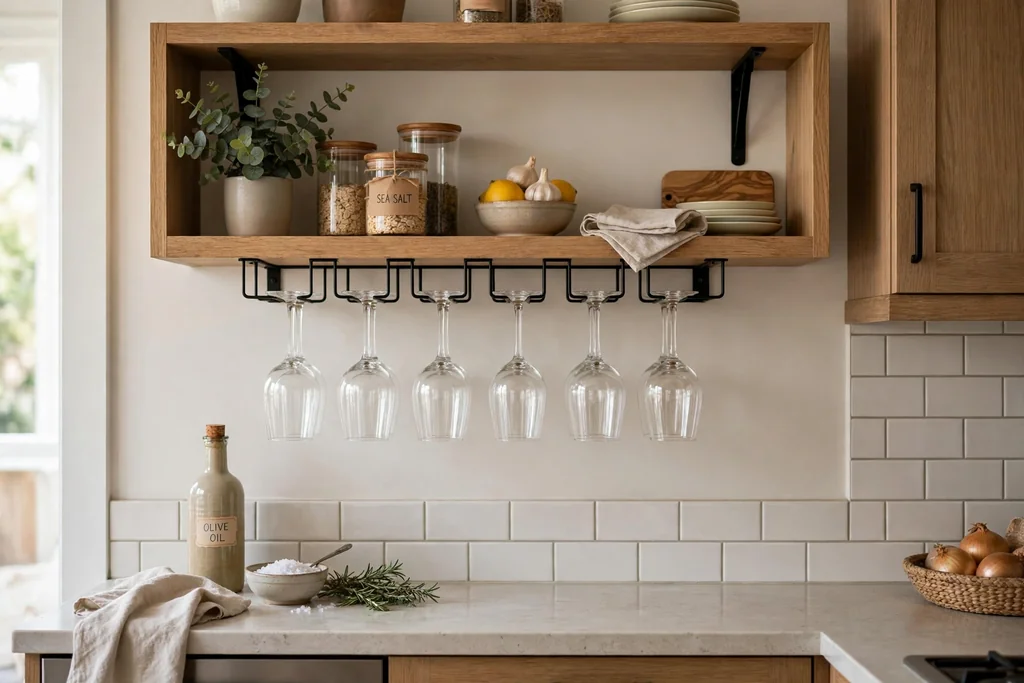
A stemware rack fixed under an open shelf holds wine and cocktail glasses by their bases, freeing shelf space above for plates and bowls. This pairing works well because the shelf already sits at a safe height for glasses, and hanging stems keep fragile glass away from stacked dishes. Measure the drop of your longest stem before fixing the rack, so glasses clear the counter below.
Hang glasses with space between stems, and keep the rack away from the stove, where steam clouds glass. Wash and dry glasses fully before hanging them, and check the rack screws yearly, since repeated pulling can loosen fixings in plasterboard. A short rack for four to six glasses suits most kitchens.
27. Coffee and Tea Station Wall Shelf
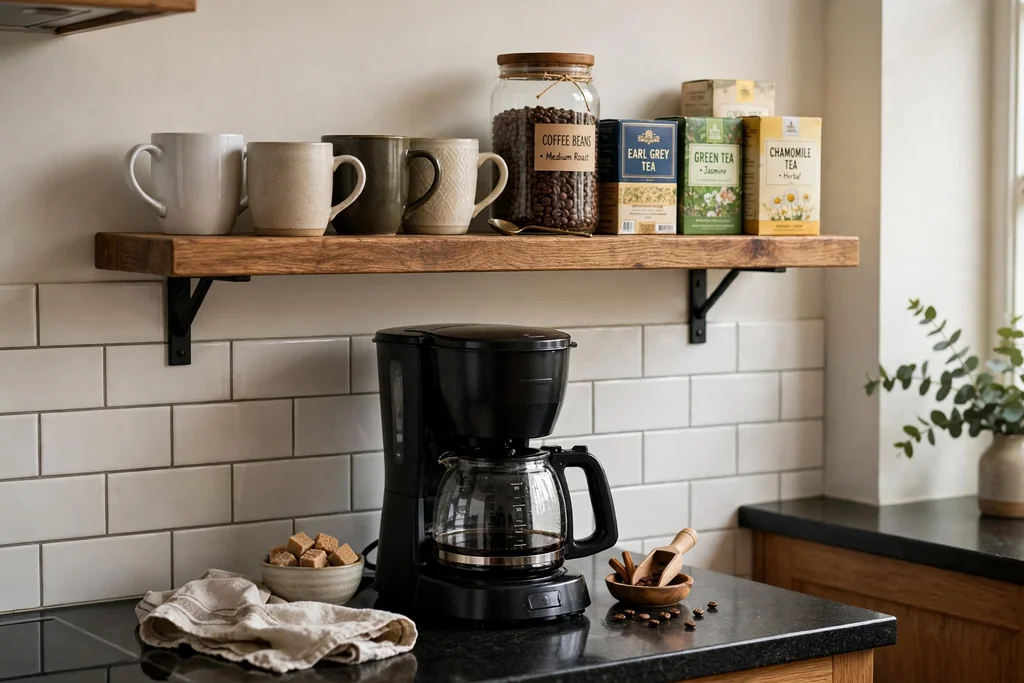
A dedicated wall shelf above or beside the coffee maker gathers mugs, jars of coffee and tea, a sugar bowl and filters in one station. This stops coffee supplies spreading across the counter and makes the morning routine faster, since everything for one job sits together. Use a shelf with a small basket below for filters and pods, if you use them.
Keep the station near a power point but clear of the sink splash zone, and wipe the shelf often, since coffee grounds and tea dust scatter. Store beans in a sealed jar on the shelf and keep bulk packs in a cabinet, so the station stays neat. A single shelf, well stocked, beats a full wall of coffee gear that is rarely used.
Conclusion
Wall storage works best when each item has one clear home and the wall still leaves room to cook. Start with the idea that solves your biggest daily frustration, whether that is dishes, spices, pans or trays, and live with it for a week before adding the next change. Keep daily pieces low and visible, move rarely used items higher, and check fixings once a year so shelves and racks stay safe. With a few well placed shelves, rails and racks, a plain kitchen wall can carry a surprising share of the storage load and leave your counters clear for cooking.
FAQs
How do I hang heavy kitchen wall shelves safely?
Fix shelves into wall studs where possible, or use fixings rated for your wall type and the full loaded weight, not just the empty shelf. Spread brackets evenly, test the shelf with a firm pull before loading it, and put heavy items near brackets and on lower shelves. If you are unsure about the wall type, ask a professional to check it before drilling.
What kitchen wall storage works best in a rental?
Leaning ladder shelves, pegboards hung from existing hooks, magnetic strips on a removable mount, and freestanding rails need little or no drilling. Removable hooks and rails suit light items such as towels, mugs and small tools. Check your lease before drilling, and keep the original fixings so you can restore the wall when you move out.
How high should kitchen wall shelves be?
Place daily items between shoulder height and easy reach, usually with the lowest shelf about 45 to 60 centimetres above the counter, depending on your height and what sits below. Keep a clear gap above the counter for small appliances, and put rarely used items higher, where a step stool is needed. Test the height by reaching for an item as you would while cooking.
Can I use open wall storage in a small kitchen?
Yes, and it often helps, because open shelves and rails use wall space that cabinets cannot reach. Keep the display small and grouped, leave gaps between groups, and store overflow in closed cabinets. One well planned open shelf beats three crowded ones, so limit each shelf to items you use weekly.
How do I stop open kitchen shelves looking cluttered?
Limit each shelf to one or two groups, repeat one or two materials, and leave empty space at the ends. Store small or mismatched items in baskets or matching jars, and remove anything you have not used in a few months. Step back to the doorway and check the whole wall, since that is the view guests see most.
What should I avoid storing on a kitchen wall?
Avoid heavy items on weak fixings, food near stove heat or steam, and fragile glass above a walkway or prep zone where a knock could drop it. Keep paper, towels and recipe cards away from burners, and avoid storing anything above the hob that needs frequent reaching over hot pans. When in doubt, put the item in a cabinet and keep the wall for lighter daily pieces.