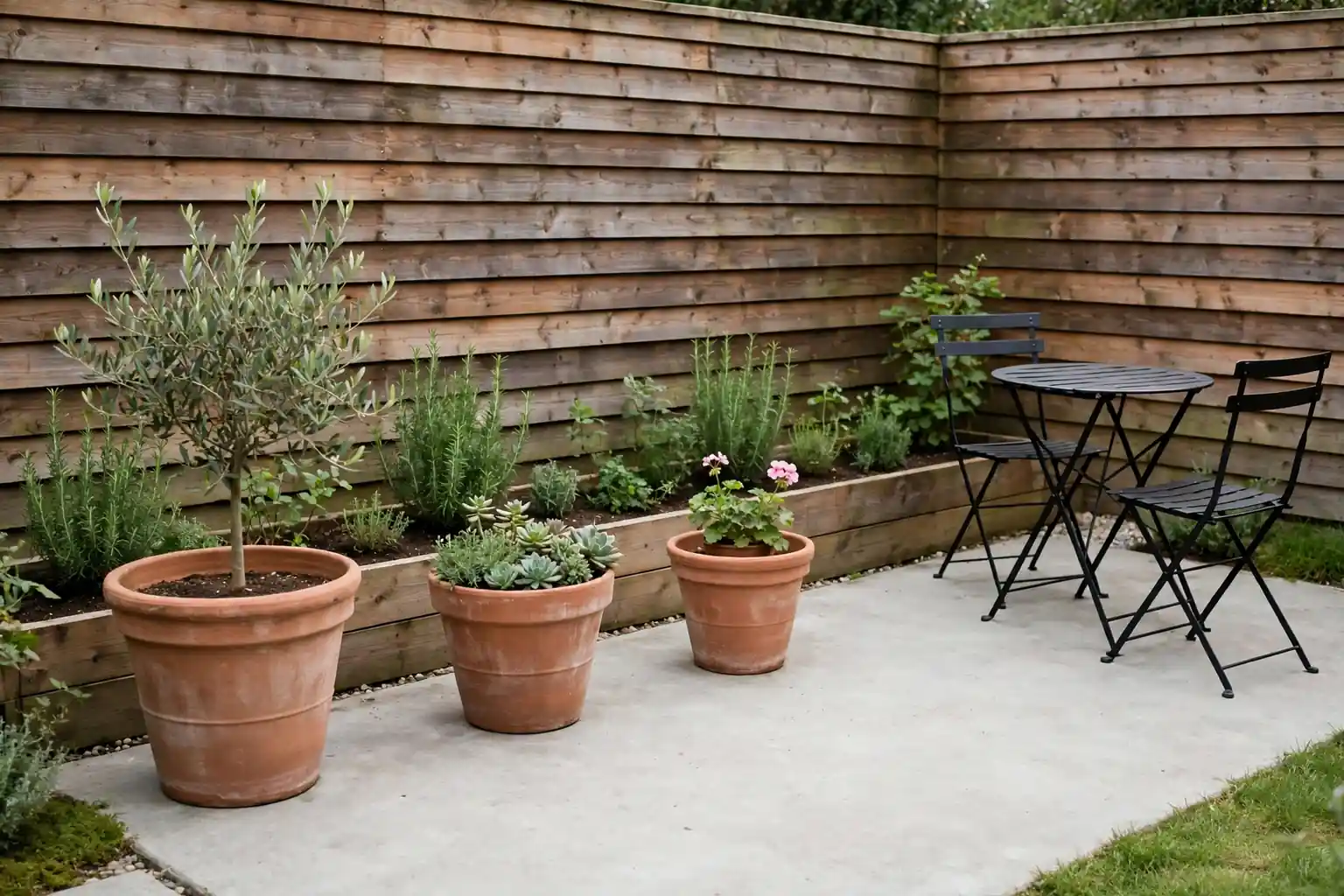
A small garden does not need to feel like a leftover strip of lawn with a few pots lined up against the fence. When planting, seating, and paths each have a clear job, even a narrow plot can feel like a place you use every day. These 16 garden ideas for small spaces cover beds, walls, containers, water, light, and one comfortable seat, so you can start with a single corner or rework the whole plot over a season. Begin with the sunniest edge, keep paths clear, and leave one spot for sitting.
Key Takeaways
- Use edges first: fences, walls, and corners hold beds, trellises, and shelves, so the middle stays open for walking and sitting.
- Grow up as well as out, with trellises, pocket panels, and stacked planters, since height adds planting room without taking floor space.
- Group containers in mixed heights and repeat one or two materials, so a small plot reads as planned rather than scattered.
- Match plants to sun and shade in each spot, and choose light containers with drainage so pots stay easy to move and water.
- Give the garden one seat, one focal point, and one source of evening light, since those three details make a small space feel used and welcoming.
- Keep a clear path, a watering route, and room to reach every plant, so upkeep stays simple week after week.
1. Slim Raised Bed Along the Fence Line
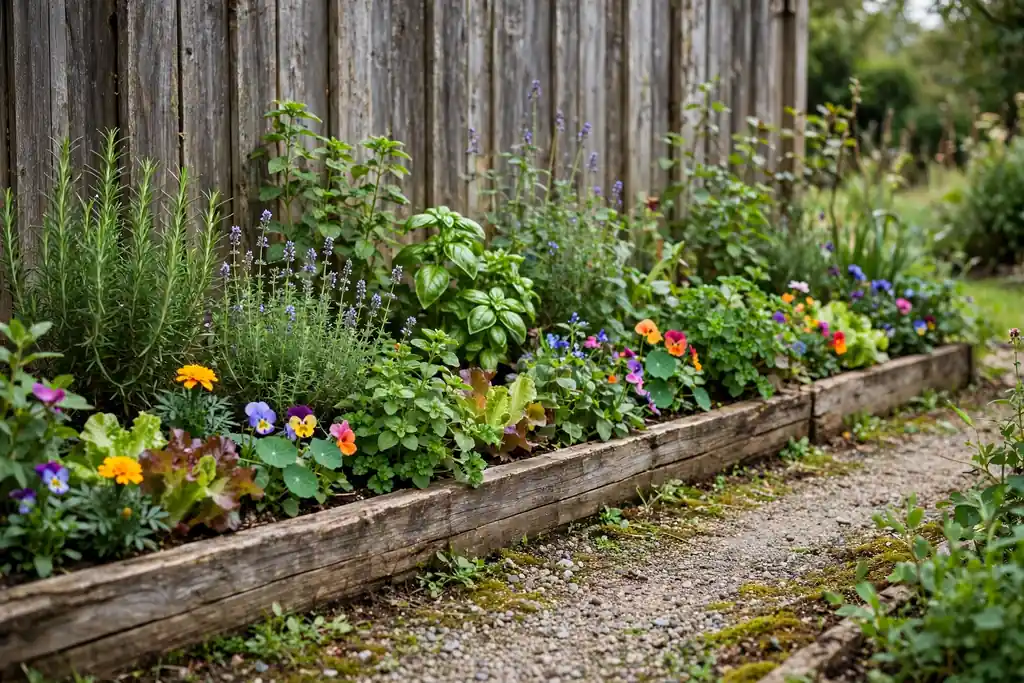
A slim raised bed along the fence turns the least useful strip of a small garden into its main growing space. A bed about 30 to 45 centimeters deep holds herbs, salad leaves, flowers, and compact vegetables, while leaving the center of the plot open for a path and a seat. Because the bed sits against the fence, you reach every plant from one side, which suits narrow gardens where a bed in the middle would block movement.
Build or buy the bed to fit the fence length, and leave a gap behind it only if the fence needs painting access. Fill it with a free draining mix, and plant tall crops at the back with low, trailing plants at the front edge. Water the bed slowly so moisture reaches the roots, and mulch the surface to slow drying in sun and wind. If the fence casts shade for part of the day, plant leafy greens and shade tolerant flowers on that side, and keep sun lovers for the brightest stretch.
2. Stacked Crate Garden in a Corner
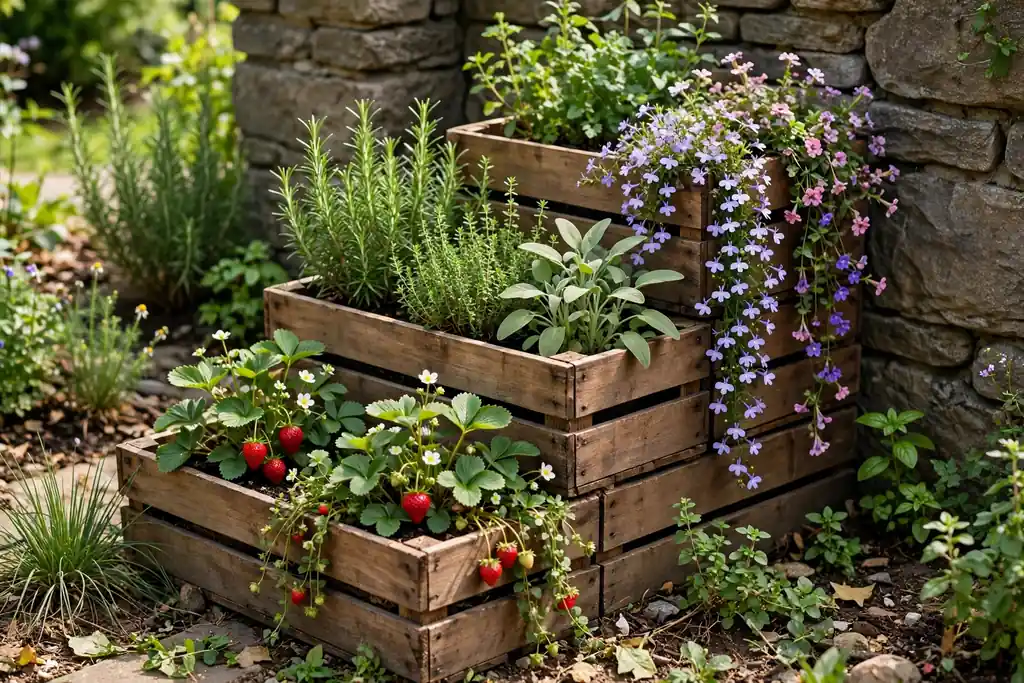
A stacked crate garden fills an awkward corner with planting in layers, using height instead of floor space. Set two or three sturdy crates in a stepped stack, with the lowest crate at the front and each higher crate set back, so every level gets light and rain. This suits herbs, strawberries, trailing flowers, and small salad crops, all of which grow well in shallow soil and spill nicely over crate edges.
Line each crate so soil stays in place while water still drains, and plant the sunniest level with the thirstiest crops. Keep heavier crates low, and fix the stack against a wall or fence if wind is strong, so it cannot topple. Water the top crate first, since drips reach the levels below, and check the lowest crate most, since water can collect there. At season end, lift out spent plants, refresh the top layer of mix, and replant without rebuilding the whole stack.
3. Vertical Trellis Wall for Climbers
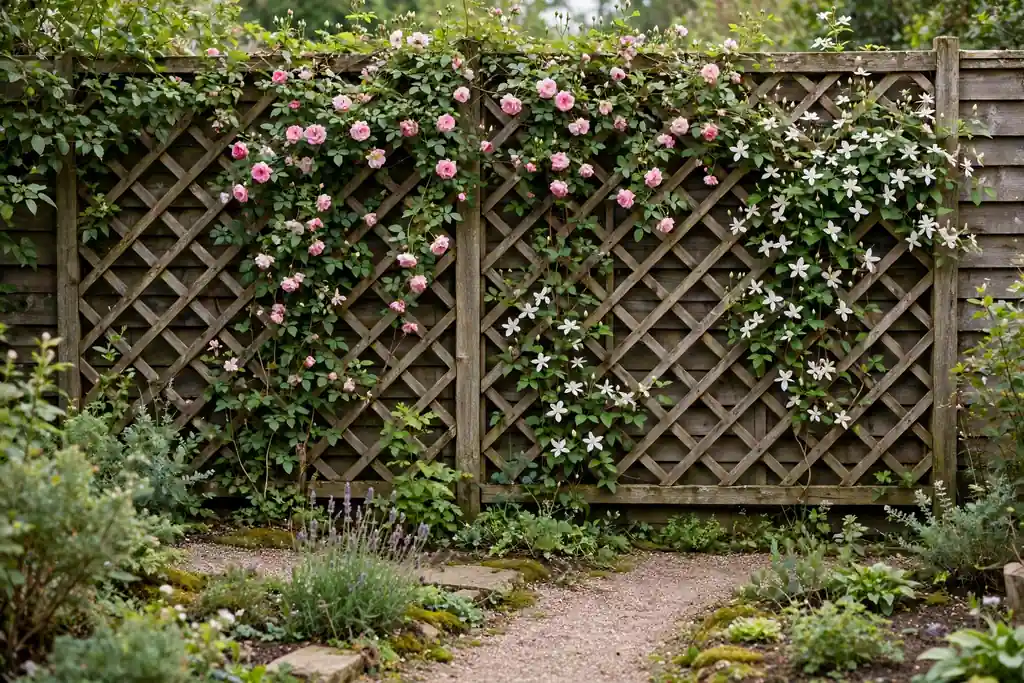
A trellis wall covered with climbers gives a small garden a green backdrop in a footprint only a few centimeters deep. Fix a trellis to a fence or a freestanding frame, and train jasmine, clematis, sweet peas, or climbing beans up it, so the wall fills with leaves and flowers through the season. This suits gardens overlooked by neighbors, where a planted screen softens the view while still letting air pass.
Fix the trellis with a small gap behind it so air can move and the fence can dry, and tie stems loosely as they grow, guiding them sideways as well as upward for fuller cover. Prune after flowering as the plant type requires, and keep the base clear so you can reach the soil to water and feed. For more vertical growing ideas that suit tight city plots, see these urban gardening solutions. If the trellis faces a seating spot, choose a scented climber, so the seat gains fragrance as well as privacy.
4. Pocket Planter Fence Panel
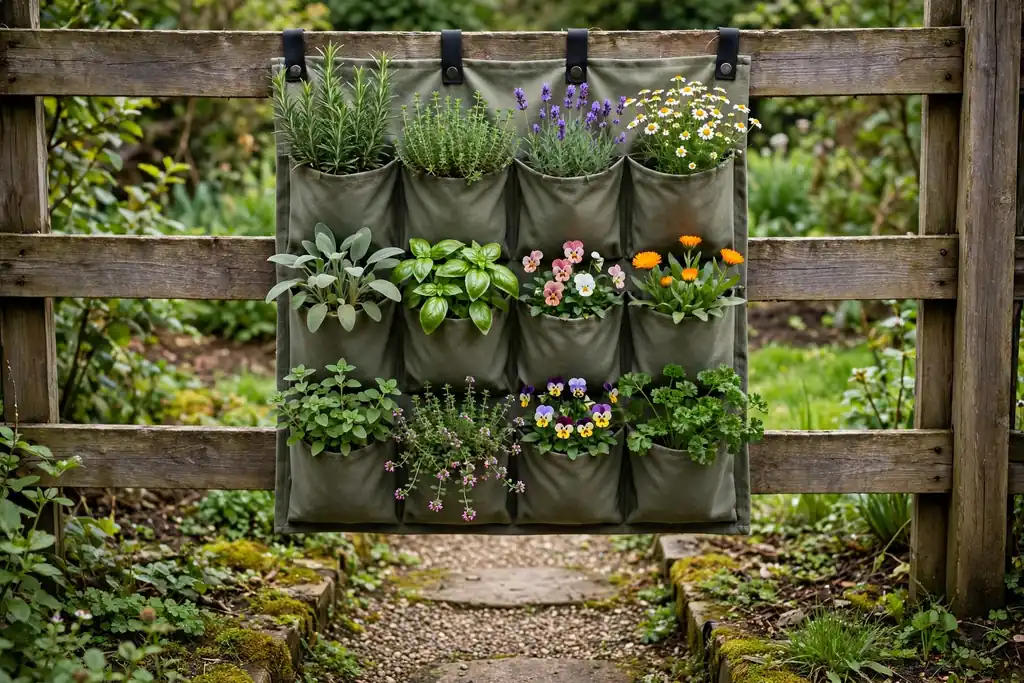
A pocket planter panel hangs on a fence and turns a plain boundary into a wall of herbs, strawberries, and small flowers. Each pocket holds one or two plants, so you can replace a single tired plant without disturbing the rest, and the panel leaves the ground below free for a path or a row of pots. This suits rented gardens too, since most panels hang from hooks and lift off without fixing into the fence.
Fill each pocket with potting mix, and plant thirsty herbs together so one watering round suits a whole row. Water slowly from the top, and check the lowest pockets most, since they stay wet longest. Keep the panel away from a gate hinge, and check the weight when wet before hanging it on a light fence. In cold weather, move tender plants from the pockets to shelter, and store the panel dry over winter to keep the fabric in good shape.
5. Herb Spiral in a Small Plot
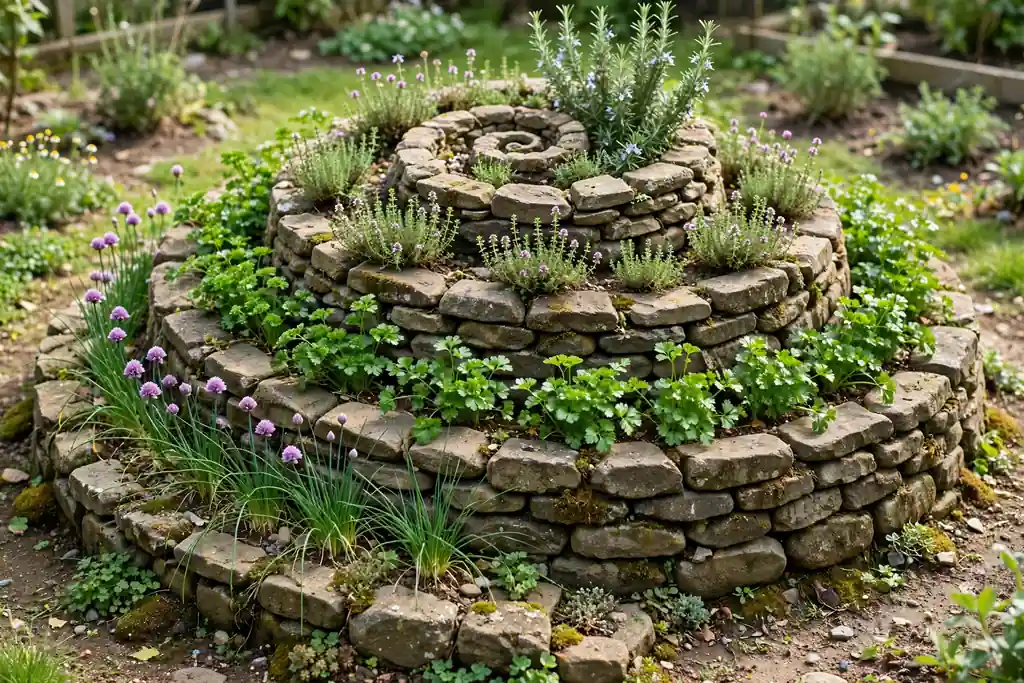
A herb spiral packs many herbs into a small round bed by winding upward in a spiral of stones or bricks. The top sits high and dry, which suits rosemary, thyme, and oregano, while the base stays cooler and damper, which suits parsley, chives, and mint in its own pot sunk into the soil. One spiral about a meter across can hold a full kitchen herb collection in the space of a single large pot group.
Build the spiral on level ground in sun, stacking stones in a coil that rises toward the center, and fill it with a gritty, free draining mix. Plant sun lovers at the top, and work down to moisture lovers at the base, leaving a small gap at the front for picking. Snip herbs often, since regular picking keeps plants bushy, and water the top more often than the base, since it dries first. Keep mint contained, since it spreads fast and can crowd the whole spiral within a season.
6. Container Cluster in Mixed Heights
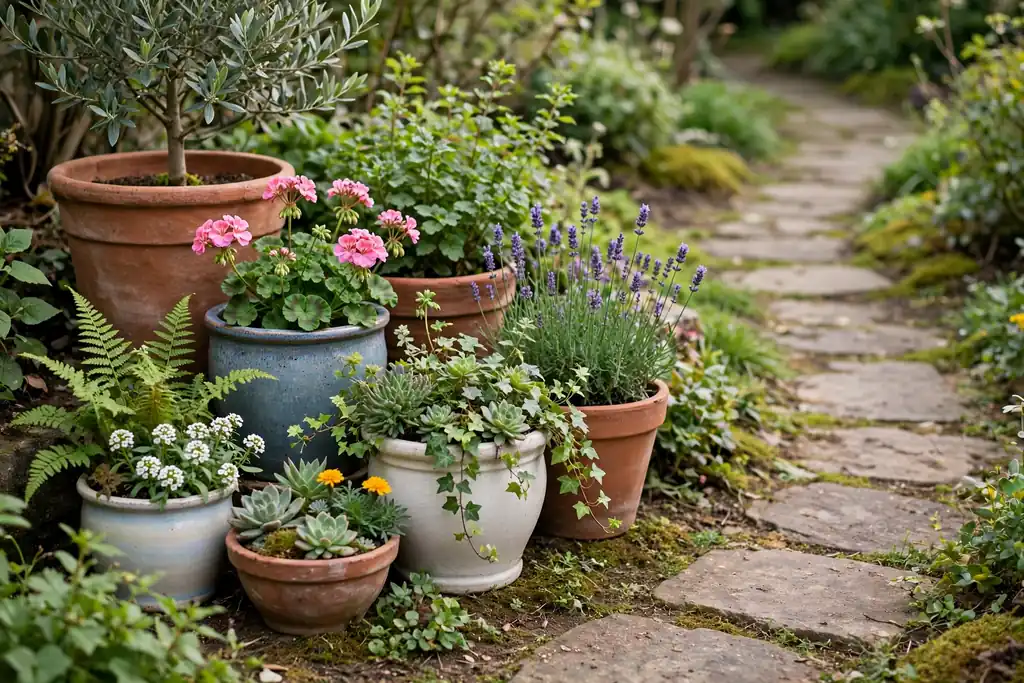
A cluster of containers in mixed heights gives a small garden a planted feel without a single large bed, and it lets you move planting as sun and seating change. A tall pot at the back, medium pots in the middle, and low pots at the front create depth, while repeating one pot color or material keeps the group calm. This suits bare corners, doorways, and spots beside a bench, where a bed would not fit.
Group plants by water and light needs, so one watering round suits the whole cluster, and raise pots on feet or saucers where drainage matters. Keep containers out of main walking routes and door swings, and leave room to reach the soil for watering and pruning. Swap one or two pots with the seasons for fresh color without replanting the whole group. For seating and planting pairings that work beside a cluster like this, see these patio decor ideas.
7. Fence-Top Trough Planters
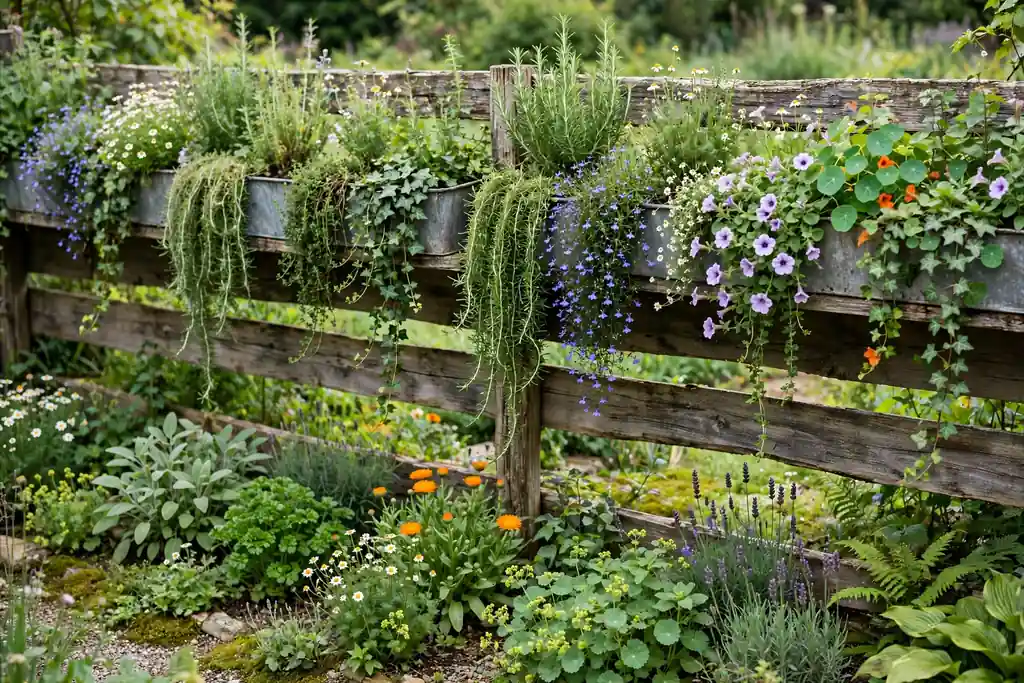
A trough planter fixed along the top of a low fence or wall adds a line of flowers and trailing plants at eye level, in a spot that would otherwise stay bare. Shallow troughs suit trailing lobelia, herbs, and small bedding flowers, and they draw the eye along the garden, which makes a narrow plot feel longer. Because the trough sits high, plants get sun and air, and the ground below stays free.
Choose a trough depth that holds enough soil for the plants you want, and fix brackets rated for the full wet weight. Use a light potting mix, and plant trailing types at the front edge so stems spill over the fence face. Water troughs often in hot weather, since shallow soil dries fast, and deadhead flowers to keep new buds coming. If the fence is shared with a neighbor, check the boundary rules first, and keep the trough on your side of the line.
8. Stepping-Stone Path With Creeping Plants
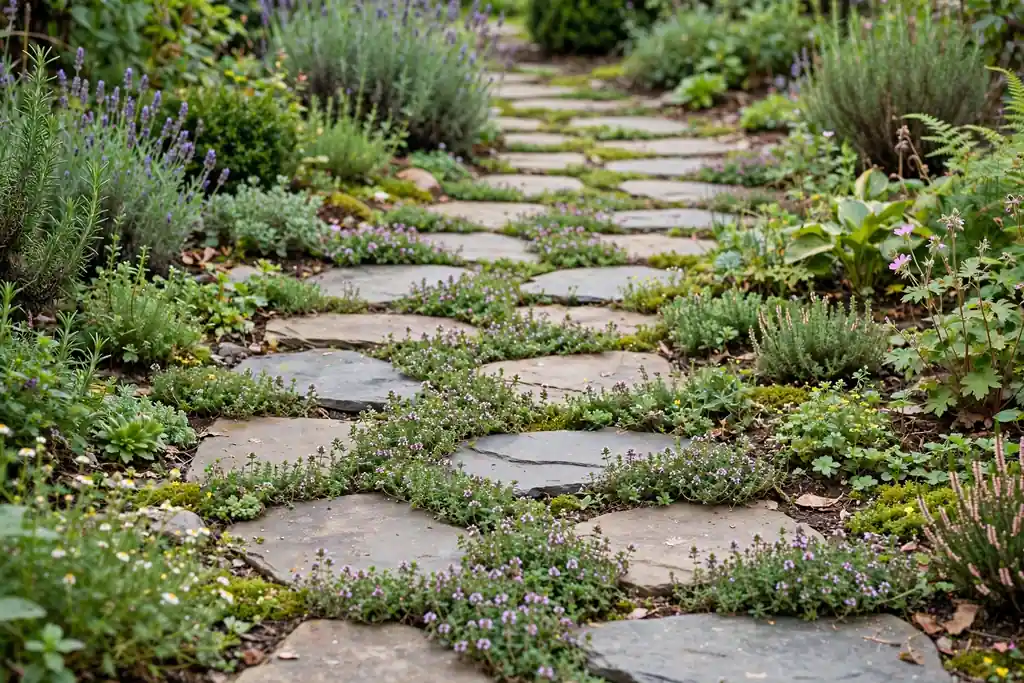
A stepping-stone path with creeping plants between the stones turns a plain walk across a small garden into a planted feature. Flat stones set in gravel or soil give a firm footing, while creeping thyme, corsican mint, or low sedum softens the gaps and releases scent when stepped on lightly. This suits small plots where a solid paved path would feel heavy and take up too much growing room.
Set stones level and close enough to walk comfortably, with gaps wide enough for plants but narrow enough that a shoe never catches an edge. Plant creepers in the gaps in spring, water them until settled, and trim any growth that creeps over the stone face. Keep the path wide enough for a watering can and a wheelbarrow if the garden needs one, and sweep fallen leaves off the stones so they stay safe underfoot in wet weather.
9. Small Water Bowl as a Focal Point
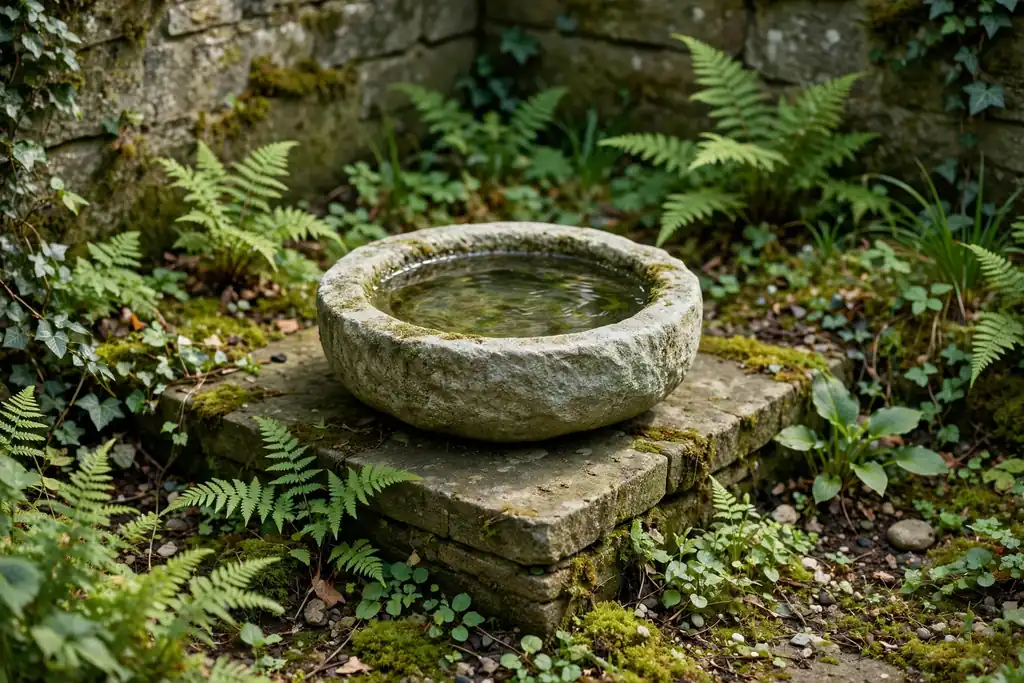
A small water bowl on a plinth or a low stand gives a tiny garden a focal point, gentle sound, and a place for birds to drink, without the space or wiring a large pond needs. A shallow bowl in stone, ceramic, or metal suits a corner, a path end, or the center of a small seating area, where the eye lands naturally. Moving water from a small solar pump adds sound, while a still bowl simply reflects sky and planting.
Place the bowl where splashes will not reach cushions, and where you can top it up easily with a watering can. Keep the water shallow enough for birds to use safely, and clean the bowl as needed so algae does not build up. In cold climates, empty the bowl before hard frost if the material could crack. One bowl is enough in a small garden, since a second water feature would compete for attention rather than add to it.
10. Fold-Down Potting Shelf on the Fence
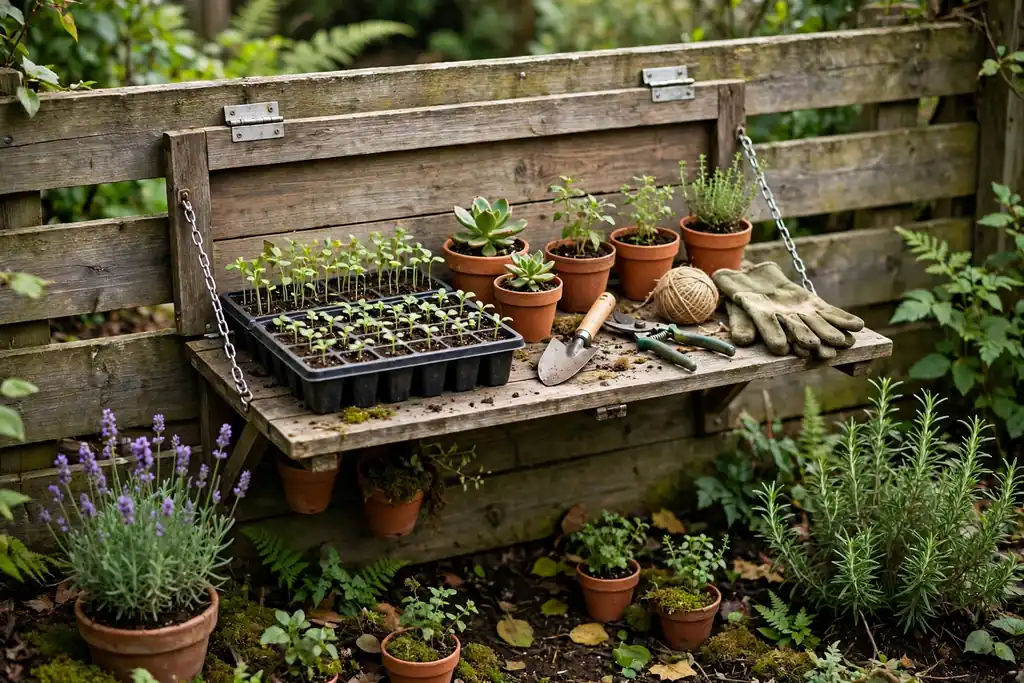
A fold-down shelf fixed to a fence gives a small garden a potting bench that folds flat when not in use. Lower the shelf to pot plants, sow seeds, or arrange cut flowers, then fold it away to leave the fence clear and the path open. This suits gardens with no shed and no room for a fixed bench, since the shelf takes no floor space at all when folded.
Fix the shelf into fence posts or a solid wall, not a thin panel, and check that it sits level and holds the weight of pots and a watering can. Keep a small box of tools, string, and labels nearby, so potting stays a quick job rather than a trip to the house for every item. Brush soil off the shelf before folding it away, and oil the hinges once a season so the shelf still folds smoothly after wet weather. If the fence faces a seating area, fold the shelf up when guests arrive, so the garden reads as a sitting space, not a work zone.
11. Dwarf Fruit Tree in a Large Pot
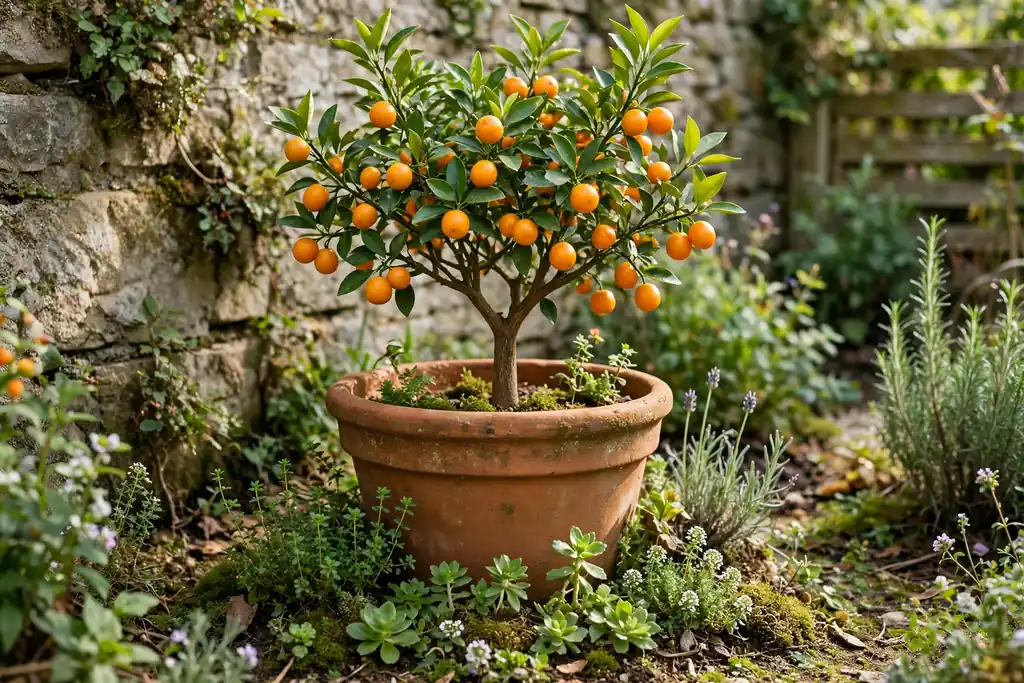
A dwarf fruit tree in a large pot gives a small garden fruit, flowers, and structure in a single plant. Dwarf lemon, fig, or apple trees on dwarf rootstock stay small enough for containers, and one tree in a sunny corner can anchor a whole planting scheme. The pot can move with the seasons too, into sun in summer and into shelter before hard frost.
Choose a pot at least as wide as the tree label advises, with drainage holes, and use a free draining mix. Water deeply but less often than small pots, and feed in the growing season as the tree type requires. Prune lightly each year to keep the shape compact, and check the mature size on the label before buying, since even dwarf trees need room to grow. Underplant the pot edge with trailing herbs or small flowers, so the base of the tree looks planted rather than bare.
12. Shade Corner With Ferns and Hostas
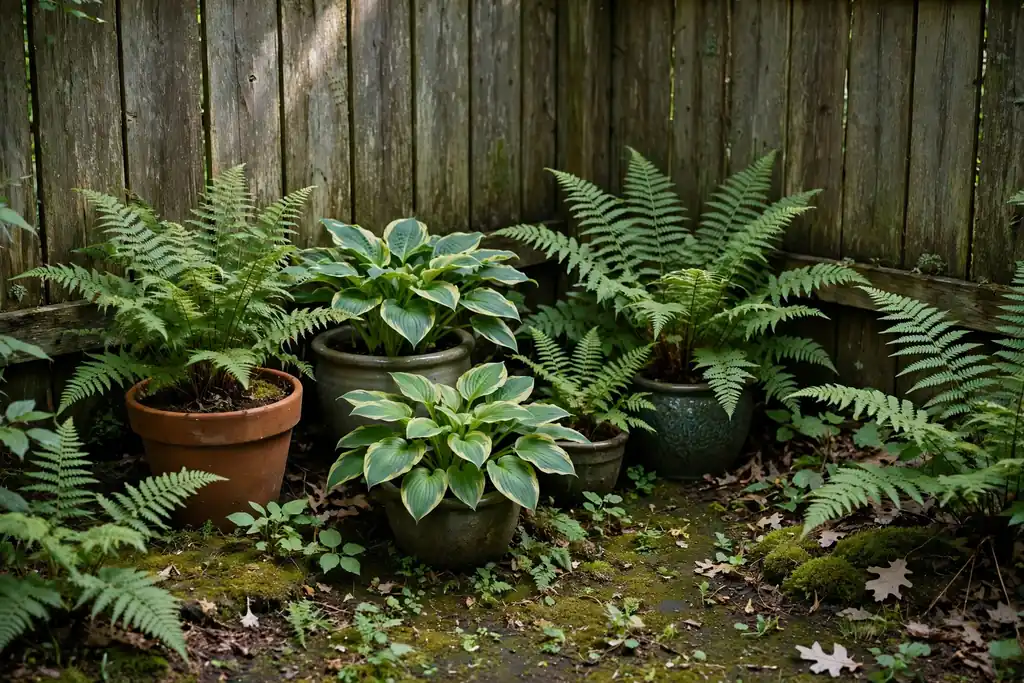
A shady corner planted with ferns, hostas in pots, and shade tolerant flowers turns the least sunny part of a small garden into its lushest spot. North facing corners suit ferns because they prefer cool, damp shade, and their fronds add soft texture against hard walls and fences. Hostas in pots add bold leaves at ground level, while impatiens or begonias add color in the same shade.
Choose pots that hold moisture, and group plants close together to raise humidity around the leaves. Plant ferns in rich, moist potting mix, and water before soil dries out fully. Mist leaves on dry days, and trim brown fronds at the base to keep the corner fresh. Keep hostas in pots rather than open soil if slugs are a problem, since pots are easier to check and protect. A single light colored pot or a pale stone among the green lifts the corner, so it reads as a feature rather than a dark gap.
13. Sunny Gravel Garden With Drought Plants
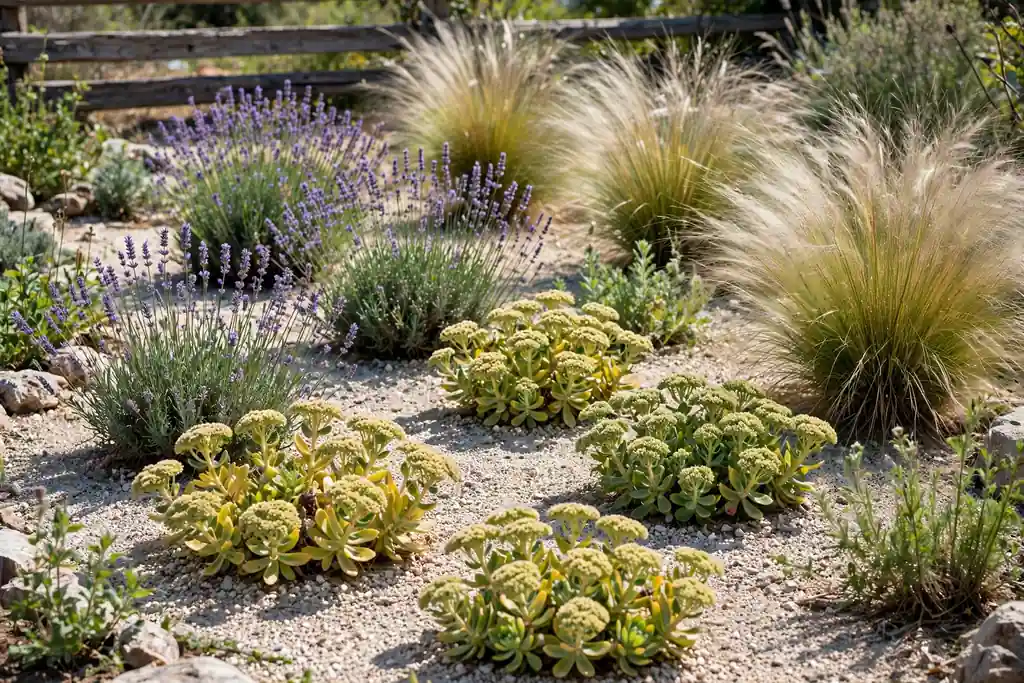
A sunny gravel garden suits the hottest, driest corner of a small plot, where lawn would struggle and watering would be a chore. Lavender, sedum, ornamental grasses, and Mediterranean herbs grow well in gravel over free draining soil, and their silver, green, and purple tones look tidy with very little upkeep. Gravel also suppresses weeds and keeps the surface dry underfoot after rain.
Lay a weed suppressing layer, spread gravel to an even depth, and plant through it in groups, leaving room for each plant to reach its mature size. Water new plants until settled, then water only in long dry spells, since most gravel garden plants prefer dry soil. Rake the gravel now and then to keep it level, and top it up once a season where foot traffic thins it. Keep the gravel area away from a lawn edge if possible, since stones wander onto grass and dull mower blades.
14. Slim Compost Bin Behind the Planting
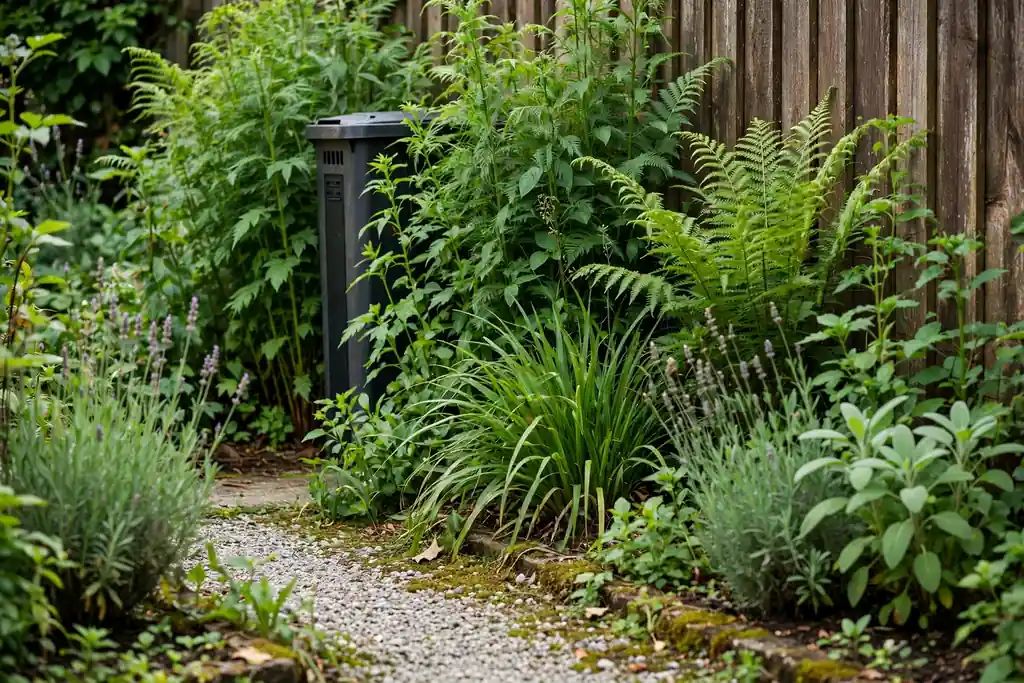
A slim compost bin tucked behind a row of tall plants gives a small garden a way to recycle kitchen and garden waste without a compost heap taking center stage. A narrow upright bin fits a gap beside a shed, a fence, or a back wall, and tall planting in front screens it from the seating area. Home compost feeds pots and beds through the season, so the bin earns its space twice over.
Site the bin on bare soil where possible, so worms can reach it, and keep it level and stable. Add a mix of green waste, such as vegetable peelings and soft prunings, and brown waste, such as torn cardboard and dry leaves, and keep the contents damp like a wrung out sponge. Turn the contents now and then with a fork, and harvest compost from the base once it looks dark and crumbly. If the bin smells, add dry brown material and cut back on wet kitchen waste until the balance returns.
15. Evening Light With Solar Lanterns and String Lights
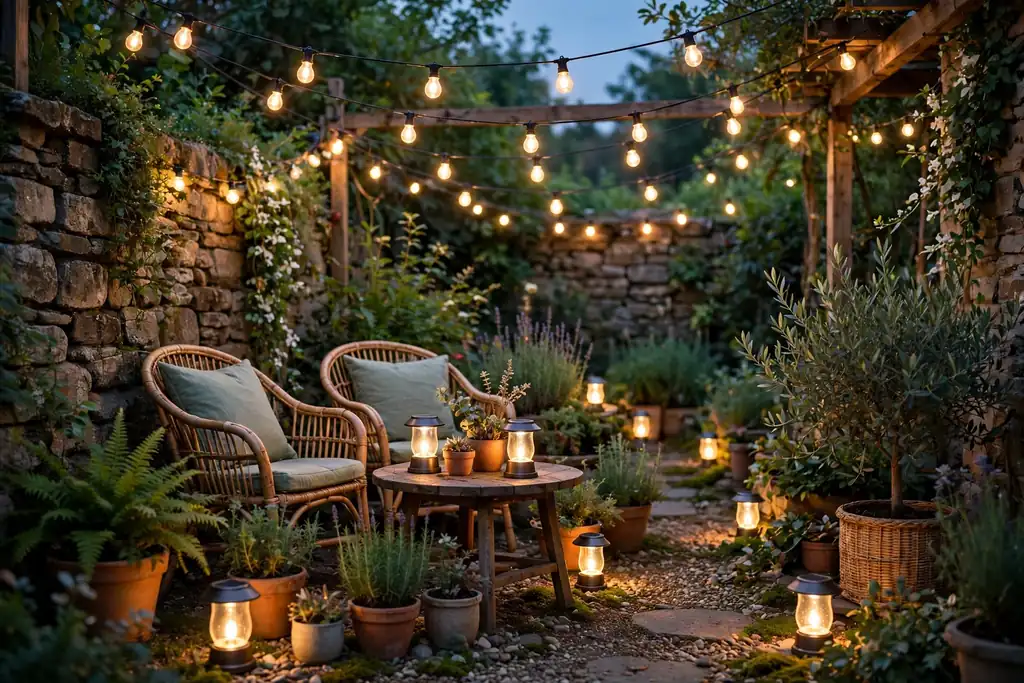
Solar lanterns and a run of string lights make a small garden usable after dark and give it a warm glow that flatters plants and seating. A single run of lights along a fence or trellis is enough for a tiny plot, while two or three lanterns at sitting height add a focal glow near a seat. Warm white light suits most gardens, since it flatters wood, leaves, and stone better than harsh white light.
Use lights rated for outdoor use, and place solar panels where they catch daytime sun, not under a dense climber. Hang string lights high enough to walk under without ducking, and keep them clear of a grill and of climbing plants that could grow into the wire. Set lanterns on a stable surface, away from cushions and dry leaves, and bring glass lanterns inside during storms if they could blow over. A timer or a dusk sensor keeps the routine simple, so the lights come on as daylight fades.
16. One Seat Nook With a Bistro Set Among Planting
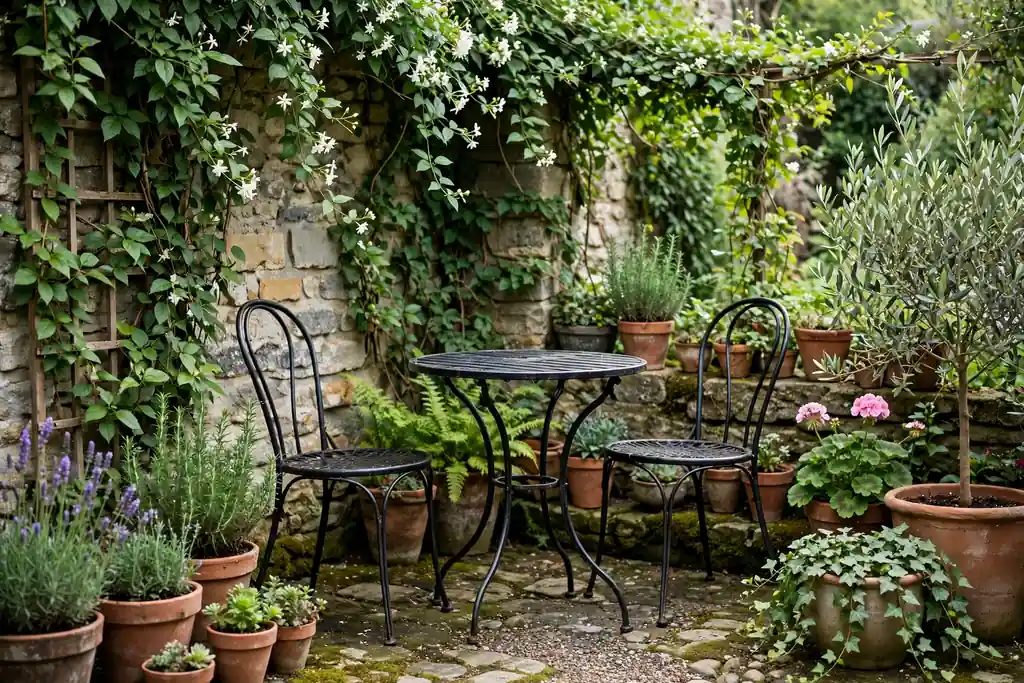
One small seat nook among the planting gives a small garden its reason to be used, rather than only looked at. A folding bistro set with two chairs and a round table fits a sunny corner that a full dining set would crowd, and the round shape leaves room to pull chairs out without blocking the path. Plants around the nook, rather than only beside the house, make sitting feel like being in the garden, not next to it.
Site the set where morning or evening sun reaches it but wind is broken by a wall, fence, or trellis screen, and keep the route from the door clear so cups can be carried safely. Anchor the nook with one large pot or a pair of planters, so the set does not look adrift on bare paving, and keep the table simple, with one small vase or a candle, so there is still room for two cups. For balcony scale seating and planting pairings that work in the same spirit, see these small balcony garden ideas. Bring cushions inside in wet weather, and fold the set flat when the garden needs room for bigger jobs.
Conclusion
A welcoming small garden comes from a few clear choices, not from filling every centimeter. Use the edges for beds and climbers, grow upward where the ground runs out, group containers so they read as one planting, and give the plot a path, a focal point, and one comfortable seat. Start with the sunniest edge and the spot you most want to sit, then add one idea at a time, checking that each new plant still leaves room to walk, water, and reach the soil. Over a season, those small, steady choices add up to a garden that feels lived in every day, not only on the day it was planted. Save this guide for your next garden weekend, and pick the idea that fits the corner you use most.
FAQs
How do I start a garden in a very small space?
Start with sun, water, and one seat. Map which spots get sun and which stay shady, choose plants that suit each spot, and put containers or a slim bed along the sunniest edge first. Add a path and a seat before buying more plants, since a garden that is easy to walk through and sit in gets used and cared for more than one that is only planted.
What grows best in a small garden?
Herbs, salad leaves, strawberries, compact vegetables, and trailing flowers grow well in small gardens, since they crop fast and suit containers and shallow beds. Dwarf fruit trees, climbers, and ferns suit small plots too, as long as each plant matches the sun and soil in its spot. Choose varieties labeled compact or dwarf, and check the mature size before planting, so plants do not outgrow the space within a season.
How do I make a small garden look bigger?
Keep the middle open, use height on fences and walls, and repeat one or two materials across pots and paths, so the eye travels through the space instead of stopping at clutter. A curving path, a mirror-free focal point such as a water bowl, and planting in layers, with low plants at the front and tall plants at the back, all help a small plot feel deeper than it is.
Can I have a garden if I only have a patio or balcony edge?
Yes. Containers, railing planters, trellises, pocket panels, and a tiered stand can turn a patio or balcony edge into a full garden without any open soil. Use light containers with drainage, keep heavy pots low and near walls, and group plants by water needs, so watering stays simple. A single seat and a run of lights complete the space, even when the planted area is only a few pots deep.
How often should I water a small container garden?
Check soil with a finger before watering, and water when the top inch feels dry, since pots dry out faster than ground beds, especially in sun and wind. In hot weather, containers may need water daily, while shaded pots may need water only a few times a week. Water slowly until it runs from the drainage holes, and mulch the surface to hold moisture between waterings.
How do I keep a small garden tidy without much time?
Give every plant group one home, keep paths clear, and spend a few minutes each week deadheading, trimming, and checking soil moisture, rather than leaving upkeep to a monthly overhaul. Choose plants that suit the spot, so they need less feeding and rescue work, and keep tools, a watering can, and a small bin close at hand, so quick jobs stay quick.