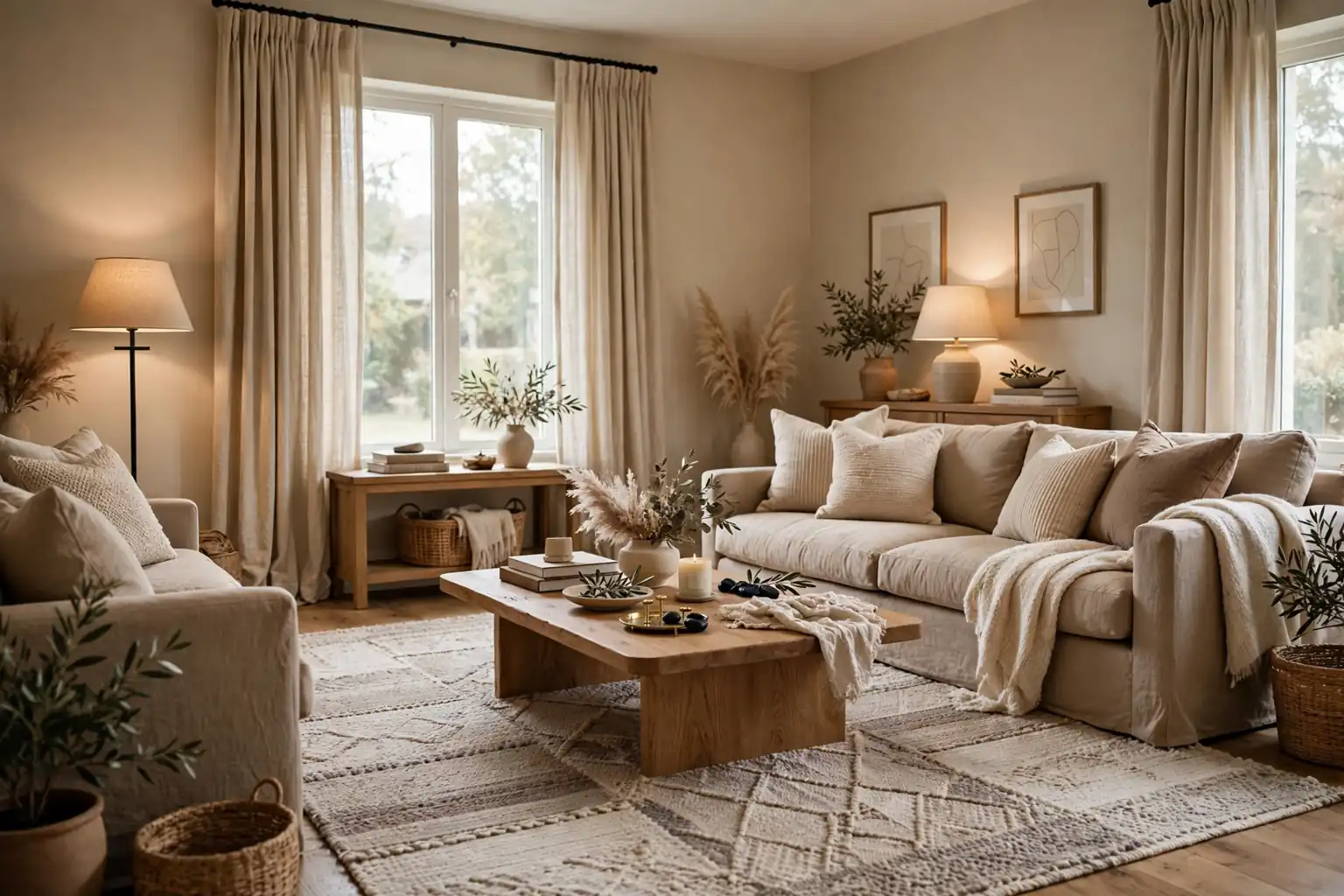
A home looks expensive when it feels calm, cared for, and put together, not when it is full of costly pieces. Clean paint, curtains that hang well, warm light in the right places, and surfaces with room to breathe do more than a single showpiece ever will. The ideas below cost little or nothing beyond time and a few simple supplies, and each one works in a rented home as well as an owned home. Pick the change that will make the biggest difference in the room you use most, then add one more when the first one is done.
Key Takeaways
- Start with the big surfaces: clean paint, tidy floors, and curtains hung high and wide set the tone for the whole room.
- Use warm light from lamps at different heights, rather than one bright ceiling light, to make a room feel calm in the evening.
- Keep a limited palette of two or three main colors, and repeat them in cushions, throws, rugs, and art.
- Choose fewer, larger pieces for a surface, and leave empty space around them, so each piece can be seen clearly.
- Match small details, such as hardware finishes and frame colors, so the room looks planned rather than gathered at random.
- Clear clutter first, then add one polished detail at a time, so new pieces do not simply join the mess.
1. Paint Walls in a Warm, Calm Neutral
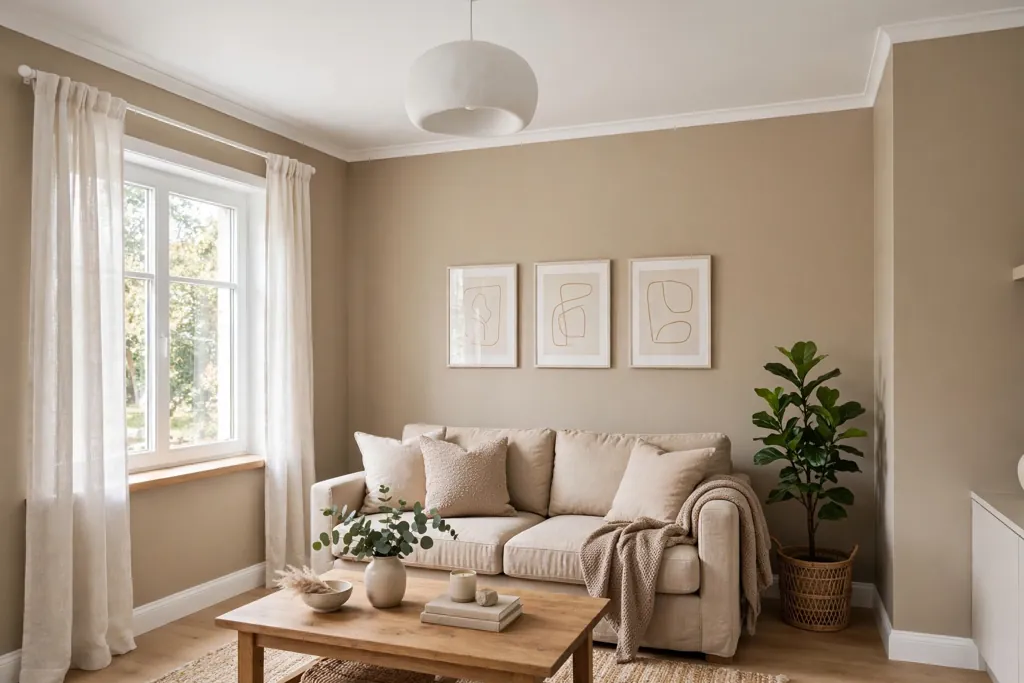
Fresh paint in a warm white or soft neutral is the fastest way to make a room feel cared for. Scuffs, old color patches, and tired walls draw the eye even when the furniture is good, while a clean, even coat lets the rest of the room stand out. This suits almost any room, and it is especially useful in a living room or bedroom where the walls cover a large area. Test a sample on two walls first, and look at it in morning light and evening light before you commit.
Paint the walls one color through a connected space if you can, so rooms flow into each other without a jarring break. Keep the ceiling a clean white, and paint the trim in the same family of white, so edges look crisp. If a full repaint is too much at once, start with the wall you face when you enter the room, and touch up scuffs on the rest. A neat edge at the ceiling and a steady finish matter more than a bold color choice.
2. Hang Curtains High and Wide
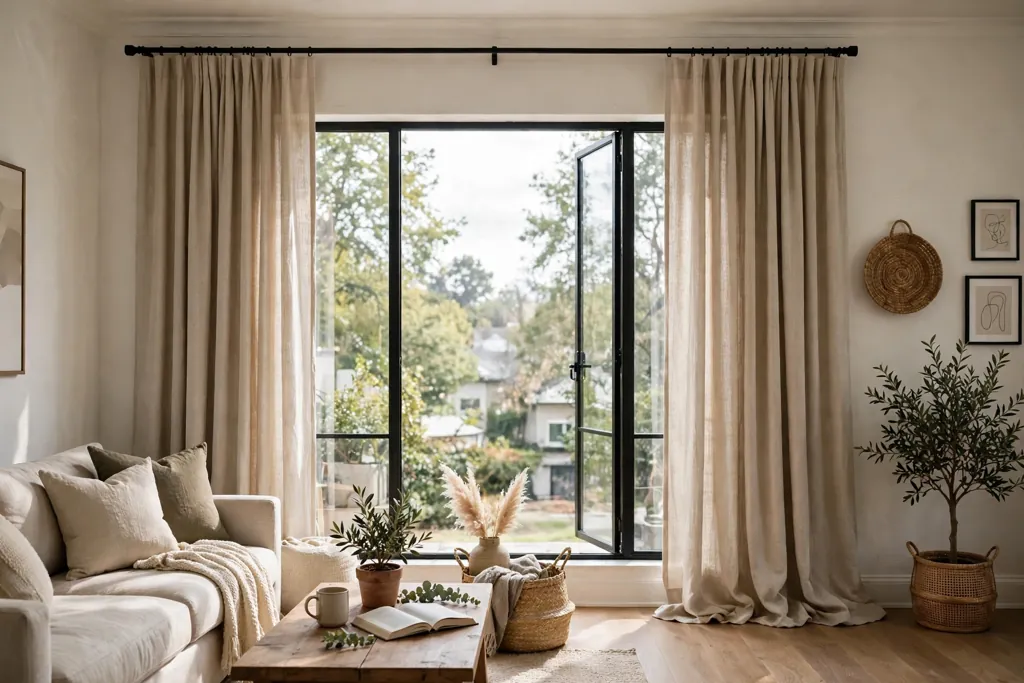
Curtains hung close to the ceiling and wider than the window make a window look larger and a room feel taller. Short curtains hung just above the frame can make a wall feel cut in half, while long curtains that reach the floor draw the eye up and give the room a finished frame. This suits living rooms and bedrooms most, and it works even with plain, inexpensive curtain panels, since the hanging height does the work.
Fix the rod four to six inches above the window frame, and extend it past the frame on both sides, so the panels stack on the wall rather than covering the glass when open. Choose a simple rod in a finish that matches other metal in the room, and hang panels that just brush the floor. If you rent, use sturdy adhesive or tension mounts rated for the rod weight, and keep the panels light. Iron or steam the panels before hanging, since creased fabric reads as unfinished.
3. Layer Lamps Instead of Relying on One Ceiling Light
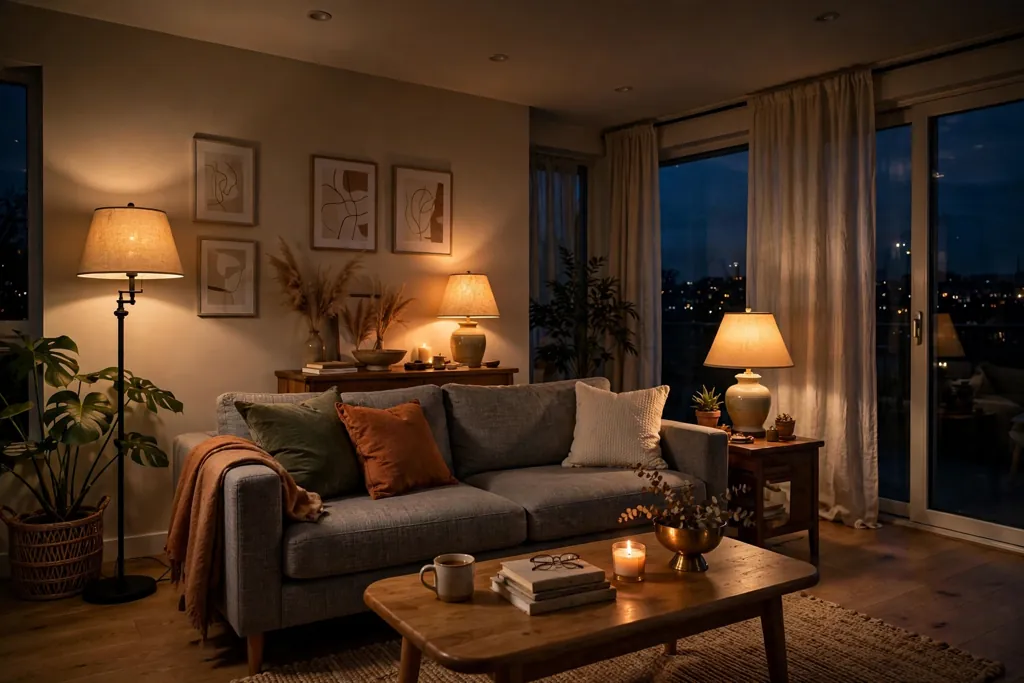
A room lit by lamps at different heights feels warm and settled, while a single bright ceiling light can make the same room feel flat and harsh. A floor lamp beside a chair, a table lamp on a sideboard, and a small lamp on a shelf give you pools of warm light where people actually sit and read. This suits living rooms and bedrooms in the evening, when most homes are used most.
Use warm white bulbs in every lamp in the room, so the light matches from one corner to the next, and avoid mixing warm and cool bulbs in the same space. Place the brightest lamp near the main seating, and keep a dimmer lamp near the bed or a reading chair. If a ceiling light must stay on, fit a dimmer switch where the wiring allows, or use a lower wattage bulb and let the lamps carry the room. Shade color matters too: a plain linen or paper shade softens light better than a bare bulb.
4. Choose One Large Rug That Fits the Seating Group
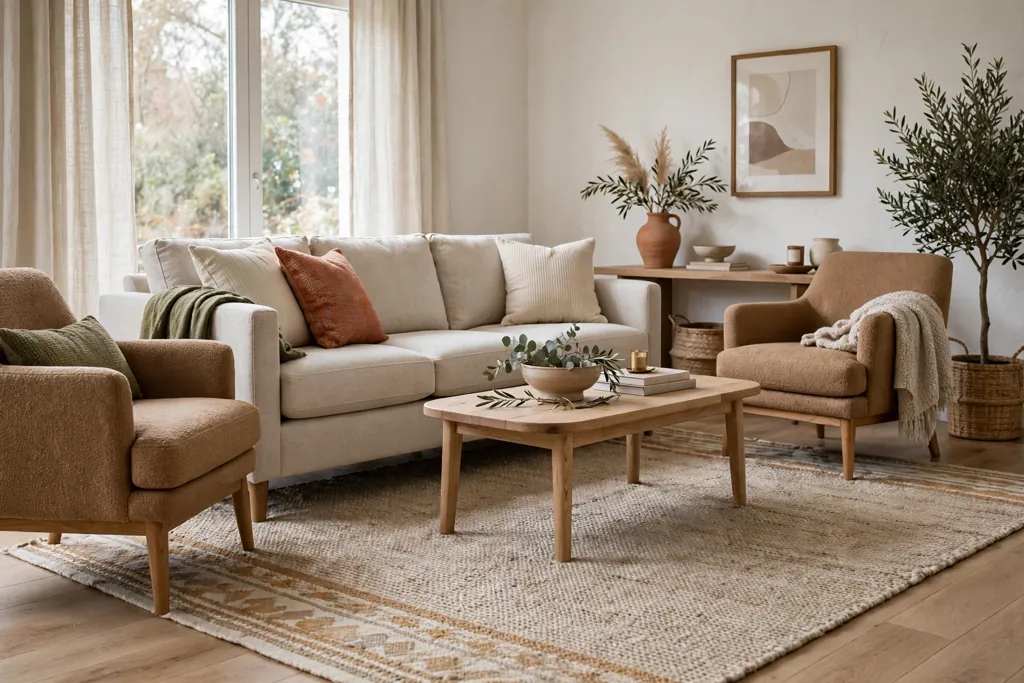
One large rug that sits under the front legs of the sofa and chairs grounds a seating group and makes a room feel planned. A rug that is too small floats in the middle of the floor and makes furniture look scattered, while a rug that fits the group pulls chairs, sofa, and coffee table into one clear arrangement. This suits a living room first, and the same rule helps a bedroom when the rug extends past the sides of the bed.
Measure the seating group before you buy, and choose a rug that reaches under the front legs of every seat, with a clear margin of floor showing around it. A plain, flat weave rug in a natural tone is a safe, low cost base, and a smaller patterned rug can layer on top if you want color. Use a rug pad underneath, so the rug stays flat and does not slide. If a large rug is out of reach, a plain woven rug in the largest size you can afford still beats a small, busy rug in the center of the room.
5. Frame Large Art Simply and Hang It at Eye Level
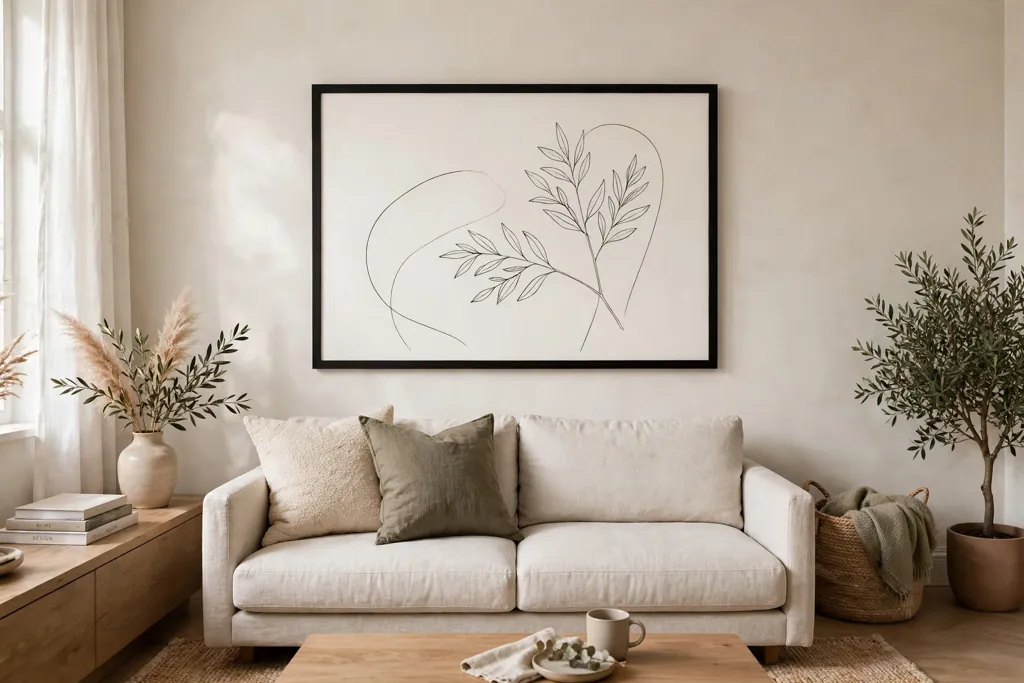
Large art in a simple frame looks more considered than many small prints scattered across a wall. A single generous piece, or a pair of matching pieces, gives a wall a clear focus, while a wall full of small, unmatched frames can feel busy. Thrift shops, print shops, and your own photographs are low cost sources, and a plain wood or black frame with a wide mat makes almost any print look finished. For a warm, collected living room, see these stylish rustic living room ideas.
Hang the center of the piece at eye level, about 57 inches from the floor to the center for a single piece above a sofa, or a little lower in a bedroom. Keep the frame style the same across a wall, even if the prints differ, so the group reads as one set. Leave breathing room around the art, and do not hang a small print alone on a large empty wall. If the budget allows only one framed piece, put it on the wall you see first when you enter the room.
6. Swap Cabinet and Door Hardware for a Matched Finish
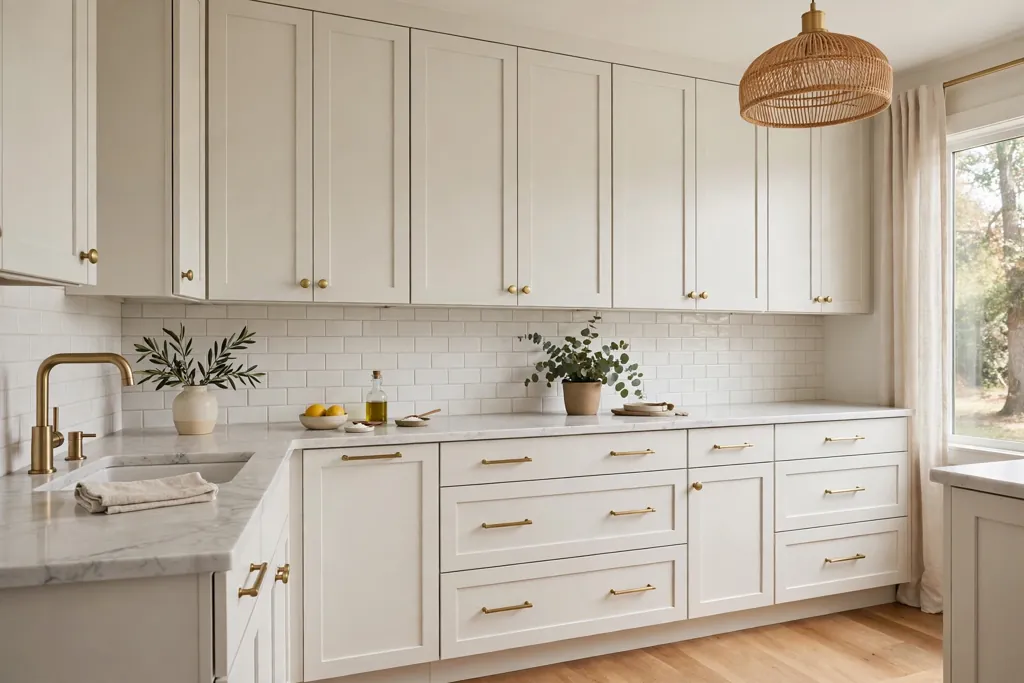
Matched hardware is a small change with a large effect, since handles and knobs are touched every day and sit at eye level in kitchens and bathrooms. A set of pulls in one finish, such as brushed brass, matte black, or brushed nickel, makes plain cabinets look planned, while a mix of old, loose, and mismatched handles makes a room feel tired. This suits kitchens, bathrooms, and bedroom dressers, and it needs no new cabinets.
Count every handle and knob before you buy, and check the screw spacing on existing pulls, since that spacing decides which replacements fit without new holes. Keep the old hardware in a labeled bag, which matters in a rented home and helps if you change your mind. Tighten every screw after fitting, and clean the cabinet fronts while the old handles are off. If the budget covers only one room, start with the kitchen, where hardware is most visible, and match the door handles in the next room when you can.
7. Style Surfaces With a Tray and Fewer, Larger Pieces
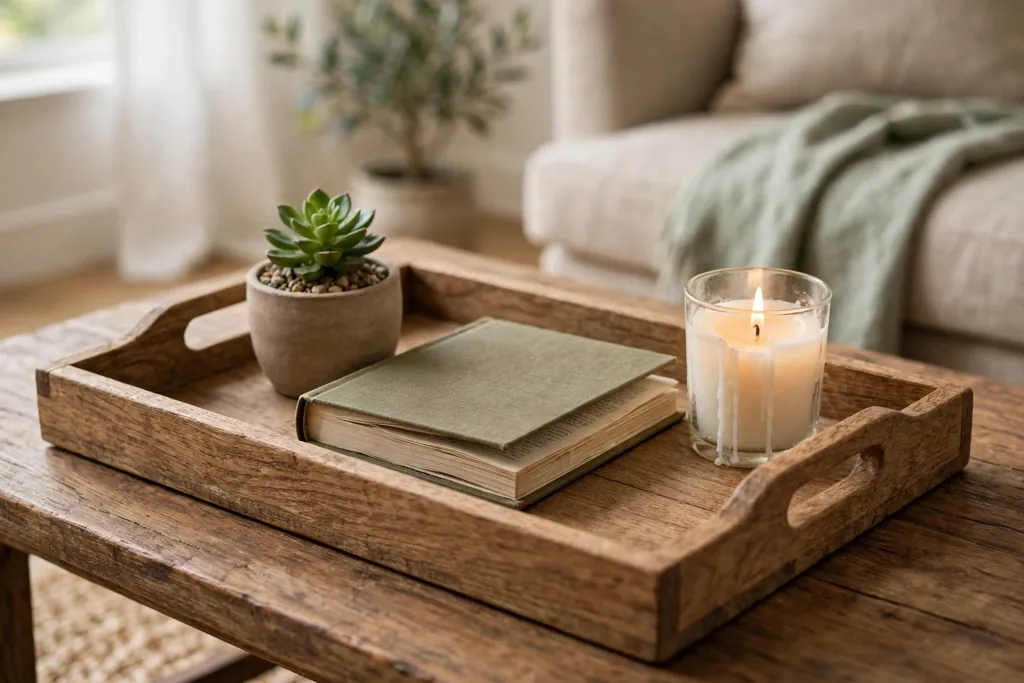
A tray on a coffee table or a dresser turns a loose group of items into one clear arrangement. A book, a small plant, and a candle on a tray look deliberate, while the same items spread across a table look like clutter that has not been put away. This suits coffee tables, consoles, and bedroom dressers, where small items gather fastest. Choose a tray in wood, metal, or woven fiber that suits the room, and keep it large enough to hold its items with space between them.
Follow a simple rule: three or four items on a tray, in different heights, with one item taller than the rest. Leave the rest of the surface mostly clear, so the tray reads as the focus rather than one more pile. Rotate one item with the seasons, such as a fresh stem or a different book, rather than adding more items each time. If a surface still looks busy, remove one item at a time until the arrangement feels calm, then stop.
8. Layer Cushions and Throws in a Limited Palette
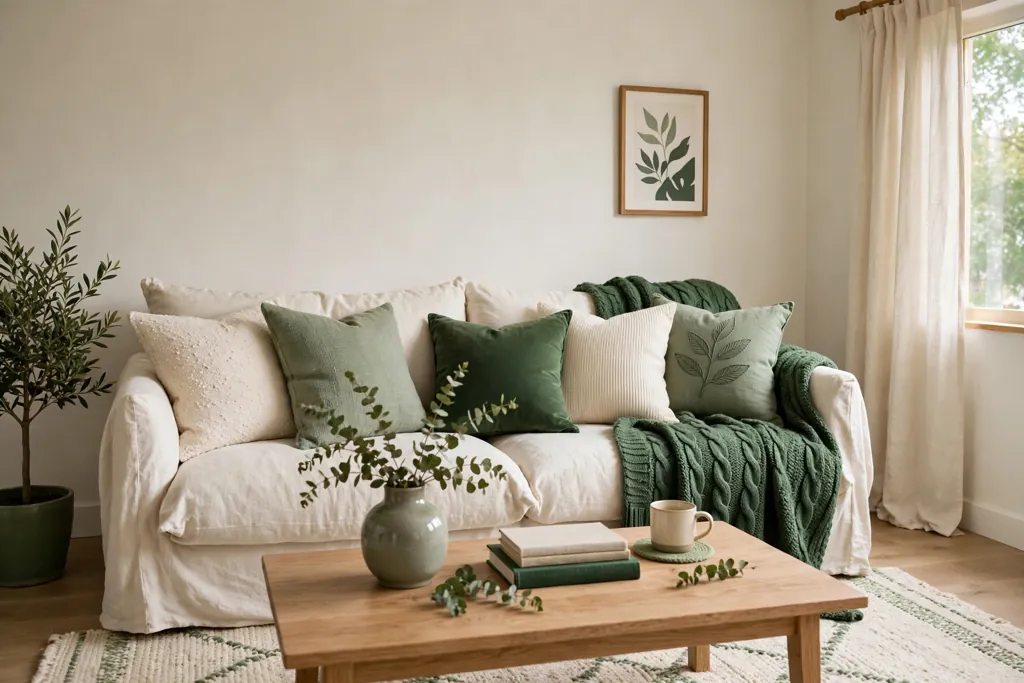
Cushions and throws in a limited palette make a sofa or a bed look dressed rather than piled. Two or three colors, repeated in different textures, give a room a calm base with enough interest to feel lived in. A plain linen cushion, a knit throw, and one patterned cushion in the same family of tones add more polish than a dozen cushions in unrelated colors. This suits living rooms and bedrooms, where soft furnishings cover a large area.
Pick one main neutral, one soft accent, and one deeper tone, and repeat that trio across the sofa, the bed, and any chairs in the room. Vary texture rather than color when you want more interest: a smooth cotton cushion beside a chunky knit throw reads as richer than two more colors. Keep cushion covers washable, and fold or drape a throw neatly over one arm or at the foot of the bed, rather than bunching it in a corner. In a small room, fewer cushions in larger sizes look tidier than many small ones.
9. Clear Surfaces, Hide Cords, and Give Everything a Home
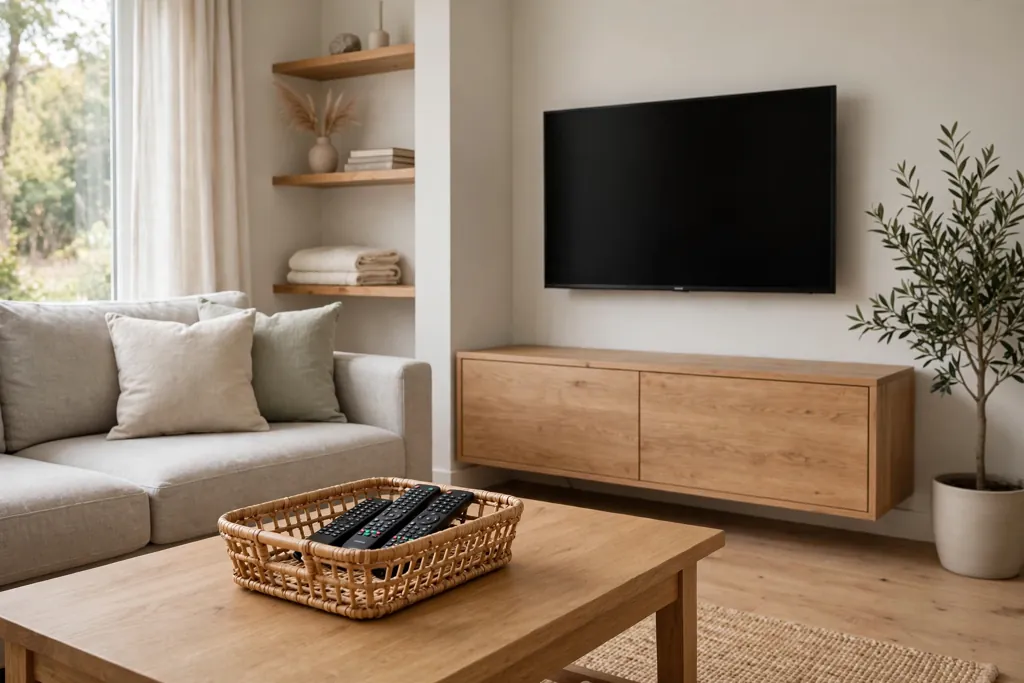
Nothing makes a home look cheaper faster than crowded surfaces and visible cords. A clear kitchen counter, an entry table with only a bowl for keys, and a living room without trailing cables all read as cared for, even before any styling is added. This suits every room, and it costs nothing except time. Start with the surfaces you see when you enter the home, since those set the tone for the rest.
Give every daily item a single home: a basket for remotes, a hook for keys, a box for chargers, and a drawer for loose items. Use cord clips or a small cable box to gather television and lamp cords, and run them behind furniture where you can. Put one item away each time you leave a room, and keep a small basket for items that need to move to another room. If a surface fills again within a day, the storage for those items is in the wrong place, so move the basket or hook closer to where the items land.
10. Use a Large Mirror to Bounce Light and Open a Room
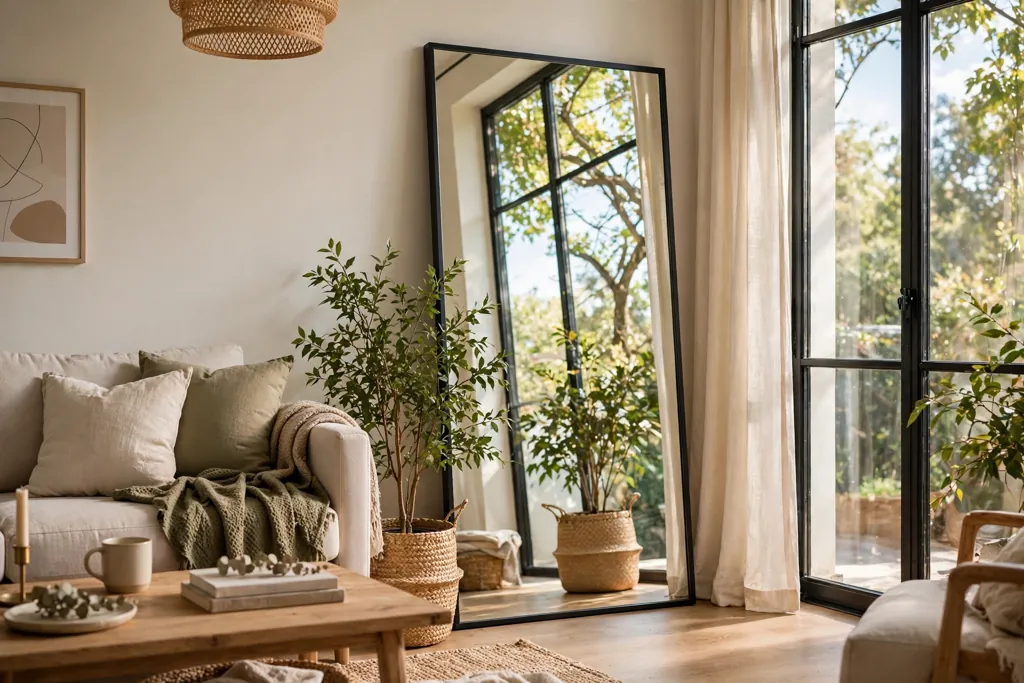
A large mirror opposite or beside a window bounces daylight into a room and makes the space feel wider. A small mirror hung high on a wall does little, while a generous mirror at standing height gives a real sense of depth and doubles the light from a window or a lamp. This suits a living room, a bedroom, and a narrow hallway, where light is often in short supply. Choose a simple frame that matches other metal or wood in the room.
Hang the mirror where it reflects a pleasant view, such as a window, a plant, or a framed print, rather than a cluttered corner or a blank wall. Keep the glass clean, since smudges show at once in a large mirror, and check that it hangs level and secure, with fixings suited to its weight. In a small room, lean a tall mirror against a wall only if the base is stable and the mirror cannot slip. If the budget allows one mirror, put it in the room that feels darkest, and let the extra light do the rest.
11. Make the Entry Feel Finished
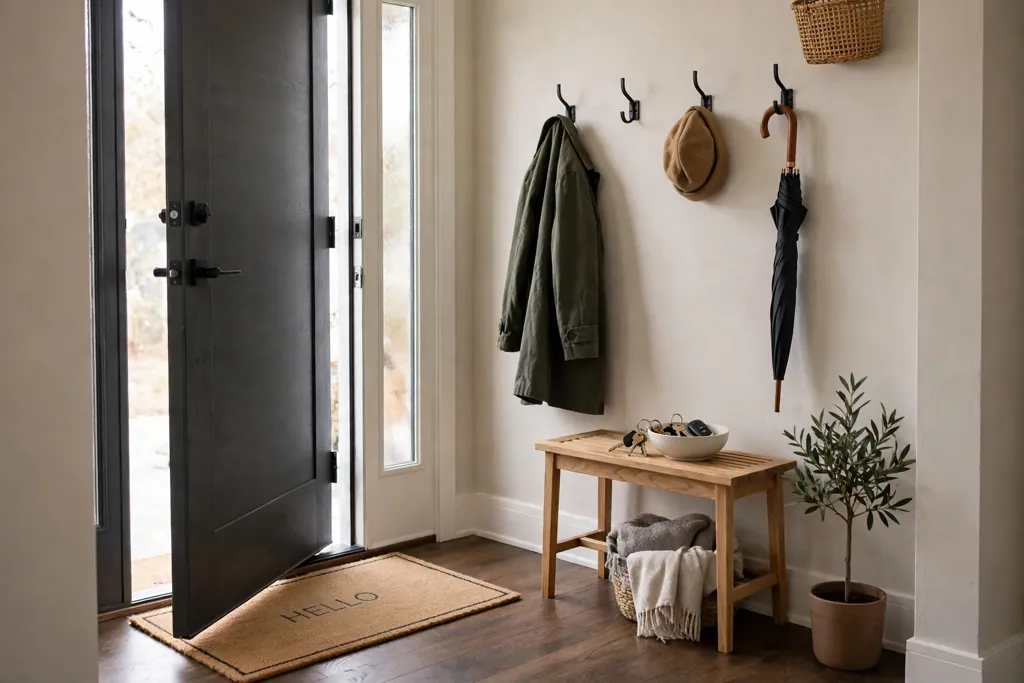
The entry is the first room guests see, and a finished entry makes the whole home feel cared for. A clean doormat, a hook or two for coats, a small bench or stool, and a bowl for keys give the entry a clear purpose, while a pile of shoes and mail by the door makes the home feel unsettled from the first step. This suits a hallway, a porch nook, or a corner by the front door, and it needs little space to work well.
Keep only the items used daily in the entry, and move off-season coats and spare shoes to a closet. Add one mirror or one framed print, so the wall does not sit bare, and keep the floor clear enough to walk through without stepping around bags. Wipe the door handle, sweep the mat, and sort the mail spot each week, since a tidy entry is easy to keep once the hooks and bowl are in place. If space is tight, a single wall hook rail and a narrow tray for keys can do the job of a bench.
12. Add Greenery and One Fresh, Natural Detail
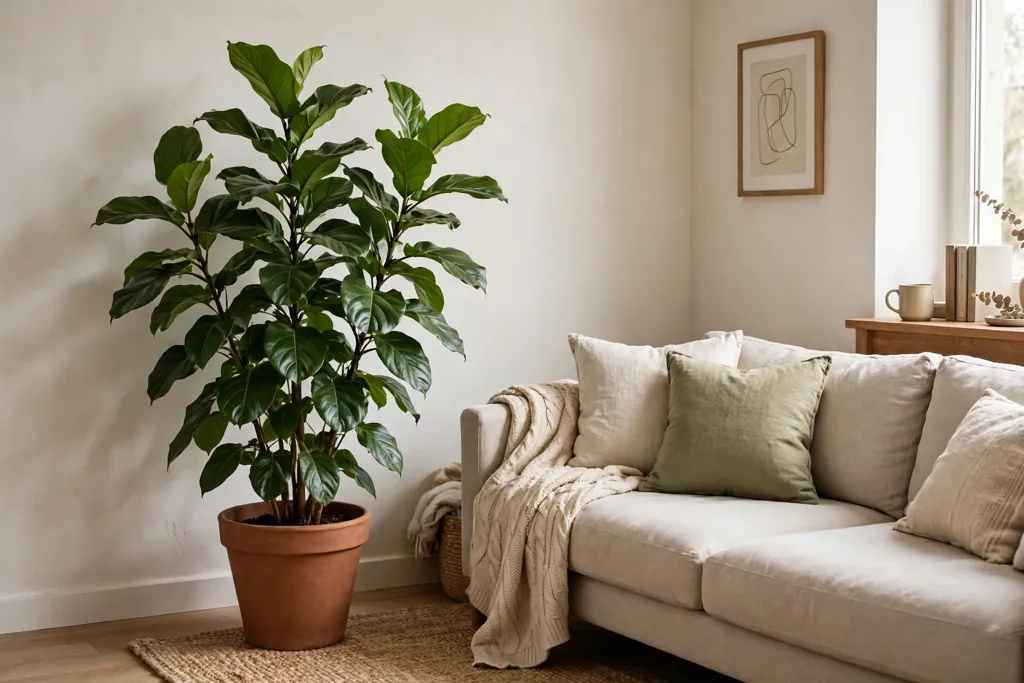
A healthy plant or a bunch of fresh stems adds life to a room in a way that no object can match. Greenery softens hard edges, fills an empty corner, and makes a styled surface feel natural rather than staged. This suits a living room corner, a kitchen windowsill, and a bedroom dresser, and a single large plant often looks better than several small pots scattered around. Choose a plant that suits your light, and learn its watering needs before you buy.
Place the largest plant in a plain pot that matches the room, such as terracotta, cream ceramic, or woven fiber, and keep the pot clean and free of dead leaves. If live plants are hard to keep, a bunch of fresh stems in a simple vase, changed weekly, gives the same fresh note with less care. Avoid filling every surface with plants: one strong plant per room, plus one small stem on a table, is enough. Dust the leaves now and then, and move a struggling plant to better light before it fades, since a tired plant has the opposite effect.
Conclusion
A home that looks expensive is usually a home that looks cared for: clean paint, curtains that hang well, warm light, a rug that fits, matched details, and clear surfaces. None of these ideas needs a large budget, and none needs to happen at once. Start with the change that bothers you most when you walk into a room, whether that is a bare window, a harsh ceiling light, or a crowded table. Fix that one thing well, live with it for a week, and then pick the next idea. Save this list, and return to it each time a room starts to feel tired, since a small, steady edit keeps a home looking polished all year.
FAQs
How can I make my home look expensive on a very small budget?
Start with free changes first: clear surfaces, hide cords, clean windows and mirrors, and rearrange furniture so the seating group faces a clear focus. Then spend on the changes with the widest effect, such as a tin of paint, curtain rods hung high and wide, and warm bulbs for lamps you already own. A limited color palette and matched hardware come next, since both make a room look planned without new furniture.
What paint color makes a home look expensive?
Warm white, soft greige, and pale sage are safe choices, since they suit most furniture and make rooms feel calm and bright. The exact shade matters less than a clean, even finish and crisp trim, so test samples on two walls and check them in morning and evening light. Keep the same neutral through connected rooms where you can, and add color through cushions, throws, and art, which are easier to change than wall paint.
Do curtains really make a room look more expensive?
Yes, when they are hung high and wide and reach the floor. A rod placed above the window frame and extended past it on both sides makes the window look larger and the wall taller, while panels that just brush the floor give the room a finished edge. Plain panels in a solid color or a subtle texture work well, and ironing them before hanging matters, since creased fabric reads as unfinished.
How many cushions should I put on a sofa?
Three to five cushions suit most sofas, depending on size: two larger cushions at the corners, one or two smaller ones in front, and one accent cushion if the sofa is long. Keep the colors within one limited palette, and vary texture rather than adding more colors. Too many cushions crowd the seat and end up on the floor, which defeats the polished look you want.
What is the cheapest way to make a living room look polished?
Clear the coffee table and the entry surfaces, hide visible cords, and clean the windows and mirrors, all of which cost nothing. Then hang curtains high and wide, swap to warm bulbs in lamps, and add a tray with three or four items on the coffee table. A large rug that fits the seating group is the next best spend, since it pulls the whole arrangement together in one move.
Can I make a rented home look expensive without permanent changes?
Yes. Curtains on tension or adhesive mounts, matched hardware kept with the originals in a labeled bag, freestanding lamps, large mirrors hung with rated fixings, and plants all work without permanent changes. Paint is the one change to check first: some landlords allow it if you repaint before leaving, while others do not, so read your agreement and ask before you start. Focus on light, textiles, and tidy surfaces, which travel with you when you move.