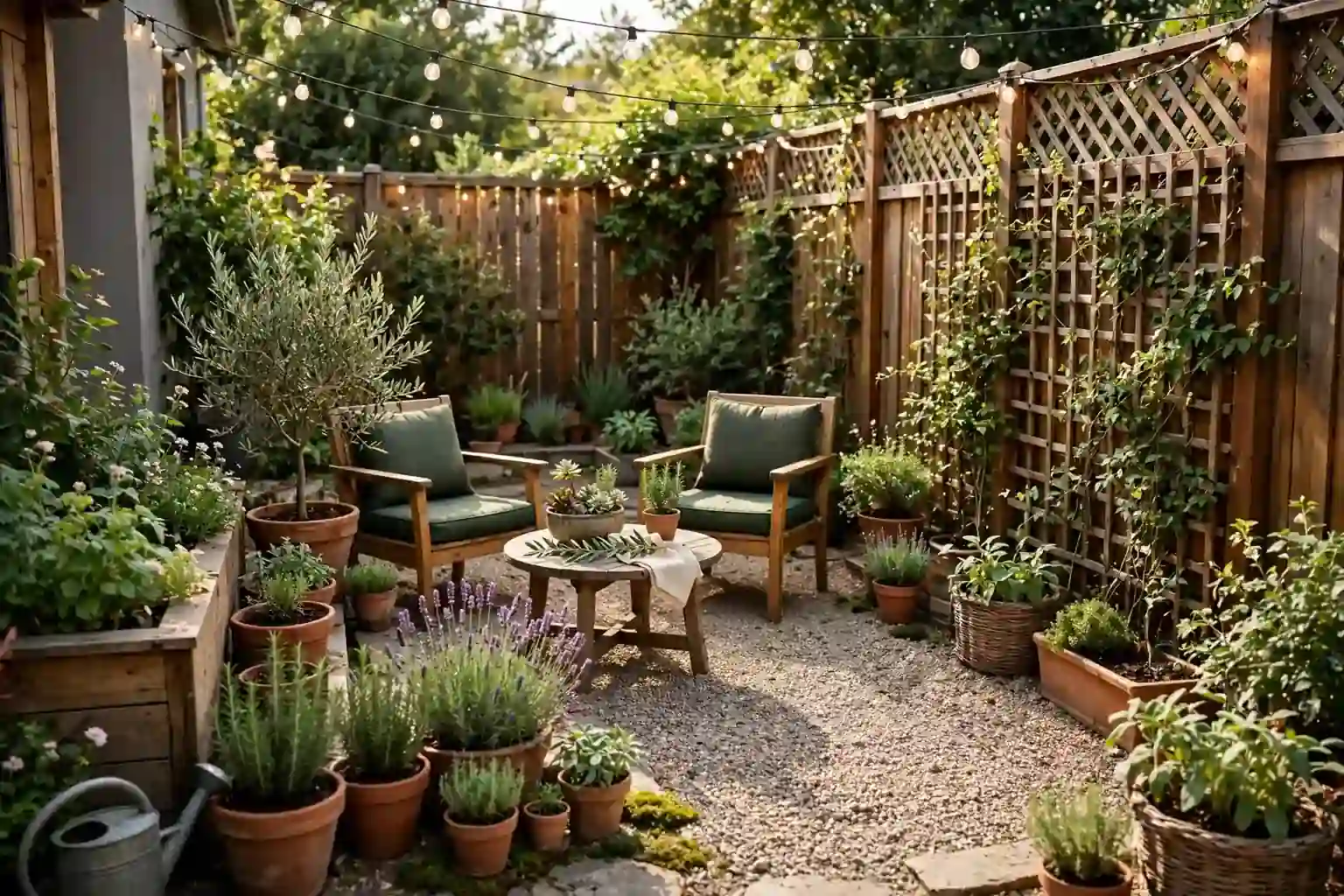
A small backyard does not need to stay a patch of grass you walk past. With one clear job for each corner, a compact seat, a path, and planting that grows up instead of out, even a narrow yard can hold morning coffee, an evening meal, and a quiet read. These 27 small backyard ideas focus on furniture that folds, beds that fit a fence line, and shade and light that work in a small footprint. Start with how you use the yard most, then add one idea at a time, and leave room to walk, water plants, and open the back door fully.
Key Takeaways
- Give each part of the yard one job first, such as dining, lounging, planting, or play, so furniture and paths have a clear place.
- Choose furniture that folds, stacks, or stores, so the yard can change from a dining spot to an open play space in minutes.
- Grow up before you grow out: trellises, vertical planters, and fence beds add planting without taking walking space.
- Use one main surface, such as gravel, pavers, or deck boards, and repeat one or two materials, so a small yard reads as calm rather than busy.
- Layer shade and light together, since a sunny seat goes unused at midday and a dark yard goes unused after dusk.
- Keep paths, door swings, and the route to bins and taps clear, and leave space to reach every plant for watering and pruning.
1. Set a Folding Bistro Set in a Sunny Corner
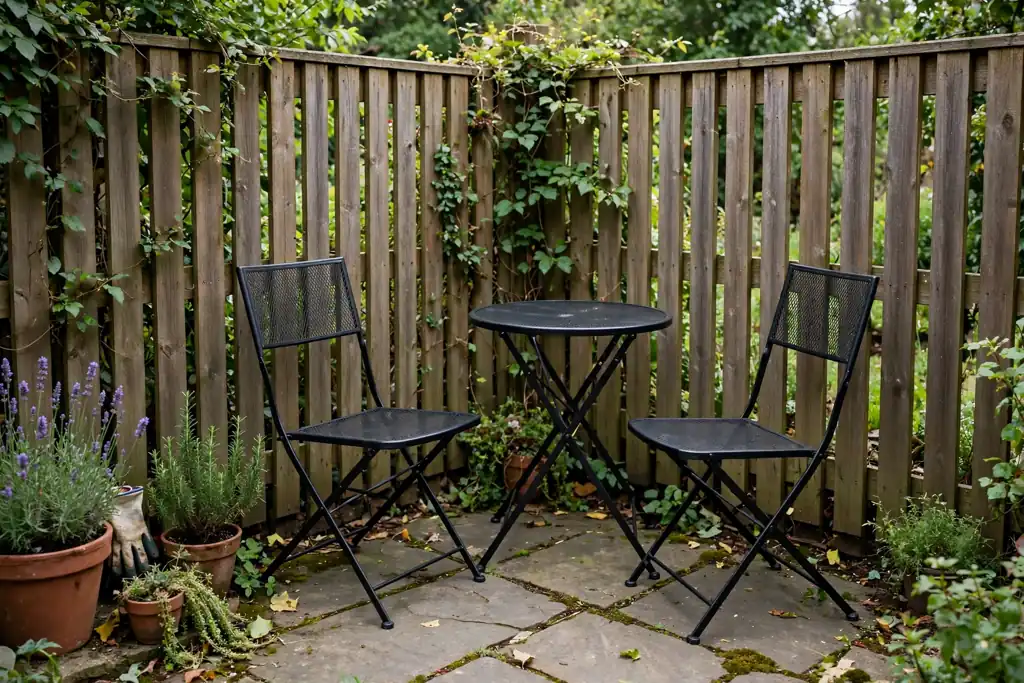
A folding bistro set with two chairs and a small round table fits a corner that a full dining set would crowd. The round shape leaves room to pull chairs out, and the set folds flat when the yard needs to stay open for play or garden work. This suits a quiet spot by the back door, where two people can sit for coffee or a light meal.
Choose chairs and a table made for outdoor use, and anchor the set with a small rug or a pair of planters so it does not look adrift. Keep the table simple, with one small pot or a candle, so there is still room for two cups and a plate. Bring cushions inside in wet weather to keep them fresh, and store the folded set against a wall or in a shed over winter.
2. Build an L-Shaped Corner Bench With Storage
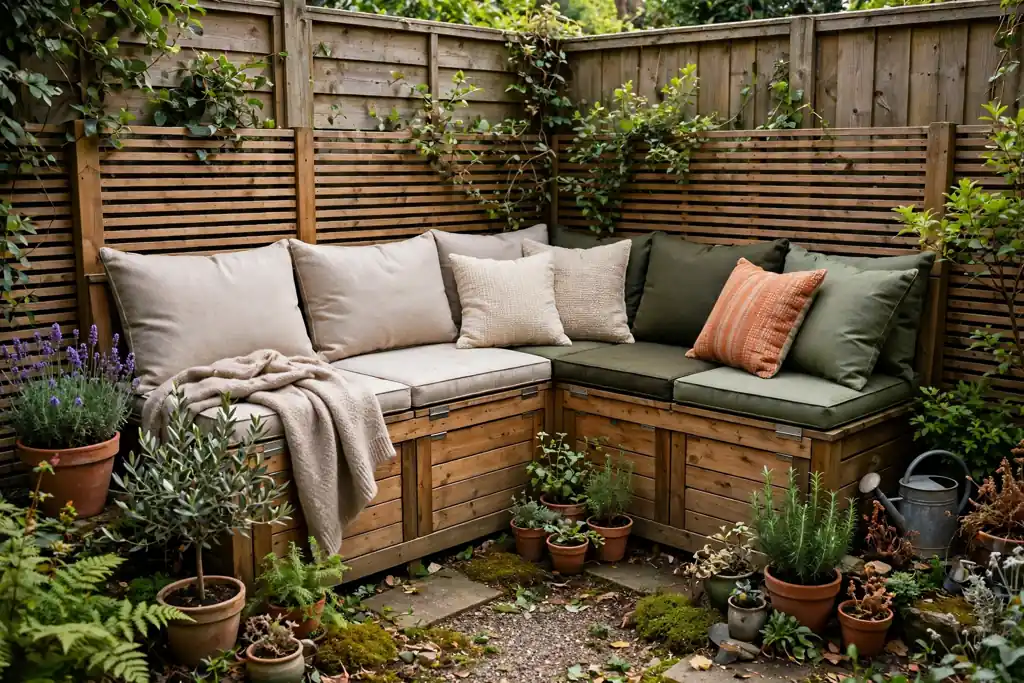
An L-shaped corner bench turns a dead yard corner into the main seating area, seating more people than a straight bench of the same length. By following two fence or wall edges, it leaves the center of the yard open, and a lift-up seat or boxes below hold cushions, small tools, and outdoor toys. This suits yards used for meals, evening drinks, or family gatherings.
Measure the corner carefully, including gate swings, drains, and steps, before you build or order the bench. Leave one end open so people do not feel trapped, and use cushions that store quickly in wet weather. Check the lid action before you buy, since a heavy lid with no stay can be awkward, and keep heavy items low so the bench stays steady.
3. Fix a Drop-Leaf Table to a Fence or Wall
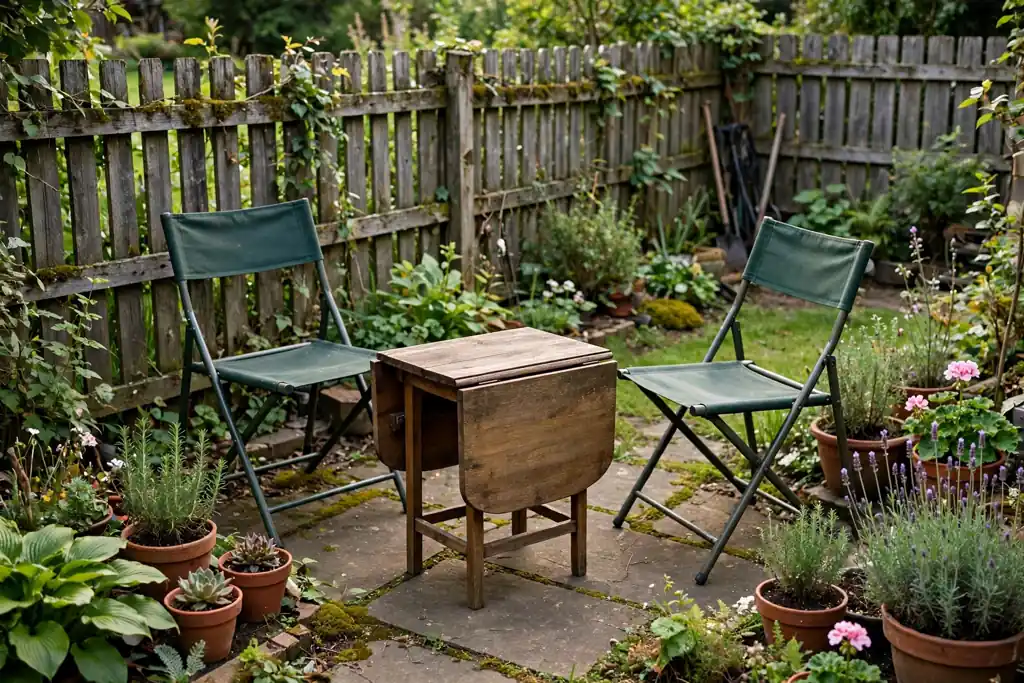
A wall-mounted drop-leaf table gives you a dining or work surface only when you need it, then folds flat against a fence or house wall when you do not. A pair of folding chairs beside it completes a meal spot in a strip of yard too narrow for a fixed table. This suits a side yard, a small patio edge, or a spot beside the kitchen door.
Fix the table at a comfortable sitting height, and use fixings rated for outdoor use and for the weight of dishes and drinks. Keep a small shelf or hook nearby for a lantern and a cloth, so the table stays ready to use. Clear the table before you fold it down, or loose items will slide, and wipe the surface after rain so it stays clean for the next meal.
4. Shape a Gravel Seating Nook
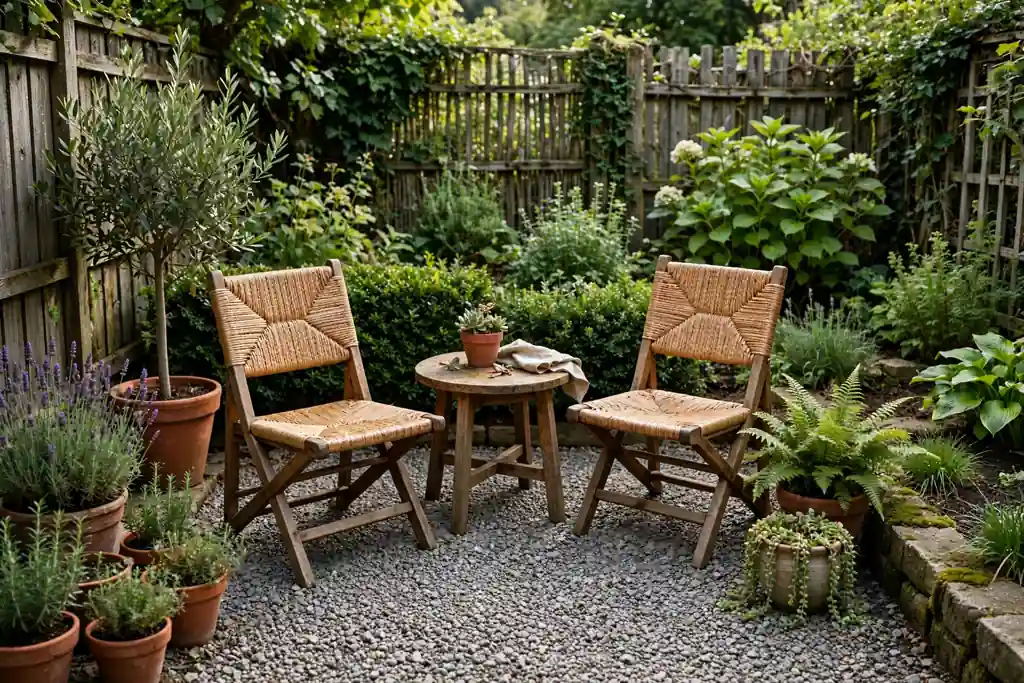
A gravel nook marks a seating zone without pouring concrete or laying a full patio. A level bed of gravel, edged with timber, stone, or metal, holds a couple of chairs and a small table, drains well after rain, and costs less than a paved area. This suits a yard where a lawn is patchy, or a corner that stays damp and muddy.
Level the ground first, lay a weed barrier, and rake the gravel flat so chairs sit steady. Choose a gravel size that feels firm underfoot and does not stick to shoes, and top it up now and then as it settles. Keep the nook clear of the main path, and add one or two pots at the edge, so the gravel area reads as a planned room rather than a bare patch.
5. Lay a Stepping-Stone Path Through the Yard
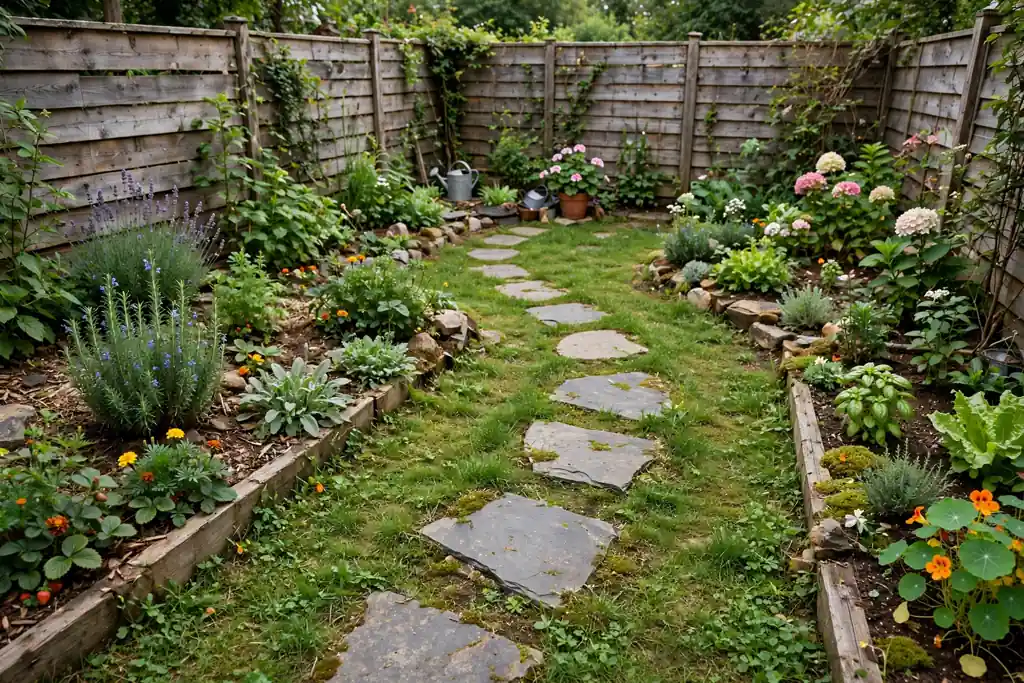
A stepping-stone path connects the back door, the seating area, and the garden beds, so you can walk through the yard without trampling grass or muddying shoes. Flat stones set at a natural stride, with gravel or low ground cover between them, suit a small yard better than a wide paved walk, since they leave planting room on both sides.
Set each stone level and firm, with no rocking edge to catch a foot, and space them so a normal step lands on the next stone. Keep the path wide enough for a wheelbarrow or a watering can, and clear leaves from it in autumn. If the yard slopes, set stones slightly into the slope and add a small step where the change in height needs one, rather than a long slippery ramp.
6. Plant Narrow Raised Beds Along the Fence
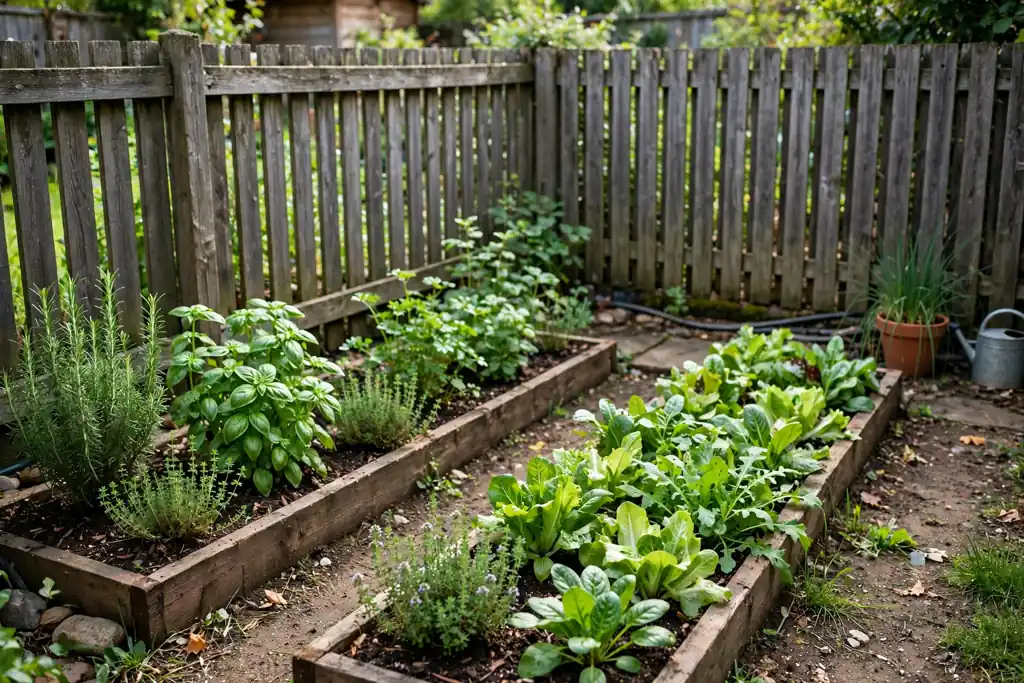
Narrow raised beds along a fence turn a strip of yard that is hard to mow into useful growing space. A bed about a foot wide holds herbs, salad leaves, flowers, or small vegetables, and its raised edge makes watering, weeding, and picking easier than a ground-level strip. This suits a long narrow yard, where the center must stay open for walking and play.
Build beds with boards or stone rated for outdoor use, and line the base so soil stays in place while water drains out. Fill beds with a mix suited to what you plan to grow, and plant taller items at the back, near the fence, so shorter plants still get sun. Keep a clear gap between beds and the fence where you need to reach the back row, or build beds shallow enough to tend from the front alone.
7. Grow a Vertical Planter Wall on the Fence
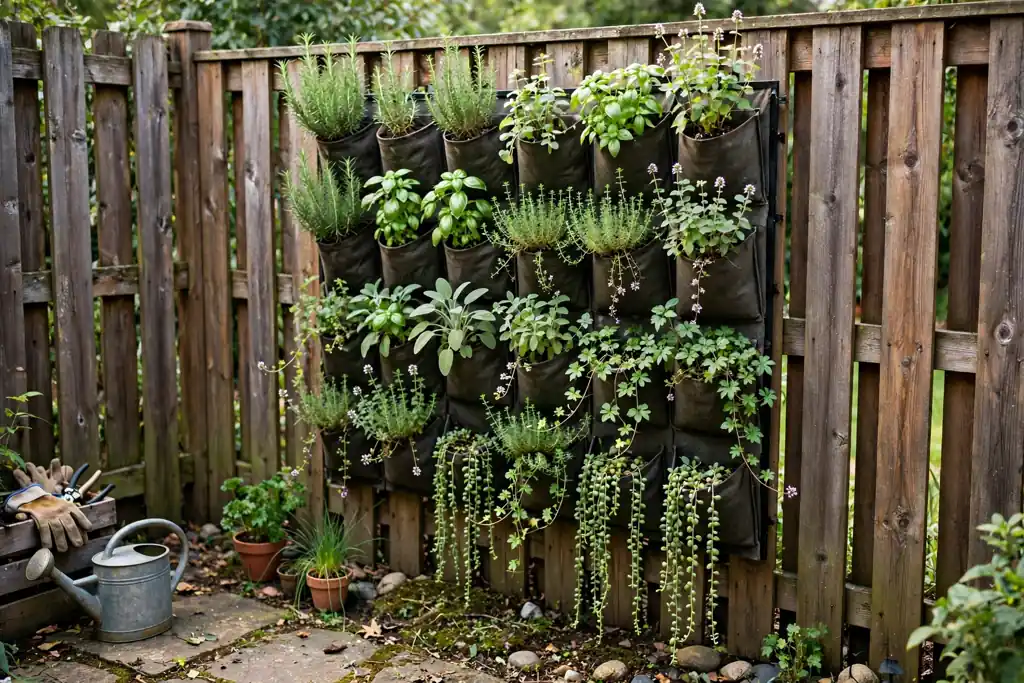
A vertical planter wall uses fence height that a small yard often wastes, holding herbs, flowers, and trailing plants in pockets, boxes, or pots fixed to the fence. It adds a green wall in a footprint no deeper than a pot, and it keeps planting at eye level, where it is easy to water and pick. This suits a yard with little ground space, or a plain fence that needs softening.
Fix planters firmly, with a gap behind them so air can move and the fence can dry, and group plants by sun and water needs so one watering round suits a whole row. Use pots with drainage holes, and check the fixings after storms, since wet soil is heavy. Keep the lowest row within easy reach, and reserve the top row for trailing plants that can hang down without blocking a path.
8. Screen a Boundary With a Trellis and Climbers
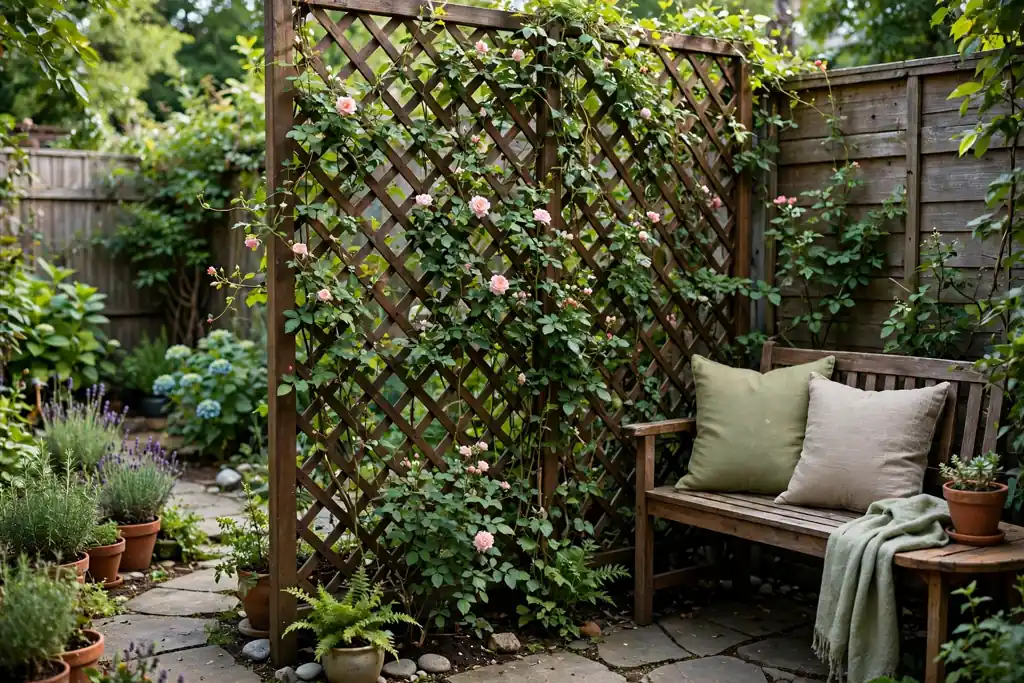
A trellis covered with climbing plants gives a small yard privacy, shade, and a green wall in one narrow footprint. The trellis can stand against a fence, a house wall, or a freestanding frame, and climbers such as jasmine, clematis, or climbing roses fill it over time. This suits yards overlooked by neighbors, where a solid wall would feel heavy and block light.
Fix the trellis with a gap behind it so air can move and the fence or wall can dry, and choose climbers that suit the light on that side. Train stems along the frame and away from seats, so thorns and stems do not brush sitters, and prune after flowering as the plant type requires. Keep the base clear of seating, so you can reach the soil to water and feed.
9. Keep Herb Pots by the Back Door
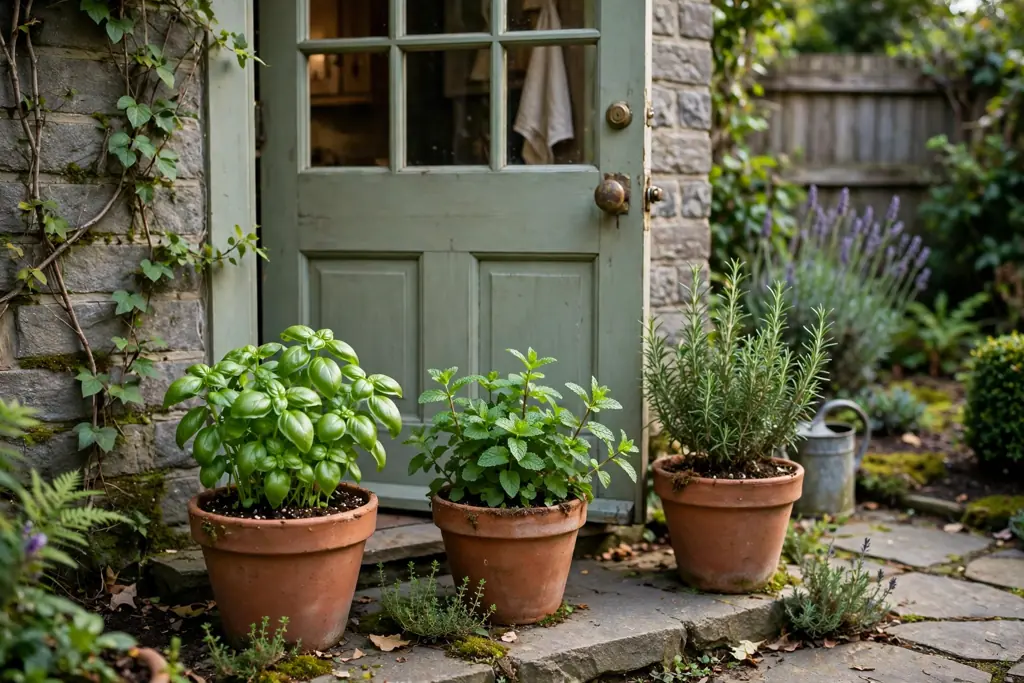
Herb pots by the back door put fresh flavor within a few steps of cooking, and they give a small yard a useful, scented edge. Basil, mint, rosemary, parsley, and chives grow well in pots, and a small group by the door is easier to water and pick from than a distant bed. This suits a yard used for cooking and dining, where herbs get used often.
Plant mint in its own pot, since it spreads fast and can crowd other herbs, and group the rest by sun and water needs. Use pots with drainage holes and saucers, and snip herbs often, since regular picking keeps plants bushy. Bring tender herbs inside or under cover before frost, and label pots if guests pick herbs too.
10. Cluster Planters in Mixed Heights
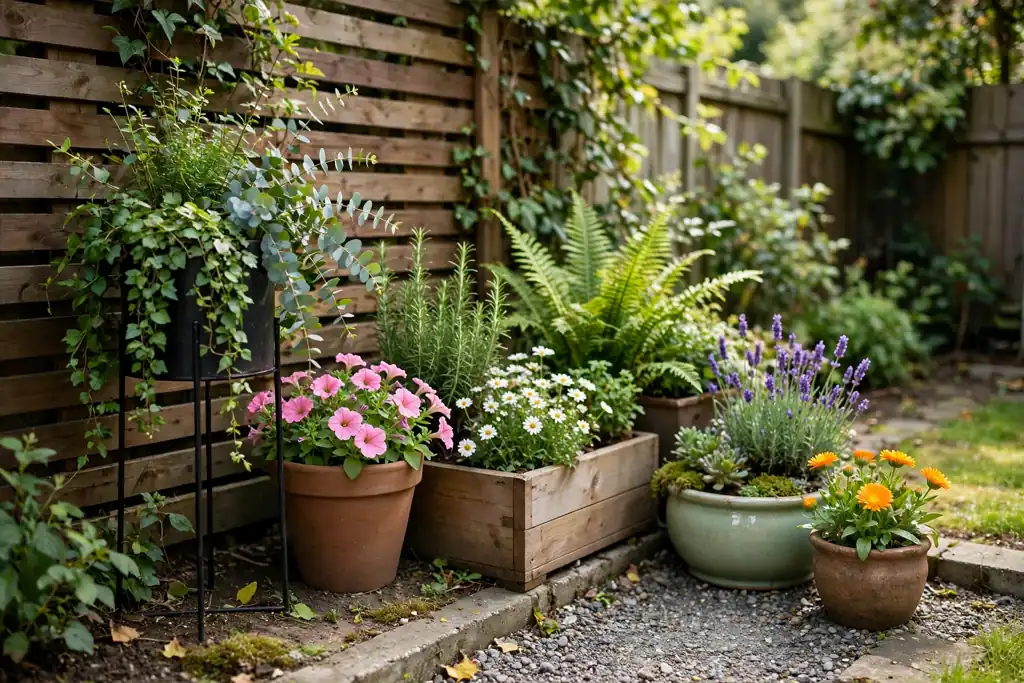
Planters in mixed heights give a small yard a garden feel without a single large bed, and they let you move planting as sun and seating change. A tall planter at the back, medium pots in the middle, and low pots at the front create depth, while repeating one pot color or material keeps the group calm. This suits bare yard edges, corners, and spots beside a door or a bench.
Group plants by water and light needs, so one watering round suits the whole cluster, and raise pots on feet or saucers where drainage matters. Keep planters out of main walking routes and door swings, and leave room to reach the soil for watering and pruning. Swap one or two pots with the seasons for fresh color without replanting the whole group.
11. Plant a Small Tree in a Large Pot
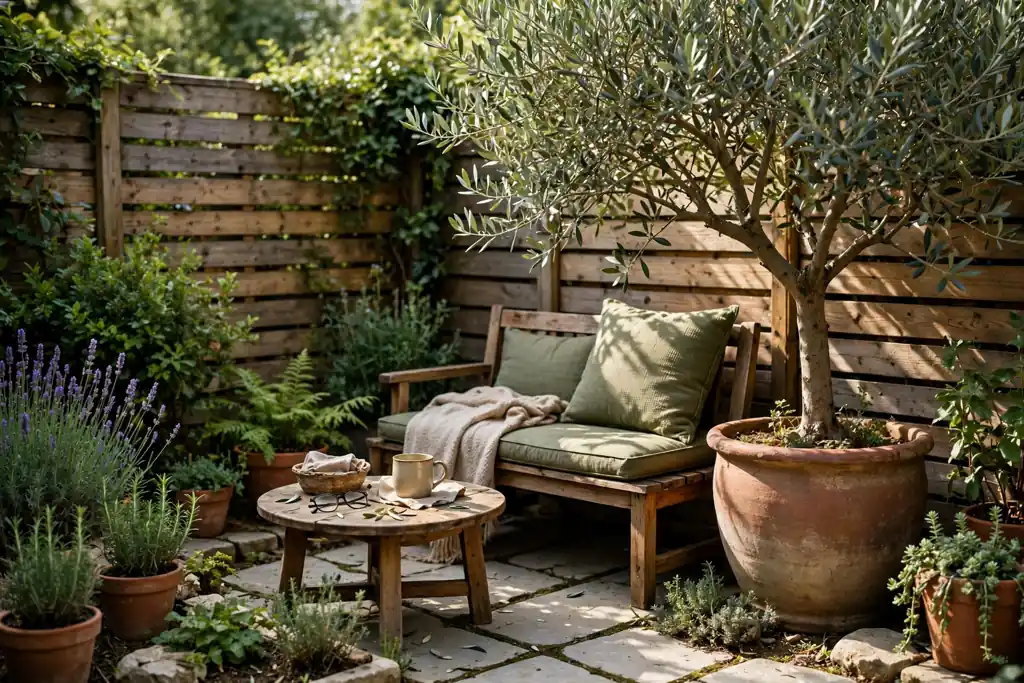
A small tree in a large pot gives a small yard shade, height, and a clear focal point, without roots spreading under paths or a lawn. A compact olive, citrus, bay, or ornamental tree in a sturdy pot anchors a seating corner, and it can move if the sun pattern or the layout changes. This suits a yard with no room for a planted tree, or a rented home where planting in the ground is not an option.
Choose a pot wide and heavy enough that the tree stays steady in wind, with drainage holes and feet so water can escape. Water potted trees more often than planted ones, since pots dry out fast, and feed as the tree type requires. Prune lightly to keep the shape compact, and top up the soil or repot when roots fill the pot, so growth stays healthy rather than cramped.
12. String Lights Across the Seating Area
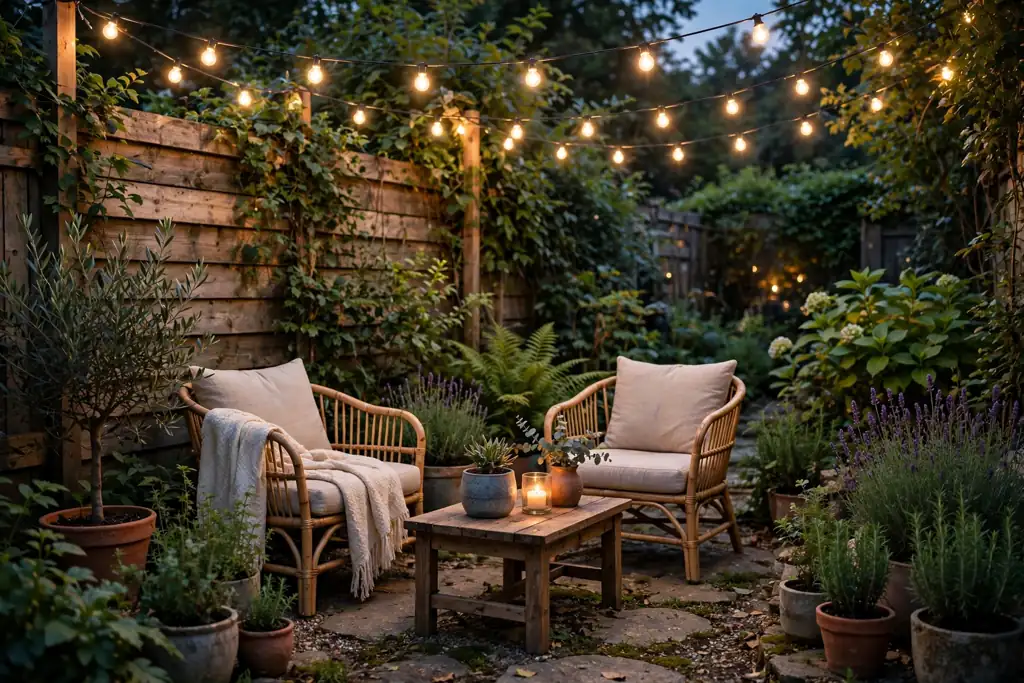
String lights across a seating area give warm evening light and mark the outdoor room after dark. A single run from the house to a fence, pole, or trellis is enough for a small yard, while two runs suit a slightly larger space. Warm white bulbs suit most yards, since they flatter wood, plants, and skin tones better than harsh white light.
Use lights rated for outdoor use, and keep plugs and connections sheltered from rain. Hang the run high enough to walk under without ducking, and keep it clear of a grill, a fire bowl, and climbing plants that could grow into the wire. A timer makes evening use simple, so the lights come on as daylight fades, and take the run down or check it after strong wind.
13. Hang a Shade Sail Over the Dining Spot
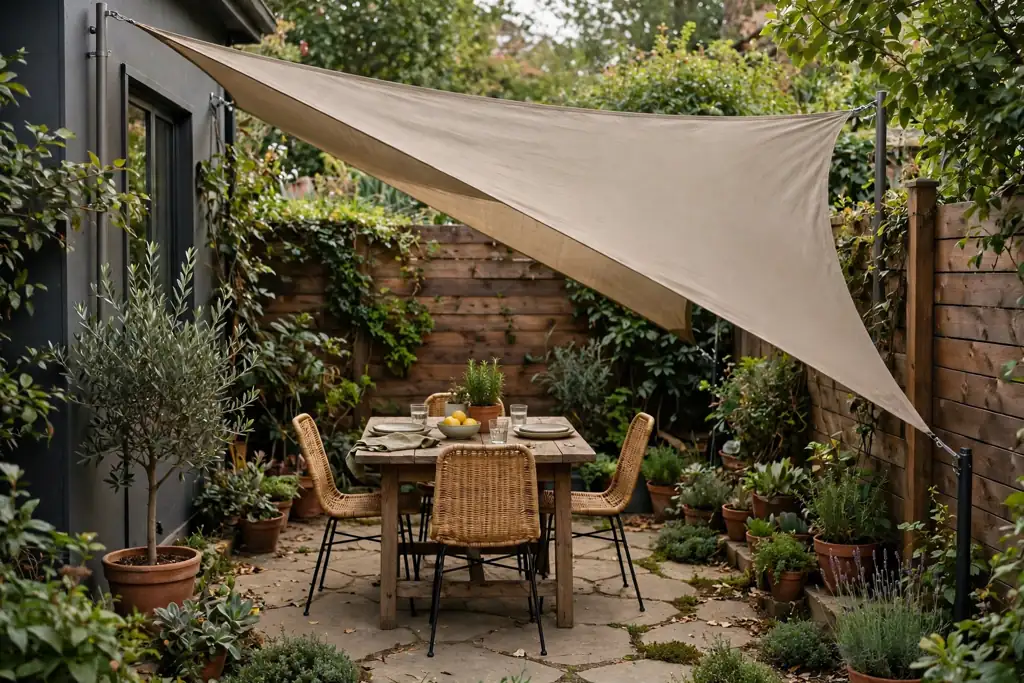
A shade sail over a dining spot gives strong sun cover without a built roof, and its angled shape adds a clean note to a small yard. The fabric blocks direct sun over the table, so meals stay comfortable at midday, and it can be taken down in winter if you want more light. This suits yards with solid anchor points on a house wall, a post, or a pergola.
Measure the table and chairs first, so every seat sits under shade at mealtimes, not just the center of the table. Tension the sail well, with a slight slope for rain runoff, and check fixings after storms. Choose a light, breathable fabric in a tone that suits the house, and keep the sail clear of a grill or a fire feature.
14. Lay an Outdoor Rug to Mark the Seating Zone
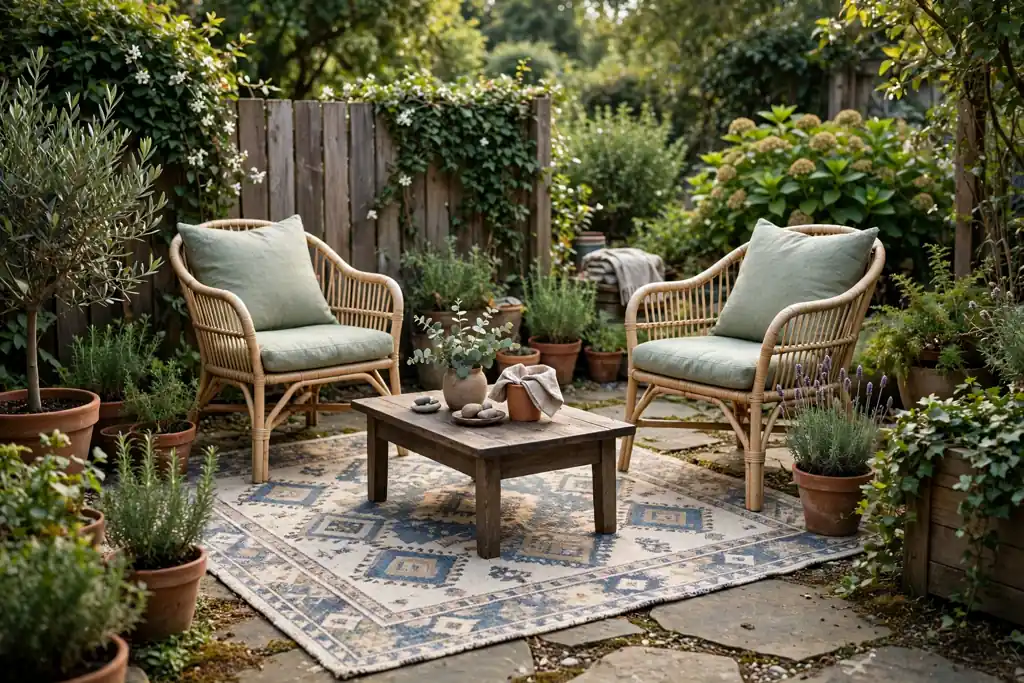
An outdoor rug grounds a seating area and makes a small yard feel like a room, even on plain paving or gravel. A rug in a simple stripe, border, or flat weave pattern defines where chairs and a table belong, and it softens hard surfaces underfoot. Choose a rug made for outdoor use, in a size that lets front chair legs sit on it, so the grouping does not feel as if it is sliding off the edge.
Sweep or hose the rug as needed, and lift it now and then so damp leaves do not sit trapped underneath. Keep the rug flat and low pile near doorways, so it does not catch feet or block a door swing. For seating ideas that pair well with a defined patio zone, see these patio decor ideas for rugs, seating, shade, and light that suit a small outdoor space.
15. Center Evenings on a Compact Fire Bowl
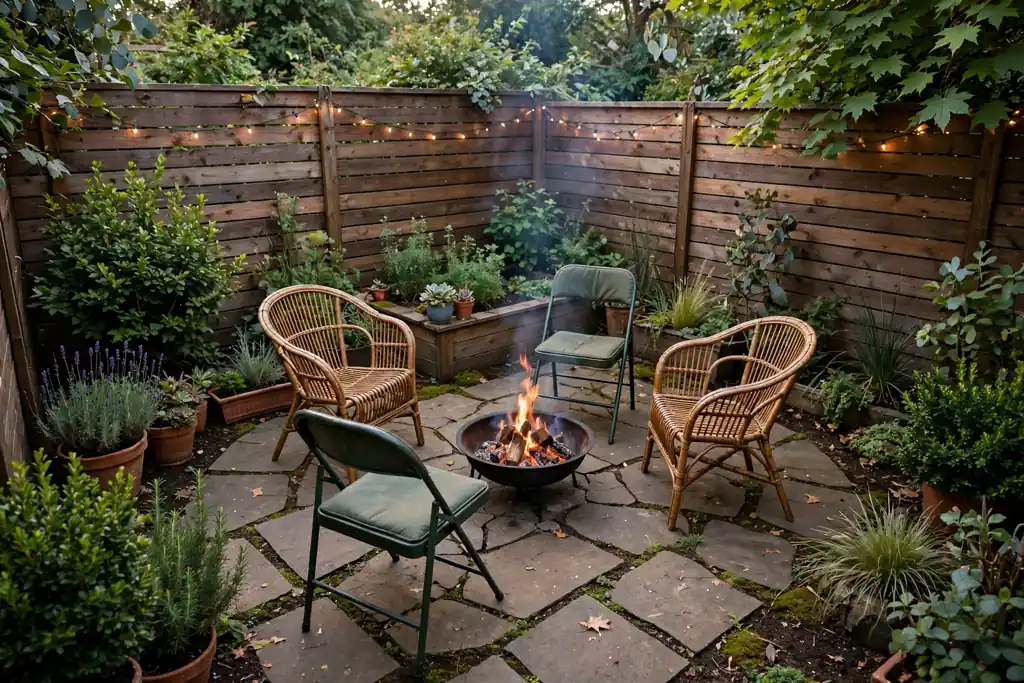
A compact fire bowl gives evenings a natural center, with chairs drawn into a small circle around warmth and light. The bowl suits quiet talks and cool nights when an uncovered yard would otherwise go unused, and it takes far less room than a full fire pit with built seating. Keep the bowl on a heat-safe surface, away from overhanging plants, cushions, and low roofs, and follow the maker and local rules for fuel and use.
Place chairs with room to pull in and out of the circle, and keep a clear route back to the house for drinks and blankets. Store fuel and covers away from the bowl, and let the bowl cool fully before covering it. In daytime, the same circle works as a plain seating area, so the yard earns its space twice over.
16. Line the Path With Solar Lanterns
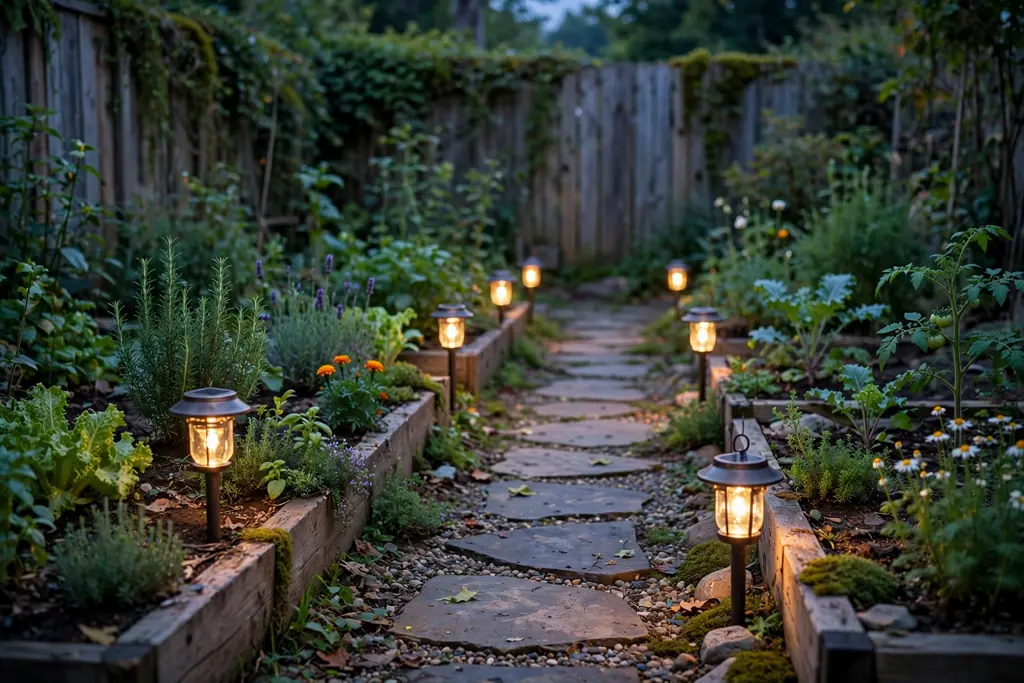
Lanterns along a path give low, warm light and mark the route between the door, the seating area, and the garden after dark. Solar lanterns need no wiring, so they suit a small yard where running cables would mean digging up beds or paths, and they charge by day for a soft glow at night. This suits yards used in the evening, where a single bright light would feel too harsh.
Group lanterns in twos or threes at path ends and steps, rather than spacing single lanterns evenly around the whole yard, so the light looks gathered and natural. Keep lanterns away from cushions, throws, and dry leaves if they hold a real flame, and choose enclosed or battery options near seating. Bring glass lanterns inside during storms if they could blow over, and wipe solar panels now and then so they charge well.
17. Add a Bubbling Pot Fountain as a Focal Point
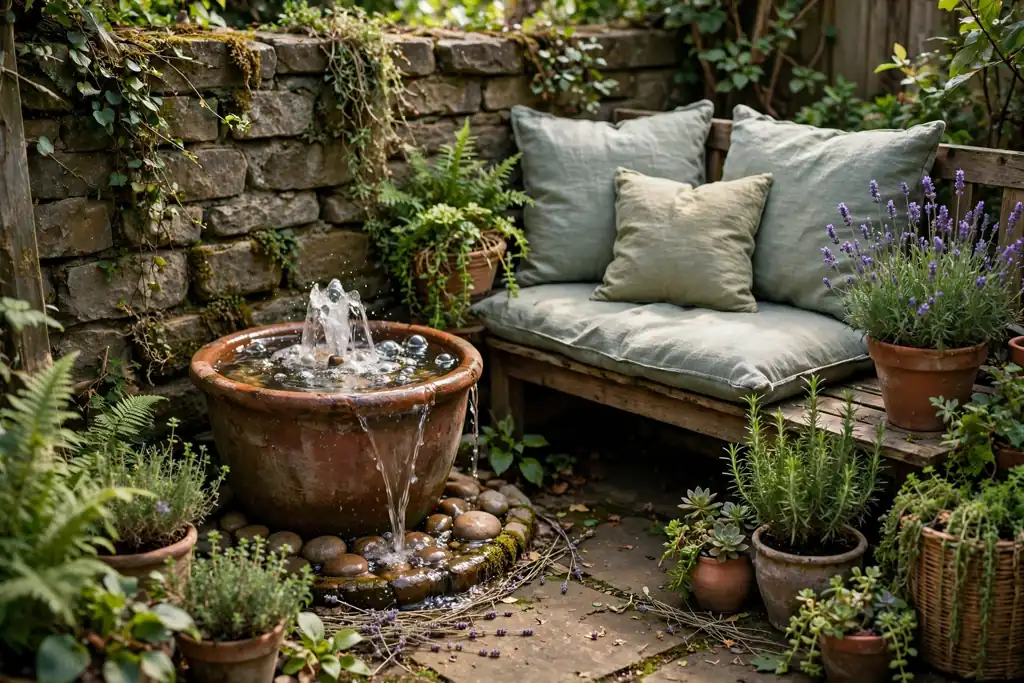
A small bubbling pot fountain gives moving water, gentle sound, and a clear focal point that draws the eye away from a bare wall or fence. A single pot with water bubbling over its rim suits a corner or a center spot with room around it, and it takes far less space than a pond. The sound softens street noise and makes a short sit feel restful.
Place the fountain where the water sound carries to seating but splashes do not reach cushions, and keep the pump and power supply sheltered and safe outdoors. Top up water in hot weather, and clean the bowl and pump as the maker directs so algae does not build up. In cold climates, drain and cover the fountain before frost if the maker advises it.
18. Hang a Hammock in a Quiet Corner
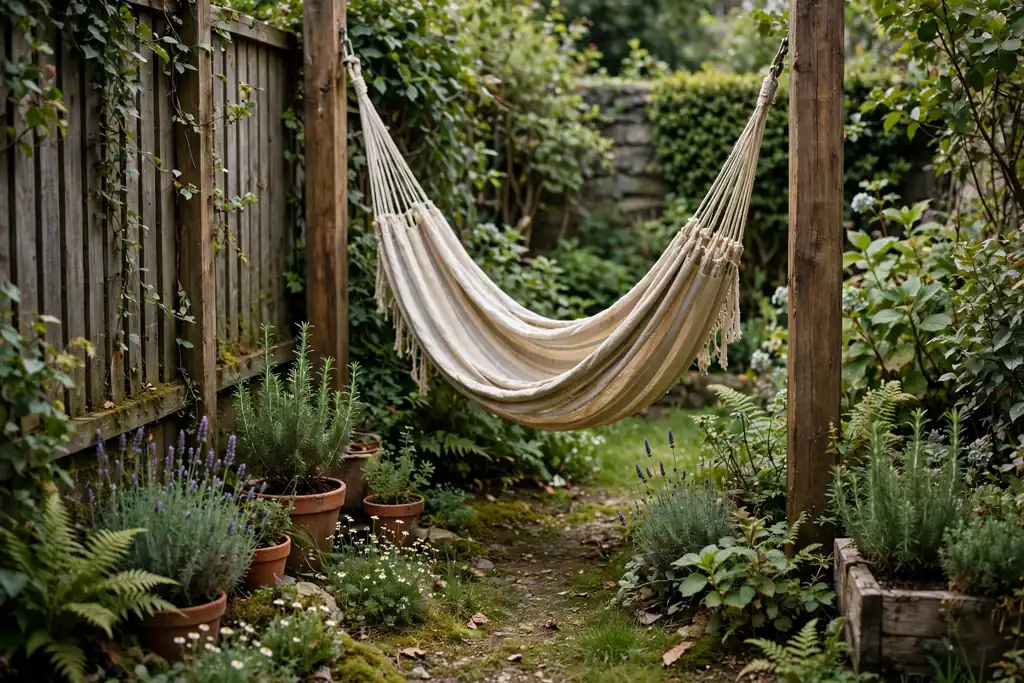
A hammock gives you a comfortable place to read, nap, or enjoy fresh air, and it uses a corner that a chair set would crowd. Hang it between two sturdy trees, posts, or a freestanding frame that fits the yard, following the weight limits and fixing instructions. This suits a quiet corner away from the main path, where one person can rest without blocking the route to the beds.
Leave clearance around the hammock so it swings without hitting a fence, pots, or a path, and hang it low enough to get in and out safely. Take the fabric inside in wet weather if it is not made for constant outdoor use, and check straps and fixings after storms. Add a small side table or a basket nearby for a book and a drink, so the corner works as a full reading spot.
19. Set Up an Outdoor Movie Night on a Fence Wall
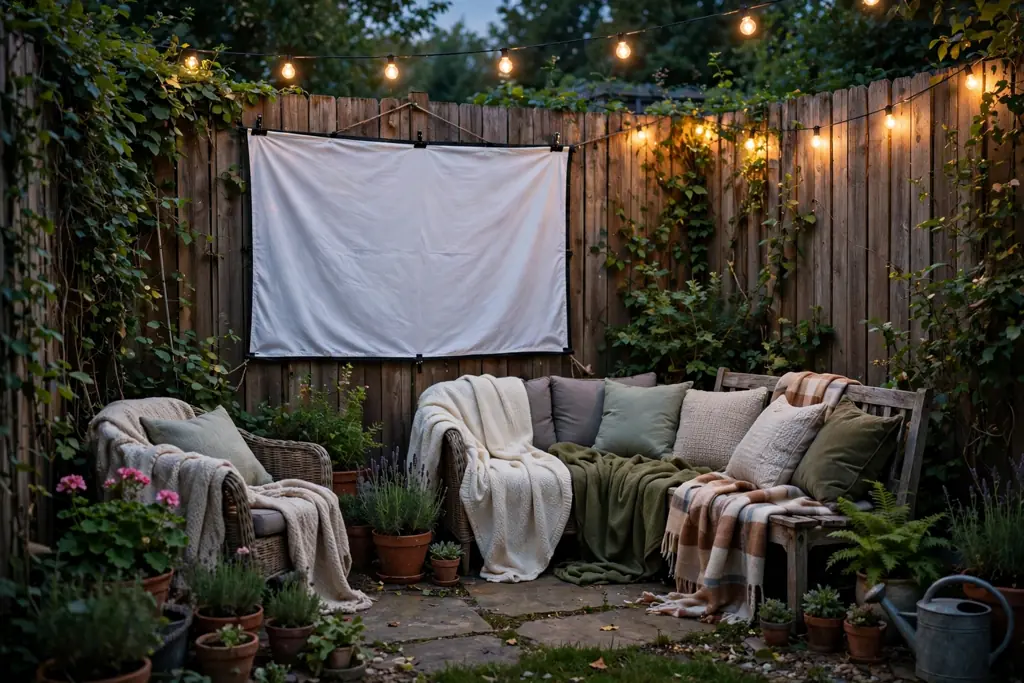
A projector and a plain screen or a light sheet hung on a fence can turn a small backyard into a fun movie spot for family or friends. Spread out blankets and cushions, add a few folding chairs, and pick a film the whole group can enjoy. This suits a flat stretch of fence or wall with a dark corner, where seating can face one way without blocking a path.
Hang the screen taut so the picture stays flat, and place the projector on a steady table at the right distance for the screen size. Keep cables out of walking routes, and use battery or sheltered power outdoors. Bring the screen and projector inside after the film, so damp and wind do not shorten their life, and keep the seating area clear of the projector beam.
20. Create a Reading Nook With a Hanging Chair
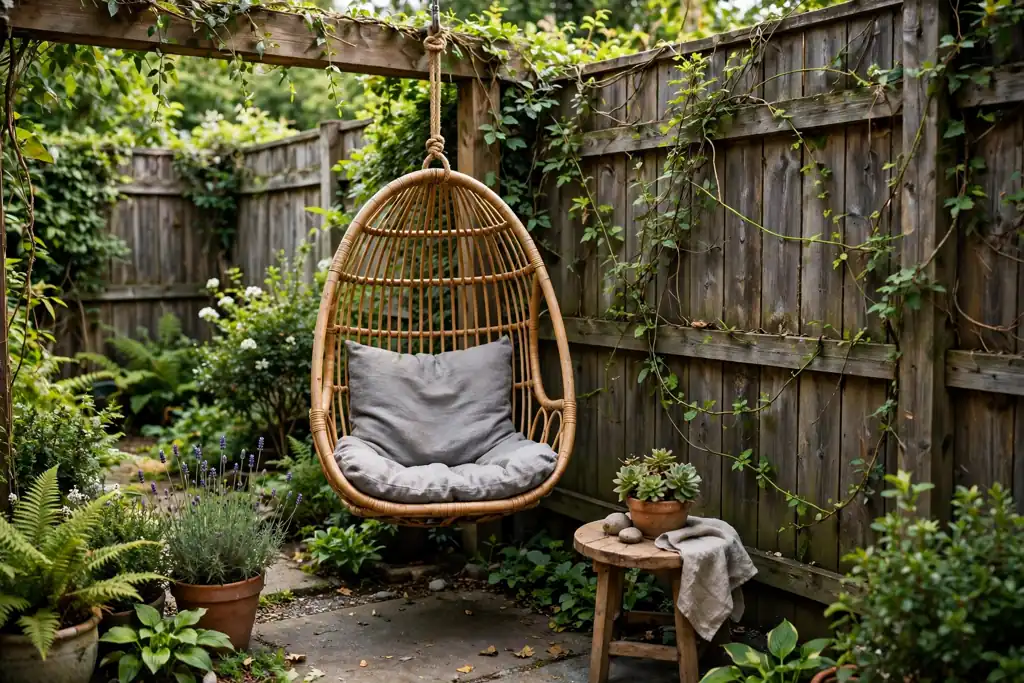
A hanging chair in a quiet yard corner gives a snug reading spot that takes less floor space than a lounge chair and footrest. The chair hangs from a stand or a firm beam, with a cushion and a small side table for a book and a drink. This suits a corner by a fence or a tree, where one person can sit with plants nearby and the main yard stays open.
Check the stand or beam rating before you buy, and place the chair where it can swing a little without hitting a fence, pots, or a path. Keep the cushion inside in wet weather if it is not fully weatherproof, and add a soft throw for cool evenings. If the corner also needs to stay clear at other times, choose a stand that moves, so the chair can shift to a shed or a covered spot.
21. Build a Potting Bench Along the Fence
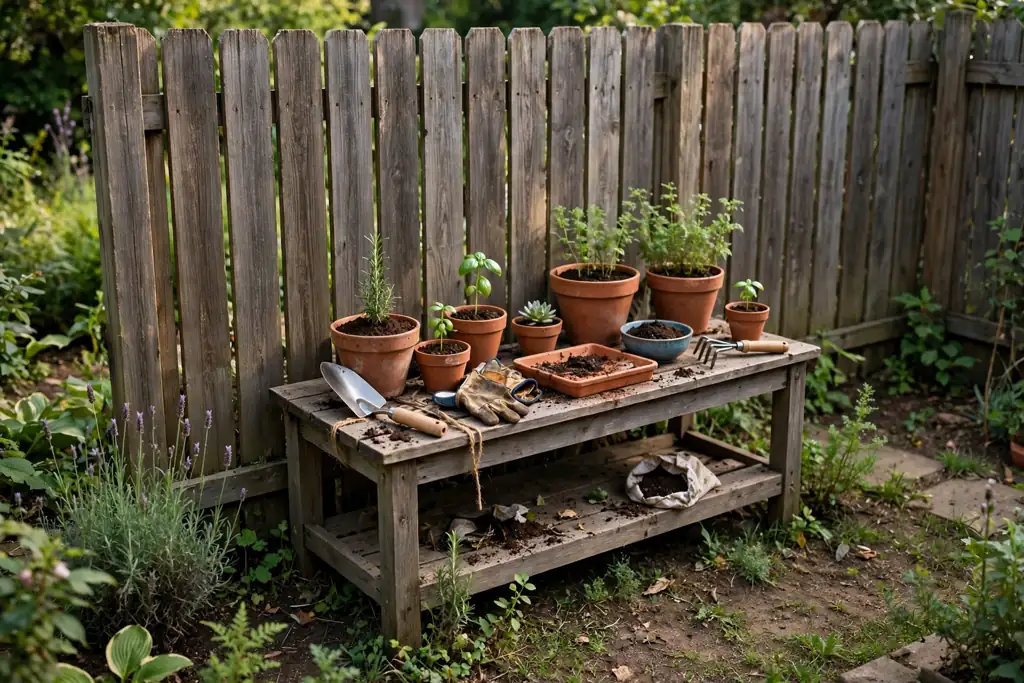
A potting bench along a fence gives garden work a clear home, so pots, soil, tools, and seed trays stop spreading across the seating area. A bench with a work top, a lower shelf, and a few hooks holds the items you reach for most, and it suits a yard where planting is a regular job. This suits a side strip or a fence corner near the beds, where mess stays out of the main seating zone.
Choose a bench made for outdoor use, with a top you can hose down, and keep heavy bags of soil low so the bench stays steady. Hang small tools on hooks above the bench, and keep a bin nearby for spent soil and trimmings. Sweep the bench after each session, so it stays ready for the next planting job, and cover it or move tools inside in winter.
22. Screen Bins and Tools in One Tidy Corner
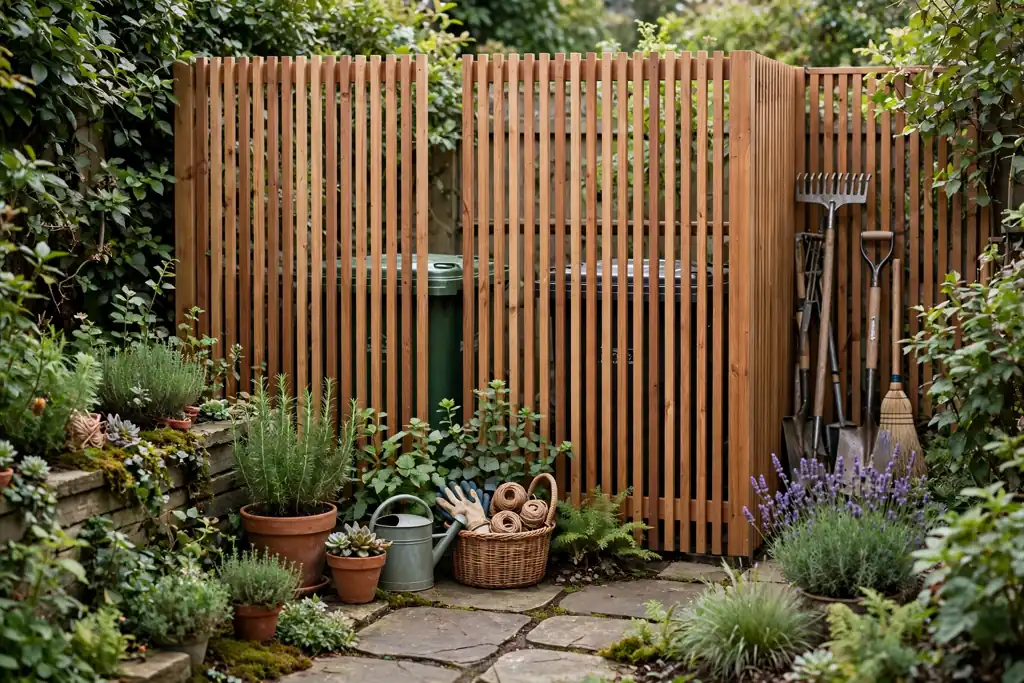
Bins, garden tools, and hoses often end up by the back door, where they crowd the first view of the yard. A screened corner with a simple slatted screen, a small shed, or a covered store hides them in one place, while keeping them easy to reach on bin day or garden days. This suits a small yard where storage has no other home, and the main seating area needs to stay clear.
Place the store near the gate or the path to the street, so bins roll out without crossing the seating area, and leave room to open lids and doors fully. Keep the screen low enough to reach over for watering cans, or add a gate if you want full cover. For ideas on keeping the rest of a small home tidy around a hardworking store, see these small storage ideas for small spaces for bins, hooks, and shelves that keep clutter out of sight.
23. Make a Compact Play Corner for Children
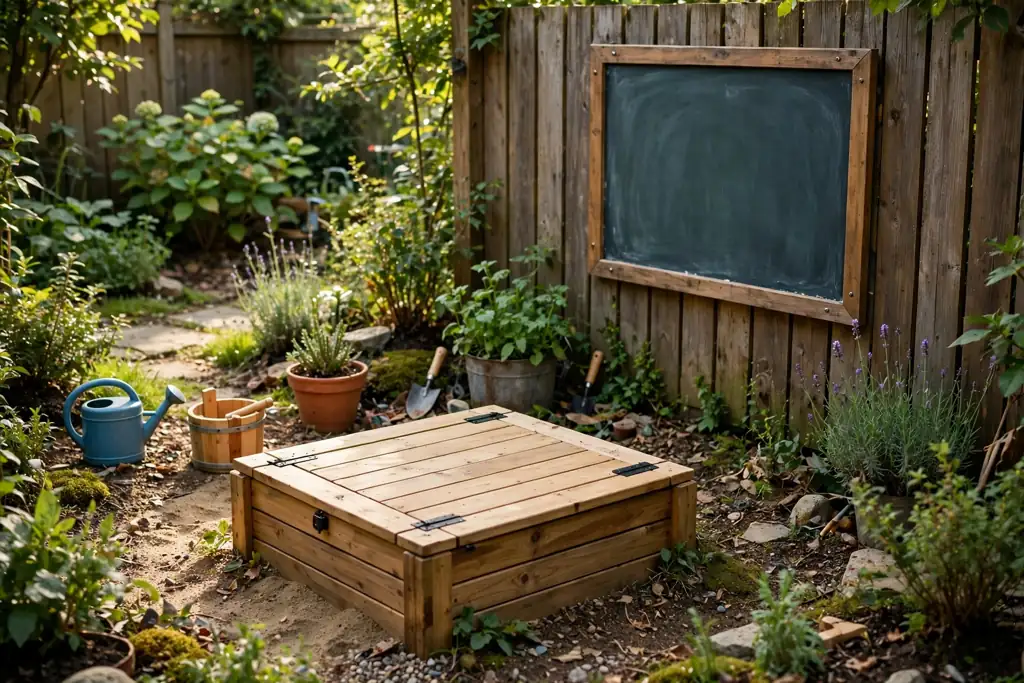
A compact play corner gives children a clear place to play, so toys and games stop spreading across the whole yard. A small sand pit with a lid, a chalk board on a fence, or a low table for outdoor crafts fits a corner near the house, where adults can watch from seating. This suits a family yard where play matters, but the lawn and beds still need their own space.
Choose play items that store or cover easily, so rain and leaves do not ruin them, and keep the corner on a soft, level surface such as grass, sand, or rubber mats. Keep the play area clear of the fire bowl, the grill, and thorny plants, and check lids and fixings often. Swap toys with the seasons, so the corner stays fresh without growing larger each year.
24. Set a Shady Pet Corner With Water
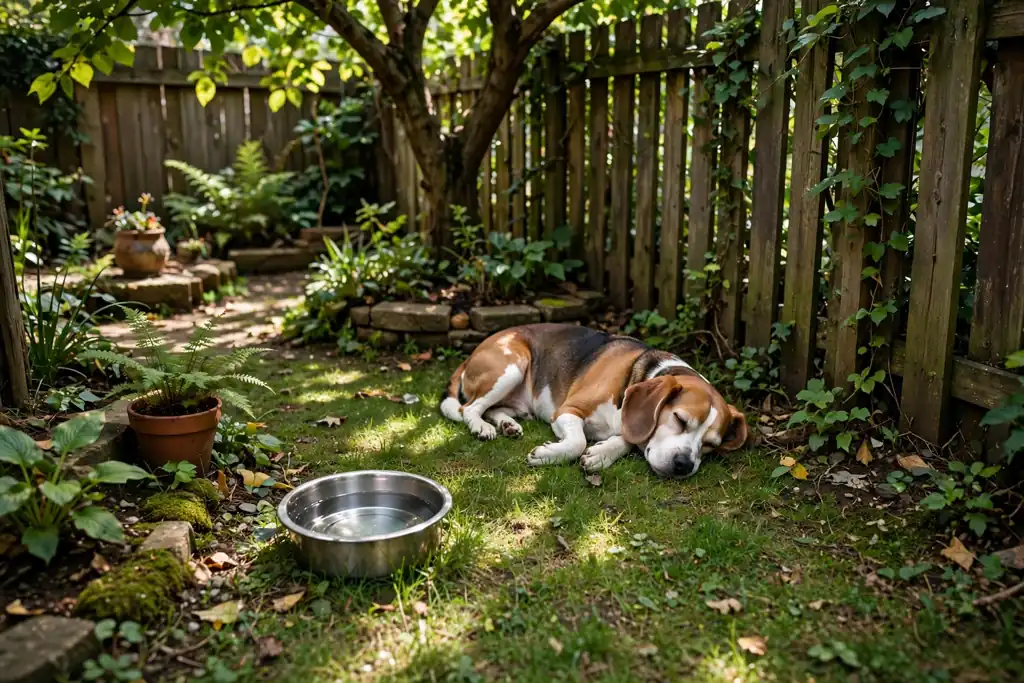
A shady pet corner gives dogs or cats a cool, safe spot in a small yard, with shade, a water bowl, and a clear area that is not a garden bed. A patch of grass or gravel under a tree or a shade sail, with a sturdy bowl that does not tip, suits a pet that spends time outdoors. This suits a yard where pets otherwise dig in beds or crowd the seating area.
Keep the corner away from thorny plants, the fire bowl, and the grill, and choose plants nearby that are safe for pets in your area. Refresh water often in hot weather, and clean the bowl so algae does not build up. Add a small shade cloth or move a pot tree nearby if the corner loses shade at midday, and keep a path from the corner to the door clear for quick trips inside.
25. Add a Bird Bath and Pollinator Pots
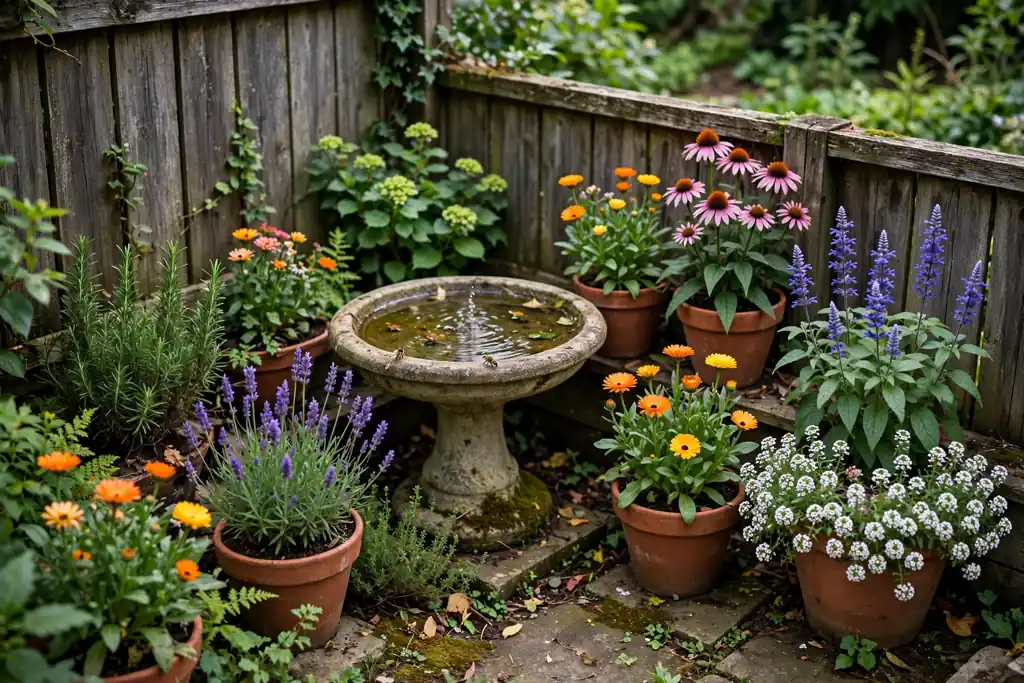
A bird bath and a few pollinator pots give a small yard wildlife interest in a footprint no larger than a chair. A shallow bird bath on a stand, with fresh water, draws birds to a quiet corner, while pots of flowers that bees and butterflies visit add color and scent nearby. This suits a yard where a pond would take too much room, and where a quiet corner can stay undisturbed.
Place the bird bath where cats cannot hide nearby, and where you can see it from seating, but not so close that birds feel crowded. Change the water often, and clean the bath so algae does not build up. Group pollinator pots by sun and water needs, and leave some flowers to seed, so birds and insects find food through more of the year.
26. Roll Out a Grill and Drinks Trolley
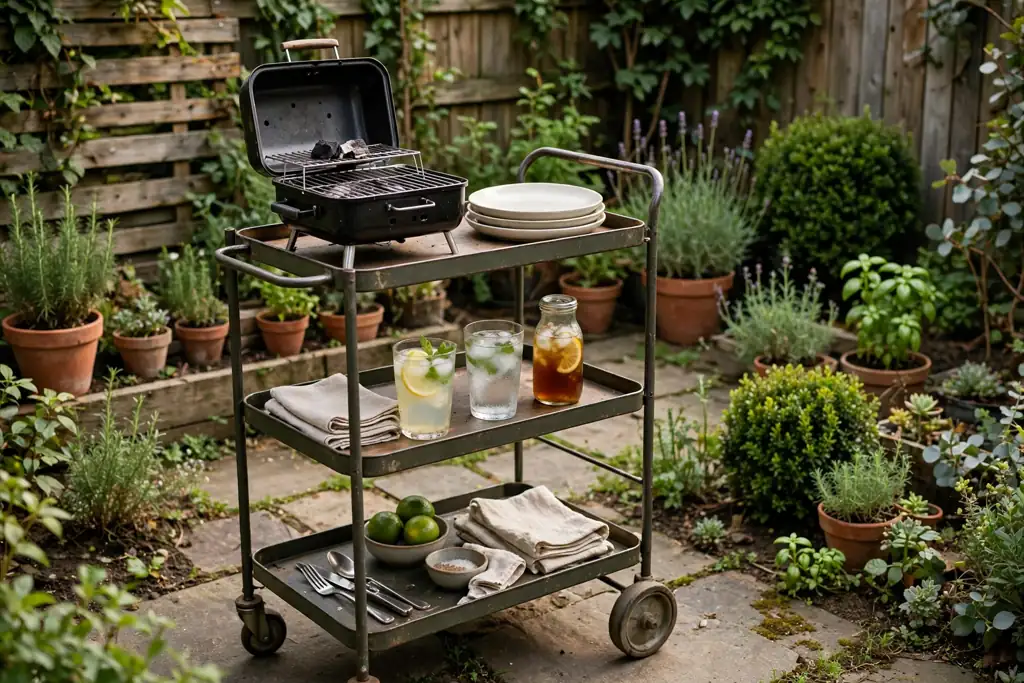
A rolling trolley for a small grill, drinks, and serving items gives a small yard an outdoor kitchen that moves out of the way when it is not needed. The trolley holds plates, tools, and condiments in one place, so meals stay near the seating area without a fixed kitchen taking yard space. This suits a yard used for weekend meals, where a built kitchen would crowd the lawn and beds.
Keep the trolley on a firm, level surface, away from fences, plants, and seating, and follow the maker and local rules for grill fuel and use. Store fuel and covers away from heat, and let the grill cool fully before moving the trolley. Wipe the trolley after each use, and wheel it under cover in rain or winter, so the yard returns to open space after the meal.
27. Paint a Fence Slat Screen for Privacy and Color
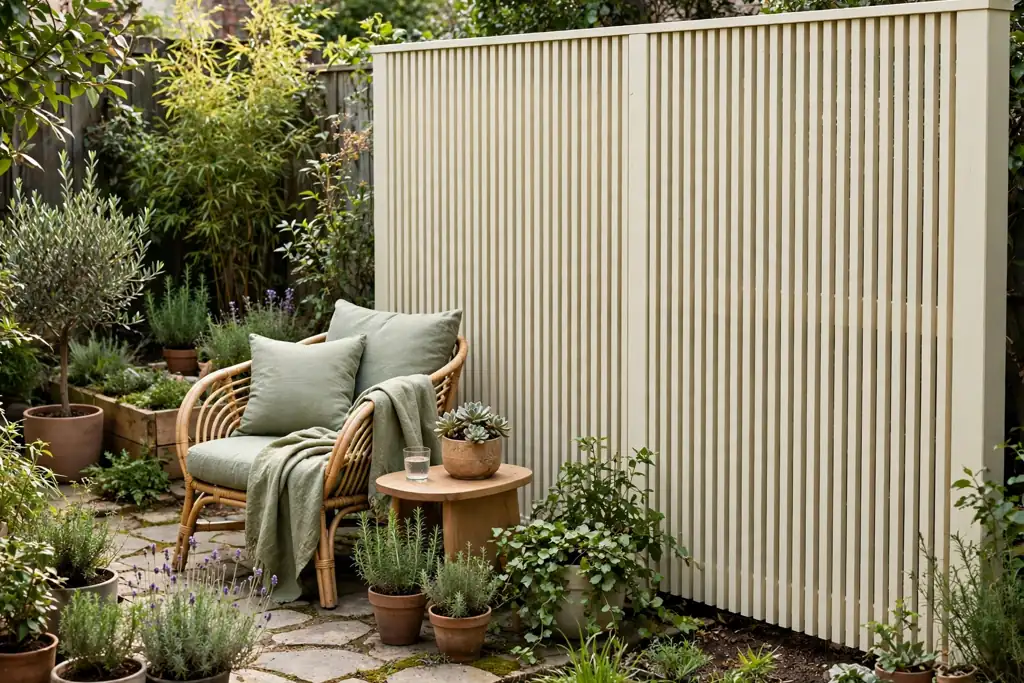
A slatted fence screen or a freshly painted fence panel gives a small yard privacy, a clean backdrop, and a sense of finish in one narrow footprint. Vertical or horizontal slats with small gaps let air and light through while screening a view, and a light fence color can make a small yard feel brighter. This suits a yard overlooked by neighbors, or a plain fence that makes the whole yard look unfinished.
Fix slats firmly, with a gap behind them so air can move and the fence can dry, and choose a paint or stain made for outdoor use. Keep the screen clear of climbers that could pull it down, or plan the screen and the climbers together so stems have a firm frame. Test a small painted area first, since fence color looks different in full sun than in shade, and repaint or stain as the maker directs to keep the finish fresh.
Conclusion
A practical small backyard does not come from filling every corner. It comes from matching each idea to a real job in your yard: a seat for coffee, a path to the beds, planting that grows up, and shade and light that let you use the space morning and evening. Start with the spot that bothers you most, use one idea well, and leave room to walk, water, and change the layout as seasons change. Over time, a few of these changes add up to a yard that feels calm, easy to care for, and easy to enjoy, even when the plot stays exactly the same size.
If you found an idea here that suits your yard, save this post on Pinterest so you can find it again when you are ready to start. Pin the look you like most, whether it is a gravel nook, a vertical planter wall, or a compact fire bowl, and use it as a guide for your next weekend project.
FAQs
How do I start improving a small backyard without a full rebuild?
Start with the spot you use most, or the spot that causes the most daily friction, such as a muddy path or a sunny seat with no shade. Add one change for that spot, such as stepping stones, a shade sail, or a bistro set, and live with it for a few weeks before adding more. Once that area works, move to the next trouble spot, so the yard grows around your real habits rather than a large shopping list.
What is the best seating for a very small backyard?
Choose seating that folds, stacks, or stores, such as a bistro set, folding chairs, or a corner bench with storage below. A small round table suits two people better than a long table, since it leaves room to pull chairs out, and a drop-leaf table suits a narrow strip where a fixed table would block the path. Keep one clear walkway through the yard, so chairs can move without climbing over plants or pots.
How can I add privacy to a small backyard without blocking light?
Use a trellis with climbers, a slatted screen, or a row of tall pots, rather than a solid wall. These options screen a view while letting air and light through, and they take a narrow footprint along a fence. Choose climbers and plants that suit the light on that side, and train stems along the frame and away from seats, so the screen stays neat and easy to reach for pruning.
How do I fit planting into a small backyard?
Grow up before you grow out: use fence beds, vertical planters, trellises, and mixed-height pots, so planting uses wall and fence height rather than walking space. Group plants by sun and water needs, and keep the center of the yard open for seating and play. Start with herbs by the door and a few pots you can move, then add a raised bed or a planter wall once you know which plants thrive in your yard.
What lighting works best in a small backyard at night?
Layer low, warm light rather than one bright light: string lights over seating, lanterns along a path, and a small solar light near steps or a gate. Use lights rated for outdoor use, keep plugs and connections sheltered from rain, and hang runs high enough to walk under without ducking. A timer keeps evening use simple, and soft light lets the yard feel calm after dark without lighting up the whole neighborhood.
How do I keep a small backyard easy to care for?
Build a short weekly routine into your yard care: sweep paths, check pots for water, return cushions and tools to their store, and clear leaves from drains and gravel. Choose plants and materials that suit your climate and your time, and keep every plant within reach for watering and pruning. A yard with one clear job per corner, and a store for tools and cushions, stays tidy far longer than a yard that needs a big clear-out each season.