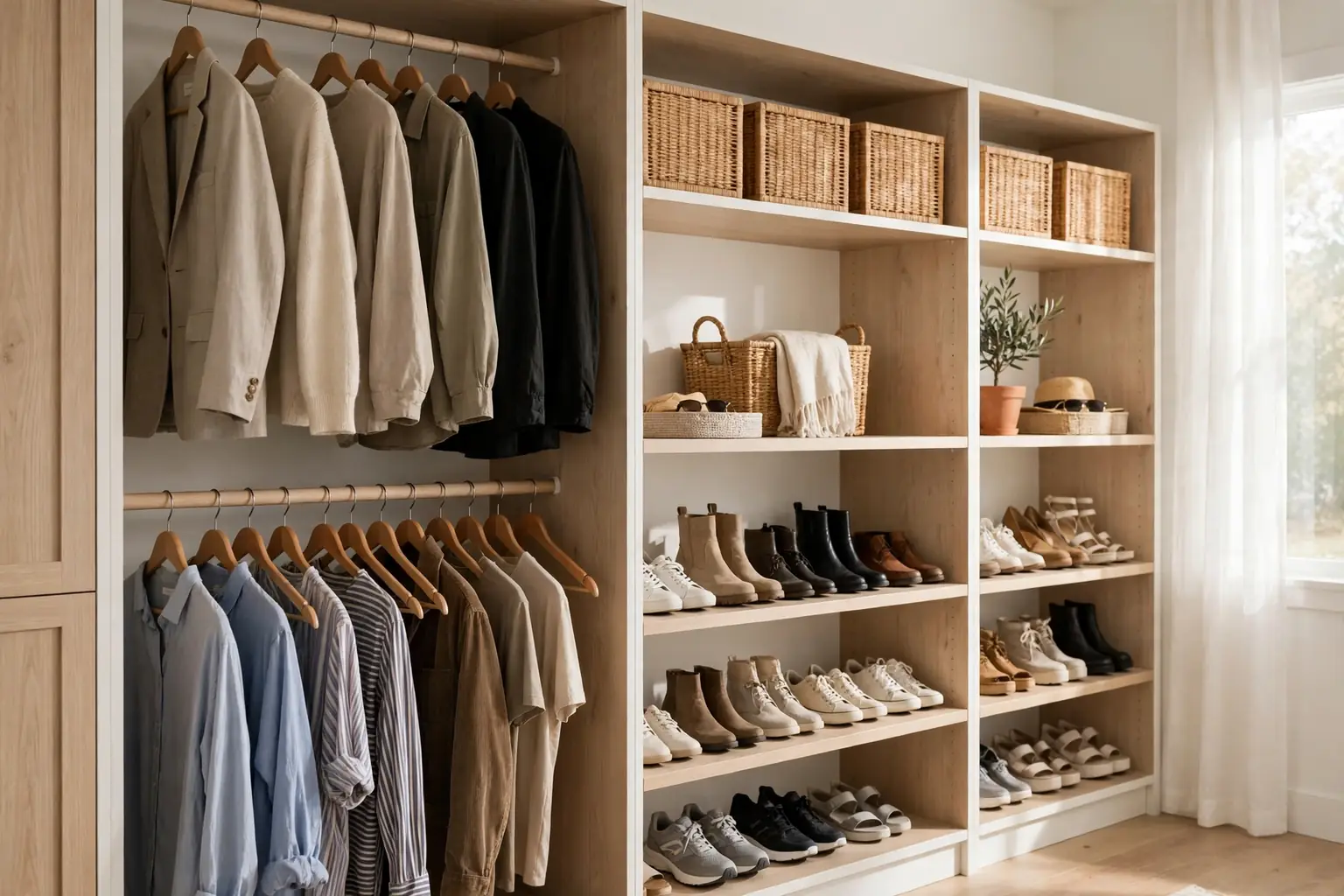
A closet that works saves time every morning. You open the door, see what you need, and get dressed without digging through a pile or hunting for a missing shoe. A closet that does not work hides clothes, wastes the top shelf, and turns a small daily task into a search. These 22 closet organization ideas cover hanging space, shelves, shoes, accessories, light, and shared closets, so you can fix the part that causes the most trouble first. Start by emptying the closet, sorting what you actually wear, and measuring the width, depth, and door swing before you buy anything.
Key Takeaways
- Measure width, depth, hanging length, and door swing before buying rails, bins, or shelves, since a few inches decide what fits.
- Hang short clothes on two rails to double hanging space, and keep one tall section for coats and long dresses.
- Put daily clothes at eye and hand level, seasonal clothes up high, and rarely worn pieces at the back or in closed boxes.
- Give shoes, bags, and accessories their own homes, so they stop landing on the closet floor.
- Use slim, matching hangers and shelf dividers, since mixed hangers and collapsing stacks waste more space than they save.
- Add light inside the closet, since a dark closet hides what you own and makes getting dressed slower.
1. Double Hanging Rails for Short Clothes
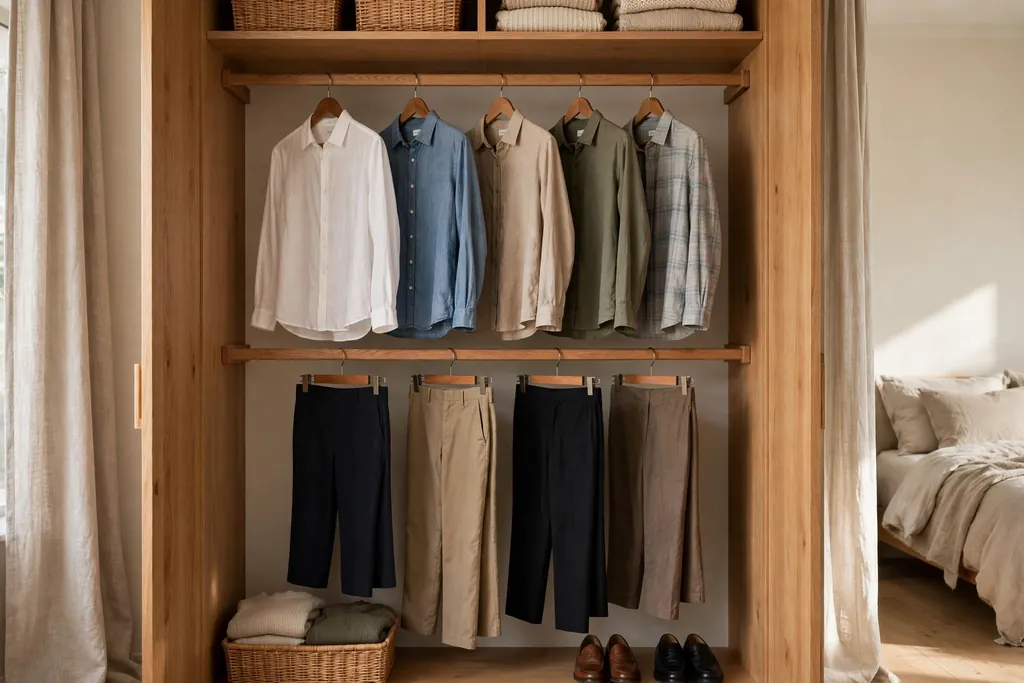
Fit two rails, one above the other, in the section that holds shirts, jackets, and short trousers. Short clothes need far less height than a single long rail allows, so a second rail turns dead air below the first rail into a full row of hanging space. This is often the single biggest gain in a reach-in closet, and it suits both fitted systems and freestanding rail kits.
Measure your longest shirt first, then set the lower rail so shirts clear the floor or a shoe shelf below. Keep one section of the closet at full height for coats and long dresses, so nothing gets folded that should hang. Use the same hanger style on both rails, since mixed hangers crowd the rail and make clothes hard to slide.
2. Slim Matching Hangers for a Fuller Rail
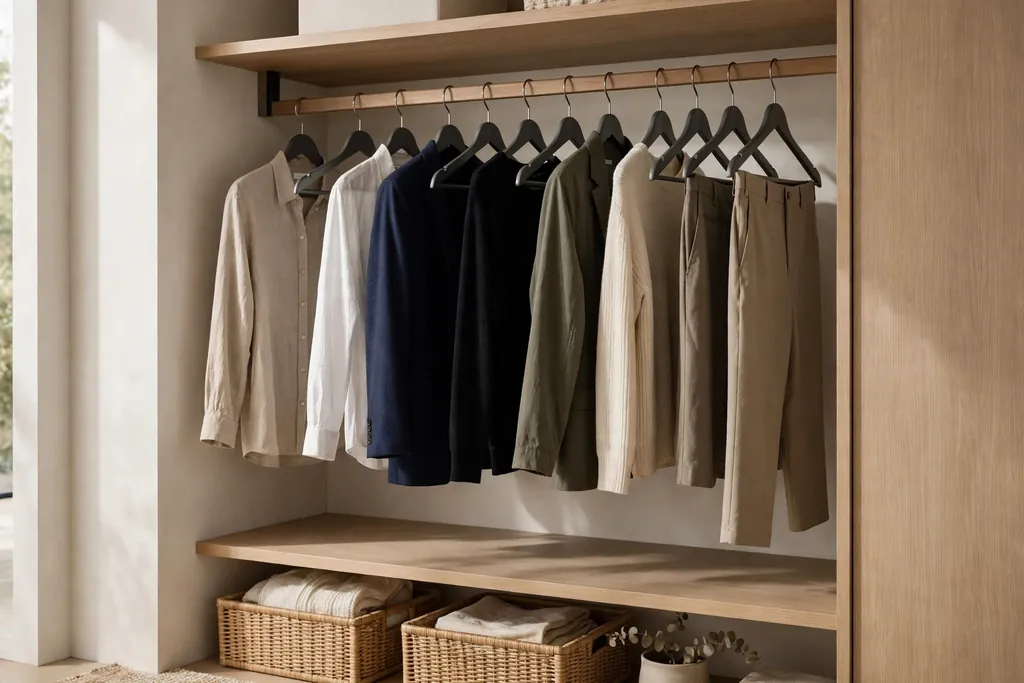
Swap bulky hangers for slim, matching ones, and a crowded rail gains room at once. Thick wooden and plastic hangers each take more width than the garment on them, and mixed shapes catch on each other when you pull one item out. Slim hangers line up neatly and let clothes slide freely, which makes the whole rail easier to use.
Choose one hanger type for the whole closet, with clips for trousers and skirts if you hang those items. Keep a small count of sturdy hangers for heavy coats, since slim hangers can bend under a winter coat. When the rail fills again, the hanger count is a useful signal: if you need more hangers, it may be time to pass on clothes you no longer wear.
3. Shelf Dividers for Folded Stacks
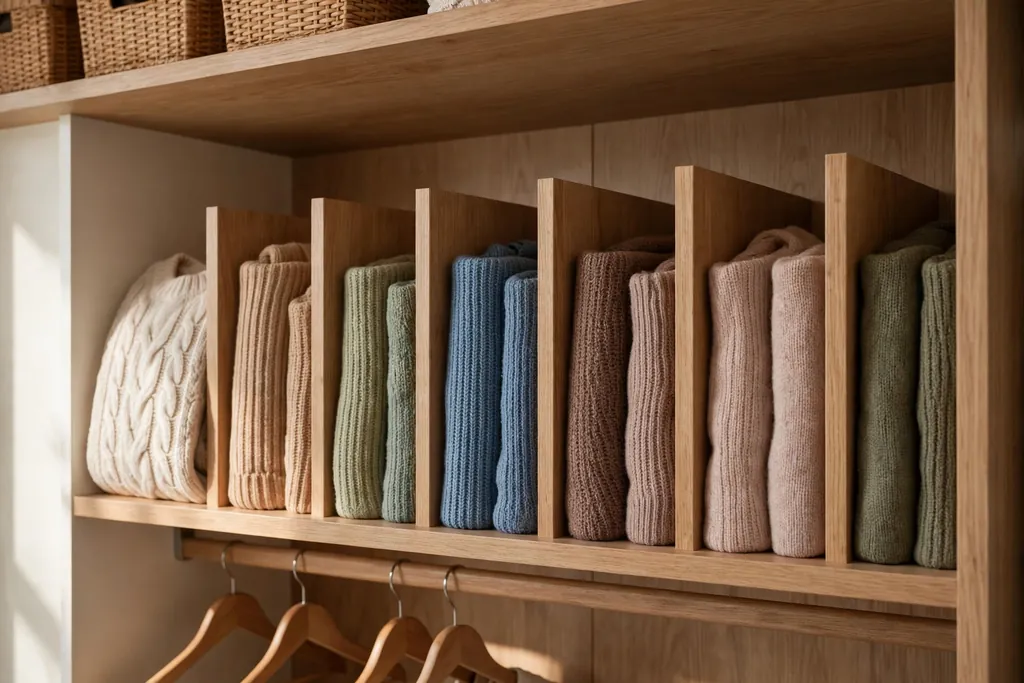
Add shelf dividers to keep folded stacks upright and separate, so one pulled jumper does not topple the whole shelf. Folded clothes slide and collapse without a boundary, and dividers give each stack its own slot, like books on a shelf. This works best for knitwear, jeans, and T-shirts stored on open shelves.
Fold clothes to the same width so stacks line up, and file them in rows rather than tall piles where you can. Keep each stack to a height you can lift with one hand, and leave one slot empty for new items or laundry in progress. Wipe the shelf when you refold, since folded stacks collect lint at the edges.
4. Labeled Bins for Closet Shelves
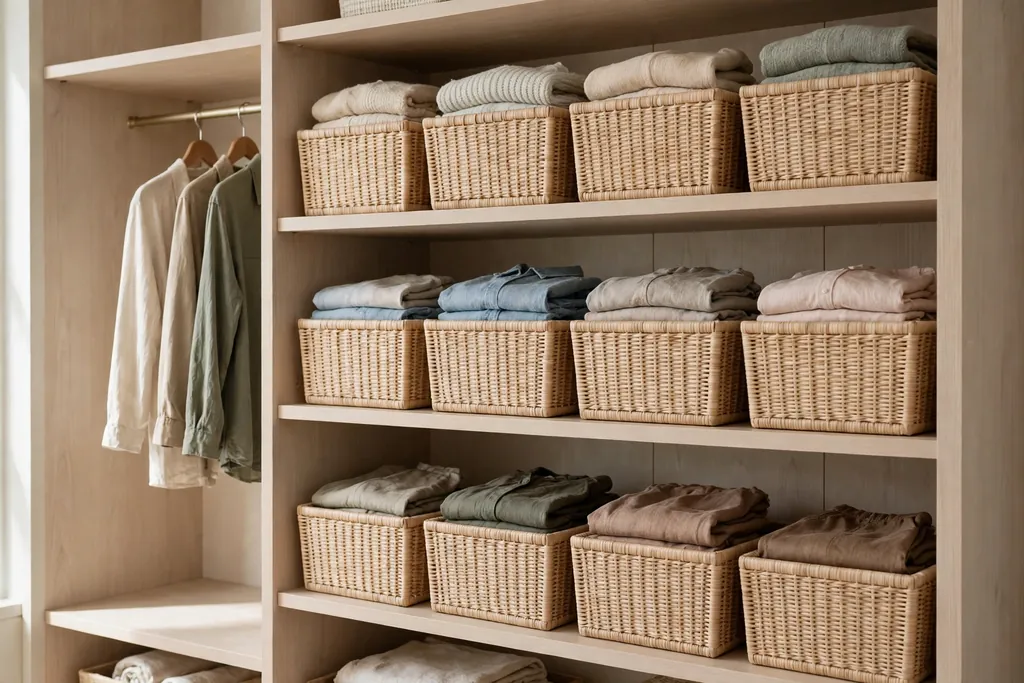
Use matching bins with clear labels on closet shelves for folded clothes, gym clothes, and sleepwear. Bins turn open shelves into closed storage without doors, and a label on the front tells you what is inside without opening every bin. This suits a bedroom closet, a linen closet, or a hall closet where shelves are deep and items get lost at the back.
Choose bins that match your shelf depth, and stack no higher than you can safely reach, since a tall stack is hard to lift down. Put the bin you use most at the front or on top, and seasonal bins at the back or on the highest shelf. Use the same bin style throughout one closet, so the stacks look neat and sit steadily, and re-label a bin when its contents change rather than letting the label lie.
5. Clear Bins on the Top Shelf for Seasonal Clothes
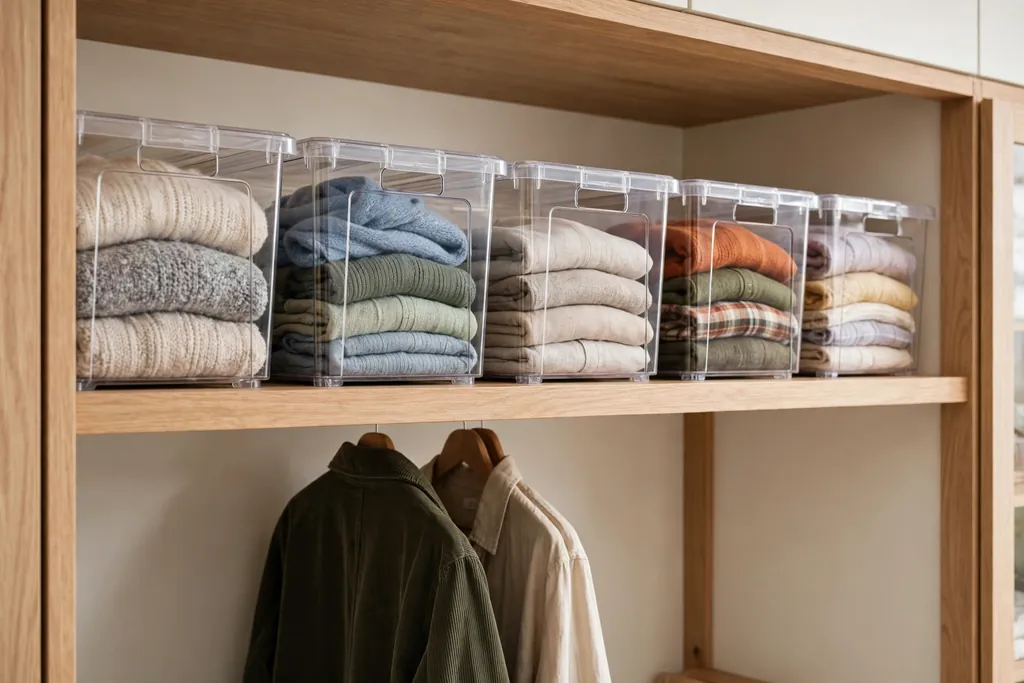
Store seasonal clothes and rarely used items in clear bins on the top shelf, with a label on each bin. Clear sides let you see what is inside without pulling every box down, and labels save you from opening three bins to find one item. This works well for swimwear in winter, heavy knitwear in summer, and occasion clothes.
Keep bins shallow enough to lift safely from a step stool, and avoid packing them so full that the lid will not close. Put a short list on the label, such as “winter hats, gloves, scarves,” rather than a single vague word. Review the bins each season when you swap clothes, and move out anything you did not wear during its season. For more layout ideas to pair with a seasonal swap, see these closet design ideas for rails, shelves, and built-in runs.
6. Over-Door Organizer for Shoes and Small Items
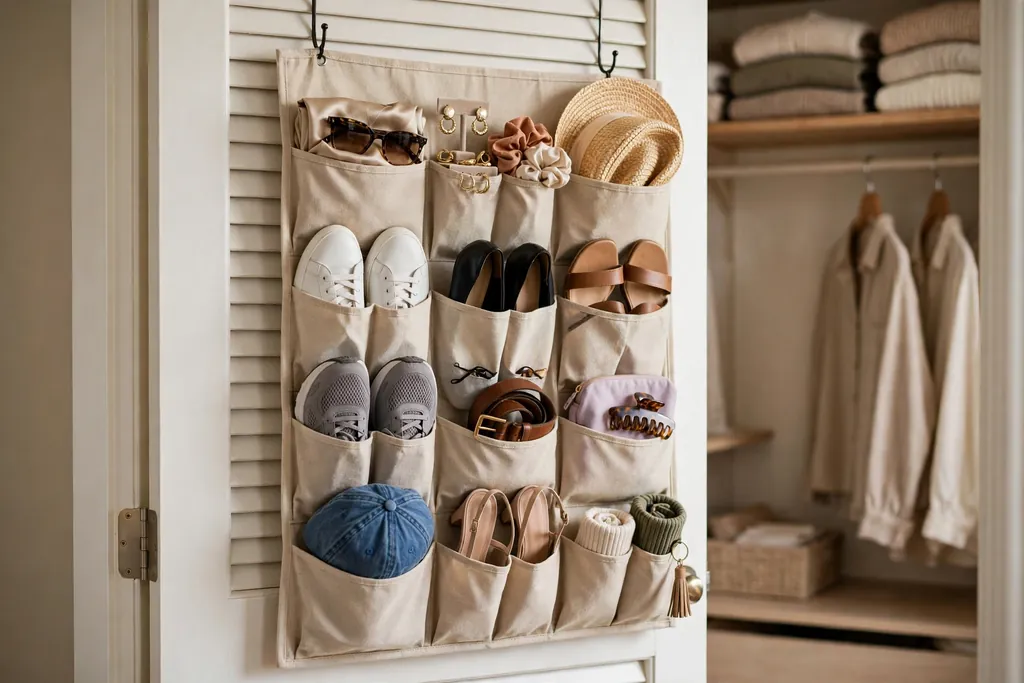
Hang a pocket organizer or a row of hooks on the inside of the closet door for shoes, accessories, and small items that otherwise fill shelves. The door is unused space in most closets, and a flat organizer adds storage without taking a single inch of rail or shelf. Clear pockets suit shoes and small accessories, while fabric pockets give a calmer look.
Keep heavy items off a hanging organizer, since weight can pull it off the door or stop the door closing fully. Sort pockets by use, such as daily shoes at eye level and occasion pairs higher up. If the door is used often, choose hooks with a soft backing to protect the door surface, and check that nothing rattles when the door moves.
7. Pull-Out Valet Rod for Planning Outfits
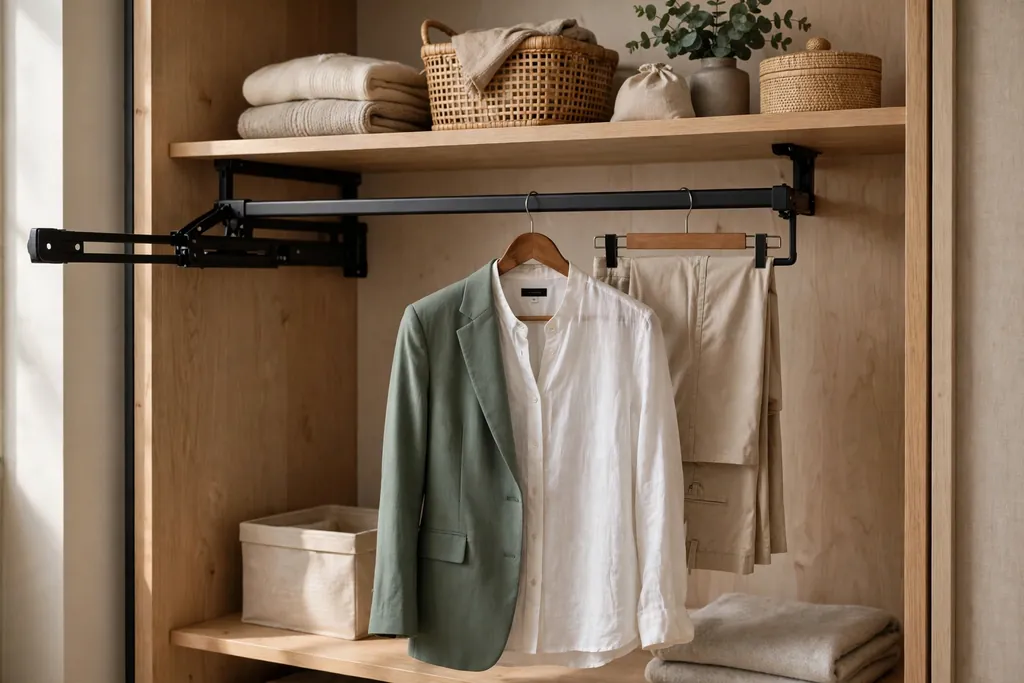
Fit a pull-out valet rod under a shelf for a temporary hanging spot while you plan an outfit or unpack laundry. A valet rod pulls out when you need it and pushes back flush when you do not, so it takes no permanent space. It suits small closets because it gives you a staging area without a chair or a hook on the door.
Use the rod for one outfit at a time, such as tomorrow’s clothes or items that need steaming, and clear it daily so it does not become a second rail. Fix it near the front of the closet, where it is easy to reach, and check that it clears the door when pulled out. A valet rod also helps when steaming, since you can hang the garment where you can work around it.
8. Pull-Down Rail for Tall Closets
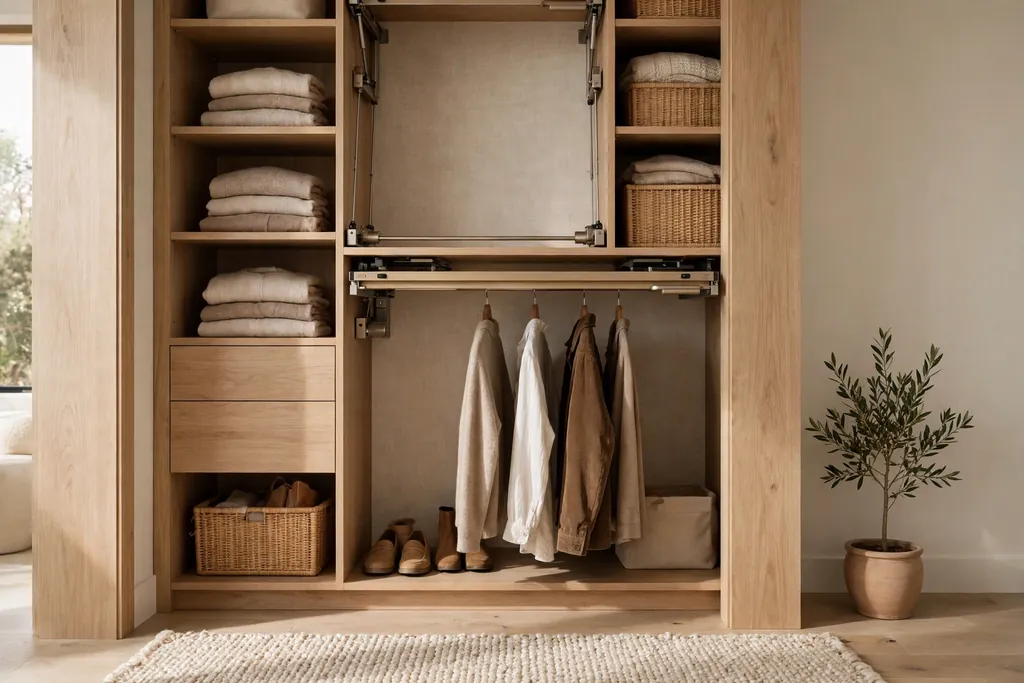
Fit a pull-down rail in a tall closet so high hanging space is usable without a step stool every day. A pull-down rail lowers clothes to hand height with a handle, then lifts them back up, which makes the top half of a tall closet as useful as the bottom half. This suits rooms with high ceilings where the upper rail would otherwise sit empty.
Check the weight rating before loading it, and keep heavy coats on the lower rail, since a loaded pull-down rail is harder to lift. Follow the maker instructions closely, since the rail carries weight above your head. If a pull-down rail is out of reach, a high shelf with labeled bins is a simpler use of the same space.
9. Slanted Shoe Shelves at the Base
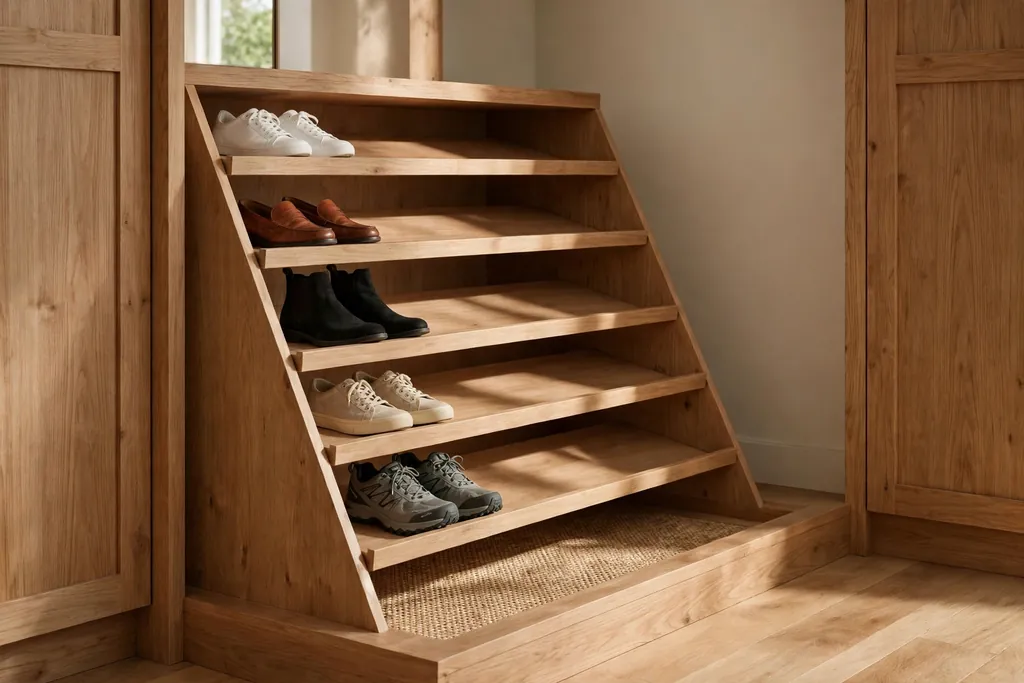
Fit slanted shelves at the base of the closet so shoes sit at an angle, visible at a glance, instead of stacked in a dark pile. A slant shows each pair, which makes it easier to pick shoes in the morning and harder to forget pairs at the back. Two or three low shelves hold a surprising number of pairs in a narrow footprint.
Keep tall boots off slanted shelves, since they slide, and store boots upright on the floor beside the shelves or in tall boot holders. Wipe shoes before putting them away, so dirt does not build up on the shelf below. If you buy shoes often, leave one shelf partly empty, since a full shoe shelf is the first place overflow lands on the floor.
10. Drawer Unit for Folded Clothes and Accessories
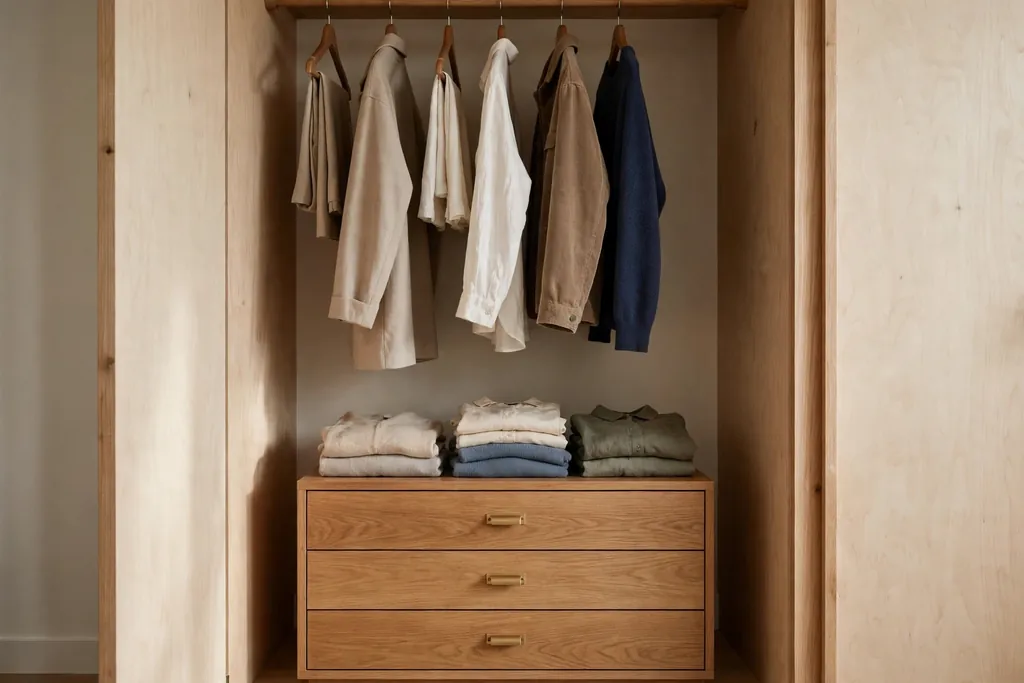
Place a small drawer unit or a set of stacking drawers on the closet floor for folded items, underwear, and accessories. Drawers beat open piles because each drawer holds one category, and you can open one without disturbing the rest. A unit with three or four shallow drawers suits a reach-in closet better than one deep drawer.
Sort drawers by type, such as tops in one, sleepwear in another, and gym clothes in a third, and add small dividers inside so stacks stay upright. Leave a little air above the top drawer so the rail above it still clears hanging clothes. If the closet has no floor space to spare, a hanging shelf unit with drawer inserts gives a similar result.
11. Side-Wall Hooks for Bags and Hats
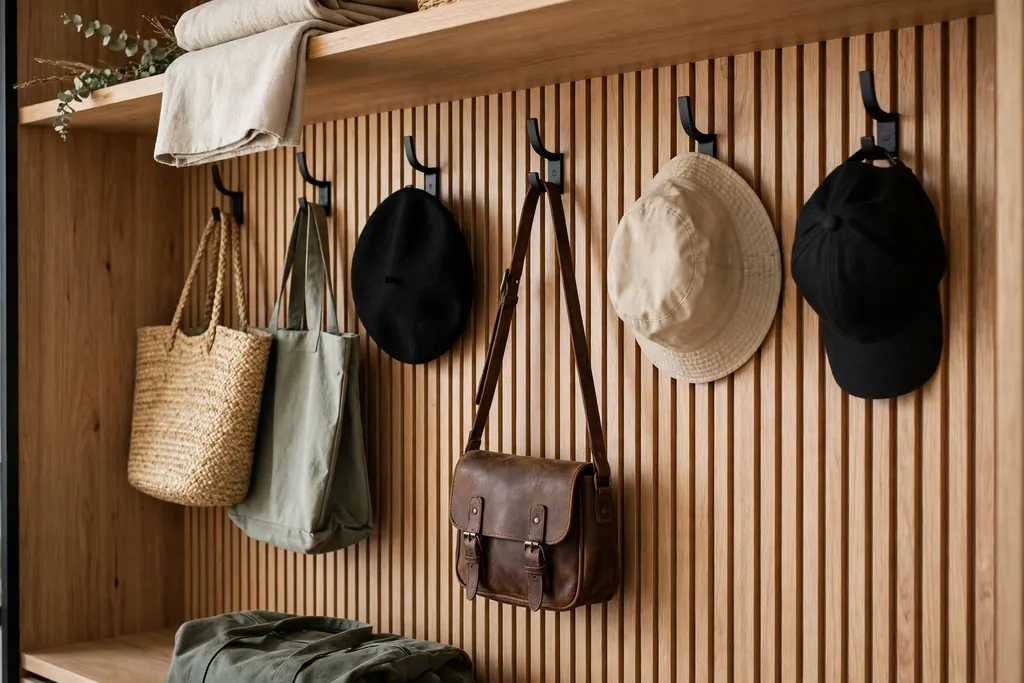
Fix a row of hooks on the closet side wall for bags, hats, and tomorrow’s outfit. Side walls are often bare, yet they sit at hand height and hold items that otherwise land on the floor or on a chair. One hook per bag keeps straps from tangling, and hats hung by their inner band keep their shape better than hats stacked in a pile.
Keep the heaviest bag on the lowest hook, and check that hooks are fixed into studs or with fixings rated for the load. Leave a gap between hooks so bags do not press against each other and mark the leather or fabric. If you rent, removable hooks give a similar result, but check their weight rating and test one hook before loading them all.
12. Pull-Out Rack for Belts, Scarves, and Ties
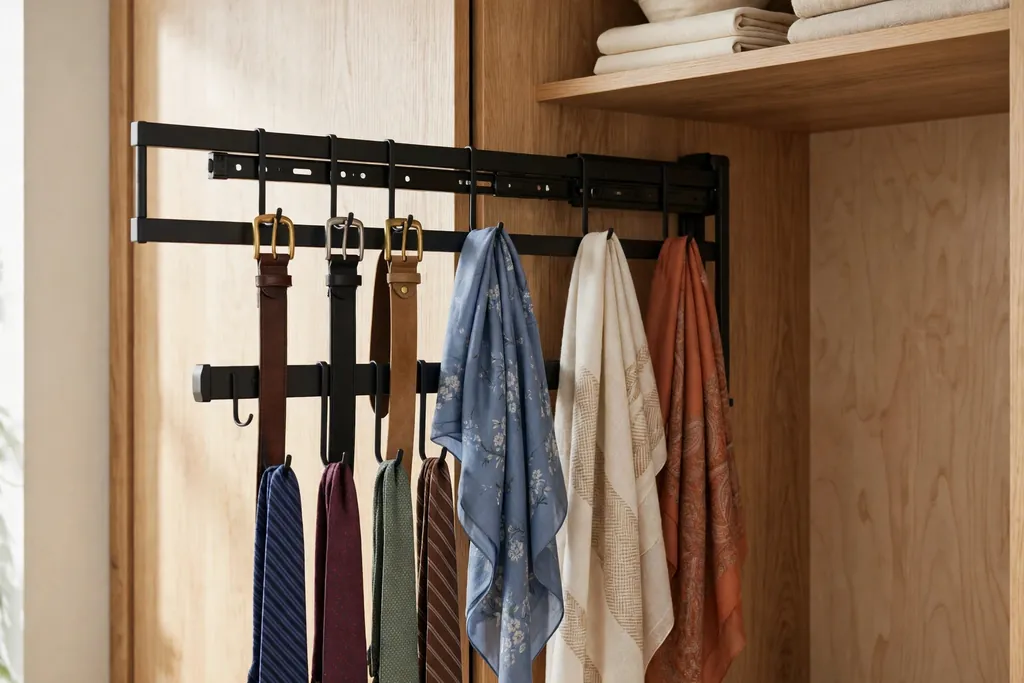
Fit a pull-out rack on the side wall of the closet for belts, scarves, and ties, so each piece hangs separately instead of tangling in a drawer. A pull-out rack slides out for choosing and slides back flat against the wall, which suits a narrow closet where a full accessory drawer would not fit. Group belts on one rack, scarves on another, or use hooks on the rack for mixed pieces.
Keep the rack at a height where you can see each piece without bending, and do not overload it, since a heavy rack sticks and pulls clothes off nearby hangers. Roll scarves instead of hanging them if they are delicate, and keep silk pieces away from rough hooks. A rack near the mirror or dressing nook saves a second trip across the room in the morning.
13. Shallow Tray Drawer for Jewelry and Small Accessories

Add a shallow drawer with small trays inside for watches, jewelry, sunglasses, and small accessories that otherwise scatter across a shelf. A drawer with dividers keeps each group separate, so you can see everything when the drawer opens and put each piece back in its own spot. This suits a walk-in closet or a built-in run with room for at least one bank of drawers.
Keep daily pieces in the top drawer and rarely worn pieces lower down. Line trays with soft fabric so metal and glass do not scratch, and wipe the trays now and then to clear dust. If drawers are not possible, a shallow tray on a shelf gives a similar result, as long as it has a fixed spot and a clear edge so items do not slide off.
14. Built-In Laundry Hamper for Worn Clothes
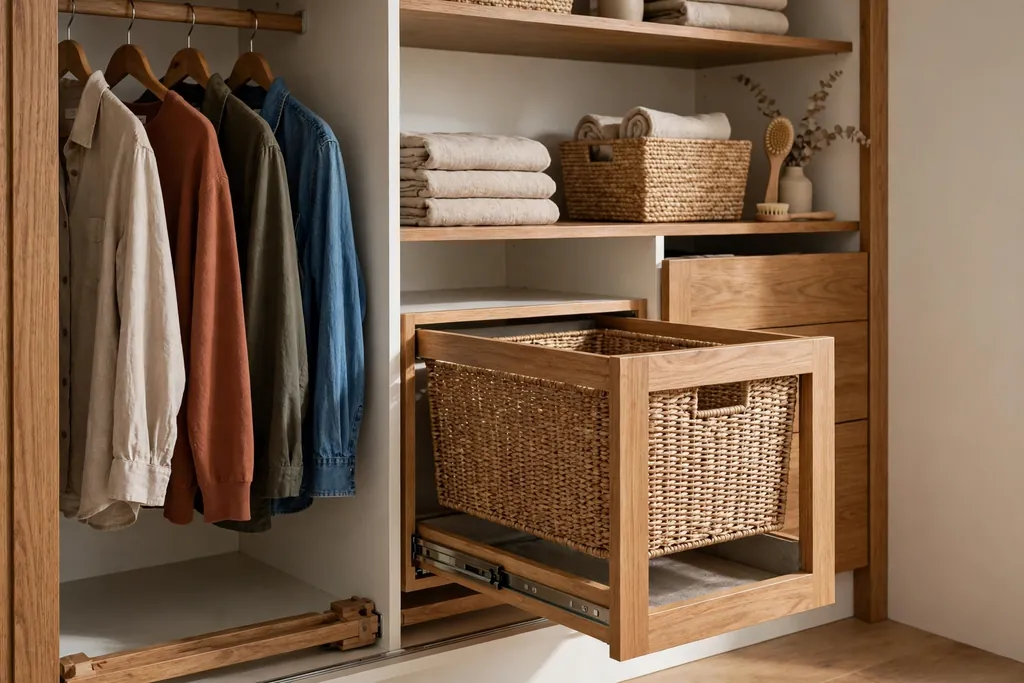
Build a laundry hamper into the closet, with a pull-out bin or a tilt-out basket, so worn clothes go straight into laundry instead of onto a chair or the floor. A hamper in the closet suits a bedroom closet used daily, since it keeps dirty clothes out of sight and in one place until wash day. Use one bin for darks and one for lights if you sort laundry at the closet.
Choose a bin with airflow, so clothes do not stay damp, and line it with a washable bag that lifts out for carrying to the machine. Empty the hamper on wash day and wipe the bin now and then. Keep the hamper away from clean clothes if space allows, so worn clothes do not transfer lint or odor to fresh outfits.
15. Battery LED Light Inside a Dark Closet
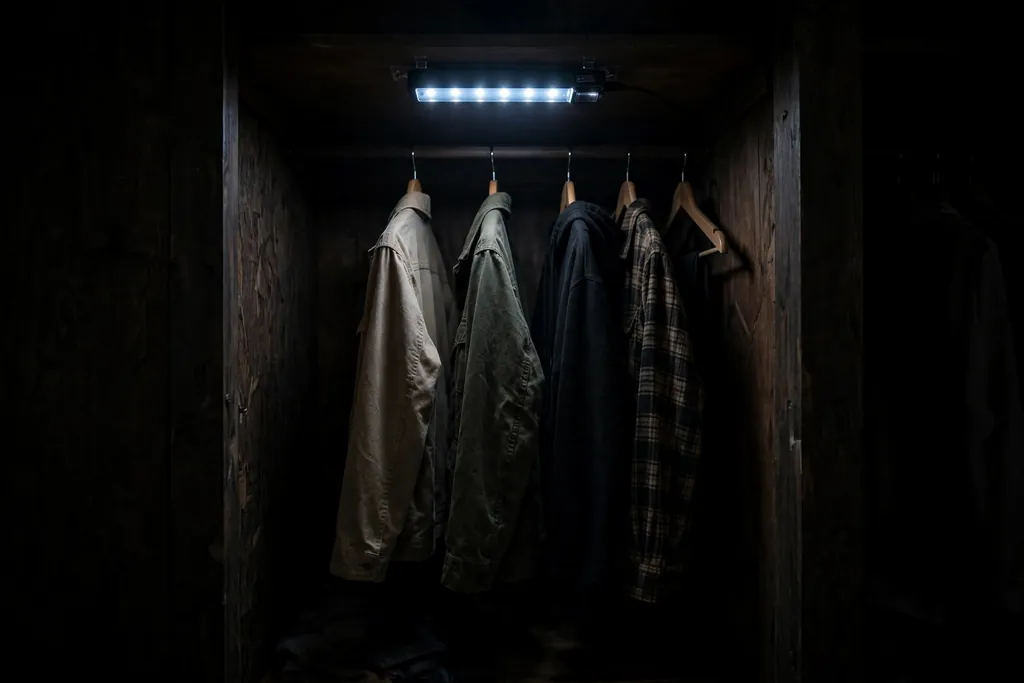
Add a battery LED light inside a dark closet, even a simple stick-on bar or motion light, so colors are easy to tell apart in the morning. Many closets have no wired light, and a dark closet hides what you own, which slows getting dressed and leads to clothes you forget you own. A small light fixes that without an electrician.
Place the light where it shines across the rails rather than straight at your eyes, and keep it clear of fabric and hanging sleeves. Choose a motion light if you want it to switch off on its own, or a tap light if you prefer manual control. Check the batteries every few months, and keep a spare set nearby so the closet does not go dark again. For small closets that need every trick, these creative closet ideas for small spaces cover rails, corners, and rooms with no closet at all.
16. Mirror on the Closet Door for Outfit Checks
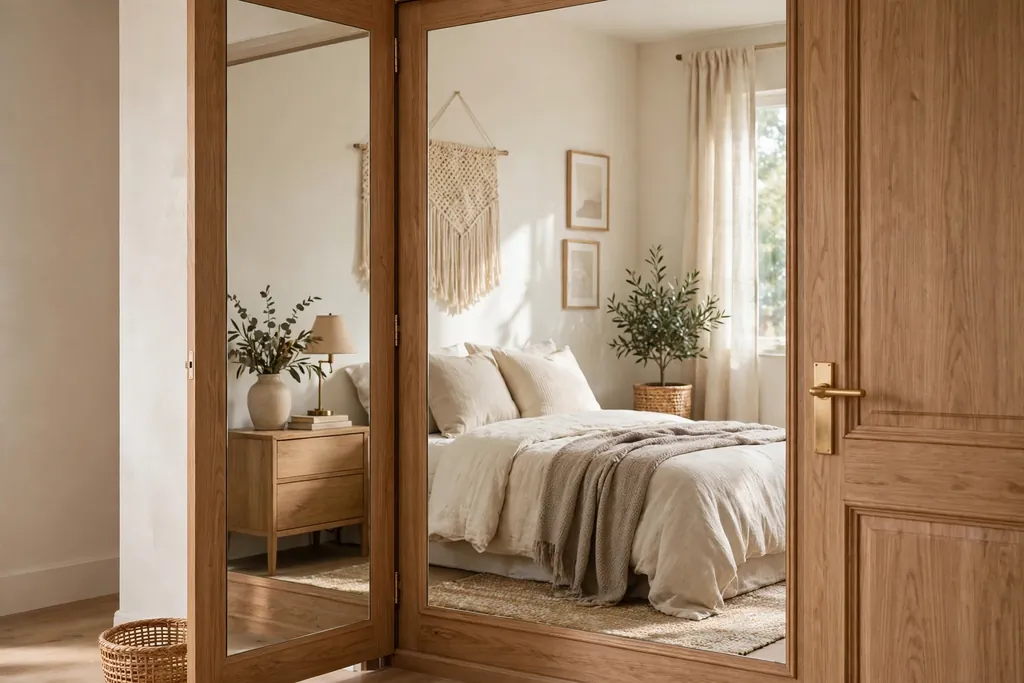
Fix a full-length mirror to the inside of a closet door, or choose sliding mirrored doors, so you can check an outfit without leaving the closet. A door mirror saves wall space in a small bedroom and puts the mirror exactly where you dress. It also bounces light around the room when the door is open.
Check what the mirror reflects before fixing it, since a mirror facing a messy corner doubles the mess. Keep the track clean if you use sliding mirrored doors, since dust in the track makes doors stick. If a door mirror is not possible, a slim leaning mirror beside the closet gives the same dressing view without changing the door type.
17. Zones by Person in a Shared Closet
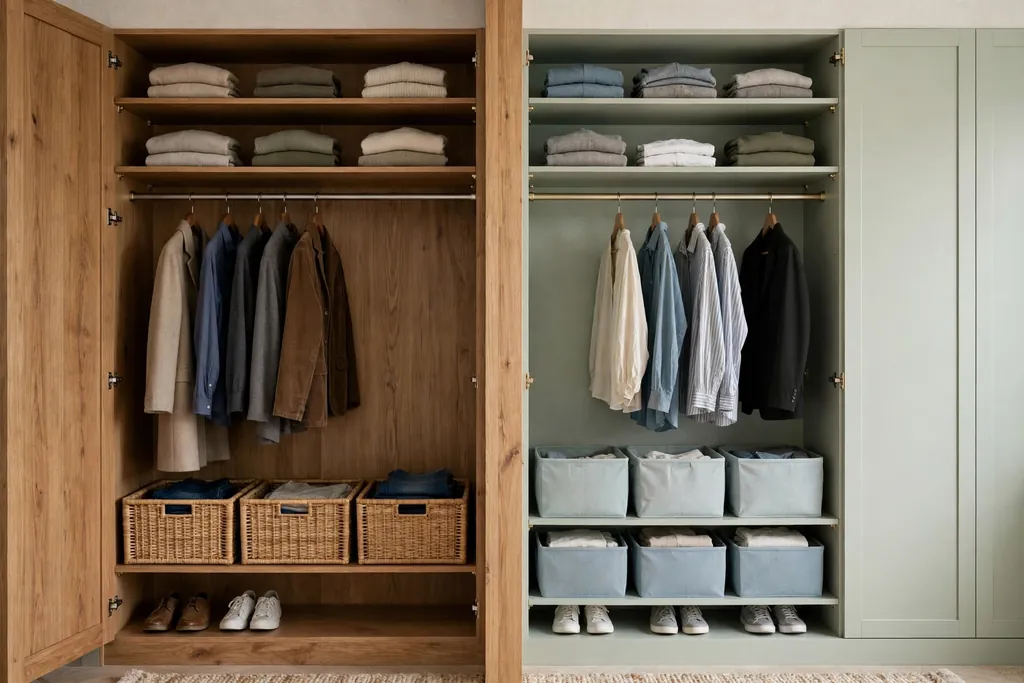
Split a shared closet into two clear zones, one per person, with a divider rail, a change of hanger color, or a shelf unit down the middle. Each zone gets its own hanging rail, shelf, and drawer or bin, so clothes do not drift into the other side and mornings stay calm. This suits couples, siblings, or roommates who share one closet and one getting-ready time.
Agree the split by clothes owned rather than by half the closet, since one person may own far more hanging clothes than the other. Keep shared items, such as ironing tools or a step stool, in a neutral middle spot both people can reach. Review the split once a season, since wardrobes change and a fixed split can start to feel unfair.
18. Color Order and a Weekly Capsule Rail
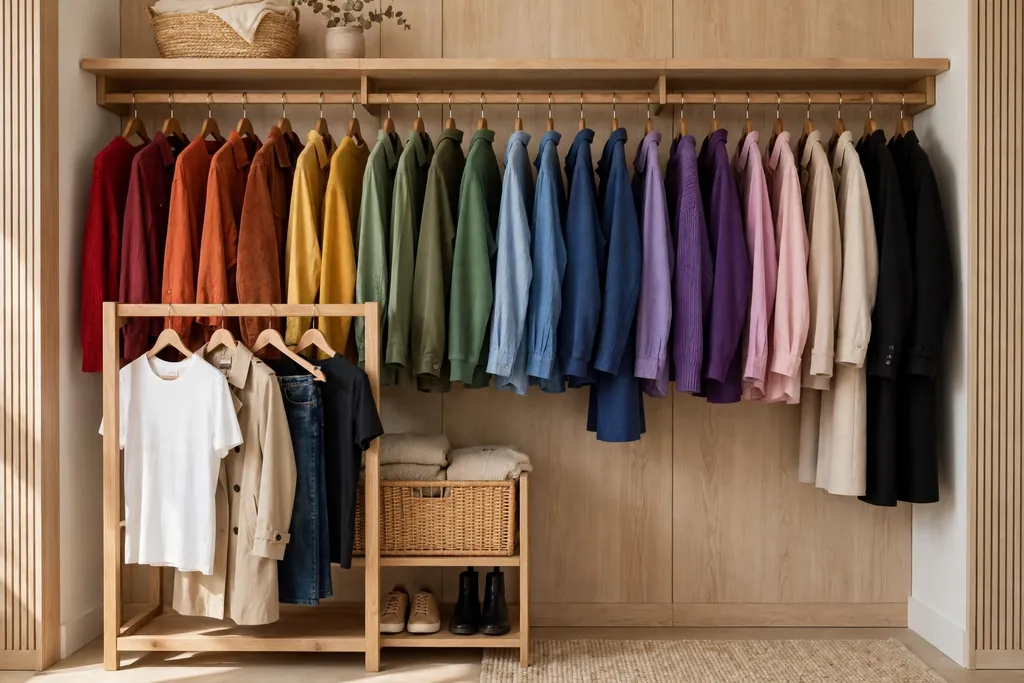
Hang clothes in color order within each category, and keep a short weekly capsule rail or a small front section for the outfits you plan to wear that week. Color order makes the rail easy to scan, so you find a navy top without pulling out every hanger, and the capsule section stops the morning search through everything you own.
Group each category in the same order every time, such as tops, then trousers, then jackets, so the eye learns where things live. Keep a small gap between categories, even if it is only one empty hanger, so the sections stay distinct. Refresh the capsule rail each Sunday, and return unworn capsule pieces to their color-order spot, so the system resets weekly.
19. Vacuum Bags for Bulky Bedding Up Top
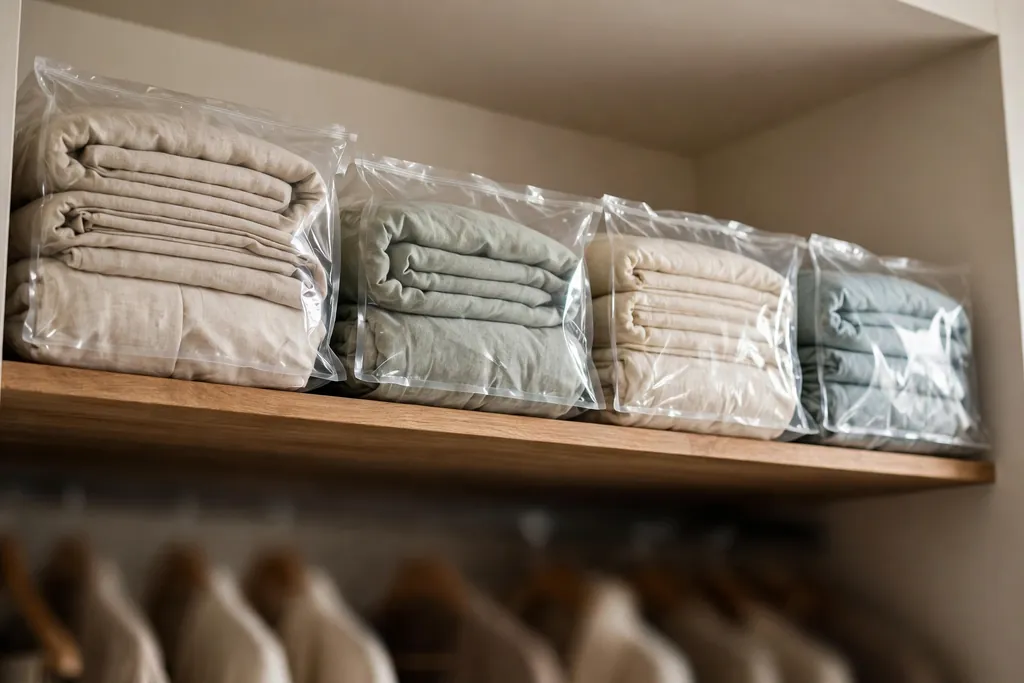
Use flat vacuum bags on the top shelf for bulky bedding, spare duvets, and out-of-season coats that eat shelf space. Vacuum bags shrink soft items to a flat pack that stacks neatly, which frees a whole shelf for clothes you actually wear. This suits a closet where the top shelf holds one puffy duvet and nothing else.
Seal bags fully and check them after a day, since a slow leak lets the bag puff back up. Label each bag on the side that faces out, and keep one bag empty for items you plan to pass on. Avoid vacuum bags for delicate fabrics or items with feathers that need loft, and store those in a breathable cotton bag instead.
20. Turntable for Accessories on a Deep Shelf
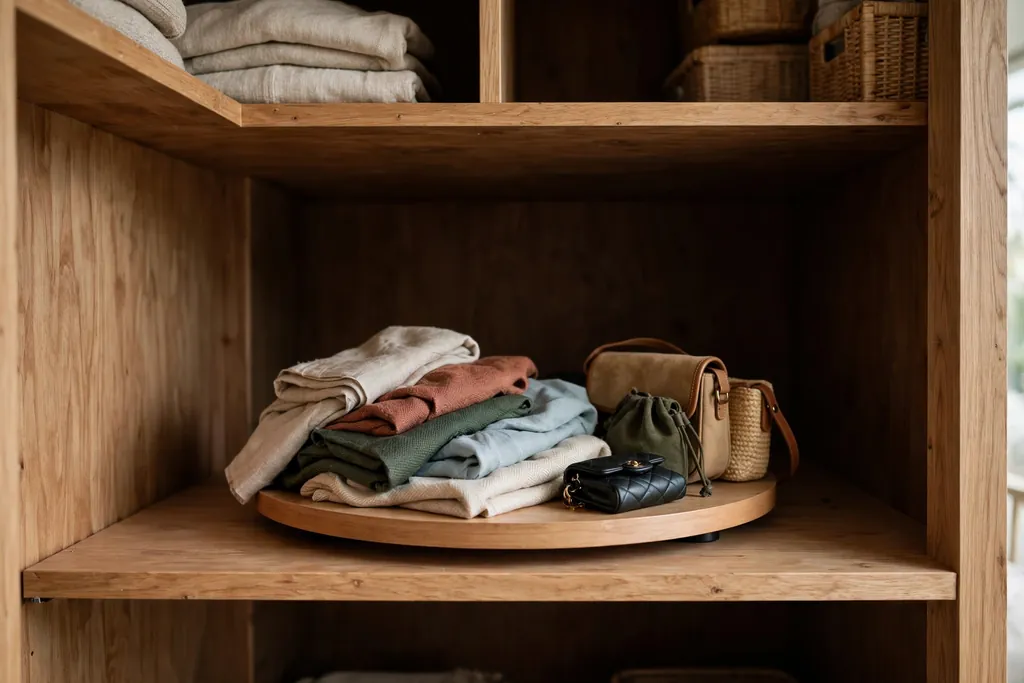
Place a small turntable on a deep closet shelf for accessories, hats, small bags, or folded scarves, so nothing hides at the back. Deep shelves waste the back half because reaching past the front row is awkward, and a turntable spins the back row to the front with one hand. This suits a corner closet or a deep built-in shelf where items vanish behind each other.
Keep the turntable to one category, such as scarves or small bags, so spinning it shows a useful group rather than a mix. Choose a turntable with a low edge so items do not slide off, and keep it light enough to spin with one hand. Leave a little clearance above it, so tall items do not catch on the shelf above.
21. Hall Coat Closet System with Hooks, Basket, and Tray
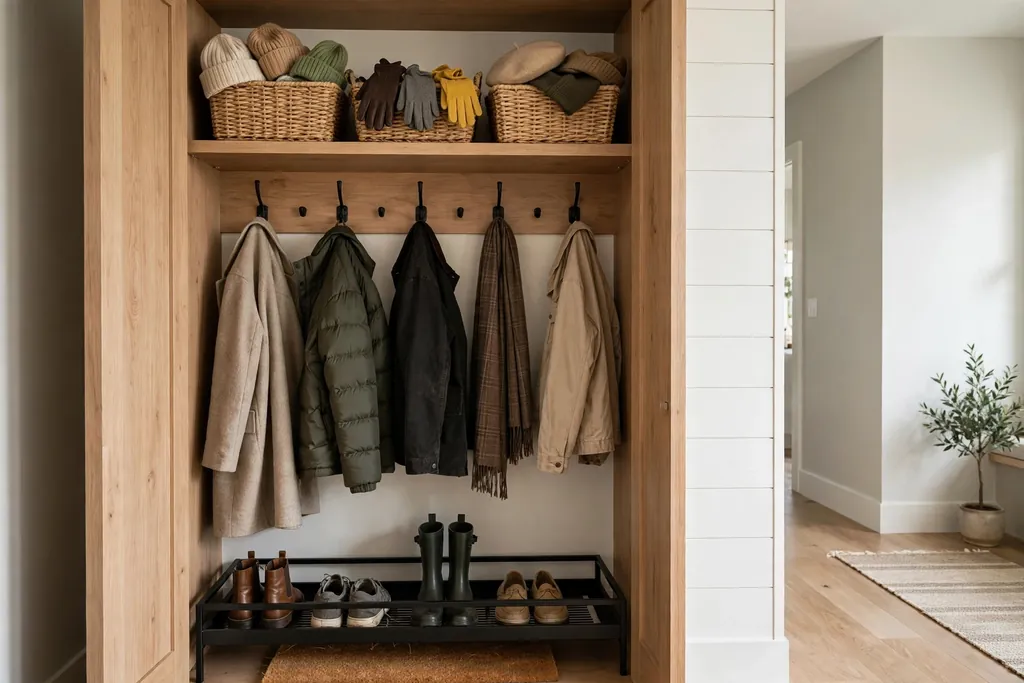
Give a hall coat closet a simple system: sturdy hooks for coats, one basket per person for hats and gloves, and a tray on the floor for wet shoes. Hall closets fail when coats, bags, and shoes share one hook and one pile, so each category needs its own spot. This suits an entry closet used by the whole household, where guests also need a clear place for a coat.
Hang daily coats at hand height and occasion coats higher up or in a second closet. Keep the basket count low, so the closet does not fill with small baskets nobody empties, and empty the shoe tray often, since entries collect dirt from outdoors. If the hall closet is narrow, use slim hooks and a shallow tray, and keep bulky bags in the bedroom closet instead.
22. Adjustable Track System You Can Move as Needs Change
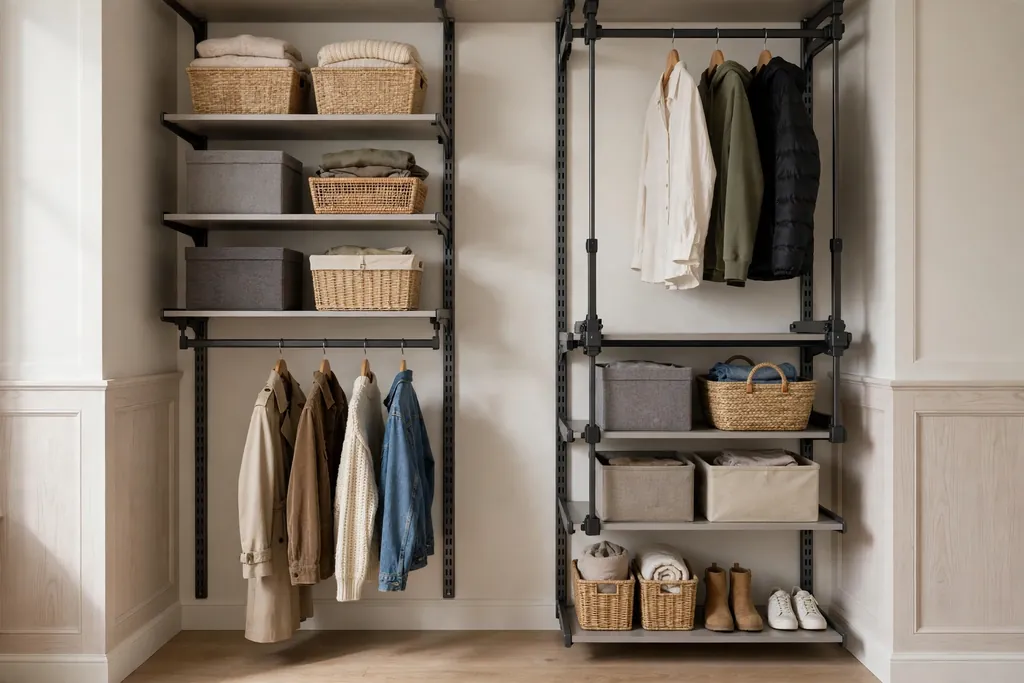
Fit an adjustable track system, with rails and shelves that hang from vertical tracks, so the closet layout can move as your wardrobe changes. Fixed shelves lock you into one layout, while a track system lets you raise a rail for long coats, add a shelf for folded knitwear, or move a drawer unit without new holes. This suits a closet you are still learning to use, or a household where needs change with the seasons.
Plan the track positions around studs or solid fixings, since a loaded rail pulls on the wall. Start with a simple layout, such as one double-hang section and one tall section, and adjust after a month of real use rather than guessing everything on day one. Keep spare brackets and shelf clips in a labeled bag inside the closet, so a future change takes minutes. For the wider storage picture beyond the closet, these small storage ideas for small spaces show how a closet can share the load with the rest of the room.
Conclusion
A fresh closet does not come from buying more storage. It comes from matching each idea to a real gap in your closet: a rail that is too high, a shelf that is too deep, a door that holds nothing, or a pile of shoes with no home. Start with the spot that bothers you most, use one idea well, and let the habit of putting things back in one home do the rest. Over time, a few of these changes add up to mornings that feel calm, clothes that last longer, and a closet you can actually see into, even when the room stays exactly the same size.
If you found an idea here that suits your home, save this post on Pinterest so you can find it again when you are ready to start. Pin the look you like most, whether it is a double hanging rail, a labeled bin setup, or a lit closet with a door mirror, and use it as a guide for your next weekend tidy-up.
FAQs
How do I start organizing a closet without buying everything at once?
Start with the spot that causes the most daily friction, such as shoes on the floor or a collapsing folded stack. Empty that one area, group what is left by category, and add a single solution for it, like hooks, a bin, or a divider. Once that area works, move to the next trouble spot, so the system grows around your real habits rather than a shopping list.
What is the best closet organization idea for a rented home?
Choose storage that needs no drilling: over-door organizers, removable hooks, freestanding drawer units, and battery lights. These add real capacity without holes in the walls, and they move with you to the next home. If you do drill, keep it to one or two well-placed rails or tracks, and check your lease and wall type first.
How do I organize a shared closet without arguments?
Split the closet into two clear zones, one per person, and agree the split by clothes owned rather than by half the closet. Give each person their own rail, shelf, and bin, and keep shared items in a neutral middle spot. Review the split once a season, since wardrobes change and a fixed split can start to feel unfair.
How do I keep folded clothes from toppling on closet shelves?
Use shelf dividers to give each stack its own slot, fold clothes to the same width, and keep stacks to a height you can lift with one hand. File stacks in rows rather than tall piles where you can, and leave one slot empty for new items or laundry in progress, so a new item does not force a whole shelf to be restacked.
What closet storage works best for shoes?
Slanted shelves at the base of the closet show each pair at a glance, while an over-door organizer suits shoes you wear less often. Keep tall boots upright on the floor beside the shelves, since boots slide off slanted shelves, and leave one shelf partly empty, since a full shoe shelf is the first place overflow lands on the floor.
How do I maintain a closet organization system over time?
Build a short seasonal reset into your routine: swap seasonal bins on the top shelf, return stray items to their zones, and check each bin for items you no longer wear. Every few months, count your hangers, since a rail that needs more hangers may signal it is time to pass on clothes you no longer wear. A system that gets a small regular reset lasts far longer than one that gets a big annual clear-out.