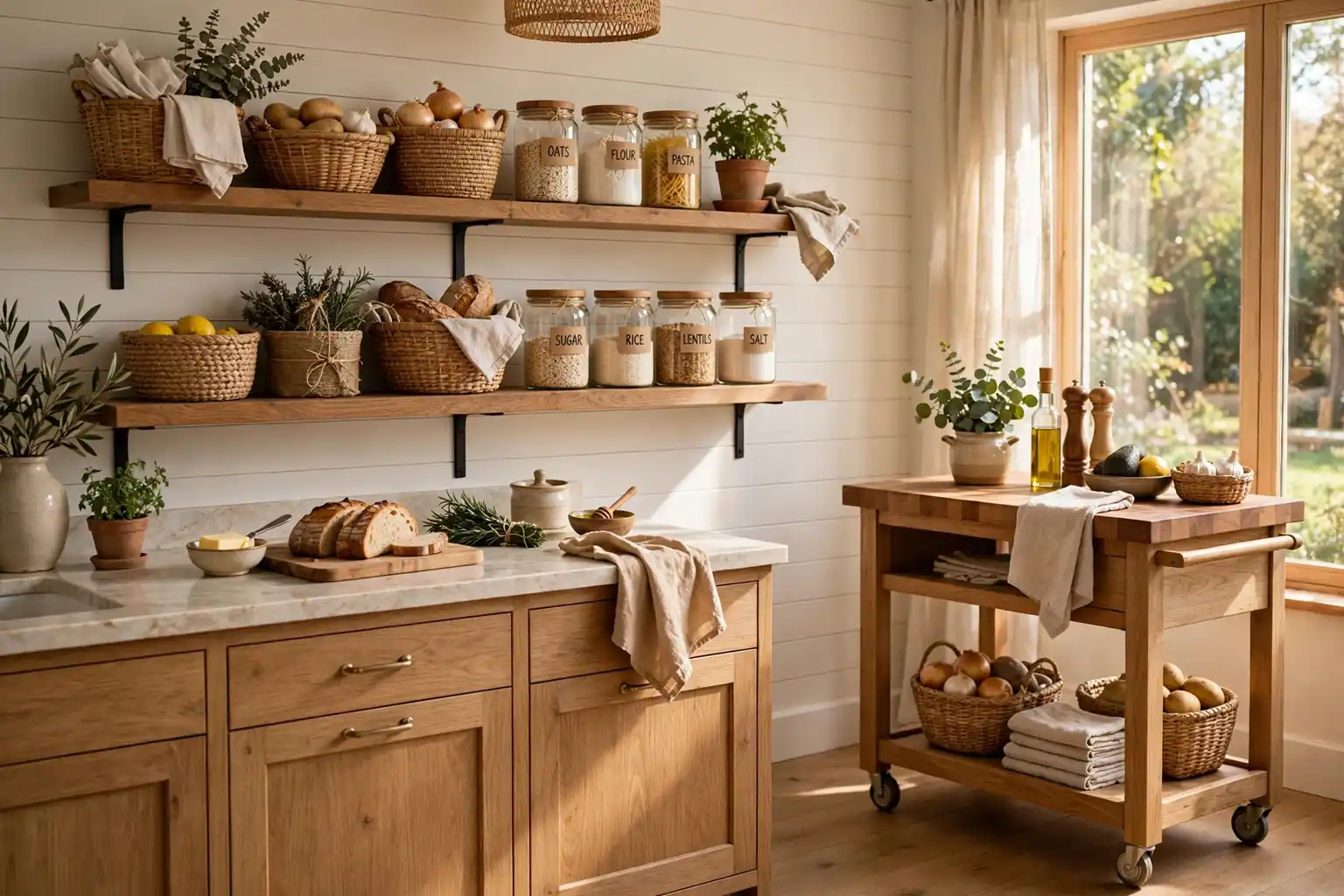
A kitchen feels cozier when everything has a place and the storage itself looks good. Warm baskets, wood lids, glass jars, and soft linen can do as much for the mood of a room as a new paint color, and they work harder too. These 13 kitchen organization ideas use materials and shapes that soften hard counters and tall cabinets, while keeping daily cooking tools easy to find. Start with the spot that frustrates you most, whether that is a messy pantry shelf, a tangled drawer, or a crowded counter, and add one idea at a time.
Key Takeaways
- Choose warm materials for storage, such as woven baskets, wood lids, and bamboo dividers, so organization adds comfort instead of a cold, clinical look.
- Give each group one clear home, such as spices in one rack, dry goods in one row of jars, and linens in one drawer.
- Keep daily items at easy reach and move backup stock and rarely used pieces higher or into closed storage.
- Use the same containers within one area, so a shelf or drawer reads as planned even when it is full.
- Leave one clear stretch of counter for prep, and label bins and jars so everyone in the household can put things back.
- Review each new system after two weeks, and move anything you never reach for to a less handy spot.
1. Woven Baskets on Open Pantry Shelves
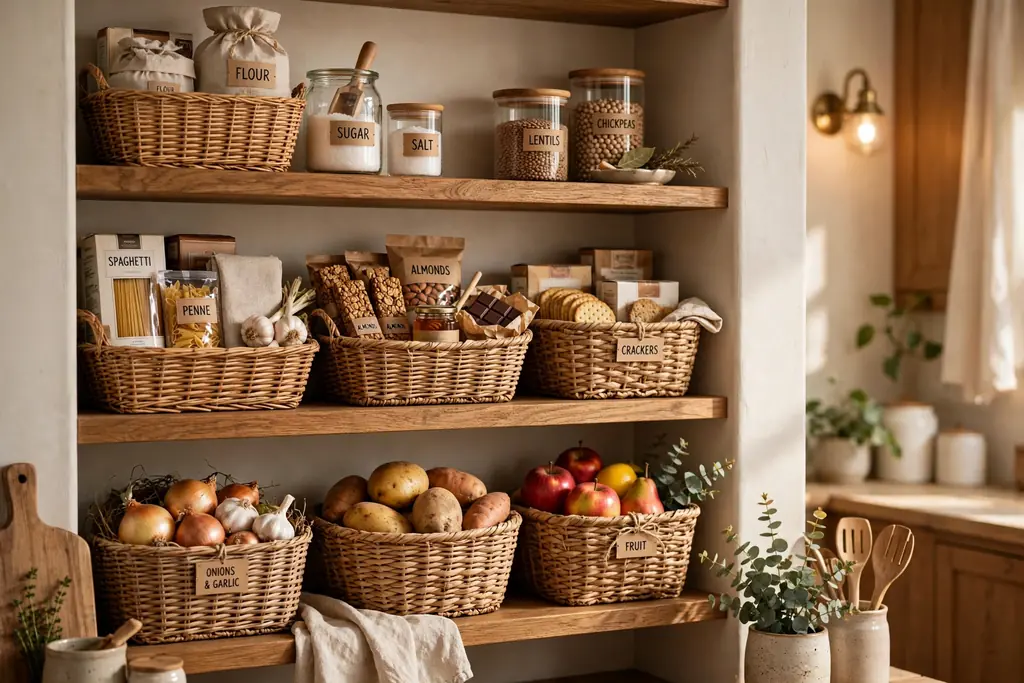
Woven baskets on open pantry shelves soften a tall wall of packets and cans, and they turn a deep shelf into a set of pull-out boxes. Use one basket per group, such as snacks, baking supplies, or breakfast foods, so you can pull the whole basket forward instead of reaching past rows of boxes. This suits a kitchen with open shelves or a pantry with deep shelves where small items drift to the back.
Choose baskets that fit the shelf depth with a little room to spare, and keep the basket you use most at eye level. A small label on the front, tied with twine or clipped to the weave, helps everyone in the household return items to the right basket. Shake baskets out now and then, since crumbs collect in the weave, and keep heavy cans in a low basket so a full basket stays easy to lift.
2. Matching Glass Jars With Wooden Lids for Dry Goods
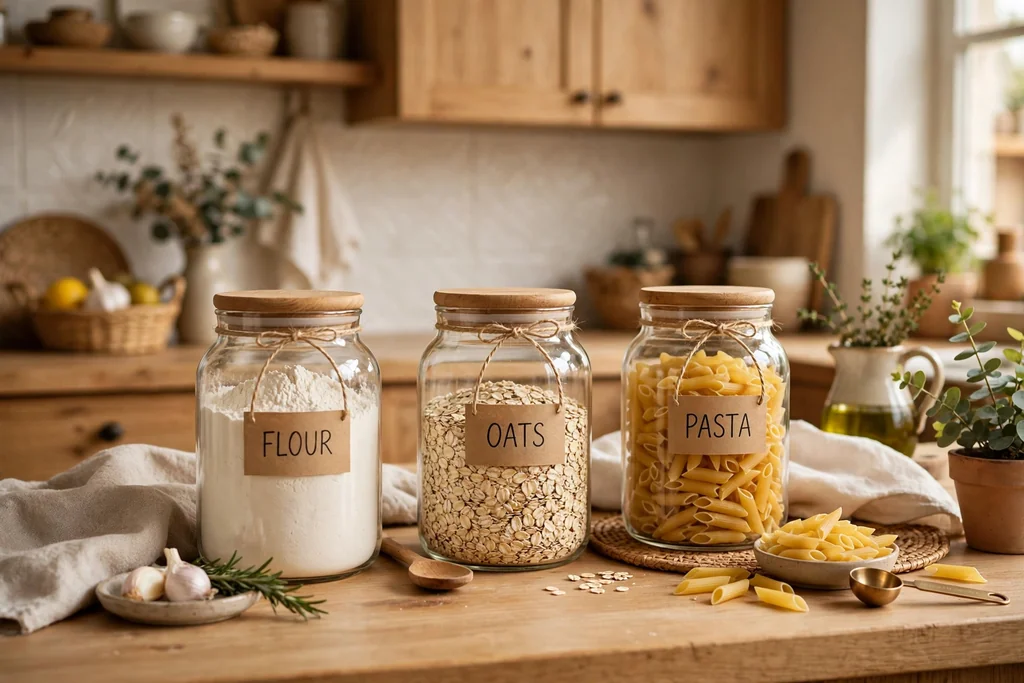
Matching glass jars with wooden lids give flour, sugar, oats, rice, and pasta a calm, kitchen-shop look on a counter or an open shelf. Clear glass lets you see stock levels at a glance, while wood lids add warmth that plain plastic cannot match. For more ways to style a counter without crowding it, see these kitchen countertop decor ideas.
Use jars of one style in two or three sizes, and fill them only as full as the household will use within a few weeks, so contents stay fresh. Label each jar on the front if two grains look alike, and keep jars clear of direct sun and stove steam. Store bulk refills in a cabinet behind the display row, and refill the jars over the sink to catch spills before they reach the counter.
3. Tiered Wooden Spice Rack Beside the Stove
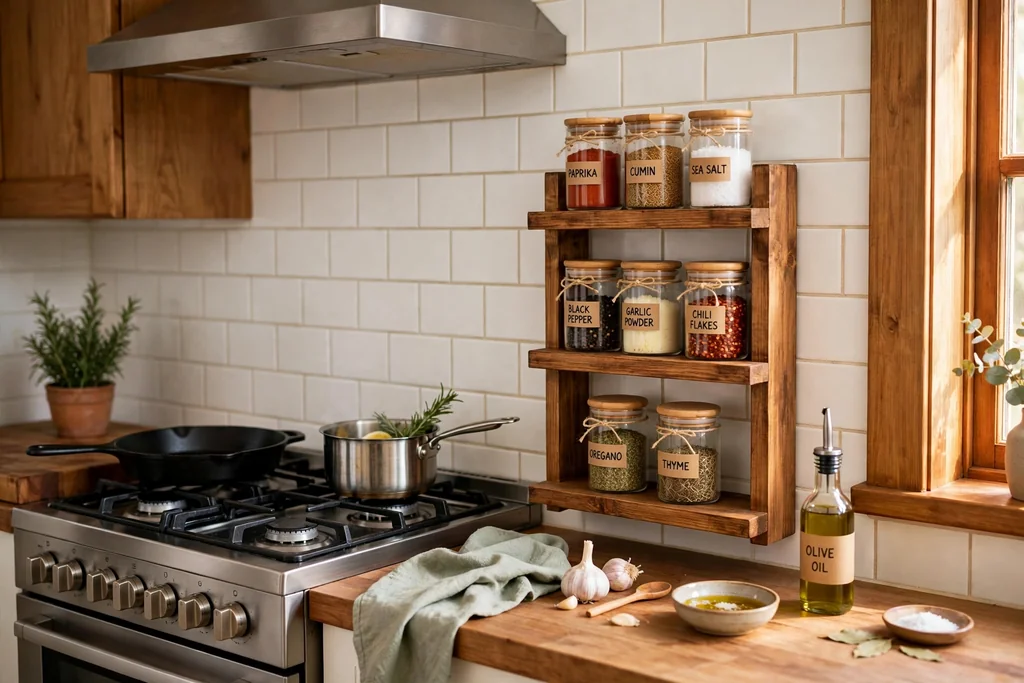
A tiered wooden spice rack beside the stove lifts every jar into view, so cooking feels calmer and the wall gains a warm wood accent. Stepped rows mean the back row is never hidden behind the front, and small jars in one size sit level across each tier. This suits a cook who owns a dozen or more spices and wants them near the prep area but off the counter.
Fix the rack into wall studs or use fixings rated for your wall type, and keep it clear of direct steam from a kettle or a pot. Group spices by use, such as everyday cooking, baking, and heat, and check dates twice a year when you wipe the rack. If wall space is short, a narrow rack on the side of a cabinet gives the same stepped view in a smaller footprint.
4. Bamboo Drawer Dividers for Cutlery and Tools
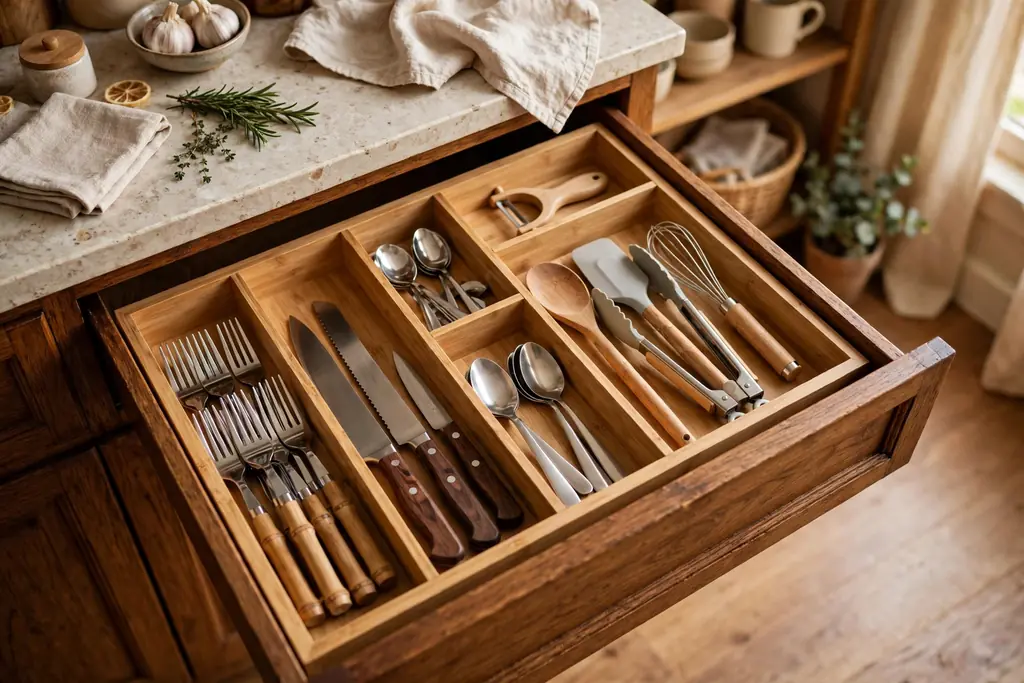
Bamboo drawer dividers turn a tangled cutlery drawer into neat rows for forks, knives, spoons, and small tools, and the pale wood warms up an otherwise plain drawer. Adjustable dividers suit drawers of different widths, while a fitted tray suits a drawer that holds one set of cutlery plus a few daily tools. For more cabinet and drawer storage options, see these easy kitchen storage ideas.
Measure the drawer before you buy, and leave one section free for items that do not fit a slot, such as a peeler or a small whisk. Keep the daily set at the front of the drawer and move serving pieces and gadgets to a second drawer or a higher shelf. Wipe the bamboo now and then, since drawer liners and crumbs collect under dividers, and move any tool you never use out of the drawer entirely.
5. Open Mug Shelf With Hooks Below
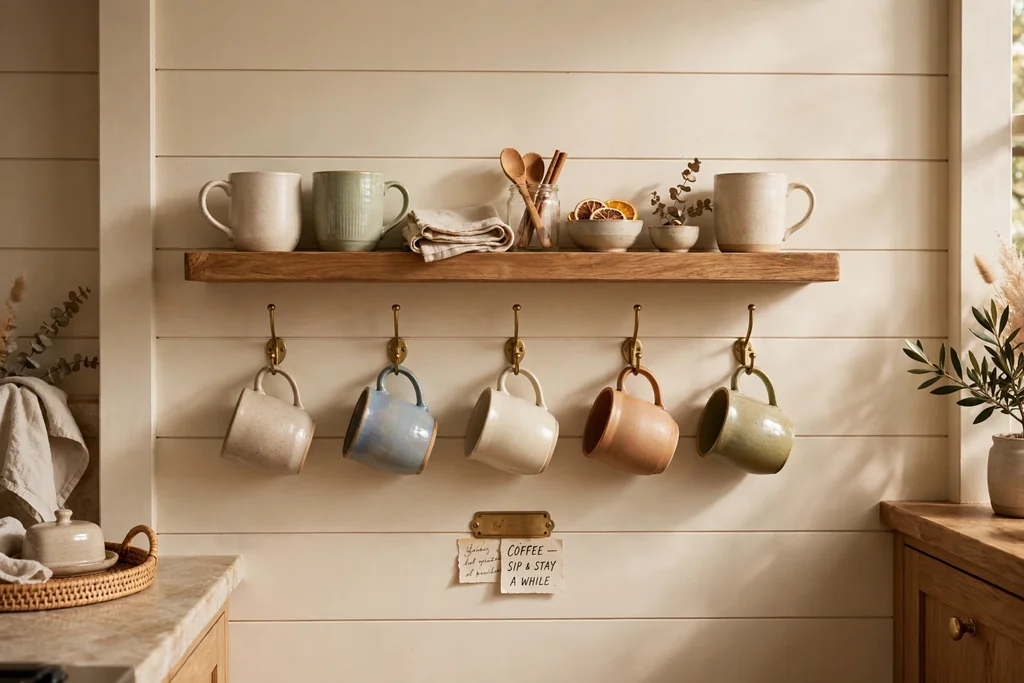
An open mug shelf with hooks below gives mugs a display spot and frees a whole cabinet shelf for plates or food. Hang daily mugs from the hooks by their handles, and keep a short row of bowls or small plants on the shelf above, so the wall reads as a styled corner rather than a storage fix. This suits a kitchen where mugs stack in a cabinet and the first mug out is always the one at the bottom.
Space the hooks wide enough that handles do not lock together, and hang the mugs at a height where they clear the counter below. Keep the collection to the mugs you actually use, and store spares or souvenir mugs elsewhere. Wipe the shelf weekly, since open shelves near cooking gather a light film, and swap in a seasonal mug or two if you like a small change through the year.
6. Rolling Wood-Top Cart for Baking Supplies
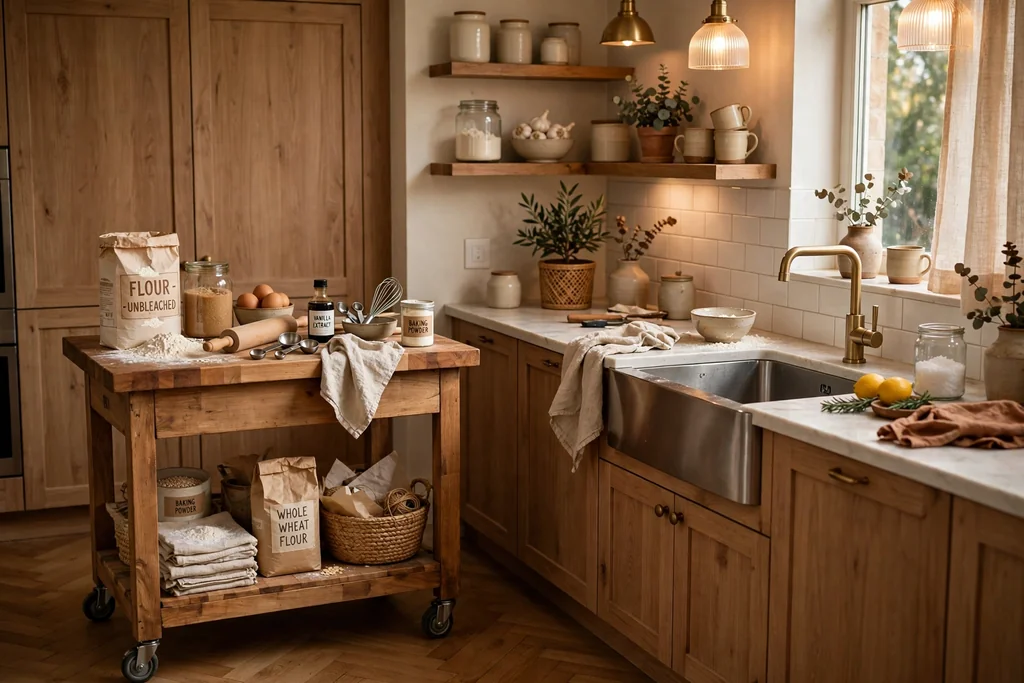
A rolling wood-top cart holds baking supplies in one movable unit, with flour, sugar, and tools below and a warm wood work surface on top. Roll it beside the counter when you bake, then tuck it against a wall or into a gap when the kitchen needs floor space again. This suits a small kitchen where a fixed island would block the walkway, and a baker who wants supplies together only on baking days.
Choose a cart with lockable wheels and a solid top, and keep heavier items on the lowest shelf so it rolls steadily. Group baking tools in a small bin on one tier, so a whisk or a measuring cup is never buried under bags of flour. Wipe the wood top after each use, and keep the cart clear of the stove heat, so the top stays safe for bowls and trays.
7. Warm Wood Appliance Garage for the Counter Corner
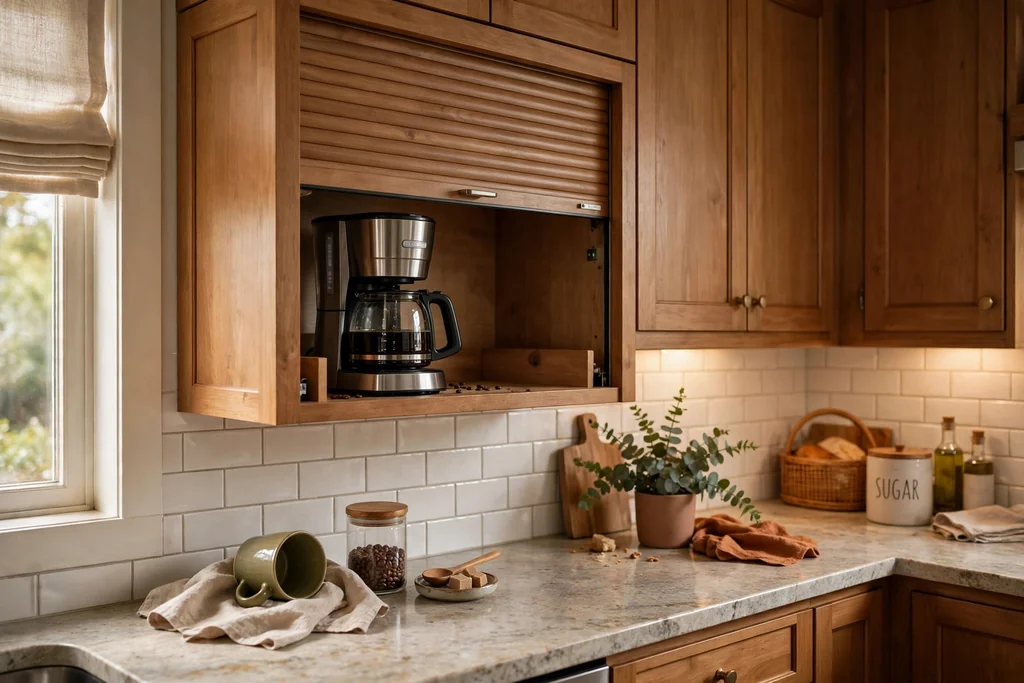
A warm wood appliance garage hides the toaster, blender, or coffee maker behind a door in the counter corner, so the counter looks calm between uses. When the door is closed, the corner reads as cabinetry, and when it is open, the appliance is ready without being carried from a cabinet. This suits a kitchen where small appliances spread across the counter and leave little room for prep.
Plan a socket inside or just beside the garage so cords stay short, and leave air space around anything that gets hot. Keep only the appliances you use weekly inside, and store the rest in a cabinet, so the garage does not fill up again. Wipe the inside weekly, since crumbs collect where appliances sit, and keep the counter in front clear as a landing spot for hot dishes.
8. Upright Dividers for Boards, Trays, and Lids
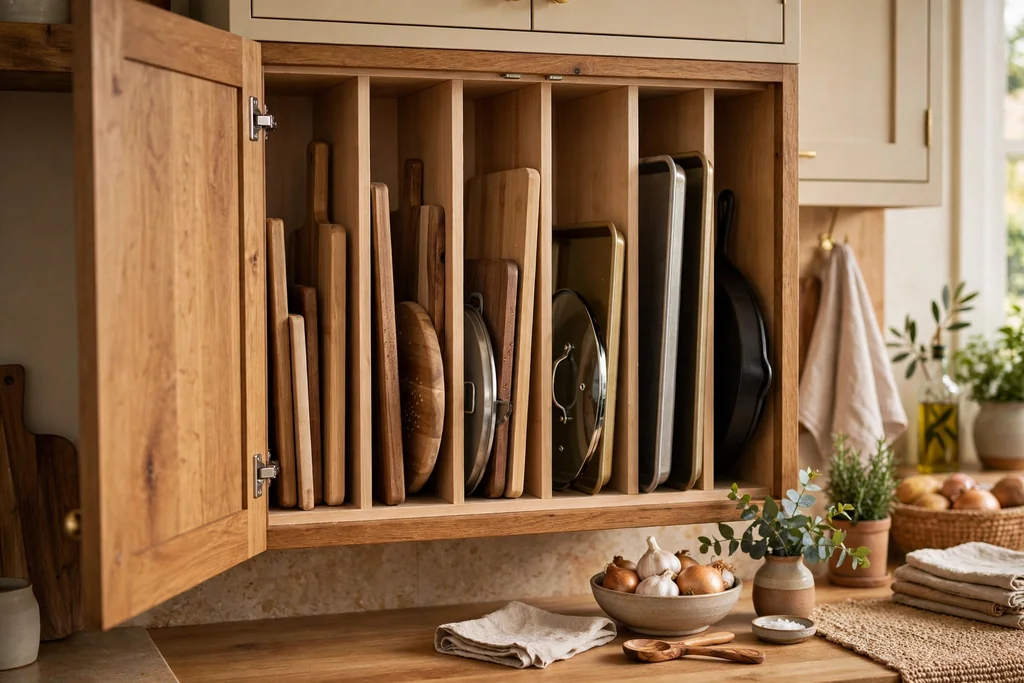
Upright dividers in a base cabinet let cutting boards, baking trays, and pot lids stand in a row like files, so you can pull one out without lifting a leaning pile. This suits a cabinet where flat items slide and clatter every time the door opens, and it works in a narrow cabinet that cannot hold a wide stack. Measure your widest board before you fix the divider spacing, so the slots fit what you actually own.
Put the boards and trays you use weekly at the front of the run and seasonal trays at the back, and keep lids in their own section so they do not wedge between boards. Use tension dividers if you rent, since they need no screws and lift out for cleaning. Wipe the cabinet floor when you reorganize, since crumbs and dust settle under flat items unnoticed.
9. Rolled Linen Drawer for Tea Towels and Cloth Napkins
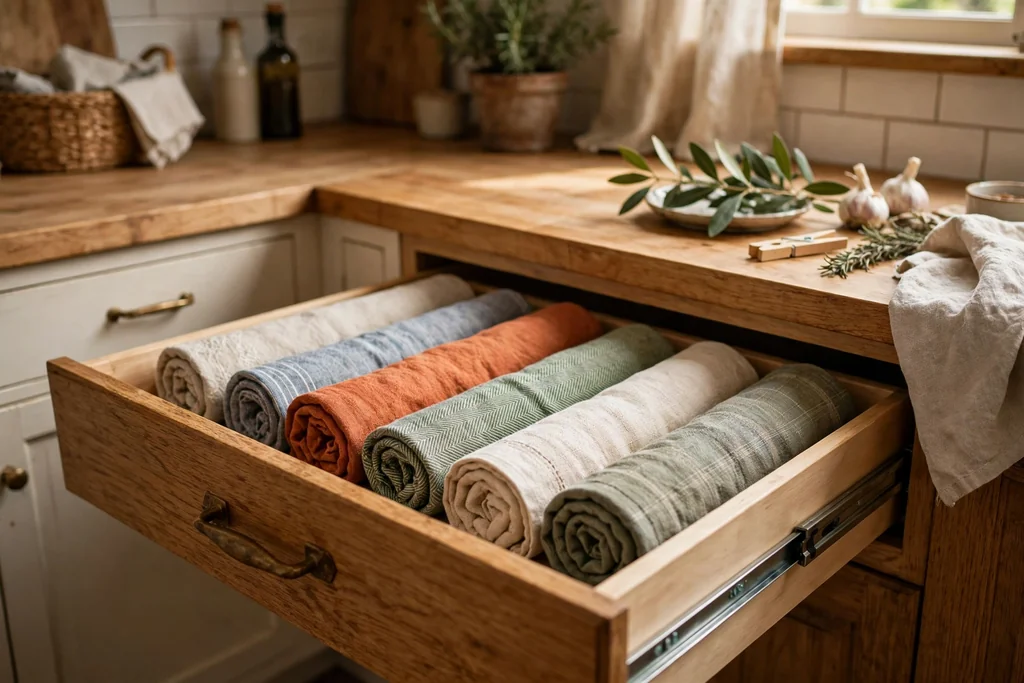
A linen drawer with rolled tea towels and cloth napkins adds soft color to a kitchen and keeps table linens separate from cooking tools. Roll towels in a row, with the pattern or color facing up, so you can see every option without unfolding a stack. This suits a drawer near the dining end of the kitchen, where linens are grabbed for meals, and a household that wants cloth napkins within easy reach.
Fold each towel to the drawer width before rolling, and keep kitchen cloths in a separate section from table napkins, so a cleaning cloth never ends up at the table. Wash and dry linens fully before they go back in the drawer, and add a small lavender sachet if the drawer stays shut for long stretches. Empty the drawer each season, and move stained or worn towels to cleaning duty elsewhere.
10. Inside-Door Racks for Lids and Measuring Cups
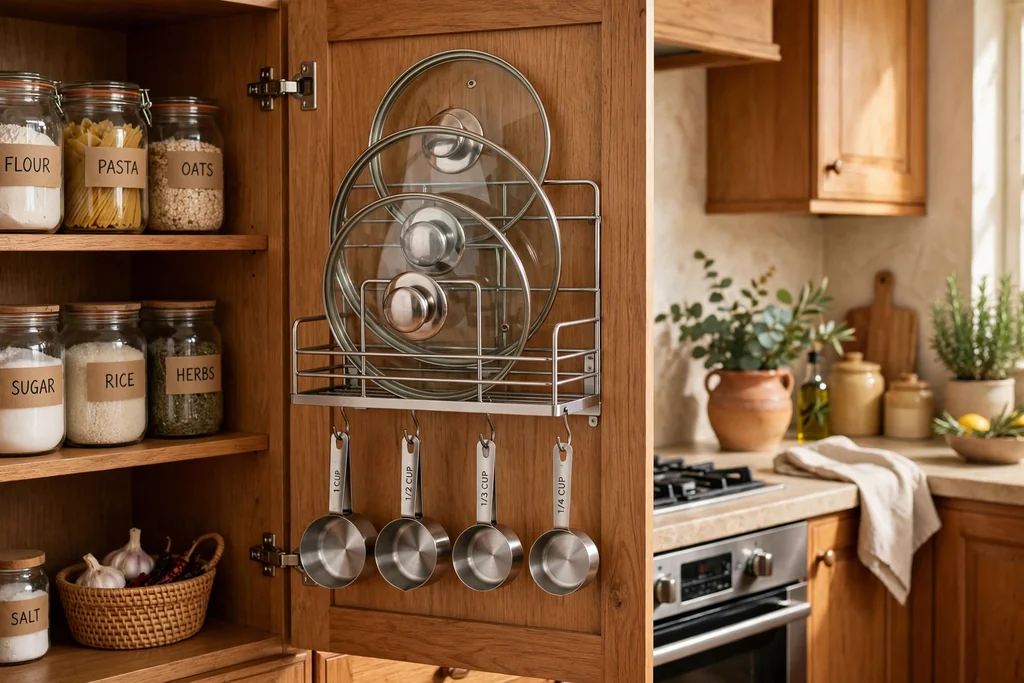
Small racks on the inside of cabinet doors turn dead door space into a home for pot lids, measuring cups, and small tools, and they keep those items off the counter and out of crowded drawers. This suits a small kitchen where every drawer is already full and lids are the first thing to go missing. For more ideas that use gaps and door space in a small home, see these small storage ideas for small spaces.
Check the door clearance before you fit a rack, so loaded items do not hit shelves when the door closes, and fix the rack into the door frame rather than a thin panel. Use adhesive racks for rented homes and light items, and screw-in racks for heavier lids. Keep one category per door, so you always know which door holds the measuring cups and which holds the lids.
11. Under-Sink Caddy With a Tension Rod for Sprays
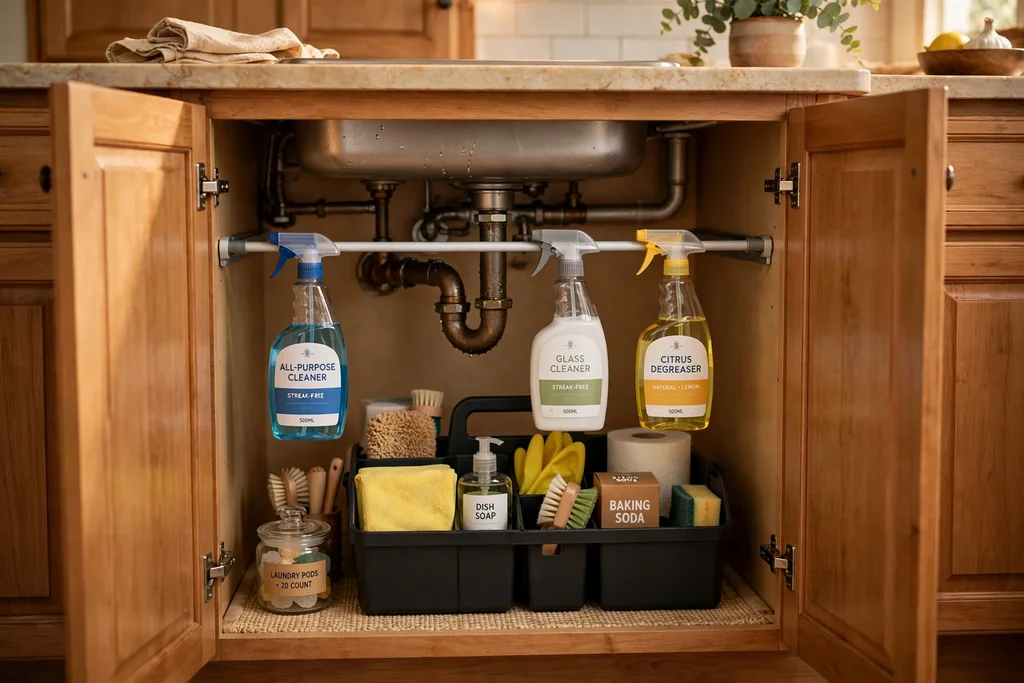
An under-sink caddy with a tension rod above it makes an awkward cabinet work, since pipes block the middle but leave room at the sides and above. Hang spray bottles from the rod by their triggers, and keep sponges, cloths, and a small bin in the caddy below, so cleaning supplies lift out as one unit. Line the cabinet floor with a waterproof tray, since small leaks and drips reach this spot first.
Measure the cabinet width and fit the rod snugly, so it stays put when you pull a bottle off, and keep heavy cleaners in a bin on the cabinet floor rather than hanging them. Check for leaks when you pull the caddy out, and keep only sink-related items here, so the cabinet does not become a general store cupboard. A woven-look bin in the caddy softens the view when the door opens.
12. Soft-Toned Labeled Bins in the Fridge
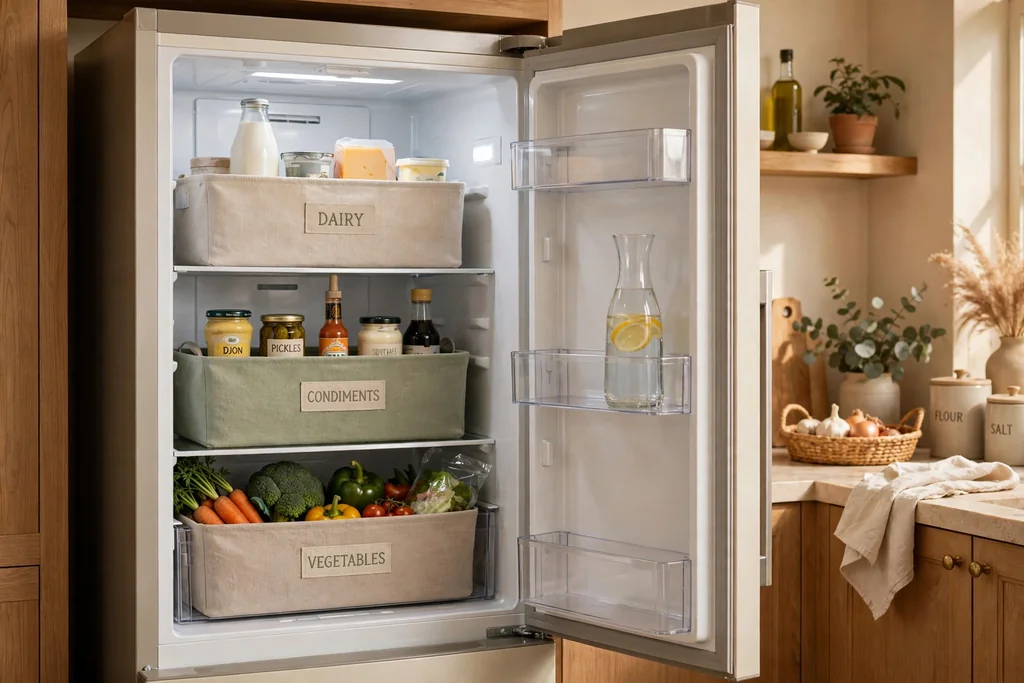
Labeled bins in soft, warm tones group fridge items without the cold look of a bare shelf, and they keep small items from drifting to the back. Use one bin for dairy, one for condiments, and one for cut vegetables, and pull the whole bin out when you need something from the back row. Clear sides still let you see stock levels, while a warm label on the front keeps the fridge looking planned.
Label bins only if more than one person uses the fridge, since labels help everyone put items back in the right spot. Wipe bins weekly, and keep raw meat in its own sealed container on the lowest shelf, away from ready-to-eat food, following usual food safety guidance. Freeze flat bags upright in a bin in the freezer in the same way, so the freezer stays as readable as the fridge.
13. Pantry Door Pocket Organizer for Packets and Small Supplies
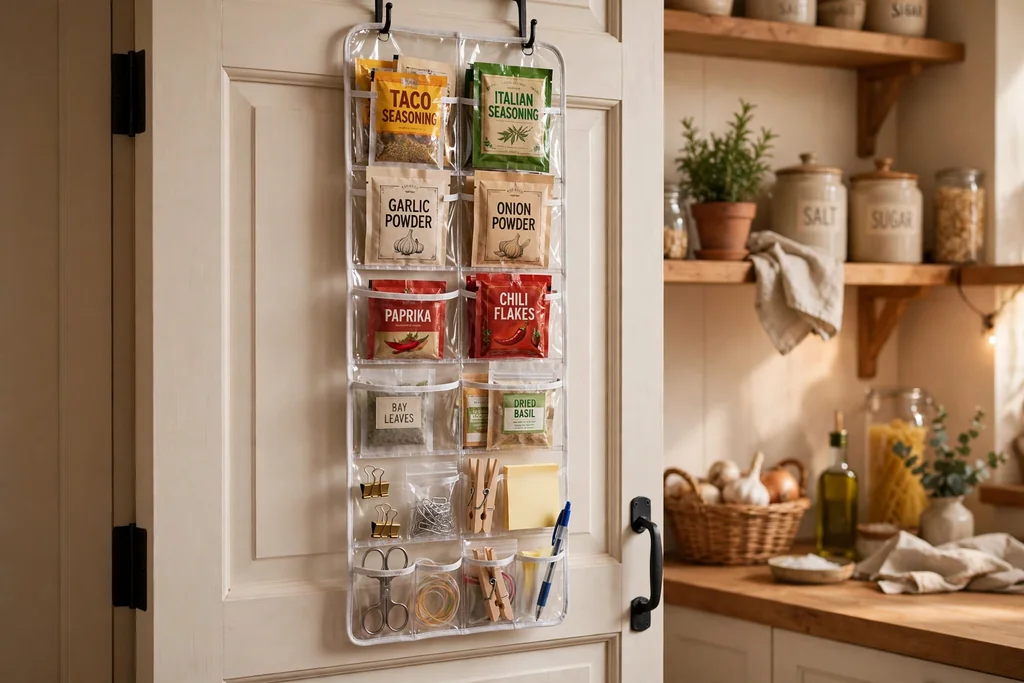
A clear pocket organizer on a pantry door holds seasoning packets, snack bars, tea bags, and small supplies that otherwise vanish into a drawer or a deep shelf. Clear pockets let you see everything at once, which keeps small items from being bought twice, and the door itself needs no building work. This suits a rented home and a busy pantry where packets pile at the back of a shelf.
Label the rows if several people share the organizer, and keep heavier items in the lowest pockets so the door hangs evenly. Wash the organizer now and then if it holds food, and choose one with sturdy hooks, so it stays in place when the door swings. Keep one pocket free for new packets, so the system still works after a large shop.
Conclusion
A cozier kitchen does not need more storage, it needs storage that fits the room and looks like it belongs there. Woven baskets, wood lids, bamboo dividers, and a rolling cart add warmth while they clear counters, drawers, and shelves, and labeled bins and jars keep the new order easy to keep. Start with one idea, such as the pantry baskets or the spice rack, live with it for two weeks, and then add the next change where clutter still gathers. When every group has a clear home, cooking feels calmer, the room feels warmer, and a tidy kitchen is much easier to keep. Save this list for your next kitchen tidy-up, and try one new idea this week.
FAQs
How can I make kitchen storage look cozy instead of clinical?
Use warm materials and a limited palette: woven baskets, wood lids, bamboo dividers, linen, and glass jars in one or two tones. Keep the same container style within one area, add one soft detail such as a cloth liner or a labeled tag, and leave a little empty space on each shelf so the storage reads as styled rather than packed.
What is the best first step for organizing a messy kitchen?
Start with one trouble spot, such as the pantry shelf, the cutlery drawer, or the counter corner, and give that group a single clear home before buying more containers. Empty the spot fully, sort items into keep, move, and remove groups, measure the space, and then choose a container that fits the space and the group. One finished spot makes the next one easier.
How do I keep open kitchen shelves tidy?
Limit open shelves to daily items in matching containers, such as jars, baskets, or a short row of dishes, and store the rest in closed cabinets. Keep each shelf to one or two groups, leave space at each end, and put items back right after use, since an open shelf shows every stray item. Dust and wipe the shelves weekly, since cooking air leaves a light film.
What kitchen organization works best in a small kitchen?
Use vertical and hidden space first: inside-door racks, a tiered spice rack, upright dividers, a rolling cart that tucks into a gap, and a pocket organizer on a pantry door. Keep daily items between waist and eye level, move backup stock higher, and choose one rolling or movable piece rather than adding fixed furniture that blocks a walkway.
How often should I review kitchen storage systems?
Review each new system after two weeks, then once a season. In the first review, move anything you never reached for to a less handy spot, and fix any container that is hard to open or too small. In a seasonal review, check dates on spices and dry goods, wash bins and jars, and remove items that no longer belong in the kitchen.
Can I organize a kitchen well in a rented home without drilling?
Yes. Woven baskets, glass jars, a rolling cart, a pocket organizer, tension rods, adhesive door racks, and bamboo drawer dividers all work without drilling or permanent fixings. If you do fix a rack or a rail, use fixings that suit the wall and keep the original fittings, so you can restore the wall when you leave.