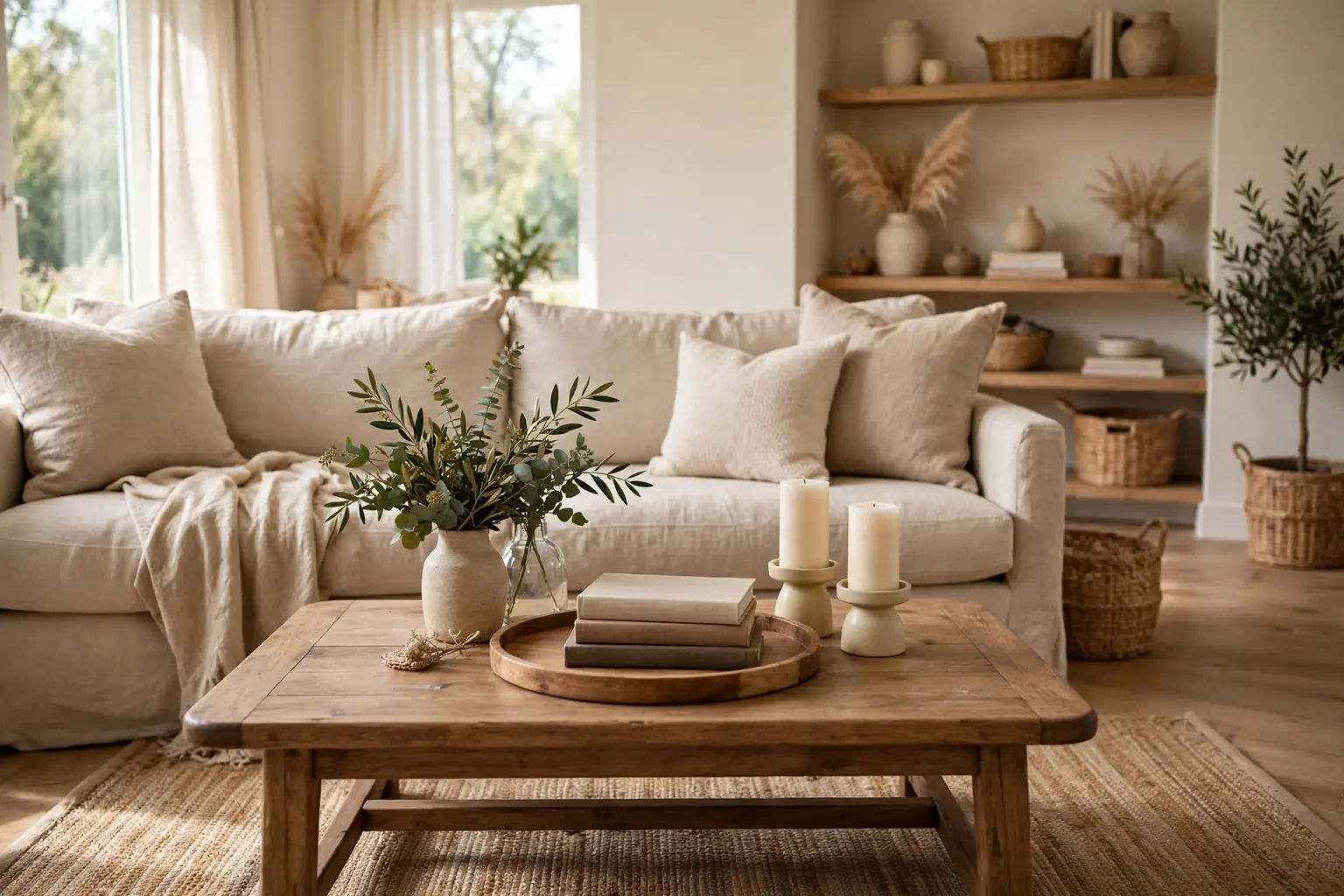
A coffee table sits at the centre of daily life, holding mugs, books, remotes, and keys, so it deserves an arrangement that looks good and still works. The best setups start with one anchor, add layers at different heights, and leave clear space for a cup or a book. These 34 coffee table arrangement ideas cover trays, books, candles, plants, and seasonal swaps for fall, winter, spring, and summer, plus layouts for round, square, rectangular, small, and large tables. Pick one idea to start, keep what you already own in the mix, and change a single piece when the season turns.
Key Takeaways
- Start with one anchor, such as a tray or a stack of books, then add two or three pieces at different heights.
- Leave at least one clear patch of table surface for a mug, a book, or a snack bowl, so the table stays usable.
- Group in odd numbers where you can, since three pieces usually look more relaxed than two matched pairs.
- Repeat one colour or material from the sofa, rug, or curtains, so the table looks linked to the room.
- Change only one or two pieces per season, such as stems, candles, or a bowl filler, for a fresh look without starting over.
- Keep fragile, tall, or flame items away from table edges and busy walkways, and choose soft, lidded storage where children or pets use the room.
1. Anchor the Table With a Wood Tray
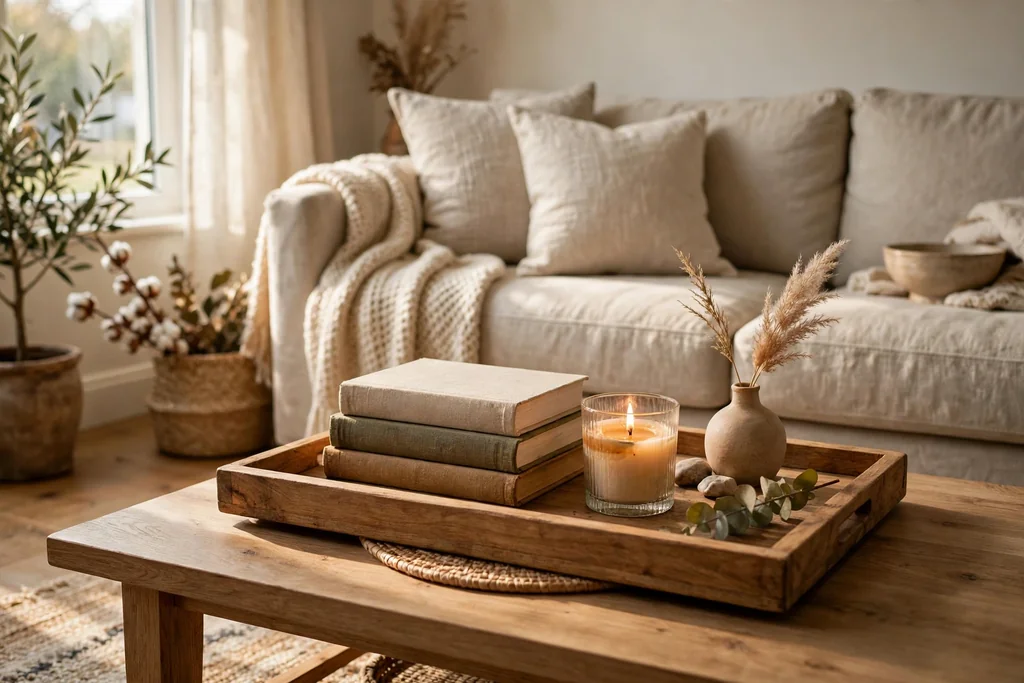
A wood tray gives a coffee table arrangement a clear boundary and makes the whole group easy to move. Set the tray slightly off centre, then build inside it, so the table still has open space beside it for a mug. A rectangular tray suits a rectangular table, while a round tray softens a square table.
Choose a tray with low sides, so books and candles stay visible from the sofa. Keep the tray contents to three or four pieces, and leave the tray itself partly visible. When you need the full table for a game or a meal, lift the tray away in one move and set it on a sideboard.
2. Build a Base From a Stack of Books
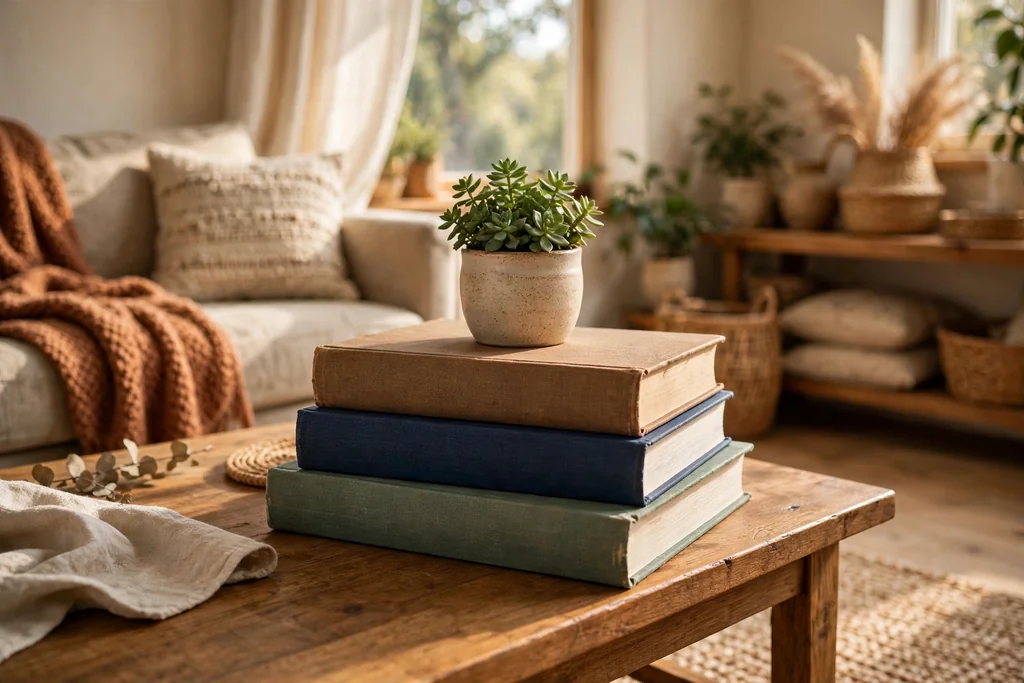
A stack of two or three large books makes a steady base for a candle, a small plant, or a decorative object. Place the largest book at the bottom and the smallest on top, with the spines facing the same way or turned to show a plain cover. The stack adds height without a tall vase.
Pick books you enjoy or plan to read, so the stack feels personal rather than staged. Keep the stack low enough that it does not block sightlines across the sofa. For help sizing the rug under the seating group, see these living room rug ideas.
3. Add Height With One Tall Vase
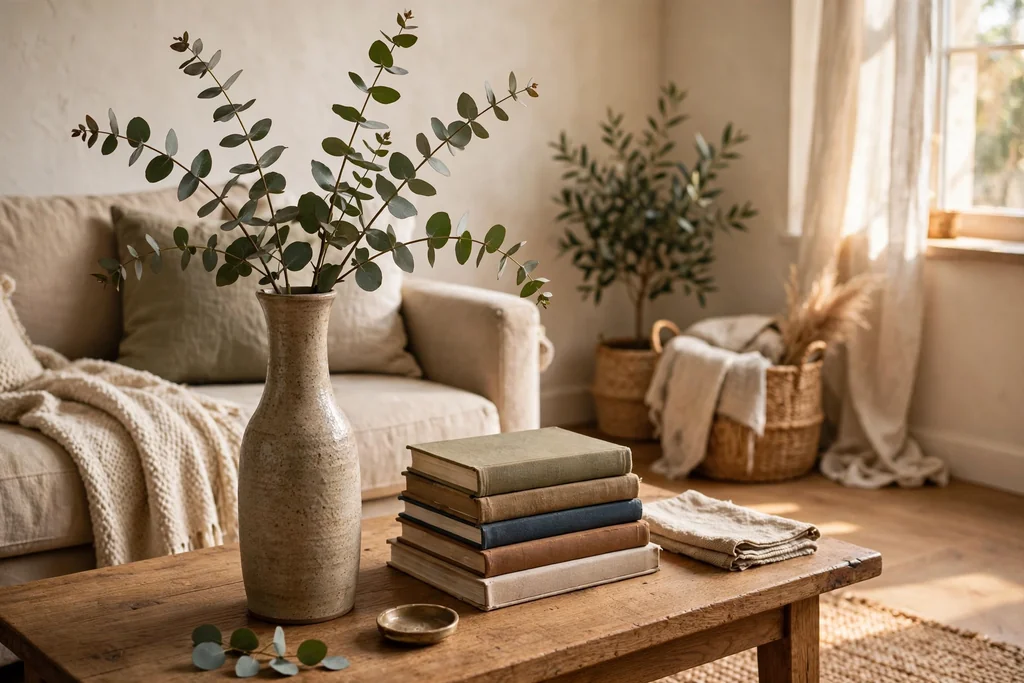
One tall vase draws the eye up and balances low books, bowls, and candles. Use a single stem type, such as eucalyptus, dried grass, or a tall branch, rather than a mixed bunch that can look busy. The vase should be tall enough to clear the book stack beside it, but not so tall that it blocks conversation.
Set the vase at the back corner of the table, away from the main walkway. If the vase is light, add a few stones inside for weight, so it does not tip when someone sets down a mug nearby. Change the stems with the season to refresh the whole table.
4. Group Three Candles at Different Heights
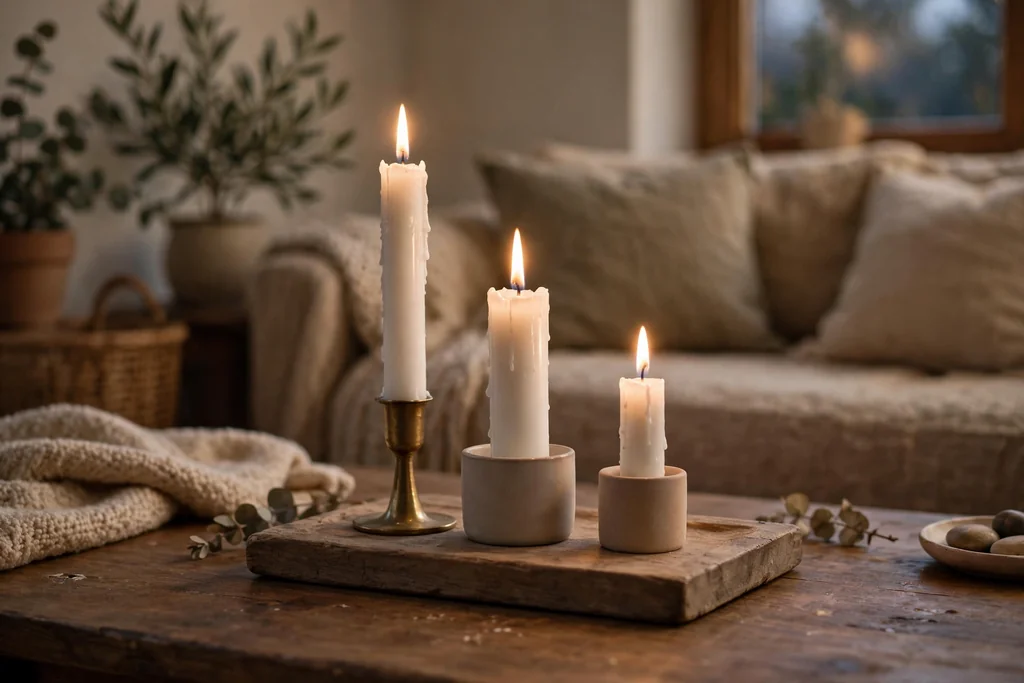
Three candles at different heights give a table a warm focal point without a single bulky lamp. Use pillar candles on a tray, or mix one tall taper holder with two short holders, and keep the candles in one colour family. The height change keeps the group from looking like a row.
Place candles away from books, curtains, and dried stems, and use sturdy holders that will not tip. Never leave a lit candle in an empty room. Battery candles give a similar glow where real flames are not practical, such as a table used by children.
5. Place a Small Potted Plant at One Corner
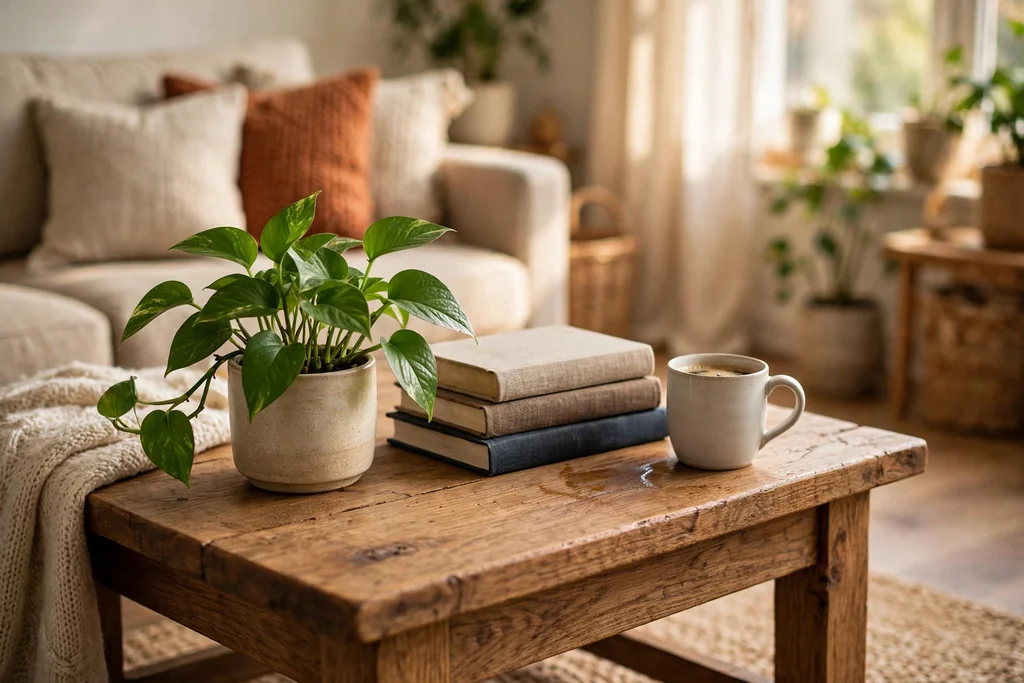
A small potted plant adds living green to a table of books and candles, and it suits almost any style. Choose a plant that tolerates indoor light, such as a pothos, a small fern, or a succulent, and set it in a plain pot that matches the room. One plant is enough on a standard table.
Put a saucer or a small tray under the pot to protect the table from water marks. Keep the plant at a corner, so its leaves do not brush mugs or books. Wipe the leaves now and then, and rotate the pot so it grows evenly toward the light.
6. Set Out a Shallow Decorative Bowl
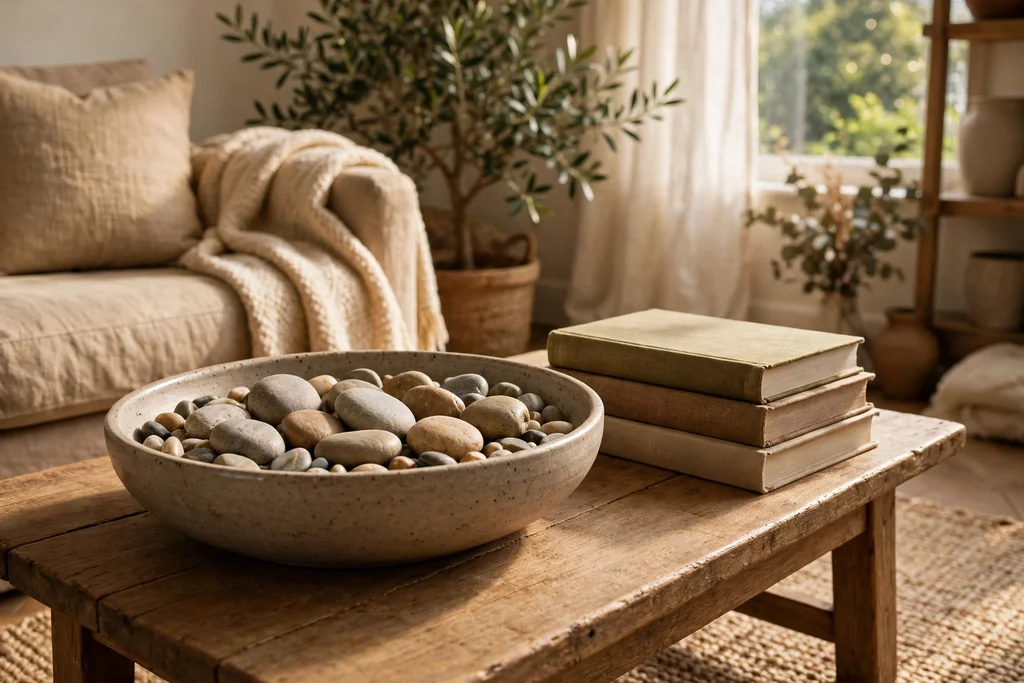
A shallow bowl adds a curved shape among the straight lines of books and trays, and it can hold a rotating display. Fill it with one item only, such as smooth stones, wooden beads, or dried orange slices, so the bowl reads as one piece rather than clutter. An empty bowl also works, if its shape is strong.
Centre the bowl on a tray or set it beside a book stack, and keep it low so it does not block the view across the room. Change the filler with the season for the easiest refresh in this list. Wash the bowl before refilling it, and dry it fully before it goes back on wood.
7. Add One Sculptural Object for Character
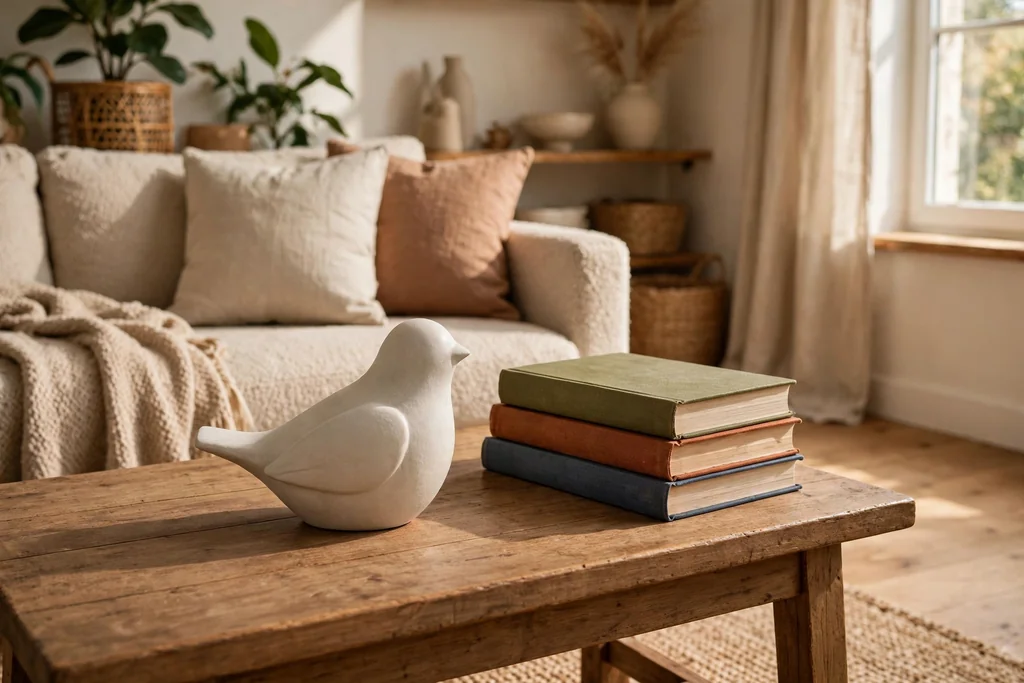
One sculptural object, such as a carved wood figure, a stone bird, or a simple ceramic form, gives a table personality without adding colour. Pick a piece with a shape you like from the sofa, since you will see its outline more than its detail. One strong object beats three small ones competing for attention.
Set the object where it can be seen from the main seat, and give it space on all sides. If the object is fragile, keep it away from the table edge and from the spot where mugs land. Dust it with a soft cloth, and move it aside when the table is used for food.
8. Keep Coasters in a Neat Holder
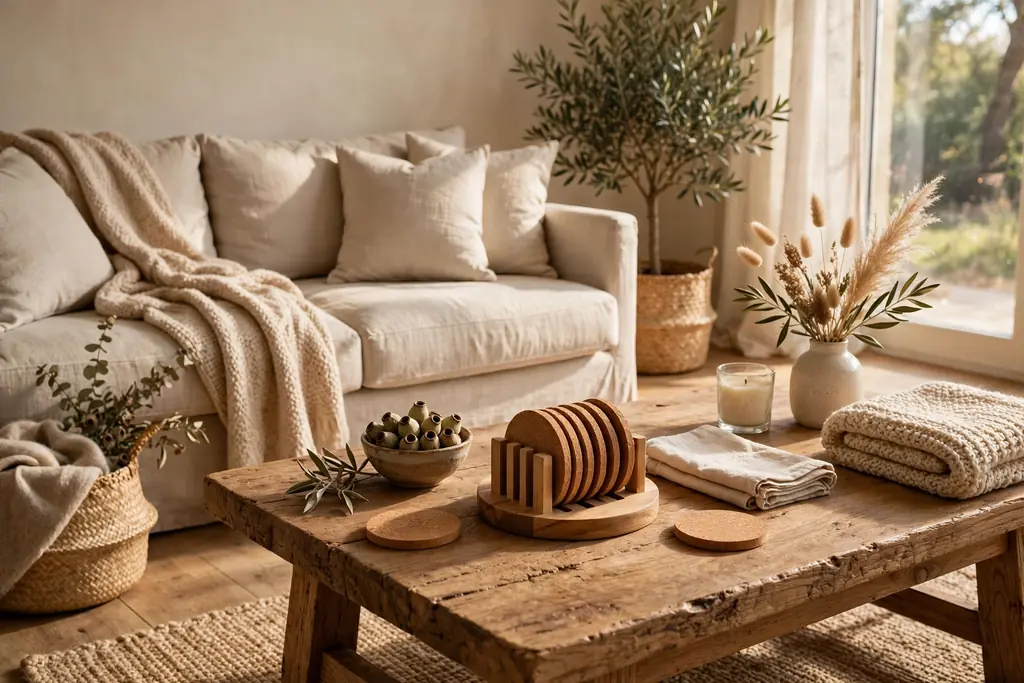
A coaster holder keeps a practical item looking tidy, and it stops coasters from sliding around the table. Choose a holder in wood, stone, or leather that matches the tray or the table finish, and keep four to six coasters inside. The holder itself counts as one piece in the arrangement.
Place the holder near the sofa edge of the table, where guests can reach it without standing. Replace worn coasters before they stain the table, and wipe the holder now and then. If the table is small, hang the holder on a side table instead and keep only two coasters out.
9. Hide Remotes in a Lidded Box
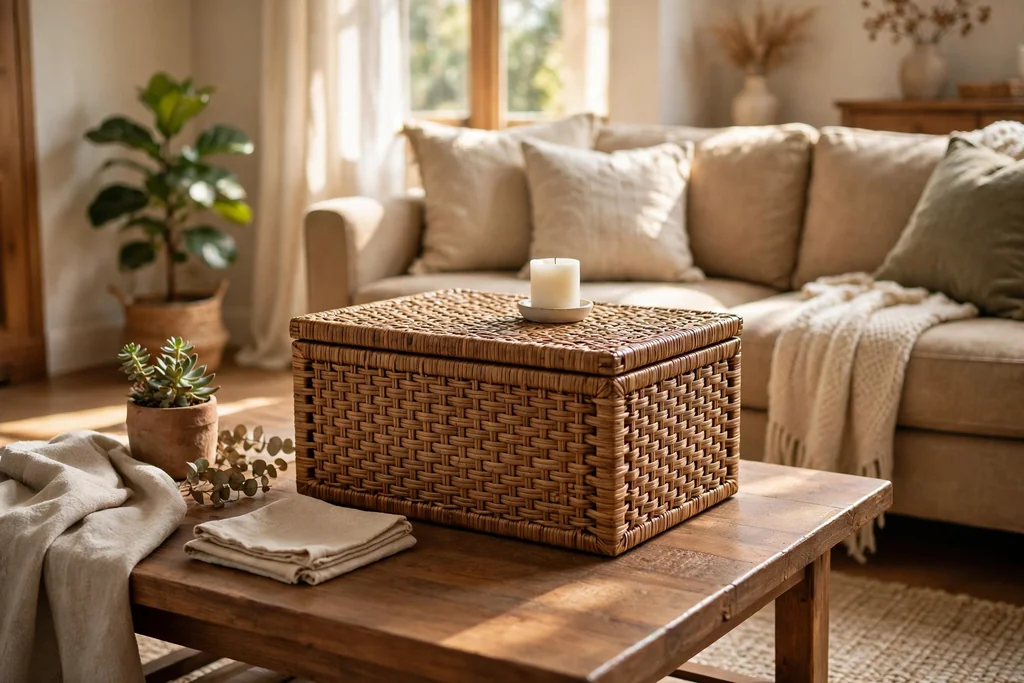
A lidded box hides remotes, chargers, and small game pieces, and its lid doubles as a flat surface for a candle or a small plant. Choose a box sized to the remotes you own, with a lid that lifts easily. A woven, wood, or fabric covered box suits most living rooms.
Keep the box at one end of the table, with the lid closed when the television is off. Empty the box once a month and return only the items you use each week. If the box is large, use it as the anchor of the arrangement and build the rest of the table around it.
10. Pair a Book Stack With a Single Candle
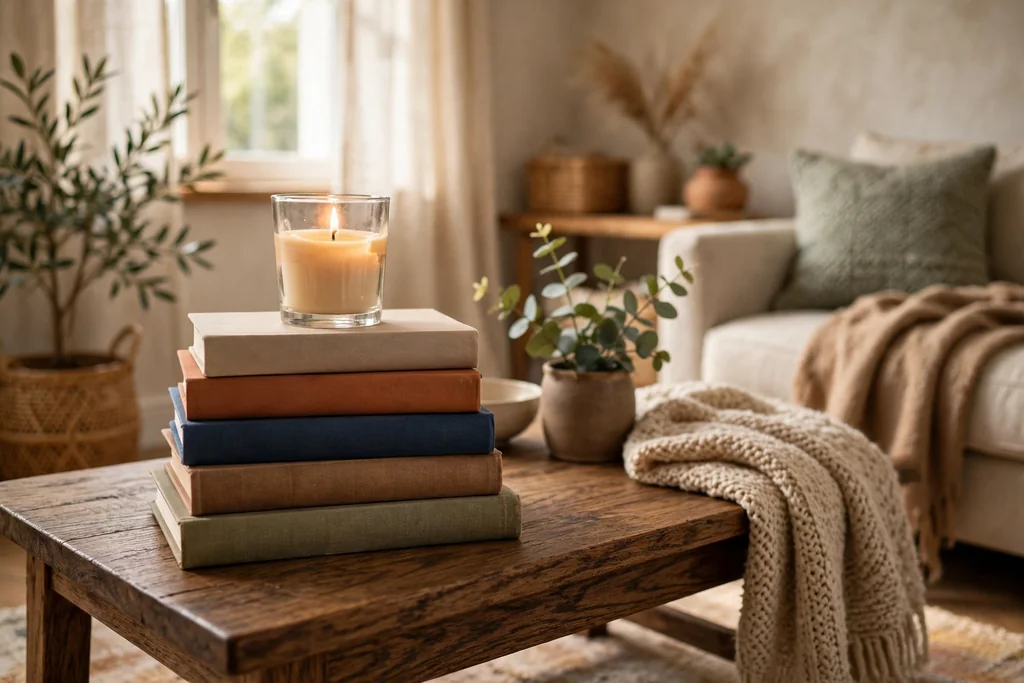
A book stack topped with a single candle is the simplest complete arrangement, and it works on a small table or as one zone on a large table. The books give height and colour, while the candle adds warmth and a single focal point. Use a candle in a holder, not a bare pillar, so wax stays off the book cover.
Keep the candle short enough that its flame sits below eye level from the sofa. Blow it out before moving the stack, and trim the wick as the maker advises. Swap the candle colour with the season, and the same book stack can carry the table all year.
11. Welcome Fall With Mini Pumpkins and Amber Glass
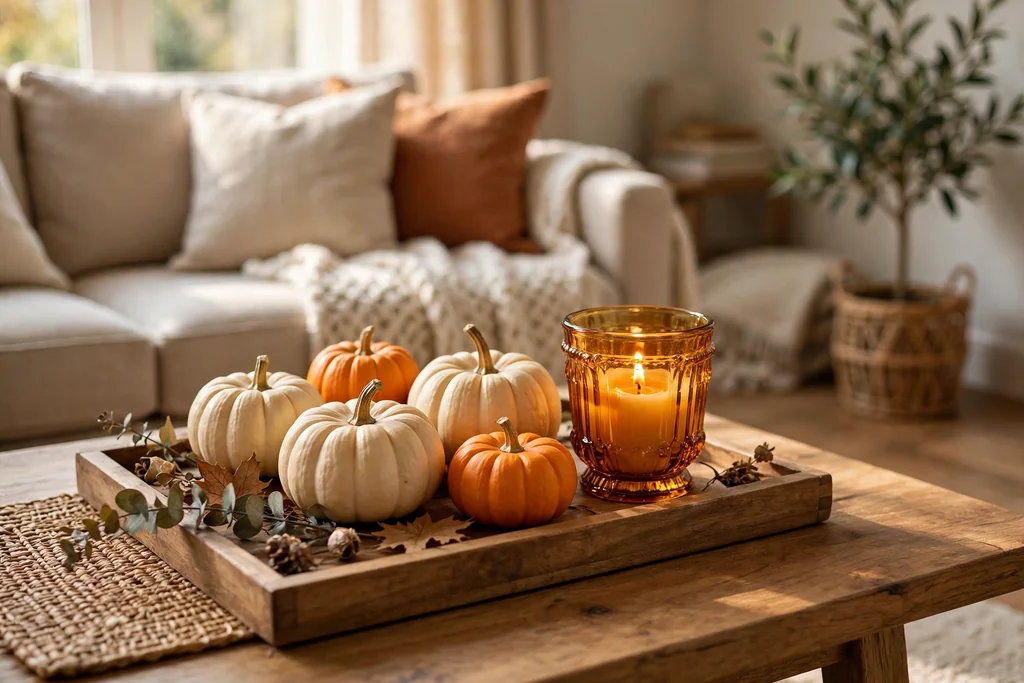
Mini pumpkins in cream, orange, and soft green bring fall to the table without a full room redecorating job. Group three or five on a tray with one amber glass candle holder, and keep the rest of the table plain. The small scale suits a table that still needs room for mugs.
Use real mini pumpkins for a few weeks, and check them for soft spots before they mark the tray. Faux pumpkins suit a table near a sunny window, where real ones dry out fast. Pack the pumpkins away after fall, and keep the amber glass for winter candlelight.
12. Bring Fall Indoors With Dried Wheat Stems
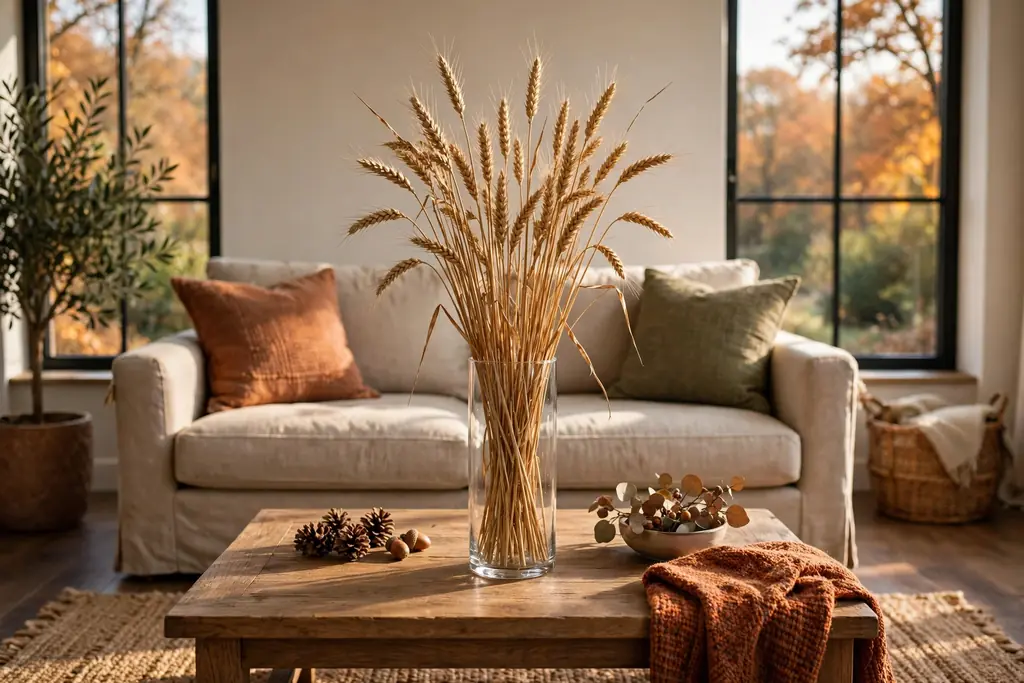
Dried wheat stems in a tall vase give a fall table height, texture, and a warm golden tone. Cut the stems to different lengths so the bunch has a natural shape, and tie them loosely before they go in the vase. Wheat suits a wood tray, a linen sofa, and warm wall colours.
Keep dried stems away from candles and fireplaces, since they catch fire easily. Dust them gently with a soft brush, and replace a bunch that starts to shed. If wheat feels too rustic for the room, try dried grasses in a muted tone for a softer version of the same idea.
13. Dress the Table for Winter With Pine and Pinecones

Fresh pine branches and a few pinecones make a winter table smell good and look gathered from outdoors. Lay a short pine branch along a tray, add two or three pinecones, and finish with one white candle. The green, brown, and white palette suits most winter rooms.
Check pine branches for sap before they go on a wood table, and set them on a tray or cloth. Replace branches when needles start to drop, and keep them away from lit candles. Pinecones can stay out all winter, then move to a basket until next year.
14. Light Winter Evenings With a Lantern
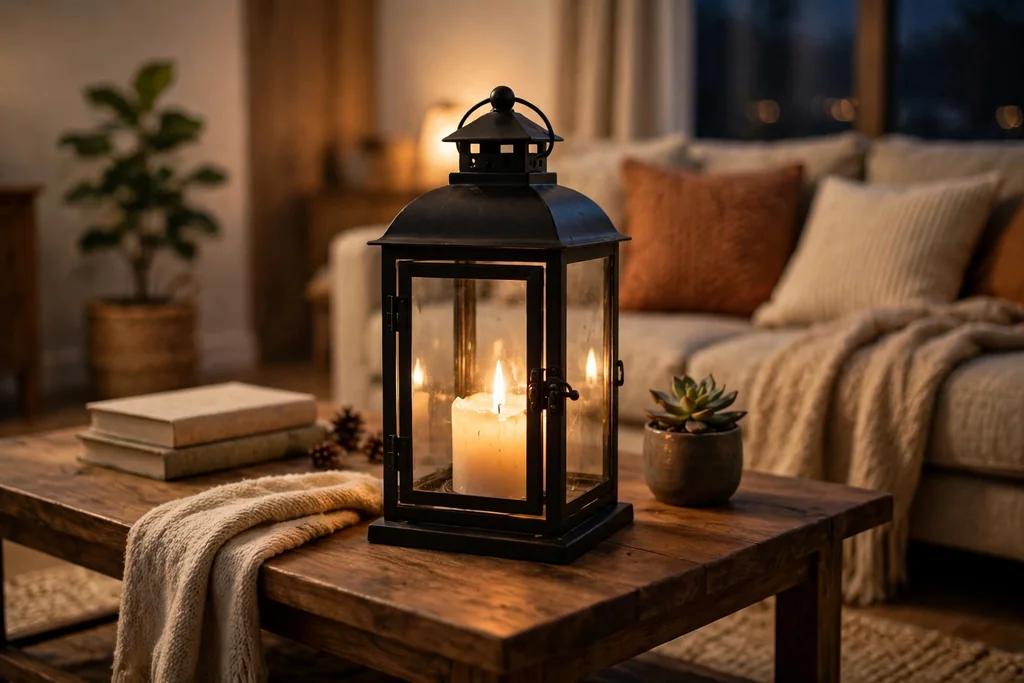
A lantern gives winter evenings a steady, sheltered glow, and it suits a table better than a scatter of small candles. Choose a lantern with clear glass, so the light shows, and a handle that lets you move it to a side table when needed. One lantern is enough on a standard table.
Use a pillar candle or a battery candle inside, and keep the lantern door closed while it burns. Set the lantern at the back of the table, away from books and pine branches. In spring, swap the candle for a small plant inside an open lantern for a new use.
15. Add Winter Colour With a Bowl of Red Berries
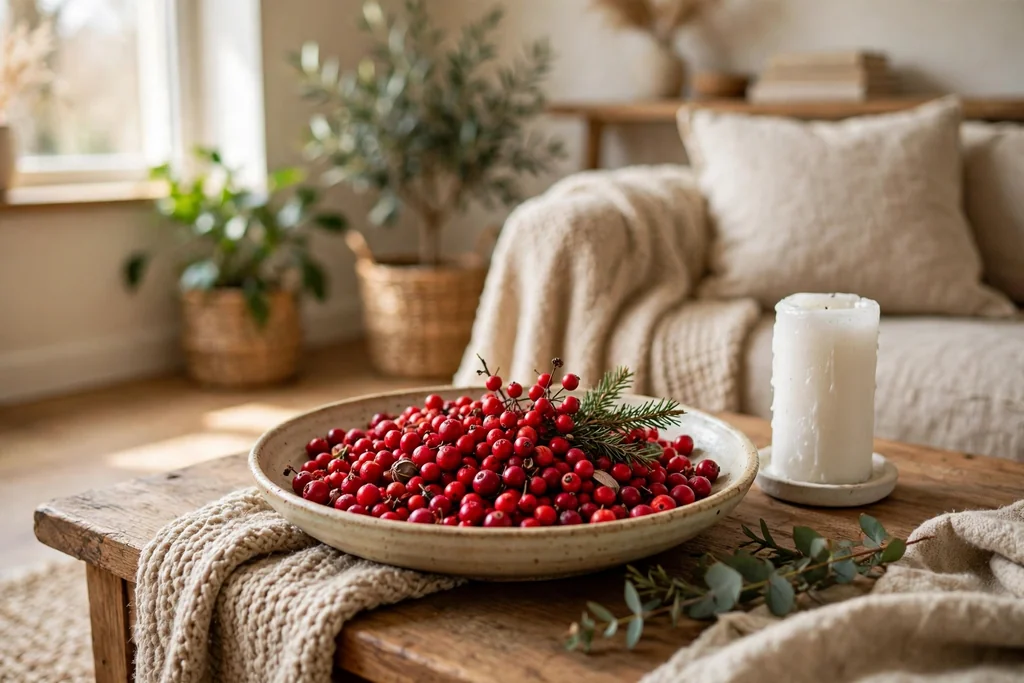
A bowl of red berries, real or faux, adds one clear note of winter colour to a neutral table. Fill a shallow bowl or a footed dish, and keep the rest of the arrangement quiet, with wood, glass, and one white candle. The red reads as festive without a theme taking over the room.
If you use real berries, check them every few days and remove any that soften. Faux berries suit a table used daily, since they need no care and will not stain. After winter, swap the berries for lemons or green apples to carry the same bowl into spring.
16. Welcome Spring With Tulips in a Glass Vase
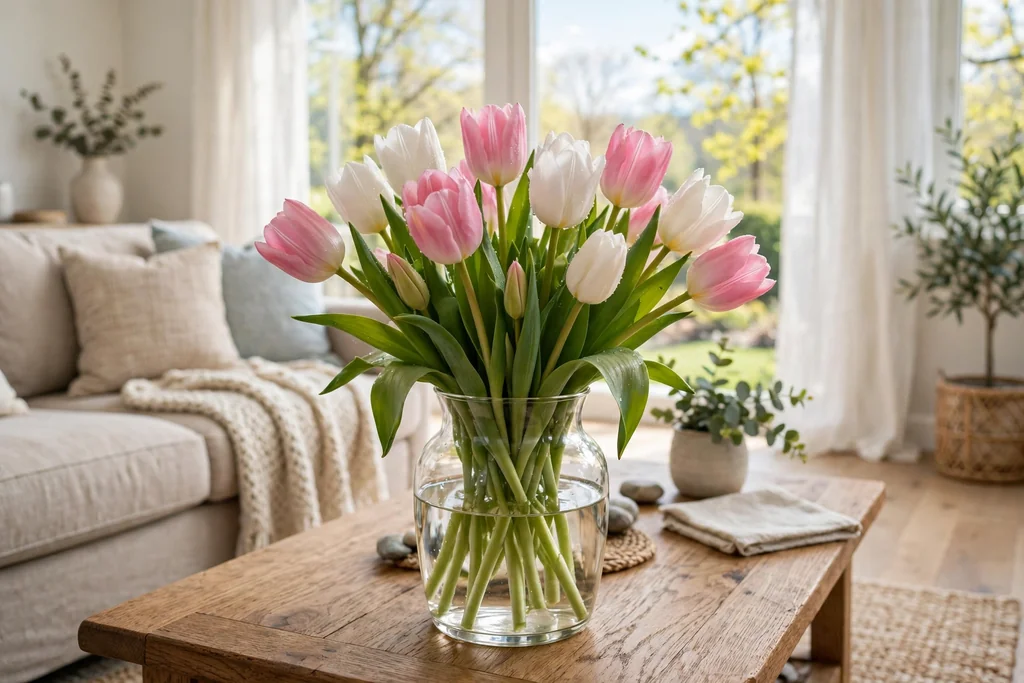
Fresh tulips in a clear glass vase bring spring colour and a clean shape to the table. Trim the stems at an angle, change the water every two days, and keep the vase out of strong direct sun so the flowers last longer. Tulips keep growing in water, so a tall vase suits their changing shape.
Place the vase where it can be seen from the doorway, since tulips open over a few days and change the look of the room. When the flowers fade, replace them with a small potted plant and keep the same glass vase for summer stems. Compost the spent stems rather than leaving them in the vase.
17. Brighten Spring With Pastel Candles and a Ceramic Bird
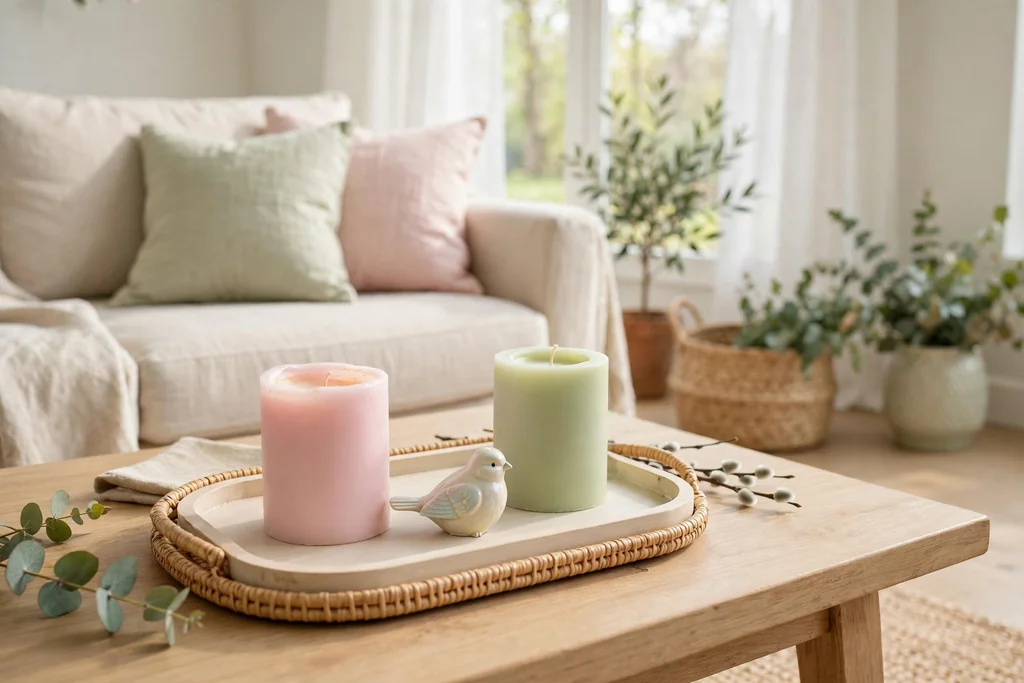
Pastel candles in soft pink, pale green, or butter yellow lighten a table after winter, and a small ceramic bird adds a spring note without a large display. Group two pastel candles beside the bird on a light tray, and keep books and bowls in pale tones nearby. The palette should stay soft, not sugary.
Use candles in holders, so pastel wax does not mark the tray. Keep the bird away from the table edge, and choose a matte ceramic finish if the table already has glossy glass. When spring ends, swap the pastel candles for white ones and keep the bird as a year round piece.
18. Grow Spring on the Table With a Small Herb Pot
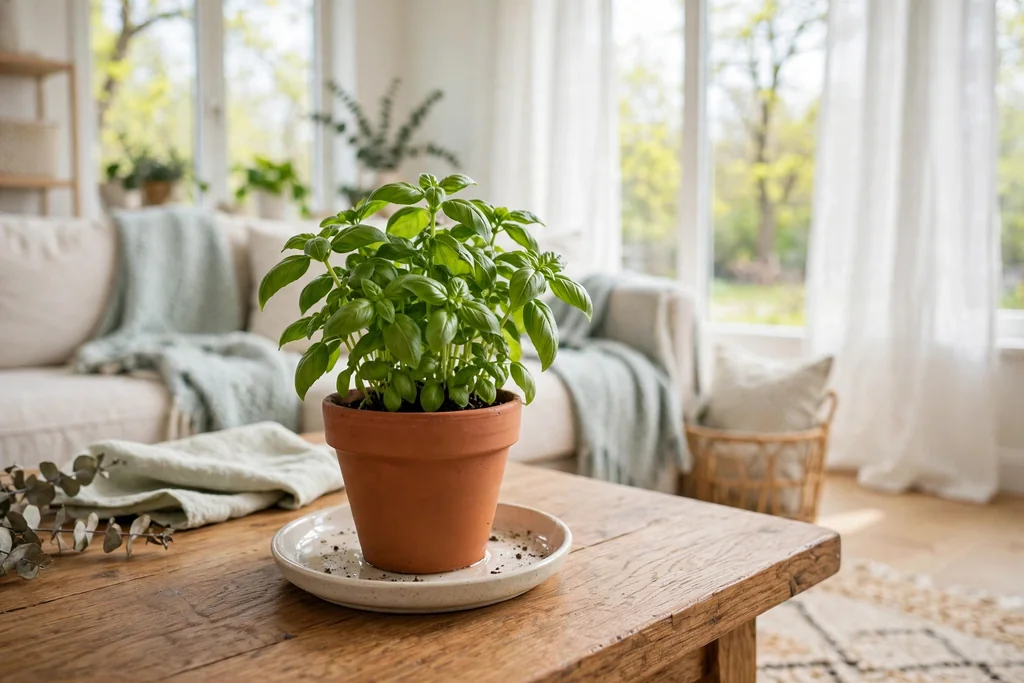
A small herb pot, such as basil, mint, or thyme, gives a spring table green leaves and a useful scent. Set the pot on a saucer at one corner, and snip leaves for cooking when you need them. The plant stays small if you trim it often, so it will not crowd the table.
Water the herb only when the soil feels dry, and give it the brightest spot on the table. If the table gets little light, move the pot to a windowsill between meals and bring it back for evenings. Replace a tired herb with a new pot, and keep the same saucer and tray.
19. Keep Summer Light With Shells and Driftwood
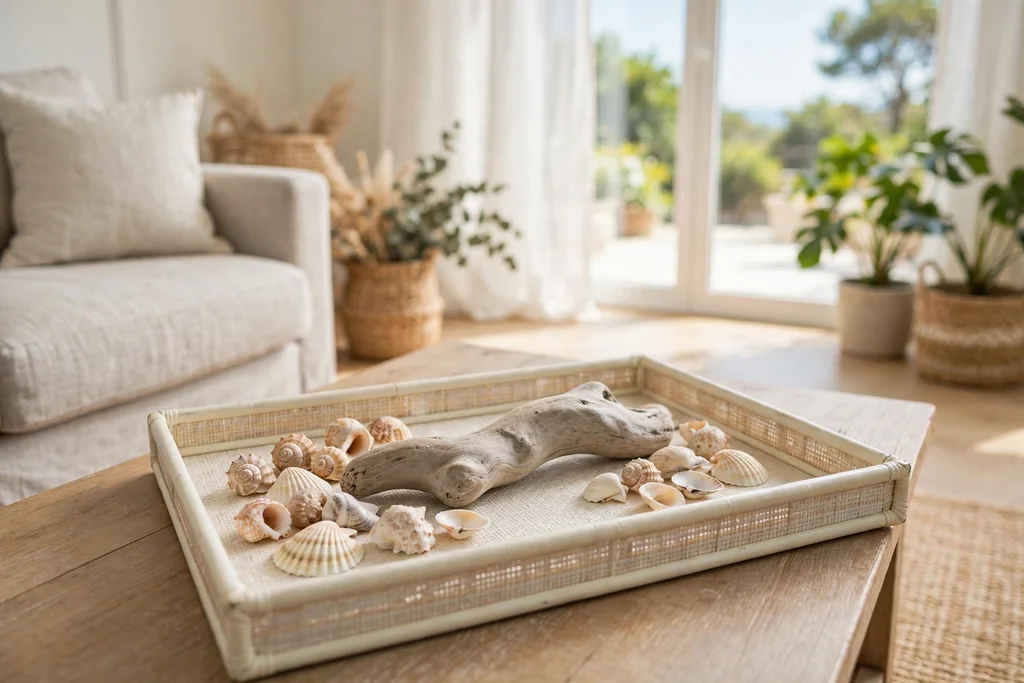
Shells and a piece of driftwood give a summer table a beach note without turning the room into a theme. Arrange three or four shells on a light tray with one smooth piece of driftwood, and keep the rest of the table pale and open. The natural shapes suit a glass vase and a white candle.
Rinse shells before they go on the table, and dry them fully so they do not mark wood. Keep the display low and flat, so it does not block conversation. At the end of summer, pack the shells in a lidded box and keep the driftwood out as a year round sculptural piece.
20. Freshen Summer With Citrus and Green Leaves
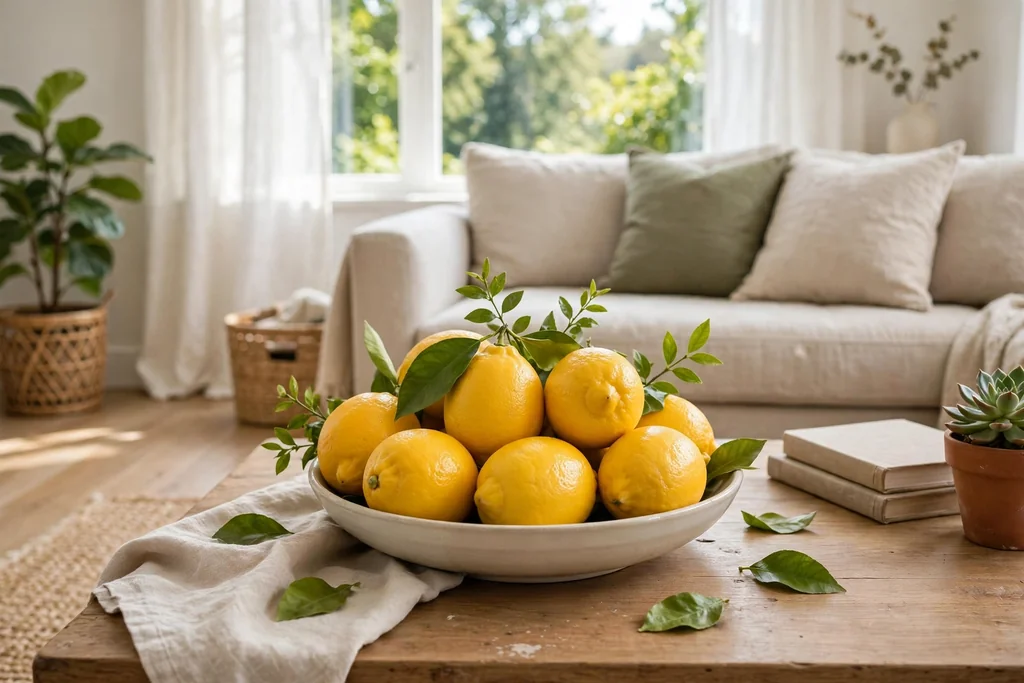
A bowl of lemons or limes with a few green leaves freshens a summer table in seconds, and the fruit can go back to the kitchen when needed. Fill a shallow bowl, add two or three leaves from a houseplant, and set the bowl beside a glass of water or a small vase. The yellow and green palette suits white, wood, and rattan rooms.
Check the fruit every few days, and use any that soften before they mark the bowl. Faux citrus suits a table near a sunny window, where real fruit dries fast. In fall, swap the citrus for small apples or pinecones and keep the same bowl.
21. Choose a Calm Neutral Palette for Any Season
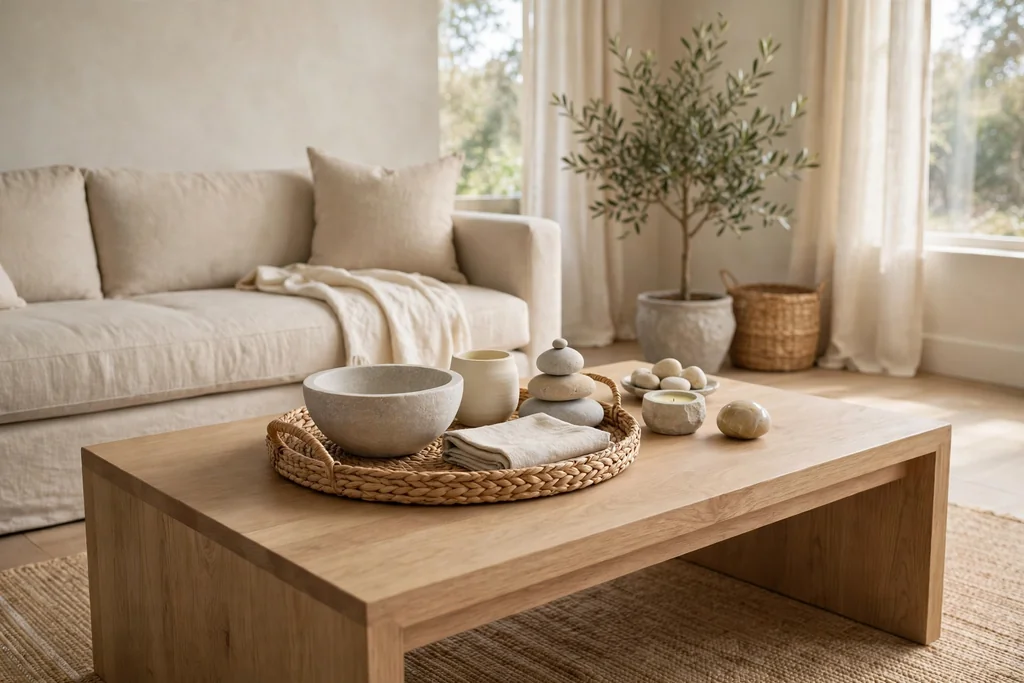
A neutral palette of cream, beige, soft grey, and natural wood suits a table in any season, since the interest comes from texture rather than colour. Mix linen, wood, stone, and glass in those tones, and let one dark piece, such as a black candle holder, ground the group. Seasonal swaps then need only one new item.
Keep the neutral pieces simple in shape, so texture does the work. A woven tray, a stone bowl, and a wood bead garland can carry the table alone. For more living room ideas in a warm neutral style, see these stylish rustic living room ideas.
22. Mix Warm Wood With Cool Stone
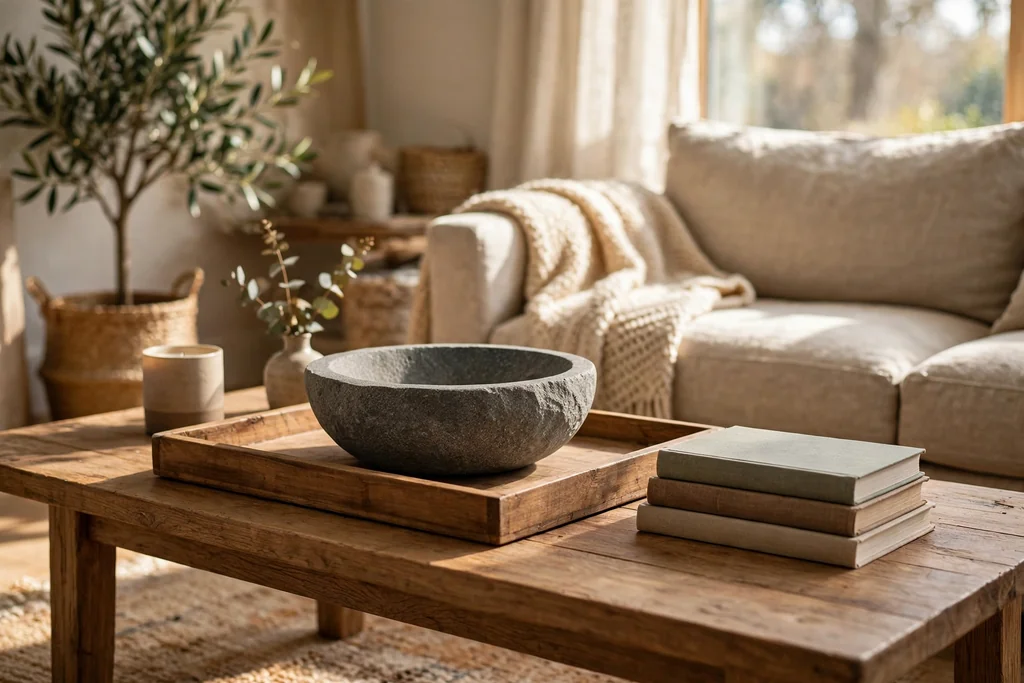
Wood and stone together give a table a natural balance, with warm grain beside a cool, smooth surface. Try a wood tray holding a stone bowl, or a wood bead garland draped beside a marble coaster set. The contrast works because both materials are plain in colour and rich in texture.
Keep the stone piece small on a wood table, so its weight does not mark the surface. Use felt pads under a stone bowl or a marble slab. If the room already has a lot of wood, let the stone piece be the single cool note, and keep the rest of the group in wood and linen.
23. Mix Glass and Metal for a Modern Look
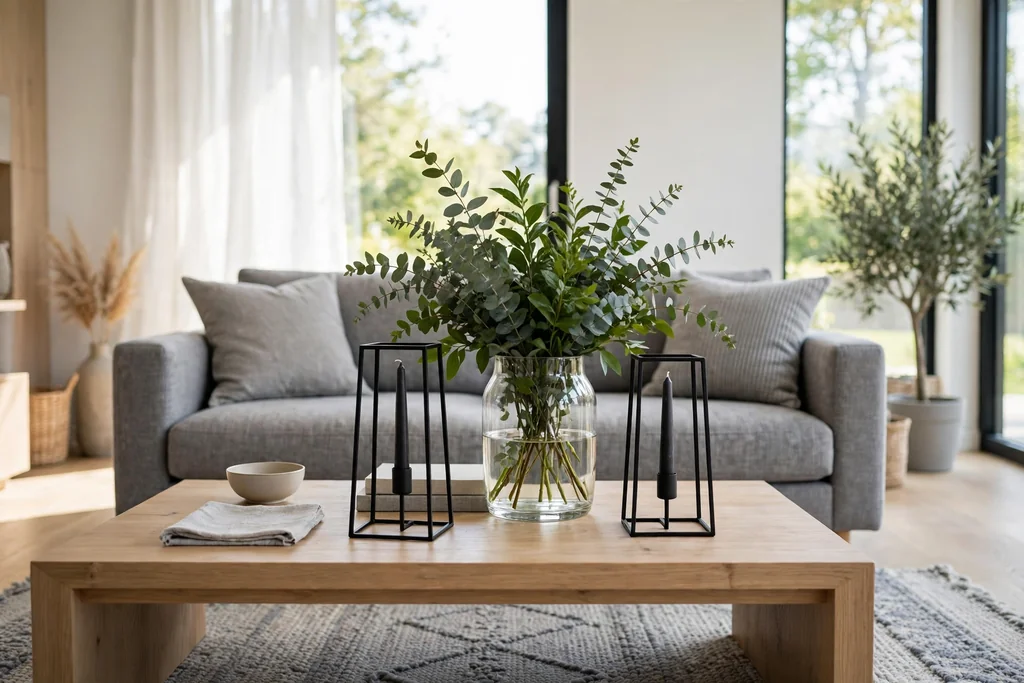
Glass and metal give a coffee table a clean, modern feel, with light passing through glass and a metal frame adding structure. Try a glass vase with brushed gold or black metal candle holders, set on a plain tray. The mix suits a grey sofa, a light rug, and plain walls.
Keep glass pieces few, since fingerprints show fast on a table used daily. Wipe glass with a soft cloth, and keep metal holders away from wet mugs. If the table itself is glass, add a wood or fabric tray first, so the arrangement has a base and does not slide.
24. Centre One Grouping on a Round Table
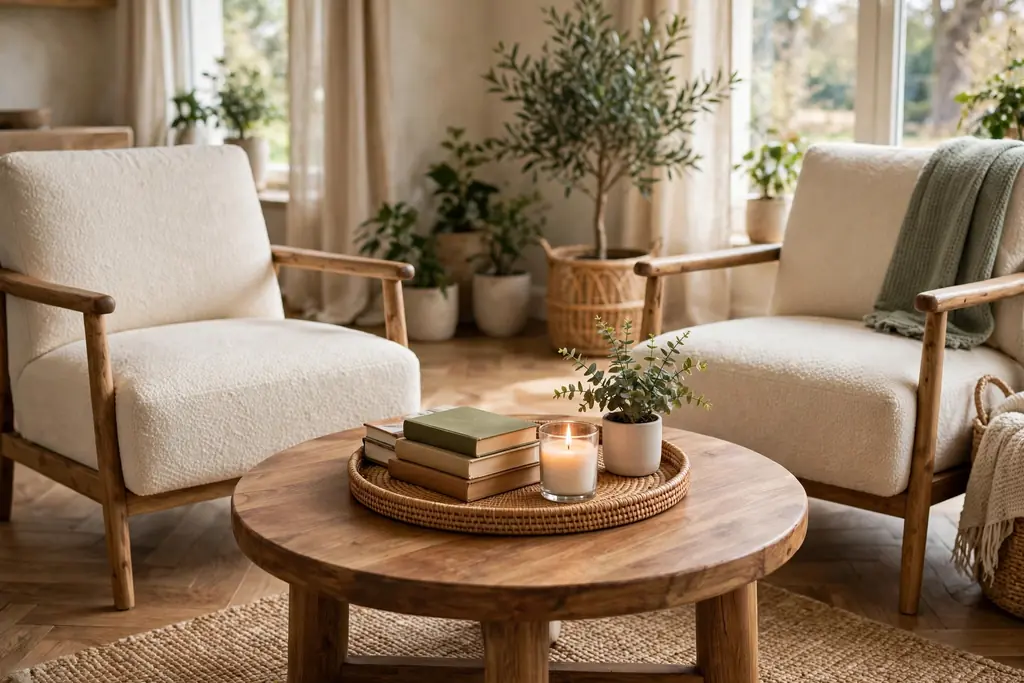
A round table suits one centred grouping, since there are no corners to fill. Place a round tray in the middle, build a low group inside it, and leave a clear ring of table around the tray for mugs. The centred group looks balanced from every seat, which matters when chairs sit all around.
Keep the group low, with a book stack, a candle, and a small plant, so no one has to lean around it to talk. If the table is small, use a single vase and a coaster holder only. Turn the tray now and then, so the best side faces the main seat.
25. Divide a Rectangular Table Into Two Zones
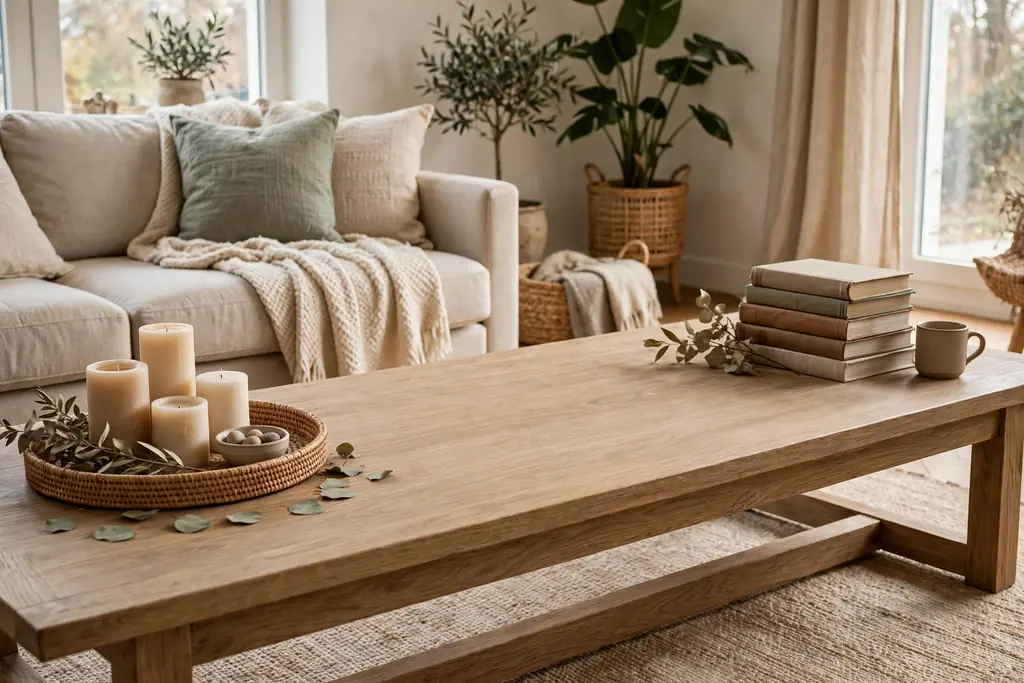
A long rectangular table looks best with two zones, not one stretched line down the middle. Set a tray group at one end and a book stack with a candle at the other, and leave open space between them for mugs and snacks. The gap keeps the table useful and stops the display from looking like a runner.
Balance the zones by weight, not by matching pieces: a tall vase at one end can balance a book stack and a bowl at the other. Keep both zones low enough for conversation across the table. If guests need more room, lift one zone away and leave the other in place.
26. Balance a Square Table From the Centre Out
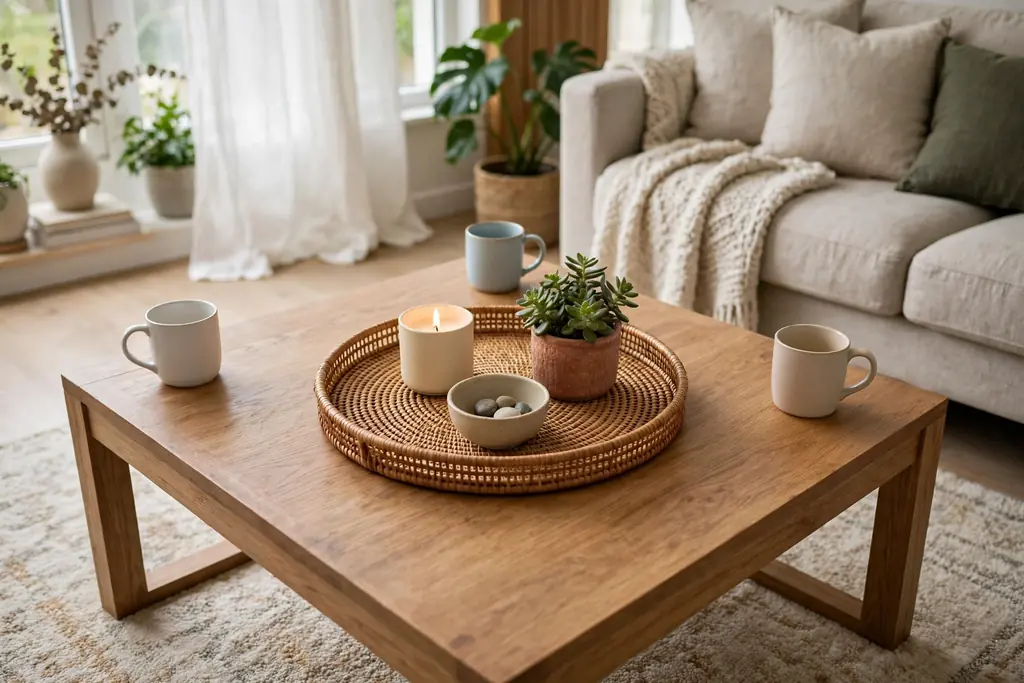
A square table needs a centre anchor with breathing room on all four sides. Start with a square or round tray in the middle, add a low group, and leave each edge clear for a mug. The equal sides mean a tall piece in the centre can dominate, so keep height modest.
Use a group of three in the tray, such as a candle, a small plant, and a bowl, and step back to check it from each seat. If one side faces a walkway, keep that side of the tray lower and clearer. A square table also suits four coasters, one near each seat, set out only when guests arrive.
27. Keep a Small Table to One Simple Vignette
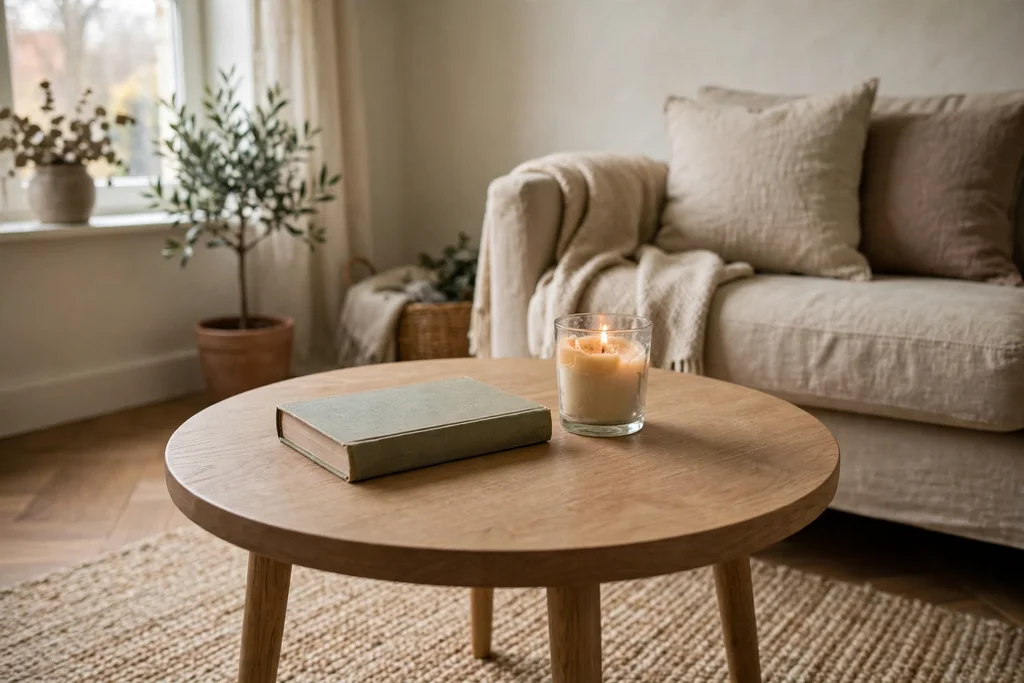
A small table needs one vignette only, such as a book stack with a candle, or a tray with a plant and a coaster holder. Every extra piece shrinks the usable surface, so edit hard: if an item has no job and no strong shape, move it to a shelf. One good group beats a crowded table.
Choose pieces in scale with the table, with a small vase rather than a tall one, and a single book rather than a stack of three. Keep the vignette at the back or the centre, and leave the front edge clear for a mug. Swap the candle or the stems to refresh the look, not the whole group.
28. Fill a Large Table With Three Separate Zones
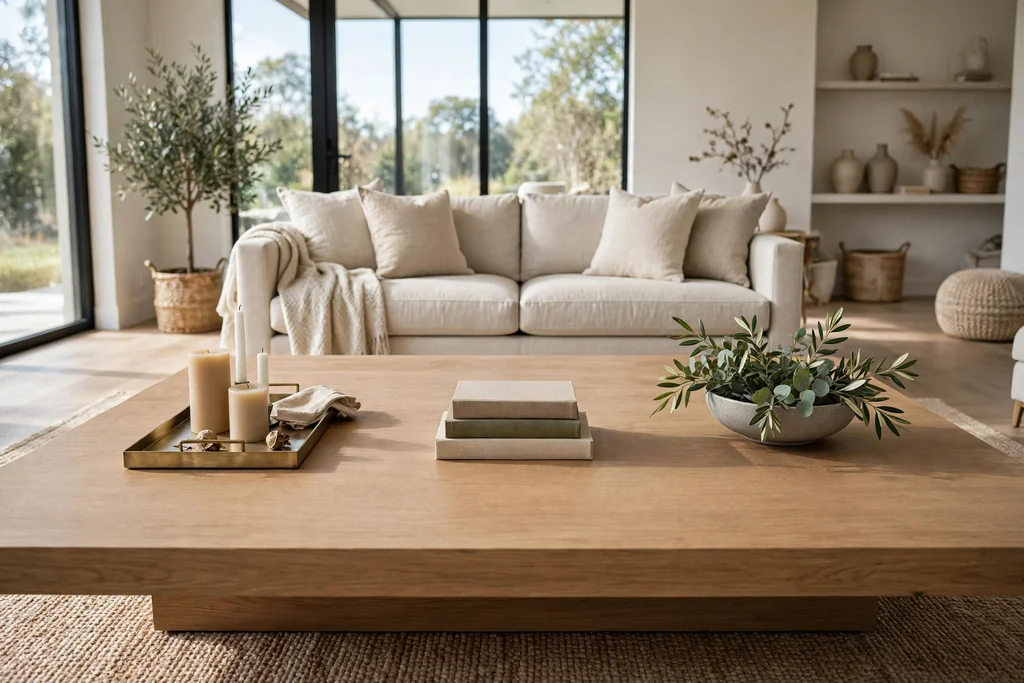
A large table can hold three zones without looking empty or crowded, if each zone has its own job. Try a tray group for candles, a book stack for reading, and a bowl or plant for greenery, with clear space between zones. The gaps matter as much as the groups, since they give the eye a rest.
Link the zones with one repeated material, such as wood trays or matching candle holders, so the table reads as one arrangement. Keep the tallest piece in the middle zone, and the lowest pieces near the sofa edge. If the table is used for a meal, lift the middle zone away first.
29. Make the Table Family Friendly and Easy to Clear
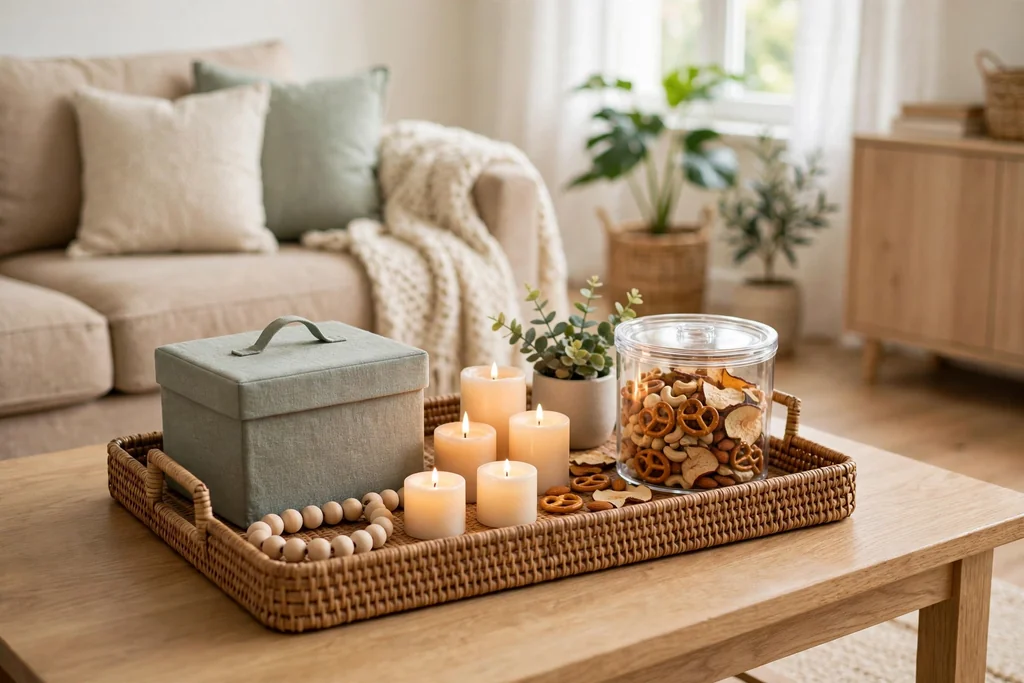
A family table needs soft, sturdy, and lidded pieces that survive daily use. Use a woven tray, a fabric covered box for remotes, wooden beads instead of glass, and battery candles instead of flames. Keep one clear end of the table for homework, snacks, or games, and let children help choose one piece.
Set a rule that the tray group lifts away in one move, so clearing the table takes seconds. Store spare pieces in a basket nearby, and rotate them in when the table is used for guests. Check the table edge often for sharp corners, and use felt pads under any hard piece.
30. Refresh on a Budget by Swapping One Item
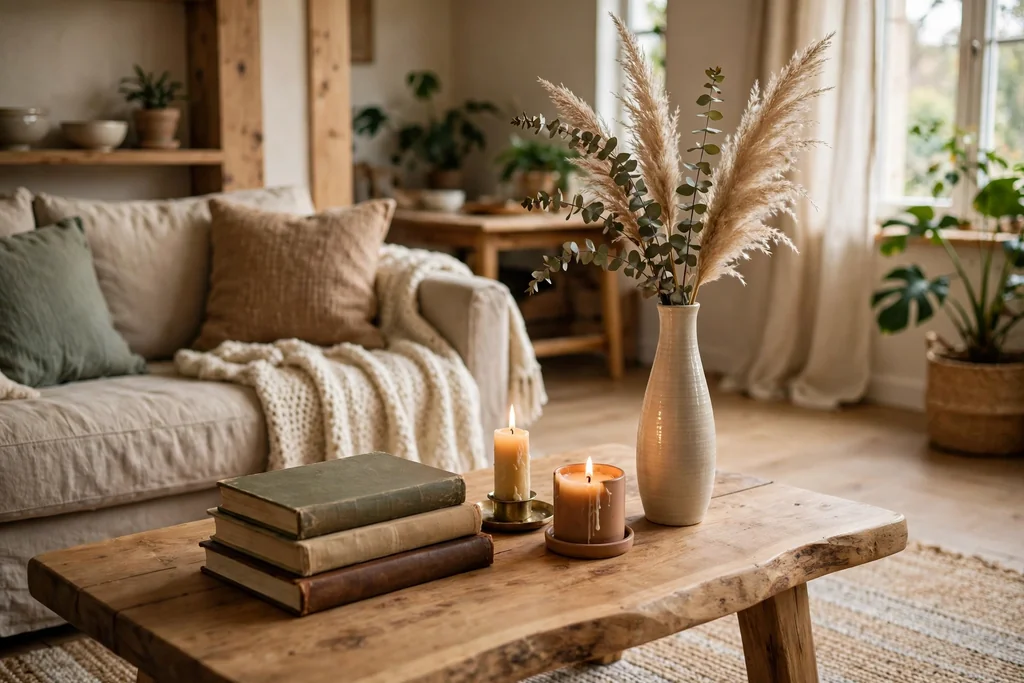
A budget refresh needs only one swap, not a new set of decor. Change the stems in the vase, the candle colour, or the bowl filler, and leave the tray, books, and holders in place. The single change draws the eye, while the familiar pieces keep the table looking settled.
Shop your own home first: a vase from a shelf, a bowl from a cabinet, or a plant from another room can be the new piece. If you buy one item, choose a versatile one, such as a plain tray or a white candle set, that works in more than one season. Note the swap, so you can repeat the ones you liked.
31. Set a Cozy Evening Look With Candlelight

An evening table needs low, warm light and a clear spot for a warm drink. Group candles in holders on a tray, add a soft throw on the sofa arm nearby, and keep the table surface mostly clear except for mugs. The candle glow suits wood, linen, and a dark evening room.
Use battery candles if the table is near curtains or if children use the room in the evening. Keep matches in the lidded box, so lighting the candles takes one step. Blow out real candles before bed, and let the tray hold the holders overnight so the table stays tidy.
32. Turn the Table Into a Morning Coffee Spot
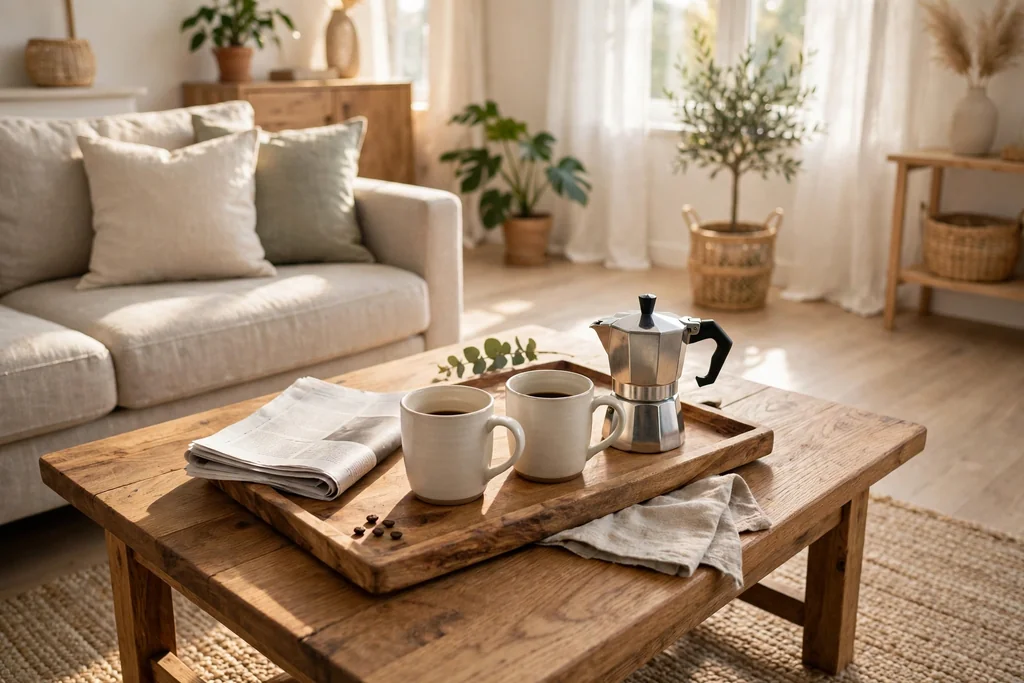
A morning coffee spot needs a tray for mugs, a small carafe or French press, and a book or newspaper, with room to set a cup down without moving decor. Use a sturdy tray with sides, so a spill stays contained, and keep the coffee group at the sofa edge for easy reach. The rest of the table can stay plain in the morning.
Clear the coffee tray after breakfast, and return the usual candle or plant group to the centre. Keep a small cloth in the lidded box for quick wipe ups. If the table is used for work later in the day, the coffee tray lifts away and the work surface is clear.
33. Repeat One Colour From the Sofa Cushions
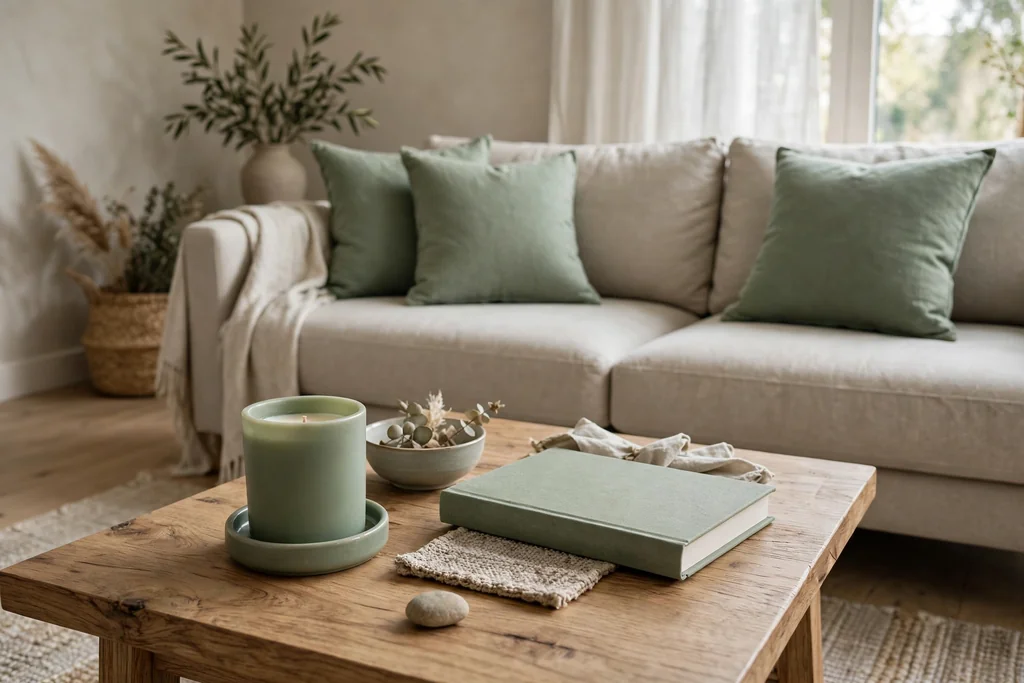
Repeating one cushion colour on the table links the table to the sofa without matching everything in the room. Pick the quietest cushion colour, such as sage, rust, or navy, and use it once on the table, in a candle, a book cover, or a bowl. One repeat is enough; two can start to look planned in a stiff way.
Keep the rest of the table neutral, so the repeated colour stands out. If the cushions change with the season, change the table repeat with them, and keep the tray and holders the same. This trick also works with a rug colour or a curtain tone, if the cushions are plain.
34. Rotate Four Pieces Through the Seasons
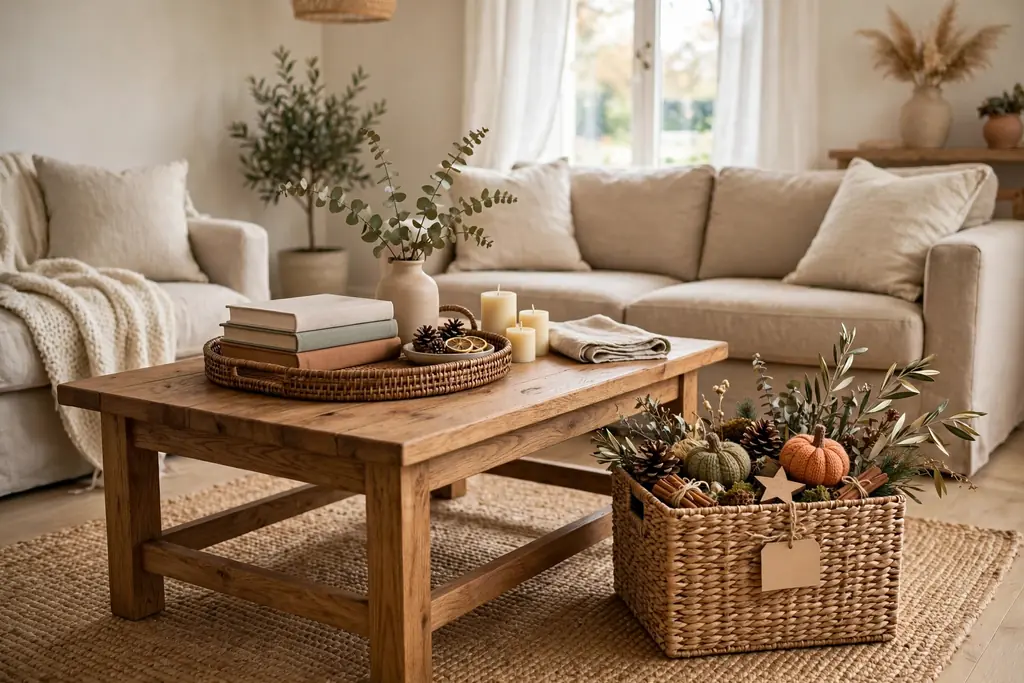
A seasonal rotation system keeps the table fresh with four pieces you swap four times a year. Choose a vase, a candle set, a bowl filler, and a small object, and keep a tray, books, and holders as the year round base. Each season, change only those four pieces, and store the off season set in one labelled box.
Write the four sets on a card inside the box, so the swap takes minutes: fall pumpkins and wheat, winter pine and berries, spring tulips and pastel candles, summer shells and citrus. The system stops impulse buying, since each season has a set list. Review the box once a year, and replace only pieces that are worn or broken.
Conclusion
A good coffee table arrangement is less about buying new decor and more about grouping what you own with care. Start with a tray or a book stack, add height and warmth in small steps, and leave room for daily life. Seasonal swaps work best when they are small: new stems, a different candle colour, or a fresh bowl filler can change the whole table. Try one idea from this list this week, live with it for a few days, and adjust the height, the grouping, or the colour until the table feels right from your usual seat. Save this list for the next season change, so the refresh takes minutes rather than a shopping trip.
FAQs
How many items should I put on a coffee table?
Three to five pieces usually work best on a standard table, grouped on a tray or a book stack, with clear space left for a mug. Count a tray group as one zone, not as five separate items, and step back to check the table from the sofa before adding more.
What is the easiest coffee table arrangement for beginners?
Start with a tray, a stack of two books, and one candle in a holder. This trio gives an anchor, height, and warmth, and it works on round, square, and rectangular tables. Add a small plant later, once the basic group feels right.
How do I style a coffee table without blocking conversation?
Keep the tallest piece below eye level from the sofa, and place tall vases at the back corner rather than the centre. Low bowls, book stacks, and short candles leave sightlines open, so guests can talk across the table without leaning around decor.
How often should I change coffee table decor?
Change one or two pieces with each season, such as stems, candle colour, or bowl filler, and leave the tray and holders in place. A full change is rarely needed, and a small seasonal swap keeps the table fresh without a new purchase each time.
What should I put on a small coffee table?
Use one vignette only, such as a book stack with a candle, or a small tray with a plant and a coaster holder. Choose small scale pieces, keep the front edge clear for a mug, and move extra items to a shelf or a side table.
How do I keep a coffee table tidy with children or pets?
Use a lidded box for remotes, battery candles instead of flames, and soft or sturdy pieces that will not break if knocked. Keep one end of the table clear, and choose a tray group that lifts away in one move when the table needs clearing.