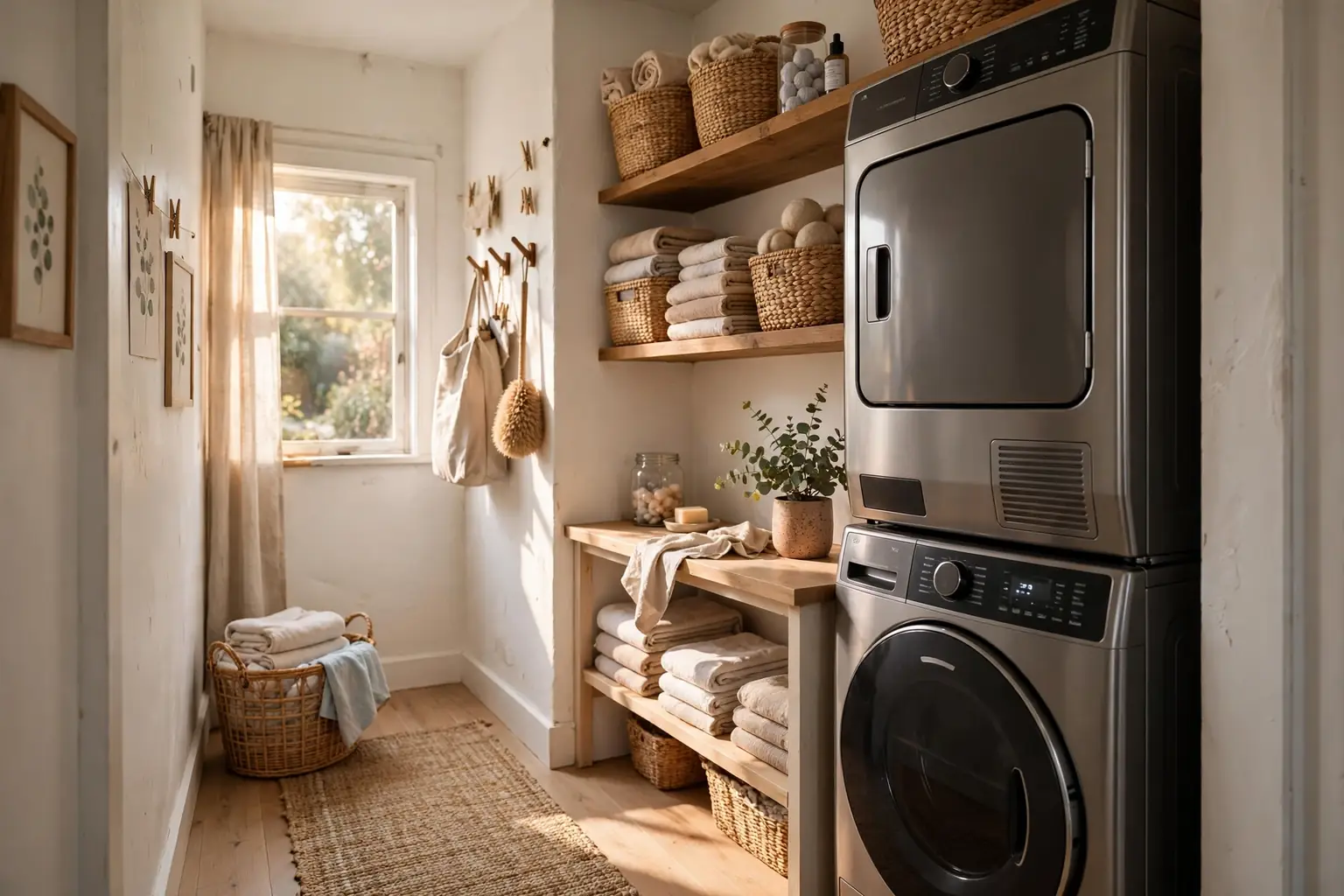
A narrow laundry room can still feel good to use. The trick is to give every inch a clear job, keep the walkway open, and add a few warm details so the room reads as part of the home rather than a bare utility corner. These 24 narrow laundry room ideas cover layouts, storage, drying, folding, and simple styling, so you can pick one quick change or plan a fuller refresh. Start by measuring the width, the door swing, and the space around the machines, then choose the ideas that fit your room and your weekly routine.
Key Takeaways
- Measure first: room width, door swing, machine depth, and clearance for hoses and vents decide which layouts will fit.
- Keep the walkway clear by moving storage to the walls, up high, and into slim gaps, and by choosing doors and racks that fold flat.
- Stack machines or add a counter over front loaders to free a full wall for storage, folding, or a drying zone.
- Sort laundry into slim bins by load type, and keep daily supplies at hand height with spare stock up high.
- Warm the room with pale warm paint, wood tones, a washable runner, soft light, and one or two lived-in details such as a plant or framed prints.
- Add drying space that disappears when not in use, such as a fold-down rack, a retractable line, or a ceiling pulley rack.
1. Stack the Washer and Dryer Into One Tall Tower
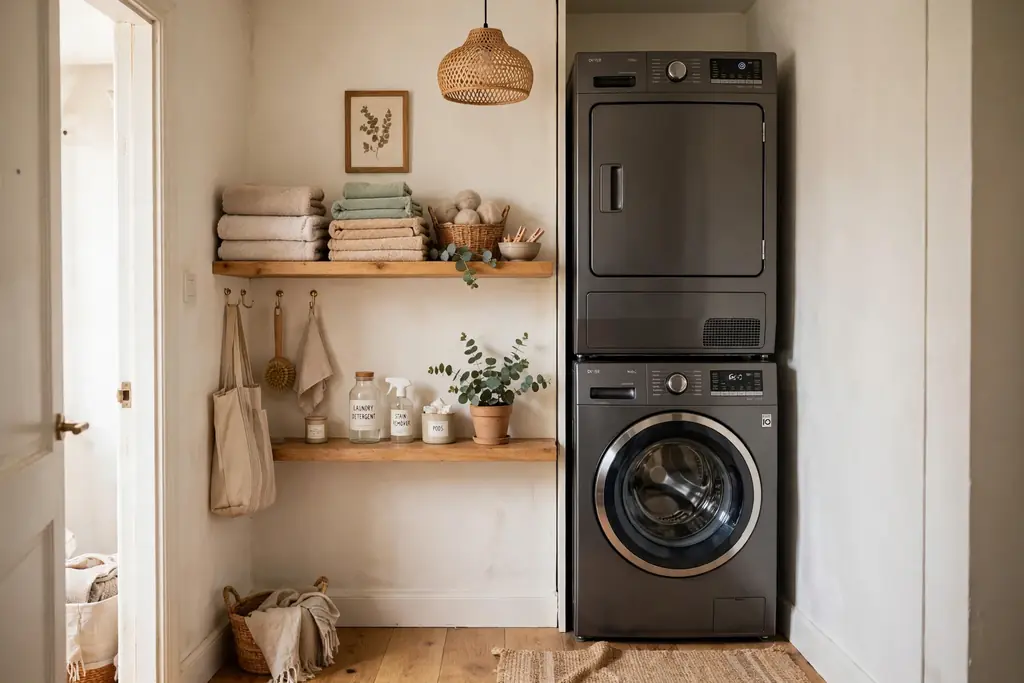
Stacking the washer and dryer turns two floor footprints into one tall tower and frees the rest of the wall for storage or folding. This suits a narrow room where side by side machines leave no room to move, and it works best with a stacking kit made for your machine models. Keep the dryer controls within easy reach, and use a small step stool if the top controls sit high.
Use the freed wall for a slim cabinet, open shelves, or a folding shelf. Leave the clearances the machine maker advises around the tower, and check that the door can still open fully without hitting the opposite wall. Anchor the tower as advised, and keep a small basket nearby for items waiting to go in.
2. Add a Counter Over Side by Side Front Loaders
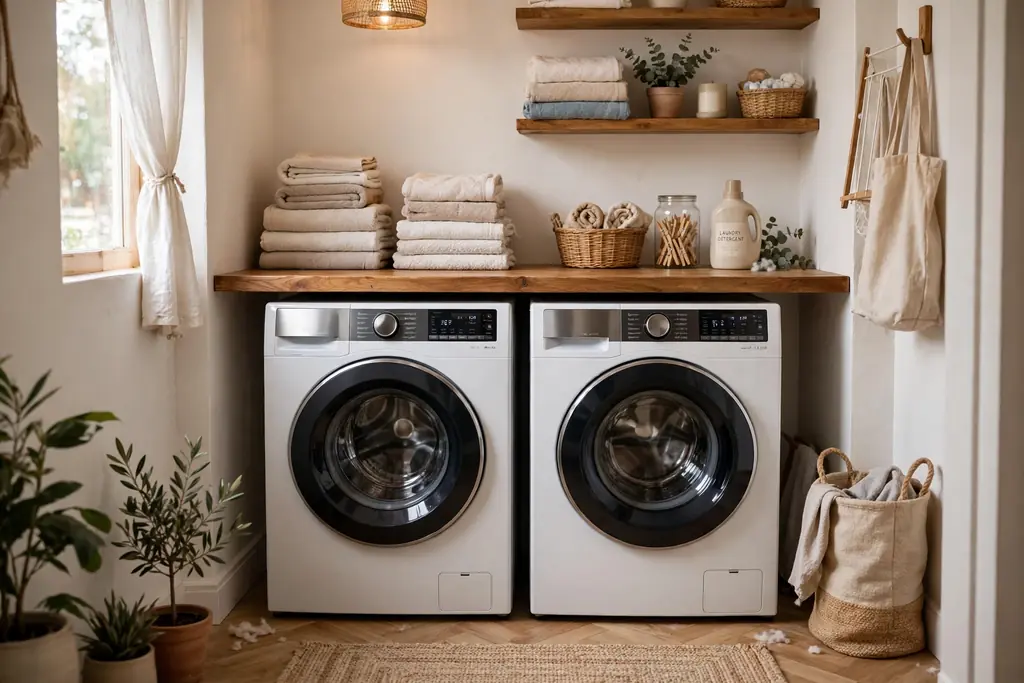
A counter over side by side front loaders gives a narrow room a folding surface without taking any floor space. The counter spans both machines, so you gain a long worktop for folding, sorting, and stacking clean piles. Choose a water resistant top, such as sealed wood or laminate, and leave a small gap at the back for hoses.
Keep the counter mostly clear, with one small tray for supplies you reach for daily. Sort folded piles by person or room, then carry them out in a basket so the counter stays ready for the next load. If the machines vibrate, check the leveling feet first, since a steady machine keeps items from sliding off the counter.
3. Slide a Slim Rolling Cart Into the Gap
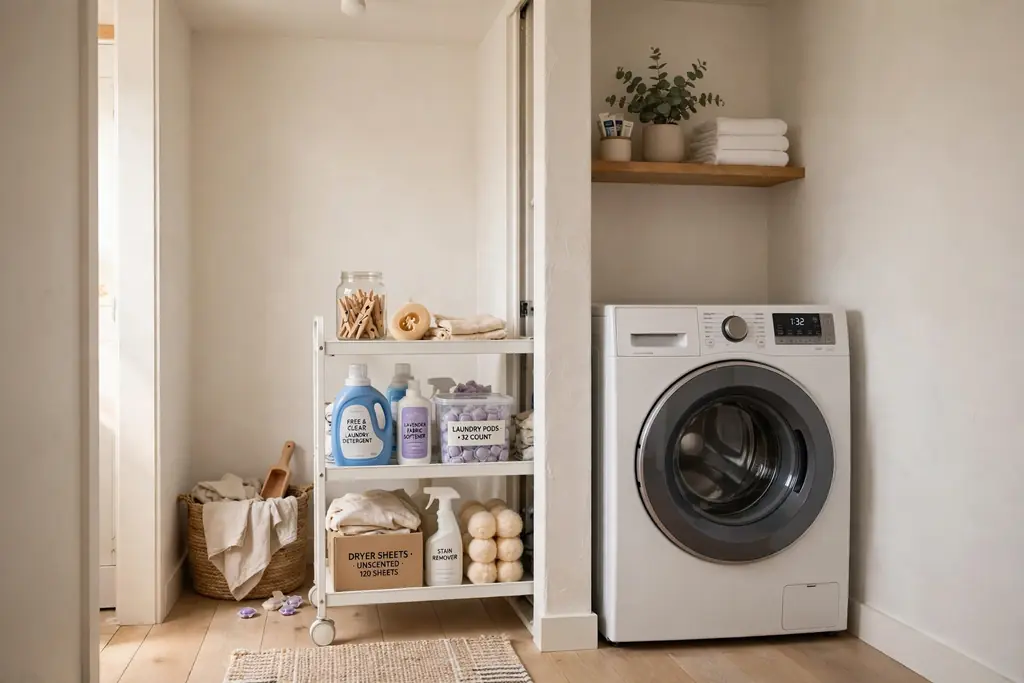
A slim rolling cart turns the gap beside a machine into three or four shelves of storage. Gaps of 15 to 25 centimetres often sit empty in a narrow laundry room, and a cart on wheels brings every shelf to you with one pull. Use it for detergent, stain spray, dryer balls, and spare cloths.
Choose a cart narrower than the gap, with a handle at the front and a rim on each shelf so bottles stay put. Keep tall bottles on the lowest shelf so the cart stays stable when pulled out. Slide it back flush when done, so the walkway stays clear. This idea suits rented homes well, since it needs no drilling or fixing.
4. Fit a Fold-Down Shelf for Folding
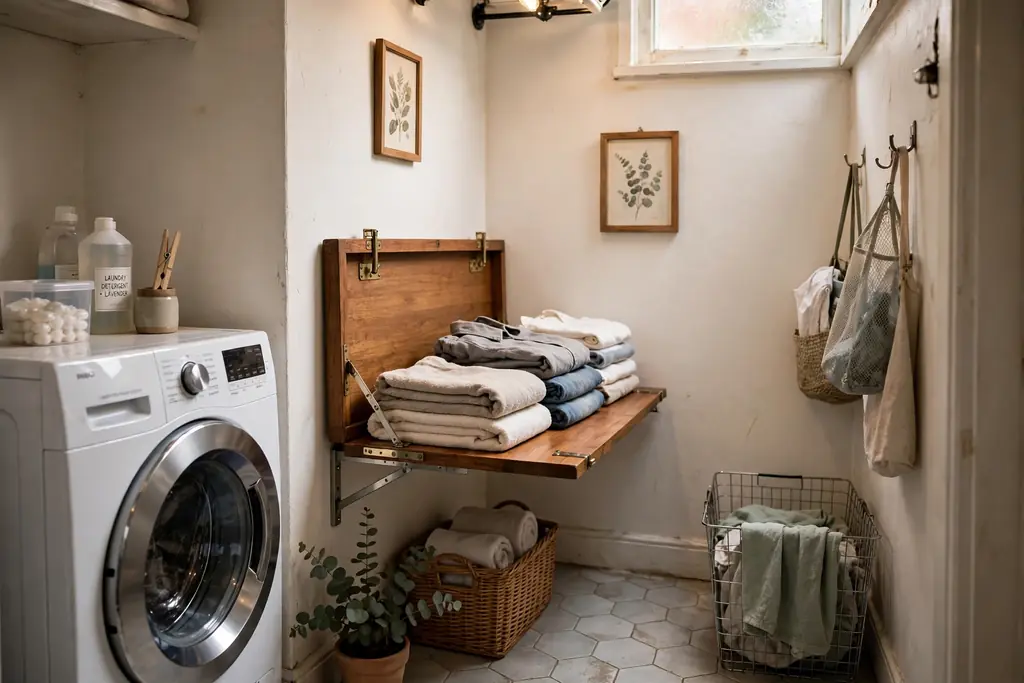
A fold-down wall shelf gives a narrow room a folding table only when you need it. Lowered, it holds a basket of clothes to fold; folded up, it leaves the wall and the walkway clear. Fix it at a comfortable standing height, above a machine or on the free wall, and use sturdy hinges and a support arm rated for the load.
Keep the shelf depth shallow enough that it does not block the walkway when lowered. Fold clothes straight from the dryer onto the shelf, then carry the piles out in a basket. A fold-down shelf suits a room with no room for a fixed table, and it pairs well with a wall hook for the basket when the shelf is folded away.
5. Run Cabinets Right Up to the Ceiling
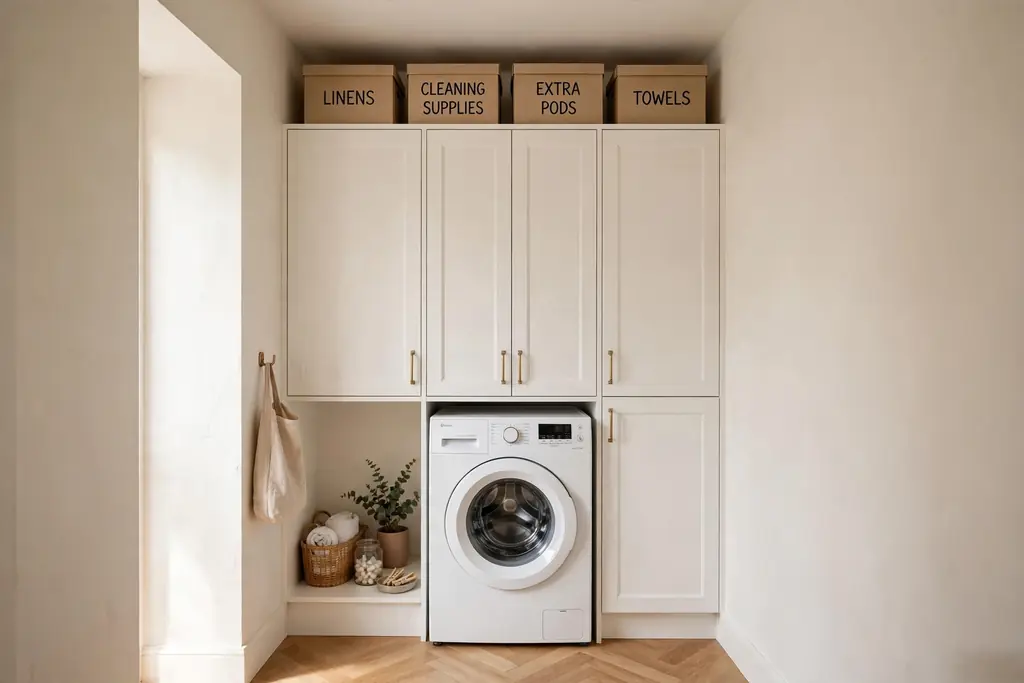
Cabinets that run to the ceiling use the tallest, most wasted strip of a narrow laundry room. The top shelves hold spare stock, seasonal items, and bulky supplies, while the lower shelves hold daily items at hand height. Use one door finish through the run so the cabinets read as one calm unit rather than a row of boxes.
Keep a small step stool in the room for the top shelves, and label the highest boxes so you can find spare stock without opening each one. Store heavy items low and light items high. If the ceiling slopes or a vent crosses the wall, stop the cabinets below the obstruction and use the remaining gap for a shallow open shelf.
6. Use Open Shelves With Matching Baskets
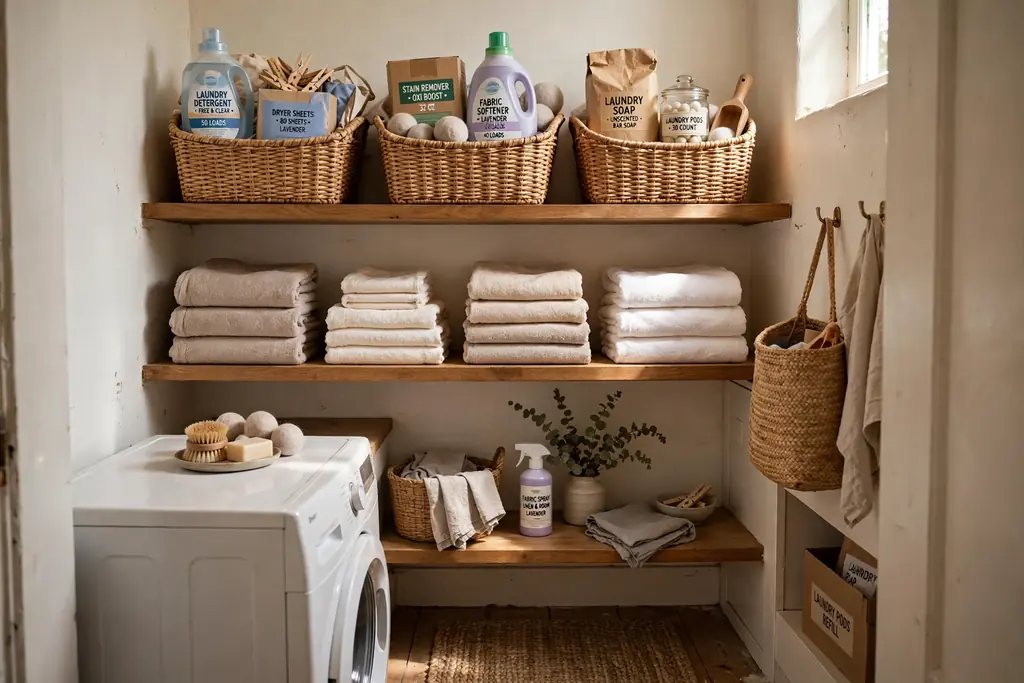
Open shelves with matching baskets keep supplies visible and easy to grab, while the matching baskets keep the display calm. Use two or three shelves above the machines or on the free wall, and choose baskets in one material, such as cotton rope or woven seagrass, for a lived-in feel. Label each basket by job, such as washing, drying, and cleaning.
Keep daily items on the lowest shelf and spare stock higher up. Leave a little empty space on each shelf so the display reads as tidy rather than crammed. Wipe the shelves when you restock, since lint settles fast in a laundry room. Open shelves suit renters when fixed with suitable wall anchors, and they cost less than a full cabinet run.
7. Add a Pull-Out Drying Rack Between the Machines
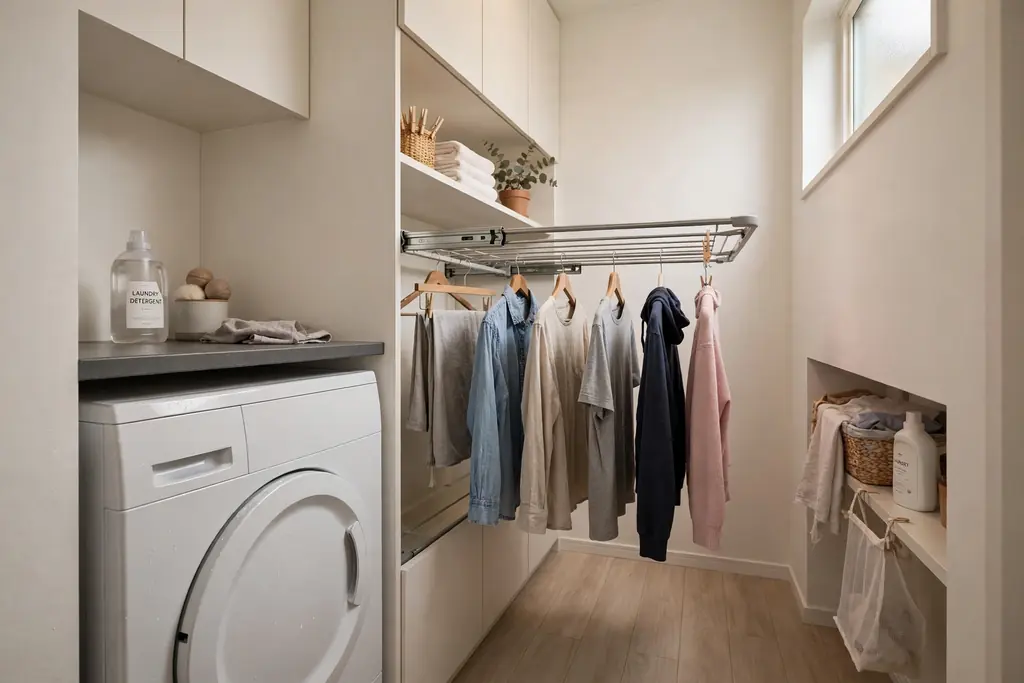
A pull-out drying rack slides out from a slim cabinet or from the gap between machines, giving you drying space that vanishes when the load is done. The rack holds delicates and items that should not go in the dryer, and it folds or slides back flush so the walkway stays open. This suits a narrow room with no space for a freestanding drying rack.
Mount the rack at a height that lets clothes hang without touching the floor, and leave air space around it so items dry rather than staying damp. Hang the heaviest wet items near the support end. If a pull-out rack will not fit, a rack that mounts on the inside of a cabinet door gives a similar result on a smaller scale.
8. Fix a Retractable Clothesline Across the Room
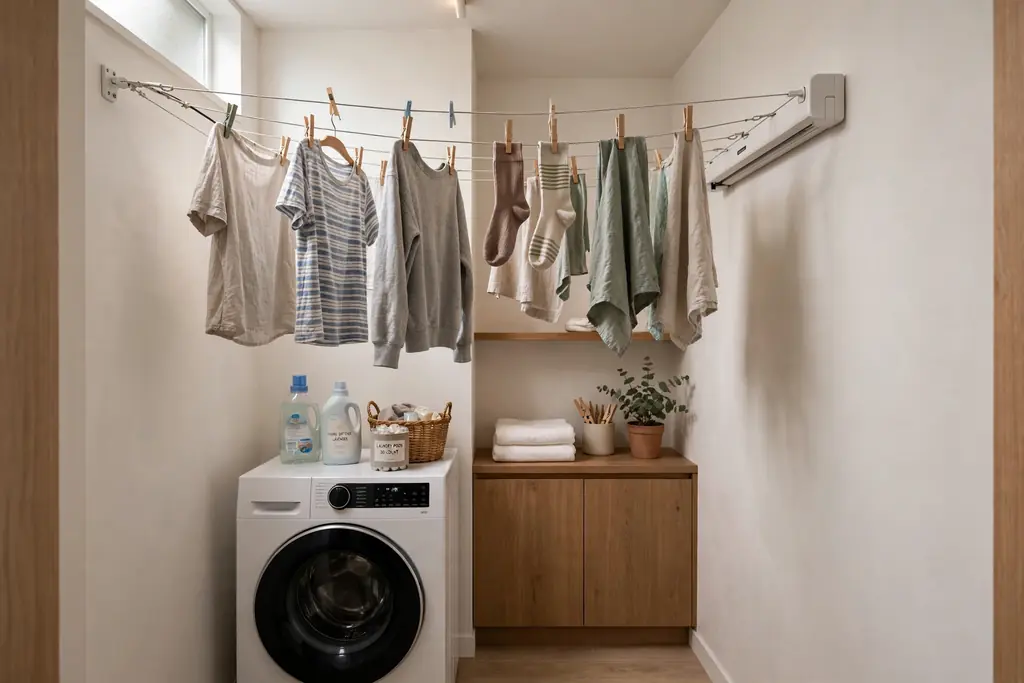
A retractable clothesline spans the narrow room when you need it and winds back into its housing when you do not. Fix one end to the wall and hook the other end to the opposite wall only for drying time. Two or three parallel lines hold a full small load, and the lines sit high enough to keep clothes clear of the machines and the floor.
Use the line for items that dry best in air, such as swimwear, wool, and printed tops. Keep the room ventilated while clothes dry, since still damp air slows drying and can leave a musty smell. Retract the line after each use so the room feels open again. This is a low cost change that suits rented homes when the housing is fixed with removable anchors or screws in a stud.
9. Use the Back of the Door for Supplies
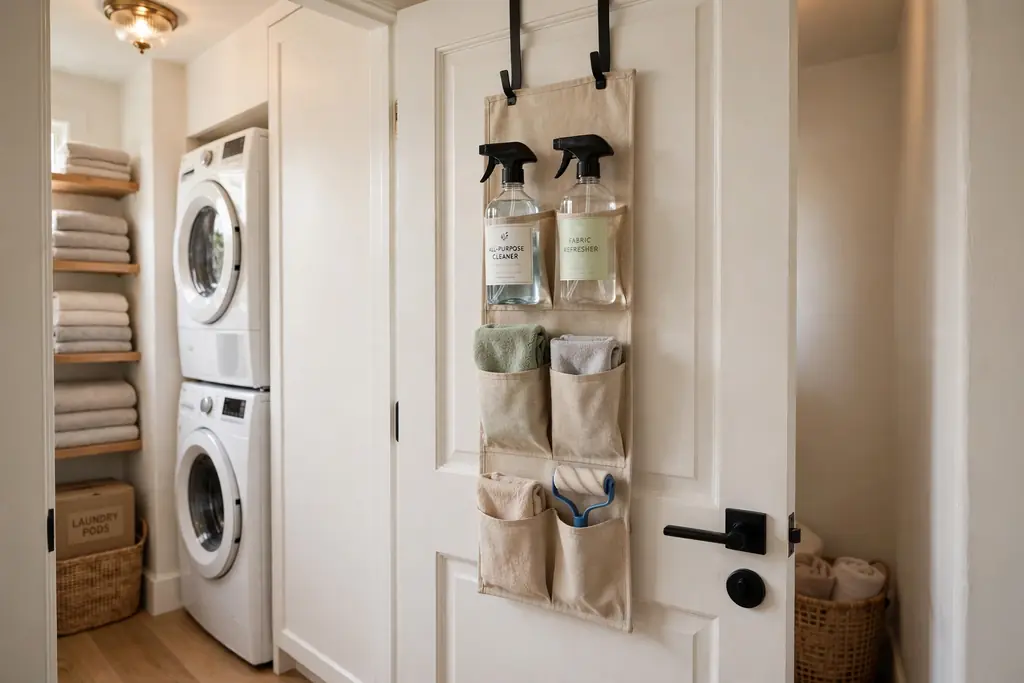
Hooks and a slim organizer on the inside of the laundry room door hold supplies that would otherwise crowd a shelf. Use the pockets for stain spray, cloths, dryer balls, and small tools, and use hooks for a dustpan brush, a lint roller, and a small bag for stray socks. Keep heavy bottles low so the door still swings freely.
Choose an organizer shallow enough that it does not hit a machine or a cabinet when the door opens. Hang it on the inside face so the pockets do not show from the hall. This change costs little, needs no drilling in many cases, and frees a full shelf for baskets or folded linens. Check that the door still latches fully once the organizer is loaded.
10. Run a Peg Rail Along the Free Wall
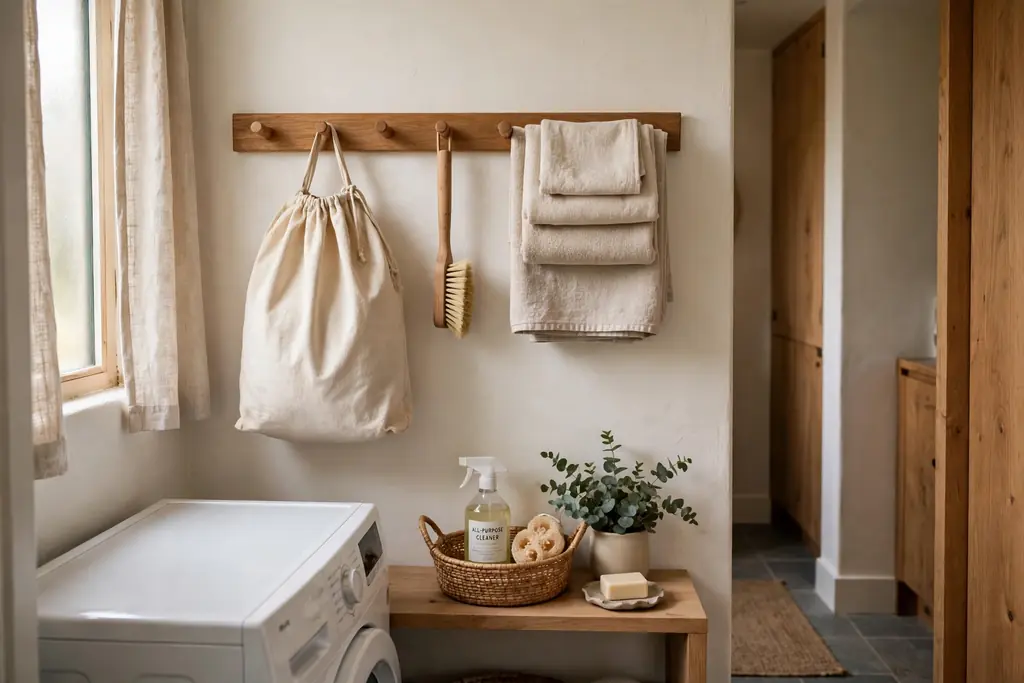
A peg rail along the free wall gives a narrow laundry room a flexible row of hooks for hanging items, bags, and tools. Fix the rail at a height you can reach without stretching, and add a mix of hooks, clips, and small baskets. Hang a drying bag for delicates, a mesh bag for socks, and a brush, so each tool has a visible home.
Keep the rail to one wall, and leave the opposite wall clear so the room does not feel closed in. Move hooks along the rail as your routine changes, such as adding a clip for a stain chart or a hook for a reusable shopping bag of items to mend. A wood peg rail also adds a warm, lived-in detail to a room that is mostly machines and white walls.
11. Build In a Pull-Out Ironing Board
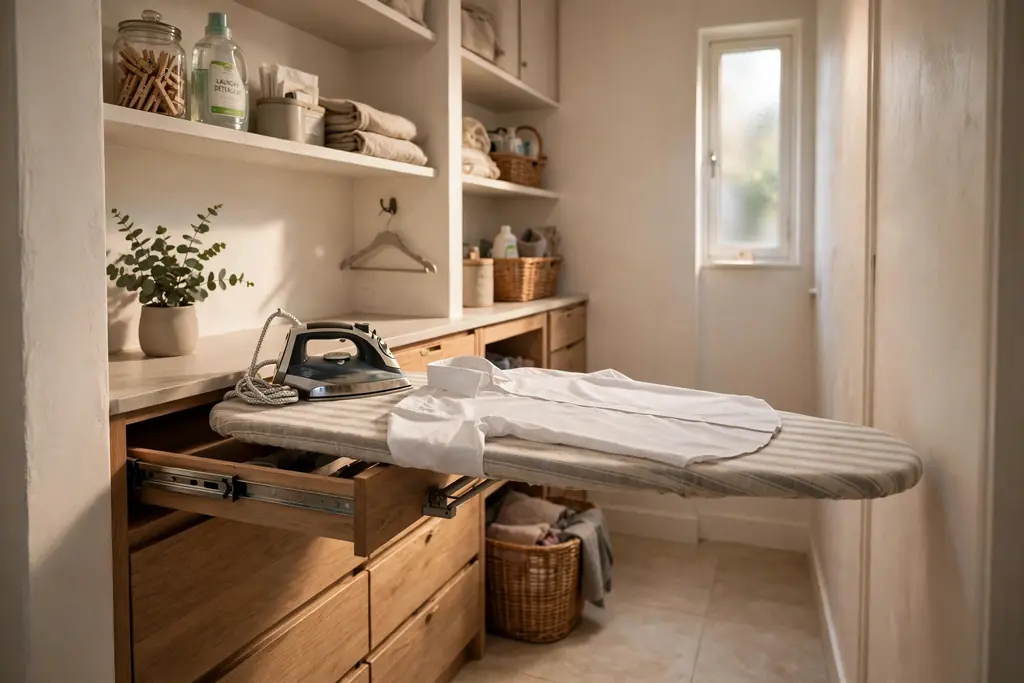
A pull-out ironing board hides inside a drawer or a slim cabinet and slides out only for ironing time. This suits a narrow room with no place to store a full board, and it keeps the walkway clear between laundry days. Choose a board sized to the drawer or cabinet, with a heat resistant cover, and fix the unit into studs or solid anchors.
Iron near the machines so clothes move straight from dryer to board to hanger. Keep a small spray bottle and a heat safe rest for the iron beside the board, and fold the board away as soon as you finish so the room stays open. If a built-in board will not fit, a tabletop board used on the folding shelf in idea 4 gives a similar result.
12. Fit a Slim Utility Sink Cabinet
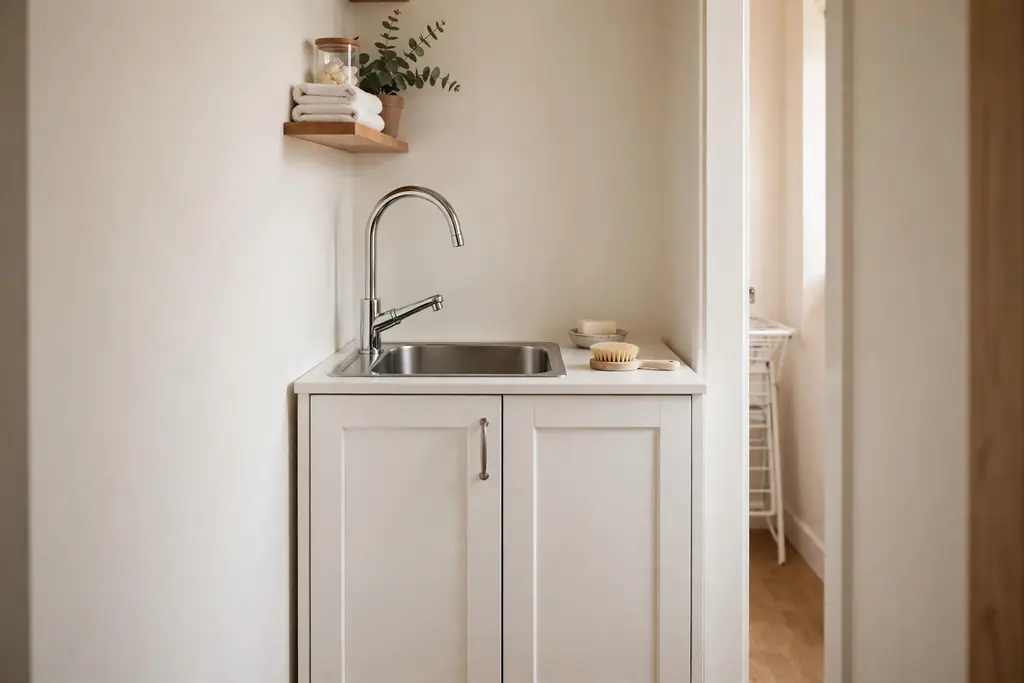
A slim utility sink cabinet gives a narrow laundry room a place to soak stains, rinse muddy items, and fill a bucket, without the footprint of a full laundry tub. Choose the narrowest sink that still fits a bucket, and pair it with a cabinet below for cleaning supplies and spare cloths. A wall mounted faucet frees counter space beside the sink.
Keep the area under the sink organized with the same bin approach used under a bathroom sink, grouping supplies by job so nothing is lost behind the pipes. For more ideas on making cabinet storage work around plumbing, see these under sink organization ideas. Wipe the sink after muddy jobs, and keep a small brush and a bar of stain soap in a dish beside the tap.
13. Paint Warm White and Add Wood Trim
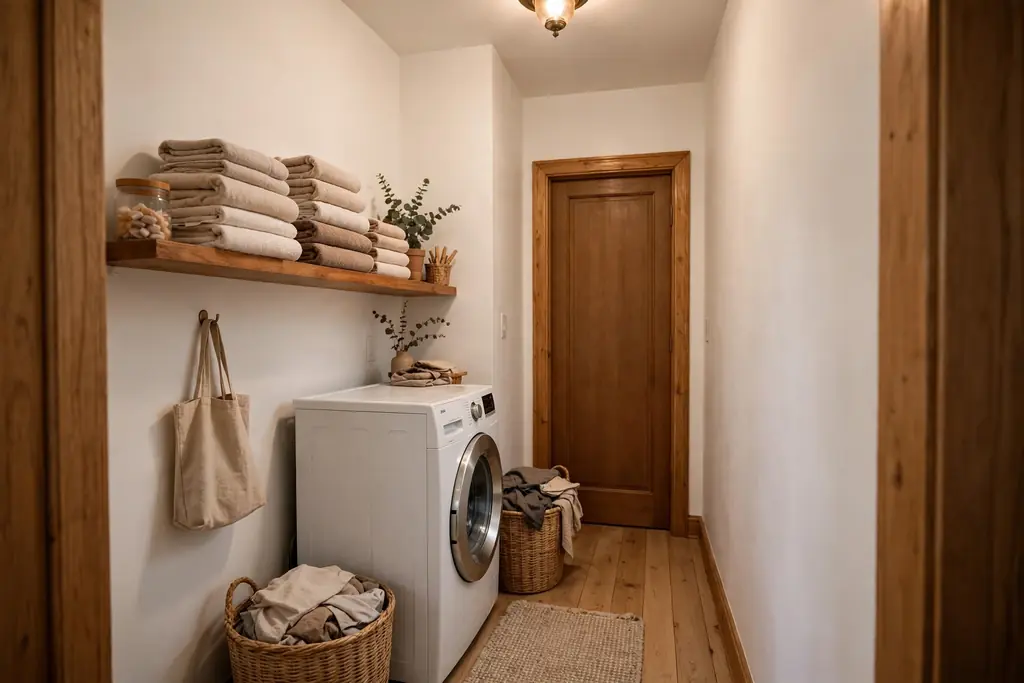
Warm white paint with simple wood trim softens a narrow laundry room at once. Cool white can make a small utility room feel stark, while a warm white with a hint of cream warms the walls and suits wood, cotton, and wicker. Add wood trim around the door or a wood shelf, and the room starts to feel like part of the home.
Paint the ceiling the same warm white to avoid a hard line overhead, and keep the trim to one wood tone so the small room stays calm. Test a painted patch beside the machines first, since machine finishes and artificial light shift how a white reads. This is a weekend change that lifts every other idea in this list, since warm walls make baskets, plants, and prints look at home.
14. Lay a Washable Patterned Runner
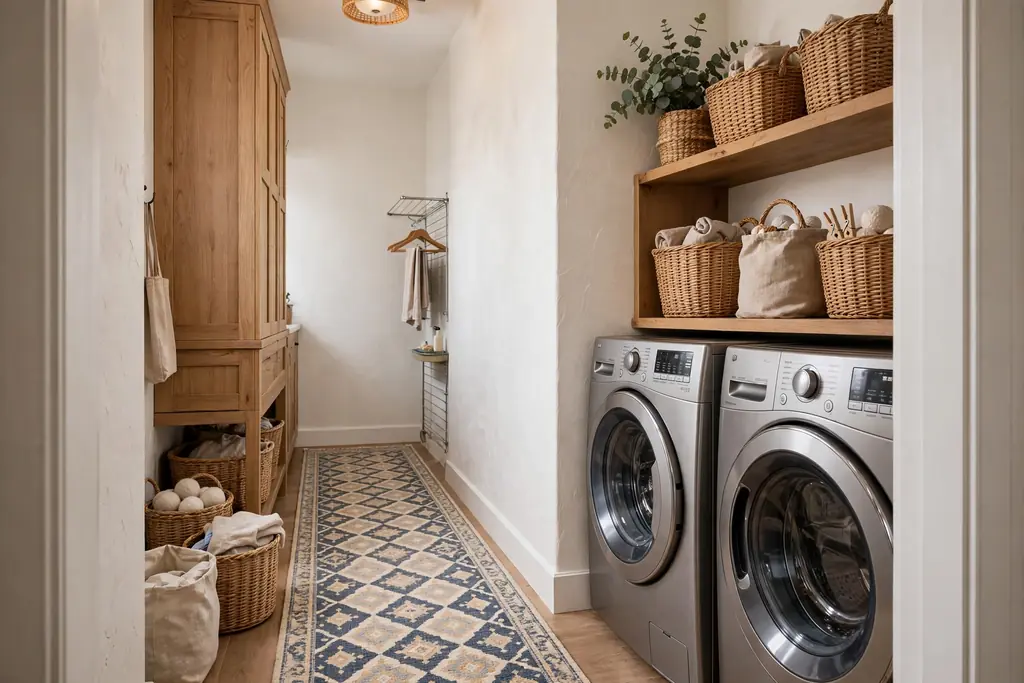
A washable patterned runner warms the floor, softens footsteps, and pulls the eye along the room, which makes a narrow space feel longer rather than cramped. Choose a low pile runner that fits the walkway with a small margin at each side, and a pattern that hides lint and stray marks between washes. A non slip backing keeps the runner in place on a smooth floor.
Wash the runner with a load of towels, so it never becomes a separate chore. Keep the pattern simple, with two or three colours drawn from the baskets and paint, so the floor adds warmth without competing with the shelves. If the room has a drain or a floor that often gets wet, choose a runner made for damp areas and lift it to dry after a spill.
15. Hang a Curtain to Close Off the Machines
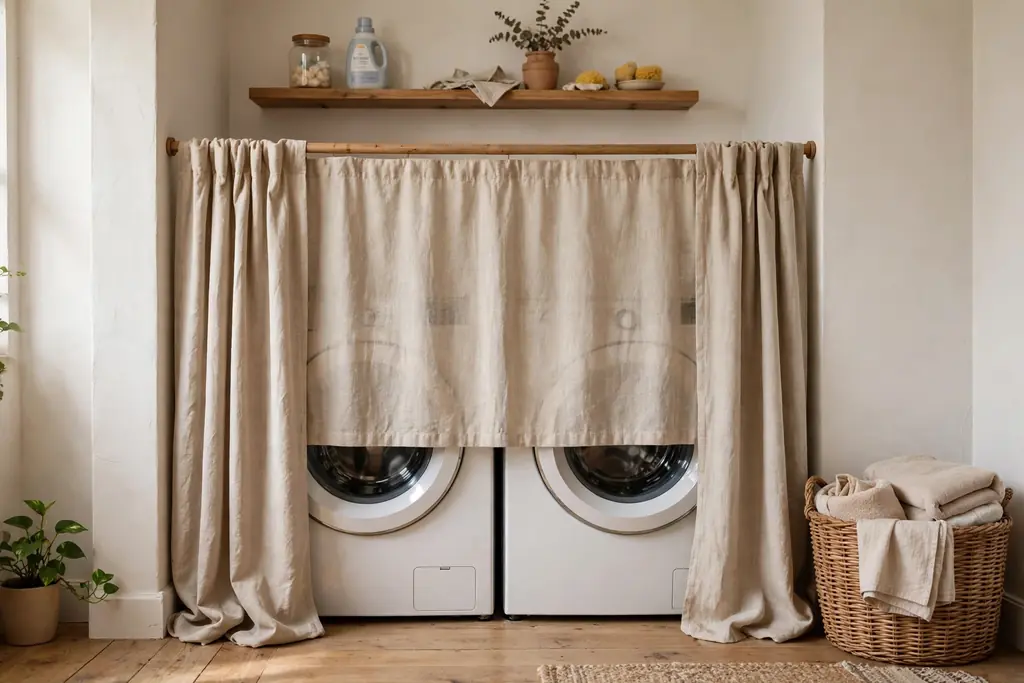
A curtain panel on a ceiling or wall track closes off the machines when laundry is not in progress, so the room reads as a calm passage rather than a wall of appliances. Choose a washable cotton or linen look curtain in a warm neutral, and hang it from a track that clears the machine doors. Draw it closed between laundry days, and open it fully when you work.
A curtain suits a laundry nook off a hall or kitchen, where machines would otherwise stay on view all day. Keep the curtain clear of vents and dryer hoses, and wash it with a load of bedding now and then so it stays fresh. Pair the curtain with the warm paint in idea 13, and the closed room will feel like a linen cupboard rather than a utility corner.
16. Decant Supplies Into Matching Jars With Labels
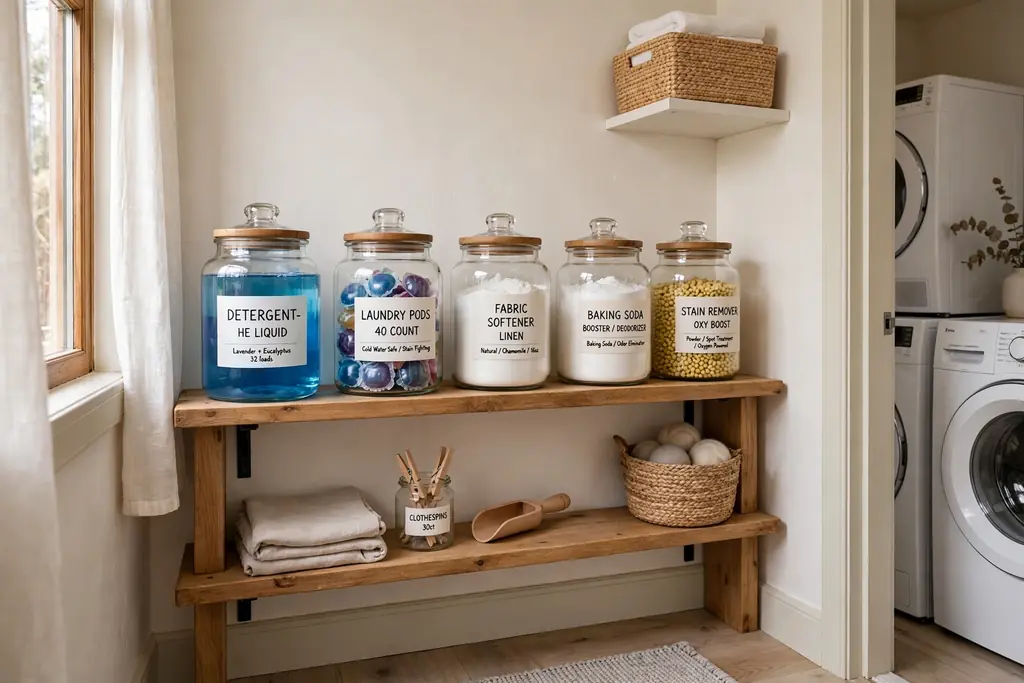
Matching jars and clear labels turn a jumble of detergent boxes and bottles into a calm, lived-in display. Decant powder, pods, and stain treatments into glass or sturdy plastic jars, and label each jar with its contents and dose. Keep the jars on one shelf at hand height, with the most used jar at the front.
Refill the jars from bulk stock stored up high, so the display shelf never holds more than you need for a week or two. Keep safety in mind: label clearly, keep jars out of reach of young children, and never decant into a container that once held food without washing and relabelling it first. Matching jars also make it easy to see at a glance when you are running low.
17. Sort With Three Slim Bins on a Rail
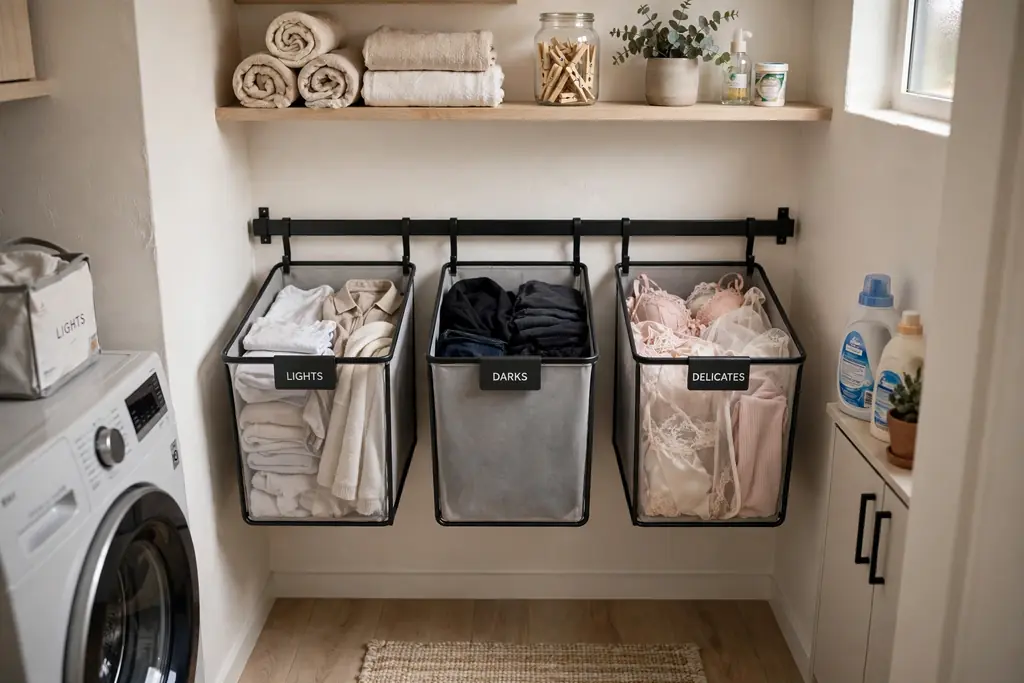
Three slim bins on a wall rail or a narrow shelf sort laundry by load type, such as lights, darks, and delicates, without taking floor space. Fix the rail at a height that lets you drop clothes in without bending, and choose bins that lift off for carrying to the machine. Label each bin, and keep one spare hook for a bag of items to mend.
Empty the bins on laundry day and return them to the rail, so the sorting habit stays easy. If wall space is tight, stack the three bins on a slim shelf unit beside the machine instead. Sorting at the point where clothes come off means fewer piles on the floor, which matters most in a room where the walkway is already narrow.
18. Hang a Ceiling Pulley Drying Rack
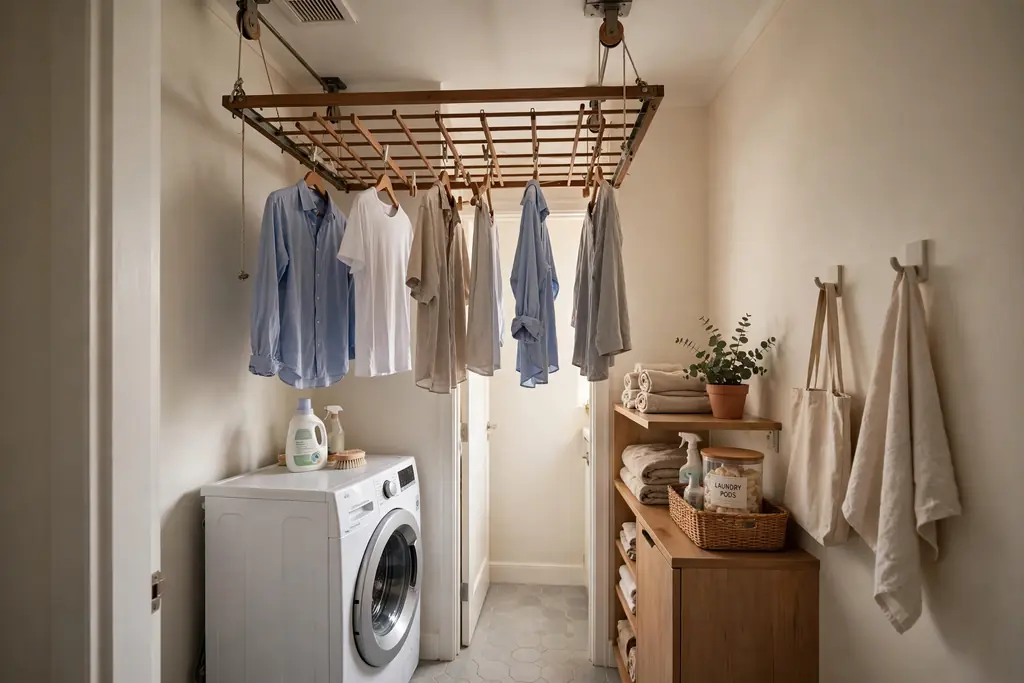
A ceiling pulley rack lifts wet clothes overhead, using air space that a narrow room otherwise wastes. Lower the rack to load it, raise it to dry, and lower it again to unload, so the floor and walls stay free. This suits a room with a clear ceiling run, away from light fittings and vents, and it holds a full small load of light items.
Fix the pulley frame into ceiling joists, not plasterboard alone, and keep the load balanced so the rack rises level. Dry light items overhead and heavier items on the pull-out rack in idea 7, since a ceiling rack suits shirts, tea towels, and delicates best. Lower the rack fully when not in use, so the room feels open again.
19. Layer Warm Light Instead of One Harsh Fitting
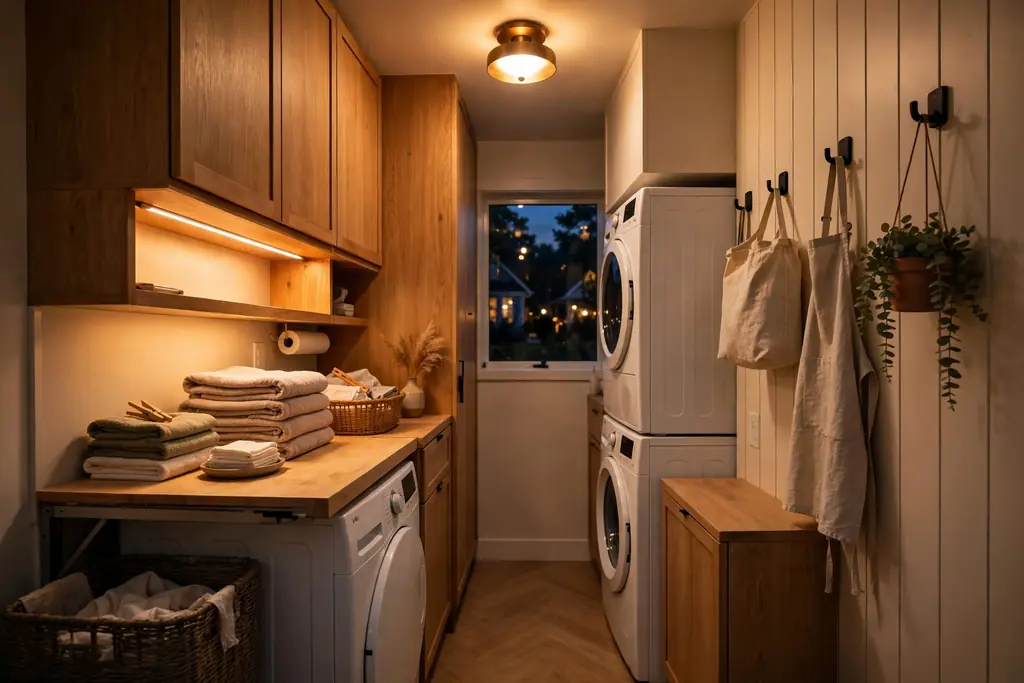
Warm layered light makes a narrow laundry room feel welcoming after dark. Replace a single harsh ceiling fitting with a warm white ceiling light plus a small task light over the folding area, such as a battery or plug-in bar under a shelf. Warm light flatters wood, cotton, and skin tones, while a cool bright fitting can make the room feel clinical.
Put the task light where you sort and fold, so you can read care labels without squinting. Keep the ceiling light dimmable if the wiring allows, and choose bulbs in the same warm tone so the layers blend. Good light also helps you spot stains before washing, which saves rewashing and keeps clothes looking better for longer.
20. Add Framed Prints and One Small Plant
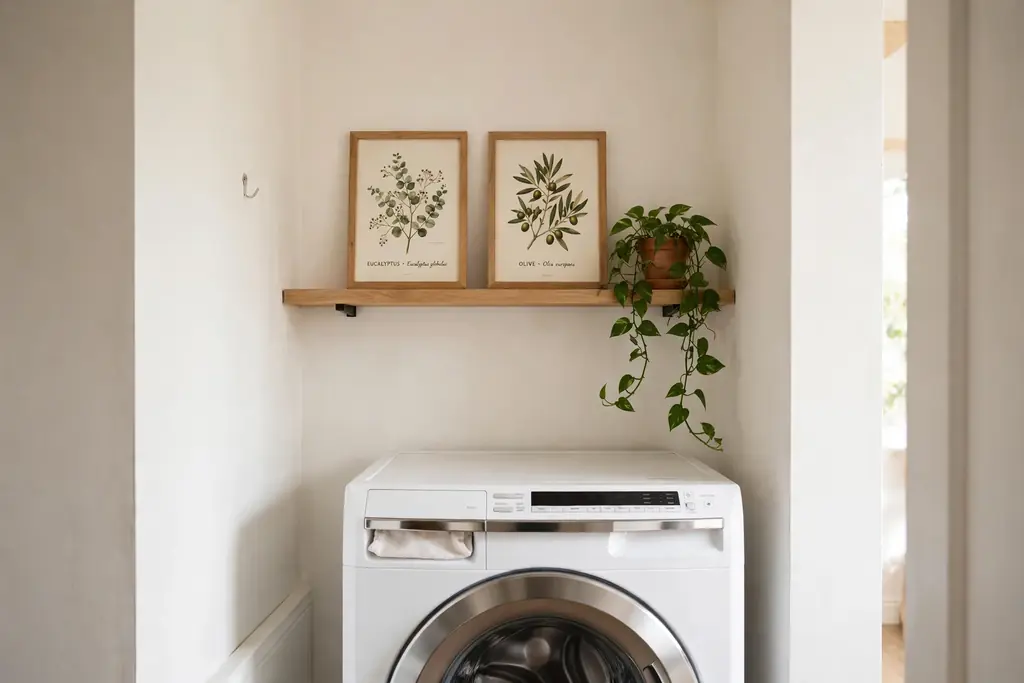
Framed prints and one small plant are the fastest way to make a narrow laundry room feel lived in. Hang two or three small prints above the machines or on the free wall, choosing simple laundry themed art or botanical prints in plain frames. Add one trailing or upright plant in a pot that suits the light, such as a pothos near a bright door or a small fern on a shelf.
Keep the plant in a pot with drainage, and water it when you pass through for laundry, so care becomes part of the routine. Avoid crowding the walls: two prints and one plant are enough in a narrow room, and the empty wall space keeps the room feeling open. Prints and plants also soften the hard lines of machines and cabinets.
21. Choose a Wicker Hamper That Looks Like Decor
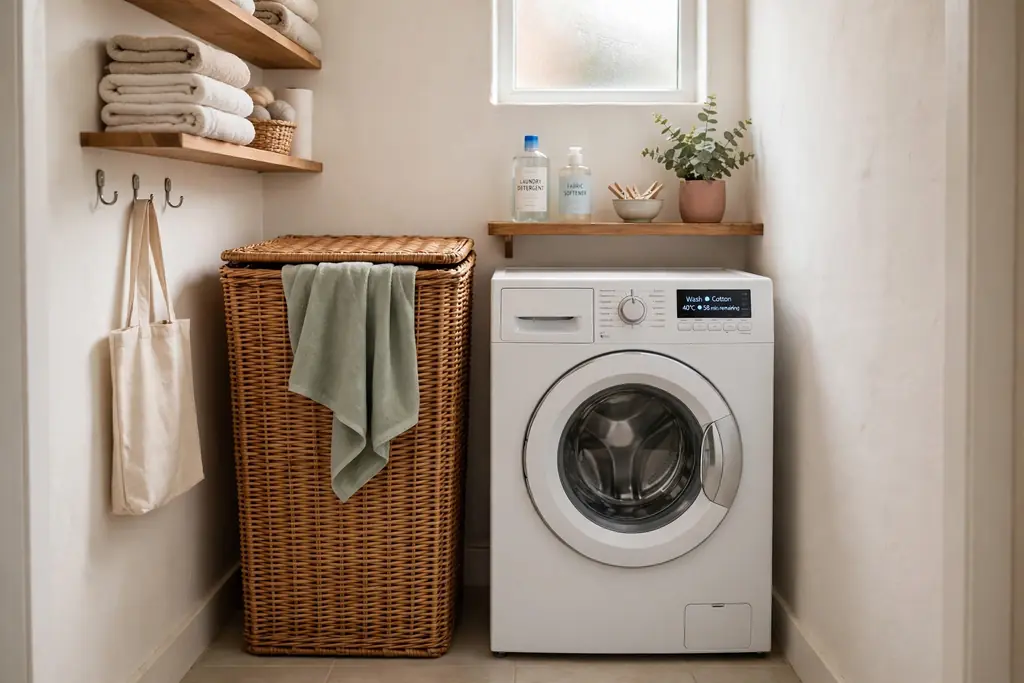
A wicker hamper with a lid holds dirty laundry and looks like a piece of decor at the same time. Choose a tall narrow hamper that fits the gap beside a machine or at the end of the room, with a removable cotton liner for easy washing. The woven texture adds the same lived-in warmth as the baskets in idea 6, and the lid keeps piles out of sight.
Keep one hamper for the household, or two slim hampers for lights and darks if the room allows. Empty the hamper on laundry day and wipe the liner, so damp clothes never sit long enough to smell musty. A hamper with handles moves easily to the bedroom for collection, which saves carrying loose piles through the house.
22. Use the Machine Sides With Magnetic Holders
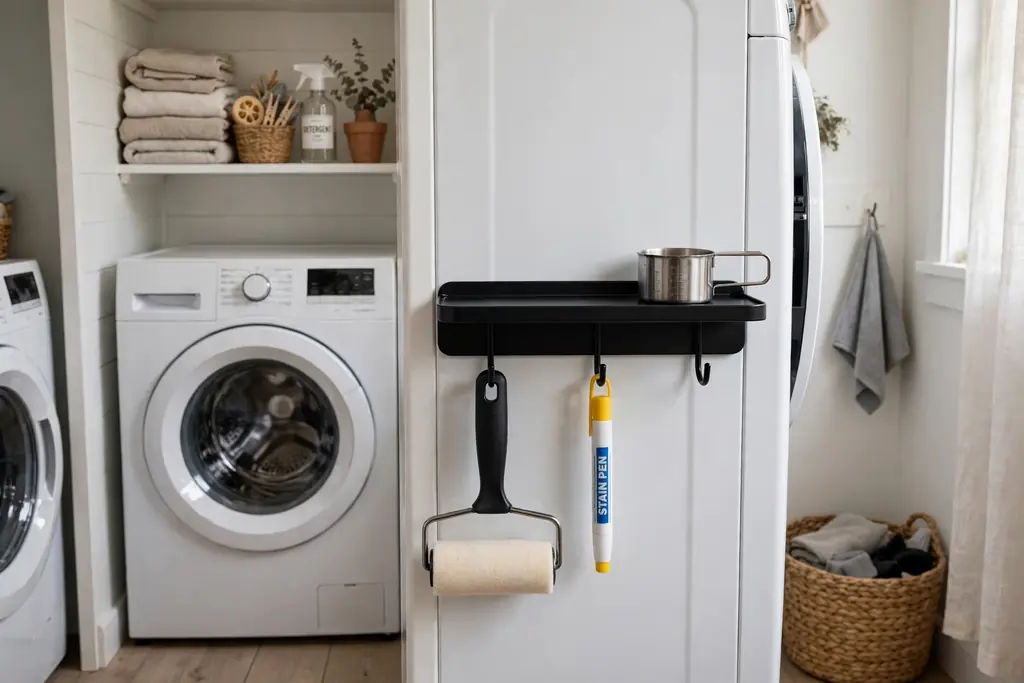
Magnetic holders on the side of a steel machine add storage without a single screw. A magnetic shelf, hook rail, or small caddy holds a lint roller, a stain pen, a measuring cup, and a small plant, using a surface that otherwise stays bare. Check that your machine sides are magnetic before buying, since some panels are not.
Keep the holders light and low, so they do not slide when the machine runs, and keep anything heat sensitive away from the dryer side. Magnetic holders suit renters and anyone who wants to test a layout before fixing shelves. Move them as your routine changes, such as adding a hook for a delicates bag during a week of hand washing.
23. Hang a Rod Under a Shelf for Drip-Dry Clothes
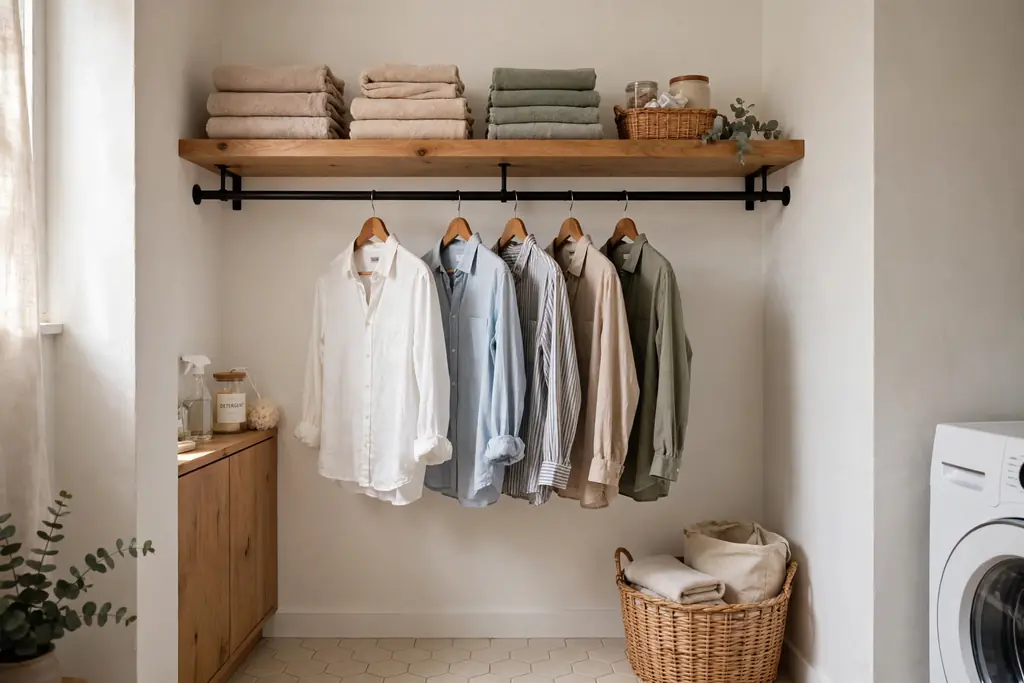
A hanging rod fixed under a shelf gives drip-dry clothes a home above the machines, where drips fall onto a tray or a washable mat rather than the floor. Fix the rod a few inches below the shelf, leaving room for hangers to swing, and hang shirts, blouses, and delicates straight from the wash. The shelf above holds the hangers and clips when the rod is empty.
Use slim velvet or wood hangers so clothes stay put in a narrow space, and leave a gap between hangers so air moves and clothes dry faster. A rod under a shelf suits a room where a wardrobe rail would block the walkway, and it keeps drip-dry items out of the bedroom while they dry.
24. Make a Landing Zone by the Door
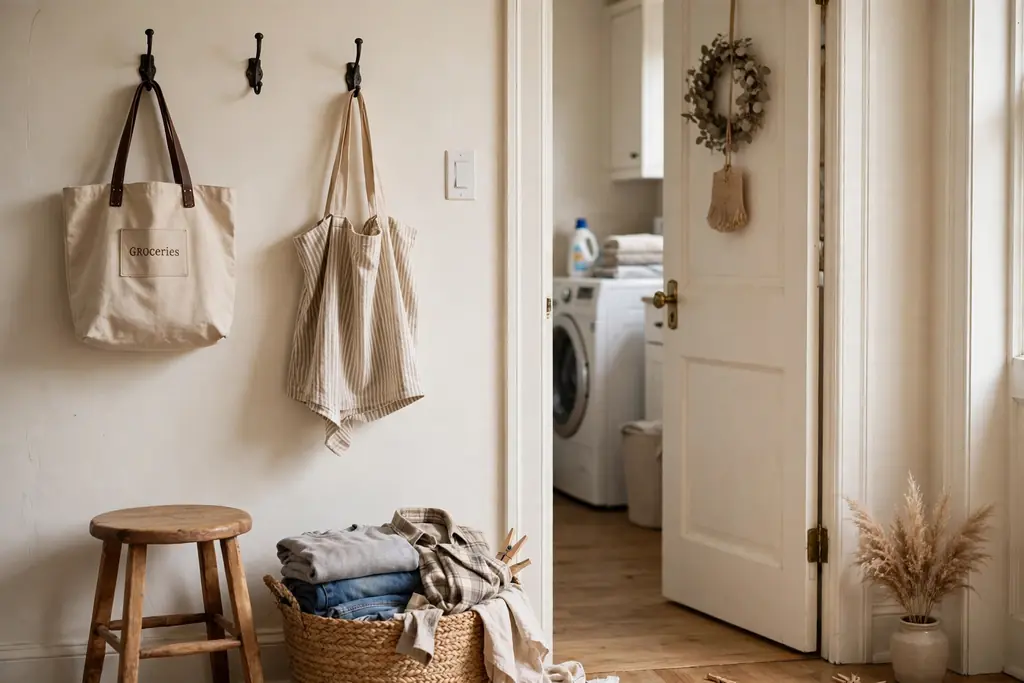
A landing zone by the door gives the laundry room a welcoming entry and a place for the things that enter and leave with each load. Fix two hooks for a tote and an apron, set a small wooden stool beside the door for reaching high shelves or sitting to fold socks, and place a basket below for clean items waiting to go upstairs. Keep the zone to one short stretch of wall, so the walkway stays clear.
Choose a stool that doubles as a small side table, and a basket that matches the shelves in idea 6, so the landing zone reads as part of one plan. Tidy the zone at the end of laundry day, returning the tote and basket to their hooks, so the next load starts in a calm room. This small finished corner is what makes a narrow laundry room feel lived in rather than purely functional.
Conclusion
A narrow laundry room works best when the layout stays simple, storage moves to the walls and ceiling, and a few warm details soften the machines. Pick the change that fixes your biggest daily frustration first, whether that is a missing folding surface, a lack of drying space, or a room that feels cold and bare. Add one idea at a time, keep the walkway clear, and let matching baskets, warm paint, and soft light do the rest. With the right small changes, a narrow laundry room can feel welcoming every time you walk in, not just on laundry day. If you liked these ideas, save this post to your laundry room board for your next refresh.
FAQs
How do you arrange a very narrow laundry room?
Measure the width, the door swing, and the machine depth first. Stack the machines or run a counter over front loaders, move storage to the walls and ceiling, and keep the walkway clear of freestanding racks. Choose doors, shelves, and racks that fold flat or slide away, so the room stays easy to move through.
What is the best layout for a narrow laundry room?
A galley layout works best in most narrow rooms: machines along one wall and storage, folding, and drying on the opposite wall or above the machines. Stacked machines suit the narrowest rooms, while a counter over side by side machines suits a room wide enough for a comfortable walkway beside them.
How can I add storage to a narrow laundry room without crowding it?
Use the walls, the ceiling, the door, and the slim gaps beside machines. Cabinets to the ceiling, open shelves with baskets, a rolling gap cart, door organizers, and magnetic holders all add storage without taking floor space. For the same wall-first approach in a compact wet room, see these small bathroom space saving ideas.
How do I dry clothes in a narrow laundry room with no space for a rack?
Use drying space that disappears when not in use: a pull-out rack, a retractable clothesline, a rod under a shelf, or a ceiling pulley rack. Dry light items overhead or on a line, and keep the room ventilated while clothes dry so they dry fully and the room stays fresh.
How can I make a laundry room feel cozy and lived in?
Paint warm white, add one wood tone, lay a washable runner, and layer warm light over the folding area. Add matching baskets, two or three framed prints, one plant, and a wicker hamper, and keep the display calm rather than crowded. A curtain over the machines also helps the room feel like part of the home.
Can I fit a sink in a narrow laundry room?
Often yes, if you choose a slim utility sink cabinet and plan the plumbing route early. A narrow sink still handles soaking and rinsing, and the cabinet below adds storage for cleaning supplies. If a sink will not fit, a bucket filled at a nearby tap and a fold-down shelf for soaking can cover most of the same jobs.