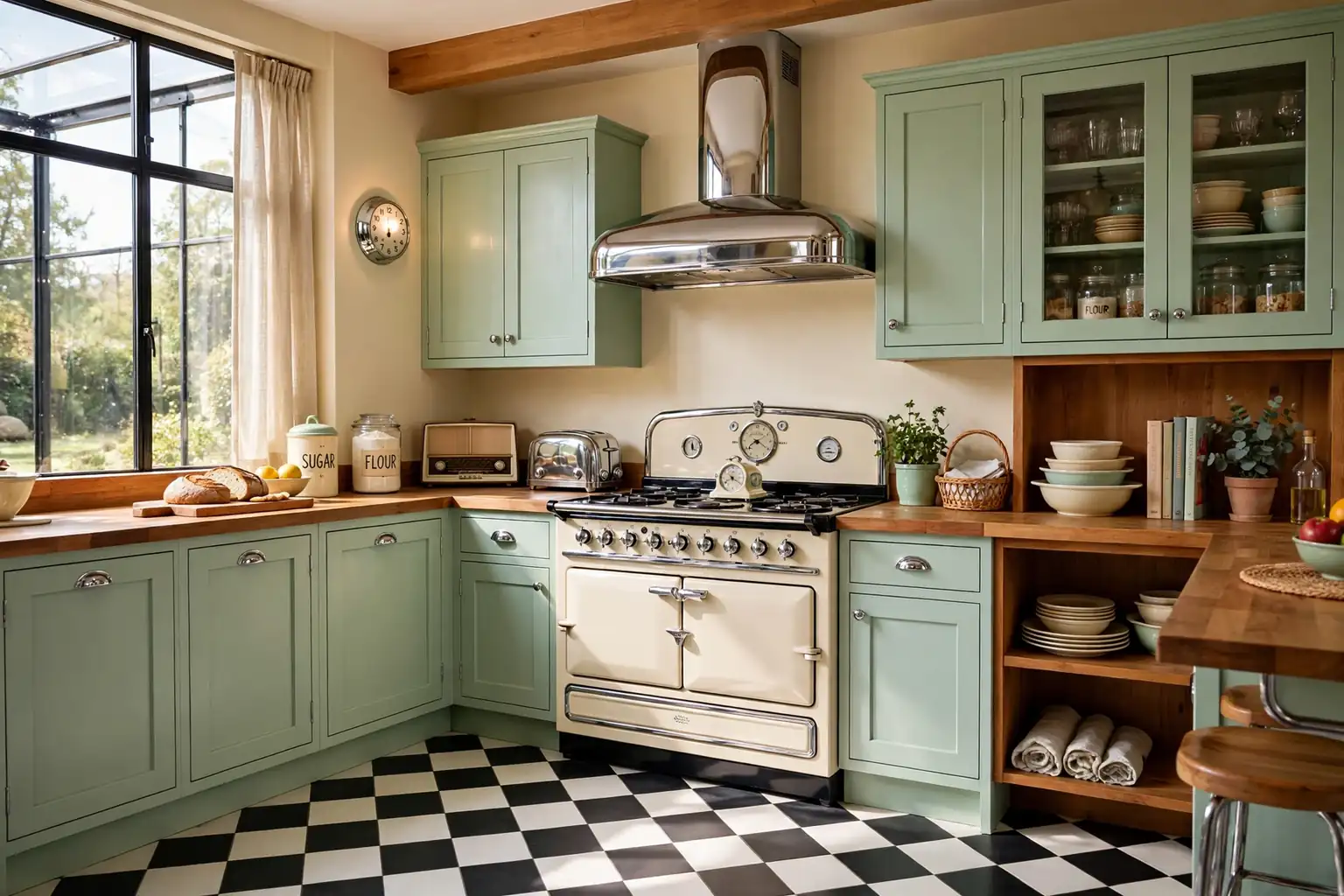
Retro style works in a kitchen when it feels warm and lived in, not staged. The best retro rooms borrow a few clear details from the 1950s and 1960s, such as pastel paint, chrome, a patterned floor, or a bold fridge, and leave the rest of the room practical for daily cooking. You do not need a full remodel to get the effect. One strong feature, repeated in small places, is usually enough. These 12 retro kitchen ideas cover appliances, cabinets, floors, counters, lighting, and seating, so you can start with a weekend change or build toward a larger refresh.
Key Takeaways
- Pick one main retro feature, such as a range, a fridge, or a checkerboard floor, and keep the rest of the kitchen calm so that feature has room to stand out.
- Use pastel paint in one place, on cabinets or an island, rather than on every surface, so the color stays warm instead of sugary.
- Repeat one metal, chrome in most retro rooms, across hardware, lighting, and stool legs so the details read as a set.
- Pair bold pattern with plain counters and walls, because a patterned floor or backsplash needs quiet surfaces beside it.
- Keep retro seating practical: vinyl wipes clean, swivel stools need clear floor space, and a nook table needs room to pull chairs out.
- Test paint and tile samples in daylight and evening light before you commit, since pastel and cream tones shift a lot between the two.
1. A 1950s-Style Range Cooker as the Focal Point
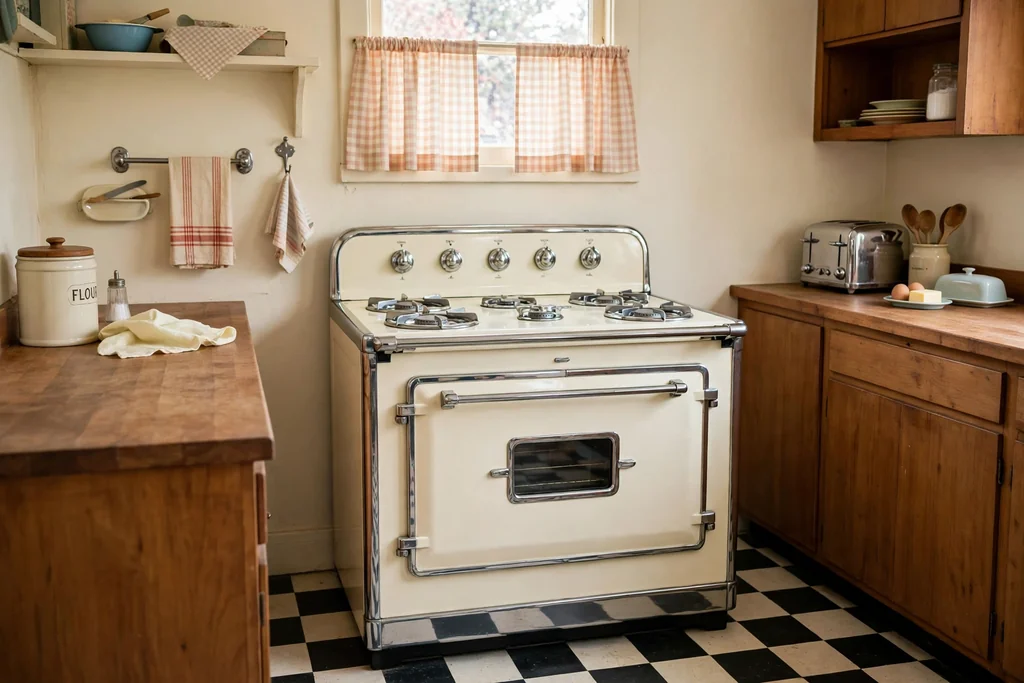
A range cooker in cream, mint, or soft red gives a retro kitchen an instant center. The rounded edges, chunky knobs, and chrome trim read as retro at once, while the wide top and large oven stay useful for family cooking. Place the range on the main cooking wall, with a plain backsplash behind it, so the cooker itself is the feature and the wall does not compete with it.
Check the width, fuel type, and clearance your kitchen allows before you order, and confirm that a gas model can be fitted safely in your home. Keep the counters on either side clear for hot pans, and use simple hardware elsewhere so the range keeps its place as the one bold appliance in the room.
2. Pastel Cabinets in Mint or Butter Yellow
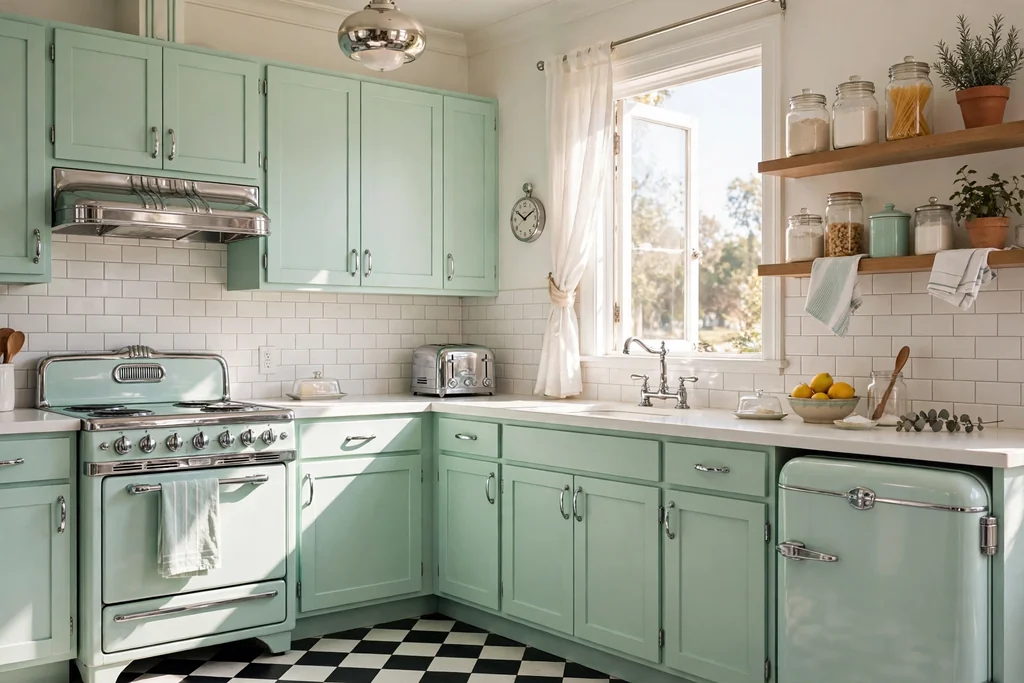
Pastel cabinets are the gentlest way into retro style. Mint green suits a kitchen with white counters and warm wood, while butter yellow suits a room that gets less daylight and needs a lift. Paint the full run in one pastel, or paint only the lower cabinets pastel and keep the uppers white, if a full pastel run feels like too much. These colors for your kitchen cabinets compare warm and cool cabinet shades side by side, which helps when you are choosing between mint, butter yellow, and cream.
Use a washable satin or semi gloss finish, because kitchen doors near the stove need regular wiping. Keep the backsplash plain and the hardware chrome, so the pastel reads as a calm color rather than a theme. Order one painted door sample first and check it beside your floor and counter in morning and evening light.
3. A Black and White Checkerboard Floor
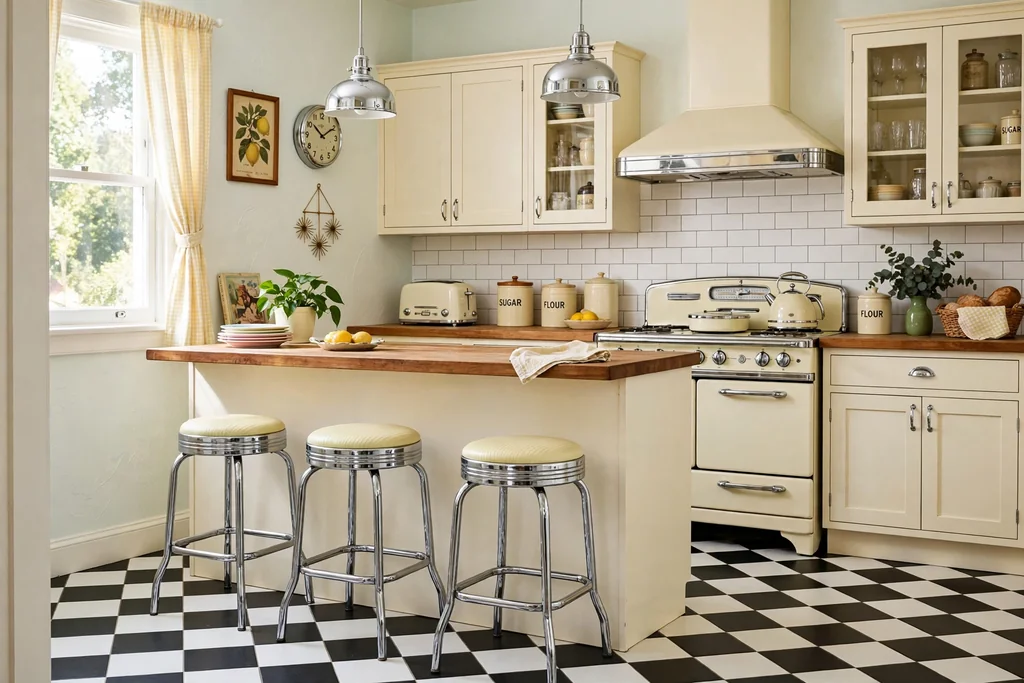
A black and white checkerboard floor is the most recognizable retro kitchen pattern, and it works because it is simple. Large square tiles give a calm, graphic base, while smaller tiles suit a small kitchen where a large pattern could feel busy. Lay the pattern straight, not on the diagonal, for a classic diner look, and keep the grout a mid grey so the squares stay crisp without harsh white lines.
This floor pairs well with pastel cabinets, chrome stools, and a white counter, because the floor already carries the pattern. Use a tile that handles water near the sink, and keep a spare box from the same batch for repairs. A patterned rug is not needed on top of this floor, since the tiles are already doing that job.
4. A Retro Fridge in a Bold Color
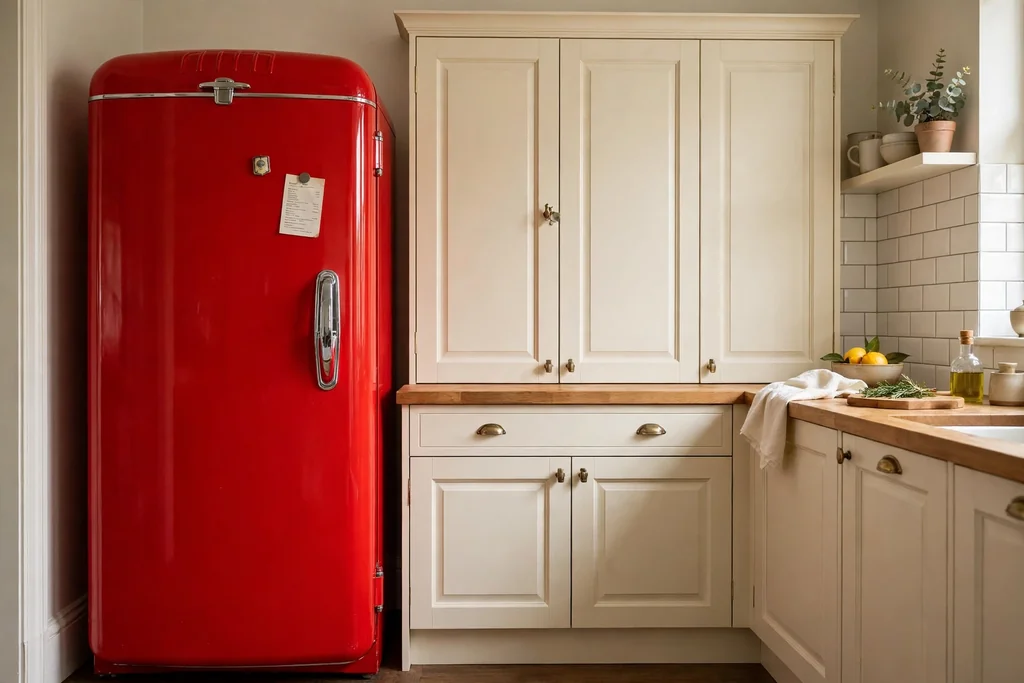
A retro fridge with rounded corners and a chrome handle can carry a whole kitchen scheme on its own. Cream is the safest choice, because it sits quietly beside most cabinets, while red, mint, or butter yellow makes the fridge a clear feature. Place it at the end of a cabinet run, where it reads as a freestanding piece, rather than squeezed between tall units that hide its shape.
Check the size, door swing, and energy rating before you buy, and measure the delivery route through doors and hallways, since retro fridges are often deeper than flat front models. Keep the rest of the appliances simple, so the fridge is the one shaped appliance in the room. A plain counter and simple hardware nearby will keep the focus where you want it.
5. A Diner-Style Breakfast Nook With a Vinyl Bench
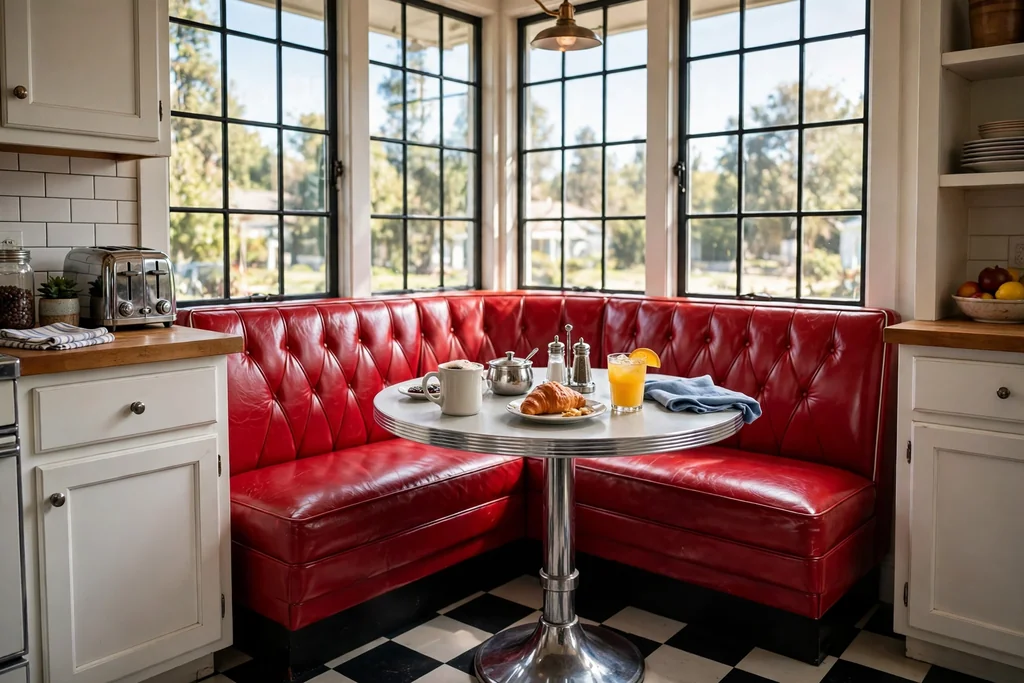
A diner nook turns an empty kitchen corner into the most used seat in the house. Build or buy a bench in wipe clean vinyl, pair it with a round chrome pedestal table, and add two chairs on the open side so the table is easy to get in and out of. A bench with storage underneath holds table linens and board games, which keeps the corner tidy. For window layers in a nook like this, these kitchen window decor ideas cover cafe curtains, shades, and other options for a sink or seating window.
Choose vinyl in one solid color, such as red, teal, or cream, and repeat that color in one other place, such as a cushion or a dish towel, so the nook links to the room. Keep the table small enough that chairs can pull out fully, and hang a simple pendant above the table for evening meals.
6. Speckled Laminate Counters With a Rounded Edge
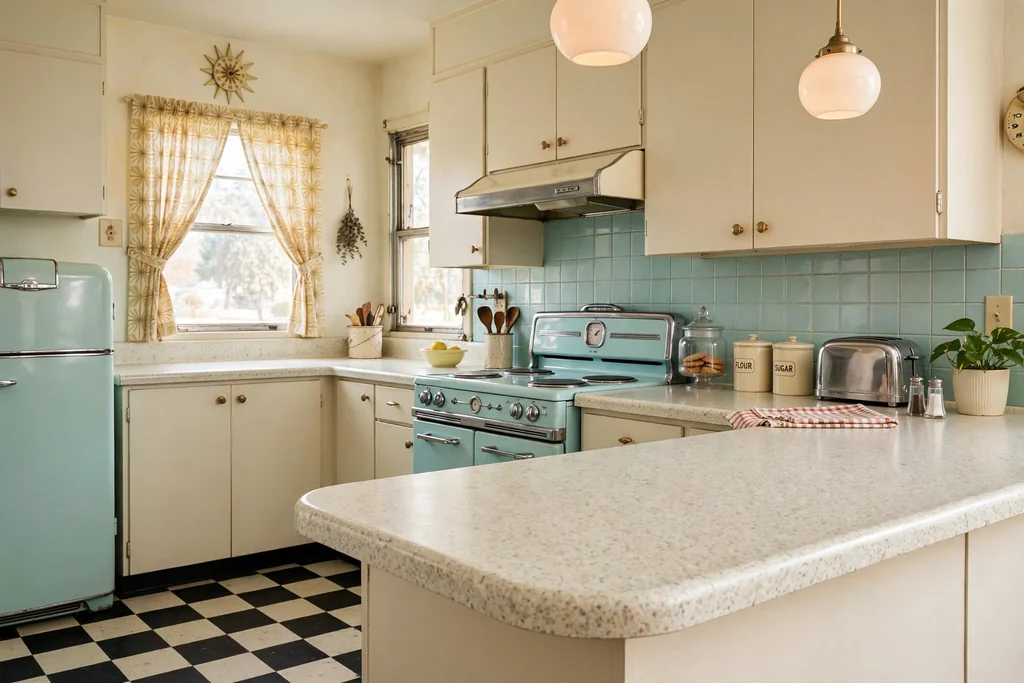
Laminate counters were a staple of mid century kitchens, and a speckled or boomerang pattern in cream, grey, or pale green gives that period feel at a modest cost. Choose a pattern with small speckles rather than a large print, so the counter reads as a calm surface from a distance and only shows its retro detail up close. A rounded front edge softens the look and suits simple cabinet doors.
Laminate wipes clean and handles everyday prep well, but it needs care near heat: use trivets for hot pans and boards for cutting, and wipe spills promptly at the seams. Pair a patterned laminate with plain cabinets and a plain backsplash, so the counter pattern is the one busy surface in the room.
7. Globe Pendants and a Sputnik-Style Light
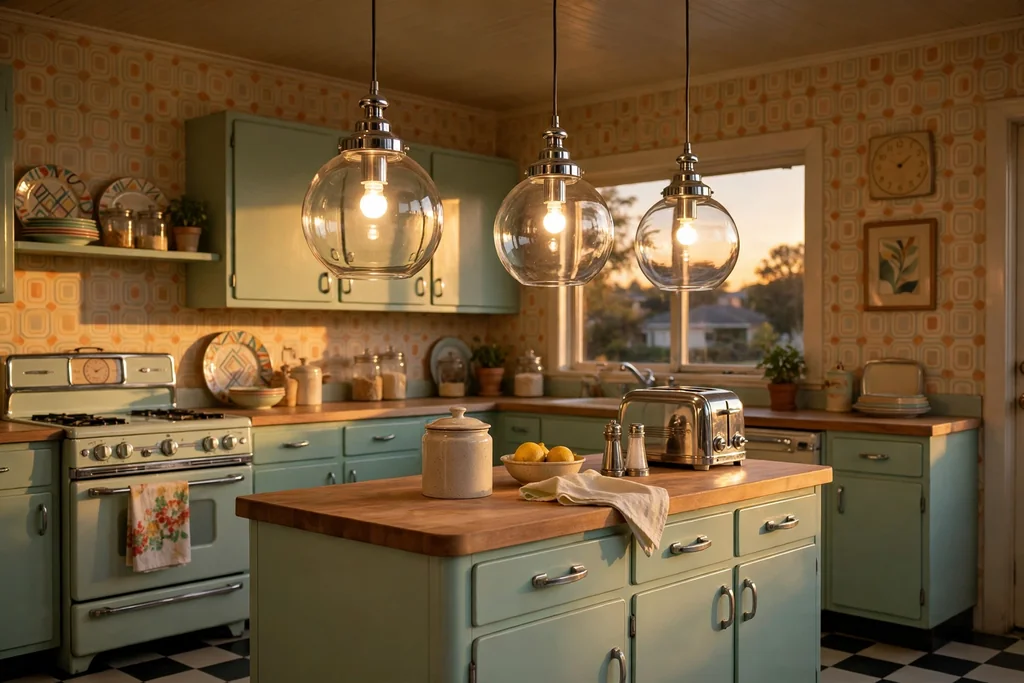
Retro lighting is easy to spot: round glass globes, a brass or chrome frame, and warm bulbs that glow rather than glare. Hang two or three globe pendants in a line over an island or a breakfast bar, spaced evenly, with the bottom of each shade above head height when you stand at the counter. A sputnik-style ceiling light, with arms radiating from a center ball, suits a dining corner or the center of a small kitchen.
Use warm white bulbs and a dimmer, so the same lights work for morning prep and for evening meals. Match the light metal to your hardware, chrome in most retro rooms, so the fittings read as a set. Keep the shades simple, because the shape itself is already a strong retro detail.
8. Open Shelves for Vintage Dishware and Glassware
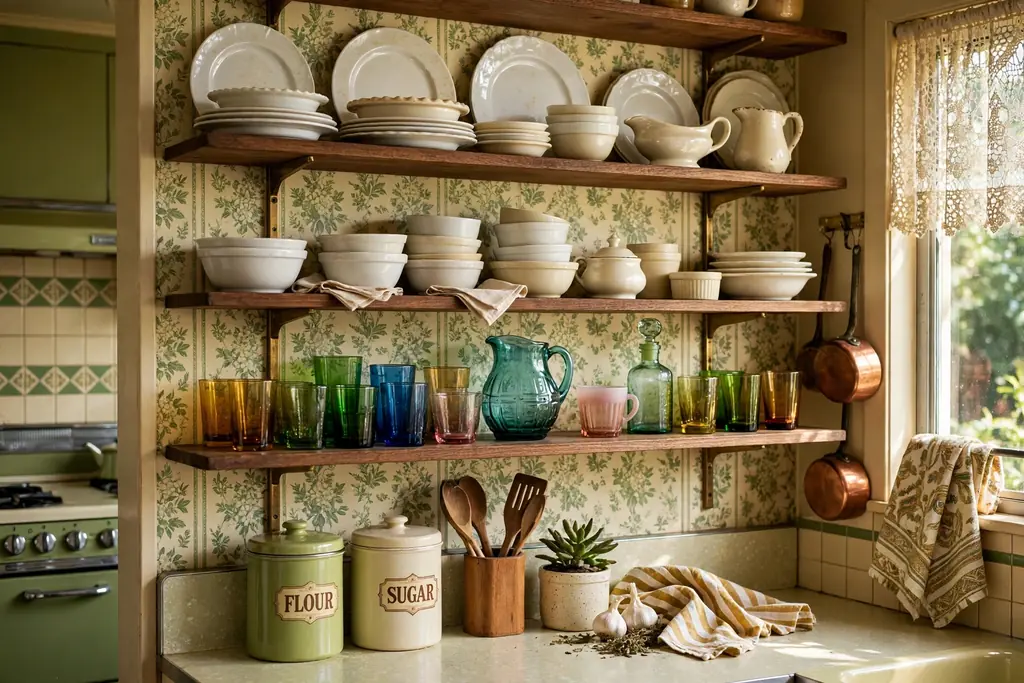
Open shelves give vintage dishware a place to be seen and used, instead of hidden in a cupboard. Fit one or two shelves beside a window or above a short counter run, and keep them to one color family, such as white, cream, and pale green, with a few colored glass pieces for accent. Stacked plates, plain bowls, and clear glasses read as retro when they are simple shapes in solid colors.
Keep shelf items to the pieces you use most, and leave clear gaps between groups so the display stays calm. Dust shelves weekly, since open storage collects cooking film faster than closed cabinets. Put rarely used pieces in closed storage, and keep the shelves away from the stove, where steam and grease settle fastest.
9. A Geometric Tile Backsplash in a Retro Pattern
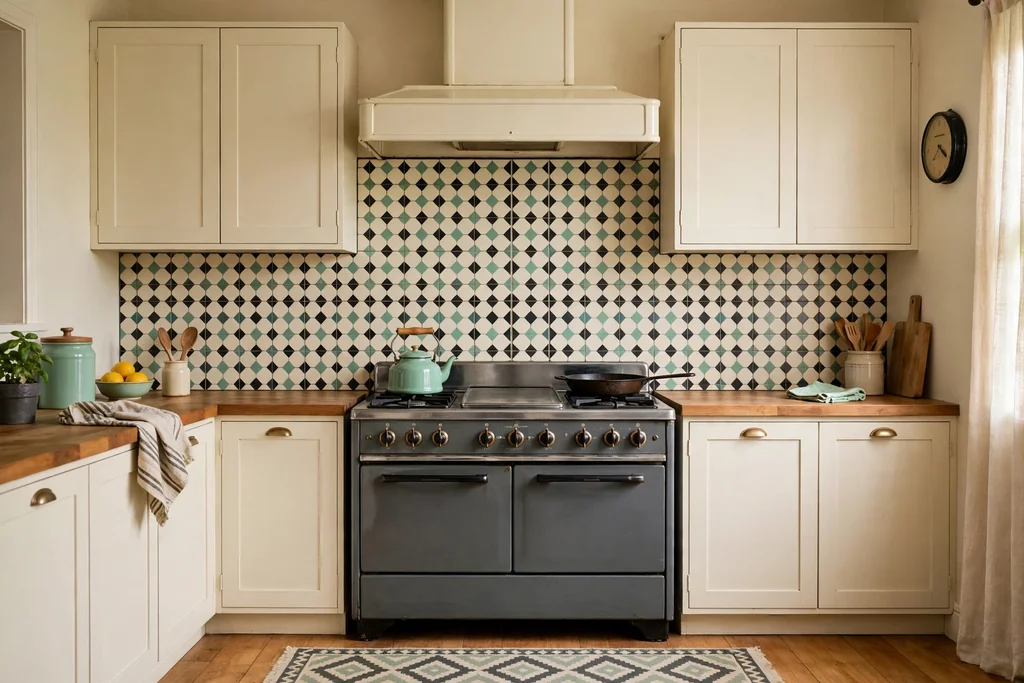
A geometric backsplash adds retro pattern at eye level, where you see it most while cooking. Starburst, diamond, or small hexagon tiles in two or three colors, such as cream, mint, and charcoal, give a period feel without a large print. Use the pattern behind the stove or across the full backsplash, and keep the cabinets and counters plain so the tile has room to stand out.
Choose a grout color close to the main tile shade for a soft result, or a slightly darker grout if you want the pattern to read more clearly. Seal the grout in the stove zone, where splashes are most likely, and keep a spare box of tiles from the same batch for future repairs. Run the tile to the underside of the upper cabinets so the band is continuous.
10. Chrome Hardware and Cup Pulls on Simple Cabinets
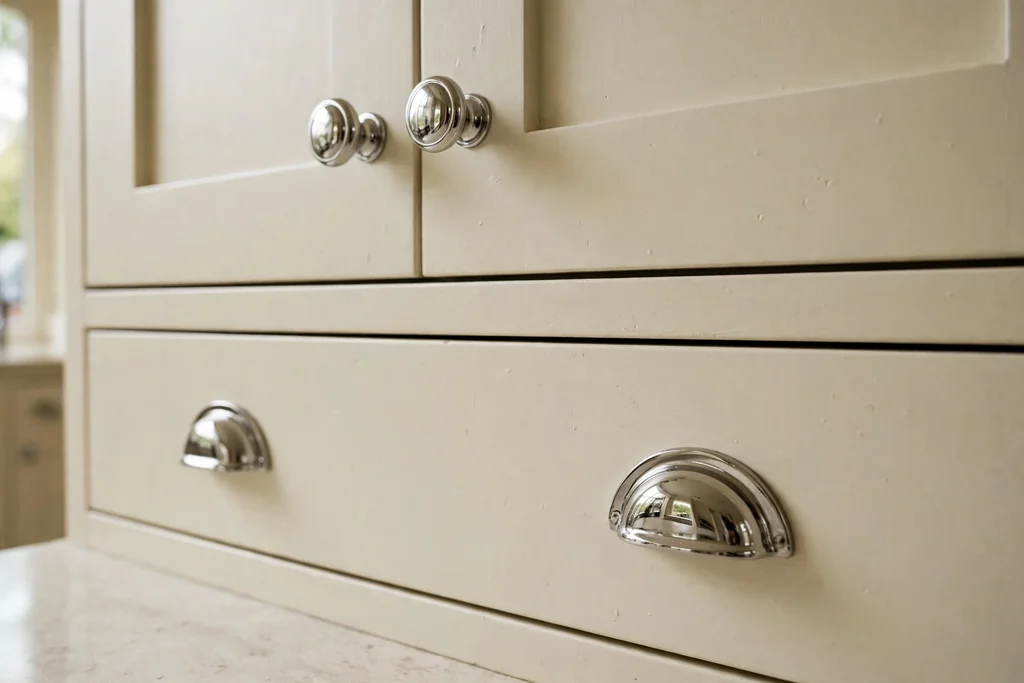
Chrome hardware is the small detail that ties a retro kitchen together. Bar pulls on drawers, cup pulls on wide drawers, and round knobs on doors all suit simple shaker or flat front cabinets, and chrome suits pastel paint, cream, and warm wood alike. Measure your existing hole spacing before ordering, since cup pulls come in fixed widths, and buy one sample first to check the chrome tone against your faucet. Similar period hardware appears in these traditional kitchen ideas, where cup pulls and knobs give a settled, classic feel.
Repeat chrome in just two or three places, such as handles, faucet, and one light fitting, and keep other metals out of the main view. Wipe chrome with a soft cloth and avoid harsh pads, which can dull the finish. If your appliances are stainless steel, that is fine, because steel reads as a working material rather than a competing metal.
11. A Wood Breakfast Bar With Swivel Stools
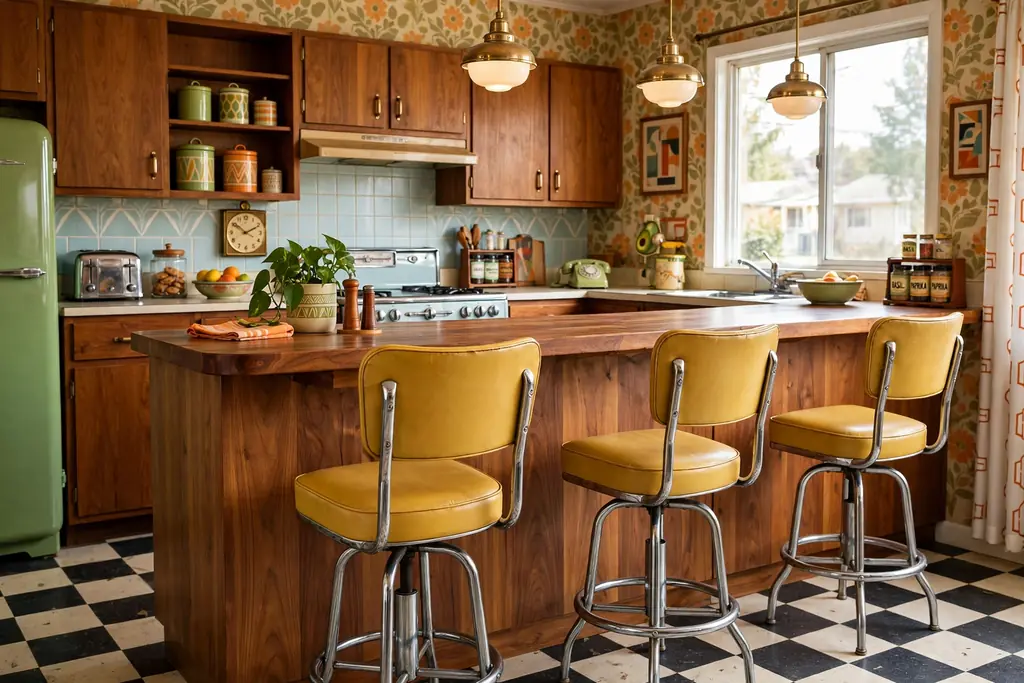
A breakfast bar in warm wood gives a retro kitchen a casual eating spot without a full dining table. Use a peninsula or a raised counter at the end of an island, with a wood top that overhangs enough for knees, and add two or three swivel stools with chrome legs and vinyl seats. The wood top warms the room, while the chrome and vinyl keep the retro link clear.
Leave clear floor space behind the stools, at least enough to swivel and step off comfortably, and keep the walkway behind the bar clear of bins and pet bowls. Choose stool seats in one color that repeats a color already in the room, such as the fridge, the nook bench, or a dish towel. A wood bar also suits a kitchen where the main table sits in another room, because it gives children and guests a place to sit while you cook.
12. A Bold Patterned Runner Rug for Warmth Underfoot
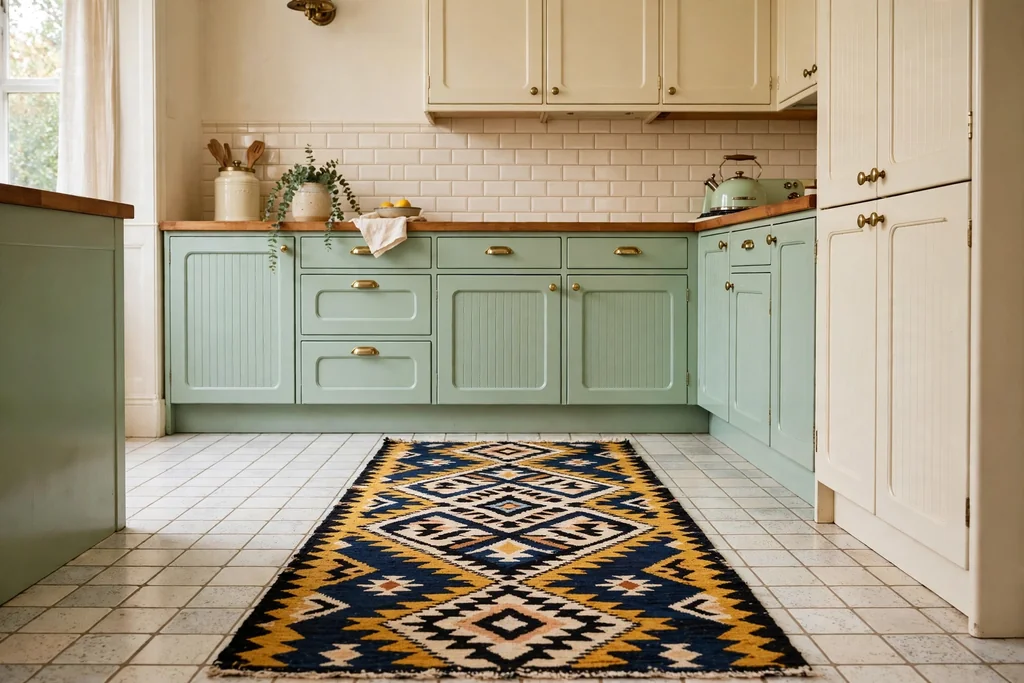
A patterned runner rug is the lowest effort retro change in this list, and it works well in a rented kitchen because nothing is fixed. Choose a runner in a bold retro pattern, such as a geometric print or a striped border, in colors already used in the room, and lay it in front of the main counter run or the sink. The rug adds warmth underfoot, softens a hard tile floor, and gives a plain kitchen a clear retro note.
Pick a flat weave rug that lies flat and can be washed, because kitchen rugs need regular cleaning, and use a non slip pad underneath so it does not slide on tile. Keep the rug clear of the stove zone, where heat and splashes make fabric impractical, and choose a length that stops short of doorways so it does not catch on doors.
Conclusion
Retro style works best when you choose one strong feature and let the rest of the room stay practical. Start with a range, a fridge, a checkerboard floor, or a pastel cabinet run, then repeat chrome, one pastel, and one pattern in small places. Keep counters plain beside a patterned floor or backsplash, test paint and tile samples in your own light, and make sure seating, lighting, and storage all work for daily cooking, not just for looks. With those basics in place, a retro kitchen feels warm and inviting, and it still works as a busy family room.
Save this list on Pinterest before your next kitchen refresh, and try one idea first: a hardware swap, a runner rug, or a painted island, then live with it for a week before you change the next surface.
FAQs
What is the cheapest way to get a retro kitchen look?
Start with the small, removable changes: chrome hardware, a patterned runner rug, open shelves with simple dishware, and a vinyl bench cushion or stool seats. These changes cost far less than a new range or fridge, and most can be undone if you change your mind. Paint is the next step up in cost and effort, and it gives a larger result than accessories alone, so paint one cabinet run or an island before you commit to a full kitchen repaint.
Does a retro fridge use more energy than a modern fridge?
It depends on the model, not on the retro shape alone. A new retro-style fridge built to current standards can be efficient, while a genuine old fridge is often far less efficient and may need repairs. Check the energy rating label and the yearly running cost for the exact model you are considering, and compare it with a standard modern fridge of the same size. If you buy a genuine vintage fridge, have it checked by a qualified technician before you rely on it for daily food storage.
How do I mix retro details with a modern kitchen?
Keep the modern layout and appliances, and add retro details in a limited set: one pastel color, chrome hardware, and one pattern, such as a checkerboard floor or a geometric backsplash. Leave the cabinet shapes, counters, and lighting modern in the rest of the room, so the retro pieces read as accents rather than a full theme. If the room starts to feel busy, remove one patterned item before you add another.
Will a checkerboard floor make a small kitchen look smaller?
A checkerboard floor can make a small kitchen feel busy if the tiles are very small or the contrast is very harsh, but it does not have to shrink the room. Use medium tiles, keep the walls and uppers light, and leave the floor as clear as possible, with no rug on top of the pattern. A straight lay, rather than a diagonal lay, also keeps the pattern calmer in a small room, and a mid grey grout softens the contrast between black and white.
Can I add retro style to a rented kitchen?
Yes. A patterned runner rug, chrome hardware that you keep the originals for, open shelves fitted with removable fixings where your lease allows, vintage dishware, and a retro style small appliance all add retro character with no permanent change. Keep the original hardware and a record of the original colors, so you can restore the kitchen when you move out. Avoid painting cabinets or fitting a new range or fridge in a rental unless your landlord agrees in writing.
What colors work best in a retro kitchen?
Mint, butter yellow, cream, soft red, and teal are the classic retro cabinet and appliance colors, and they all work best beside white counters, warm wood, and chrome. Pick one main color and one accent, and keep the rest of the room in cream, white, or pale grey, so the retro colors have room to stand out. Test samples in daylight and evening light, because pastel tones shift a lot under kitchen lighting, and check the sample beside your floor before you order paint for a full run.