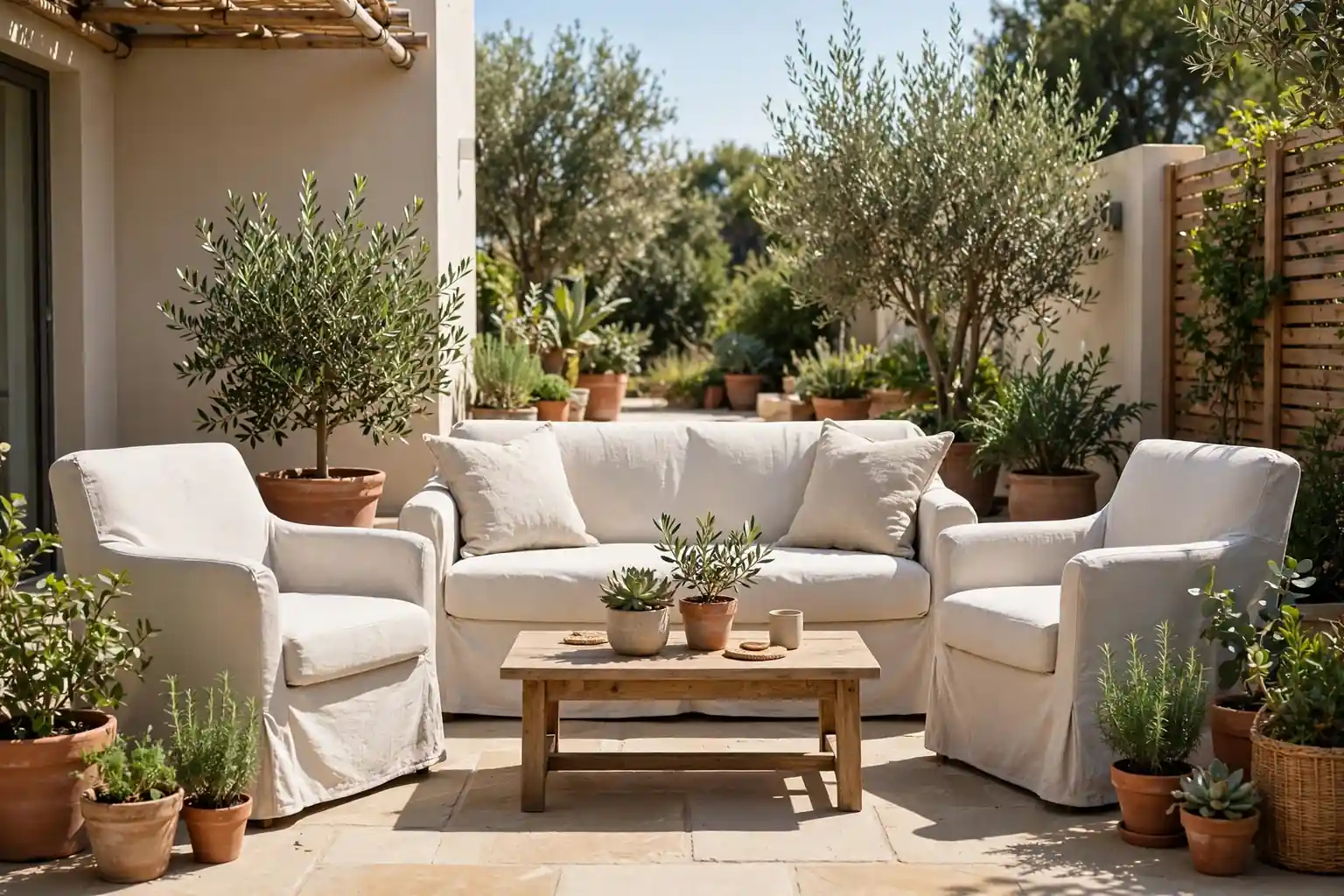
To choose outdoor furniture slipcovers, measure each piece, match the cover shape to the furniture, pick a weather resistant and washable fabric with a snug fit, and check closures, ventilation, and care instructions before buying. A well fitting cover stays put in wind, dries after rain, and can be removed and washed when dirty.
Outdoor slipcovers do two jobs at once: they protect cushions and frames from sun, rain, dust, and spills, and they set the look of the patio. A cover that is too loose will flap, collect water, and slide out of place. A cover that is too tight will pull at seams and be hard to fit after washing. The steps below work through the choice in order, from listing the furniture and measuring it to fitting, securing, and caring for the covers you buy. For pale, relaxed outdoor styling to pair with a new cover, see these beach house decor ideas, and for light summer styling across the home, see these summer decor ideas.
Key Takeaways
- List every piece you plan to cover, and measure width, depth, height, arms, and cushions before shopping.
- Match the cover shape to the furniture shape, including chaise sections, corners, recliners, and separate cushions.
- Choose a weather resistant, washable outdoor fabric, and check the care label before you buy.
- Look for a snug fit with closures that hold in wind, plus ventilation so trapped moisture can escape.
- Fit covers from the back to the front, center seams on corners, and tuck or secure the seat area last.
- Keep a simple routine: shake covers out, spot clean promptly, wash when the label allows, and store covers dry.
Supplies You May Need
- A measuring tape for width, depth, height, arm width, and cushion size
- A notepad or phone note with a sketch and measurements for each piece
- A soft cloth and a lint roller for dust and pet hair between washes
- A dry, clean storage bag or box for off season covers and spare cushion covers
- A sheltered drying spot, such as a line or rack out of strong direct sun, for washed covers
1. List Every Piece You Plan to Cover
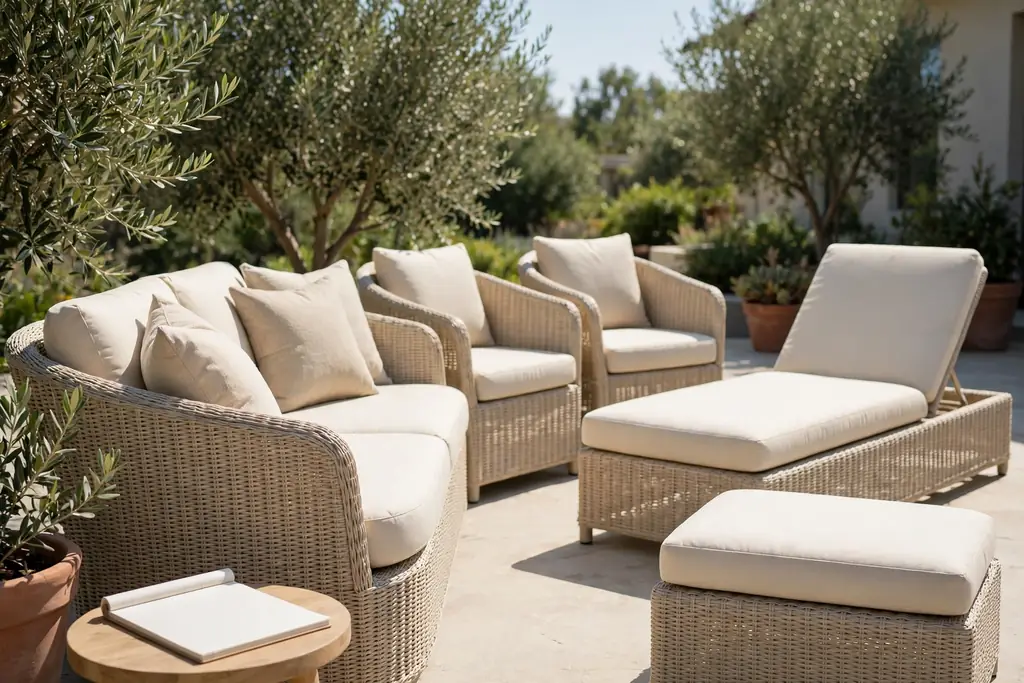
List every piece you plan to cover before you shop, because a patio set is rarely one shape. A typical set may include a sofa, two chairs, a chaise, a dining table set, and a separate ottoman, and each piece may need a different cover. Write down each piece by name, such as patio sofa, left facing chaise, dining armchair, or bench, and note whether cushions are loose, attached, or separate.
Count cushions separately from frames. A sofa with three loose seat cushions and three back cushions needs more cover pieces than a sofa with one bench cushion, even if both sofas are the same width. Note which pieces stay outside all season and which come in during storms, since pieces that stay out need more weather resistance than pieces used only on dry days.
2. Measure Each Piece Carefully
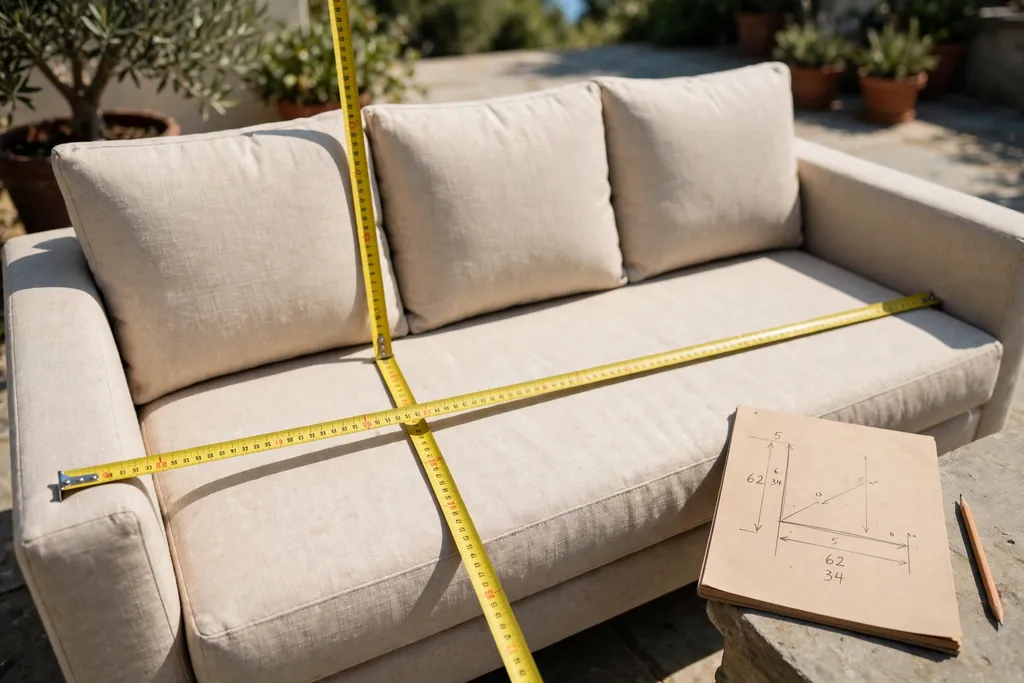
Measure each piece carefully, because a cover made for a different size will never sit well, however carefully you fit it. Measure the overall width from outer arm to outer arm, the depth from the front edge to the back, and the height from the ground to the top of the back. Then measure seat depth, seat height, arm height, and arm width, and measure each cushion on its own: length, width, and thickness.
Measure twice, and write the numbers down with the piece name, so you do not mix up a chair and a loveseat later. Note the widest point, which is often the arms, not the seat, and note any part that sticks out, such as a recliner handle or a curved back. If a piece falls between two cover sizes, keep both size ranges in mind for step 6, where closures and adjustability matter most.
3. Note the Shape Details That Change the Fit
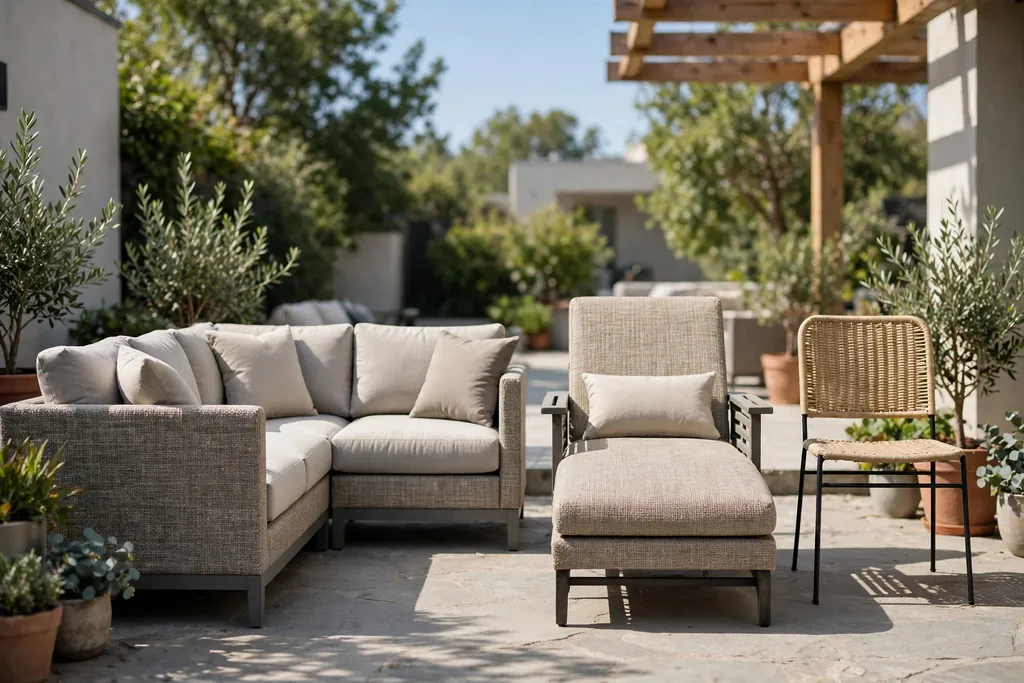
Note the shape details that change the fit, since shape matters as much as size. A corner sectional, a chaise, a recliner, a rocking chair, and a round dining chair each need a different cover pattern. Note whether arms are straight, rolled, or sloped, whether the back is high or low, and whether the base sits on legs, a plinth, or a swivel base that needs clearance.
Also note features that a cover must work around: a chaise extension, a side table attached to a sofa, a reclining back, or a dining chair with a cutout back. Take a photo of each piece from the front and the side, with the measurements beside it. When you compare covers later, the photo will show at a glance whether a cover shape matches the furniture, without remeasuring.
4. Decide Between a Fitted Slipcover and a Protective Cover
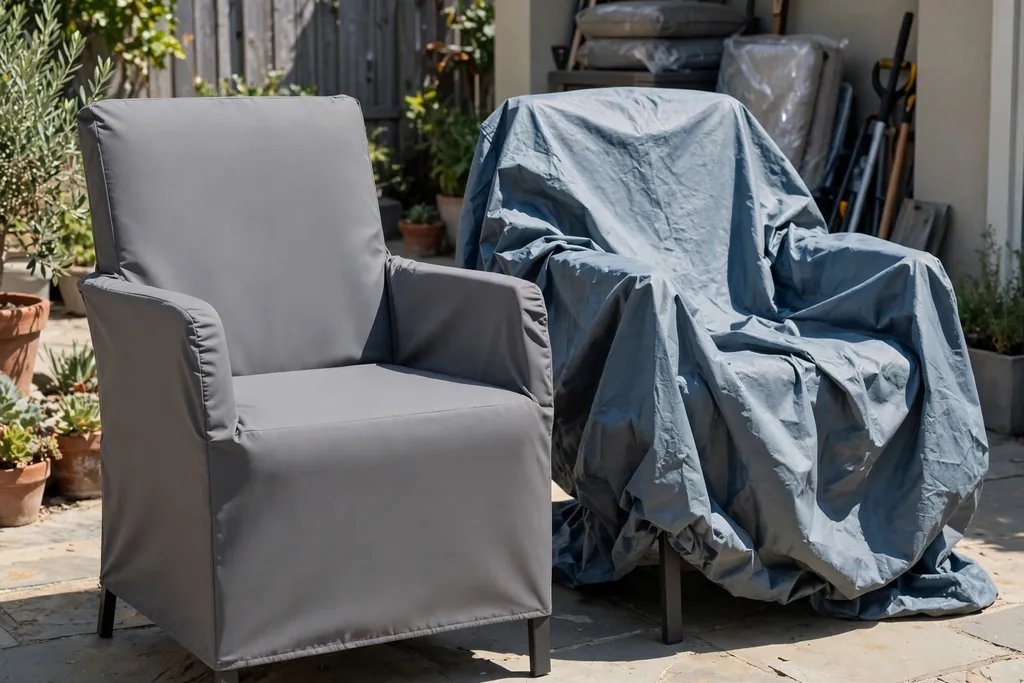
Decide first whether you need a fitted slipcover for daily sitting or a protective cover for storage and bad weather, since the two jobs call for different covers. A fitted slipcover stays on the furniture while you sit on it, so it needs to feel comfortable, sit smoothly, and come off for washing. A protective cover goes over the whole piece when it is not in use, so it needs to shed rain, resist wind, and come off easily before you sit down.
Some patios need both: fitted slipcovers for the seating season, and protective covers over the top during storms or winter. If you buy only one type, be clear about how it will be used. A loose protective cover will not look or feel like a slipcover for sitting, and a fitted slipcover on its own may not be enough protection for a piece left out through a wet winter.
5. Choose a Weather Resistant, Washable Fabric
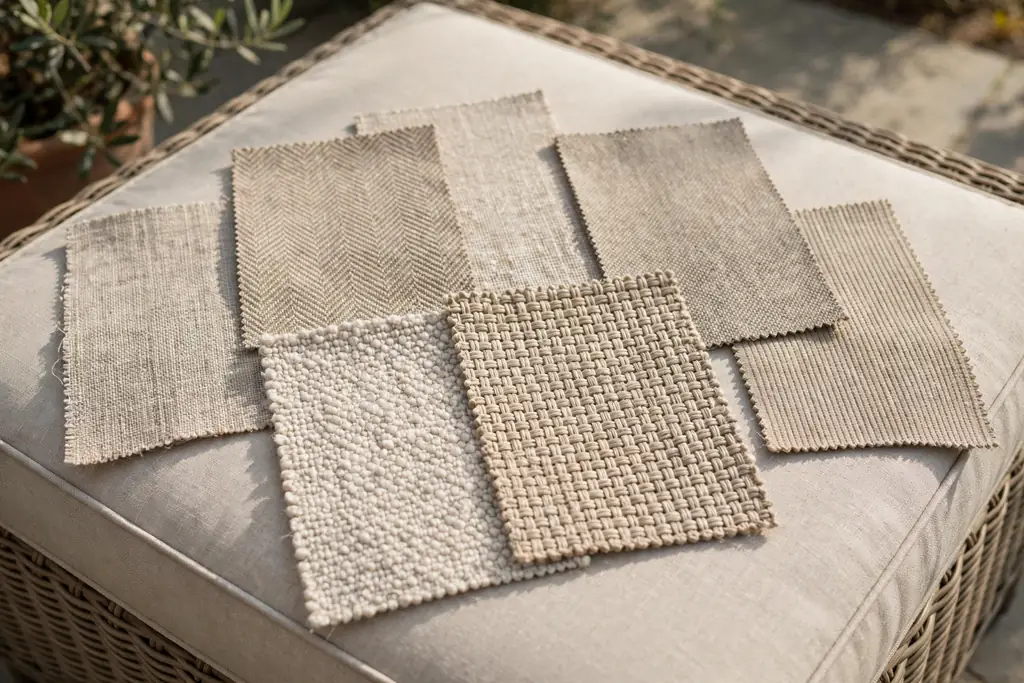
Choose a fabric that suits outdoor use, not just indoor slipcover fabric in a pretty color. Look for fabric described for outdoor use, with resistance to sun fading, rain, and everyday dirt, and check that it can be cleaned or washed. A tight weave usually keeps its shape better than a very loose weave, and a midweight fabric usually drapes more smoothly than a very thin fabric that shows the furniture shape underneath.
Think about how the furniture is used. A dining set used for meals needs fabric that can be wiped or washed after spills. A lounge sofa used daily needs fabric that can be laundered often without losing its fit. In both cases, the care label matters more than the fabric name: if the label does not allow washing, the cover will be hard to keep clean through a season of outdoor use.
6. Check Closures, Elastic, and Adjustability
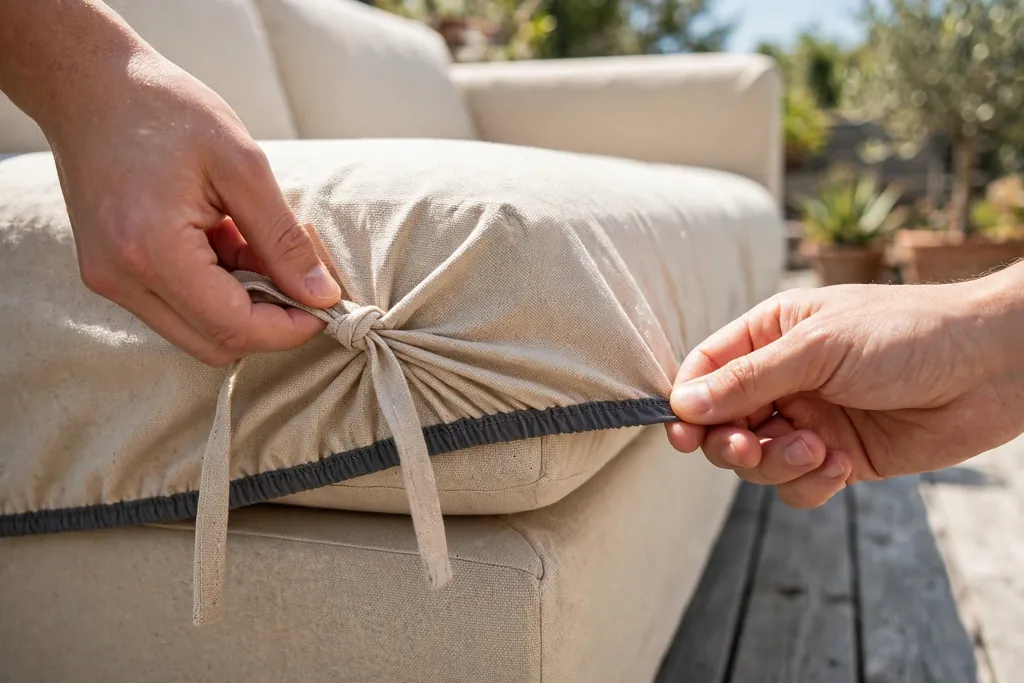
Check closures, elastic, and adjustability before you buy, since these details decide whether a cover stays put. Common features include elastic hems, ties at the back or sides, zippers on cushion covers, and drawstrings that can be tightened under a seat. A cover with separate cushion covers and some adjustment usually fits better than a single loose drape with no way to tighten it.
If your furniture falls between sizes, adjustability matters even more. A slightly large cover with ties and an elastic hem can be pulled snug, while a slightly small cover with no give will pull at seams and may tear when fitted. Check where ties sit, whether zippers are easy to reach, and whether the closure will press against a seat edge when someone sits down.
7. Pick a Color and Pattern for Sun, Heat, and Dirt
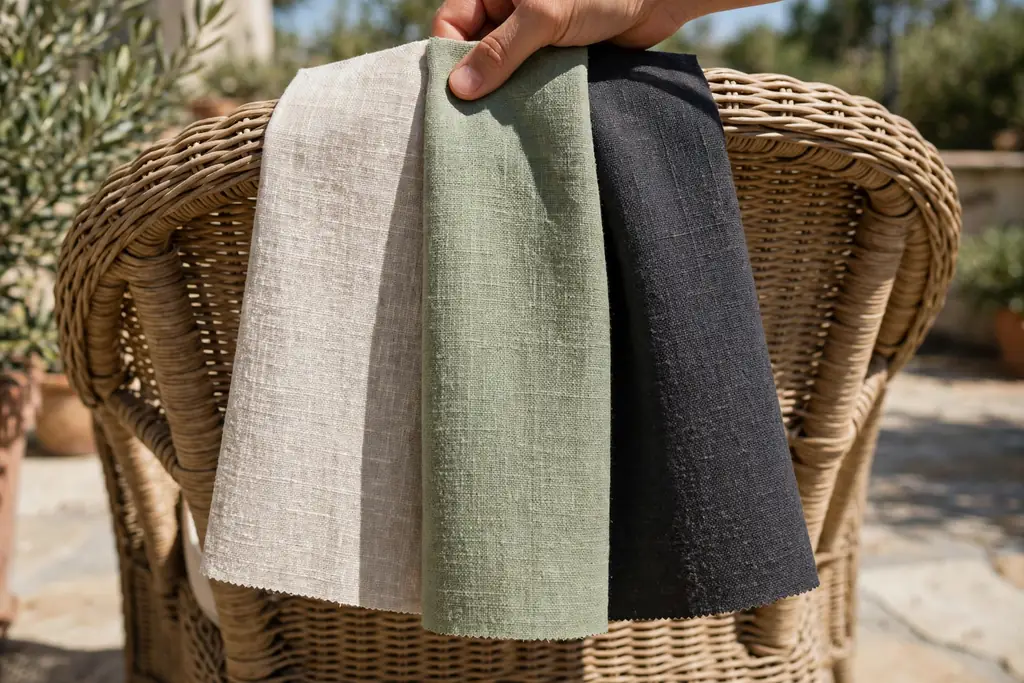
Pick a color and pattern that suits the patio sun, heat, and dirt, not only the color that looks best in a photo. Light colors stay cooler in sun and show the patio palette clearly, but they show pollen, dust, and food marks more readily. Dark colors hide marks better, but they absorb more heat in strong sun and can feel hot on a bare arm or leg.
Mid tones and small patterns often suit a busy patio best, since they hide light dust between washes while staying cooler than a very dark solid. Hold a fabric swatch on the furniture in daylight and again in evening light, and check it beside the patio floor, cushions, and umbrella or shade. If the cover clashes with the floor or the house trim, the whole seating group can look off, even when the fabric itself is fine.
8. Read the Care Label Before You Buy
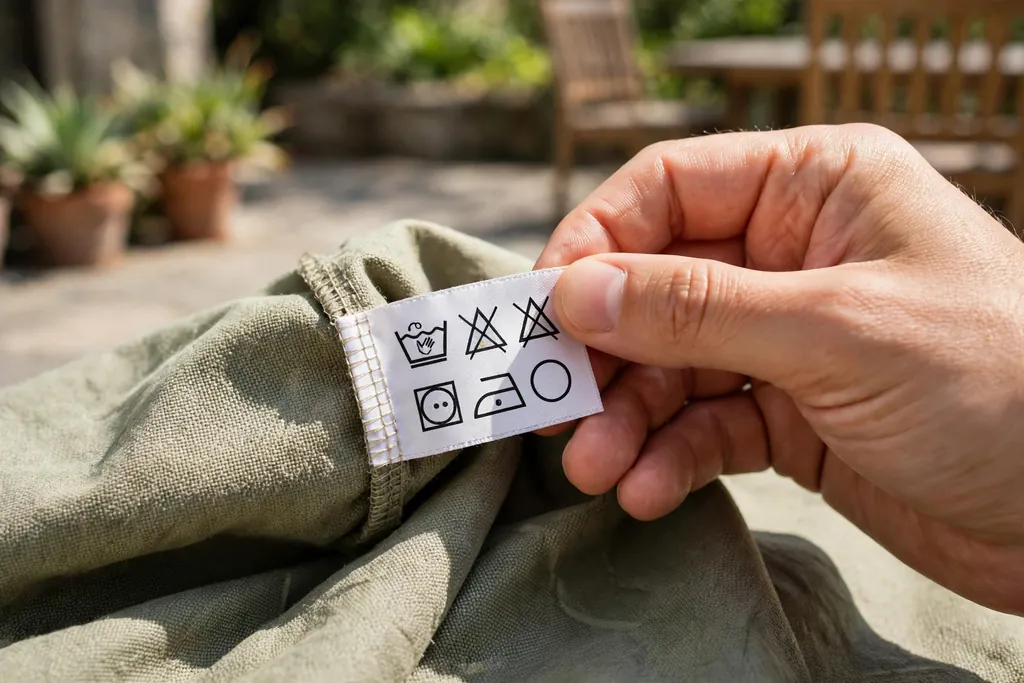
Read the care label before you buy, since washing rules decide how practical a cover will be over a season. Check whether the cover can be machine washed, what water temperature and cycle it needs, whether it can be tumble dried, and whether it needs air drying. Also check whether cushion covers can be washed separately from the main cover, which makes spot cleaning much easier.
If the label calls for special handling that you are unlikely to follow, the cover will either be washed the wrong way or left dirty. A cover that can be washed on a gentle cycle and air dried usually fits a normal patio routine better than a cover with a long list of restrictions. Keep the label with your measurements, so a second cover can be ordered and washed the same way later.
9. Look for Ventilation and Quick Drying
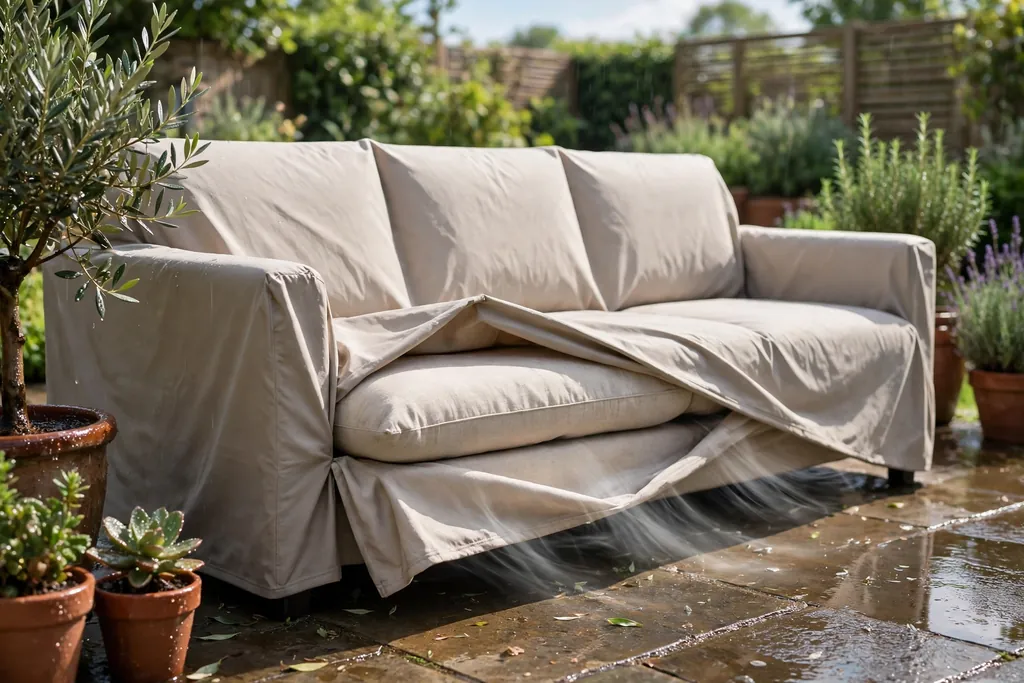
Look for ventilation and quick drying, since trapped moisture is the main problem for outdoor covers. A cover that seals tightly around a damp cushion can hold moisture against the cushion and frame, which leads to musty smells and marks over time. Ventilation openings, a looser fit at the base, or a breathable fabric all help air move and moisture escape after rain.
After rain, lift the cover edge and check whether the cushion underneath is damp. If it stays damp for a long time, improve airflow by loosening the base, propping the cover slightly during drying, or moving the piece under cover until it dries. Do not store a damp cover folded away: let it dry fully first, since a folded damp cover is where musty smells start.
10. Fit the Cover From Back to Front
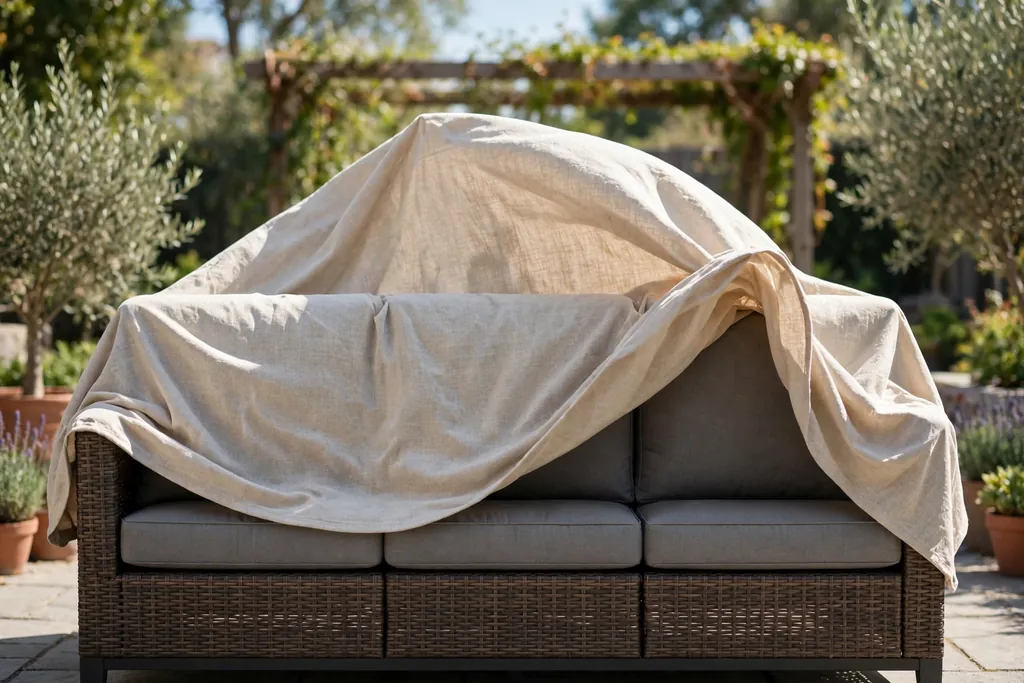
Fit the cover starting at the back of the piece and working toward the front, so the main body of the cover is in place before you shape the seat and arms. Drape the cover over the back, center it so seams line up with the furniture corners, and pull it down evenly on both sides. Then work the cover over each arm, checking that arm seams sit on the arm edges rather than sliding toward the seat.
Once the back and arms are placed, smooth the fabric down the front and fit the seat area last. Step back and check both sides from the front: if one side hangs lower, lift and recenter the cover before securing it, rather than pulling one side tight after the other side is already fixed. A centered start saves repeated adjustments later, and it keeps seams straight.
11. Secure the Cover Against Wind
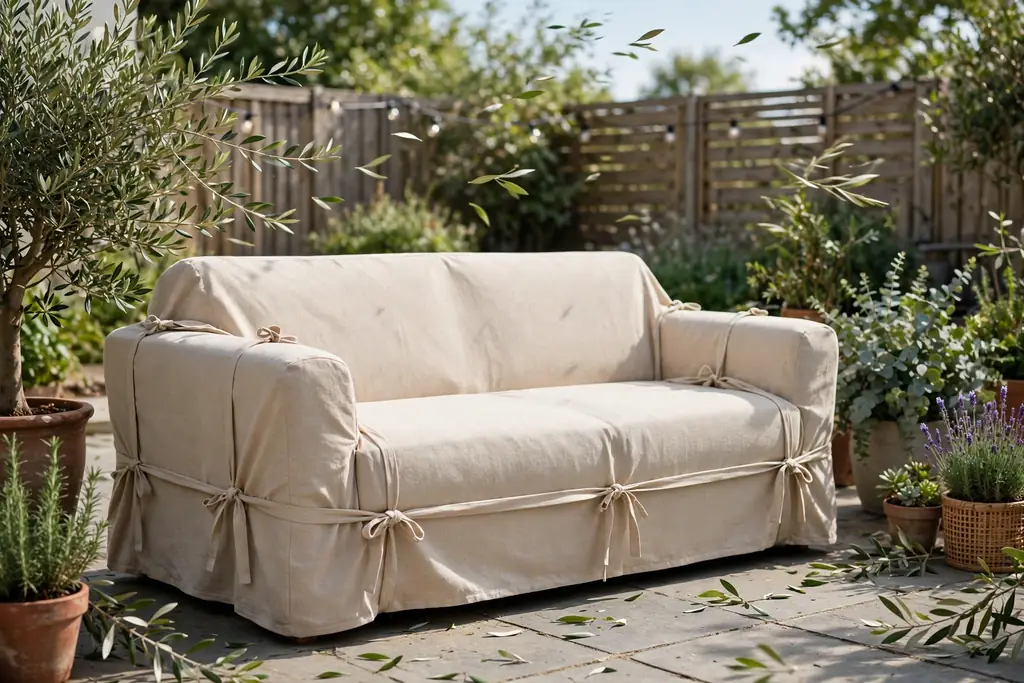
Secure the cover against wind, since a loose cover on an open patio will lift, flap, and slide. Fasten ties, tighten drawstrings, and check elastic hems once the cover is fitted, and test the fit by pressing the seat and arm areas lightly: the cover should stay in place without pulling free at the back. On a windy patio, check ties after the first windy day, since new fabric can settle and loosen.
For protective covers used when furniture is not in use, make sure the base is secured and the cover cannot billow up from underneath. Do not rely on weight alone, such as a heavy object on top, since wind can still lift an unsecured edge. If a cover keeps coming off in wind despite ties, the size or shape may be wrong for that piece, and refitting with a closer size will help more than adding extra fastenings.
12. Cover Cushions Separately Where It Helps
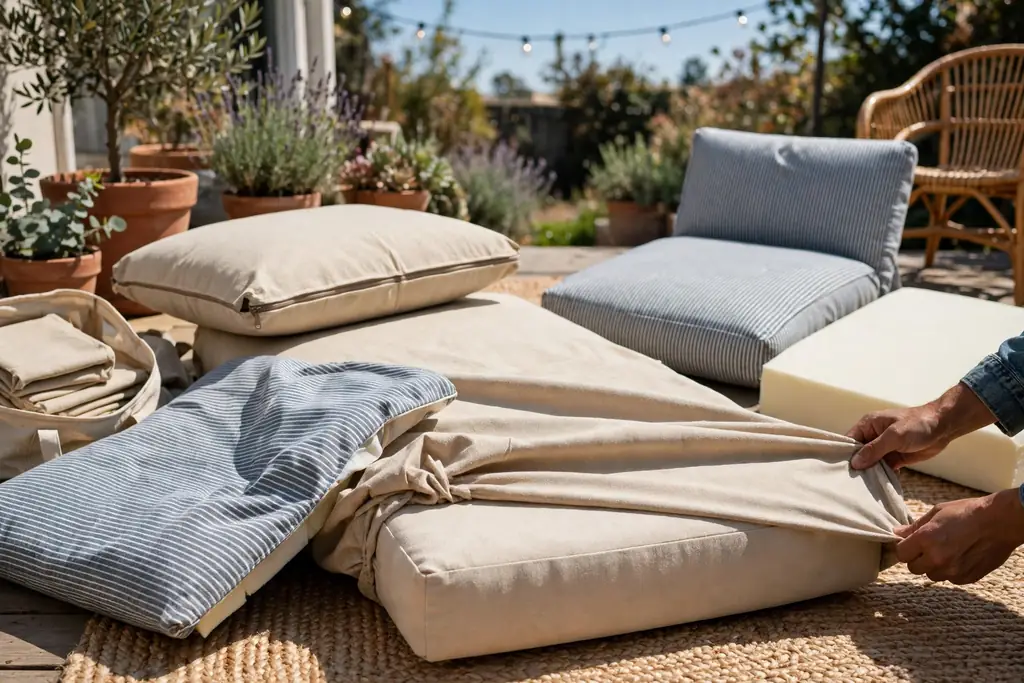
Cover cushions separately where it helps, since cushions take the most wear, sun, and spills. Separate cushion covers can be removed and washed on their own, swapped for a spare set, or replaced without buying a whole new furniture cover. This also helps when seat cushions and back cushions are different sizes, since each cover can be matched to its cushion.
When fitting cushion covers, align seams with cushion edges and smooth wrinkles from the center toward the corners. Sit on each cushion briefly, stand up, and smooth the fabric again, since this shows where the cover pulls or bags in real use. Store a spare cushion cover set washed and dry, so a spill does not leave a seat bare while the first set is in the wash.
13. Plan Seasonal Use and Off Season Storage
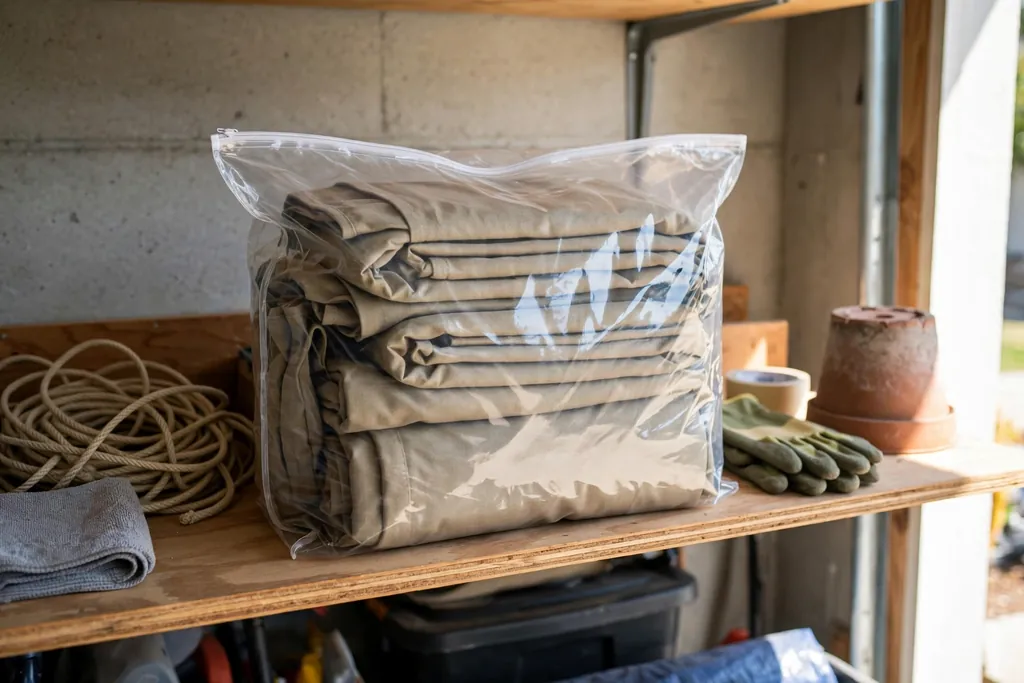
Plan seasonal use and off season storage before the season ends, not when the first storm arrives. Decide which pieces stay out with protective covers, which pieces come under a porch or into a garage, and which covers stay on through winter. Pieces left out through winter need full protective covers and regular checks, while pieces stored indoors need only clean, dry slipcovers or a simple dust cover.
At the end of the season, wash covers that the label allows, let them dry fully, and fold them loosely in a clean, dry bag or box out of direct sun. Label the bag with the piece name and measurements from step 2, so the right cover can be found next spring without unfolding every bag. A cover stored damp, crumpled, or in strong sun will look and smell worse next season, even if it was fine when it was put away.
14. Keep a Simple Cleaning and Check Routine
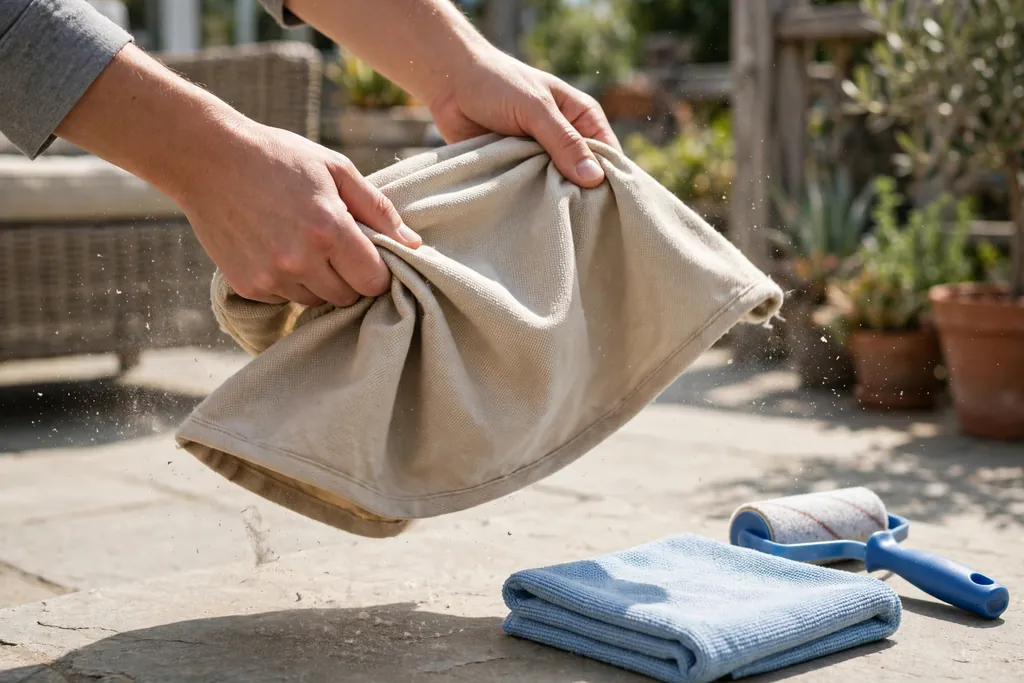
Keep a simple cleaning and check routine, so covers stay fresh without constant work. Shake covers out outside between washes to remove dust, pollen, and pet hair, and deal with spills promptly by blotting with a clean cloth, pressing gently rather than rubbing, which can spread a mark. Work from the outside of a mark toward the center, and check the care label before using any cleaning product.
Check covers regularly for loose ties, stretched elastic, pulled seams, and damp spots after rain, and fix small problems early: retie a loose tie, recenter a slipped cover, and dry a damp cushion before it is stored. Rotate cushions where you can, so one cushion does not fade or flatten faster than the others. A short routine, done often, keeps outdoor slipcovers looking tidy far longer than a single deep clean once a year.
Conclusion
Choosing outdoor furniture slipcovers comes down to fit, fabric, and care: measure well, match the cover shape to the furniture, pick a weather resistant and washable fabric, and check closures, ventilation, and the care label before you buy. A cover chosen this way will sit smoothly, stay put in wind, dry after rain, and come off for washing when it needs it. Work through the steps in order for each piece, keep the measurements with the labels, and the patio will stay comfortable and tidy through the season. For more ideas from Dwell Ovell, start at the Dwell Ovell home page.
FAQs
How do I measure patio furniture for slipcovers?
Measure the overall width, depth, and height, then seat depth, seat height, arm height, and arm width, and measure each cushion on its own for length, width, and thickness. Note the widest point, usually the arms, and any feature that sticks out, such as a chaise extension or a recliner handle, since shape matters as much as size.
What fabric is best for outdoor furniture slipcovers?
A weather resistant outdoor fabric with a tight, midweight weave usually works best, since it holds its shape, resists sun fading and rain better than thin indoor fabric, and can be cleaned or washed. Check the care label rather than relying on the fabric name alone, since washability decides how practical the cover will be over a season.
Should outdoor slipcovers fit tight or loose?
Outdoor slipcovers should fit snugly, not tight and not loose. A snug fit with elastic, ties, or a drawstring stays in place in wind and looks tidy, while a very tight cover pulls at seams and a loose cover flaps, collects water, and slides out of place.
How do I keep outdoor slipcovers from blowing off?
Fasten all ties, tighten drawstrings, and check elastic hems after fitting, then recheck after the first windy day, since new fabric can settle and loosen. If a cover keeps coming off despite ties, the size or shape is likely wrong for that piece, and a closer fitting cover will help more than extra fastenings.
Can outdoor furniture slipcovers be machine washed?
Many outdoor slipcovers can be machine washed, but only if the care label allows it. Check the label for water temperature, cycle, and drying rules before washing, wash cushion covers separately where you can, and air dry covers when the label calls for it, since high heat can shrink fabric and change the fit.
How do I stop outdoor slipcovers from smelling musty?
Let covers and cushions dry fully after rain before folding or storing them, and make sure air can move under and around the cover so trapped moisture can escape. Shake covers out regularly, wash them when the label allows, and never store a damp cover folded away, since trapped damp is where musty smells start.