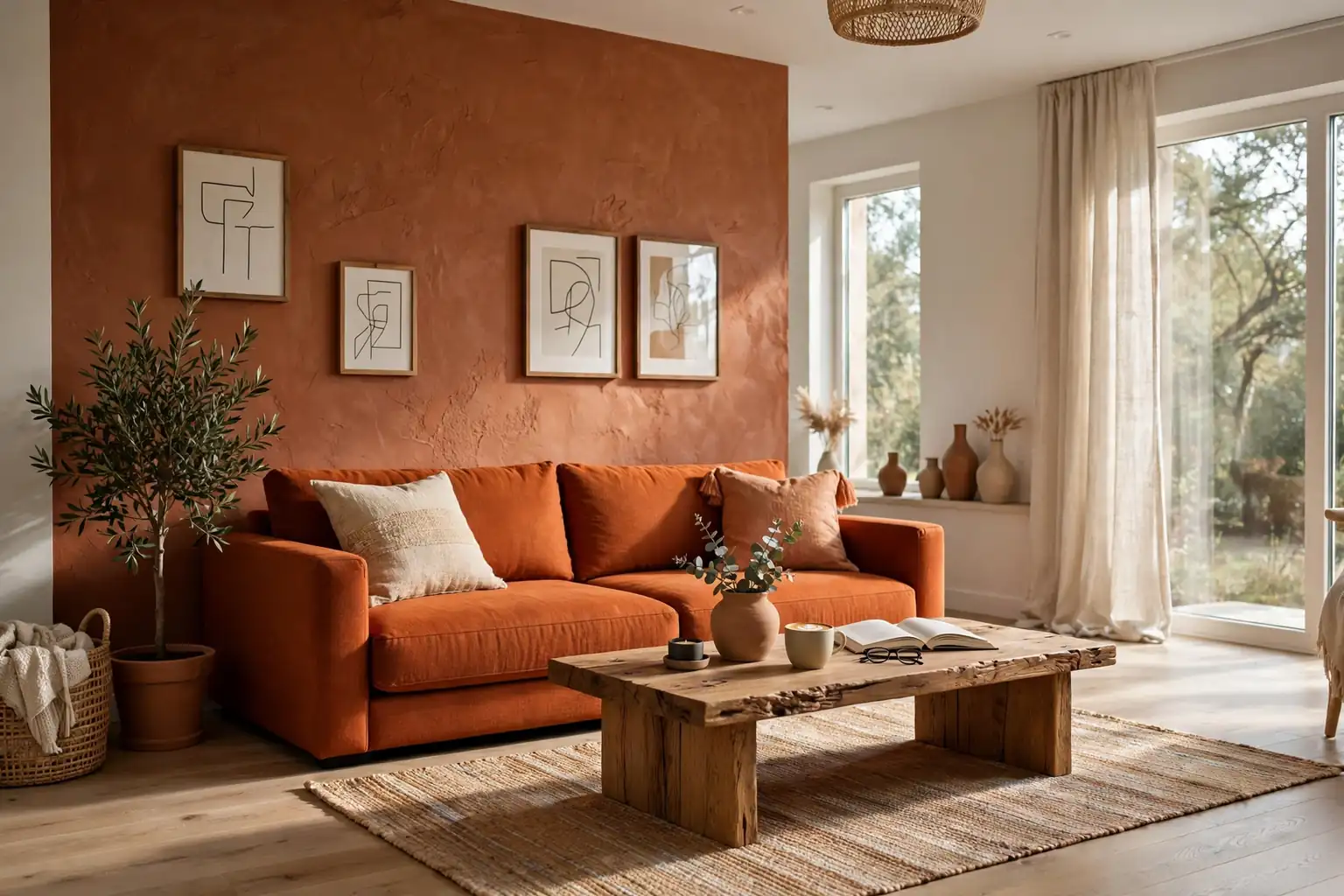
Orange can warm a living room fast, but it works best when it has a clear role. One burnt orange sofa, one terracotta wall, or a set of orange cushions can make a plain room feel welcoming, while the rest of the room stays calm enough for daily life. These 11 orange living room decor ideas cover sofas, walls, rugs, chairs, curtains, art, lighting, and small styling touches, so you can start with one change or build a full warm palette over time. Pick the shade that suits your light, repeat it in two or three places, and let the neutral base do the quiet work around it.
Key Takeaways
- Give orange one main job per room, such as the sofa, the wall, or the rug, and keep the other large surfaces neutral so the color stays welcoming rather than loud.
- Choose a shade that suits your light: burnt orange and terracotta suit most rooms, while bright tangerine needs pale walls and plenty of daylight to stay calm.
- Repeat orange at least twice, in cushions and art, or in a chair and a throw, so the color looks planned rather than random.
- Pair orange with warm neutrals, wood, and soft grey, and add greenery to keep the palette grounded.
- Test paint and fabric in morning light and evening lamplight before you commit, since orange shifts a lot during the day.
- Start with cushions, throws, and a rug for a low cost refresh, and save walls and a new sofa for a bigger project.
1. Make a Burnt Orange Sofa the Anchor
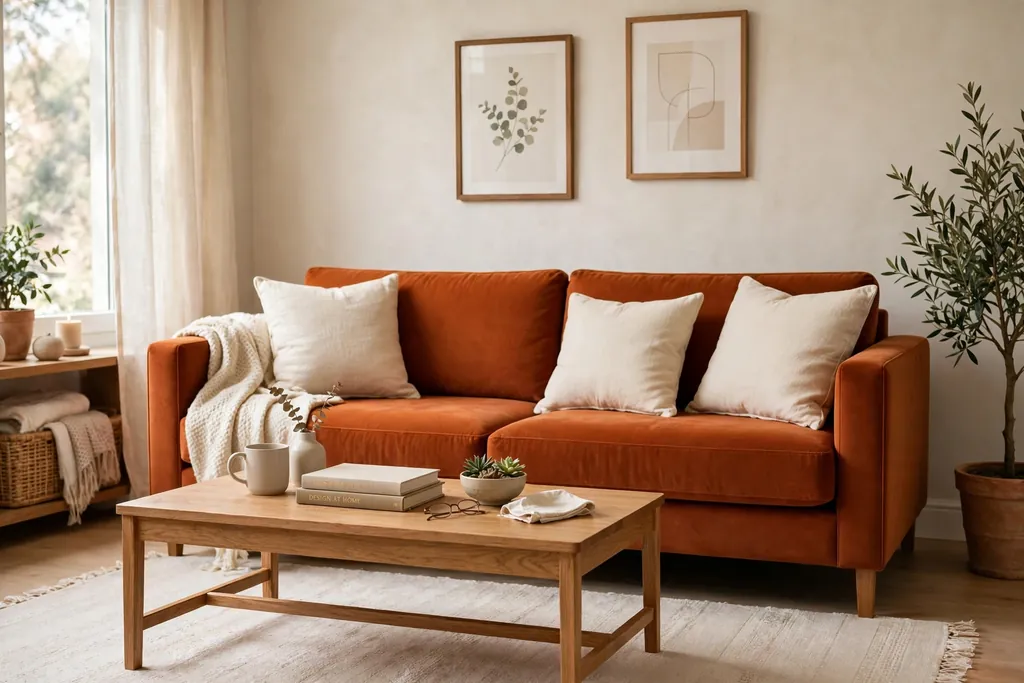
A burnt orange sofa gives the room its warm center in one piece. The deep, muted tone reads as cozy rather than bright, and it pairs well with cream walls, wood floors, and a pale rug. This suits a room where the sofa is the largest piece of furniture and the rest of the room can stay simple around it.
Keep the cushions in cream, rust, and soft grey, and let a wood coffee table ground the seating group. For a calm base under a bold sofa, see these neutral color living room decor ideas, which show how pale walls and layered beige textiles keep a strong color restful. If a full orange sofa feels like a big step, try a burnt orange slipcover or a sofa in a darker rust tone first.
2. Paint a Terracotta Accent Wall Behind the Sofa
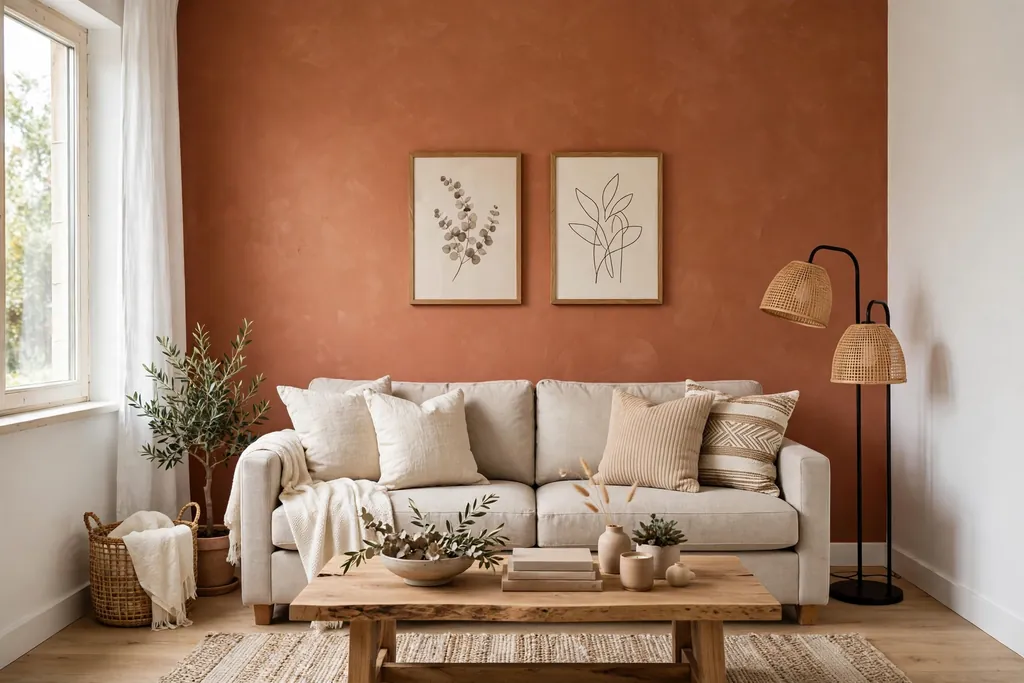
Paint the wall behind the sofa in terracotta, a warm clay tone that feels earthy rather than loud, and keep the other walls warm white. The sofa wall becomes the clear focal point, and the pale side walls keep the room from feeling closed in. This suits a room with plain furniture, since the wall does the color work and nothing else needs to change.
Use a matte or eggshell finish so the wall does not shine under lamplight, and keep the ceiling and trim white for a clean edge. Test a large sample on the sofa wall first, and look at it in the morning and again at night, since terracotta deepens a lot in lamplight. Hang one large print or a mirror on the wall, rather than a busy group, so the color itself carries the wall.
3. Add Orange Cushions and a Throw to a Neutral Sofa
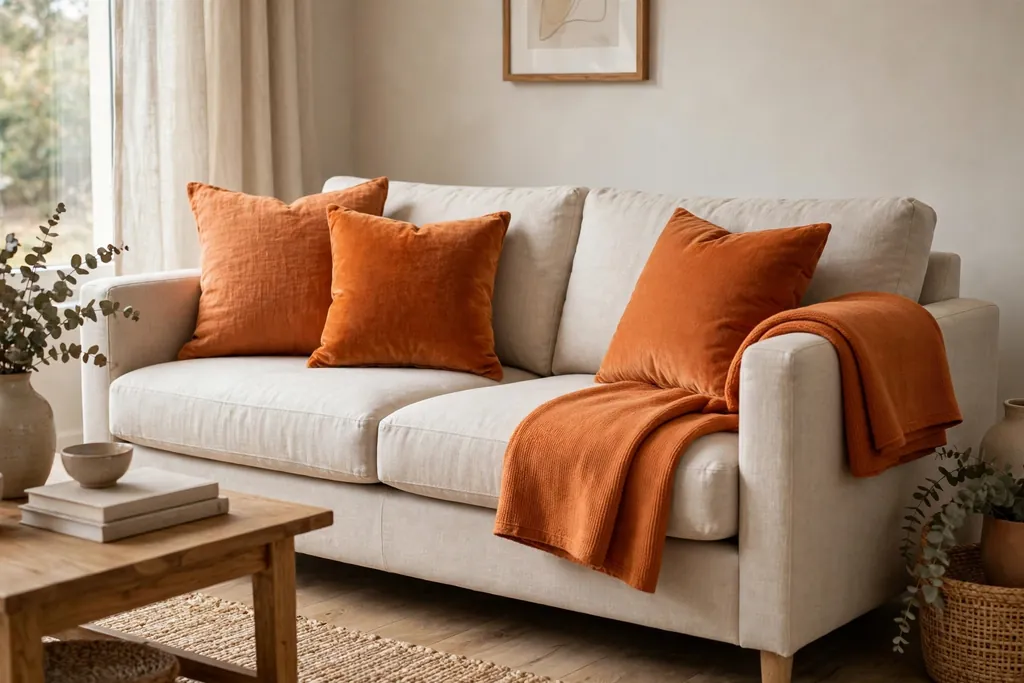
Orange cushions and a folded throw are the easiest way to try orange on a sofa you already own. Use two or three cushions in different textures, such as linen, velvet, and knit, plus a throw in a close orange tone, and keep the rest of the cushions in cream or soft grey. This suits a rented home, a tight budget, and anyone who likes to change colors with the seasons.
Put the brightest cushion at the center of the sofa and the softer tones at the ends, so the color builds gently rather than hitting all at once. Wash cushion covers together so the orange tones stay even, and store spare covers in a basket for a quick seasonal swap. If the sofa is patterned, keep the orange cushions plain so the two patterns do not compete.
4. Lay a Patterned Orange Rug Under the Seating Group
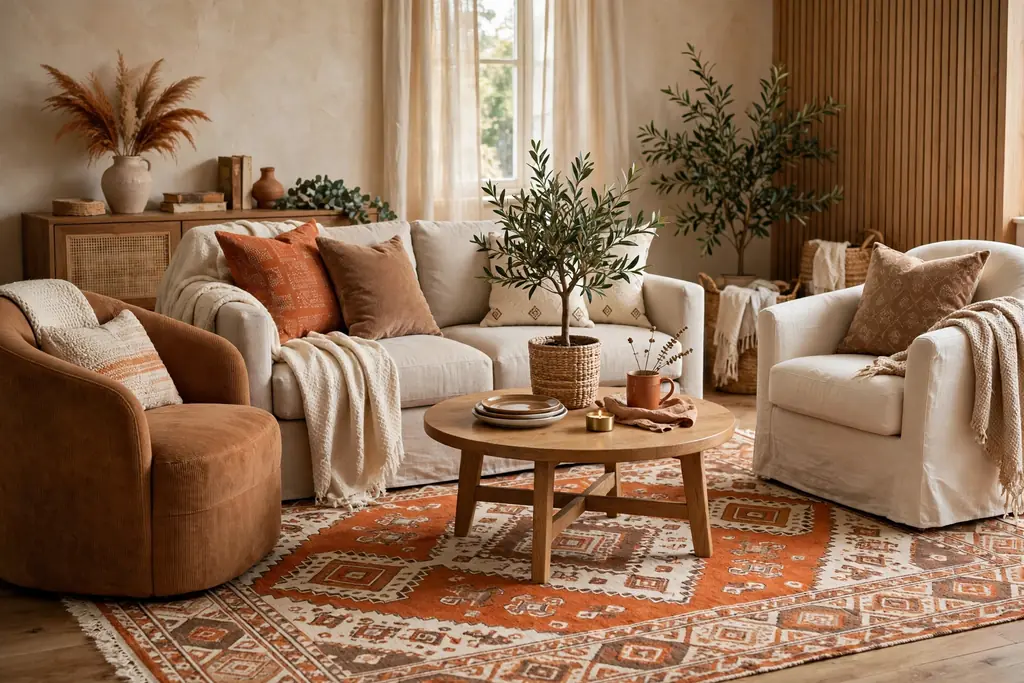
A patterned rug in orange, cream, and soft brown ties a seating group together and sets the color story for the whole room. The rug does the orange work at floor level, so the sofa and walls can stay neutral, and cushions or art can echo one tone from the rug. This suits a plain room where the furniture is simple and needs one strong pattern.
Size the rug so the front legs of the sofa and chairs rest on it, or the seating can look as if it is floating. For more sizing and placement guidance, see these living room rug ideas. Choose a low pile rug for a busy room, since it is easier to clean and chairs slide over it without catching. If the rug pattern is bold, keep the cushions mostly plain.
5. Place One Burnt Orange Armchair Beside the Sofa
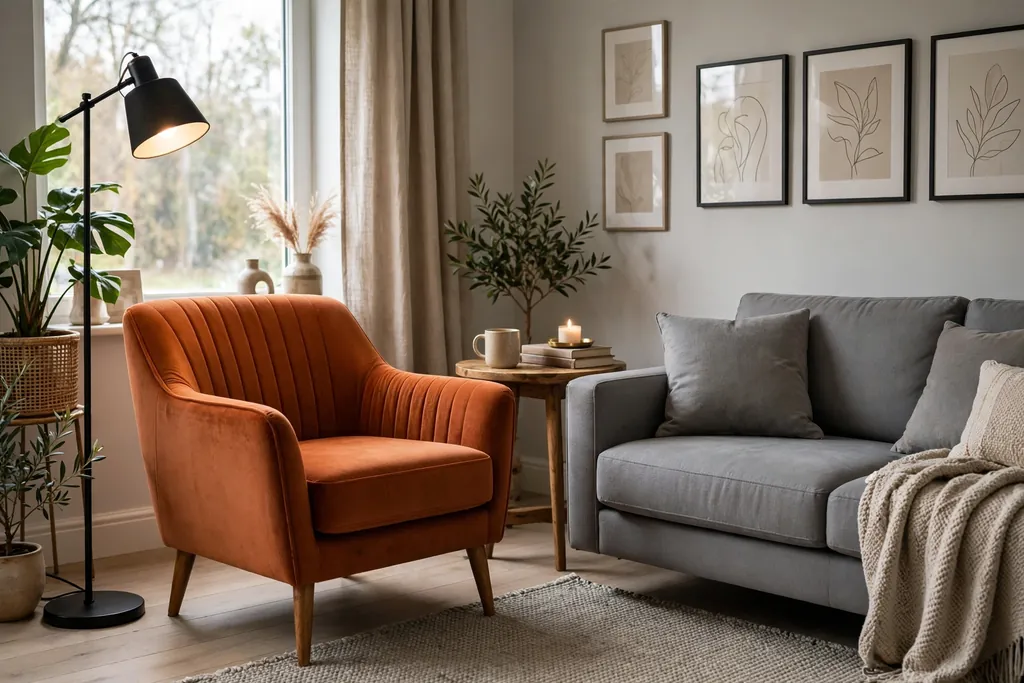
A single burnt orange armchair adds warmth without committing the whole room to orange. Place it at an angle to the sofa, with a small side table and a floor lamp beside it, so it forms a reading corner as well as a color accent. This suits a larger living room with an unused corner, and a room where the sofa must stay neutral.
Repeat the chair color once more in the room, in a cushion on the sofa or a throw over the chair arm, so the chair looks linked to the rest of the scheme. If your sofa is grey, see these yellow and grey living room decor ideas for how warm accent pieces sit against a grey base. Keep the chair fabric plain if the rug is patterned, and choose slim legs so the chair does not look heavy.
6. Hang Orange Curtains to Frame the Window
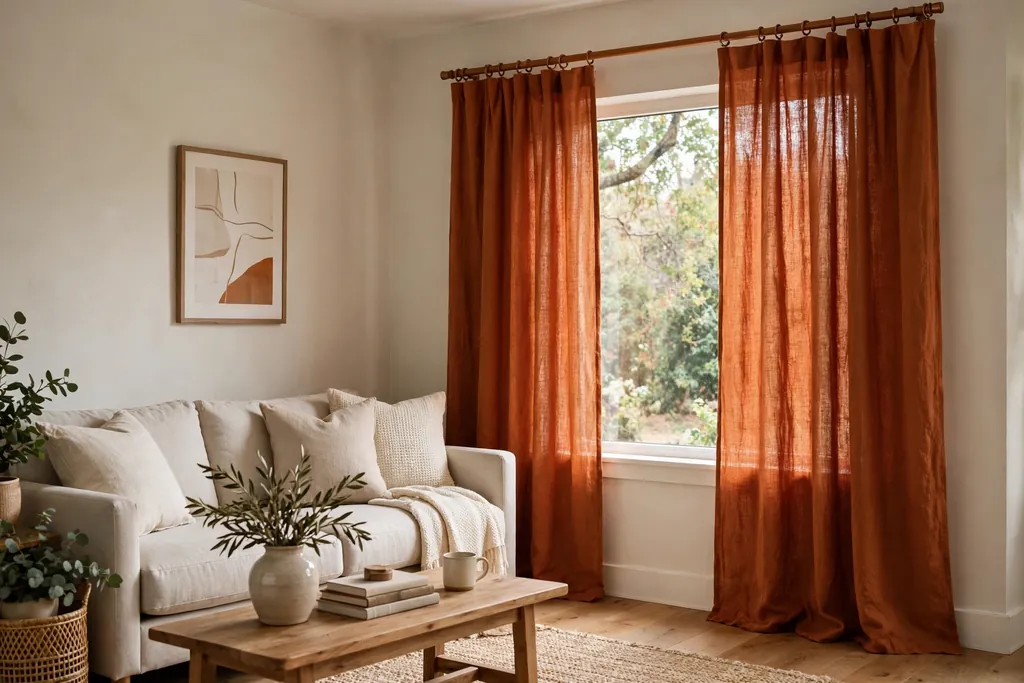
Orange curtains frame a window in warm color and soften pale walls in one move. Hang the rod close to the ceiling and let the panels fall to the floor, in linen or a linen look fabric, so the window looks taller and the room feels finished. This suits a room with a wide window, and a room where the sofa sits beside rather than in front of the window.
Choose a muted orange, such as burnt orange or a soft rust, rather than a bright tangerine, so the curtains do not darken the room or dominate it. Add sheer curtains underneath for daytime privacy while still letting light through. Keep the rest of the orange in the room small, cushions or a vase, so the curtains stay the lead accent.
7. Build a Gallery Wall with Orange Prints
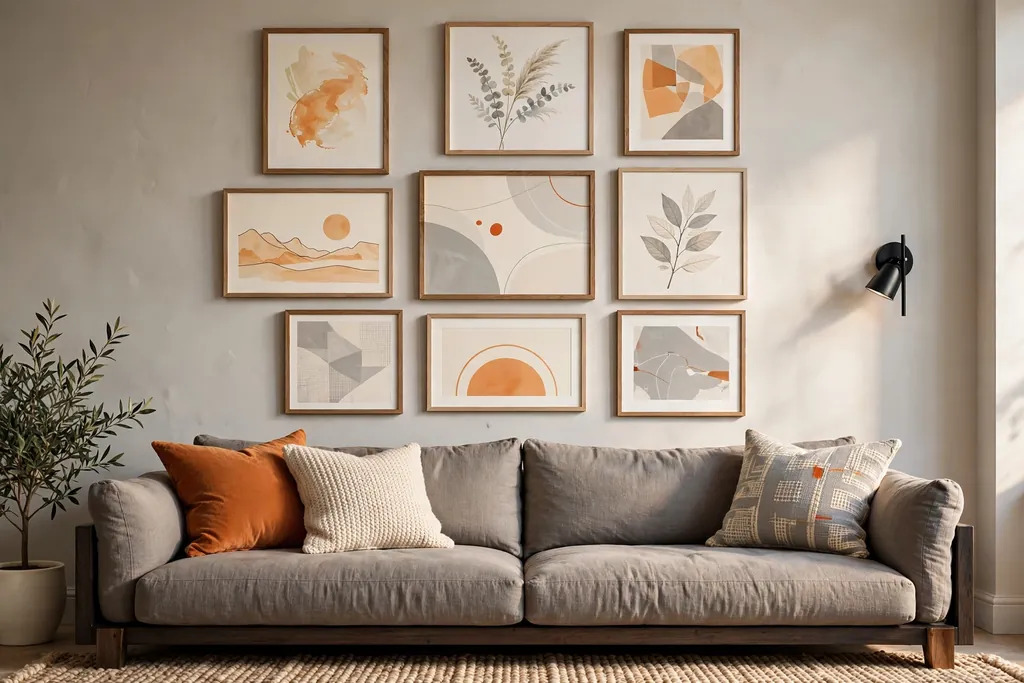
A gallery wall with orange prints turns art into the warm accent of the room. Mix two or three prints with orange in them, such as abstract shapes, landscapes, or botanical prints, with one or two plain cream or soft grey prints so the wall does not feel loud. Keep the frames in one finish, black or natural wood, and hang the center at eye level from a seated position.
This suits a long wall above a sofa, where a single small print would look lost. Lay the frames on the floor first, measure the full block, and mark the wall with painter tape before you hang anything. Keep the outer edges inside the width of the sofa so the arrangement does not look wider than the seating below it.
8. Warm the Evenings with Orange Shaded Lamps
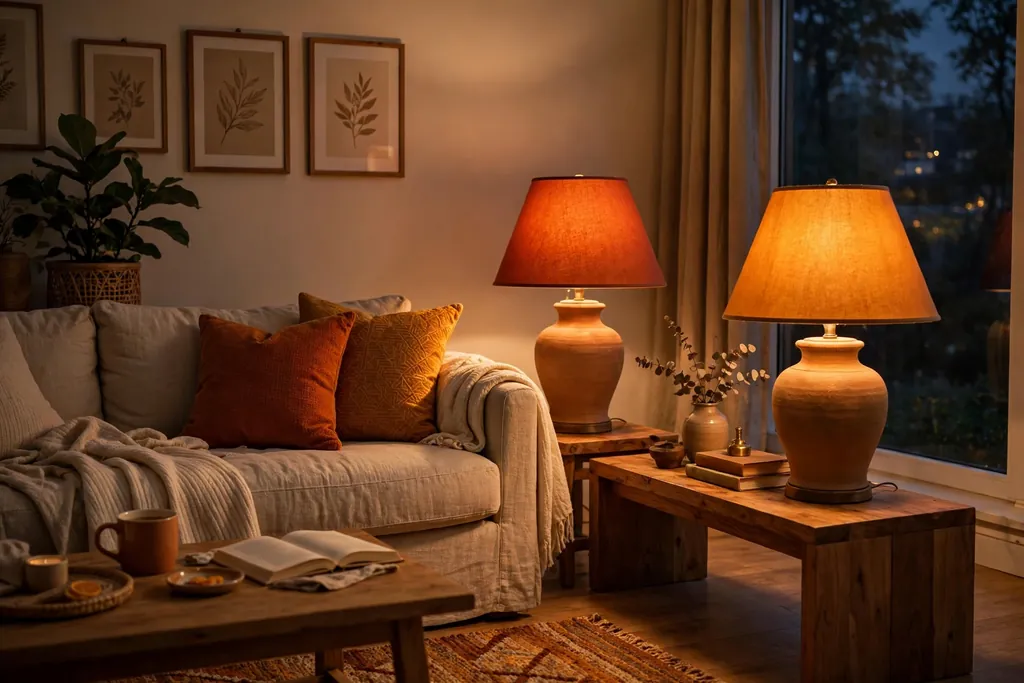
Lamps with orange shades warm a living room after dark, when a neutral room can otherwise look flat. Use a floor lamp with a burnt orange shade beside the sofa and a table lamp with a softer amber shade on a side table, both with warm white bulbs. The two heights of light make the seating area feel cozy and the orange glow gently rather than glaring.
This suits a room used mainly in the evening, a north facing room, and a room with dark wood pieces that absorb light. Keep the shades simple and plain so the light stays even, and avoid cool white bulbs, which can make orange look harsh. A dimmer on the floor lamp lets you soften the room further at night.
9. Style an Orange Vignette on the Coffee Table
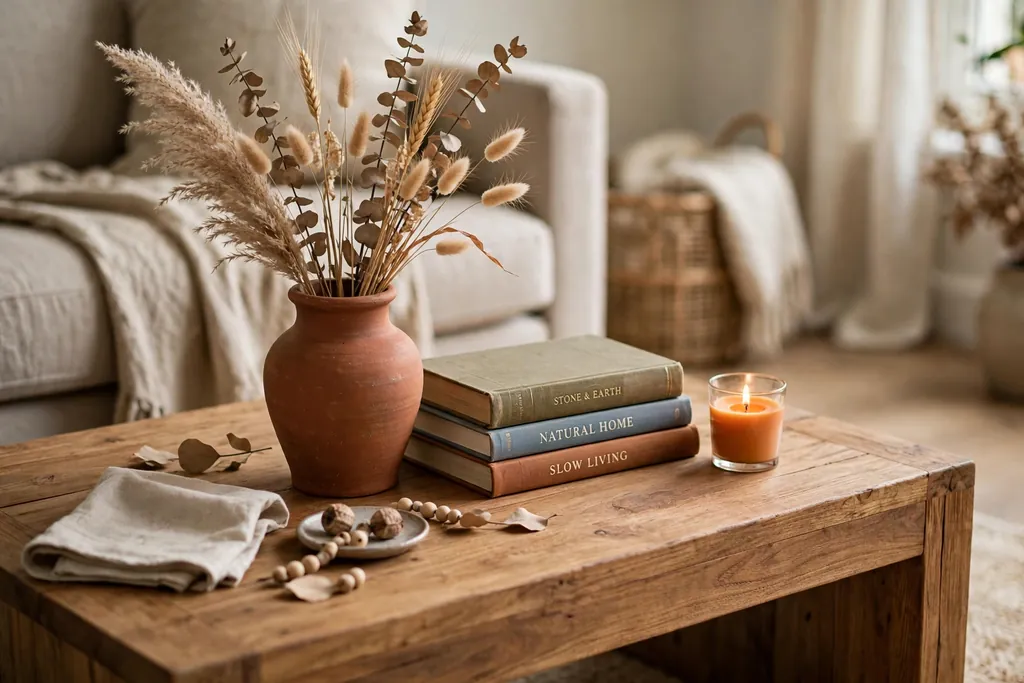
A coffee table styled with orange pieces adds color at the center of the room without changing any furniture. Set a terracotta vase with dried stems on a tray, add a stack of two books with warm colored spines, and finish with one small candle or bowl in burnt orange. The tray keeps the group tidy and makes it easy to clear the table when guests arrive.
This suits renters, small budgets, and anyone who likes to change a room often, since a vase and a tray cost little and swap in minutes. Keep the rest of the table clear so the orange group reads as one arrangement rather than clutter. A wood or glass table works well here, since both let the orange stand out.
10. Group Terracotta Pots and Greenery in a Corner
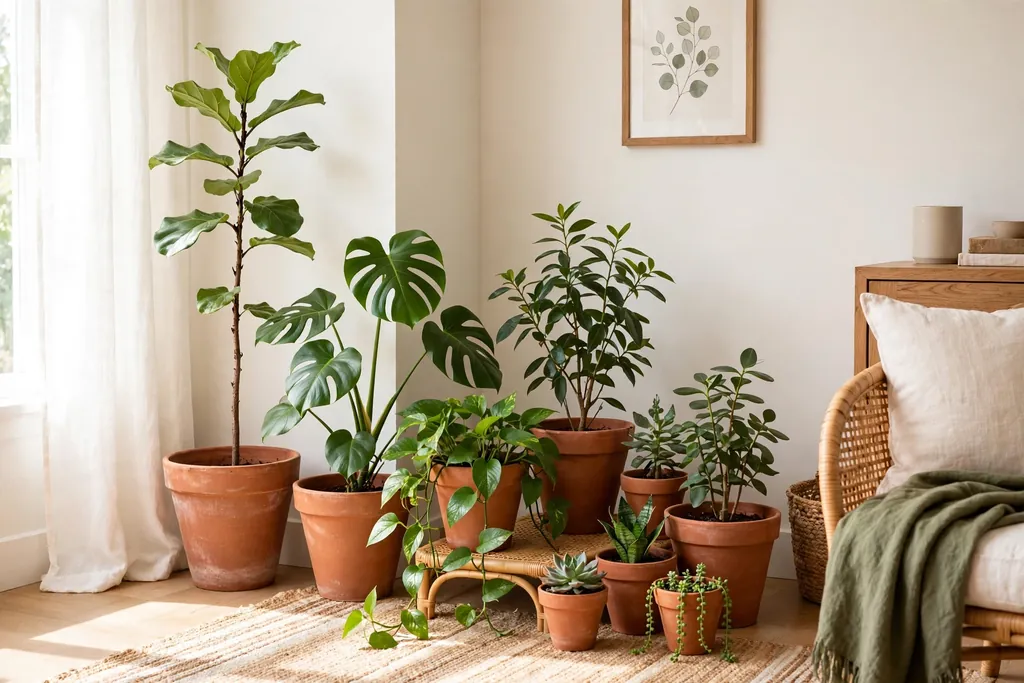
Terracotta pots bring orange into a living room in a natural, earthy form, and greenery keeps the tone grounded. Group three or five pots in different heights in a bright corner, with trailing plants on a high shelf and upright plants on the floor, so the corner reads as one planted display. This suits a room with good daylight, a plain corner that needs life, and anyone who wants orange without paint or new furniture.
Use plain terracotta pots rather than glazed ones, so the clay tone stays soft and the plants stay the focus. Water plants over a tray or outdoors, and rotate the pots now and then so growth stays even. If the corner gets little light, choose low light plants and keep the pot group smaller, so the display still looks tidy.
11. Add a Burnt Orange Ottoman for Flexible Seating
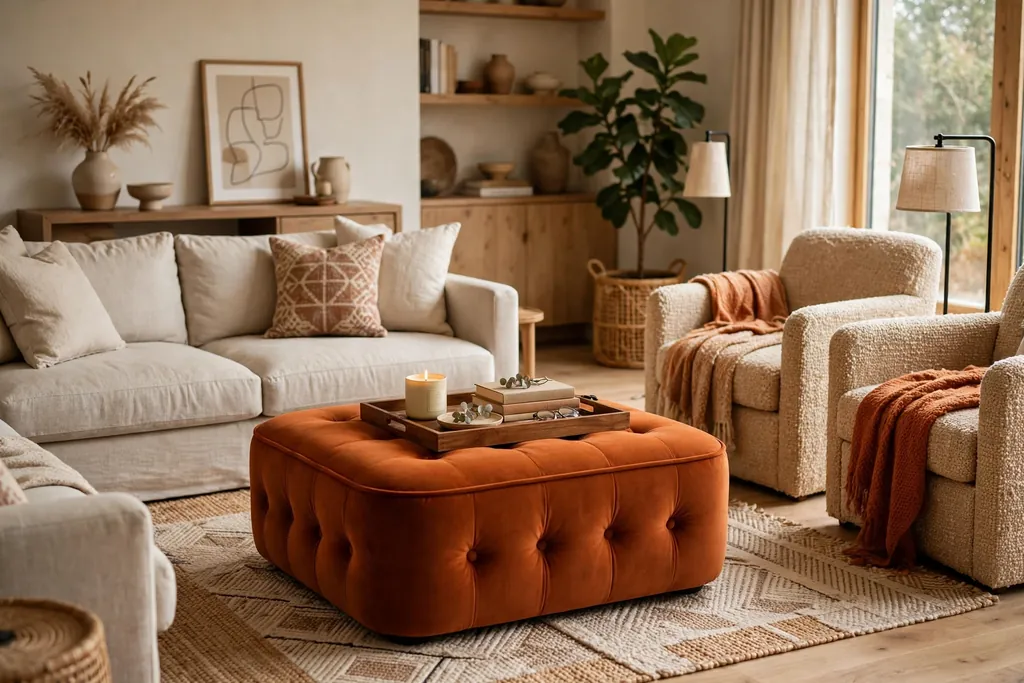
A burnt orange ottoman gives a family room a flexible warm center. The ottoman works as a footrest, an extra seat, and, with a tray on top, a coffee table, so one piece does three jobs. Choose a firm ottoman in burnt orange, and keep the sofa cushions in cream, soft grey, or a muted stripe so the ottoman stays the accent.
This suits an open plan room, where the seating group marks the living zone and the ottoman anchors its center. Pick a washable or wipeable ottoman fabric if it will hold drinks and feet daily, and keep a clear walkway around the seating group so the ottoman does not block the path. A storage ottoman adds a place for throws and remotes, which helps a small room stay tidy.
Conclusion
Orange works best in a living room when it is used with intent. Start with one main orange piece, a sofa, a wall, or a rug, repeat the tone in two smaller places, and let warm neutrals, wood, and greenery carry the rest of the room. Test shades in your own light, begin with cushions and a throw if you are unsure, and build the palette slowly, one piece at a time. Save the ideas that fit your room size, your sofa shade, and the way you use the room each day, and come back to this guide when you are ready for the next change.
FAQs
How much orange should I use in a living room?
Use orange as a warm accent, not as the base for every surface. One main orange piece, such as a sofa, a wall, or a rug, plus two or three smaller repeats in cushions, art, or a throw, is usually enough. If the room starts to feel loud, remove one orange item and let the neutrals breathe again.
Which orange shade works best for a living room?
Burnt orange and terracotta suit most living rooms, since their muted, earthy tones feel warm without shouting. Bright tangerine suits a bright room with pale walls and plenty of daylight, but it can feel strong in a small or dark room. Test fabric and paint samples in your own light before you commit.
Does orange work with a grey sofa?
Yes. Orange and grey are a warm and steady pairing: grey keeps the room grounded while orange adds warmth. Use a burnt orange chair, cushions, or a throw against a mid grey sofa, and keep the walls pale so the pairing stays balanced. Add warm lamps in the evening, since grey can look cool under a single ceiling light.
Can orange work in a small living room?
Yes, if the large pieces stay pale. Use a light sofa and pale walls, then add orange only in cushions, a throw, one chair, or a small rug, and keep furniture legs slim and raised so the floor shows through. Avoid painting every wall orange in a small room, since that can close the space in.
What colors pair well with orange in a living room?
Cream, warm white, soft grey, wood tones, and deep green pair well with orange. Cream and wood keep the room warm and calm, soft grey steadies a bright orange, and green plants add a natural contrast. Keep the palette to orange plus two or three of these tones, so the room looks planned rather than busy.
Is terracotta the same as burnt orange?
They are close but not the same. Terracotta is a clay tone with a brown, earthy cast, while burnt orange is a deeper, richer orange with a slightly red cast. Both suit living rooms, and they can sit together well, but test them side by side in your light, since one may read browner and the other redder than you expect.