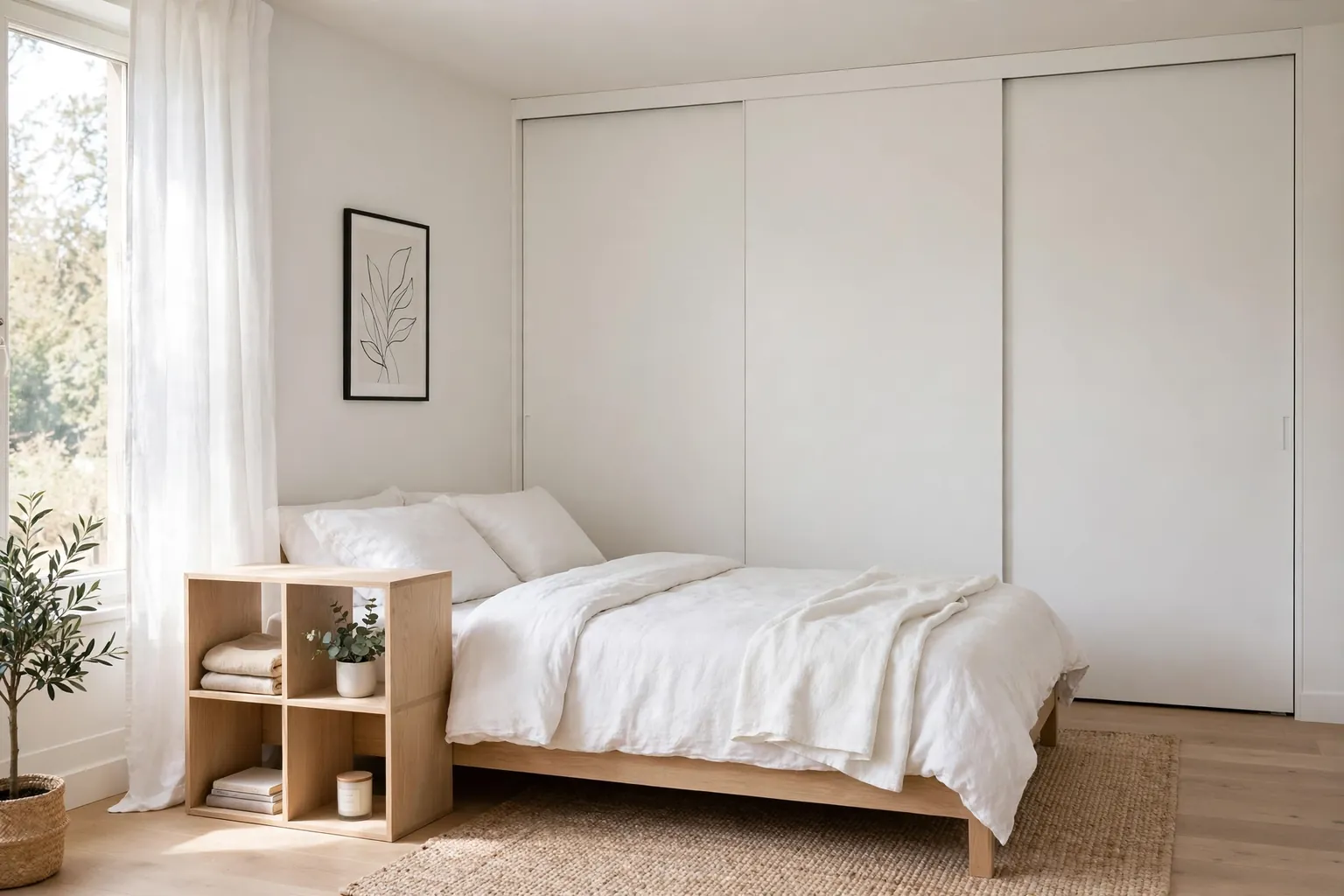
A polished bedroom rarely comes from one large purchase. It comes from calm color, closed storage where it counts, and pieces that share a finish or tone, so the room reads as planned rather than patched together. These 30 Ikea bedroom ideas use that approach: white wardrobes, low platform beds, cube shelves, and small corners for dressing, reading, and work. Each idea is simple to picture and easy to try in stages. Start with the change that fixes your biggest daily frustration. For more ways to give every item a home, see these bedroom storage ideas.
Key Takeaways
- Keep the palette calm: white, light wood, and one soft accent, repeated across furniture, bedding, and storage.
- Give clothes, shoes, and bedding each one clear home, and keep daily items at easy reach.
- Mix closed storage for visual calm with a small amount of open storage for items you use every day.
- Measure the wall, the door swing, and the space in front of wardrobes and drawers before you choose a piece.
- Make the bed the focus, with plain linen bedding, one throw, and surfaces that stay mostly clear.
- Add pieces in stages, and live with each change for a week before you add the next one.
1. A White Sliding Door Wardrobe Wall
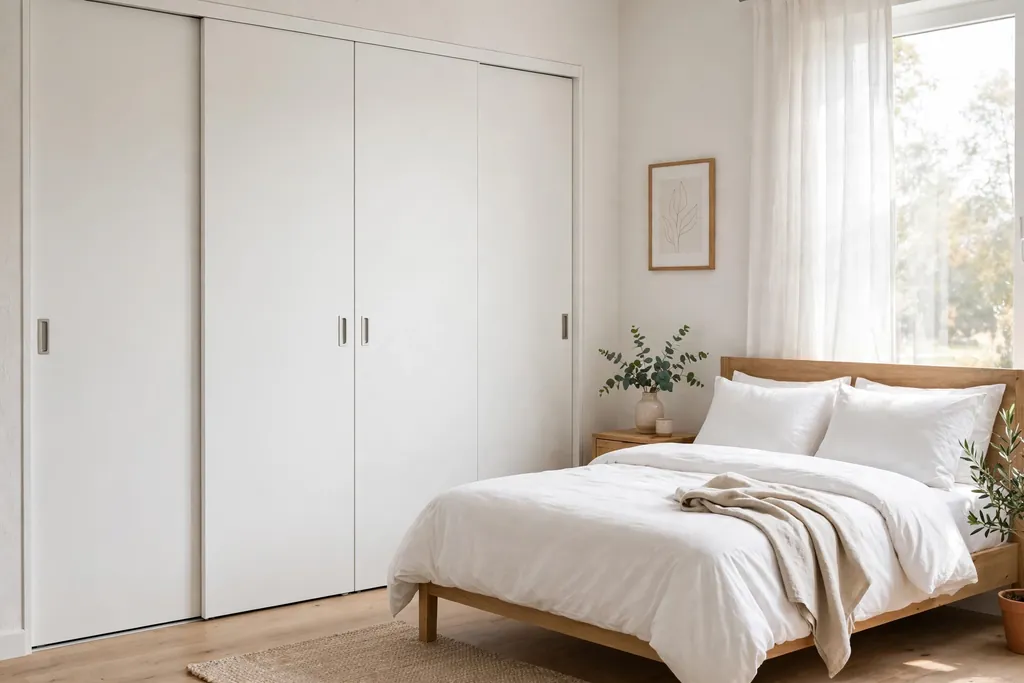
A white sliding door wardrobe wall gives a bedroom a calm, built in look without a full remodel. The flat white doors blend with pale walls, so a large storage wall does not dominate the room, and sliding doors need no swing space, which helps when the bed sits close to the wardrobe. This suits a main bedroom where clothes, shoes, and bags need one home.
Plan the inside before you judge the outside. Give daily clothes a double hanging section, keep long coats and dresses in one tall section, and use a high shelf for seasonal boxes. Keep one finish on handles or use handleless doors, so the wall reads as one planned surface. Dust the sliding track now and then, so the doors keep moving smoothly.
2. A Low Platform Bed with Drawers Underneath
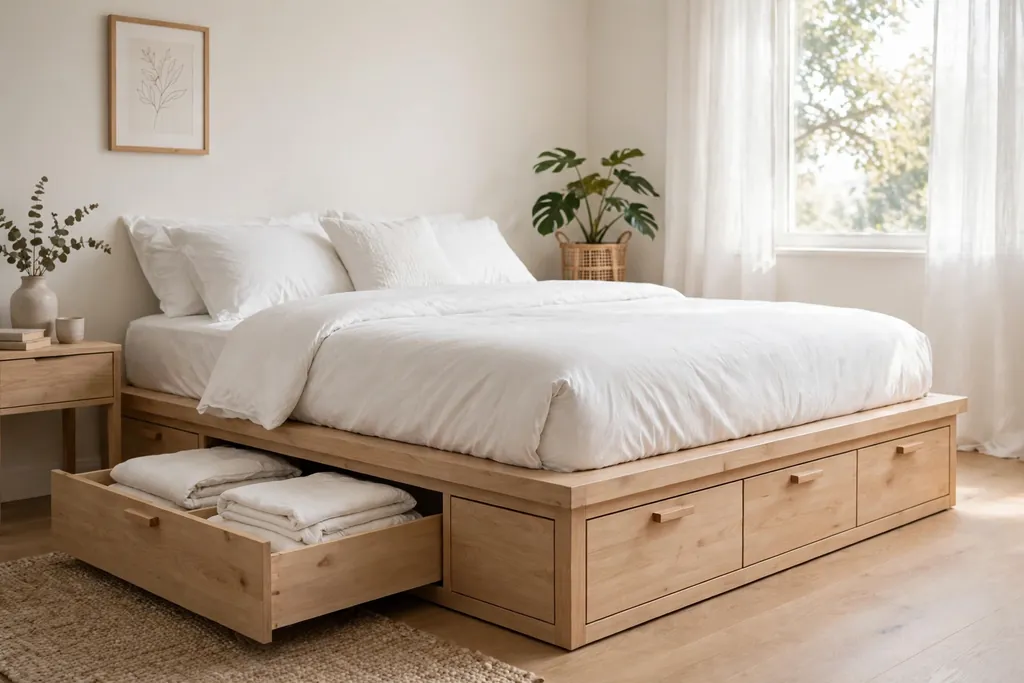
A low platform bed with drawers underneath turns the space under the bed into useful storage, and its low profile makes a small room feel taller. The bed frame sits close to the floor, so the room looks calm and grounded, while the drawers hold spare bedding, off season clothes, or shoes. This suits a room with no spare closet.
Sort each drawer by use, such as spare bedding in one and off season clothes in another, so you can find one item without emptying the bed base. Measure the clearance beside the bed first, so drawers open fully without hitting a nightstand or a rug edge. Keep the bedding plain and the top of the bed clear apart from pillows and one throw.
3. A Cube Shelf Unit as a Bedside Table
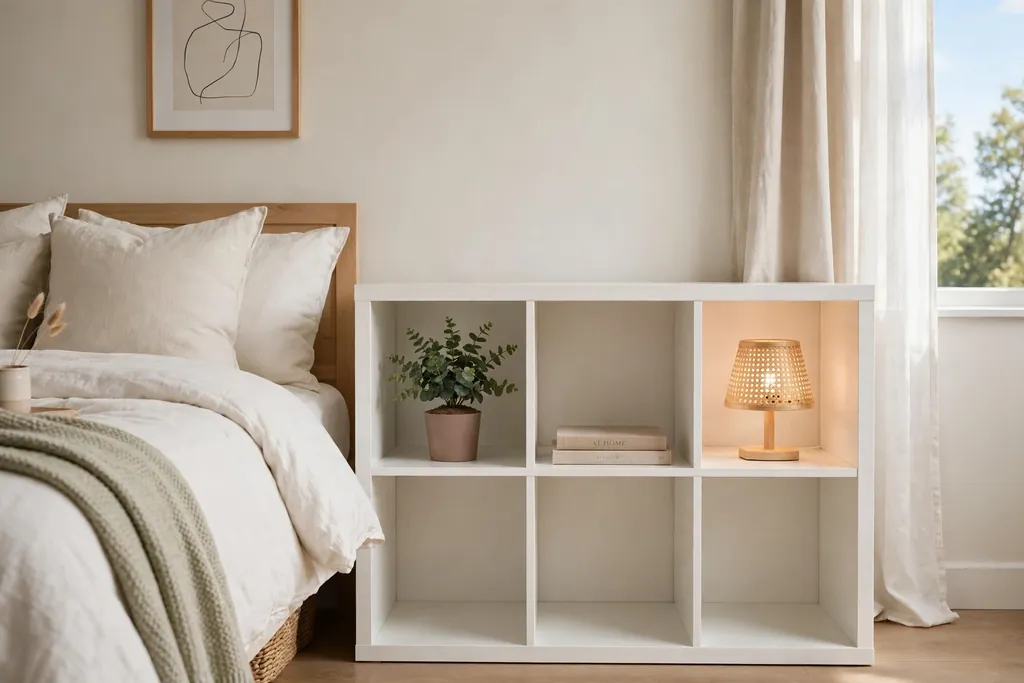
A cube shelf unit beside the bed works as a nightstand with open storage below and a clear top for a lamp. The square openings hold books, a small basket, or a folded throw, while the top stays free for a glass of water and a phone. This suits a small room, since one cube unit can replace a nightstand and a small bookcase.
Keep each cube to one group of items, so the unit reads as tidy rather than crowded. Put books in one cube, a basket for chargers in another, and leave one cube partly empty for items you add later. If the open cubes start to look busy, add a fabric box to one or two openings and leave the rest open.
4. A Tall Narrow Shelf Beside the Bed
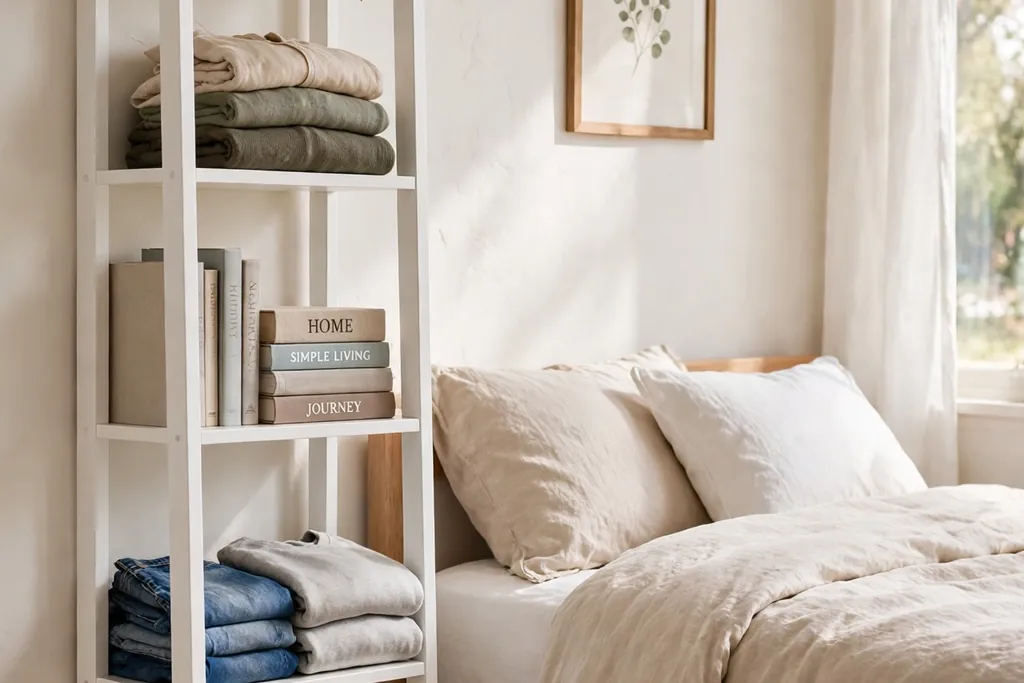
A tall narrow shelf beside the bed uses a slim strip of wall that a wide dresser cannot fill. The vertical shape draws the eye up, which helps a small room feel taller, and it holds books, folded clothes, and a small plant within reach of the bed. This suits a bedroom with a narrow gap between the bed and a door or window.
Keep heavy items low and light items high, so the shelf stays stable, and fix tall shelves to the wall with the fittings supplied. Group items by use, such as books on one shelf and folded knitwear on another, and leave breathing room on each shelf. Dust the shelves weekly, since open shelves near a bed collect lint fast.
5. A Light Wood Bed Frame with White Linen Bedding
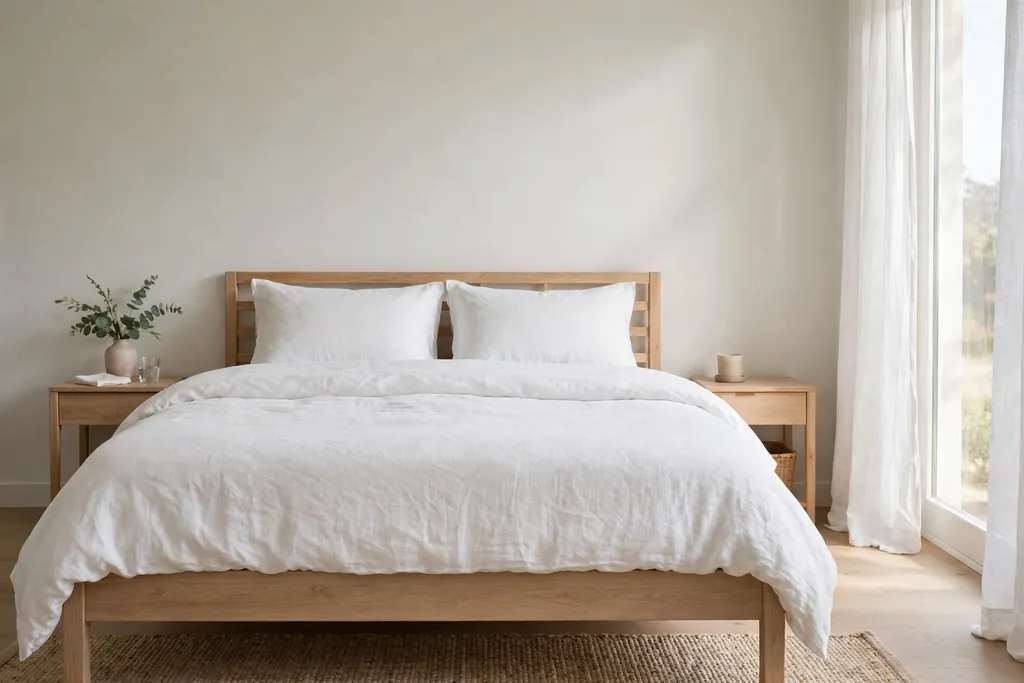
A light wood bed frame with white linen bedding is the simplest polished base in this list. The pale wood warms white walls without adding a strong color, and white bedding makes the bed look fresh and easy to keep. This suits almost any bedroom, since the frame and bedding link well to white wardrobes, pale rugs, and linen curtains.
Layer the bedding in thin layers: plain sheets, a duvet in white or cream, and a light blanket folded across the lower half. Keep cushions to two or three, so making the bed stays quick. Wash bedding in matching sets and keep a spare set folded nearby, so a fresh bed is a quick swap rather than a chore.
6. A Floating Bedside Shelf with a Wall Light
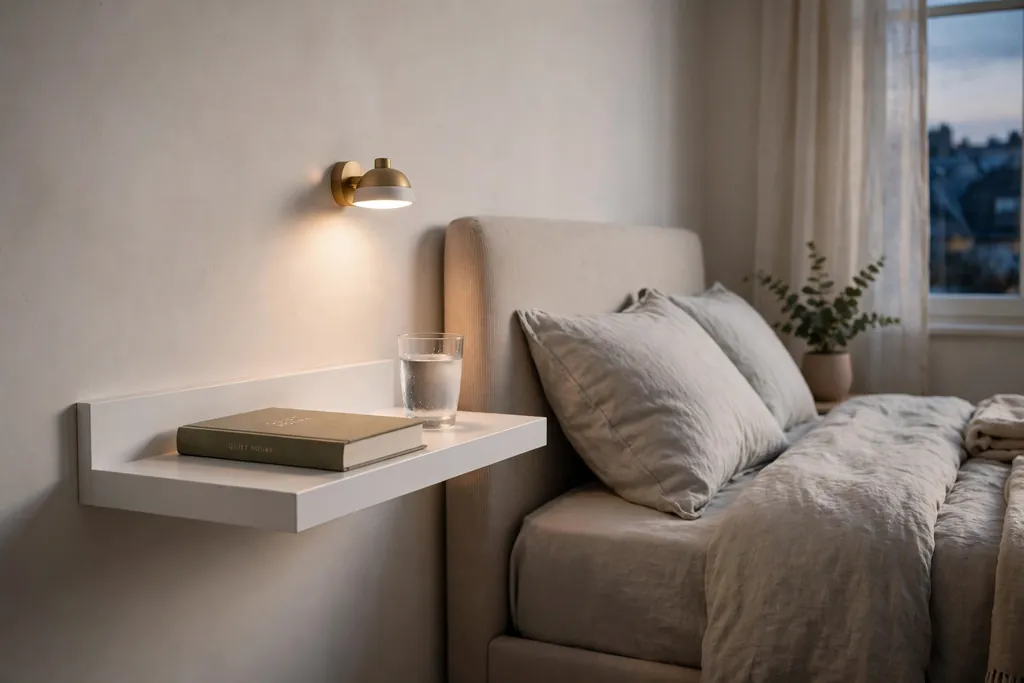
A floating bedside shelf with a wall light frees floor space and keeps the nightstand surface clear. The shelf holds a book and a glass of water, while the wall light gives reading light without a lamp base taking up room. This suits a very small bedroom, or a bed pushed into a corner where a full nightstand will not fit.
Mount the shelf at a height you can reach while sitting up, and fix it into studs or with fixings rated for the load. Keep the shelf to evening items only, and move daytime clutter elsewhere, so the bed area stays calm at night. Choose a wall light with a warm bulb, so the light matches bedside lamps elsewhere in the room.
7. A Wide Drawer Dresser Under the Window
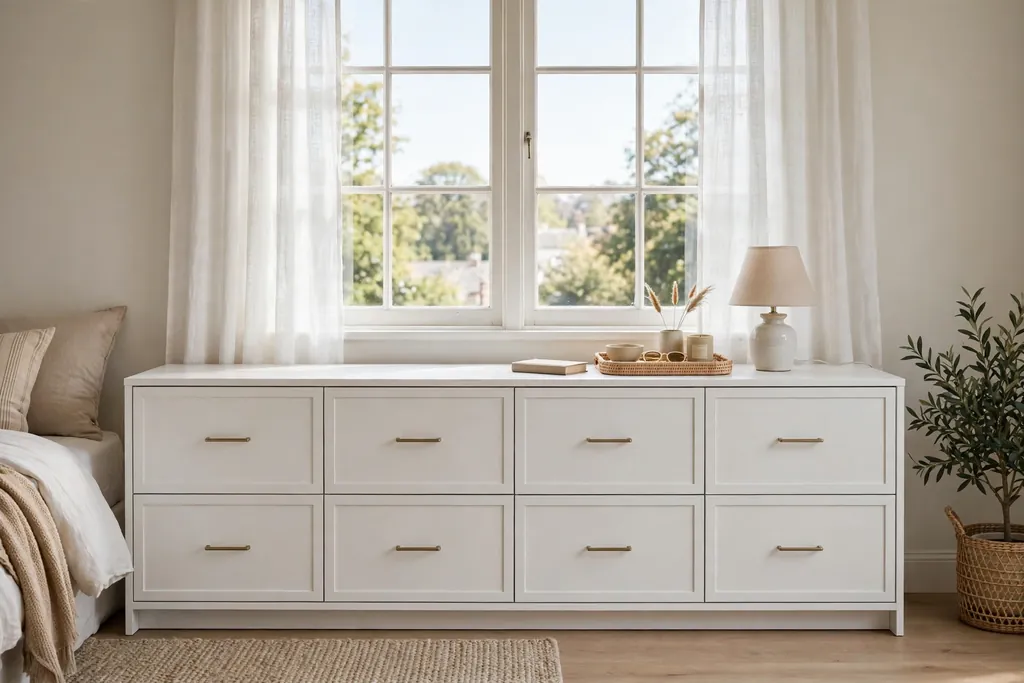
A wide, low drawer dresser under the window gives folded clothes a home and leaves the wall above the dresser free for light. The low shape suits a window wall, since it does not block daylight, and its top can hold a lamp, a tray, and one plant. This suits a bedroom with a long window wall and no room for a tall wardrobe.
Sort drawers by type, such as tops in one, bottoms in another, and sleepwear in a third, and use small boxes or dividers inside so folded stacks stay upright. Keep the dresser top to three groups at most: light, a tray, and one decor piece. If the dresser feels heavy in a small room, choose one with legs, since visible floor beneath it makes the piece look lighter.
8. Mirrored Wardrobe Doors for a Small Room
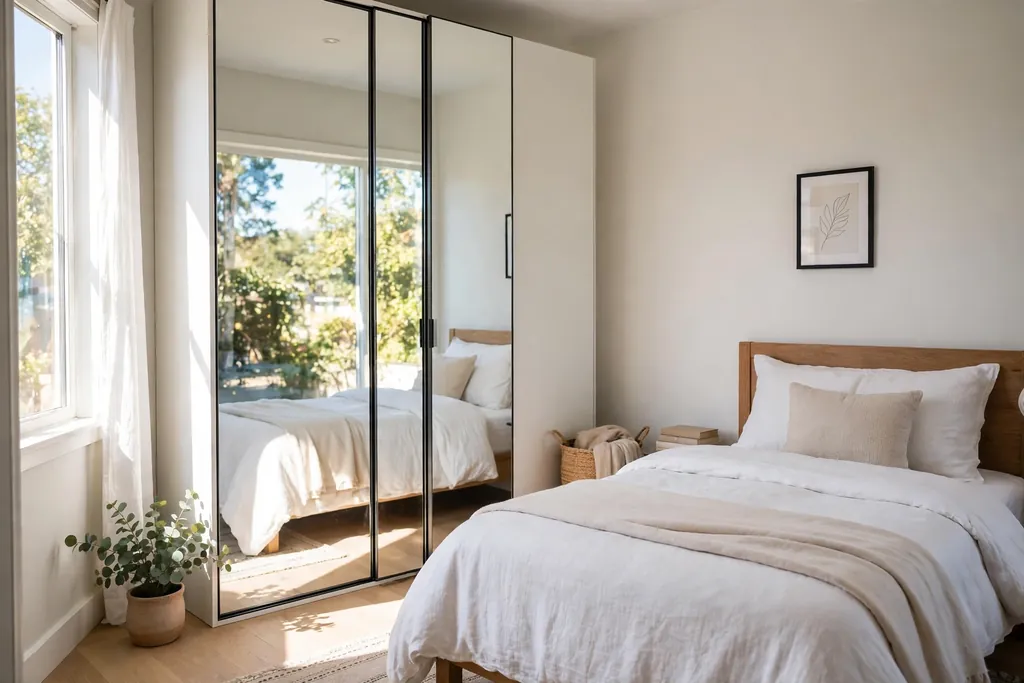
Mirrored wardrobe doors help a small bedroom feel brighter, since they reflect daylight across the room and across the bed. The mirror also gives you a full view when dressing, without a separate standing mirror taking up floor space. This suits a small bedroom, or a room where the bed sits close to the wardrobe wall.
Keep the mirror clean with a soft cloth, and check the sliding track for dust so the doors glide smoothly. If a full mirror feels too bright, use one mirrored door and one plain door, or a mirror panel on the door you use most. Keep the area in front of the mirror clear, so the reflection shows bedding or a plain wall, not clutter.
9. An Open Clothing Rail in a Corner
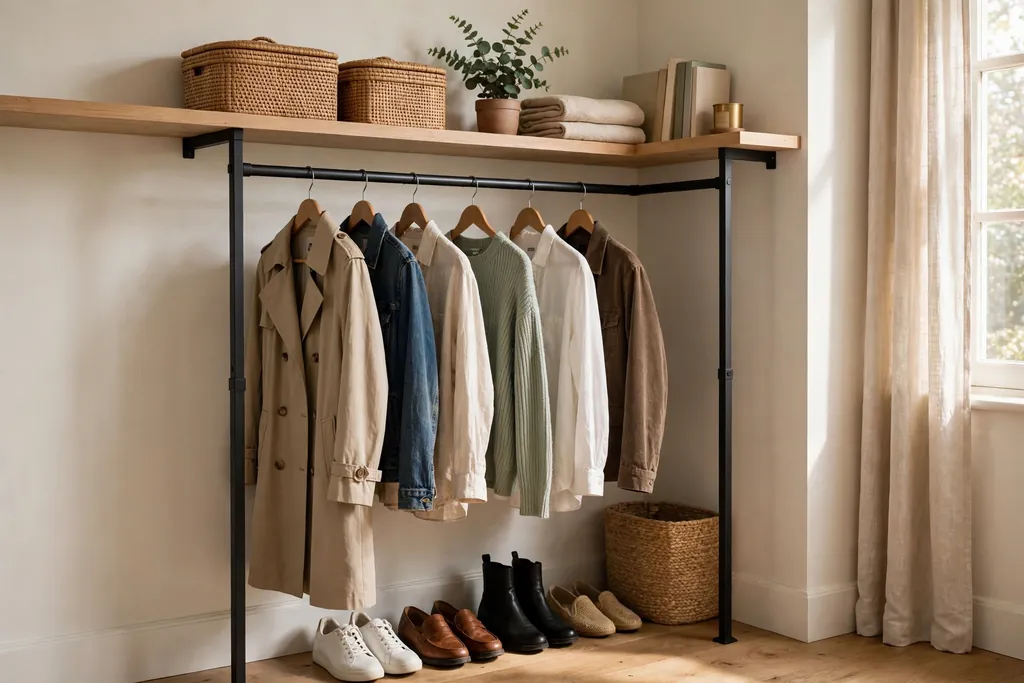
An open clothing rail in a corner gives you a boutique style display for clothes you wear often, without a full wardrobe build. The rail uses a corner that a bed or dresser leaves awkward, and it lets you plan outfits at a glance. This suits a spare room used for dressing, or a bedroom where a full wardrobe wall will not fit.
Limit the rail to clothes you wear each week, and store the rest in closed boxes or another wardrobe, so the corner stays tidy. Hang clothes facing the same way, group them by type and color, and leave space between hangers so outfits are easy to pull out. Add a shelf above for bags or folded knitwear, and a small tray below for belts and scarves.
10. A Headboard Shelf for Books and a Lamp
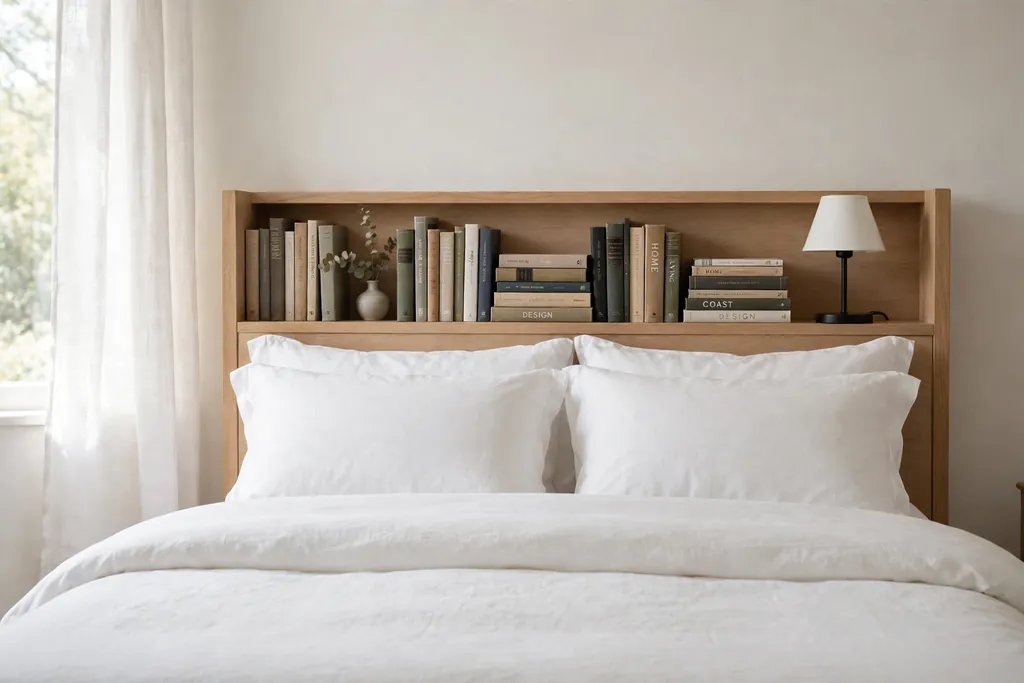
A headboard with a shelf, or a narrow shelf fixed just above the headboard, gives books, a phone, and a glass of water a home without a nightstand on each side. This suits a small room, since the shelf uses wall space rather than floor space, and it keeps evening items within reach while you sit up in bed.
Choose a shelf deep enough for a book, but not so deep that pillows push items off the back. Keep the shelf to evening items only, and wipe it weekly, since shelves above a bed collect dust. If you already have a headboard you like, a narrow shelf fixed just above it gives a similar result with less change.
11. A Desk Nook from a Shelf and a Tabletop
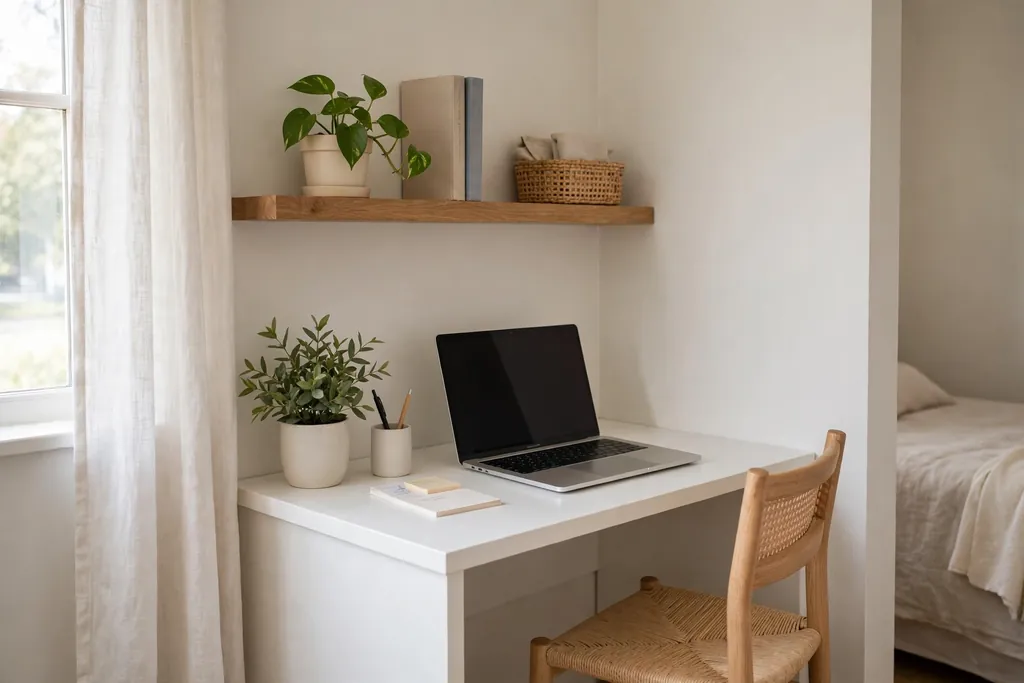
A desk nook built from a wall shelf and a simple tabletop turns a spare wall into a work spot without a large desk. The tabletop gives room for a laptop and a notebook, while the shelf above holds books and a small plant. This suits a bedroom that also needs a study corner, and a renter who wants a setup that can be taken apart later.
Keep the nook in the same palette as the bed, with one shared color linking the two areas. Use a chair that slides fully under the tabletop, so the walkway stays clear when the desk is not in use. Keep only daily work items on the surface, and move papers and chargers into a box on the shelf at the end of the day.
12. A Storage Bench at the Foot of the Bed
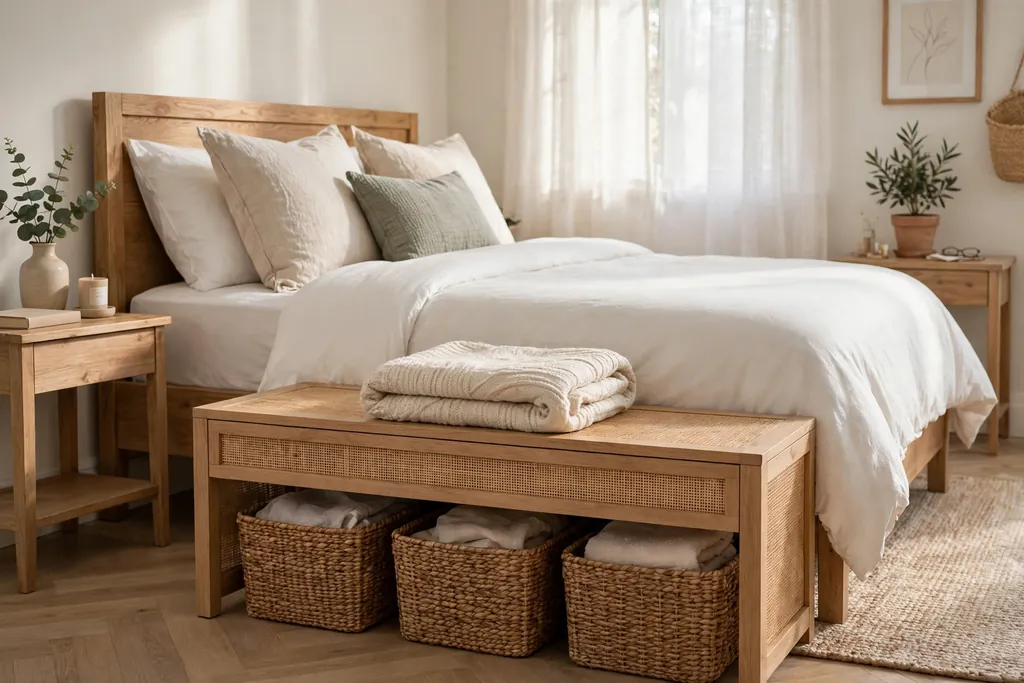
A storage bench at the foot of the bed gives you a seat for dressing, a place to lay out tomorrow’s clothes, and hidden storage for spare blankets inside. The bench also marks the end of the bed zone, which helps a large room feel planned. This suits a bedroom with clear walking space at the sides of the bed.
Store only light, soft items inside, such as throws and spare pillowcases, so the bench stays easy to open. Fold one throw over the bench top for a finished look, and keep the rest of the top clear. In a short room, a narrow bench or a single ottoman does the same job in less depth.
13. A Slim Rolling Cart Beside the Bed
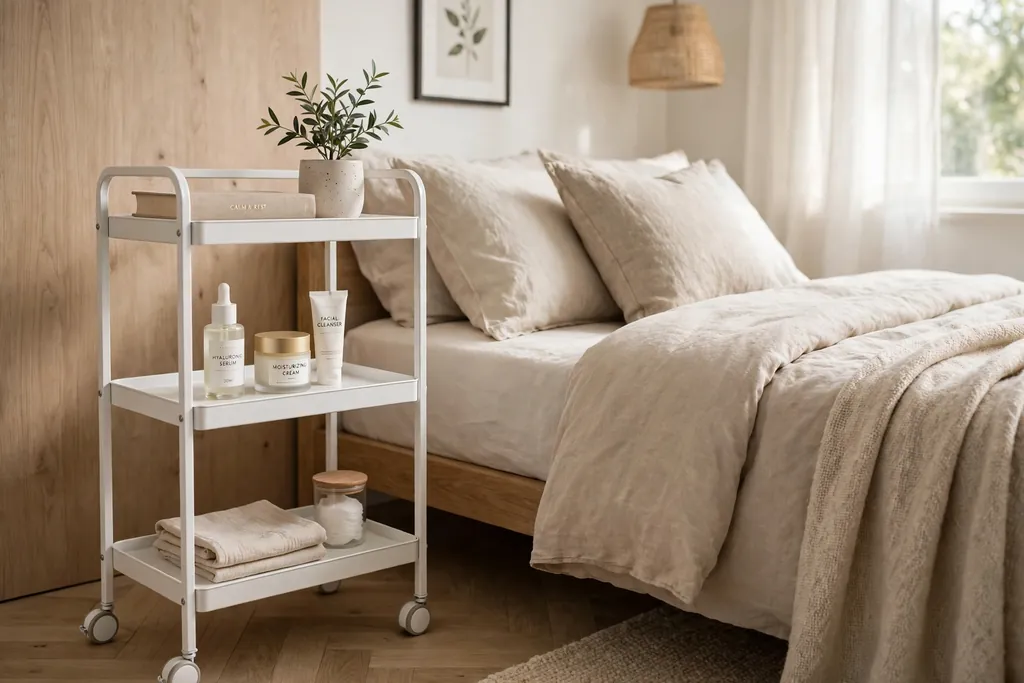
A slim rolling cart beside the bed fits a gap that a nightstand cannot fill, and it moves where you need it. Use the top tier for daily items, the middle for books or skincare, and the lowest for spare supplies. This suits a shared room, since one cart per person stops a shared nightstand from filling up, and it suits a bedside with no floor space for a table.
Choose a cart with a small footprint and wheels that lock, so it does not drift at night. Keep the cart to items for one routine, such as bedtime reading or morning skincare, rather than general overflow. Wipe the tiers weekly, since carts near a bed collect dust and hair products.
14. Matching Bedside Tables with One Drawer Each
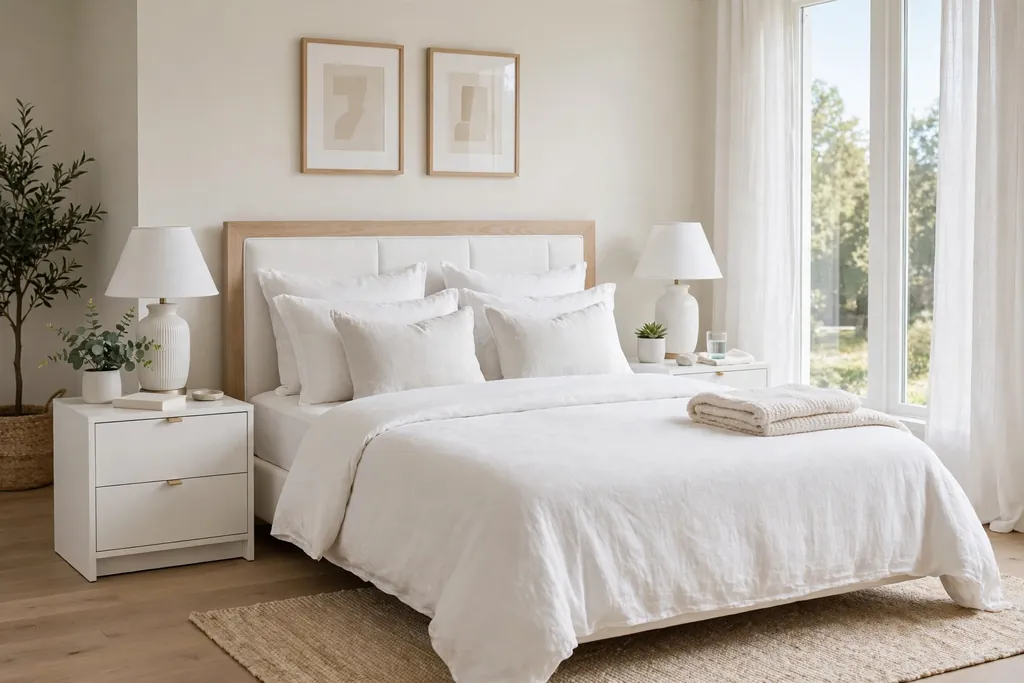
Matching bedside tables with one drawer each give a bedroom symmetry, which reads as calm at a glance. The drawer hides chargers, notebooks, and small personal items, while the top holds a lamp and little else. This suits a shared bedroom, since each side holds only what that person uses nightly.
Keep each table surface mostly clear, with a lamp, a book or a glass of water, and little else. If two people share the room, give each side the same table, so neither side becomes the dumping ground. When the two sides match in height, the eye rests on the bed, which is what a polished room needs.
15. A Curtain Front Open Wardrobe for Renters
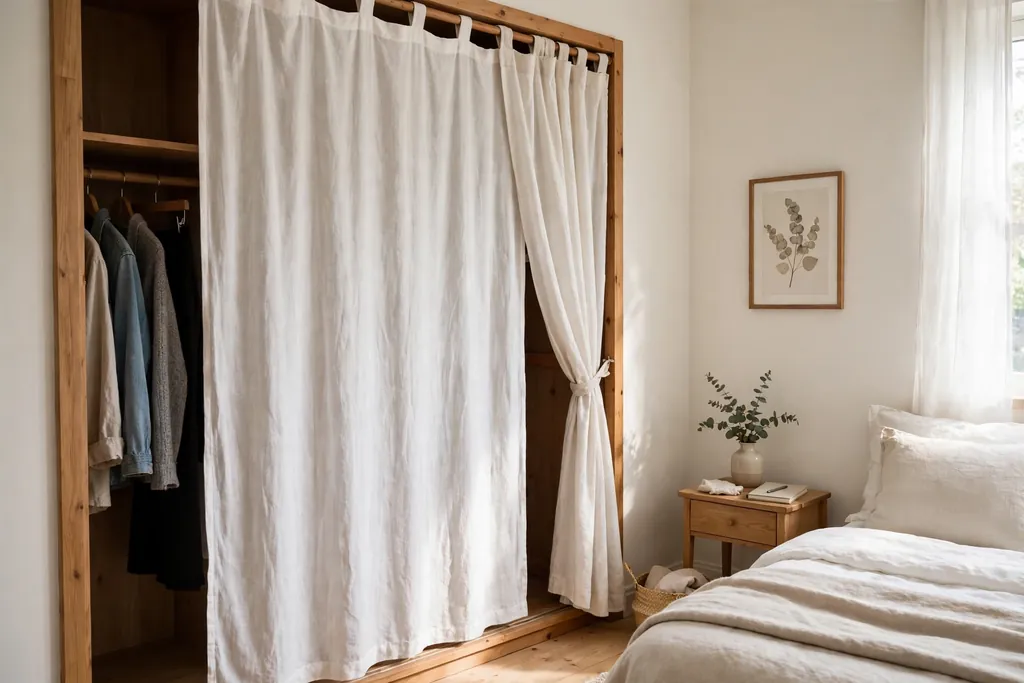
A freestanding open frame with a fabric curtain front gives renters wardrobe storage without drilling into walls. The frame gives hanging space and shelves, the curtain hides clutter and softens the look, and the whole unit can be taken apart and rebuilt in a new room. This suits a small bedroom, a spare room, or a first home.
Choose a heavy cotton or linen curtain that hangs straight and covers the frame fully, with a simple rod or track at the top. Keep the curtain clear of heaters, wash it when it collects dust, and store the original fittings if you swap any hardware in a rented room. Group clothes by type inside, so the curtain only needs to hide a tidy rail.
16. A Glass Front Cabinet for Books and Plants
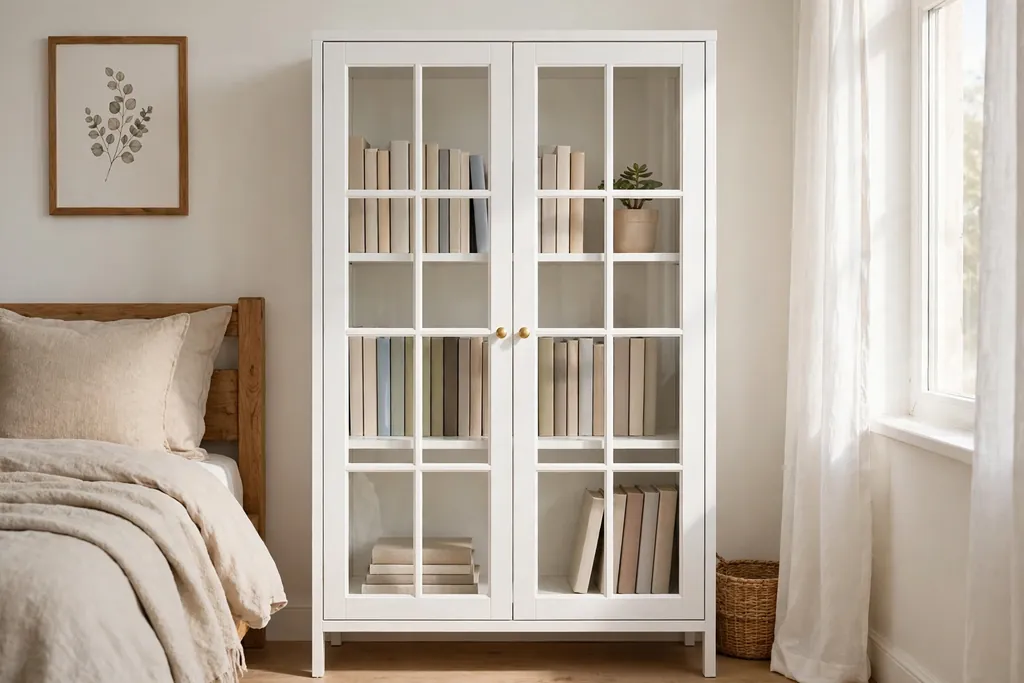
A glass front cabinet in the bedroom shows neat books, folded knitwear, and a small plant, while keeping dust off the shelves. The glass breaks up a wall of solid doors and gives the room a lighter feel, since the eye sees through the cabinet rather than stopping at a solid door. This suits a bedroom with a tidy display habit.
Keep what you show to a small set of matching or related pieces, and leave space on each shelf so the cabinet does not look crowded. Clear glass shows everything, so it suits tidy households, while ribbed or frosted glass softens the view and hides a less perfect shelf. Add a small light inside if you want the display to glow in the evening.
17. A Shoe Bench by the Bedroom Door
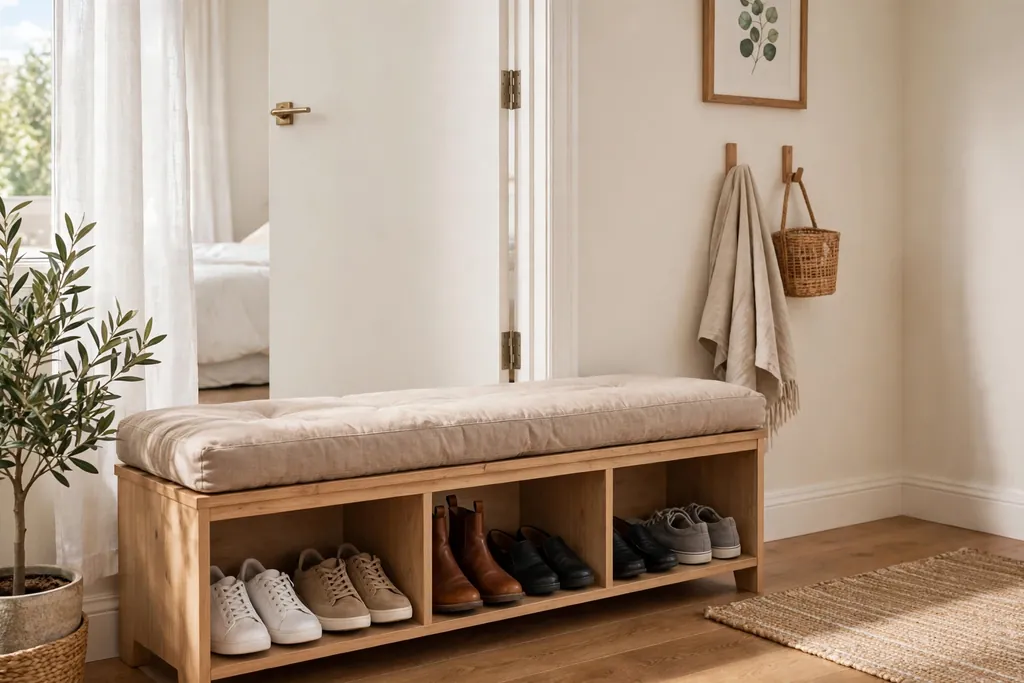
A shoe bench by the bedroom door gives shoes a home at the point where you take them off, so pairs stop piling up by the wall. The bench top gives a seat for putting shoes on, while the space below holds pairs in a row. This suits a bedroom with no entry hall storage, and a household where shoes tend to gather by the door.
Keep daily shoes at easy reach and occasion shoes higher or further back, so the bench stays useful. Wipe shoes before putting them away, so dirt does not build up below the bench. Limit the bench to pairs you wear often, and store the rest elsewhere, so one bench is enough and the doorway stays clear.
18. A Vanity Corner with a Small Table and Mirror
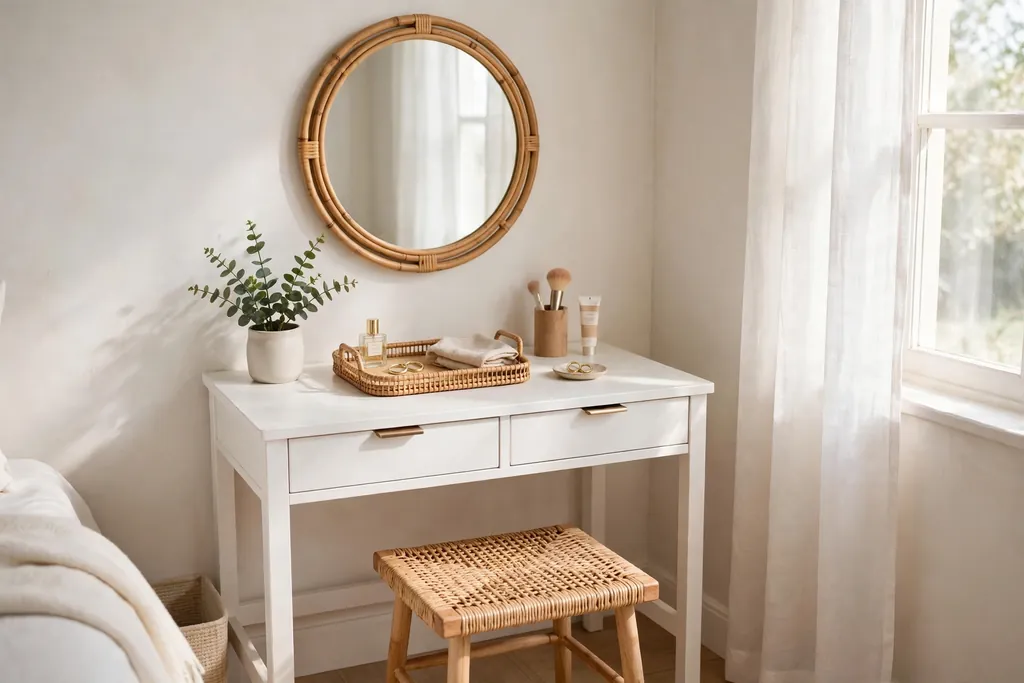
A vanity corner with a small table, a mirror, and a stool that tucks under gives you a getting ready spot that needs no extra furniture. The table sits in a corner or at the end of a wardrobe run, with a shallow drawer for daily items and a mirror above. This suits a bedroom with a long wall and no room for a separate dressing table.
Keep only daily items on the surface, with the rest in the drawer, and choose a stool that slides fully under the table so the walkway stays clear. Light the corner with a small lamp or a mirror light, so morning routines do not rely on bright overhead light alone. If you share the room, place the vanity at the end of the run, so one person can dress while the other still reaches the main wardrobe.
19. A Reading Corner with an Armchair and a Floor Lamp
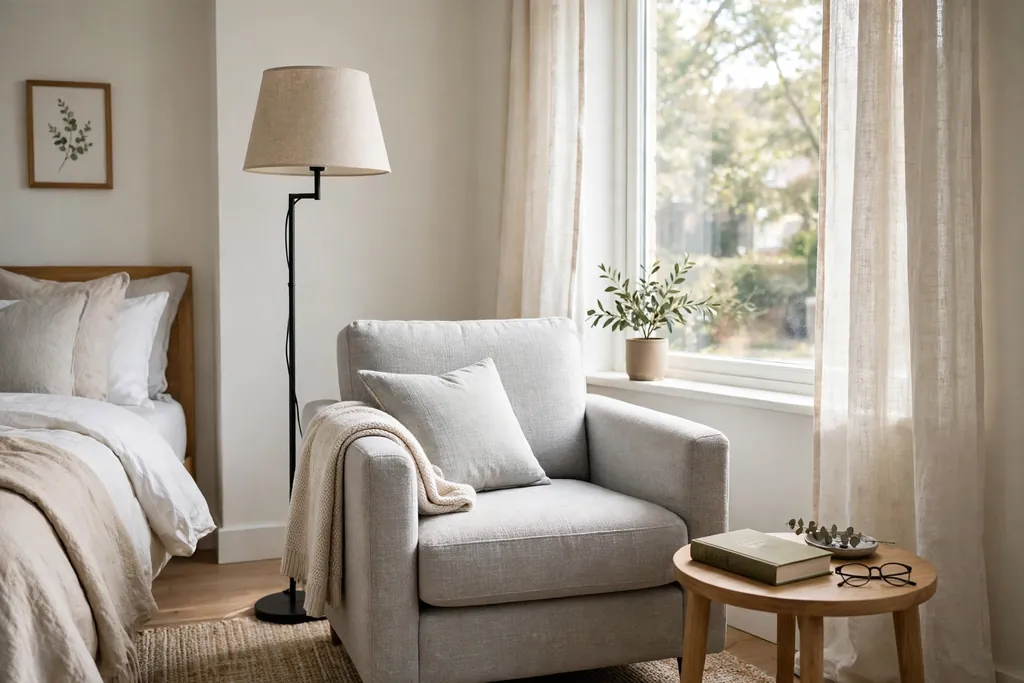
A reading corner with an armchair, a floor lamp, and a small side table gives the bedroom a second use that stays quiet. Angle the chair slightly toward the room, so it does not look pushed away, and keep it clear of clothes and bags, so it stays an invitation to sit. This suits a bedroom with a window corner that a bed or wardrobe leaves empty.
Keep the corner in the same palette as the bed, with one throw in a shared color to link the two areas. Choose a lamp that lights the book without shining across the room at night, and keep a clear path to the bed. A floor cushion beside a low shelf works in a tight room where a full chair will not fit.
20. Under Bed Rolling Boxes for Seasonal Bedding
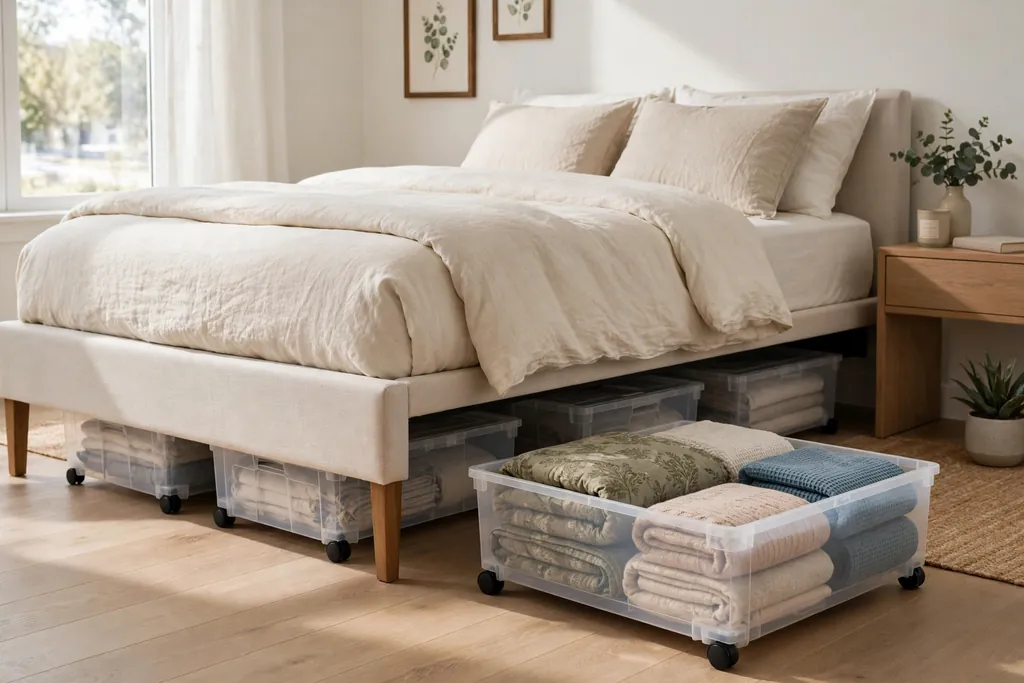
Under bed rolling boxes use the space under the bed for seasonal bedding, spare blankets, and off season clothes, without a new piece of furniture. The boxes roll out in one move, so you can swap bedding by season without emptying a wardrobe. This suits a room with a bed frame high enough for low boxes, and a household with limited closet space.
Measure the clearance under the bed frame first, and leave a small gap so boxes roll out without catching the rug. Sort boxes by season, and label the front of each one, so you can pull out one box instead of searching them all. Pull each box out fully once a season, and remove anything you have not used, so the boxes stay useful.
21. A Wall Rail with Hooks for Bags and Hats
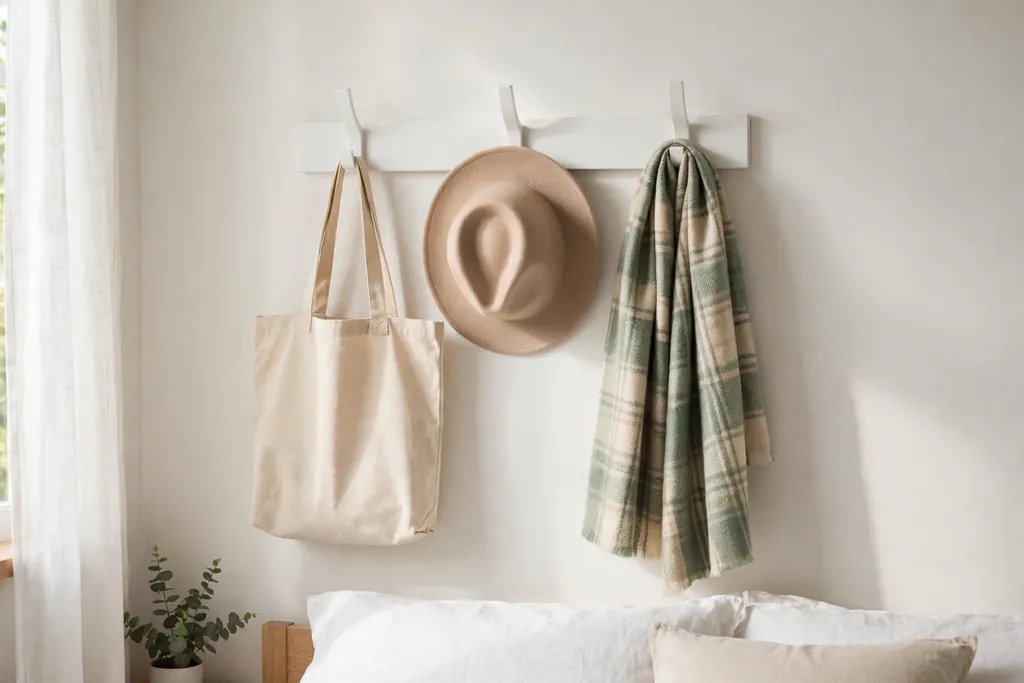
A wall rail with hooks beside the door or wardrobe turns a blank wall into storage for a bag, a hat, and tomorrow’s outfit, with no floor space used. The rail keeps daily items visible and easy to grab, which helps on busy mornings. This suits a small bedroom, a guest room, and a room where a chair has been doing the same job badly.
Limit the hooks to items you use daily, since an overloaded rail looks messy and is hard to use. Hang the heaviest bag lowest, and keep the top hook for a light scarf or hat. Choose hooks with a flat profile and fixings suited to your wall type, and keep the rail clear of heaters and door swings.
22. Woven Baskets on Open Shelves
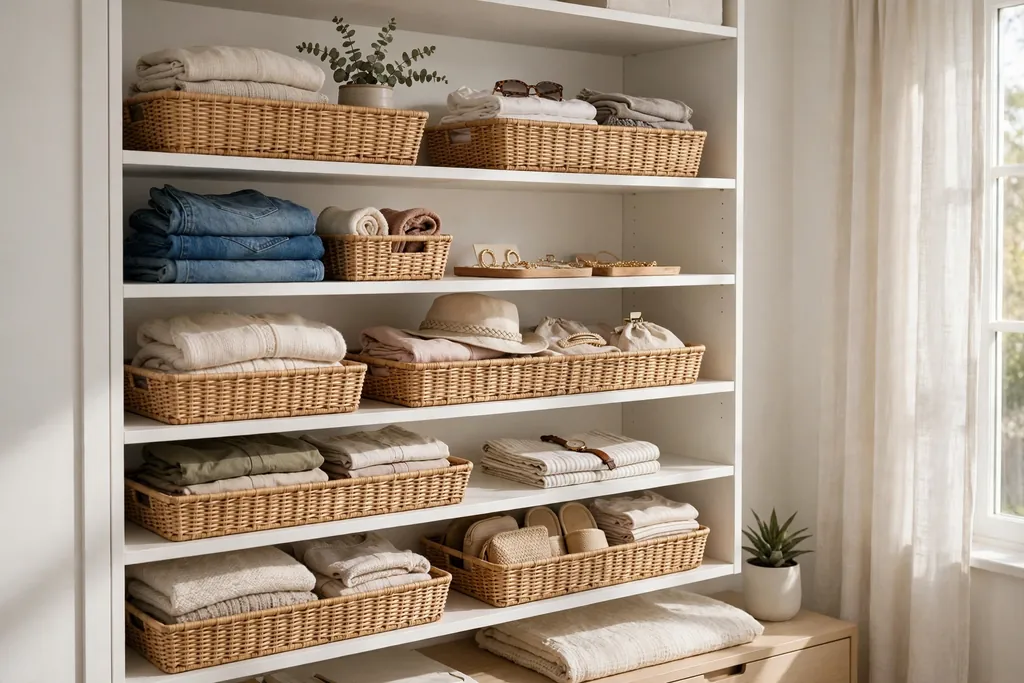
Woven baskets on open shelves turn open storage into closed storage without doors. Use baskets of one material, such as woven seagrass or cotton, in two sizes at most, and label the front of each one. This suits a bedroom that needs soft texture as well as order, since baskets add warmth that plain white boxes do not.
Sort by type, such as scarves in one, belts in another, and spare chargers in a third, so you can pull out one basket instead of searching a shelf. Keep baskets light enough to lift with one hand, and store heavy books elsewhere. Replace a basket when the weave frays, since a damaged basket snags clothes.
23. A Black and White Palette with Black Frame Accents
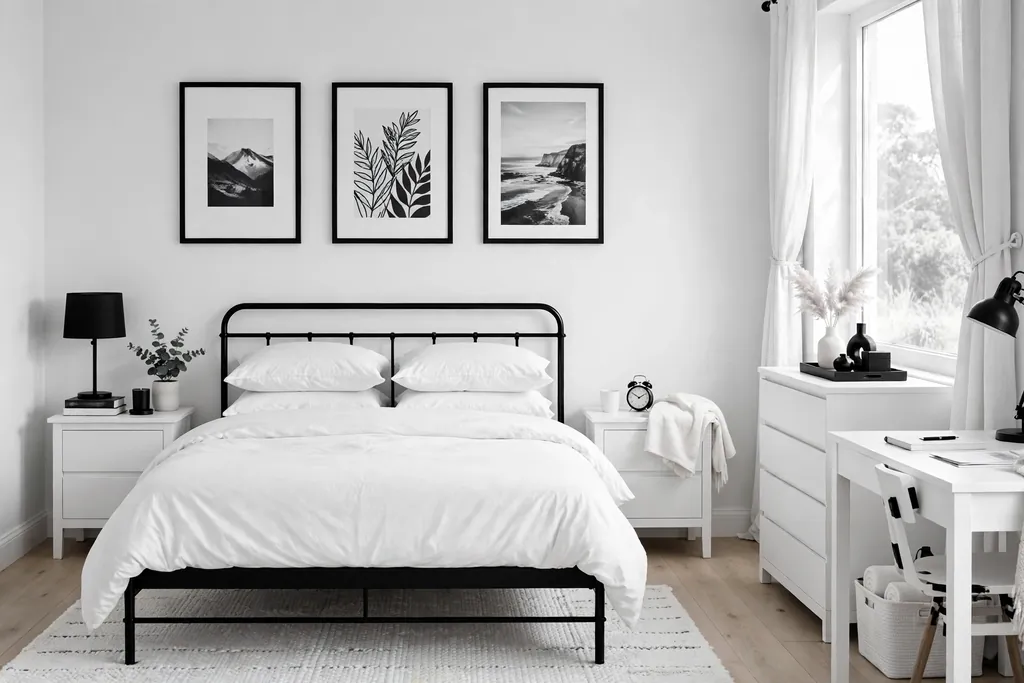
A black and white palette gives a bedroom a crisp, polished edge without a strong color. White bedding, white furniture, and pale walls form the calm base, while black frames, a black bed frame, and black lamp bases add definition. This suits a bedroom with plain walls, since the contrast does the decorating work.
Repeat black in two or three small places, so one black lamp alone does not look random, while a lamp plus a matching frame or tray looks planned. Keep the finish consistent across the black pieces, and pair black with wood, linen, and cream, so the room stays soft rather than hard. Wipe black surfaces with a soft cloth, since dust shows more on dark finishes.
24. A Soft Sage Accent Wall with White Furniture
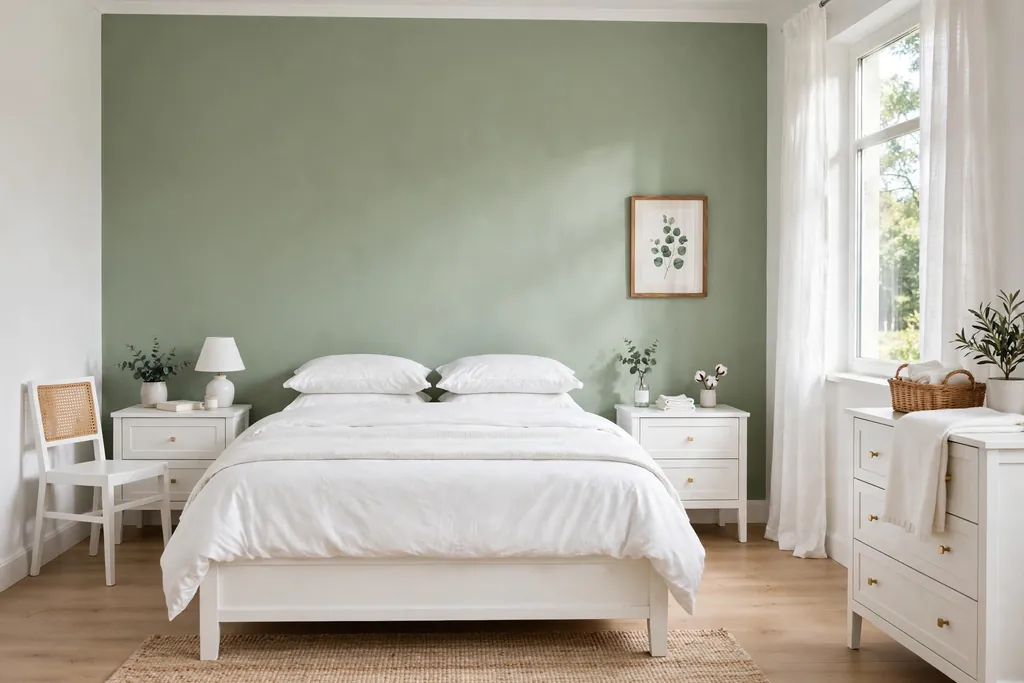
A soft sage accent wall behind the bed adds gentle color to a white bedroom without making the room feel busy. The muted green links well to white furniture, light wood, and linen bedding, and it gives the bed wall a clear focus. This suits a bedroom with plain white wardrobes, since the wall adds interest that the furniture does not need to supply.
Test paint samples on the bed wall in daylight and evening light, since a shade can look darker on a large flat surface. Keep the other walls plain, so the sage wall stays the focus, and repeat sage once more in a cushion or throw. Use paint suited to bedroom walls, and allow full drying time between coats.
25. Layered Warm Light Instead of One Bright Ceiling Light
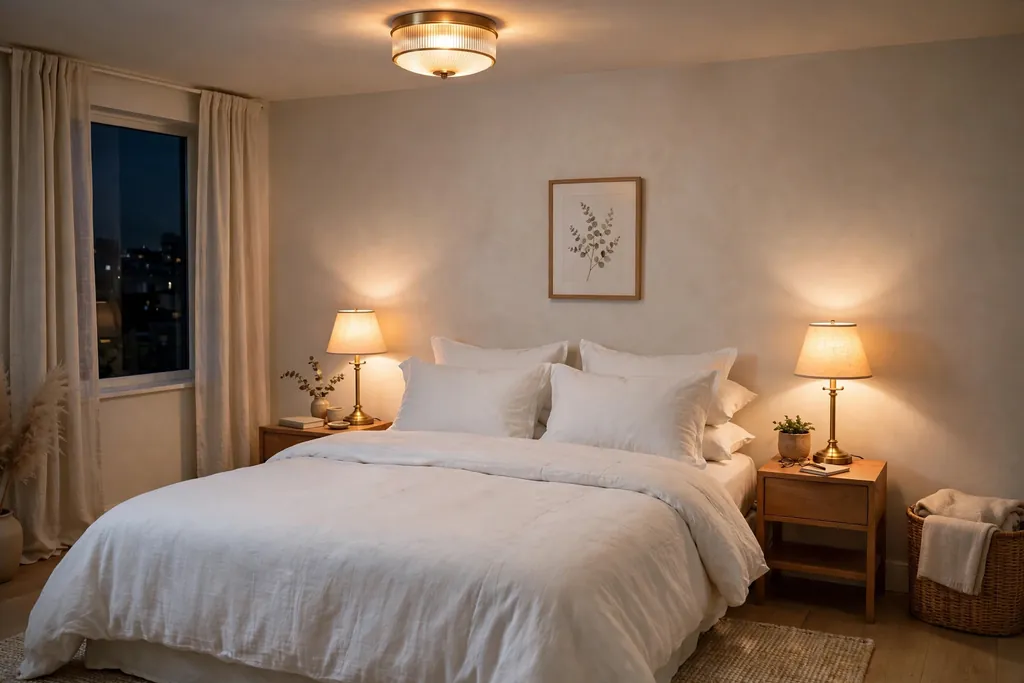
Layered warm light makes a bedroom feel settled in the evening, with bedside lamps for reading, a wall light where you dress, and the ceiling light kept for cleaning only. Low, warm light flatters bedding and wood, softens shadows, and helps the room feel calm before sleep. This suits almost any bedroom, and it costs little beyond a second lamp.
Put switches or dimmers where you can reach them from the bed, so you do not cross a dark room at night. Keep bulb color consistent across the room, since mixed warm and cool bulbs make a calm palette look uneven. If space is tight, a plug in wall light frees the nightstand and still gives the same layered effect.
26. A Large Rug to Anchor the Bed
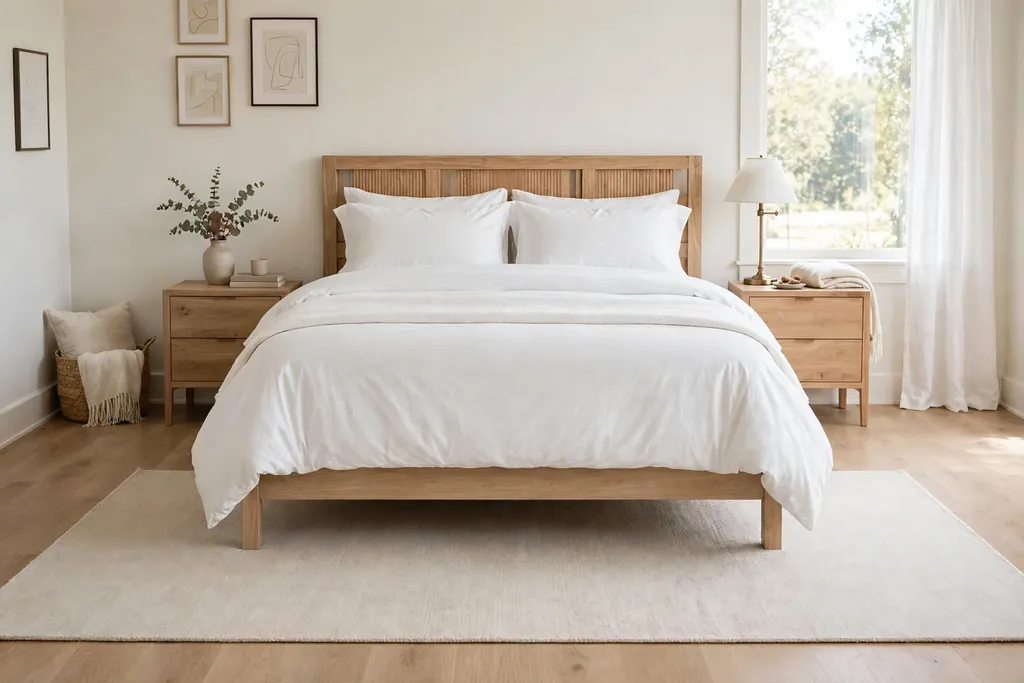
A large rug under the lower two thirds of the bed, extending out on both sides, links the bed to the rest of the room and gives a soft first step in the morning. A rug that is too small makes the bed look as if it is floating, so measure for a clear border on each side before you buy. This suits a bedroom with hard floors, and a room where the bed needs grounding.
Choose a low pile rug that doors and drawers can clear, and use a rug pad on smooth floors to reduce slipping. Keep the rug in a plain tone or a quiet pattern that shares a color with the bedding, so it grounds the room without competing with it. Vacuum the rug weekly, since bedroom rugs collect lint and dust fast.
27. Floor Length White Curtains Hung High and Wide
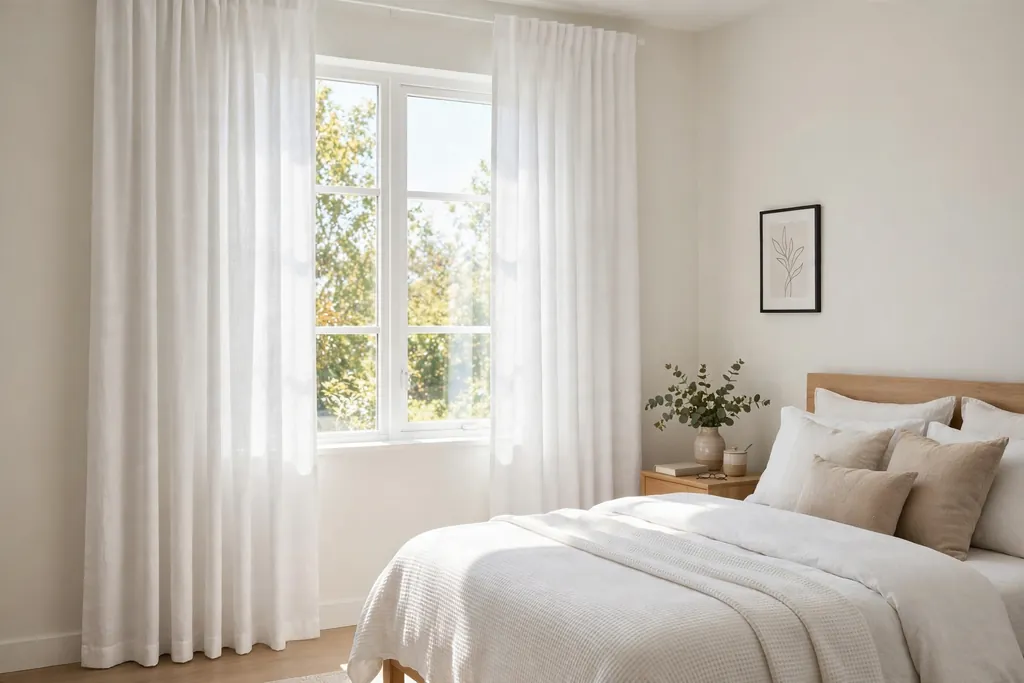
Floor length white curtains hung high, near the ceiling, and wide, beyond the window frame, make a bedroom window look larger and the room feel taller. Panels that just brush the floor give a finished edge, while panels that pool on the floor collect dust. This suits a bedroom with a plain window wall that needs softness.
Use a sheer panel for daytime privacy and a heavier panel you can close at night, if your window needs both. Keep the curtain fabric clear of radiators and heaters, and open the panels fully during the day so the room gets full daylight. For more window ideas in the same calm style, see these bedroom curtain ideas.
28. Framed Prints in Matching Frames
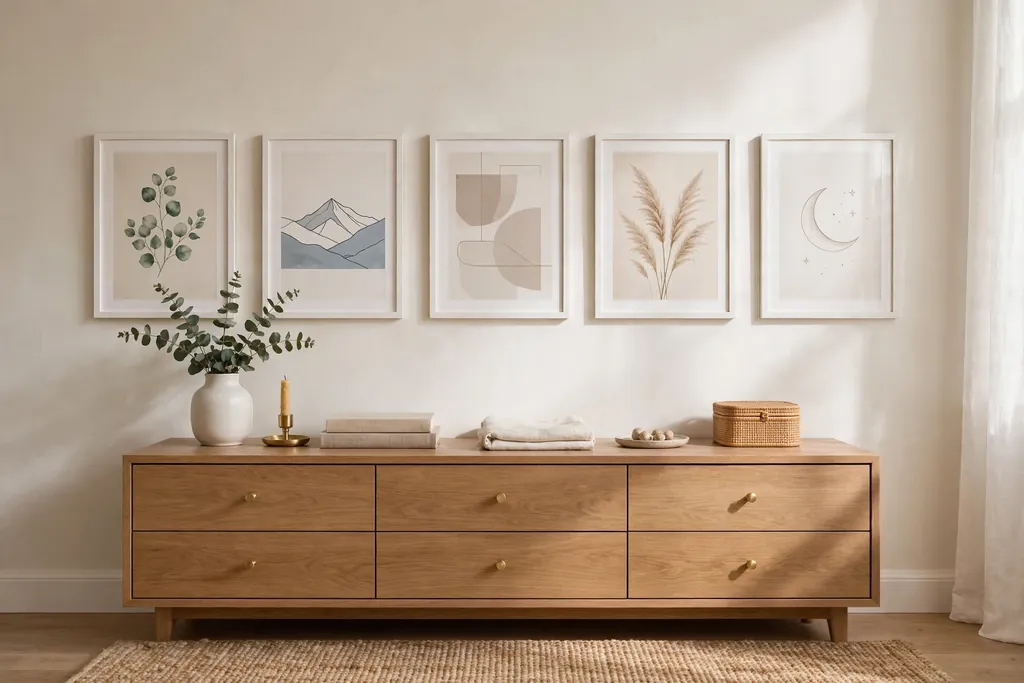
Framed prints in matching frames make different images look like a set, which is calmer than a mix of frame styles and sizes across every wall. Choose three to five pieces, print them in similar sizes, and hang them in a row at eye level on one wall. This suits a bedroom with a plain dresser wall or a long wall above a bench.
Hang the group centered on the bed, a dresser, or a chair, rather than scattered around the room, and leave breathing room between frames. Use secure fixings suited to the wall and the weight, and avoid hanging heavy frames directly above pillows where fixings could fail. If you prefer privacy, use landscapes or abstract prints in the room palette instead of portraits.
29. A Small Bedroom Layout with the Bed to the Wall and Storage Up High
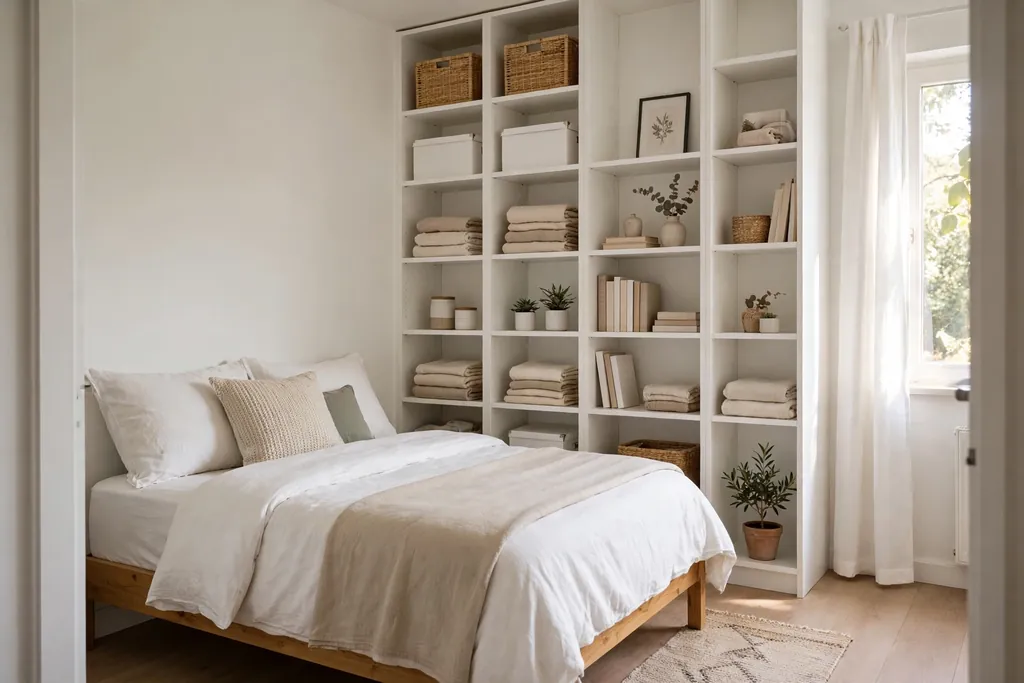
A small bedroom layout with the bed pushed to one wall and storage running up high frees floor space in the middle of the room. Tall shelves, a wardrobe wall, and wall hooks use height that a low dresser leaves empty, while the bed against the wall leaves a clear path to the door and window. This suits a box room, a guest room, and a first home.
Keep daily items at easy reach and seasonal items higher, so you actually use the high storage instead of piling items on the floor. Use a small step stool nearby if the top shelf is high, and keep the middle of the room clear of extra furniture. Review the contents each season, and move out anything you did not use, so the small room stays useful.
30. A Polished Finishing Layer of Tray, Throw, and Plant
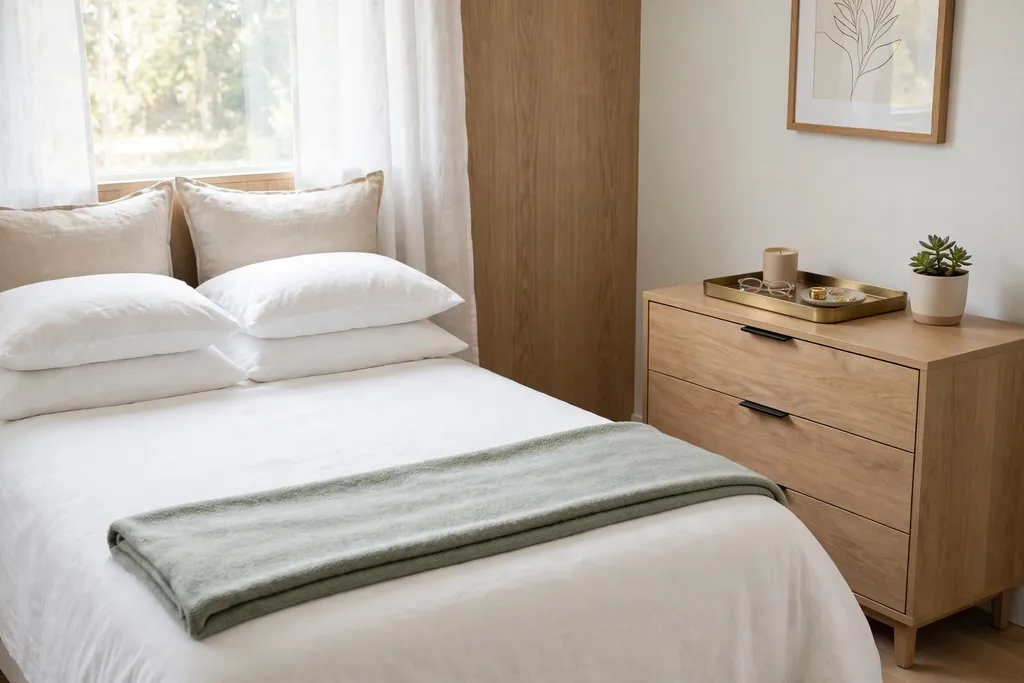
A polished finishing layer costs little and ties the room together: one tray on the dresser, one folded throw on the bed or bench, one small plant, and surfaces that stay mostly clear. The tray groups small items so the dresser reads as tidy rather than empty, while the throw and plant add softness and life. This suits a bedroom that already has storage sorted, but still feels unfinished.
Limit the tray to three or four items, such as a small vase, a candle holder, and a folded cloth, so it stays a styling choice rather than storage. Lift the whole tray aside in one move when you need the surface for dressing, and wipe it weekly. If a surface starts to collect clutter again, remove one item at a time until the room feels calm.
Conclusion
A polished Ikea style bedroom comes down to a few calm choices repeated well. Start with white wardrobes or a light wood bed, add one storage solution for clothes and one for bedding, and keep surfaces mostly clear so the details you chose can be seen. Small moves, such as a floating shelf, a rolling cart, or a tray on the dresser, let you test the look before a larger change, and they suit renters as well as owners. For a cooler, more refined balance to the white and wood here, see these elegant bedroom ideas and these bedroom wardrobe ideas for wardrobes, bedding, and finishing touches that sit well beside calm neutrals.
Save this list for your next free hour in the bedroom, and work through it in order: wardrobe and bed first, then bedside and dresser storage, then one work or reading corner, and finally the small tray, throw, and plant touches.
FAQs
What makes an Ikea style bedroom look polished rather than plain?
Keep the palette calm, repeat one finish across furniture, and keep surfaces mostly clear. White wardrobes, a light wood bed, plain linen bedding, and closed storage for clutter give the room a planned look, while one soft accent, such as sage or black frames, adds definition. Polished comes from repetition and tidiness, not from filling every surface.
How do I start an Ikea style bedroom on a small budget?
Start with the changes that show most. Clear the surfaces, add a tray to the dresser, swap in white linen bedding, and use baskets on open shelves to hide clutter. A rolling cart, a wall rail with hooks, and a floating shelf are low cost changes that fix daily frustration. Save larger changes, such as a wardrobe wall or a platform bed, for a later stage.
What storage works best in a small Ikea style bedroom?
Use height and the space under the bed first. Tall narrow shelves, a wardrobe wall, wall hooks, and under bed boxes use space that a low dresser leaves empty. Keep daily clothes at eye level, shoes low, and seasonal items high, so you do not need to search the whole room each morning. Review the contents each season, so the storage stays useful.
Can I mix Ikea style furniture with pieces I already own?
Yes, if you link the pieces with color and finish. Keep the large pieces in white or light wood, repeat one metal finish on handles and lamps, and use bedding and a rug in shared tones to tie old and new pieces together. A matching pair of bedside tables or matching frames can also make a mixed room look planned.
How do I keep an open wardrobe or open shelves tidy?
Limit open storage to clothes and items you use each week, and store the rest in closed boxes or another wardrobe. Hang clothes facing the same way, group them by type and color, and leave space between hangers. Use matching baskets on open shelves, label each one, and keep one shelf partly empty, so new items have a place instead of landing on a chair.
What colors suit a polished Ikea style bedroom?
White, warm white, light wood, soft grey, and one muted accent, such as sage, dusty blue, or black, work best, because they let bedding, wood, and light stand out without competing with them. Keep the main palette to two or three colors, plus one metal finish and one wood tone, and test large samples in daylight and evening light before a large change.