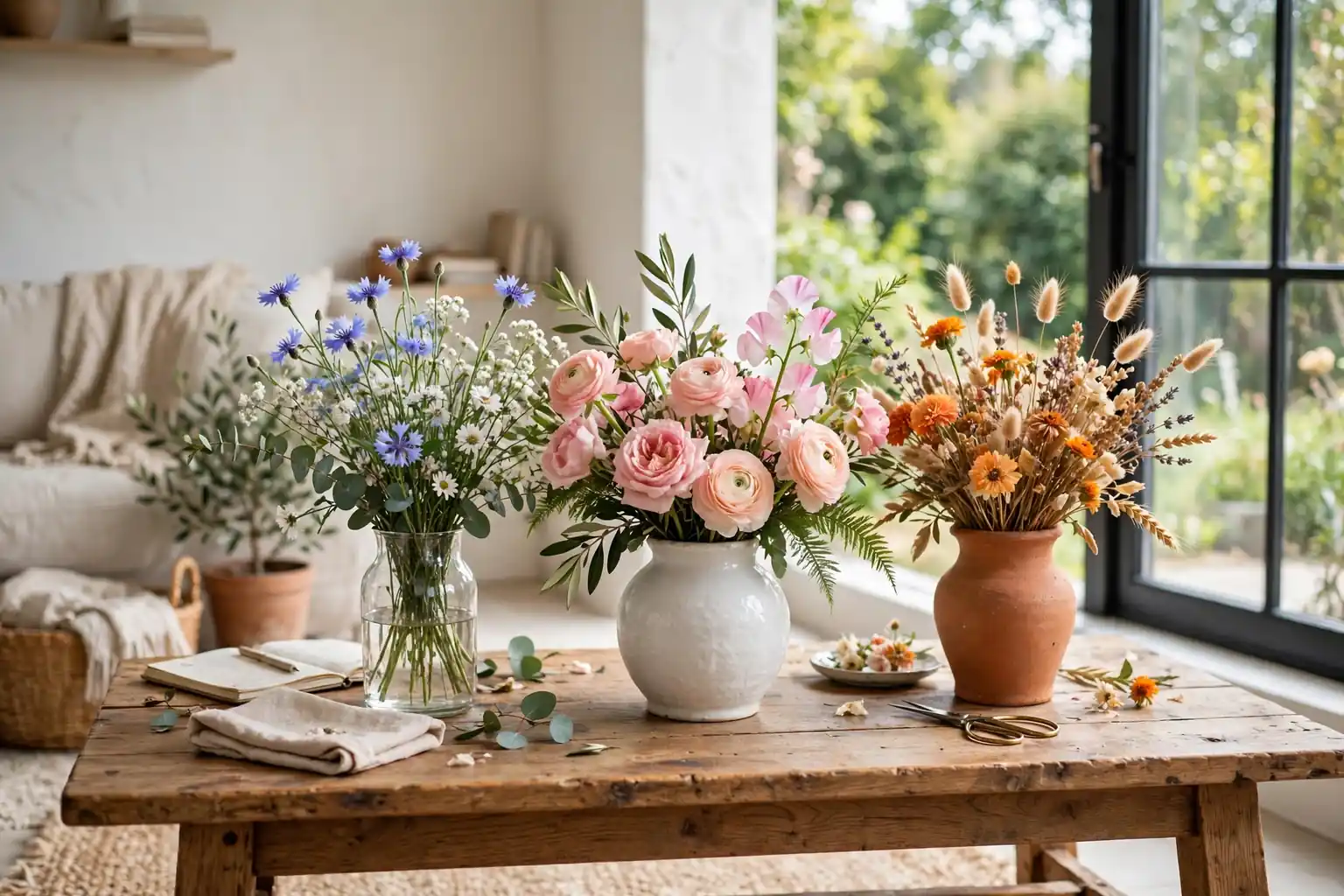
Choose a vase by matching its shape, size, and mouth to the flowers you plan to use: tall narrow vases suit long stems, low wide bowls suit short full arrangements, and a mouth that holds stems snug keeps the shape steady. Pick a sturdy, easy to clean material and a color that supports the blooms, not one that fights them.
Most vase mistakes come from choosing the container before the flowers. A tall bunch in a short wide bowl falls outward, a short bunch in a tall narrow vase disappears inside it, and a heavy bunch in a light vase tips at the slightest bump. Start with the stems in hand, look at their length, weight, and spread, and then pick the vase that holds that shape with little fuss. For arrangement ideas to pair with your vase choice, see these fall flower arrangements and these Christmas vase styling ideas.
Key Takeaways
- Start with the flowers, not the vase: length, weight, and spread decide the shape and size you need.
- Tall narrow vases suit long stems, low wide bowls suit short full arrangements, and bud vases suit single stems.
- A mouth that holds stems snug keeps the shape steady; a mouth that is too wide lets stems fall apart.
- Heavy or tall arrangements need a heavy, stable base, and table arrangements need to stay low enough to see across.
- Clear glass shows stems and water, ceramic hides them, and each choice changes the look of the same bouquet.
- A quiet vase color lets bold flowers lead, while a colored vase works best with a simple, limited palette.
- Keep a small set of core vases, one tall, one medium, one low bowl, and a few bud vases, and most bouquets will have a home.
Materials and Supplies
- A tape measure, to check vase height against the spot where the arrangement will sit
- The flowers you plan to arrange, or a note of their stem length and bunch width
- The vases you already own, gathered in one place so you can compare shapes side by side
- A small tray or mat, to protect tables under vases that may drip or sweat
- Clean water and a pair of sharp scissors or stem snips, for trimming stems before arranging
- A soft cloth, for wiping glass and ceramic vases before and after use
- A notebook or phone note, to record which vase worked for which bouquet for next time
1. Start With the Arrangement, Not the Vase
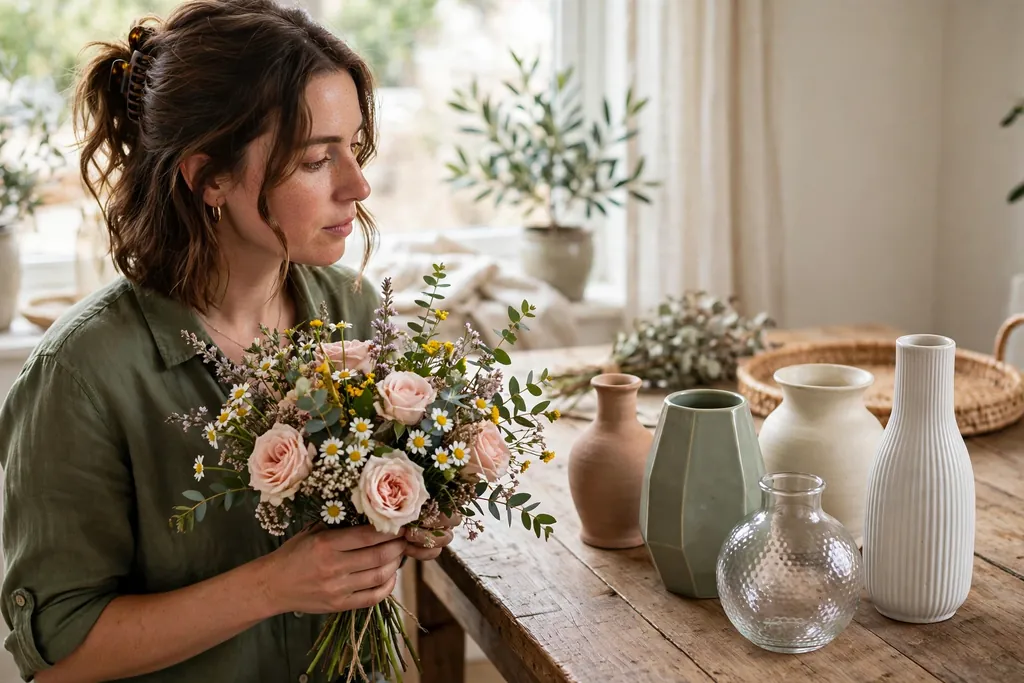
Decide what the arrangement should do before you reach for a vase. A dining table centerpiece needs to stay low and leave room for plates and glasses. A console display can go taller and fuller, since no one sits across from it. A single stem on a bedside table needs only a small bud vase, not a large floor vase.
Lay the bunch on a table and look at it as a group. Note how long the stems are, how wide the bunch spreads when held loosely, and where the weight sits. Top heavy bunches with large blooms need more support at the base than light, airy bunches with small blooms. This quick look tells you more than a vase label ever will.
If you buy flowers first and choose the vase at home, you can test freely. Try the bunch in two or three vases you own, step back, and see which one holds the shape with the least adjusting. The vase that needs the fewest stems moved around is usually the right one.
2. Match Vase Shape to Flower Type
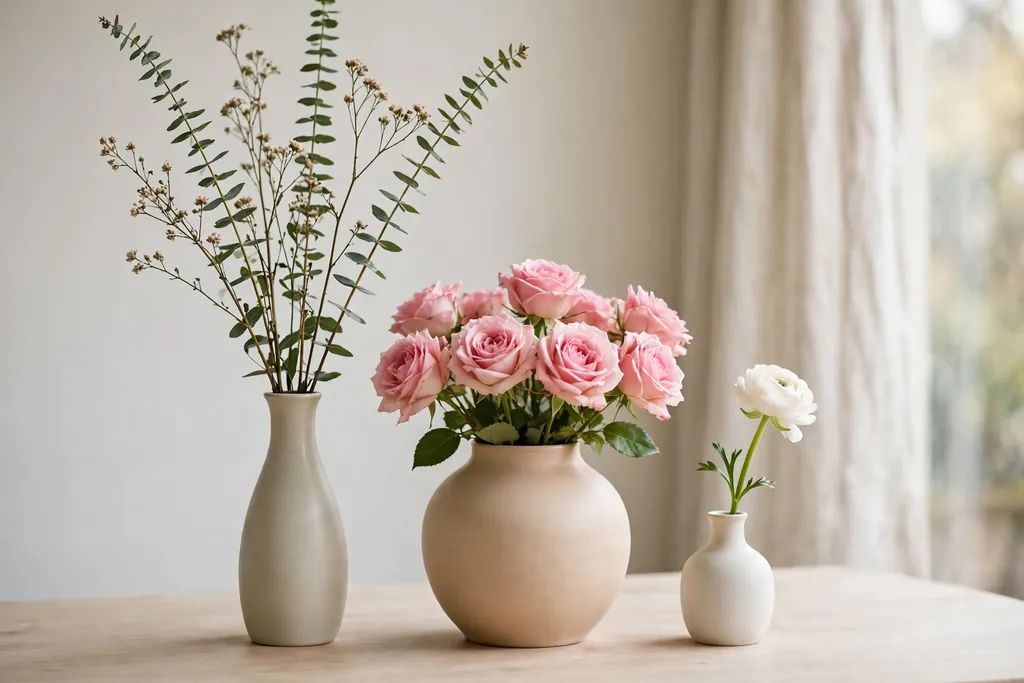
Vase shape guides how stems sit, so match it to the flower type. Long stemmed flowers such as lilies, sunflowers, and tall branches need a tall vase that supports a good length of stem, so the blooms rest above the rim without flopping. A vase with a narrower neck helps here, since it gathers tall stems into one group.
Round, full flowers such as peonies, roses, and dahlias suit a vase with a rounded body and a mouth wide enough to let the blooms open out. A straight cylinder also works for these, since it gives the bunch room to spread while keeping the stems upright. For a mixed bouquet with varied stem lengths, a vase that narrows slightly at the neck holds the mix together while letting shorter blooms sit lower.
Single stems and small posies suit bud vases. A bud vase holds one stem upright and lets a single bloom carry a small spot such as a windowsill, a bathroom shelf, or a place setting. Short, trailing stems and compact clusters suit a low bowl, where the flowers can spread sideways instead of standing tall.
3. Get the Size and Proportion Right
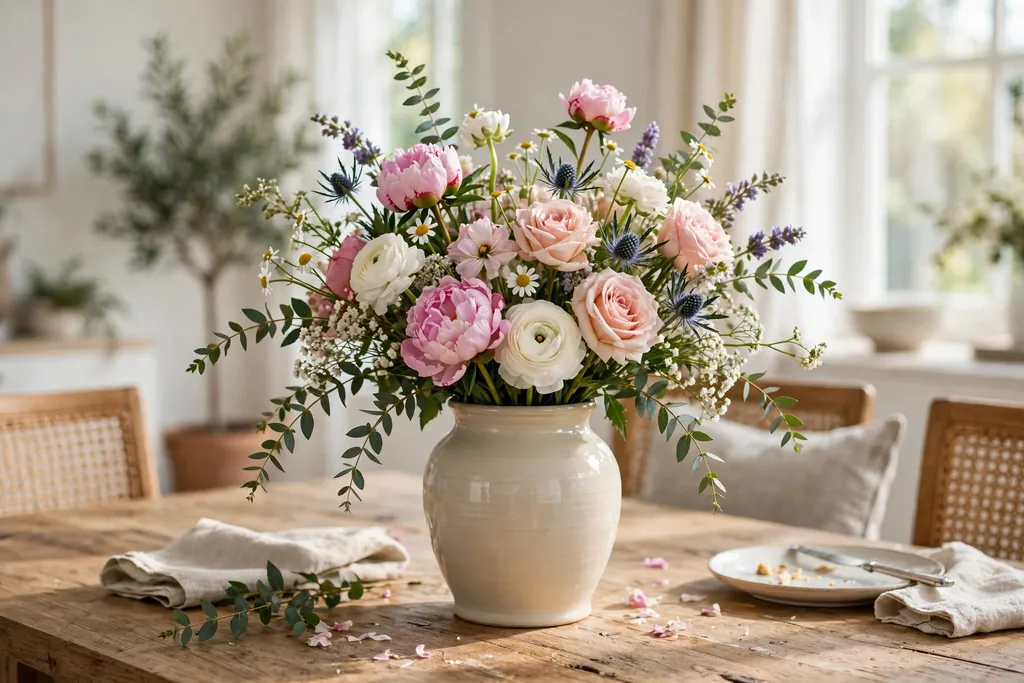
Proportion is what makes an arrangement look settled rather than crowded or lost. As a starting point, let the flowers rise clearly above the rim, with enough stem inside the vase to keep the bunch steady. If the blooms barely clear the rim, the vase looks too tall for the bunch. If only a short length of stem sits inside a tall vase, the bunch can lean and tip.
Think about the vase and the flowers as one shape, not two separate parts. A wide bunch needs a vase with enough body to balance it, while a slim bunch suits a slimmer vase. A very large vase with a small bunch looks empty, even if the flowers themselves are lovely, and a small vase with a large bunch looks strained.
Test proportion by eye before you commit. Hold the bunch beside the vase, then set it in and step back to the distance from which the arrangement will usually be seen. A table arrangement is seen from a seat nearby, while a console arrangement is seen from across the room, and each view can change which size reads best.
4. Choose a Mouth Width That Supports the Stems
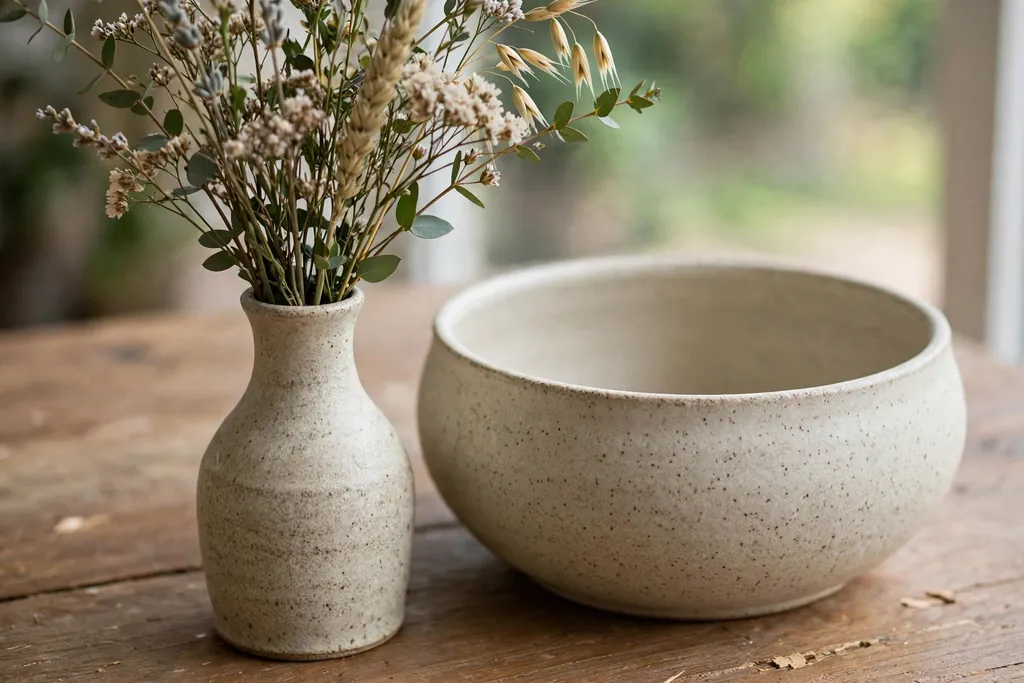
The mouth of the vase does much of the arranging work. A mouth that is close to the width of the bunch holds stems snug and keeps the shape you set. A mouth much wider than the bunch lets stems fall outward until the arrangement looks flat and scattered, unless you add enough filler to fill the gap.
A narrow mouth suits a small bunch, a few tall stems, or a single type of flower that you want to keep upright in a tight group. A medium mouth suits a standard mixed bouquet, since it gives stems room to angle slightly while still holding the group together. A wide mouth suits a large, full arrangement built in a bowl or a wide cylinder, where many stems fill the opening on their own.
If a favorite vase has a mouth that is too wide for the bunch, you can still use it. Add more filler stems, use a smaller inner jar of water inside the vase to gather the stems, or choose a fuller bunch for that vase and save the smaller bunch for a narrower one. The aim is a bunch that stays put without constant adjusting.
5. Pick a Material for the Room and the Stems
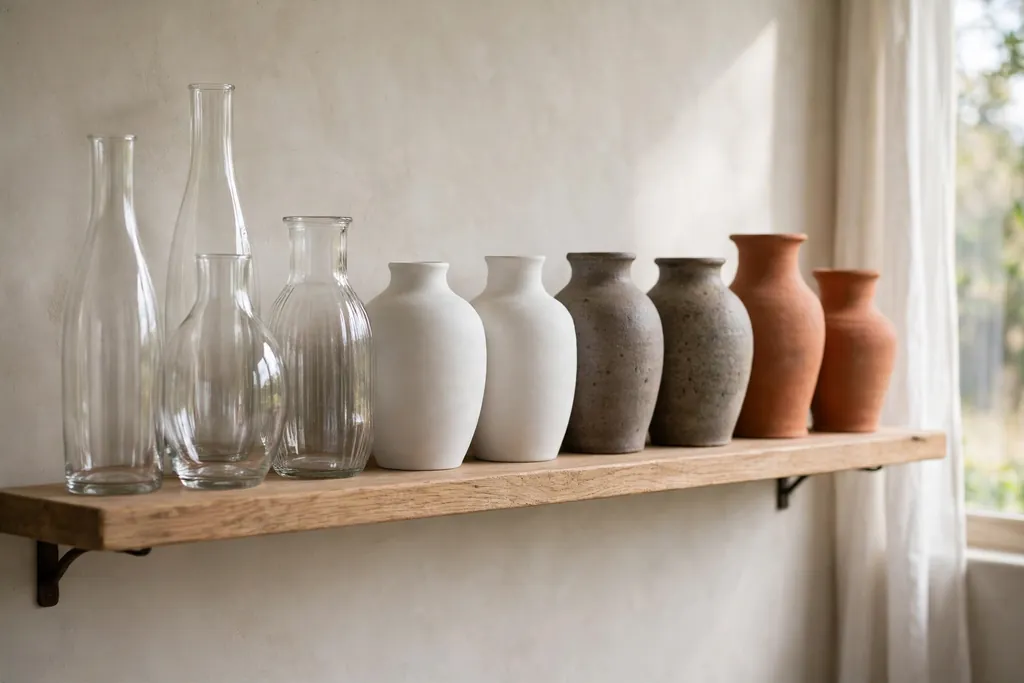
Material changes both the look and the daily care of a vase. Clear glass shows the stems and the water, which suits a fresh, simple bouquet and a modern room, but it also shows cloudy water and stem ends, so it needs water changes and wiping to stay neat. Colored glass softens the view of stems while still letting light through, and it suits rooms where a clear vase would look too plain.
Ceramic and stoneware hide stems and water completely, which suits a full bouquet where the blooms should lead and the mechanics should stay out of sight. These materials also add weight, which helps a tall or heavy arrangement stay stable. They suit farmhouse, rustic, and traditional rooms, and they pair well with textured table linens and wood tables.
Metal, terracotta, and wooden containers each bring their own care needs. Metal can mark a table when wet, so it needs a tray or mat underneath. Terracotta is porous, so fresh stems usually need a jar or liner inside it. Wooden boxes and baskets need a waterproof liner as well. Whatever material you choose, check that it holds water safely or can hold a jar inside, and set it on a mat if the table marks easily.
6. Use Color to Support or Quiet the Flowers
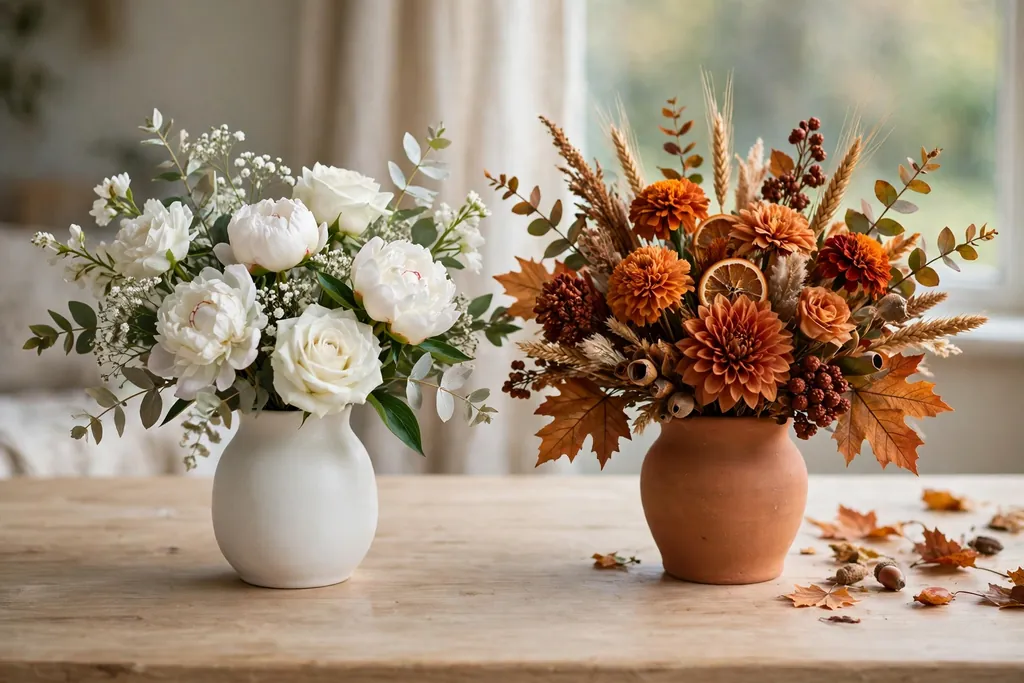
Vase color sets the tone for the whole arrangement. A quiet color such as clear glass, white, cream, or pale gray lets the flowers lead, and it suits a mixed bouquet with several colors. When the flowers are the star, a quiet vase keeps the eye on the blooms instead of splitting attention.
A colored vase works best when the flowers are simple. A green vase with white blooms, a blue vase with yellow blooms, or a terracotta vase with warm autumn blooms each use one clear color link between vase and flowers. Keep the rest of the palette limited when the vase is colored, so the display reads as one plan rather than a mix of competing colors.
Also consider the room. A vase that matches the wall color or the tableware blends in and lets the flowers stand out, while a vase in a strong accent color becomes part of the room decor even when it holds only greenery. If you are unsure, start with a neutral vase, then add a colored one once you know which flower colors you buy most often.
7. Match the Vase to the Arrangement Style
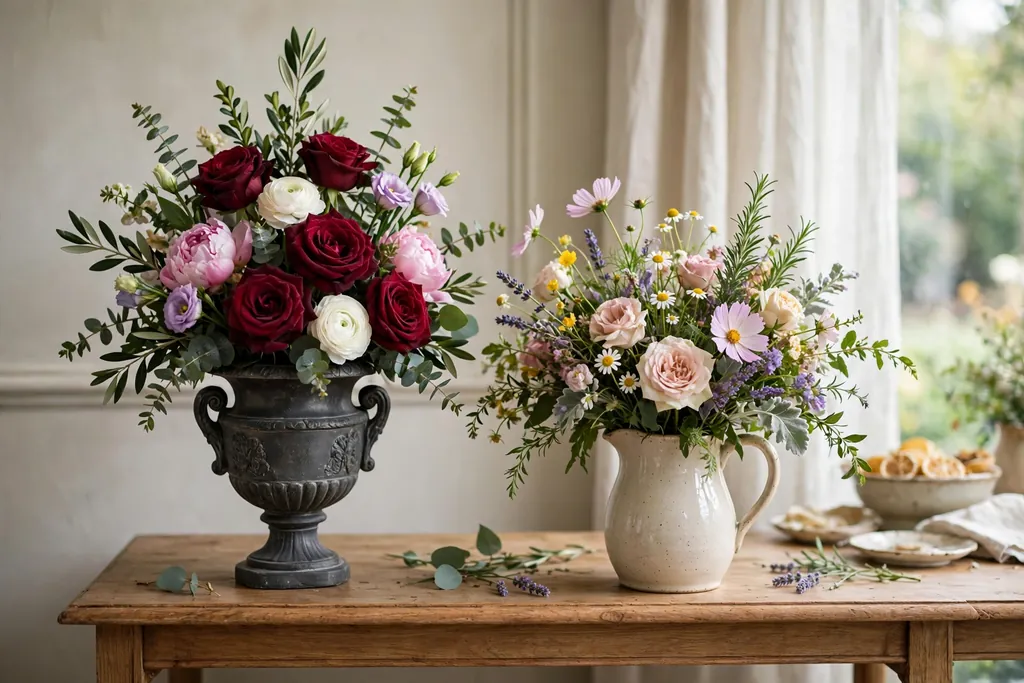
Different arrangement styles ask for different vases. A formal arrangement, with even heights and a clear focal bloom, suits a classic urn, a footed bowl, or a straight cylinder in a quiet color. The vase should look tidy and balanced, so it supports the formal shape rather than pulling attention away from it.
A loose, garden style arrangement, with varied stem lengths and a relaxed outline, suits a pitcher, a crock, a mason jar, or a ceramic vase with a slightly uneven finish. These containers forgive a less exact shape and let stems lean a little, which suits the informal feel. A minimal arrangement, with only a few stems and clear space between them, suits a plain cylinder, a slim bud vase, or a simple ceramic vase with no pattern.
A seasonal arrangement can use the vase to carry part of the theme. A rustic crock suits autumn stems, a bright ceramic vase suits spring blooms, and a metallic or frosted glass vase suits winter greenery. For seasonal table ideas, see these Thanksgiving flower arrangements. Keep the seasonal link light, though, so the vase can still serve other seasons with different stems.
8. Fit the Vase to the Spot
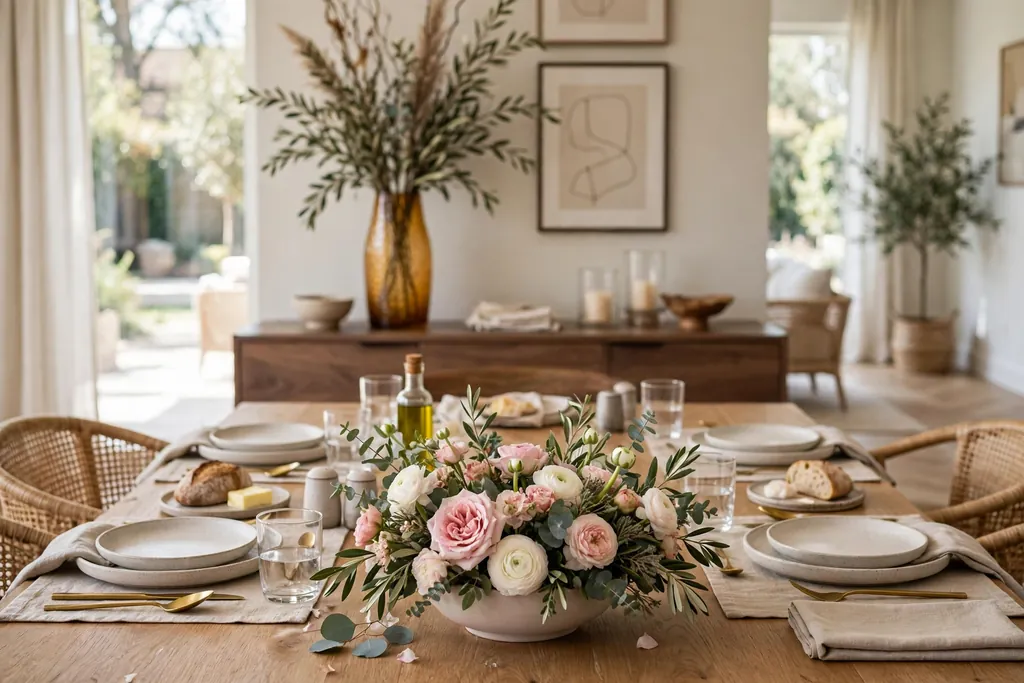
Where the arrangement will sit matters as much as the flowers in it. A dining table vase should stay low and narrow enough that guests can see each other across the table, and it should leave room at each place for plates and glasses. A low bowl, a small trio of bud vases, or one modest cylinder usually works better on a dining table than a tall, wide vase.
A mantel or console can take more height, since no one sits across from it. Tall cylinders, floor vases, and large ceramic vases suit these spots, as long as the total height leaves clear space below a mirror or artwork above. An entryway console suits a sturdy vase that can take a bump from bags and keys, so weight and a stable base matter there.
Small spots need small vases. A windowsill, a bathroom shelf, a bedside table, or a desk suits a bud vase or a small jar with one to three stems. A floor vase suits a corner, a hearth side, or the end of a long console, where its height frames the room instead of crowding a table. Measure the spot, including the height above it, before you choose.
9. Plan for Fresh Stems, Dried Stems, or Both
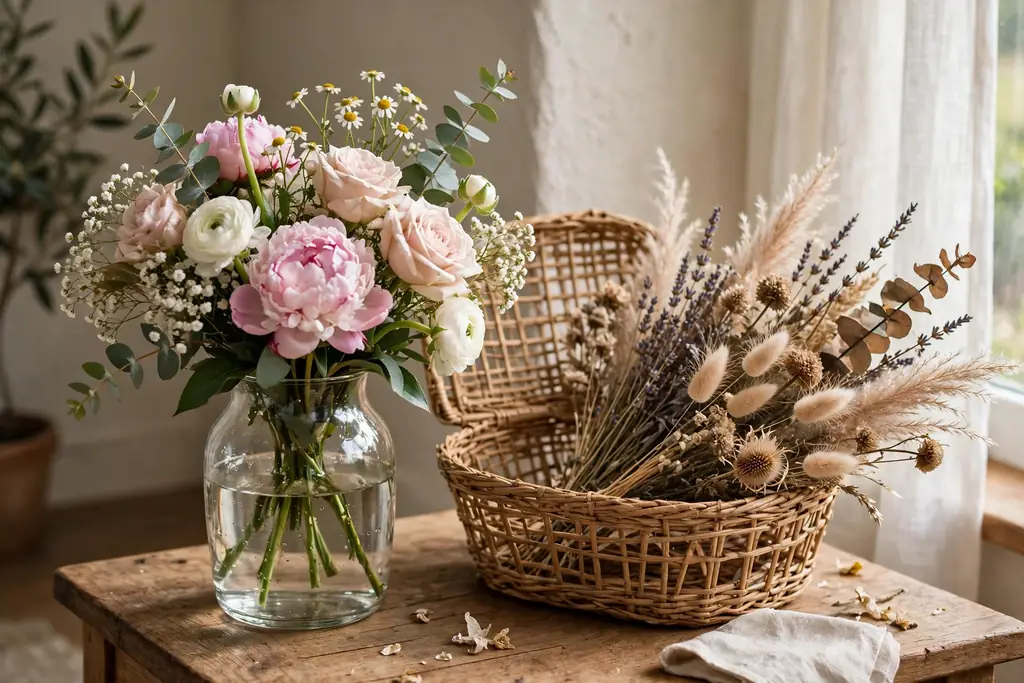
Fresh stems need water, so the vase must hold water safely or hold a jar of water inside. Check for leaks before you fill a new vase, especially with ceramic, metal, or wooden containers, and change the water regularly so stems stay firm. Remove leaves that would sit below the waterline, since they cloud the water faster.
Dried stems need no water, so the vase choice opens up. Baskets, open crocks, and containers that cannot hold water all work for dried flowers, grasses, and branches. Dried stems are also lighter, so a tall dried arrangement in a light vase can still tip if it catches a draft, and it should sit away from open flames and strong heat.
A mixed arrangement with both fresh and dried stems needs a vase that holds water for the fresh stems while keeping the dried stems out of the water as much as possible. A jar inside a wider vase can help here, with fresh stems in the jar and dried stems grouped around it. Keep dried stems dry and out of damp rooms, since damp air softens them.
10. Build a Small Collection That Covers Most Arrangements
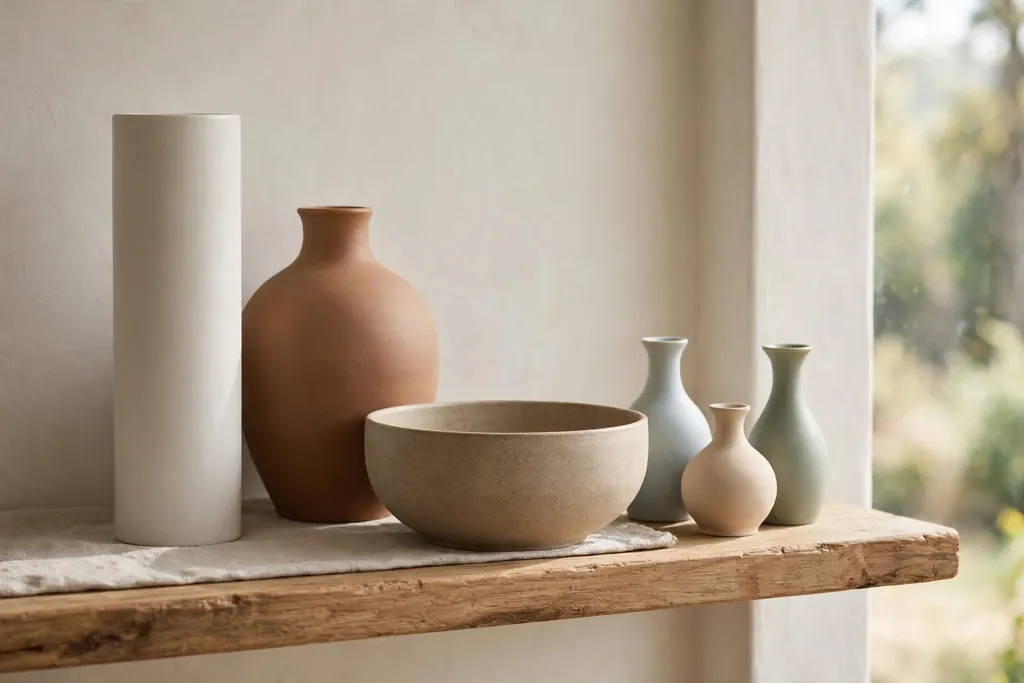
You do not need a vase for every bouquet. A small core collection covers most everyday arrangements: one tall cylinder or tall narrow vase for long stems, one medium rounded vase for mixed bouquets, one low wide bowl for short full arrangements, and two or three bud vases for single stems and small spots. With those, most bunches from a shop or garden have a fitting home.
Add to the core only when a gap shows up again and again. If you often arrange branches, add a heavy floor vase. If you often set a long table, add a set of matching small vases that can repeat down the table. If you often use dried stems, add a crock or basket that suits them. Buying one vase at a time, for a real gap, builds a collection you actually use.
Store the collection where you can see it. Vases hidden in a high cupboard get forgotten, while vases on one shelf or in one cabinet get reached for. Keep the core set together, clean and dry, so choosing a vase takes a minute rather than a search through the house.
11. Test the Pairing Before You Commit
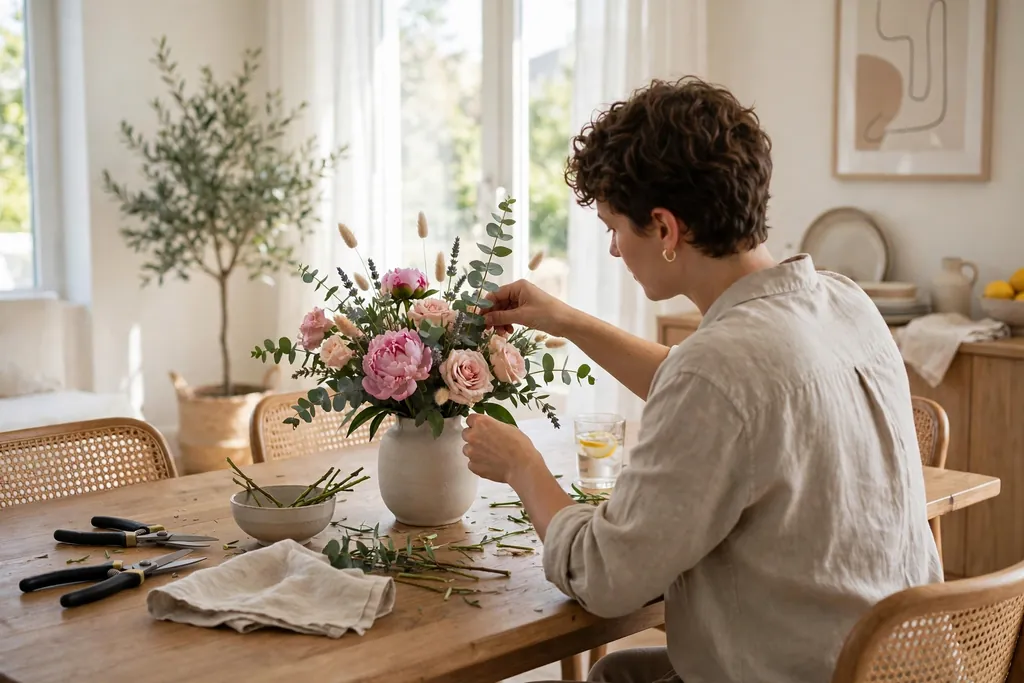
Before you settle an arrangement in its spot, test the pairing in three quick steps. First, set the filled vase on the table or surface where it will live and check that it sits level and does not wobble. A vase that rocks on an uneven surface needs a mat underneath or a different spot.
Second, check the view from where people will actually see it. Sit at the dining table and check sightlines across it. Stand at the room door and check the console or mantel display from there. Step back and look for one side that looks heavier than the other, then shift a stem or turn the vase slightly until the shape reads evenly.
Third, leave the arrangement for an hour and check it again. Fresh stems settle as they drink, and a shape that looked full at first can open out or lean as stems relax. Trim any stem that droops below the line you want, add a filler stem where a gap appears, and top up the water before guests arrive.
12. Care for Vases and Keep Arrangements Looking Their Best
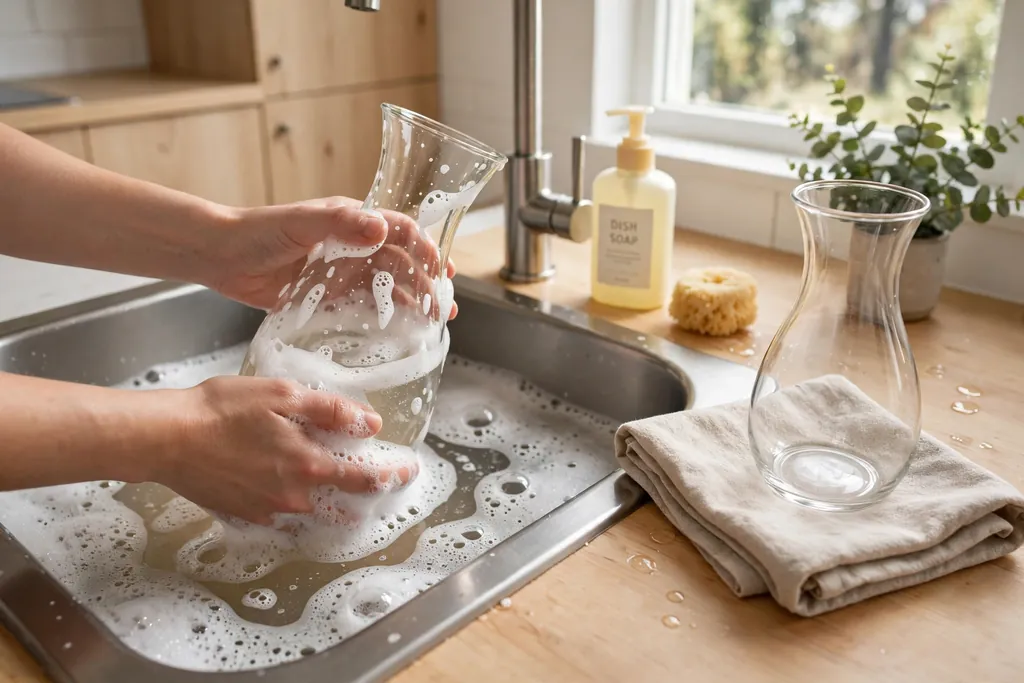
Good care keeps both vases and flowers looking their best for longer. Wash vases with warm soapy water after each use, rinse well, and dry them before storing, since residue inside a vase clouds fresh water faster. For narrow necked vases, a bottle brush reaches the inside, and a soak in warm soapy water loosens residue that a cloth cannot reach.
Check vases for chips and cracks before each use, especially around the rim and the base. A chipped rim can cut stems and hands, and a cracked base can leak onto a table. Retire a damaged vase from fresh flowers and use it for dried stems only, or replace it, rather than risking a leak on wood or linen.
For the flowers themselves, trim stems at an angle before arranging, remove leaves below the waterline, and change the water every couple of days, trimming a little off the stem ends each time. Keep fresh arrangements out of direct sun and away from heat vents and ripening fruit, since heat and sun shorten bloom life. With clean vases and fresh water, even a simple bunch in a well chosen vase holds its shape and color well.
Conclusion
Choosing a vase for a flower arrangement comes down to a few steady checks: the flowers first, then a shape and size that support them, a mouth that holds the bunch snug, a material and color that suit the room, and a spot where the finished height works. Build a small core collection, test each pairing from the view people will actually have, and keep vases clean and dry between uses. With those habits, the vase stops being a guess and becomes a quiet support for the flowers, and most bouquets will look planned with little extra effort.
FAQs
How do I choose a vase for a bouquet I already bought?
Start with the bunch itself: note the stem length, the bunch width, and the weight of the blooms. Choose a vase tall enough to support a good length of stem, with a mouth close to the bunch width so the stems stay snug, and a base heavy enough to hold the bunch steady. Test the bunch in two vases if you can, and keep the one that holds its shape with the least adjusting.
What vase shape is best for roses?
A rounded vase or a straight cylinder suits roses well, since both give the blooms room to open while keeping the stems upright. Choose a mouth wide enough that the rose heads do not crowd each other, and a vase tall enough that the stems sit steadily inside it. A single rose suits a bud vase, while a full bunch of roses suits a medium rounded vase.
What vase is best for tall flowers such as lilies and sunflowers?
Tall flowers need a tall vase with a narrower neck, so the long stems stay grouped and upright instead of falling outward. The vase should also be heavy enough that the top heavy blooms cannot tip it, and it should sit where it cannot be bumped easily, such as a console or a side table rather than a crowded dining table.
How tall should a vase be compared to the flowers?
Let the flowers rise clearly above the rim, with enough stem inside the vase to keep the bunch steady. If the blooms barely clear the rim, the vase is too tall for the bunch, and if only a short length of stem sits inside a tall vase, the bunch can lean. Judge by eye from the distance the arrangement will usually be seen, and trim stems to adjust rather than forcing a poor match.
Should I choose a clear glass vase or a ceramic vase?
Choose clear glass when you want a light, simple look and do not mind seeing stems and water, and choose ceramic when you want the blooms to lead and the mechanics to stay hidden. Clear glass suits modern rooms and simple bouquets, while ceramic adds weight and warmth and suits fuller bouquets and traditional rooms. Keep one of each in your core collection, and most bouquets will have a good option.
Can I use a vase with a wide mouth for a small bunch?
Yes, but a small bunch in a wide mouthed vase will fall outward unless you fill the gap. Add more filler stems, use a smaller inner jar of water inside the vase to gather the stems, or save the wide vase for a fuller bunch and use a narrower vase for the small bunch. A snug fit at the mouth is what keeps a small arrangement looking planned.