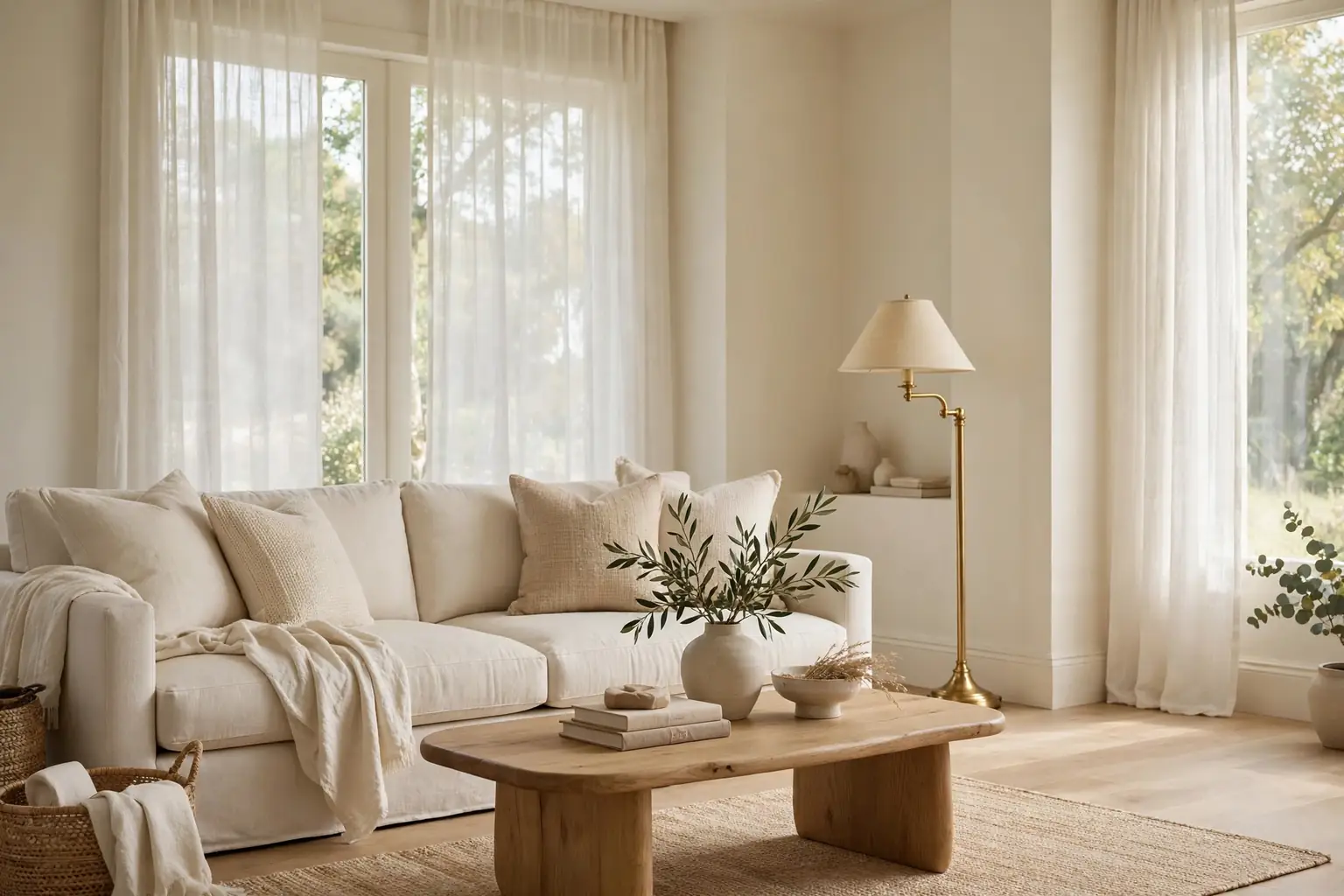
Cream can look calm without looking cold, and current without looking stark. The trick is to mix warm cream tones with texture, wood, and soft contrast, so the room feels layered rather than flat. Use this list to pick one starting point, such as the sofa or the walls, then add two or three supporting ideas. Small changes, like new curtains or better lighting, can shift the whole room, while larger moves, like panelling or a new rug, set the tone for everything else.
Key Takeaways
- Start with a warm cream, not a cold white, and repeat it across walls, seating, and textiles.
- Mix textures such as linen, boucle, velvet, leather, and wood so cream rooms do not look flat.
- Add one warm metal, one wood tone, and one soft accent color to keep the scheme grounded.
- Layer lighting with lamps and overhead light so the room works in daylight and in the evening.
- Keep large pieces simple and let smaller pieces, such as trays, art, and cushions, carry the detail.
1. Cream Walls With Warm White Trim
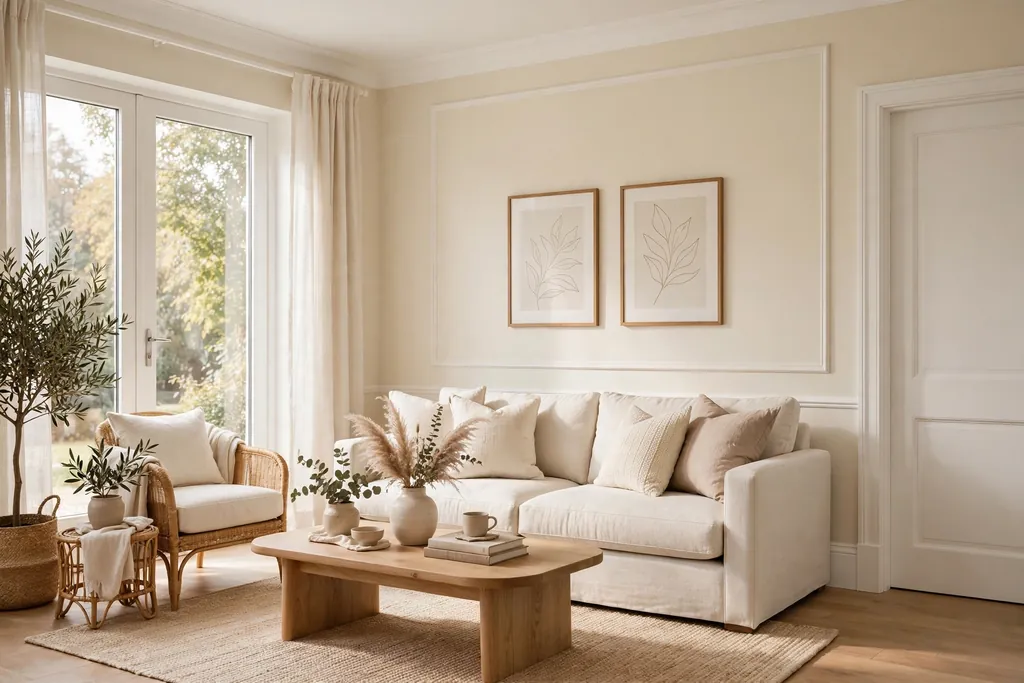
Paint the walls a warm cream and keep the trim in a slightly lighter warm white. The small shift in tone gives the room shape without a sharp contrast. Test paint in daylight and in lamplight before committing, since cream can read yellow or grey depending on the light. Keep ceilings in the same warm white family so the room feels calm from top to bottom.
2. A Cream Linen Sofa as the Anchor
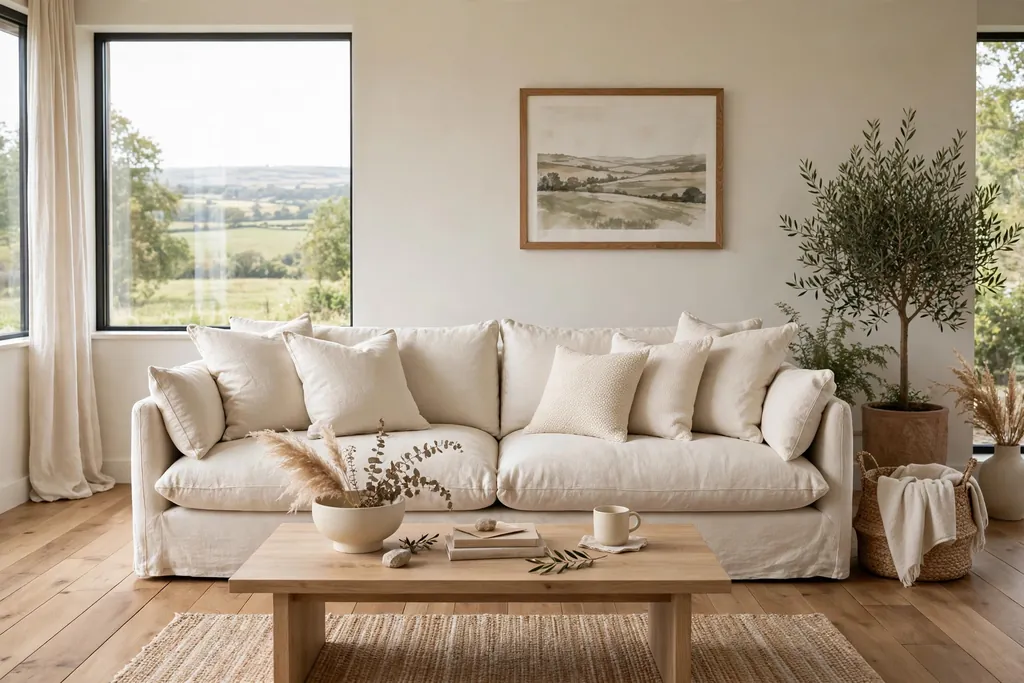
A cream linen sofa sets a relaxed, elegant base for the whole room. Linen has a natural texture that suits both casual and more formal rooms, and it pairs well with wood, brass, and woven details. Choose a removable cover if the sofa will get daily use, and keep a washable throw nearby for the seat cushions. Add cushions in two or three textures to stop the sofa looking plain.
3. Cream Boucle Accent Chairs
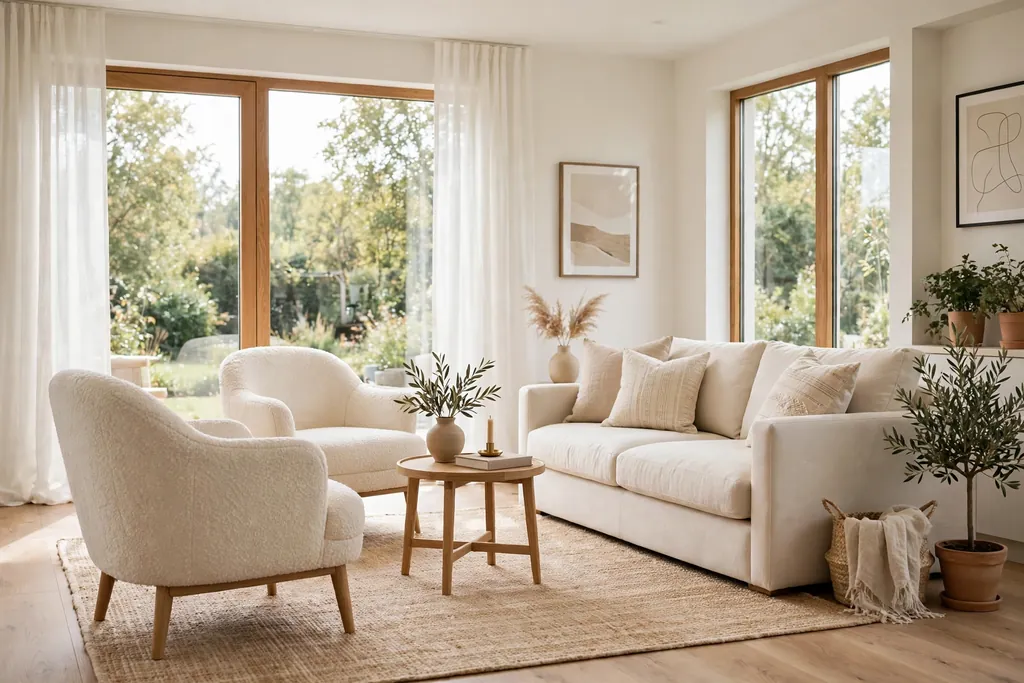
Boucle chairs add softness and a clear focal point beside a sofa or fireplace. Their nubby texture stands out against smooth linen and painted walls, which helps a cream room feel layered. Keep the chair frames simple, in wood or slim metal, so the fabric stays the focus. Place a small side table between a pair of chairs to make a natural conversation spot.
4. Layered Cream Throws and Cushions
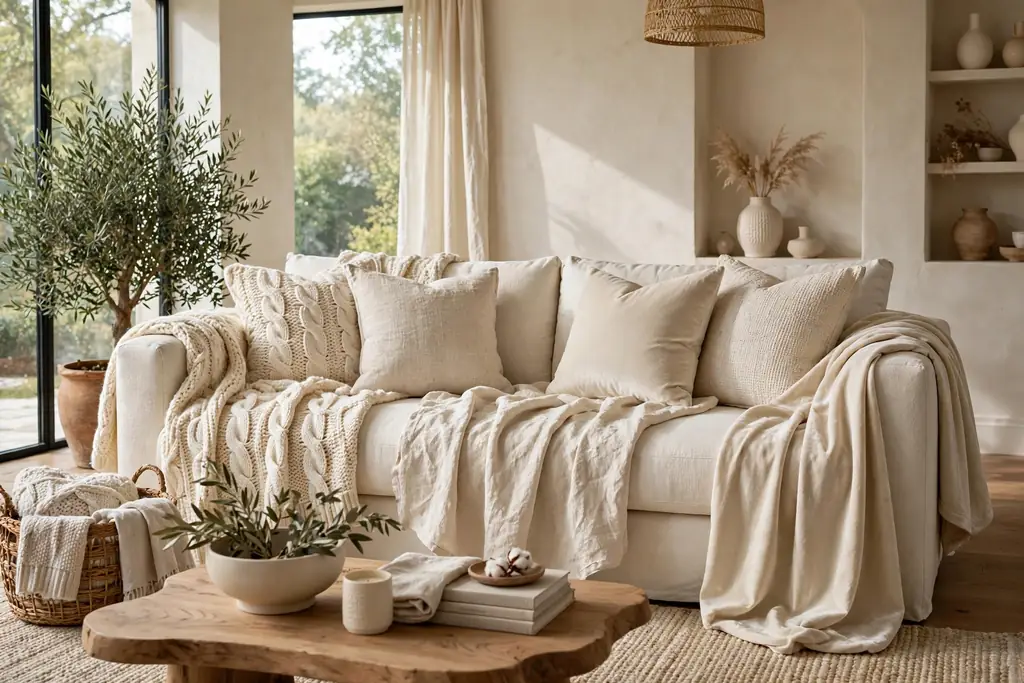
Layer throws and cushions in cream, ivory, and pale oat to build warmth without adding color. Mix knit, linen, and velvet so each layer reads as a separate texture, even in a similar shade. Fold a throw over one sofa arm and drape another across the back, rather than covering the whole sofa. Swap one or two cushion covers by season to keep the look fresh with little effort.
5. A Natural Oak Coffee Table
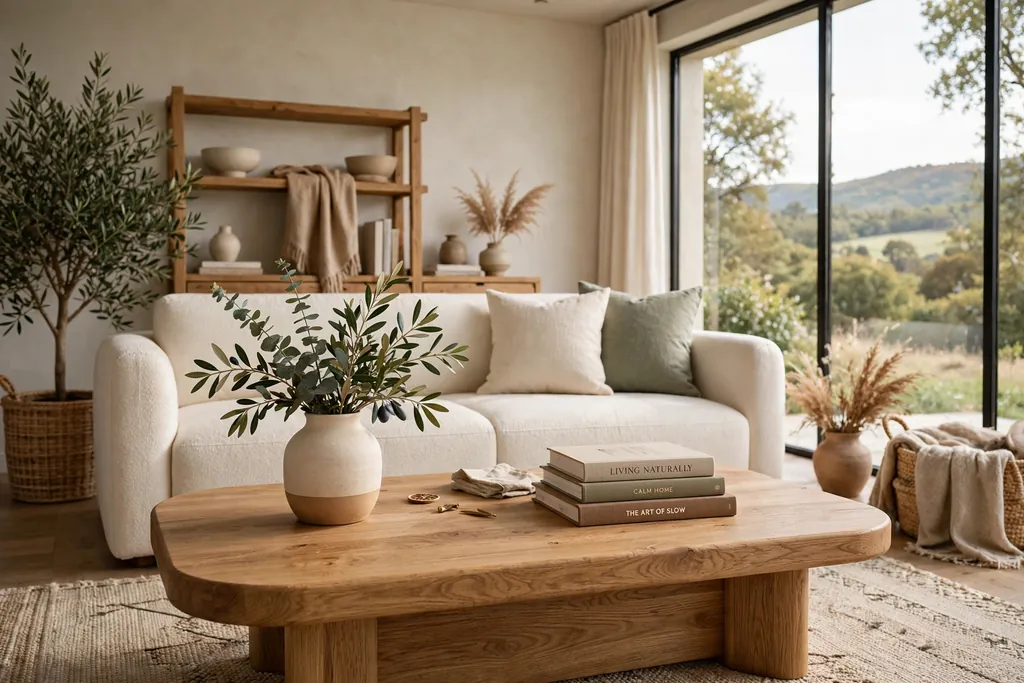
A natural oak coffee table grounds a cream room with warmth and a clear wood grain. Oak works with cream because it adds depth without darkening the space. Choose a table with an open lower shelf if you need a place for books or baskets. Style the top with only three or four items, such as a vase, a stack of books, and a small tray, so the surface stays usable.
6. A Cream Fireplace Surround
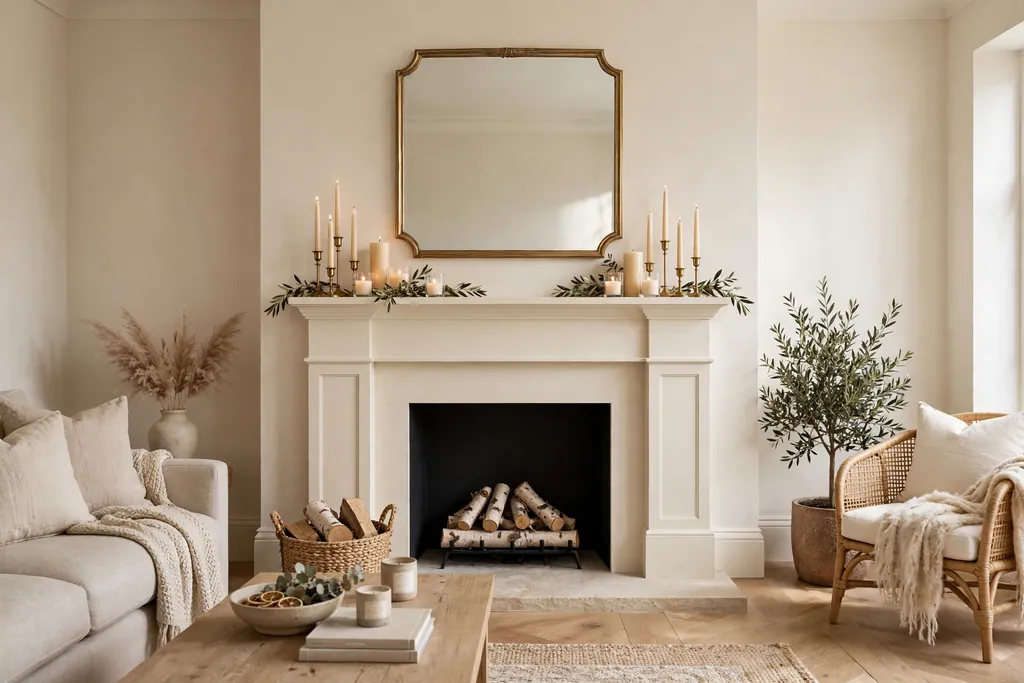
Painting a fireplace surround cream can make an older fireplace feel lighter and more current. Keep the mantel simple and style it with a mirror, a pair of candles, or a small vase, rather than filling every inch. If the firebox is dark, a cream surround also helps the eye move across the room instead of stopping at the fireplace. Check that any paint used near heat is suitable for that surface before you start.
7. Sheer Cream Curtains
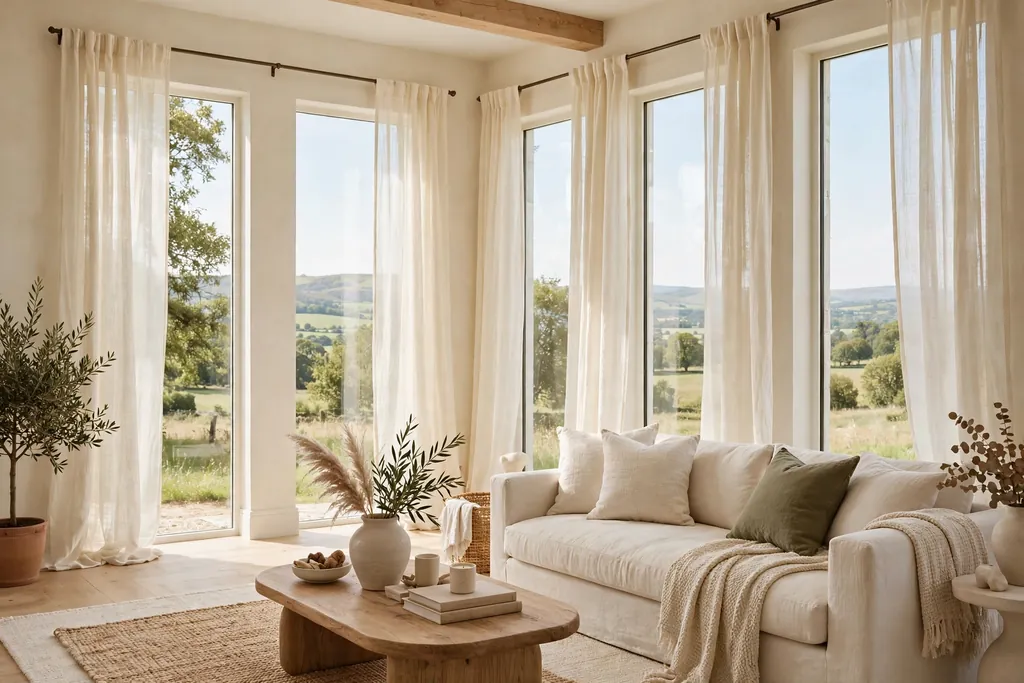
Sheer cream curtains soften daylight and give windows a finished look without blocking light. Hang the rod close to the ceiling and wide enough that the curtains clear the window when open, which makes the window look larger. Layer sheers with a heavier cream drape if you need privacy at night. Keep the fabric plain so the focus stays on the light and the view.
8. A Large Cream Area Rug
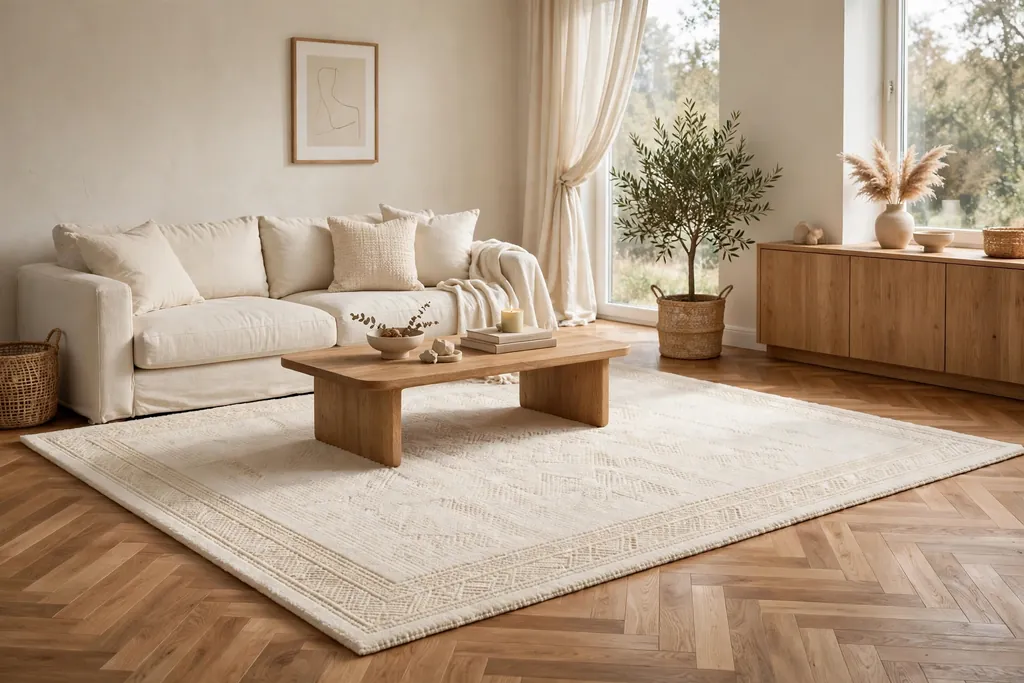
A large cream rug ties the seating group together and softens a hard floor. Choose a rug big enough that the front legs of the sofa and chairs sit on it, which helps the group feel planned rather than scattered. A low pile rug is easier to clean in a busy room, while a thicker pile adds comfort underfoot. Add a rug pad underneath to stop slipping and to give extra cushioning.
9. Brass Accents in a Cream Room
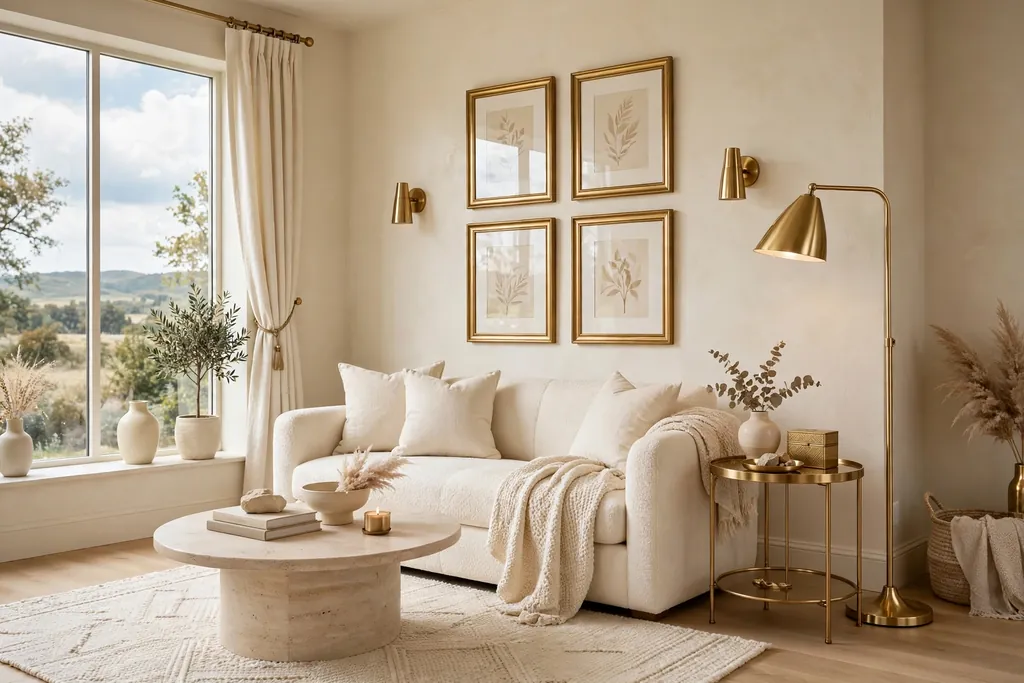
Brass adds a warm glow that suits cream far better than a cold metal finish. Use it in small doses, such as a floor lamp, a side table, picture frames, or drawer pulls, rather than on every surface. Repeat the same brass tone two or three times so it looks planned. If you already have chrome or black details, keep brass to one area, such as lighting, to avoid a mixed metal look.
10. Cream Built-In Shelves
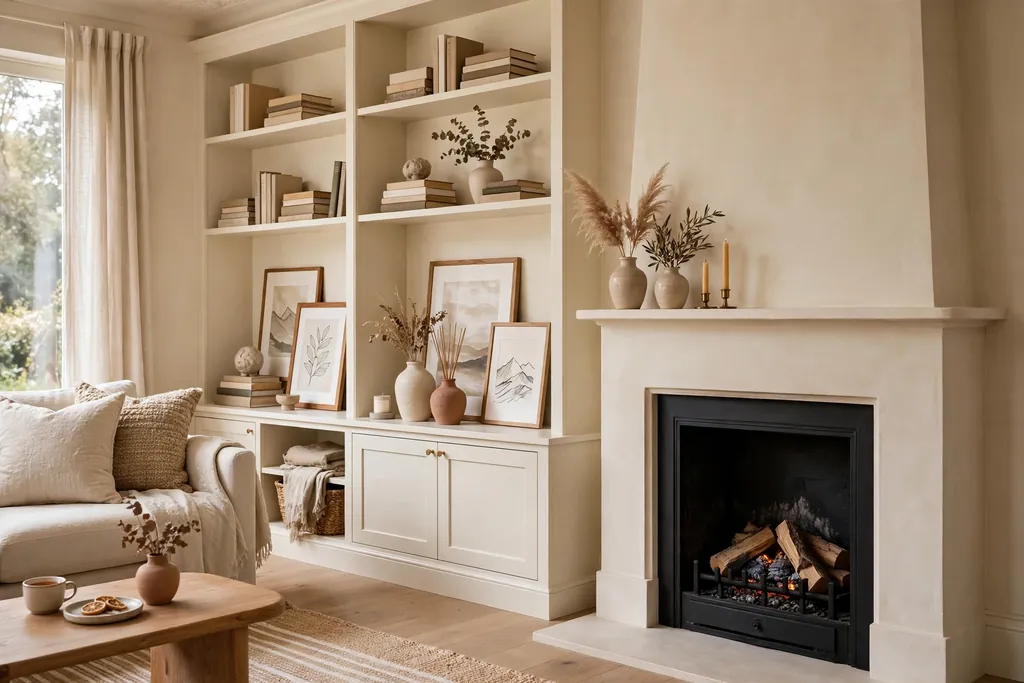
Cream built-in shelves beside a fireplace or along a wall give storage without the visual weight of dark wood. Paint the shelves the same cream as the walls for a calm look, or use a slightly deeper cream to define them. Style shelves in groups, with books, vases, and framed prints, and leave some empty space so the display does not look crowded. Keep everyday items in baskets on lower shelves.
11. Cream Paired With Sage Green
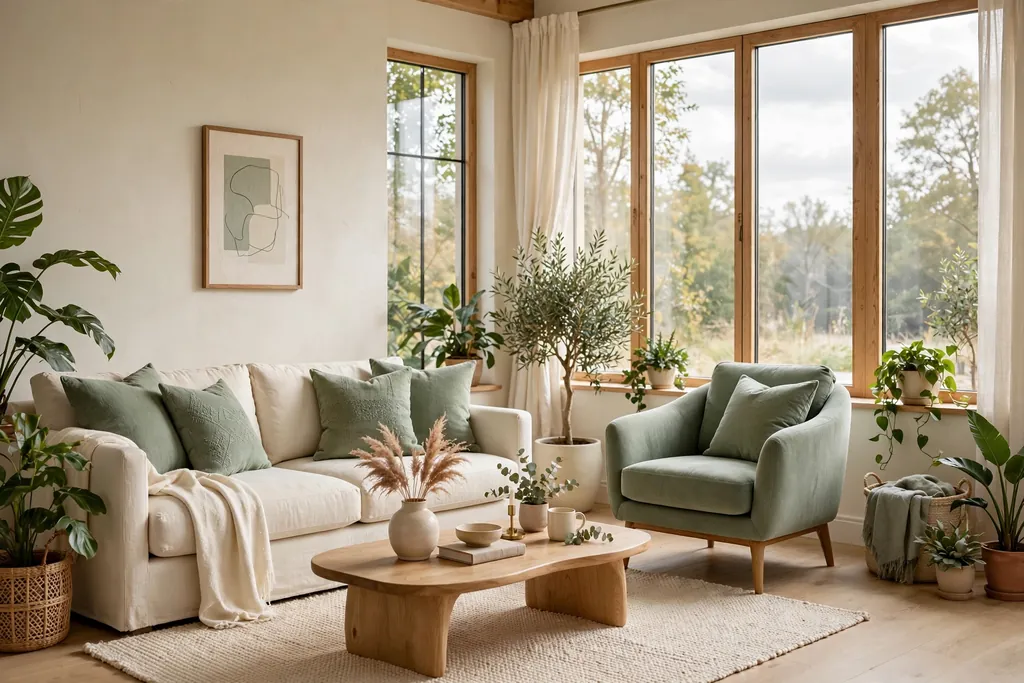
Sage green softens cream and adds a natural, garden feel to a living room. Use sage on cushions, one armchair, or plants, rather than repainting the whole room, if you want a low commitment change. The pairing works well with wood and woven textures, which keep it from feeling too pale. Add a deeper green plant or two to give the scheme a clear anchor.
12. A Cream Velvet Sofa
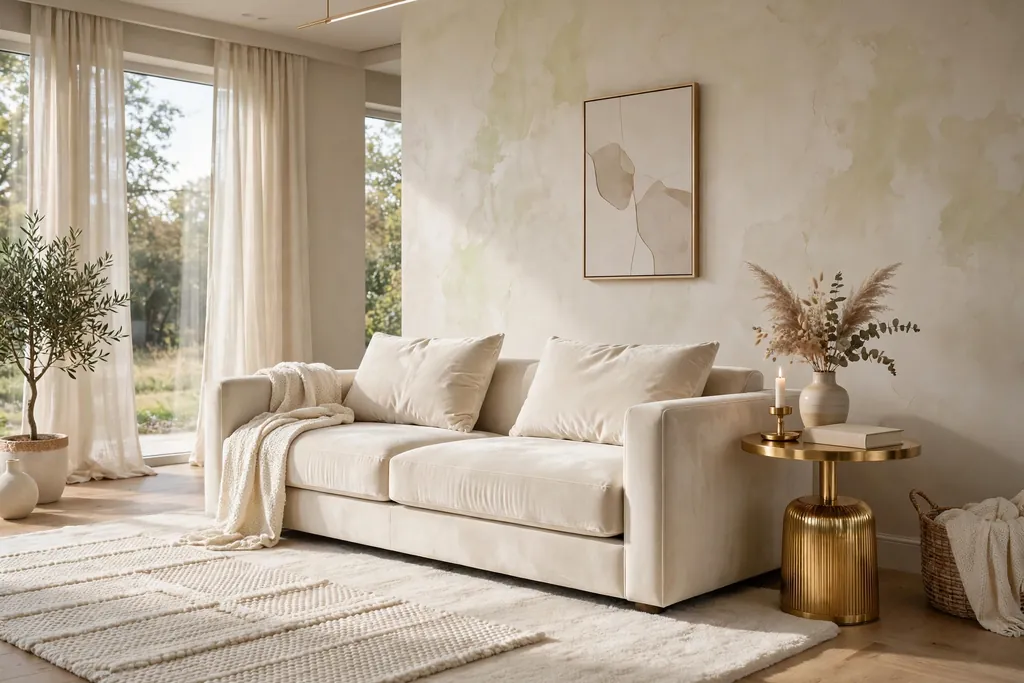
Cream velvet brings a soft sheen and a more formal feel than linen, which suits a room used mainly for relaxing and guests. Velvet catches light in a way that adds depth, even in a single color. Keep the rest of the room simple, with plain curtains and a light rug, so the sofa stays the focus. Brush or vacuum the fabric regularly to keep the pile even.
13. A Cream-Framed Gallery Wall
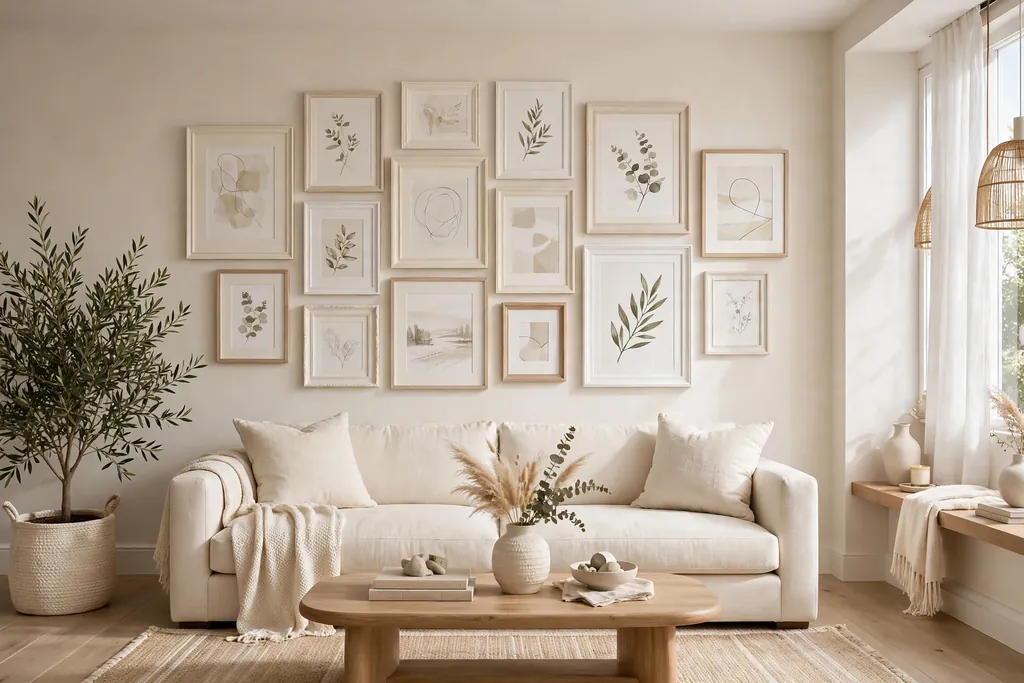
A gallery wall in cream and white frames adds interest without breaking the calm palette. Mix print sizes and keep a consistent gap between frames for a tidy result. Lay the arrangement on the floor first to test the balance before hanging. Choose art with warm tones, such as landscapes, botanical prints, or line drawings, so the wall feels part of the room.
14. A Cream Corner Sectional
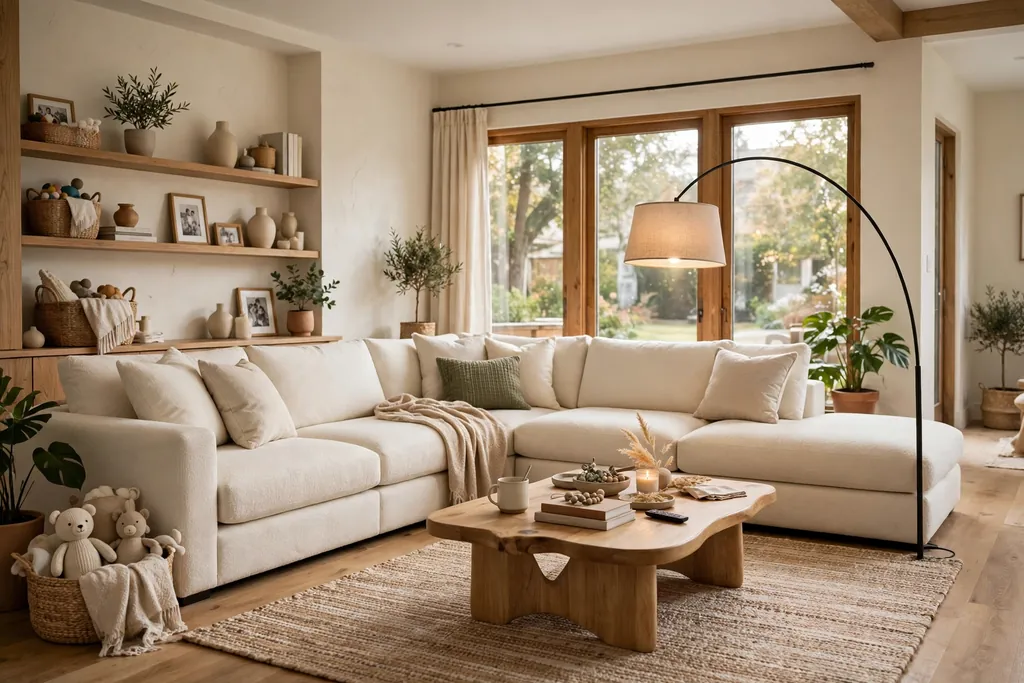
A cream corner sectional suits a family room where seating matters more than formality. It gives plenty of room for lounging and defines the seating area in an open plan space. Choose a sectional with a chaise on the side that gets the most use, and keep the coffee table within easy reach of all seats. Add a washable throw to the corner seat, which usually gets the most wear.
15. A Cream Leather Armchair
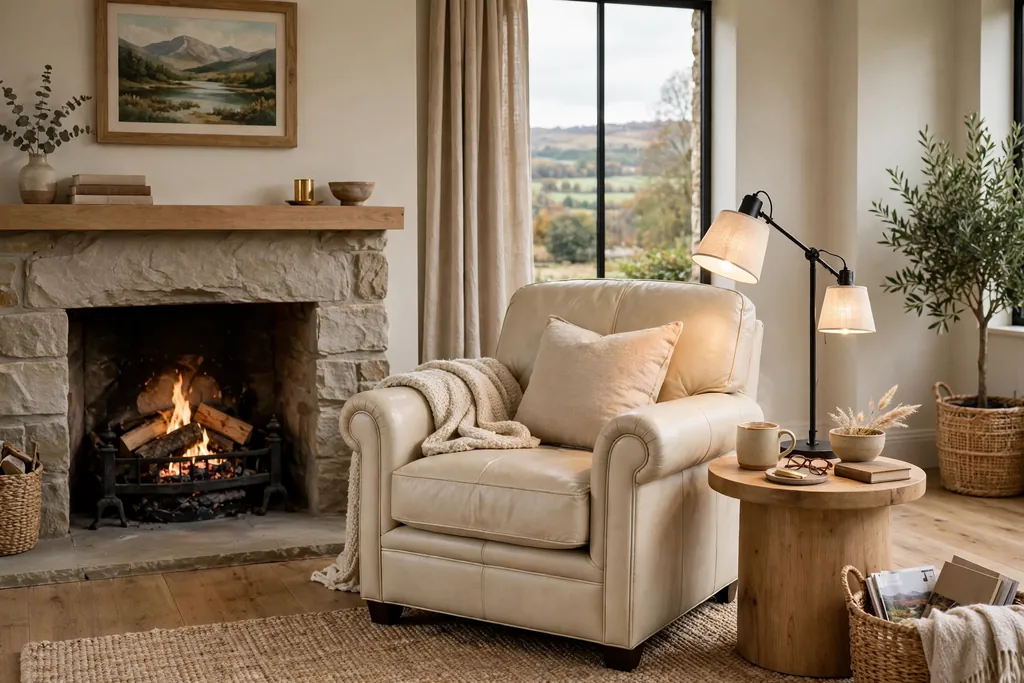
A cream leather armchair adds structure next to a softer sofa. Leather holds its shape well and wipes clean, which makes it a practical choice for a reading corner. Pair it with a small side table and a reading lamp, and add a folded throw for comfort. Keep leather out of direct sun where possible, since strong sun can dry and fade the finish over time.
16. Layered Lighting for Evening
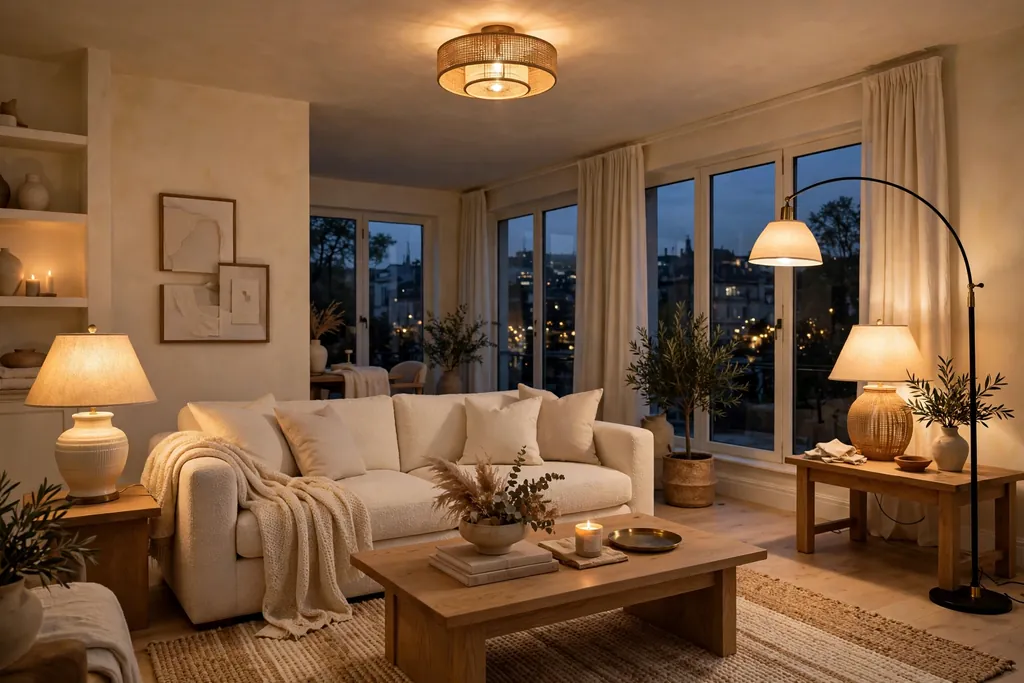
Cream rooms need layered lighting, since one overhead light can make the space feel flat at night. Combine a ceiling light with table lamps and a floor lamp, and use warm bulbs throughout for a consistent glow. Place lamps at different heights, such as a table lamp beside the sofa and a floor lamp in a corner, to spread light across the room. Put lamps on separate switches or dimmers if you can, so you can change the mood easily.
17. Cream Wall Panelling
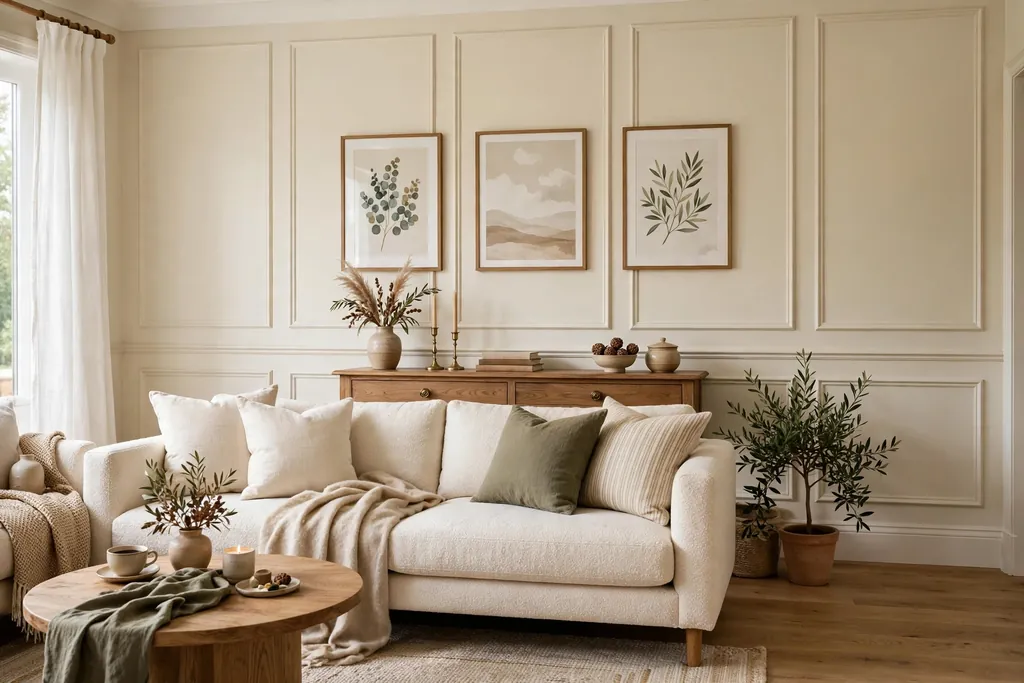
Cream wall panelling adds shape to plain walls and suits both classic and modern rooms. Paint the panelling the same cream as the wall for a subtle effect, or use a slightly deeper tone to make the panels stand out. Keep furniture simple in front of panelled walls, since the wall already carries detail. Panelling behind a sofa or along a hallway wall can give the room a finished feel without new furniture.
18. Cream With Warm Wood Accents
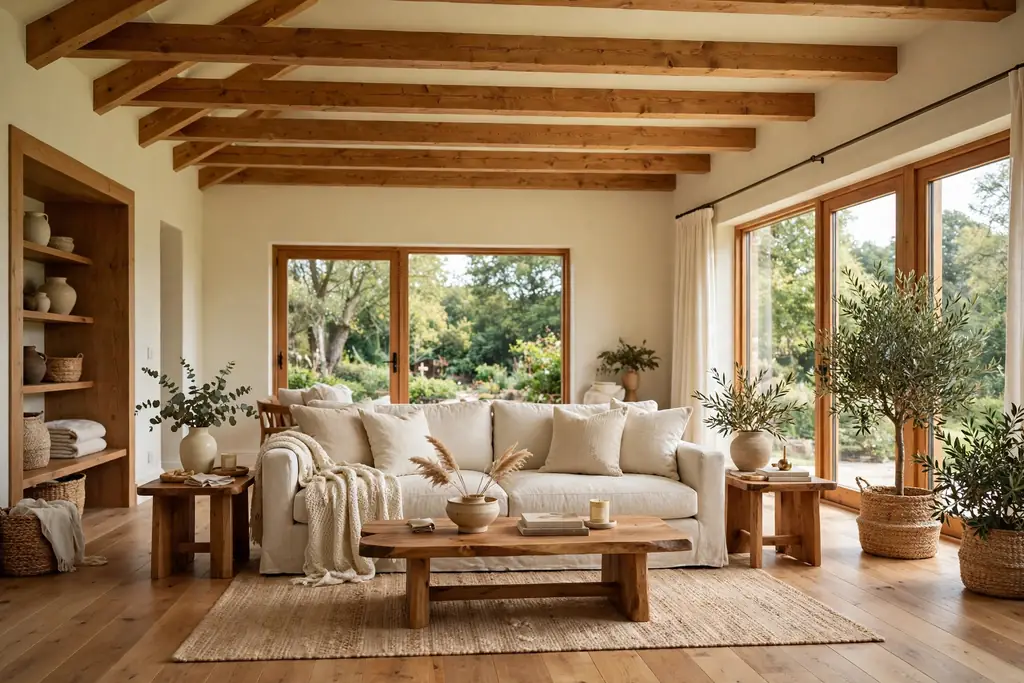
Warm wood accents, such as beams, side tables, and floorboards, stop a cream room from feeling too pale. Use one main wood tone and repeat it in two or three places, rather than mixing many wood finishes. A wooden tray, a wooden frame, and a wooden side table can be enough to ground the scheme. If the floor is already wood, echo that tone in smaller pieces for a calm, joined up look.
19. A Slipcovered Cream Sofa
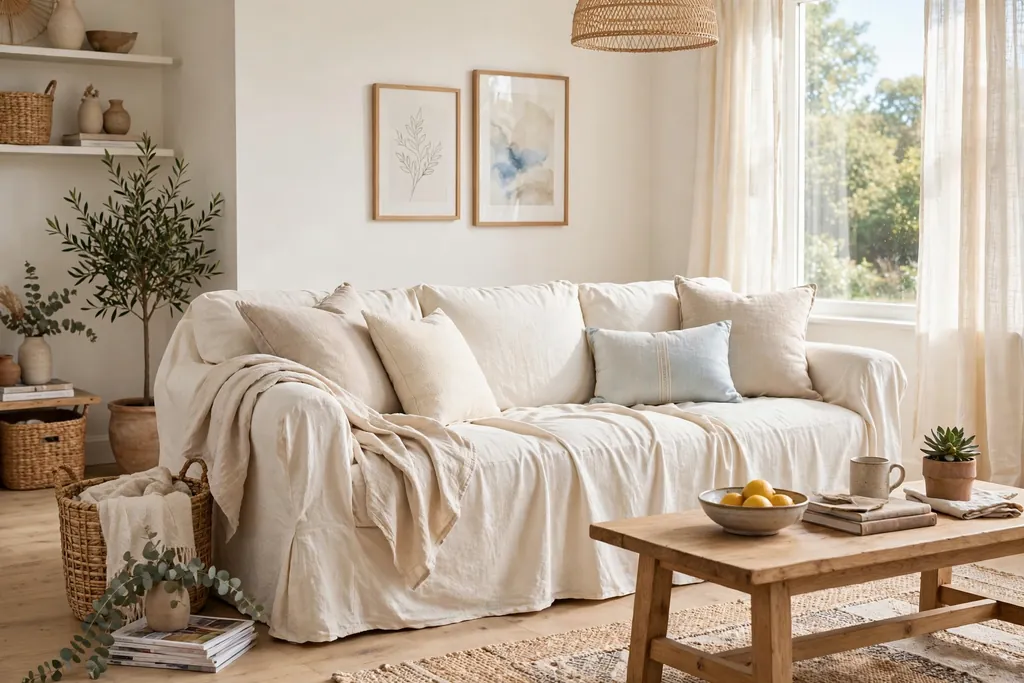
A slipcovered cream sofa suits a relaxed home where easy cleaning matters. Loose covers can be removed and washed, which makes cream a practical choice even with children or pets. Keep the cover neatly tucked and smooth the seat cushions after use so the sofa still looks cared for. Pair a slipcovered sofa with natural textures, such as cotton, rattan, and wood, for a casual but tidy room.
20. A Round Cream Ottoman as a Coffee Table
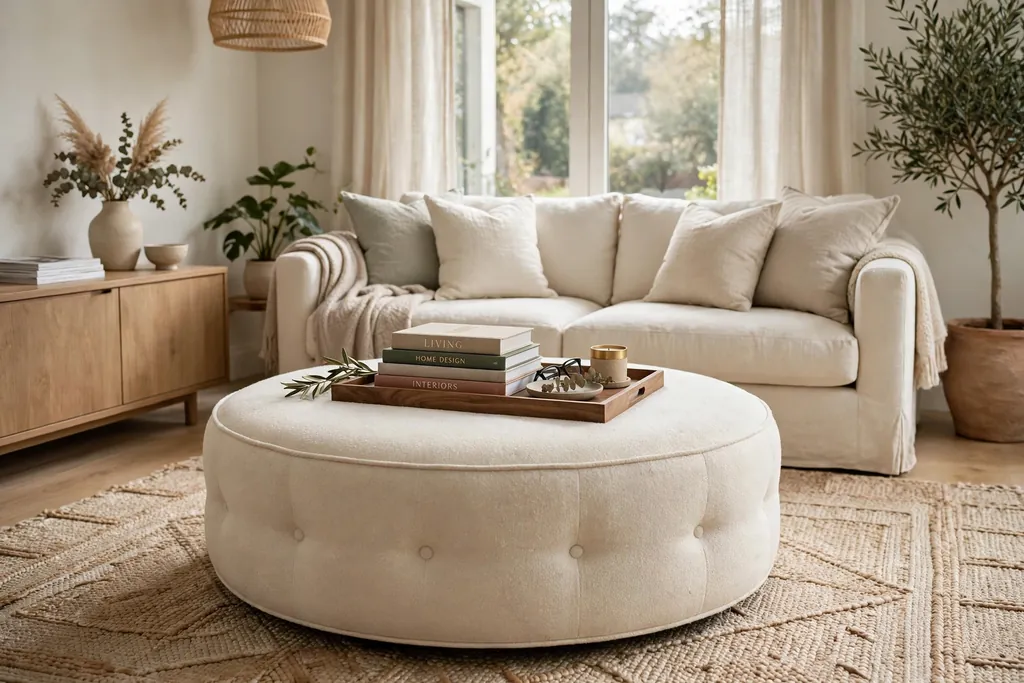
A round cream ottoman works as a soft coffee table in a room where sharp corners are a concern, or where extra seating is useful. Place a firm tray on top to hold drinks and books, so the surface stays practical. Choose an ottoman with storage inside if you need a place for throws or magazines. A round shape also helps traffic flow in a smaller room, since it has no corners to walk around.
21. A Cream Window Seat Reading Nook
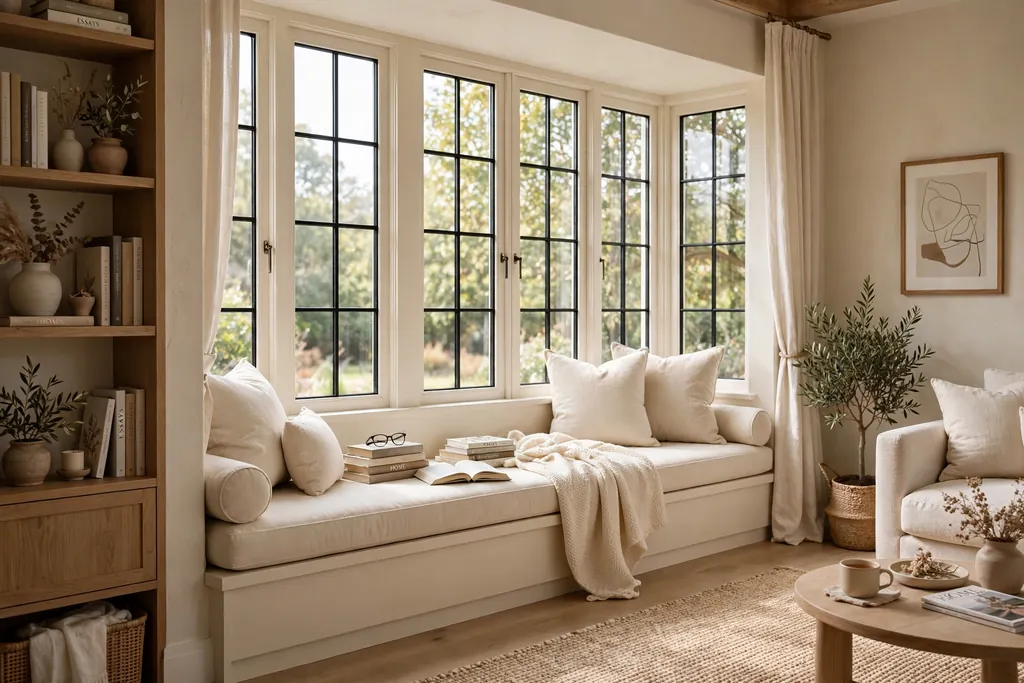
A cream window seat turns an unused window area into a reading nook. Add a thick cushion in cream, a few supportive cushions, and a throw for cooler days. Keep books in a basket or on a small shelf nearby, and add a wall light or a small lamp if you plan to read in the evening. A window seat also gives extra seating when guests visit, without adding another large chair.
22. Cream With Terracotta Accents
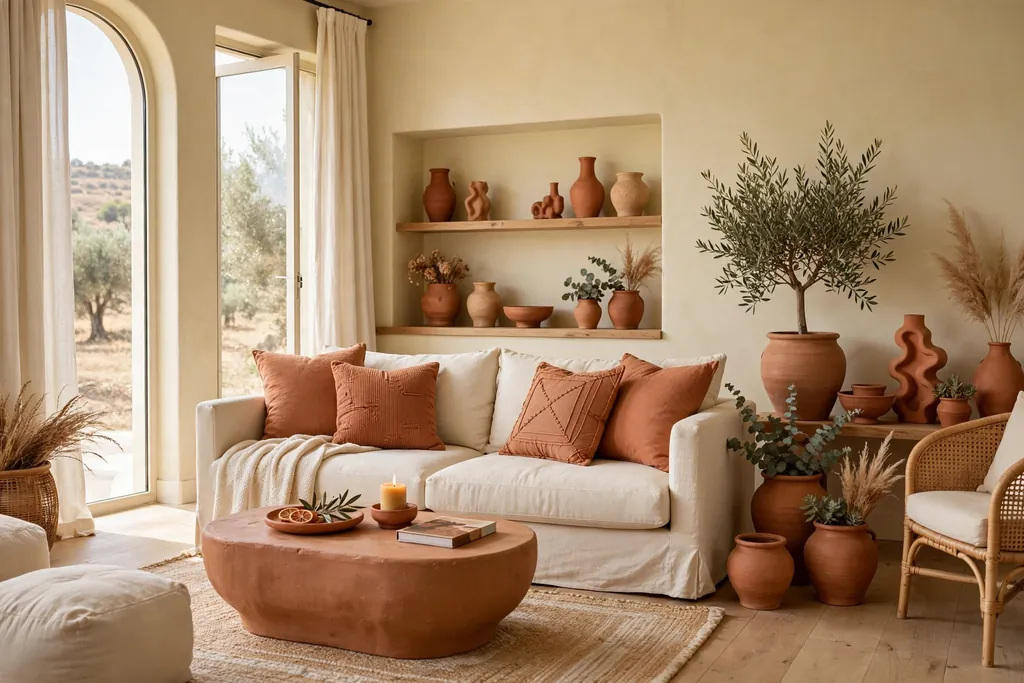
Terracotta cushions, pots, and clay details add warmth to cream without making the room feel dark. Use terracotta in small amounts, such as two cushions and a planter, so it reads as an accent rather than a second main color. The pairing suits rooms with wood floors and natural light, and it works well with plants. Keep the rest of the palette cream and wood so the terracotta stays clear.
23. A Cream Console and Media Unit
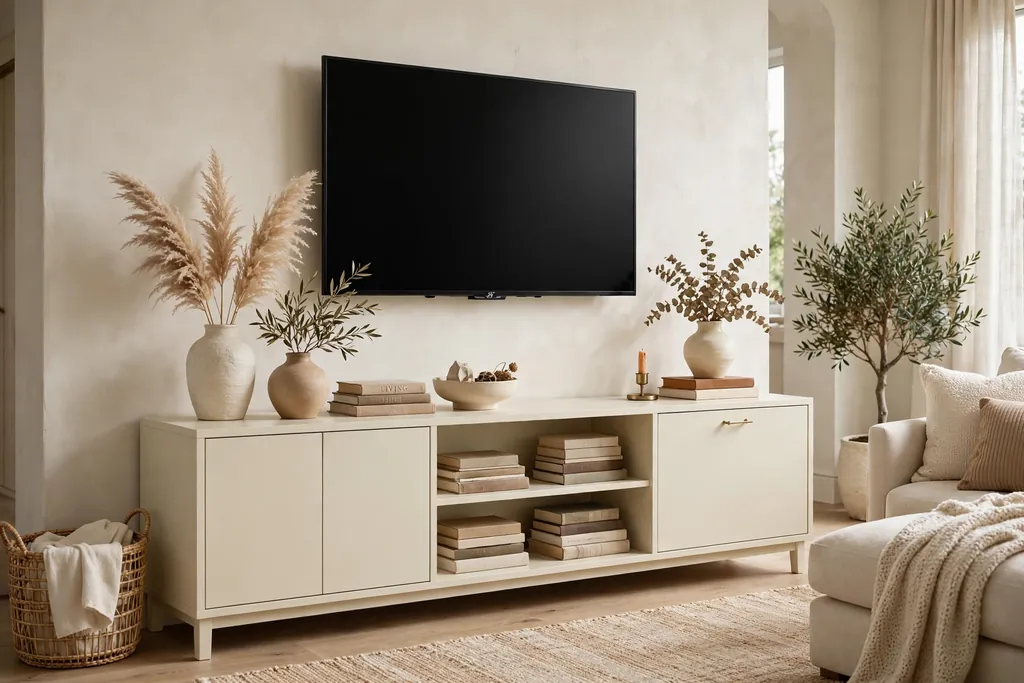
A cream console and media unit keep a television wall calm and tidy. Choose a unit with closed storage for cables, remotes, and games, and keep only a few styled items on top. Hang the television at eye level from the sofa, and leave a small gap between the unit and the wall fittings for cables. Add a vase or a stack of books at one end so the unit looks styled rather than purely functional.
24. Subtle Cream Textured Wallpaper
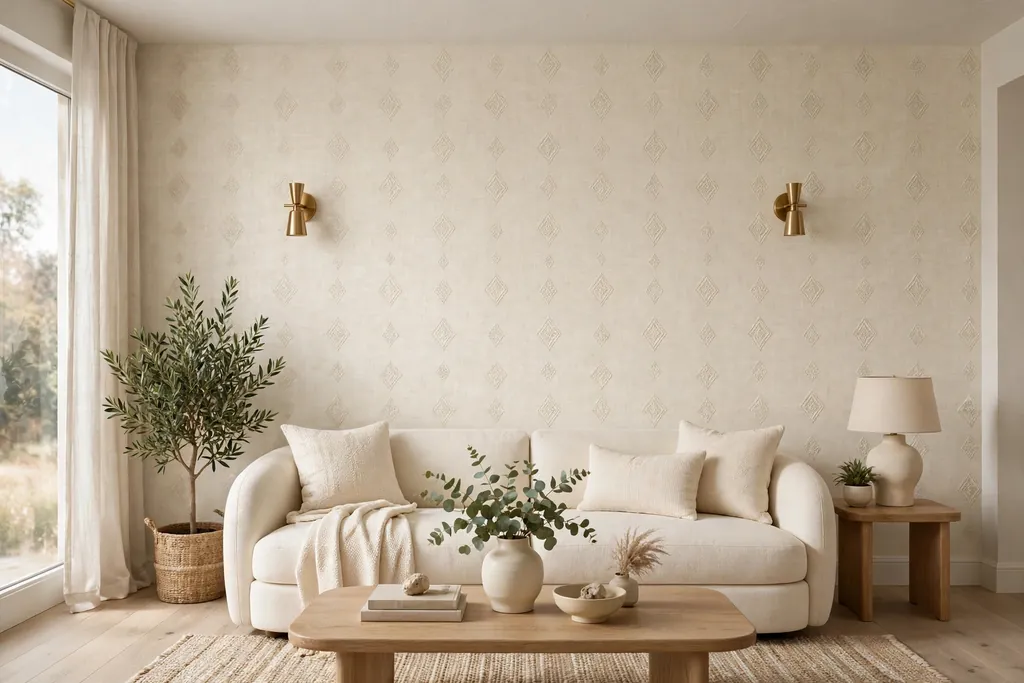
Subtle cream textured wallpaper adds depth to a feature wall without introducing a strong pattern. A grasscloth look, a fine stripe, or a soft geometric texture can all work, as long as the tone stays close to the rest of the room. Use it on one wall, such as behind the sofa, and keep the other walls plain. Check a large sample in the room first, since texture can look different in daylight and lamplight.
25. Cream With Black Accents for Contrast
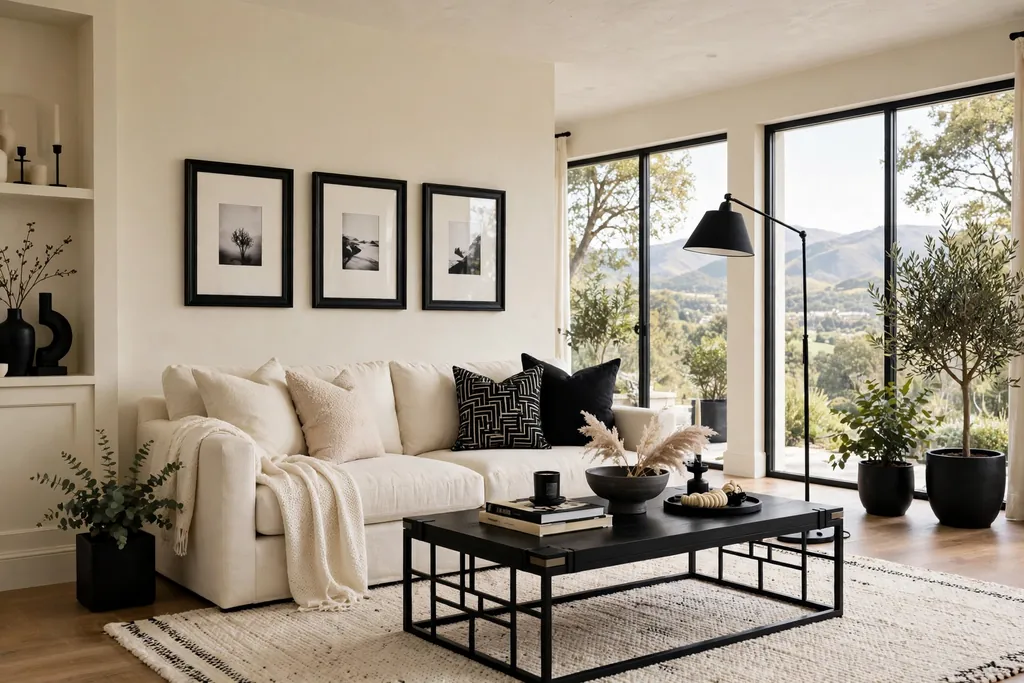
A few black accents give a cream room a current edge and stop it looking too soft. Use black on picture frames, a floor lamp, lamp bases, or coffee table details, and keep the black pieces slim rather than bulky. Repeat black in two or three places so it looks planned, and keep the main furniture cream. This pairing works best when the room already has good daylight, which keeps the black from feeling heavy.
26. A Cream Chaise Lounge
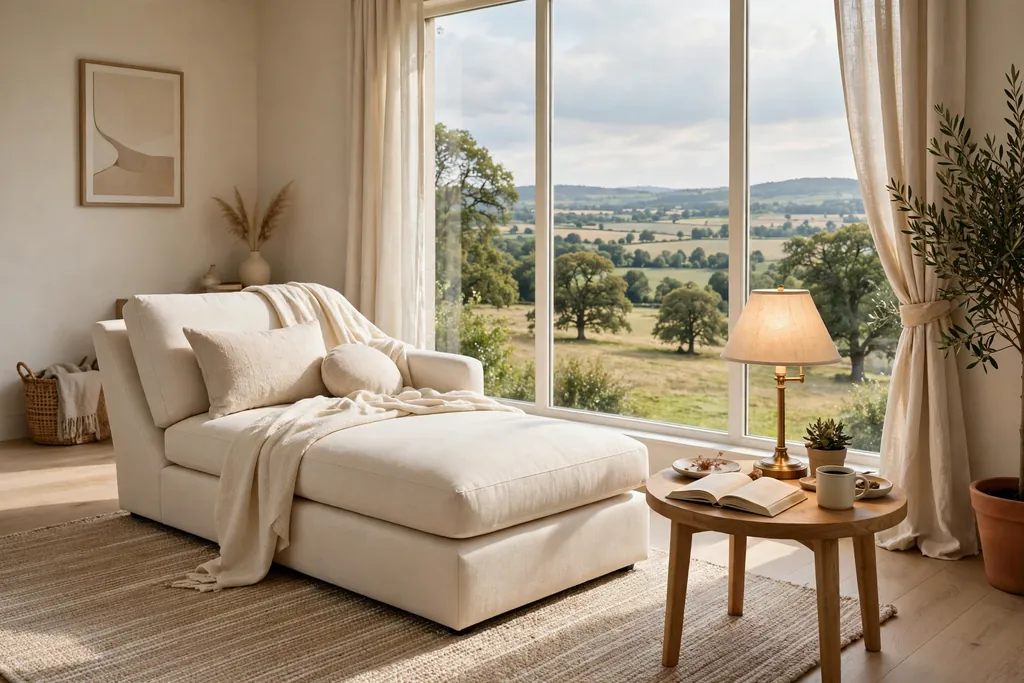
A cream chaise lounge gives a living room a dedicated spot for reading or resting, without the size of a second sofa. Place it by a window or in a quiet corner, with a side table and a lamp within reach. Keep the chaise in a simple shape and a plain fabric so it blends with the sofa, rather than competing with it. Add one cushion and a light throw, and leave the rest of the surface clear.
27. Cream Side Tables and Trays
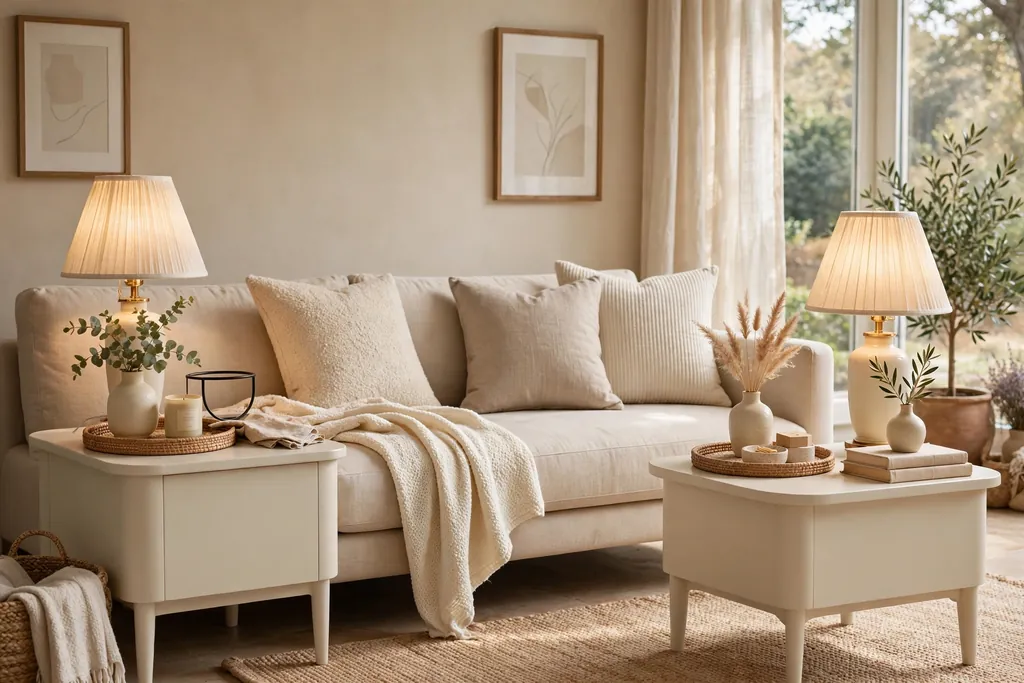
Cream side tables and trays help a living room feel finished and make seating more useful. Place a side table beside each main seat, at a height close to the sofa arm, so drinks and books are easy to reach. Use a tray on a coffee table or ottoman to group smaller items and to protect the surface. Keep table styling simple, with one lamp or vase and one or two books, so the tables stay usable.
28. Plants and Greenery in a Cream Room
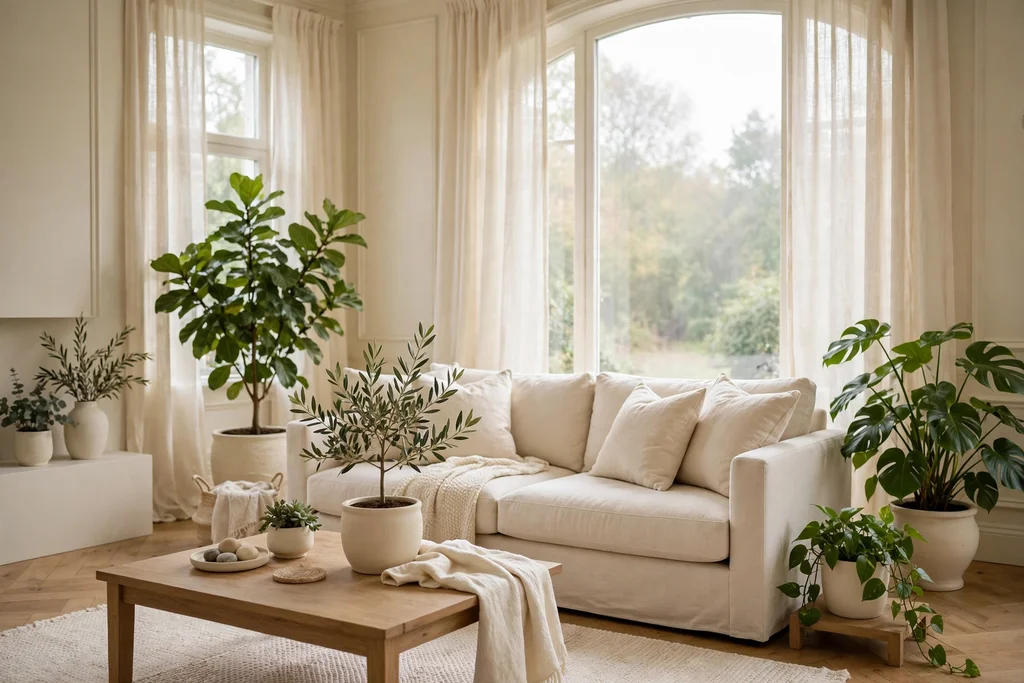
Plants add life and color to a cream room, and green suits cream in every season. Use cream pots to keep the look calm, and vary plant heights, with a tall plant in a corner and smaller plants on shelves or tables. Choose plants that suit the light in your room, and group them in odd numbers for a natural look. Wipe leaves now and then, since dust shows more clearly in a bright, pale room.
29. A Gold-Framed Statement Mirror
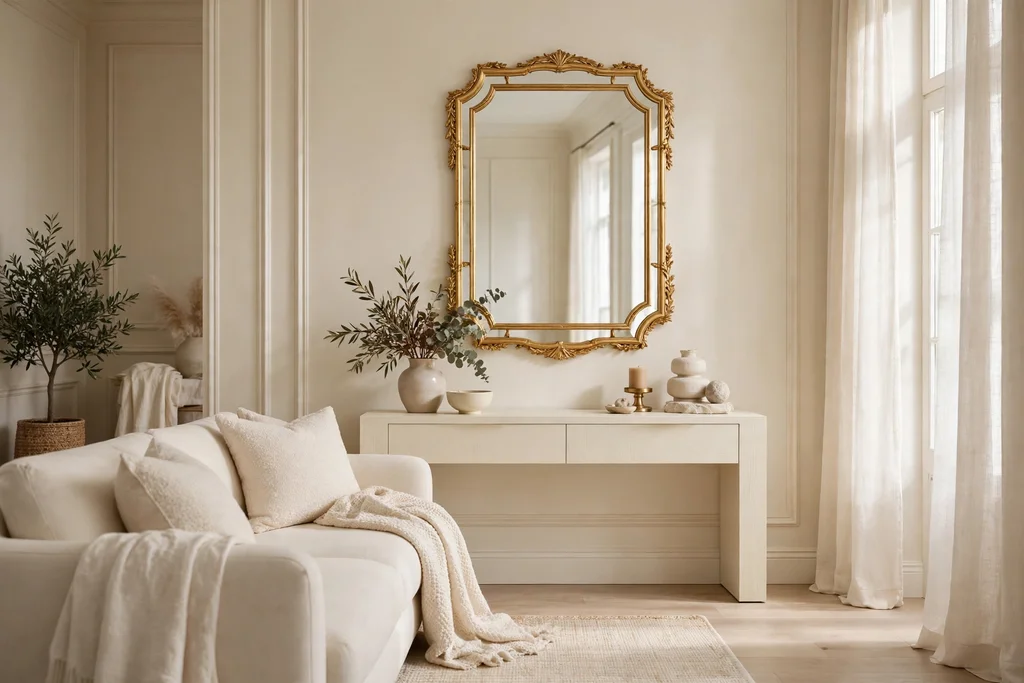
A large gold-framed mirror above a console or fireplace adds light and a clear focal point. The mirror reflects daylight across the room, which helps a cream scheme feel bright, and the gold frame ties in with brass details elsewhere. Hang the mirror at a height where it reflects the room, not just the ceiling, and keep the console below it simple. A round or arched mirror softens a room with many straight lines.
30. Cream Storage Baskets for a Tidy Room
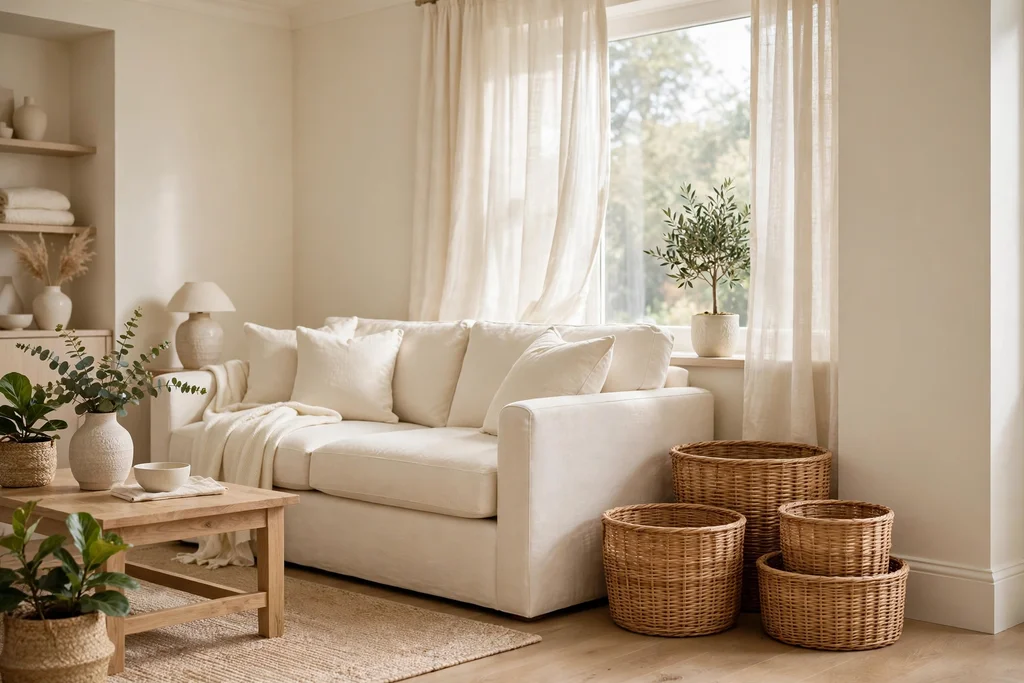
Woven storage baskets in cream and natural tones keep throws, magazines, and toys close at hand without looking cluttered. Place a large basket beside the sofa for throws, and smaller baskets on shelves for remotes and chargers. Choose baskets with lids for items you want hidden, and open baskets for throws you use every day. Label baskets only if the household needs it, since plain baskets usually look calmer.
31. A Cream Living Room for a Small Space
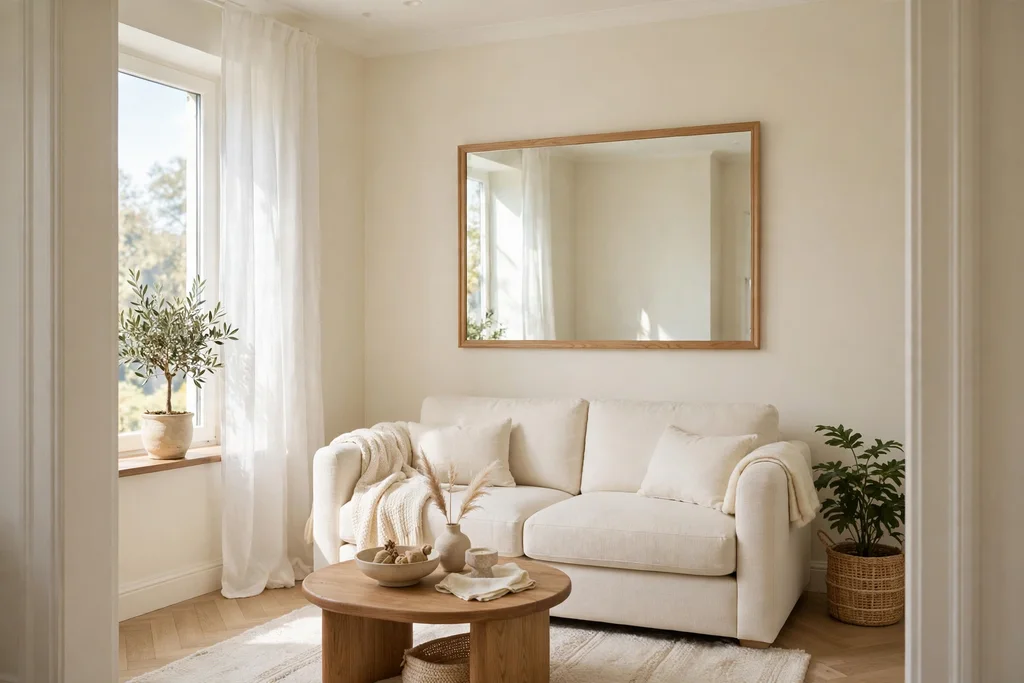
Cream works well in a small living room because it reflects light and makes walls feel less close. Choose a compact sofa, slim side tables, and a mirror to open up the room, and avoid bulky furniture that blocks walkways. Keep the rug light and the curtains sheer, and use wall shelves instead of a large bookcase where floor space is tight. One clear focal point, such as art or a mirror, keeps a small cream room from feeling empty.
32. Cream With Soft Blush Pink Accents
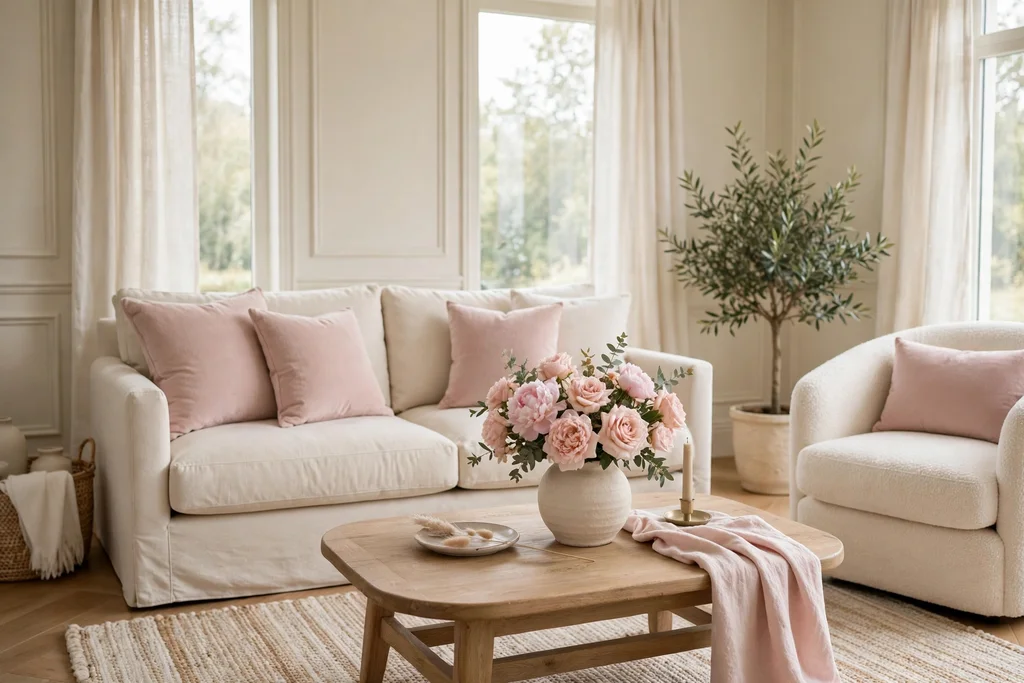
Soft blush pink cushions, a throw, or a vase add gentle warmth to cream without turning the room pink. Use blush in two or three small places, such as cushions and a single vase, and keep the main furniture cream. The pairing suits rooms with brass or gold details, which pick up the warmth in the pink. If blush starts to feel too sweet, add a wood or black detail to ground it.
Conclusion
An elegant cream living room does not need a full redesign. Pick a warm cream base, add texture through fabric and wood, and finish with a few well chosen accents in brass, green, terracotta, or black. Keep large pieces simple, layer the lighting, and leave room for the space to breathe. Save this list and return to it when you are ready to change one area at a time, starting with the change that will make the biggest difference in your room.
FAQs
How do I stop a cream living room looking flat?
Mix textures and tones. Use linen, boucle, velvet, and wood in warm cream, ivory, and pale oat, and add one warm metal and one accent color. Texture gives the eye something to follow, even when the palette stays pale.
What color goes best with a cream living room?
Sage green, terracotta, soft blush pink, warm wood, brass, and black all work with cream. Choose one main accent and repeat it in two or three places, rather than adding many colors at once, to keep the room calm.
Is a cream sofa practical for everyday use?
Yes, if you choose the right fabric and cover. Removable, washable covers, leather, and performance fabrics all make cream easier to live with. Keep a throw on the most used seat and clean small marks promptly.
Should cream walls be warm or cool?
Warm cream usually suits a living room better, since it feels cozy in both daylight and lamplight. Cool cream can look grey in a north facing room, so test samples on each wall before painting.
How do I light a cream living room in the evening?
Layer the light. Use a ceiling light for general light, plus table lamps and a floor lamp with warm bulbs at different heights. Dimmers help you move from bright, practical light to a softer evening glow.
Can cream work in a small living room?
Yes. Cream reflects light and keeps walls feeling open, which helps a small room. Pair it with compact furniture, sheer curtains, a mirror, and light rugs, and avoid bulky pieces that block walkways.