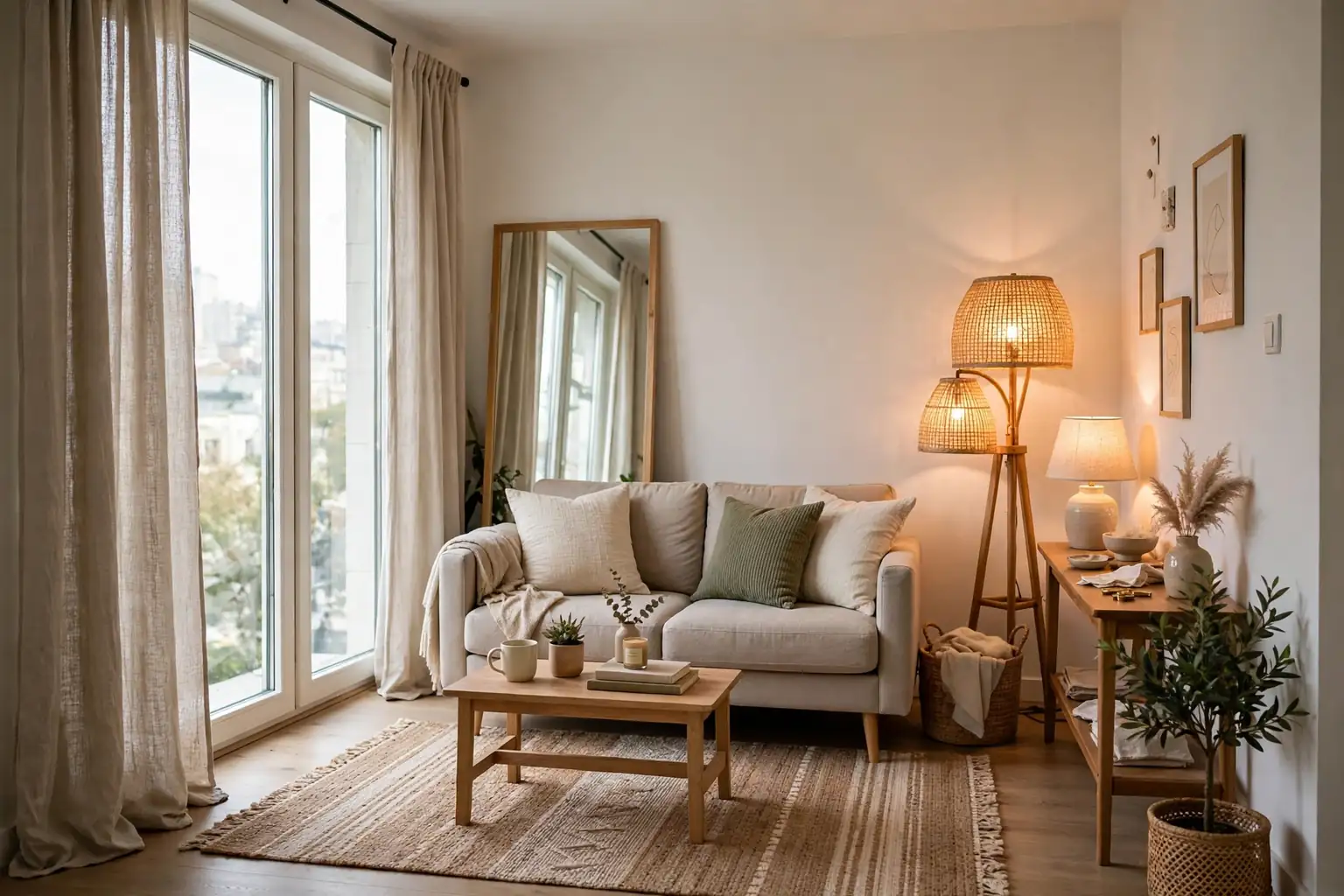
A small apartment living room has to do a lot on a small budget. It is where you relax, welcome friends, and read, and it has to do all of that without feeling crowded. Most of the change comes from choices that cost little or nothing: a better layout, a rug that fits, curtains hung well, light at more than one height, and storage that hides daily clutter. These 11 budget apartment living room ideas focus on that kind of change. Start with the idea that solves your biggest daily frustration, live with it for a week, and add the next one only if the room still asks for it.
Key Takeaways
- Spend nothing until the layout is settled: tape the seating footprint on the floor and test it for a few days before you buy anything.
- Change the biggest surfaces first: layout, rug, paint, curtains, and lighting give more change than small ornaments.
- Use fabric for fast, low cost change: a slipcover, cushion covers, and curtains can refresh a room without new furniture.
- Buy secondhand where it counts: mirrors, lamps, frames, and baskets are easy to find used and simple to clean up.
- Give clutter a closed home, such as a lidded basket or a storage ottoman, so styling on show stays calm.
- Repeat one calm base color and one accent in three places, so budget pieces look planned rather than random.
1. Tape the Layout and Write a Small Spend Plan
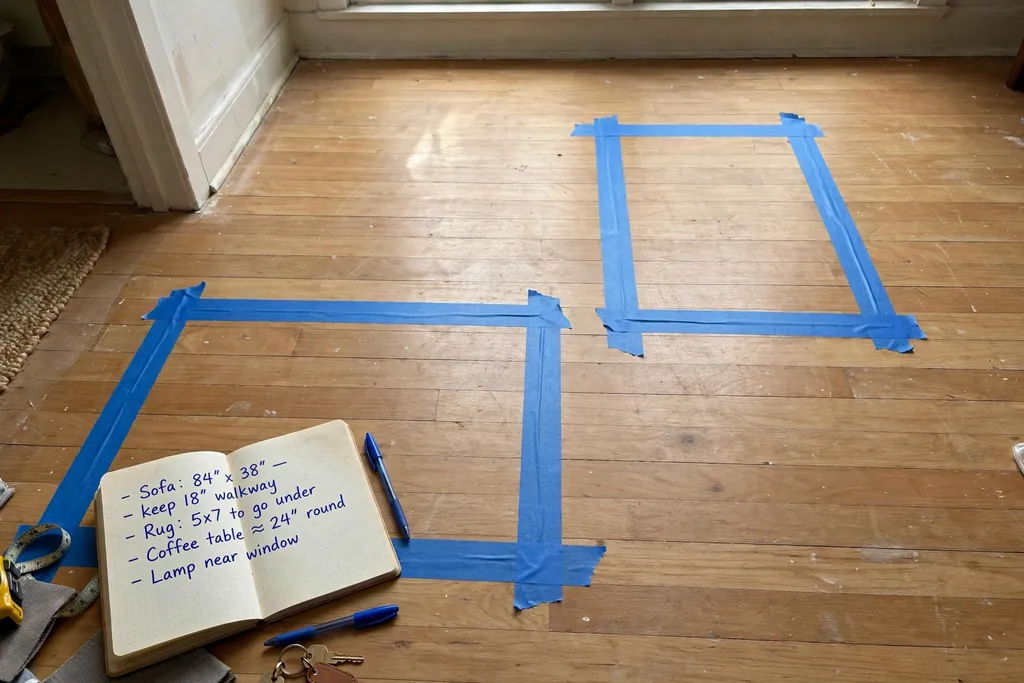
Taping the layout costs nothing, and it stops the most common budget mistake: buying a piece that almost fits. Mark the sofa, rug, and table footprints on the floor with painter tape, then walk the routes you use every day, open doors and drawers, and sit in the marked seating spot. If you have to turn sideways to pass the sofa, or the table blocks the route to the window, move the tape before you move any furniture. Live with the taped layout for a few days, since a room often feels odd for a day simply because it is different, not because the layout is wrong.
Write a short spend plan beside the taped layout, with one line per fix and a rough limit beside each. Start with free fixes, such as layout and decluttering, then move to low cost fabric and paint, and leave furniture until last. If a fix needs more than your limit, break it into steps, such as painting one wall now and the rest later. Keep receipts and return anything that does not earn its place after a week in the room.
2. Float the Seating on One Large Flatweave Rug
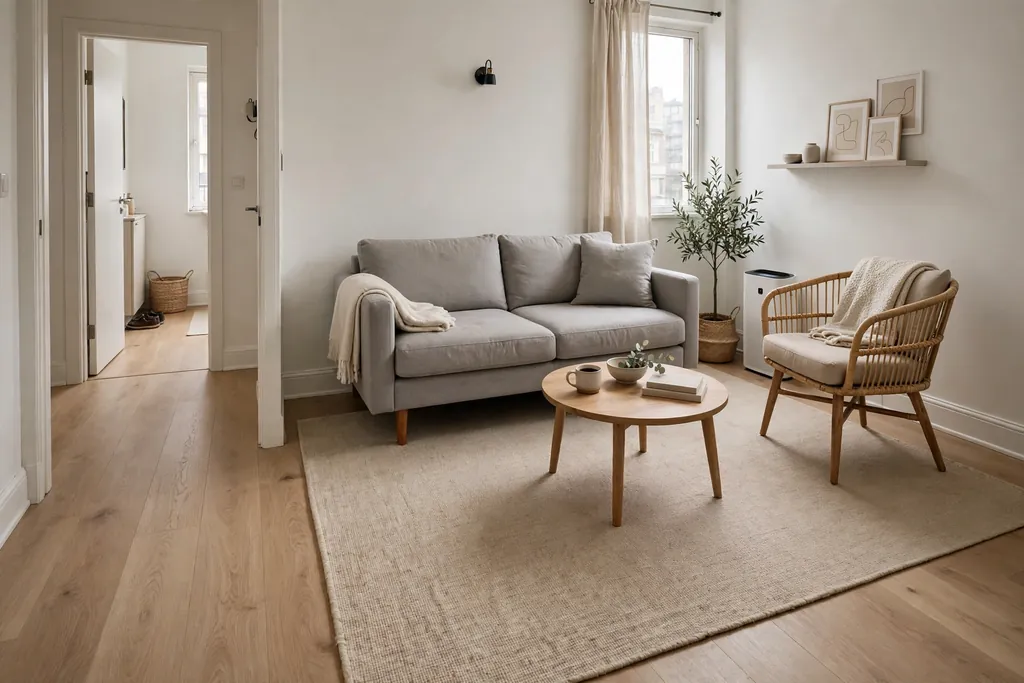
A rug that fits the seating group makes a small living room feel finished, and a flatweave rug is often the most budget friendly way to get the right size. Choose a rug large enough for the front legs of the sofa and chairs to rest on it, and keep the pattern simple if the cushions are already patterned. A flatweave rug is light, easy to move for cleaning, and suits rooms with pets and kids. Pull the sofa a few inches off the wall and set the seating group on the rug, so the rug marks the living zone instead of leaving an empty middle.
For rug size and placement advice, see these living room decor ideas on a budget. Tape the rug footprint on the floor before you buy, which avoids the most common sizing error: a rug that is too small. Add a thin rug pad under the rug if it slides on a hard floor, and vacuum both sides now and then so grit does not wear the back. If the budget only allows one rug, buy the largest plain one the seating group needs, and add pattern later through cushions.
3. Cover a Tired Sofa With a Washable Slipcover
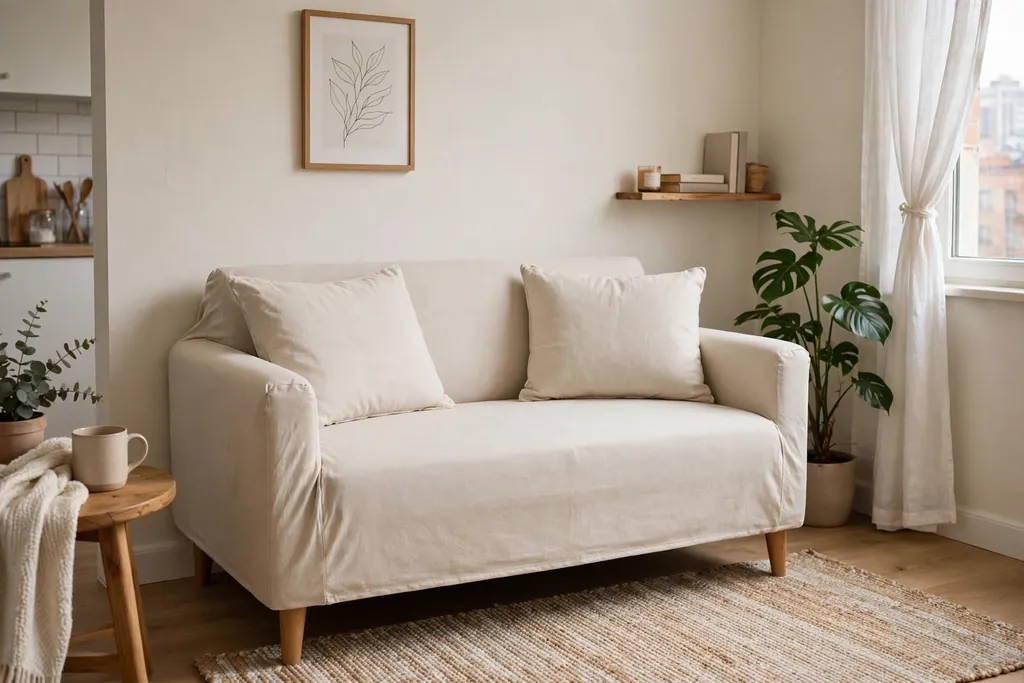
A washable slipcover can give a stained or dated sofa a second life for far less than reupholstery or a replacement. Measure the sofa carefully, including arm height and seat depth, and choose a stretch cover in a plain color that suits your rug and curtains. Tuck the fabric into the seat and back creases, and use foam rollers or a rolled towel in the gaps if the cover slips. A plain cover also gives you a calm base, so cushions and throws can carry the color.
Wash the cover on its own before first use, so you know how it handles laundry, and keep a spare set of cushion covers if the sofa gets daily use from pets or kids. A slipcover works best when the sofa frame is still sound. If the springs sag or the frame wobbles, fix the frame first, since no cover will hide a broken seat. Choose a washable fabric in a busy room, so the cover stays practical as well as fresh.
4. Swap Cushion Covers and Keep the Inserts
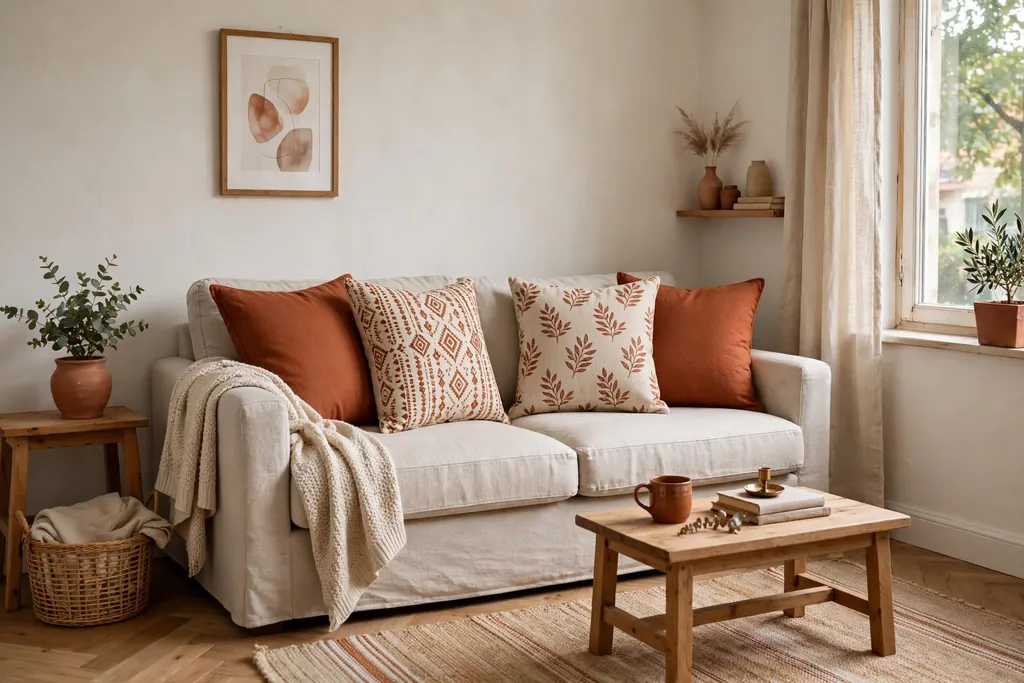
New cushion covers cost far less than new cushions, and they change the color story of a whole seating group in minutes. Keep your existing inserts if they are still plump, and buy covers one size smaller than the insert so they sit full rather than flat. Choose two plain covers and one patterned cover, all sharing one color, so the group looks collected rather than random. This is one of the fastest budget changes in the whole list, since a cover swap takes minutes and needs no tools.
Use washable covers in a busy room, and store out of season covers in a labeled bag so the swap stays quick. If a cushion insert has gone flat, replace only that insert, not the whole set. Rotate cushions weekly so one seat does not wear faster than the others, and fluff them after washing so they keep their shape. When you tire of a color, changing three small covers in an afternoon is far easier than changing a sofa or a rug.
5. Paint One Wall With a Single Tin of Paint
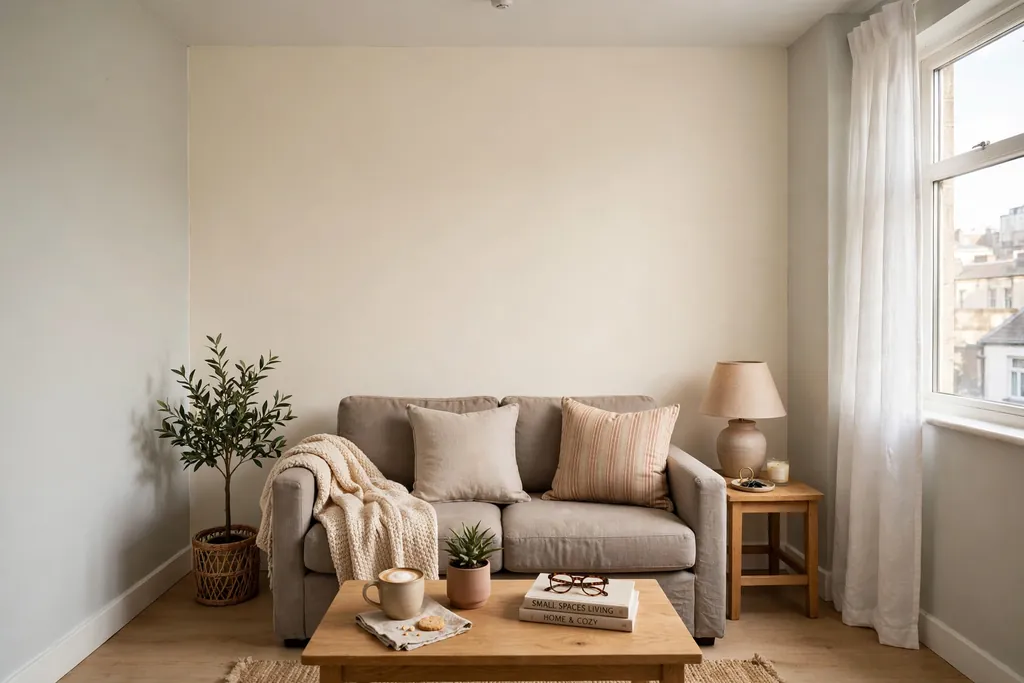
One tin of paint can change the whole mood of a small living room, especially on the wall behind the sofa or the wall you see first when you walk in. Choose a warm white, soft greige, or pale sage that suits your sofa and your daylight, and test a small patch in both daylight and lamplight before you commit. Paint the chosen wall properly, with edges taped and two thin coats, rather than rushing one thick coat that shows brush marks. If you rent, check your lease first, and keep the original paint details so you can repaint before you move out.
If the budget is very tight, paint only that one focal wall and leave the other walls as they are. Keep the leftover paint for touch ups, and use a washable finish near doorways and seating where scuffs show fastest. A freshly painted wall also makes older furniture look more intentional, since the background is calm and clean. Paint is one of the few budget changes that touches the whole room at once, so take time over color and finish.
6. Hang Curtains High and Wide in a Budget Linen Look
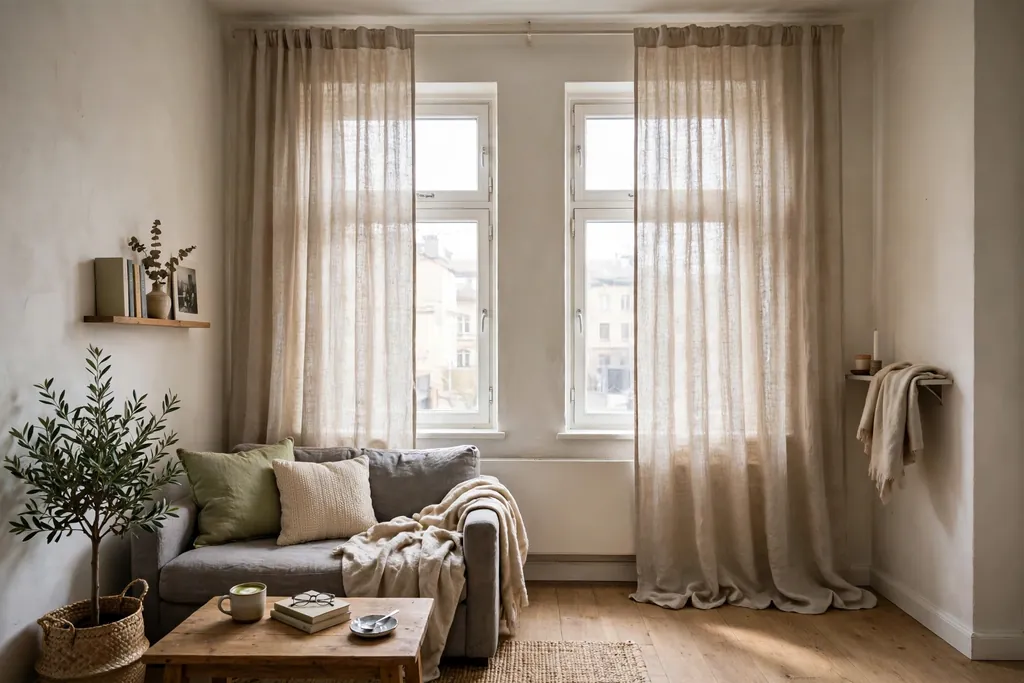
Curtains hung close to the ceiling and wider than the window frame make windows look taller and the room feel larger, even when the fabric itself is a budget linen look. Choose a plain color a shade lighter than the wall or the sofa, and let the curtains fall to the floor, just brushing it, so the line stays clean. A rod that extends past the frame lets curtains stack clear of the glass in the daytime, so light still enters. This one change can make a small apartment window feel like a feature, not an afterthought.
Wash or steam the curtains before hanging, since creases show on plain fabric. If the budget only allows one pair, dress the largest window first and use a simple blind on smaller windows in the same tone. Keep curtain fabric clear of radiators and open fires, and choose washable fabric in a room used daily. A slim tension rod inside the frame also suits renters who cannot drill, and it keeps the same high, wide line if the rod sits near the ceiling.
7. Lean a Large Secondhand Mirror Opposite the Window
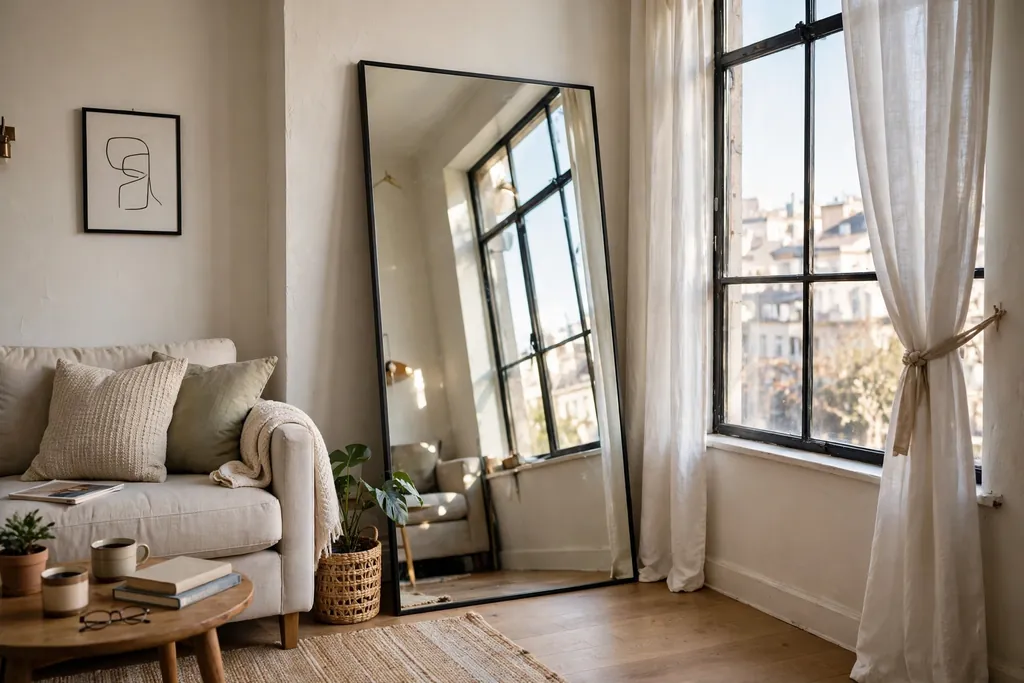
A large mirror placed opposite or beside a window reflects daylight deeper into the room and makes a small living room feel wider. Lean a full length mirror against the wall in a corner, or hang a framed mirror above a console, and check that it reflects something pleasant, such as the window view or a plant, rather than clutter. Fix a leaning mirror to the wall with a discreet anchor if kids or pets use the room, so it cannot tip. Secondhand mirrors are often cheap, since people sell them when they move, and a painted frame can update an old mirror to match the room.
Check for glare at different times of day before you settle on a final position, and keep the mirror clean, since dust dulls the reflection. One large mirror usually works better than several small ones scattered across the room, since a single reflection reads as a clear focal point. Size the mirror to about two thirds of the furniture below it when it hangs above a console, so the pairing looks balanced rather than top heavy.
8. Light the Room at Three Levels With Secondhand Lamps
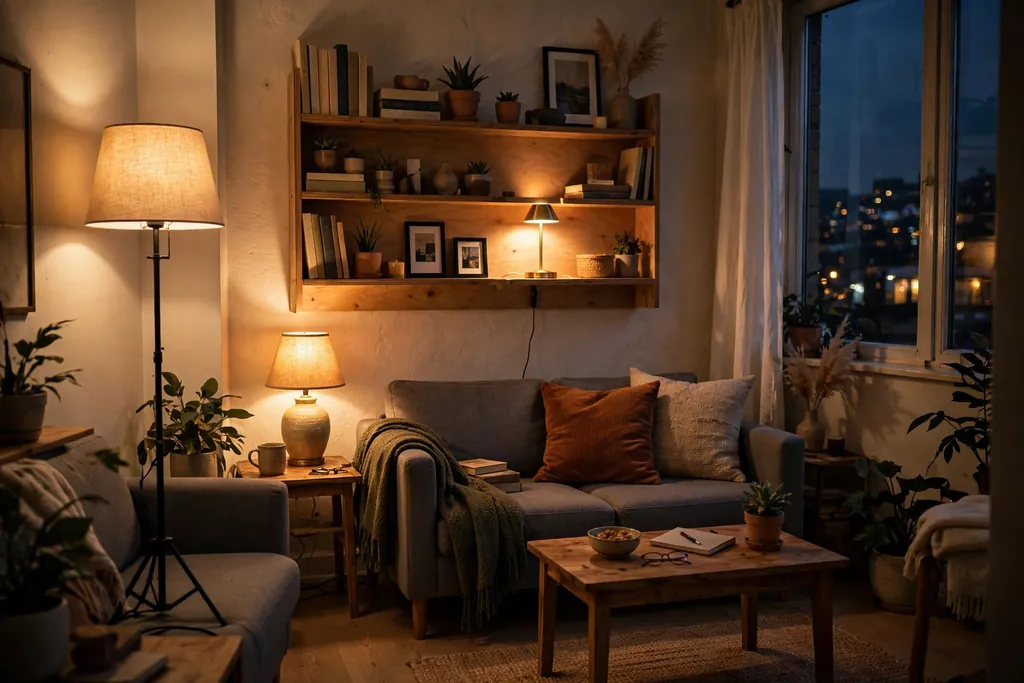
One ceiling light flattens a small room in the evening, while three levels of light make it feel warm and lived in. Add a floor lamp behind the seating for ambient light, a table lamp beside the sofa for reading, and a small lamp on a shelf for a low evening glow. Secondhand lamps are easy to find, and a new shade or a warm bulb can update an old base for very little. Choose warm white bulbs for the evening, and keep the brightest light where you read or work.
Dimmable bulbs or a simple plug dimmer let you shift from bright daytime light to a calm evening mood without rewiring, which matters in a rental where electrical changes are limited. Check secondhand lamp wiring and plugs before use, and replace any frayed cord rather than using it. Keep lamp bases small so they do not crowd the side table, and place a floor lamp behind the sofa shoulder so light falls on the page, not into your eyes.
9. Use a Storage Ottoman as Table, Seat, and Blanket Box
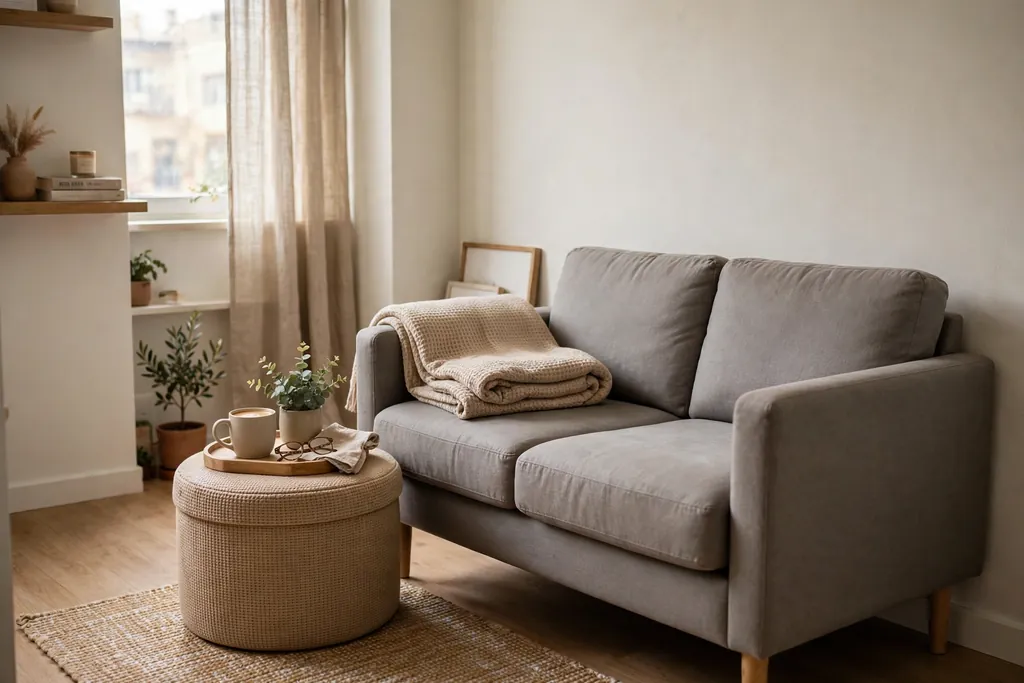
A storage ottoman holds blankets and serves as a coffee table or an extra seat, so it earns its floor space three times over. Choose a firm, flat top if you plan to set drinks on it, and add a tray to give glasses a stable surface. Check the lid action before you buy, since an ottoman that is hard to open will not get used for storage. Keep it close to the sofa, where blankets are actually needed, and store only the items you reach for often, such as throws and remote controls.
When guests visit, move the ottoman to the side as an extra seat and use nesting tables or a side table for drinks. One piece doing three jobs well beats three pieces that each do one job poorly and crowd the floor. If the ottoman top is soft, keep the tray on it at all times, so drinks never sit straight on fabric. A lidded ottoman also hides the daily clutter that makes a small room feel busy, which keeps the styling on show calm.
10. Build a Gallery Wall From Home Printed Art and Thrifted Frames
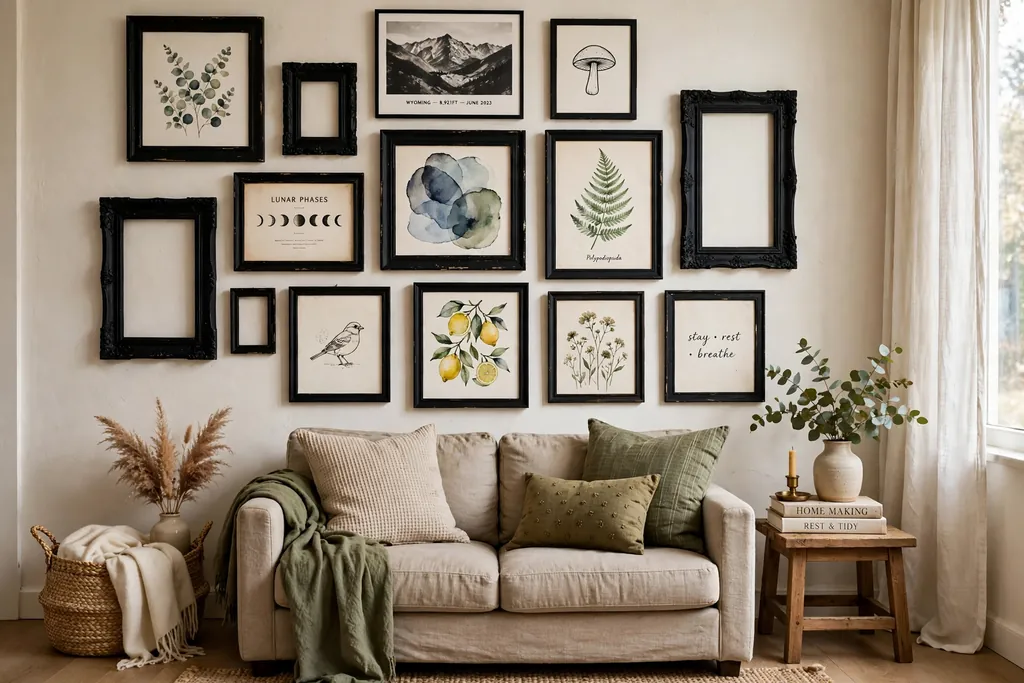
A gallery wall does not need costly art. Print photos, simple line drawings, or pages from old books and calendars at home, and hang them in frames you already own or find secondhand. Plan the arrangement on the floor first, keep the center of the group at eye level when seated, and keep the outer edges inside the width of the sofa so the wall does not look wider than the seating. Mix frame sizes but repeat one frame color through the group, so the wall looks planned.
If the frames come in mixed finishes, one coat of paint in a single color can unite them. Paint the frames outside or in a well aired space, let each coat dry fully before the next, and keep the glass out until the paint is dry. Use picture hanging strips rated for the frame weight if you rent, and leave one gap in the arrangement so you can add a new print later without starting again. A gallery wall works best above a sofa or a console, where it gives the eye a clear focal point.
11. Lift Storage Off the Floor With Wall Shelves and Lidded Baskets
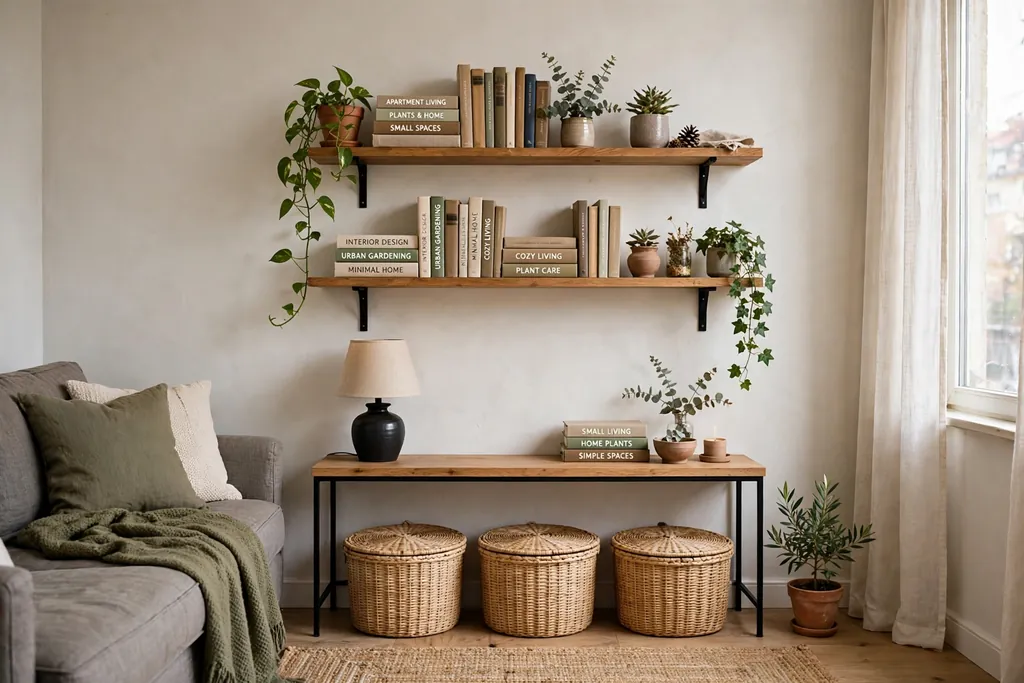
Floor space is scarce in an apartment, but wall space above head height is often empty. One or two shelves on a single wall can hold books, plants, and everyday items without spreading storage across the room, and a slim console behind the sofa can hold a lamp and a basket below. Keep heavy items low, everyday items at hand height, and lighter display pieces up high, and anchor tall furniture to the wall following the maker instructions. One shelved wall usually works better than shelves on every wall, which can make a small room feel boxed in.
Give the remaining clutter a closed home, such as lidded baskets for toys, cables, and spare throws, so only the tidy styling stays on show. For more small apartment zoning and storage ideas, see these stylish living room ideas for a small apartment. Keep one basket near the seating for the daily reset, and return items to their basket each evening. A small room shows clutter faster than a large one, so a short reset routine at the end of the day matters as much as any purchase.
Conclusion
A budget apartment living room does not need new furniture to feel finished. It needs a layout that fits the room, a rug that anchors the seating, fabric that refreshes what you already own, light at three levels, and storage that hides the daily clutter. Start with the free fixes, tape the layout, and write a small spend plan before you buy anything. Then add one idea at a time, starting with the change that solves your biggest daily frustration. When every piece earns its floor space, a small room stops feeling like a compromise and starts feeling like a room that was planned. Save this list, pick one idea for this weekend, and build from there.
FAQs
How much should I budget for a small apartment living room refresh?
Start with free fixes, such as layout, decluttering, and shopping your own home for throws and art, then set a small limit per change, such as one rug, one tin of paint, or one pair of curtains. Spend on the biggest surfaces first, since layout, rug, paint, curtains, and lighting give more change than small ornaments. Keep receipts, and return anything that does not earn its place after a week in the room, so the budget stays tied to real improvements.
What size rug suits a small apartment living room?
Choose a rug large enough for the front legs of the sofa and chairs to rest on it, and tape the footprint on the floor before you buy. A rug that is too small makes the seating group look scattered, while a rug that fits anchors the whole zone. A large plain flatweave rug is often the most budget friendly way to get the right size, and you can add pattern later through cushions and throws.
How can I make a rented living room feel personal without drilling?
Use leaning mirrors, picture ledges or hanging strips rated for the frame weight, tension rods for curtains, and freestanding shelves or a console behind the sofa. Removable hooks and strips suit renters, and a gallery wall planned on the floor first can hang with far fewer holes than a grid of separate frames. Check your lease before painting, and keep original paint details so you can repaint before you move out.
What is the cheapest way to refresh a tired sofa?
A washable slipcover in a plain color is usually the cheapest full refresh, followed by swapping cushion covers while keeping the existing inserts. A cover swap takes minutes, costs far less than new cushions, and gives you a calm base for new color through throws. A slipcover only works well when the sofa frame is still sound, so fix sagging springs or a wobbling frame first.
How do I keep a small living room from feeling cluttered?
Give every group of items one closed home, such as a lidded basket for toys and cables or a storage ottoman for throws and remotes, and keep only tidy styling on show. Use wall shelves on one wall rather than storage on every wall, and finish with a short reset each evening, returning items to their basket. A small room shows clutter faster than a large one, so a daily reset matters as much as any purchase.
Can one accent color really make a budget room look planned?
Yes, if the color is repeated in three places, such as a cushion, a throw, and a framed print, so it looks deliberate rather than random. Keep the rest of the room calm, with a warm neutral base on the walls and the largest furniture, so the accent has room to stand out. If you tire of the accent, changing three small items in an afternoon is far easier than changing a sofa or a rug.