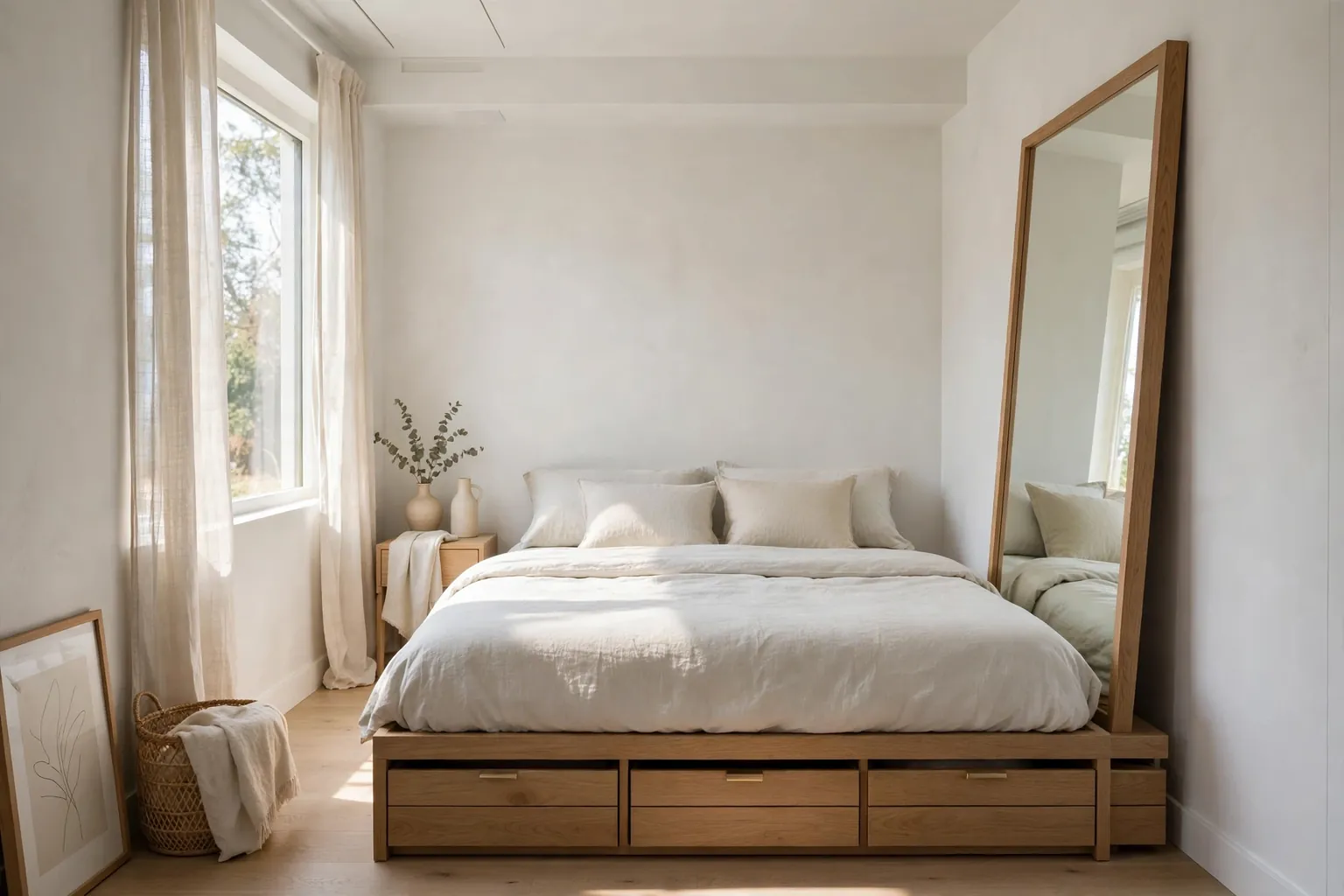
A small bedroom works best when every piece earns its place. Storage hidden in the bed, shelves that run to the ceiling, and furniture that leaves floor visible can give a tight room more room to breathe without a rebuild. These 16 small bedroom inspirations cover beds, storage, desks, light, and layout, so you can pick the changes that fit your room and your budget. Start with one idea, such as a storage bed or a wall of shelves, and add a second only when the first feels settled. Small, steady changes usually hold up better than a full room redo done in one weekend.
Key Takeaways
- Let furniture do two jobs where you can, such as a bed with drawers, a bench with storage, or a desk that folds away.
- Use the walls and the height of the room, since floor space is the scarcest part of a small bedroom.
- Keep the floor as clear as you can with floating nightstands, leggy furniture, and slim carts that tuck into gaps.
- Use a light palette and one large mirror to keep the room feeling open, then add warmth through bedding and wood tones.
- Give every small item a fixed home, such as a peg rail, a shelf bridge, or a rolling cart, so clutter has somewhere to go.
- Start with storage and layout before decor, since a tidy small room already looks calmer and larger.
1. Choose a Storage Bed With Deep Drawers
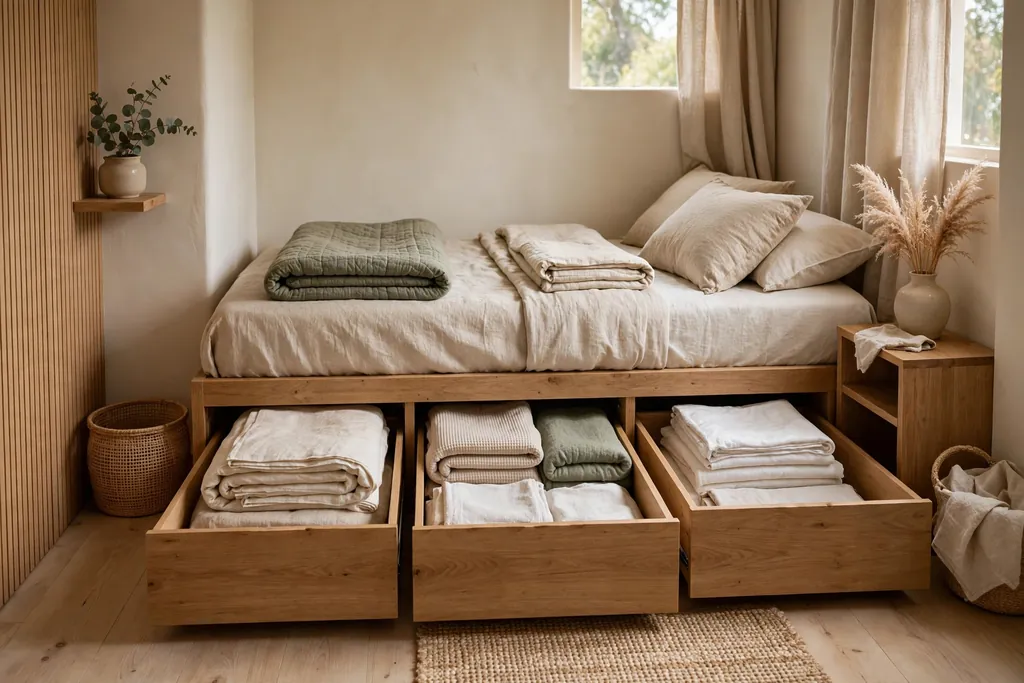
A storage bed puts the largest piece of furniture in the room to work. Deep drawers under the bed hold out of season clothes, spare bedding, and shoes, so a separate dresser may no longer be needed. This suits a bedroom with no spare closet space, or a room where a tall dresser would crowd the door or the window.
Pick drawers that open fully without hitting a nightstand or a door, and label the inside of each drawer so the contents stay easy to find. Keep daily clothes in the top drawer if the bed has a lift up base, or in the drawer nearest the door for a drawer base. Leave one drawer for spare bedding only, so guests and season changes do not disturb the everyday setup.
2. Free the Floor With Floating Nightstands
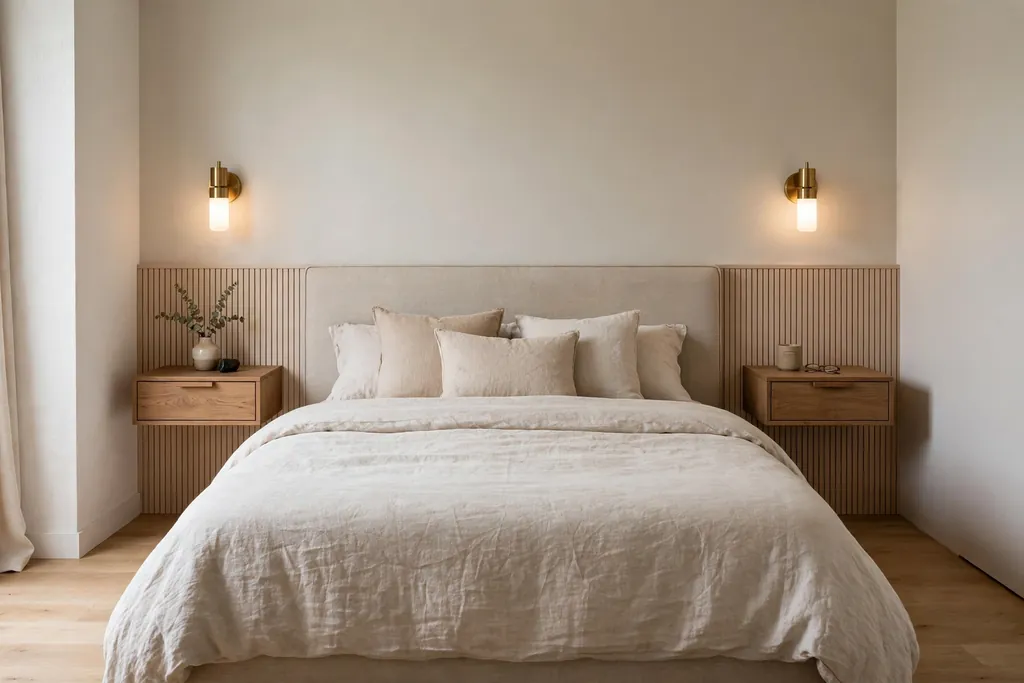
A floating nightstand fixed to the wall gives you a place for a lamp, a book, and a phone without legs taking up floor space. The clear floor below makes the room easier to clean and makes the bed wall look lighter. This suits a narrow bedroom where a standard nightstand would block the walkway beside the bed.
Fix the shelf at a height you can reach from the bed, and keep it just wide enough for a lamp and a book. Add a small drawer or a wall pocket below it for charging cables, so the top stays clear. If two people share the bed, fit one shelf on each side, even if the shelves are small, so neither side needs a floor standing table.
3. Run Storage Up to the Ceiling
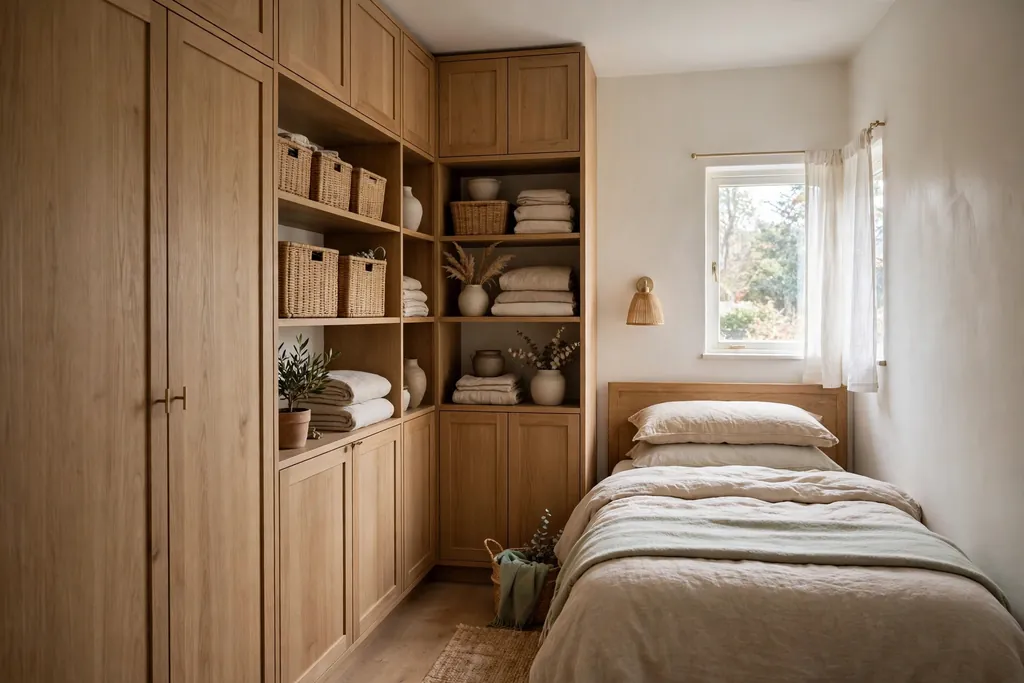
Tall storage uses wall height that often goes unused above a wardrobe or a shelf. A wardrobe or shelving unit that runs to the ceiling holds spare bedding, bags, and boxes up high, while daily clothes stay at hand height. This suits a small bedroom with high ceilings, or a room where a wide dresser would eat into floor space.
Put items you use each week at eye level, and items you use each season in labelled boxes on the top shelf. Keep a small step stool nearby if the top shelf is out of reach, and store it flat behind a door. A plain front in a light colour keeps a tall unit from feeling heavy, and matching boxes keep the top row looking calm. For more storage ideas that cost little, see these inexpensive small bedroom organization ideas.
4. Use Light Walls and One Large Mirror
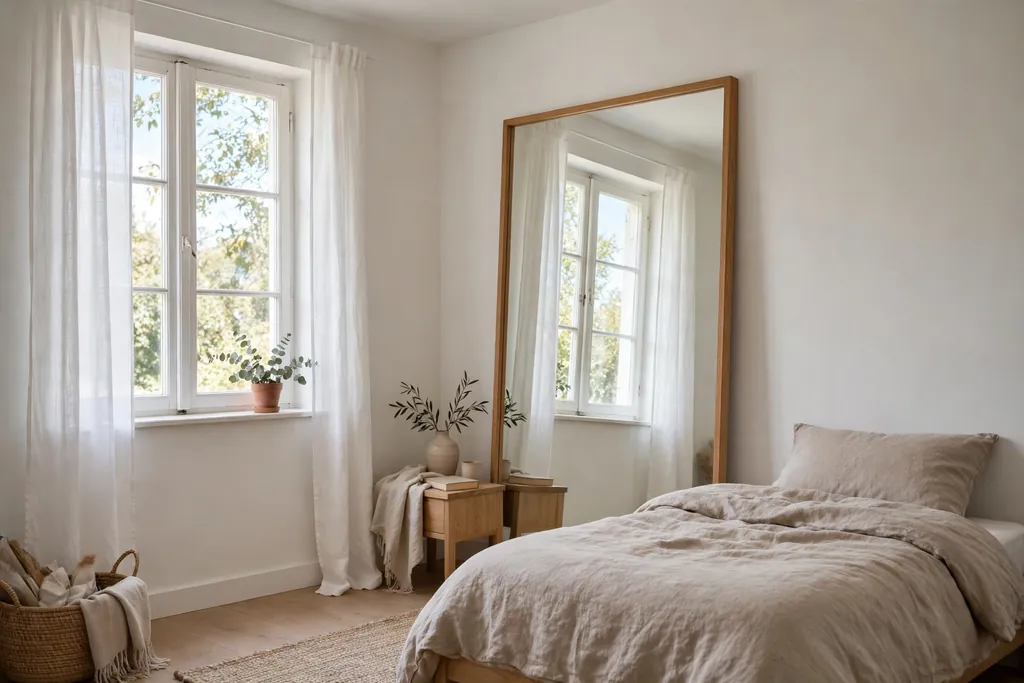
Light walls and one large mirror make a small bedroom feel wider because light bounces around the room instead of stopping at a dark surface. A large mirror above a dresser, or leaning against the wall opposite the window, reflects daylight and the view outside. This suits a bedroom with one small window, or a room that faces a shaded side of the house.
Hang the mirror where it reflects the window or a calm part of the room, not a cluttered corner. Keep the frame slim and plain, so the mirror itself does most of the work. Pair light walls with pale bedding and a light rug, and add one darker accent, such as a wood bench or a navy cushion, so the room still has depth. For more ideas for tight rooms, see these bedroom ideas for small rooms.
5. Raise the Bed on a Storage Platform
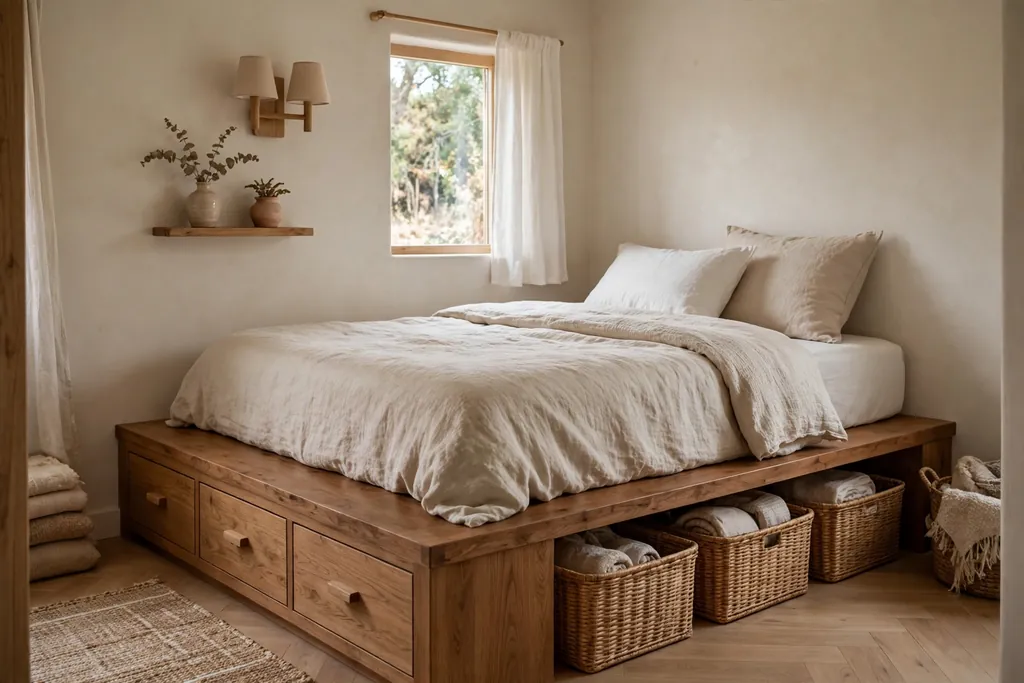
A raised platform bed lifts the mattress above a bank of drawers or open cubbies, so the whole footprint of the bed becomes storage. The platform also gives the room a clear sleeping zone, which helps in a studio or a shared room. This suits a bedroom where a standard frame plus a dresser will not fit, or where under bed space is now wasted on dust and stray items.
Build or buy a platform with drawers on the side you can reach most easily, and open cubbies on the other side for books and baskets. Keep the step up low and add a small step or a low bench if the platform is high. Use baskets in the open cubbies so the base looks tidy from the door, and keep bedding plain so the platform reads as furniture, not as a pile of boxes.
6. Fit a Fold-Down Wall Desk
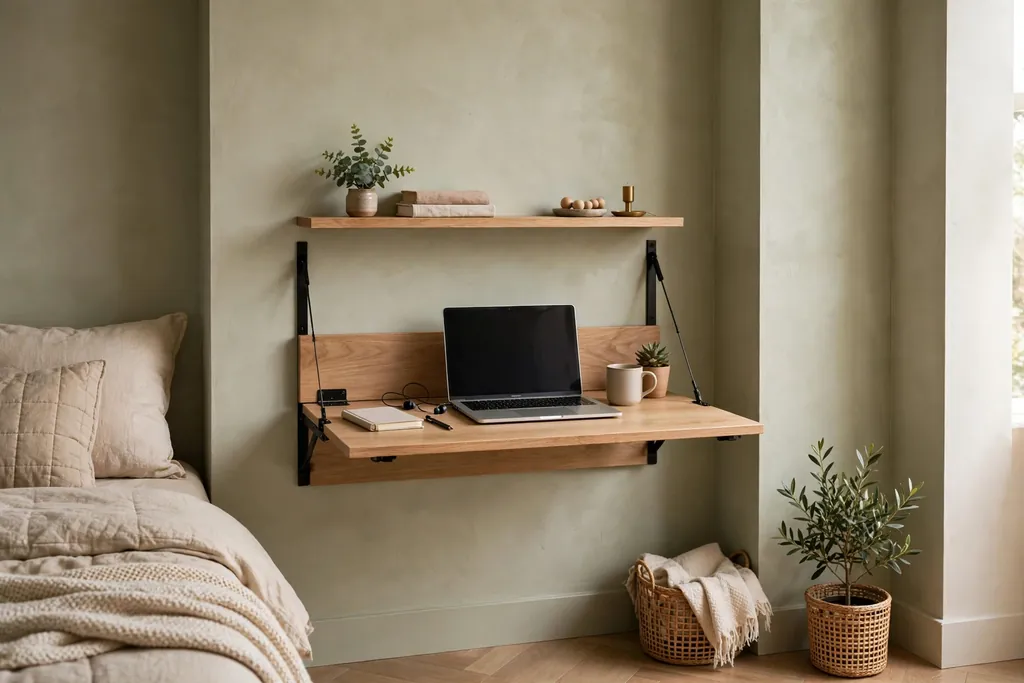
A fold-down wall desk gives a small bedroom a work spot that disappears when the workday ends. The desk folds flat against the wall, leaving the floor clear for the evening, and a shallow shelf above it holds a lamp and a few books. This suits a bedroom that must also serve as a home office, or a spare room used by guests and for work.
Fix the desk at a comfortable writing height, and fit it near a power point so cables stay short. Keep only a laptop, a notebook, and a pen on the desk, and store papers in a wall pocket or a small box on the shelf above. When the desk folds up, the room returns to a bedroom, which helps you switch off at the end of the day.
7. Fill a Narrow Gap With a Slim Shelf Unit
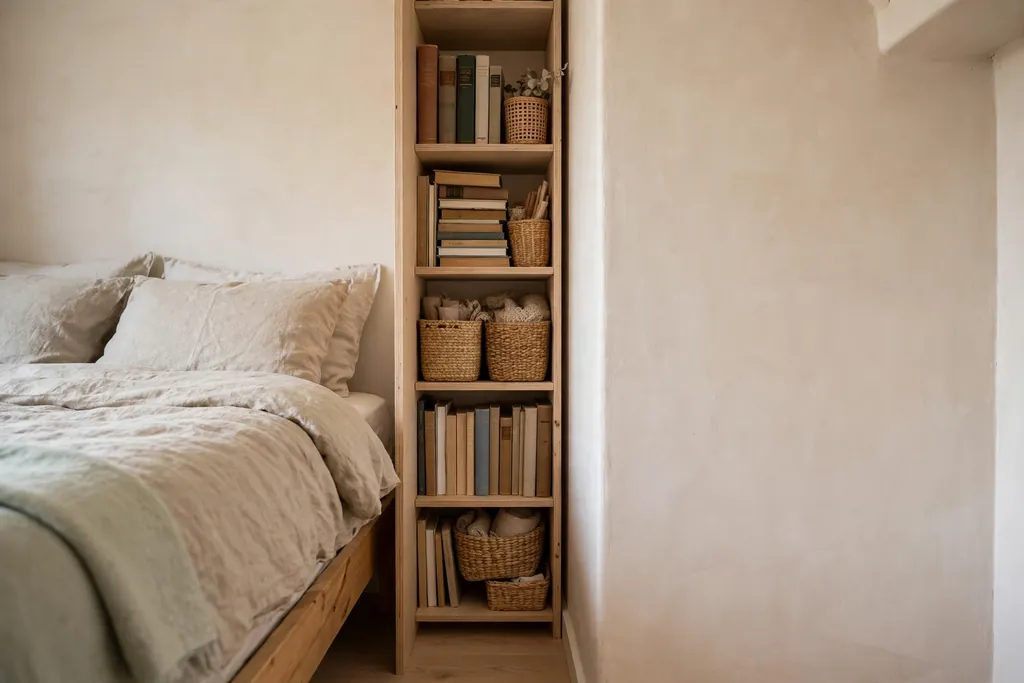
The narrow gap between a bed and a wall, or between a wardrobe and a door, often stays empty because standard furniture will not fit. A slim shelf unit made for that gap holds books, chargers, and small baskets without blocking the walkway. This suits a bedroom with an awkward leftover strip of floor, or a room where a nightstand is too wide.
Measure the gap before you buy, and leave a small margin on each side so the unit slides in and out for cleaning. Use the top shelf for a lamp or a clock, and the lower shelves for books and a basket for cables. If the gap is beside the bed, a slim unit can also serve as a nightstand, with a book and a glass of water within reach.
8. Add a Storage Bench at the Foot of the Bed
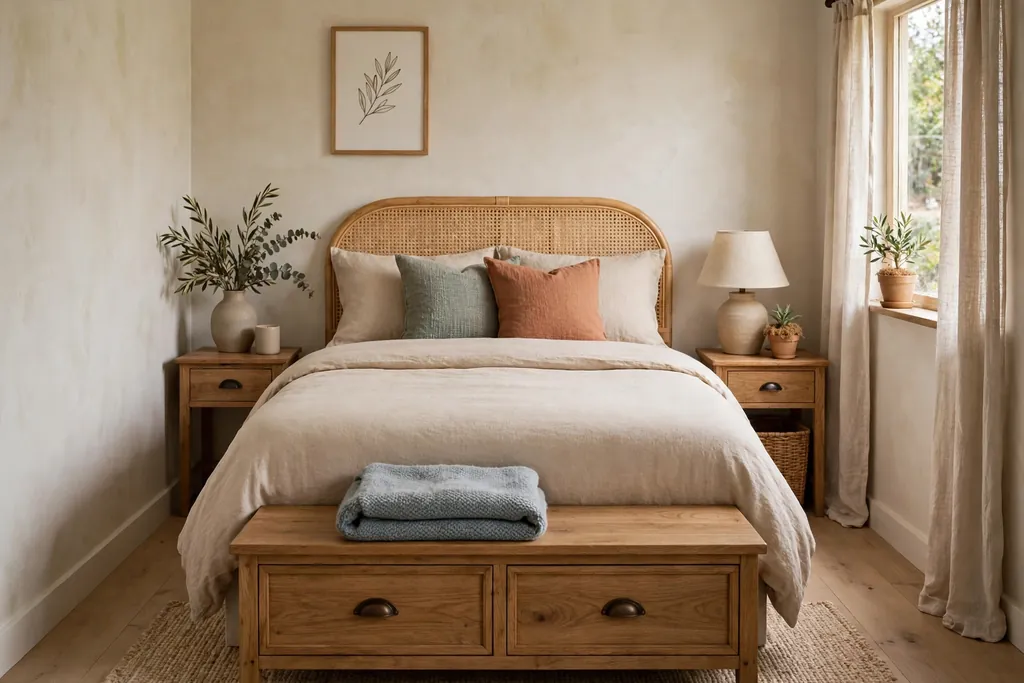
A storage bench at the foot of the bed gives you a seat for dressing, a place to lay out clothes, and hidden storage in one piece. The bench holds spare throws, shoes, or bags, so those items stay out of sight but close at hand. This suits a bedroom with no entry bench, or a room where a chair by the bed has become a pile of clothes.
Pick a bench that leaves enough room to walk around the foot of the bed, and choose a lid that lifts easily with one hand. Keep the top mostly clear, with one folded throw at most, so the bench stays useful as a seat. If the room is very narrow, use a bench that is shorter than the bed width, so it does not block the path to the wardrobe.
9. Hang a Peg Rail for Daily Items
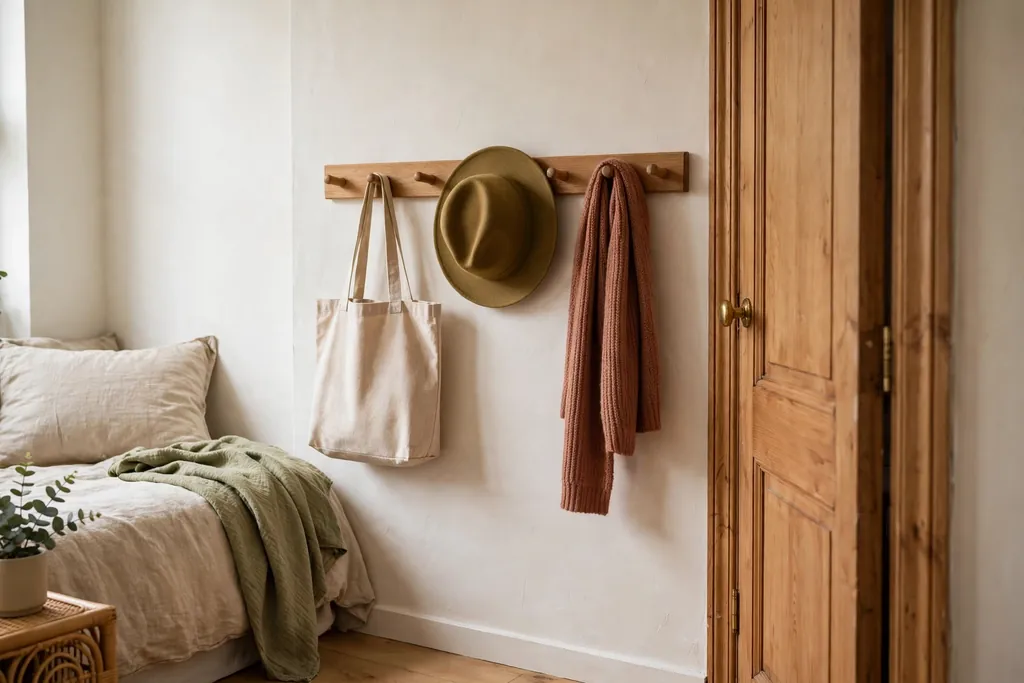
A peg rail on the wall by the door or beside the wardrobe gives bags, hats, scarves, and tomorrow’s outfit a fixed home. Items hung on a rail stay visible and easy to grab, so they stop piling on a chair or the bed. This suits a bedroom with little closet space, or a room where small items tend to drift onto every flat surface.
Fix the rail into studs or with fixings suited to your wall type, and space the pegs wide enough for a bag and a coat to hang without crowding. Hang only items you use daily, and keep the rail to one row, so it stays a tool rather than a display. A small shelf above the rail can hold keys and sunglasses, which keeps the top of the dresser clear as well.
10. Use the Corner for a Reading Nook
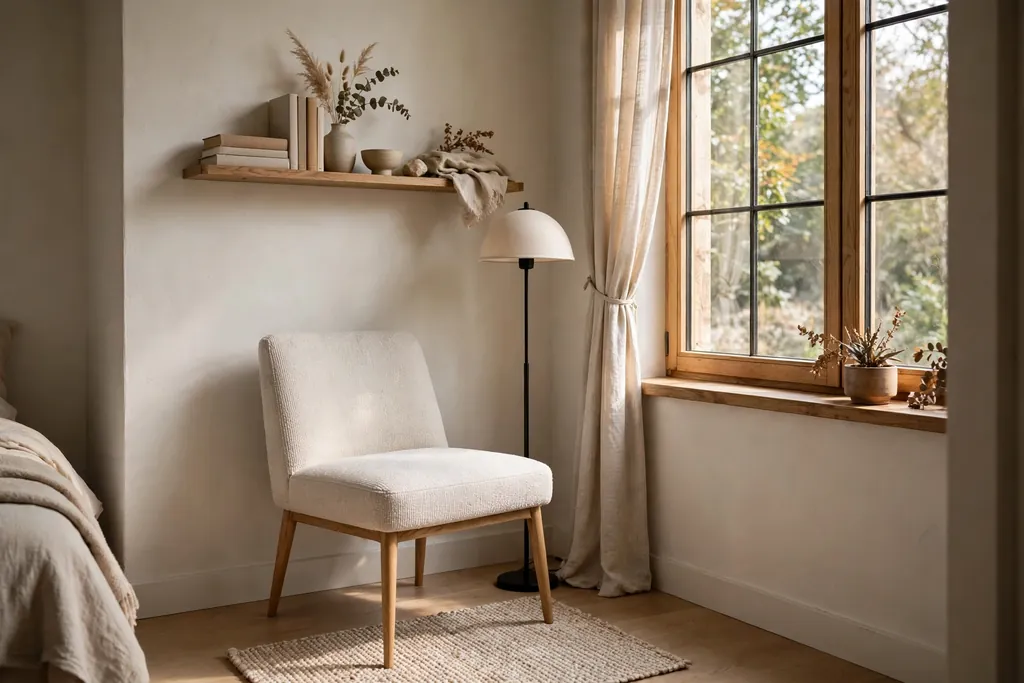
A corner that now holds a laundry pile or an unused chair can become a small reading nook with one comfortable chair, a floor lamp, and a wall shelf. The nook gives the bedroom a second use without a second room, and it keeps reading material in one place. This suits a bedroom with an empty corner by the window, or a room where a chair has no clear purpose.
Pick a chair with slim arms and legs you can see under, so the corner does not look boxed in. Add a small side table or a wall shelf for a book and a drink, and a lamp that lights the page without lighting the whole room. Keep a basket beside the chair for current books and magazines, so the nook stays inviting rather than turning into general storage.
11. Pick Leggy Furniture That Shows More Floor
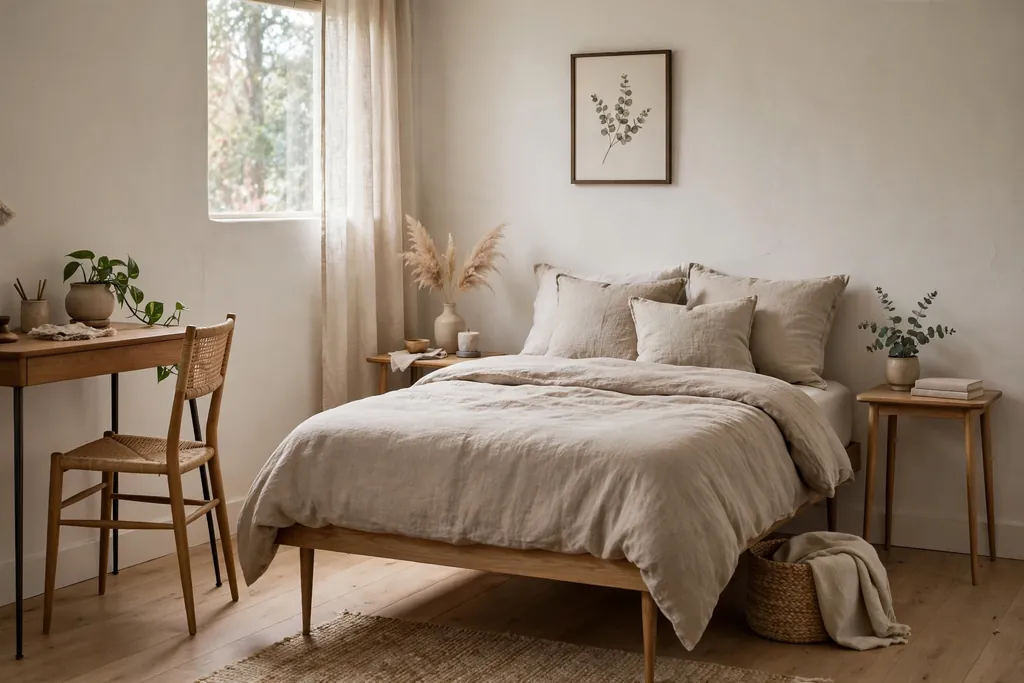
Furniture with visible legs, such as a bed frame on legs, a slim dresser, and a chair with tapered legs, lets you see floor beneath it, which makes a room feel larger. Heavy furniture that sits flat on the floor can make a small room feel boxed in, even when the pieces are the same size. This suits a bedroom that already has the furniture it needs but still feels cramped.
When you replace a piece, look for legs at least a few inches high and a frame that does not reach the floor. Keep the floor beneath those pieces clear, since a visible strip of floor is what creates the open feeling. Pair leggy furniture with a light rug that fits under the front legs only, so the rug does not cover the floor you just freed.
12. Keep Bedding to One Calm Palette
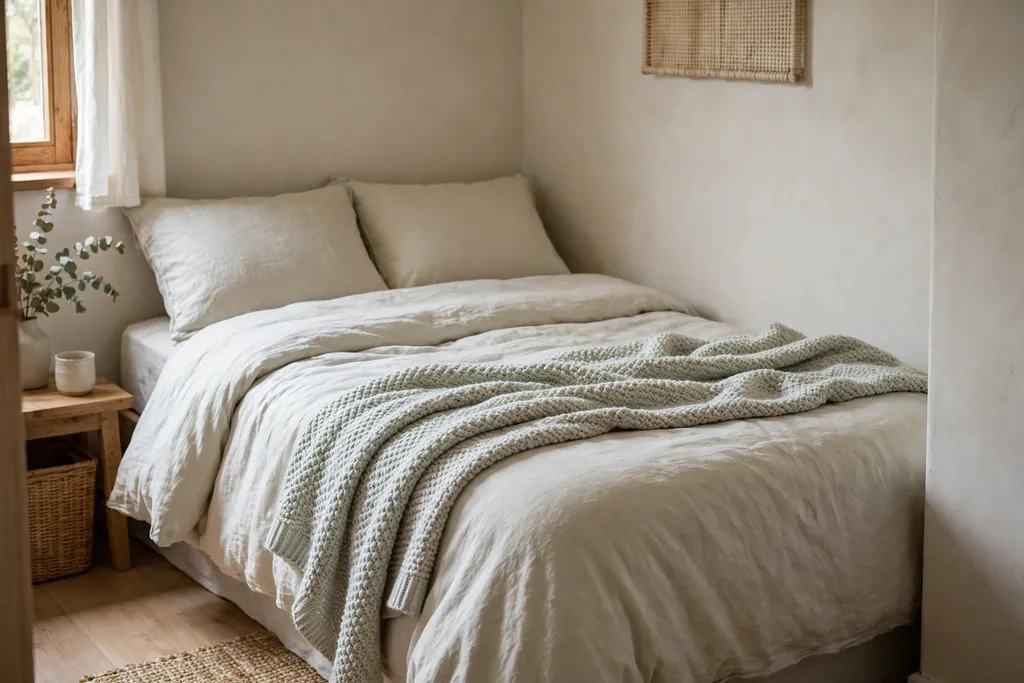
A calm bedding palette in one or two soft tones makes a small bedroom look settled, because the bed is the largest surface in the room. White, cream, pale grey, or soft sage bedding with one muted accent lets the eye rest, while a busy mix of patterns can make the same room feel crowded. This suits a bedroom where the bed fills most of the floor, or a room with many small items on display.
Start with plain sheets and a plain duvet cover, then add texture through a knit throw and a linen cushion rather than new colours. Keep decorative cushions to two or three, so the bed stays easy to make each morning. If you want colour, add it in one place, such as a throw or a piece of art, and keep the rest of the bedding calm. For low cost refresh ideas, see these bedroom decor ideas on a budget.
13. Build a Window Seat With Storage Below
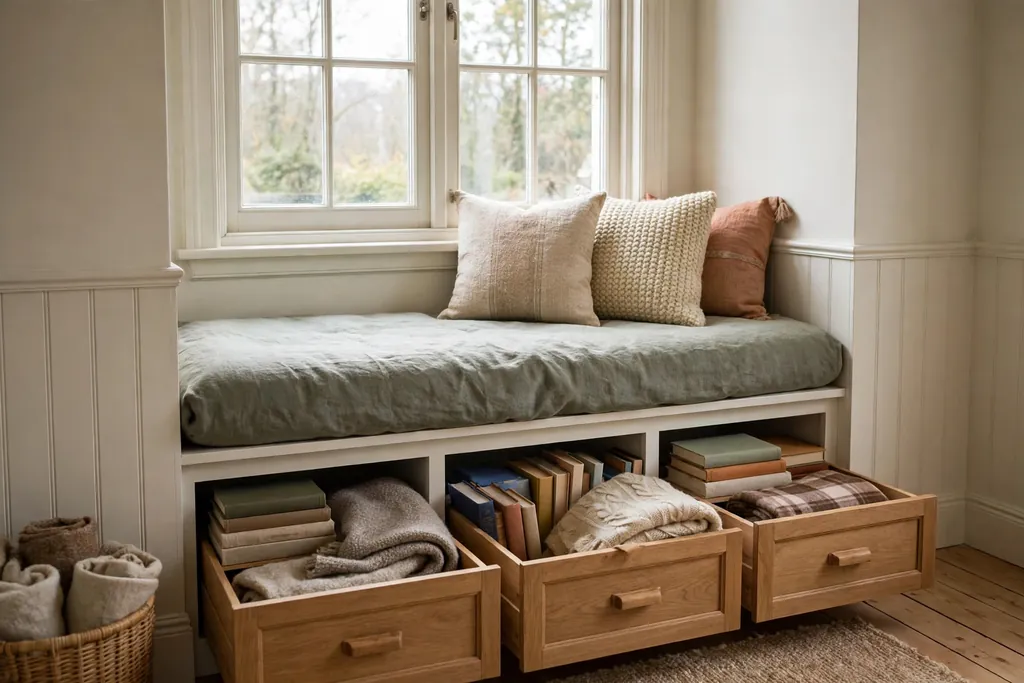
A window seat turns the space under a window into seating and storage at once. The seat gives you a place to read in daylight, while drawers or a lift up lid below hold shoes, books, or spare bedding. This suits a bedroom with a wide window and an empty wall below it, or a room where a chair by the window would block the radiator or the walkway.
Build the seat to the width of the window, and keep the seat height close to a chair seat so it feels natural to sit on. Add a cushion in a washable cover, since window seats gather dust and sun, and keep the cushion plain so the view stays the focus. Use the storage below for items you use often but do not need on display, such as extra throws for cold nights.
14. Bridge the Bed With Shelves Above the Headboard
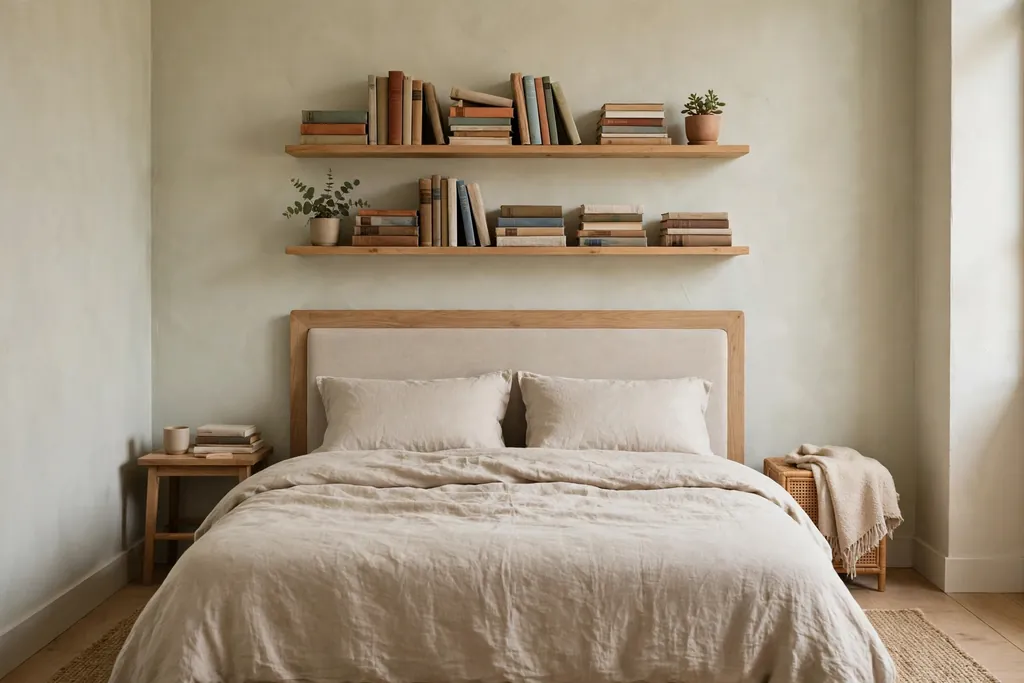
Shelves that bridge the wall above the headboard use space that is usually bare, and they keep books and small items within reach from the bed. A single long shelf, or two short shelves with a gap in the middle, holds books, a clock, and a small plant without taking floor space. This suits a bedroom with no room for nightstands, or a room where bedside tables would block a door.
Fix the shelves firmly into studs, since books are heavy, and keep the shelf depth shallow so items do not loom over the bed. Put heavy books low and near the supports, and keep the shelf display to a few items, so it reads as storage rather than clutter. Leave a clear gap above pillows, so you can sit up in bed without hitting the shelf.
15. Park a Slim Rolling Cart Beside the Bed
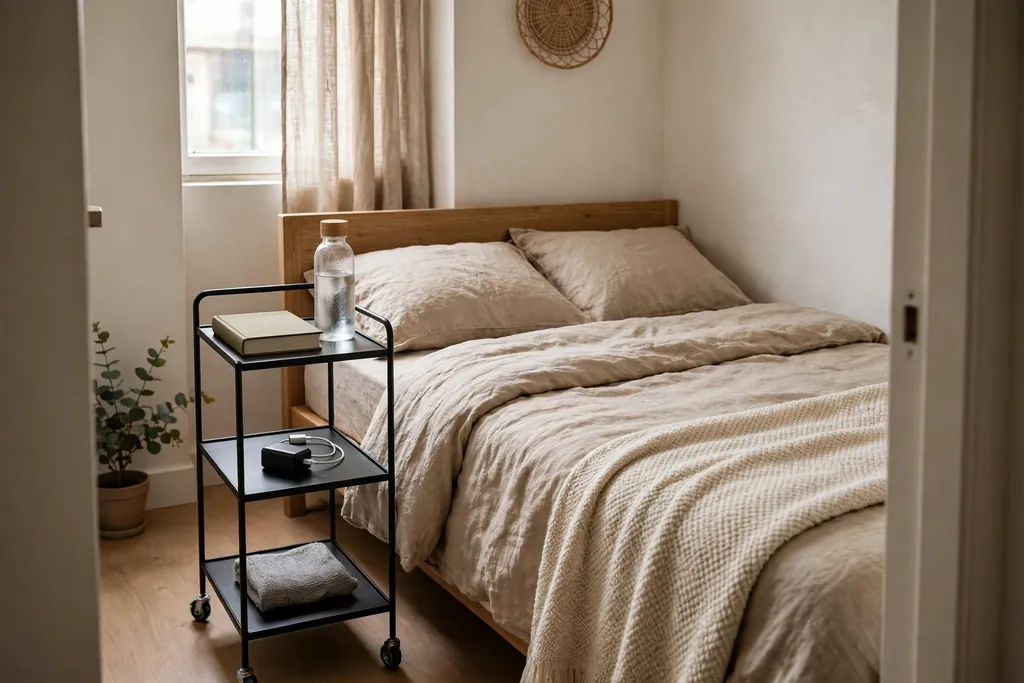
A slim rolling cart beside the bed holds a book, a charger, water, and night time essentials, and it can roll out of the way when you need the space. The cart suits a bedroom where a nightstand will not fit, or a room where the bed sits close to the wall. Because it moves, it also helps when you clean or change the bedding.
Pick a cart narrow enough to fit the gap, with a top tray that keeps small items from sliding off. Keep the cart to two or three tiers, and put heavier items low so it does not tip. Roll it beside the bed at night and tuck it against the wall or under a shelf during the day, so the walkway stays clear.
16. Swap a Hinged Door for a Sliding Door
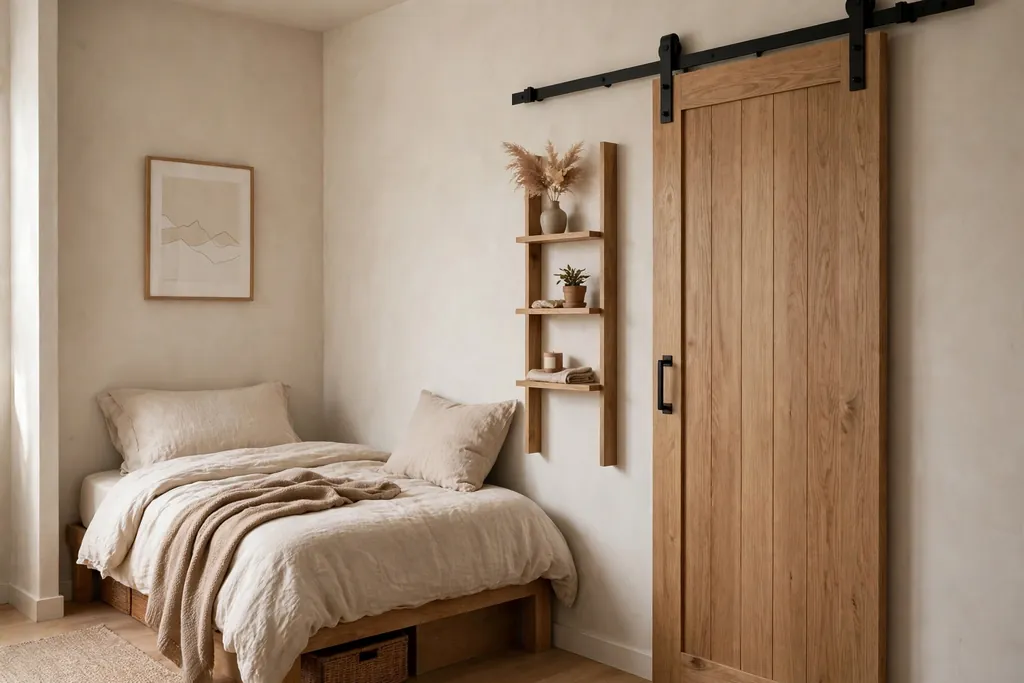
A hinged door needs a clear arc of floor to open, and that arc is often the most useful strip of floor in a small bedroom. A sliding door on a wall rail, or a pocket door that slides into the wall, frees that floor for a dresser, a bench, or a clear walkway. This suits a bedroom where the door hits the bed or a wardrobe, or a room where furniture placement is limited by the door swing.
Check the wall beside the door for switches, pipes, and studs before you choose a pocket door, since a surface mounted sliding door is simpler where the wall cannot take a pocket. Fit a soft close rail so the door does not slam, and keep the handle slim so it does not catch on passing furniture. Once the swing is gone, you can place a slim shelf or a bench where the door used to open.
Conclusion
A small bedroom does not need more space to work harder. It needs furniture that stores, walls that hold, and a layout that leaves floor clear. Pick one idea from this list, such as a storage bed, a peg rail, or a sliding door, and let it settle before you add the next. Over time, those small changes add up to a room that feels calmer, holds more, and is easier to keep tidy. Save this post on Pinterest if you want to return to these 16 small bedroom inspirations when you plan your next refresh.
FAQs
How do I make a small bedroom feel larger without knocking down walls?
Use light walls, one large mirror, and furniture with visible legs, so light moves around the room and floor stays visible. Add storage that runs to the ceiling and a bed with drawers, so clutter leaves the floor and the surfaces. Keep bedding to one calm palette, since the bed is the largest surface in the room.
What is the best storage for a small bedroom with no closet?
A storage bed with deep drawers is the most useful first step, since it uses the footprint of the bed. Add a tall wardrobe or shelving unit to the ceiling, a peg rail by the door, and a slim rolling cart for night time items. Together, these give daily, seasonal, and small item storage without a separate dresser.
Should I use a storage bed or a raised platform bed?
Pick a storage bed with drawers if you want easy daily access to clothes and bedding. Pick a raised platform bed if you need the whole bed footprint for storage and you are comfortable with a step up. Both work well in a small room, so the choice comes down to how often you reach the stored items and how high you want the bed.
How can I fit a desk in a small bedroom?
A fold-down wall desk is the most space saving option, since it folds flat when work ends. Place it near a power point, keep only a laptop and a notebook on it, and store papers in a wall pocket above. A slim shelf unit in a narrow gap can also hold a laptop and books if a fold-down desk does not suit your wall.
What colours work best in a small bedroom?
Light, calm colours work best, such as warm white, cream, pale grey, and soft sage, because they reflect light and keep the room feeling open. Add warmth through wood tones, a knit throw, and one muted accent, such as navy or rust, in a cushion or a piece of art. Keep strong colour to small doses, so the room stays calm.
How do I stop a small bedroom from looking cluttered?
Give every item a fixed home, such as a drawer, a peg, a shelf, or a basket, and keep flat surfaces mostly clear. Limit decorative cushions to two or three, keep shelf displays to a few items, and put seasonal items in labelled boxes up high. A short weekly tidy, where each item returns to its home, keeps the system working.