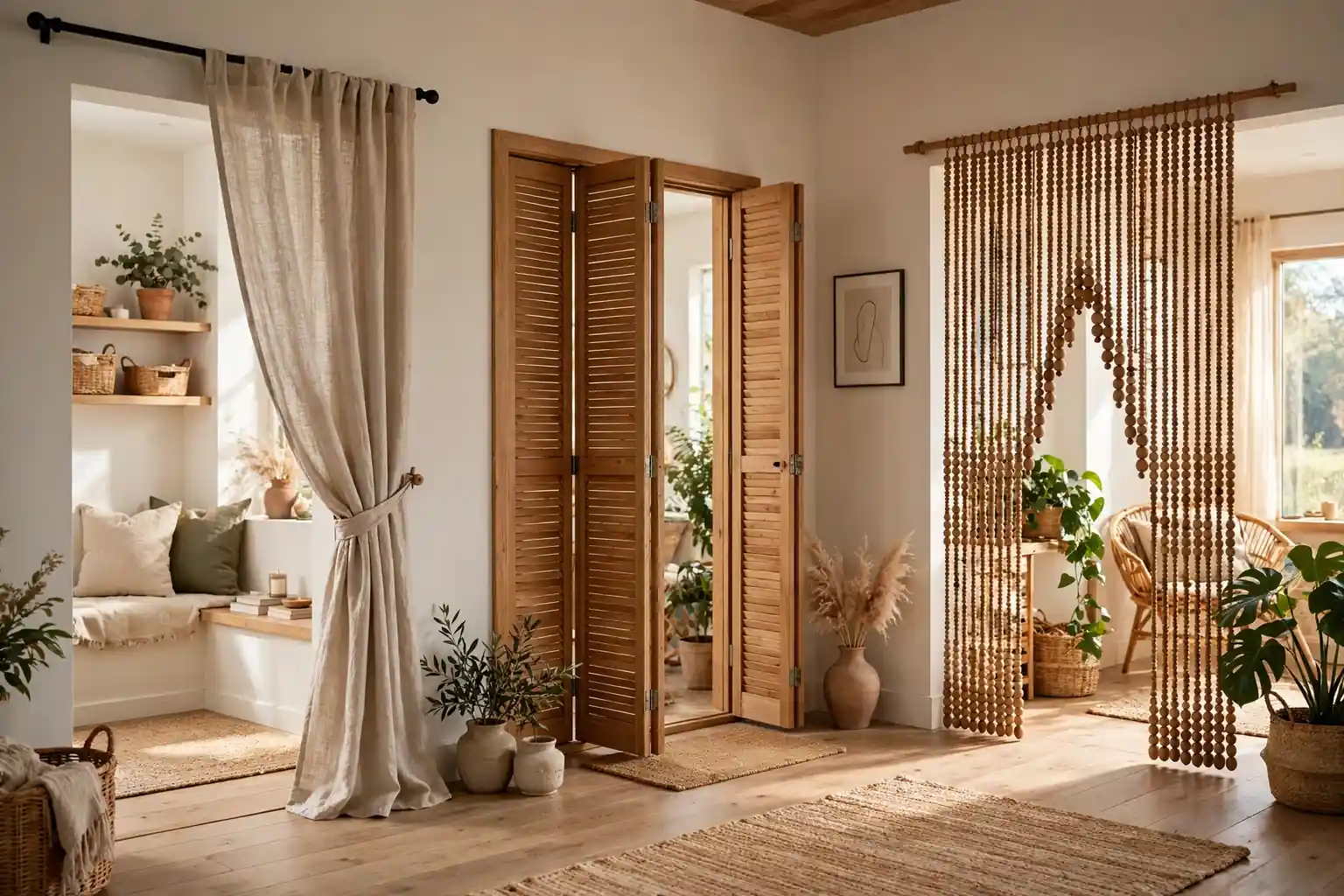
Not every doorway needs a fixed door. Some rooms need privacy only at night, some need a draft blocked in winter, and some just need a soft divide between a bed and a desk in one shared room. A temporary door gives you that divide without screws in the frame, a new slab, or a call to a contractor, and you can take it down in minutes when your needs change. These 30 temporary door ideas for the home cover curtains, screens, panels, and rolling pieces, so you can match the idea to the opening, the light, and the amount of privacy you actually need. Measure the opening first, then start with the idea that solves your biggest daily problem.
Key Takeaways
- Measure the opening, the trim, and the floor clearance before you buy or build anything, since a panel that is too wide or too long will drag, gap, or fall.
- Tension rods, magnetic rods, over-door hooks, and freestanding screens give you a door with no holes in the wall, which suits rented homes best.
- Fabric gives softness and light control, screens give a firm divide you can move, and panels give a flat surface you can also use for notes, art, or storage.
- Match the weight to the mount: heavy curtains need a strong rod and a firm fit, while light panels can hang from hooks or wire.
- Keep one clear path through the room, and test the door at night as well as in daylight, since light, drafts, and sound all change after dark.
- Store the panel flat or rolled when it is not in use, so it stays clean and ready to hang again next season.
1. Hang a Linen Curtain on a Tension Rod
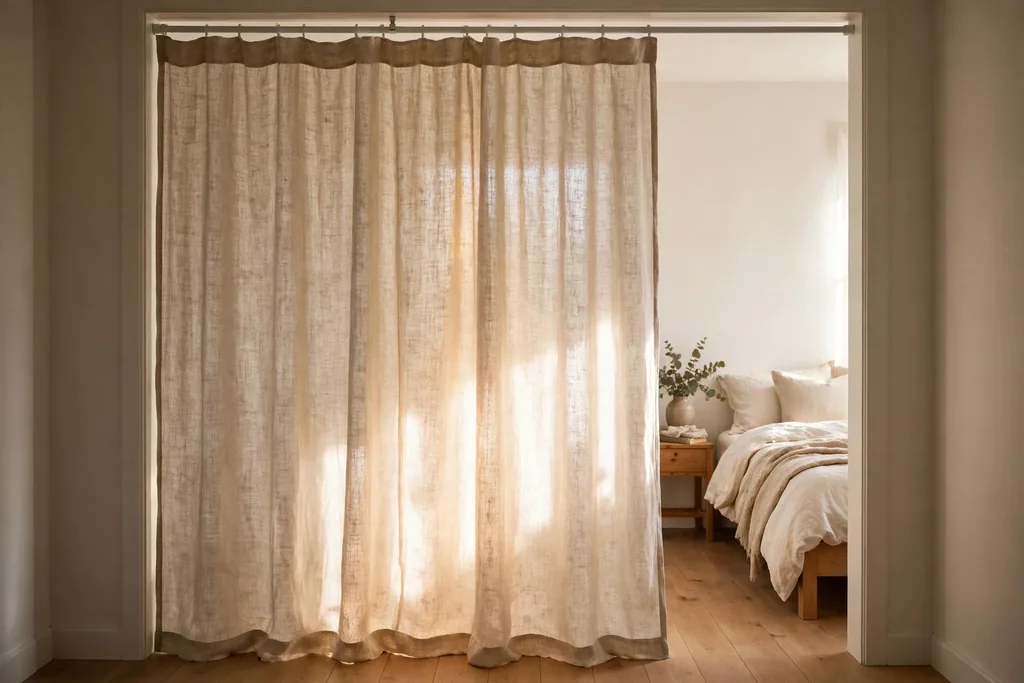
A plain linen curtain on a tension rod is the simplest temporary door, and it suits almost any standard doorway. The rod wedges between the sides of the frame, so there are no screws and no marks, and the curtain hangs straight, hides clutter, and softens a plain opening. Choose a curtain that is a few inches wider than the opening, so it covers the sides without pulling tight.
Measure the frame at the top, middle, and bottom, since older frames are not always square, and pick a rod rated for the width you measured. Hang the curtain so the hem clears the floor by a small amount, which stops it catching on feet and rugs. Wash the curtain when it collects dust, and keep it clear of heaters and open flames.
2. Use a Sheer Voile Panel for Soft Light
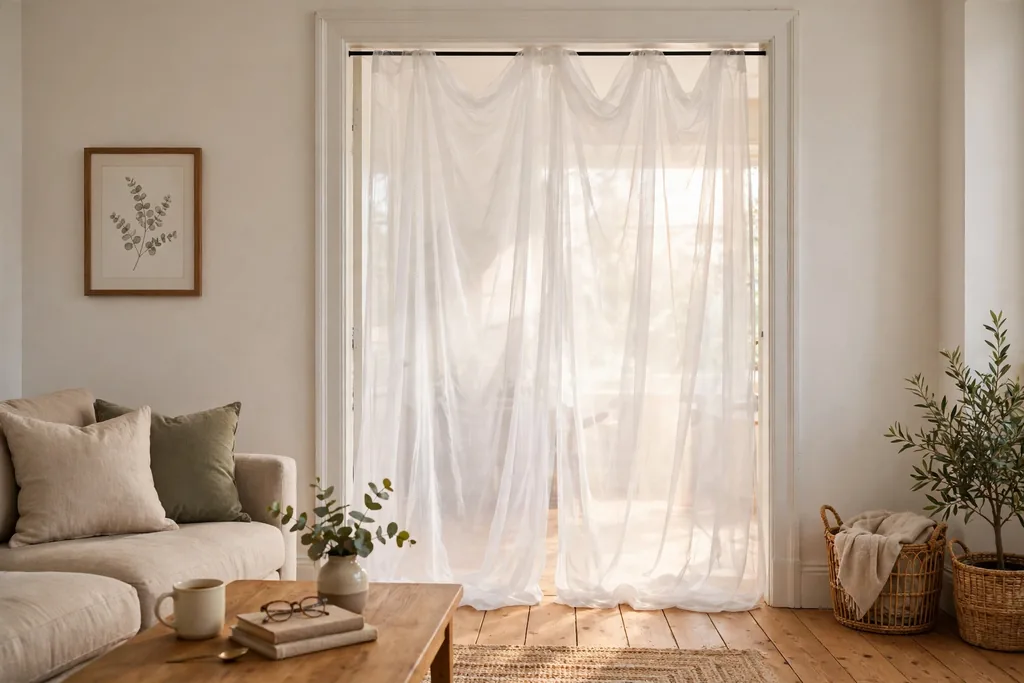
A sheer voile panel gives you a light divide rather than a closed door, which suits a room that needs some privacy without losing daylight. The fabric glows when light passes through it, and it marks the edge of a room while still letting you see shapes and movement beyond it. This works well between a living room and a dining area, or in front of a glass door.
Hang the voile on a tension rod inside the frame for a neat fit, and keep the panel simple, since a busy pattern will block more light than a plain weave. If you need more privacy at night, add a second, heavier panel behind it, and draw that one closed only after dark. Keep the hem clear of the floor, and wash the panel often, since sheer fabric shows dust quickly.
3. Hang a Beaded Curtain for a Casual Divide

A beaded curtain divides a room with sound and movement rather than a solid wall, which suits a casual living room, a teen room, or a doorway that gets used all day. The strands part as you walk through, then fall back into place, so there is no handle to turn and no door to leave open. Wood beads give a warm, natural look, while glass or plastic beads catch more light.
Hang the beaded curtain from a rod or a track fixed with removable hooks, and check the length before you hang it, since beads that drag on the floor will tangle. Keep the curtain away from small children who might pull strands down, and tie it to one side with a simple hook when you want the doorway fully open. If the sound of beads bothers you at night, swap this idea for a fabric panel in a bedroom doorway.
4. Hang a Macrame Panel for Texture
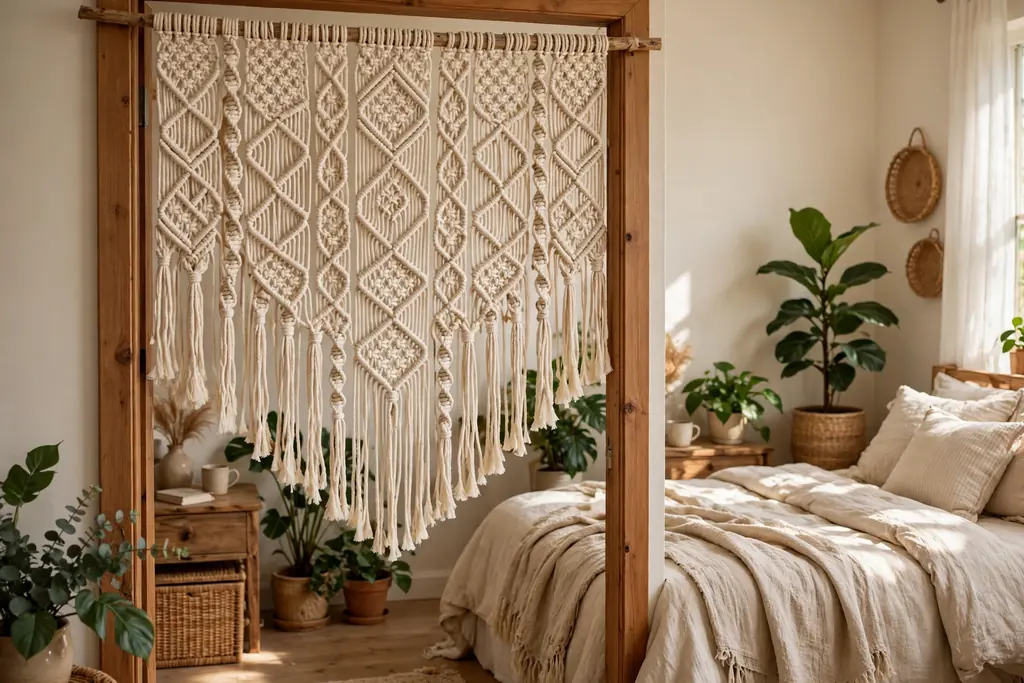
A macrame panel adds texture to a doorway in a way flat fabric cannot, with knots and fringe that catch light and shadow. This suits a bedroom, a reading nook, or a bohemian living room where the doorway is part of the decor, not just a passage. A panel on a wooden dowel hangs from two hooks or a tension rod, and it comes down as one piece when you no longer need it.
Choose a panel that covers most of the opening but leaves a gap at the bottom, so you can step through without pushing the fringe aside each time, or hang two narrower panels side by side for a clearer path. Keep the panel away from damp walls, since cotton cord can hold moisture, and shake it outside now and then to remove dust. Pair it with plain walls, so the knotted texture stays the main feature.
5. Hang a Heavy Velvet Curtain for Drafts and Sound
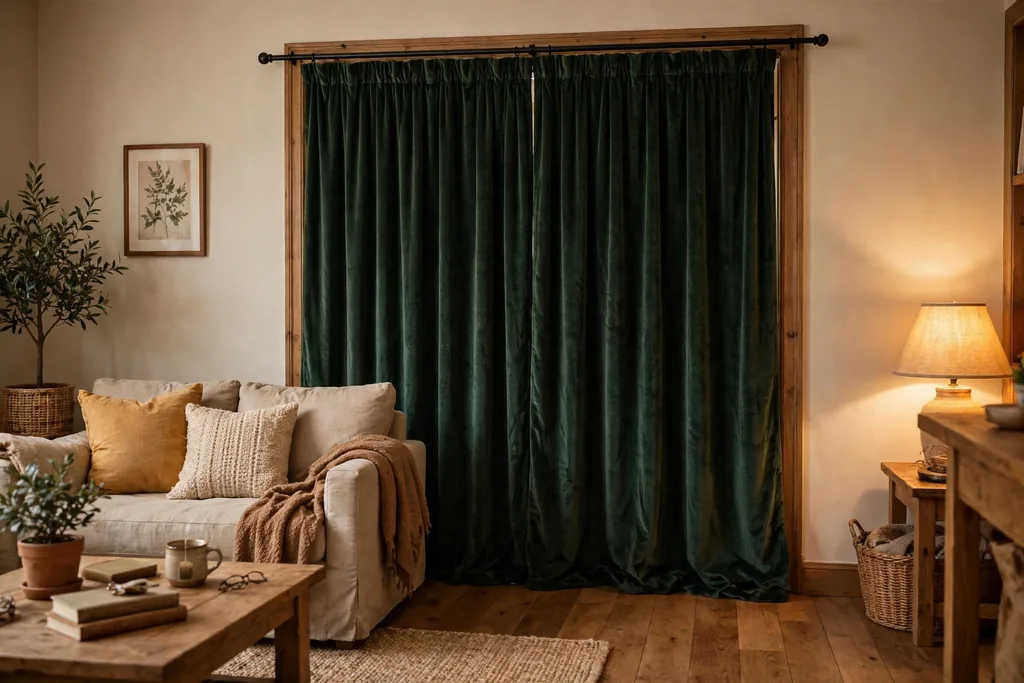
A heavy velvet curtain is the best fabric choice when a doorway lets in a cold draft or noise from the next room. The weight of the fabric helps it hang straight and seal the sides of the opening better than a light curtain, and the thick pile softens sound as well as light. This suits a doorway between a hall and a living room, or a bedroom door that faces a busy corridor.
Use a strong tension rod or a rod held by removable brackets, and check that the rod can hold the curtain weight without bowing. Let the curtain reach close to the floor and overlap the frame at the sides, since gaps at the edges let drafts through. Keep velvet away from direct damp, and brush it now and then to lift dust from the pile.
6. Hang a Quilt or Tapestry as a Door

A quilt or tapestry turns a doorway into a display, and it costs nothing if you already own a piece you love. The thick fabric gives more privacy and draft cover than a sheer panel, and the pattern adds color to a plain wall without paint. This suits a bedroom, a guest room, or a hallway where a plain curtain would look dull.
Hang the quilt from a curtain rod through a rod pocket or from clip rings, so the weight spreads evenly and the piece does not stretch. Check that the quilt clears the floor and any nearby heater, and rotate it now and then if one side gets more sun. If the piece is valuable or fragile, hang it in a doorway with light use, and keep it out of reach of pets that might pull at the hem.
7. Layer Two Curtains on a Double Tension Rod
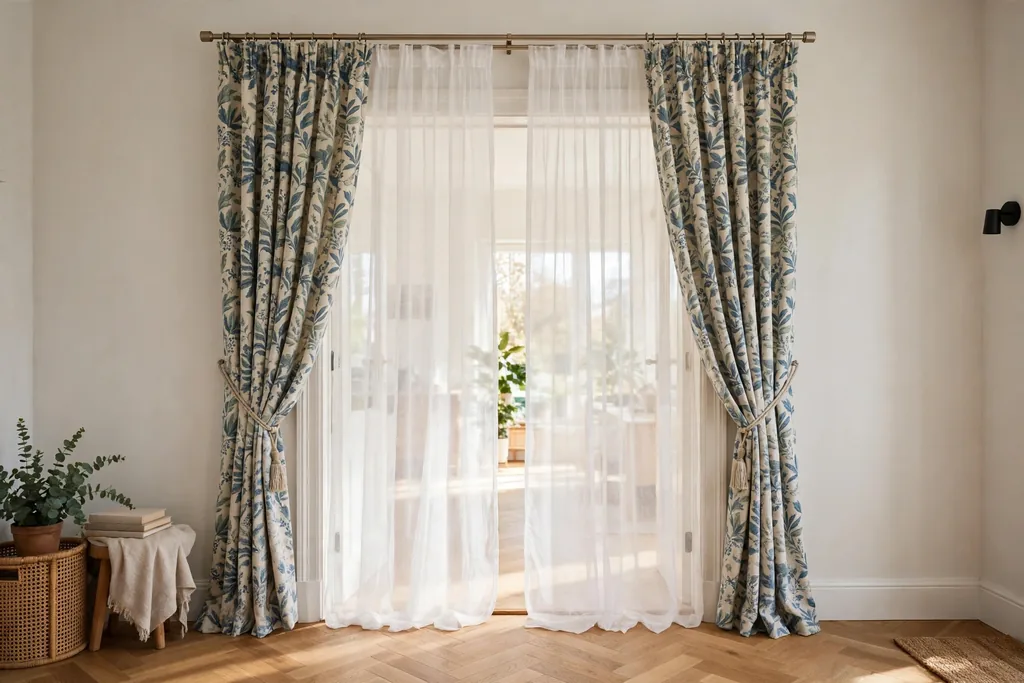
Two curtains on a double tension rod give you two doors in one opening: a sheer layer for daylight and a heavier layer for night. During the day, the sheer layer stays closed for soft light and light privacy, and at night you draw the heavier layer across for a fuller divide. This suits a bedroom or a studio where one room must work as both a living space and a sleeping space.
Fit the double rod inside the frame, with the sheer layer on the inner rod and the heavier layer on the outer rod, so each layer moves without catching the other. Keep both hems clear of the floor, and choose fabrics that slide easily on the rod, since stiff fabric will bunch. When you want the doorway fully open, draw both layers to one side and hold them with a simple tieback.
8. Use a Magnetic Rod Panel on a Metal Frame
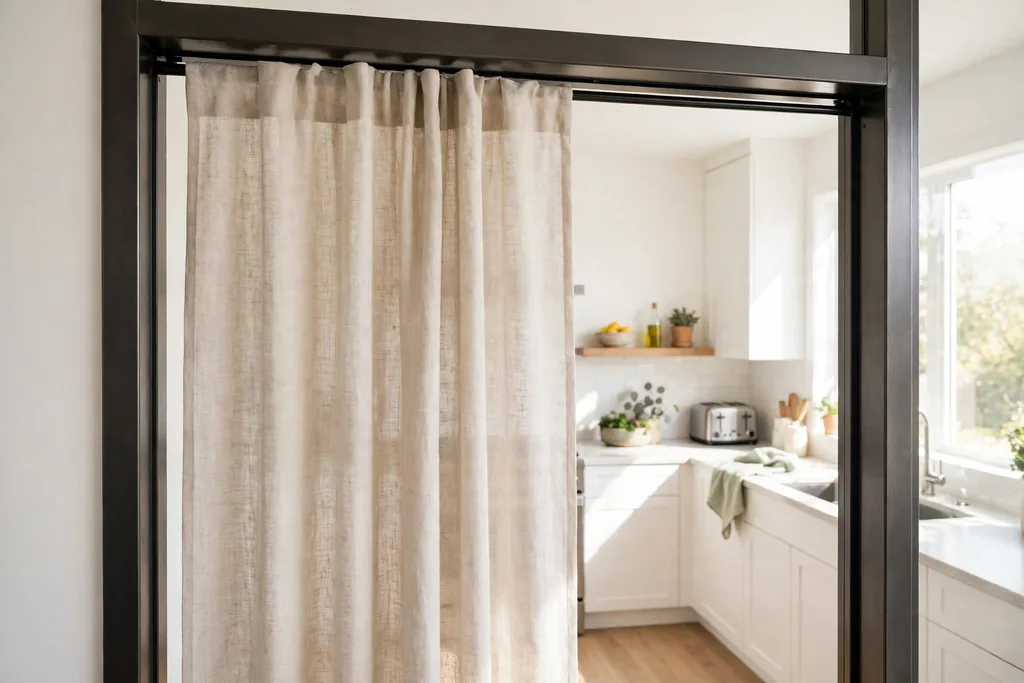
A magnetic curtain rod sticks to a metal door frame without screws, hooks, or adhesive, which makes it a fast fix for a steel framed doorway or a metal patio door. The panel hangs from the rod just like a normal curtain, and the whole setup lifts off in seconds when you move out or change your mind. This suits a rented flat with metal frames, or a doorway where you cannot drill into the trim.
Test the magnet on your frame first, since some painted metal frames hold a magnet weakly, and keep the panel light so the rod stays put. Choose a panel that covers the opening fully, and check that the rod does not block the door latch if the frame still holds a working door. Wipe the frame before you fit the rod, since dust under a magnet can mark paint over time.
9. Stand a Freestanding Folding Wood Screen in the Opening
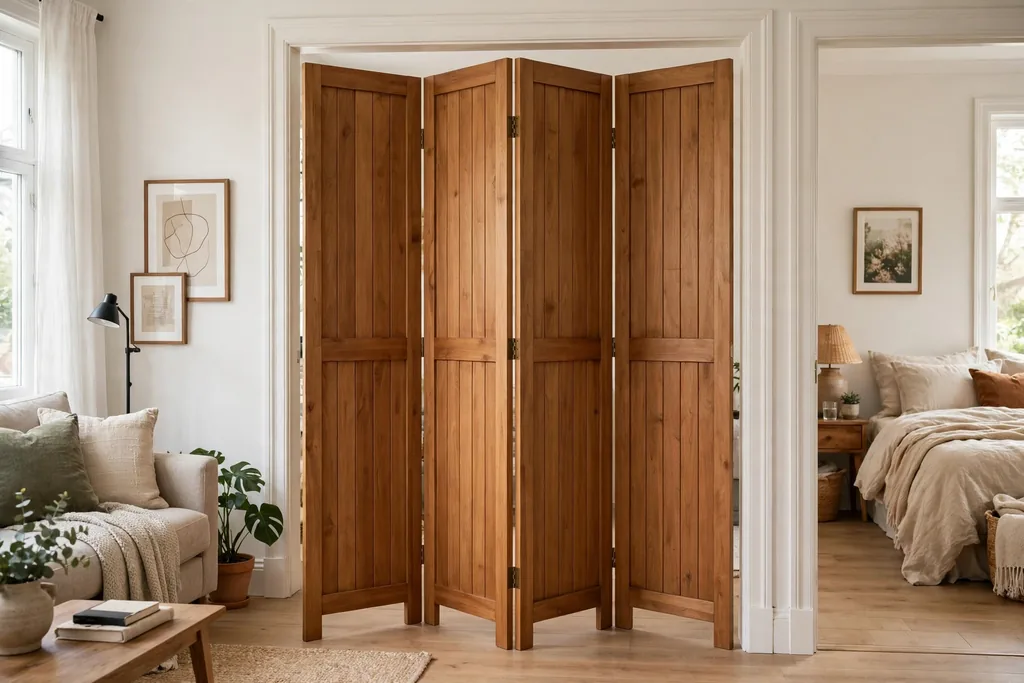
A folding wood screen is a door you can move, fold, and store flat, with no fitting at all. Set it across a wide opening, angle the panels slightly so it stands steady, and you have a firm divide that still lets you walk around either end when you need to. This suits a studio, a large living room, or a guest space where a curtain would feel too soft.
Choose a screen as tall as you need for privacy, and check that it stands on a flat floor without rocking, since a screen on a rug edge can tip. Keep the screen clear of heaters, and add felt pads under the feet if the floor marks easily. When you no longer need it, fold it flat and lean it against a wall, so it takes up almost no storage space.
10. Use a Shoji-Style Paper Screen
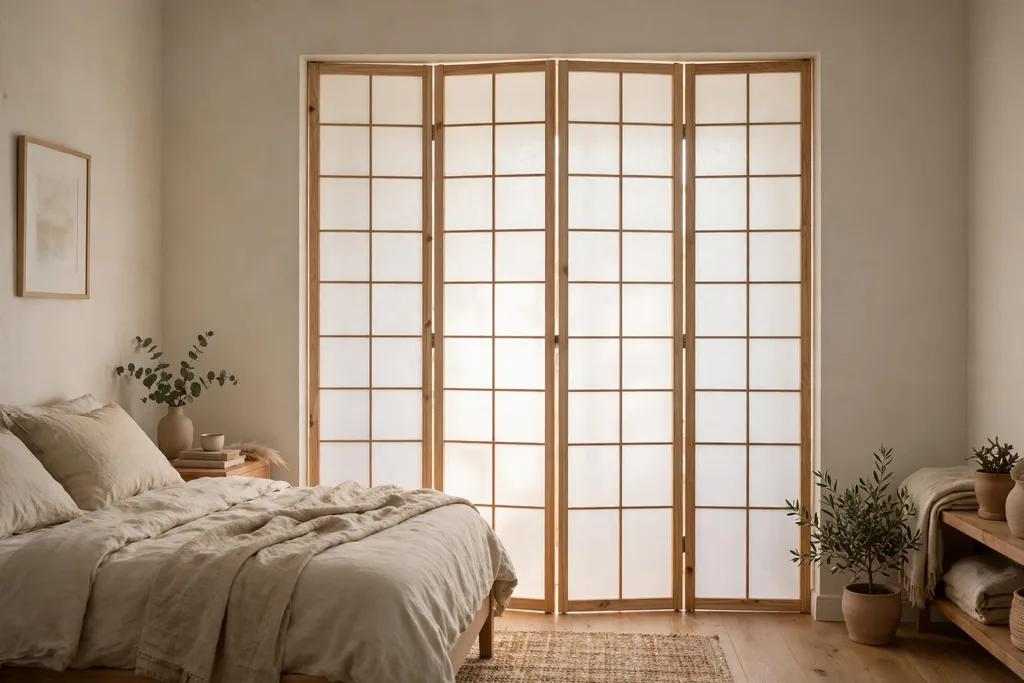
A shoji-style screen gives you a calm, glowing divide, with translucent paper panels in a light wood frame that soften light without blocking it fully. This suits a bedroom, a meditation corner, or a room with a Japanese or minimal style, where a heavy curtain would feel out of place. The screen folds for storage, and it needs no fitting in the doorway at all.
Place the screen so it does not block a walkway you use in the dark, and keep it away from damp, since paper panels can warp if they stay wet. Wipe the frame with a dry cloth, and replace a torn paper panel rather than patching it, since a patch shows in backlight. If you need full privacy at night, pair the screen with a curtain behind it, and use the screen alone during the day.
11. Use a Cane and Rattan Folding Screen
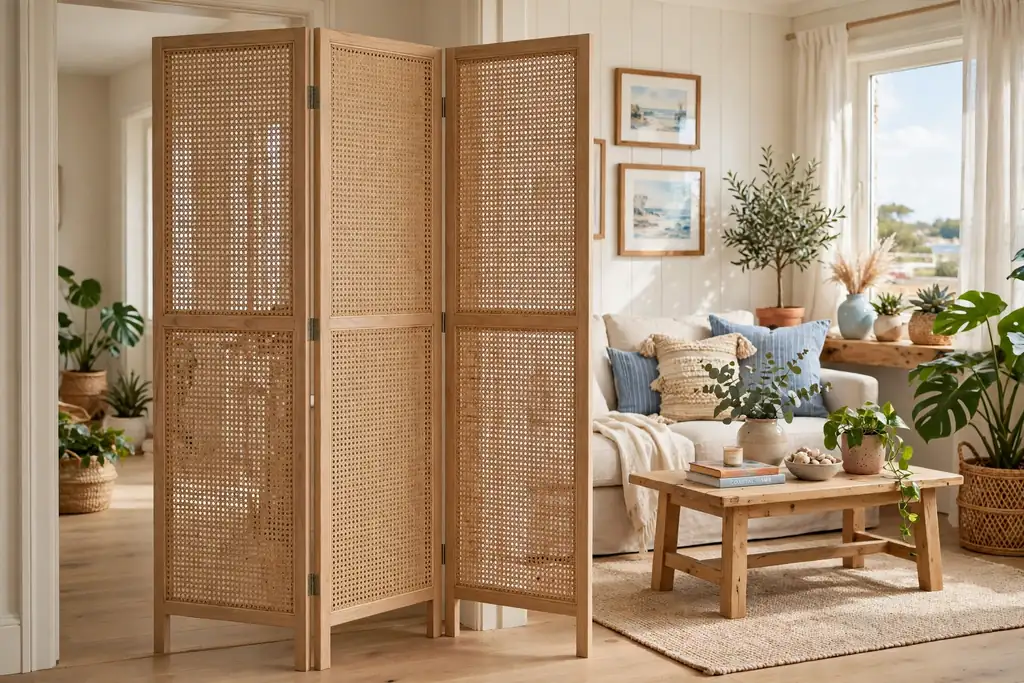
A cane and rattan screen adds a woven, airy divide that lets air and some light through while still marking the edge of a room. The open weave suits a warm room, a coastal style home, or a doorway near plants, where a solid panel would block airflow. Like other folding screens, it stands on its own and folds flat for storage.
Check the weave for loose strands before you buy, and keep the screen out of constant damp, since cane can slacken if it stays wet. Dust the weave with a soft brush, and place the screen where it will not be knocked by a door swing or a pet running through. Pair cane with wood and plant tones, so the screen reads as part of the room rather than a spare piece.
12. Place an Open Bookshelf Across a Wide Opening

An open bookshelf across a wide opening works as a door with storage, holding books, baskets, and plants while still letting light through the open back. This suits a wide arch or a double doorway in a studio, where a curtain would hang awkwardly and a screen would look too small. The shelf divides the room into zones without closing it off fully.
Anchor the shelf to the wall or the floor following the maker instructions, since a tall shelf can tip, and keep heavy books low and light items high. Leave one shelf partly empty, so the unit does not look crowded from both sides, and keep the walkway around one end clear. If you need more privacy later, hang a small curtain on the back of the shelf, and the shelf still does its main job.
13. Screen a Doorway with Tall Plants

Tall plants on a low stand form a living screen that softens a doorway without any hardware at all. A row of tall pots, or one large plant beside a smaller one, marks the edge of a room and adds green to a plain hall, while still letting air and light move freely. This suits a bright doorway, a living room divide, or a home office corner where a hard screen would feel heavy.
Choose plants that suit the light you actually have, and keep them in trays so watering does not mark the floor. Leave a clear walking gap beside the plants, so you do not brush leaves each time you pass, and prune stems that grow into the path. If the doorway gets little light, use plants that cope with shade, and rotate the pots now and then so growth stays even.
14. Roll a Door Slab on Casters Across the Opening
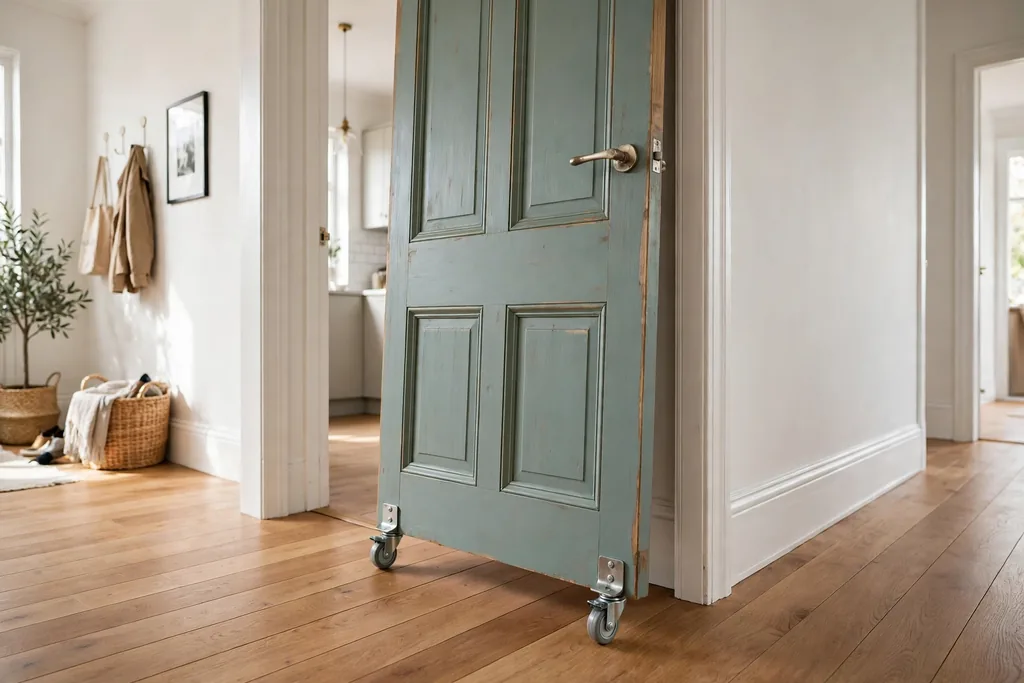
A door slab on casters is a solid temporary door you can roll into place and roll away again, with no track in the floor and no hinges in the frame. Fit small locking casters to the bottom of a light slab, stand it in the opening, and lock the wheels when you want it to stay put. This suits a workshop, a studio, or a room where you sometimes need a firm divide and sometimes need the doorway fully open.
Choose a slab light enough to move safely, and check that the casters suit your floor, since hard wheels can mark wood. Keep the slab narrow enough to roll through the opening without scraping the trim, and lock at least two casters when the door is in use. Store the slab flat against a wall when it is not needed, with the casters locked so it cannot roll.
15. Wedge a PVC Frame with Stretched Fabric into the Opening
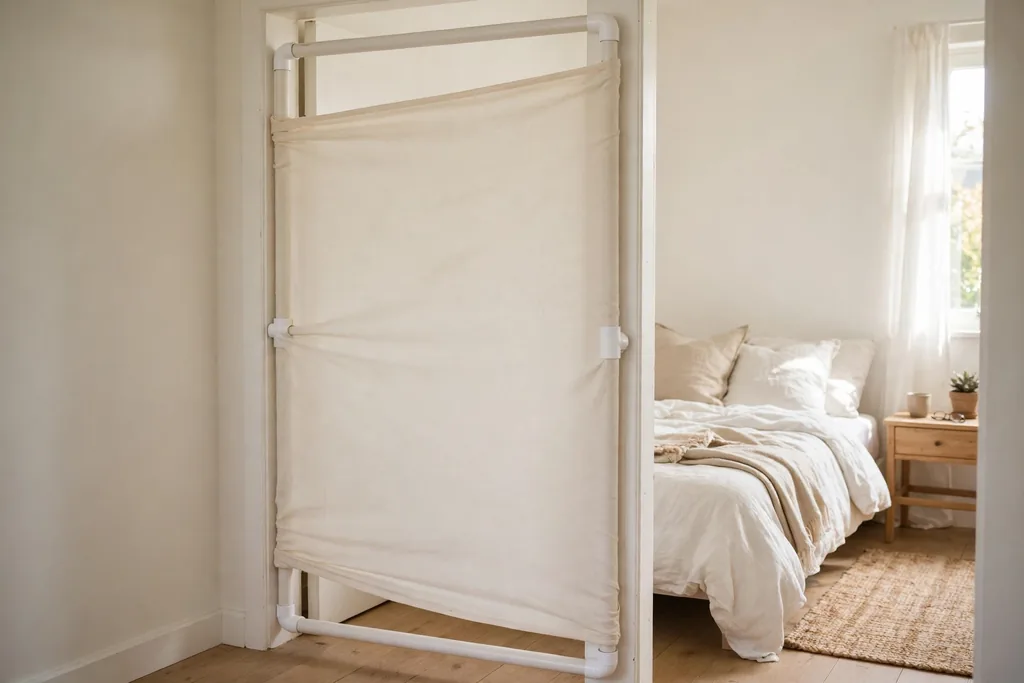
A frame made from light pipe, with fabric stretched across it, wedges into a doorway with foam pads at the edges, so it stays put without screws. The fabric gives you a flat, neat door face, and you can change the fabric when you want a new color, which makes this a good low cost project for a spare room or a craft space. Build the frame to fit your opening exactly, and test it before you cover it.
Measure the opening at several heights, and add foam pads where the frame meets the trim, so it grips without marking paint. Choose a fabric that stretches evenly and does not sag, and staple or clip it to the back of the frame, so the front stays smooth. Lift the frame out to store it, and keep it flat, so the frame does not warp between uses.
16. Hang a Pleated Paper Accordion Panel
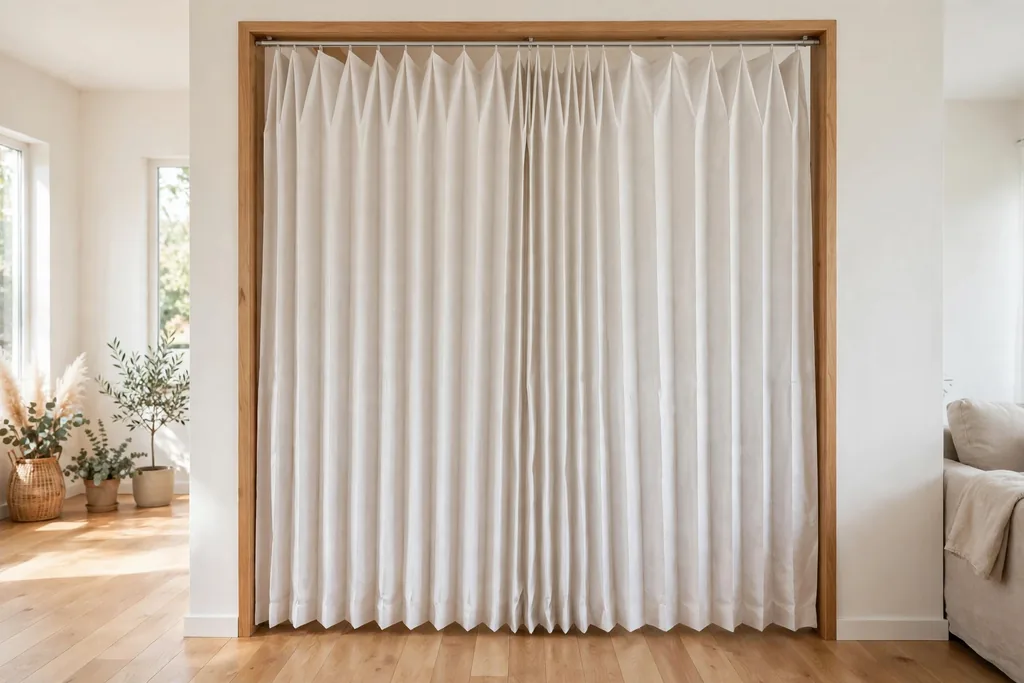
A pleated paper panel folds like a fan, so it takes up little space when open and covers the full opening when closed. The pleats add a crisp, graphic look to a doorway, and the panel hangs from a tension rod or a simple track, so it comes down as one piece. This suits a small room, a rental, or a doorway you want to dress up for a season without buying a curtain.
Choose a panel in a color that works with the room, and check the length, since a panel that is too long will pool on the floor and crease. Keep the panel away from damp and from heaters, since paper creases permanently if it gets wet. When you want the doorway open, gather the pleats to one side and hold them with a clip, so the panel reads as a neat feature rather than a loose sheet.
17. Fit a Magnetic Mesh Screen Door
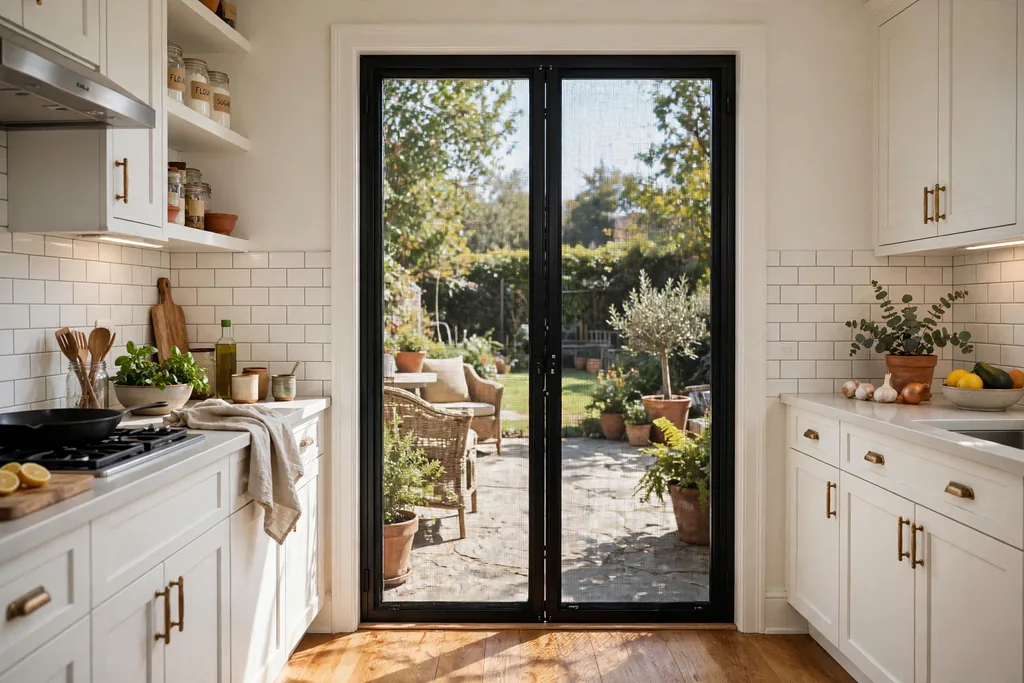
A magnetic mesh screen door lets air through while keeping insects out, and it closes itself with magnets down the middle as you walk through. The mesh hangs from the top of the frame with removable hooks or adhesive strips, so it fits a patio door, a kitchen door, or a bedroom door in summer without a new frame. This suits a home that needs airflow but not a full insect screen fitted by a contractor.
Measure the frame and choose a mesh size that covers it fully, with no gaps at the sides where insects can slip through. Check that the magnets meet cleanly down the middle, and adjust the hanging height if they pull apart. Take the mesh down in winter, wash it, and store it flat, so the magnets do not crease the fabric between seasons.
18. Fit Cafe-Style Half Doors on Spring Hinges
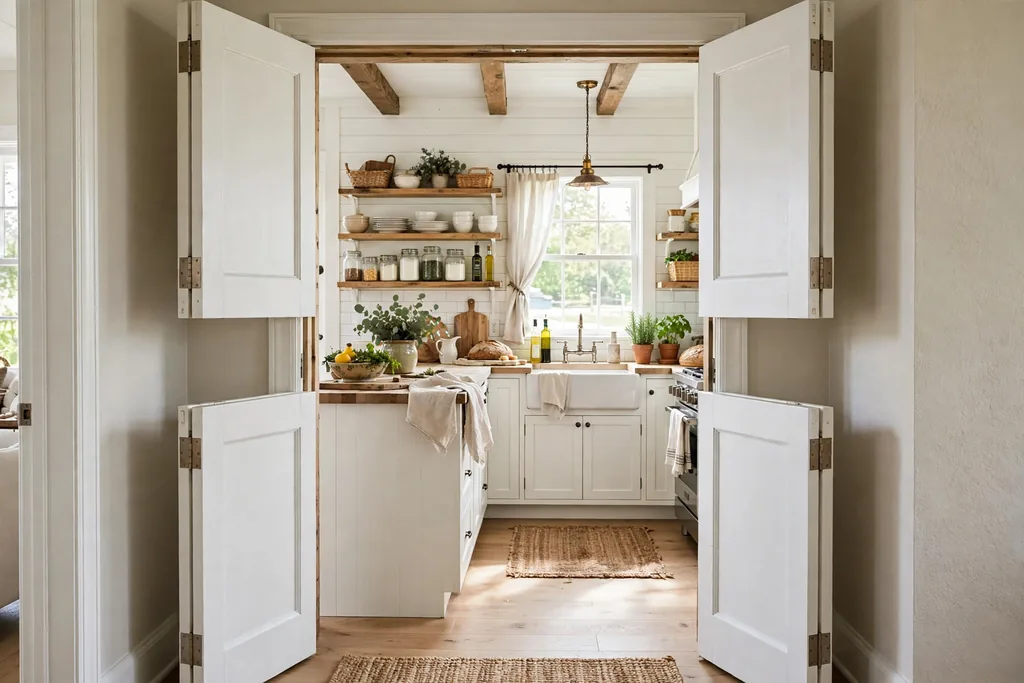
Cafe-style half doors cover only the middle of a doorway, leaving the top and bottom open, which suits a kitchen, a laundry room, or a doorway where you want a barrier for pets or small children but still want to see and hear across it. Spring hinges let the doors swing both ways and return to closed on their own, so you can walk through with full hands. Fit them with clamp-style or tension mounts where possible, so you avoid drilling into the frame.
Measure the opening and the height you need, since half doors that are too low will not stop a pet, and doors that are too high will block the view you wanted to keep. Check that the doors swing clear of rugs and furniture, and keep the hinges clean, since dust in a spring hinge can make the door stick. If you need full privacy later, this is not the right idea, and a full curtain or panel will serve you better.
19. Slide Fabric Panels on a Removable Ceiling Track
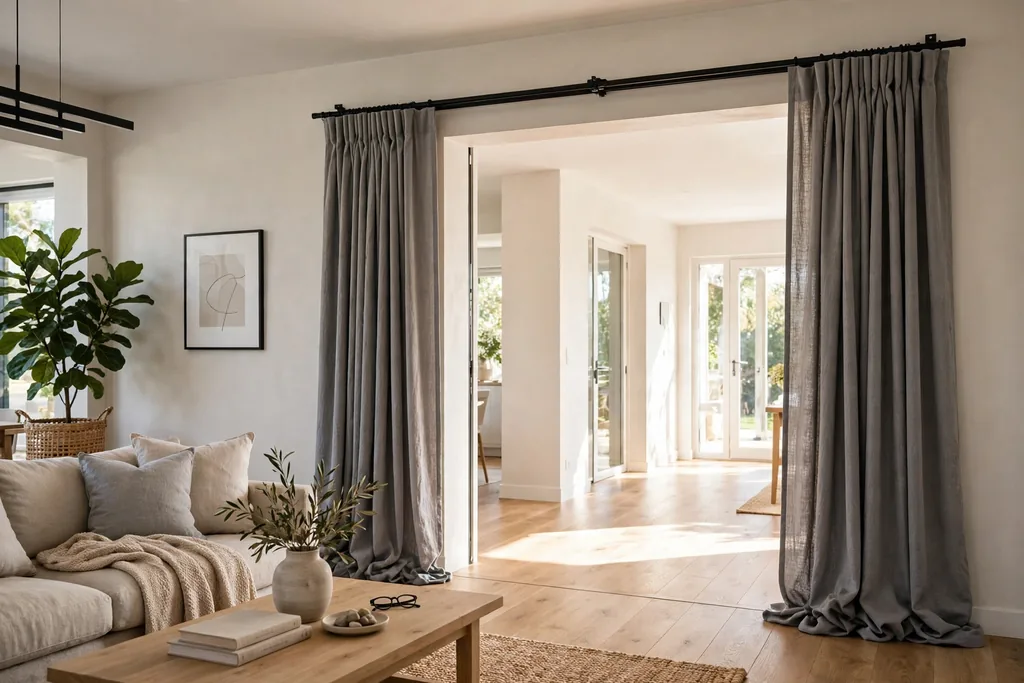
Fabric panels on a ceiling track slide across a wide opening like a soft sliding door, and the track can be fitted with removable adhesive mounts or screws into a ceiling batten you can patch later, depending on your lease. This suits a wide doorway, a studio divide, or a room where a curtain rod would sag across a long span. The panels stack to one side when open, so the doorway feels fully clear.
Choose panels that are light enough to slide easily, and keep the track level, since a track that slopes will let panels drift to one end. Measure the drop from the track to the floor, and hem the panels so they clear the floor by a small amount. Clean the track now and then, since dust in a track is the main reason a sliding panel starts to stick.
20. Slide Fabric Panels on Tension Wire
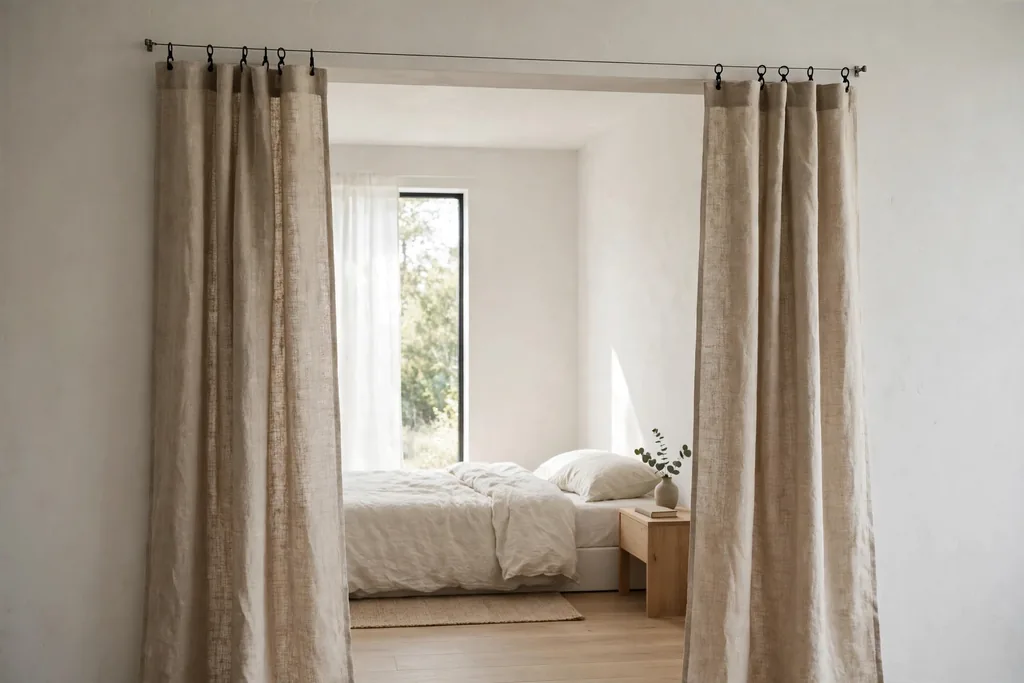
Tension wire gives you a sliding panel system with almost no visible hardware, since a thin wire stretches across the opening and the panels hang from small clips or rings. This suits a minimal room, a small doorway, or a renter who wants a sliding door look without a track. The wire fits with tension mounts at each end, so it comes down without holes in most frames.
Pull the wire taut before you hang the panels, since a slack wire will sag in the middle and drag the panels. Keep the panels light, and space the clips evenly, so the fabric hangs straight. If the opening is very wide, use two wires or a middle support, since one long wire will bow under even a light panel. Take the wire down when you move, and patch any small marks left by the mounts.
21. Drape Fabric Across an Arched Opening

An arched opening has no straight top for a rod, so draped fabric is often the simplest temporary door for it. Swag a length of soft fabric across the arch, gathering it at the sides with hooks or ties, and let the middle hang in a gentle curve. This suits an entry arch, a dining room arch, or a room with a romantic or classic style, where a rigid screen would fight the shape of the opening. For more entry styling around the door, see these DIY entryway makeover ideas.
Use a fabric with some drape, such as cotton voile or light linen, since stiff fabric will not fall in a soft curve. Fix the fabric with removable hooks at the sides, and test the drape at different lengths before you settle on a look. Keep the fabric clear of the floor in a busy arch, so feet do not catch it, and take it down to wash it when it collects dust.
22. Hang a String-Light Curtain for Evenings
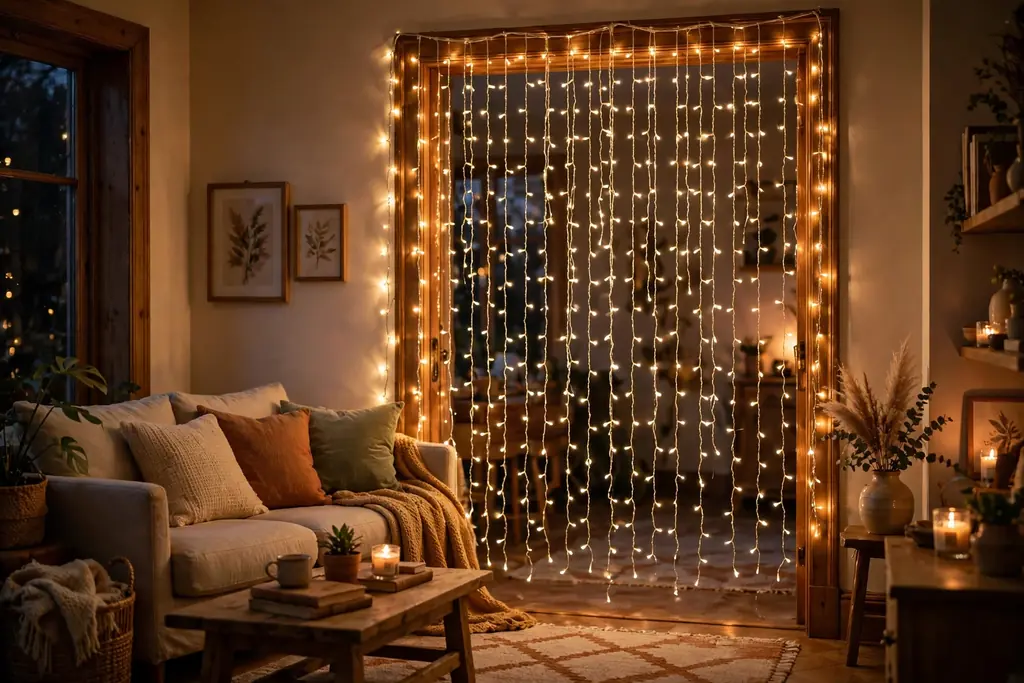
A string-light curtain turns a doorway into a glowing divide in the evening, with strands of small lights hanging from a rod or a wire across the opening. This suits a living room, a bedroom, or a party doorway where you want atmosphere more than privacy, since the lights mark the room edge without closing it off. During the day, the unlit strands hang quietly and take up little visual space.
Use battery or plug-in lights suited to indoor use, and keep the strands clear of curtains and bedding, since even small bulbs need airflow. Hang the lights from a tension rod, so the whole curtain lifts off when the season ends, and check the cord length before you hang it, so the plug or battery pack sits safely out of the walkway. If you need privacy as well, hang the light curtain in front of a sheer panel, and use both together after dark.
23. Cover a Glass Door with Frosted Film
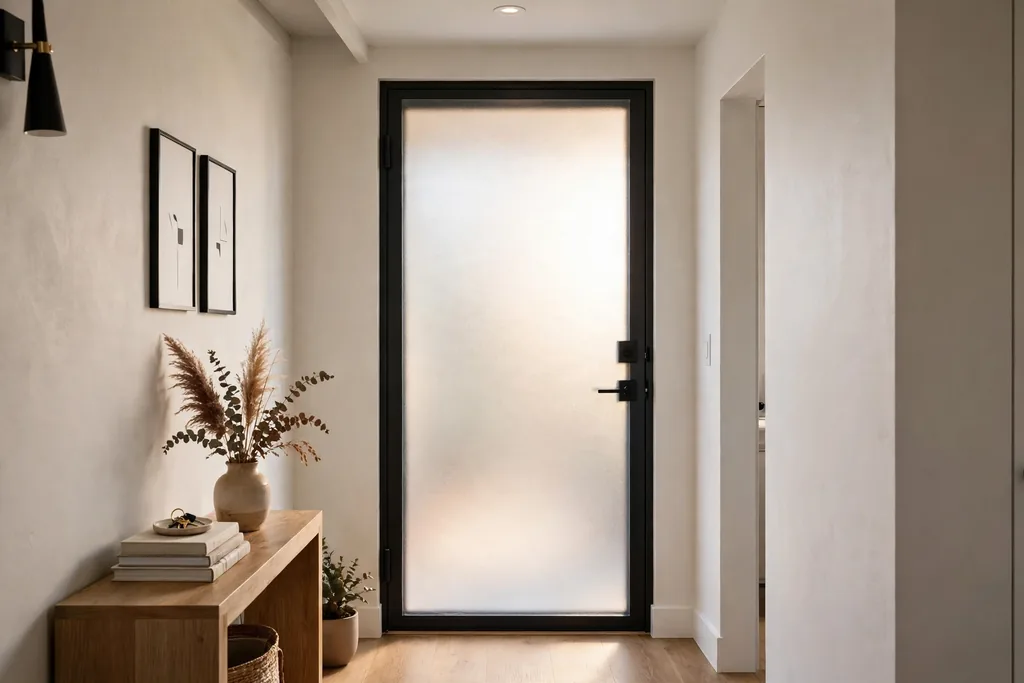
Frosted film turns a clear glass door into a private door without replacing the glass, and it peels off when you move out. The film sticks with water and a smooth tool, so there is no adhesive left on the glass, and it still lets light through, which suits a bathroom door, an office door, or a bedroom with a glazed panel. Cut the film to fit each pane, and smooth out bubbles as you work.
Clean the glass well before you fit the film, since dust under the film shows in daylight, and trim the edges neatly so the film does not lift. If you want a pattern, choose a film with a simple design, and keep the pattern straight across panes, so the door reads as one piece. Peel the film off slowly when you no longer need it, and wash the glass to remove any residue.
24. Hang Foam Board Panels Wrapped in Removable Wallpaper
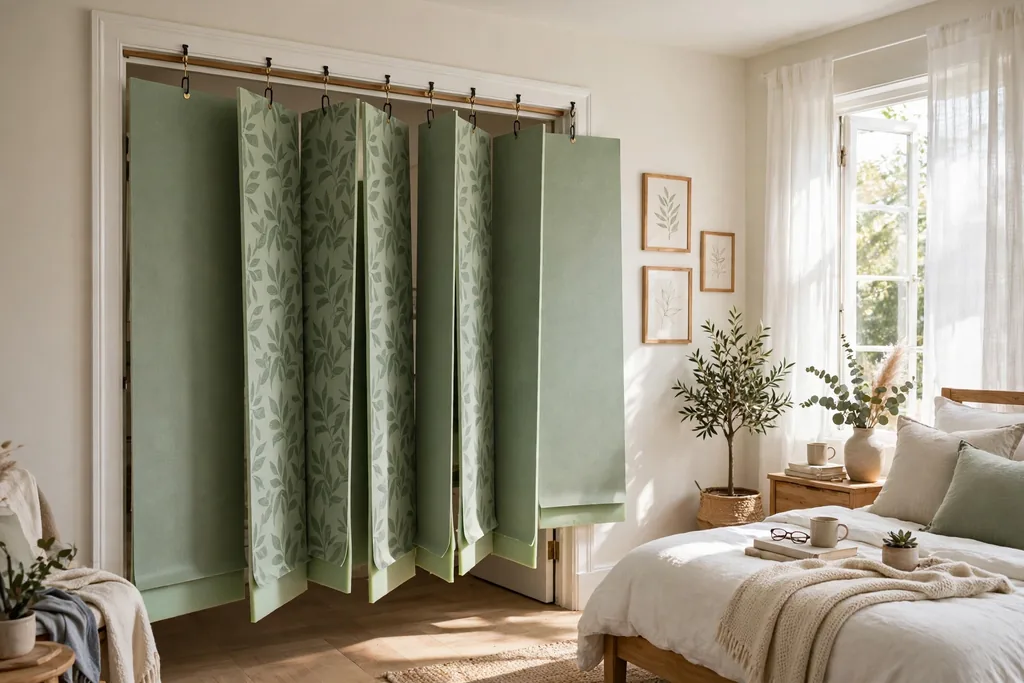
Foam board panels wrapped in removable wallpaper give you a light, flat door face in any pattern you like, hung from hooks over the top of the frame. Cut the boards to fit the opening, wrap them tightly, and hang two or three side by side for a full door, or one panel for a partial divide. This suits a small room, a craft room, or a doorway you want to dress up for a season on a low budget.
Measure the opening and cut the boards slightly smaller, so they hang without bowing, and wrap the wallpaper smoothly around the edges, so no foam shows. Hang the panels from sturdy over-door hooks, and check that they do not swing when the door behind them moves. Store the panels flat when not in use, since foam board dents easily if it is leaned against a sharp edge.
25. Use a Corkboard Panel as a Working Door
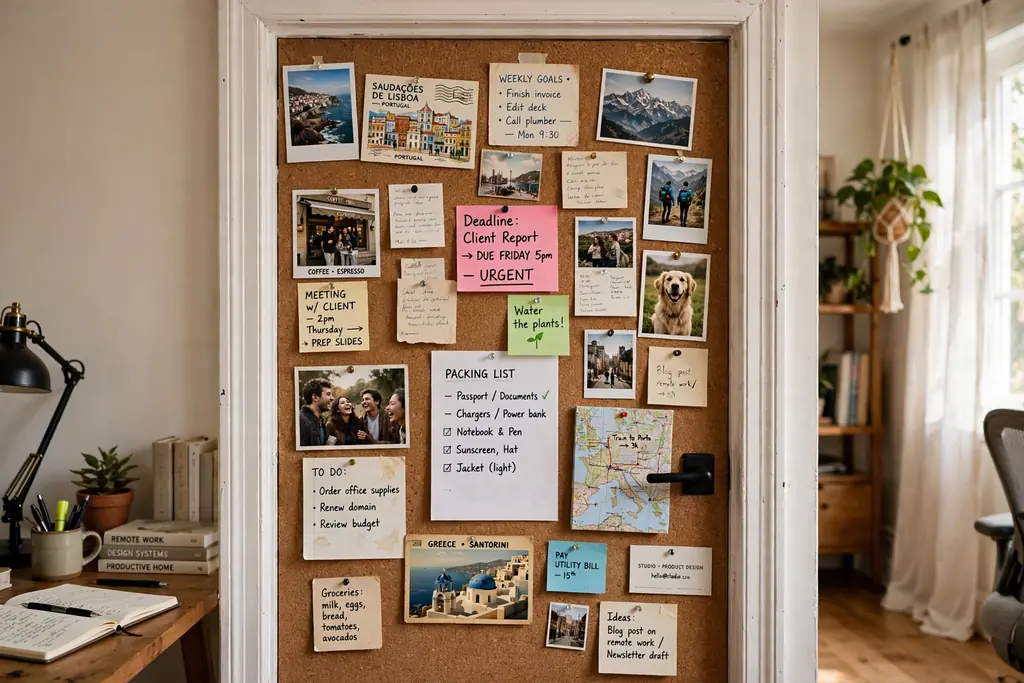
A corkboard panel across a doorway gives you a door that also works as a notice board, holding notes, photos, lists, and reminders on pins. This suits a home office, a kitchen doorway, or a student room, where the door is also the place you check each morning. Hang the panel from over-door hooks or a tension rod with clips, so it comes down without holes.
Choose a panel that covers the opening well but is light enough to hang safely, and use short pins, so they do not push through the back. Keep the board tidy, with one section for each type of note, so it reads as a planned feature rather than a pile of paper. If the board gets heavy with paper, take some items down, since a loaded board can pull its hooks loose.
26. Stand a Chalkboard Panel on an Easel in the Opening
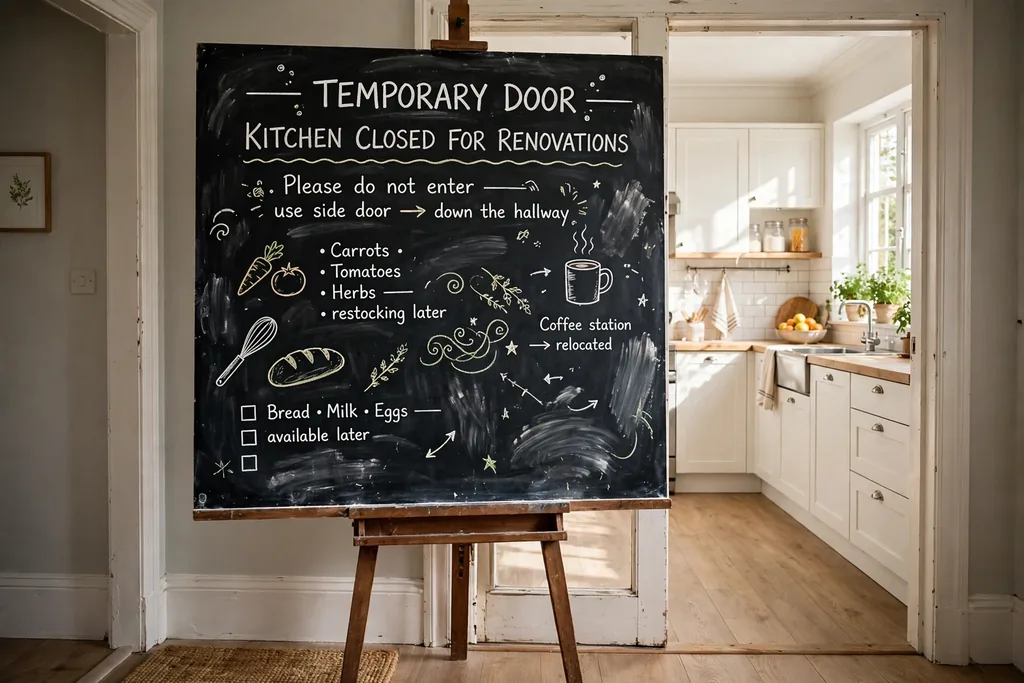
A chalkboard panel on an easel stands in a doorway as a temporary door you can also write on, with menus, reminders, or drawings for children. This suits a kitchen doorway, a playroom, or a home where the doorway is also a message spot, and the easel means there is no fitting at all. Move the easel aside when you need the doorway fully open, and bring it back when you want the divide again.
Choose an easel that stands steady on your floor, and check that it does not block the walkway you use in the dark. Keep chalk and an eraser nearby, and wipe the board clean each week, since old chalk dust builds up and dulls the surface. If the doorway is narrow, use a slim easel, so the panel does not crowd the passage.
27. Hang a Pegboard Panel from Over-Door Hooks
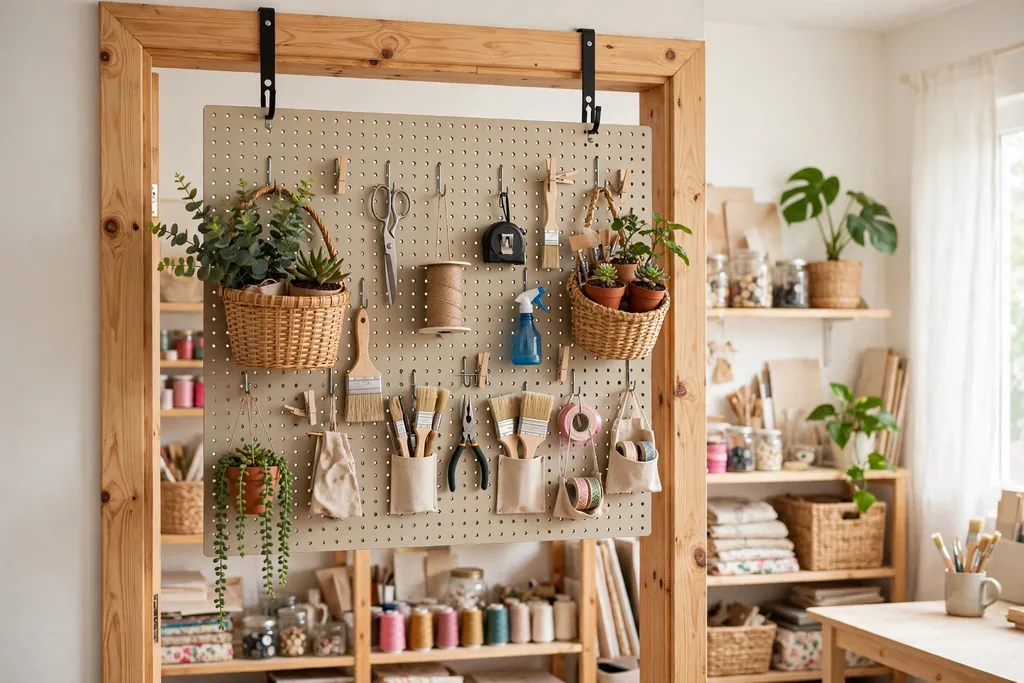
A pegboard panel hung from over-door hooks turns a doorway into useful storage, with hooks and small baskets holding tools, craft supplies, or kitchen items. This suits a craft room, a garage doorway, or a small kitchen where wall space is short, since the door itself becomes the storage wall. The panel hangs as one piece and lifts off the hooks when you no longer need it.
Choose a panel that fits the opening and is light enough for the hooks, and spread the weight evenly, so one hook does not carry the whole load. Keep sharp tools out of reach of small children, and keep the panel clear of heaters. Check the hooks now and then, since a loaded pegboard can work a hook loose over time, and move heavier items low, so the panel stays steady.
28. Lean a Mirror Panel Across Part of a Wide Opening
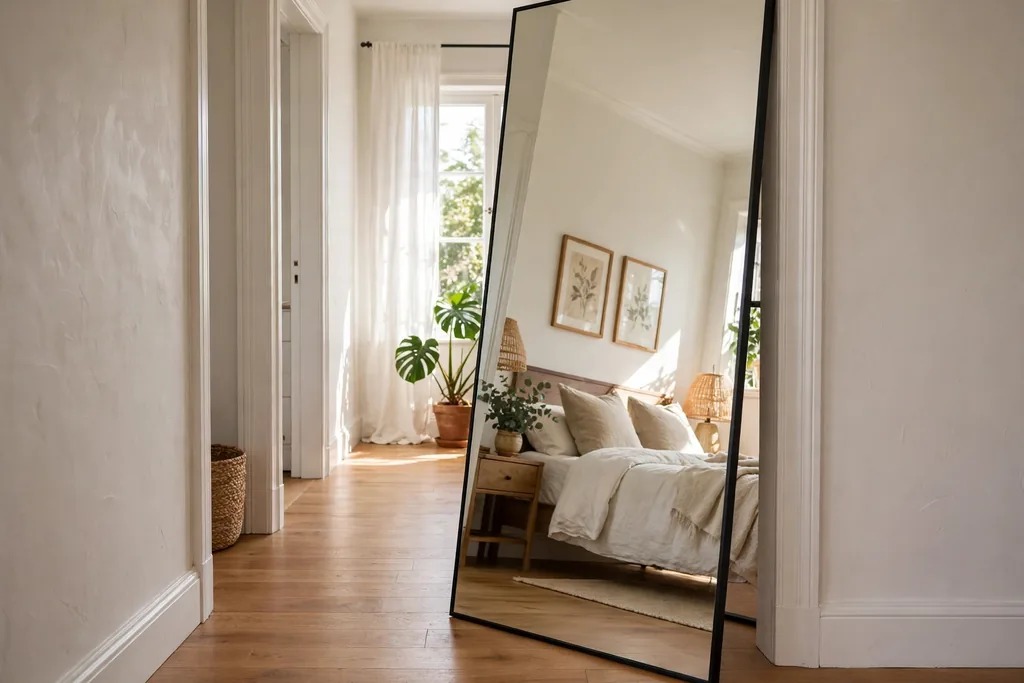
A leaning mirror panel across part of a wide opening gives you a partial divide that also bounces light around the room. This suits a wide arch, a dressing area, or a bedroom where you want a dressing mirror and a room divide in one piece, without closing the doorway fully. Lean the panel at a safe angle, with the top secured to the wall with a removable strap or hook, so it cannot slide.
Check what the mirror reflects before you settle its position, since a mirror facing a cluttered corner doubles the clutter. Aim it toward a window, a plant, or a calm stretch of wall where possible, and keep the floor in front of it clear, so you can step around it safely. Clean the mirror with a soft cloth, and keep it out of direct sun on bedding for long hours.
29. Hang a Ribbon Curtain for a Playful Divide
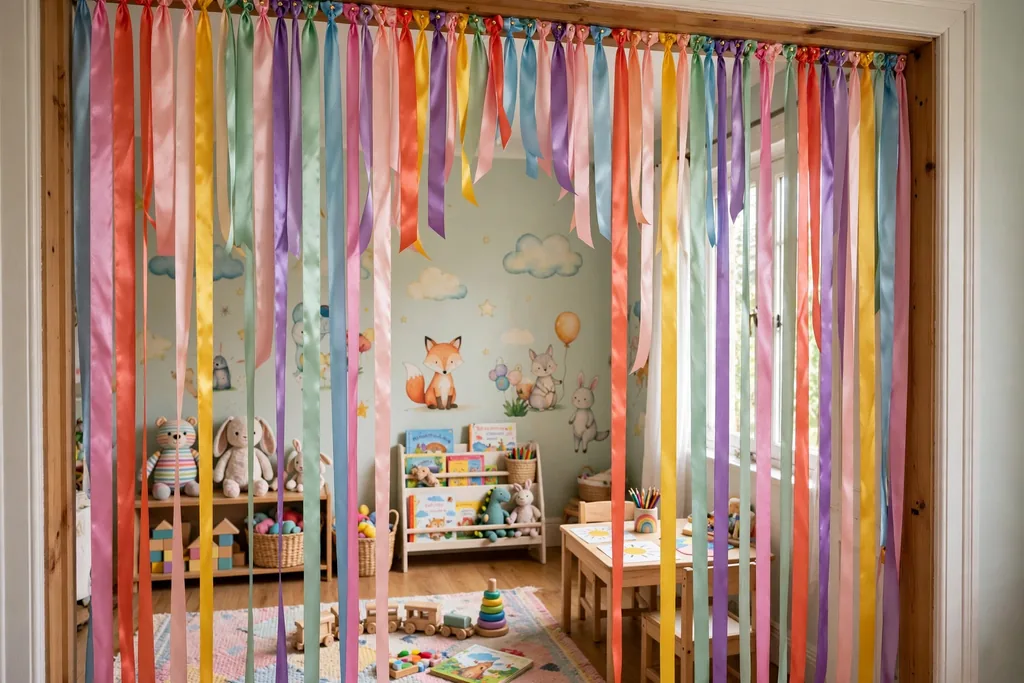
A ribbon curtain, made from strands of ribbon in one color or many, gives a doorway a playful, light divide that suits a kids room, a party, or a craft room. The ribbons part easily as you walk through, and they flutter in a breeze, so the doorway feels open even when the curtain is down. Hang the ribbons from a rod or a strip of fabric across the top of the frame, and tie them securely, so they do not come loose.
Choose ribbons in colors that work with the room, and keep the strands clear of the floor, so they do not tangle around feet. Keep ribbons away from heaters and open flames, and check the knots now and then, since ribbons can loosen with daily use. If the ribbon curtain is for a party only, take it down after the event and store the ribbons rolled, so they stay smooth for next time.
30. Stand a Salvaged Door on a Portable Frame
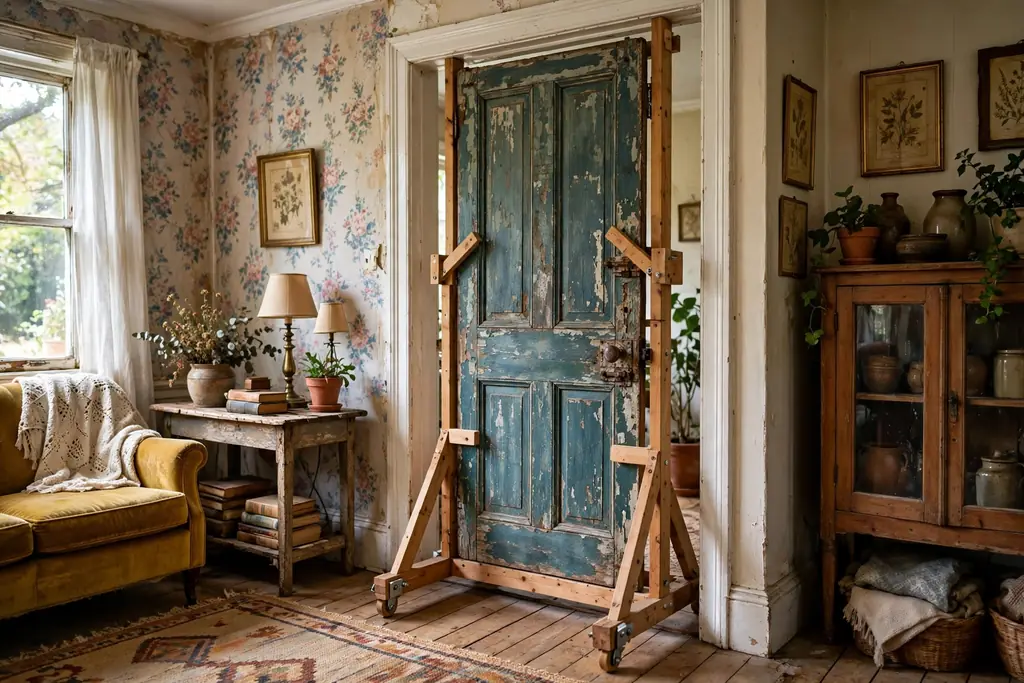
A salvaged door on a portable frame gives you a real door look without fitting hinges into your frame, since the door hangs on a freestanding stand that stands in the opening. This suits a vintage style home, a photo backdrop, or a room where you want the weight and feel of a solid door for a season. Choose a door that fits the opening, and check the stand before you use it, since a heavy door needs a steady base.
Fix the door to the stand following the maker instructions, and test it on your floor, since a stand that rocks will make the door hard to use. Keep the door clear of heaters and damp, and sand any rough edges or loose paint before you bring a salvaged door indoors. If you later want a fixed door for a closet, see these closet door ideas.
Conclusion
A temporary door works best when you match it to the job, not to a photo. Start with the opening: measure it, check the light, and decide how much privacy, draft cover, and sound cover you actually need. Then pick the lightest idea that does that job, whether it is a tension-rod curtain, a folding screen, or a panel on hooks, and live with it for a few days before you add more. The best temporary door is the one you can put up in an afternoon, take down without a trace, and put back up next season when you need it again.
Frequently Asked Questions
What is a temporary door?
A temporary door is a curtain, screen, panel, or rolling piece that divides a doorway without permanent fitting. It hangs from a tension rod, magnetic rod, over-door hooks, or a freestanding frame, so you can put it up and take it down without screws, tracks, or damage to the frame.
Are temporary doors renter friendly?
Yes, most of them are, as long as you avoid drilling and adhesive that marks paint. Tension rods, magnetic rods, over-door hooks, freestanding screens, and rolling slabs leave no holes, but check your lease first, and test any adhesive mount in a hidden spot before you use it on a visible frame.
Can a temporary door give real privacy?
It depends on the idea you pick. A heavy curtain, a solid panel, or a rolling slab gives good visual privacy, while a sheer panel, a beaded curtain, or a plant screen gives only a light divide. For a bedroom or bathroom, choose a full, opaque option, and check it at night with the lights on, since light from behind can show shapes through thin fabric.
Will a temporary door block drafts?
A heavy, floor-length curtain or a well-fitted panel blocks drafts better than a light curtain or an open screen. Let the fabric overlap the frame at the sides and reach close to the floor, since gaps at the edges let cold air through. A magnetic mesh screen, by contrast, is made for airflow, so it will not block a draft at all.
What is the easiest temporary door to start with?
A linen curtain on a tension rod is the easiest place to start. You need only a rod and a curtain, there is no fitting, and you can change the fabric later without buying new hardware. Measure the frame first, choose a rod rated for that width, and hang the curtain so the hem clears the floor.
How do I remove a temporary door without damage?
Take the panel down first, then remove the mount slowly, following the maker instructions for any adhesive or hook. Wipe the frame with a damp cloth to remove dust, and check for marks in daylight. If a tension rod left a faint ring on soft paint, a gentle clean usually removes it, but test any cleaner in a hidden spot first.