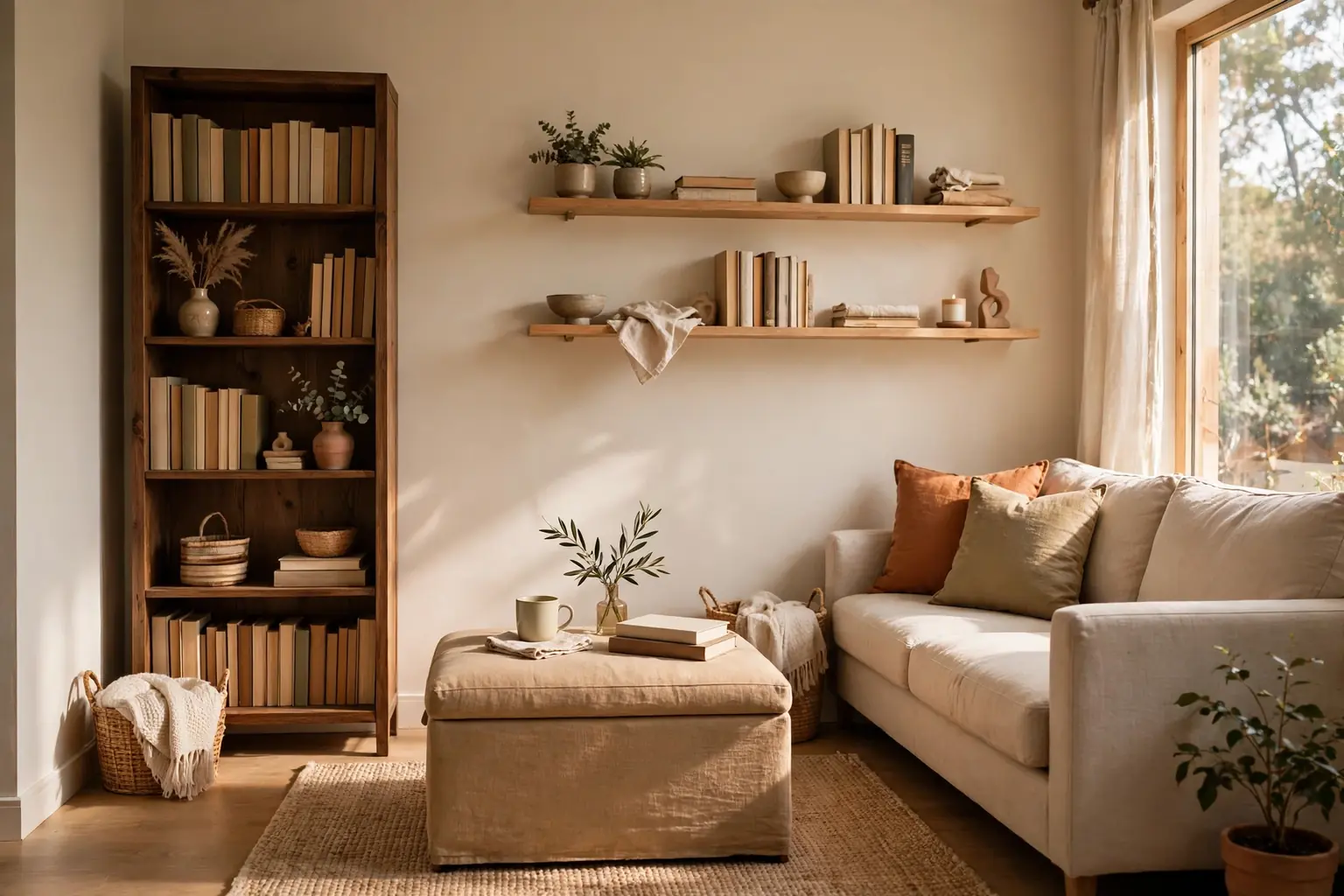
Small rooms do not need more furniture. They need storage that fits the gaps you already have: under the bed, behind a door, above a desk, and inside a cabinet that is currently a jumble. When each item has a clear home, surfaces stay clear, cleaning gets faster, and the room feels calmer even though nothing about its size has changed. These 26 small storage ideas for small spaces cover bedrooms, living rooms, kitchens, bathrooms, closets, and entries, so you can start with one trouble spot and add more as you go. Pick the idea that solves your biggest daily annoyance first, then build from there.
Key Takeaways
- Start with dead space first: under beds, behind doors, above desks, and inside cabinet doors hold storage without taking any floor space.
- Give every category one home, so shoes, chargers, cleaning supplies, and pantry goods each have a single place to return to.
- Go vertical before you go wide: shelves, rails, pegboards, and tall narrow units use wall height that small rooms often waste.
- Choose furniture that stores as well as it serves, such as ottomans, benches, and lift-top tables, so one piece does two jobs.
- Keep daily items within reach and seasonal items out of the way, so the storage you use most is also the easiest to reach.
- Label bins and keep one empty bin free, so new items have a place and the system still works after a busy week.
1. Slide Rolling Bins Under the Bed
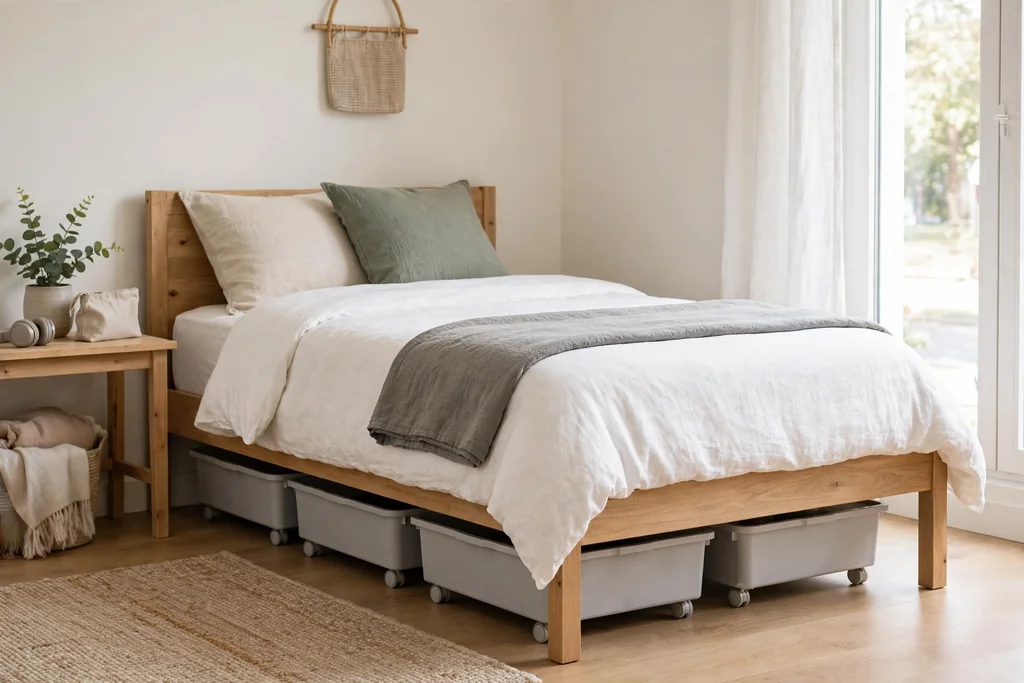
The space under a bed is often the largest unused storage area in a small bedroom. Low rolling bins turn it into a drawer you never had to build, ideal for off-season clothes, spare bedding, or shoes you wear less often. Because the bins roll out, you can reach the back of the bed without moving the whole frame, which keeps this storage useful rather than forgotten.
Choose bins with lids if dust is a problem, and measure the clearance under your bed before you buy, since bed frames vary. Group one category per bin and label the end you see first, so you pull out the right bin at once. Keep daily clothes in the closet instead, and reserve under-bed bins for items you need weekly or seasonally, so you are not crouching down every morning.
2. Hang an Over-Door Rack for Shoes and Accessories
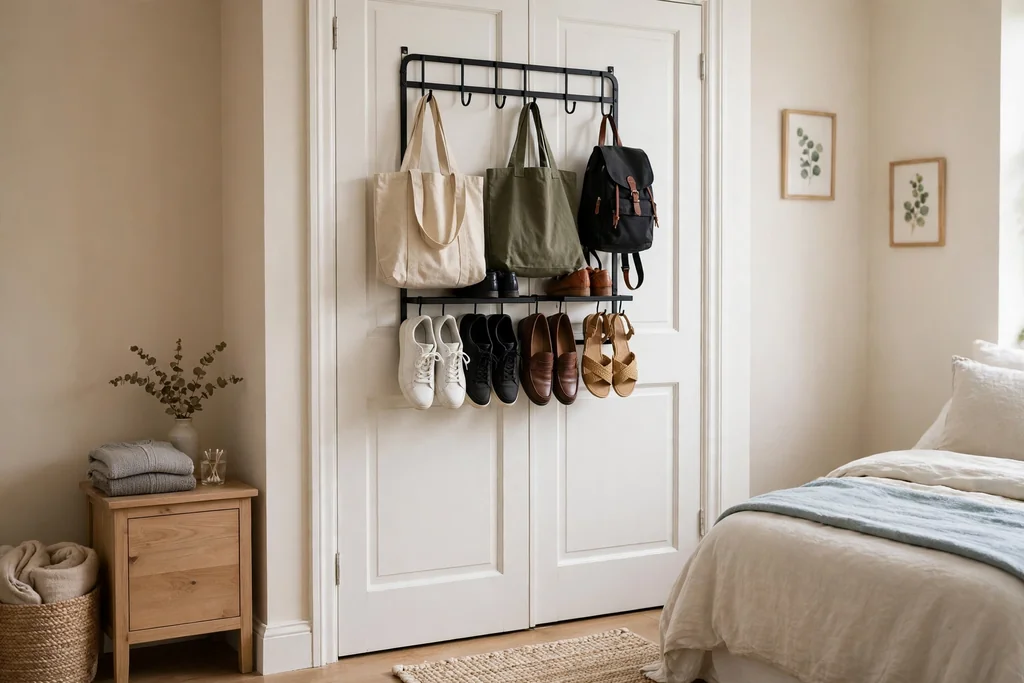
An over-door rack hooks over the top of a door and needs no screws, which makes it a strong choice for rented homes. Use it for shoes, scarves, belts, bags, or hats, and the door still opens and closes as normal. This suits a bedroom or entry where shoes pile by the door and there is no room for a shoe cabinet.
Hang the rack on a door you use less often, such as a closet door, if the main door feels too busy. Keep heavier items low so the rack stays steady, and check that the hooks clear the door frame so the door still latches. If the rack swings when the door moves, add a small felt pad behind it to stop rattling and protect the door paint.
3. Fit Floating Shelves Above a Desk
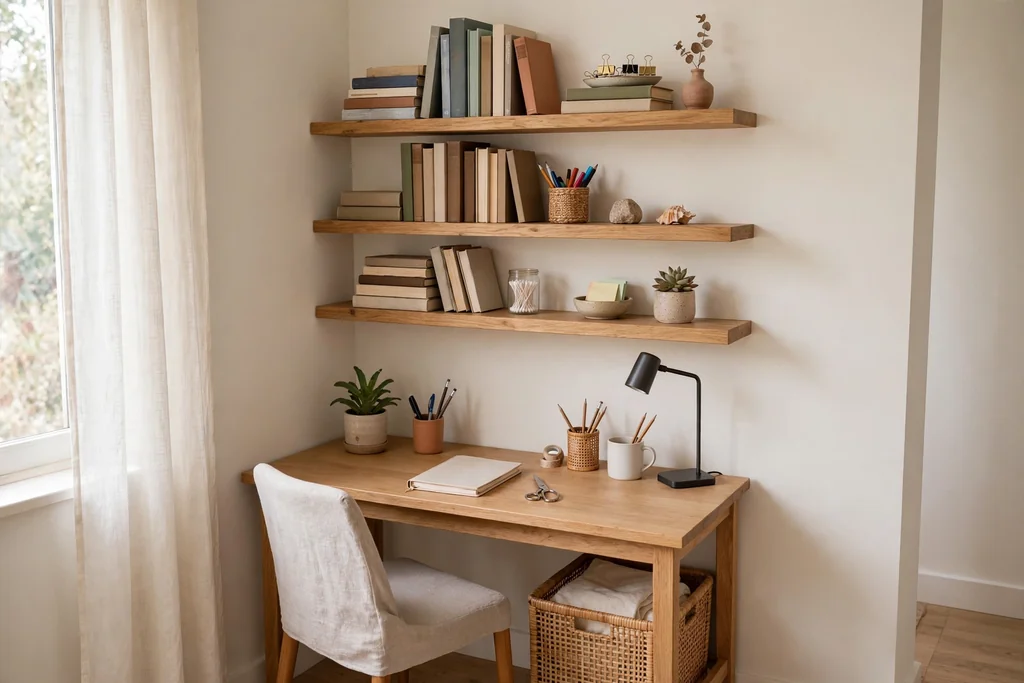
Wall space above a desk is usually empty, yet it sits right where you work. Two or three floating shelves there hold books, notebooks, small plants, and desk supplies, freeing the desk surface for actual work. This suits a small bedroom or living room corner where a bookcase would crowd the floor.
Mount shelves into wall studs or use fixings rated for your wall type, since books get heavy fast. Keep the lowest shelf within easy reach from your chair, and reserve higher shelves for items you need less often. Leave one shelf partly empty, so the wall still looks calm, and keep cords tidy with a small clip or channel so they do not dangle across the shelves.
4. Use a Tall Narrow Bookcase in an Unused Corner
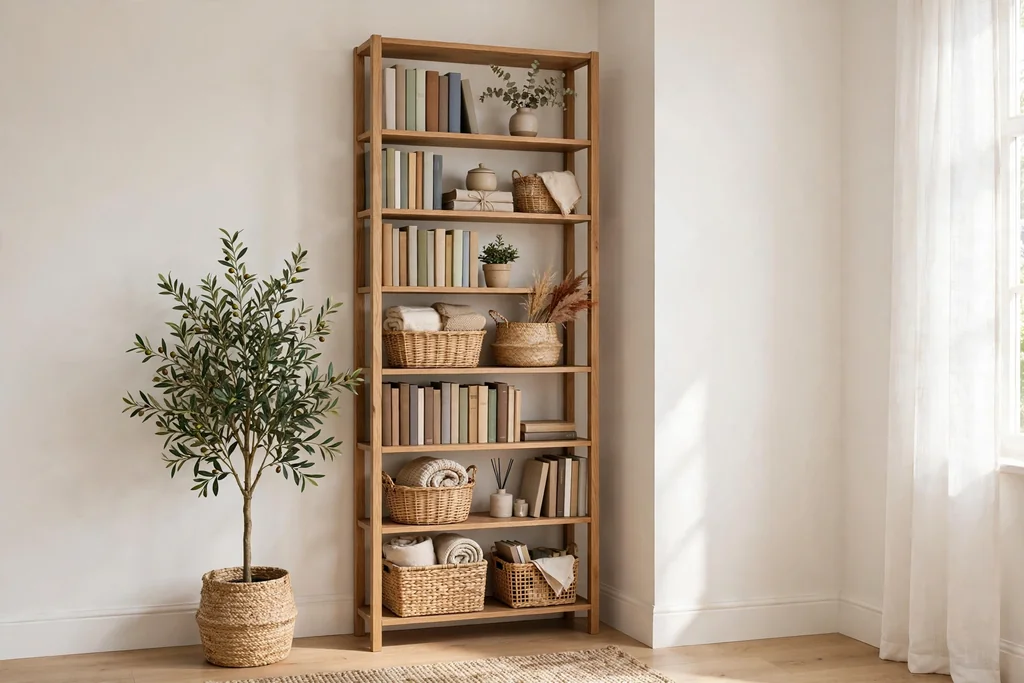
Corners in small rooms often sit empty because standard furniture is too wide for them. A tall narrow bookcase fits that gap and adds several shelves of storage in a footprint barely wider than a chair. Use it for books, baskets, plants, or a mix, and the room gains storage without losing a walkway.
Anchor the bookcase to the wall, especially in a home with children or pets, since tall units can tip. Put heavier books low and lighter items high, and use a basket on one shelf to hide small loose items. If the corner is dark, add a small clip light or place a plant on the top shelf, so the bookcase reads as a planned feature rather than a filler piece.
5. Choose a Storage Ottoman for the Living Room
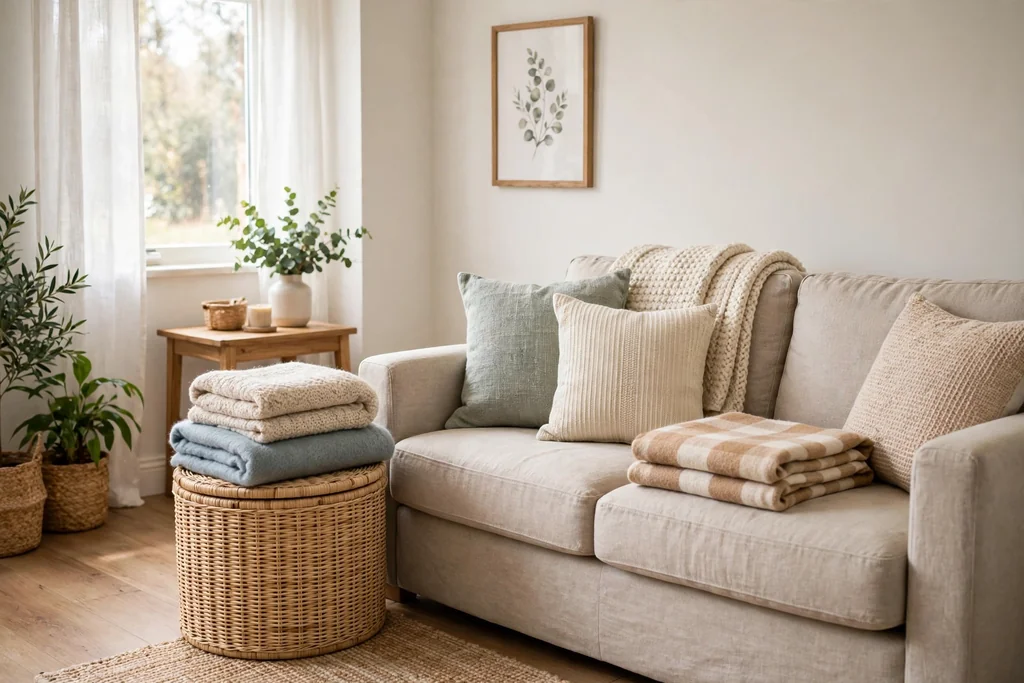
A storage ottoman works as a footrest, an extra seat, and a box for blankets, remotes, chargers, or board games. With the lid closed, the room looks tidy, and guests never guess that the ottoman holds half the living room clutter. This suits a small living room where a coffee table with open shelves would show every item.
Pick a size that leaves a clear path around it, and choose a fabric you can wipe or wash, since ottomans get daily use. Keep only items you reach for in the living room inside it, so it does not become a second junk drawer. If you also need a table surface, add a firm tray on top for drinks, and lift the tray off when you need to open the lid.
6. Fold Down a Wall-Mounted Desk When You Need It
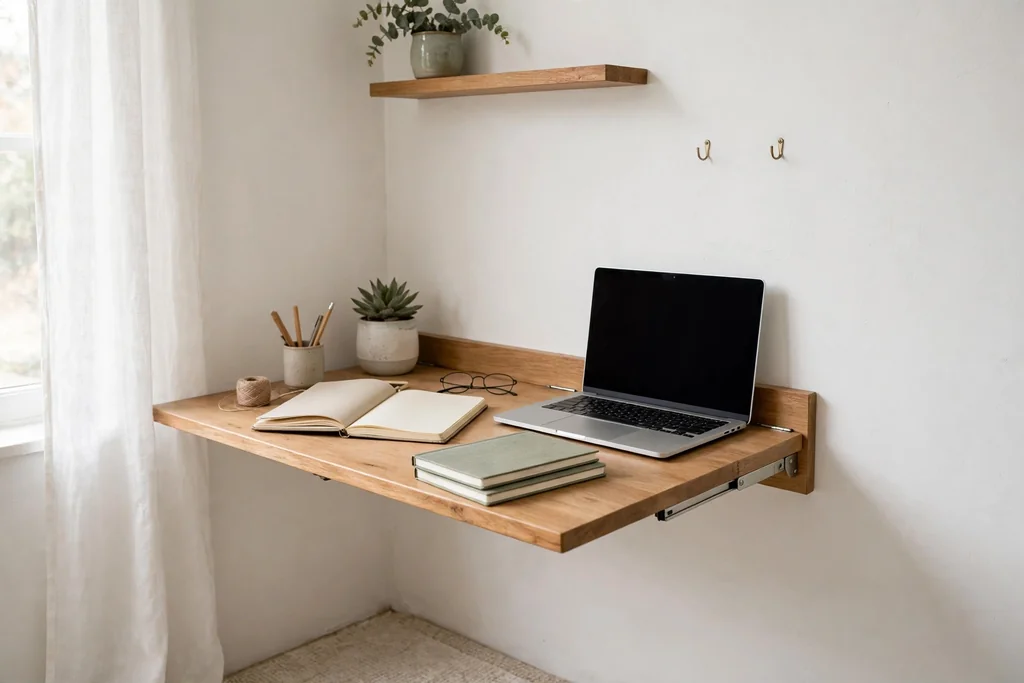
A wall-mounted desk that folds down gives you a work surface only when you need it, then folds flat against the wall when you do not. Inside, small shelves or pockets can hold a laptop, notebooks, and pens, so the desk doubles as a shallow cabinet. This suits a studio apartment, a guest room that doubles as an office, or a hallway nook too narrow for a full desk.
Mount it at a comfortable sitting or standing height, and check the wall fixings suit the weight of the desk plus your laptop. Keep a chair that tucks away nearby, such as a folding chair hung on a hook, so the whole setup disappears after work. Clear the desk before you fold it up, or loose items will slide, and keep cables short so nothing snags on the hinge.
7. Roll a Narrow Cart Into a Kitchen or Bathroom Gap
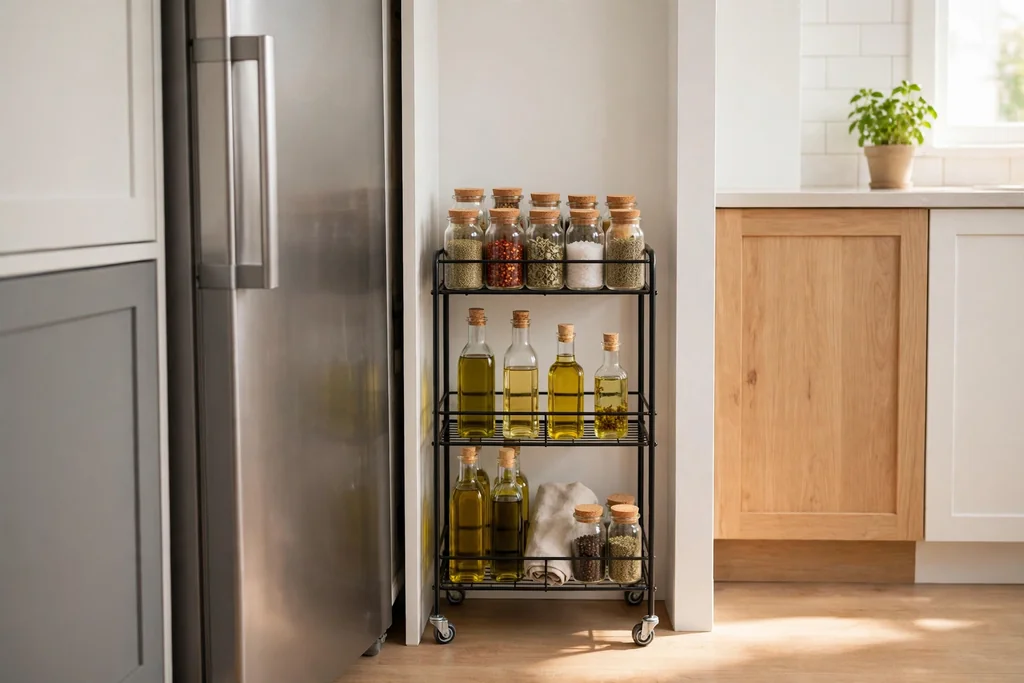
The gap beside a fridge, a washing machine, or a bathroom vanity is often just wide enough to waste. A narrow rolling cart turns that gap into storage for spices, cleaning supplies, toiletries, or canned goods, and it pulls out fully so you can reach the back. This suits kitchens and bathrooms where cabinets are full and counter space is short.
Measure the gap at the floor, the middle, and the top, since walls and appliances are not always straight. Choose a cart with a handle and smooth wheels, and keep heavier items on the lowest tier so it rolls steadily. Wipe the cart often if it lives near a stove or sink, and avoid storing anything that needs to stay cool beside a warm appliance.
8. Divide the Under-Sink Cabinet With Tension Rods
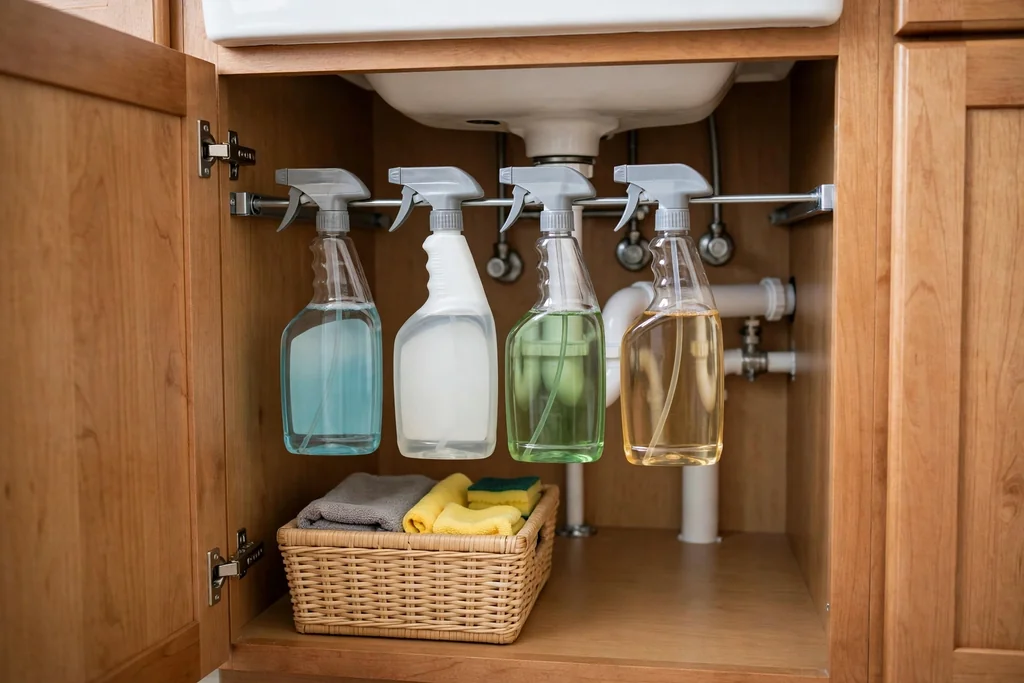
Under-sink cabinets are hard to use because pipes block the middle and bottles fall over in the dark. A tension rod fitted across the cabinet, above the pipes, gives you a rail to hang spray bottles by their triggers, while a small bin below holds the rest. This simple change makes the whole cabinet visible and reachable without any drilling.
Measure the cabinet width and fit the rod snugly, so it stays put when you pull a bottle off. Hang only light bottles from the rod, and keep heavy cleaners in a bin on the cabinet floor. Put a small tray under the bin to catch drips, and check the pipes now and then, since a rod pressed against a pipe can shift over time.
9. Add Hooks Inside Cabinet Doors
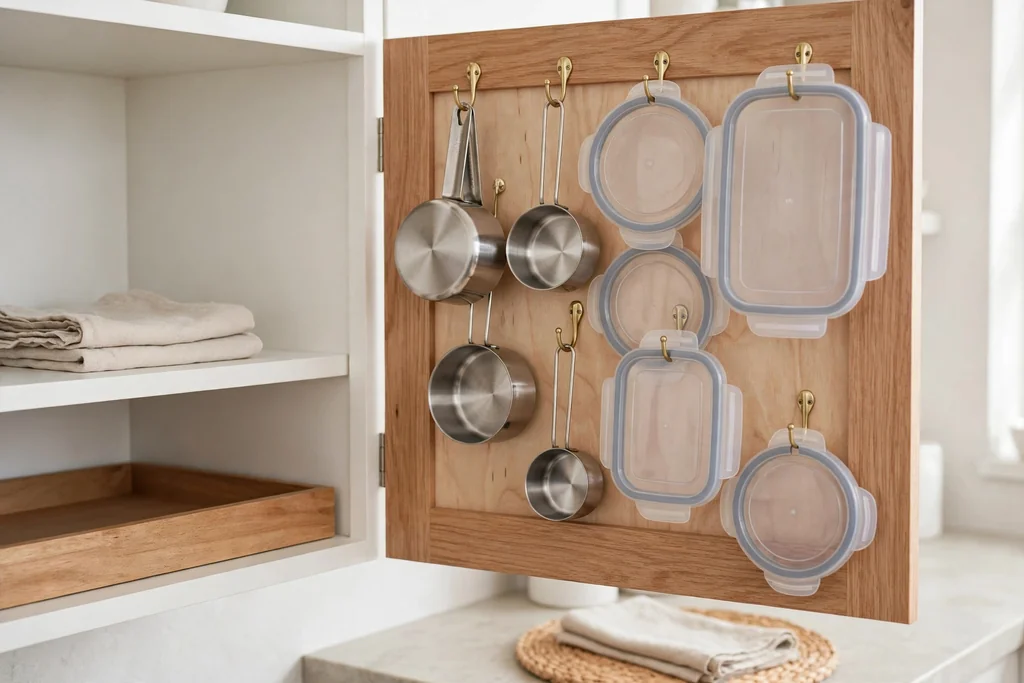
The inside of a cabinet door is a free wall that most kitchens ignore. Small adhesive or screw-in hooks there hold measuring cups, lids, pot holders, or cleaning cloths, and they keep those items off the counter and out of drawers. This suits a small kitchen where every drawer is already full and lids are the first thing to go missing.
Check the door clearance before you fit hooks, so they do not hit shelves or items inside when the door closes. Use adhesive hooks for rented homes and light items, and screw-in hooks for heavier lids. Keep the hooks to one row per door, and group one category per door, so you always know which door holds the measuring cups and which holds the cloths.
10. Build a Pegboard Wall for Tools and Supplies
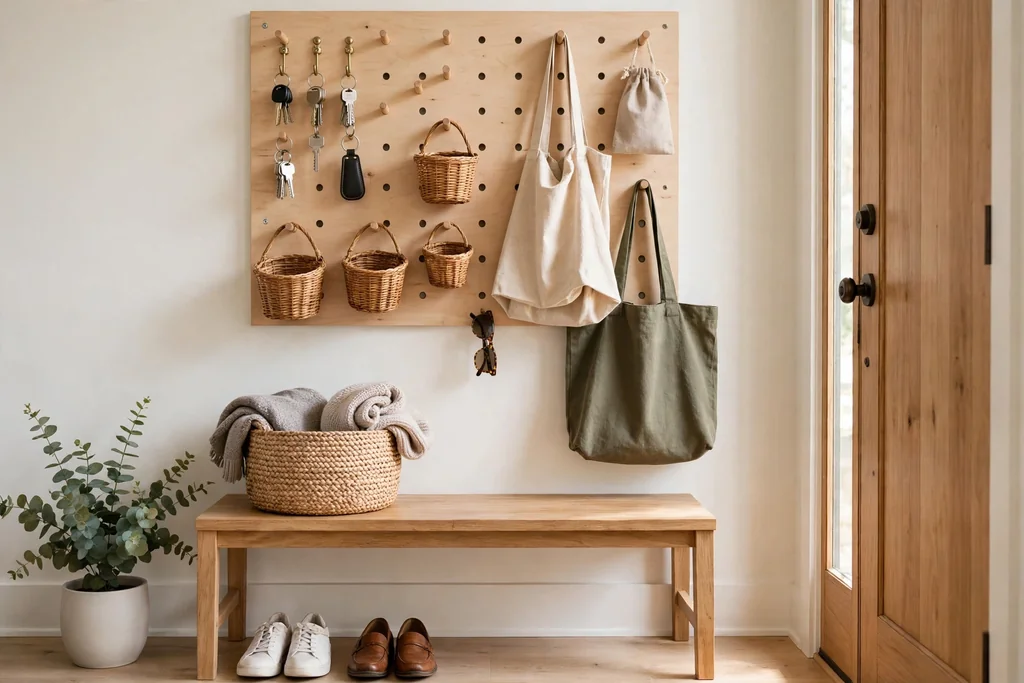
A pegboard turns a blank wall into flexible storage, since hooks, bins, and shelves move whenever your needs change. Use it in an entry for keys and bags, in a kitchen for utensils, or in a craft corner for supplies, and everything stays visible at a glance. This suits a small home where closed storage hides items and open shelves cannot adapt.
Mount the pegboard on battens so there is space behind it for the hooks, and use fixings rated for the wall and the weight you plan to hang. Outline heavy tools or group items by task, so each hook has a clear purpose. Keep the board to one wall or one section, and leave some pegs empty, so new items have a place without a full reorganization.
11. Stack Labeled Bins on Closet Shelves
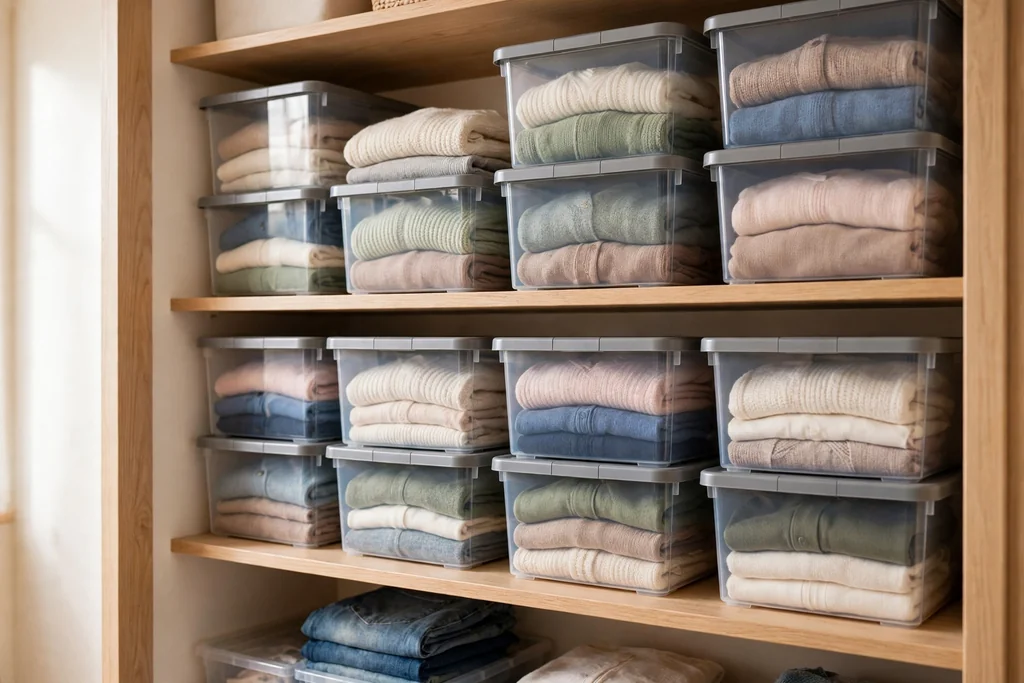
Closet shelves often hold tall, unstable piles that topple when you pull one item out. Stackable bins fix this by giving each pile a box, and labels on the front tell you what is inside without opening every bin. This suits a bedroom closet, a linen closet, or a hall closet where shelves are deep and items get lost at the back.
Choose bins that match your shelf depth, and stack no higher than you can safely reach, since a tall stack is hard to lift down. Put the bin you use most at the front or on top, and seasonal bins at the back or on the highest shelf. Use the same bin style throughout one closet, so the stacks look neat and sit steadily, and re-label a bin when its contents change rather than letting the label lie.
12. Place a Slim Console Shelf Behind the Sofa
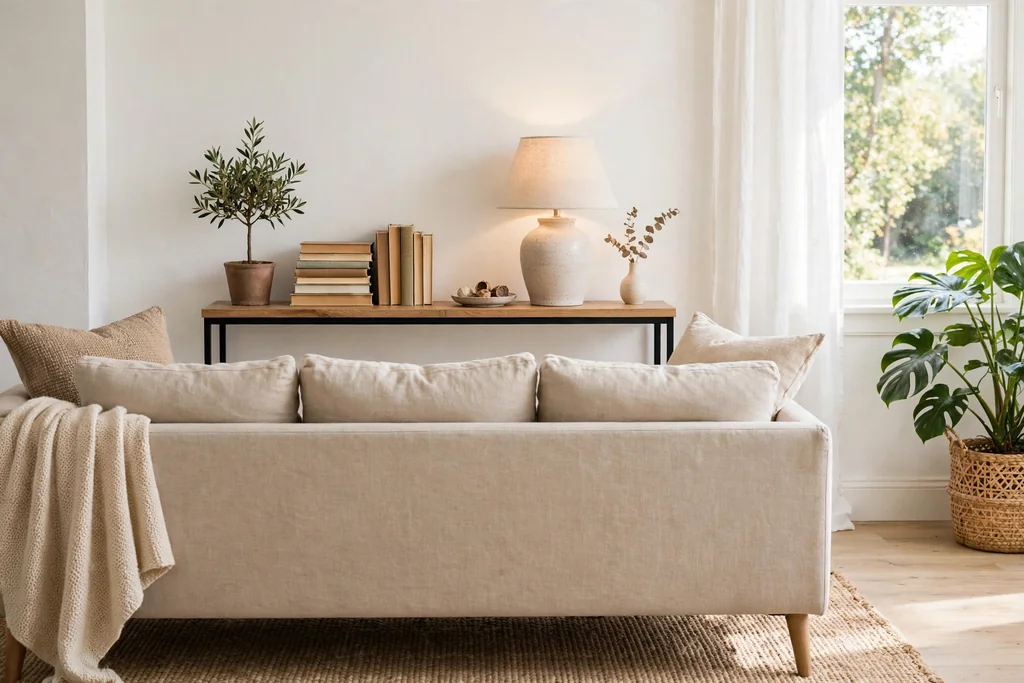
The gap behind a sofa, especially a sofa that floats in the middle of a room, is often wasted. A slim console table or shelf there holds lamps, books, chargers, and a plant, and it gives the back of the sofa a finished look from the other side of the room. This suits an open-plan living room where the sofa divides the seating area from the dining area.
Choose a console no deeper than the gap allows, and keep the walkway behind it clear if people pass there. Run a small power strip along the shelf for phone chargers, and keep cords tucked behind the table legs. Keep the top mostly clear, with one lamp and a few books, so the shelf adds storage without becoming another cluttered surface.
13. Fix a Magnetic Strip for Kitchen Tools
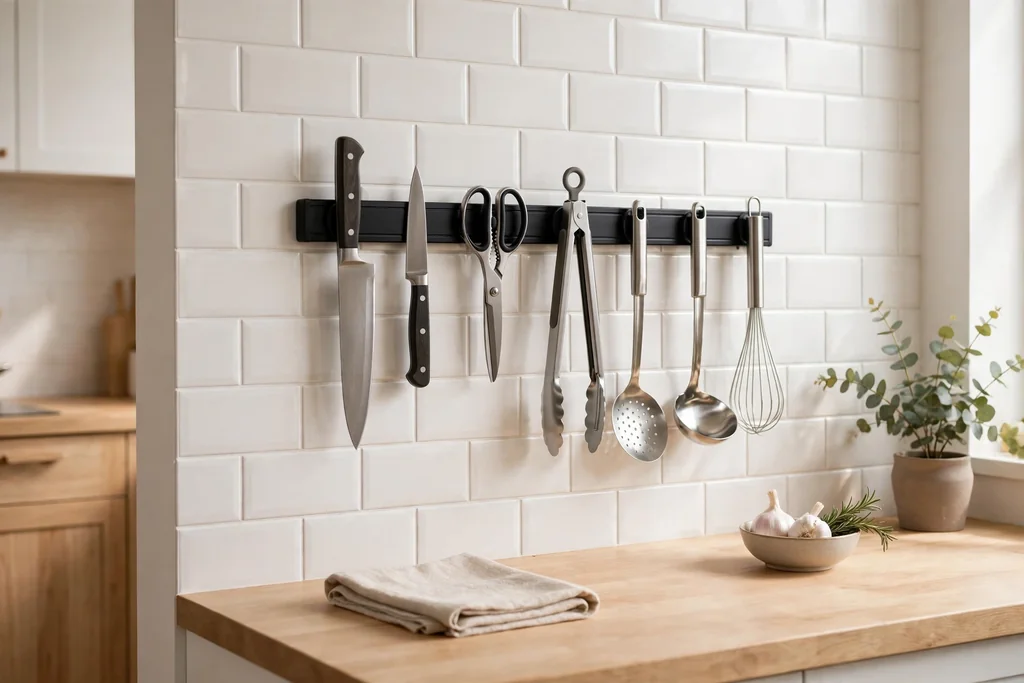
A magnetic strip on a kitchen wall holds knives, scissors, and metal utensils in a single row, freeing a whole drawer and keeping tools within reach of the counter. This suits a small kitchen where drawer space is short and a knife block eats counter space. It also keeps sharp tools visible, so you pick the right one without digging.
Mount the strip at a height adults can reach but children cannot, and use screws into a stud or wall fixings rated for the weight. Keep the strip away from the stove, so heat and steam do not dull the tools or loosen the fixings. Wipe the strip often, since kitchen grease settles on flat metal, and store only metal tools on it, with other utensils in a jar or drawer nearby.
14. Fit Corner Shelves in the Bathroom
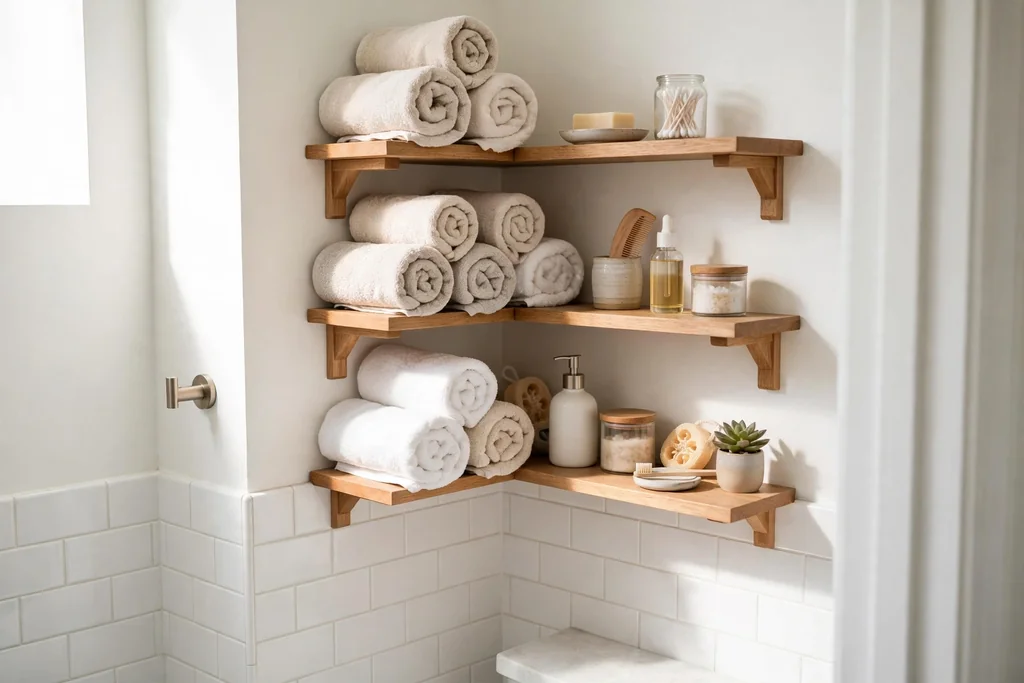
Bathroom corners are usually empty, yet they sit close to the shower, sink, and toilet where you need storage most. Small corner shelves hold shampoo, skincare, and rolled towels without taking floor space or crowding the sink. This suits a small bathroom where a cabinet would block the door or a cart would block the walkway.
Choose shelves in a material that handles damp air, such as treated wood, metal, or plastic, and fix them firmly so they do not shift when wet. Keep daily items on the lowest shelf and backups higher, and use one small basket per shelf if loose bottles slide. Wipe the shelves often, since bathroom damp can leave marks, and avoid glass shelves in a home with small children.
15. Sit Down to an Entry Storage Bench
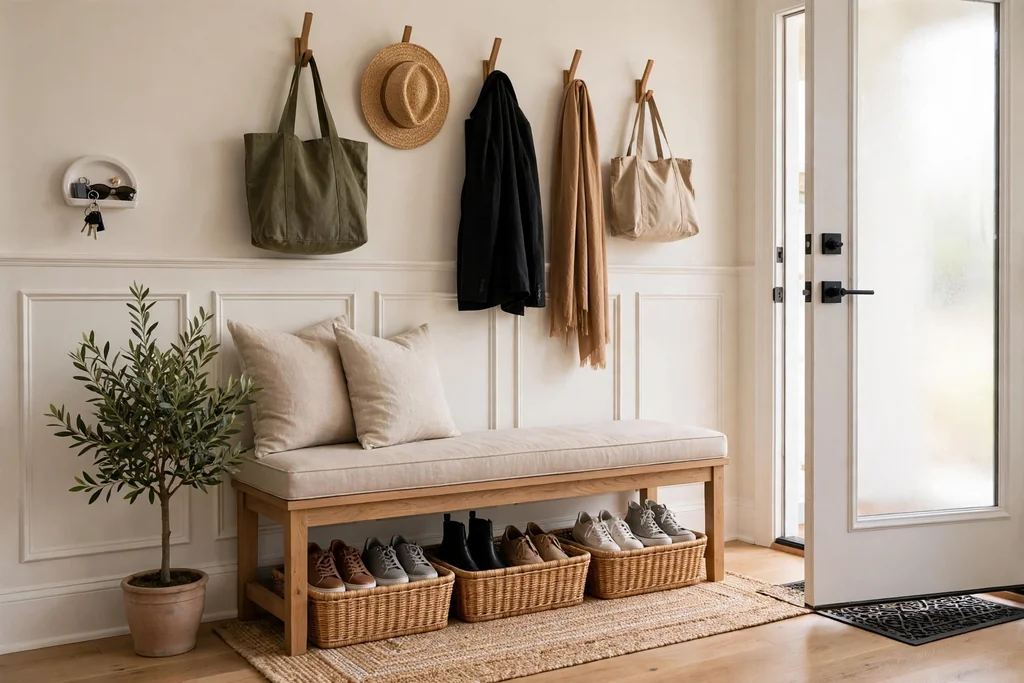
An entry bench gives you a seat for putting on shoes and a box or baskets below for the shoes themselves. With a few hooks above it, the bench becomes a complete entry station: coats up top, shoes below, and keys in a small tray on the seat end. This suits a small entry where shoes otherwise spread across the floor and coats pile on a chair.
Pick a bench that fits the wall without blocking the door swing, and use baskets that slide out easily for cleaning. Assign one basket per person if the household is large, so shoes do not mix. Keep the bench top clear except for a small tray, and wipe it often, since entries collect dirt from outdoors.
16. Repurpose an Over-Door Shoe Organizer for Supplies
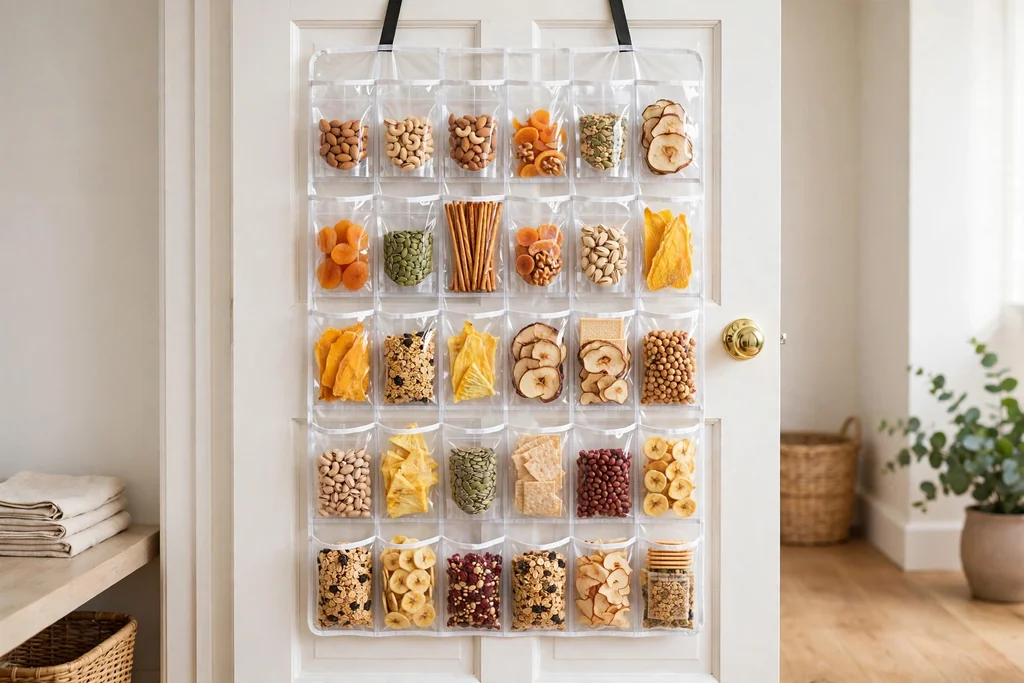
A clear over-door shoe organizer has deep pockets that hold far more than shoes. Hang one on a pantry door for snacks and packets, on a closet door for scarves and small accessories, or on a bathroom door for toiletries and cleaning supplies. The clear pockets let you see everything at once, which keeps small items from vanishing into a drawer.
Label the rows if several people share the organizer, and keep heavier items in the lowest pockets so the door hangs evenly. Cut nothing from the organizer, since trimmed pockets fray, and wash it now and then if it holds food or toiletries. If the door is used often, choose an organizer with sturdy hooks, so it stays in place when the door swings.
17. Fit Shelving Above the Toilet
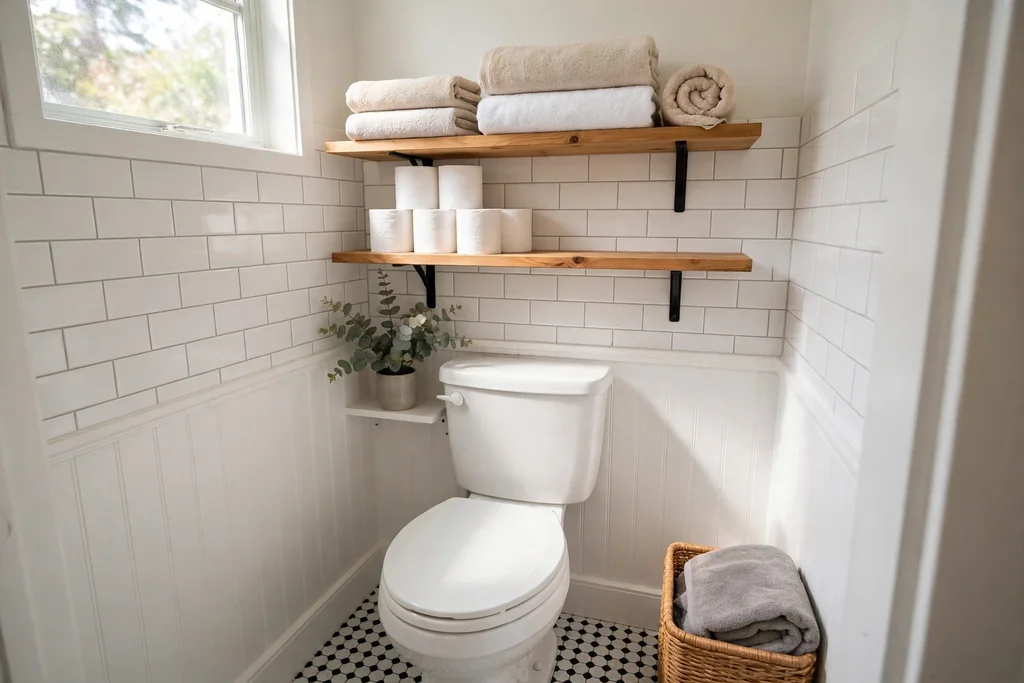
The wall above a toilet is often the only free wall in a small bathroom, and it sits at a height that is easy to reach. A small shelf unit or two floating shelves there hold spare toilet paper, towels, and toiletries, freeing the vanity for daily items. This suits a bathroom with no linen closet and a vanity that is already full.
Keep shelves high enough that no one bumps their head, and avoid placing anything breakable directly above the tank. Use baskets on the shelves to group items and hide less tidy backups, and keep the lowest shelf for items you reach for often. Check the fixings suit a bathroom wall, which may be tile, and use a stud finder or tile-rated fixings rather than guessing.
18. Decant the Pantry Into Clear Stackable Containers
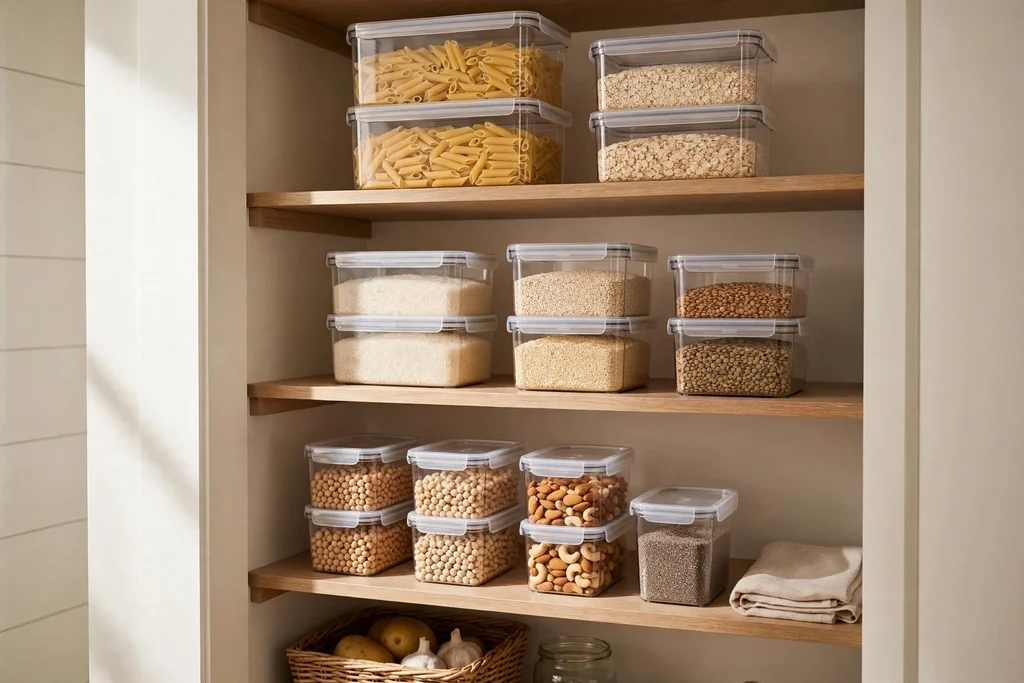
Pantry shelves hide food in boxes and bags that tear, spill, and hide what is left. Clear stackable containers show the contents at a glance, stack neatly, and keep food fresh longer, which also stops you buying a second bag of something you already own. This suits a small kitchen where pantry space is limited and every shelf must earn its place.
Decant one shelf at a time, and label each container with the contents and the date you filled it. Keep containers the same footprint where possible, so stacks stay steady, and store heavier staples like flour low. Wash and dry containers fully before refilling, and keep a small scoop in bulk containers, so you are not reaching in with wet hands.
19. Hang a Rail With S-Hooks in the Kitchen
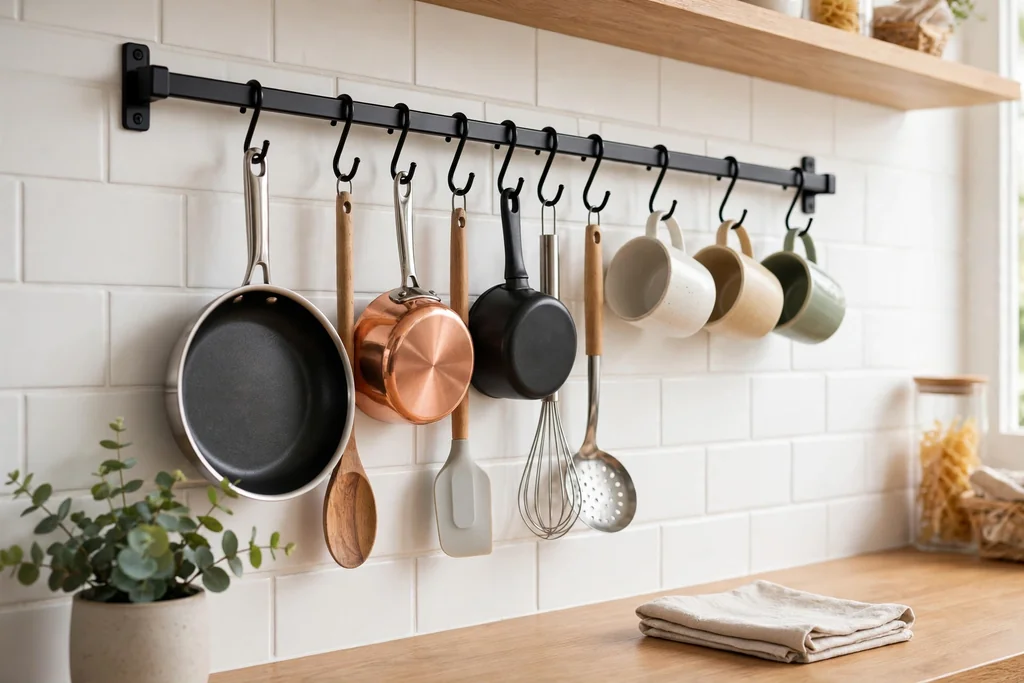
A wall rail with S-hooks turns a blank stretch of kitchen wall or the side of a cabinet into hanging storage for pans, utensils, mugs, and measuring cups. Hooks slide along the rail, so the layout changes as your cooking changes, and items stay visible instead of stacked in a drawer. This suits a small kitchen where pots pile in a low cabinet and lids never match their pans.
Fix the rail into studs or with fixings rated for the weight of full pans, and keep it away from the stove burner line. Hang the most used items at the front or center, and keep sharp tools on hooks that do not swing into the walkway. Wipe the rail and hooks often, since cooking steam leaves a film, and leave a few hooks empty for new tools.
20. Divide Drawers With Inserts
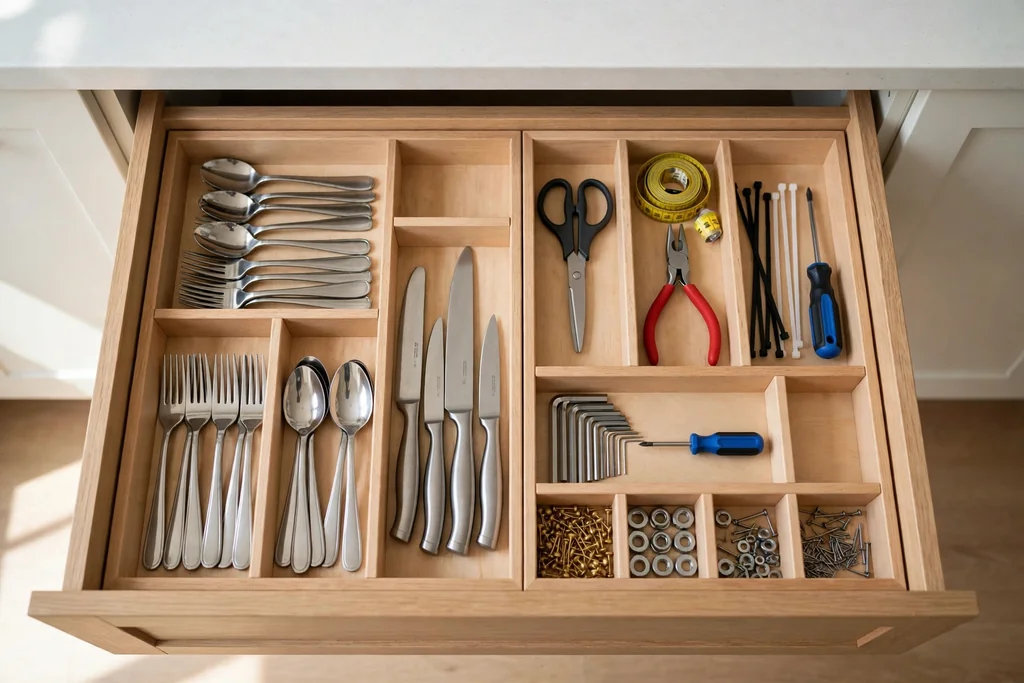
A deep drawer without dividers becomes one mixed pile, whether it holds kitchen tools, desk supplies, or socks. Adjustable inserts split the drawer into zones, so each category has a lane and you can see everything without lifting layers. This suits any small home, since drawers are often the only closed storage a room has.
Measure the drawer before you buy, and choose inserts that expand or link, so they fit snugly without sliding. Group items by use rather than by size alone, for example cooking tools together and baking tools together, so you open one drawer per task. Leave one lane empty if you can, since a drawer packed edge to edge is hard to use, and re-sort the inserts when a category grows or shrinks.
21. Mount File Holders on the Wall Beside a Desk
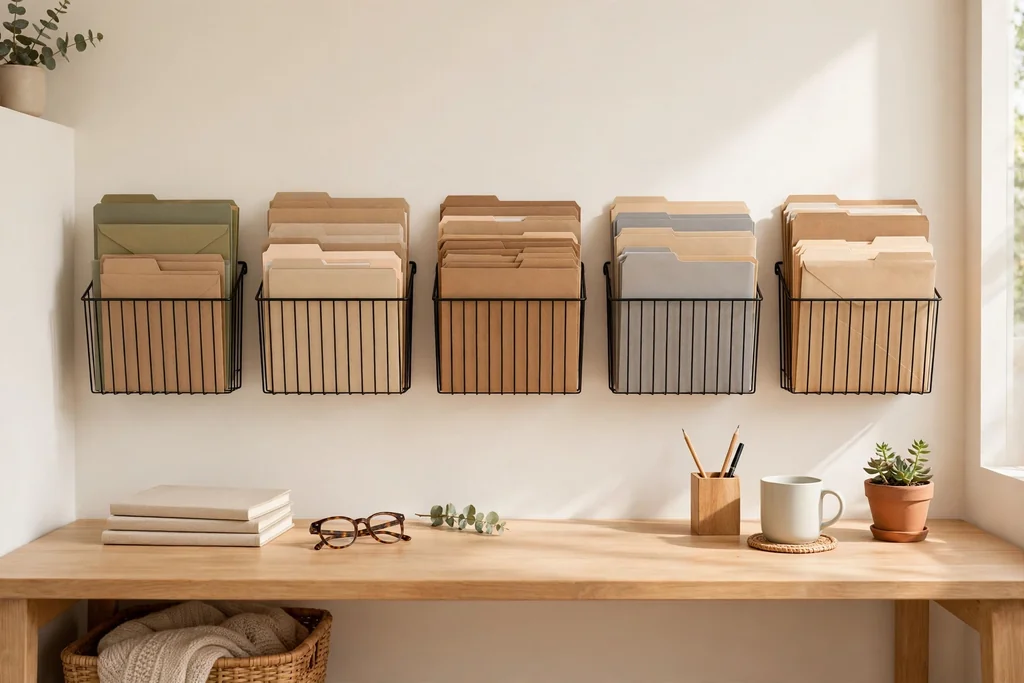
Paper piles grow fast in a small home, and a desk drawer rarely holds them all. Wall-mounted file holders beside a desk sort mail, bills, notebooks, and school papers into labeled slots, keeping the desk clear while the papers stay in reach. This suits a home office corner, a kitchen command center, or a student desk in a shared room.
Mount the holders at arm height from your chair, and label each slot by task, such as bills, school, and to file, rather than by vague names. Clear one slot each week, filing or recycling what is done, so the system does not fill up and spill back onto the desk. Keep the holders to one wall section, and use the same holder style throughout, so the row looks tidy.
22. Raise Cabinet Shelves With Tiered Risers
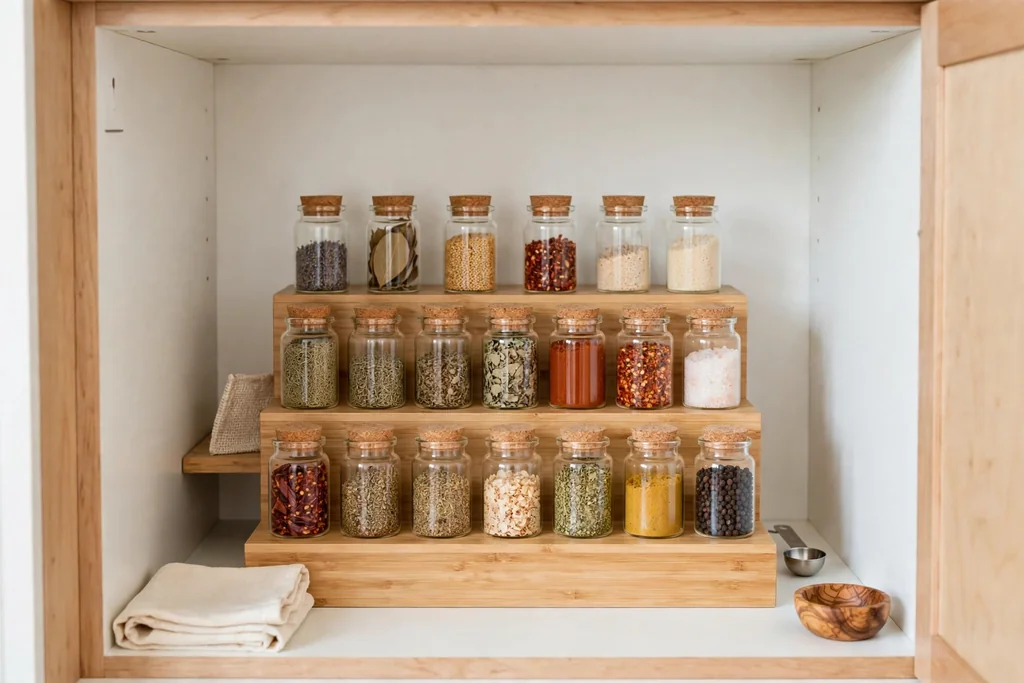
Kitchen and bathroom cabinets waste the vertical space above short items, since you can only stack so high before the pile falls. A tiered riser, like a small set of steps inside the cabinet, lifts the back row so you can see and reach every item. This suits spice cabinets, canned goods, and bathroom cabinets where small bottles hide behind taller ones.
Choose a riser that fits the cabinet depth and leaves the door free to close, and put the tallest items at the back on the highest step. Keep one category per riser, so spices do not mix with medicines, and wipe the riser when you restock. If the cabinet is deep, use two small risers side by side rather than one wide one, so you can pull one out without moving the other.
23. Tuck Shoes Into a Slim Entry Cabinet
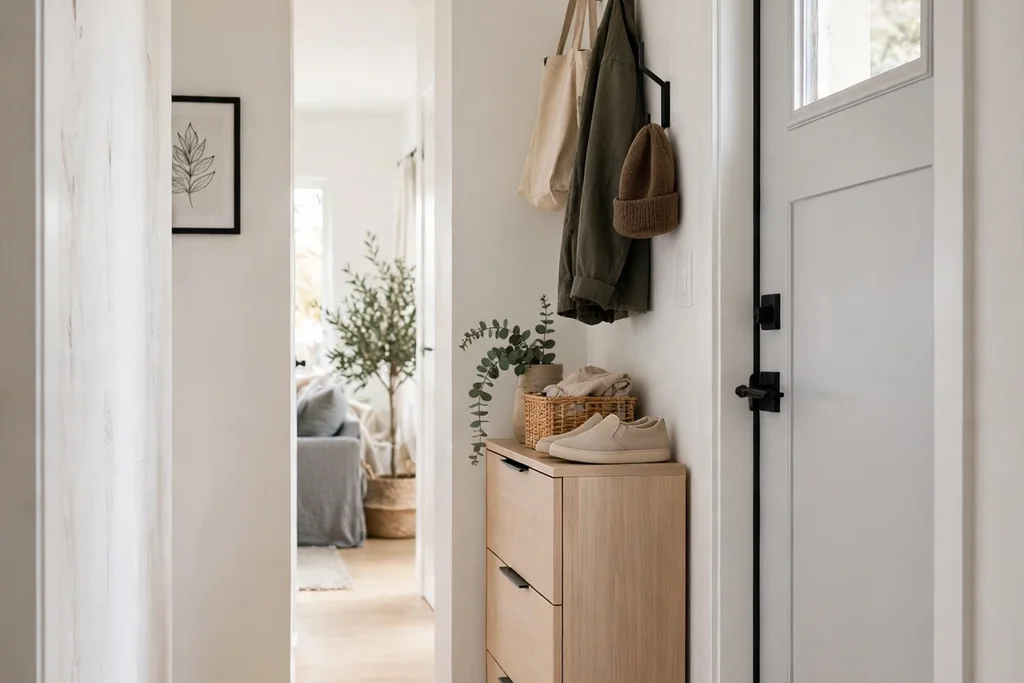
A slim shoe cabinet, only a few inches deep, holds pairs of shoes on tilted shelves behind closed doors, so the entry looks tidy even when several pairs live there. Because it is shallow, it fits a narrow hallway or a wall beside the front door where a bench or rack would block the path. This suits a small entry where shoes are the main source of clutter.
Anchor the cabinet to the wall, since tilted shelves shift when doors open, and wipe the shelves often, since shoes bring in dirt. Keep only the shoes you wear weekly in the cabinet, and store off-season pairs elsewhere, so the cabinet never overflows. Add a small tray on top for keys and mail, but keep it light, so the top does not become a dumping spot.
24. Shrink Bulky Bedding With Vacuum Storage Bags
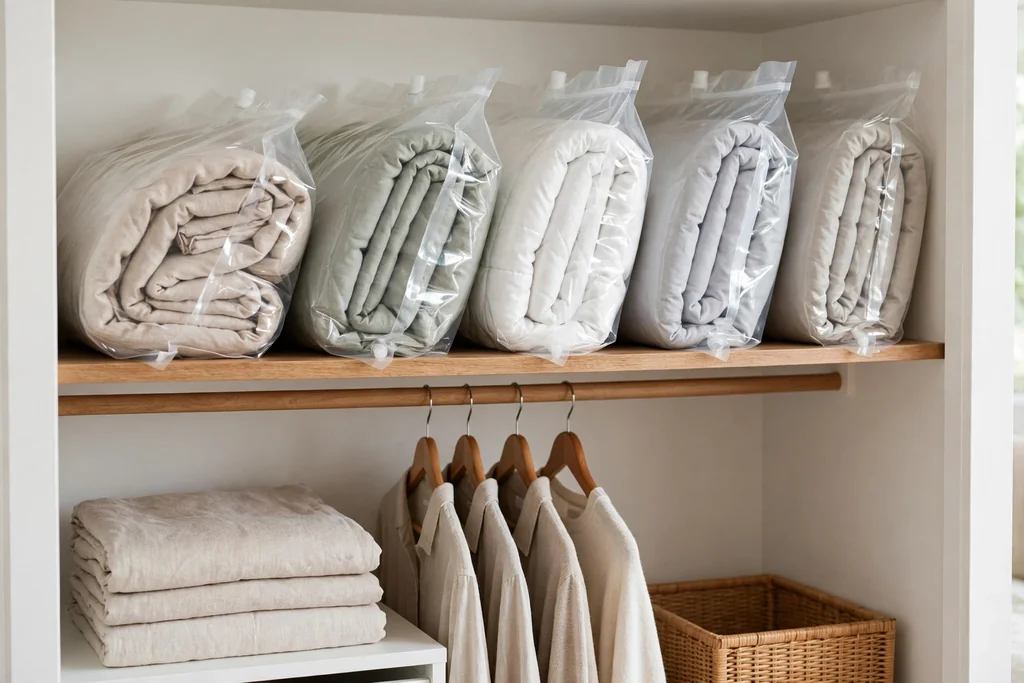
Spare duvets, winter blankets, and bulky coats take up a full shelf each, yet you only need them for part of the year. Vacuum storage bags shrink them flat by removing air, so one shelf or one under-bed bin holds what used to fill a closet. This suits a small bedroom or closet where bedding competes with clothes for space.
Roll or fold items neatly before sealing, and do not overfill a bag, since a strained seal leaks air back in. Label each bag with its contents and the season, and store bags flat rather than standing them on edge, so they do not slide. Check the seal after a week, and keep delicate fabrics out of vacuum bags if the care label warns against compression.
25. Double the Closet With a Second Hanging Rod
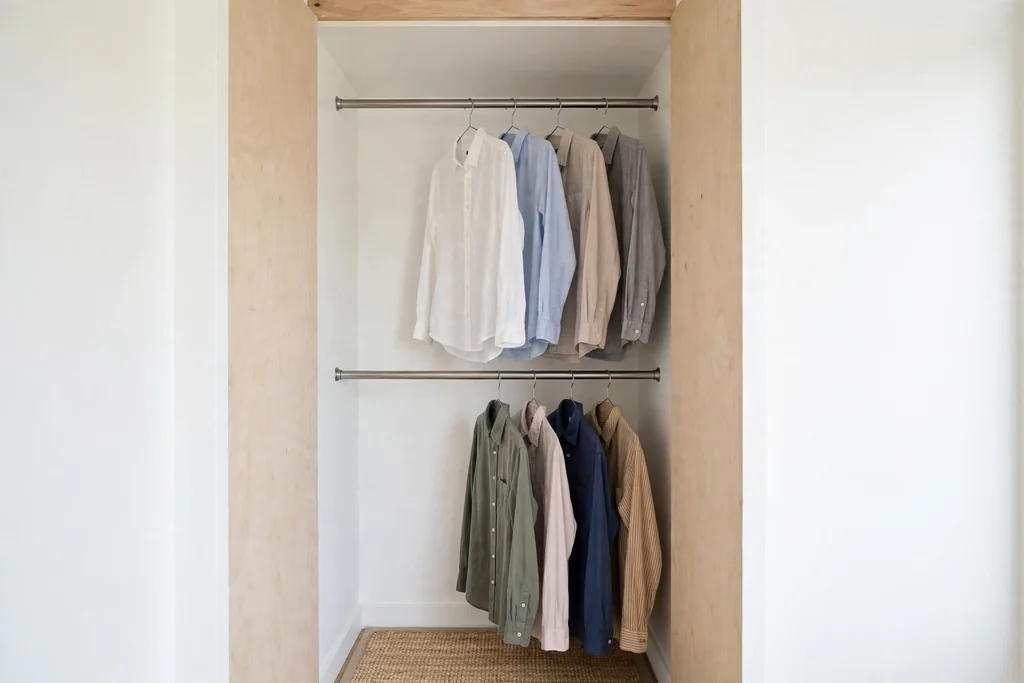
Most closets hang one long row of clothes, leaving empty air below short items like shirts and folded trousers. A second rod hung below the first doubles the hanging space in that section, using height that was already there. This suits a small bedroom closet where shirts, blouses, and jackets crowd one rod while the floor below stays empty.
Hang the second rod at a height that leaves shirts clear of the floor or a shoe rack below, and use it for shorter items only, so longer coats still fit on the main rod. Keep heavier items on the main rod, since it is usually fixed more firmly, and use slim hangers on both rods to fit more pieces. If the closet has one long rod, use a hanging rod extender that hooks over the main rod, which needs no drilling and suits a rented home.
26. Pick a Lift-Top Coffee Table With Storage
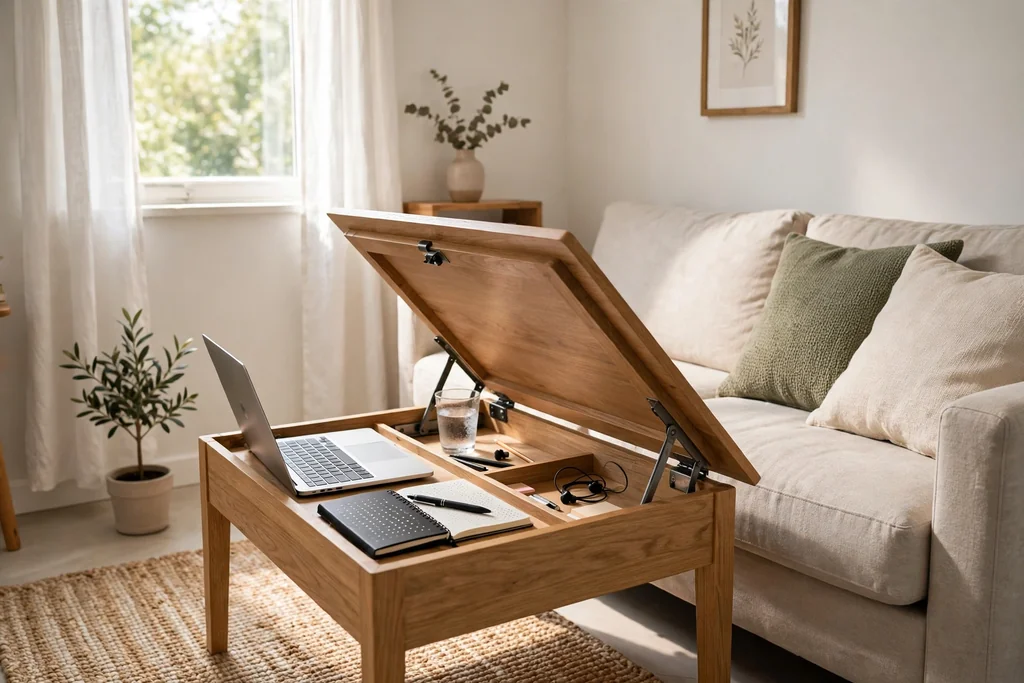
A lift-top coffee table raises its top to a comfortable height for eating, working, or reading, then lowers it again, while the base holds books, blankets, and chargers. In a small living room, it replaces both a coffee table and a desk, and the closed base keeps clutter out of sight. This suits a studio apartment or a living room that doubles as a workspace.
Check the lift mechanism before you buy, and choose one that stays steady at full height without wobbling. Keep the base organized with one small basket for chargers and one for remotes, so the inside does not become a tangle. For ideas on keeping the rest of the living room calm around a hardworking table, see these bedroom wall art ideas for wall styling that keeps a small room feeling open, and these bedroom curtain ideas for window treatments that suit small rooms too.
Conclusion
A polished small space does not come from buying more storage. It comes from matching each storage idea to a real gap in your home: a door, a wall, a gap beside an appliance, or a piece of furniture that can hold more than it shows. Start with the spot that bothers you most, use one idea well, and let the habit of putting things back in one home do the rest. Over time, a few of these changes add up to rooms that feel calm, easy to clean, and easy to live in, even when the floor plan stays exactly the same.
If you found an idea here that suits your home, save this post on Pinterest so you can find it again when you are ready to start. Pin the look you like most, whether it is an under-bed bin setup, a pegboard wall, or a slim entry cabinet, and use it as a guide for your next weekend tidy-up.
FAQs
How do I start organizing a small space without buying everything at once?
Start with the spot that causes the most daily friction, such as shoes by the door or a messy under-sink cabinet. Empty that one area, group what is left by category, and add a single storage solution for it, like hooks, a bin, or a riser. Once that area works, move to the next trouble spot, so the system grows around your real habits rather than a shopping list.
What is the best storage idea for a rented small apartment?
Choose storage that needs no drilling: over-door racks, tension rods, rolling carts, adhesive hooks, and freestanding shelves. These add real capacity without holes in the walls, and they move with you to the next home. If you do drill, keep it to one or two well-placed shelves, and check your lease and wall type first.
How do I keep small space storage from looking cluttered?
Use closed storage for messy categories and open storage only for tidy ones. Match bin styles within one room, label the front of closed bins, and leave some empty space on every shelf. When a shelf or bin is full, remove one item before adding another, so the system stays at the size you planned.
How much should I store under the bed?
Use under-bed storage for items you need weekly or seasonally, such as spare bedding, off-season clothes, or shoes you wear less often. Keep daily clothes in the closet, so you are not crouching under the bed every morning. Choose lidded rolling bins if dust is a problem, and measure your bed clearance before you buy.
What storage works best in a very small kitchen?
Use the walls, the insides of cabinet doors, and narrow gaps. A magnetic strip, a rail with hooks, hooks inside doors, and a rolling gap cart together add a lot of capacity without taking counter space. Clear stackable pantry containers and tiered risers then make the cabinets you already have easier to use.
How do I maintain a small storage system over time?
Build a short weekly reset into your routine: return stray items to their homes, wipe one shelf or bin, and clear one file holder slot or basket. Every few months, check each bin for items you no longer use, and re-label anything whose contents changed. A system that gets a small regular reset lasts far longer than one that gets a big annual clear-out.