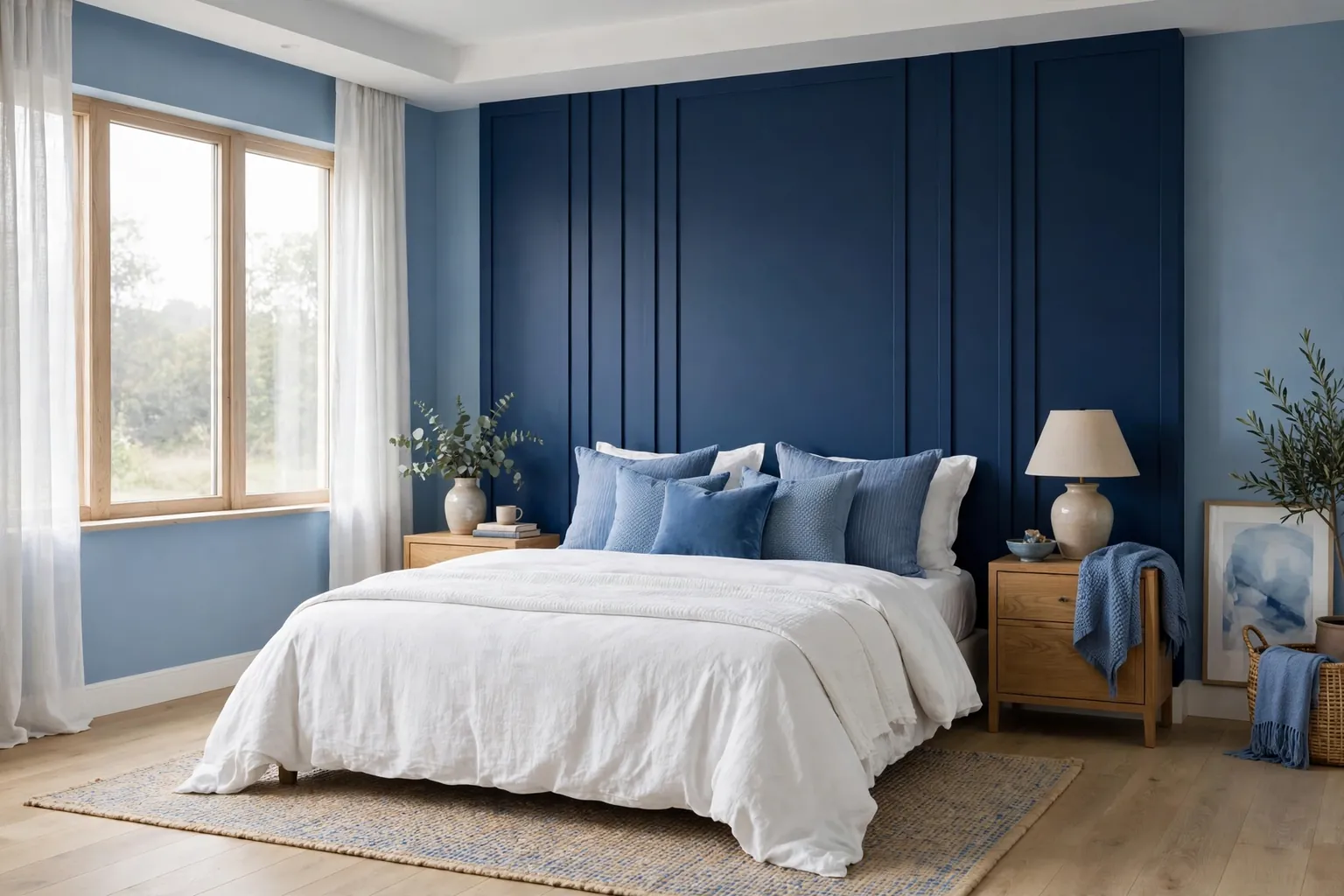
Blue is an easy color to live with in a bedroom. It can feel calm in a pale shade, bold in navy, and fresh in a coastal mix with white and wood. The trick is to give blue a clear place in the room, so it reads as a choice rather than a random add on. These 22 blue bedroom ideas cover walls, bedding, furniture, curtains, rugs, art, lighting, and small swaps, so you can start with one change or plan a full room refresh. Test paint and fabric samples in daylight and lamplight before you commit, since blue shifts a lot with light.
Key Takeaways
- Give blue a main job: one wall, the bed, or one large furniture piece, with smaller repeats elsewhere.
- Mix at least two blues, such as navy and pale blue, so the scheme has depth instead of one flat shade.
- Keep large surfaces pale, including bedding and ceilings, when the room is small or short on daylight.
- Repeat blue three times in a room, such as bedding, art, and a rug, so the color looks planned.
- Warm the scheme with wood, rattan, brass, and warm lamps, since blue alone can feel cool.
- Start with bedding, cushions, or curtains for a quick refresh, and save walls and large furniture for a bigger project.
1. Paint a Navy Accent Wall Behind the Bed
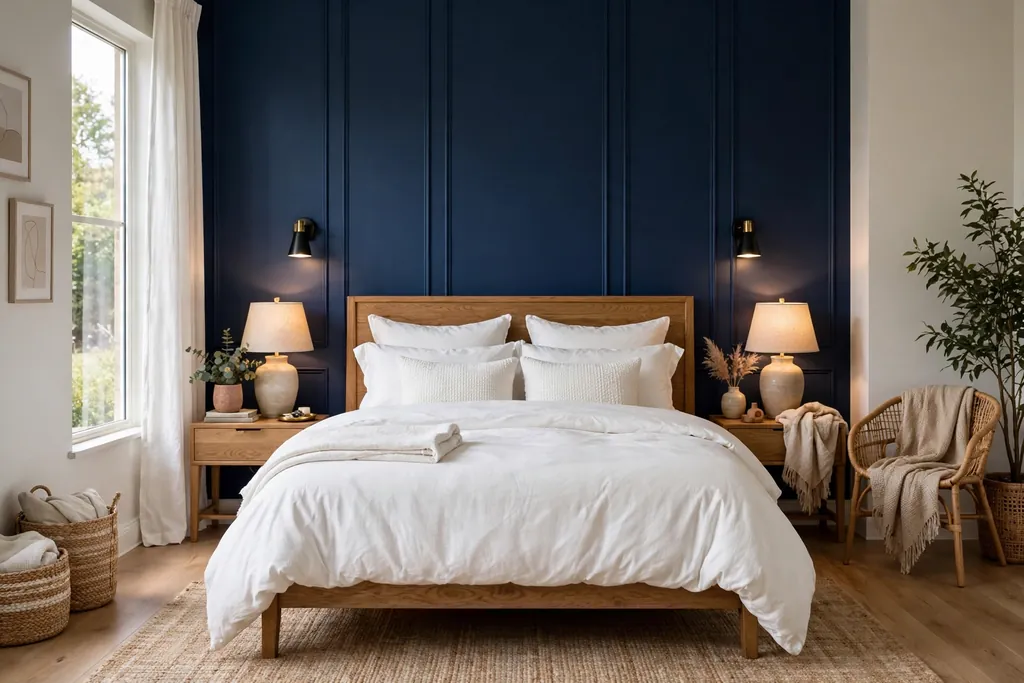
Paint the wall behind the bed navy and keep the other walls white or pale grey. The dark wall gives the bed a clear focal point, and pale bedding on top of it looks brighter by contrast. This suits a room with good daylight, since light keeps navy lively rather than heavy.
Keep the trim white for a clean edge, and hang one or two simple framed prints on the navy wall so the bed zone feels finished. Test a large painted sample on the wall and look at it in morning and evening light before painting the whole wall, since navy shifts a lot with light. If you rent and cannot paint, a large navy tapestry or a set of navy framed prints can give a similar anchor without paint.
2. Wash All Four Walls in Pale Sky Blue
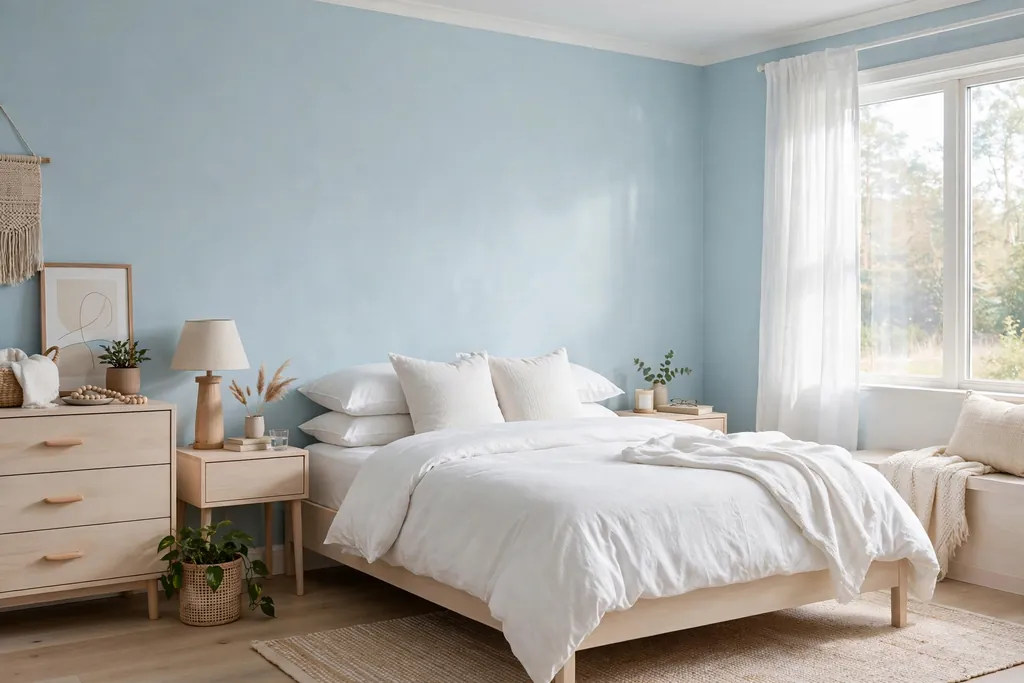
Paint all four walls a pale sky blue for a soft, even wash of color that suits a small room or a room with little daylight. Pale blue reads as fresh in the morning and calm at night, and it pairs well with white bedding, pale wood, and plain curtains. The whole room gains color without one wall doing all the work.
Keep the ceiling white and the bedding mostly white or cream, so the pale blue stays light rather than closing the room in. Add one deeper blue cushion or throw so the scheme has a darker note to rest the eye on. Wash painted walls gently, since pale blue can show marks near light switches and bedside tables.
3. Layer Blue Bedding in Three Shades

Build the bed in three shades of blue: pale blue sheets, a mid blue duvet or coverlet, and a navy throw folded at the foot. The layers give the bed depth, and you can remove the throw on warm nights without losing the scheme. This suits a room where the walls must stay pale, such as a rental.
Keep sleeping pillows pale and put the darkest shade at the foot of the bed, where it is easy to fold back at night. Add one white cushion to break up the blue, so the bed does not read as one solid block. Wash the layers together so the blues stay even in tone over time.
4. Choose Blue and White Striped Bedding

Choose blue and white striped bedding for a crisp pattern that adds interest without a second print elsewhere in the room. Stripes read as orderly and classic, which suits a bedroom that needs structure, and the white in the stripe keeps the pattern light. A wooden bed frame and plain walls let the bedding lead, so the room stays calm rather than busy.
Keep the rest of the bedding plain, with one white throw folded at the foot, and repeat the blue once more in a small item, such as a cushion or a vase. If the stripe feels strong, pick a narrower stripe or a softer dusty blue, which reads more gently in a small room. This is a renter friendly change, since bedding needs no tools and can move to another room later.
5. Paint a Dresser Navy With Brass Handles
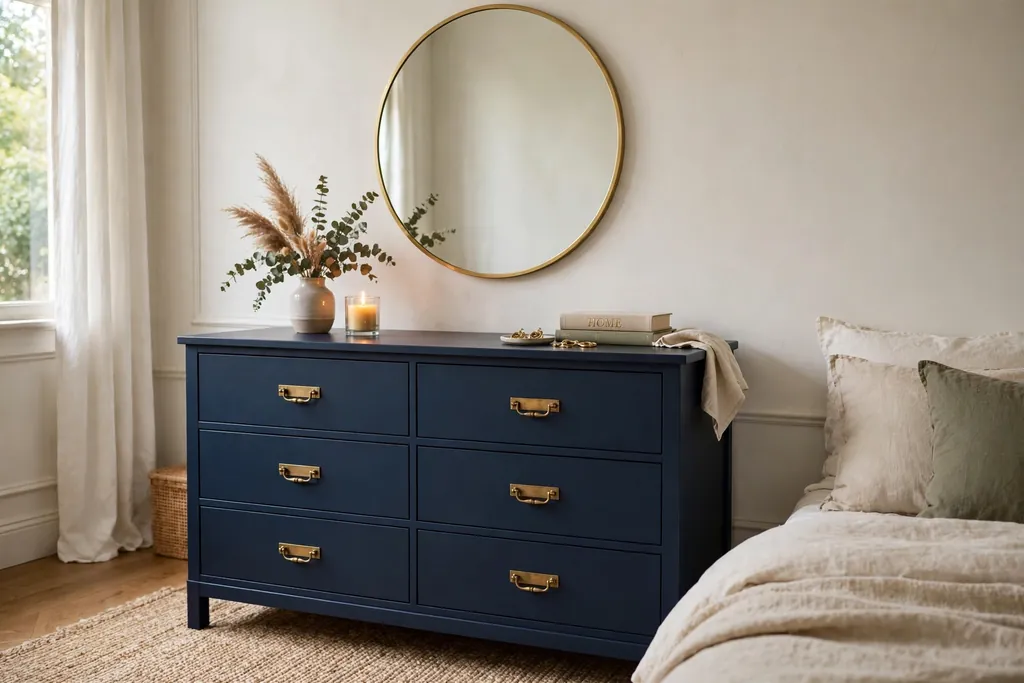
Paint a wooden dresser navy and add brass handles for a furniture piece that anchors a pale room. The dark blue gives the dresser presence, while brass handles add warmth that keeps the navy from feeling cold. A round mirror above it and a small vase on top finish the corner without adding more furniture.
Keep the wall behind the dresser pale so the navy stands out cleanly, and leave the top mostly clear, with a book, a small tray, and one vase. Sand and prime the dresser before painting, and use a paint made for furniture so the finish holds up to daily drawer use. If brass feels too warm, brushed gold handles give a similar effect with a softer shine.
6. Pick a Blue Velvet Headboard
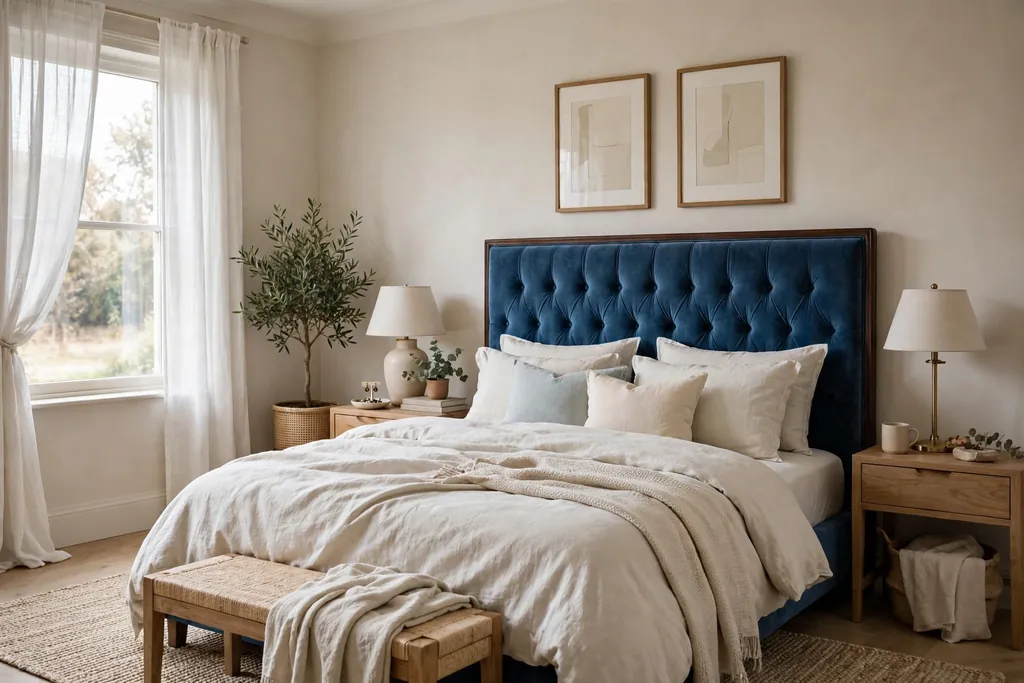
Pick a headboard in blue velvet, in navy, teal blue, or dusty blue, for softness and color behind the bed without any paint. Velvet adds texture, so the headboard reads as furniture rather than a flat panel, and it makes sitting up to read more comfortable than a hard wall. This suits a main bedroom where the bed sits against a long blank wall and needs a focal point.
Keep the bedding in a paler tone, so the headboard stays the clear focal point, and add one cushion in the headboard color to link the bed to the wall behind it. Measure the headboard width against the bed and the wall, since a headboard that is too narrow looks lost and one that is too wide crowds the bedside tables. Vacuum velvet gently with an upholstery tool, since the pile can trap dust over time.
7. Hang Blue Curtains Over White Sheers
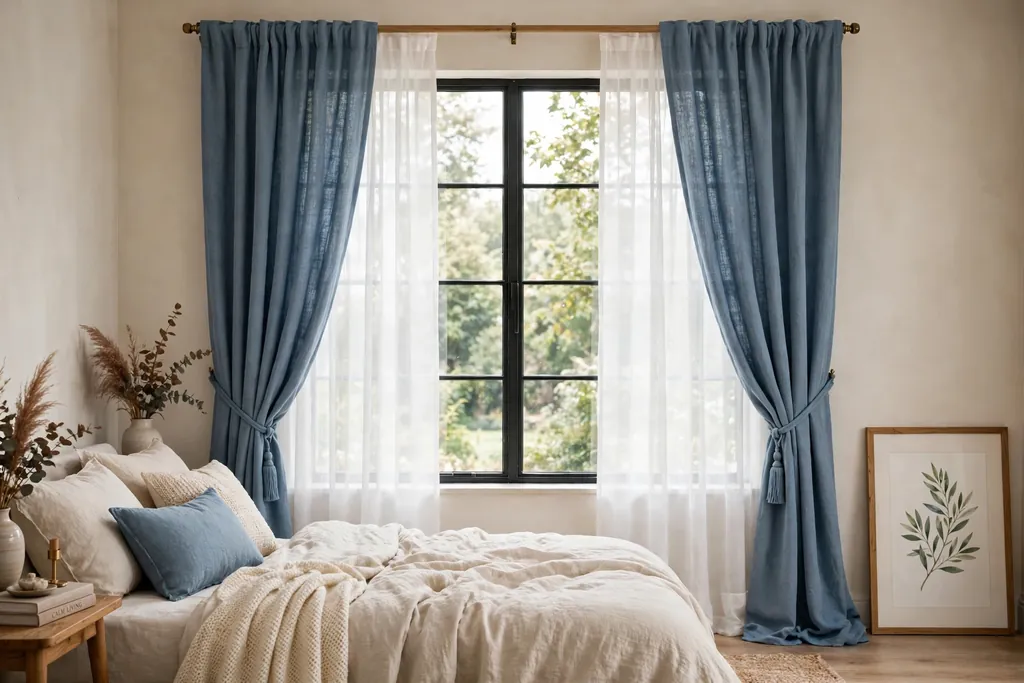
Hang dusty blue linen curtains over white sheer panels for a window that works in both daytime and nighttime. Open the blue panels in the morning for soft light through the sheer, then close them at night for privacy and a darker room for sleep. This pair suits a bedroom on a busy street, where daytime privacy and nighttime darkness both matter.
Use a double rod so each layer moves on its own, and hang the rod high and wide so the window looks larger and the panels clear the glass when open. Keep the sheer in white and choose the blue panel in a tone from your bedding, so the layers look linked when closed. For more curtain fabrics, lengths, and hanging tips, see these bedroom curtain ideas. Wash sheer panels often, since white shows dust more than a heavier fabric.
8. Anchor the Room With a Blue Patterned Rug

Lay a large blue patterned rug under the bed to ground the room and pull the whole scheme together. The pattern links the bed to the floor, while pale bedding above it keeps the room light, and the rug gives bare feet a soft landing first thing in the morning. This suits a bedroom with wood or laminate floors, where a rug adds warmth and cuts echo.
Choose a rug large enough to extend beyond each side of the bed, and use a rug pad underneath so the layers do not slip. Keep the rug pile low near the door swing, and vacuum with a brush head on a regular cycle. If the pattern is bold, keep the bedding mostly plain so the rug can be the one patterned piece in the room.
9. Build a Blue Gallery Wall Above the Bed

Hang a gallery wall of blue prints above the bed for personality without painting a wall or buying new furniture. Choose prints in navy, dusty blue, and pale blue, with simple wood or white frames, and hang them in a loose grid so the wall feels calm rather than crowded. Mix abstract shapes, botanical prints, and simple line drawings, but keep the palette tight.
Lay the frames on the floor first and plan the spacing, leaving equal gaps between frames, then hang the middle frame at eye level. Use picture hanging strips if you rent, and keep the largest frame near the center so the arrangement feels balanced. For more ways to size and hang art above a bed or a dresser, see these bedroom wall art ideas. Swap one print with the seasons if you want a small change without redecorating the whole room.
10. Try Two Tone Walls With a Chair Rail
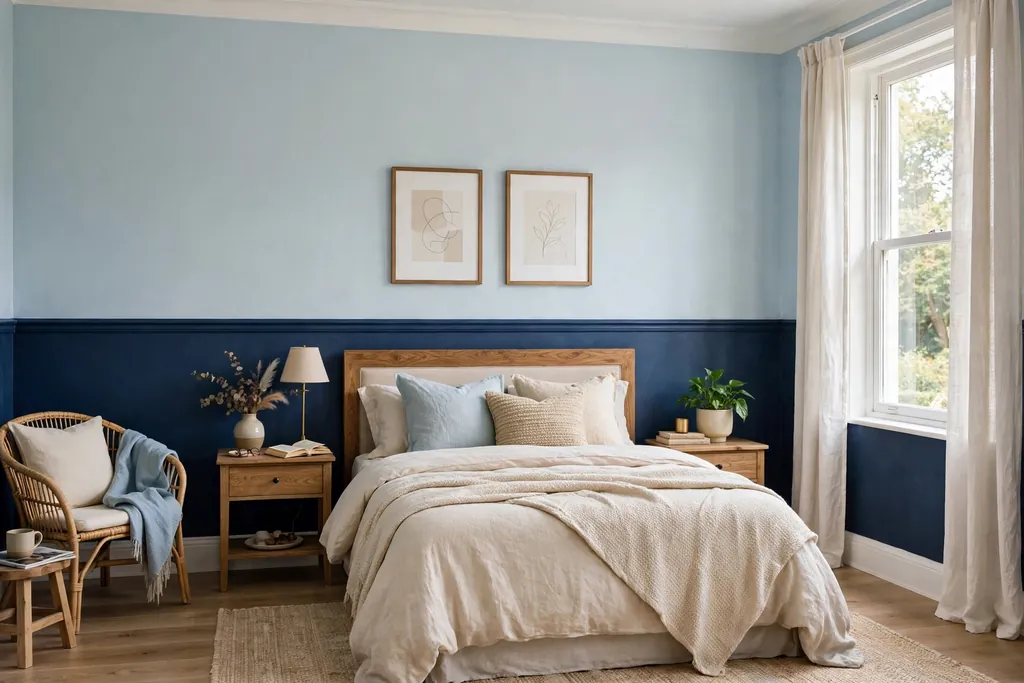
Paint the lower wall navy and the upper wall pale blue or white, with a chair rail between them, for a bedroom wall with clear structure. The dark lower half grounds the room, while the pale upper half keeps it bright, and the rail gives a clean line where the two colors meet. This suits a traditional bedroom, a long wall, or a room where one flat color feels too plain.
Keep the rail and trim white, and keep the bedding pale so the wall can be the feature. Measure the rail height with care, since a rail set too high can cut the wall in an awkward place; a height near the top of the bedside tables often works well. If you rent, a painted board fixed with removable strips can give a similar two tone line without a full wall job.
11. Paint the Bed Frame a Clear Blue

Paint a wood bed frame a clear blue, such as denim blue or dusty blue, and keep the bedding in a calmer tone. The frame becomes a bright outline for the bed, which suits a simple room with plain walls and little furniture. This works best on a wood frame with clean lines, where the color can show clearly.
Remove the bedding and sand the frame lightly before painting, and use a paint made for furniture so the finish stands up to daily use. Keep the headboard in the same blue or in pale wood, so the frame reads as one piece rather than two separate colors. Add a white or cream throw at the foot, so the blue frame still has a pale break beside it.
12. Paint the Ceiling a Soft Pale Blue
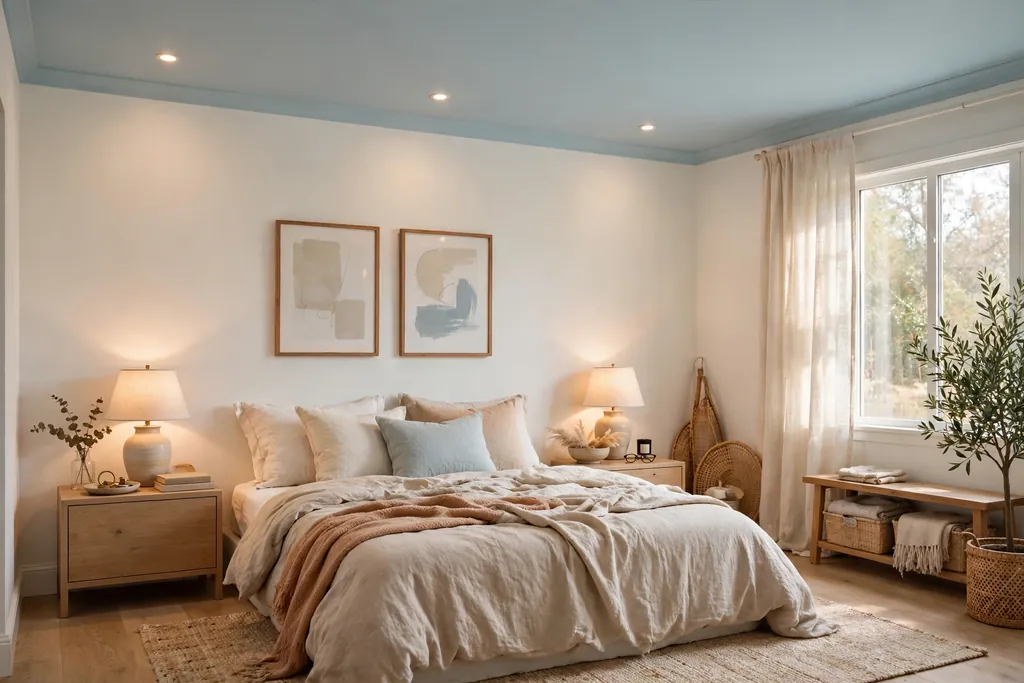
Paint the ceiling a soft pale blue and keep the walls warm white for a gentle surprise overhead that does not dominate the room. The blue ceiling reads as sky on a bright day, while white walls keep the room grounded and bright. A white pendant light hangs cleanly against the blue, and pale bedding below ties the scheme together.
Keep the blue pale rather than mid tone, since a ceiling color looks darker once it covers a large area, and test a large sample overhead before committing. Paint the trim white for a clean edge, and keep the choice consistent around the room so the edge reads as planned. This suits a bedroom with white trim, where the ceiling can be the one unexpected color.
13. Go Coastal With Blue, White, and Rattan
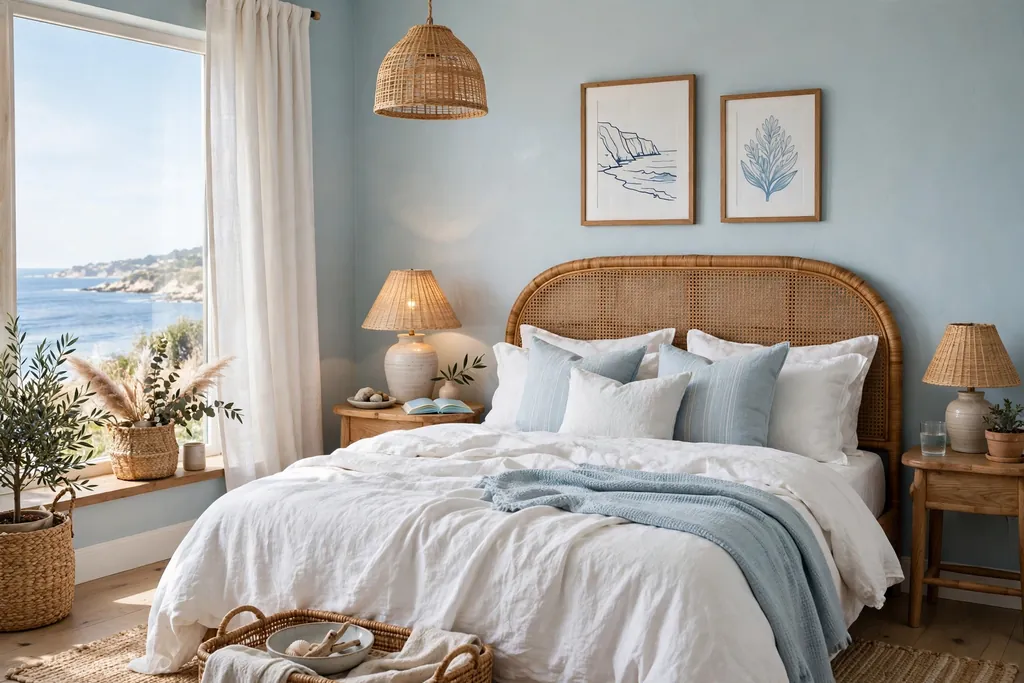
Pair pale blue walls with a rattan headboard and white linen bedding for a coastal take on a blue bedroom. The pale blue reads as fresh in daylight, rattan adds woven warmth, and white linen keeps the bed soft and relaxed. Woven baskets beside the bed hold throws and books without adding closed furniture.
Keep the palette tight: pale blue walls, white bedding, and rattan in two or three spots, so the room stays calm. Dust woven pieces with a dry cloth or a soft brush, and keep rattan out of damp corners, since it can warp. For a wider coastal palette, including sand tones and sea blues, see these coastal bedroom ideas. A sea view is not needed: the palette and textures do the coastal work on their own.
14. Swap Blue Throws and Cushions With No Paint

Keep a small set of blue throws and cushion covers, and swap them when you want a new look, with no paint and no new furniture. A navy throw in winter, a pale blue set in summer, and a patterned cushion pair for guests can change the bed in minutes. This suits a rental, a room you share, or a reader who likes to test a color before committing to paint.
Store the off season set in a lidded basket or a shelf box, folded and clean, so the swap takes minutes. Keep sleeping pillows plain all year, and change only the decorative cushions and the throw, so the bed stays easy to make. Wash new covers before the first use, since strong dyes can mark pale sheets at first.
15. Use Blue Lampshades and Warm Bulbs
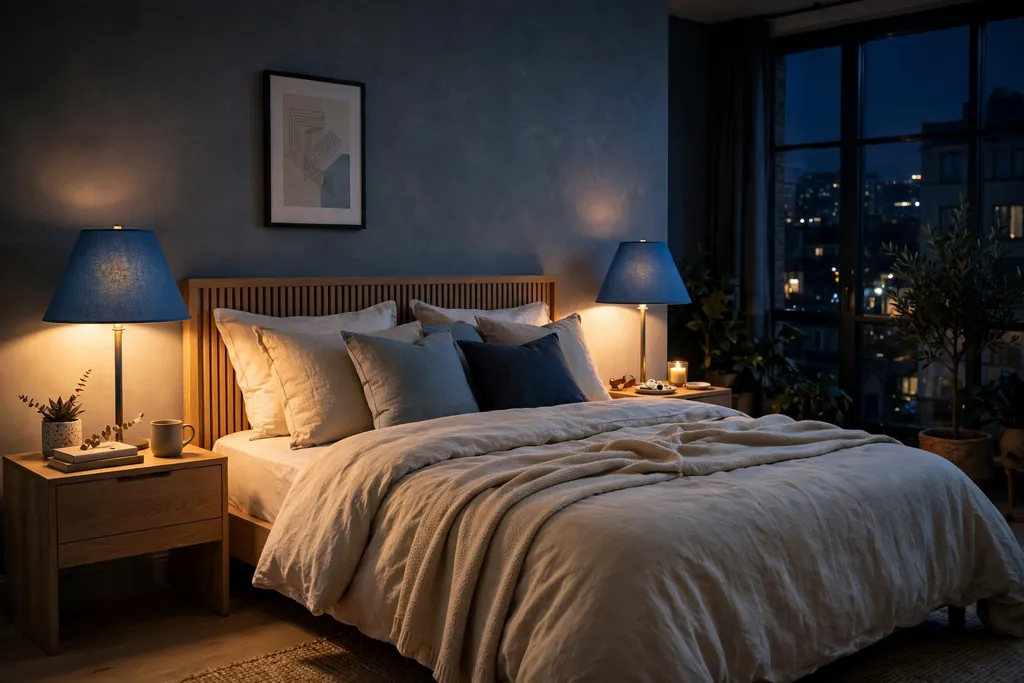
Choose lampshades in blue, such as navy on bedside lamps or pale blue on a pendant, and pair them with warm white bulbs for soft evening light. The blue shade adds color at eye level in the evening, when walls and bedding matter less, and warm bulbs keep the blue from feeling cold. This suits a bedroom where overhead light feels too bright at night.
Keep the lamp bases simple, in wood, white, or brass, so the shade stays the focus, and put the switches where you can reach them without getting up. Check that the shade size suits the lamp base, since a shade that is too large can crowd a small nightstand. Dust fabric shades with a dry cloth, and keep shades clear of curtains and bedding.
16. Paper One Wall With Blue Patterned Wallpaper
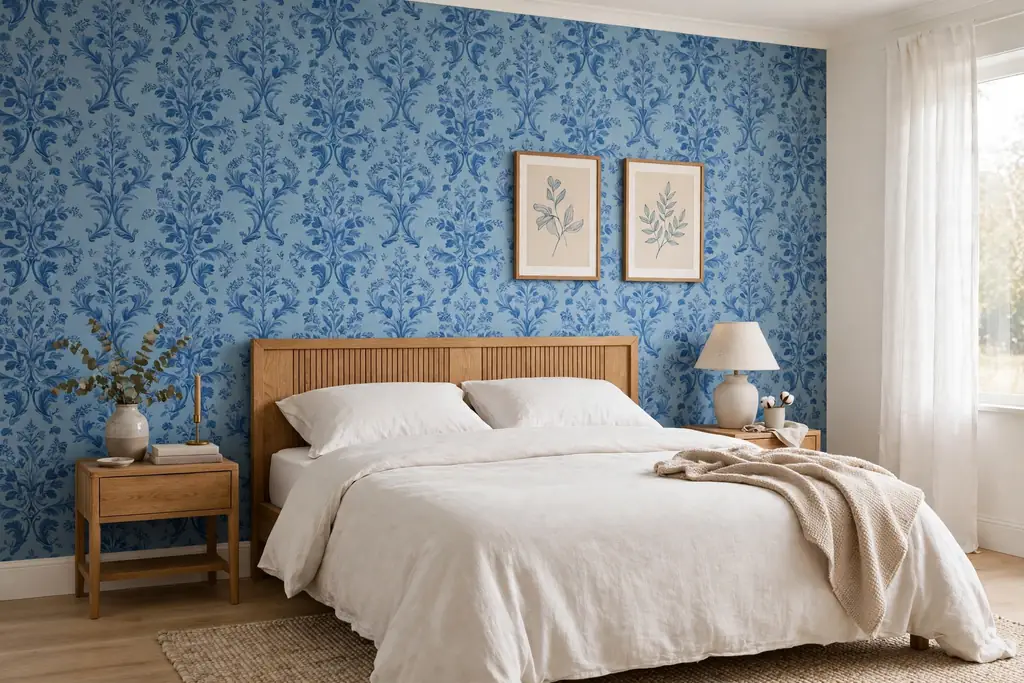
Paper the bed wall with a blue patterned wallpaper, such as a botanical print, a small geometric repeat, or a soft stripe, and keep the other walls plain. The pattern adds color and detail at eye level, while plain side walls keep the room from feeling crowded. This suits a bedroom with one large blank wall and simple furniture, since the wall becomes the feature.
Keep the wallpaper to one wall, and let the other walls stay pale, so the pattern does not crowd the room. Order a sample first and look at it in daylight and lamplight, since blue prints shift a lot with light. If you rent, a paste the wall paper that strips cleanly, or a set of framed wallpaper panels, gives a similar effect without a full wall commitment.
17. Make a Blue Reading Chair the Corner Focus
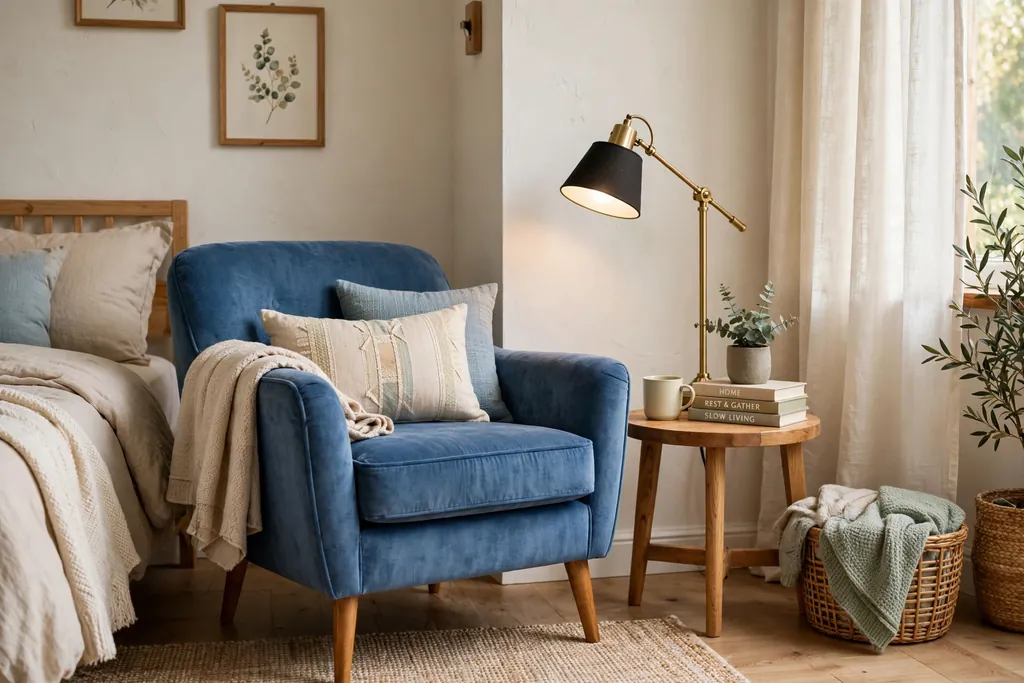
Place a blue armchair in a bedroom corner, with a small side table and a reading lamp, for a second use beyond sleep. A deep blue chair reads as a clear focal point, while a pale blue chair feels softer and suits a small room. Add a throw over one arm for cooler evenings, and keep a book on the side table so the corner looks used, not staged.
Choose a chair deep enough to sit in for an hour, not a stiff accent chair that looks good but stays empty. Keep the side table clear except for the book you are reading, and move the chair a little away from the window if strong sun fades the fabric over time. Repeat the chair color once more in a cushion on the bed, so the corner links to the rest of the room.
18. Style Blue Shelves Above a Dresser

Fit open shelves above a dresser and style them with blue books, vases, and small objects, for color at eye level without new furniture. The shelves turn a plain wall into a display, and blue items grouped together read as a planned palette rather than scattered objects. This suits a bedroom with a dresser against a blank wall and little else on it.
Keep the shelves to two or three boards, and leave one end of each shelf empty so the display does not look packed. Mix blue items with white and wood pieces, so the blue stands out without taking over the wall. Dust the shelves often, since open shelves collect dust faster than closed storage, and keep heavy items on the lowest shelf.
19. Pair Blue With Grey for a Calm Room
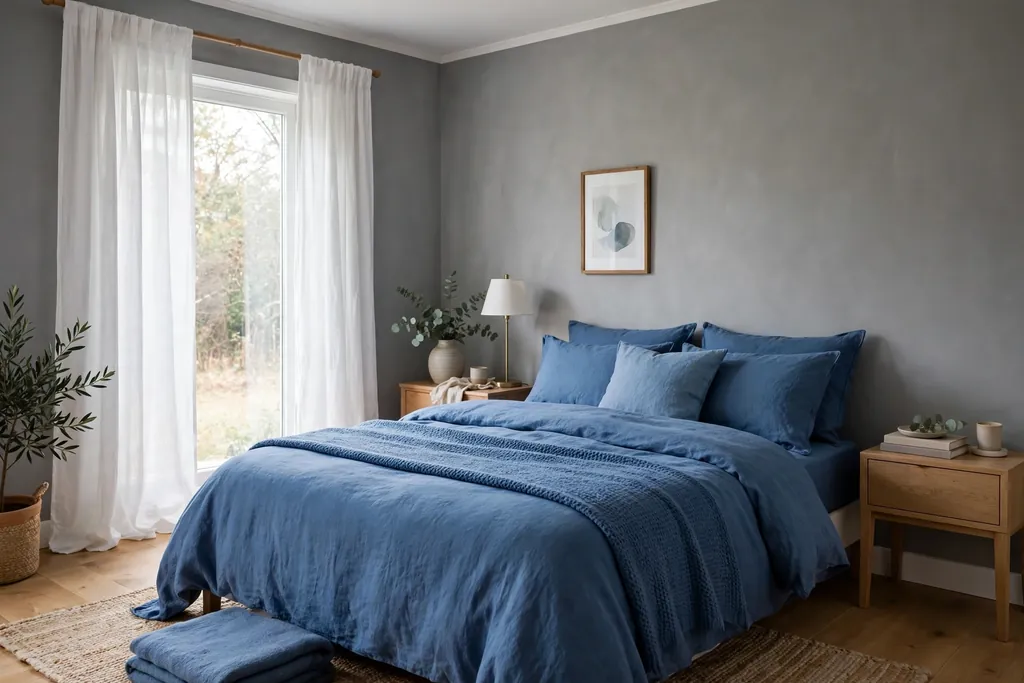
Pair blue with grey for a calm bedroom that feels quiet rather than bold. Use mid blue bedding with grey walls, or grey bedding with navy cushions, and keep wood and white as the third notes in the room. The grey softens the blue, which suits a bedroom used for sleep and reading, where a strong color might feel too active at night.
Keep the grey warm rather than cold, since a cold grey with a cold blue can feel flat; a warm grey, pale wood, and warm lamps lift the pair. Repeat each color at least twice, such as blue in bedding and art and grey in curtains and a rug, so neither color looks like a leftover. Test the pair in lamplight, since both colors darken in the evening.
20. Warm Navy With Brass and Warm Wood

Warm a navy bedroom with brass details and warm wood, so the deep blue feels inviting rather than cold. Brass handles, a brass lamp, and a warm wood bed frame or nightstand give navy a warm frame, while white bedding keeps the bed light. This suits a main bedroom with good daylight, where navy can be used in larger doses.
Keep brass to a few spots, such as handles, one lamp, and one frame, so it reads as an accent rather than a theme. Pair the wood with a warm tone, such as oak or walnut, rather than a pale washed wood, so the contrast with navy stays clear. For a softer blue and cream pairing to compare with this warmer navy scheme, see these blue and cream bedroom ideas.
21. Add a Blue Upholstered Bench at the Foot of the Bed

Place a blue upholstered bench at the foot of the bed for a useful seat and a place to lay out clothes, a throw, or a book. A navy bench grounds a pale room, while a pale blue bench suits a room that already has a dark wall or headboard. Choose a bench that is narrower than the bed, so you can walk around it at night without bumping it in the dark.
Keep the bench mostly clear, with one folded throw, so it stays useful rather than turning into a pile of clothes. Check the bench height against the bed, since a bench that is much higher or lower than the mattress can look awkward and feel less useful. Vacuum the bench fabric on a regular cycle, since a bench at the foot of the bed collects dust and lint.
22. Build a Blue Window Seat With Storage
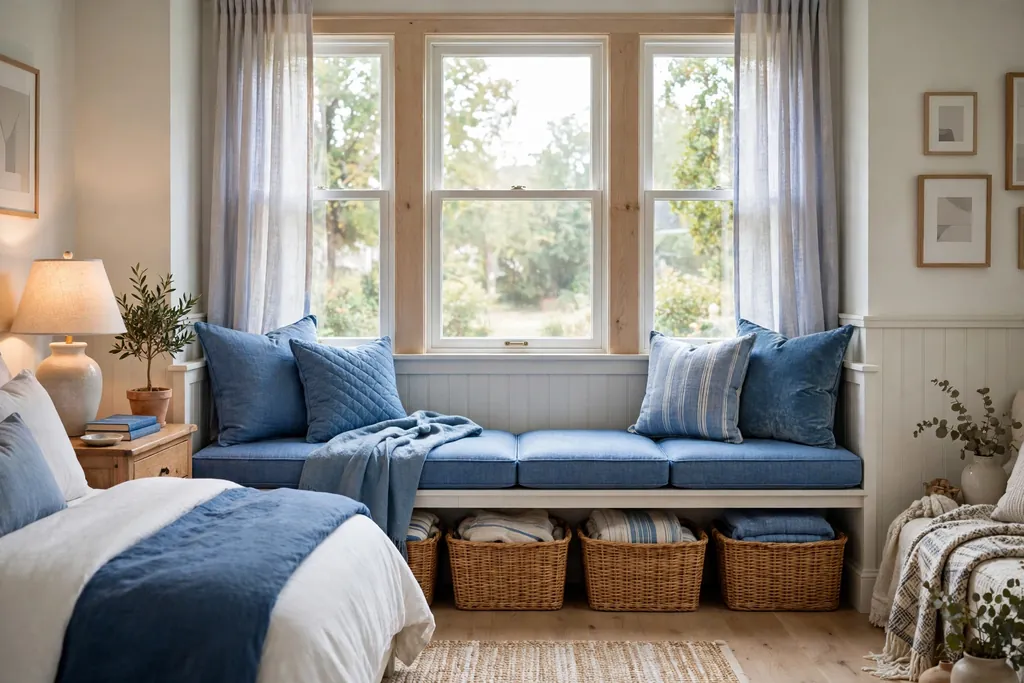
Build or dress a window seat in blue, with blue seat cushions, blue back cushions, and storage baskets or drawers below, for a bedroom nook that works for reading and storage. The seat gives the window a purpose beyond light, and the blue cushions link the window to the bed. This suits a bedroom with a wide window, a bay window, or an unused wall under a window.
Keep the cushions in a washable fabric, since a window seat gets sun and daily use, and add one plain cushion in white or cream so the blue does not read as one solid block. Use the storage below for spare bedding, books, or off season throws, so the seat stays clear and inviting. Check that the seat depth suits sitting with a book, and add a small side light if you plan to read there in the evening.
Conclusion
A blue bedroom works best when blue has a clear job and pale surfaces soften everything around it. Start with the layer you notice most, usually the bed or one wall, then add blue in two or three smaller spots, such as cushions, curtains, or a rug. Keep the palette tight, let daylight in, and warm the room with wood, rattan, brass, and warm lamps, so the scheme feels calm and lived in rather than cold.
Save this list on Pinterest before you start, and work through it one idea at a time: bedding and cushions first for a quick refresh, then curtains and rugs, then walls and furniture when you have a weekend to spare.
FAQs
What is the best blue for a bedroom?
Navy works best as an anchor, such as a headboard or one wall, while dusty blue and pale blue work best in larger doses, such as bedding, curtains, or a ceiling. Use navy in one or two spots and dusty blue in soft layers, so the room has depth without feeling dark. Test samples in daylight and lamplight, since blue shifts a lot with light.
Can blue work in a small bedroom?
Yes, if pale blue leads and dark blue stays in smaller doses. Keep walls and bedding pale, and add blue through cushions, a throw, art, or one bench. A pale blue ceiling or pale blue curtains also work in a small room, since they add color without shrinking the walls. Avoid a dark blue on all four walls in a small room.
How do I keep a blue bedroom from feeling cold?
Warm the scheme with wood, rattan, brass, and warm white lamps. A wooden bed frame, a woven rug, and lamps with warm shades add warmth that blue alone cannot give. Keep at least one warm material in the room, and choose warm white bulbs for the evening, so the room feels restful at night.
Should the bedding or the walls carry the blue?
Bedding is the easier first step, since it covers the largest surface and can change with the seasons. Walls suit a reader who wants a lasting anchor, such as one navy accent wall behind the bed. If you are unsure, start with bedding, live with it for a few weeks, and paint a wall only if the room still needs a stronger blue note.
What colors pair well with blue in a bedroom?
White, cream, grey, and warm wood pair well with blue, since they soften it without fighting it. White and cream keep the room bright, grey keeps it calm, and warm wood adds warmth. Add one warm accent, such as brass or mustard cushions, only if you want a livelier room, and keep that accent to a few small spots.
How many shades of blue should I use in one bedroom?
Two or three shades usually work best: one pale shade for large surfaces, one mid shade for bedding or curtains, and one dark shade for a single anchor, such as a headboard or a bench. More than three shades can look scattered unless they share the same undertone. Repeat each shade at least twice, so the palette looks planned.