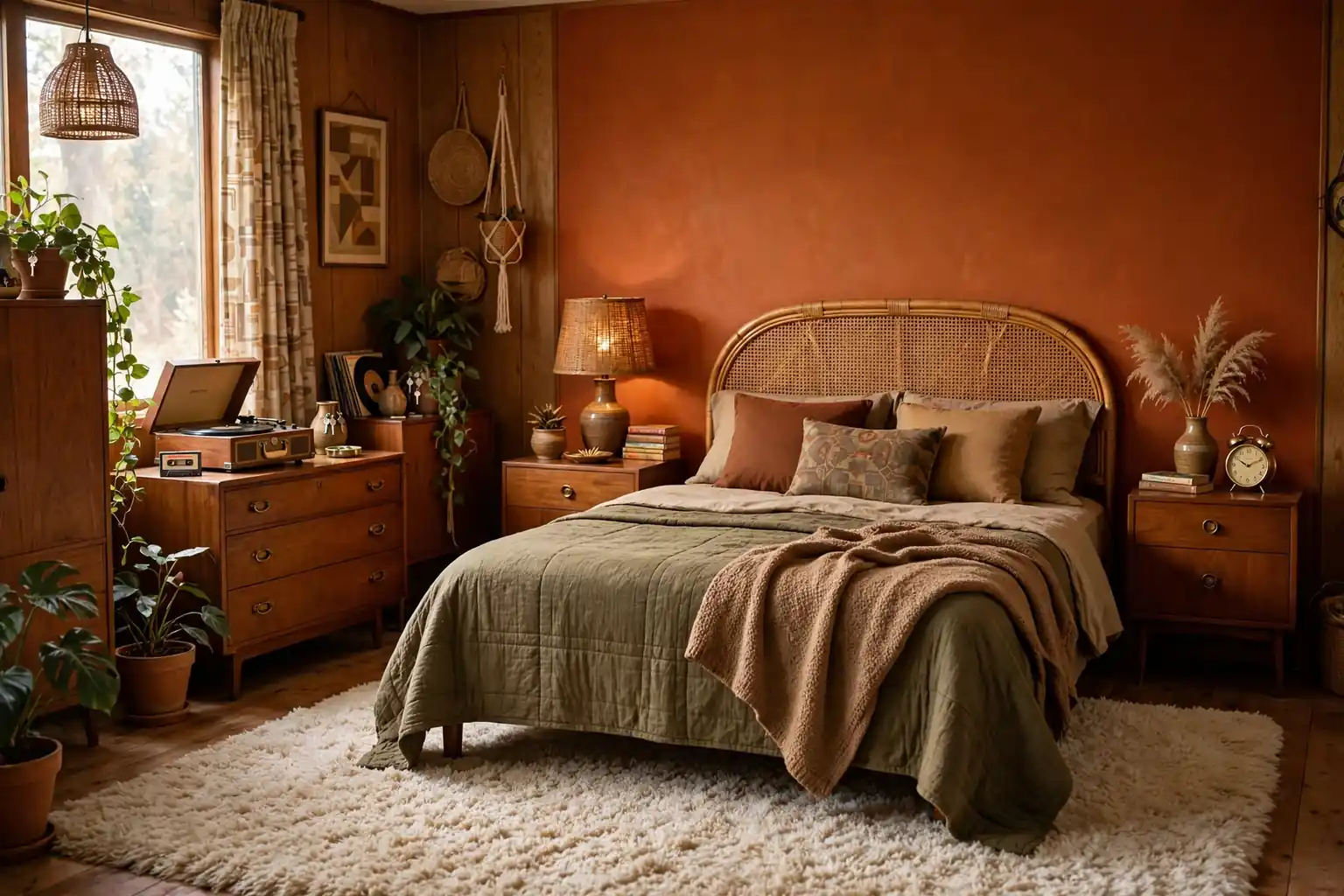
A 70s bedroom feels warm, relaxed, and a little bold, with earth tones, natural wood, woven textures, and patterns that are fun without being loud. The decade mixed burnt orange, mustard, avocado, and chocolate brown with rattan, cork, and shag pile, and it kept furniture low and rooms easy to live in. These 18 70s bedroom decor ideas cover walls, beds, seating, lighting, and small details, so you can add one retro touch or build a full room around the look. Start with the change that suits your room size and your budget, then repeat one color or material once more so the room feels planned.
Key Takeaways
- Build the palette on warm earth tones: burnt orange, mustard, avocado, cream, and chocolate brown, with one lead color and quieter tones around it.
- Use natural materials for the retro feel: rattan, cane, wood, cotton, wool, and cork, rather than glossy plastic or chrome.
- Keep furniture low and seating relaxed, with a platform bed, a rattan chair, or floor cushions, so the room feels grounded and calm.
- Add pattern in one or two places, such as bedding, wallpaper, or curtains, and keep the rest of the room plain so patterns do not fight each other.
- Use warm, low lighting in the evening, with lamps and a lava lamp, since bright ceiling light flattens the warm 70s palette.
- Most ideas here need no building work and suit rented rooms, since they rely on paint, textiles, furniture, and freestanding decor.
1. Paint a Burnt Orange Accent Wall
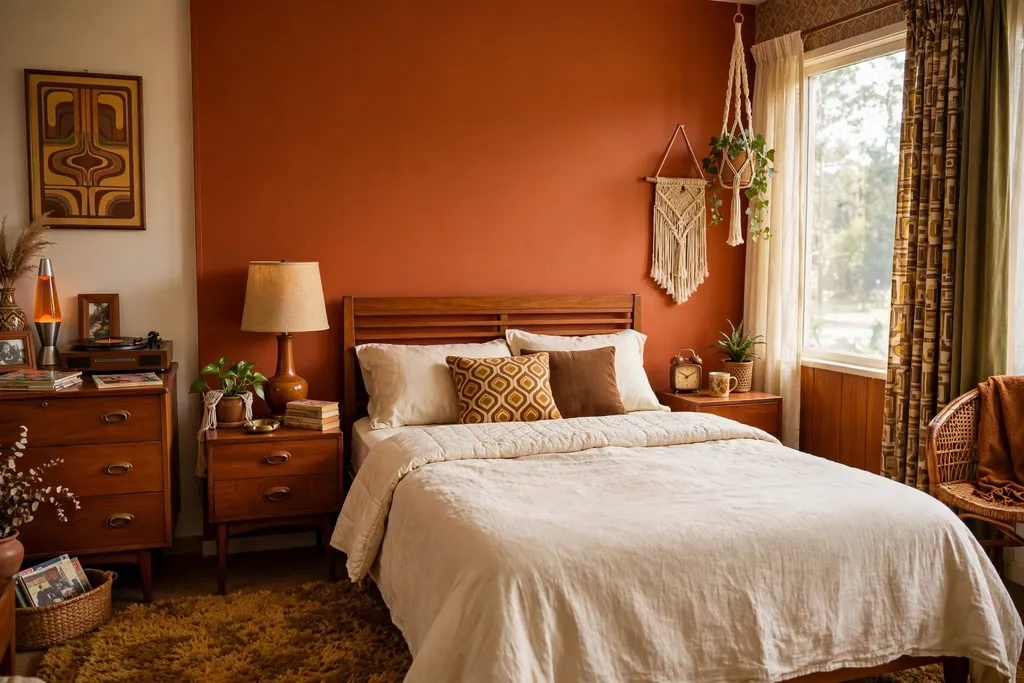
Paint the wall behind the bed in burnt orange and keep the other walls warm cream. The orange wall becomes the clear focal point, and it makes wood furniture, rattan, and cream bedding stand out at once. This suits a room with plain furniture, since the wall does the color work and little else needs to change.
Choose a matte or eggshell finish so the wall does not shine under lamplight, and test a large sample in daylight and again at night, since orange deepens a lot in warm light. Repeat the orange once in a cushion or a throw, so the wall feels linked to the bed, and keep the ceiling pale so the room still feels open.
2. Choose a Low Wooden Platform Bed
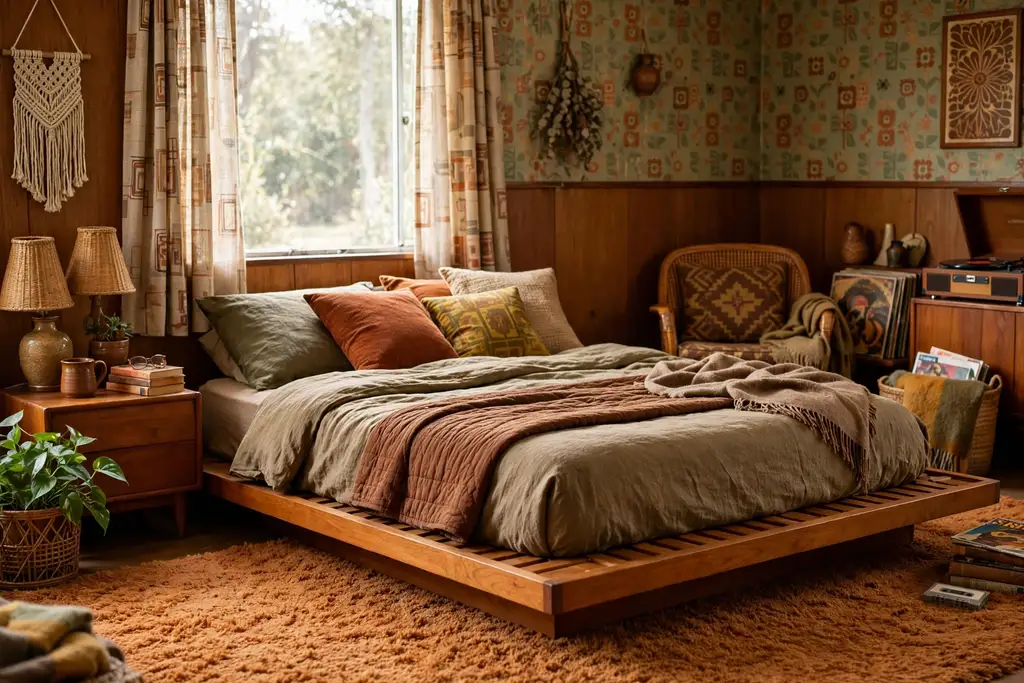
Set the mattress on a low wooden platform frame for the grounded, relaxed feel that defined 70s bedrooms. The low bed makes the room feel wider, and it suits a room with low art, low storage, and a rug that spreads out from the bed. A warm wood tone, such as teak or walnut, pairs well with earth tone bedding and woven textures.
Use a firm platform and a good mattress, since a low bed still needs proper support, and keep a small bedside table or crate within reach for a book and a drink. Leave enough floor space beside the bed for a rug and a pair of slippers, so the low layout stays easy to get in and out of.
3. Add a Rattan or Cane Headboard
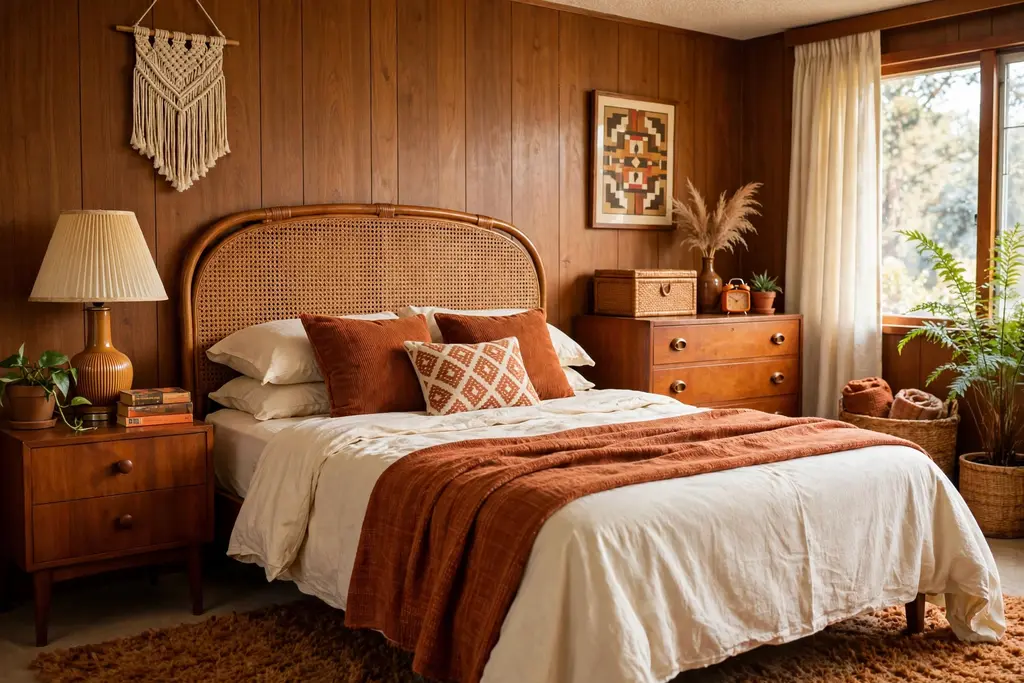
Fit a rattan or cane headboard behind the bed for instant 70s character without any paint. The open weave keeps a small room feeling airy, while the warm cane tone pairs well with cream, rust, and mustard bedding. An arched or curved cane headboard reads most clearly as 70s, while a straight woven panel suits a simpler room.
Measure the bed width before you buy, and centre the headboard on the bed wall so it reads as part of the bed rather than a separate panel. Keep the bedding mostly plain at first, so the weave stays the focus, and wipe the cane with a dry cloth now and then to remove dust.
4. Dress the Bed in Groovy Floral Bedding
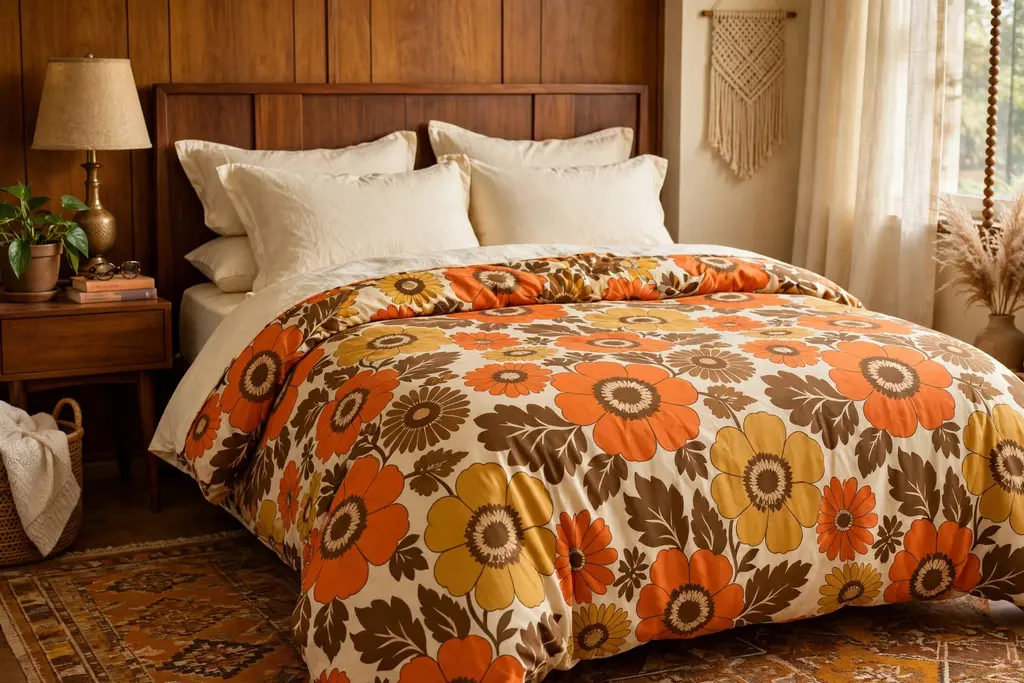
Choose bedding in a large scale 70s floral, with bold blooms in orange, mustard, and brown on a cream or gold ground. The print carries the retro story of the room in one piece, which suits a bedroom with plain walls and simple wood furniture. A duvet cover alone can set the look, so this is a good first change if you are testing the style.
Keep the pillowcases mostly plain, in one tone taken from the print, so the bed does not look busy from the door. Fold a plain throw across the foot of the bed for cooler nights, and wash the printed cover as advised on the label, since bold dyes can mark pale sheets at first.
5. Fit a Warm Wood Slat Feature Wall
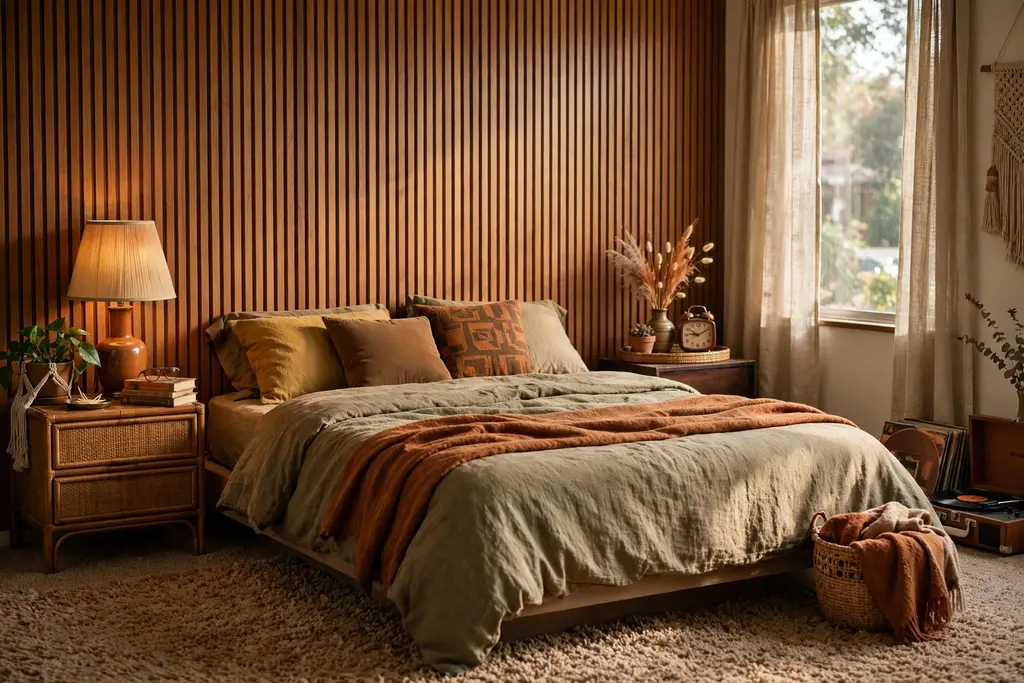
Fit vertical wood slats on the wall behind the bed for warmth and rhythm without a full repaint. The slats add texture in daylight and soft shadow lines in lamplight, which suits a room that already has wood furniture and earth tone bedding. Choose a mid warm tone, and keep the slats evenly spaced so the wall reads as one calm panel.
Fix the slats to battens or a backing board, so you can remove the panel later without damaging the whole wall, which helps in a rented room. Keep art and hanging decor off this wall, so the slat pattern stays easy to see, and let the bed and one lamp sit in front of it.
6. Lay a Thick Shag Rug Beside the Bed
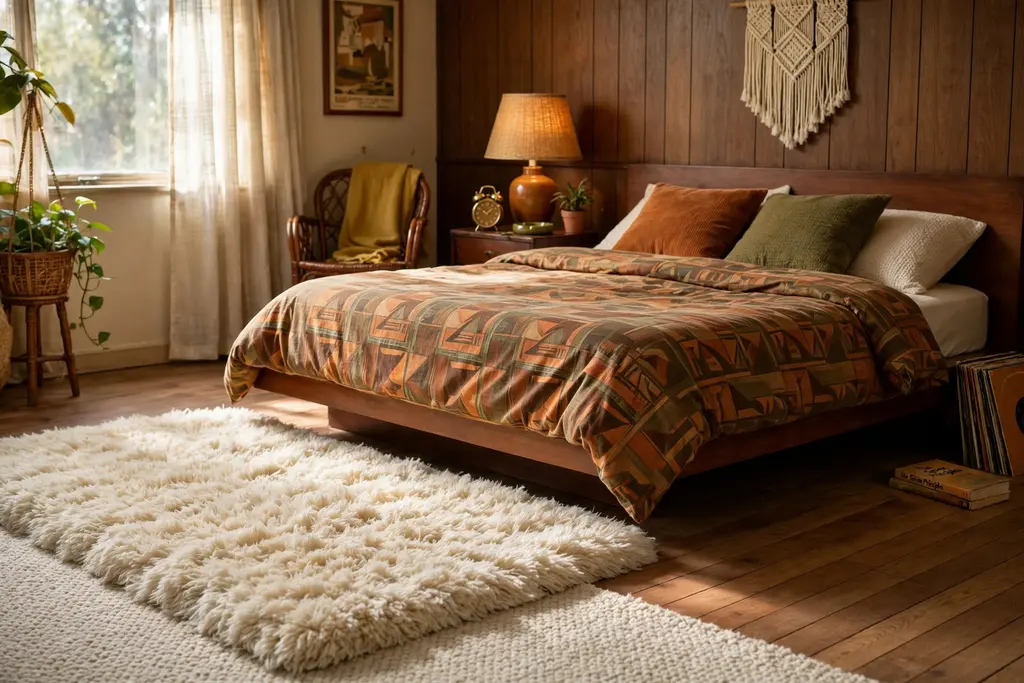
Lay a thick shag rug beside the bed, in cream, rust, or mustard, for softness underfoot and a clear 70s texture. The deep pile suits a bedroom with wood floors and a low bed, since it warms the floor where you step out of bed each morning. Choose a rug large enough to extend past both sides of the bed, so it reads as a room layer rather than a small mat.
Use a rug pad on smooth floors to reduce slipping, and vacuum the pile often, since shag shows dust and lint more than a flat weave. Keep the rug clear of doors and drawers, so it does not bunch, and shake it outside now and then to keep the pile fresh.
7. Create a Rattan Reading Corner
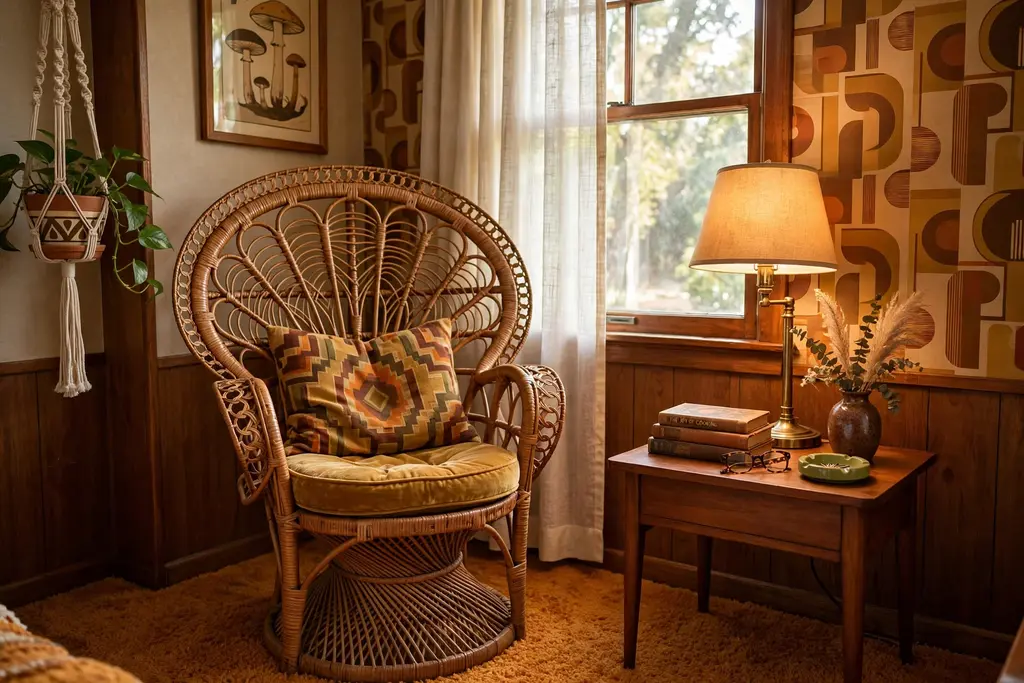
Place a rattan peacock chair or a rounded rattan armchair in a bright corner, with a small side table and a reading lamp beside it. The chair gives the room a relaxed seating spot and a sculptural shape, which suits a bedroom with space beside a window or at the foot of the bed. A cushion in mustard or rust makes the chair comfortable and links it to the bed.
Keep the corner simple, with one chair, one table, and one lamp, so the chair stays the focus and the corner does not fill with clutter. Choose a chair that fits through the bedroom door and leaves a clear walkway, and check that the frame sits level on the floor before you add cushions.
8. Hang a Large Macrame Wall Hanging
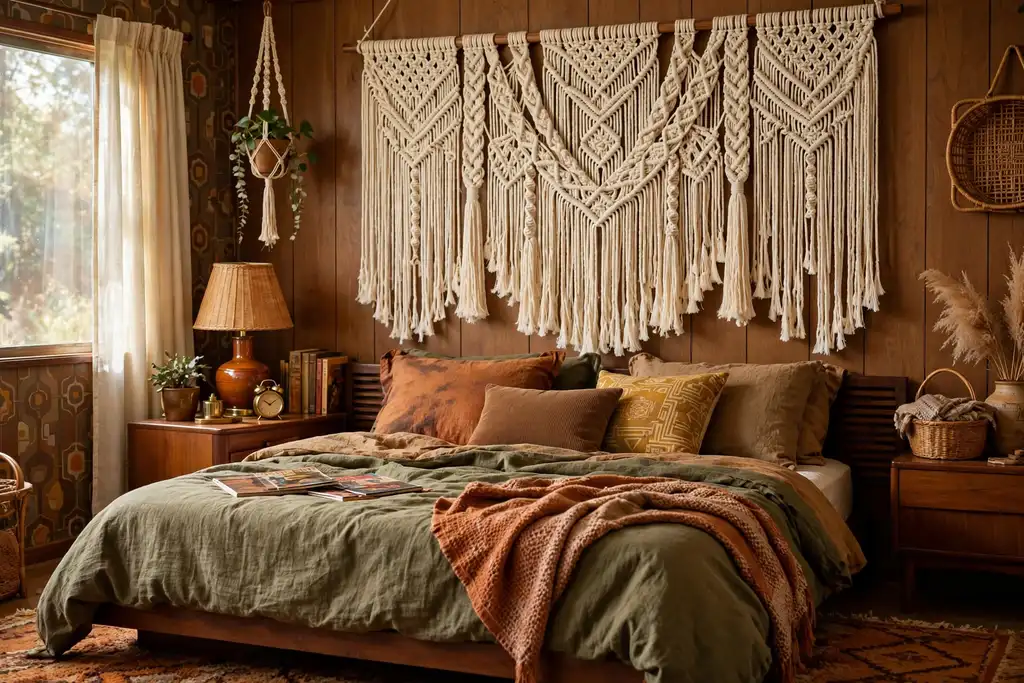
Hang a large macrame wall hanging above the bed or on a side wall for soft, handmade texture. The knotted cotton and long fringe suit a 70s bedroom at once, and the piece softens a plain wall without paint or a frame. Cream or natural cotton suits most earth tone bedding, while a dyed piece in rust can add one more accent color.
Hang it from a wooden dowel, centred above the bed, and keep the wall behind it plain so the knot work shows clearly. For more ways to use woven and textile wall pieces, see these hippie bedroom ideas. Macrame is light and easy to hang, so it suits a rented room, and it pairs well with plants and woven baskets nearby.
9. Hang a Beaded Curtain in the Doorway
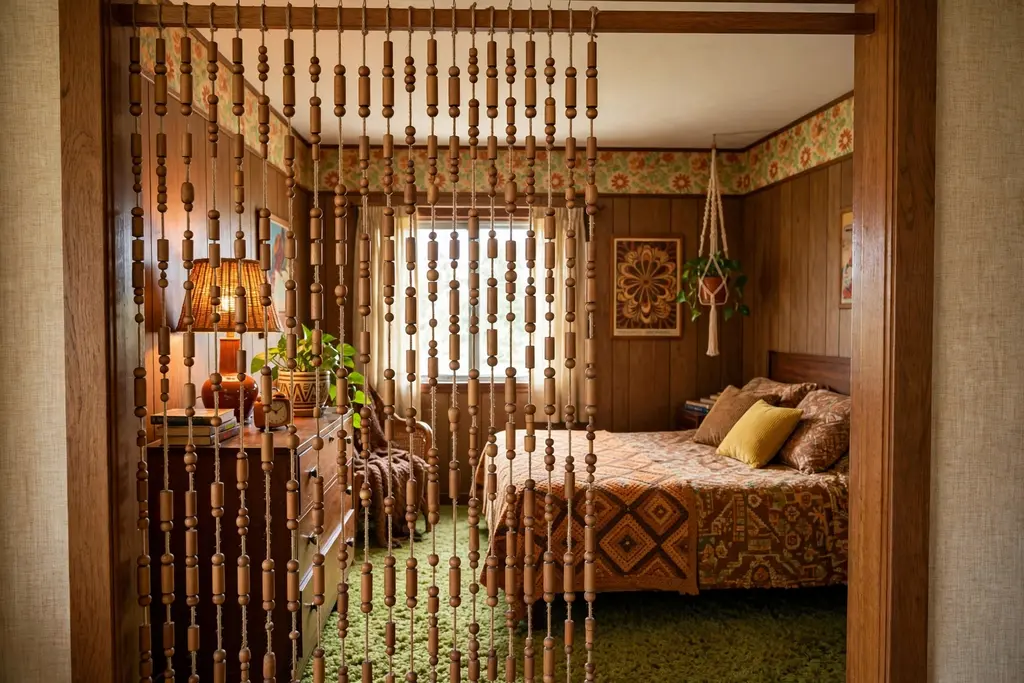
Hang a beaded curtain in the bedroom doorway or across an open closet for instant retro character. Wooden beads give a warm, earthy look and a soft sound as you pass through, while the curtain marks the bedroom as its own space without closing it off with a door. This suits a room with an open plan or a closet you want to screen.
Measure the doorway first, and hang the curtain from a tension rod or a small rail so no drilling is needed. Keep the beads clear of the floor so they do not tangle or trip anyone, and keep the curtain clear of heaters and candles. In a small room, a beaded curtain on a closet works just as well and hides open shelves.
10. Add a Sunburst Mirror Above the Dresser
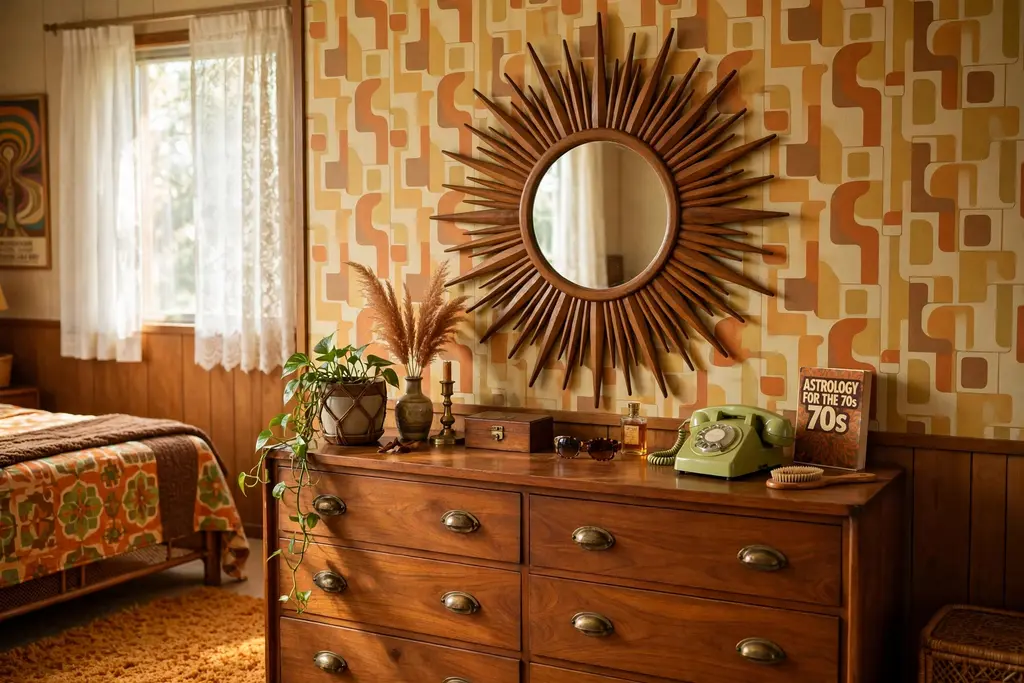
Hang a sunburst mirror above a warm wood dresser for a bold 70s focal point that also bounces light around the room. The radiating wood or brass rays suit a bedroom with plain walls and simple furniture, since the mirror does the decorating work on that wall. Choose a size that sits well above the dresser without crowding the ceiling.
Centre the mirror on the dresser, and check what it reflects before you fix it, since a view of the window or a plant looks good while a view of clutter does not. Keep the dresser top mostly clear, with one tray or one vase, so the mirror stays the focus, and dust the rays with a soft cloth now and then.
11. Build a Vinyl Record Listening Corner
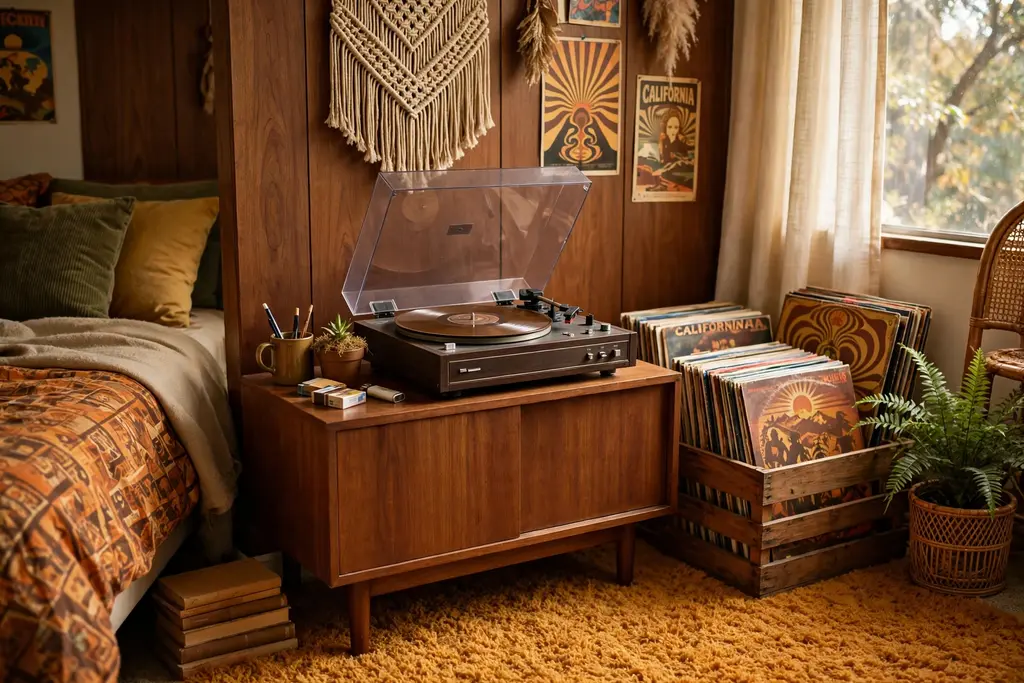
Set up a small vinyl listening corner with a record player on a low wood cabinet, a crate of records beside it, and a comfortable chair nearby. The corner gives the room a clear 70s activity, and it suits a bedroom with an empty wall or a corner near a window. Warm wood and earth tone sleeves on display add color without new art.
Keep the player on a level, stable surface away from direct sun, and store records upright in the crate so sleeves stay in shape. Place the chair close enough to reach the player, and keep cables tidy along the wall, so the corner stays safe and easy to use in the evening.
12. Use a Lava Lamp and Warm Low Lighting
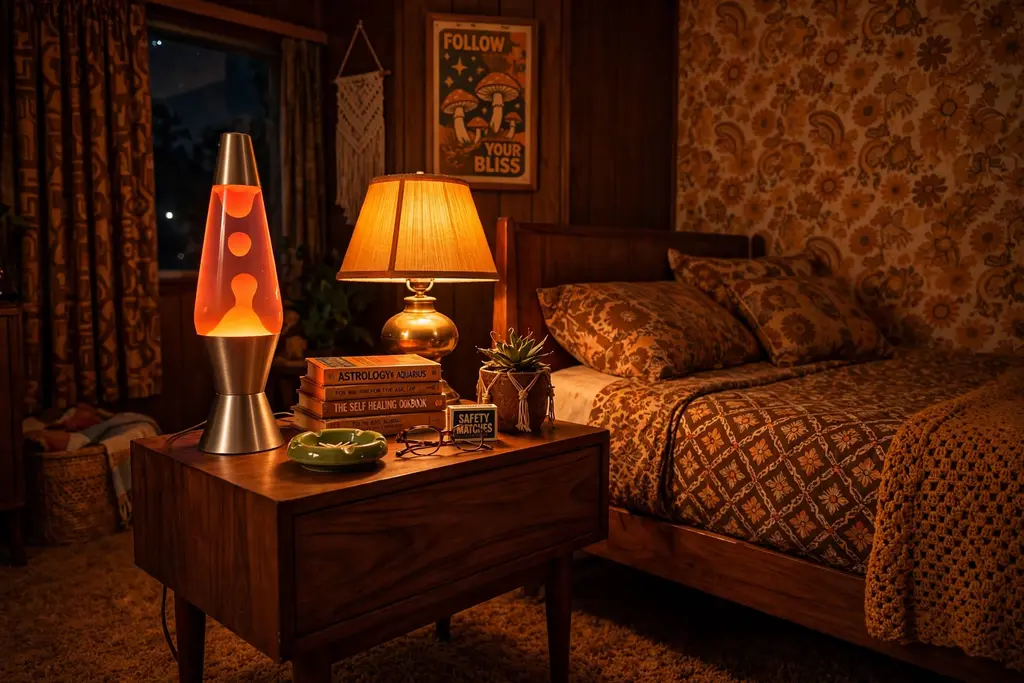
Place a lava lamp on a nightstand or dresser, and pair it with warm bedside lamps, for the soft evening glow that suits a 70s palette. The slow moving wax adds gentle motion to the room, while warm bulbs keep burnt orange, mustard, and brown tones rich rather than flat. This suits a bedroom where the ceiling light feels too harsh at night.
Keep the lava lamp on a stable surface, clear of bedding and curtains, and give it time to warm up before you expect full motion. Use warm white bulbs in the bedside lamps, and put one lamp on each side of the bed when space allows, so reading light stays even.
13. Fill a Corner With Plants in Terracotta Pots
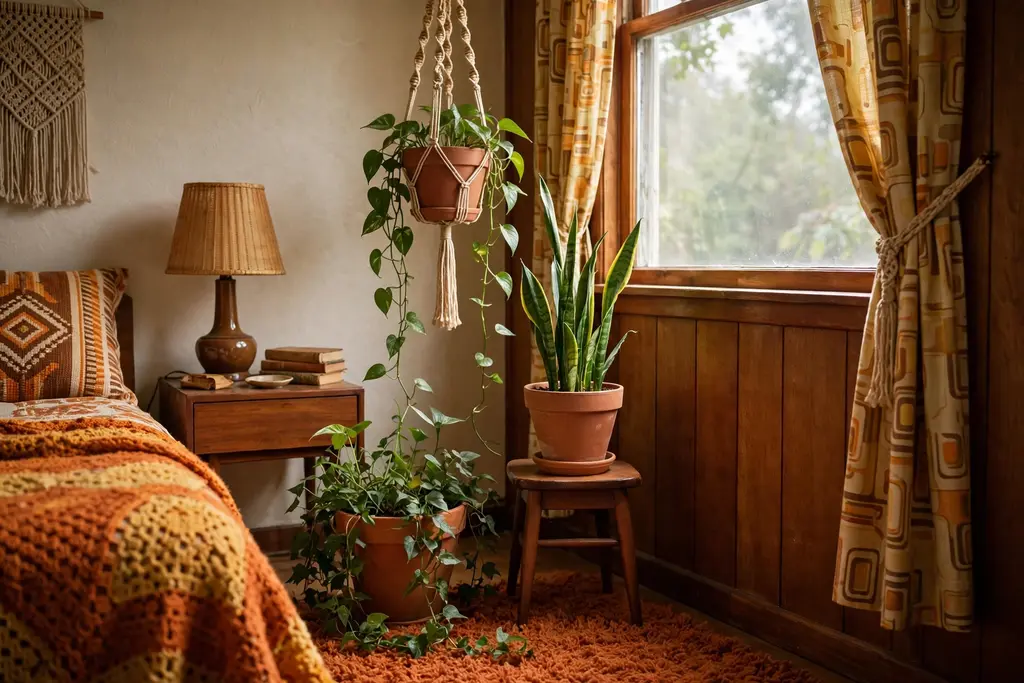
Group plants in terracotta pots in a bright corner, with tall plants on the floor, medium plants on a stool or crate, and trailing plants on a shelf. The warm clay tone suits a 70s bedroom at once, and the greenery softens wood, rattan, and earth tone walls. Spider plants, pothos, and snake plants all suit beginners and trail or stand well.
Match plants to the light the corner actually gets, and group plants with similar watering needs together, with a saucer under each pot. Rotate the pots every few weeks so growth stays even toward the light, and keep trailing leaves clear of walkways and bedside lamps.
14. Paper One Wall With Retro Geometric Wallpaper
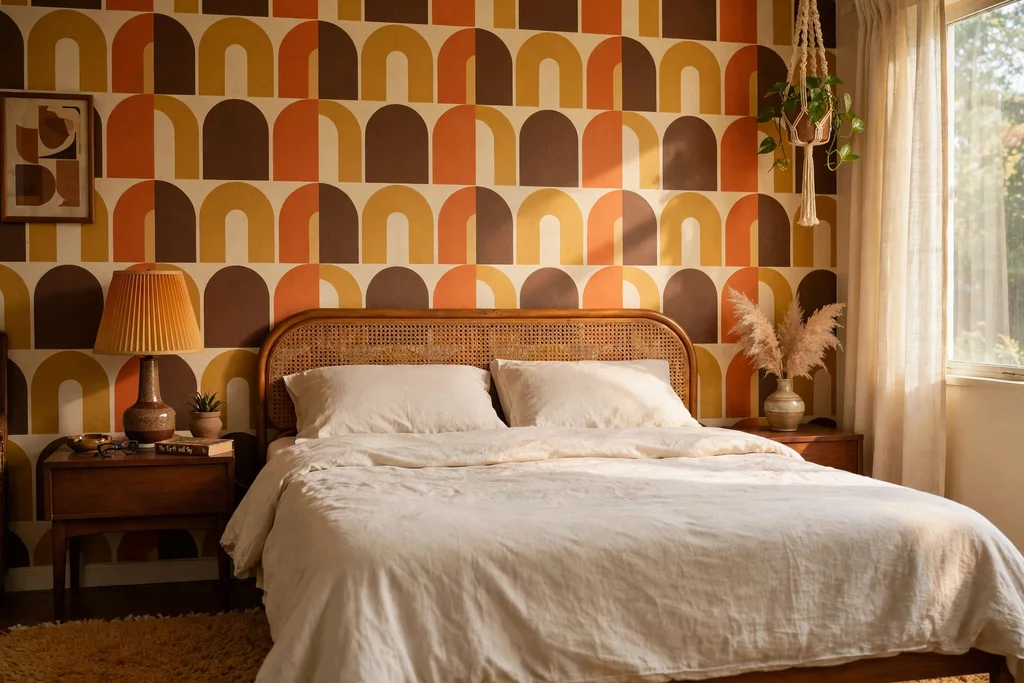
Paper one wall with a retro geometric print, such as bold arches, circles, or wavy stripes in orange, mustard, and brown. The pattern carries the 70s story in one bold move, which suits a bedroom with plain furniture and plain bedding. One wall is enough, since a full room of bold geometry can feel busy at night.
Use peel and stick wallpaper in a rented room, so the print comes down cleanly later, and match the pattern carefully at each join. Keep the other walls plain and the bedding mostly solid, so the wallpaper stays the clear focus, and repeat one wallpaper color in a cushion to link the wall to the bed.
15. Layer Corduroy and Velvet Cushions in Earth Tones
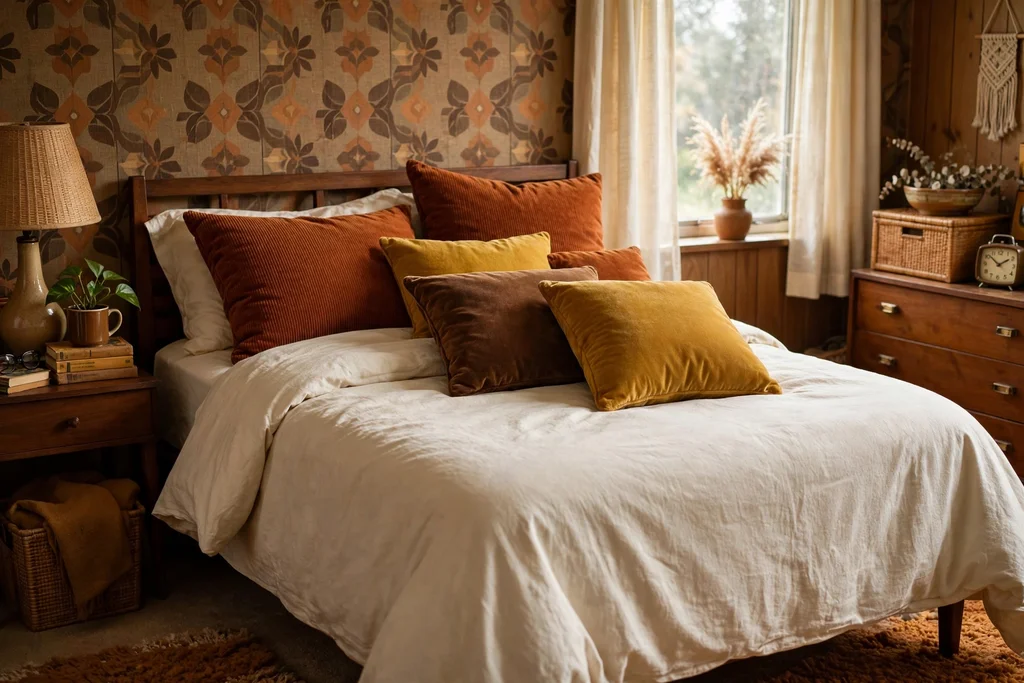
Layer cushions in corduroy and velvet, in rust, mustard, avocado, and chocolate brown, across the bed. The mix of ribbed and soft textures adds depth to plain bedding, and it suits a room where the walls are already warm and patterned. Two or three textures in a shared earth palette read as planned, while too many colors can look scattered.
Keep sleeping pillows plain and behind the decorative cushions, so the bed stays easy to make at night. Choose cushion covers you can remove and wash, since textured fabrics show dust, and store spare covers in a basket so a seasonal swap takes minutes.
16. Place a Wicker Trunk at the Foot of the Bed
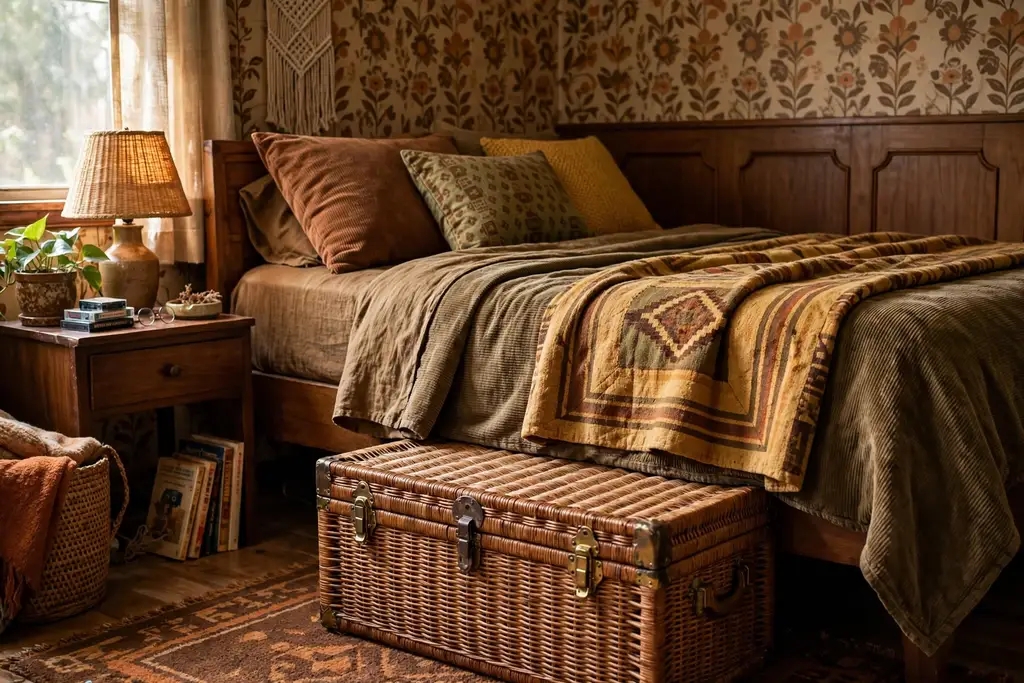
Place a wicker trunk at the foot of the bed for storage that also reads as 70s furniture. The trunk holds spare bedding, throws, and seasonal clothes, which suits a bedroom with little closet space, and the woven texture links to rattan and cane elsewhere in the room. Choose a trunk that sits lower than the bed top, so it does not block the view of the bed.
Line the inside with a clean cotton cloth to protect stored bedding, and keep the lid clear so the trunk stays easy to open. Check that the trunk sits level and does not wobble, and keep heavy items at the bottom so the lid lifts safely.
17. Hang a Retro Rainbow and Sun Art Gallery
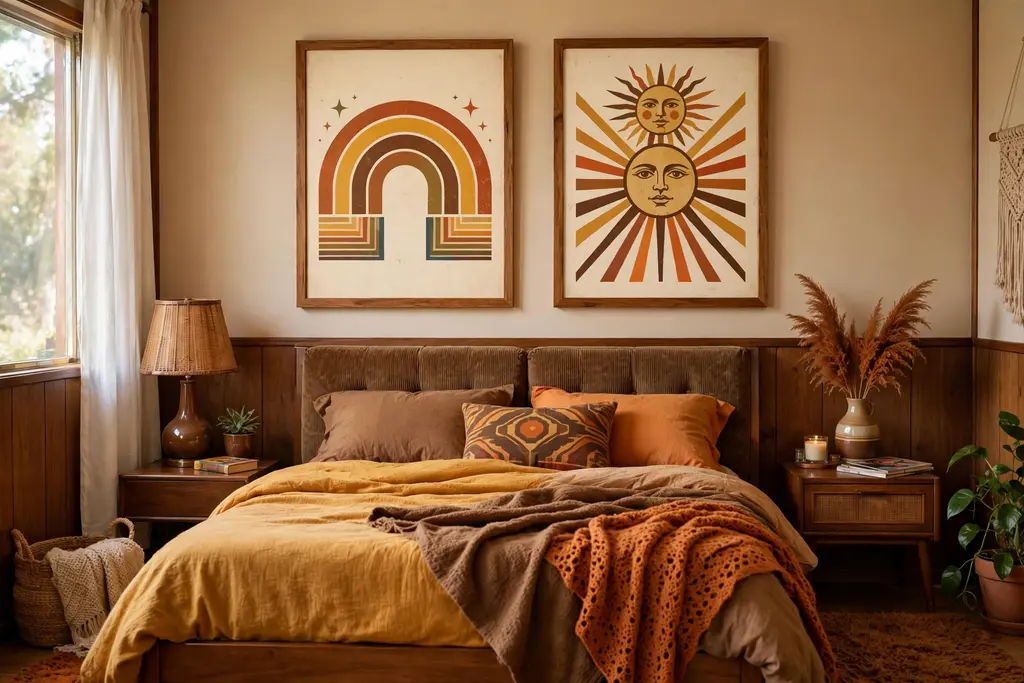
Hang a small gallery of retro art prints, with rainbow arcs, abstract suns, and bold curved shapes in orange, mustard, and brown. The prints give the room a clear 70s graphic story, which suits a bedroom with plain walls and simple bedding. Use matching wood frames and equal gaps, so the mix of shapes looks ordered rather than scattered.
Lay the frames on the floor first, measure the full block, and mark the wall with painter tape before you hang anything. For more ways to size and hang art above a bed or a dresser, see these bedroom wall art ideas. Keep the gallery to one wall, and repeat one print color in the bedding or a cushion, so the art feels connected to the room.
18. Dress Windows With Retro Patterned Curtains
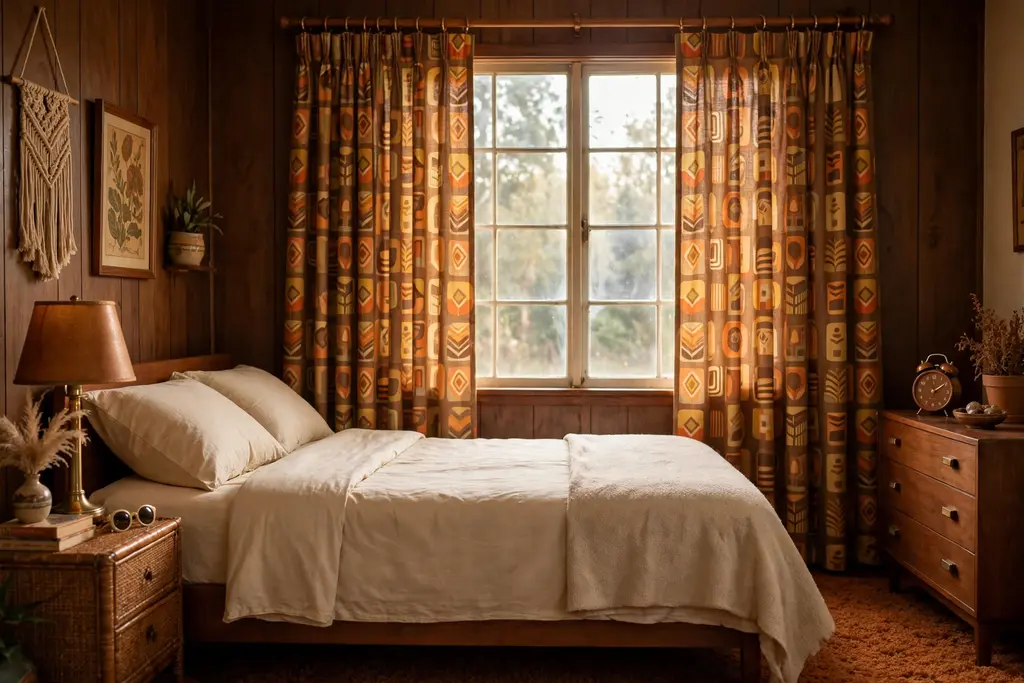
Hang curtains in a retro print, such as bold florals, wavy stripes, or geometric shapes in orange, mustard, and brown, at the bedroom window. The window becomes a block of pattern and color, which suits a room with plain walls and solid bedding. Pick a print that shares one color with the rug or a cushion, so the window links to the rest of the room.
Hang the rod high and wide, so the panels stack clear of the glass when open and daylight still fills the room. For fabric, length, and lining choices that suit different windows, see these bedroom curtain ideas. Wash patterned curtains as advised on the label, since bold prints can fade in strong sun.
Conclusion
A 70s bedroom works best when warm color, natural material, and one or two bold patterns share the room, and everything else stays calm. Pick a lead color, such as burnt orange, add rattan or wood for texture, and use bedding, wallpaper, or curtains for pattern, then repeat each choice once more so the room feels pulled together. Start with textiles and freestanding pieces when you want a quick refresh, and save paint and wallpaper for a weekend project. Save the ideas that fit your room size, your light, and how much retro color you want to wake up to, and build a bedroom that feels warm by day and relaxed at night.
FAQs
How do I get a 70s bedroom look without repainting the whole room?
Start with bedding, cushions, a shag rug, and a rattan chair, since these change the room in an afternoon and need no paint. Add one accent through a macrame hanging, retro art prints, or a beaded curtain, and keep the walls warm cream. If you want wall color later, paint one accent wall or use peel and stick wallpaper on one wall, so the change stays easy to reverse.
What colors define a 70s bedroom?
Burnt orange, mustard, avocado green, chocolate brown, and warm cream form the core 70s palette, with gold and rust as common accents. Use one lead color, such as burnt orange, a second color in smaller doses, and cream as the quiet base, so the room feels warm rather than loud. Test each color in evening lamplight, since warm tones deepen a lot under warm bulbs.
Which materials matter most for a 70s bedroom?
Rattan, cane, warm wood, cotton, wool, corduroy, velvet, and cork carry the 70s feel, since they add natural texture and warmth. Mix two or three of these materials, such as a rattan headboard, a wood platform bed, and a wool shag rug, rather than using every material at once. Keep glossy or chrome pieces to a minimum, so the natural textures stay the focus.
Can a small bedroom handle a 70s look?
Yes, if the boldest choices stay in one or two places, such as the bedding or one accent wall, while the other walls and the ceiling stay pale. A low platform bed, a cane headboard, and a shag rug suit a small room, since they keep sightlines open and the floor feeling clear. Avoid a large peacock chair and a full vinyl corner in the same small room, and pick the one that fits your floor space.
How do I mix 70s patterns without making the room look busy?
Limit the room to one large pattern, such as floral bedding or geometric wallpaper, and keep other patterns small or solid. Share one color between patterns, such as mustard in both the bedding and the curtains, so the mix looks linked. If two patterns still fight each other, make one of them plain, or move the smaller pattern to a cushion or a throw that you can swap easily.
How do I keep a 70s bedroom restful at night?
Use warm bulbs, plain sleeping pillows, and a plain top sheet, so the bed feels calm even when the room has bold color and pattern elsewhere. Keep the brightest pattern off the wall directly opposite the bed if it catches lamplight, and use low lamps rather than a bright ceiling light in the evening. A lava lamp or a dim bedside lamp softens strong colors, so the room settles well for sleep.
Save these ideas on Pinterest for your next room refresh, and pick one change to start with this weekend.