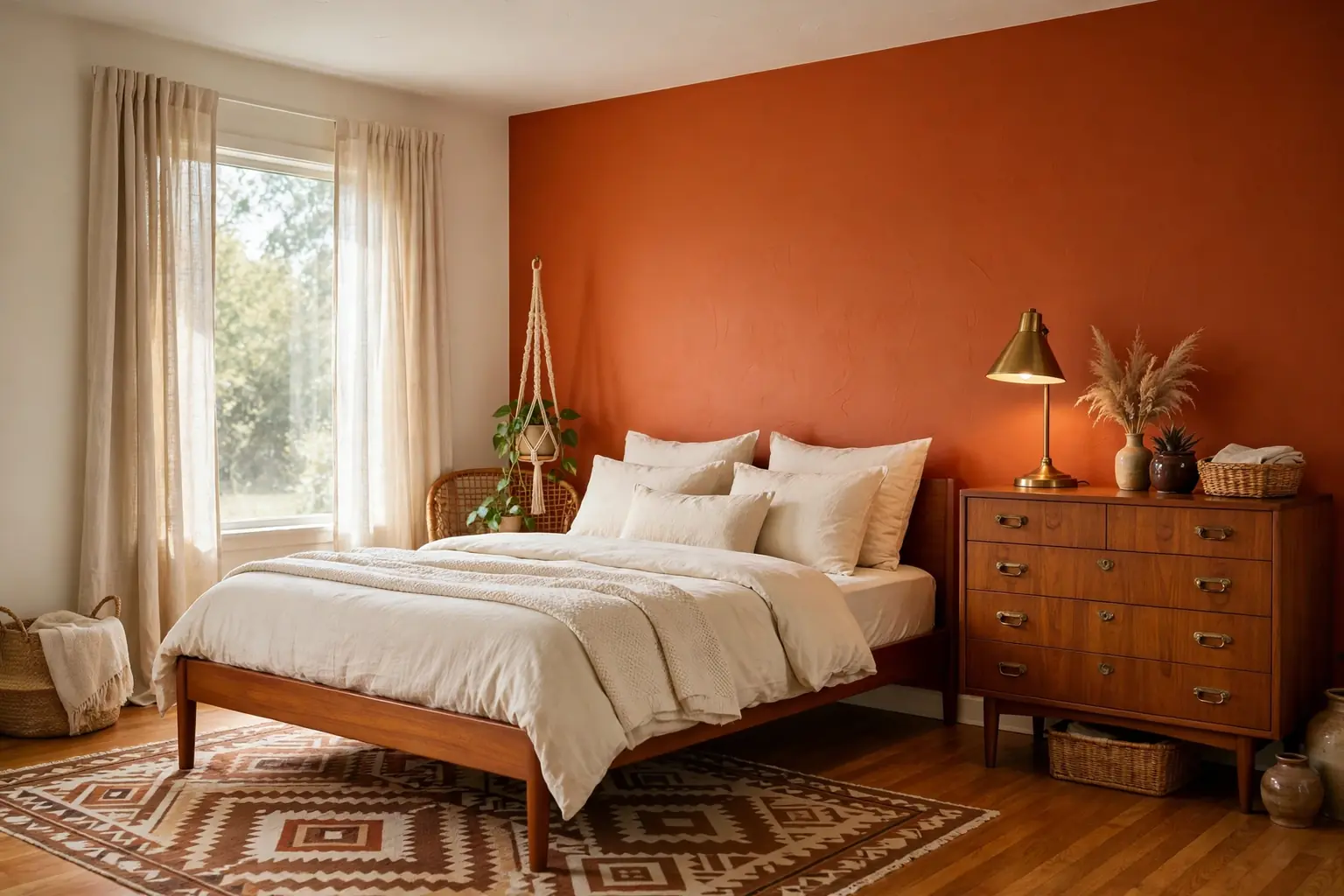
Retro style works in a bedroom when one era leads and the rest of the room stays calm. A teak bed frame, a geometric wallpaper, or a burnt orange accent can set the mood, while plain bedding and warm light keep the room easy to sleep in. These 22 retro bedroom decor ideas cover 1950s, 1960s, and 1970s details, from furniture and walls to rugs, lamps, and small styling touches, so you can borrow one idea or build a full retro room. Start with the piece that fixes what bothers you most, test color in daylight and lamplight, then add a second retro detail only where the room still feels flat.
Key Takeaways
- Pick one era as the lead, such as mid century wood tones or 1970s warm color, and let other retro details support it rather than compete with it.
- Use one strong retro feature, such as a patterned wall or a velvet headboard, and keep the rest of the room plain so the look stays stylish, not busy.
- Repeat each retro color at least twice, in bedding and art, or in curtains and a cushion, so the palette looks planned rather than random.
- Mix old and new on purpose: pair a vintage style piece with plain modern bedding, good lamps, and closed storage for everyday use.
- Test bold retro color in morning light and evening lamplight before you commit, since orange, gold, and deep green shift a lot during the day.
- Keep one calm surface in the room, such as plain sheets or a plain rug, so pattern and color have somewhere to rest and the room still feels restful at night.
1. Paint One Burnt Orange Accent Wall
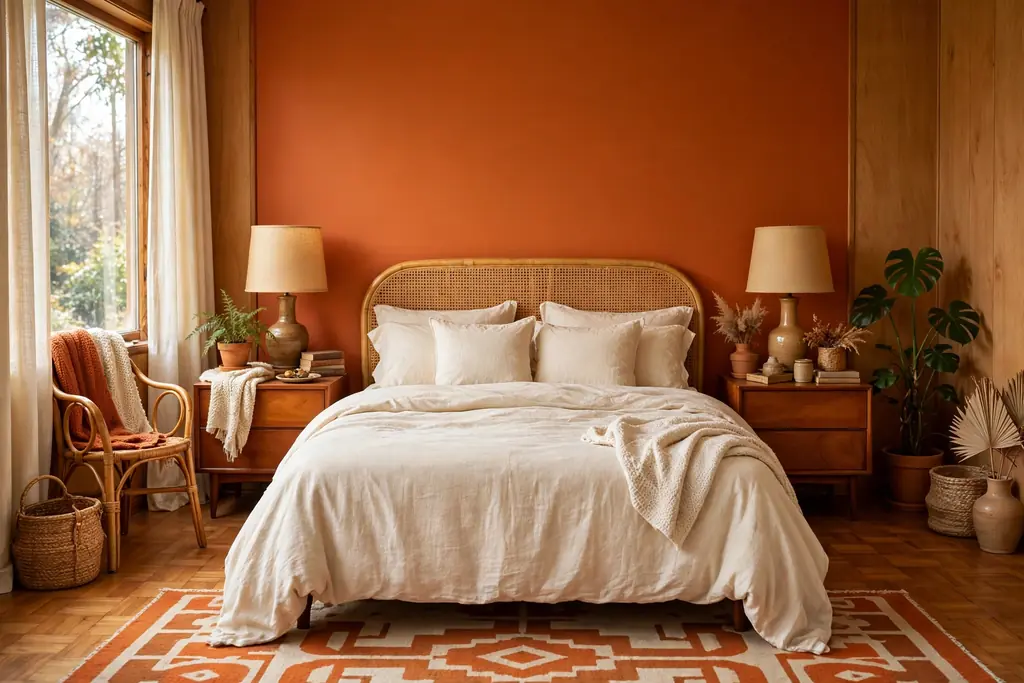
Paint the wall behind the bed in burnt orange and keep the other walls warm white. The orange wall gives an instant 1970s mood, while the plain side walls keep the room from feeling closed in. This suits a room with plain furniture, since the wall does the color work and nothing else needs to change.
Choose a matte or eggshell finish so the wall does not shine under lamplight, and paint the trim in the same pale tone as the other walls for a clean edge. Test a large sample on the bed wall first, and look at it in the morning and again at night, since orange can look brighter by day and deeper in lamplight. Pair the wall with wood tones and cream bedding for a warm, settled result.
2. Choose a Low Teak Mid Century Bed Frame
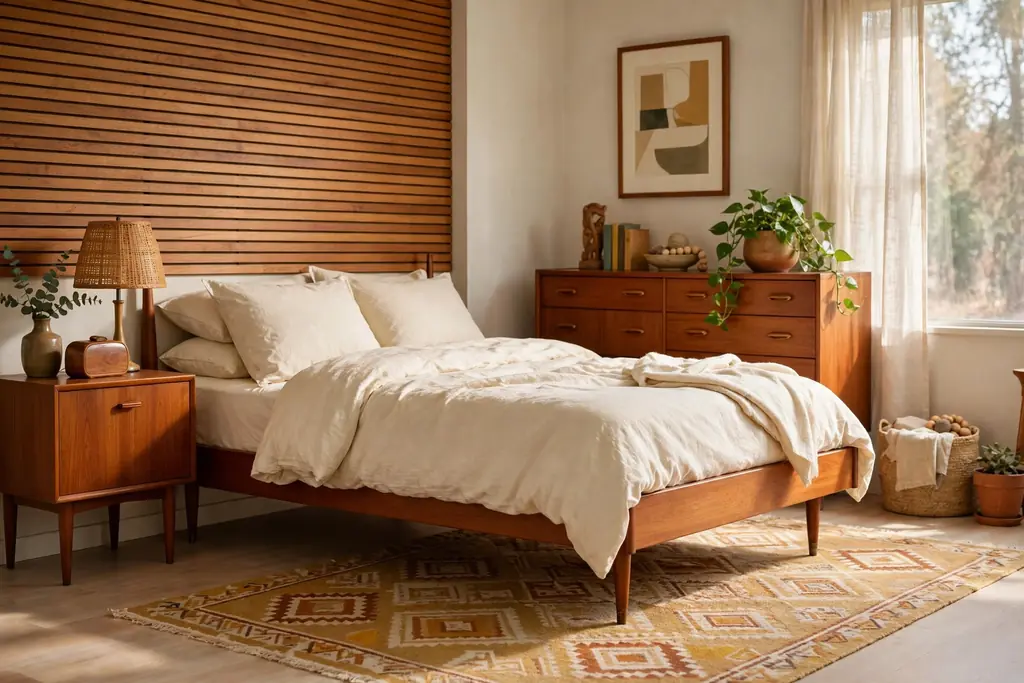
Choose a low bed frame in teak or a warm wood tone, with clean straight lines and short tapered legs. The low profile and visible wood grain are classic mid century details, and they suit a room with plain walls and simple bedding. A low frame also makes a small room feel less crowded, since the bed does not dominate the wall.
Keep the bedding in a calm tone, such as cream, olive, or rust, so the wood stays the focus. Check the frame height before you buy, since a very low frame needs a nightstand at a matching height. For a calm base under a wood bed, see these elegant bedroom ideas, which show how plain bedding and clear surfaces keep a detailed room restful.
3. Paper the Bed Wall With Bold Geometric Wallpaper
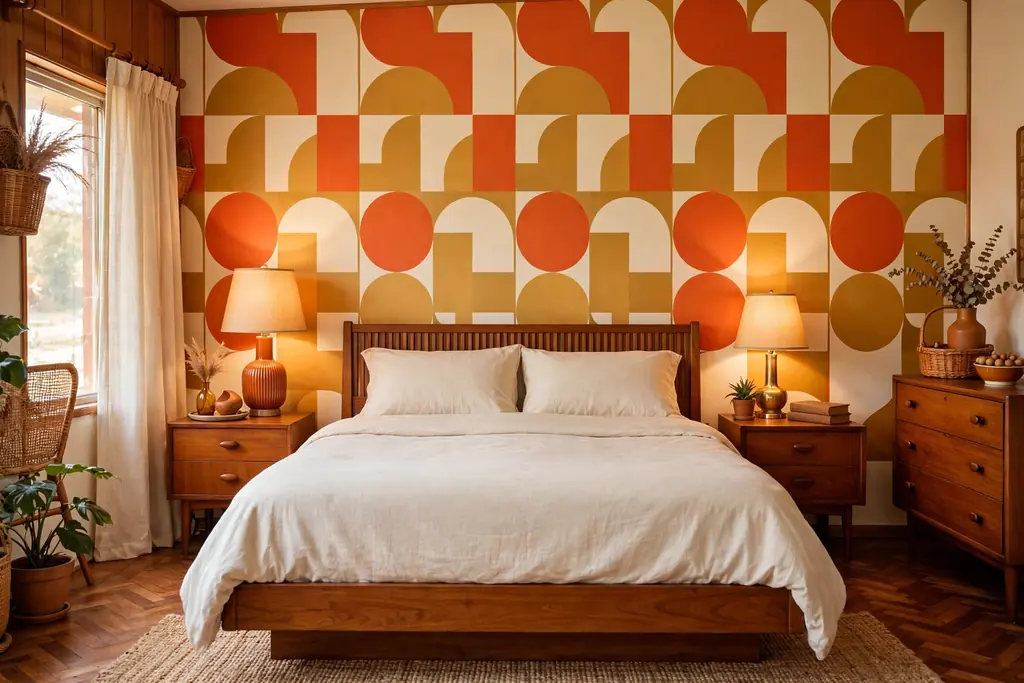
Use wallpaper with a bold geometric pattern, such as large circles, diamonds, or repeating arches, on the bed wall only. The pattern sets a clear retro mood without covering every wall, which suits a room where full papering would feel too strong. Keep the other walls plain, so the papered wall stays the focus.
Measure the wall and order a little extra paper for pattern matching at the seams. Start at the center of the bed wall and work outward, smoothing each strip as you go, so the pattern stays centered on the bed. If you rent, use peel and stick wallpaper, and test one strip in a hidden spot first to check how it lifts.
4. Add a Mustard Velvet Headboard
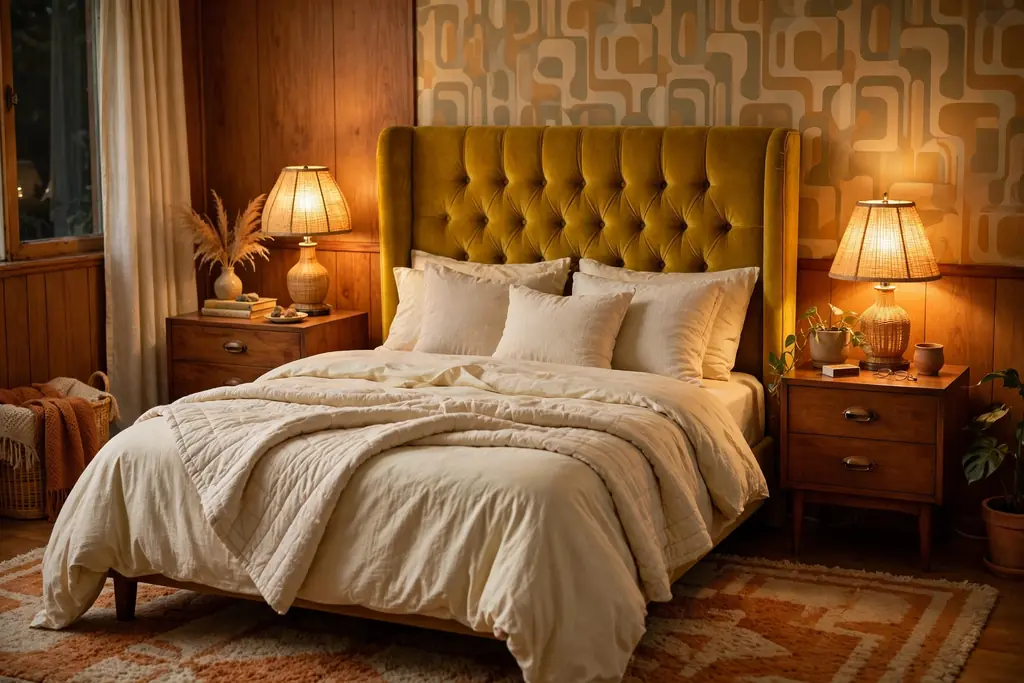
A headboard in mustard velvet adds warm color and softness behind the bed, without any paint. The rich tone suits a room with plain walls and warm lamplight, and it makes sitting up to read more comfortable than a hard wall. Keep the bedding in a paler tone, such as cream or soft white, so the headboard stays the clear focal point.
Measure the bed width and the wall space before you buy, and leave room for bedside tables on both sides. Vacuum the headboard gently now and then, since velvet holds dust, and keep the cover removable if possible. Add one cushion in the headboard color to link the bed to the wall behind it.
5. Hang a Round Sunburst Mirror Above the Dresser
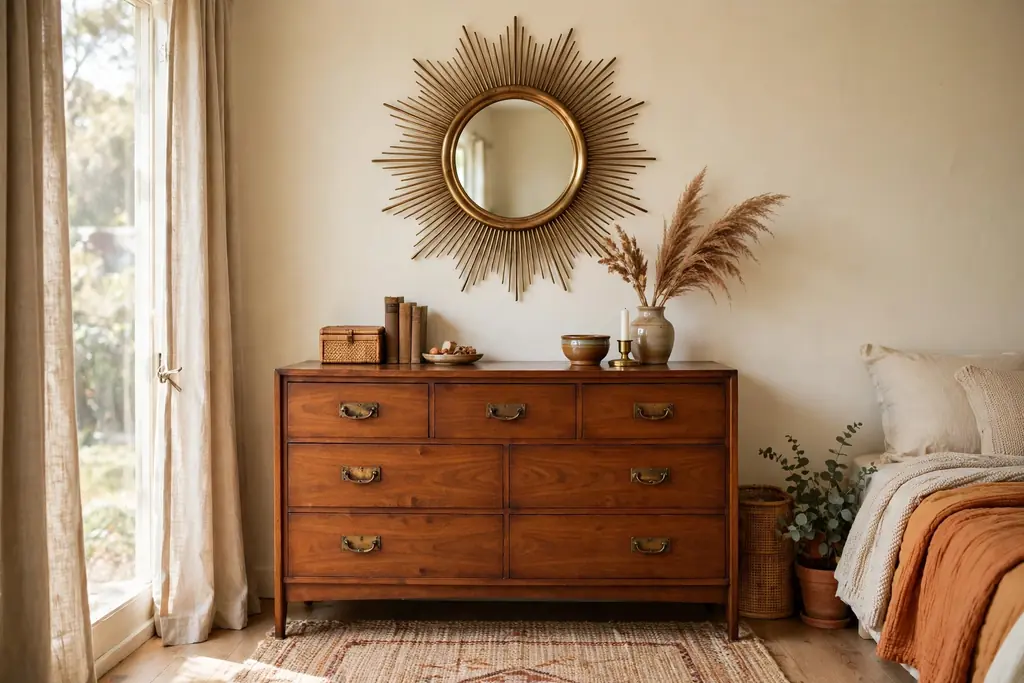
Hang a round sunburst mirror, with slim wood or brass rays around a central mirror, above a dresser or on the wall beside the bed. The sunburst shape is a clear mid century detail, and it bounces light around the room, which helps a dark corner. This suits a bedroom with plain walls, since the mirror adds shape without a new pattern.
Keep the wall behind the mirror plain, so the rays read clearly, and hang it at eye level from where you see it most. For more ways to size and place mirrors and art in a bedroom, see these bedroom wall art ideas. Secure the fixing to suit the wall type, since a ray mirror can be heavier than a flat frame.
6. Build a Vinyl Listening Corner
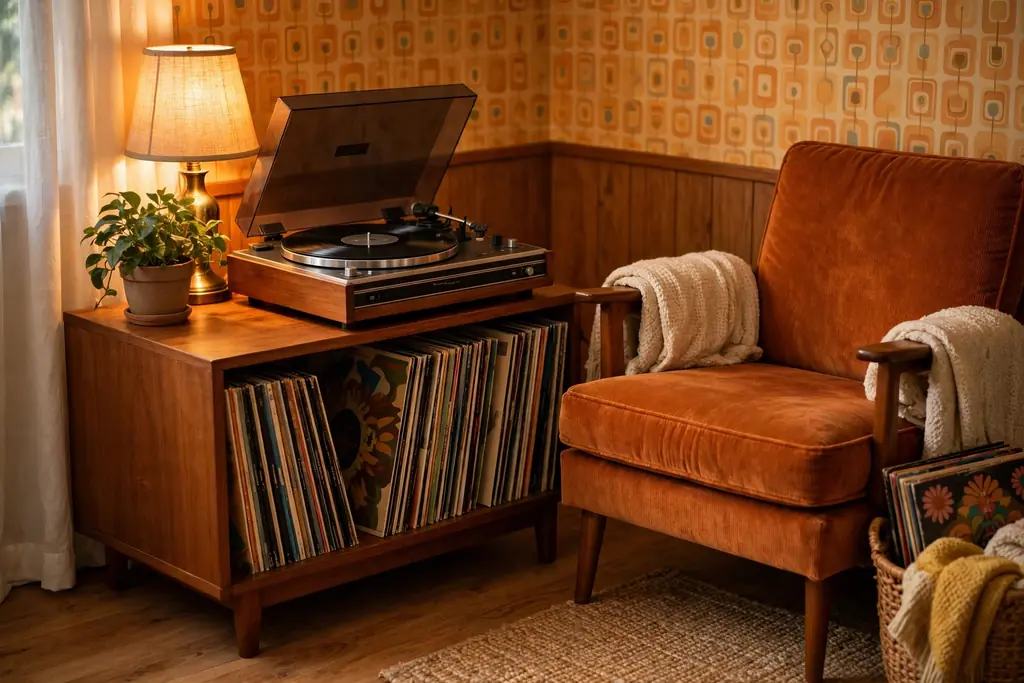
Set a small record player on a low wood stand in a bedroom corner, with a few records stored upright beside it and one comfortable chair nearby. The corner gives the room a second use and a clear retro story, which suits a larger bedroom or a room with an empty corner. Keep the setup simple, so listening stays easy rather than becoming a display you cannot use.
Place the player on a steady surface away from direct sun and heat, and keep the records upright so sleeves do not warp. Add a small lamp for evening listening, and keep cables tidy behind the stand. If space is tight, use a wall shelf for the player and a stool that slides underneath.
7. Lay a Checkerboard Rug Beside the Bed
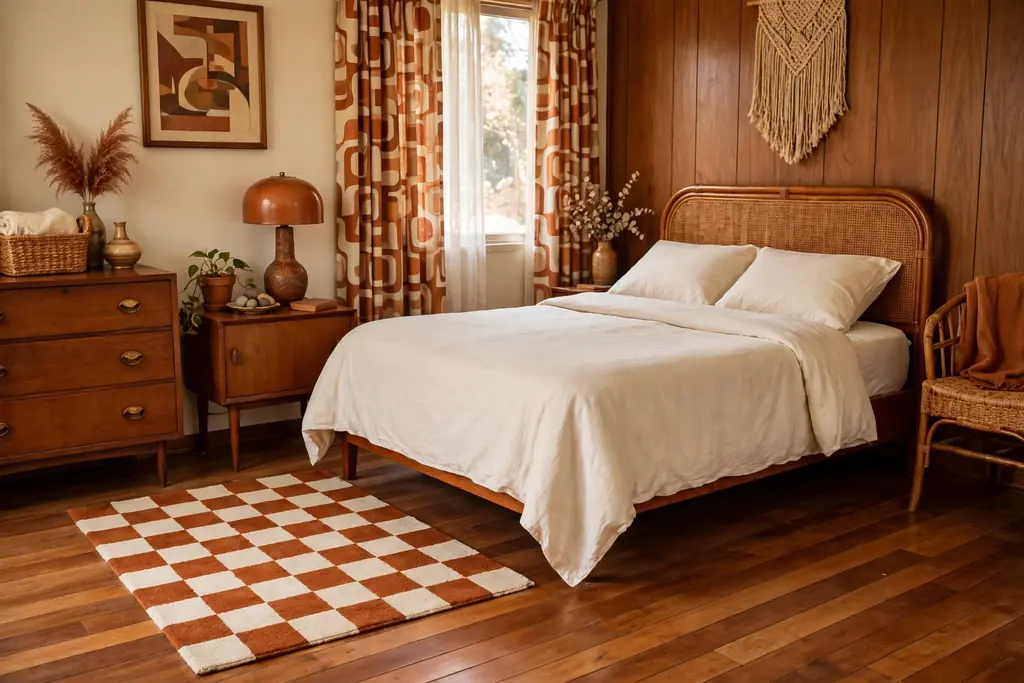
Place a rug with a checkerboard pattern in warm tones, such as cream and rust or cream and brown, beside the bed or under its lower half. The checker pattern is a bold retro graphic, and it gives the room a color base at floor level. This suits a bedroom with pale walls and plain bedding, where the floor can carry the pattern.
Choose a low pile rug that doors and drawers can clear, and use a rug pad on smooth floors to reduce slipping. Repeat one rug color in the bedding or a cushion, so the floor pattern connects to the bed. Vacuum often, since a light checker pattern shows dust and lint more than a dark or plain rug.
8. Restore a Warm Wood Dresser With Brass Pulls
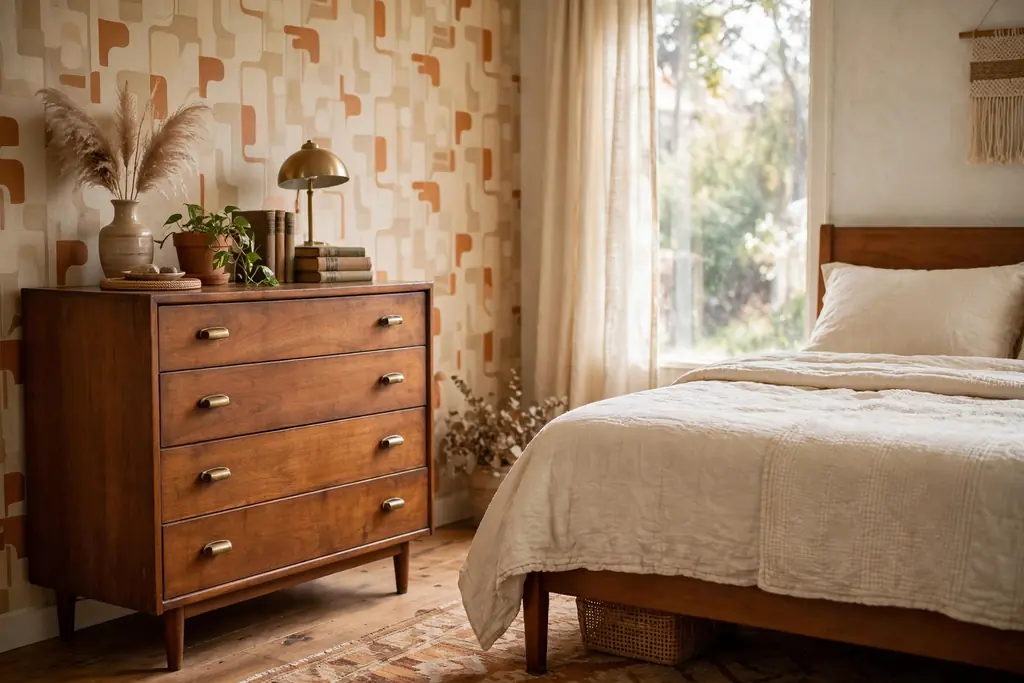
Use a warm wood dresser with simple brass pulls as the main storage piece in the room. The wood tone and brass hardware read as mid century at once, and a dresser gives closed storage that keeps a retro room tidy. This suits a room where the bed is plain, since the dresser becomes the furniture focal point.
Clean the wood and tighten or replace worn pulls before the dresser goes in the room, and keep the finish consistent across the handles. Keep the top mostly clear, with a tray, a small vase, and one framed print, so the wood surface stays easy to see. If the dresser is secondhand, check drawers for smooth runners before you load them.
9. Hang Patterned Barkcloth Style Curtains
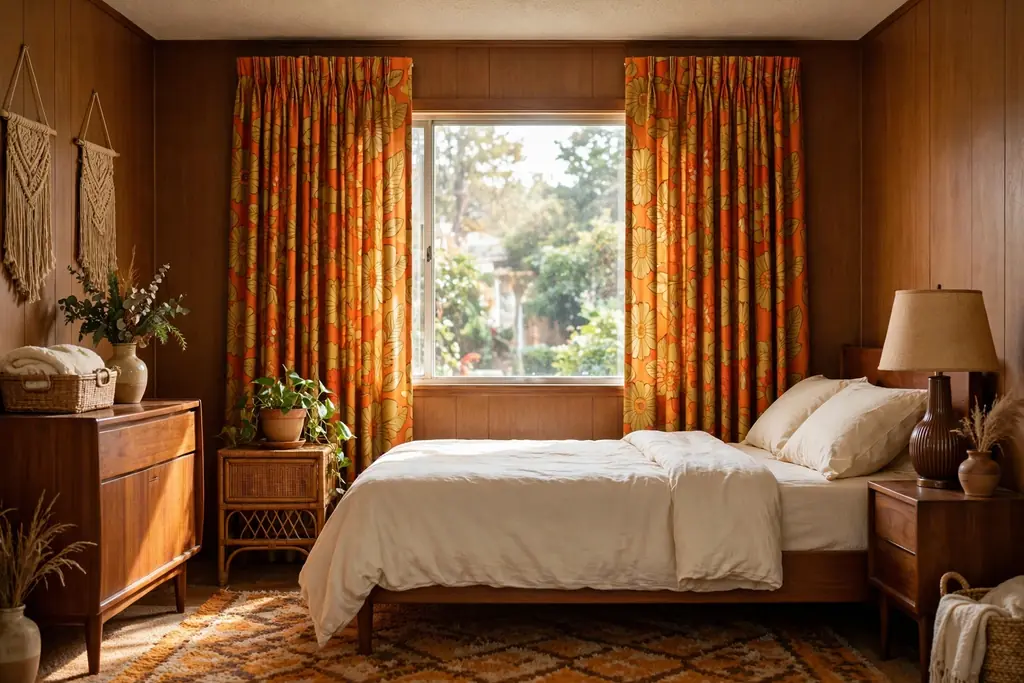
Choose curtains in a bold retro print, such as large florals, abstract leaves, or a warm geometric, and keep the bedding mostly plain. The window becomes a block of pattern and color, which suits a room with white walls and solid furniture. Pick a print that shares one color with the rug or a cushion, so the window links to the rest of the room.
Hang the rod high and wide, so the panels stack clear of the glass when open and daylight still fills the room. For fabric, length, and lining choices that suit different windows, see these bedroom curtain ideas. Wash patterned curtains as advised on the label, since bright prints can fade in strong sun.
10. Light the Room With Globe and Mushroom Lamps
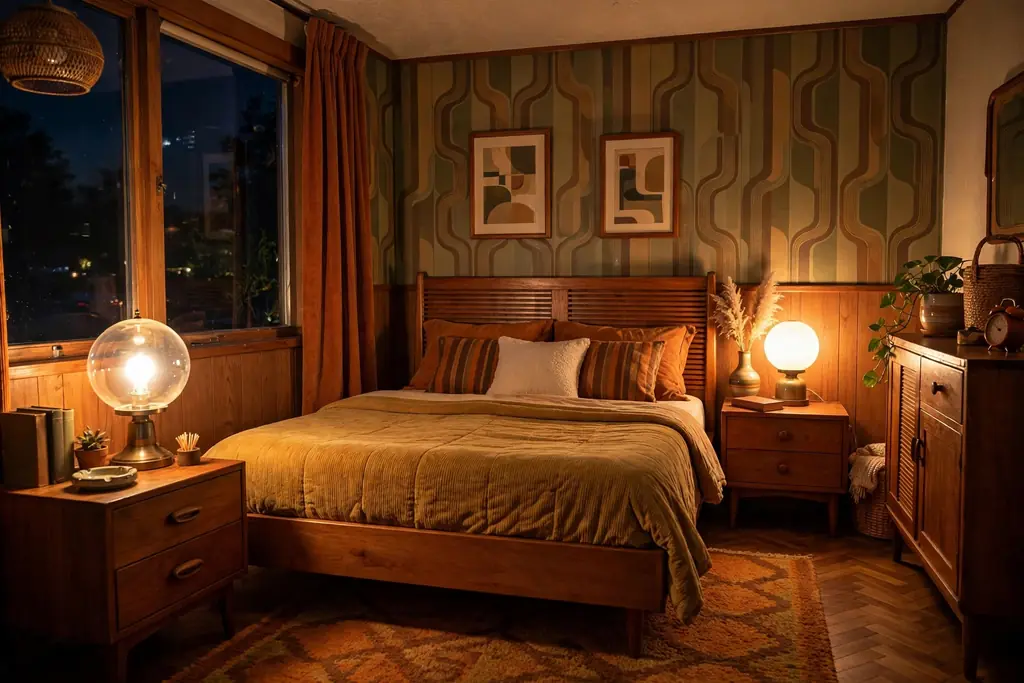
Swap plain bedside lamps for globe lamps or mushroom shaped lamps in warm white, amber, or soft orange glass. The rounded shapes glow softly at night and read as retro at once, which suits a room that feels plain after dark. This is a quick change, since it needs no paint and no new furniture.
Keep both bedside lamps the same shape or in two close tones, so the bed still looks balanced. Check that the shade size suits the lamp base, and keep bulb color consistent across the room, since mixed warm and cool bulbs make a palette look uneven. Use a dimmer where you can, so evening light stays soft.
11. Frame a Gallery of Vintage Style Prints
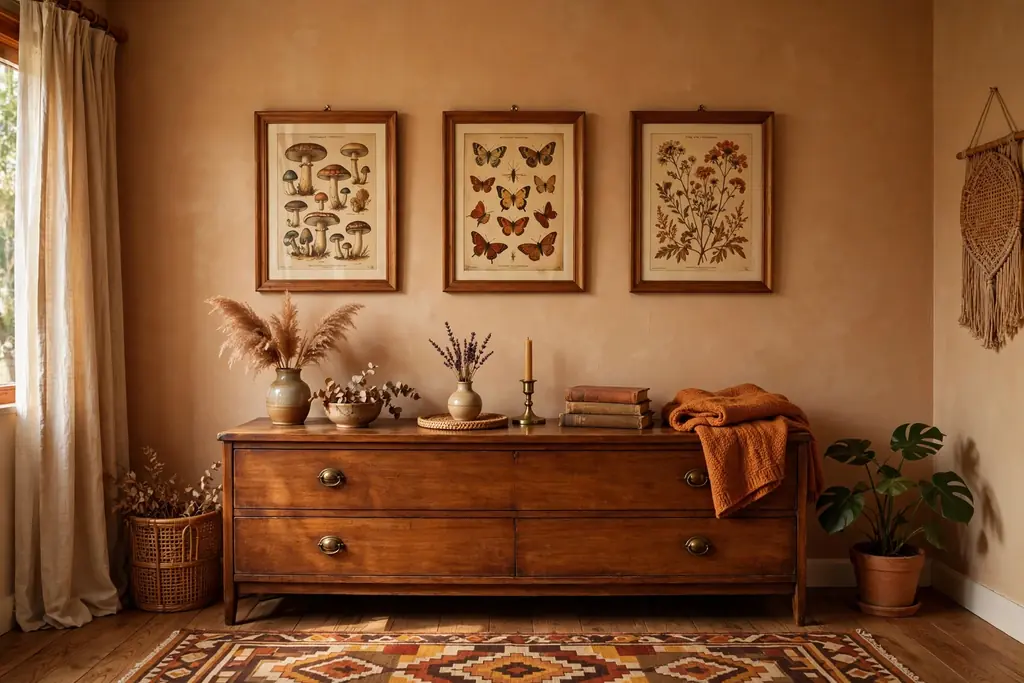
Hang a set of framed vintage style prints, such as travel posters, abstract shapes, or old record covers, in a loose grid above a dresser or beside the bed. The gallery gives the room a collected retro story, while the bedding and furniture can stay simple. This suits a bedroom with one large empty wall and little else on it.
Use matching frames and equal gaps, so the mix of prints looks ordered rather than scattered. Lay the frames on the floor first, measure the full block, and mark the wall with painter tape before you hang anything. Keep the prints to one palette family, such as warm orange, gold, and brown, so the wall does not look random.
12. Add a Rattan or Cane Headboard
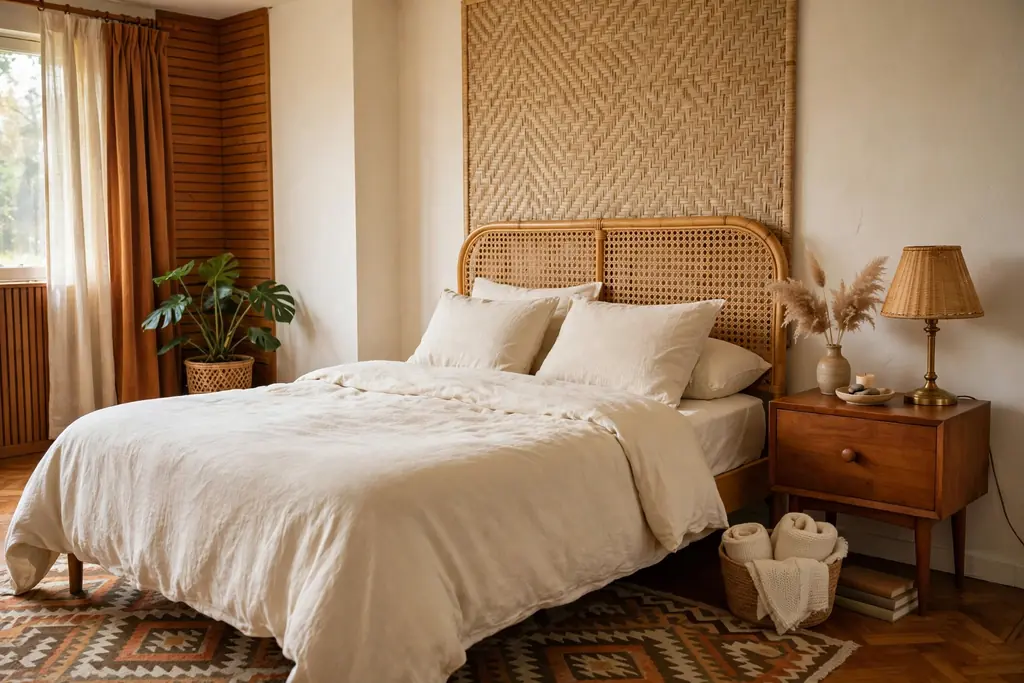
Fit a headboard in rattan or cane, with a natural woven panel in a simple wood frame, behind the bed. The woven texture adds a 1970s feel and warmth, without color or paint, which suits a room with plain walls and cream bedding. Cane also keeps the bed wall light, since you can see the wall through the weave.
Dust the weave with a soft brush now and then, since grooves collect dust faster than a flat surface. Keep the bedding plain, so the texture stays the focus, and pair the headboard with one wood nightstand to link the natural tones. If the cane feels fragile, check the frame joints before you lean against it daily.
13. Dress the Bed in Color Blocked Retro Bedding
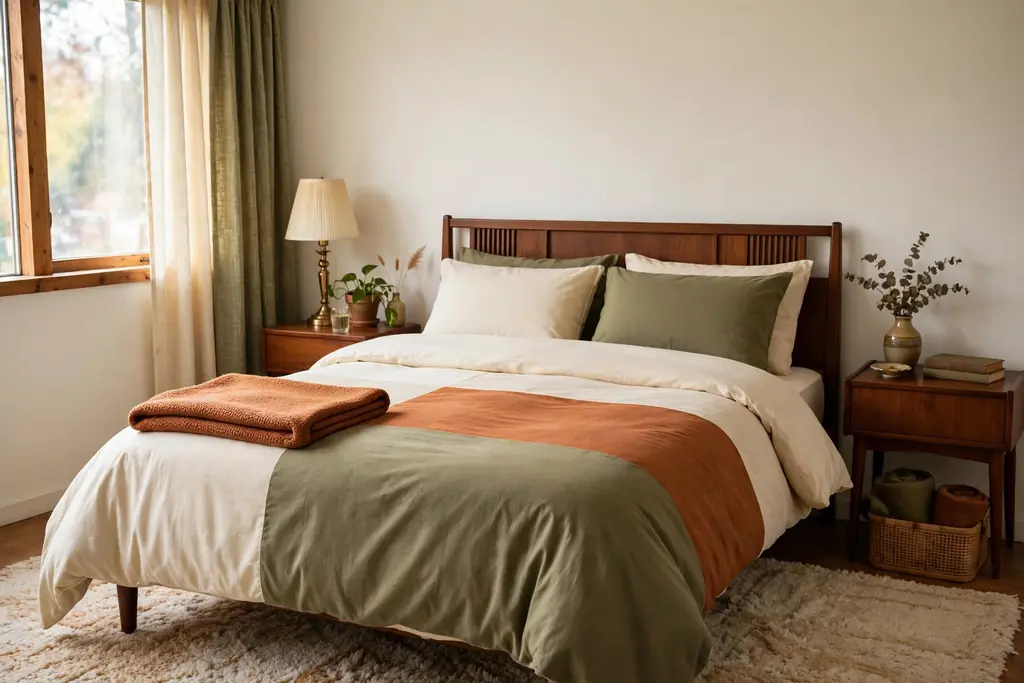
Build the bed in blocks of retro color: a plain duvet in cream, a folded throw in rust or gold, and one or two cushions in olive or deep brown. The blocks read as deliberate, and you can swap the throw or the cushions when you want a new mood without buying new bedding. This suits a room where the walls must stay pale, such as a rental.
Keep sleeping pillows in a plain tone close to the duvet, and put the brightest block at the foot of the bed, where it is easy to fold back at night. Wash the throw and cushion covers together so the colors stay even, and store spare covers in a basket so a seasonal swap takes minutes.
14. Place a Shag Rug at the Side of the Bed
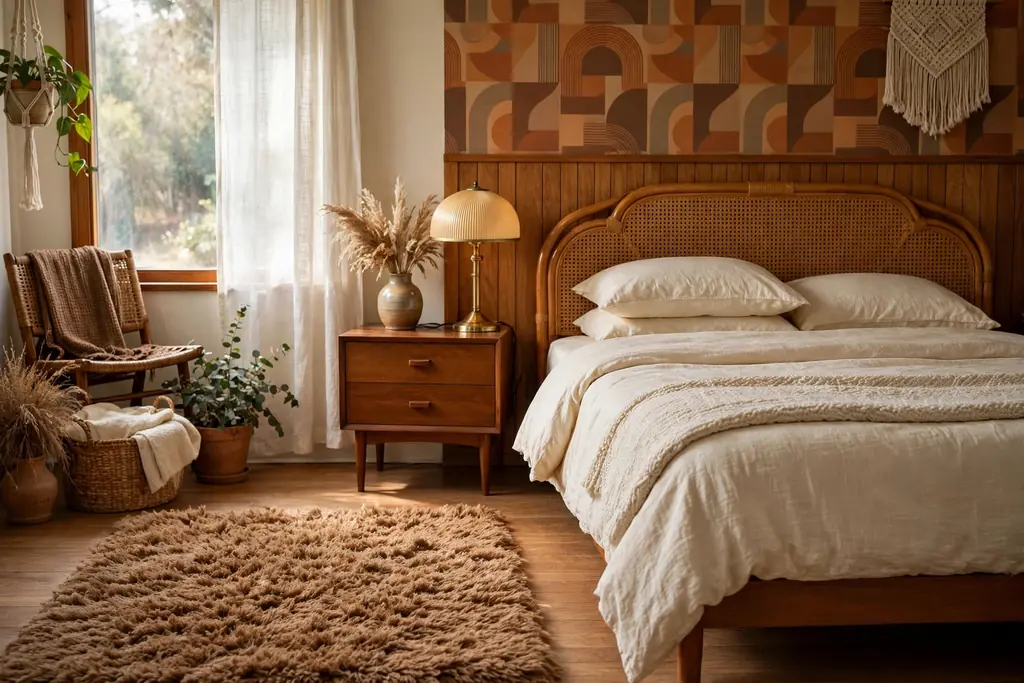
Place a thick shag rug in cream, rust, or warm brown on the side of the bed where your feet land first. The deep pile is a clear 1970s detail, and it makes the first step of the day soft, which suits a bedroom with wood or hard floors. A shag rug also adds texture without a new pattern on the walls.
Choose a rug size that gives a clear border on each side of the bed, and shake it outside often, since deep pile holds dust. Keep the rug away from door swings, so the pile does not catch, and vacuum with a suction only setting where the maker advises it. Pair the rug with plain bedding, so the texture stays the focus.
15. Style a Nightstand With Retro Small Objects
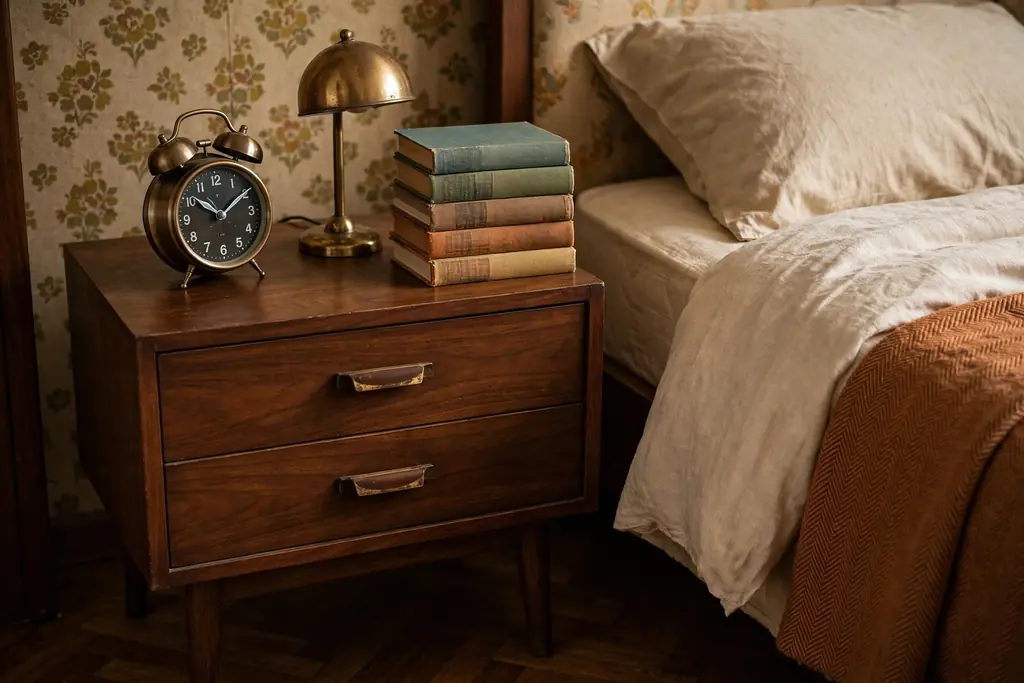
Style one nightstand with a small group of retro objects, such as a round alarm clock, a small brass lamp, and a stack of two books. The group gives a retro note at bed height, where you see it from the door and from the bed, without changing any furniture. This suits a room where a full retro refresh feels like too much.
Keep the group to three items and leave the rest of the nightstand clear, so the bedside stays usable at night. Put the clock where you can see it from the pillow, and keep a glass of water off the book stack. If the clock ticks loudly, move it to the dresser and keep only the lamp and books by the bed.
16. Fit a Warm Wood Slat Wall Behind the Bed
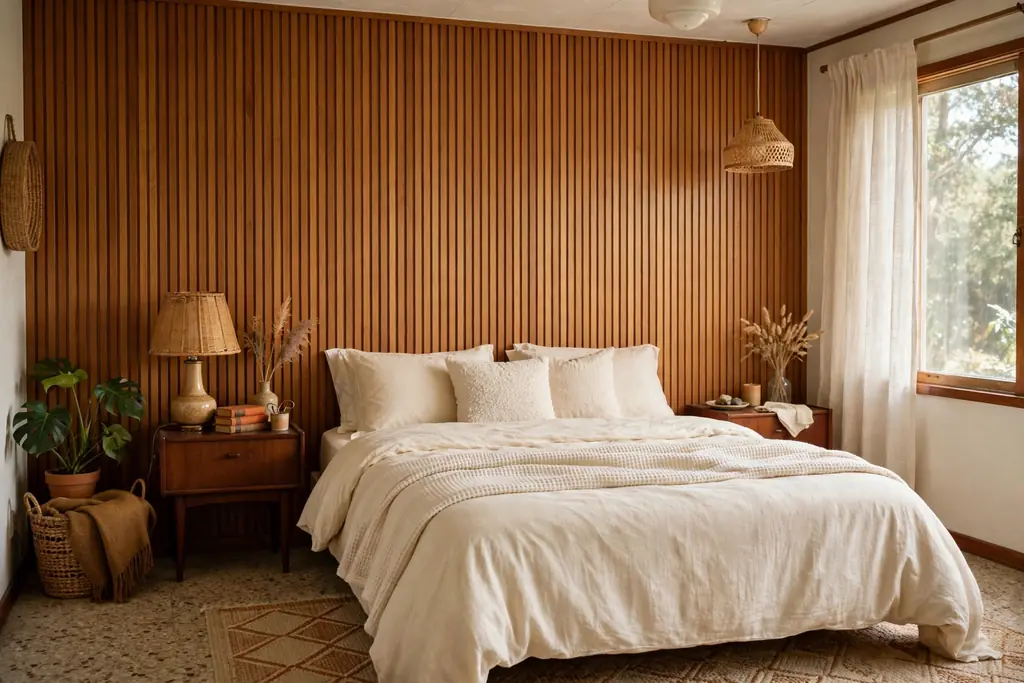
Fit vertical wood slats in a warm tone on the wall behind the bed, with narrow gaps between them for shadow and depth. The slat wall adds wood warmth and a mid century rhythm, without wallpaper or paint, which suits a room with plain bedding and simple furniture. The vertical lines also make the bed wall feel taller.
Center the slats on the bed, not on the room, and stop them clear of the ceiling and the floor for a finished edge. Fix the slats to suit your wall type, and test one slat in a hidden spot first if you plan to stain them. Keep the headboard simple, so the slat pattern stays easy to see.
17. Hang a Woven Wall Hanging Above the Bed
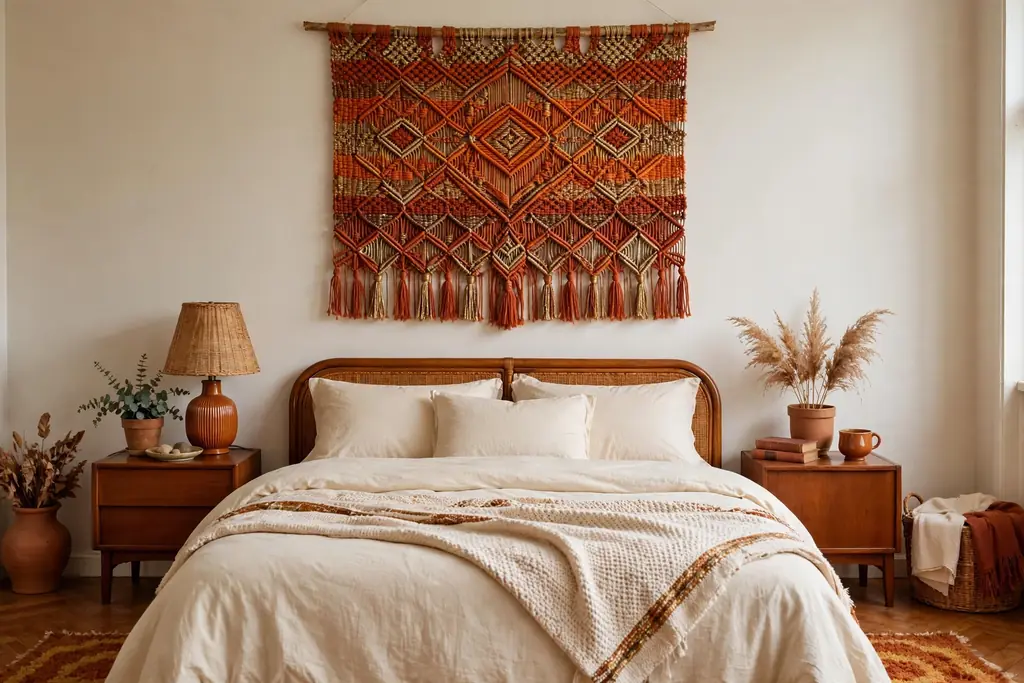
Hang a woven wall hanging in warm tones, with fringe or a simple geometric weave, above the bed or on a narrow wall. The woven texture adds a handmade 1970s feel, and it suits a relaxed bedroom where you want softness rather than a hard frame. Cream, rust, and gold threads work well with wood furniture and warm lamplight.
Hang it from a wooden dowel or a slim rod, and let it fall flat against the wall so it does not billow. Keep the wall behind it plain, so the weave shows clearly, and keep it out of direct sun so the colors hold. Shake it outside now and then, since woven pieces collect dust.
18. Stack Vintage Suitcases as a Nightstand
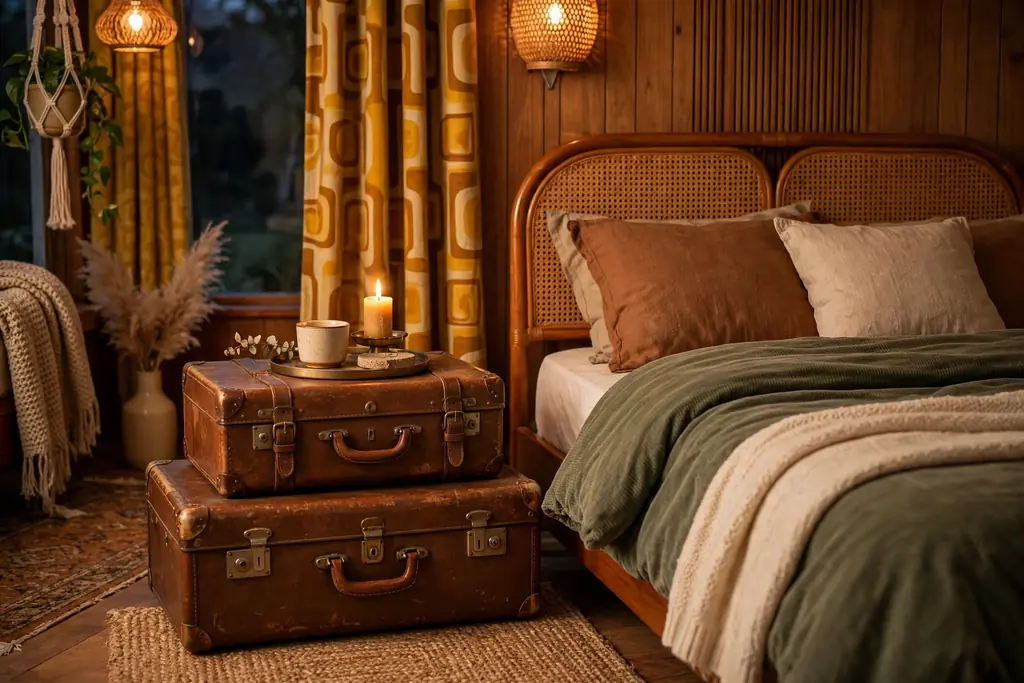
Stack two vintage style suitcases beside the bed to use as a nightstand with hidden storage inside. The stacked cases read as retro at once, and they give a place for spare bedding or out of season clothes, which suits a small bedroom where storage must stay on show. Keep the stack stable, with the largest case at the bottom.
Check the cases for musty smells and clean them well before they go near the bed, and keep the top case closed when not in use. Place a small tray on top for a lamp or a book, so items do not slide off the curved lid. If the stack wobbles, use only one case on a low stool instead.
19. Place a Burnt Orange Reading Chair in a Corner
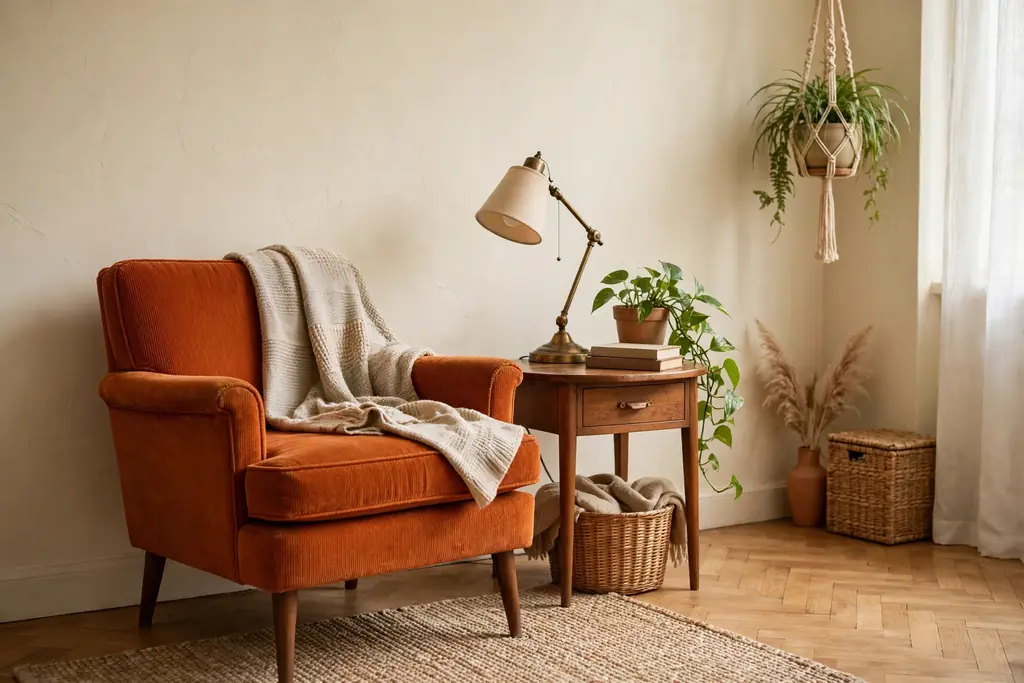
Place one armchair in burnt orange fabric or a bold retro print in a bedroom corner, with a small side table and a reading lamp. The chair gives the room a second color focus away from the bed, which suits a larger bedroom or a room with an empty corner. A bright chair also makes the corner an invitation to sit, rather than a spot for bags and laundry.
Angle the chair slightly toward the room, and keep it clear of clothes, so it stays usable. Repeat the chair color once, in a cushion on the bed or a print on the wall, so the corner does not look cut off from the room. Choose a washable cover if the chair will get daily use.
20. Build a Vanity Corner With a Round Brass Mirror
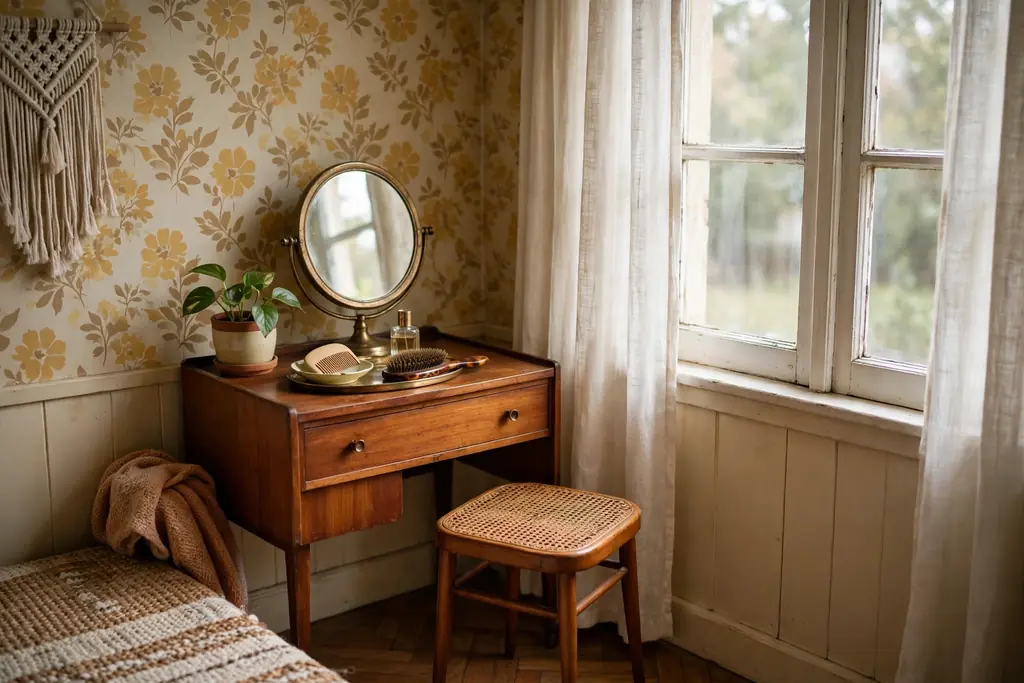
Set a small dressing table in a bedroom corner, with a round mirror in a brass frame, a small tray, and a stool that slides underneath. The round brass mirror is a clear retro detail, and the corner becomes a useful dressing spot, which suits a bedroom with an empty corner near a window. Keep the mirror frame simple, so the brass stays the focus.
Keep the vanity top mostly clear, with a tray for daily items, so the corner stays usable and easy to clean. Repeat the brass tone once more in the room, in a lamp base or a picture frame, so the corner links to the bed. If space is tight, use a wall mounted shelf as the vanity top.
21. Paint Retro Stripes on One Narrow Wall
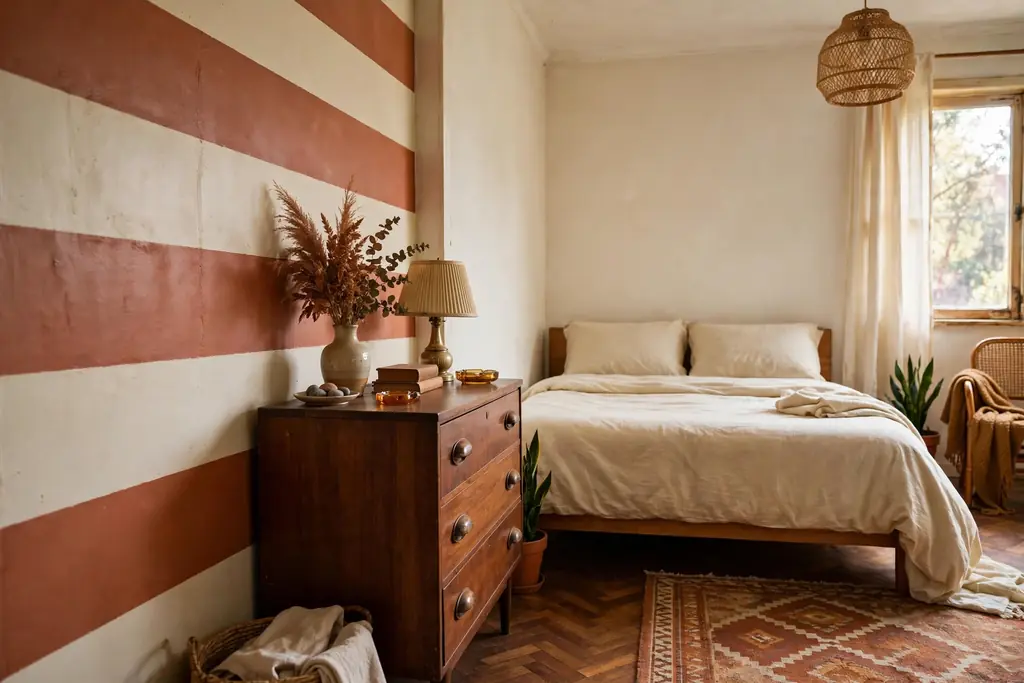
Paint wide horizontal stripes in two warm tones, such as cream and rust or cream and olive, on one narrow wall, such as the wall beside a dresser. The stripes add a retro graphic without covering the bed wall, which suits a room where the bed wall already has wallpaper or a headboard that should stay the focus. This is a small paint job, so it suits a weekend.
Use painter tape and a level for straight edges, and paint the lighter stripe first for a clean result. Keep the other walls plain, and repeat one stripe color in a cushion or a throw, so the striped wall does not look isolated. If the stripes feel strong, use them on a short wall only, not on a long main wall.
22. Add Warm Glow With a Lava Lamp Corner
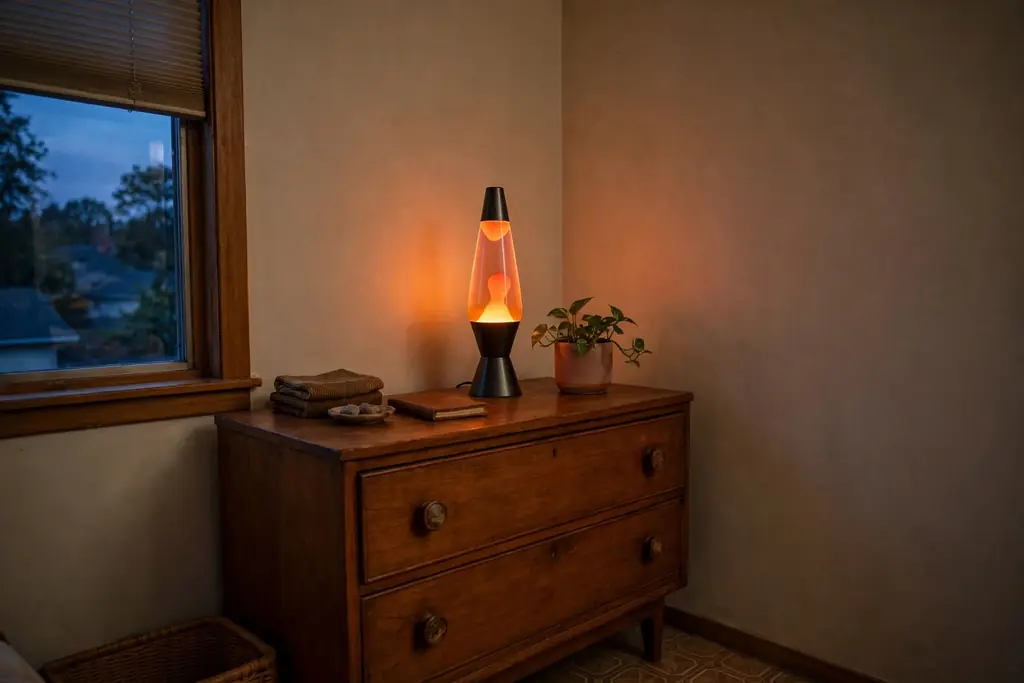
Place a lava lamp on a dresser or a low shelf in a bedroom corner, with a small plant or a framed print beside it, for a soft retro glow in the evening. The slow moving color is a clear 1970s detail, and it gives the room a gentle night light, which suits a bedroom that feels plain after dark. Keep the lamp away from bedding and curtains, since it warms up with use.
Put the lamp on a steady surface where it cannot be knocked, and switch it off before sleep, since it is a mood light rather than a night light. Keep the area around it clear, so the glow shows against a plain wall, and follow the maker guidance on how long to leave it on. If the lamp feels too strong, move it to a corner you see from the door rather than from the bed.
Conclusion
A retro bedroom does not need a detail from every decade on every surface. Pick one era to lead, such as mid century wood or 1970s warm color, then repeat that color or material once or twice in smaller items and keep the rest of the room calm. Test paint and fabric in daylight and lamplight, start with bedding, lamps, and cushions when you want a quick change, and save walls and furniture for a weekend project. Save the ideas that fit your room size, your light, and how much retro detail you want to wake up to, and pin this post so you can find your favorite looks again when you are ready to start.
FAQs
How do I make a retro bedroom look stylish instead of dated?
Pick one era as the lead and keep the rest of the room calm, with plain bedding, good light, and clear surfaces. Use one strong retro feature, such as a patterned wall or a velvet headboard, and repeat its color once or twice in smaller items, rather than adding a retro detail to every surface. Mixing one vintage style piece with plain modern bedding and closed storage also keeps the room livable.
Which retro era suits a small bedroom best?
Mid century style often suits a small room best, since low furniture, slim legs, and warm wood keep the room feeling open. A low teak bed frame, one wood dresser, and a plain rug give a retro mood without heavy pattern. If you love 1970s color, keep it to one accent wall or one chair, and keep the other walls and the ceiling pale.
What colors work best for a retro bedroom?
Warm tones, such as burnt orange, mustard, olive, rust, and deep brown, with cream or warm white as the base, give the clearest retro feel. Teal and gold can also work, especially with wood and brass. Test any bold color in evening light, since a tone that looks fresh by day can feel darker or stronger at night.
Can I mix retro pieces with modern furniture?
Yes, if the palette stays shared. Pair a retro bed frame or dresser with plain modern bedding, simple lamps, and one or two retro colors repeated in cushions or art. Keep furniture lines simple on both sides, so the mix looks planned rather than random. If a new item does not share a tone with the retro pieces, leave it out or move it to another room.
How much pattern should a retro bedroom have?
Use one main pattern, such as geometric wallpaper or a bold curtain print, and keep the other patterns small or plain. A checker rug, a striped wall, and a patterned curtain in one room can fight each other, so pick the pattern you see first and let the rest stay solid. If two patterns must share a room, keep one large and the other small, in shared colors.
How do I add retro style on a low budget?
Start with bedding, cushions, lamps, and small styling, since these swap in minutes and need no paint or new furniture. A mustard throw, globe lamps, a framed vintage style print, and a shag rug can change the mood of a plain room. Save walls and large furniture for later, and look for secondhand wood pieces you can clean and keep, rather than buying a full matching set at once.