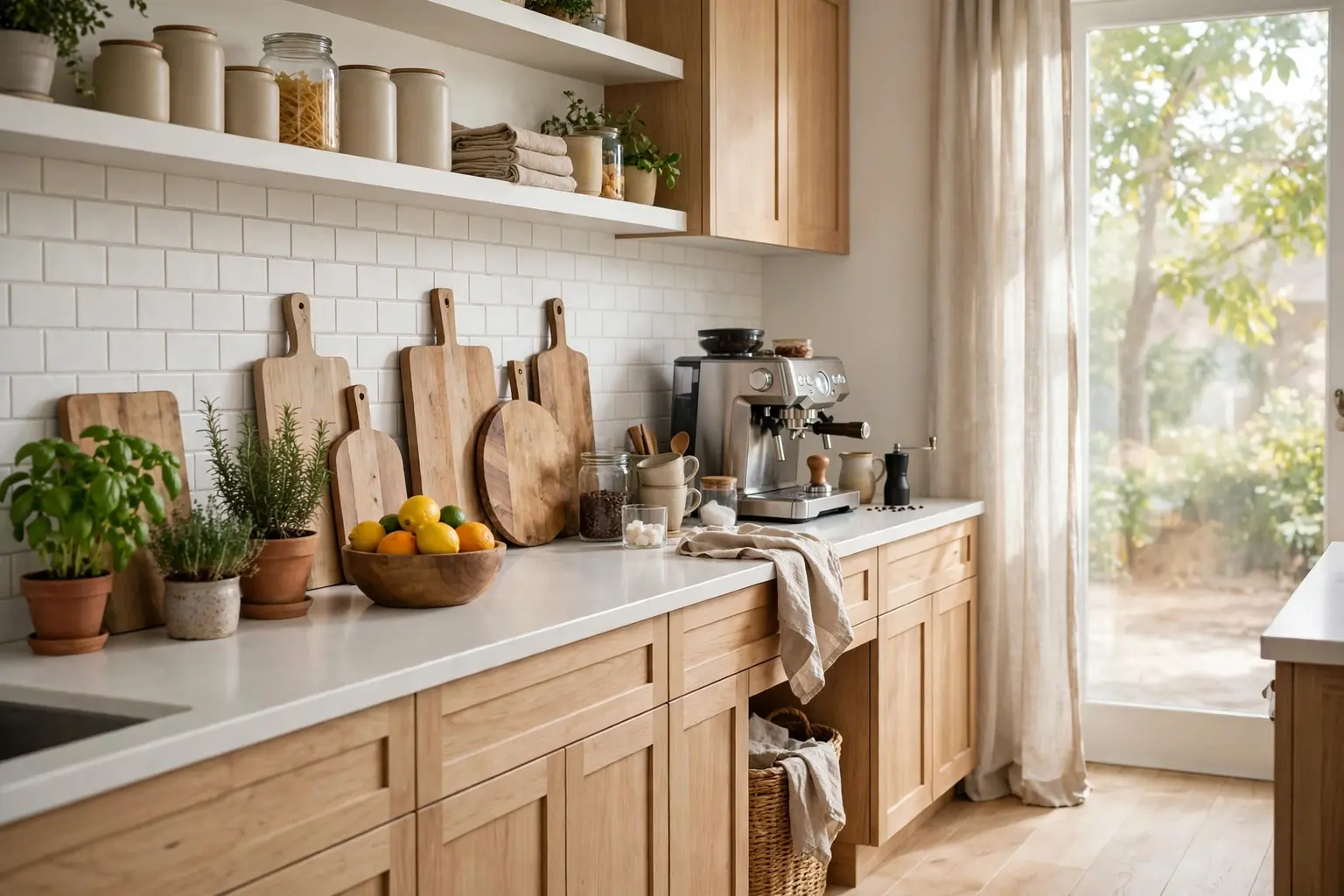
A kitchen counter has to hold daily cooking and still look cared for, and that balance is easier than it seems. The best countertop decor earns its place: a board you cook with, herbs you snip, jars you open every day, or a tray that keeps small items together. These 18 kitchen countertop decor ideas cover corners, sink runs, coffee spots, and clear stretches, so you can style one area or work through the whole room. Start by clearing each counter fully, then add back only what you use or truly like to look at. Leave at least one stretch of counter empty for prep, and group the rest in small clusters with space between them.
Key Takeaways
- Group decor in small clusters with clear space between them, so counters read as styled rather than crowded.
- Choose items that also work: boards, herbs, canisters, jars, and utensils earn counter space more easily than pure ornaments.
- Repeat one or two materials, such as wood, ceramic, or brass, so mixed items still look planned.
- Keep the sink and stove runs light, and put taller or fuller displays on corners and quiet stretches instead.
- Leave one clear stretch of counter empty for chopping, mixing, and serving, and protect it as prep space.
1. Leaning Wooden Cutting Boards
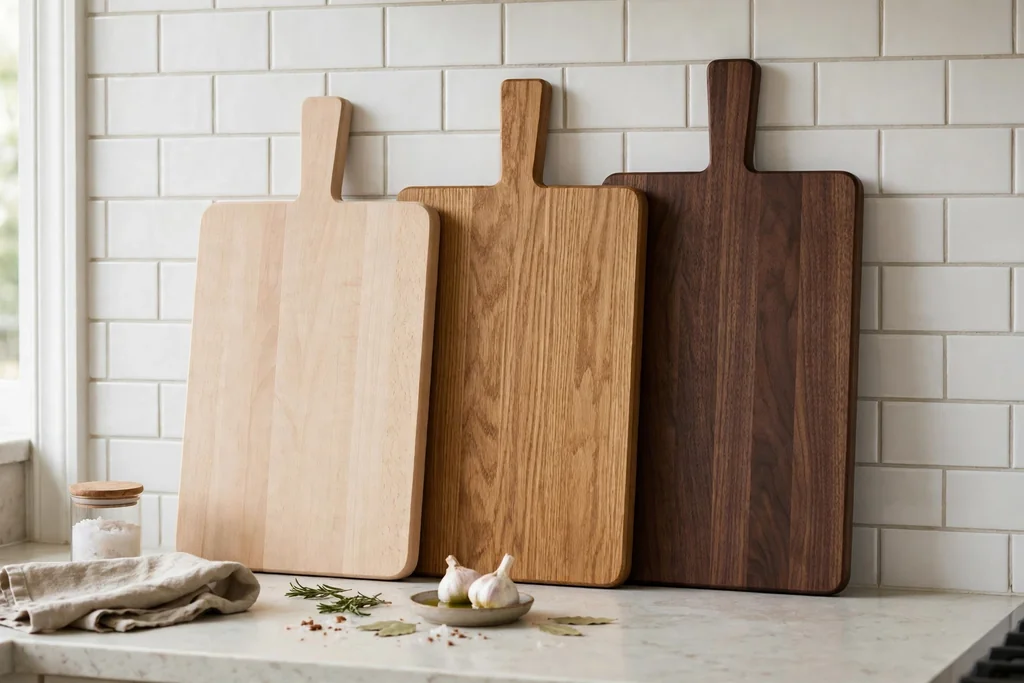
Lean two or three wooden cutting boards against the backsplash in a quiet corner, with the largest board at the back and smaller boards in front. Mixed woods, such as pale beech, mid oak, and dark walnut, add warmth to white or pale tile, and the boards stay visible and dry between uses. This is one of the easiest countertop displays, since it uses boards you already own.
Keep the boards clear of the stove splash zone, and wipe them after use so food marks do not stain the wood. If a board has deep cuts that are hard to clean, retire it from cooking and use it only as a display piece, or replace it. A small plant or a salt cellar in front of the boards finishes the corner without hiding the wood.
2. Tiered Tray Vignette
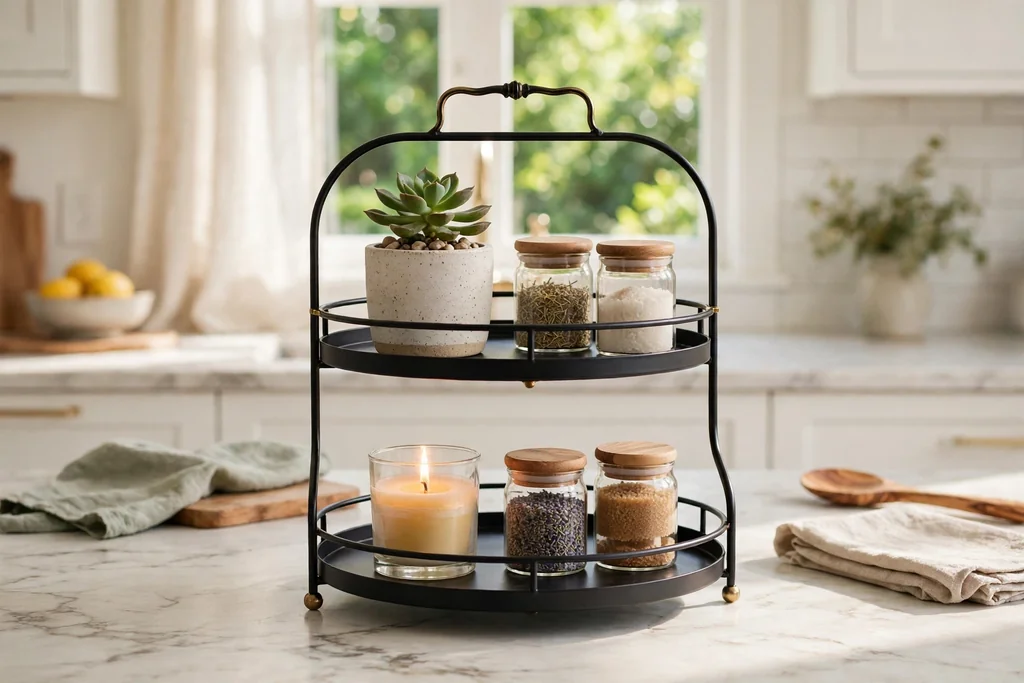
A two tier tray turns a small collection into one tidy display on a counter corner or beside the stove. Put a small plant or a candle on the top tier, and small jars, a salt cellar, or a tiny bowl on the lower tier, keeping the tallest item in the center so the tray reads as balanced. A tray in wood, metal, or ceramic can repeat a finish already in the room.
Keep the tray to one theme, such as herbs and jars, or coffee extras, so it does not become a catch-all. Wipe the tray during a normal kitchen clean, since open trays near cooking gather film. If the tray starts to collect mail or keys, move those items elsewhere and return the tray to its display job.
3. Matching Ceramic Canisters
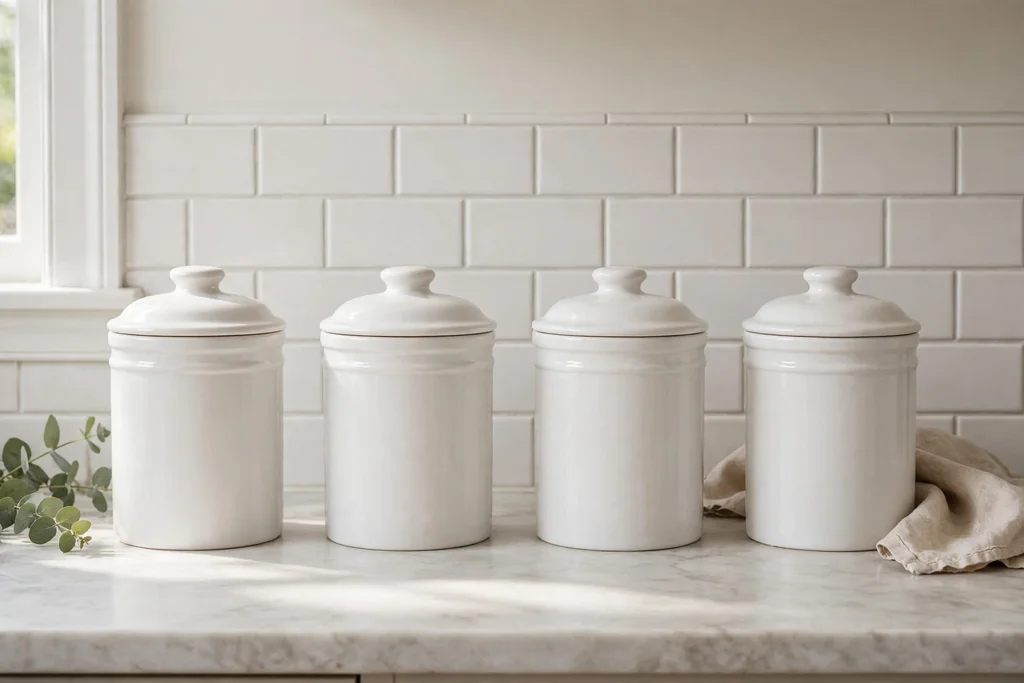
A set of matching ceramic canisters gives a counter a calm, planned look while holding flour, sugar, coffee, or tea within reach. Choose three canisters in the same shape and color, with lids that seal well, and line them up near the prep area or the coffee corner. Labels on the front help in a busy household, especially when two canisters hold similar looking contents.
Keep the canisters away from direct stove steam, and wipe the lids after cooking so they stay clean. If counter space is tight, use two canisters only and store the rest of the set in a cabinet. A small wooden spoon laid across the lids adds a soft, lived in note.
4. Potted Herb Row
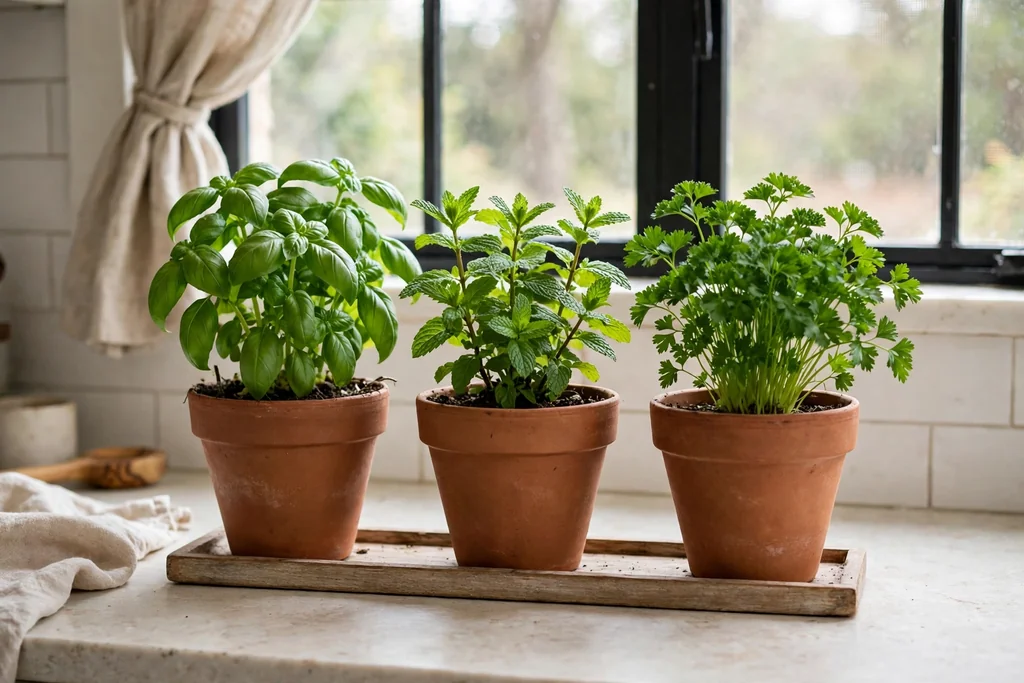
A row of small potted herbs brings living green to the counter and puts fresh flavor within reach while you cook. Use three or four pots in the same material, such as plain terracotta or white ceramic, and choose herbs that suit your light, such as basil, mint, chives, or parsley. Set the pots on a narrow tray to catch water and protect the counter.
Snip herbs as you need them, and rotate the pots weekly so growth stays even. Keep the row to one short stretch of counter, so it does not spread into prep space. If your counter gets little daylight, move the pots to a bright window for part of the day, or choose one hardy herb rather than a full row.
5. Wooden Bowl of Citrus
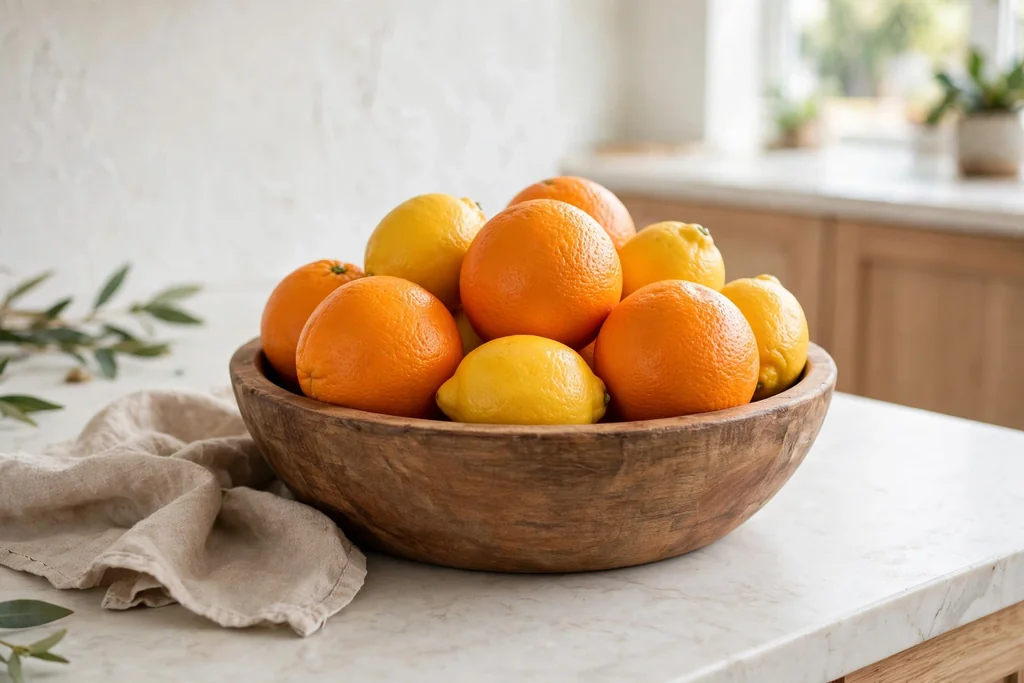
A wide wooden bowl filled with lemons, oranges, or limes adds natural color to a counter and keeps fruit where the household will actually eat it. The warm wood pairs well with stone, wood, and white counters, and the round fruit softens the straight lines of cabinets and appliances. Choose fruit in one color family for a calm look, or mix citrus for a brighter display.
Refill the bowl as fruit is eaten, and remove any piece that starts to soften, so the display stays fresh. Keep the bowl on a corner or a side counter, clear of the sink splash zone, and wipe the bowl rim during a normal clean. For a quieter version, use a small bowl with just three or four lemons.
6. Coffee Corner Station
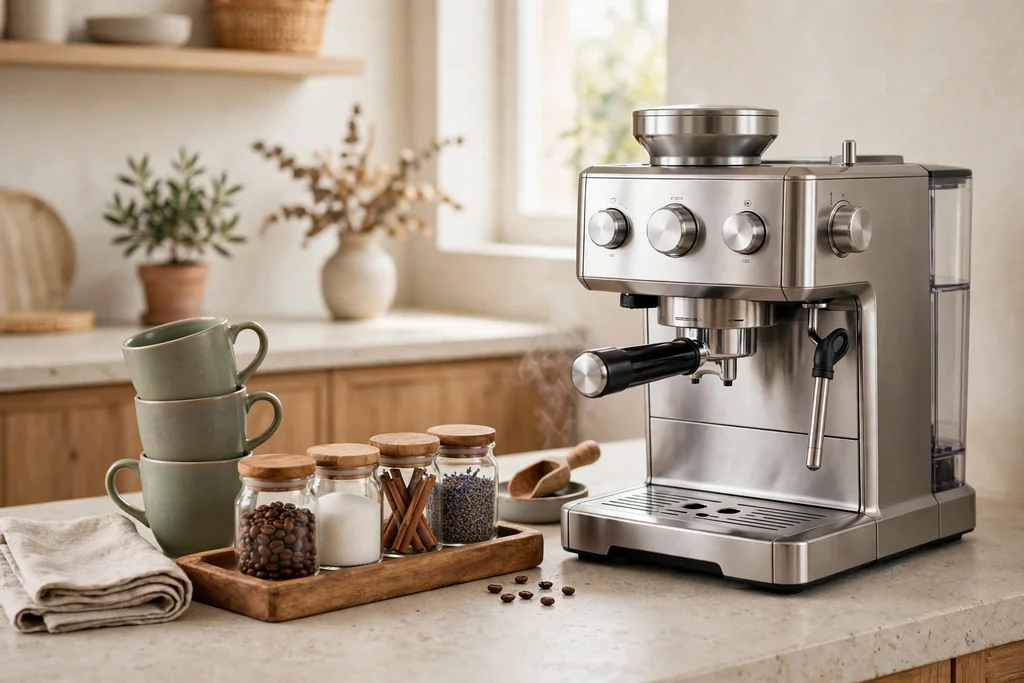
A coffee corner gathers the machine, mugs, and supplies on one tray or one short stretch of counter, so morning coffee stays tidy instead of spreading across the room. Put the machine at the back, mugs on hooks or in a small stack at one side, and sugar, spoons, and filters in a small jar or cup. A tray under the group catches drips and marks the corner as one zone.
Keep the coffee corner near a socket and clear of the sink, and wipe the tray weekly since coffee splashes stain fast. If the household drinks tea as well, add one small tea tin to the same tray rather than starting a second station. Hang daily mugs on a small rail above the counter if the tray feels crowded.
7. Cookbook on a Stand
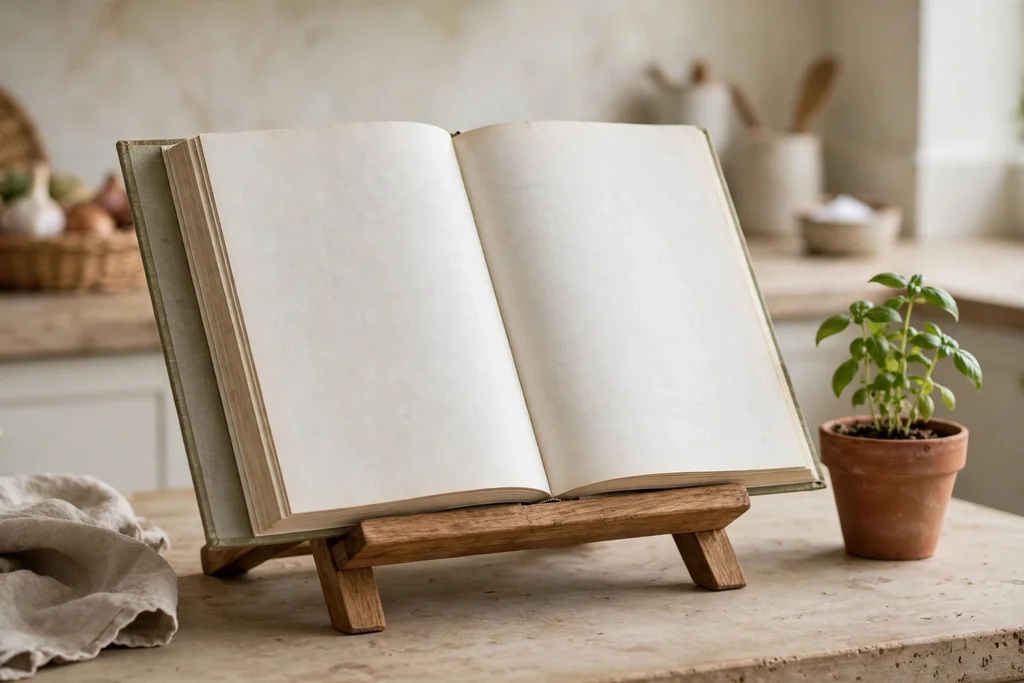
An open cookbook on a wooden or metal stand gives a counter a personal, lived in feel and keeps a favorite recipe in view while you cook. Choose a book with a cover that suits the room, open it to a recipe you use often, and set the stand on a side counter where it will not block prep space. A stand with a lip holds the pages open and keeps the book clear of spills.
Keep the stand clear of the stove and sink splash zones, so steam and water do not damage the pages. If the book is a treasured copy, display a sturdy everyday cookbook instead and keep the treasured one on a shelf. Swap the open page by season, such as soups in cold months and salads in summer.
8. Marble Slab With Oil and Vinegar
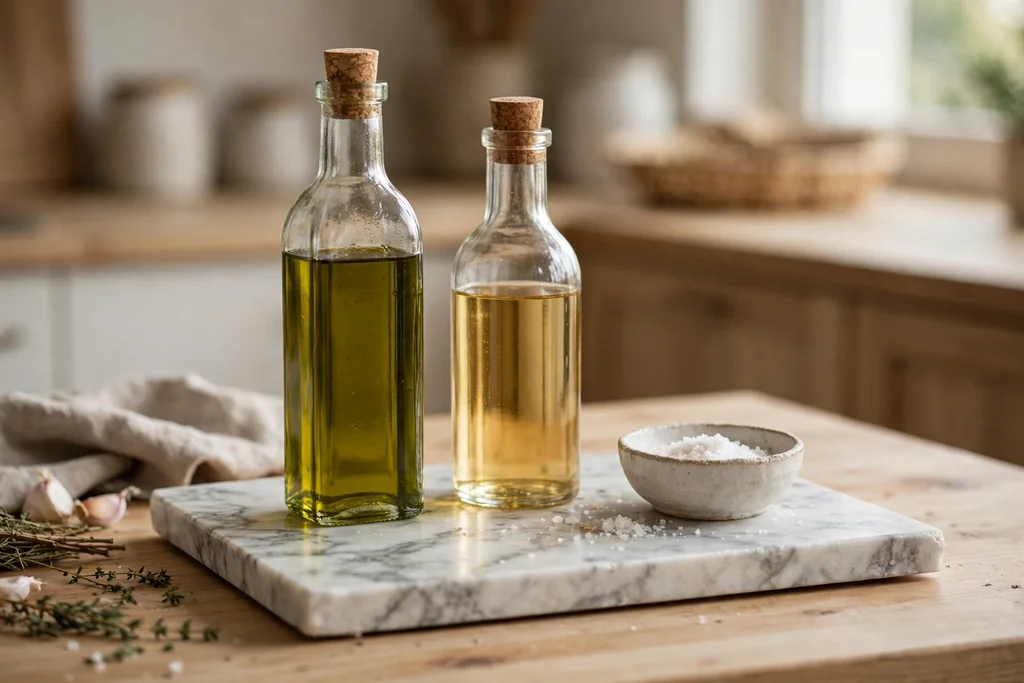
A marble slab under oil and vinegar bottles turns everyday cooking bottles into a neat display and protects the counter from drips. Choose a slab large enough for two or three tall bottles plus a small salt dish, and set it near the stove or the prep area where the bottles are used most. The pale stone suits wood, brass, and black counters alike.
Wipe the slab after cooking, since oil drips show on pale stone, and keep the bottles to the ones you use weekly so the slab does not fill up. If marble feels too heavy for your counter, a wooden board or a ceramic tray gives the same corralled look. Refill bottles over the sink to catch drips before they reach the slab.
9. Glass Jars of Pasta and Grains
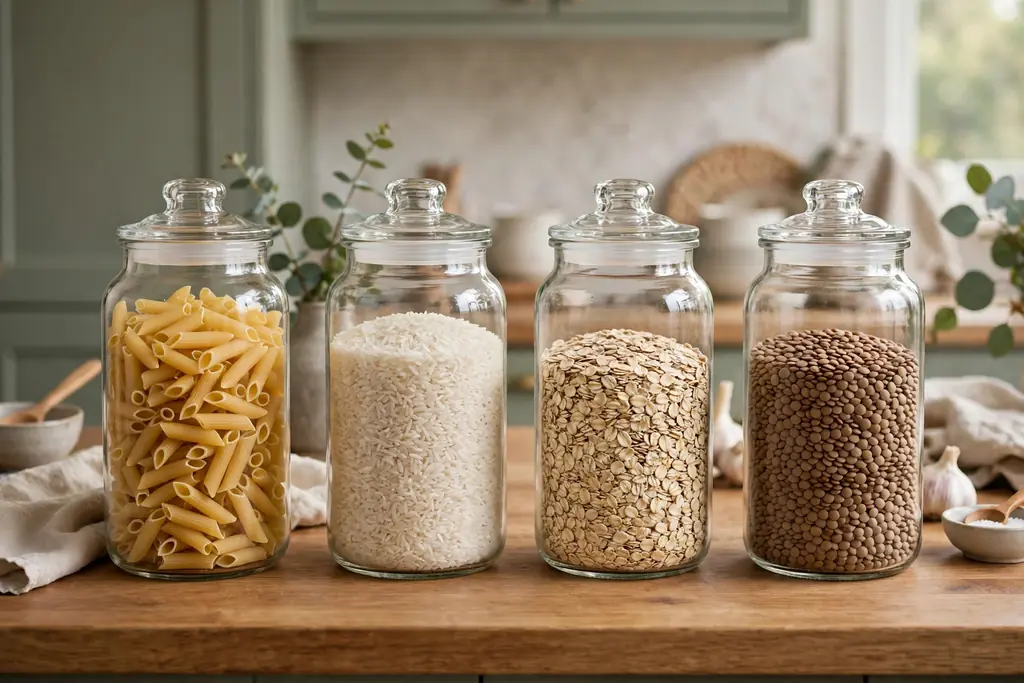
Clear glass jars filled with pasta, rice, oats, or lentils add color and shape to a counter while keeping dry goods visible and easy to grab. Use jars of the same style with tight lids, and fill them only as full as the household will use within a few weeks, so contents stay fresh. Line the jars along a backsplash or group three on a small tray.
Label each jar on the base or the lid if two grains look alike, and keep the jars clear of direct sun, which can fade contents and warm the glass. If counter space is tight, keep one or two jars out and store the rest in a cabinet. A small scoop tied to one jar keeps serving tidy.
10. Small Vase of Fresh Flowers
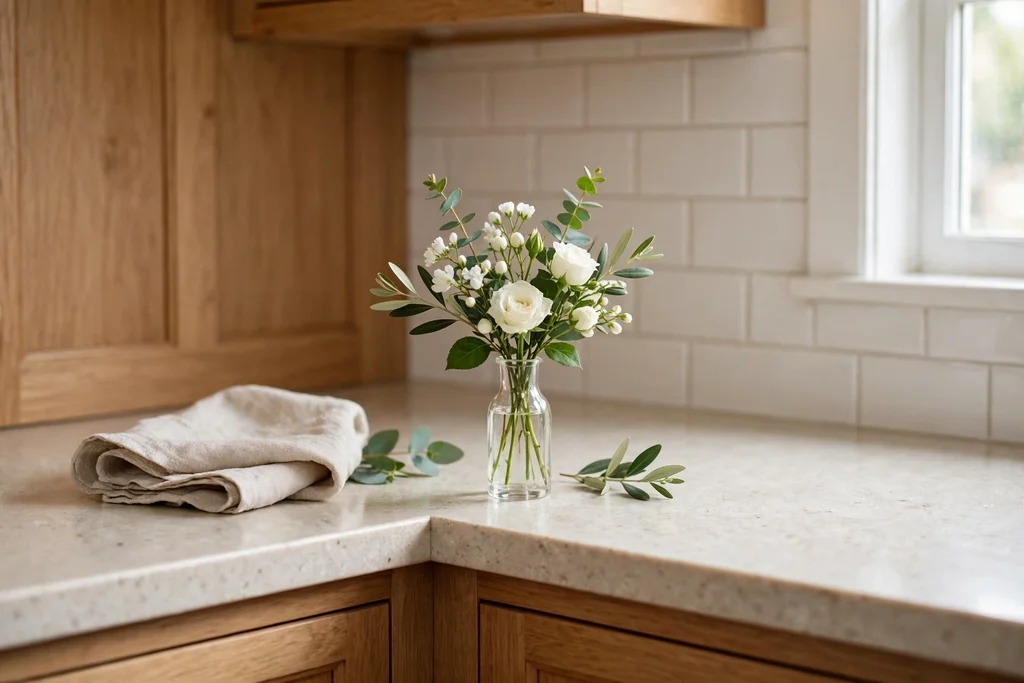
A small vase of fresh flowers or a few eucalyptus stems softens a kitchen counter in a way that no hard decor can match. Choose a vase that suits the room, such as clear glass, white ceramic, or a small bud vase, and keep the stems short enough that the arrangement does not block the view across the counter. One or two stems often look better than a large bouquet in a busy kitchen.
Change the water every few days, and trim the stems when you refresh the vase, so flowers last longer. Keep the vase on a side counter or a corner, clear of the stove heat and the sink splash zone. If fresh flowers feel like too much upkeep, a small potted plant gives a similar soft note with less care.
11. Lantern With a Candle
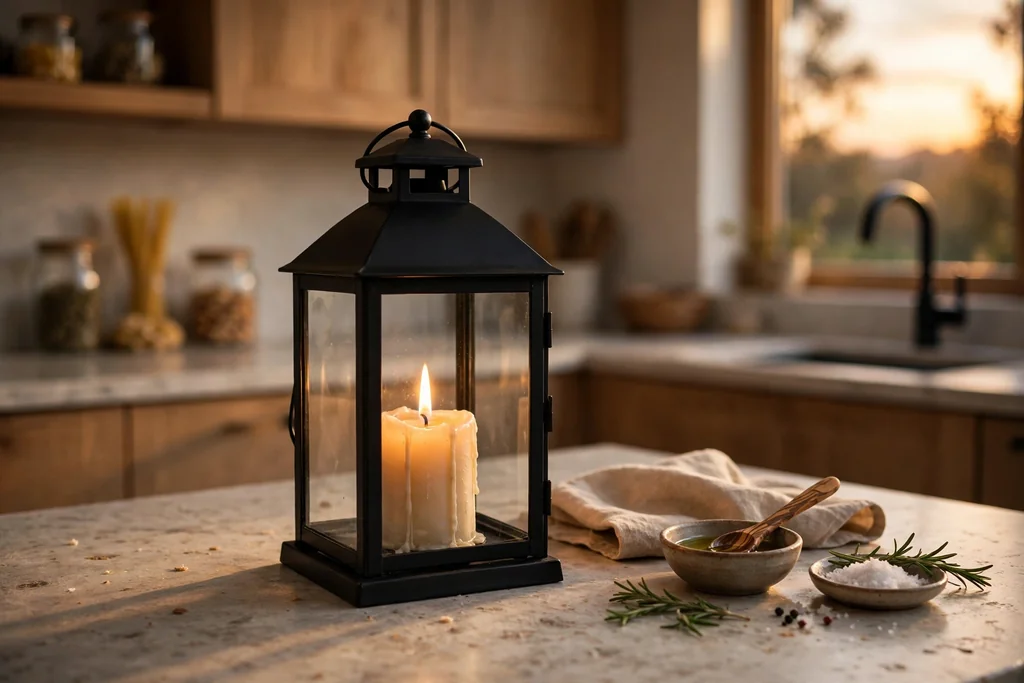
A glass lantern with a candle inside adds a warm glow to a kitchen counter in the evening, when overhead lights can feel harsh. Choose a lantern in metal or wood with clear glass panels, and set it on a corner counter or beside the dining end of the kitchen, where it can be enjoyed from the table. A battery candle gives the same glow with no flame near curtains or paper.
Keep a real candle lantern clear of the stove, tea towels, and anything that could catch, and never leave it burning unattended. Wipe the glass panels during a normal clean, since kitchen air leaves a light film on glass. If the counter is small, use one slim lantern rather than a group, so the display stays calm.
12. Sink Side Tray for Soap and Brush
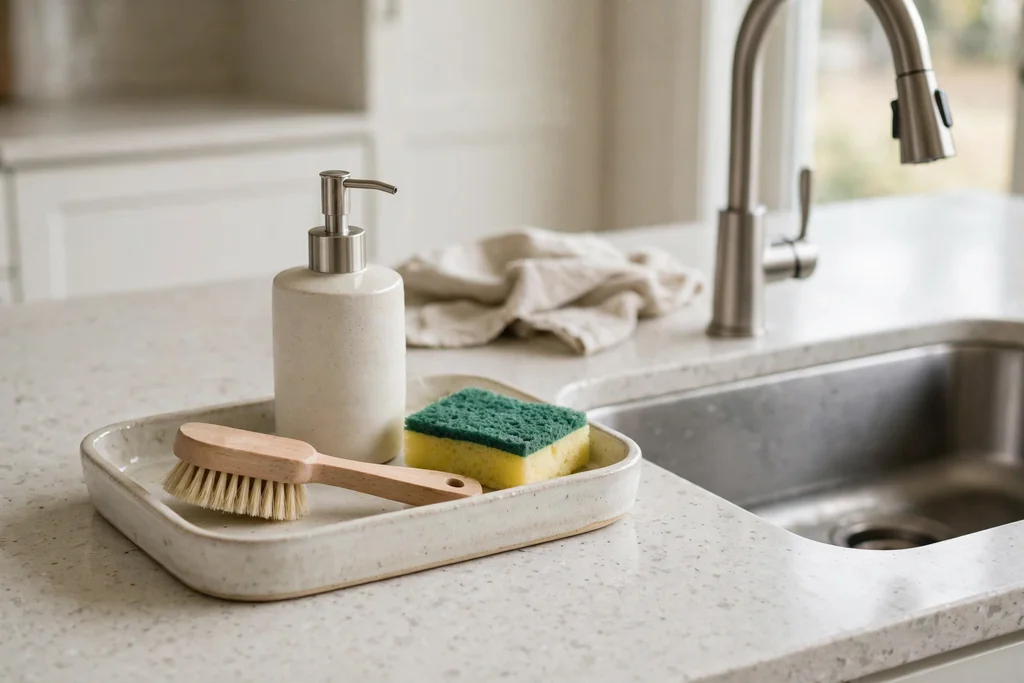
A small tray beside the sink corrals the soap dispenser, a dish brush, and a sponge into one tidy group, instead of letting them spread along the backsplash. Choose a tray in ceramic, stone, or sealed wood with a raised edge, so drips stay on the tray and wipe off in one move. A tray that matches the soap dispenser looks planned, even in a busy sink run.
Keep the tray to daily items only, and store spare bottles under the sink, so the group stays small. Empty and wipe the tray weekly, since standing water can mark the surface below. For more ways to style the sink run, these above kitchen sink ideas cover shelves, rails, and window treatments that pair with a tidy counter.
13. Linen Lined Bread Basket
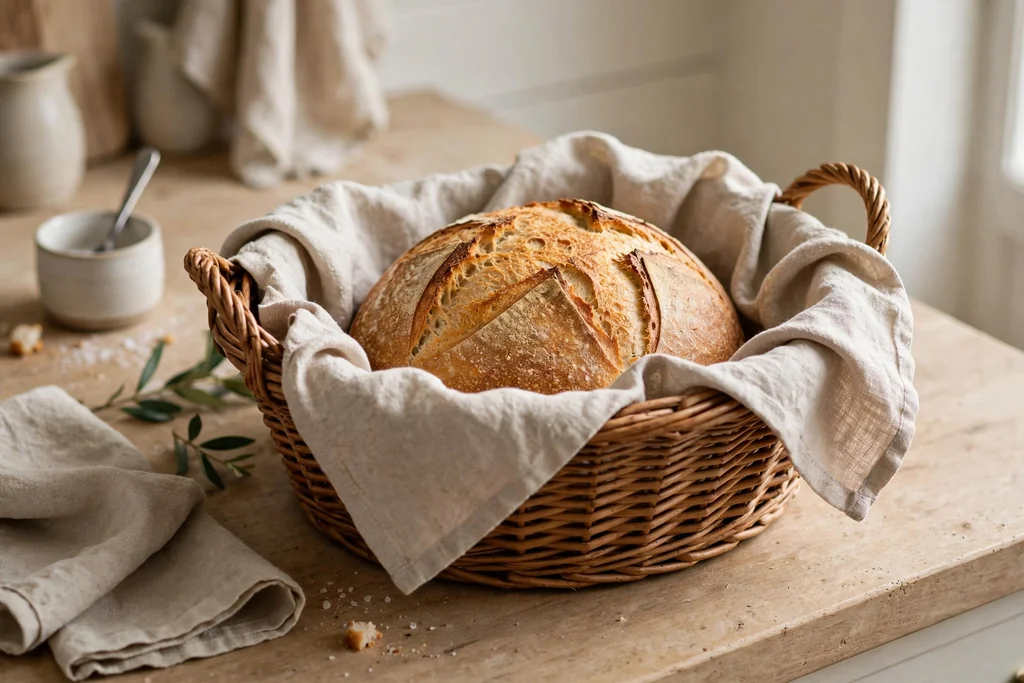
A bread basket lined with a linen cloth gives a counter a warm, bakery feel and keeps bread where the household can reach it at meals. Choose a basket in wicker, wood, or woven seagrass, and fold a clean cloth inside so the bread sits on fabric rather than bare weave. Set the basket on a side counter or near the dining end of the kitchen, where it can be carried to the table.
Shake the cloth out after use, and wash it with the regular laundry, so crumbs do not build up. Keep the basket clear of the sink splash zone, and store spare loaves in a cabinet so the basket holds only the loaf in use. A small bread knife laid beside the basket completes the display.
14. Spice Jars on a Riser
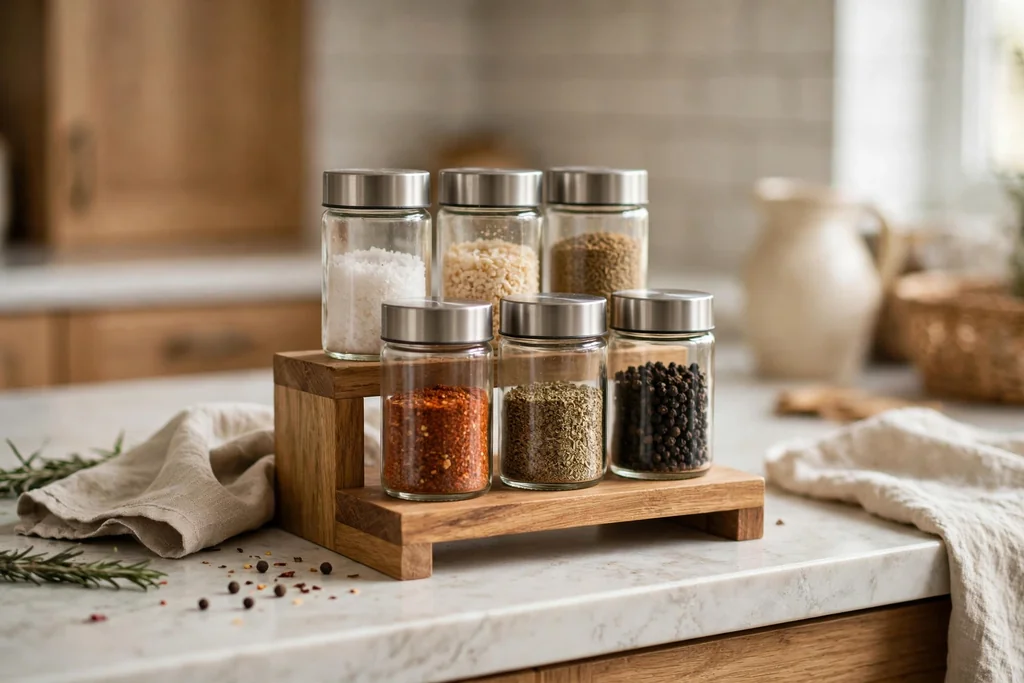
A small riser or stepped shelf lifts spice jars above the counter line, so labels stay readable and the group reads as one display. Use matching small jars with tight lids, and arrange them in one or two rows on the riser, with daily spices at the front and less used jars at the back. A wood or metal riser suits most counters and keeps jars off a damp surface.
Keep the riser near the stove or prep area, but clear of direct steam, which can dull labels and spoil spices faster. Limit the riser to the spices you use weekly, and store the rest in a cabinet, so the display stays useful rather than crowded. Wipe the jars after cooking, since spice jars near the stove gather film.
15. Cake Stand for Bakes and Fruit
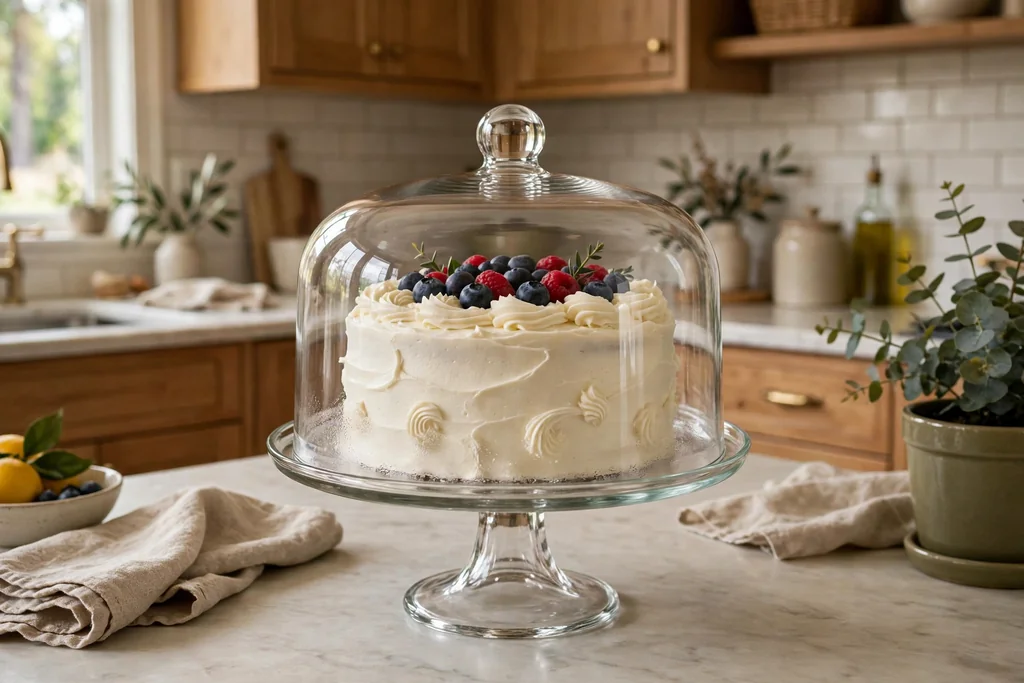
A cake stand raises a bake, a pile of muffins, or a small group of fruit above the counter, so the display feels special without taking much space. Choose a stand in glass, ceramic, or wood with a foot that suits the room, and set it on a corner counter or near the dining end of the kitchen, where guests can see it. A dome cover keeps bakes fresh and dust free between servings.
Keep the stand to one item at a time, such as a cake or a bowl of fruit, so it does not become a second storage spot. Wash the plate after each use, and store the stand in a cabinet when it is empty, so the counter stays clear. For a quieter version, use a low wooden pedestal instead of a tall stand.
16. Leaning Framed Print
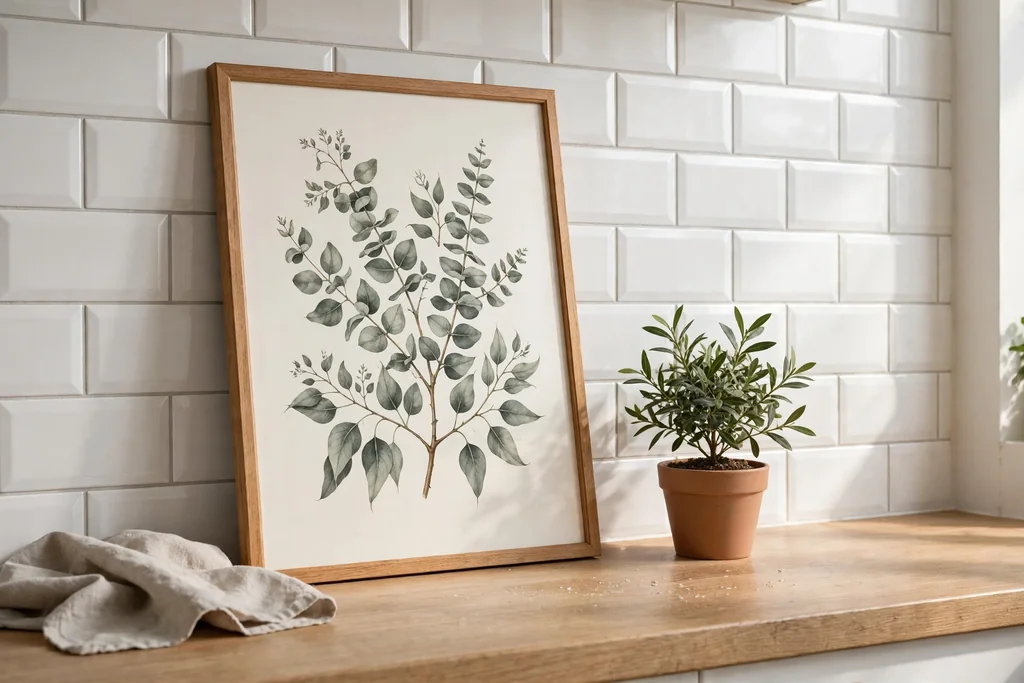
A framed print leaned against the backsplash adds art to a counter without a nail or a shelf, and it can be swapped by season in seconds. Choose a print in a simple frame, such as a food market scene, a botanical drawing, or a plain landscape, and lean it on a side counter or a corner where it will not block prep space. A frame with glass or acrylic over the print wipes clean after cooking.
Keep the print clear of the stove and sink splash zones, so steam does not warp the paper over time. Pair it with one small item in front, such as a salt cellar or a tiny plant, so the corner feels finished. For more wall and leaning art ideas, these kitchen wall decor ideas show gallery walls, ledges, and prints that work with counter displays.
17. Crock of Everyday Utensils
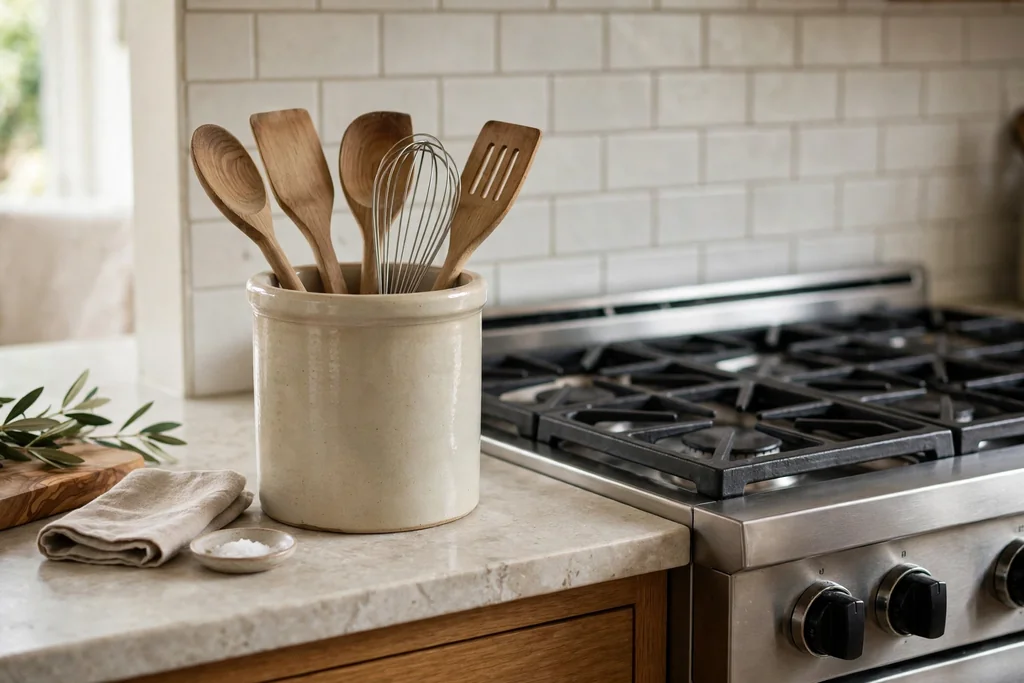
A sturdy crock holding wooden spoons, spatulas, and whisks keeps daily tools within reach and adds a warm, working feel to a counter. Choose a crock in ceramic, stoneware, or copper that is tall enough to hold long tools without tipping, and set it beside the stove where the tools are used most. Keep the crock to tools you use weekly, so it does not fill with gadgets that belong in a drawer.
Wipe the crock rim during a normal clean, and wash tools before returning them, so the group stays fresh. If the crock feels crowded, split the tools into two smaller crocks, one for cooking and one for baking, and keep the second on a side counter. A crock in a finish that repeats the tap or handles ties the display to the room.
18. One Sculptural Object on a Clear Stretch
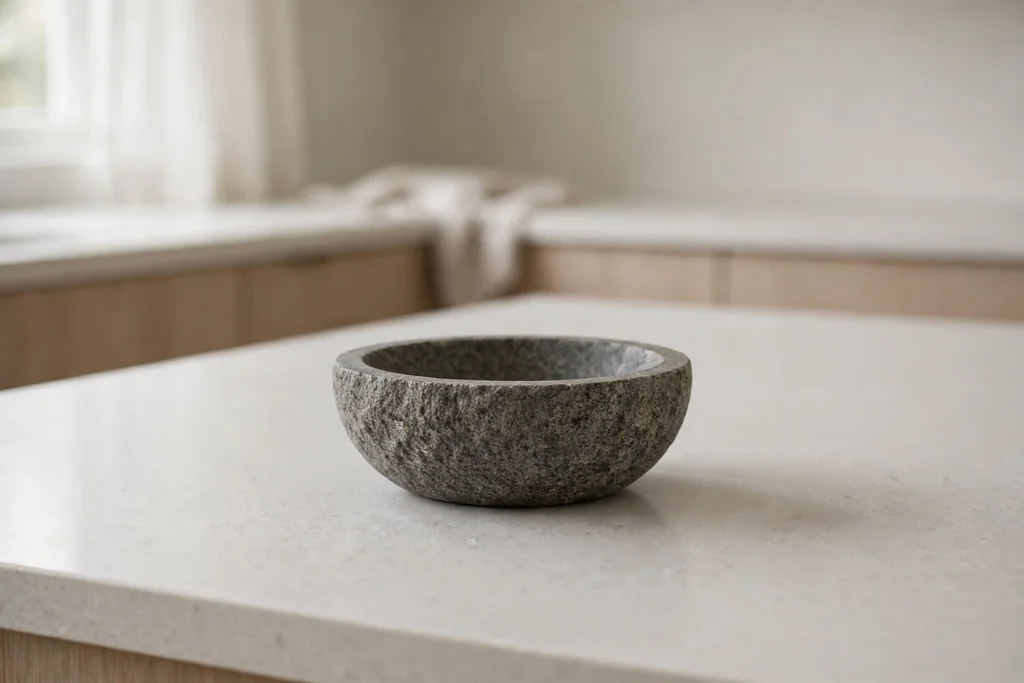
A single sculptural object, such as a stone bowl, a ceramic vase, or a carved wooden piece, can carry a whole stretch of counter if the space around it stays clear. Set the object off center on a quiet run, with at least a foot of empty counter on each side, so the eye rests on it instead of sliding past a crowded row. This idea suits a counter that already holds plenty of daily items elsewhere in the room.
Choose an object in a material already used in the kitchen, such as wood, stone, or ceramic, so it feels part of the room rather than a random ornament. Dust it during a normal clean, and resist adding small items beside it, since the clear space is what makes this idea work. If the object starts to collect keys or mail, move it to a shelf and return the counter to prep use.
Conclusion
A well styled kitchen counter is less about buying more decor and more about giving each item a clear job and a clear place. Start with one corner, such as the cutting boards, the herb row, or the coffee station, and build outward in small clusters, leaving prep space clear as you go. Repeat one or two materials, keep the sink and stove runs light, and let one quiet stretch stay empty. Save the ideas that fit your counter length, light, and cooking habits, and restyle in stages, so each change still leaves room to cook.
FAQs
How do I decorate kitchen counters without losing prep space?
Clear each counter fully, then add decor back in small clusters on corners and quiet stretches only. Keep one stretch of counter, ideally near the stove or sink, completely clear for chopping and mixing. Use trays and risers to group small items, so a cluster takes less room than the same items spread out, and move any display that starts to block daily cooking.
What should I put on kitchen counters for everyday use?
Put out only what you use weekly: cutting boards, a utensil crock, canisters, spice jars, herbs, and a fruit bowl are strong everyday choices. These items look good and save cabinet trips, which is why they earn counter space more easily than pure ornaments. Keep spares and rarely used gadgets in cabinets, and keep the sink and stove runs to daily items only.
How many items should go on a kitchen counter?
Aim for one small cluster per counter run, with three to five items in each cluster and clear space between clusters. A long counter can hold two clusters, such as a coffee corner and a herb row, if a clear prep stretch remains between them. If a counter looks crowded from the doorway, remove one item from each cluster before adding anything new.
How do I keep countertop decor clean in a busy kitchen?
Choose wipeable materials near the stove and sink, such as ceramic, glass, sealed wood, and metal, and keep paper, raw wood, and loose fabric on quieter stretches. Wipe trays, jars, and canister lids during a normal kitchen clean, since cooking film settles on open displays fast. Keep displays clear of direct steam and splashes where possible, and wash cloth liners and vase water on a regular cycle.
What is the best way to style a small kitchen counter?
On a small counter, use one cluster only, such as leaning boards plus a small plant, or a tray with soap and a candle, and leave the rest clear. Choose vertical displays, such as a utensil crock or a tiered tray, which use less counter depth than a wide row of jars. Hang mugs on a rail and move spare canisters to a cabinet, so the small counter keeps its prep space.
Can I mix wood, ceramic, and metal on kitchen counters?
Yes, mixing wood, ceramic, and metal works well if one material leads and the others appear in small amounts. For example, use wood boards and a wood tray as the main material, ceramic canisters as the second, and one brass or black metal accent, such as a lantern or a crock. Repeat each material at least twice across the room, so the mix reads as planned rather than random.