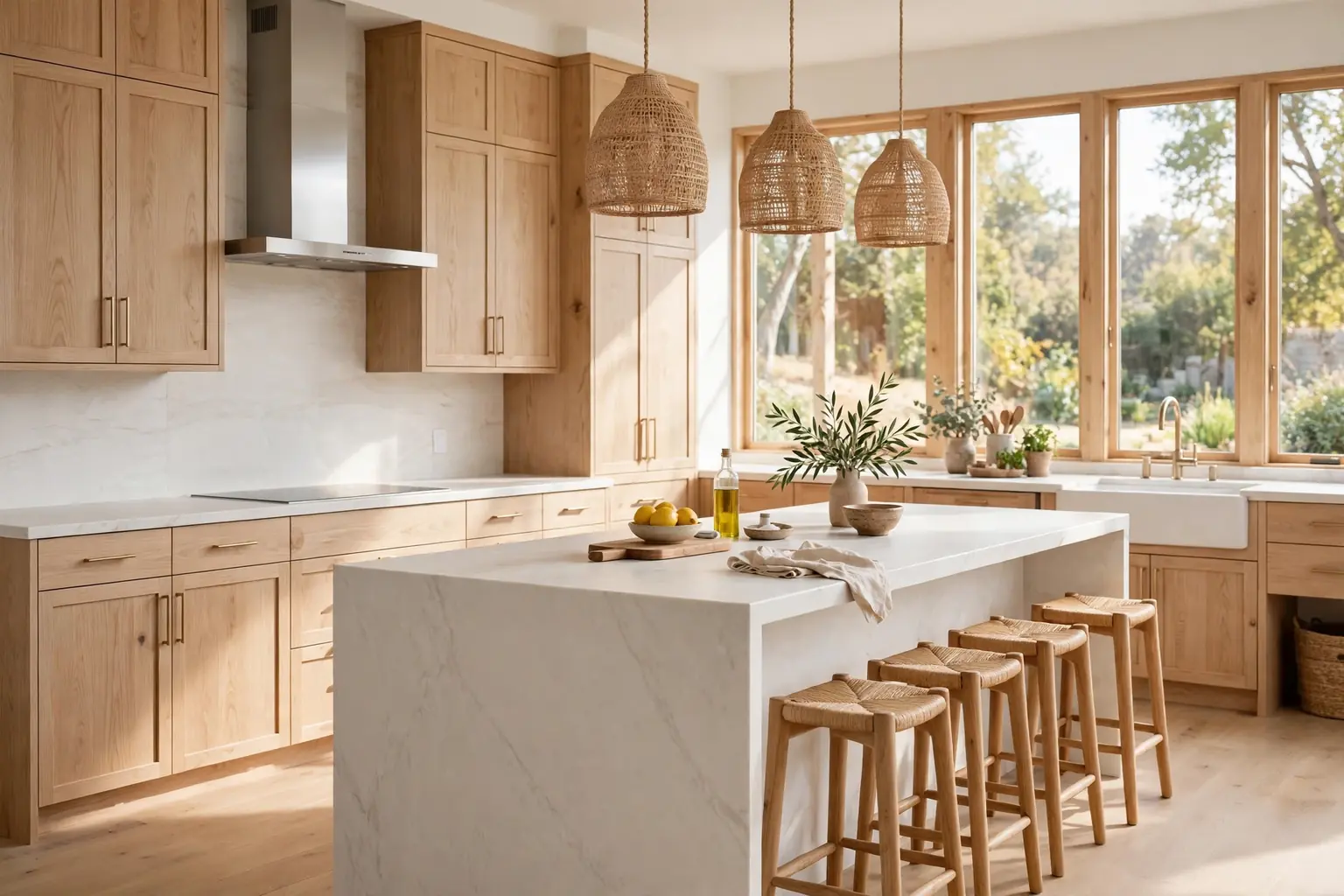
White oak cabinets give a kitchen warmth without weight. The pale, even grain keeps the room bright, shows off natural wood character, and pairs with almost any counter, floor, or wall color. These 12 white oak cabinet kitchen ideas cover door styles, hardware, counters, two-tone layouts, small kitchens, and storage walls, so you can start with one change or plan a full kitchen around the wood. Pick one white oak tone, one contrast, and counters that stay calm, and the cabinets will carry the warmth.
Key Takeaways
- Pick one white oak tone and repeat it in at least two spots, such as the cabinets and an island, stools, or open shelves, so the room reads as planned.
- Pair white oak with one contrast only, such as black hardware, brass handles, or a dark island, and keep the rest of the room calm.
- Keep counters plain when the oak grain is strong, and let a patterned backsplash or floor carry detail instead.
- Test a large wood sample beside your floor, counter, and wall color in daylight and evening light before ordering.
- Protect white oak near the sink and stove: wipe splashes promptly, seal counters as advised, and use warm under-cabinet lighting in the evening, since pale wood can look grey under cool bulbs.
1. Classic White Oak Shaker Cabinets
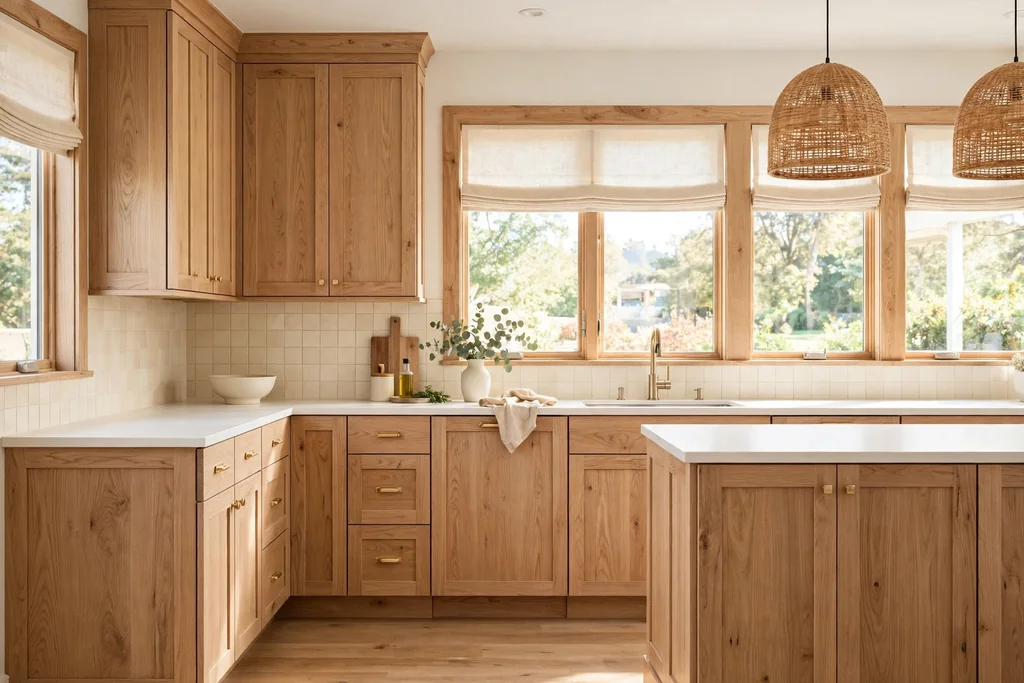
White oak Shaker cabinets are the most reliable starting point for a warm kitchen. The recessed panel adds just enough detail to avoid a flat look, while the pale grain keeps the room bright and calm. This style suits almost any home, and it gives a steady base for stone counters, a patterned rug, or brass taps.
Keep the wall color in a soft warm white, so the oak does not look yellow by contrast. Choose a counter in white stone or pale wood, and repeat one warm material, such as oak stools or a wood board, in two spots. Wipe doors near the stove each week, since pale wood shows cooking splashes. For a wider look at pale wood kitchens, see these kitchens with light wood cabinets.
2. White Oak Flat-Panel Cabinets for a Modern Kitchen
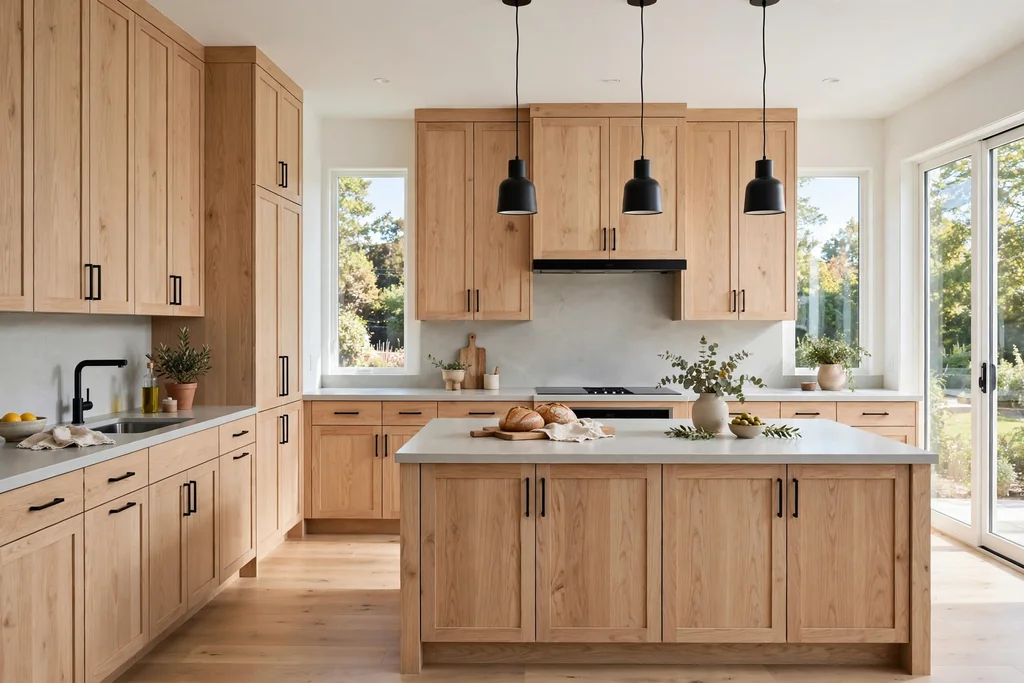
Choose white oak on flat-panel doors for a calmer, more modern take on light wood. Flat fronts keep the wall quiet, which suits a kitchen with a veined counter or a patterned floor. White oak has a soft, even grain that reads as warm rather than busy, and it bridges stainless appliances and pale floors in the same room.
Pair white oak cabinets with white or pale grey counters and black or brushed nickel handles for a clean result. Check a large sample in morning and evening light, since oak can read pink or yellow under different bulbs. A matte finish keeps the grain clear without glare on large door fronts.
3. White Oak Island with White Perimeter Cabinets
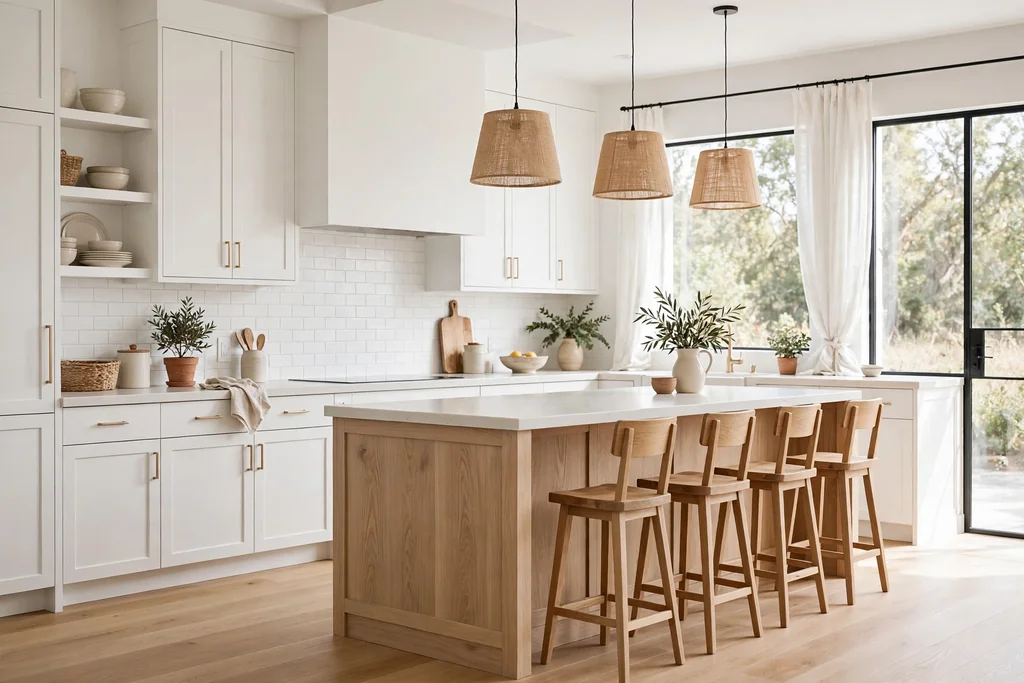
Keep the main cabinets white or pale, and build the island base in white oak. The island becomes a clear focal point, and the rest of the kitchen stays light, which makes the change lower risk and easier to reverse. A pale oak island suits a white kitchen, while a slightly deeper oak tone suits a kitchen with dark wood floors.
Repeat the island wood once more, in stools, a serving board, or a vase, so it looks planned rather than random. Choose a hard wearing counter for the island, since it takes the most daily use. This is a good first step if you like white oak but are not ready for wood cabinets everywhere.
4. White Oak Cabinets with Black Hardware
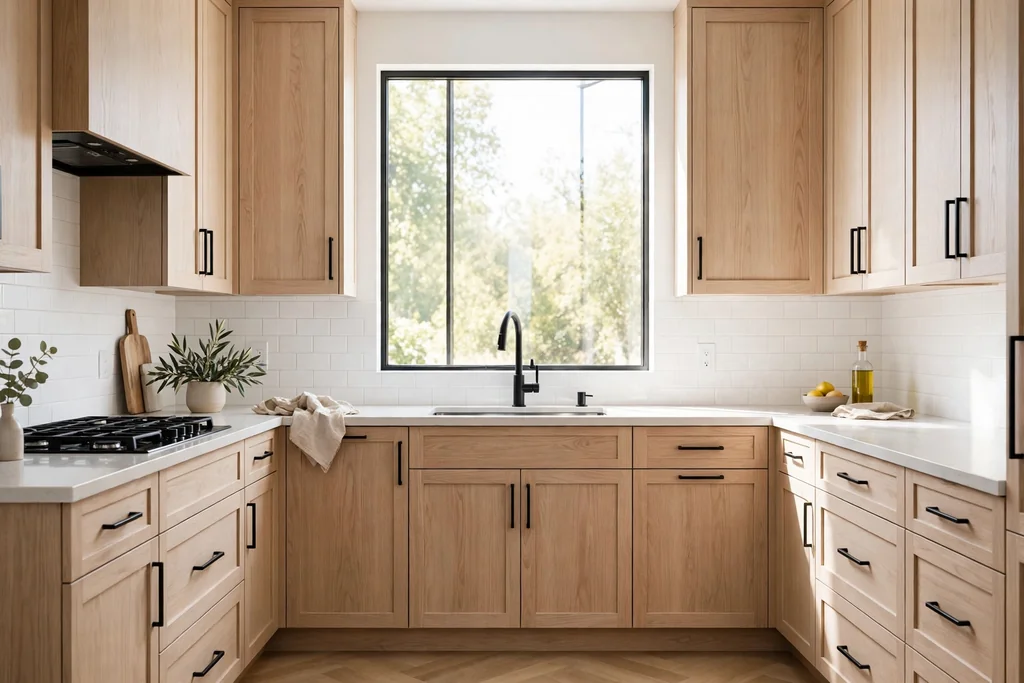
Use matte black handles, knobs, and a black tap against white oak cabinets for a sharper, modern edge. Black outlines each door, adds contrast without a new color, and pairs well with dark counters, wood stools, and a black framed window. This suits a white oak kitchen that needs definition, such as a large room where pale tones start to blur together.
Repeat black once or twice more, in a light fitting, a stool frame, or a rug border, so the hardware does not look isolated. Keep the rest of the room pale, so black stays an accent rather than a theme. Matte black shows fingerprints less than polished black, which helps on doors used many times a day.
5. White Oak Cabinets with Brass Handles
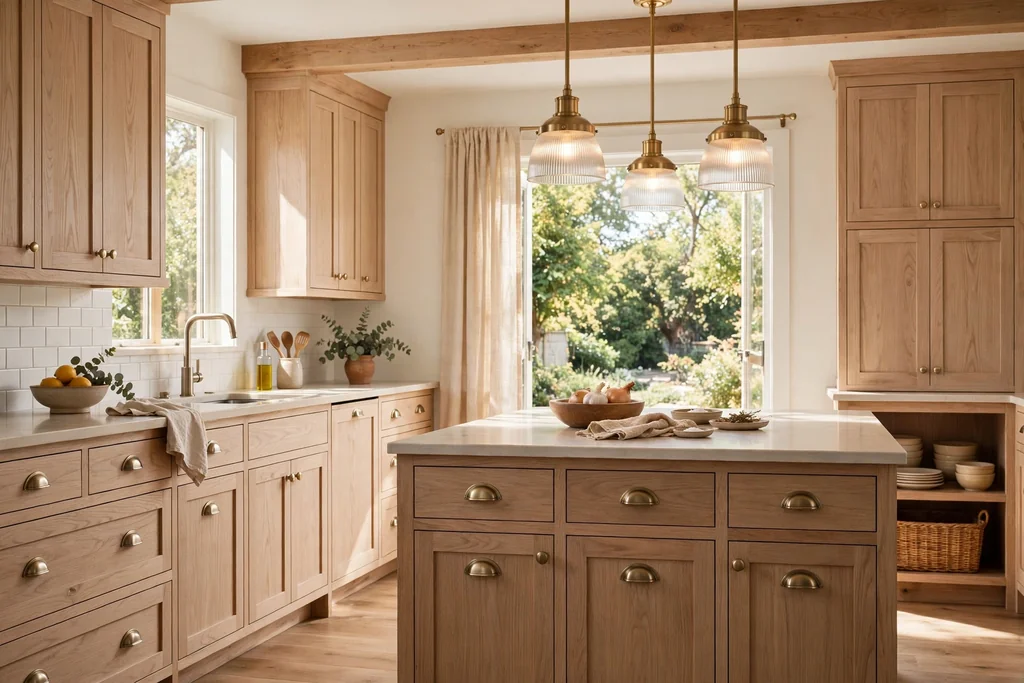
Warm white oak cabinets with brushed brass knobs, cup pulls, and a matching tap for a soft lift. Brass warms pale oak, suits wood floors and cream walls, and works with both Shaker and flat-panel doors. This is one of the easiest cabinet updates, since hardware swaps need no painting and no building work.
Keep all the brass in the same finish, so knobs, pulls, and the tap read as one set. Save the old hardware in a labelled bag if you rent or may want to swap it back. Wipe brass with a soft cloth to keep the finish even, and check that new pulls match your existing screw spacing before ordering.
6. White Oak Cabinets with Butcher Block Counters
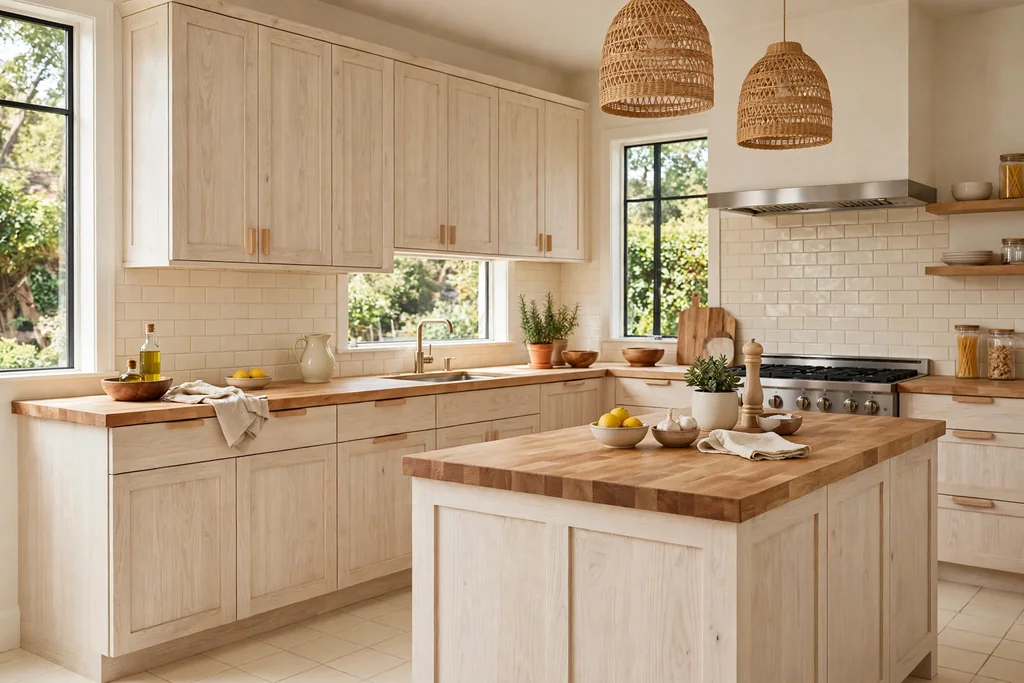
Pair white oak cabinets with butcher block counters for a kitchen that feels warm from the first glance. The wood counter softens the cabinet doors, adds a work surface that suits chopping and baking, and pairs well with cream tiles and brass or black handles. This combination suits a cottage or farmhouse kitchen, and it also works in a simple modern room when the doors stay plain.
Oil the butcher block on the schedule the maker suggests, and wipe it after wet jobs so water does not sit on the surface. Keep the backsplash plain, so the wood grain can carry the detail. Near the sink, a stone section avoids constant water contact on wood, so the counter stays in good shape longer.
7. White Oak Cabinets with Marble-Look Counters
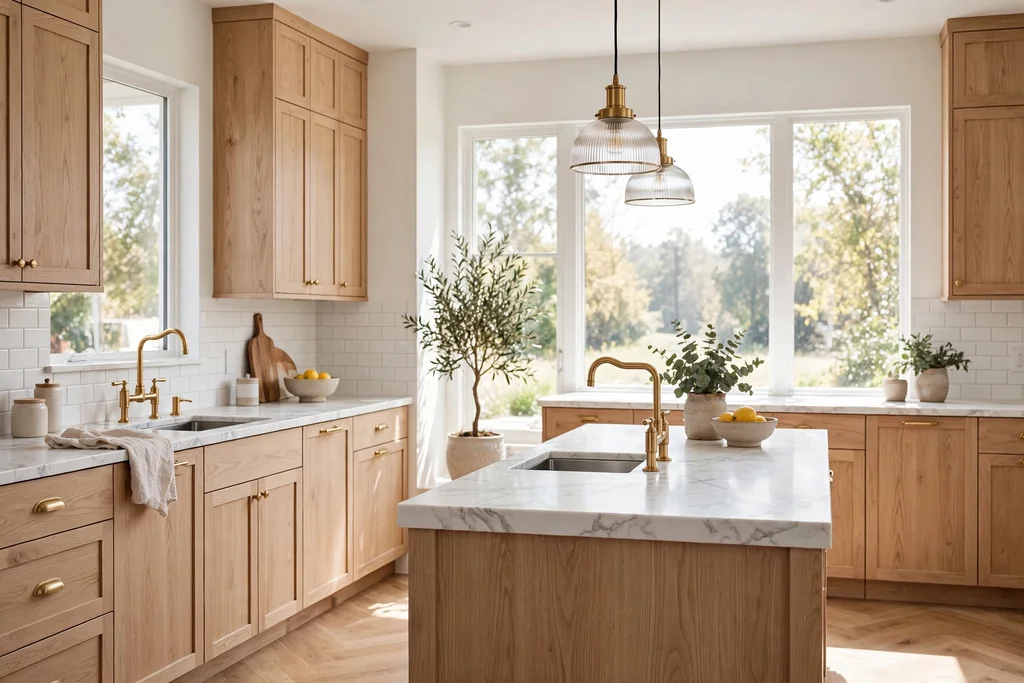
Pair white oak cabinets with white marble counters, or a marble-look surface, for a quiet, classic backdrop. The pale stone with soft veining lifts the warm doors, and it pairs well with brass taps, wood stools, and a cream backsplash. This suits a kitchen where you want the cabinets to feel warm and the counter to add gentle movement.
Keep the backsplash plain, so the counter pattern stays clear. Seal stone on the schedule the supplier suggests, and wipe splashes promptly, since marble can stain from tomato, wine, and oil. If a full stone counter is out of reach, use stone on the island only and a plain surface on the perimeter.
8. White Oak Lower Cabinets with White Uppers
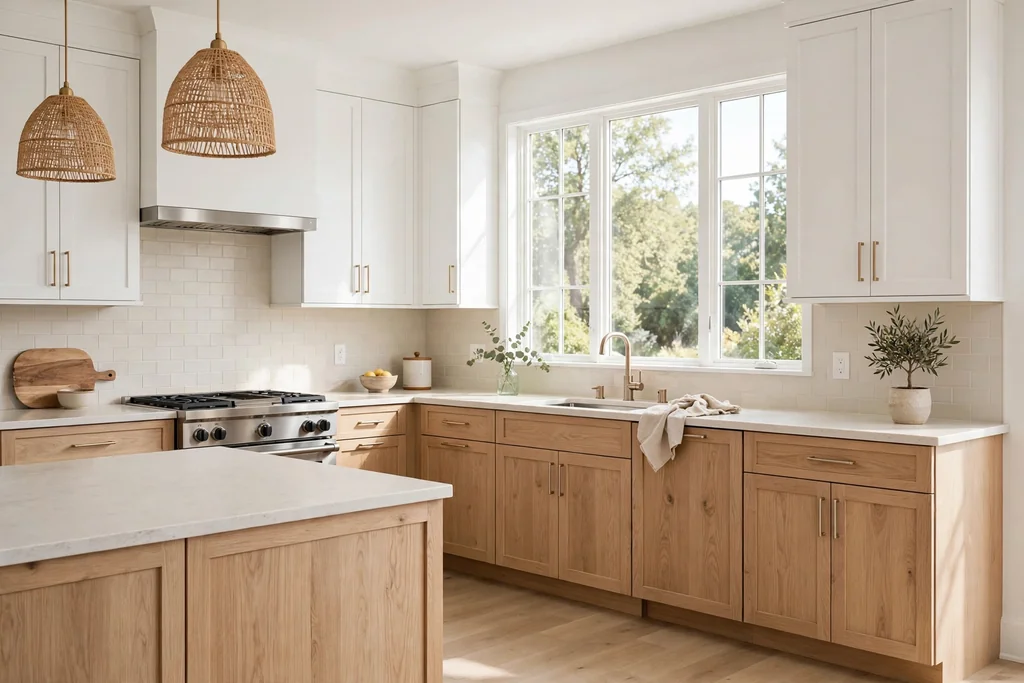
Use white oak on the lower cabinets and white on the uppers for a lighter take on a wood kitchen. The white uppers keep the eye moving up and make a small kitchen feel taller, while the wood base grounds the room and hides scuffs at kick height better than white. This split also makes a later change easier, since only half the cabinets need a new finish.
Pair the scheme with a pale backsplash and a wood or white counter. A brass or black handle on the lower cabinets ties the two tones together. Keep the wall color plain so the two cabinet finishes can do the work, and repeat the wood once more, in a stool or a board, so the base tone does not look isolated.
9. White Oak Cabinets in a Small Galley Kitchen
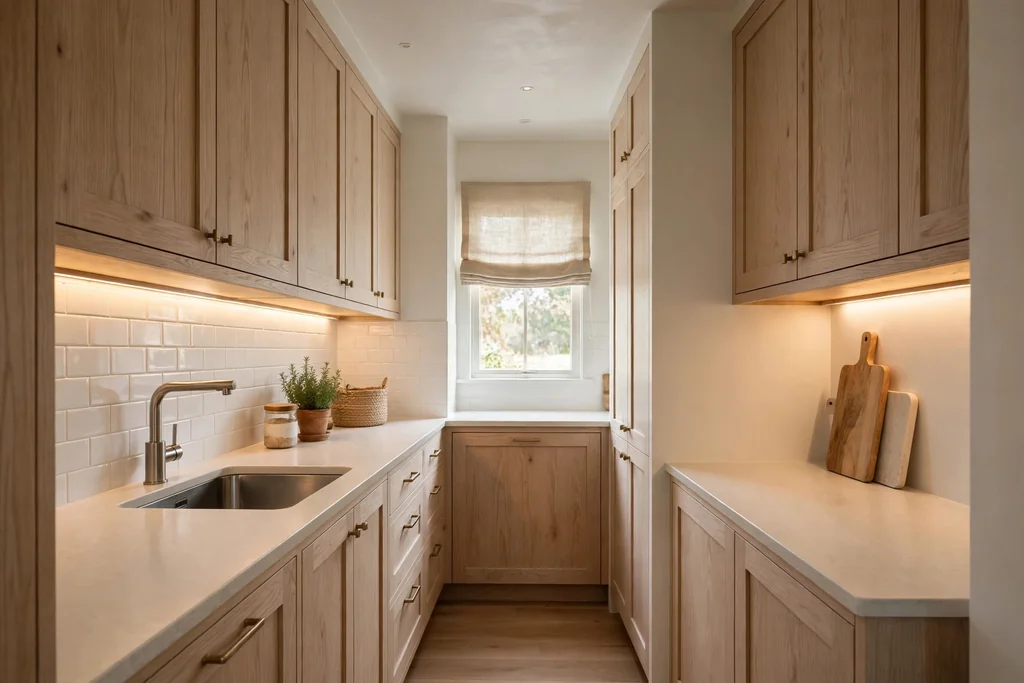
Use white oak on every cabinet in a small galley kitchen, and keep the counters and backsplash pale too. Light wood reflects more light than a mid brown, hides marks better than bright white, and keeps a narrow room feeling open without looking stark. This suits a galley kitchen or a kitchen with one small window.
Leave one wall free of uppers if you can, so daylight reaches deeper into the room, and use warm under-cabinet lighting in the evening. Keep the floor in a light wood or pale tile, and avoid a dark counter, which can close the room in. Store rarely used items elsewhere so the small cabinets hold only daily gear.
10. White Oak Cabinets with Glass Front Uppers
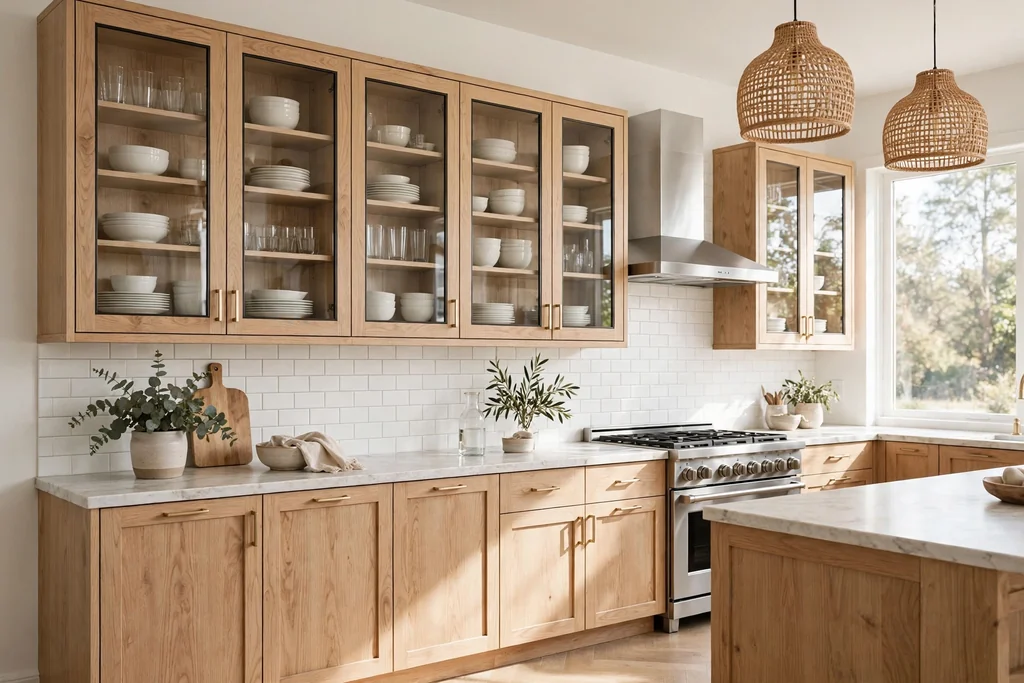
Swap a few white oak upper doors for glass fronts, and display white dishes, clear glasses, and a few wood boards behind them. Glass breaks up a long run of wood doors, adds depth, and makes everyday pieces easy to find. It suits a kitchen with one straight run, where two or three glass doors are enough to change the whole wall.
Keep the display simple, with one stack per shelf and space between groups, so the cabinets read as tidy. Put daily dishes at easy reach and rarely used pieces higher up. If glass feels too exposed, use reeded or frosted glass on one cabinet for a softer version of the same idea.
11. White Oak Cabinets Beside Matching Open Shelves
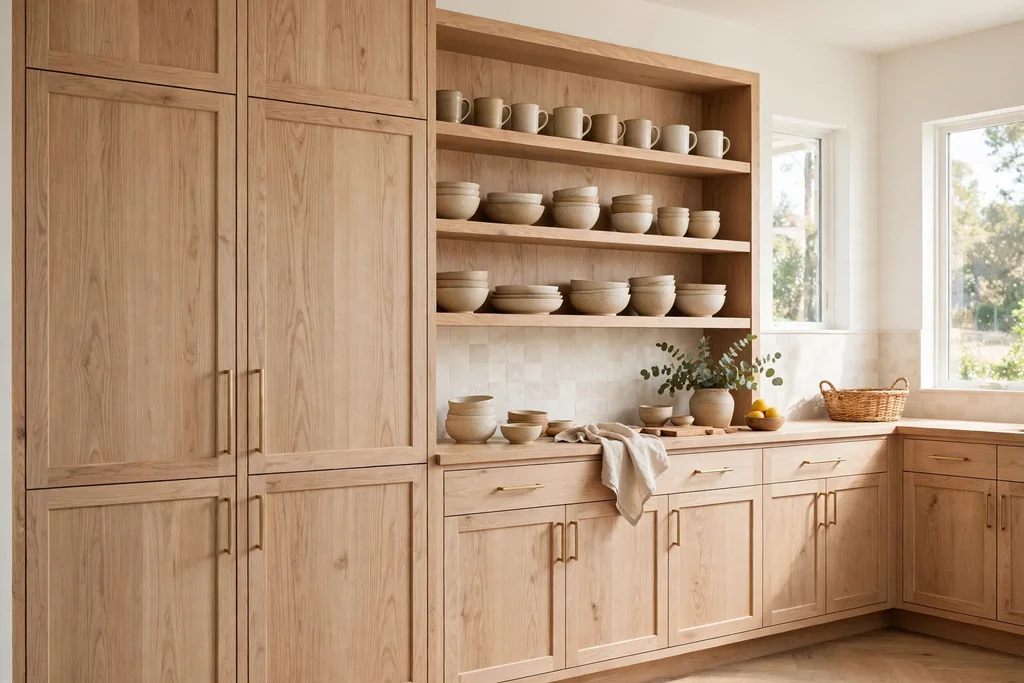
Replace one short run of white oak uppers with open wood shelves in the same tone, and keep the rest of the cabinets closed. The shelves give you a spot for daily mugs, bowls, and plants, while the closed cabinets hide the less pretty storage. This mix is practical in a small kitchen, where a full wall of uppers can feel heavy, and the matching wood keeps the wall calm.
Keep shelf items to pieces you use weekly, and dust them often, since open storage collects cooking film. Put the shelves near the sink or cooker, where daily dishes are most useful. Leave breathing room between groups so shelves read as calm, not crowded, and put heavy stacks low.
12. Floor-to-Ceiling White Oak Pantry Cabinets
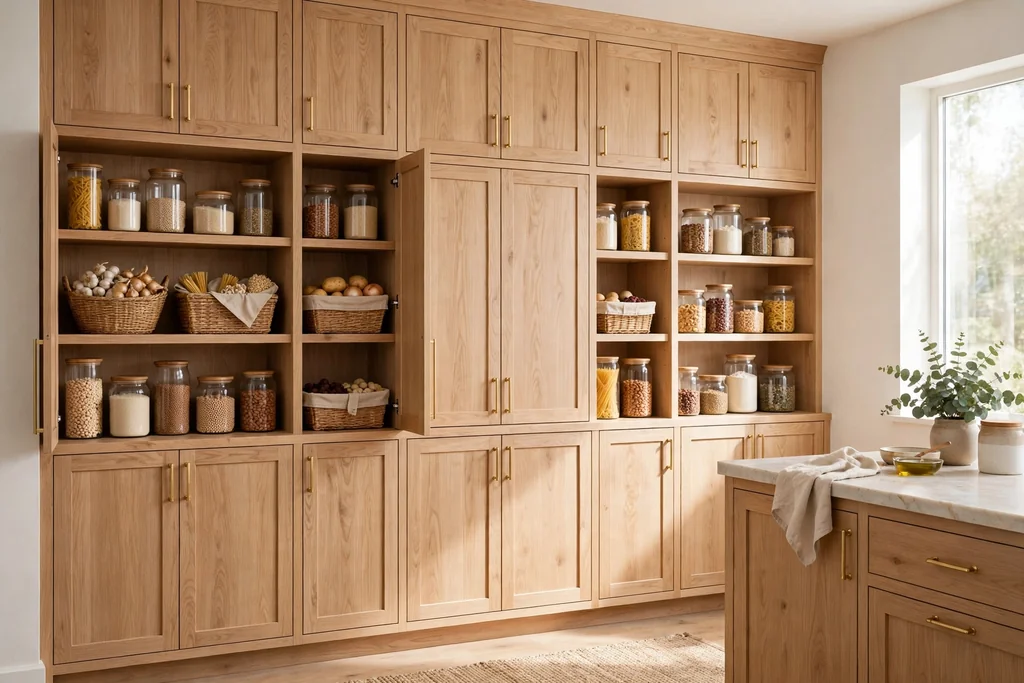
Dedicate one wall to tall white oak pantry cabinets, floor to ceiling, for dry goods, small appliances, and cleaning gear in one place. A pantry wall keeps the rest of the kitchen free of tall units, so the cooking wall can stay low and open. It also makes shopping and meal planning easier, since everything is visible at a glance.
Fit the pantry with adjustable shelves, a few baskets for loose items, and labels on the front of each shelf zone. Keep heavy items at waist height and light items up high. Put the pantry near the fridge or the main prep counter, so ingredients travel a short distance to the cooker. If a painted finish also appeals for contrast, these kitchen cabinet colors show how a warm painted tone pairs with wood.
Conclusion
A white oak kitchen works best when the wood stays the clear feature and everything around it stays calm. One oak tone, one contrast, and plain counters give you a room that feels warm in daylight and soft in the evening, without needing a full remodel. Start with the change that will show up most in your room, such as door style, hardware, or an island base, then add one texture and one accent at a time. Save the ideas that fit your space, light, and budget, and build the scheme in stages so each step still feels like a finished room.
FAQs
What makes white oak a good choice for kitchen cabinets?
White oak has a pale, even grain that adds warmth without darkening the room, and it pairs with white, cream, grey, and dark counters. It suits Shaker and flat-panel doors, hides light marks better than bright white, and bridges stainless appliances and pale floors. Check a large sample in your own light before ordering, since oak can read pink or yellow under different bulbs.
How do white oak cabinets differ from red oak cabinets?
White oak has a cooler, more even grain and a pale brown tone, while red oak often shows a warmer, pinker cast with a stronger grain pattern. White oak also tends to take a pale, natural finish more evenly, which is why it suits calm, modern kitchens. If your floor or counter already leans pink, white oak is usually the safer match.
What hardware finishes pair best with white oak cabinets?
Matte black gives a sharp, modern edge, brushed brass adds soft warmth, and brushed nickel keeps the look quiet and neutral. Pick one finish and use it across knobs, pulls, and the tap, so the hardware reads as one set. Avoid mixing three metals in one kitchen, since pale wood shows clashing finishes clearly.
What counters work best with white oak cabinets?
White stone, marble-look surfaces, and pale wood counters all work well, since they keep the room light and let the oak grain stay the feature. Butcher block adds the most warmth, while white stone adds the most contrast. Keep the counter plain if the oak grain is strong, and save pattern for the backsplash or floor.
How do I care for white oak cabinets in a busy kitchen?
Wipe doors near the stove and sink each week with a soft, damp cloth, and dry them right away so water does not sit on the finish. Seal wood counters on the schedule the maker suggests, and wipe cooking splashes promptly. Avoid harsh cleaners on the cabinet finish, and check the care advice for your specific finish before using a new product.
Can white oak cabinets work in a small kitchen?
Yes, white oak suits a small kitchen well, because the pale wood reflects light and keeps a narrow room feeling open. Keep counters and the backsplash pale, leave one wall free of uppers if you can, and use warm under-cabinet lighting in the evening. Skip a dark counter in a tight galley, since it can close the room in.