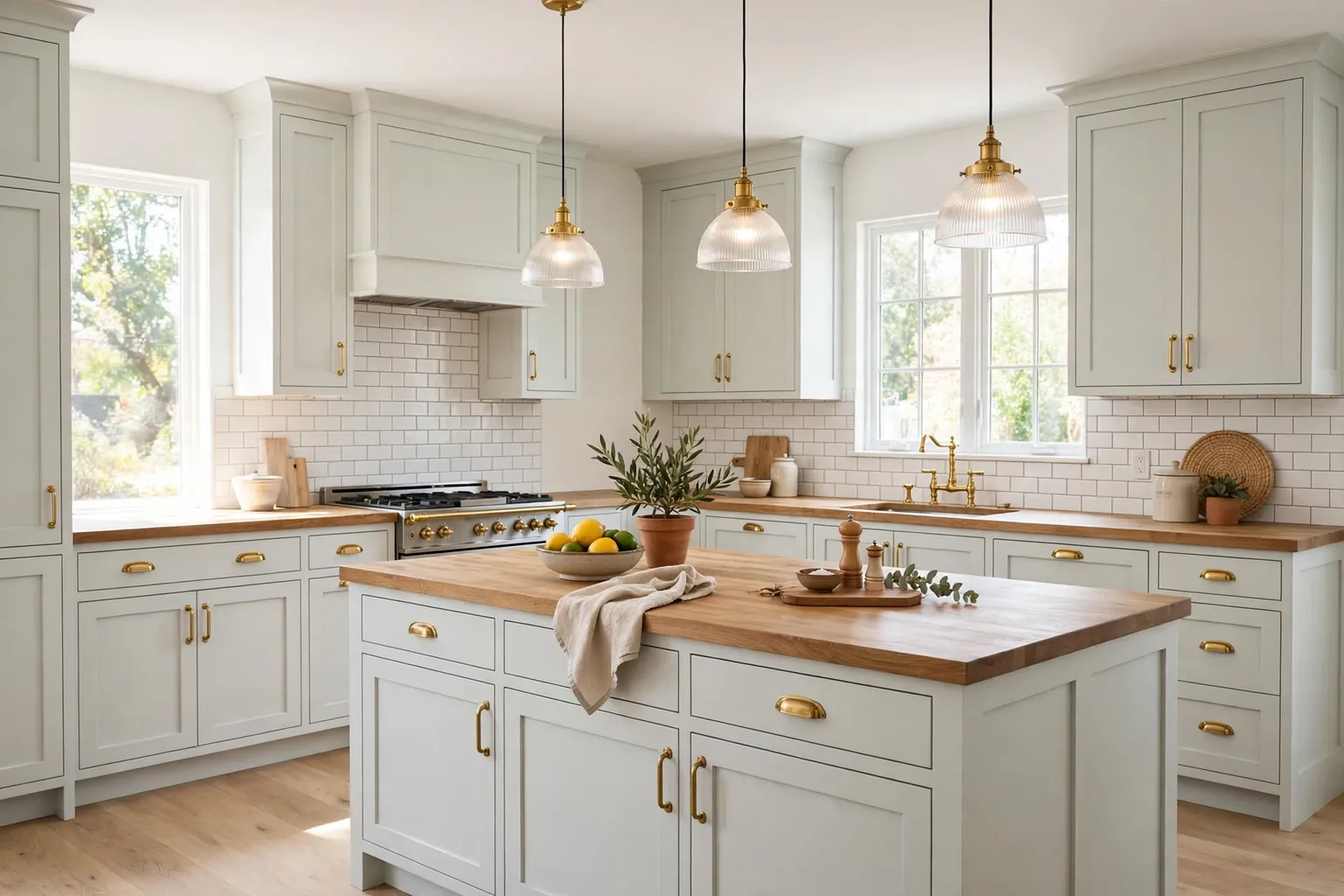
Cabinet handles are small, but you touch them every time you cook, and they set the tone for the whole kitchen. A brass knob warms a pale kitchen, a black bar pull sharpens a flat front door, and a cup pull makes a farmhouse drawer feel right. These 27 kitchen cabinet handle ideas cover knobs, pulls, cup pulls, loops, and handleless options, with a note on where each one works best and what to check before you drill. For a cabinet color to pair with your chosen finish, these beige kitchen cabinet ideas show how warm neutrals sit with brass, black, and nickel hardware. Measure your doors and drawers first, order one sample to test in your own light, and keep the finish consistent across the kitchen.
Key Takeaways
- Match the handle to the job: knobs suit doors that swing, pulls suit drawers that slide out with weight behind them.
- Keep one finish consistent across the kitchen, and match it to the tap finish where possible, so the metals read as one plan.
- Size matters more than style: a pull should span roughly one third of a wide drawer, and a knob should fit the hand without slipping.
- Check screw spacing and door thickness before ordering, since bar pulls come in fixed centers and screws must not poke through the door.
- Test one sample in daylight and evening light, and with wet hands, before you fit the whole kitchen.
- Handles are the easiest kitchen update: swapping them needs no painting or building work, but a template keeps every fixing level.
1. Round Brass Knobs on Shaker Doors
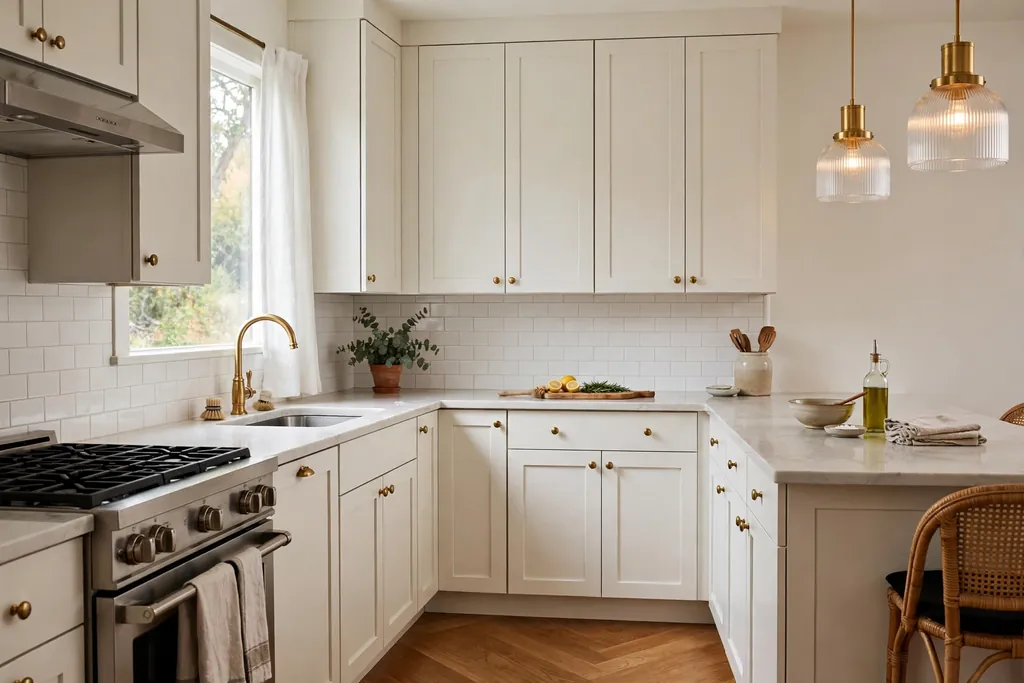
Round brass knobs suit Shaker doors because the simple frame already gives the kitchen its detail, so the handle can stay small and warm. Brass works with white, cream, and pale wood cabinets, and it pairs well with a brass tap or brass light fittings. Choose a knob size that fits your hand, usually 1 to 1.25 inches across for standard doors, and keep the finish the same across the kitchen so knobs, pulls, and taps read as one set.
Fit knobs at the corner of each door, on the side away from the hinge, and test the spot before drilling by holding a knob in place and opening the door fully. On a two door cabinet, place knobs on the outer corners so both doors open without your hands meeting in the middle. Wipe brass with a soft dry cloth, and check the screw length against your door thickness, since a screw that is too long will poke through the inside.
2. Long Brass Bar Pulls for Wide Drawers
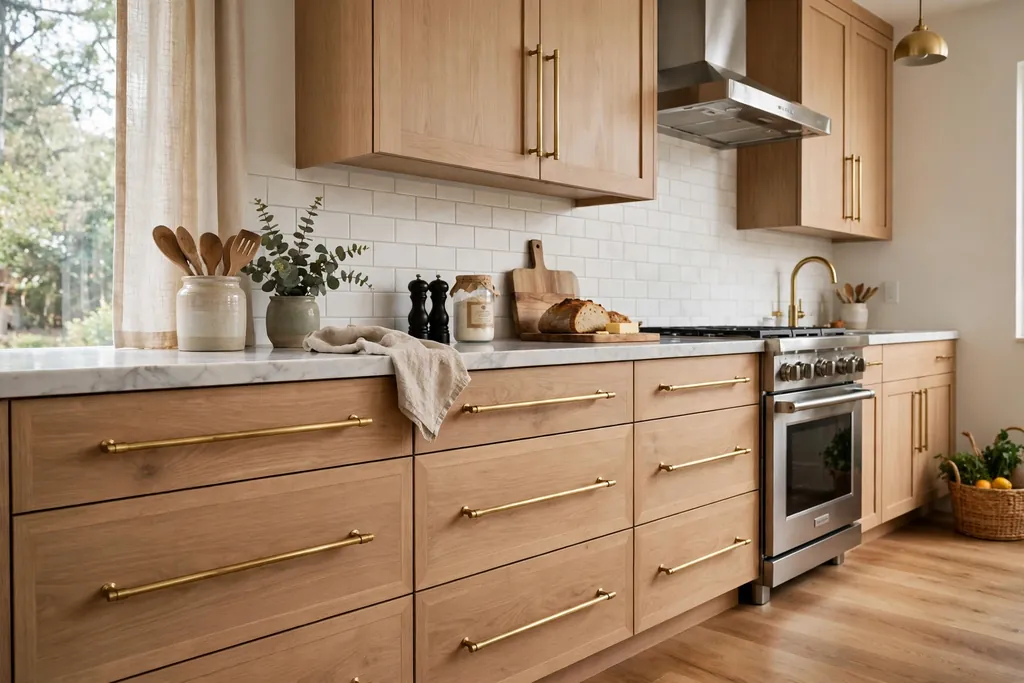
Wide drawers need a pull long enough to grip with both hands and to spread the force across the drawer front. A long brass bar pull, often 8 to 12 inches between screw centers on a wide drawer, does that job and gives a calm, even line across a bank of drawers. Brass warms pale cabinets and suits wood counters, cream tiles, and stone counters alike.
Measure the drawer width first, then pick a pull that spans roughly one third of the drawer front for balance. Check the screw spacing on the pull against your drawer before ordering, since bar pulls come in fixed centers. Fit pulls centered on the drawer front, level with each other, and use a template so a long bank of drawers stays even.
3. Matte Black Bar Pulls on Pale Cabinets
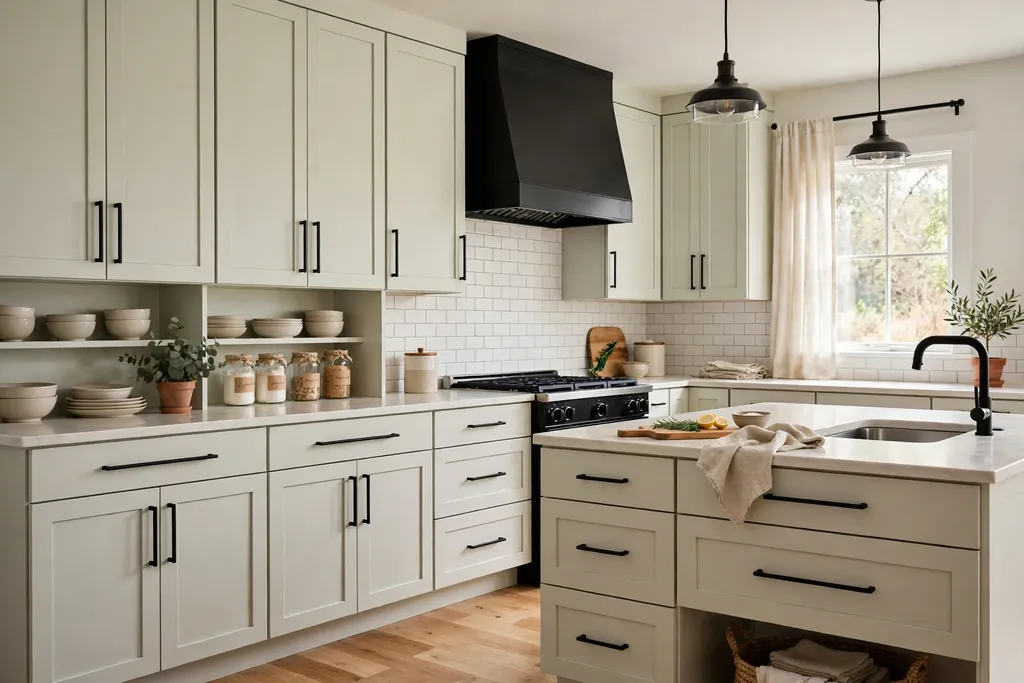
Matte black bar pulls give pale cabinets a clear outline without adding a new color. The dark line helps you find the handle in a bright kitchen, and it ties in well with black taps, black stool frames, and black framed windows. On white or cream doors, black pulls suit both flat fronts and Shaker doors.
Keep the black finish the same on every handle so the kitchen reads as one decision, and repeat black once more in the room, such as a light fitting, so the pulls do not sit alone. Matte black shows dust less than polished black, but it can fade into a dark door in dim light, so test a pull under your evening lighting before you commit. For a dark cabinet pairing, these navy blue kitchen cabinet ideas show how black hardware sits on a deep color.
4. Brushed Nickel Cup Pulls for Farmhouse Drawers
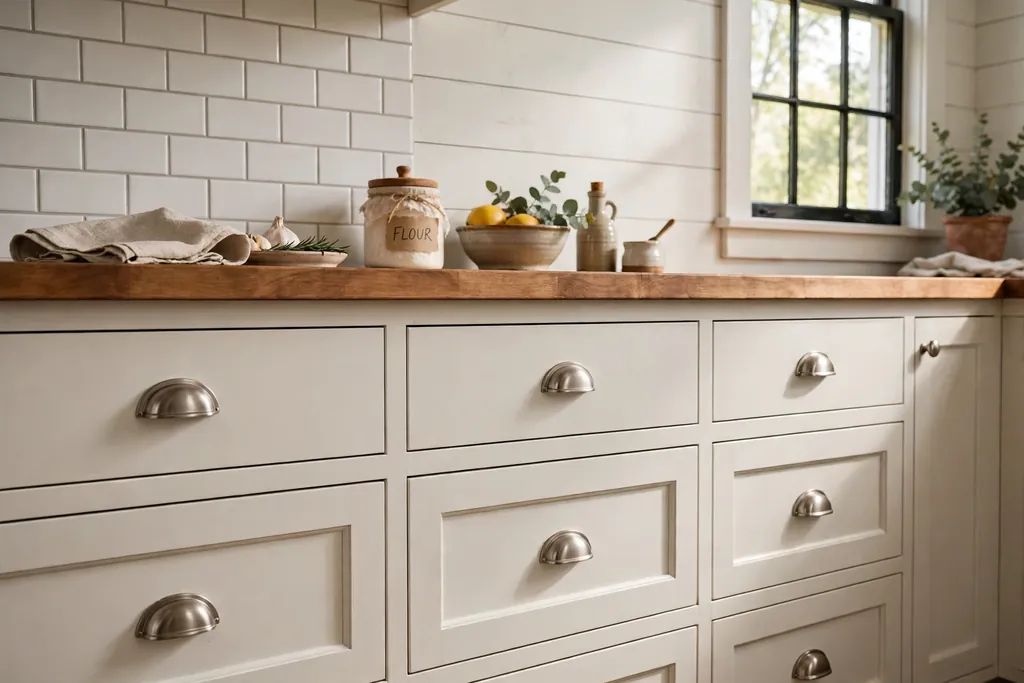
Cup pulls, also called bin pulls, cup the fingers from below and suit farmhouse and cottage kitchens. Brushed nickel is a practical finish here: it is cooler than brass, hides light marks, and pairs with stainless appliances and chrome taps. Use cup pulls on drawers only, where the hand naturally lifts from below, rather than on doors.
Fit each cup pull centered on the drawer front, with the open side facing down so fingers slide in easily. Cup pulls come in set widths, so measure your drawer and leave a comfortable margin on each side. On shallow drawers, a smaller cup pull looks better than a wide one, while deep drawers can carry a wider cup without looking lost.
5. Leather Loop Pulls on Wood Cabinets
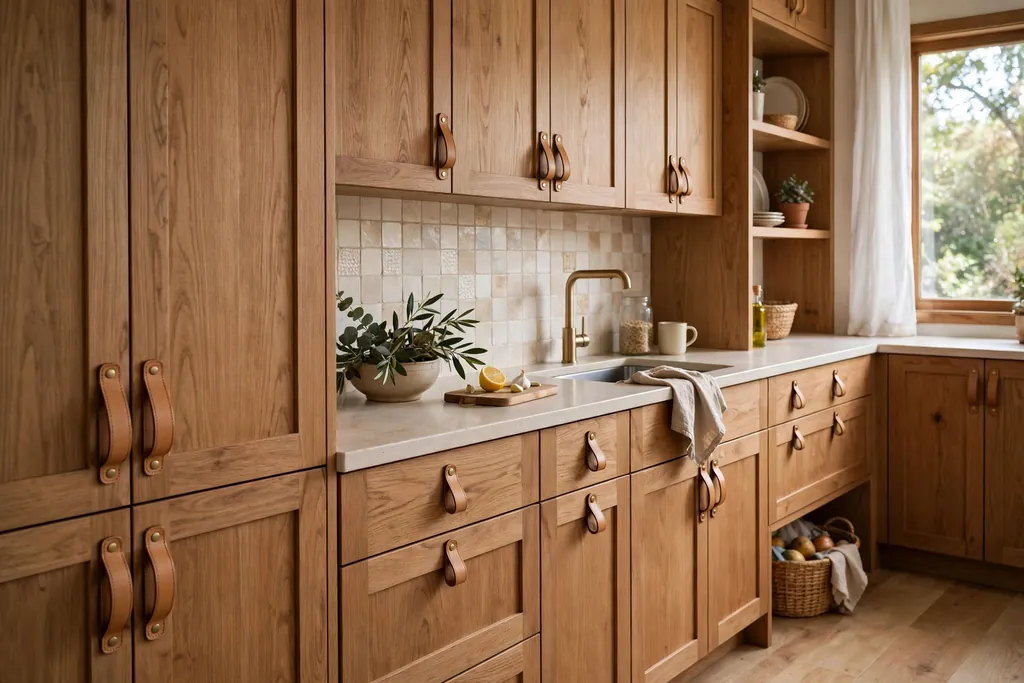
Leather loop pulls add softness to wood cabinets, which is useful in a kitchen where metal handles can feel cold or hard. A leather loop is a strap fixed at both ends, leaving a loop to grip, and it suits oak, walnut, and painted wood doors alike. Tan leather warms pale wood, while dark brown leather suits deeper wood tones.
Choose a loop wide enough for two fingers and a strap thick enough to hold its shape after daily use. Fix the loop with screws through a small metal plate or washer on the inside so the leather does not tear at the fixing. Wipe leather with a damp cloth, and keep it away from the sink run, where constant water will stiffen and stain it.
6. Turned Wood Knobs for a Warm Finish
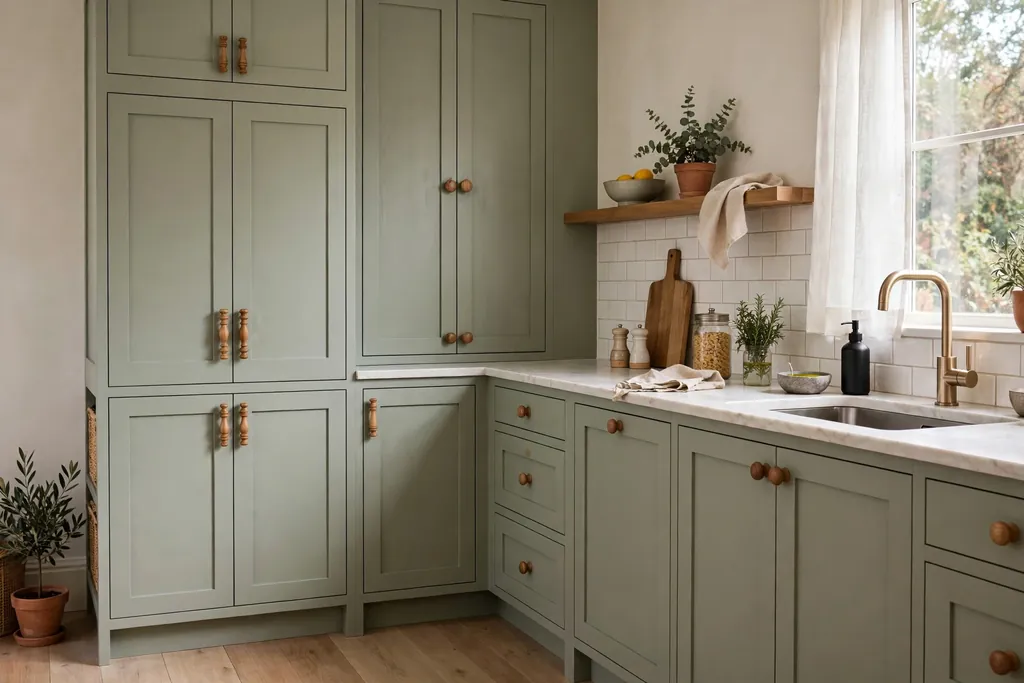
Turned wood knobs, shaped on a lathe with a rounded profile, give a kitchen a furniture feel that metal cannot. They suit painted cabinets in cream, sage, and soft grey, and they are a natural match for wood cabinets, since the knob can match or contrast with the door wood. A wood knob is also warm to touch on a cold morning.
Pick a knob shape with a clear grip ridge, not a smooth ball that slips in wet hands. Seal wood knobs well, especially near the sink and cooker, and reapply a clear finish when the surface starts to look dry. If you want the knob to match the door, order knobs from the same wood and finish as the cabinets, or paint them to match.
7. Ceramic Knobs with a Hand Painted Look
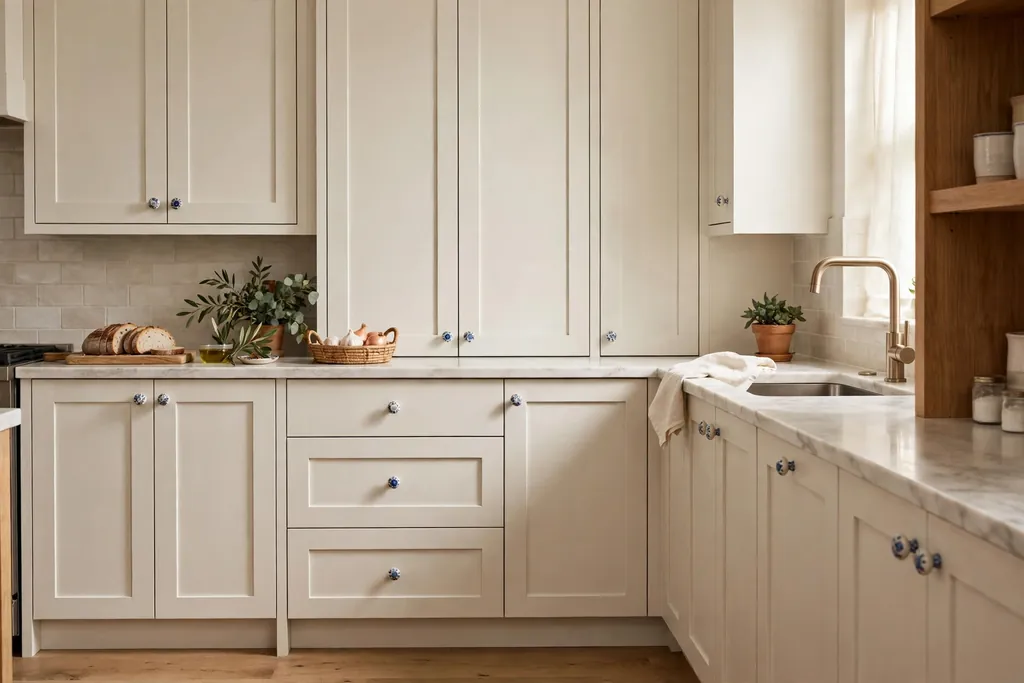
Ceramic knobs bring pattern to a plain cabinet run without repainting a single door. A hand painted or glazed ceramic knob can carry a small flower, a stripe, or a solid color, and it suits cottage kitchens, vintage kitchens, and kitchens with open shelves of mixed dishes. Use ceramic knobs on doors rather than heavy drawers, where the fixing takes more strain.
Keep the knob pattern restrained: one pattern repeated across the kitchen looks planned, while a different pattern on every door can look busy. Check that each knob has a sturdy metal screw insert, since a screw fixed only into ceramic can work loose. Wipe ceramic with a damp cloth, and keep a spare knob in case one chips.
8. Clear Glass Knobs on Light Cabinets
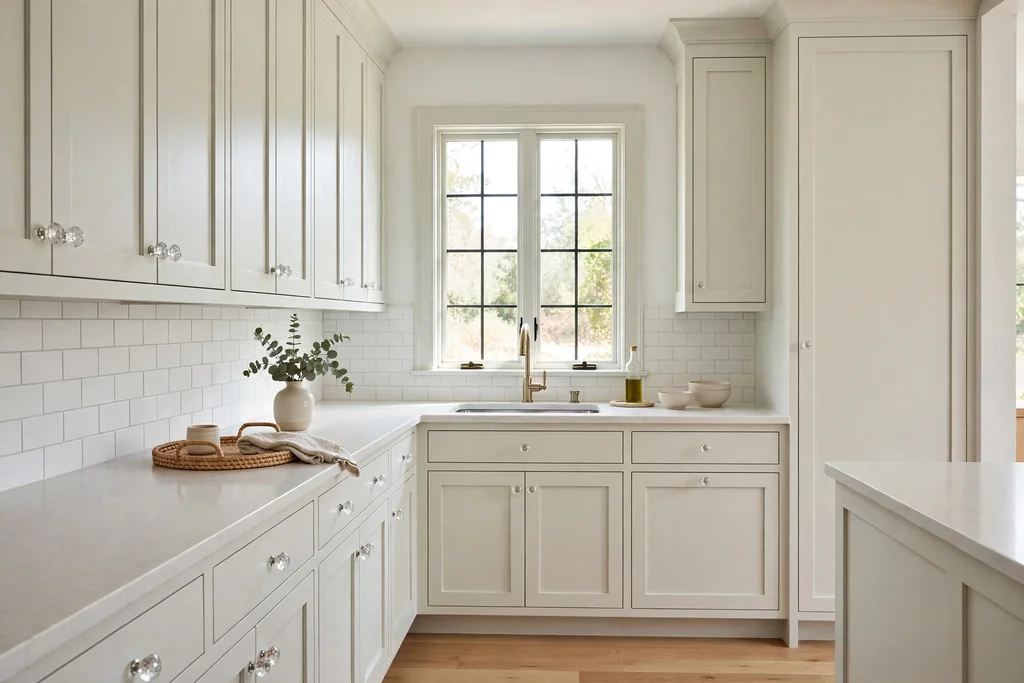
Clear glass knobs suit light cabinets because they add a small sparkle without a strong color or metal line. A faceted glass knob catches daylight and suits vintage kitchens, glass front cabinets, and pale painted doors. Glass also pairs well with chrome and nickel, so it fits kitchens that already use cool metals.
Choose a glass knob with a solid metal base and a screw that fits your door thickness, and test the grip, since smooth glass can slip in wet hands. Glass knobs show fingerprints, so wipe them when you wipe the doors. On a cabinet with glass fronts, a glass knob keeps the whole unit feeling light instead of adding a heavy metal detail.
9. Slim Edge Pulls for Flat Front Doors
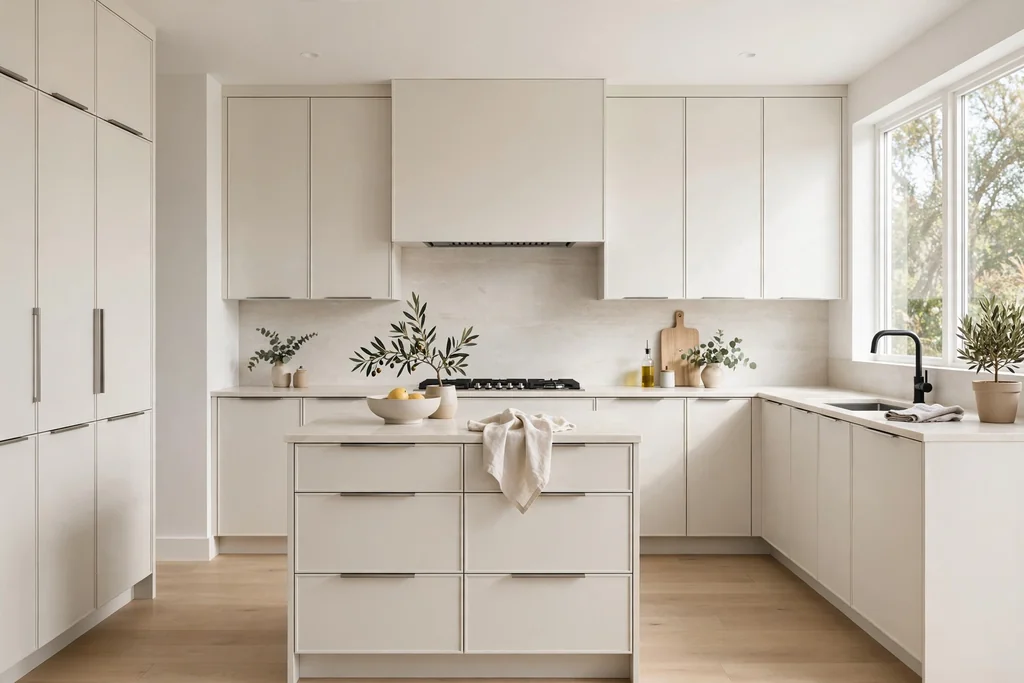
Slim edge pulls fix to the top or side edge of a flat front door, so only a thin metal lip shows. This suits modern kitchens where a long bar pull would break the clean line of the door, and it keeps the front almost flat while still giving fingers a clear grip point. Edge pulls work best on doors with a small gap behind the edge for fingers.
Fit edge pulls along the full width of the opening edge or in a set length, and keep the position the same on every door so the kitchen looks even. Check the door thickness and the gap to the next door before ordering, since an edge pull that is too deep can catch. Edge pulls suit doors you open often, such as a pantry or a bin cabinet, because the grip is quick and natural.
10. Handleless Routed Finger Pulls
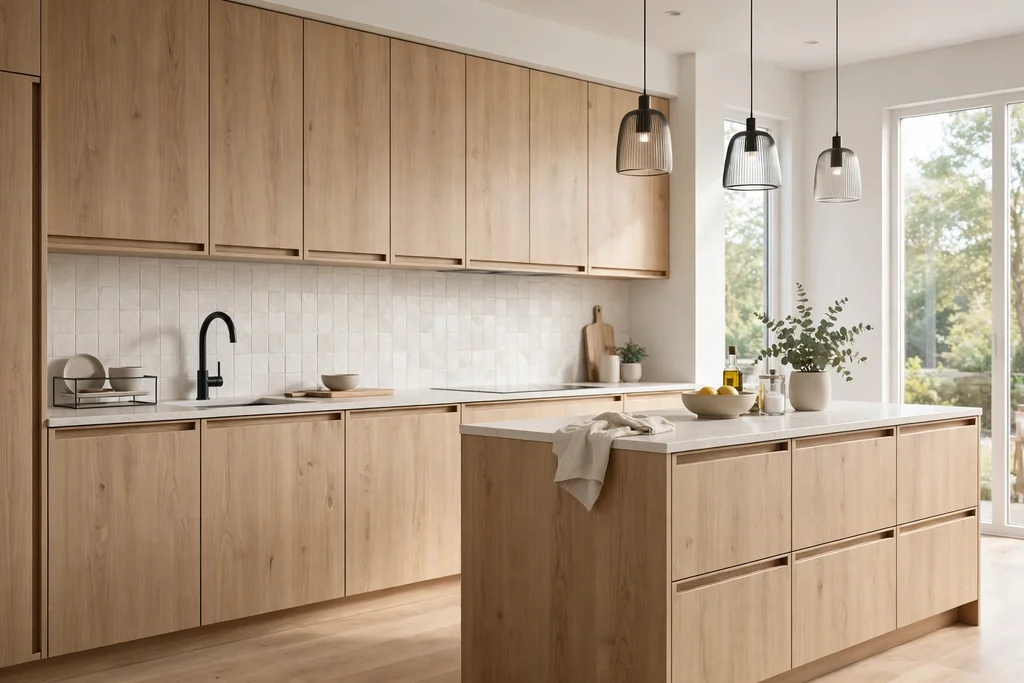
A routed finger pull is a groove cut into the top or side of the door itself, so there is no separate handle at all. This gives the cleanest possible front and suits handleless modern kitchens, small kitchens where handles would catch on clothing, and kitchens with a flat door style. The groove must be deep enough for fingertips but shallow enough not to weaken the door edge.
Ask the cabinet maker to route the pull on the opening edge of each door, and test the depth with your own hand before the full run is made. Painted doors need the groove sealed and painted inside, or the raw edge will show and collect dirt. Routed pulls suit doors you can reach easily, but they are less helpful on very tall cabinets, where a separate pull gives a better grip.
11. Recessed Flush Pulls for Tight Walkways
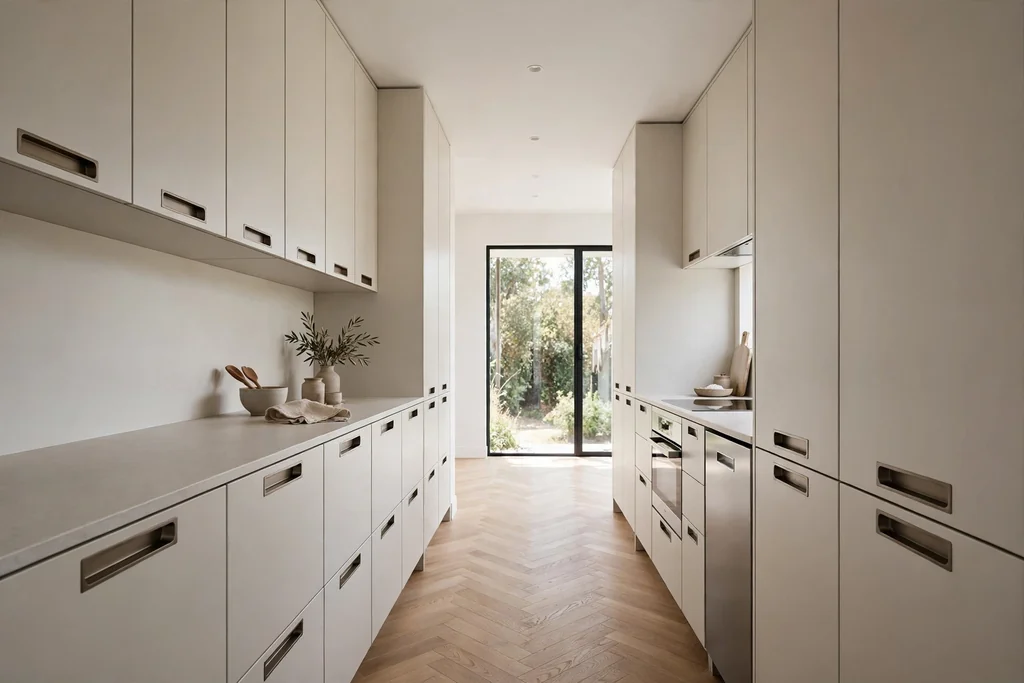
Recessed flush pulls sit inside a cutout in the door, so nothing sticks out into the walkway. This matters in a galley kitchen, a narrow passage, or a kitchen where a protruding handle would catch a hip or an apron pocket. Flush pulls suit sliding doors, pocket doors, and flat front cabinets in tight spaces.
Fit the pull flush with the door face and check that your fingers can grip the recessed cup without scraping a knuckle. A flush pull needs a clean cutout, so it is easier to order doors made for this pull than to cut into finished doors. Wipe inside the recess when you clean the doors, since dust settles in the cup.
12. Ring Pulls on Pantry and Drawer Fronts
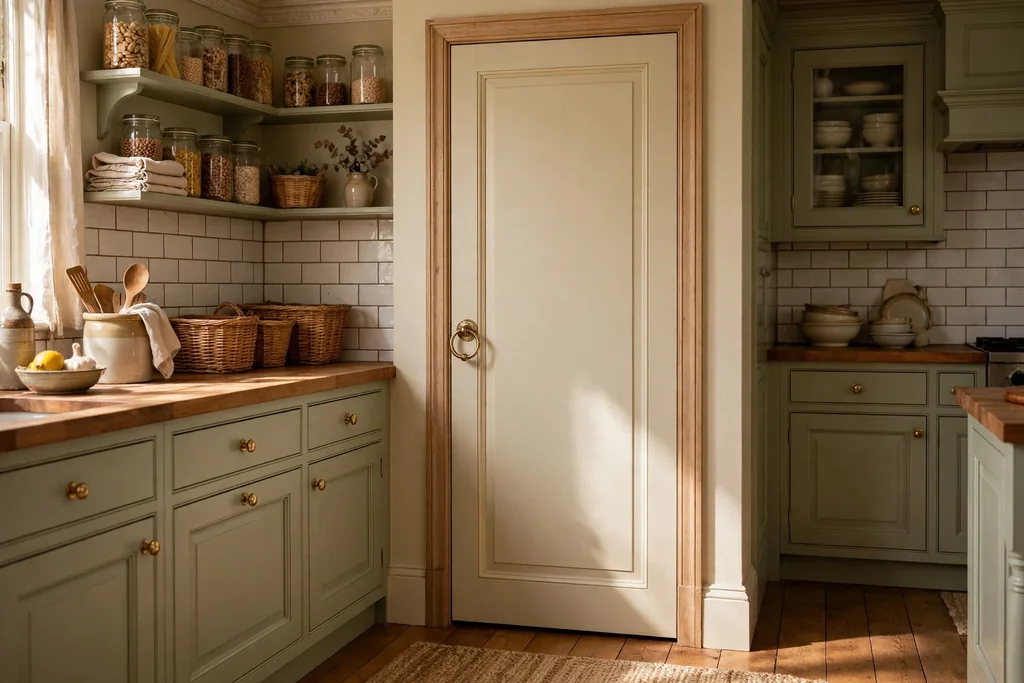
Ring pulls hang from a small plate and give a firm grip for a heavy pantry door or a deep drawer. The ring suits traditional kitchens, pantry cabinets, and furniture style pieces, and it adds a jewelry like detail to a plain door. Brass, iron, and nickel rings each change the mood, so match the ring metal to your taps and lights.
Hang the ring so it rests flat against the door when not in use, and check that it does not swing into the next door when the cabinet closes. Ring pulls work best on doors with a clear swing path, since a ring needs room to hang. On a drawer, a ring pull suits a deep drawer that needs a strong pull, rather than a shallow drawer where a cup pull is easier.
13. T Bar Pulls for a Clean Modern Line
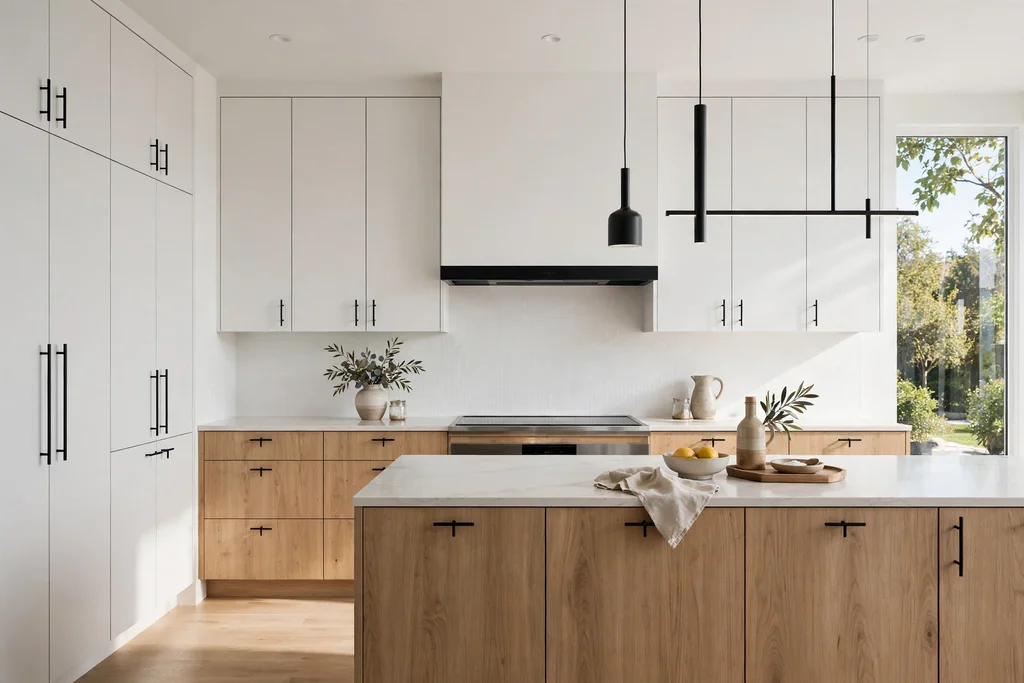
T bar pulls have a straight bar with a short stem at the center, giving a modern line that is lighter than a full bar pull. They suit flat front and slab doors, small kitchens where a long pull would dominate, and kitchens that mix modern doors with warm wood. The T shape also gives a clear grip point without a wide fixing footprint.
Choose a bar length that suits the door width, usually 4 to 6 inches for a standard door, and fit the stem centered on the door edge or face as the design requires. Keep the finish consistent across the kitchen, and check that the bar does not spin, since a T bar fixed by one stem can loosen if the screw is not tight. Tighten and check T bars once a year in a busy kitchen.
14. Extra Long Appliance Pulls for Tall Cabinets
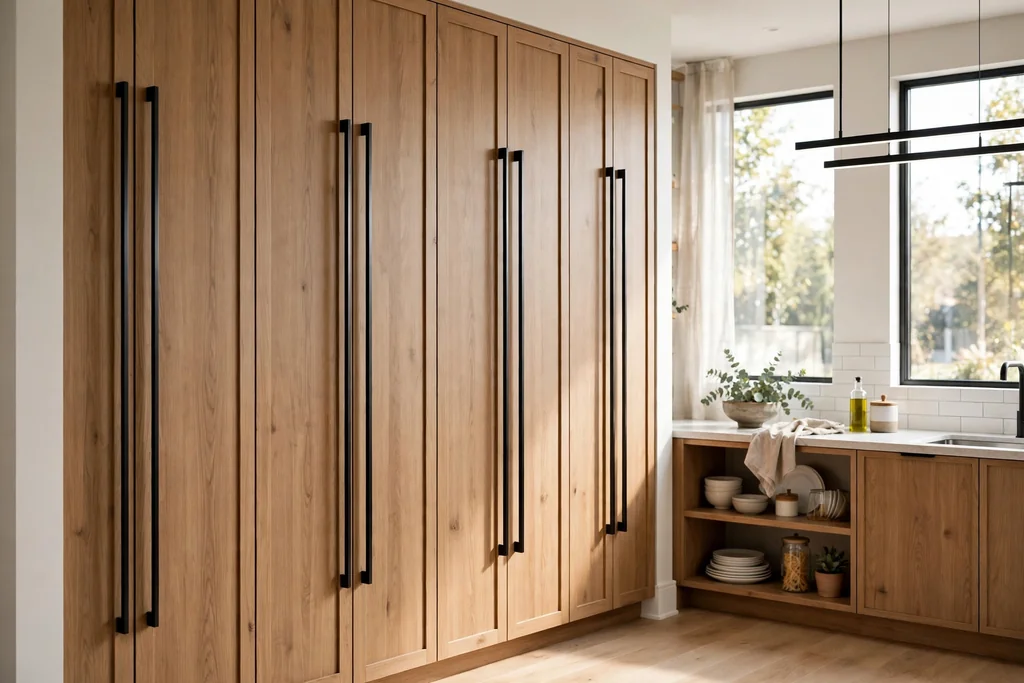
Tall cabinets, pantry doors, and integrated fridge fronts need a pull long enough to open a heavy door without straining the fixing. An extra long appliance pull, often 12 to 18 inches, spreads the force and gives a grip at any height. This suits tall units, larder cabinets, and kitchens where one long handle line ties the whole wall together.
Fit the pull vertically on a tall door, centered on the door width, and use through bolts or reinforced fixings for a heavy door. Check the pull length against the door height so the pull does not run past the door edge. A long pull also helps shorter users, since the grip runs over a wider height range than a small knob.
15. Knobs on Doors with Pulls on Drawers
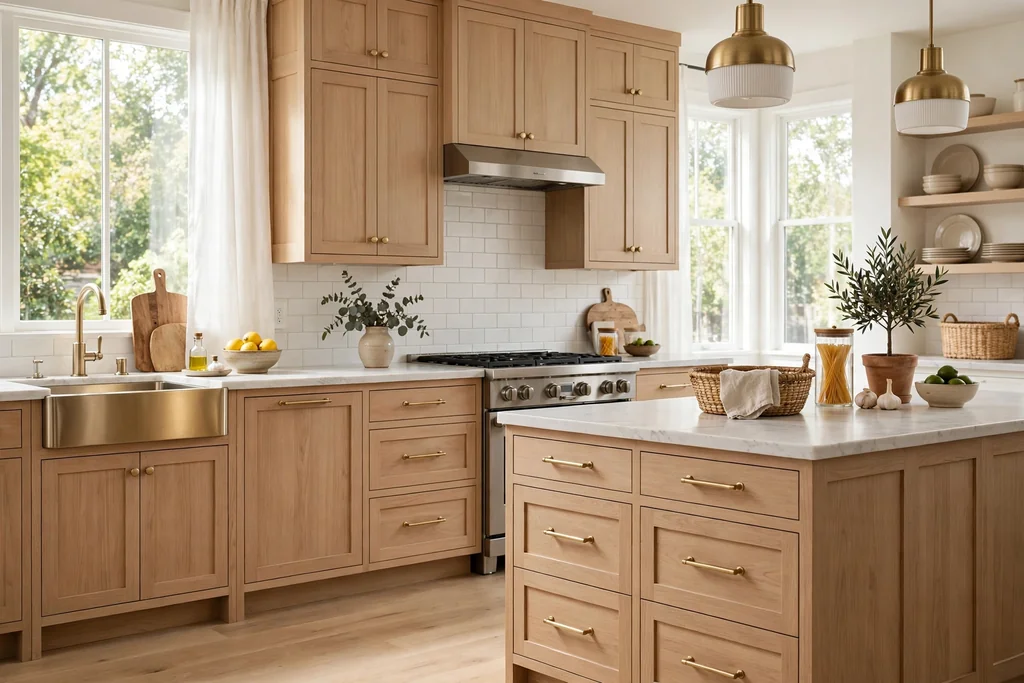
Using knobs on doors and pulls on drawers is the most common mixed handle plan, and it works because doors and drawers open in different ways. A knob suits a door that swings, while a pull suits a drawer that slides out with weight behind it. This split also keeps costs down, since knobs cost less than long pulls and you need fewer pulls overall.
Keep the metal finish the same for knobs and pulls so the mix reads as one plan, not two separate choices. Place knobs at the door corner away from the hinge and pulls centered on each drawer, and use one template for the whole kitchen. If you change one finish later, change knobs and pulls together so the kitchen does not end up with mismatched metals.
16. Mixed Metals Done in Two Zones
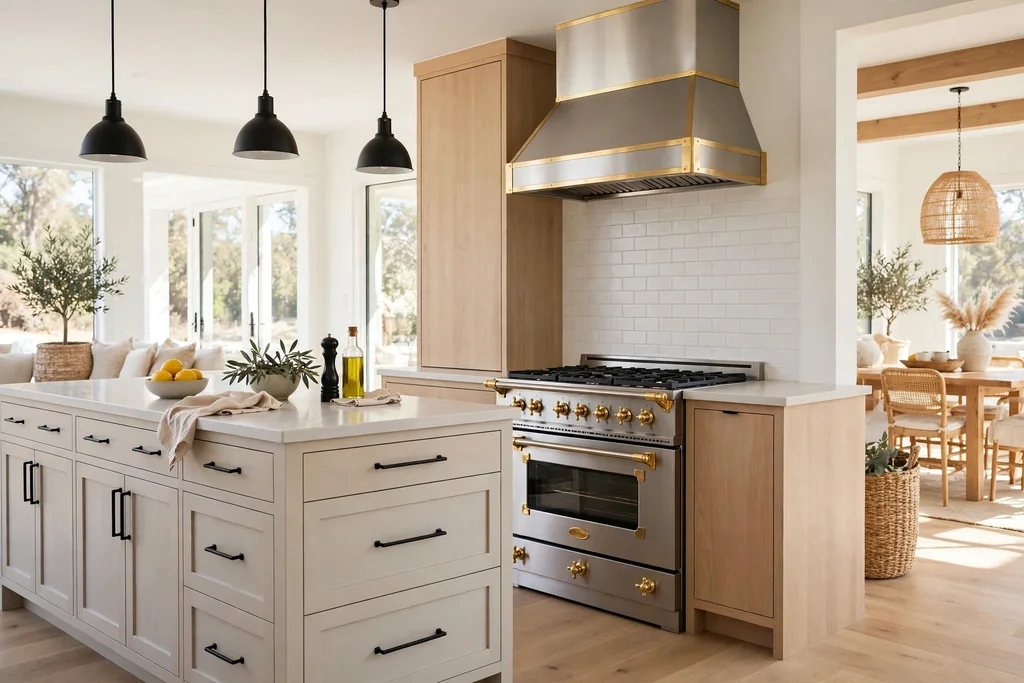
Mixed metals work when the kitchen is split into clear zones, such as brass on the cooking run and black on the island, rather than mixed door by door. Zoning gives each metal a job and a place, so the kitchen looks planned instead of random. This suits open plan kitchens, where the island is seen as furniture, and large kitchens with two distinct runs.
Pick two finishes that share a tone, such as warm brass and warm bronze, or matte black and aged iron, and keep each zone consistent. Repeat each metal once more in its zone, in a tap, a light, or a stool frame, so the handle metal does not sit alone. Limit the mix to two finishes, since three or more metals in one kitchen quickly look unsettled.
17. Oversized Pulls for Deep Pot Drawers
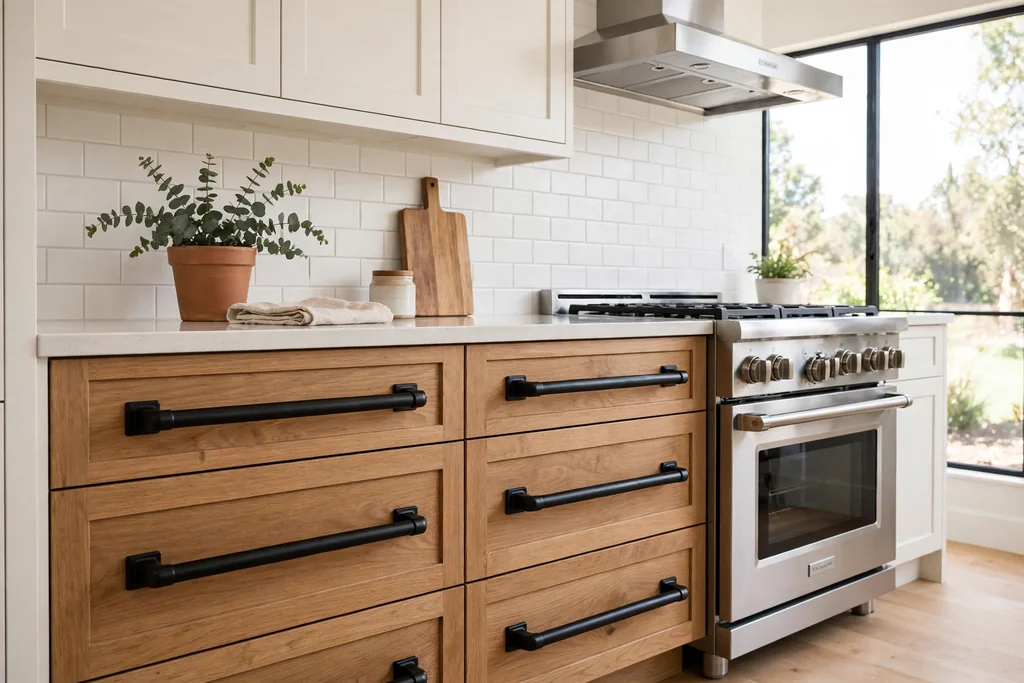
Deep pot drawers hold heavy pans, so they need a pull that can be gripped with a full hand and pulled straight out without twisting the drawer. An oversized pull, wider than the standard drawer pull, gives that grip and makes a wide drawer look sized to its job. This suits kitchens with wide pan drawers beside the cooker.
Pick a pull that spans at least one third of the drawer width, and fix it with two screws into solid drawer front material, not just a thin panel. Test the pull with a loaded drawer before fitting the whole run, since a pull that feels fine on an empty drawer can feel weak when the drawer holds cast iron. Keep oversized pulls on deep drawers only, so standard drawers do not look undersized by comparison.
18. Short Pulls for Small Upper Doors
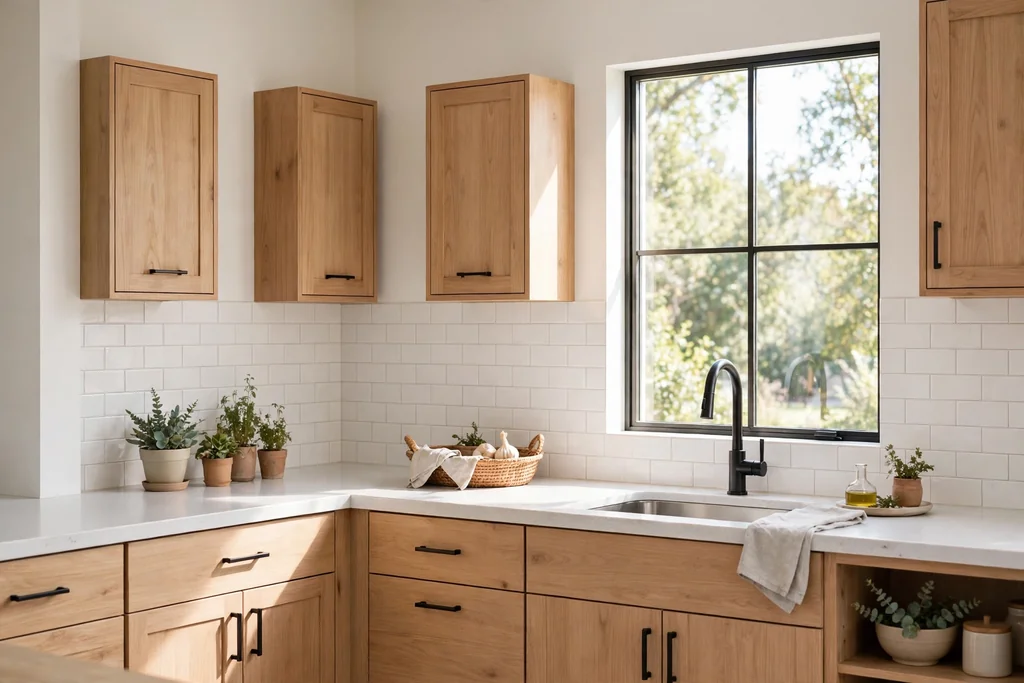
Small upper doors, such as those over a fridge or on a short wall cabinet, look best with a short pull or a small knob that fits the door scale. A long pull on a small door overwhelms the door and can hit the ceiling or a pelmet when the door opens. A short pull keeps the door in proportion and is easy to grip at height.
Fit short pulls at the lower corner of an upper door, on the side away from the hinge, so the hand reaches the handle without stretching. Keep the same finish as the rest of the kitchen, and use the same short pull on every small door for a calm result. If the door is very small, a knob may suit better than any pull, since it takes up less visual space.
19. Backplate Handles for a Finished Look
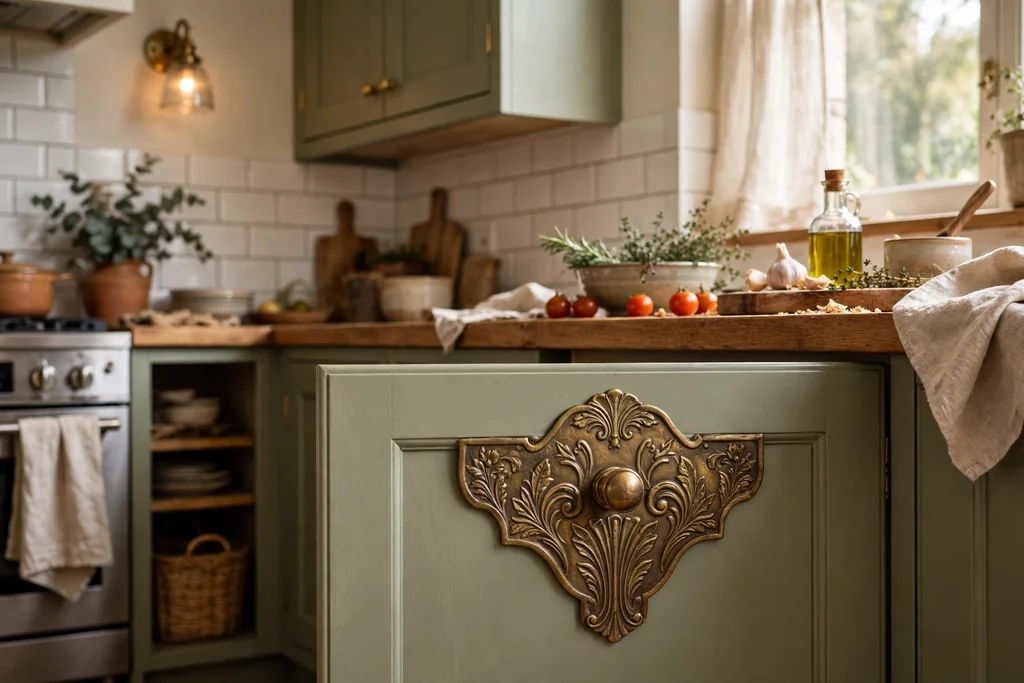
A backplate handle pairs a knob or a pull with a flat plate behind it, which protects the door finish and gives a more finished look. Backplates suit traditional kitchens, painted doors that mark easily, and vintage style kitchens where the plate itself is part of the design. A shaped backplate can also cover an old screw hole when you change handles.
Choose a backplate size that suits the door, not the largest plate available, and keep the plate finish matched to the knob or pull. Fit the plate flat against the door, with screws that do not pull the plate into soft paint. When you swap handles, a backplate lets you change the handle style without repainting, since the plate covers the old fixing marks.
20. Copper Bin Pulls for a Warm Vintage Feel
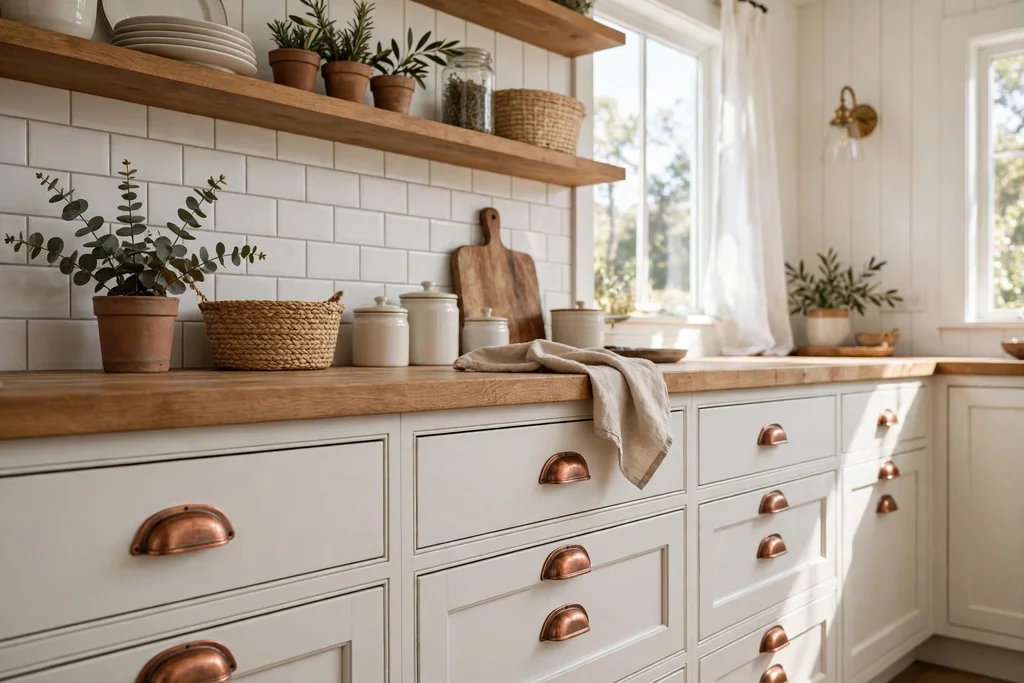
Copper bin pulls bring a warm, aged metal to a kitchen without the shine of new brass. Copper suits farmhouse kitchens, kitchens with wood counters, and kitchens that use copper pans or a copper tap as an accent. A bin pull shape, cupped from below, is easy to grip on a drawer and hides the hand behind the cup.
Copper changes color with use unless it is lacquered, so decide whether you want the bright finish or the darker aged look before you buy. Wipe unlacquered copper with a soft cloth, and keep it away from harsh cleaners that strip the finish unevenly. Pair copper pulls with one other copper detail, such as a tap or a pan rail, so the metal looks planned.
21. Rope Pulls for a Coastal Kitchen
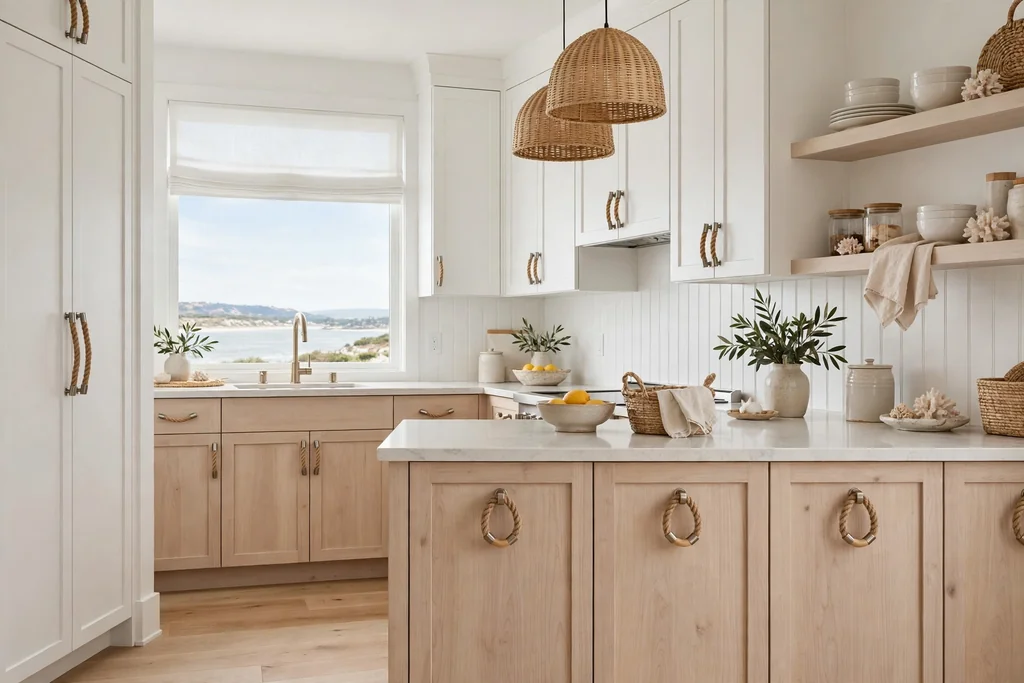
Rope pulls, made from cotton or hemp rope fixed with metal ends, suit coastal and relaxed kitchens where a hard metal handle would feel too formal. Rope adds texture, is soft to grip, and pairs well with pale wood, white cabinets, and woven baskets. This is a good choice for a holiday home kitchen or a beach style room.
Choose rope thick enough to grip firmly and short enough not to sag, and fix the ends with metal ferrules screwed into the door. Rope needs more care than metal: keep it dry, wipe it when it gets dusty, and replace a loop that frays. Rope pulls suit doors and light drawers, not heavy pot drawers, where the rope would stretch over time.
22. Acrylic Bar Pulls on Dark Cabinets
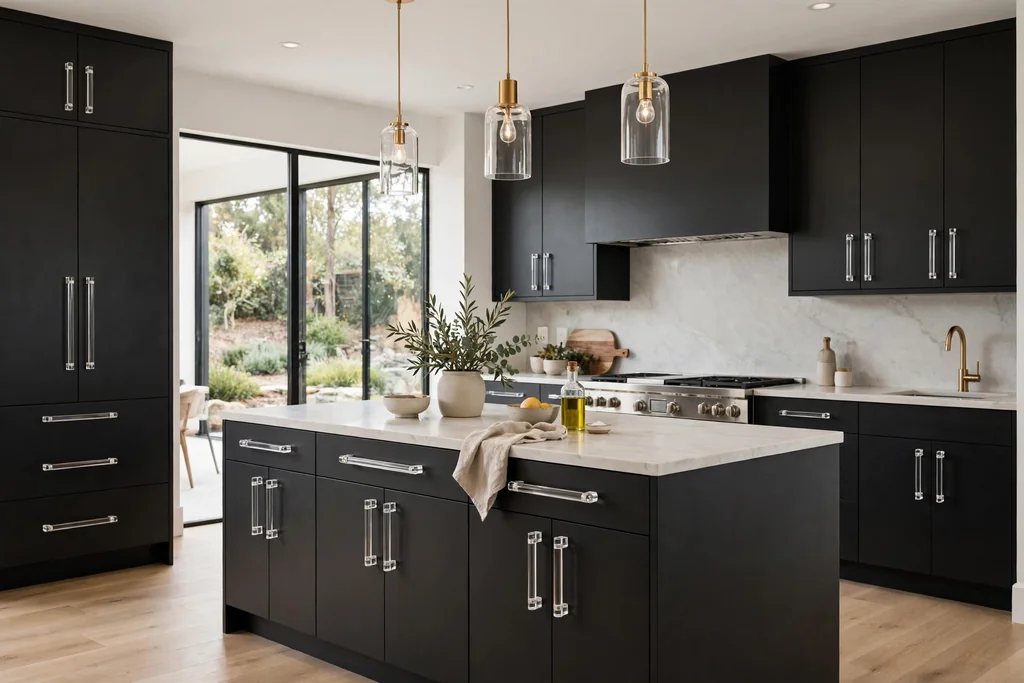
Acrylic bar pulls, clear and solid, suit dark cabinets because they add a grip without a strong metal line or a new color. On navy, charcoal, or black doors, a clear pull lets the cabinet color stay the focus, while still giving fingers a clear place to hold. Acrylic also suits kitchens with glass, chrome, and pale stone, where a heavy metal pull would feel too much.
Pick an acrylic pull with solid metal fixings, since a pull fixed only into acrylic can crack under load. Wipe acrylic with a soft cloth and mild cleaner, and avoid abrasive pads that scratch the clear surface. Acrylic pulls suit doors and standard drawers, but for a heavy drawer, a metal pull gives a stronger fixing.
23. Marble Knobs for a Soft Stone Accent
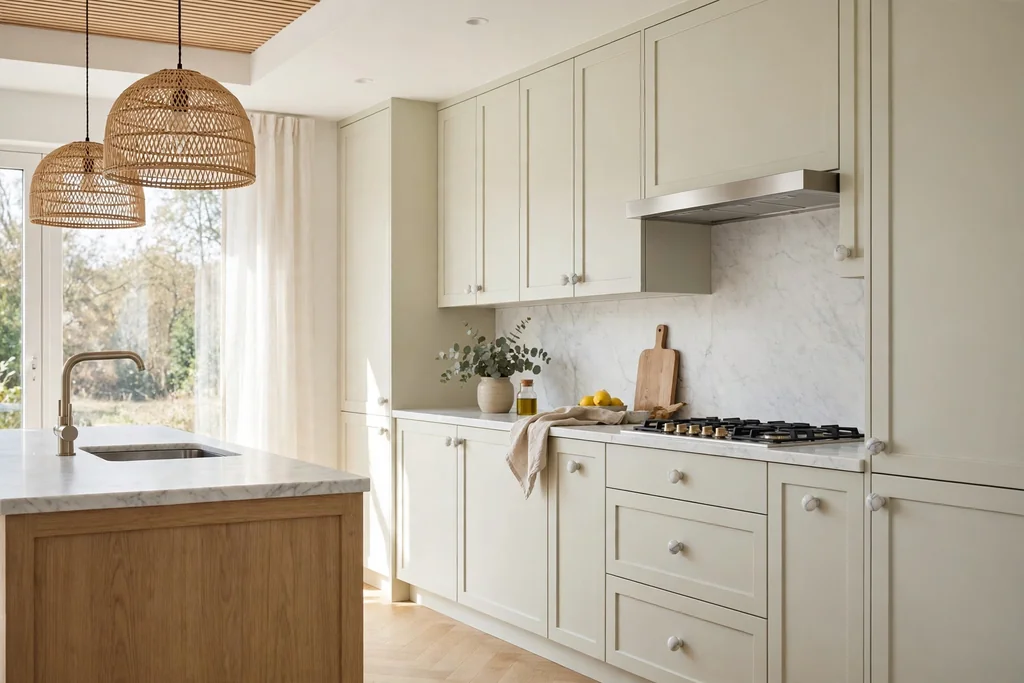
Marble knobs add a small stone detail to a kitchen without a full stone counter or backsplash. A white or grey marble knob suits pale cabinets, marble look counters, and kitchens with a stone sink or a stone shelf. The stone feels cool to touch and gives each door a slightly different pattern, since no two marble pieces match exactly.
Check the knob weight, since a stone knob is heavier than a wood or metal knob and needs a firm screw into solid door material. Seal marble knobs lightly to resist stains from cooking hands, and wipe them with a damp cloth. Use marble knobs on doors rather than heavy drawers, and repeat stone once more in the room, such as a board or a shelf, so the knobs do not sit alone.
24. Latch Handles for a Cottage Pantry Door
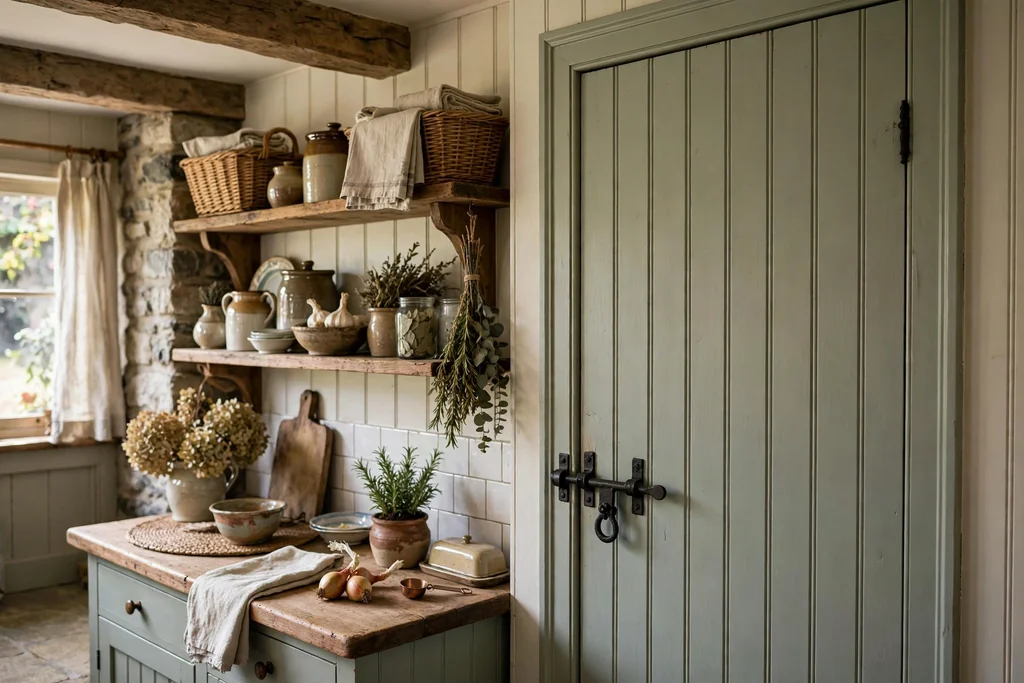
Latch handles, which lift and drop into a catch, suit cottage pantry doors, larder doors, and kitchens with a furniture style look. A latch gives a satisfying close and holds the door shut without a magnetic catch, which helps on a tall pantry door that can swing open. Iron, brass, and nickel latches each suit a different cottage style.
Fit the latch at a comfortable hand height, usually at the side of the door away from the hinge, and check that the catch lines up when the door is closed. A latch needs a solid door edge for the catch, so it suits framed doors better than thin flat fronts. Oil the moving parts lightly once a year so the latch lifts smoothly and does not stick.
25. Slim Vertical Pulls on Tall Narrow Doors
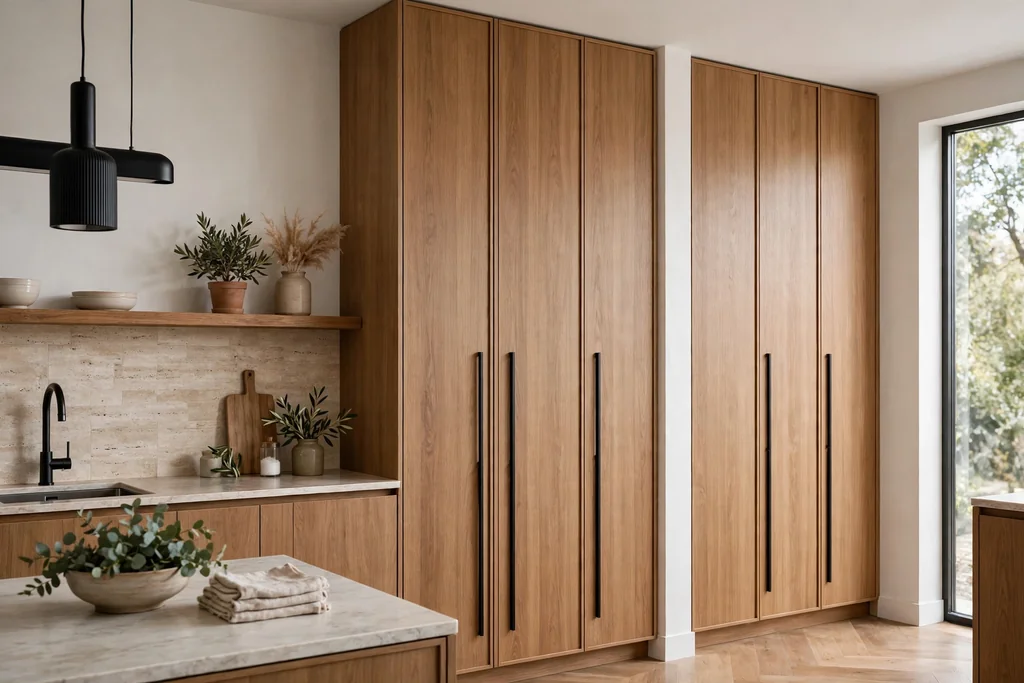
Tall narrow doors, such as a spice pull out or a narrow pantry unit, suit a slim vertical pull that runs with the door, not across it. A vertical pull gives a long grip on a narrow front and keeps the door looking tall rather than cut across by a horizontal bar. This suits kitchens with tall units beside the fridge or oven.
Fit the vertical pull centered on the door width, with the grip at a height you can reach without stretching. Keep the pull slim so it does not overhang the narrow door edge, and use two fixings for a tall pull so it does not twist. On a bank of narrow doors, keep every vertical pull at the same height so the wall reads as one unit.
26. Rounded Easy Grip Pulls for Every Age
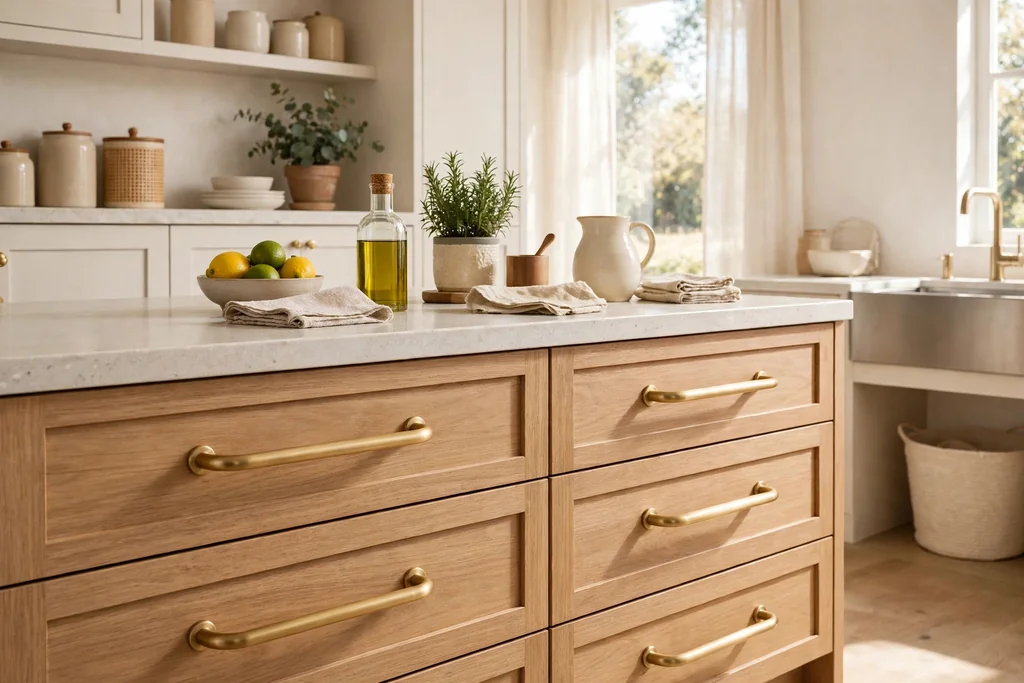
Rounded easy grip pulls suit kitchens used by children, older family members, and anyone with reduced grip strength. A rounded bar with a clear space behind it lets the whole hand wrap around the pull, which is easier than pinching a small knob. This is a practical choice for a family kitchen, a rental, or a kitchen planned for long term use.
Choose a pull with a diameter of at least 12 millimeters and a gap behind the bar that fits four fingers, and avoid sharp corners or pointed ends. Fit pulls at a height that suits the main users, and keep the same easy grip style on the most used doors and drawers, such as the cutlery drawer and the everyday plates cabinet. Test the pull with wet hands, since a kitchen handle is often used while cooking.
27. Matching Handles and Tap Finish Across the Kitchen
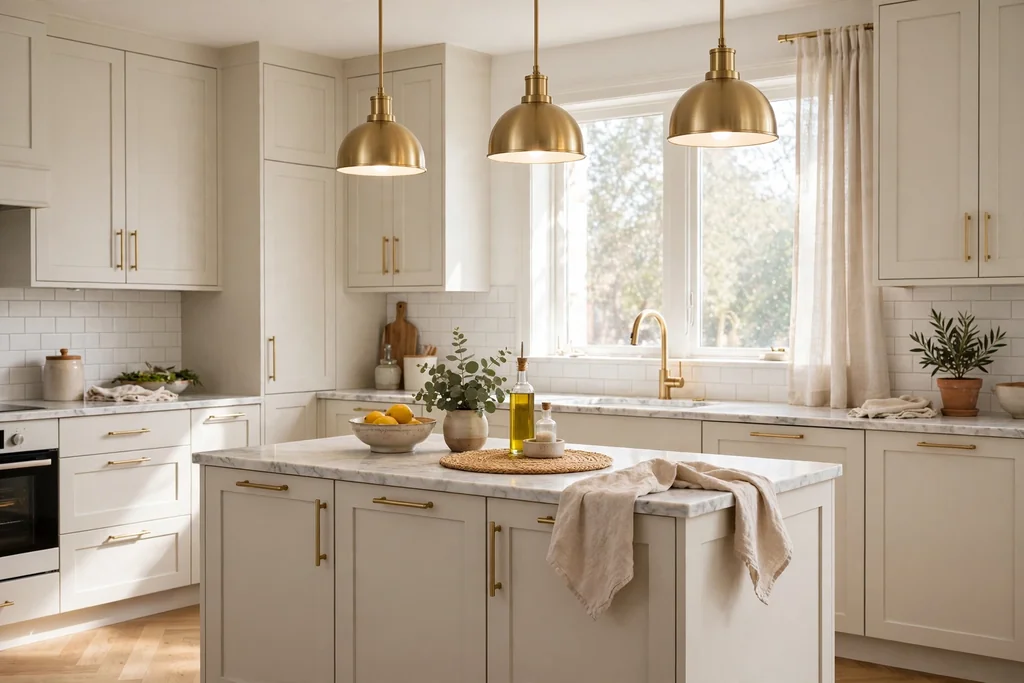
Matching the handle finish to the tap finish is the simplest way to make a kitchen look planned, since the eye links metal details even when they are far apart. If the tap is brushed brass, brass handles tie the sink run to the rest of the kitchen, and if the tap is matte black, black handles do the same job. This works with any cabinet color, as long as the metal finish is truly the same, not just a similar name.
Compare a handle sample beside the tap in daylight before ordering, since brass, gold, and bronze can look alike online and different in person. Keep the same finish on hinges if they show, on light fittings, and on the tap, but do not force a match on appliances, where the maker finish is fixed. For color pairings that work with your chosen metal, these colors for your kitchen cabinets show how each finish sits against pale, mid, and dark doors.
Conclusion
A good cabinet handle choice starts with how the door or drawer moves, not with the finish alone. Pick knobs for doors, pulls for drawers, and a longer pull for wide or heavy drawers, then keep the finish steady across the kitchen and matched to the tap where you can. Order one sample, check the screw spacing and the grip with wet hands, and fit the rest with a template so every handle sits level. Change the handles first when you want a fresh kitchen without a full remodel, since it is a small job with a daily payoff.
FAQs
Should kitchen cabinet handles all match?
In most kitchens, yes, keep one finish across all handles so the room reads as one plan. You can mix knobs on doors with pulls on drawers, since that split follows how each unit opens, but keep the metal the same. If you want two finishes, split them by zone, such as one finish on the cooking run and one on the island, rather than mixing door by door.
What size pull should I use on a kitchen drawer?
As a guide, pick a pull that spans roughly one third of the drawer width, so a wide pot drawer needs a longer pull than a narrow cutlery drawer. Check the screw spacing of the pull you like, since bar pulls come in fixed centers, and measure the drawer before ordering. Test the pull on a loaded drawer, since a pull that feels fine empty can feel weak with heavy pans inside.
Are knobs or pulls better for kitchen cabinets?
Knobs suit doors that swing open, since one hand can turn and pull a light door easily, while pulls suit drawers that slide out with weight behind them. Many kitchens use both: knobs on doors and pulls on drawers, in the same finish. For a heavy pantry door or a wide drawer, a pull gives a stronger and more comfortable grip than a knob.
How do I measure for new cabinet handles?
Measure the distance between the existing screw holes, known as the screw spacing or center to center measurement, and match that number when you order bar pulls. For a new fit, measure the door or drawer width, mark the handle position with a template, and check the door thickness so the screws do not poke through the inside. Hold a sample handle in place and open the door fully before drilling.
Can I mix brass and black handles in one kitchen?
Yes, if you split the finishes by zone, such as brass on the main run and black on the island, and repeat each metal once more in its zone, in a tap, a light, or a stool frame. Keep the mix to two finishes, and keep each zone consistent. Mixing finishes door by door, with no pattern, tends to look random rather than planned.
Do handleless cabinets work in a busy family kitchen?
Handleless cabinets with a routed finger pull or a slim edge pull work well in a busy kitchen, since there is nothing to catch on clothing and the fronts wipe clean. They suit flat front doors best, and the groove must be deep enough for fingertips. On very tall cabinets or heavy drawers, a separate pull gives a better grip, so many family kitchens mix handleless doors with pulls on the most used drawers.