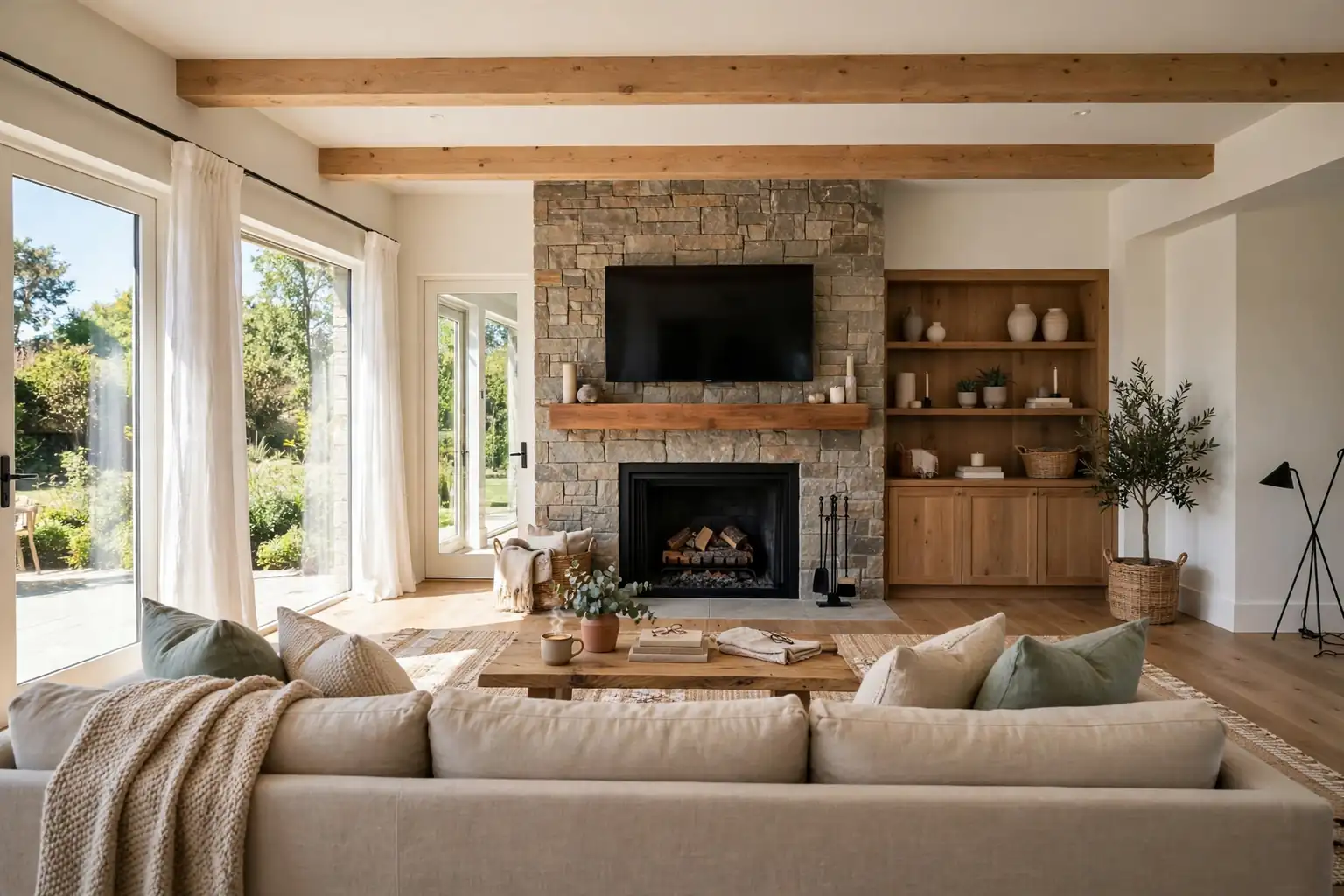
A fireplace wall with a TV above or beside it can be the hardest wall in the living room to get right, since two focal points have to share one space. The ideas below cover mantel mounts, recessed niches, full feature walls, built-in storage, and asymmetric layouts, so you can pick an arrangement that fits your wall size, your fireplace type, and how your seating faces the room. Before you mount anything, check the heat output above your fireplace, plan the cable route, and sit in your usual seat to test the viewing height.
Key Takeaways
- Mount the TV so its center sits close to eye level from your usual seat, and keep the gap between mantel and TV as small as heat rules allow, so you are not craning your neck.
- Check heat before you mount: measure the wall temperature above the fireplace at full output, and follow the TV maker and fireplace maker clearance guidance.
- Hide cables inside the wall, a cable channel painted to match, or a hollow mantel, rather than letting them hang beside the fireplace.
- Size the TV to the wall and the fireplace, not to the largest screen available: the TV should relate to the mantel width and the seating distance.
- Give the wall one clear lead: either the fireplace or the TV leads, and the other supports it, so the wall does not feel split in two.
- Plan storage for boxes, consoles, and remotes in a cabinet or a low console, so the feature wall stays calm when the TV is off.
1. Classic Mantel Mount With a Slim Frame
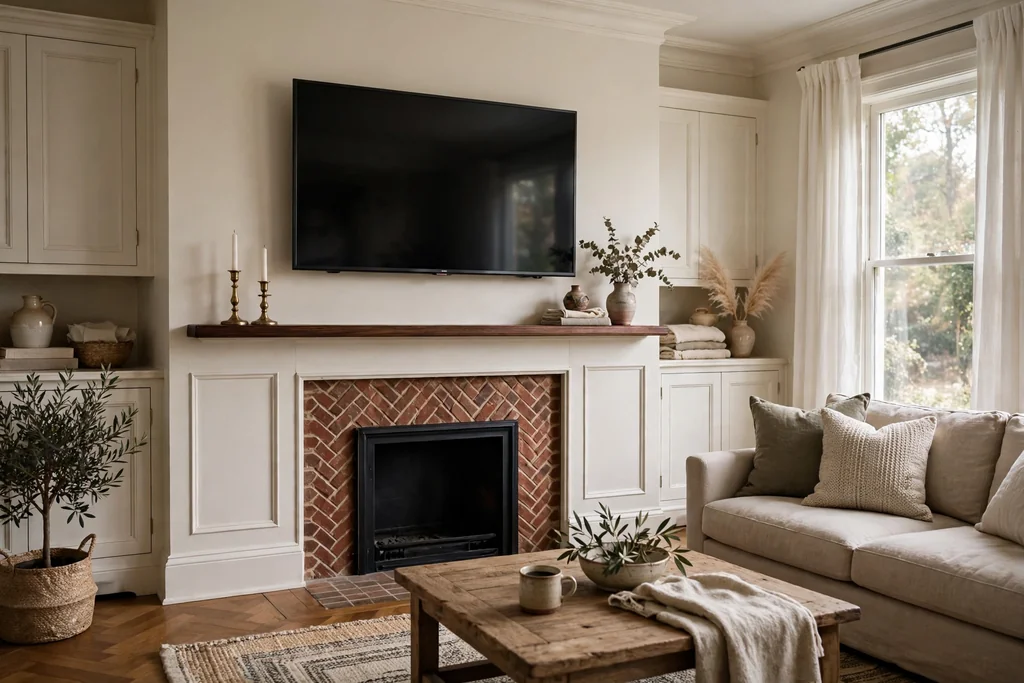
A TV mounted directly above a traditional mantel is the simplest fireplace wall layout, and it works best when the TV is close in width to the mantel below it. Choose a slim fixed mount, center the TV on the mantel, and keep the mantel styling low, with one or two small items at the ends, so the screen stays the clear focus when it is on.
Check the heat first: run the fireplace at full output and feel the wall where the TV will sit, then confirm the clearance in both manuals. Route the power and HDMI cables down through the wall or behind a painted cable channel to the nearest outlet. A soundbar can sit on the mantel itself, but keep it clear of the fire opening and out of the direct heat path.
2. Recessed Niche With the TV Set Flush
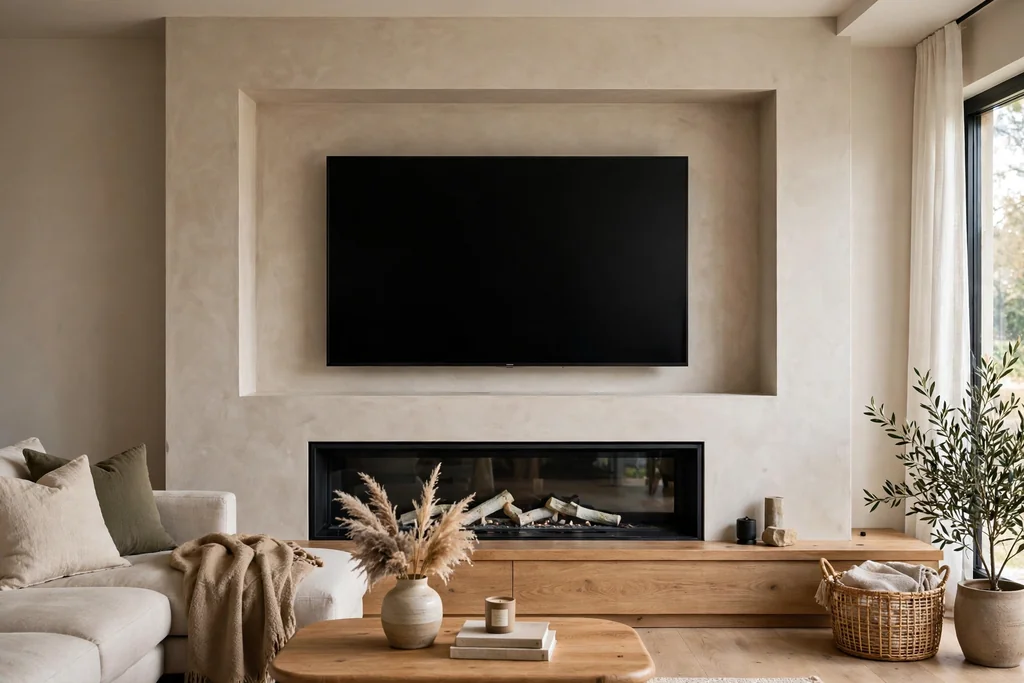
A recessed niche sets the TV into the wall above the fireplace, so the screen sits flush with the surrounding surface instead of jutting out. This layout suits a new build or a wall you are already opening up, since the recess needs framing depth and a clear route for cables and ventilation. The flush finish makes the wall read as one calm panel, even with a large screen.
Leave ventilation gaps around the recess and an access point for cables, so you can reach the connections later without opening the wall again. Finish the recess edges neatly with trim or a shadow gap, and paint the inside the same color as the wall so the TV blends in when it is off. This idea suits rooms where a proud TV would crowd a walkway or catch glare from a side window.
3. Full Stone Feature Wall With a Mounted TV
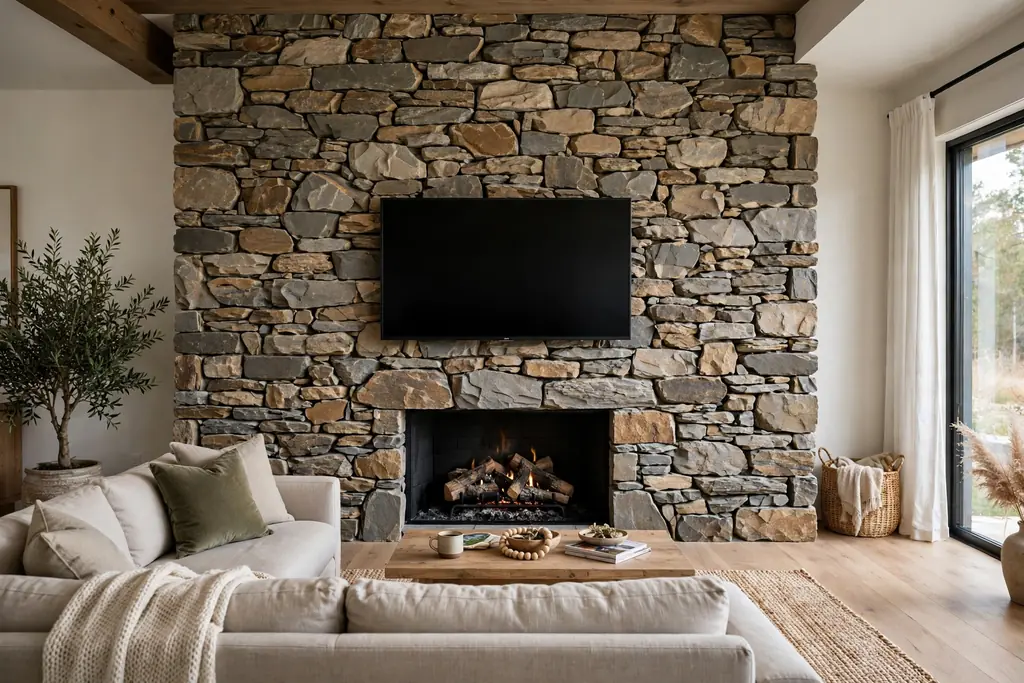
A full height stone wall gives the fireplace and TV a single strong backdrop, from floor to ceiling. Use natural stone, stone veneer, or stacked stone panels across the whole wall, mount the TV on a bracket fixed into the stone or its backing, and let the fireplace sit low in the center. The texture carries the wall when the TV is off, so the room never looks blank.
Fixing into stone needs the right drill bit and anchor for the stone type, so mark the bracket holes carefully and drill once. Keep the mortar joints and stone edges tidy around the TV bracket and the fire opening, and choose a dark grout or seal if the stone is pale. A stone wall pairs well with wood beams, leather seating, and warm lamp light.
4. Shiplap Wall With the TV Above the Fireplace
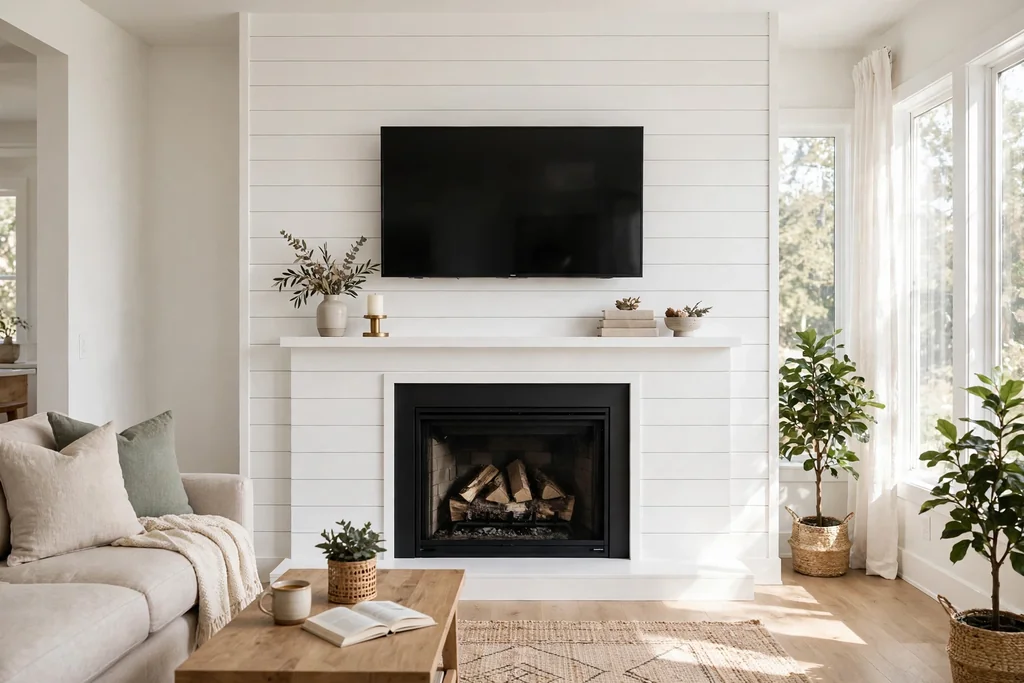
Shiplap boards give a fireplace wall a relaxed, coastal or farmhouse feel, and they make cable hiding easier than a solid masonry wall. Run the boards vertically for height or horizontally for width, mount the TV on a bracket fixed through the boards into studs, and paint the whole wall one pale color so the fireplace opening stands out.
Mark the studs before you fix the bracket, since shiplap alone will not hold a TV. Leave a small gap or a removable board section behind the TV for cable access, and paint the cable channel the same color as the boards. This layout suits a white or soft grey room where the fireplace surround is simple and the seating is relaxed.
5. Built-In Shelves Flanking Fireplace and TV
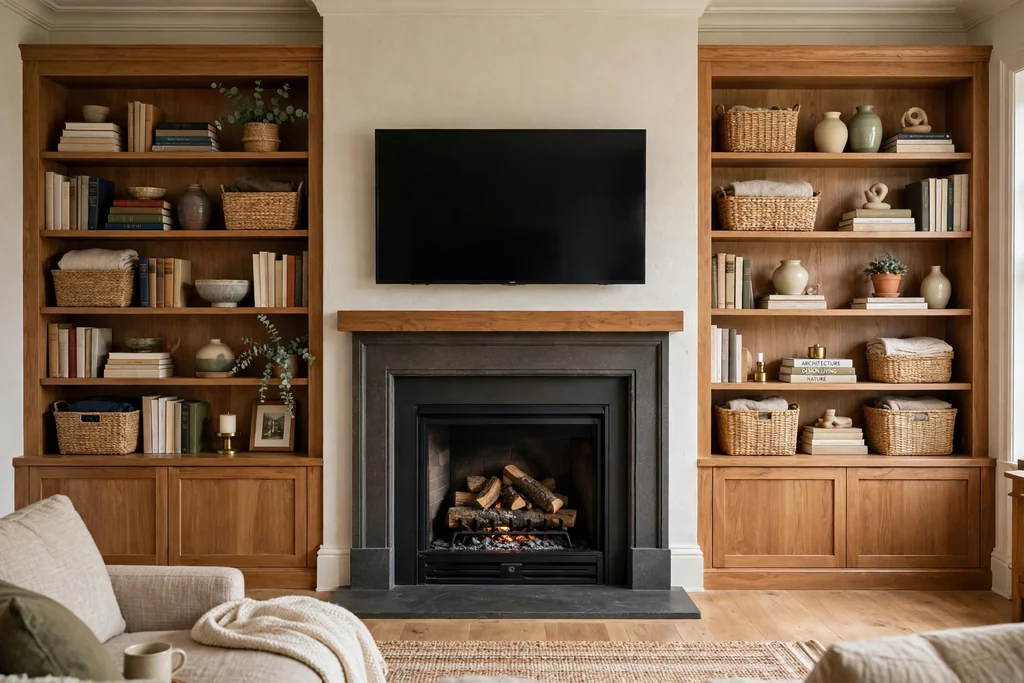
Built-in shelves on both sides of the fireplace wall turn a TV wall into useful storage. Build or fit shelving units from floor to ceiling on each side, keep the fireplace and TV centered between them, and use the shelves for books, baskets, and a few decorative pieces. The symmetry frames the screen and stops the wall from feeling bare at the edges.
Keep the shelf styling calm and leave some empty space on each shelf, so the display does not compete with the TV. Hide media boxes inside a closed cabinet section at the bottom of one unit, with a small hole for the remote signal or an extender. This layout suits a family room where books, games, and consoles need a home near the seating.
6. Black Accent Wall for TV and Fireplace
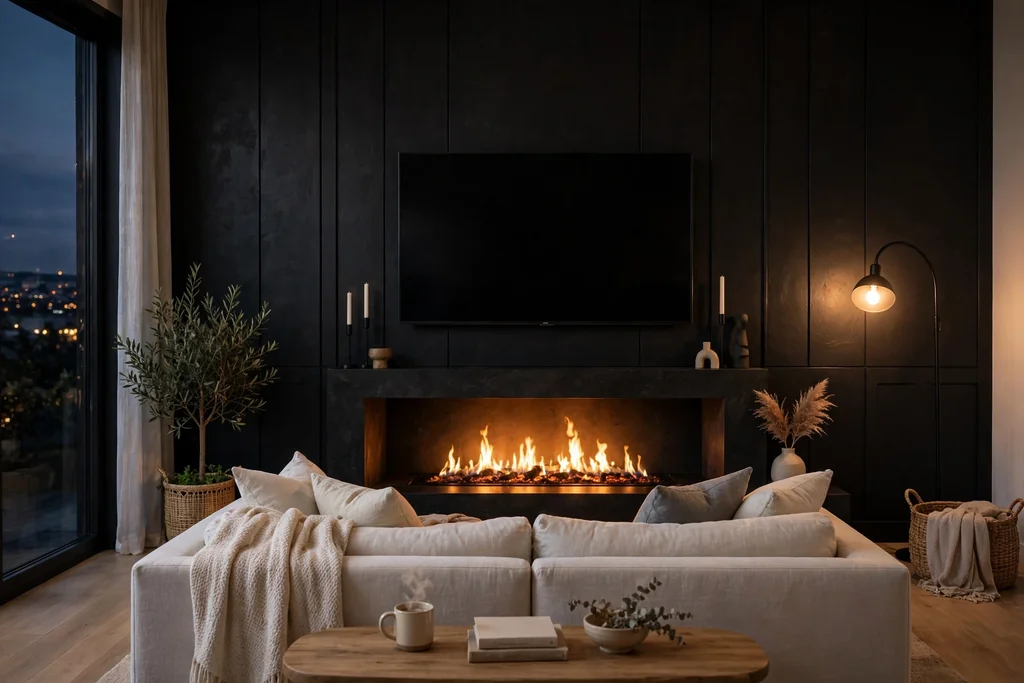
A black or deep charcoal wall behind the fireplace and TV makes the screen blend in when it is off, which suits a room used mainly for evening viewing. Paint the whole feature wall one dark tone, including any trim, mount the TV flush, and let the fireplace glow stand out against the dark surface. The dark wall also hides cables and brackets better than a pale wall.
Balance the dark wall with pale seating, a light rug, and warm lamps, so the room does not feel closed in. Keep the mantel styling simple, since dark walls show dust and clutter quickly. This idea works best on a wall with some daylight or good lamp light, rather than a windowless corner.
7. Marble Slab Surround With a TV Above
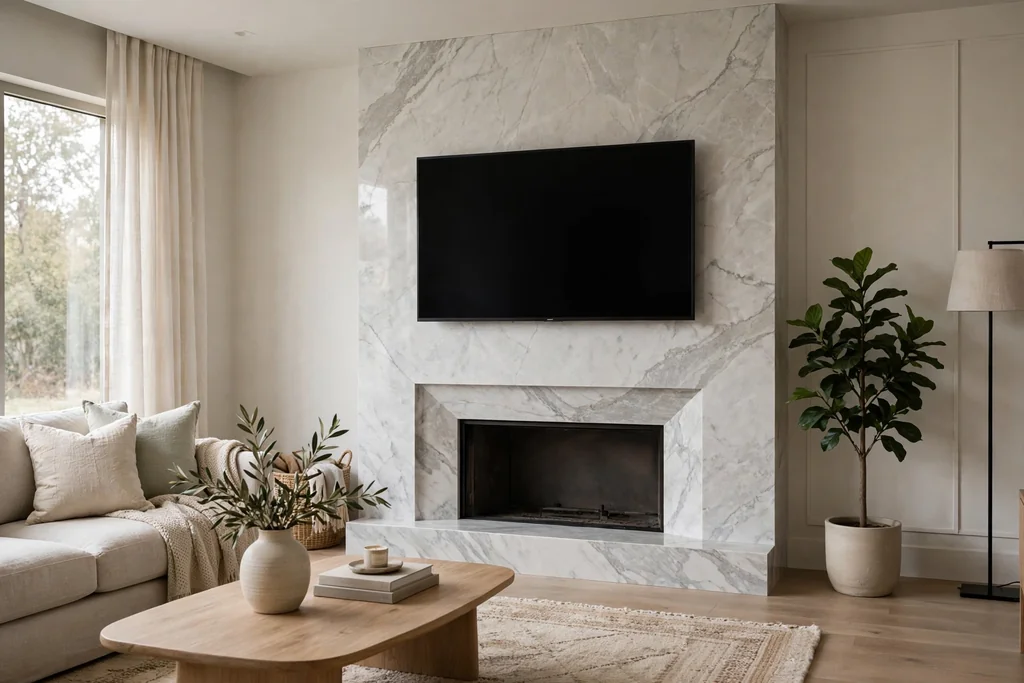
A large marble slab surround gives a fireplace wall a clean, high end finish with very few joints. Use one slab or two book matched slabs around the fire opening, mount the TV above on a bracket fixed through the slab into solid backing, and keep the rest of the wall plain. The veining becomes the decoration, so the wall needs little else.
Fixing through stone slab is a job for a fitter with the right tools, and the bracket must reach solid backing, not just the slab. Choose a slab with veining that does not clash with the TV frame, and seal the stone if the maker advises it. This layout suits a calm, modern room with plain seating and one or two quiet accessories.
8. Brick Fireplace Wall With a TV Mounted On It
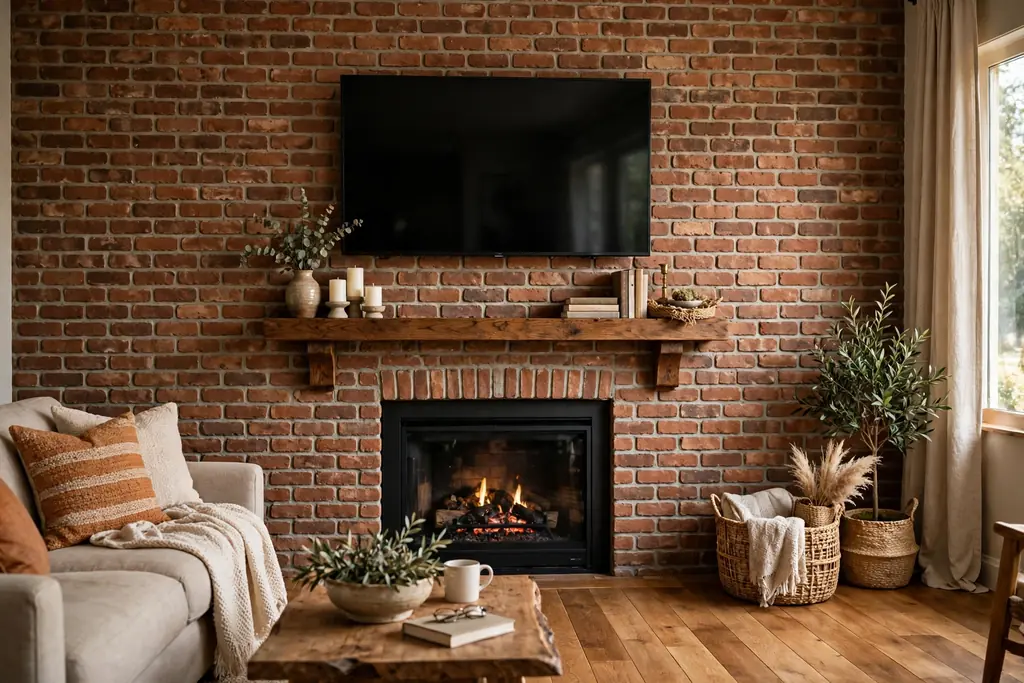
A brick fireplace wall, painted or left natural, gives the TV a warm, textured backdrop that suits older homes. Mount the TV on a masonry rated bracket, center it over the fire opening, and keep the mantel styling simple, with wood, plants, or a single piece of art at one end. The brick texture stops the wall from looking flat when the screen is off.
Drill into mortar joints rather than the brick face where possible, and use anchors rated for masonry and the TV weight. If the brick is painted, touch up the paint around the bracket so the fixings do not stand out. This idea suits a room with wood floors, a leather sofa, and a rug that pulls the brick tones together. For rug size and placement under a fireplace seating group, see these living room rug ideas.
9. Asymmetric Layout With the TV to One Side
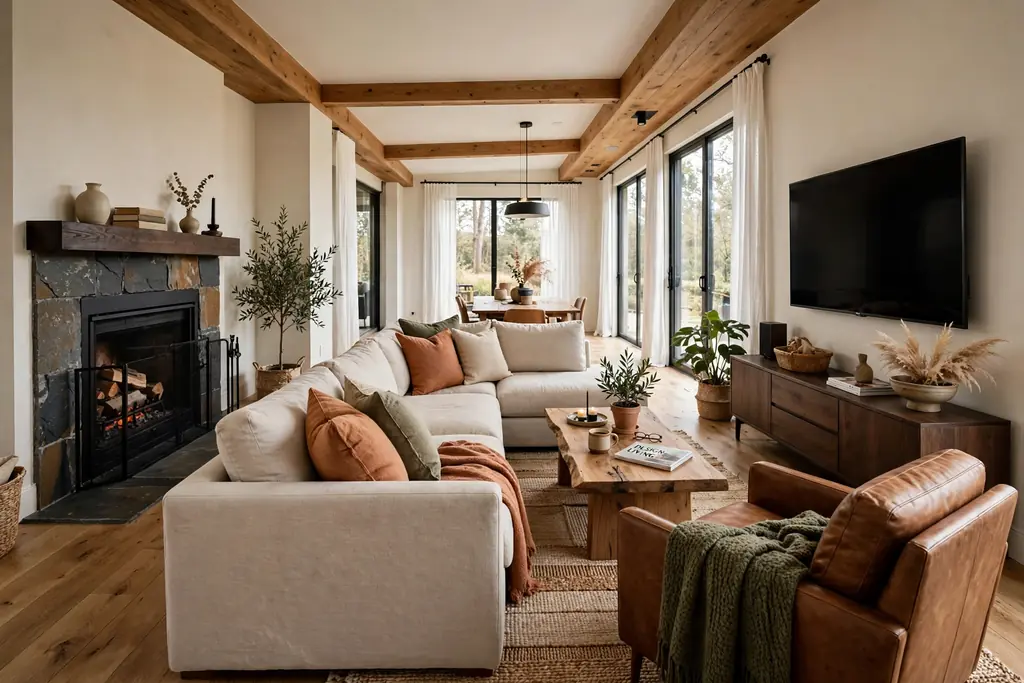
An asymmetric layout places the TV to one side of the fireplace instead of above it, which solves the neck strain problem of a high mantel mount. Put the fireplace at one end of the wall and the TV on a low console or wall bracket at the other end, then angle the seating slightly so both are in view. The wall feels relaxed rather than formal, and each focal point gets its own space.
Balance the two sides with weight: if the fireplace side has a tall chimney breast, give the TV side a tall plant or a floor lamp. Keep the cable route short by placing the console near an outlet, and choose a TV size that matches the console width. This layout suits a long wall, an open plan room, or a household where some viewers prefer the fire and others prefer the screen.
10. Floating Mantel Shelf Below a Wall Mounted TV
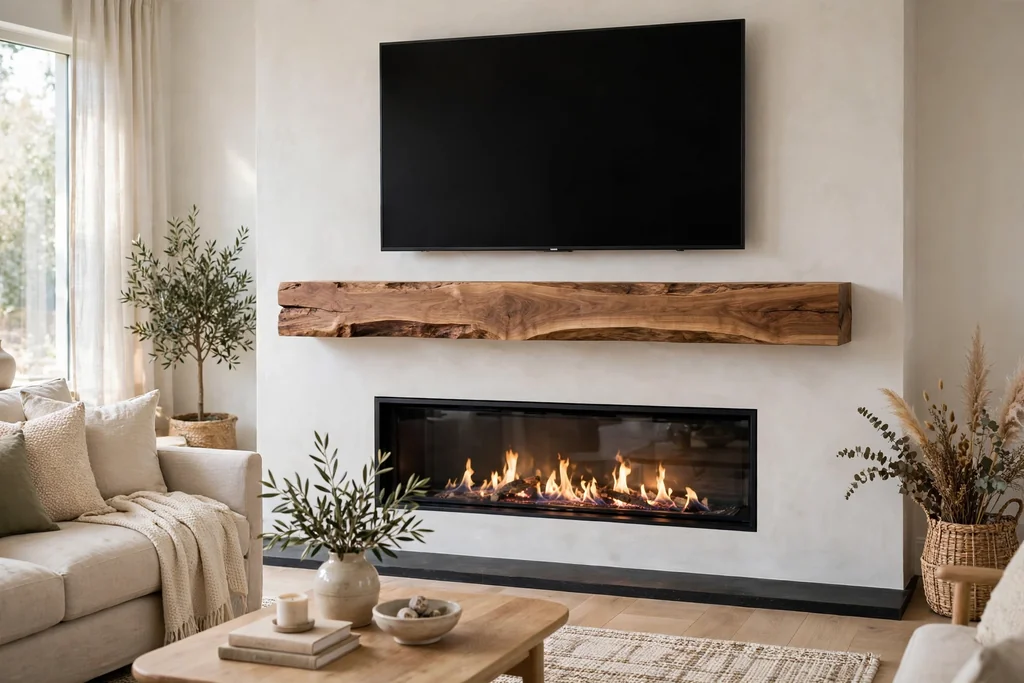
A floating mantel shelf below a wall mounted TV gives the fireplace wall a light, modern line without a full surround. Fix a chunky wood or stone shelf to the wall above the fire opening, mount the TV above it, and use the shelf for a soundbar, a candle, or one low plant. The open space below the shelf keeps the wall feeling airy.
Fix the shelf into studs or masonry with brackets rated for its weight plus anything placed on it, and keep items on the shelf clear of the heat path. The shelf depth should suit the soundbar if one will sit there, with a little space behind for cables. This idea suits a small or modern room where a heavy surround would crowd the seating.
11. Wood Slat Panel Wall Behind Fireplace and TV
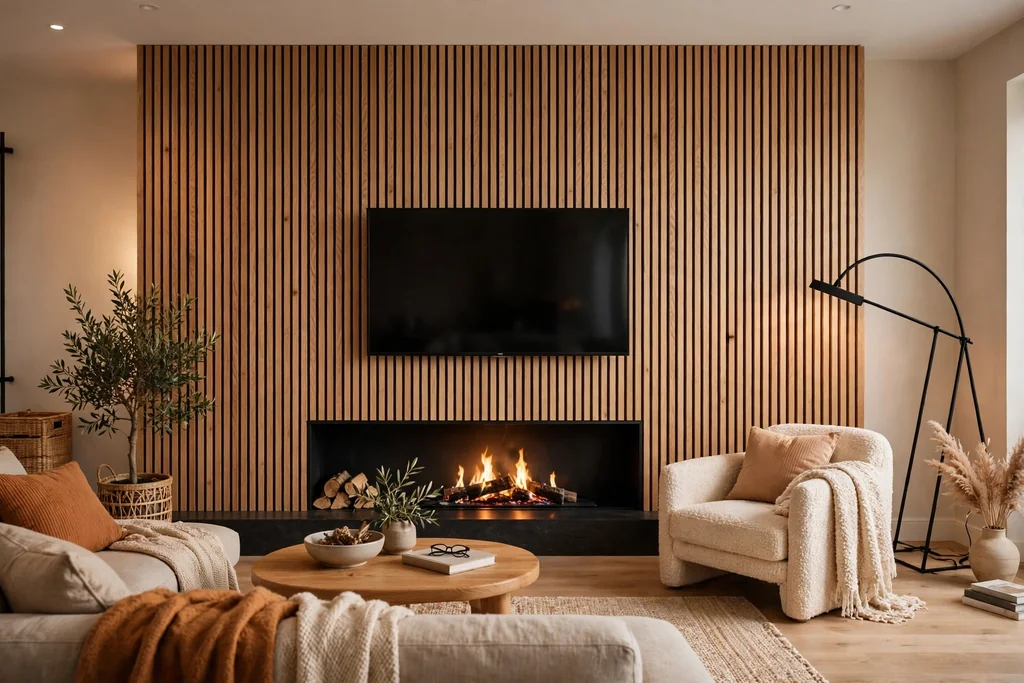
Vertical wood slats behind the fireplace and TV add warmth and rhythm to a plain wall. Fit slats from floor to ceiling across the feature wall, or across a central panel, mount the TV on a bracket fixed through the slats into studs, and let the fireplace sit low in the panel. The gaps between slats hide cables and give the wall depth.
Choose a slat wood that matches the floor or the furniture, and keep the finish matte so the wall does not shine under the TV light. Leave a removable slat or a gap behind the TV for cable access, and keep the slats clear of the fire opening by the clearance the fireplace maker states. This layout suits a warm modern room with wood furniture and soft lighting.
12. Corner Fireplace Wall With an Angled TV
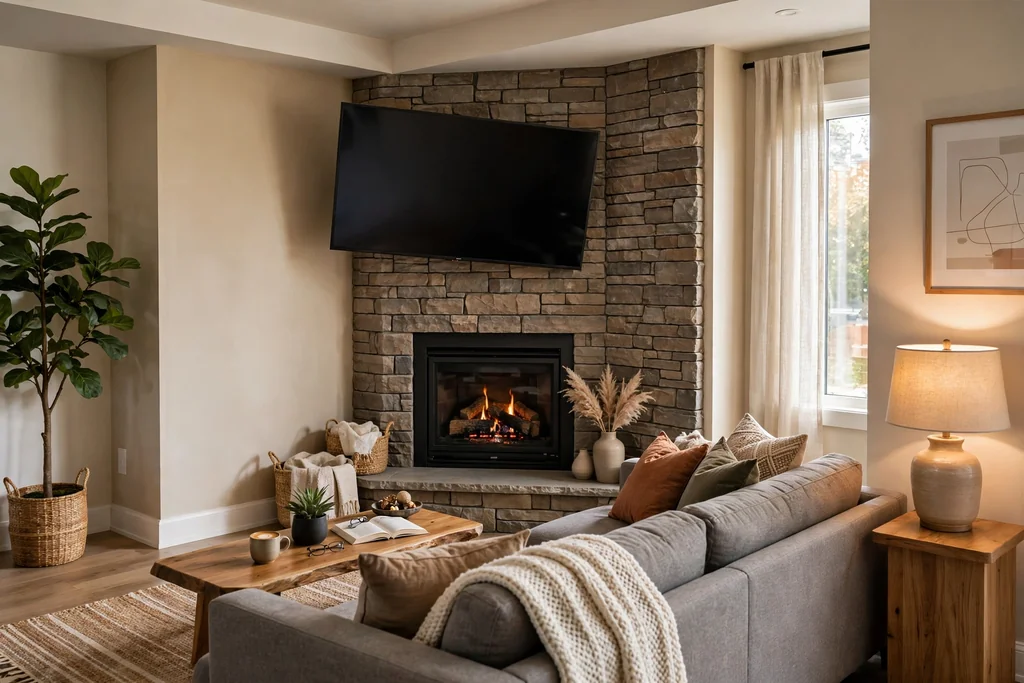
A corner fireplace wall places the fire at an angle across the room corner, with the TV mounted on the angled breast or on the adjoining wall. This layout frees up the long walls for seating and storage, and it suits a square room where a flat fireplace wall would force the sofa too close to the screen. Angle the seating to face the corner, with a rug anchoring the group.
Check the viewing angle from each seat, since a corner TV is seen at an angle from the side chairs. Mount the TV on a full motion bracket if the angle needs adjusting, and route cables through the corner breast where possible. Keep the corner mantel styling minimal, since the angle already draws the eye.
13. Electric Fireplace and TV Media Console Wall
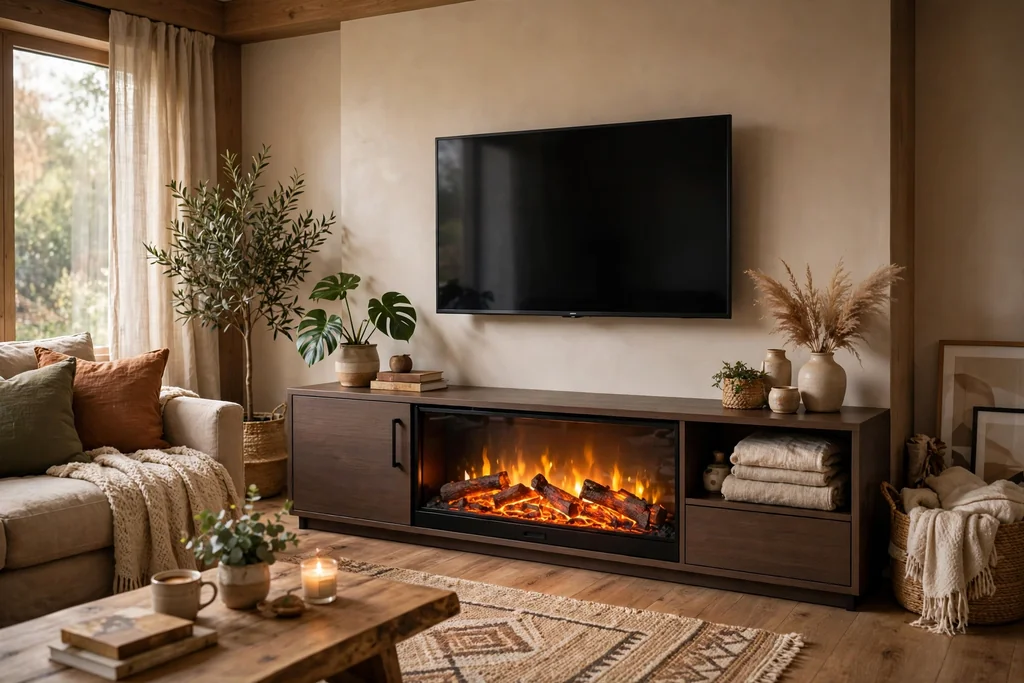
An electric fireplace set into a low media console, with the TV mounted above, gives a complete fireplace wall without a chimney. Choose a console wide enough for the TV, fit a linear electric fire into its center, and use the console drawers or doors for media boxes, consoles, and remotes. The whole wall can be fitted in a day, which suits renters and flat dwellers.
Check the electric fire heat direction, since most blow heat forward or downward, which keeps the TV cooler than a wood fire. Keep a clear cable route from the console to the TV, and leave ventilation space around media boxes inside closed doors. This layout suits a bedroom style living room, a flat, or a room where a real flue is not possible.
14. Tall Double Height Wall With a Linear Fireplace
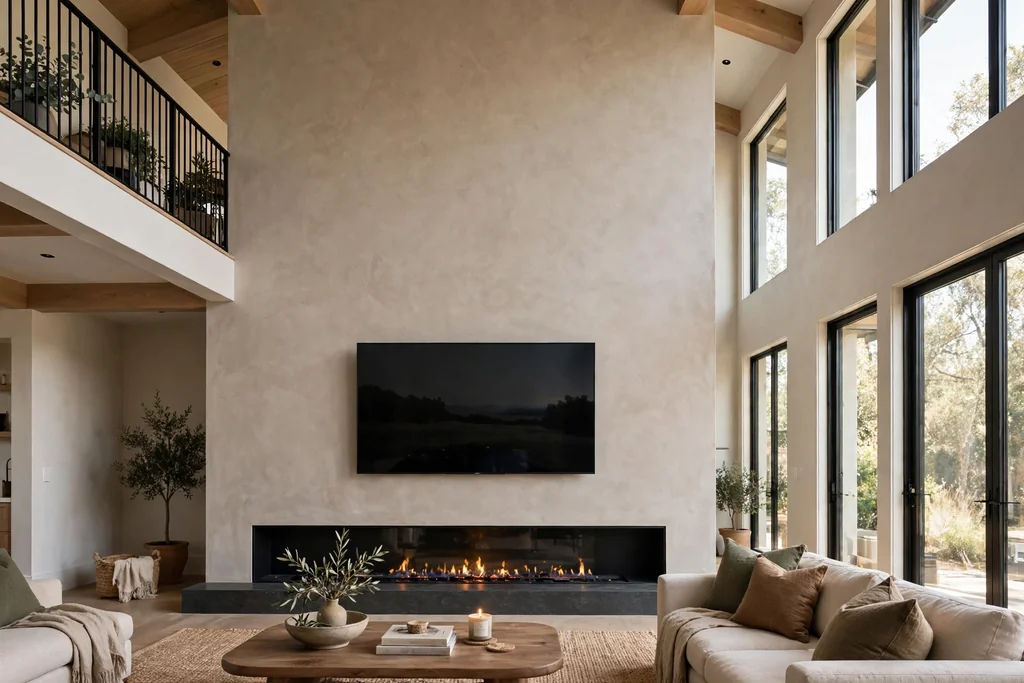
A double height wall with a long linear fireplace low down and the TV above it suits a room with a tall ceiling and a large window wall. Keep the fireplace wide and low, mount the TV at a height that suits the main seating rather than the ceiling, and leave the upper wall plain or panelled so the eye is not pulled too high. The long fire line anchors the tall wall without forcing the TV up with it.
Use a pull down TV mount if the only sensible position is high, so the screen can drop to eye level for viewing and rise again after. Keep the upper wall finish simple, since a busy finish high up will compete with the screen. This idea suits a new build or a converted space with a tall living wall.
15. Gallery Wall Framing the TV and Fireplace
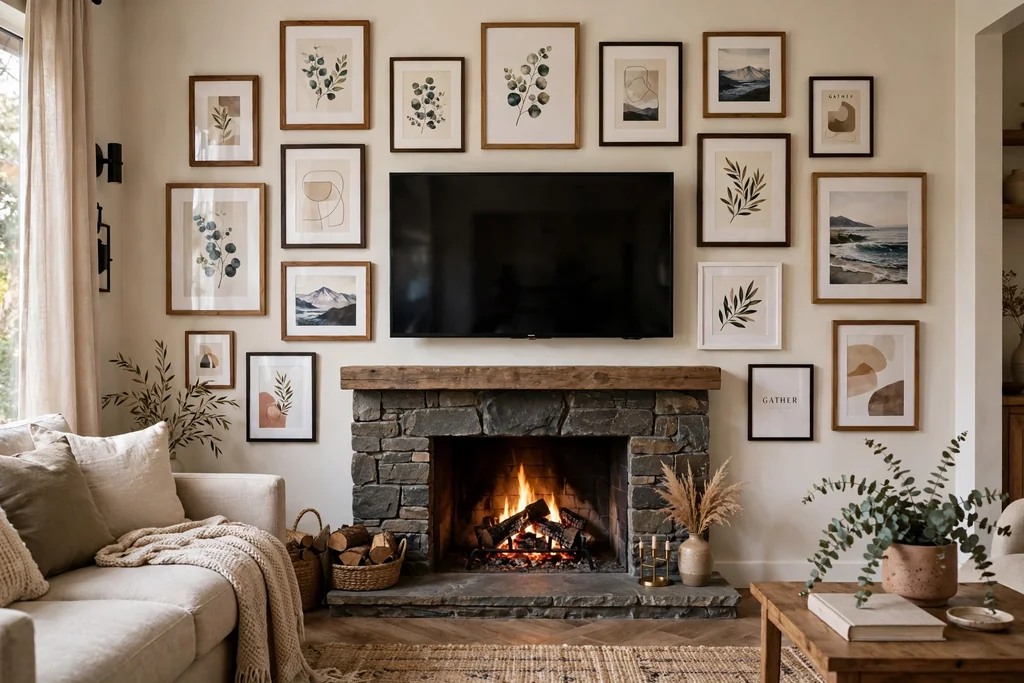
A gallery wall around the TV and fireplace softens the black screen when it is off and makes the wall feel like part of the room scheme. Hang framed prints, photos, and one small mirror around the TV, keeping even gaps and one shared frame finish, and leave the fireplace surround plain so the gallery does not crowd it. The TV becomes one rectangle among many, rather than a blank slab.
Keep frames clear of the heat path above the fireplace, and use light frames that are easy to move for TV access. A gallery suits a room with collected art, a family photo collection, or a wall that feels empty beside a small TV. For mirror sizing and placement within a mixed gallery, the advice in these mirror wall decor ideas pairs well with a fireplace gallery wall.
16. Hidden TV Behind a Sliding Panel Above the Fireplace
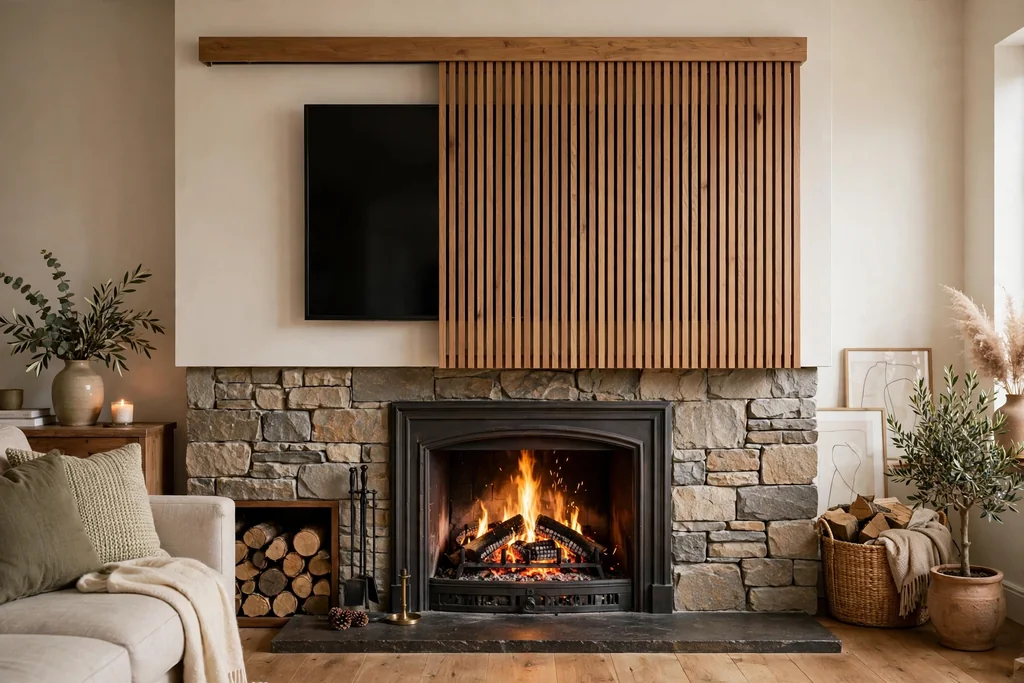
A sliding panel or a piece of art on a track hides the TV above the fireplace when it is not in use, so the wall reads as a fireplace wall first. Fit a panel, a framed print, or a pair of sliding doors on a track across the TV recess, and slide it aside for viewing. The fireplace stays the focus for conversation, and the screen appears only for films and shows.
Choose a track rated for the panel weight and fit stops so the panel cannot slide into the heat path. Keep the panel finish close to the wall color or the art style of the room, so it does not look like a cover. This idea suits a formal living room, a room used mainly for reading and talking, or a household that prefers the TV out of sight.
17. White Minimalist Wall With a Frameless Electric Fire
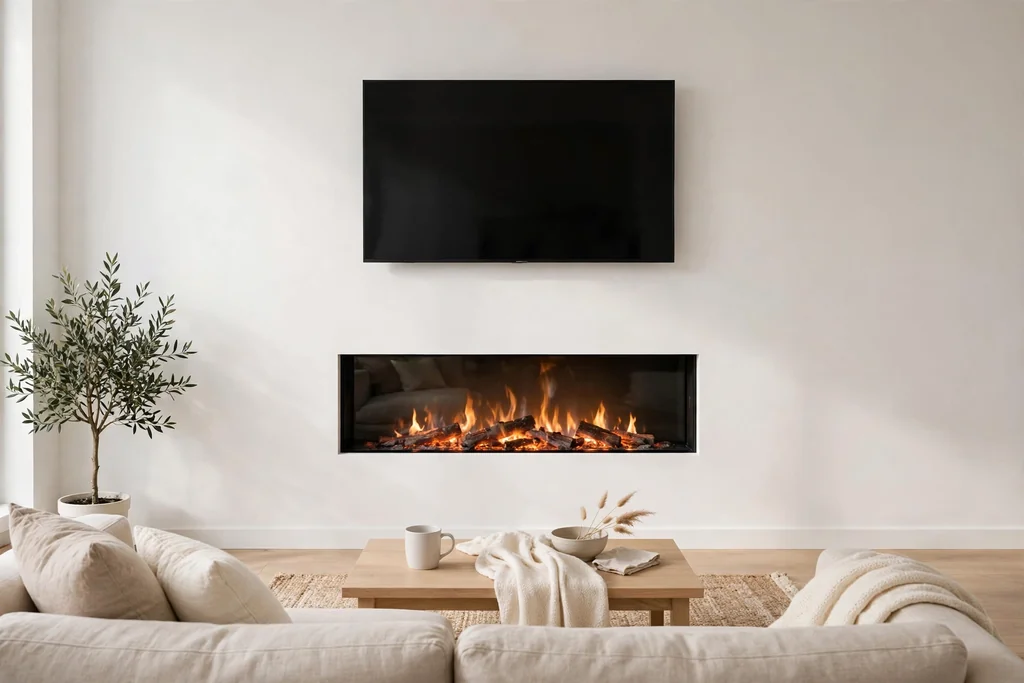
A white minimalist wall pairs a frameless electric fire with a wall mounted TV and almost no other decoration. Paint the wall, the surround, and any trim one white, fit a flush electric fire low in the wall, mount the TV above with hidden cables, and leave the mantel empty. The calm surface lets the fire glow and the screen carry the room.
Keep the white clean with washable paint near the fire, and hide every cable inside the wall or a flush channel. A single low console or a bench below the fire gives the wall a base without adding clutter. This layout suits a small, bright room where a busy feature wall would feel crowded.
18. Rustic Beam Mantel With a TV Above
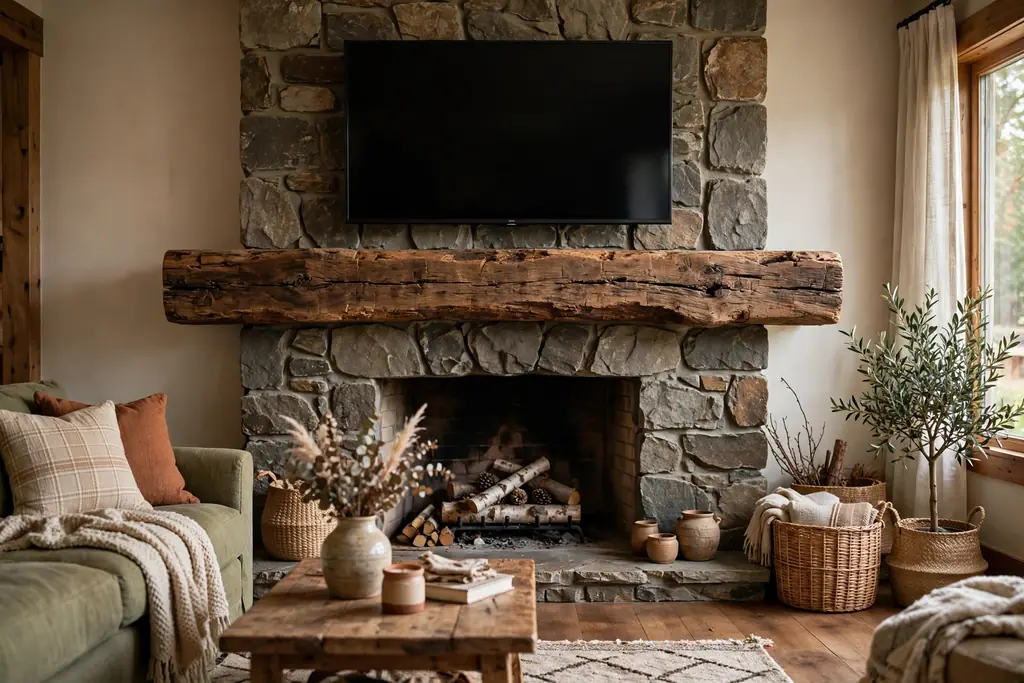
A thick rustic wood beam as a mantel gives a fireplace wall warmth and a clear horizontal line for the TV above. Fix a reclaimed or new beam across the chimney breast, mount the TV above it on a bracket into the breast, and style the beam with one or two low items at the ends. The beam suits stone, brick, and plaster walls alike.
Check the beam weight and fixings, since a solid beam is heavy, and keep it clear of the fire opening by the clearance the fireplace maker states. Seal the wood if it sits near a working fire, and avoid placing candles directly on the beam above the opening. This idea suits a cottage, a farmhouse, or a room with wood floors and soft furnishings.
19. Concrete and Microcement Fireplace Wall
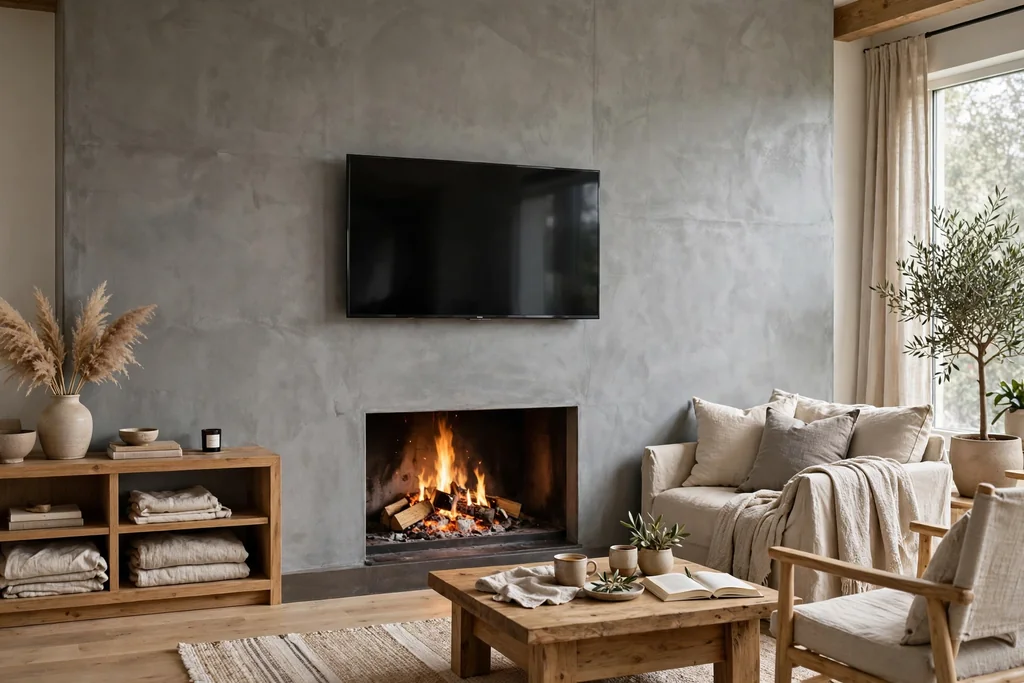
A concrete or microcement wall gives the fireplace and TV a smooth, industrial backdrop with subtle texture. Apply the finish across the whole feature wall, set the fire opening low and clean, and mount the TV on a bracket fixed into the solid wall behind. The plain surface suits a large TV, since nothing competes with the screen.
Seal the finish as the maker advises, especially near a working fire, and keep the wall color mid toned rather than very dark, so the room does not feel cold. Pair the wall with wood, linen, and warm lamps to soften the hard surface. This layout suits a modern loft, a converted space, or a room with concrete floors.
20. Full Cabinetry Wall With the TV Set In
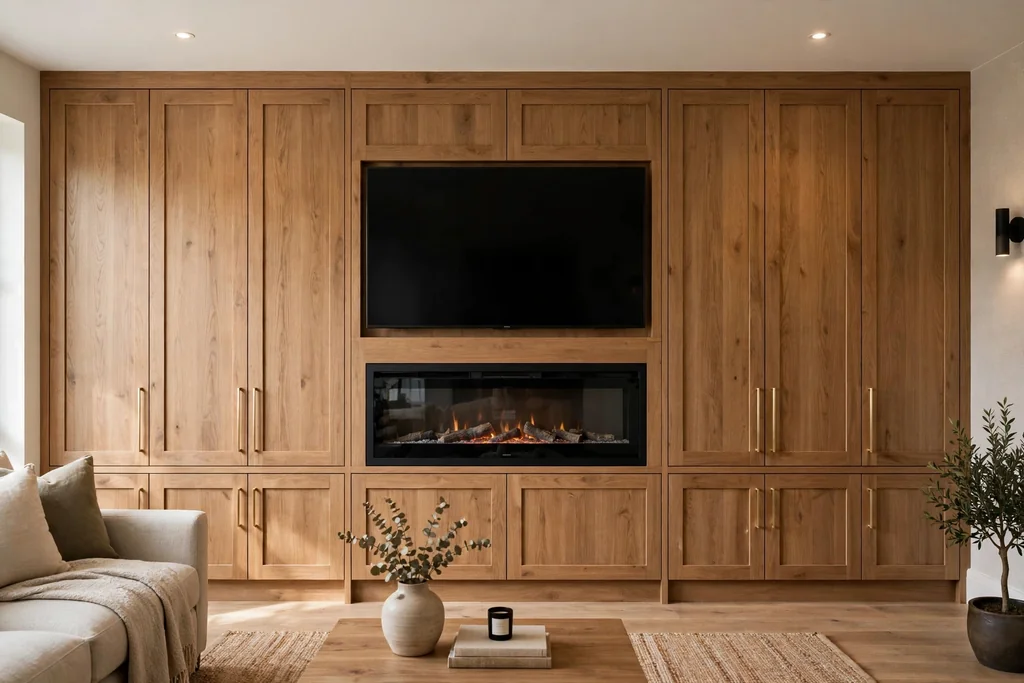
A full cabinetry wall sets the fireplace and TV into fitted units, with closed storage hiding every box and cable. Fit floor to ceiling cabinets across the wall, leave an open section for the TV and a lower opening for the fire, and use push to open doors so the wall reads as one calm panel when closed. The TV sits at eye level, not high above a mantel.
Plan ventilation inside the cabinet sections that hold media boxes, and leave a service gap behind the TV section for cables. Keep one open shelf for a soundbar if one is used, and match the cabinet finish to the room, such as painted wood in a calm room or oak in a warm one. This idea suits a family room where storage matters as much as viewing.
21. Arched Niche Fireplace Wall With a TV Above
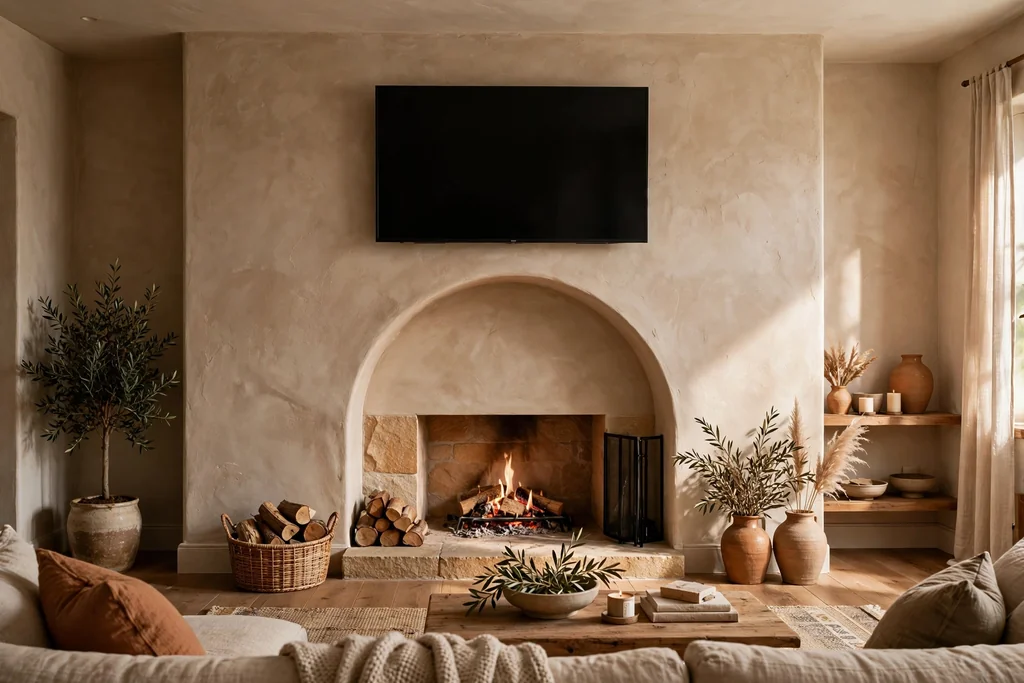
An arched niche gives a fireplace wall a soft, classic shape that suits older homes and Mediterranean style rooms. Build or keep an arched opening for the fire, plaster the wall smooth, mount the TV above the arch on a flat section, and keep the surround plain so the arch shape leads. The curve softens the rectangle of the screen.
Mount the TV on the flat wall above the arch, not on the curve itself, and center it on the arch below. Keep the arch finish simple, with limewash or plain plaster, so the shape is the feature. This layout suits a room with arched doorways, curved furniture, or a warm plaster finish elsewhere.
22. Open Plan Divider Wall With Fireplace and TV
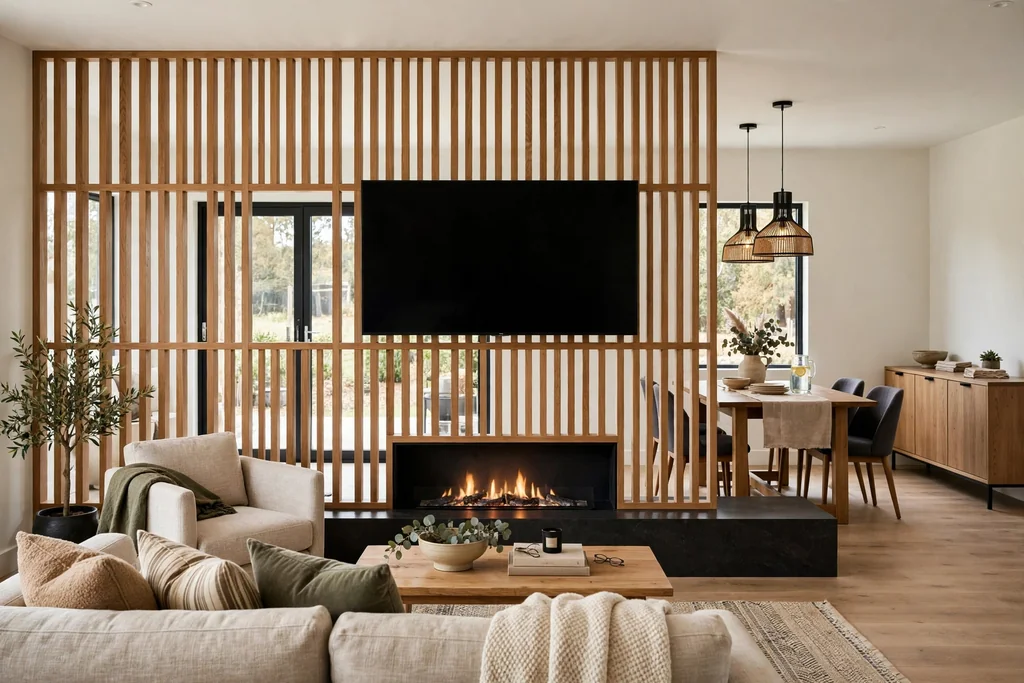
A divider wall between the living area and another zone, such as a dining area, can hold the fireplace on one side and the TV on the other, or both on the living side with seating facing it. Build a partial height or full height partition, fit a see through or single sided fire, mount the TV on the living side, and arrange seating to face the divider. The wall defines the living zone without closing the room off.
Check sight lines from the dining side, so the back of the TV does not face diners, and use a double sided fire if both sides should enjoy the glow. Route cables inside the partition and place media storage in the partition base. This layout suits an open plan flat or a large room split into living and dining zones.
Conclusion
A good fireplace wall with a TV starts with safety and viewing comfort, then style. Measure the heat, set the TV height from your usual seat, hide the cables, and give the wall one clear lead, whether that is the fire, the screen, or a calm panel that holds both. Pick one idea from this list that fits your fireplace type and your wall, and test the layout with painter tape and a cardboard screen outline before you drill. A wall planned this way will work for quiet evenings by the fire and for film nights alike, without forcing you to choose between the two.
Save this list for your next living room refresh, and start with the checks that matter most: heat clearance, viewing height, and cable routes. Once those are settled, the finish, whether stone, shiplap, wood slats, or plain plaster, becomes the enjoyable part.
FAQs
How high should I mount a TV above a fireplace?
Mount the TV so its center sits as close as possible to eye level from your usual seat, usually around 42 to 48 inches from the floor for a sofa seat, and keep the gap between mantel and TV small. If the mantel forces the TV high, use a pull down mount that lowers the screen for viewing, or choose an asymmetric layout with the TV beside the fireplace instead of above it. Test the height by sitting in your seat and looking at a taped outline before you fix the bracket.
Will heat from the fireplace damage a TV?
Heat can damage a TV if the wall above the fireplace gets too hot, so check before you mount. Run the fireplace at full output, measure the wall temperature where the TV will sit, and compare it with the limits in both the TV and fireplace manuals. A mantel that projects from the wall, a heat deflector, or an electric fire that blows heat forward can all reduce the temperature at the screen. If the wall stays hot, place the TV beside the fireplace rather than above it.
How do I hide cables on a fireplace wall with a TV?
Route cables inside the wall where the wall allows it, through a hollow mantel, or behind a cable channel painted to match the wall. Plan the route before you mount anything, and leave a small access point behind the TV so you can reach connections later. A low console or a closed cabinet below the TV gives cables a short, tidy path to media boxes and the nearest outlet.
What size TV suits a fireplace wall?
Choose a TV that relates to the mantel width and the seating distance, rather than the largest screen that fits the wall. As a guide, the TV width should sit comfortably within the mantel or chimney breast width, and the seating distance should suit the screen size for comfortable viewing. A TV much wider than the fireplace below it will dominate the wall, while a very small TV above a wide breast will look lost.
Can I mount a TV on stone, brick, or shiplap?
Yes, with the right fixings for each surface. Stone and brick need masonry rated anchors and a bracket fixed into solid material, while shiplap needs a bracket fixed through the boards into studs, since the boards alone will not hold a TV. Mark studs or solid points before drilling, use a bracket rated above the TV weight, and check that the fixings sit clear of the fire opening and any flue.
Should the TV or the fireplace be the focal point?
Give the wall one lead and let the other support it, so the wall does not feel split. If the fireplace is the lead, keep the TV modest, the surround strong, and the mantel styling simple. If the TV is the lead, keep the fireplace low and plain, and let the screen and seating arrangement set the room. In a room used mainly for conversation, the fireplace should lead; in a room used mainly for films, the TV can lead.