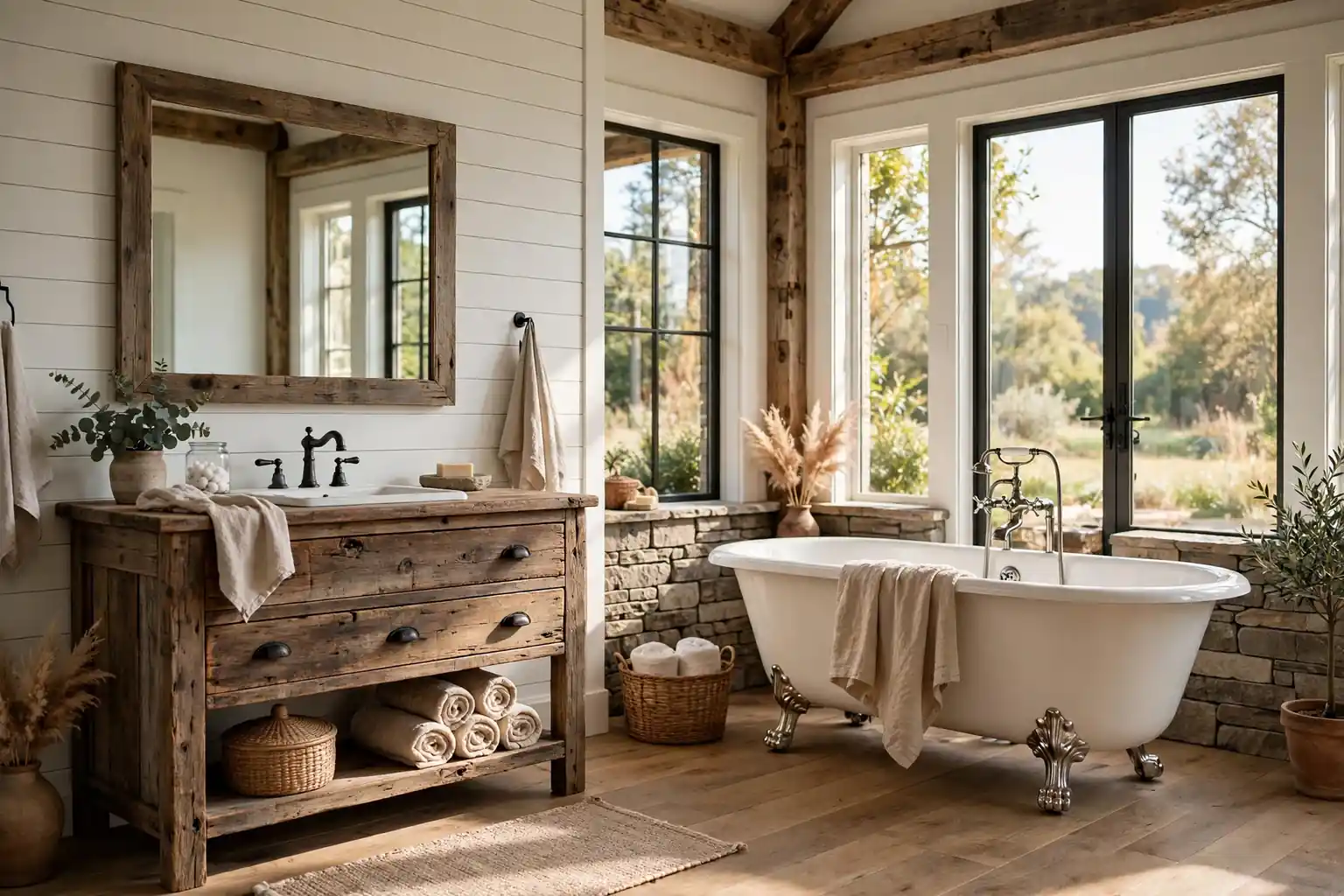
A rustic bathroom works best when wood, stone, and linen do most of the work, and nothing feels too polished to touch. A reclaimed vanity, a shiplap wall, and warm light can make even a plain room feel like a cabin retreat, while still giving you clear counters and easy cleaning. These 26 rustic bathroom ideas cover vanities, walls, tubs, showers, storage, and small details, so you can pick one change or plan a full room. Start with the largest surface first, then add texture in small doses. If your shower needs a layout plan first, the layout advice in these walk in shower ideas pairs well with the rustic finishes below.
Key Takeaways
- Start with one large wood or stone surface, such as a vanity or a wall, and keep the rest of the room quiet so that surface stands out.
- Repeat one wood tone and one metal finish in three or four places, so the room reads as planned rather than collected at random.
- Choose water friendly materials in wet zones, such as sealed wood, stone, and wood look tile, and save raw untreated wood for dry walls and shelves.
- Layer warm light with a main light plus a sconce or lantern, since harsh overhead light alone flattens wood grain and stone texture.
- Keep counters clear with baskets, hooks, and one shelf group, because clutter hides the natural materials that give rustic rooms their calm feel.
- Add soft textiles last, such as linen, wool, and cotton towels, to balance hard tile, metal, and stone.
1. Reclaimed Wood Vanity with a Vessel Sink
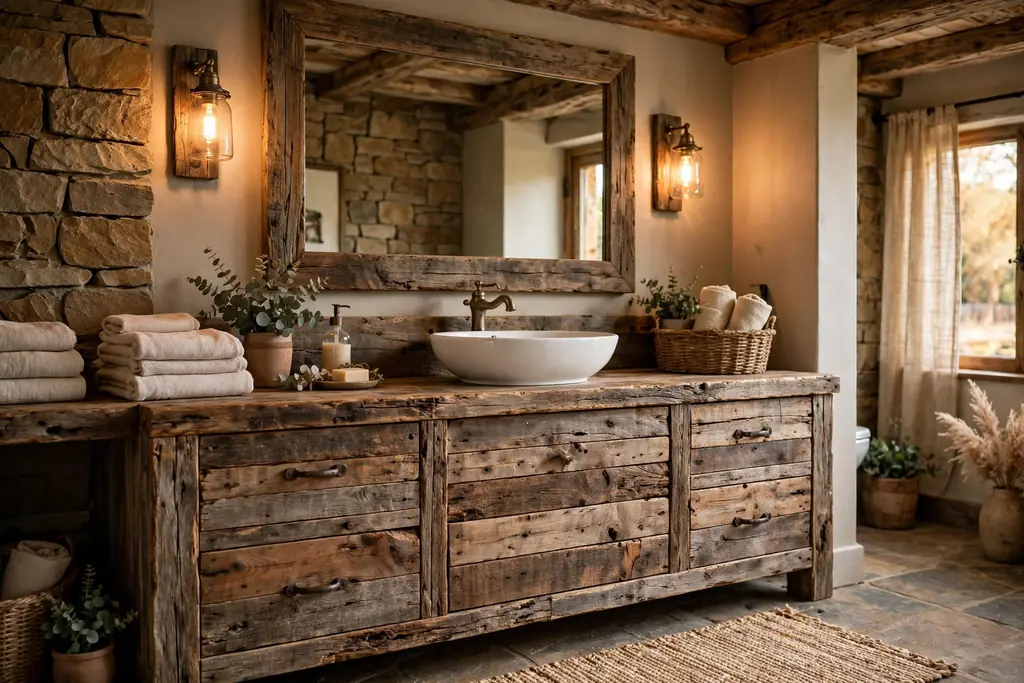
Build the room around a reclaimed wood vanity, with a simple vessel sink sitting on top and open space below for baskets. The rough grain and knots give the bathroom instant character, and the vanity becomes the focal point without needing bold color. This suits a main bathroom best, where the vanity can be wider and the wood has room to show.
Seal the wood well, especially around the sink and taps, and wipe splashes promptly so water does not sit in the grain. Keep the counter clear except for a soap dish and one small plant, so the wood stays visible. Pair the vanity with a plain mirror and simple taps, so the wood remains the star of the room.
2. Shiplap Accent Wall Behind the Vanity
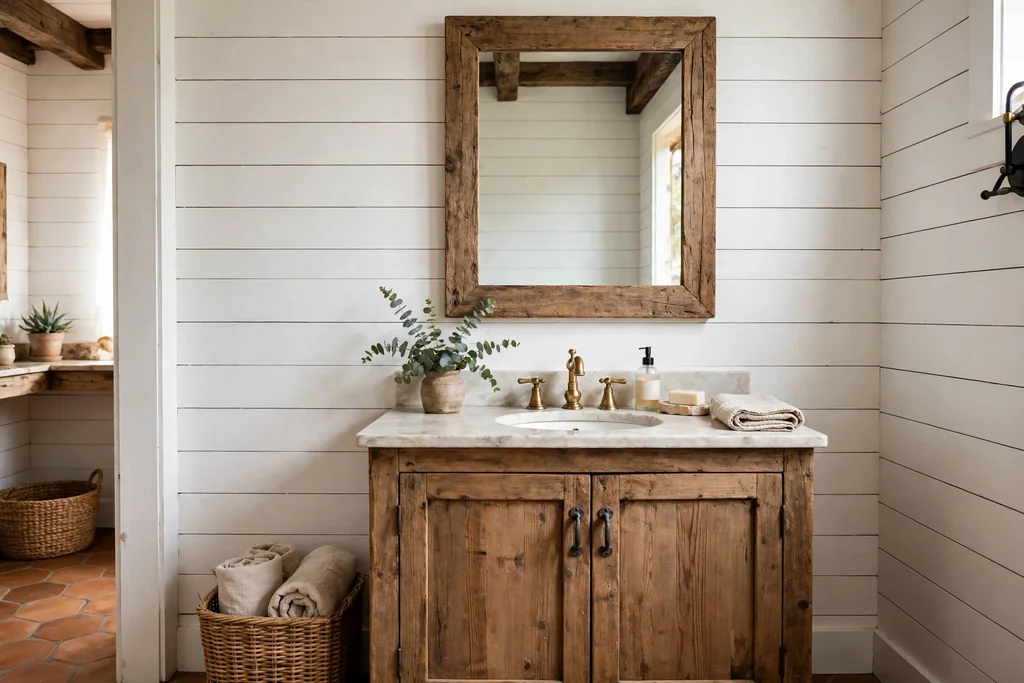
Add shiplap boards to the wall behind the vanity, running them horizontally to widen the room visually or vertically to add height. Painted white shiplap keeps the room bright, while a natural wood stain gives a deeper cabin feel. This is a good first rustic change, since one wall changes the whole room without a full remodel.
Seal boards in a bathroom with a moisture resistant finish, and keep shiplap off the wall directly inside the shower, where constant steam can damage it. Leave a small gap at the floor and seal the bottom edge, so mop water does not soak into the boards. A wood framed mirror over shiplap ties the wall to the vanity below.
3. Freestanding Clawfoot Tub as the Centerpiece
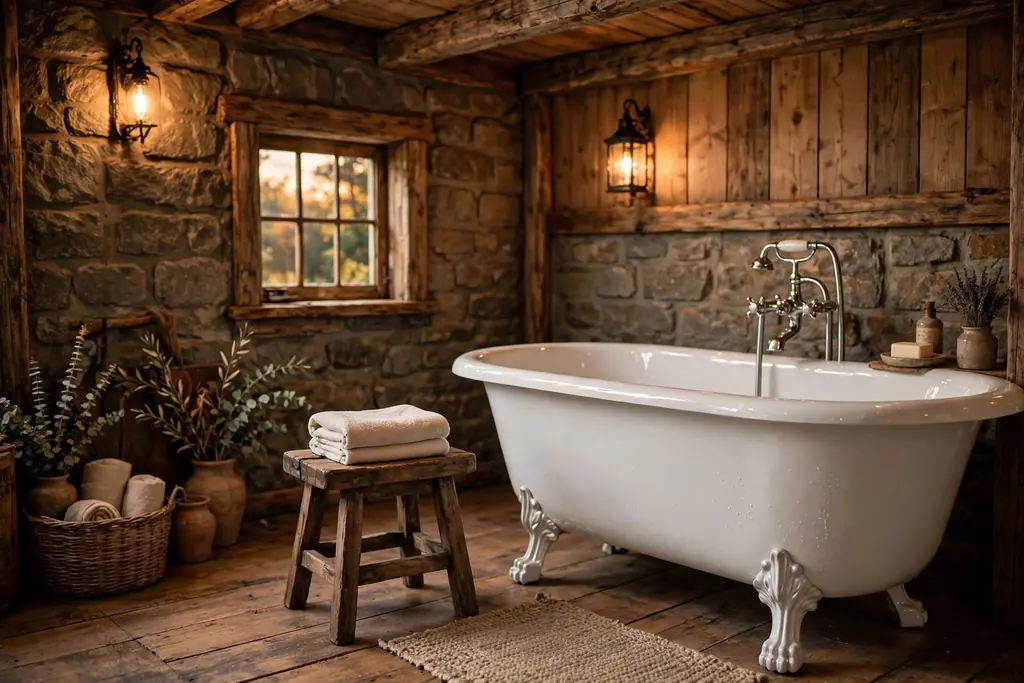
Place a freestanding clawfoot tub where it can be seen from the door, with space around it for a small stool and a bath tray. The curved shape and raised feet suit rustic rooms well, since they echo older farmhouse bathrooms without needing ornate trim. This idea needs floor space, so measure the tub plus a step in and out before you commit.
Keep the walls near the tub simple, with one wood shelf or a towel hook, so the tub stays the centerpiece. A floor mounted filler in matte black or aged copper keeps the rustic tone, and a soft rug beside the tub protects bare feet from cold tile. If floor space is tight, a shorter slipper tub gives a similar look in a smaller footprint.
4. Sliding Barn Door for the Bathroom Entry
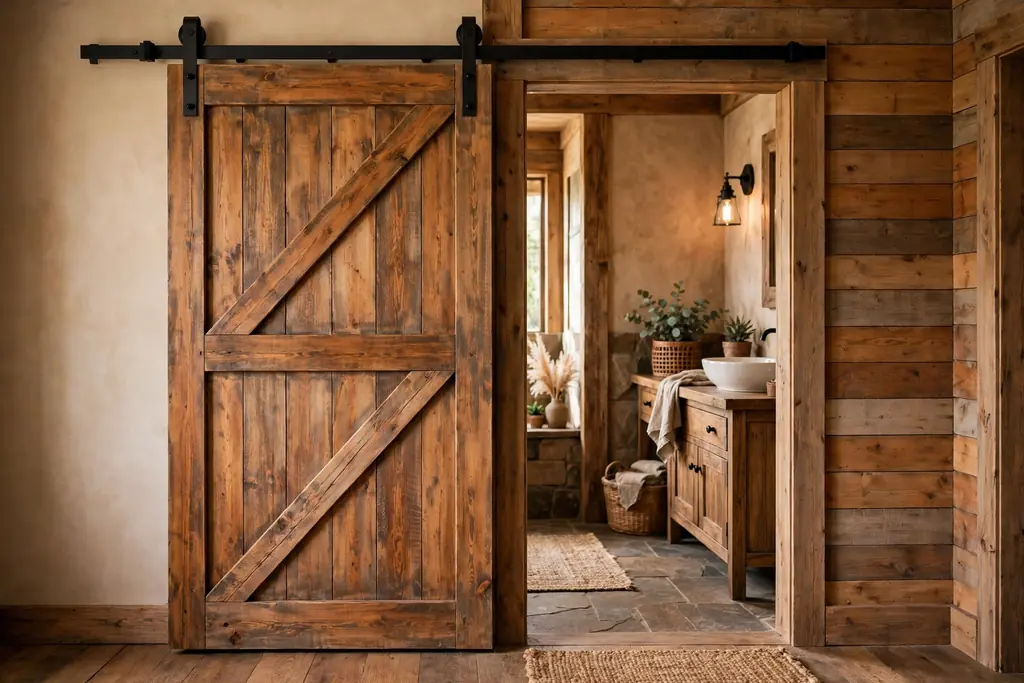
Swap a standard bathroom door for a sliding barn door on a visible rail, which saves swing space and adds a strong wood feature at the entry. Barn doors suit bathrooms that open onto a hall or bedroom, where the door itself becomes part of the decor. Choose a solid wood door in a warm tone, and match the rail finish to your taps and mirror frame.
Check that the wall beside the door is clear for the full slide, and that the door closes fully for privacy, since barn doors can leave a small gap at the edge. Add a soft close stop so the door does not slam, and keep the track clean of dust. If privacy is a concern, use a door with no gaps at the sides, or add a simple latch.
5. Stone Vessel Sink on a Wood Counter
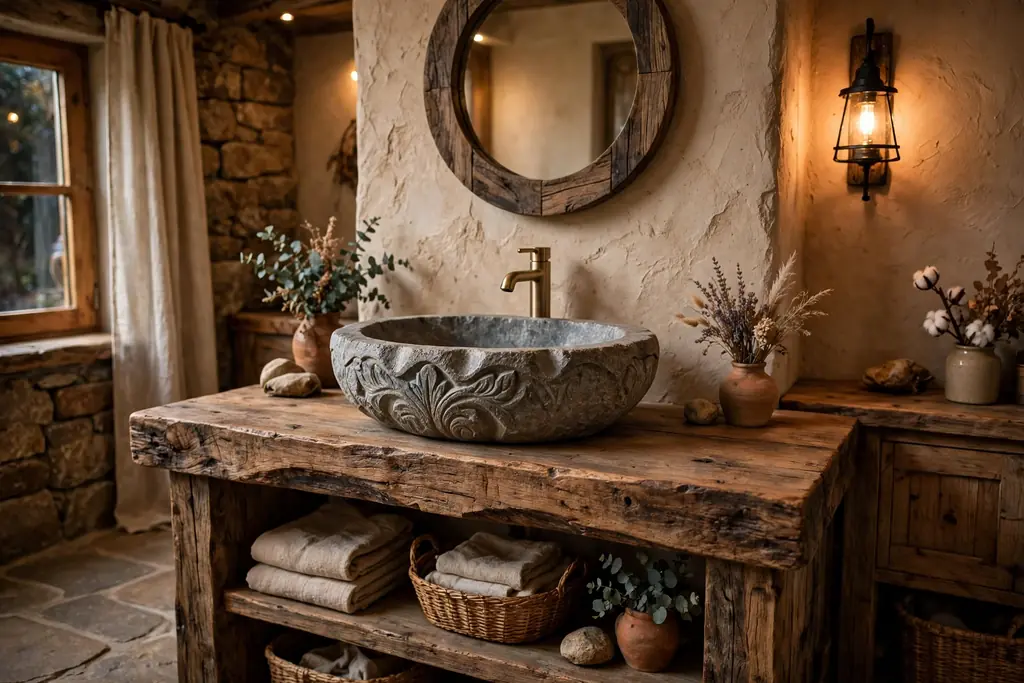
Set a carved stone vessel sink on a thick wood counter, so two natural materials meet at the most used spot in the room. Stone sinks vary in color and texture, from pale limestone to dark slate, so choose one that echoes your floor tile or shower stone. This idea suits a powder room well, where a single striking sink can carry the whole room.
Check the sink height with the counter added, since a vessel sits higher than a built in sink, and shorter users may need a lower counter. Seal the stone as the maker advises, and wipe it after use to avoid soap marks. Keep the taps simple and wall mounted if possible, so the stone shape stays clear.
6. Open Reclaimed Shelves Above the Toilet
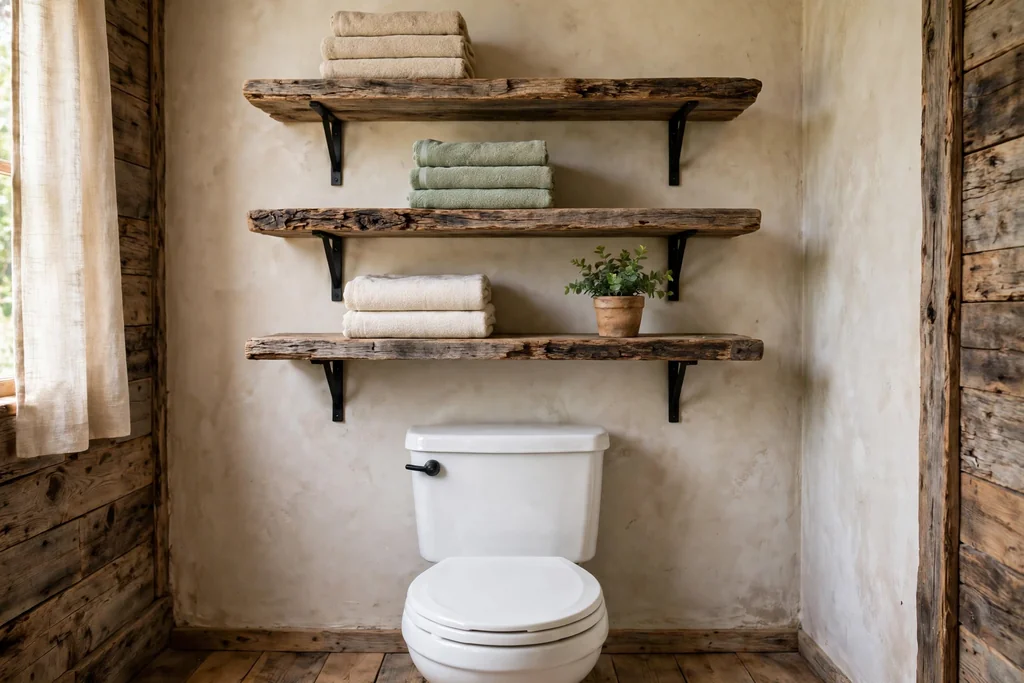
Fix two or three open reclaimed wood shelves above the toilet, for towels, spare toilet paper, and a small plant. Open shelves use wall space that often sits empty, and they keep daily items within reach without a cabinet door to open. This suits small rustic bathrooms, where a deep cabinet would crowd the room.
Mount the shelves high enough that no one bumps their head, and keep the lowest shelf for items you use daily. Use baskets on one shelf for anything you would rather not see, such as cleaning supplies, and leave breathing room around each group so the shelves look calm. Anchor shelves into studs or with fixings rated for tile and plaster, following the maker guidance.
7. Matte Black Wrought Iron Fixtures
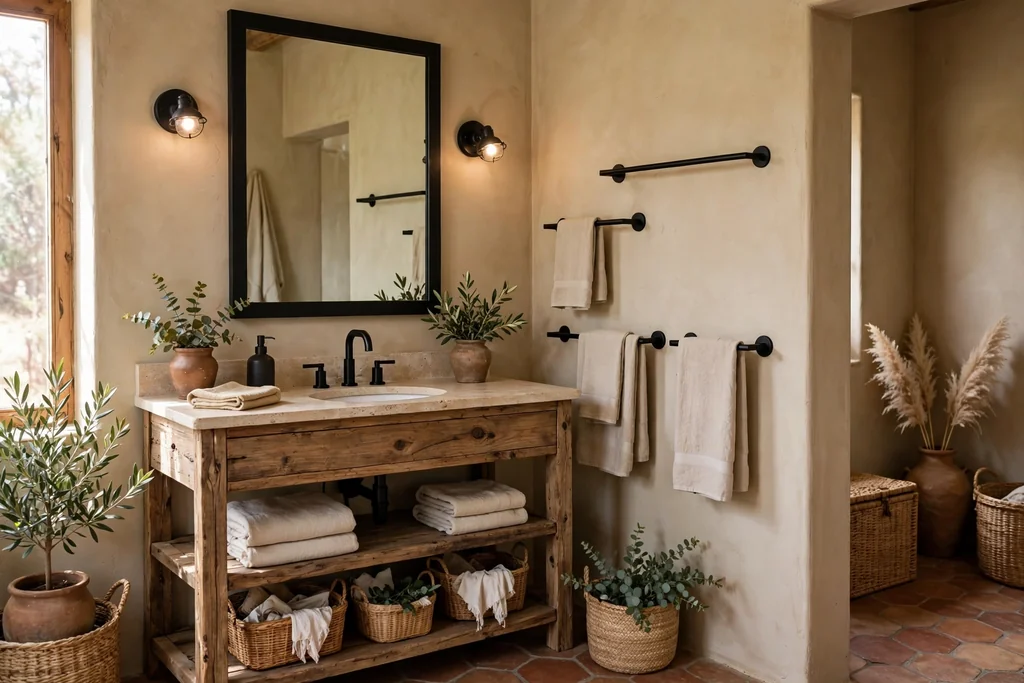
Use matte black wrought iron style fixtures for taps, towel bars, and mirror frames, to give the room a hand forged feel that pairs well with wood and stone. Black hardware reads clearly against pale shiplap and white tile, and it ties separate pieces together when the same finish repeats. This is an easy change that does not need plumbing work for bars and hooks.
Keep the finish consistent across the pieces you change, and save original screws and fittings if you rent. Wipe black fixtures weekly, since water spots show more on matte black than on chrome. If you change taps too, check that the new taps suit your existing sink holes and water pressure before ordering.
8. Exposed Wood Ceiling Beams
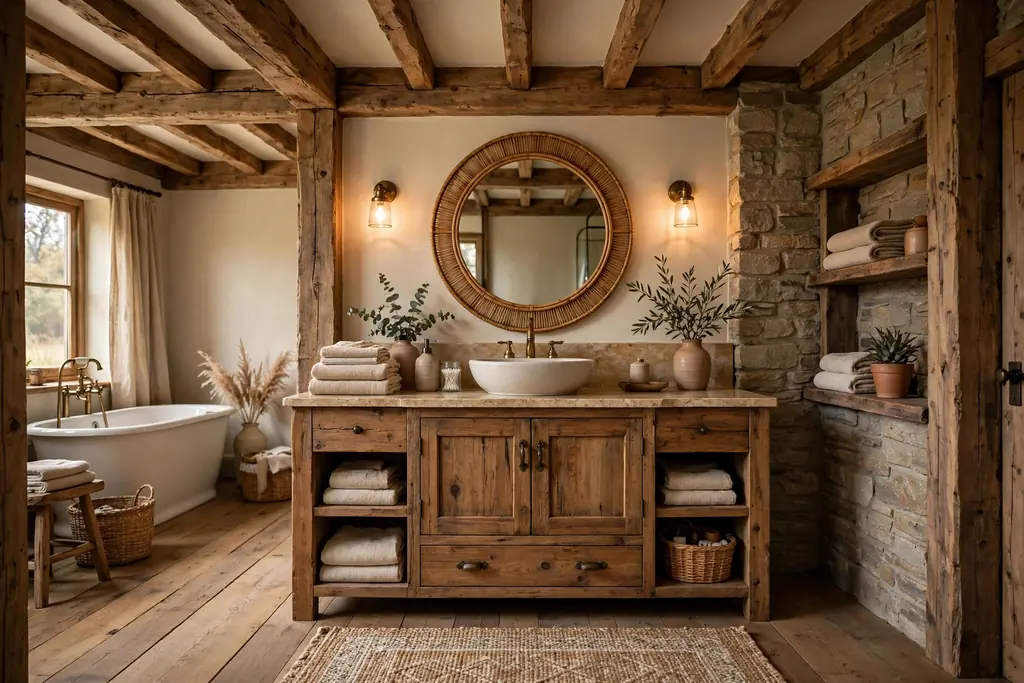
Add exposed wood beams across the bathroom ceiling, or highlight existing beams with a clear seal, to draw the eye up and give the room a cabin structure. Beams suit bathrooms with a higher ceiling, where they add warmth without making the room feel low. In a low ceiling room, use slim beams in a pale stain so they add texture without pressing down visually.
Seal beams against bathroom steam, and keep light fixtures clear of the beams so light still spreads evenly. A beam over the tub or vanity can frame that zone, while beams across the whole ceiling give a more complete cabin feel. If real beams are not possible, hollow wood look beams give a similar outline with less weight.
9. Pebble Shower Floor for Grip and Texture
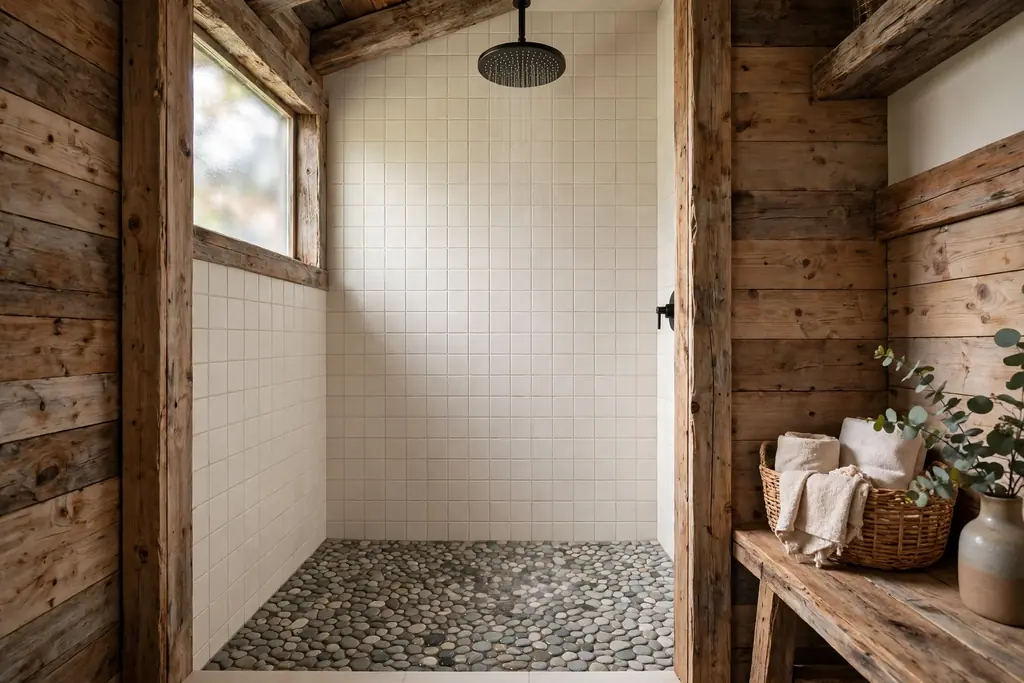
Lay a pebble floor in the shower, with small rounded stones set in grout, for natural grip underfoot and a texture that flat tile cannot match. Pebble floors suit rustic bathrooms well, since they echo a riverbed and pair with plain wall tile. Keep the walls quiet when the floor is busy, so the pebbles stay the feature.
Check that the stones sit level and that grout fills the gaps evenly, since uneven stones can feel uncomfortable to stand on. Seal the floor as your tile maker advises, and rinse it after showers to stop soap buildup in the grout. If a full pebble floor feels too bold, use pebbles on the shower floor only, with plain tile on the bathroom floor.
10. Thick Wood Framed Mirror
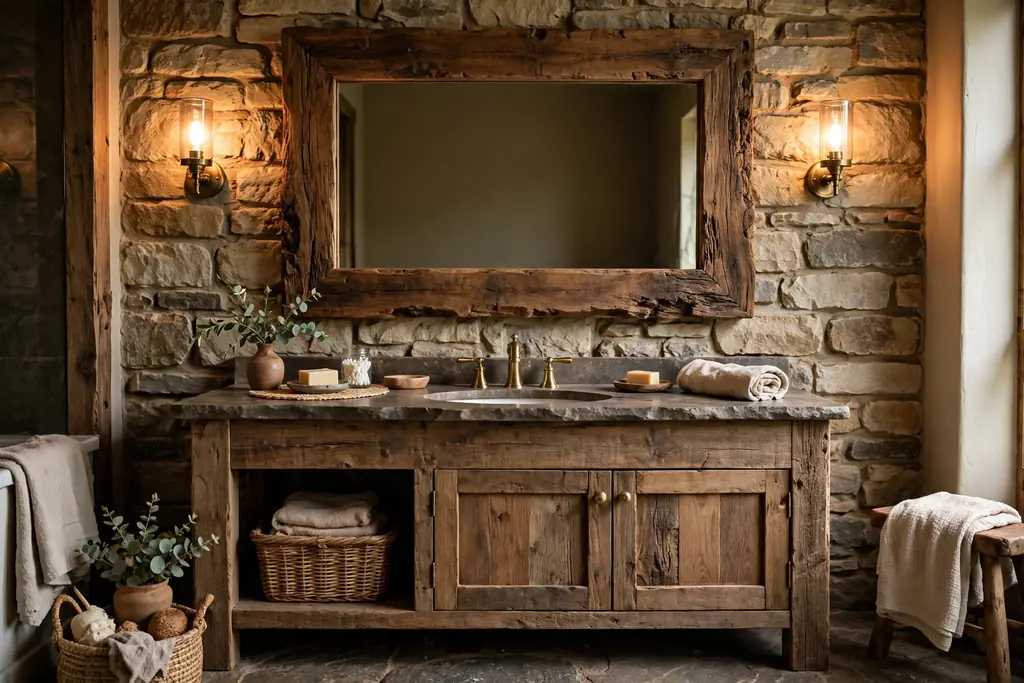
Hang a thick wood framed mirror over the vanity, with a frame in the same tone as the vanity or shelves, to anchor the sink wall. A chunky frame suits rustic rooms better than a thin metal frame, since it echoes the wood elsewhere and adds weight to the wall. Choose a mirror a little narrower than the vanity, so the edges do not crowd the light fixtures.
Seal the wood frame against steam, especially at the bottom edge nearest the sink, and wipe splashes promptly. If the mirror is heavy, fix it into studs or with hardware rated for its weight. A wood frame with a simple shape, such as a straight plank frame, stays calm and lets the grain show.
11. Wooden Ladder Towel Rack
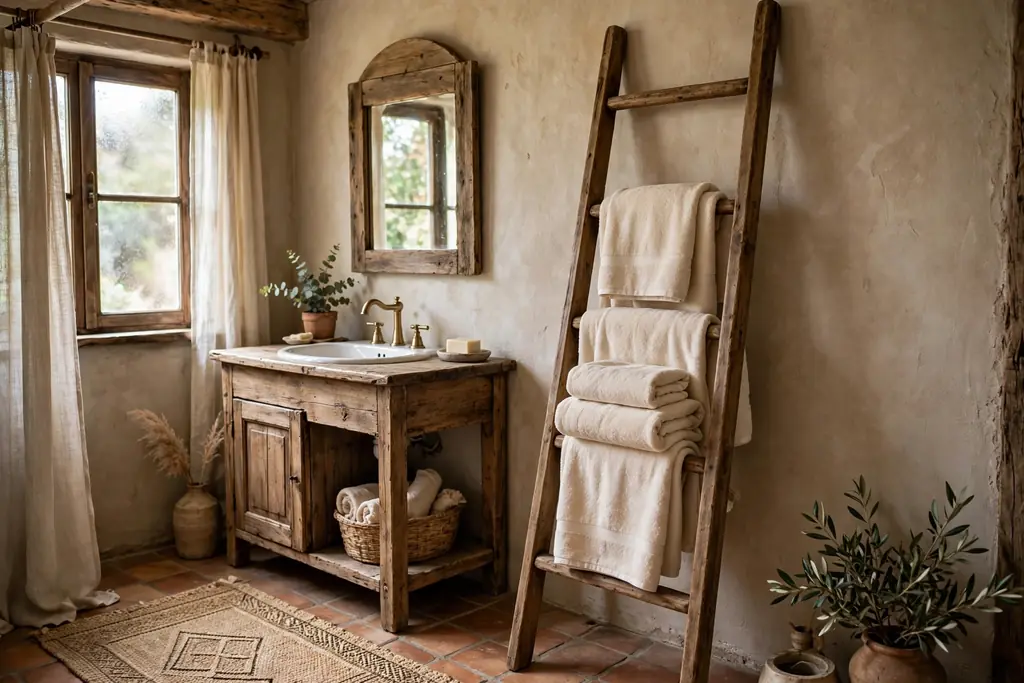
Lean a wooden ladder against a spare wall for towels, with wider rungs at the bottom for bath towels and narrower rungs higher up for hand towels. A ladder rack needs no drilling, suits renters, and adds a tall wood shape to a room that often has only low furniture. Place it near the shower or tub, where towels are easy to reach.
Add small pads under the feet so the ladder does not slide on tile, and check that the top cannot tip forward if a child or pet pulls on it, anchoring it if your household needs that safety. Keep only towels on the ladder, so it does not become general storage. A ladder in a warm wood tone ties neatly to a reclaimed vanity or wood shelves.
12. Woven Basket Storage for Toiletries
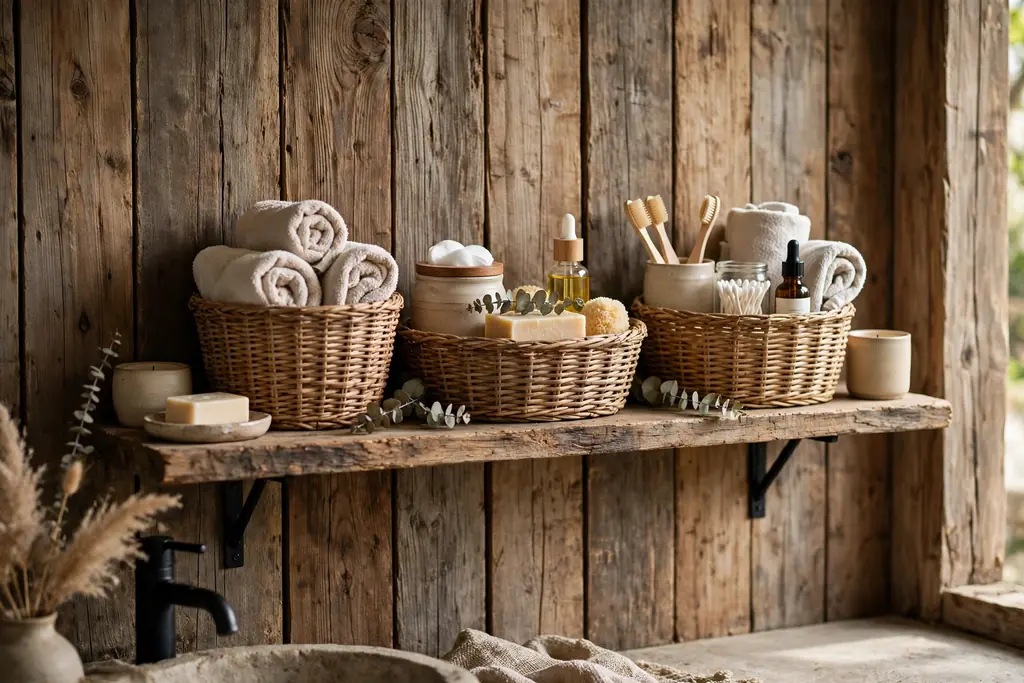
Sort toiletries and towels into woven baskets, with one basket per person or per job, such as hair care, skin care, and cleaning. Baskets soften hard tile and porcelain, hide bottle clutter, and add the woven texture that rustic rooms need. Seagrass and cotton rope baskets cope well with bathroom humidity if kept off wet floors, so set them on a shelf or stool rather than beside the tub.
Label the base of each basket if several look alike, and empty each basket once a month, returning only what you actually used. Keep one basket for spare towels, rolled rather than folded, so it looks full without taking extra space. If baskets sit near the shower, choose ones with a wipe clean lining.
13. Galvanized Metal Accents
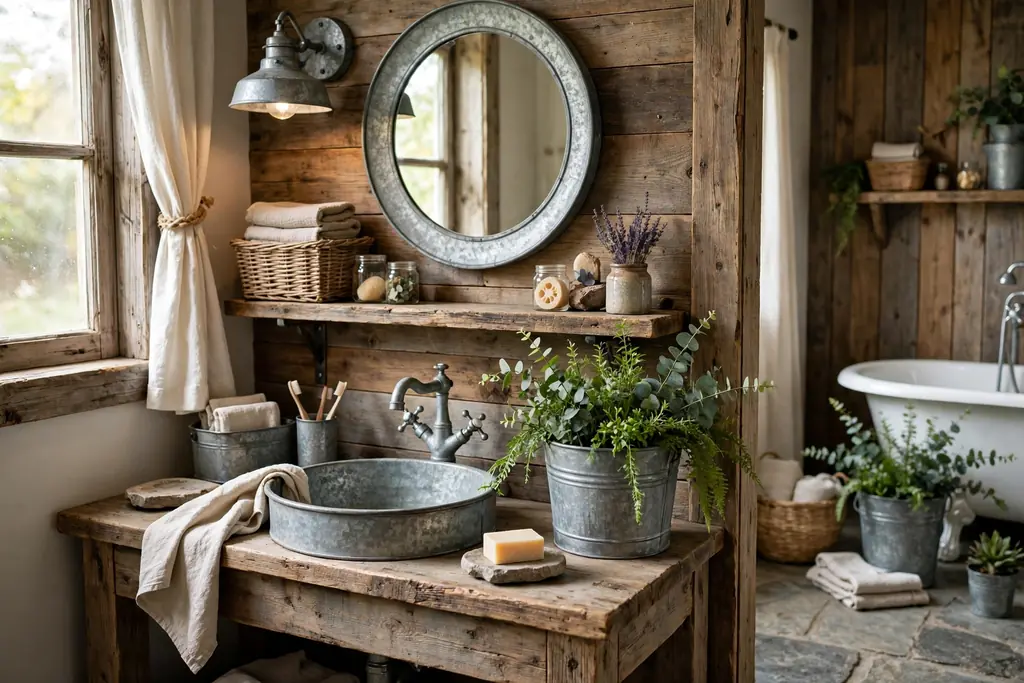
Add galvanized metal in small doses, such as a metal bucket planter, a metal framed mirror, or metal sconce shades, for a farmhouse workshop feel. Galvanized metal pairs well with wood, since the cool grey tone balances warm wood, and it works best as an accent rather than the main material. One or two metal pieces are enough in a small bathroom.
Keep metal away from constant water spray, and dry it after splashes, since even galvanized metal can mark over time in a damp room. A metal tray on the vanity, a metal bin, or metal wall hooks give the look without a large change. Match the metal tone to your other hardware only loosely, since a mix of black and galvanized metal can still read as rustic if wood ties them together.
14. Natural Stone Feature Wall
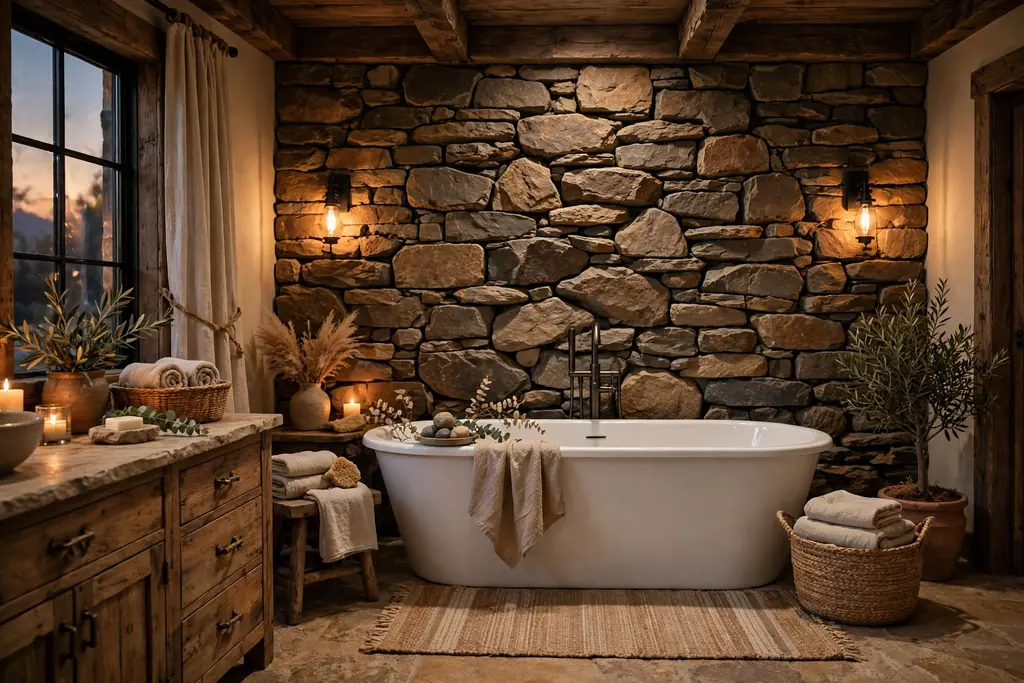
Cover one wall in natural stone, such as stacked slate or limestone tiles, to give the bathroom a rugged focal point behind the tub or vanity. Stone walls suit larger bathrooms best, where the texture has room to show, and they pair well with a plain floor and simple fixtures. Keep the other walls pale, so the stone wall does not make the room feel dark.
Seal the stone as the supplier advises, especially near the shower or tub, and choose a grout color close to the stone so the joints fade. If full stone feels heavy, use stone on the lower half of one wall, with painted boards above, for a lighter version of the same idea. A stone wall behind a freestanding tub makes the tub zone feel like a natural retreat.
15. Wooden Bath Tray Across the Tub
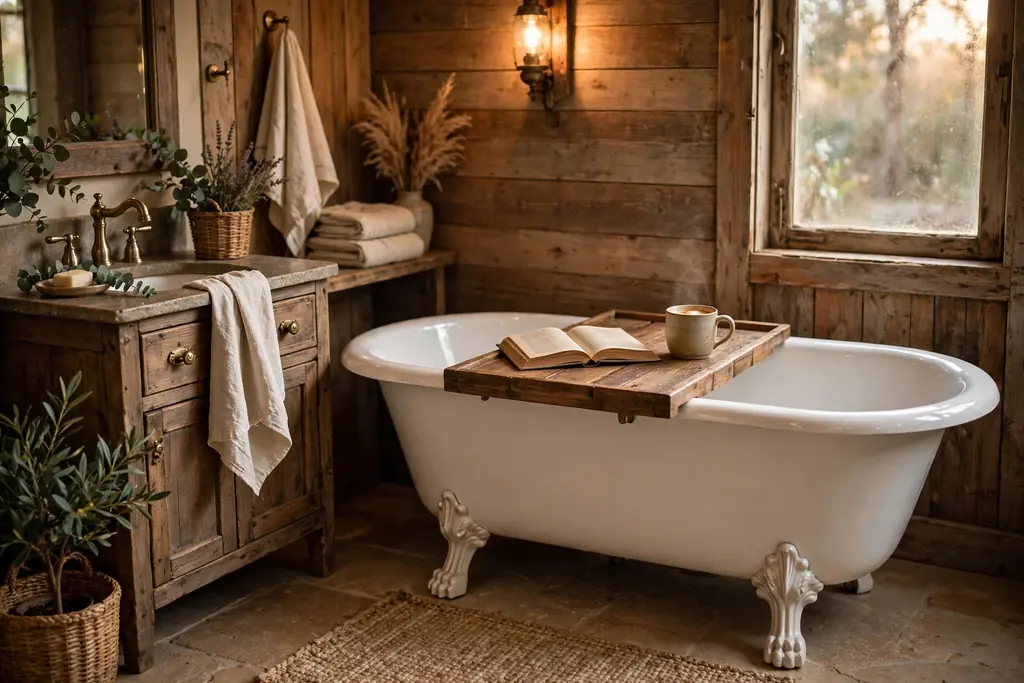
Rest a wooden bath tray across the tub, with slots for a book, a cup, and a candle kept safely away from the water. A tray turns a plain tub into a place to slow down, and it adds a warm wood line across white porcelain. Choose a tray that spans your tub width with extendable sides, and look for a model with a phone ledge that keeps electronics out of splash range.
Dry wood trays after each use to avoid warping, while bamboo and coated wood versions cope better with steam. Store the tray upright behind the door when not in use, so it does not become a permanent clutter spot. A tray in the same wood tone as the vanity ties the tub zone to the rest of the room.
16. Linen Shower Curtain in a Natural Tone
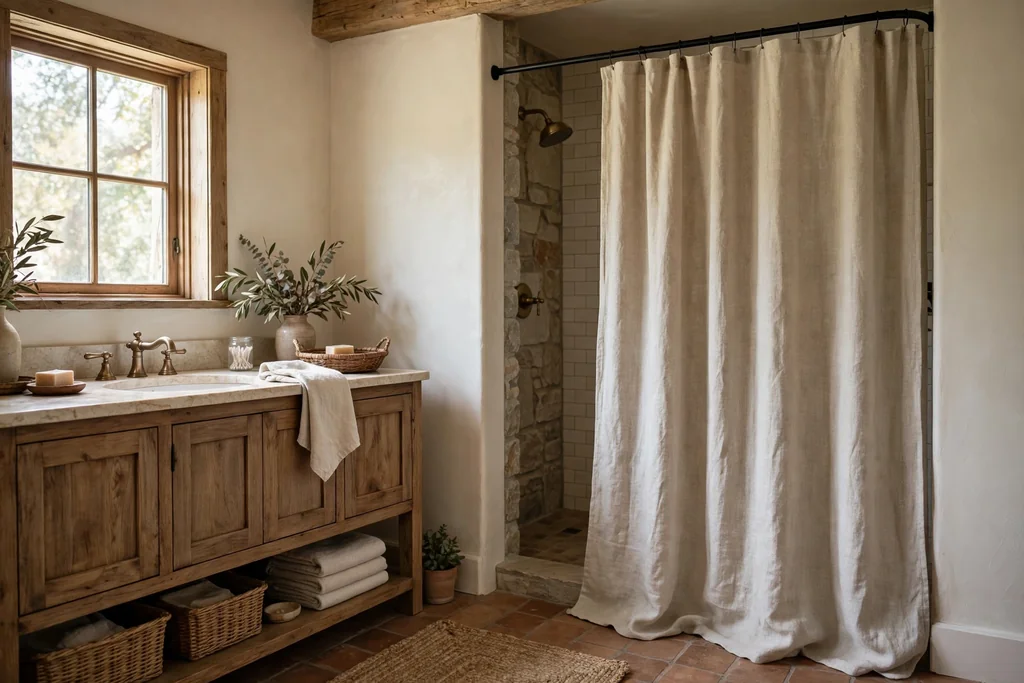
Swap a plastic shower curtain for a washable linen look curtain in a natural tone, such as oatmeal, sage, or warm white, with a separate waterproof liner inside. Linen softens a bathroom full of tile and metal, and it hangs better than thin plastic, giving the shower a finished, fabric feel. This is a low cost change that suits renters, since it needs no fixing beyond the existing rod.
Keep the curtain length so the hem stays clear of the tub floor, and wash it with the towels so it stays fresh. Use a fabric outer curtain with a liner that you can replace separately, since the liner takes the water while the outer curtain gives the look. Pair a plain linen curtain with a patterned rug or towels, so the room has one soft pattern, not two competing ones.
17. Tree Branch Towel Rail
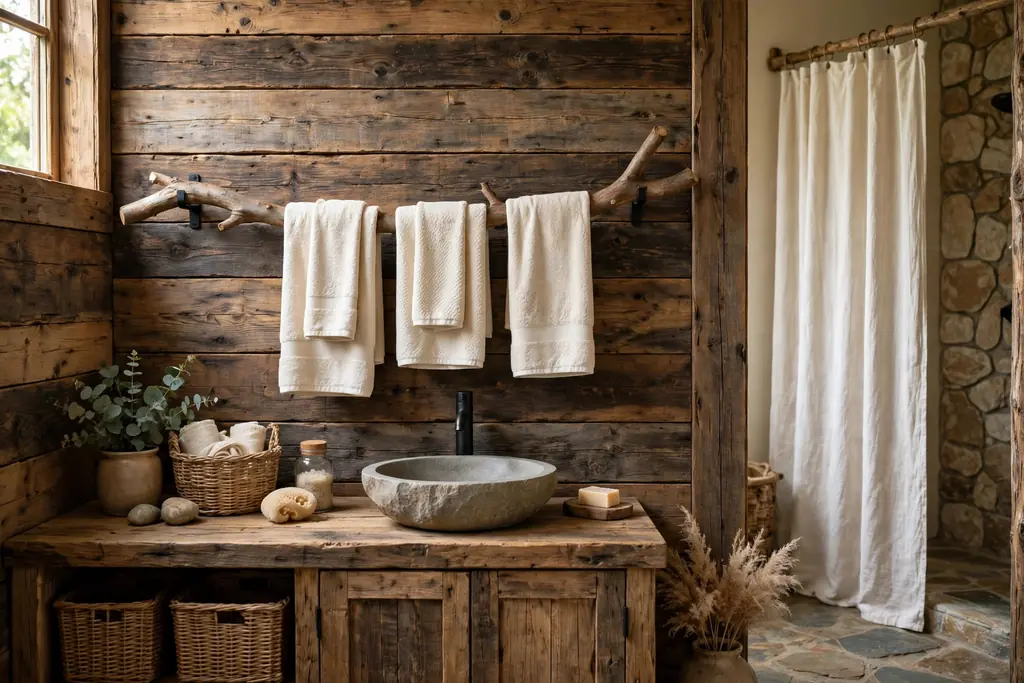
Fix a smooth, sealed tree branch as a towel rail on a spare wall, with sturdy brackets at each end, for a rustic detail that costs little and looks hand made. A branch rail suits a wall beside the tub or shower, where towels hang within reach, and it adds a natural line that straight metal rails cannot match. Choose a branch with a gentle curve, sand it smooth, and seal it well against steam.
Check that the brackets hold the weight of wet towels, and test the rail before hanging good towels on it. Keep the branch clear of direct shower spray, and wipe it after steamy showers. If a real branch feels too rough, a turned wood dowel with bark texture gives a similar shape with a smoother finish.
18. Mason Jar Wall Sconces
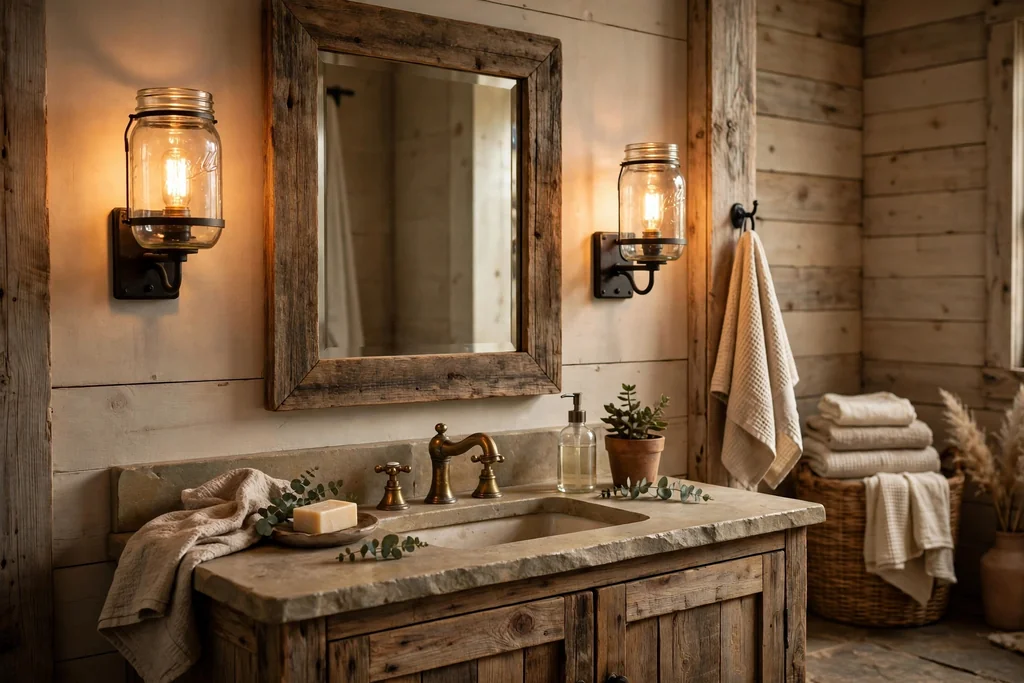
Mount mason jar sconces on either side of the mirror, with a warm bulb inside each jar and a wood or metal bracket behind it, for soft light with a farmhouse feel. Jar sconces suit vanity walls well, since they give light at face height rather than from above, which flatters faces and softens shadows. Use LED bulbs that stay cool, and keep jars clear of direct water spray.
Fix the brackets into studs or with fixings rated for tile, and keep a spare bulb in the vanity drawer, since jar sconces use bulbs that may differ from your main light. If wiring a new sconce is not possible, a battery jar light on a shelf gives a similar glow with no wiring. Clean the jars now and then, since steam can cloud glass over time.
19. Aged Copper Faucet and Fixtures
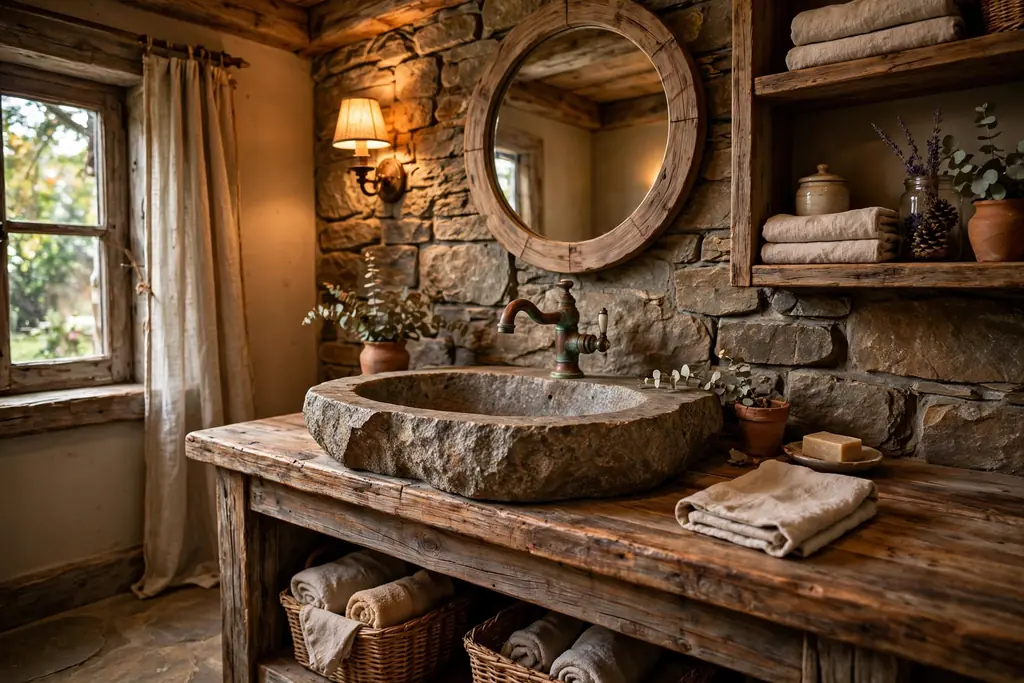
Choose an aged copper faucet for the sink or tub, with a living finish that deepens in color over time, for warmth that chrome cannot match. Copper pairs well with wood and stone, and it suits both a vessel sink and a clawfoot tub. Keep copper as the main metal in the room, with black or wood accents alongside it, so the finishes do not compete.
Check that copper suits your water type, since hard water can mark it faster, and wipe it after use if you prefer an even tone. If you like the aged look, let the patina develop naturally and clean it only with a soft cloth. A copper mirror frame or copper towel ring can echo the faucet without repeating it too often.
20. Warm Wood Look Floor Tile
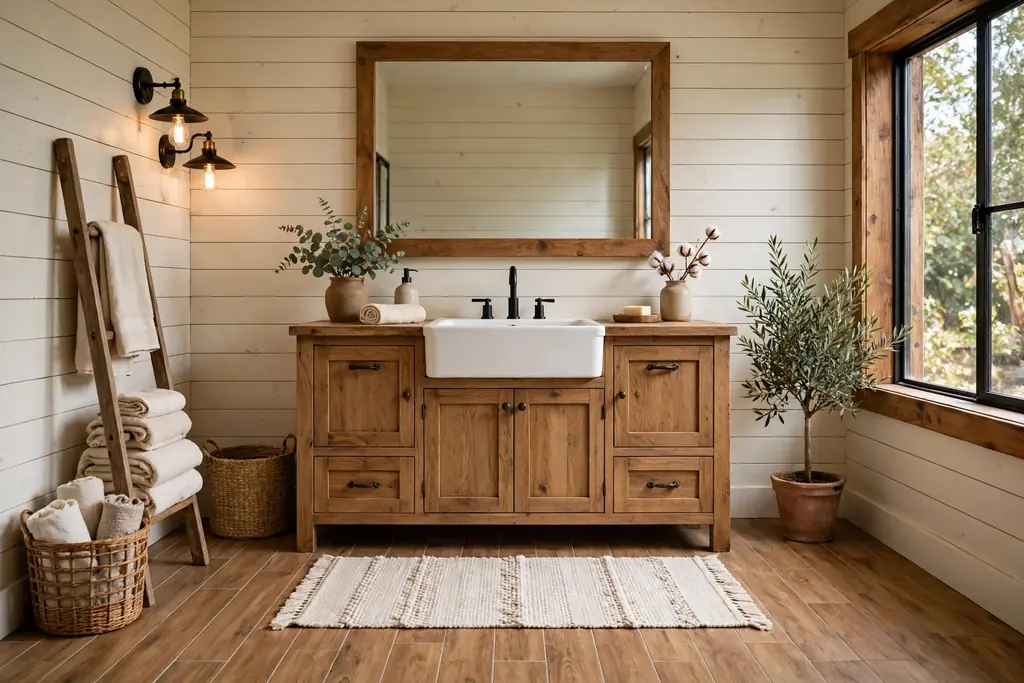
Lay warm wood look porcelain tile on the bathroom floor, with planks running toward the longest wall to stretch the room visually. Wood look tile gives the warmth of wood with a surface that copes with daily water, which makes it a practical choice for a rustic bathroom floor. Choose a tone a little darker than the vanity, so the floor grounds the room without matching it exactly.
Use a matte finish for grip underfoot, and keep grout close to the tile color so the planks read as wood rather than a grid. A rug over the tile near the tub or sink adds softness under bare feet. This floor pairs well with the shower layouts in these walk in shower ideas, since the tile can run from the bathroom floor into the shower zone in one tone.
21. Wooden Bath Bench Beside the Tub
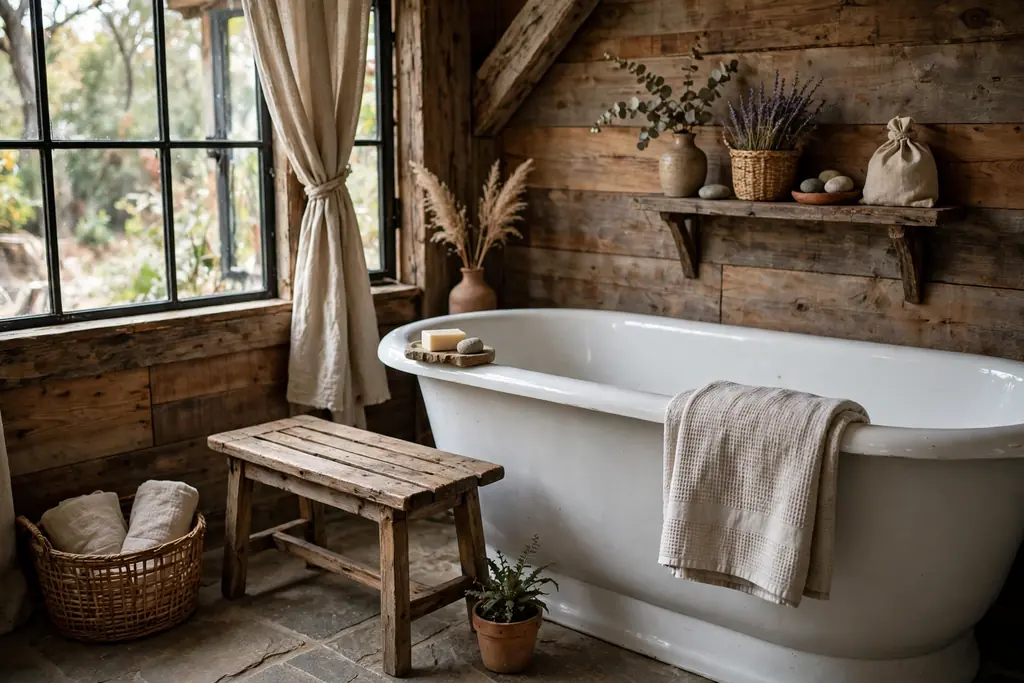
Place a small wooden bench beside the tub or in a wide shower, for a towel, a book, or a place to sit while dressing. A bench adds a useful surface at sitting height, and it gives the tub zone a piece of furniture rather than only fixtures. Teak and other water tolerant woods cope best near water, but any sealed wood bench works if it dries between uses.
Keep the bench clear of the main walkway, and choose a size that fits the gap without crowding the tub. A bench with a lower shelf can hold a spare towel or a basket, which adds storage without a cabinet. Wipe the bench after steamy baths, and reseal it when water stops beading on the surface.
22. Wood Framed Window with Frosted Glass
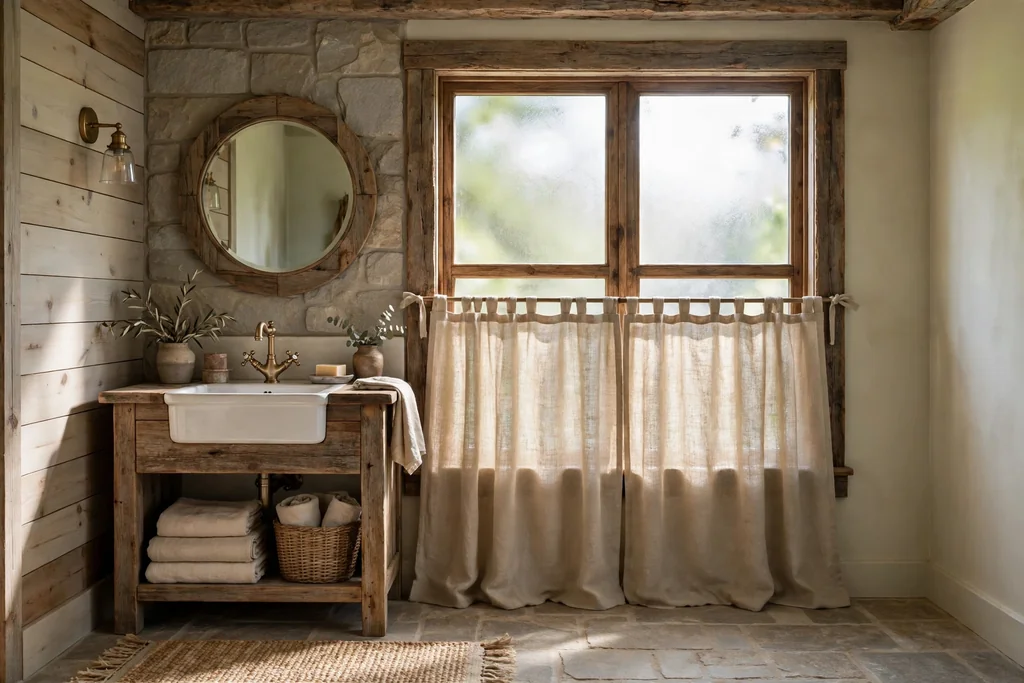
Frame the bathroom window in warm wood, with frosted or textured glass for privacy, so daylight still enters while the room stays private. A wood frame softens a plain window opening and ties it to the vanity and shelves, which is useful in a bathroom where the window is often the only natural feature. Place the window high on the wall if possible, so it stays out of direct spray.
Use a frame material that copes with moisture, and slope the sill toward the room so water drains back rather than pooling on the frame. Add a simple linen cafe curtain on the lower half if you want extra privacy without blocking daylight. If the window opens, it also gives steam a direct exit, which helps the room dry faster.
23. Terracotta Pots and Dried Stems
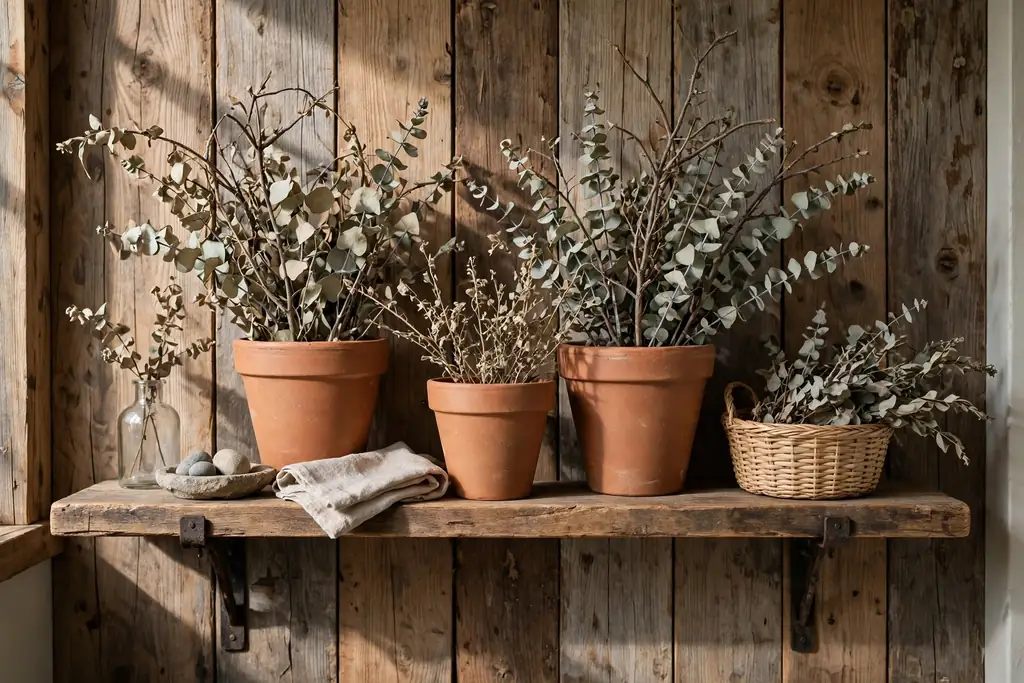
Add terracotta pots with dried stems, such as eucalyptus or lavender, on a shelf, the vanity, or the windowsill, for a natural detail that needs no watering. Dried stems suit bathrooms well, since they cope with steam better than fresh cut flowers, and terracotta adds an earthy color that pairs with wood and stone. Keep pots clear of the sink splash zone, so water does not stain the terracotta.
Use one tall stem group as a focal point, rather than many small pots, so the room stays calm. A trailing dried vine on a high shelf can soften a plain wall, while a single pot on the vanity adds color at eye level. Replace dried stems when they collect dust, and keep them away from open flames if you use candles nearby.
24. Wooden Crate Storage Under the Sink
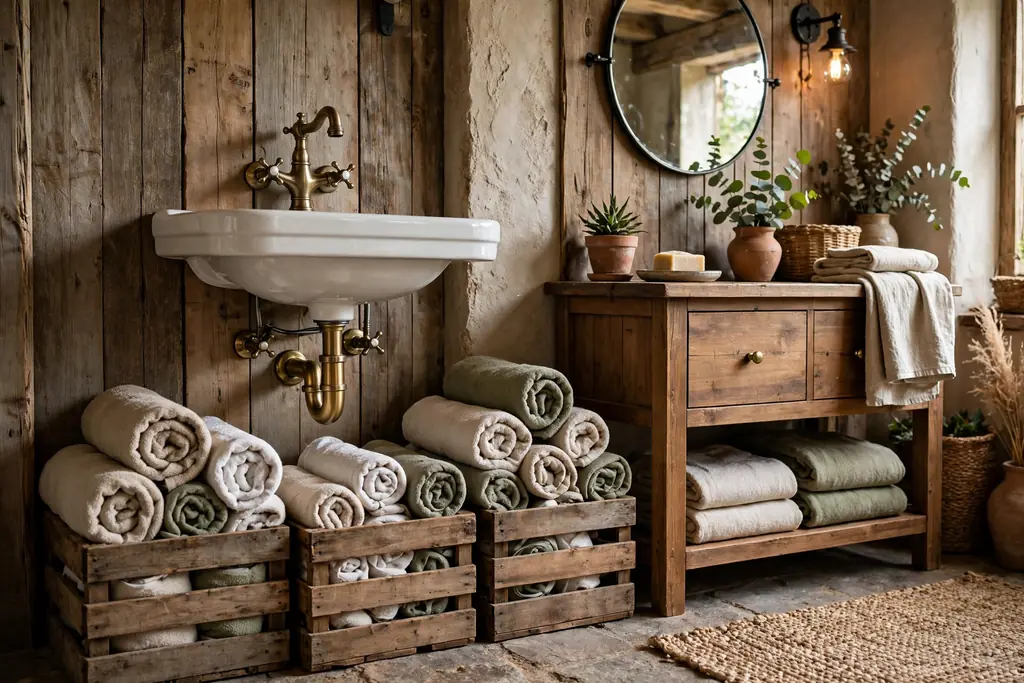
Slide wooden crates under an open sink or vanity, for towels, spare toilet paper, and cleaning supplies, with the open side facing out so items stay visible. Crates suit open vanities well, since they fill the empty space below with a rustic storage box that still lets air circulate. Choose crates in a tone close to the vanity, and sand any rough edges.
Line the bottom of each crate with a washable liner, so damp items do not mark the wood, and keep heavy items low. Label crates if several look alike, and pull one crate out at a time when you need something, rather than stacking items on top. If floor space is tight, use one crate only, for towels, and keep the rest of the space clear.
25. Lantern Style Lighting for Warm Evenings
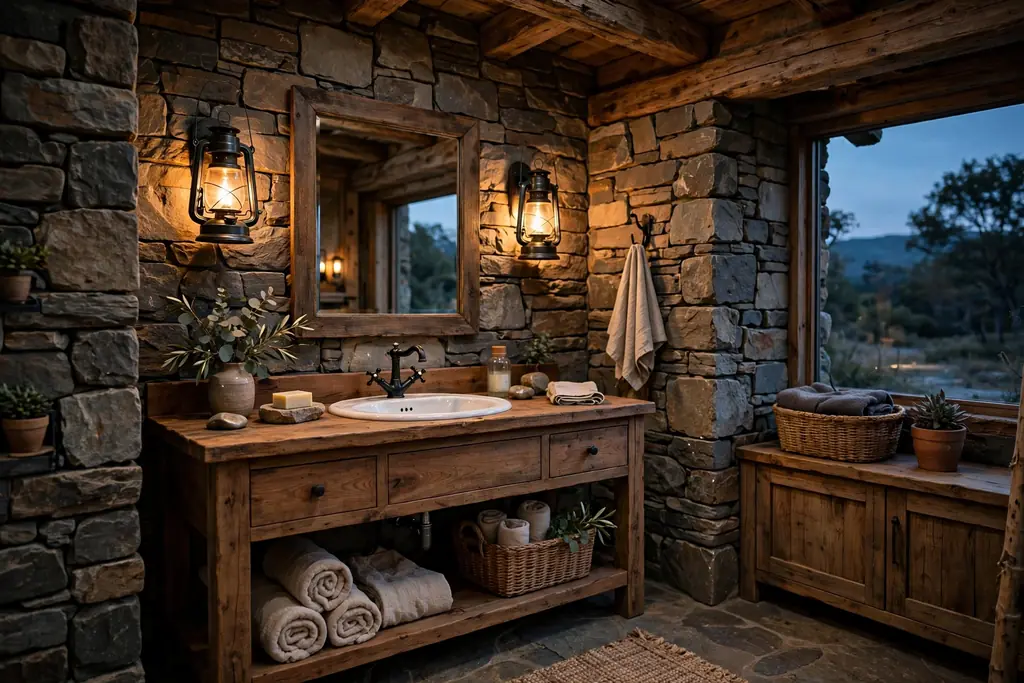
Hang a lantern style light, or place lanterns on a shelf and the vanity, with warm bulbs or battery candles inside, for evening light that flatters wood and stone. Lantern light suits rustic bathrooms well, since the metal frame and glass echo farmhouse and cabin rooms, and the warm glow softens tile and porcelain. Use lanterns as a second light, not the only light, so morning routines still have clear, bright light.
Keep real candles away from curtains, towels, and dried stems, and use battery candles if the lantern sits near fabric. Hang a lantern from a ceiling hook only if the ceiling fixing suits its weight, and keep the glass clean so the light stays bright. A lantern on the windowsill at night gives the room a welcoming glow from the hall.
26. Chunky Knit and Wool Textiles
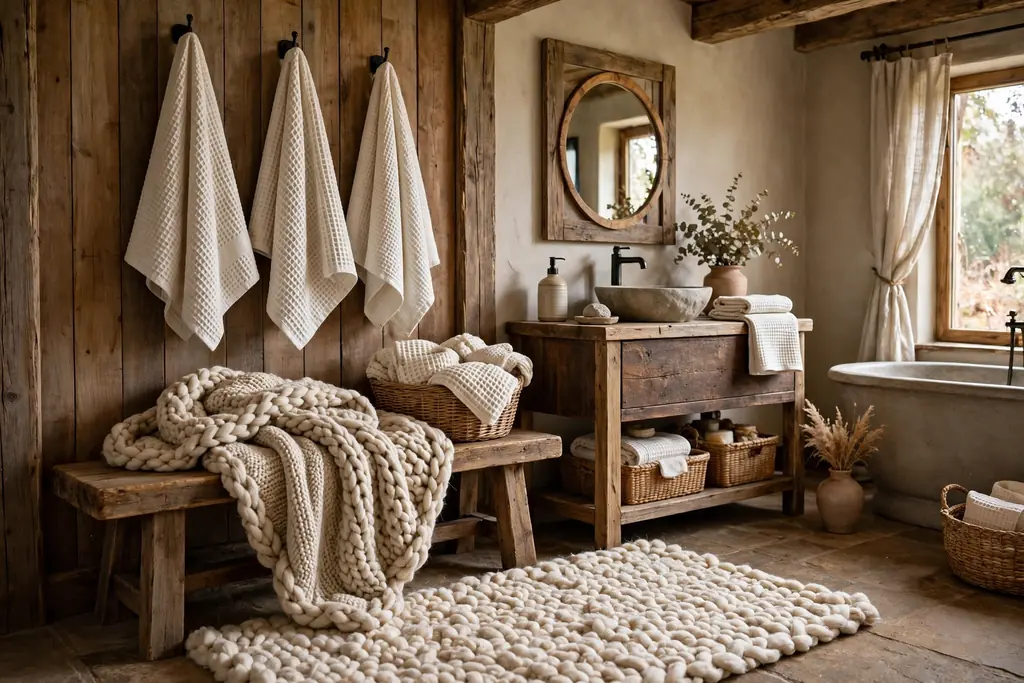
Finish the room with chunky knit and wool textiles, such as a thick cotton rug, waffle towels, and a folded wool throw over the bench, to balance hard tile, metal, and stone. Textiles add the soft layer that rustic rooms need, and they are easy to change with the seasons. Choose towels and rugs in natural tones, such as cream, oatmeal, and sage, so they echo the wood and stone rather than competing with them.
Keep one set of towels in use and one set in rotation, so the bathroom never sits bare on wash day, and wash textiles as the maker advises to keep them soft. A rug with a low pile dries faster than a thick pile rug and is safer underfoot near the tub. Fold a throw over the bench or ladder rack, so the soft layer is visible even when towels are in the wash.
Conclusion
A rustic bathroom does not need a full remodel to feel warm and natural. Start with one large wood or stone surface, repeat one wood tone and one metal finish, and keep counters clear so those materials can show. Add a clawfoot tub or a stone sink only where space allows, and use shelves, baskets, and hooks to keep daily items tidy. For small rooms, the renter friendly storage ideas in these apartment bathroom ideas pair well with the wood and basket storage above, since both focus on vertical space and removable changes.
Work through this list in order: vanity and walls first, then tub and shower, then storage, then light and textiles last. Change one corner at a time, live with it for a week, and add the next idea only where the room still feels unfinished. That slow pace keeps the room calm, and it lets the wood, stone, and linen do the work.
FAQs
What is the easiest way to make a bathroom look rustic?
Start with one large wood surface, such as a reclaimed vanity or shiplap wall, plus warm light and woven baskets. Those three changes give a rustic feel without plumbing work, and they work in rented rooms if you use a ladder rack, a linen curtain, and baskets instead of fixed wood. Keep the rest of the room plain, so the wood stands out rather than competing with bold tile or color.
Can a rustic bathroom work in a small space?
Yes, if you pick small scale rustic details rather than large furniture. A wood framed mirror, open shelves, a ladder towel rack, baskets, and a linen curtain give a rustic feel without taking floor space. Avoid a large clawfoot tub or a stone feature wall in a small room, and use a wood look tile floor plus one wood vanity to carry the look. Light colors on walls and a clear floor keep the room feeling open.
How do I protect wood in a rustic bathroom from water damage?
Seal wood well, especially around sinks and tubs, and wipe splashes promptly so water does not sit in the grain. Use sealed or water tolerant wood near water, such as teak for a bench, and save raw untreated wood for dry walls and high shelves. Reseal wood when water stops beading on the surface, and keep wood clear of direct shower spray. Good ventilation, such as a fan or an opening window, helps wood dry between uses.
What colors work best in a rustic bathroom?
Warm neutrals work best, such as cream, oatmeal, sage, warm grey, and soft brown, with wood tones as the main color. Keep walls pale so wood and stone stand out, and add color in small doses, such as terracotta pots, sage towels, or a linen curtain. Avoid strong bright colors on large surfaces, since they can make wood and stone look busy rather than calm.
Is shiplap safe to use in a bathroom?
Shiplap can work in a bathroom if it is sealed with a moisture resistant finish and kept off the wall directly inside the shower. Use it on a dry wall, such as behind the vanity, and seal the bottom edge so mop water does not soak into the boards. Ventilate the room well after showers, and wipe splashes promptly. If your bathroom has constant steam and poor ventilation, use shiplap on one accent wall only, or choose a moisture resistant board instead of raw wood.
How do I mix rustic style with modern fixtures?
Repeat one wood tone and one metal finish across the room, and keep modern fixtures simple in shape, so they do not fight the rustic materials. A plain matte black faucet, a simple vessel sink, and a frameless mirror can sit well beside reclaimed wood and stone, as long as the finishes stay consistent. Avoid ornate modern fixtures with bright chrome and sharp angles, since they can break the calm, natural feel that wood and stone create.