
A bathroom can look clean and still smell stale, because steam, damp towels, and drains leave odors that a quick wipe cannot fix. The fix is usually a mix of better airflow, a regular cleaning routine, and one or two pleasant scents layered in the right places. These 22 bathroom freshening hacks cover ventilation, drains, towels, trash, and simple scent ideas that work in small rooms and rented homes alike. Start with airflow and the hidden odor sources first, then add the scented touches that suit your household, your budget, and anyone sensitive to strong fragrance.
Key Takeaways
- Fix airflow first: run the fan, open a window briefly, and let towels and mats dry fully, since trapped steam is the main cause of a stale bathroom.
- Find the odor source before adding scent: drains, grout, shower curtains, towel hampers, and trash cans often cause the smell that air freshener only covers for an hour.
- Layer one or two scents, not five: pick a main scent for the room and repeat it lightly in soap, a diffuser, or linen spray so the room smells planned rather than crowded.
- Keep scented items away from water, heat, and small hands: candles, warmers, and essential oils need a stable, dry spot and must never sit where they can fall into water.
- Build a short weekly routine: one drain refresh, one towel wash, one trash and brush clean, and a quick grout check keep the room fresh with little extra work.
- In a rented room, favor reversible hacks: reed diffusers, sachets, sprays, cotton balls, and bundles leave no holes and no permanent change behind.
1. Run the Exhaust Fan After Every Shower
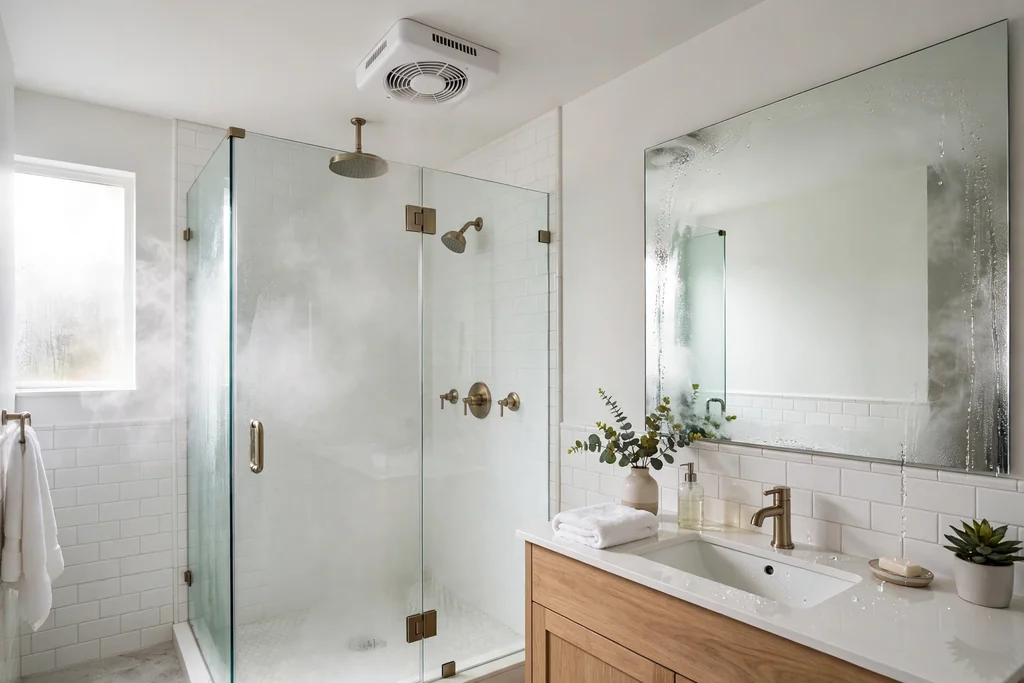
Run the exhaust fan during your shower and for 20 to 30 minutes after it, so steam leaves the room instead of settling into towels, grout, and paint. A fan that only runs while you shower leaves the dampest air behind, and that damp air is what turns musty over days. If your fan has a timer or humidity sensor, set it to run until the mirror clears, then a little longer, so walls and curtains dry fully.
Clean the fan cover every few months, since dust on the grille slows airflow and traps odors in the vent itself. Vacuum the cover, wipe it with a damp cloth, and let it dry before refitting it. If your bathroom has no fan, leave the door ajar after a shower and run a small portable fan toward the hall for 20 minutes, which moves damp air out without any fitting work.
2. Open a Window for a Short Cross Breeze

Open the bathroom window for 10 to 15 minutes after a shower, even in cool weather, to flush out steam and stale air in one move. A short, strong burst of fresh air dries surfaces faster than a window left cracked all day, and it carries cooking and household odors out of the room too. If the bathroom has no window, open the bathroom door and a window in the next room to create a path for air to move through.
Keep the window trick simple in winter: open it wide for a few minutes rather than leaving it ajar for hours, so the room airs without chilling the pipes or the floor. A small window fan set to exhaust, placed safely away from water, speeds the job in a windowless layout or a room with a weak fan. Close the window once the mirror and tiles feel dry to the touch.
3. Hang a Eucalyptus Bundle on the Showerhead
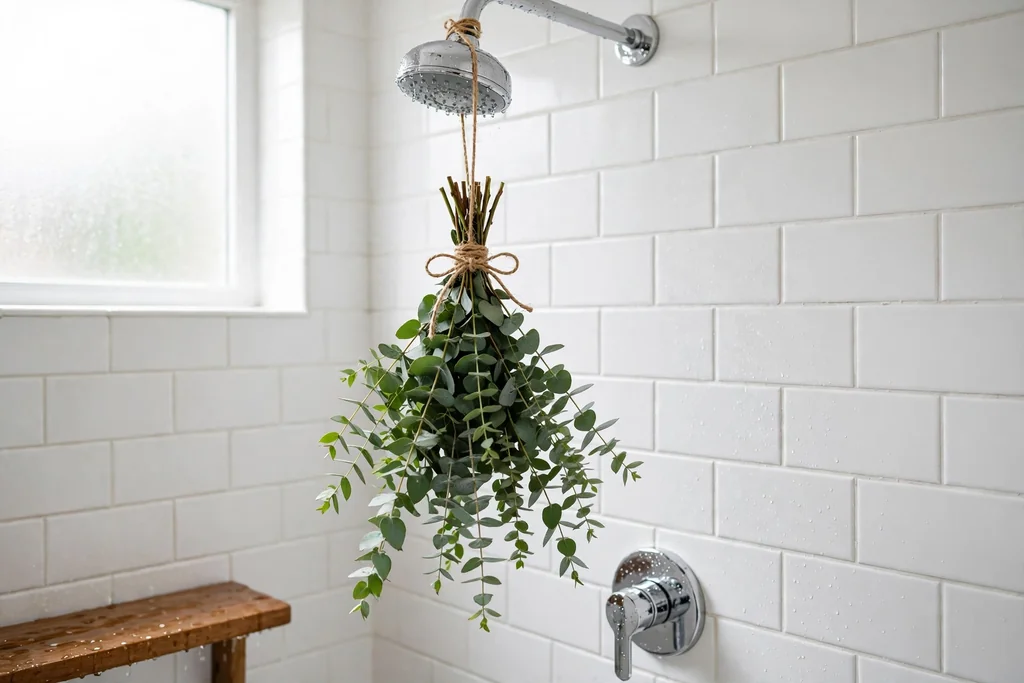
Tie a small bundle of fresh eucalyptus to the showerhead with cotton string, keeping the stems out of the direct water stream, so steam releases a gentle green scent each morning. The bundle adds color to a plain shower, costs little, and needs no power, plug, or spray. Choose a bundle about the size of your hand, since a very large bundle sheds leaves into the drain and can overpower a small room.
Replace the bundle every two to three weeks, or when the scent fades and the leaves turn brittle, and dry the string between showers so it does not go musty. If anyone in the household is sensitive to strong scents, use a smaller bundle or skip it and keep a potted plant on the sill instead. For more natural greenery ideas that pair with a shower bundle, see these Swedish bathroom ideas.
4. Set a Reed Diffuser Beside the Sink
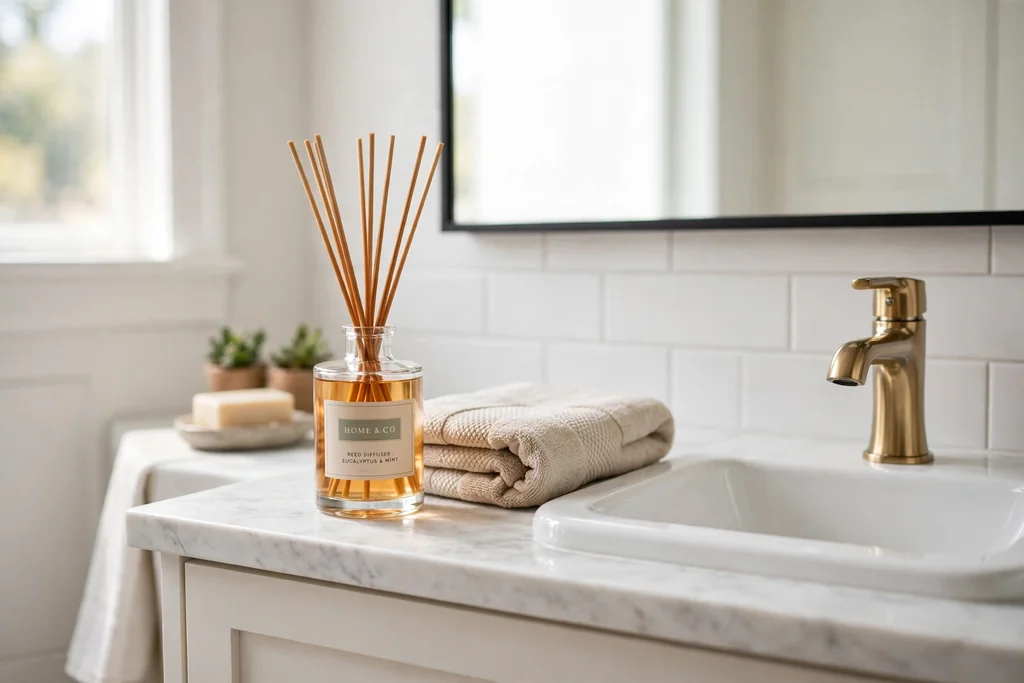
Place a reed diffuser on the vanity or a shelf beside the sink, where air moves past it but water cannot splash into the bottle. Reeds draw scented oil upward and release it slowly, so the room smells steady all day with no flame, heat, or plug. Start with four or five reeds for a small bathroom, and add more only if the scent feels too faint after a day, since too many reeds can turn a fresh room into a heavy one.
Flip the reeds once a week to renew the scent, and wipe any drips from the bottle base so oil does not stain the counter. Keep the diffuser away from the edge where elbows or towels can knock it over, and away from radiators, since heat speeds evaporation and shortens its life. A light citrus, lavender, or cedar scent suits most bathrooms and pairs well with plain white towels.
5. Drop Toilet Fizzies Into the Bowl
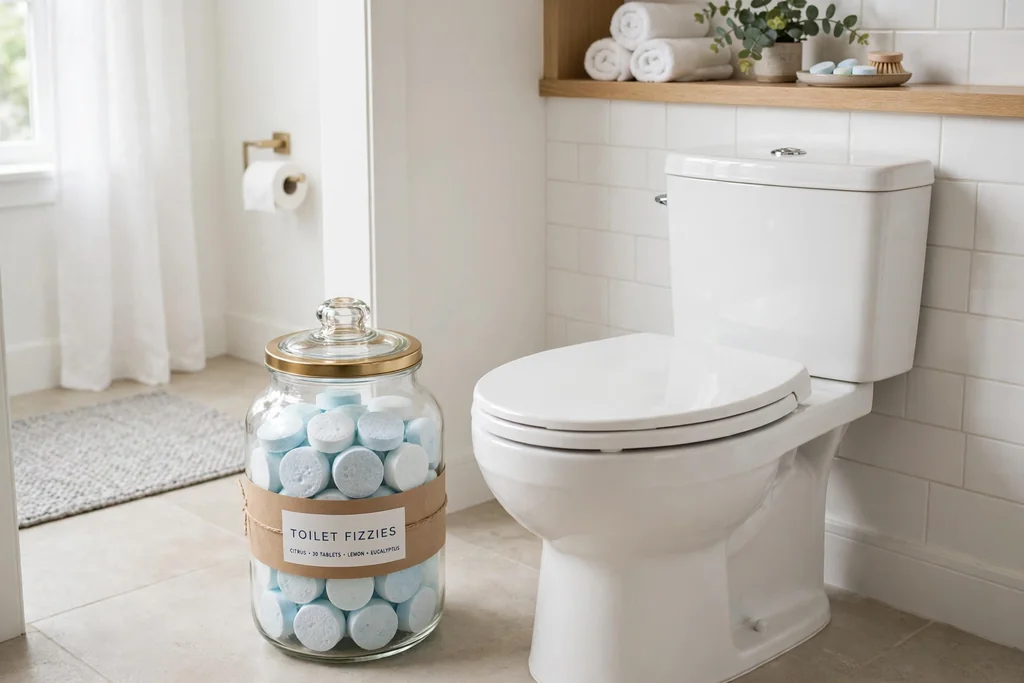
Drop one homemade or store bought toilet fizzy into the bowl, let it fizz for a few minutes, then brush and flush, for a quick fresh scent plus a light clean in one step. Fizzies made from baking soda and citric acid release scent as they dissolve, and they reach under the rim where a brush alone can miss. Use them once or twice a week, not every flush, so the scent stays pleasant rather than constant.
Store fizzies in a lidded jar on a high shelf, away from moisture, so they do not dissolve early or attract damp. Keep them away from children and pets, and never mix a fizzy with bleach or another toilet cleaner, since mixing cleaners can create harmful fumes. If you prefer no added scent, a plain baking soda fizzy still freshens the bowl without fragrance.
6. Refresh the Drain With Baking Soda and Hot Water
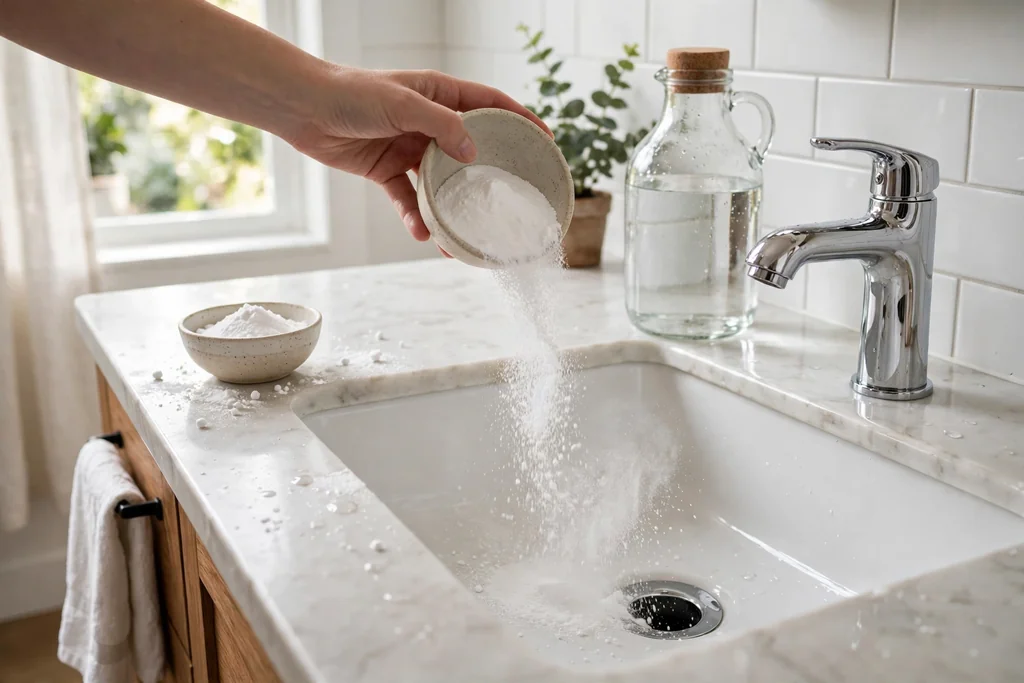
Pour half a cup of baking soda down a slow or stale smelling drain, follow it with hot (not boiling) water, and let it sit for 15 minutes before running the tap for a minute. This routine clears the thin film of soap and hair residue that causes many drain odors, and it works for sink, tub, and shower drains alike. Repeat it every two weeks in a bathroom that sees daily use, and more often if the drain gurgles or drains slowly.
Never pour boiling water down a drain with plastic pipes or a porcelain basin you are unsure about, and never follow baking soda with bleach, since mixing cleaners is unsafe. If the smell stays after two refreshes, check the trap for trapped hair, clean the drain cover, and look for a dry trap in a rarely used sink, which lets sewer air rise into the room. A dry trap usually needs only a cup of water poured down it to seal again.
7. Add Essential Oil to the Toilet Paper Roll
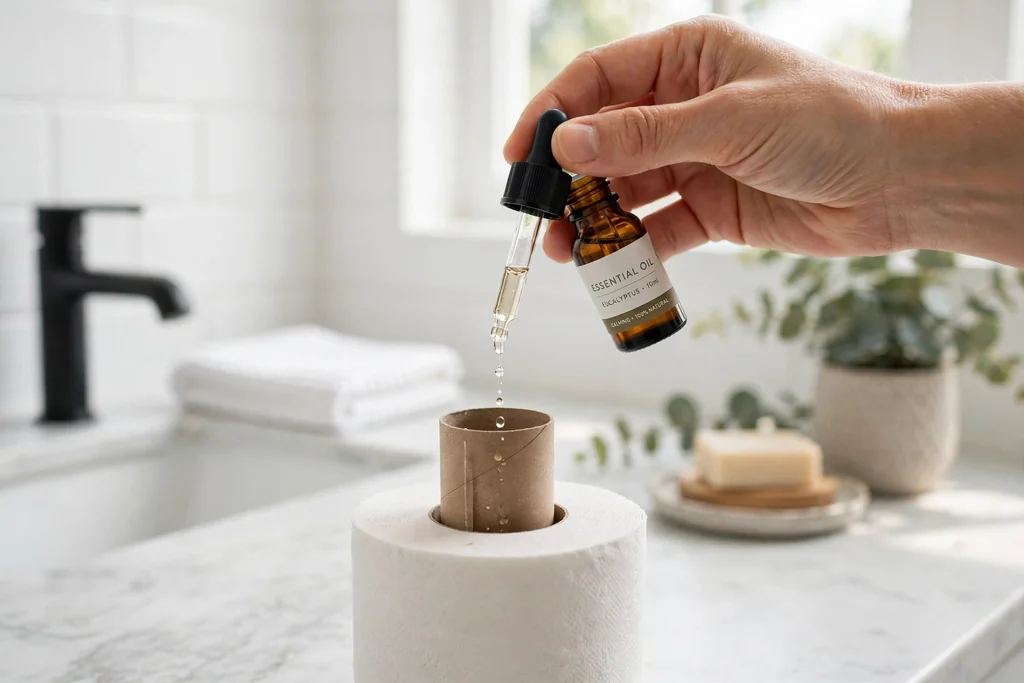
Add two or three drops of essential oil to the inside of a toilet paper roll, on the cardboard tube, so each pull releases a faint scent without any device in the room. This hack costs almost nothing, needs no plug or flame, and suits a guest bathroom where you want a fresh note without a visible diffuser. Lavender, lemon, or peppermint work well, since they read as clean without smelling like a cleaning spray.
Apply the oil to the cardboard only, never to the paper itself, and let it dry for a few minutes before hanging the roll. Use only a few drops, since oil can stain a holder or transfer to hands if overapplied. Skip this hack if anyone in the household dislikes strong scents or has a fragrance sensitivity, and keep the oil bottle stored upright in a cabinet, away from children.
8. Hide Scented Cotton Balls Behind the Toilet
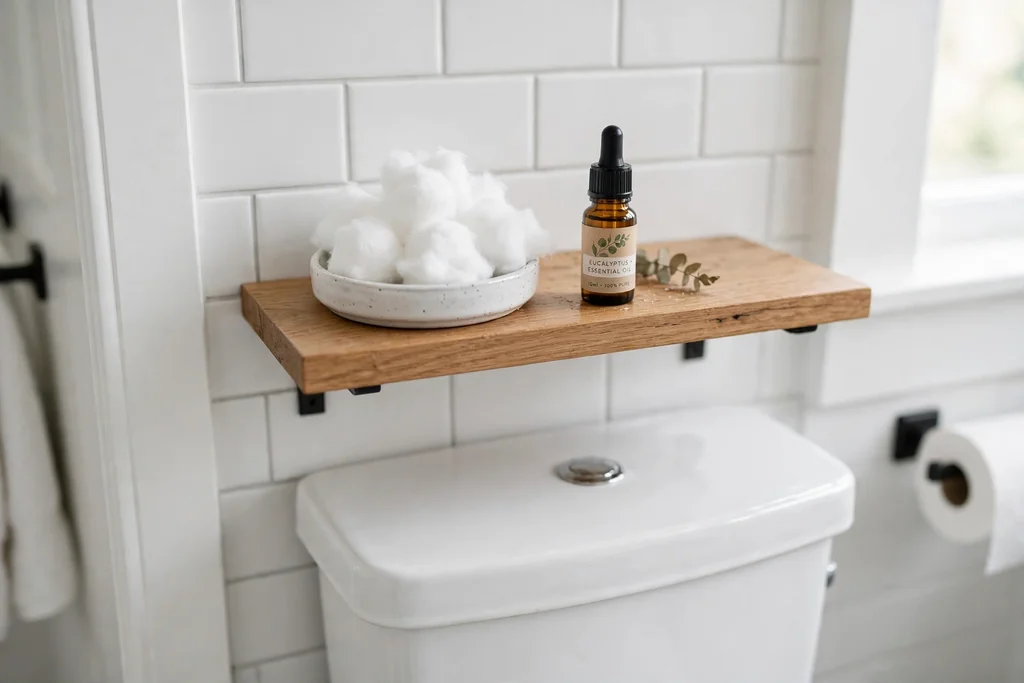
Place two or three cotton balls with a few drops of essential oil in a small open dish behind the toilet or inside the vanity cabinet, where they scent the air quietly without being seen. This is one of the easiest freshening hacks for a small bathroom, since the dish takes no counter space and the scent stays near the floor where odors collect. Refresh the drops every three or four days, when the scent fades.
Use a shallow dish or a small jar lid so the cotton balls do not roll onto the floor, and keep them away from the toilet tank mechanism and any heat source. If pets can reach the spot, put the dish inside a closed cabinet with the door ajar, or skip loose cotton balls and use a sachet instead. One scent at a time is enough here, since this hack pairs with a diffuser or a candle in the same room.
9. Light a Scented Candle on the Vanity
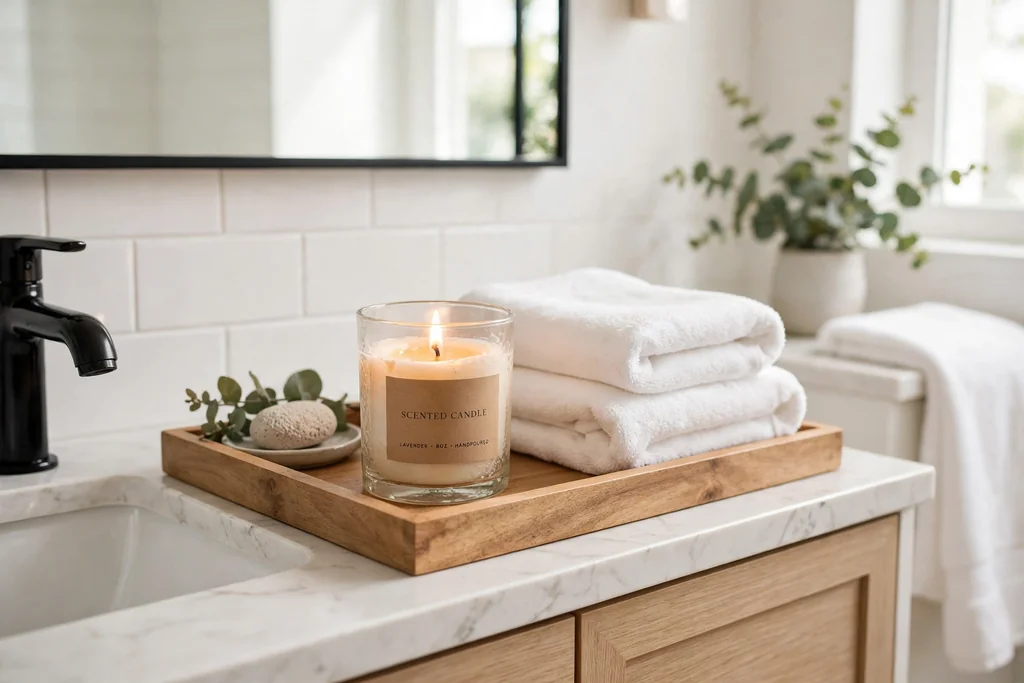
Light a scented candle on a stable vanity tray for 30 to 60 minutes before guests arrive, or during a bath, for a warm scent that also softens the room. A candle suits an evening routine best, since the flame and the scent both signal a slower pace, and a lidded candle keeps dust out between uses. Choose a scent you already like in soap or laundry, such as lavender, cedar, or clean linen, so the room smells consistent rather than mixed.
Never leave a candle burning unattended, and keep it clear of towels, curtains, and the shower curtain, with at least a hand span of clear space on all sides. Trim the wick to about 5 millimeters before lighting, so the flame stays small and soot stays low, and snuff the flame rather than blowing it out to avoid wax splatter. If your household includes small children or pets, use the flameless warmer in Idea 10 instead.
10. Use a Flameless Wax Melt Warmer
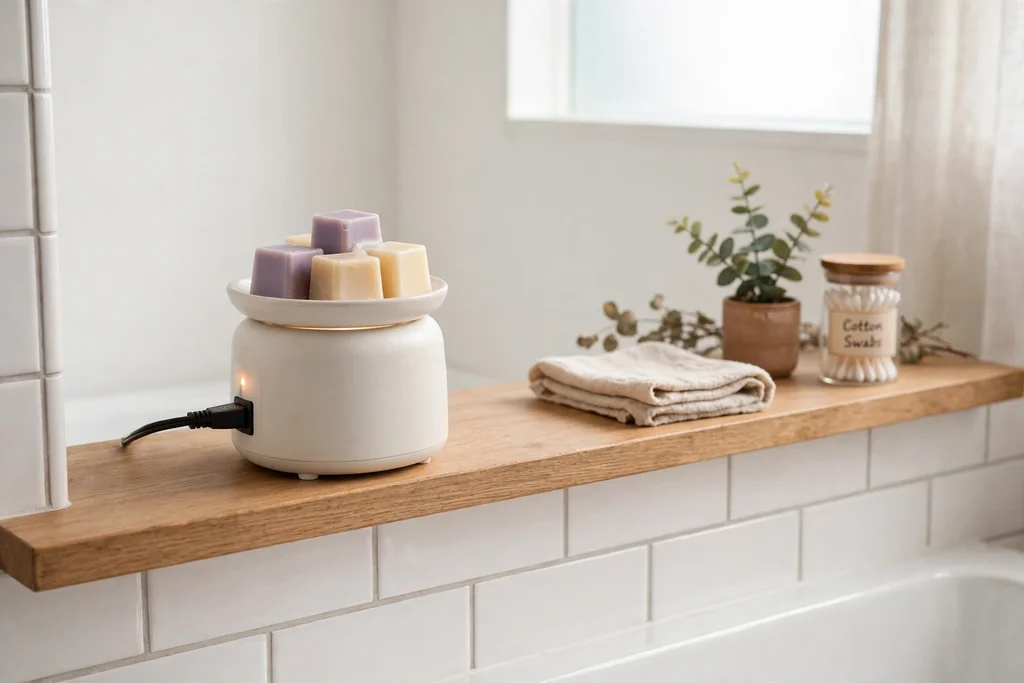
Plug a wax melt warmer into a wall outlet away from water, add one or two wax cubes, and let the gentle heat release scent with no flame at all. A warmer suits households with children, pets, or a busy morning routine, since there is no open flame to watch, and the scent can be changed by swapping cubes. Start with one cube in a small bathroom, since two cubes in a tiny room can quickly smell strong.
Keep the warmer on a dry, heat safe surface, clear of towels and curtains, and unplug it when you leave the house or go to sleep. Wipe the dish clean between scent changes, while it is cool and unplugged, so old wax does not mix with the new scent. Choose one main scent family for the warmer and the soap in the room, so the bathroom smells planned rather than crowded.
11. Rotate Towels and Wash Them Hot
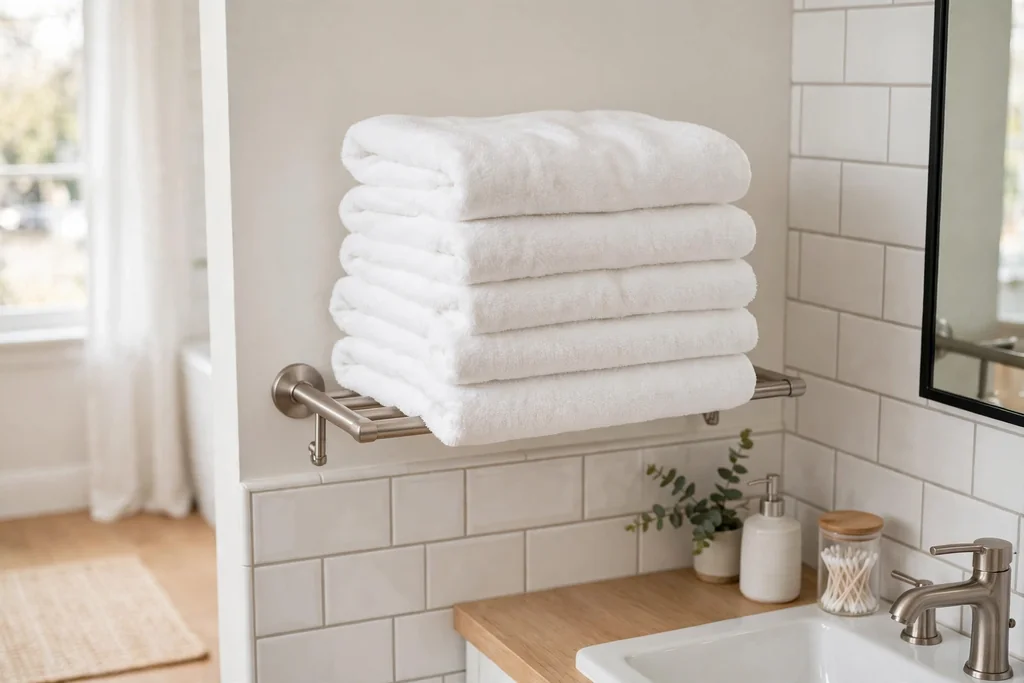
Wash bath towels every three to four uses in hot water, dry them fully before folding, and rotate in a fresh set, since damp towels are the most common source of a stale bathroom smell. A towel that stays damp in a closed room or a pile breeds the musty odor that no spray can cover for long. Hang each towel spread out on a rail after use, never bunched on a hook, so air reaches both sides and it dries between showers.
Keep two sets of towels in rotation, so one set can wash and dry while the other hangs in the room, and wash hand towels and bath mats on the same cycle. Add a cup of white vinegar to the rinse now and then if towels smell musty even when clean, and skip fabric softener on towels, since it coats fibers and traps odor over time. For more small room storage and towel ideas, see these apartment bathroom ideas.
12. Keep a Lidded Hamper With Lavender Sachets
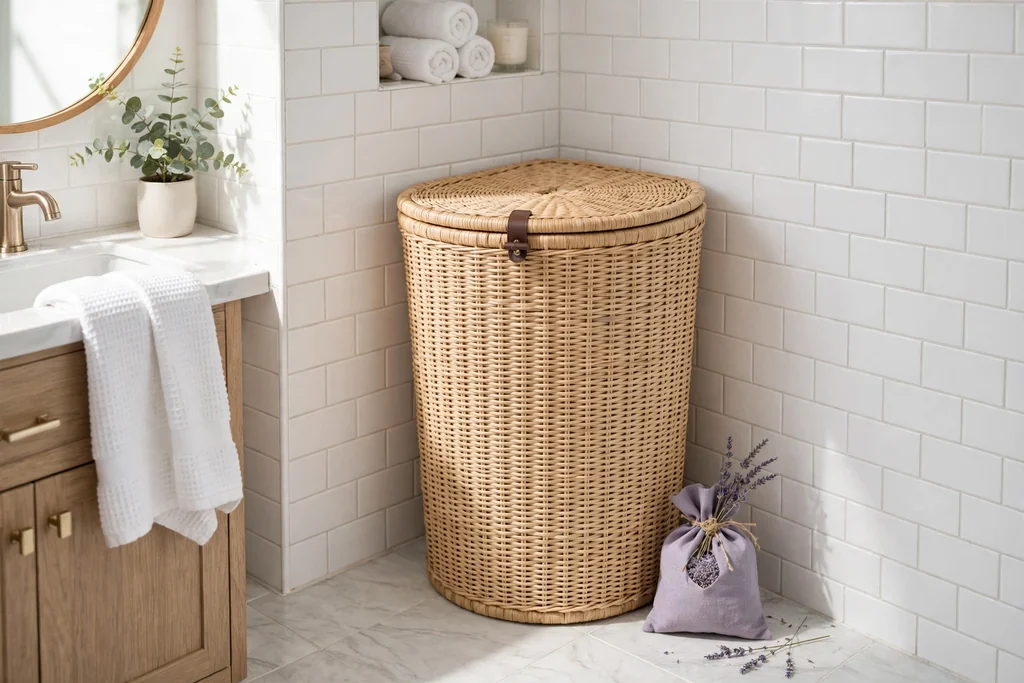
Use a lidded hamper for dirty towels and laundry, and tuck a lavender sachet inside the lid or in a side pocket, so the hamper holds odor in instead of releasing it into the room. An open basket lets damp towel smell drift out all day, while a lid plus a sachet keeps the corner fresh between wash days. Empty the hamper at least twice a week, and never let damp towels sit in it for a full week.
Wash the hamper liner monthly, wipe the inside of a hard hamper with a damp cloth, and let it dry fully before refilling it. Refresh the sachet every month, or make a new one from dried lavender in a small cloth bag tied with string. If lavender feels too floral for the room, cedar chips or a plain cotton sachet with a few drops of essential oil give the same result with a woodier note.
13. Line the Trash Can and Empty It Daily
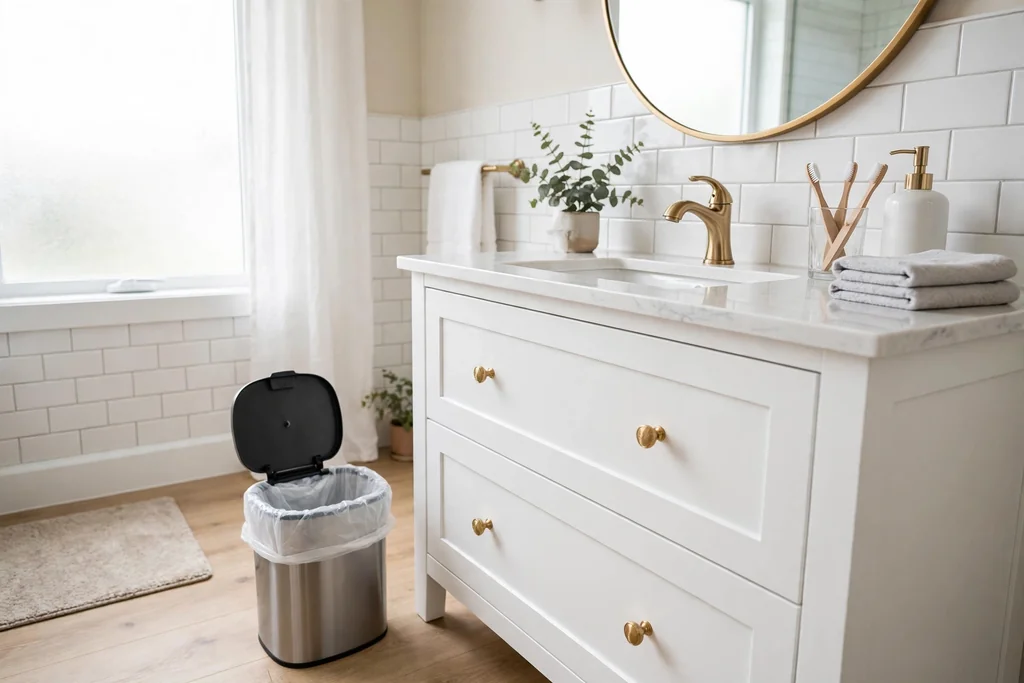
Line the bathroom trash can with a small bag, sprinkle a spoonful of baking soda in the bottom of the liner, and empty the can daily, since cotton pads, tissues, and hair collect odor fast in a warm room. A lined can also keeps the bin itself clean, so you wipe it once a week instead of scrubbing dried residue. Choose a can with a lid if the bathroom stays warm or if the can sits near the toilet, since a lid holds odor in between emptying.
Wash the can itself every week with warm soapy water, dry it fully, and add fresh baking soda to the new liner before use. Keep a roll of small bags beside the can, so emptying takes seconds and never gets put off for lack of a bag. If the can still smells after washing, leave it outside in fresh air for an hour, or wipe it with a vinegar and water mix and let it dry before relining it.
14. Set Out a Bowl of Dried Citrus and Herbs
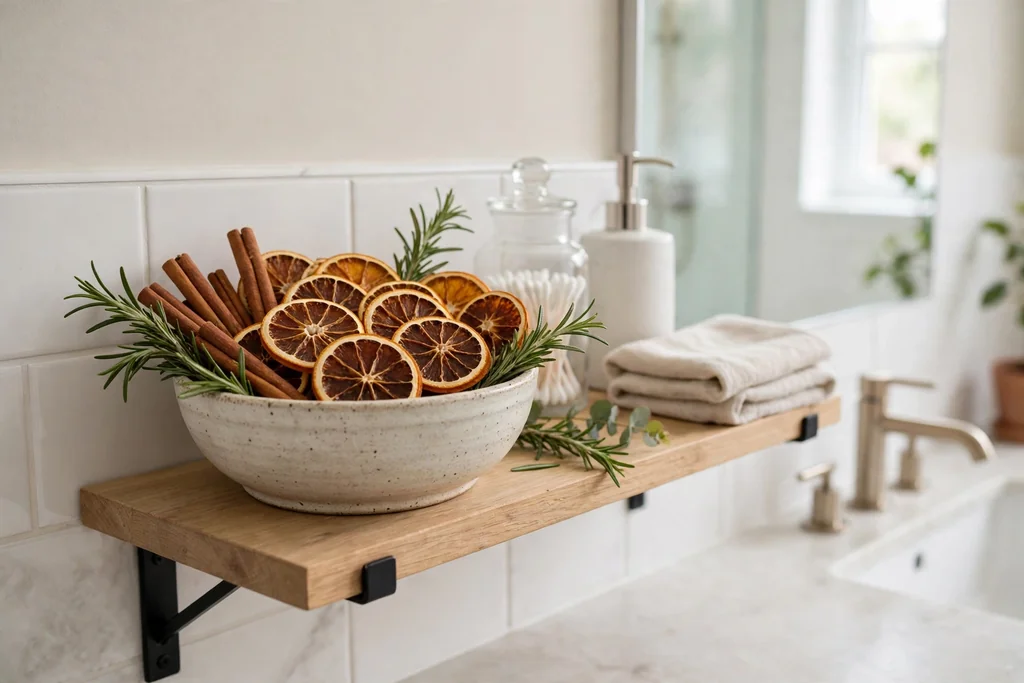
Fill a shallow bowl with dried orange slices, cinnamon sticks, star anise, and a few sprigs of dried rosemary, and set it on a shelf or the vanity as a dry, flame free scent display. Dried citrus and herbs release a gentle scent for weeks, add color to a plain shelf, and need no power or liquid to work. Keep the bowl on a dry surface away from the shower, since steam softens dried slices and shortens their life.
Refresh the bowl every three to four weeks, or when the scent fades, by adding a few drops of orange or rosemary oil to the dried pieces and stirring them gently. Keep the bowl out of reach of small children and pets, since star anise and cinnamon sticks are not food for them, and dust the bowl weekly so it stays a display rather than a dust trap. This bowl pairs well with a plain soap and a single candle scent, so the room does not carry three competing fragrances.
15. Mist Shower Curtains and Towels With Linen Spray
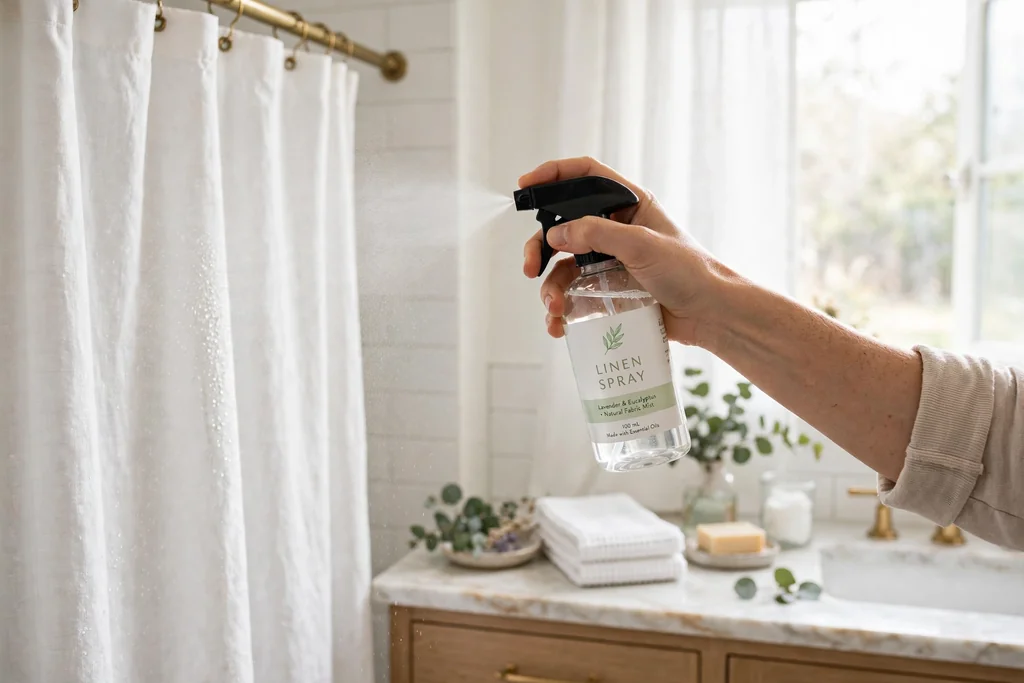
Mist the shower curtain, bath mat, and hanging towels lightly with linen spray after they dry, so fabric that absorbs steam smells fresh instead of musty. Linen spray suits fabric surfaces that cannot go in the wash every day, and a light mist is enough, since soaking fabric only adds damp back into the room. Spray from about 30 centimeters away, in short bursts, and let the fabric dry for a few minutes before use.
Make a simple spray at home from water and a few drops of essential oil in a clean spray bottle, shaken before each use, or use a store bought linen spray in a scent that matches the soap in the room. Test any spray on a hidden corner of the curtain first, since oil can mark some fabrics, and never spray near the floor, where wet mist can make tile slippery. Reapply every two or three days, or after washing the curtain, rather than daily.
16. Display Scented Bar Soaps at the Sink
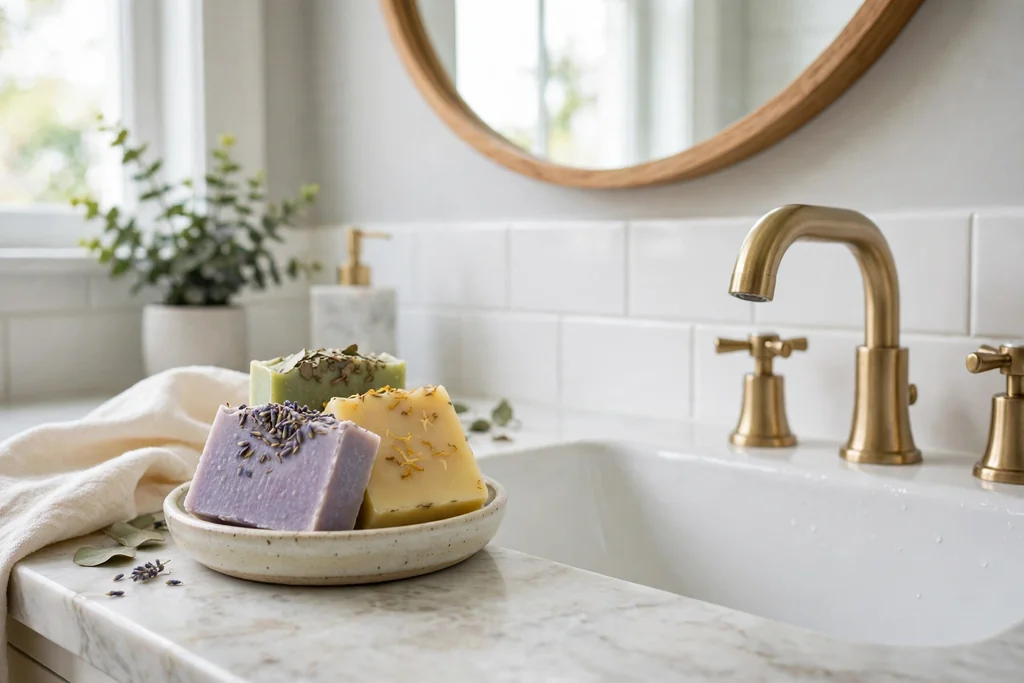
Set one or two unwrapped scented bar soaps in a small dish on the vanity, beside the hand soap you use daily, so the sink area smells fresh even when no one is washing. Bar soaps release scent slowly without power, and a dish of soaps adds color and a shop like detail to a plain counter. Choose soaps in the same scent family as the diffuser or candle in the room, such as lavender, citrus, or cedar, so the scents agree.
Keep the dish on a dry part of the counter, away from direct splashes, and rotate the bars every few weeks, since the scent fades once the outer layer dries out. Use the oldest bar next for hand washing, and replace it with a fresh bar from the cupboard, so nothing sits unused for months. If the household prefers unscented soap for skin reasons, keep the display bars as decor only and use a separate unscented pump for washing.
17. Wash the Shower Curtain Before Mildew Sets In
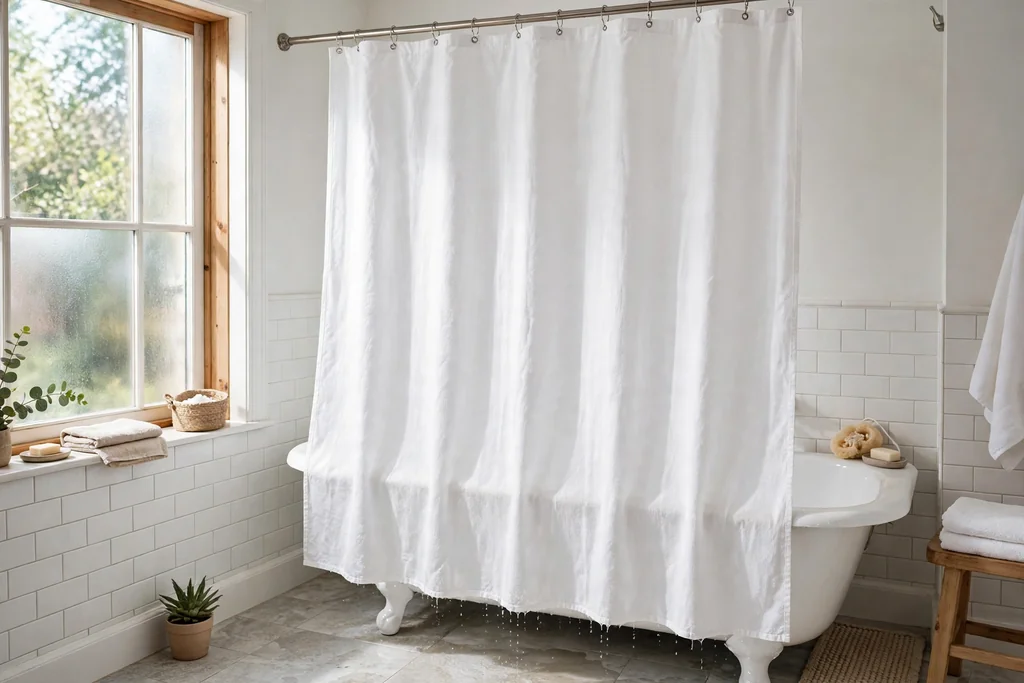
Wash the shower curtain and liner every three to four weeks, in the washing machine on a gentle cycle if the maker allows it, or by hand in warm soapy water, so mildew never gets a hold. A curtain that smells musty will scent the whole room, even when the rest of the bathroom is clean, because it hangs in the warmest, wettest air. Hang the curtain back up to dry fully, spread out rather than bunched, so it does not mildew again while damp.
Between washes, spray the lower edge of the liner with a vinegar and water mix once a week, let it sit for 10 minutes, then rinse, since the lower edge collects soap scum and mildew first. Replace a liner that stays stained or smells musty after washing, since a cheap liner costs less than the odor it causes. Keep a spare liner in the cupboard, so a swap takes minutes on wash day.
18. Scrub Grout to Remove the Musty Source
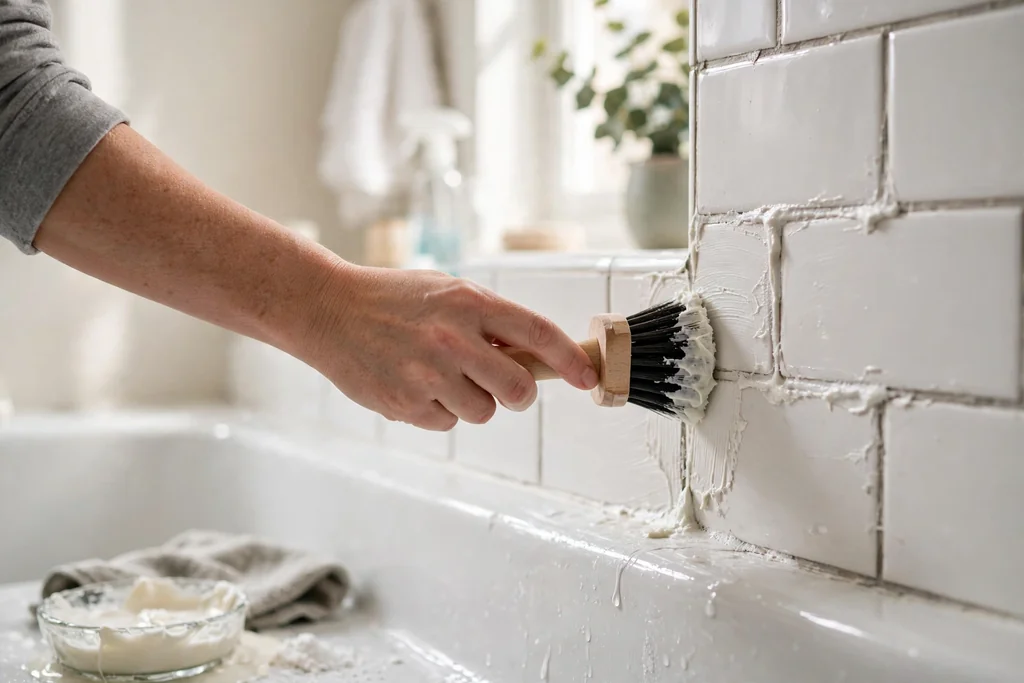
Scrub tile grout with a paste of baking soda and water, applied with an old toothbrush, left for 10 minutes, then rinsed, to remove the mildew that causes a musty bathroom smell. Grout is porous, so it holds soap scum and moisture long after the tiles look clean, and that trapped residue is a common hidden odor source. Work in small sections, from the top of the shower wall downward, so dirty rinse water does not run over cleaned grout.
Rinse each section well, dry it with a towel, and seal shower grout once a year with a grout sealer suited to wet rooms, so future cleaning takes less effort. Avoid bleach on colored grout, since it can lighten the color unevenly, and ventilate the room while you scrub, since even mild cleaners smell strong in a small space. If grout stays dark or soft after scrubbing, it may need repair rather than cleaning, so check for cracks and loose tiles at the same time.
19. Clean the Toilet Brush and Its Holder
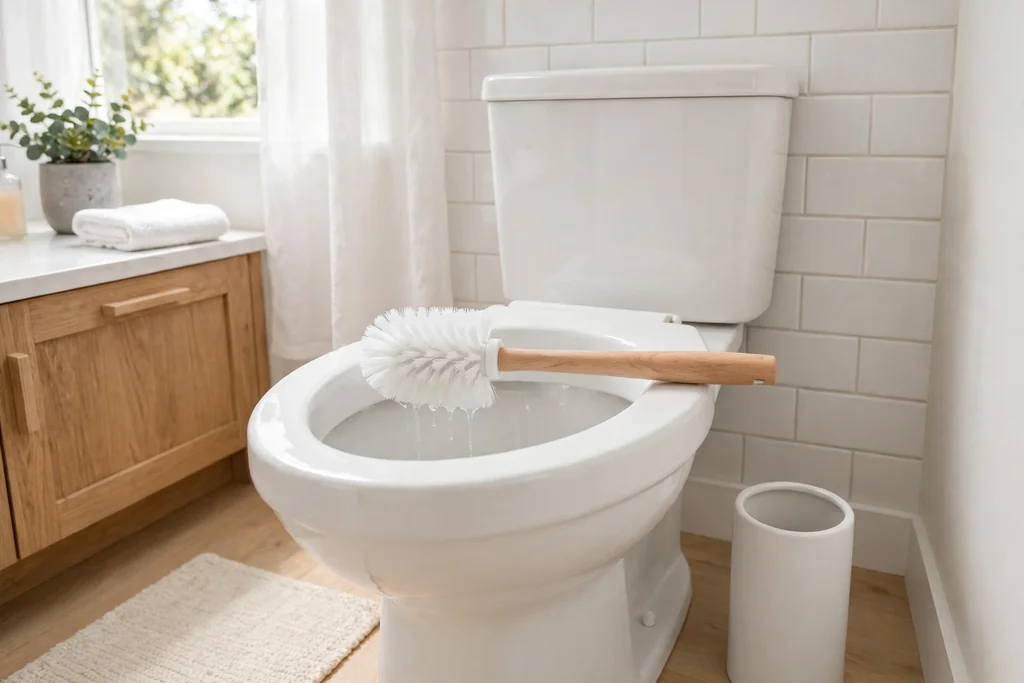
Rinse the toilet brush under hot water after each use, let it drip dry over the bowl for a few minutes, and clean its holder weekly with warm soapy water, since a wet brush in a closed holder is a strong hidden odor source. Many bathrooms smell stale because the brush holder holds dirty water that never dries, even when the toilet itself is clean. Choose a holder with drainage holes or a drip tray, so water does not pool at the base.
Once a month, soak the brush in warm soapy water for 10 minutes, rinse it well, and let it dry fully before returning it to a clean, dry holder. Add a drop of scented cleaner or a splash of vinegar to the holder rinse if you like, but rinse it out, so the holder does not stay sticky. Replace a brush with bent or missing bristles, since a worn brush cleans poorly and traps more residue than a new one.
20. Keep a Baking Soda Odor Jar in the Cabinet
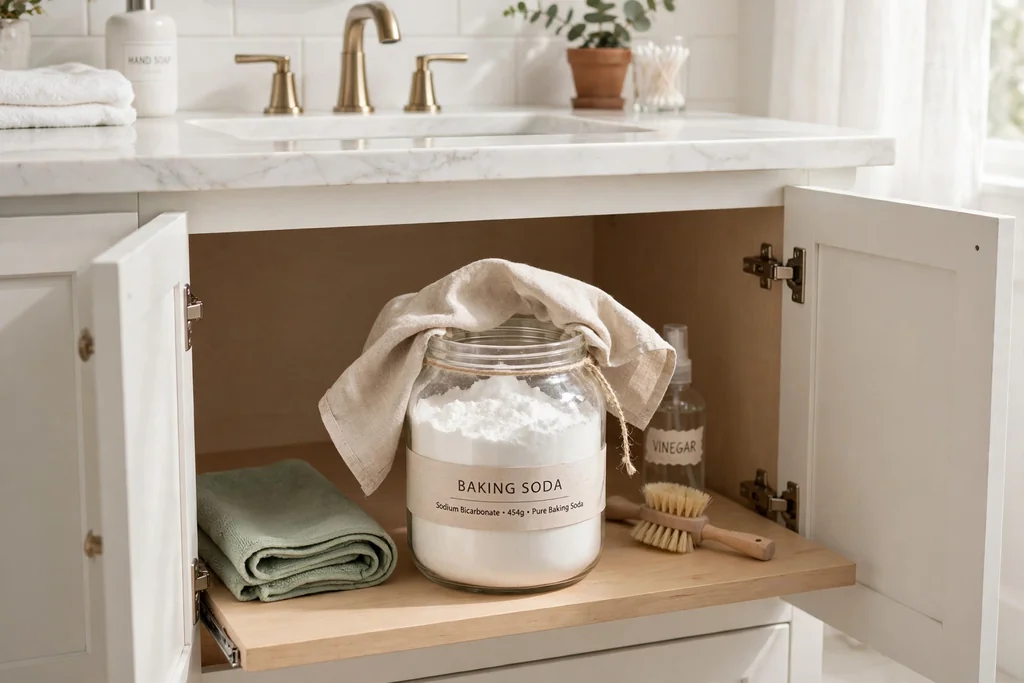
Keep a small open jar of baking soda inside the vanity cabinet or linen cupboard, with a few drops of essential oil stirred in, as a quiet odor absorber for closed storage. Baking soda absorbs odors from cleaning sprays, damp cloths, and spare toiletries that share the cabinet, and the jar needs no power and no flame. Use a jar with holes punched in the lid, or a cloth cover tied with string, so air can reach the soda while the jar stays spill proof.
Replace the baking soda every month, or when the scent fades, and wipe the jar before refilling it, since old soda clumps in damp air. Label the jar clearly, so no one mistakes it for a food or bath product, and keep it upright on a shelf, away from the sink pipes where a leak could soak it. This jar suits a cabinet that smells stale even when the open room smells fine.
21. Tuck Charcoal Bags Under the Sink
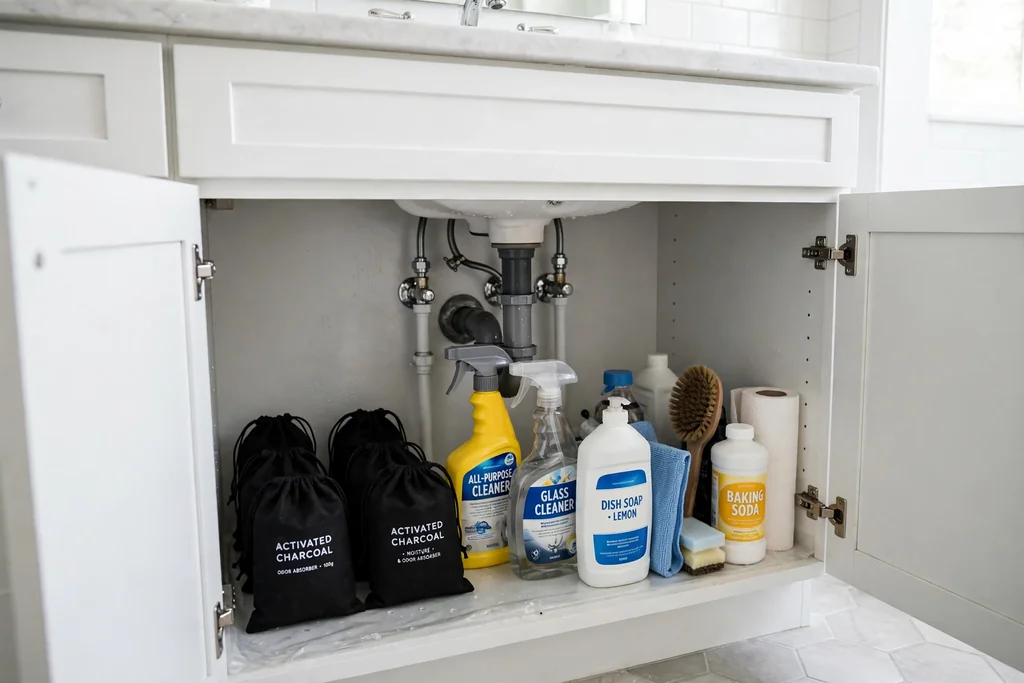
Tuck one or two activated charcoal bags under the sink or inside the linen cupboard, where they absorb moisture and odor from pipes, cleaning products, and spare towels. Charcoal bags work without scent, which suits households that prefer a neutral bathroom or have scent sensitivities, and they last for months with simple care. Place them where air can move around them, not pressed flat behind a stack of towels, so they can absorb from the whole space.
Recharge the bags once a month by setting them in direct sunlight for two to three hours, as the maker advises, which releases trapped moisture and restores their absorbing power. Replace bags that stay damp, torn, or dusty after recharging, and keep them away from direct water, since soaked charcoal stops working and can stain. Pair charcoal bags with good ventilation, since they absorb odor but do not replace fresh air.
22. Put a Fresh Herb Bouquet in a Small Vase
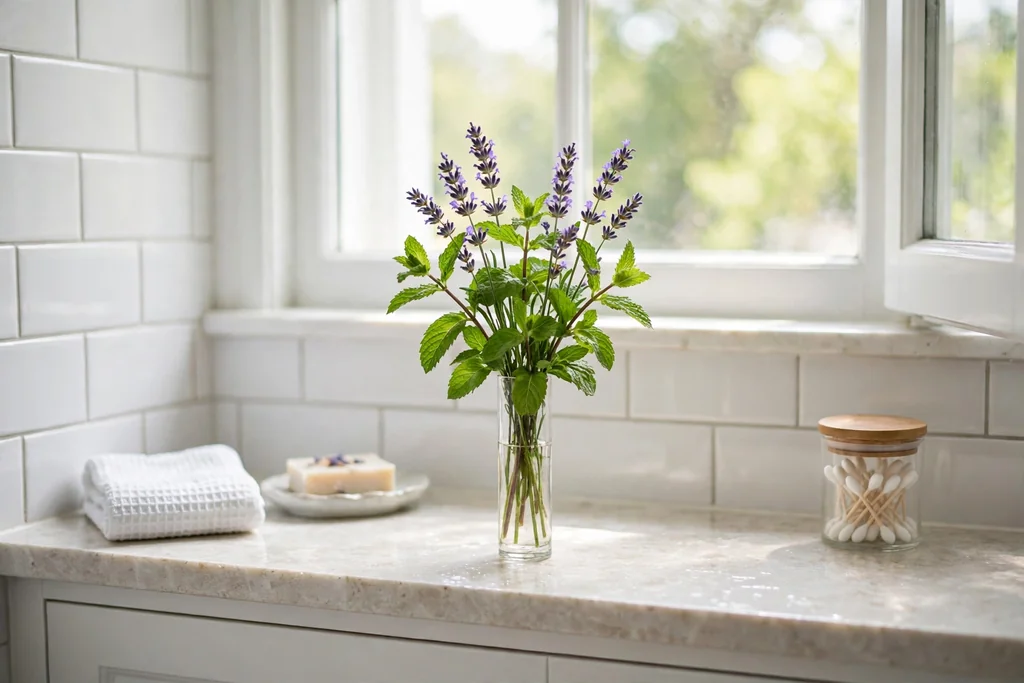
Put a small bouquet of fresh mint, rosemary, or lavender in a narrow vase on the vanity or windowsill, where steam and warm air release a gentle herbal scent through the day. A herb bouquet adds green life to a bathroom, costs little from a garden or market bunch, and can be used in cooking or a bath once it fades, so nothing goes to waste. Choose a vase with a narrow neck, so stems stay upright and water does not splash onto the counter.
Change the water every two days, trim the stems at an angle each time, and remove any leaves that sit below the waterline, since rotting leaves cause the very odor you want to avoid. Replace the bouquet every one to two weeks, or when the scent fades and leaves droop, and wipe the vase before refilling it. If the bathroom has little light, keep the bouquet on the sill for a few hours a day, or use dried herbs from Idea 14 instead.
Conclusion
A fresh smelling bathroom comes from routine more than from any single product. Start with airflow, clean the hidden sources in drains, grout, curtains, and brush holders, then add one or two scents you enjoy and can keep up with. Rotate towels, empty the trash, and refresh diffusers and sachets on a short weekly cycle, and the room will stay pleasant between deep cleans. Save this guide on Pinterest, pick three hacks to try this week, and add more only where the room still needs them.
FAQs
1. Why does my bathroom smell bad even after cleaning?
A bathroom can smell stale after cleaning because the odor source hides in drains, grout, a damp shower curtain, a wet toilet brush holder, or towels that never dry fully. Clean those spots first, run the fan until surfaces dry, and check for a dry trap in a rarely used sink. Adding scent before fixing the source only covers the smell for an hour.
2. What is the fastest hack to make a bathroom smell good before guests arrive?
Open a window for 10 minutes, run the fan, mist towels and the shower curtain with linen spray, light a candle for 30 minutes, and put out fresh hand towels. This five step routine freshens air, fabric, and surfaces at once, and it takes less time than a full clean. Empty the trash can first, since a full can can undo the rest of the work.
3. Are essential oils safe to use in a small bathroom?
Essential oils are safe for most adults when used in small amounts, kept away from skin in undiluted form, and never applied near the face or in a steam filled room at high strength. Use only a few drops per hack, ventilate the room, and skip strong scents if anyone in the household has asthma, allergies, or a fragrance sensitivity. Keep oil bottles upright, capped, and out of reach of children and pets.
4. How often should I refresh a reed diffuser or eucalyptus bundle?
Flip reed diffuser reeds once a week and replace the oil every four to six weeks, or when the scent fades even after flipping. Replace a eucalyptus bundle every two to three weeks, or sooner if leaves turn brittle or the string smells musty. Both last longer away from direct water, heat, and strong airflow, which speed evaporation and drying.
5. Can I make a bathroom smell good without any fragrance?
Yes. Ventilation, a clean drain, dry towels, washed curtains, scrubbed grout, and charcoal bags or baking soda jars can keep a bathroom smelling neutral with no added fragrance at all. This unscented routine suits scent sensitive households, and it often works better than fragrance, since it removes odor sources instead of covering them.
6. What should I avoid when freshening a bathroom?
Avoid mixing cleaning products, especially bleach with any other cleaner, and avoid overusing scent, since five strong scents in one small room smell crowded rather than fresh. Never leave a candle burning unattended, never place a plug in warmer near water, and never pour boiling water down a drain you are unsure about. Fix leaks and damp spots first, since scent cannot fix a plumbing or ventilation problem.