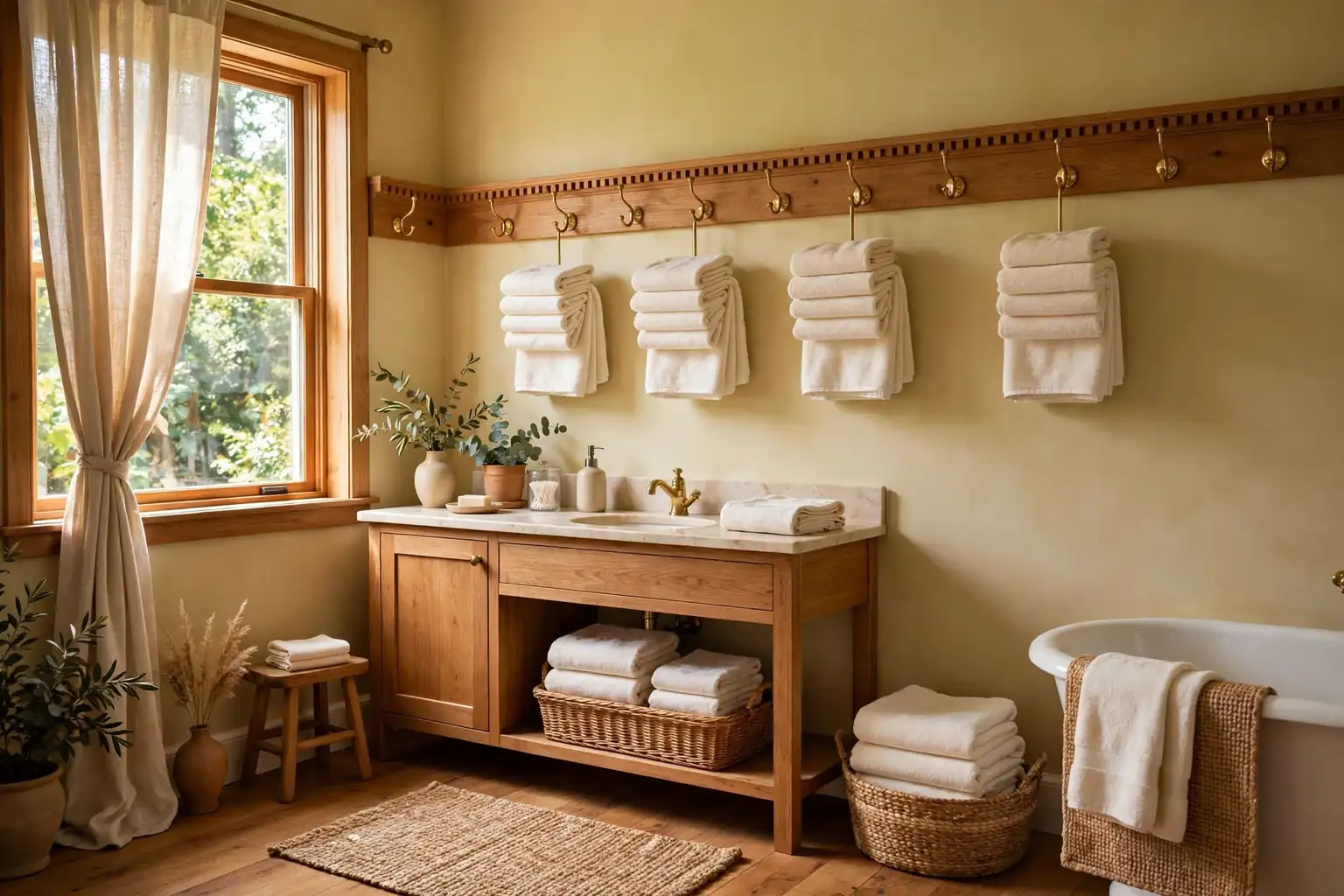
A towel hook is a small fitting, but it decides whether towels dry properly, stay within reach, and look tidy instead of draped over a door. The right hook also adds warmth to a room full of tile and porcelain, especially when the finish matches the rest of the bathroom. These 18 bathroom towel hook ideas cover single hooks, rows, peg rails, over-door racks, and renter friendly options, plus placement tips for small rooms, shared bathrooms, and family homes. Start with where you actually reach for a towel after a shower, then pick a hook style that fits that spot and your wall.
Key Takeaways
- Place hooks where you reach for a towel, usually beside the shower or tub, not across the room from it.
- Give each person at least one hook, and give bath towels and hand towels separate hooks so nothing stays bunched up.
- Match the hook finish to the faucet and mirror frame so the room reads as planned, not patched together.
- In a rented home, start with over-door, adhesive, or suction hooks before drilling any holes.
- Leave space between hooks so towels hang flat and dry fully between uses.
- Use wood, brass, or warm black finishes to soften tile and chrome, and keep the hook style simple in a small room.
1. Single Matte Black Hook Beside the Vanity
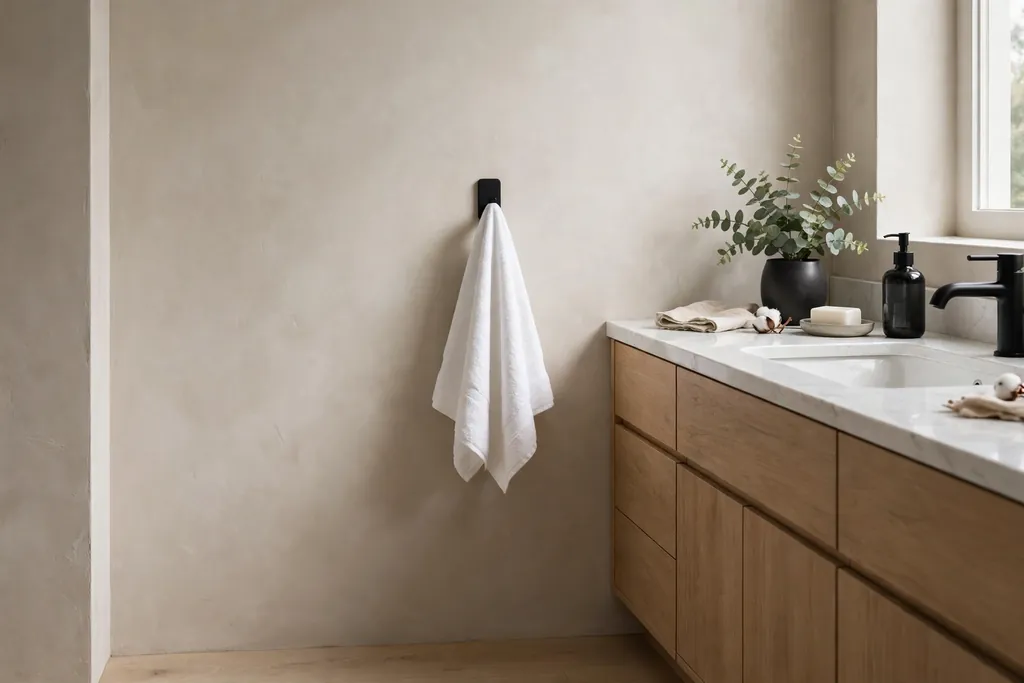
Hang one matte black hook beside the vanity, at shoulder height, for the hand towel you reach for most often. A single hook keeps the towel flat against the wall, so it dries faster than a towel folded over a bar, and the dark finish gives a quiet contrast against white tile. This suits a small bathroom where a long rail would crowd the mirror or the light fixtures.
Fix the hook into a stud or use a wall anchor rated for tile if you drill, and test it with a damp bath towel before trusting it daily. Keep the hook clear of the faucet splash zone so the towel stays dry, and leave a few inches of wall on each side so the towel does not brush the mirror frame or a light shade.
2. Double Hook for a Bath Towel and a Hand Towel
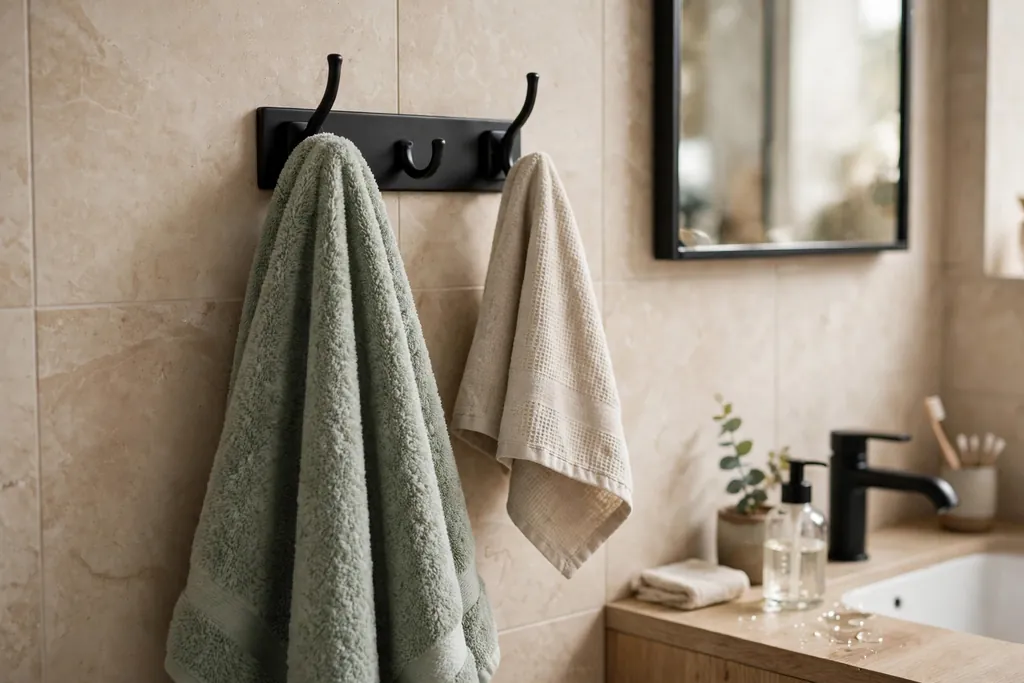
Use a double hook, with one arm above the other or two arms side by side, to hold a bath towel and a hand towel on a single wall plate. This pairing keeps the towels you use in one shower together, and it saves wall space in a bathroom shared by one person. The two arms also stop a thick bath towel from covering a smaller towel underneath it.
Hang the double hook near the shower door or the tub edge, at a height where the bath towel clears the floor by several inches. Check the weight rating if both towels are thick cotton, and space the arms wide enough that air moves between the two towels. If the bathroom is shared, give each person their own double hook rather than asking two people to share one.
3. Over-Door Hook Rack for a No-Drill Fix
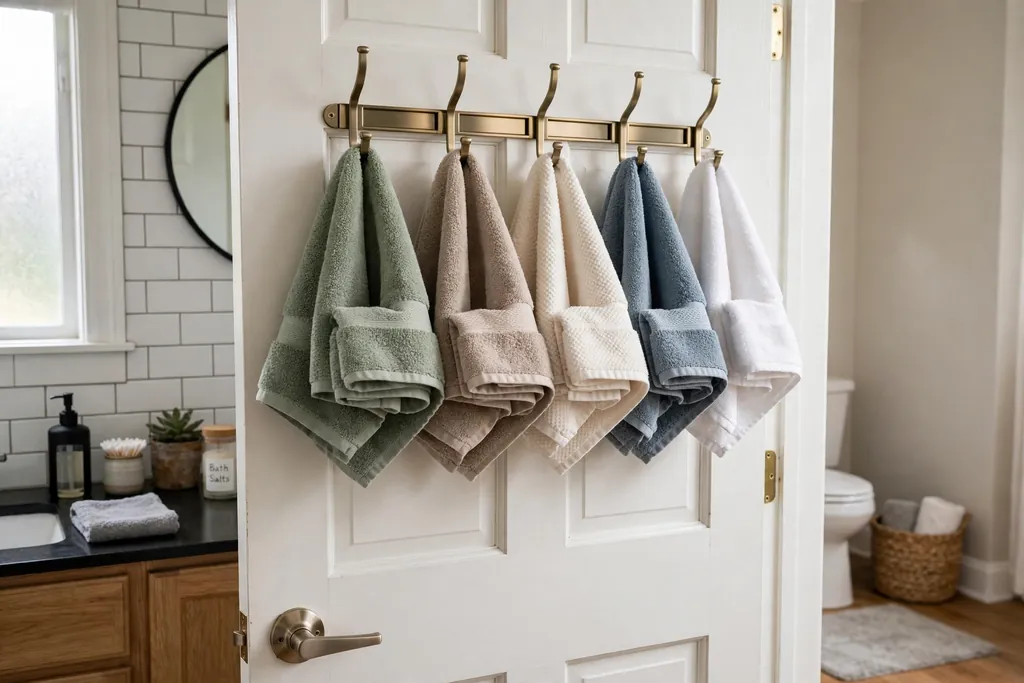
Fit an over-door hook rack on the bathroom door for instant towel storage with no drilling, no anchors, and no damage to tile. Most racks hold three to five hooks, which is enough for a couple or a small household, and the rack moves with you when you move home. This is one of the simplest options for a rented bathroom, and the renter friendly ideas in these apartment bathroom ideas use the same no-drill thinking for the rest of the room.
Choose a rack that fits your door thickness so it does not rattle or scratch the frame, and add felt pads where the metal meets the door. Hang lighter towels on the top hooks and heavier bath towels lower down, so the door still swings freely. If the door rubs the frame, trim the rack hooks or move the rack to a closet door just outside the bathroom instead.
4. Reclaimed Wood Board with Iron Hooks
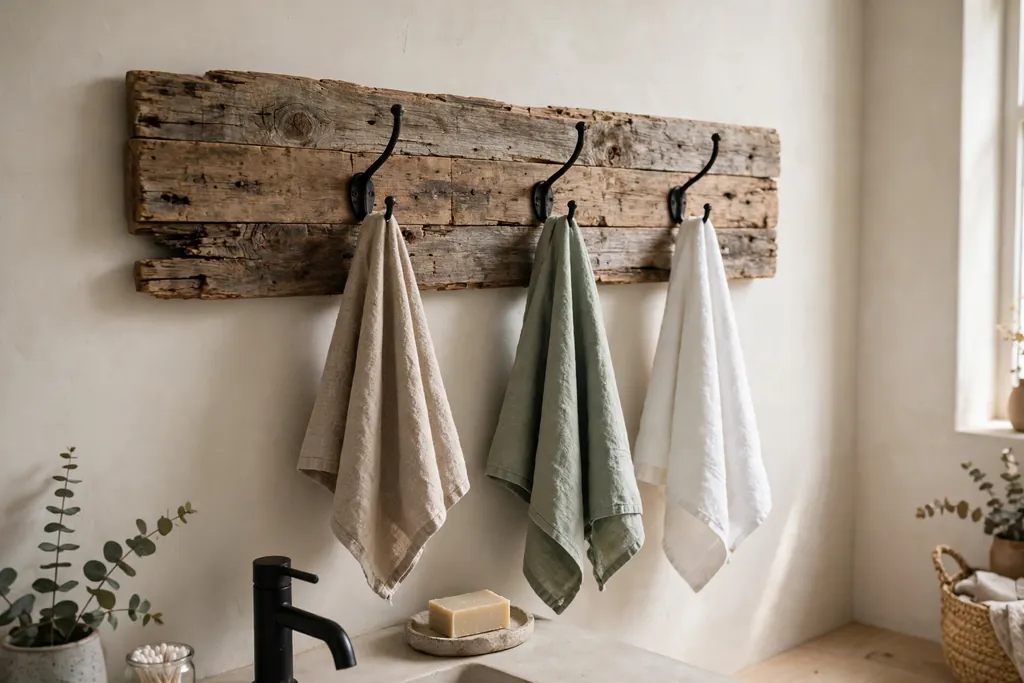
Mount a board of reclaimed or weathered wood with three or four iron hooks for a warm, rustic towel station on one wall. The wood softens a tiled wall, and the iron hooks carry heavy bath towels without bending. This style suits a bathroom with wood on the vanity or the mirror frame, since the board ties those pieces together.
Seal the wood with a water resistant finish before hanging it, and keep the board on a dry wall rather than inside the shower spray. Space the hooks evenly so each towel hangs flat, and use screws long enough to reach a stud or a solid anchor, since a loaded board is heavier than a single hook. Wipe the board dry after steamy showers so the finish lasts.
5. Shaker Peg Rail Along a Spare Wall
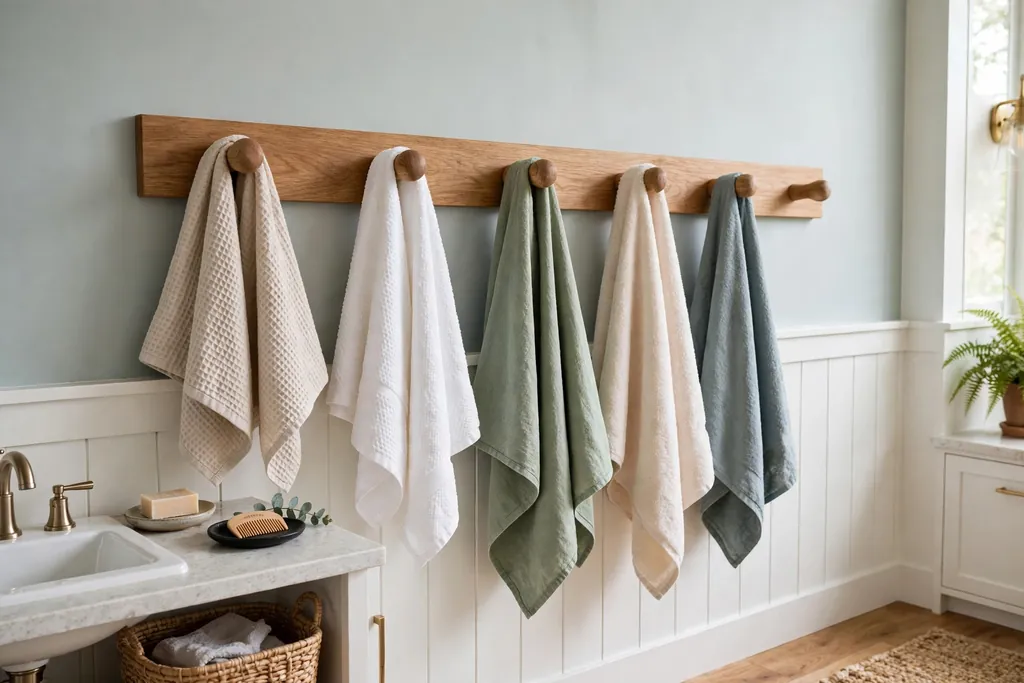
Fit a Shaker style peg rail, a flat wood strip with rounded wooden pegs, along a spare wall for a row of towel hooks that look calm and orderly. Pegs hold towels by their loops or folded over the peg, and the flat rail gives the wall a finished edge even when only one towel hangs on it. This suits a hallway bathroom or a family bathroom where several people need a hook each.
Mount the rail at a height that suits the shortest regular user, and label nothing: give each person a peg position and keep it consistent. Space the pegs at least six inches apart so towels do not overlap, and choose a wood tone that matches the vanity or the door trim. A peg rail also works in a narrow wall beside the door, where a deep cabinet would block the walkway.
6. Adhesive Hooks for Renters and Tile Walls
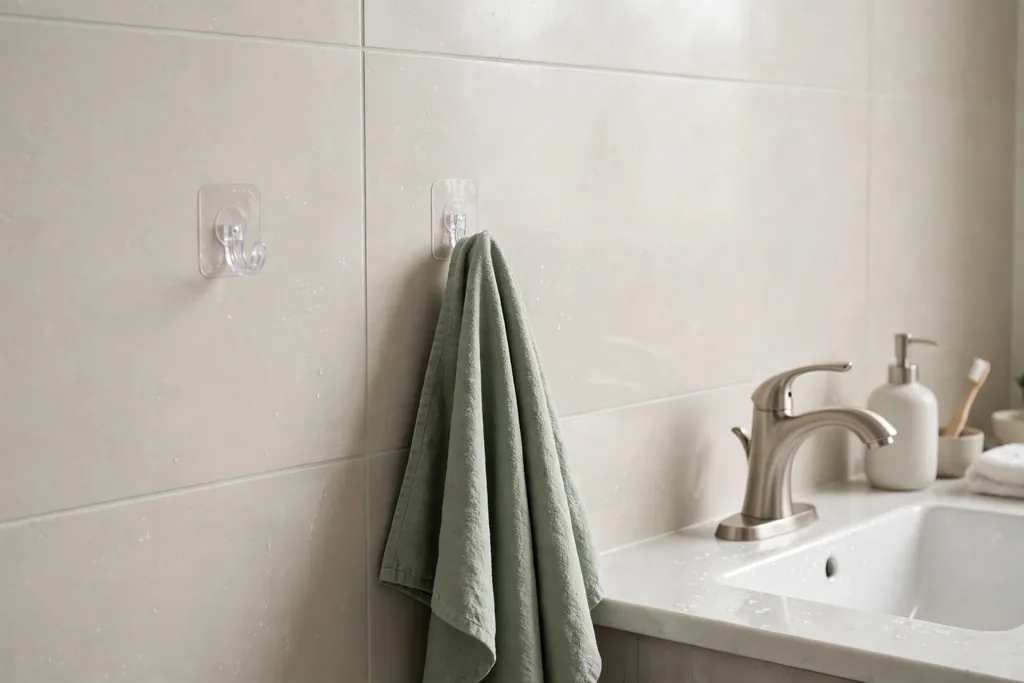
Stick adhesive hooks to smooth tile, glass, or painted walls for towel storage that needs no tools and leaves no holes. Modern adhesive hooks hold a surprising amount of weight, and they suit renters, tiled walls you do not want to drill, and a trial layout you can change later. They are also useful for a hand towel beside a pedestal sink where there is no room for a rail.
Clean the wall with soap and water, dry it fully, and press the hook firmly for the time the maker advises before hanging a towel. Hang the towel by its loop or fold it over the hook so the weight pulls straight down rather than outward. Replace the adhesive strip on wash day if the hook starts to slip, and keep adhesive hooks off textured walls, where the bond is much weaker.
7. Suction Cup Hooks Inside the Shower
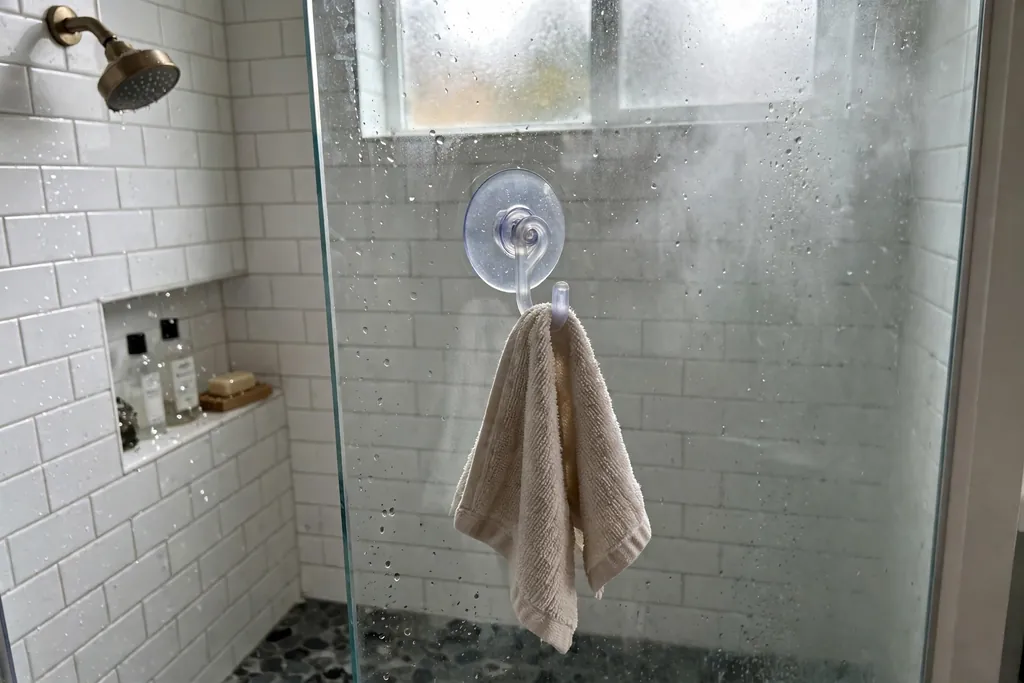
Press suction cup hooks onto shower glass or smooth shower tile to hold a washcloth, a small towel, or a robe just inside the shower. This keeps a towel within arm’s reach while you shower, so you do not step out dripping to fetch one, and the hooks move in seconds when you clean the glass. Suction hooks also suit a shower with no spare wall for a fixed hook.
Wet the suction cup lightly, press it flat against clean glass, and test it with a damp washcloth before trusting it with a full towel. Re-press the cups each week, since steam and soap film loosen the seal over time, and avoid suction hooks on textured tile or grout lines, where air leaks under the cup. Keep the hook out of the direct spray line so the towel stays dry until you need it.
8. Freestanding Towel Hook Stand by the Tub
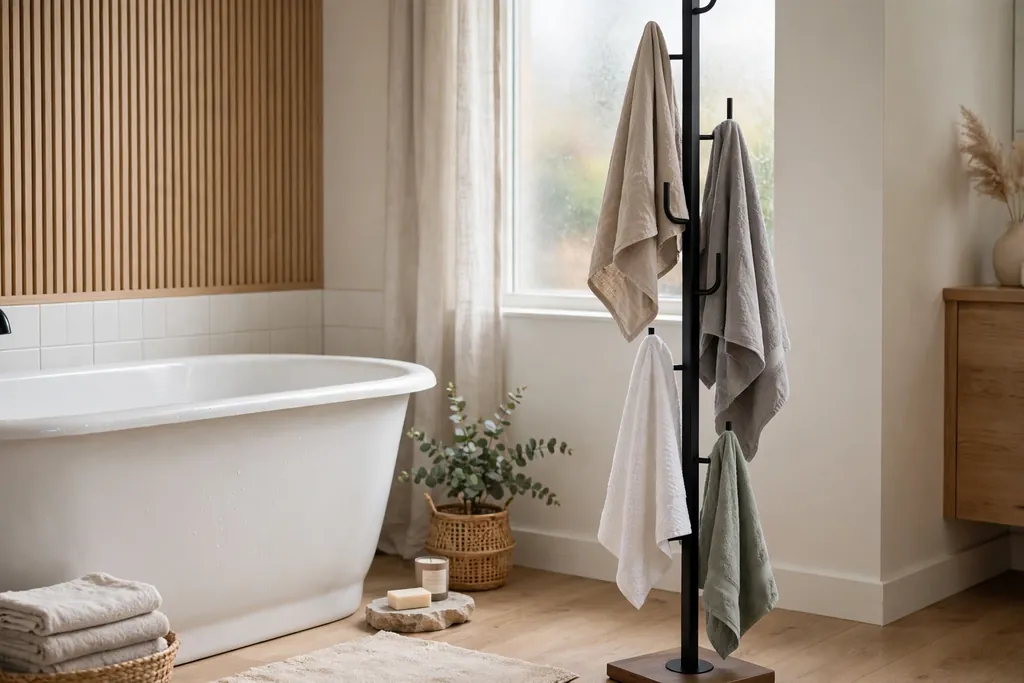
Stand a freestanding towel hook stand, sometimes called a towel valet, beside the tub or in a corner for towel storage that needs no wall at all. A stand usually holds two or three towels on hooks at different heights, and it moves wherever the bathroom layout changes. This suits a bathroom with fragile walls, a lot of glass, or a tub in the middle of the room.
Choose a stand with a wide, heavy base so it does not tip when you pull a towel off one side, and keep it clear of the walkway into the shower. Hang the towel you will use next on the highest hook, and use the lower hooks for a robe or a spare towel. Dry the base after showers, since standing water under a metal stand can mark the floor over time.
9. Heated Towel Hook for Warm, Dry Towels
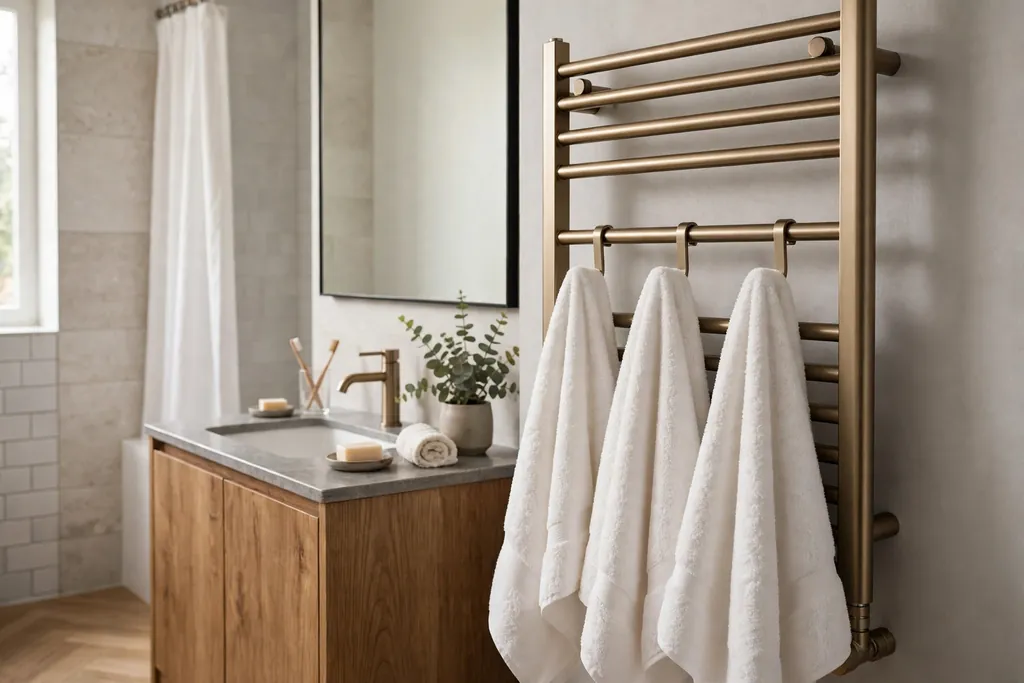
Fit a heated towel hook or a small heated rail with hooks so towels warm up and dry between uses instead of staying damp on a cold wall. Warm towels are a comfort on winter mornings, and a heated hook also helps the bathroom itself dry out faster, which keeps the room fresher. This suits a main bathroom used every morning, where towels otherwise stay damp all day.
Size the heated hook to the number of towels your household uses daily, and follow the maker guidance on distance from water and shower spray. A model with a timer saves energy and keeps the hook from running all day, and a freestanding heated stand gives a similar result with no wiring. Keep curtains, laundry, and long towels clear of the heated surface for safety, and wipe the rail dry so mineral marks do not build up.
10. Brass Hooks for a Warm Metallic Accent
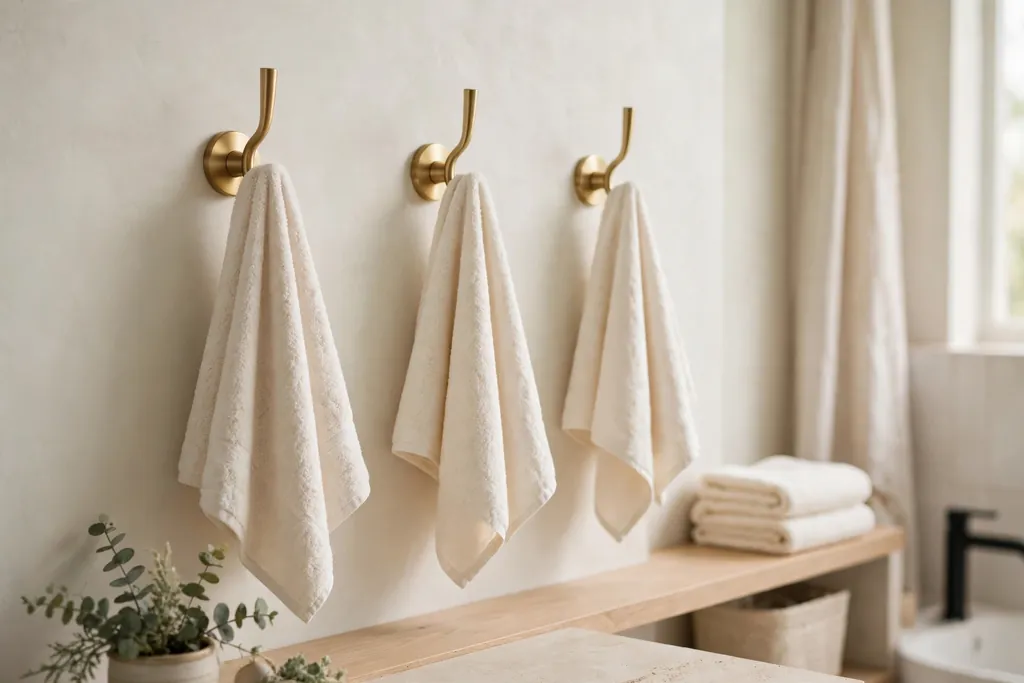
Choose brass hooks, in brushed or aged brass, to add a warm metallic accent to a bathroom with white tile, pale walls, or a wood vanity. Brass reads softer than chrome and warmer than black, and it pairs well with warm bulbs, wood tones, and cream towels. Two or three brass hooks can carry the whole warm scheme, since the eye picks up the repeated finish.
Keep the brass finish consistent across the hooks, the faucet, and the mirror frame if you can, so the room reads as one scheme rather than a mix of metals. Wipe brass hooks dry after steamy showers in a hard water area, since water spots show more on a warm metal. If you rent, keep the original hooks in a labeled bag, so you can refit them when you move out.
11. Hidden Hook Inside the Cabinet Door
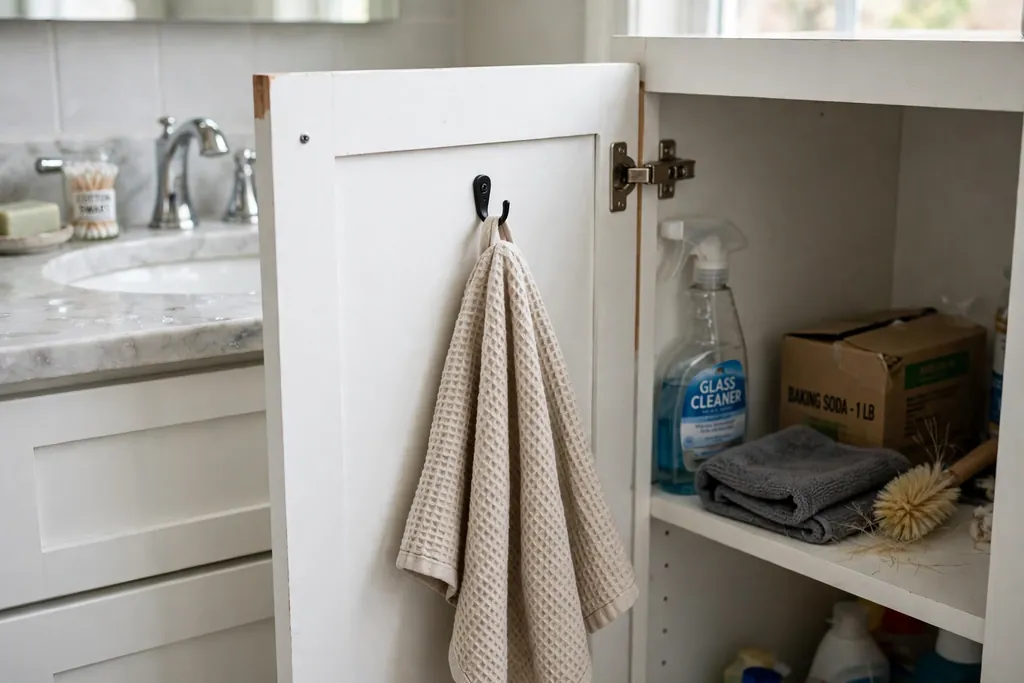
Fix a small hook to the inside of a vanity cabinet door for a hand towel or a cleaning cloth that stays out of sight. This hidden spot suits a bathroom where wall space is taken by a mirror, a window, or a shower screen, and it keeps the room looking calm when guests visit. It also gives cleaning cloths a drying spot that does not clutter the sink area.
Use short screws that do not poke through the door face, and check that the door still closes with a towel hanging on the hook. Hang only a light hand towel or cloth here, since a heavy bath towel can strain the hinges, and keep the hook clear of pipes and bottles inside the cabinet. Dry the towel on a wall hook now and then, since a closed cabinet slows drying.
12. Hook on the Side of the Vanity
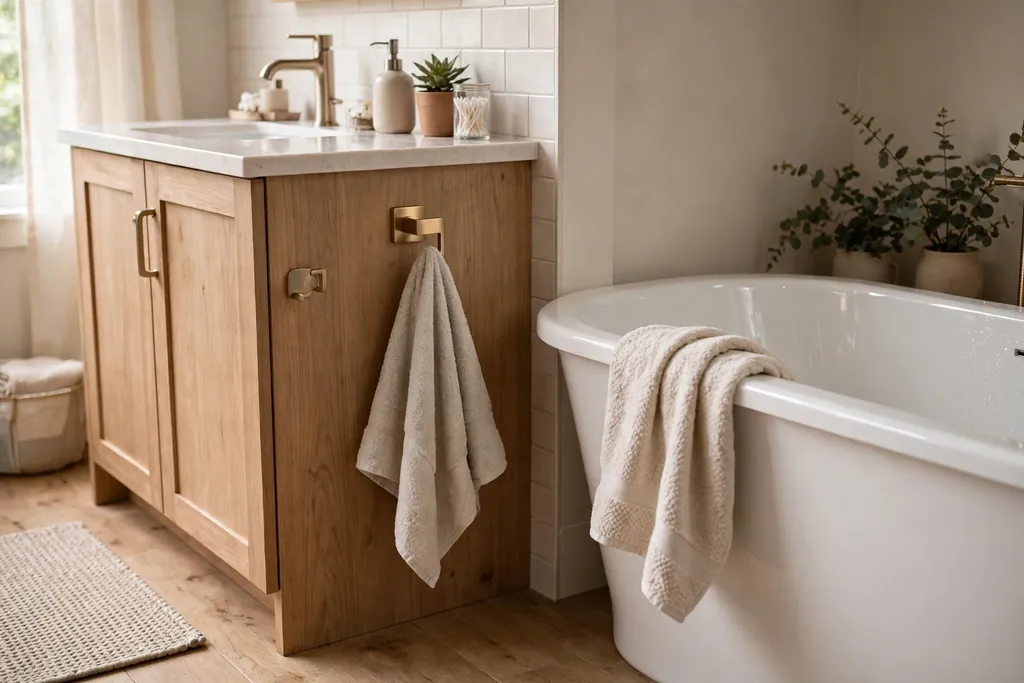
Mount a hook on the side panel of the vanity, facing the tub or the shower, for a towel that stays close to the bathing area without taking wall space. The side of a vanity is often unused, and a hook there puts the towel exactly where you step out of the shower. This suits a small bathroom where the walls are full but the vanity side is free.
Check that the vanity side is solid wood or a sturdy panel before fixing the hook, and use screws short enough to stay inside the panel. Hang a bath towel here rather than a hand towel, since the tub side is where bath towels are needed, and keep the hook clear of the drawer or door swing. If the vanity side faces a walkway, choose a hook that sits flat against the panel so no one catches a sleeve on it.
13. Leaning Ladder with Hooks for Towels and Robes
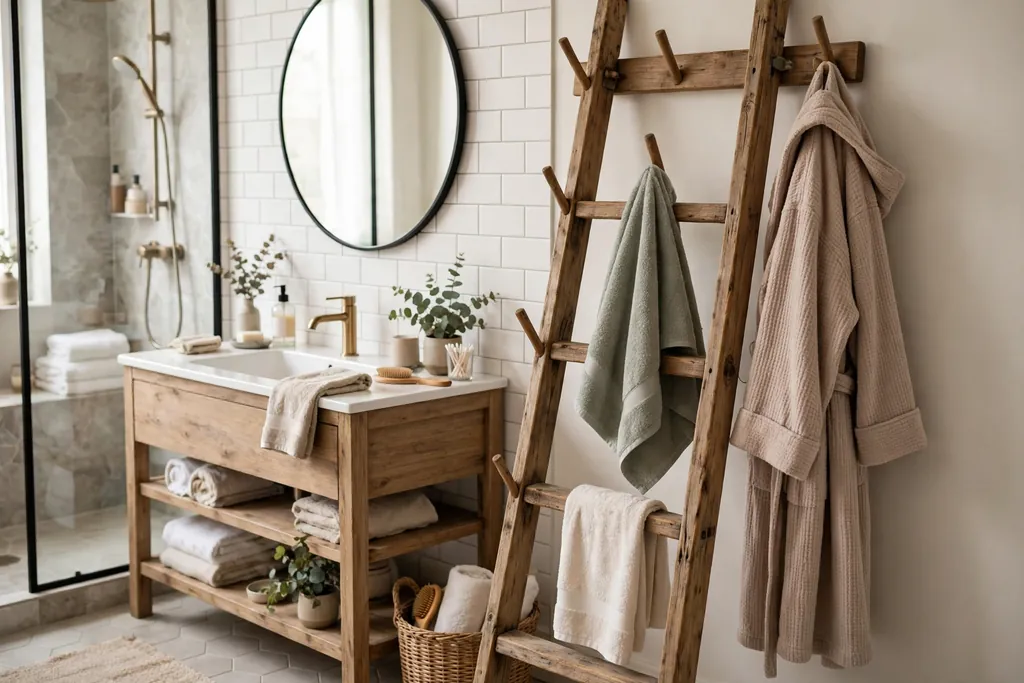
Lean a wooden ladder against a spare wall and use its rungs and side hooks for towels, a robe, and a wash bag. A ladder needs no drilling, gives several hanging spots in a narrow footprint, and suits a wall beside the door or at the end of the tub. The same leaning ladder idea appears in the calm, wood-led rooms in these Swedish bathroom ideas, where pale wood softens white tile.
Put heavier bath towels on the lower rungs and lighter items higher up, and add small adhesive pads under the feet so the ladder does not slide on tile. Check that the top cannot tip forward if a child pulls on it, and anchor it if your household needs that extra safety. A ladder also works as a drying rack for hand washed items, as long as the rungs stay clear of direct shower spray.
14. Low Row of Hooks for Children
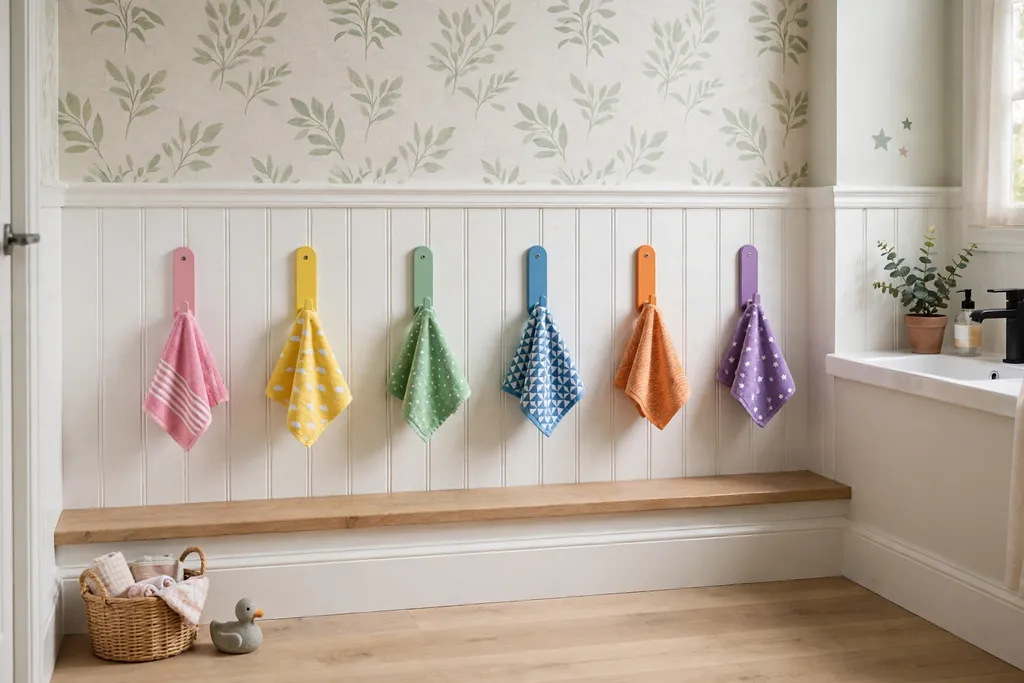
Hang a row of hooks at child height, low enough for a child to reach without a step stool, so children can hang their own towels and robes. A low row builds a simple habit, keeps towels off the floor, and stops children pulling towels down from adult height hooks. Give each child one hook in a color or position they recognize, and keep the row on a dry wall away from the shower spray.
Fix the hooks firmly into a stud or a solid anchor, since children pull harder than adults, and choose hooks with rounded ends rather than sharp points. Space the hooks wide enough that a child’s towel and robe do not overlap, and move the row up as the child grows, filling old holes before repainting. A low row also suits a seated user, so it is worth keeping one low hook in a family bathroom even after children grow.
15. Hook Just Outside the Shower Door
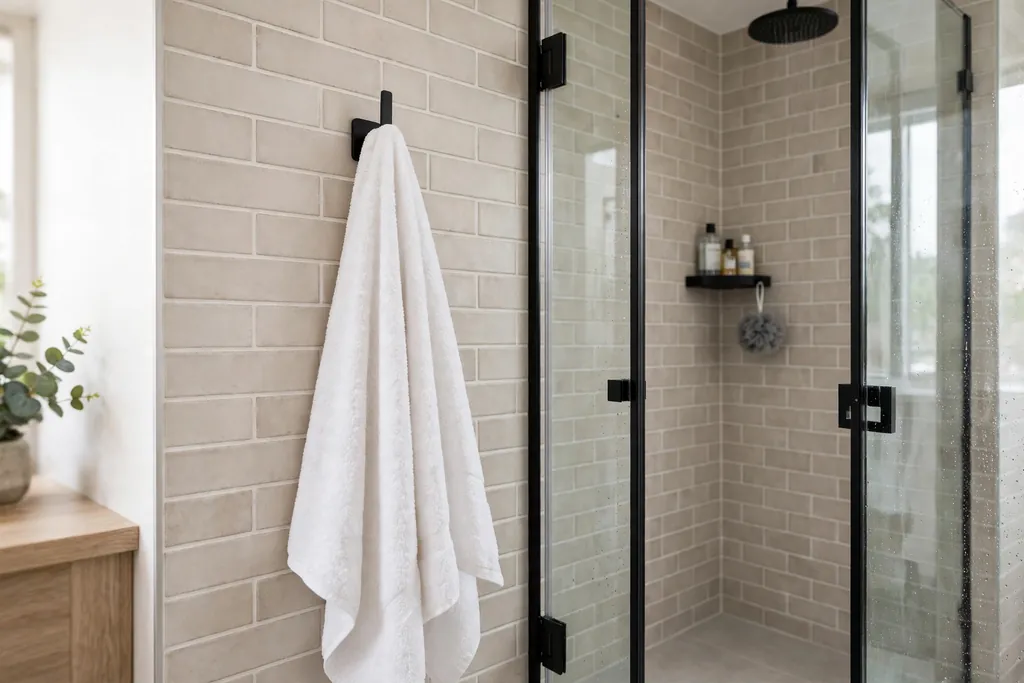
Place a hook on the wall just outside the shower door, at arm’s length from the entry, so a towel is waiting the moment you step out. This placement matters more than the hook style: a towel across the room is little use when you are wet, while a hook by the door keeps water off the floor. This suits both a walk-in shower and a shower over a tub, and the layout ideas in these walk-in shower ideas show how the entry wall can carry storage without crowding the shower itself.
Hang the hook on the dry side of the glass or curtain, clear of the door swing, and at a height where the towel clears the floor. If two people shower at different times, give each person a hook by the door so no one has to hunt for a dry towel. Keep a spare towel on a second hook nearby for guests, so the main hook is never empty when you need it.
16. Staggered Hooks at Different Heights
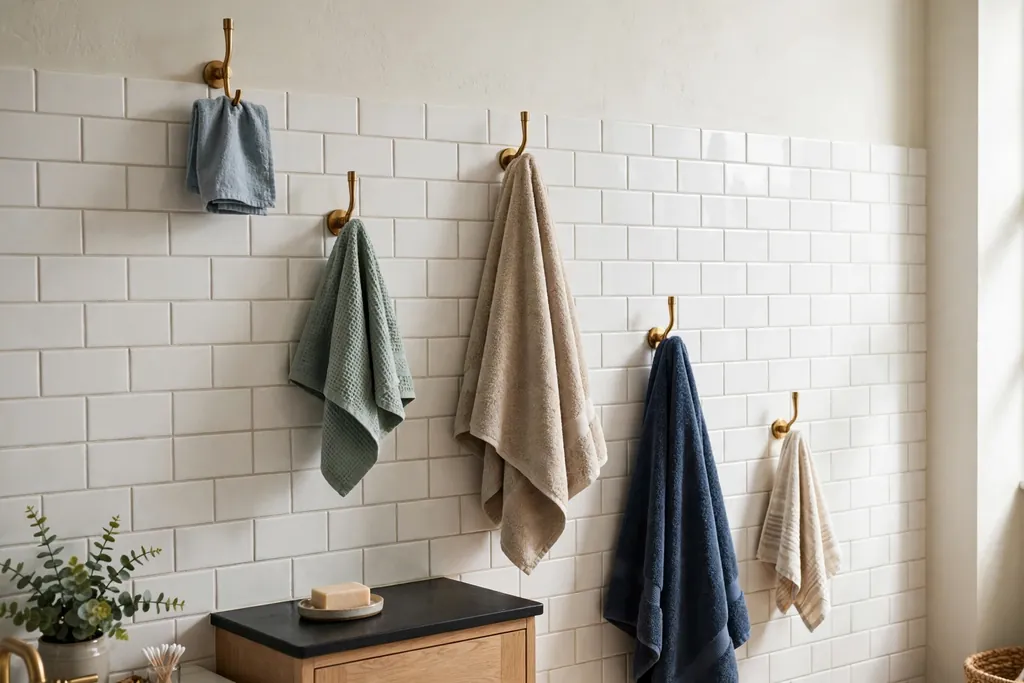
Hang hooks at staggered heights, high for bath towels, mid height for hand towels, and low for washcloths, on one wall to sort towels by size and use. Staggering stops a long bath towel from covering a smaller towel, and it uses a tall, narrow wall that a straight row would waste. This suits a wall beside a tall mirror or a narrow wall between a door and a vanity.
Plan the layout on paper first, marking each hook height against the towel length, so every towel clears the floor and the one below it. Keep the highest hook within easy reach, and put the most used towel at the most comfortable height rather than at the top. A staggered row also looks intentional when the hooks share one finish, even if the towels are different colors.
17. Towel Hook with a Shelf Above
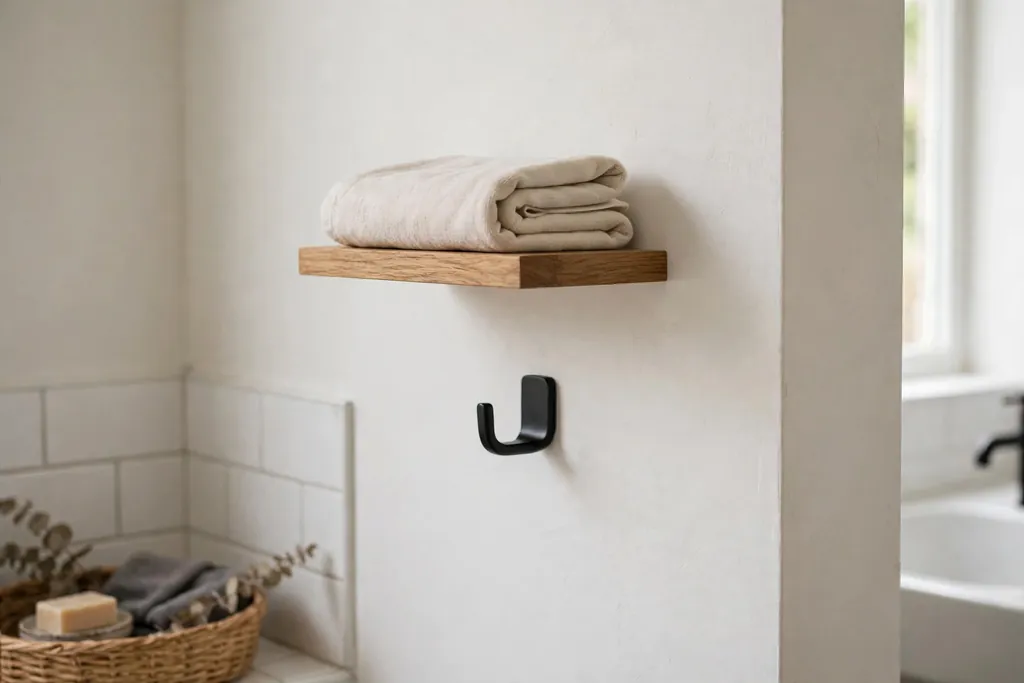
Combine a hook with a small shelf above it, so the shelf holds a folded spare towel, a plant, or a candle while the hook holds the towel in use. This pairing gives a plain wall a finished look and adds storage without a cabinet, and it suits a wall beside the vanity or above a toilet. The shelf also gives you a spot for the towel you will use next, so the changeover is quick.
Mount the shelf at a height that clears the top of a hanging towel, and keep the shelf load light, with one folded towel and one small item at most. Use wall anchors rated for tile if you drill, and keep the shelf clear of the shower spray so folded towels stay dry. If the bathroom is small, choose a shelf no deeper than a folded towel, so it does not crowd the walkway.
18. Leather Loop and Rope Hooks for Natural Texture
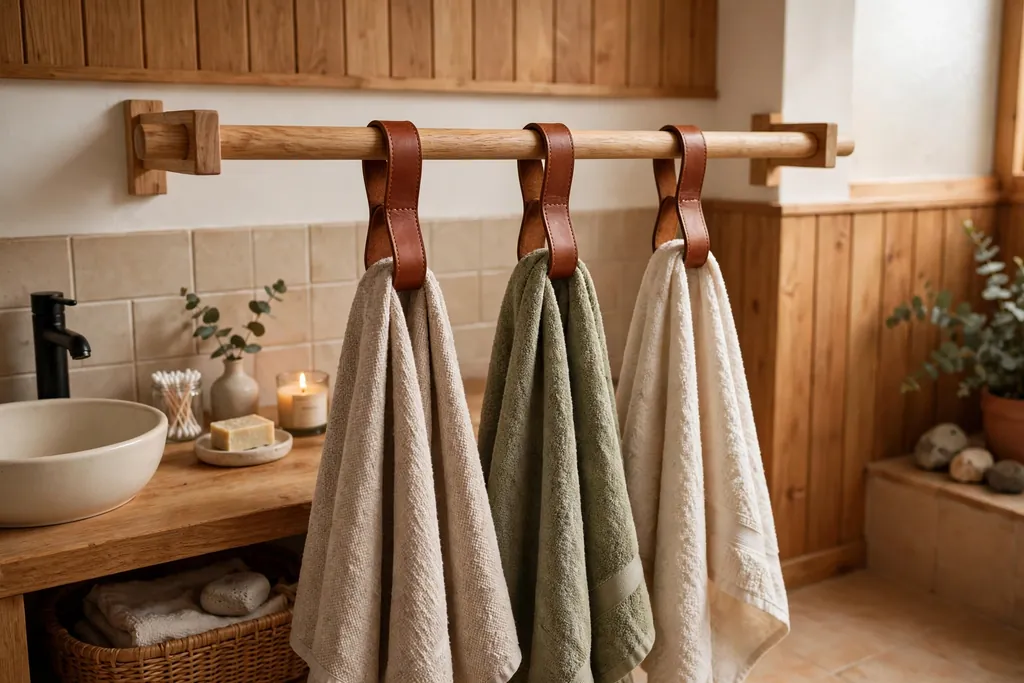
Hang towels from leather loops or thick cotton rope loops fixed to a wall hook or a wooden dowel for a soft, natural texture in the bathroom. Leather and rope warm up a room full of hard tile and porcelain, and they suit a bathroom with wood, woven baskets, or plants. A loop also folds flat against the wall when empty, which keeps a small bathroom looking tidy.
Choose loops made for damp rooms, with sealed leather or washable cotton rope, and wipe them dry after steamy showers so they do not stiffen or smell. Fix the loop holder firmly to the wall, since a towel pulls down on the loop with its full weight, and replace a loop at the first sign of fraying. Keep rope and leather hooks on dry walls, away from direct shower spray, and pair them with a wood peg rail or a wood board for a matching natural scheme.
Conclusion
A good towel hook plan starts with placement, not shopping: one hook by the shower door, one by the vanity, and one per person, all at heights that suit the people who use them. Match the finish to the rest of the bathroom, keep towels hanging flat with air between them, and choose no-drill options first if you rent. Work through this list from the shower outward, starting with the hook you will use every morning, then add a row, a rail, or a ladder only where towels still pile up. For a small rented room, the storage and no-drill ideas in these apartment bathroom ideas pair well with the hooks above, and the pale wood and warm finishes in these Swedish bathroom ideas show how a simple hook can carry the whole warm look of the room.
Keep this list handy the next time a towel ends up on the floor, and fix that one spot first: a hook by the shower door, a low row for the children, or a heated hook for winter mornings. Small fittings, placed where you actually reach for a towel, make a bathroom feel warm, tidy, and easy to use every day.
FAQs
Where should bathroom towel hooks go?
Put the main bath towel hook on the wall just outside the shower or tub, at arm’s length from the entry, so the towel is waiting when you step out. Put a hand towel hook beside the vanity, at shoulder height, where you wash your hands. Keep hooks on dry walls, clear of direct shower spray and door swings, and leave enough space that each towel hangs flat and dries fully.
How high should a towel hook be?
A good starting height is around 60 to 66 inches from the floor for an adult bath towel hook, with the towel clearing the floor by several inches. For a hand towel beside the vanity, shoulder height for the main user works well. For children, hang a row at a height the child can reach without a step stool, and move it up as they grow.
Are hooks or towel bars better for drying towels?
Hooks usually dry towels faster than bars, because a towel on a hook hangs in a single layer with air moving around it, while a towel folded over a bar stays doubled up. Bars suit a hand towel that is used often and refolded, and they look neat in a row. In a small or humid bathroom, hooks have the edge, especially if you give each towel its own hook.
Can I hang towel hooks without drilling?
Yes. Over-door racks need no drilling at all, adhesive hooks stick to smooth tile and glass, and suction hooks work on shower glass and smooth tile. Freestanding stands and leaning ladders also need no wall fixings. Clean the surface first, check the weight rating for a damp bath towel, and test the fixing for a day before trusting it fully. For heavy towels on a permanent hook, a drilled fixing into a stud is still the strongest option.
How many towel hooks does a bathroom need?
Allow at least one hook per person for a bath towel, plus one hand towel hook by each sink. A shared family bathroom often needs one hook per person plus a spare for guests, while a guest bathroom can manage with two hooks: one bath towel and one hand towel. If towels pile on the floor or stay bunched on one hook, that is the sign to add another hook rather than a bigger rail.
What finish should bathroom towel hooks be?
Match the hook finish to the faucet, shower fittings, and mirror frame already in the room, so the bathroom reads as one scheme. Matte black suits white tile and modern rooms, brass adds warmth to pale walls and wood vanities, and chrome suits a bright, cool bathroom. In a hard water area, brushed finishes hide water spots better than polished ones, so wipe hooks dry after steamy showers whatever finish you choose.