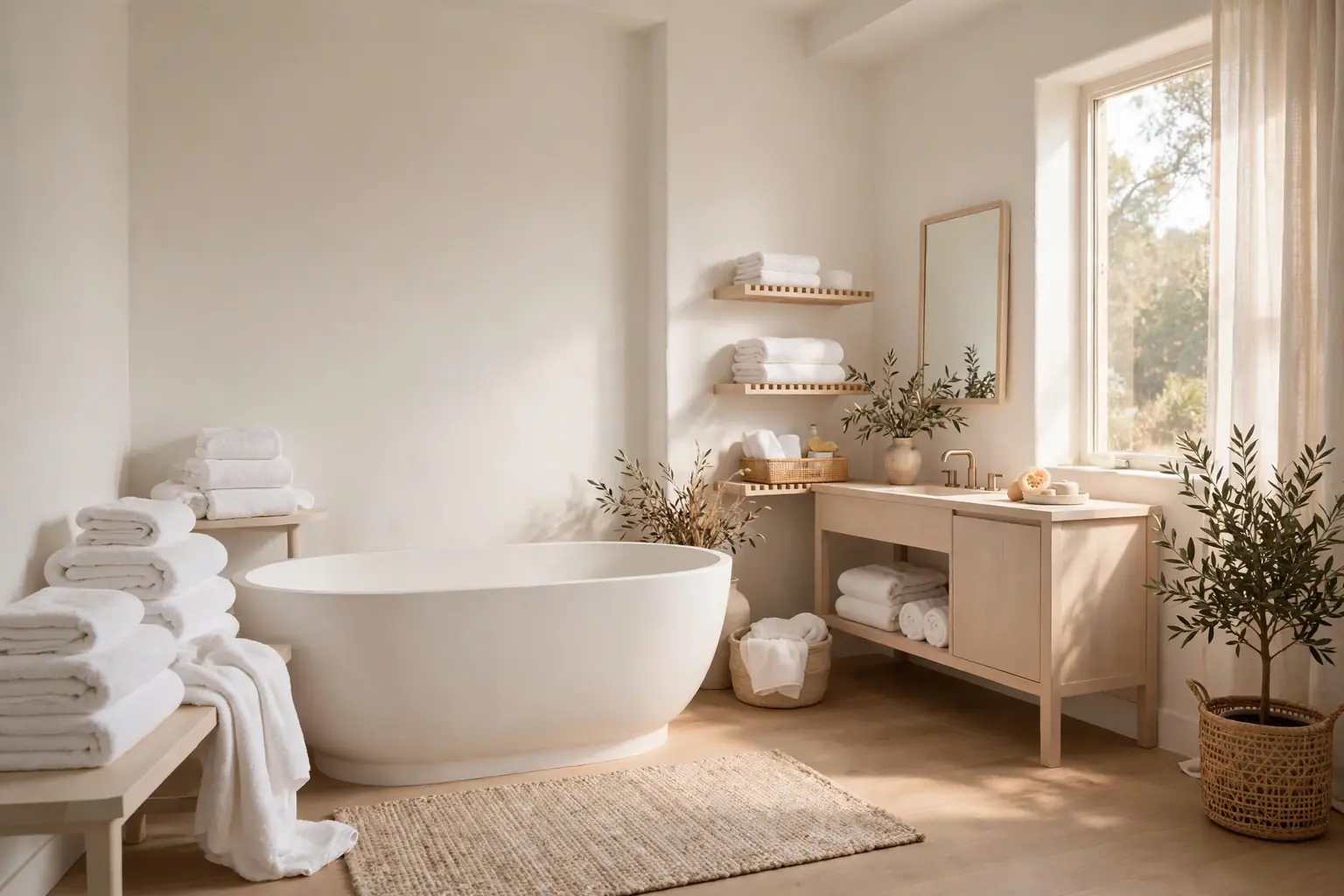
A soft bathroom is not about one color or one purchase. It is about surfaces that feel good to touch, light that does not glare, and a layout where towels, soap, and storage sit within easy reach. Pale walls, plush cotton, warm wood, and a dimmer can change a hard, cold room into a place where mornings feel slower and evenings feel restful. These 31 soft bathroom ideas cover color, texture, lighting, fixtures, storage, and small comforts, so you can start with one easy swap or build a full scheme over time. For small rooms, the renter friendly storage and surface ideas in these apartment bathroom ideas pair well with the soft finishes below.
Key Takeaways
- Pick one soft base color, such as warm white, pale sage, or blush, and repeat it in two or three places so the room reads as planned.
- Put softness where your body meets the room: towels, mats, the shower floor, and the seat or stool you use daily.
- Use warm, dimmable light at face level and a low light for evenings, rather than one harsh ceiling light.
- Keep hard surfaces quiet when a soft texture leads, and keep busy patterns to one surface at a time.
- Choose washable, moisture safe fabrics and finishes, since a bathroom needs softness that can cope with steam and splashes.
- Start small if you are unsure: towels, a mat, a curtain, and a lamp change the feel before you paint or retile anything.
1. Warm White Walls With Soft White Trim
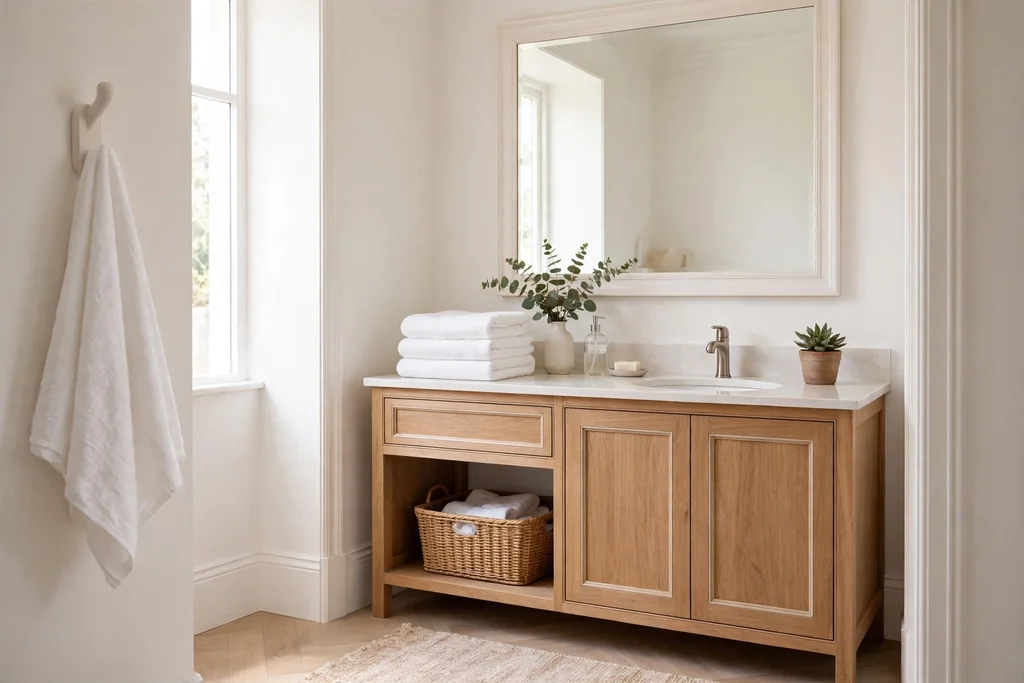
Paint the walls a warm white with a hint of cream, and keep the trim, ceiling, and door in a clean soft white. Warm white removes the cold, clinical feel of a stark white room while still keeping the space bright and easy to clean. It suits small bathrooms well, because the pale tone does not shrink the room.
Use a washable, moisture resistant paint finish, and test a large sample beside your tile and floor in both morning light and evening lamplight. Keep towels in white with one pale accent towel, and use brushed nickel or chrome fixtures so the room stays fresh. A warm white base also lets you change accent colors later by swapping towels and a curtain only.
2. Blush Pink Accent Towels and Rug
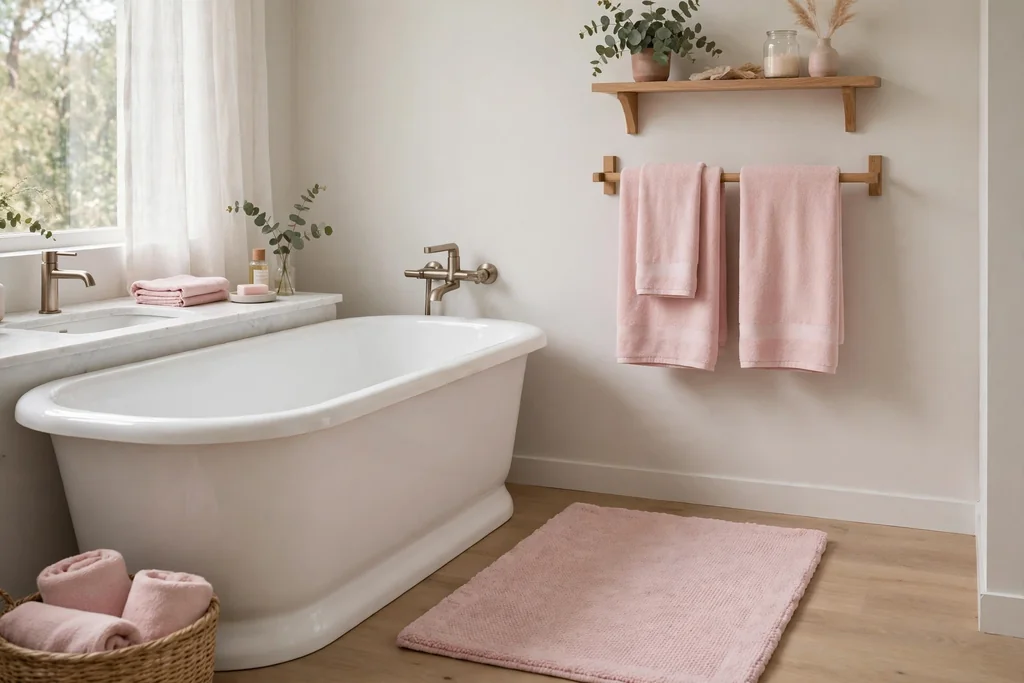
Add blush pink as a single soft accent through towels and one rug, while the walls, tile, and vanity stay pale and quiet. Blush reads as warm and gentle without turning the room pink all over, and it suits white tile, pale wood, and brushed nickel. It is an easy first step into color for a bathroom that now feels plain.
Fold blush hand towels on a shelf, hang one blush bath towel on the rail, and place a matching rug beside the tub. Wash new colored towels separately first, so dye does not transfer to white towels. Keep a second set in rotation so the bathroom never sits bare on wash day.
3. Layered Plush Towels on an Open Shelf
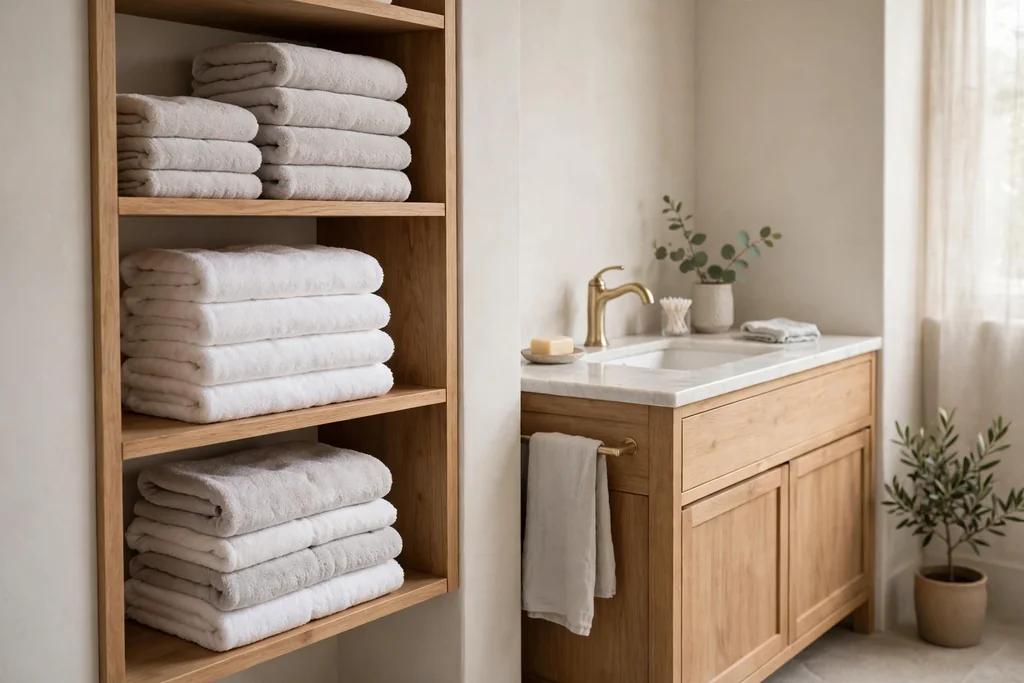
Stack plush cotton towels in two soft tones, such as white and pale grey, on an open shelf beside the vanity or above the toilet. Thick, folded towels add visible softness before you even touch them, and an open shelf keeps daily towels within reach. This suits a bathroom with limited cabinet space, since the shelf uses wall space instead of floor space.
Keep towel quality consistent, since mixed weights look untidy on an open shelf. Roll one towel per person in a basket for a softer, hotel style display, and keep spare towels folded flat. Check that the shelf sits clear of direct shower spray, so towels stay dry between uses.
4. Pale Sage Vanity Cabinet
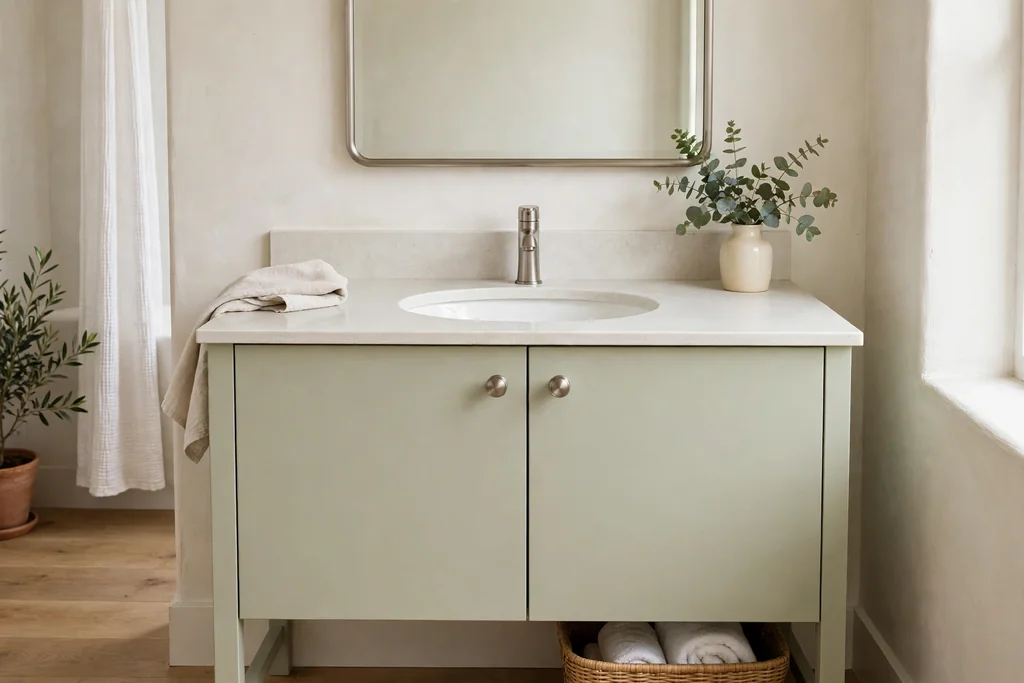
Paint or choose a vanity cabinet in pale sage green, and finish it with brushed nickel knobs and a pale countertop. Sage is a soft, leafy green that calms a room full of white tile, and it pairs well with warm wood and white towels. A painted vanity changes the whole room for the cost of one cabinet, not a full remodel.
Remove the doors and hardware before painting, clean off soap residue, sand lightly, and use a primer made for slick cabinet surfaces before two thin coats of a moisture resistant paint. Keep the walls pale so the sage stays the focal point, and add a small wooden tray on the counter to repeat the warm material once more.
5. Soft Blue Grey Wall Tile in the Shower
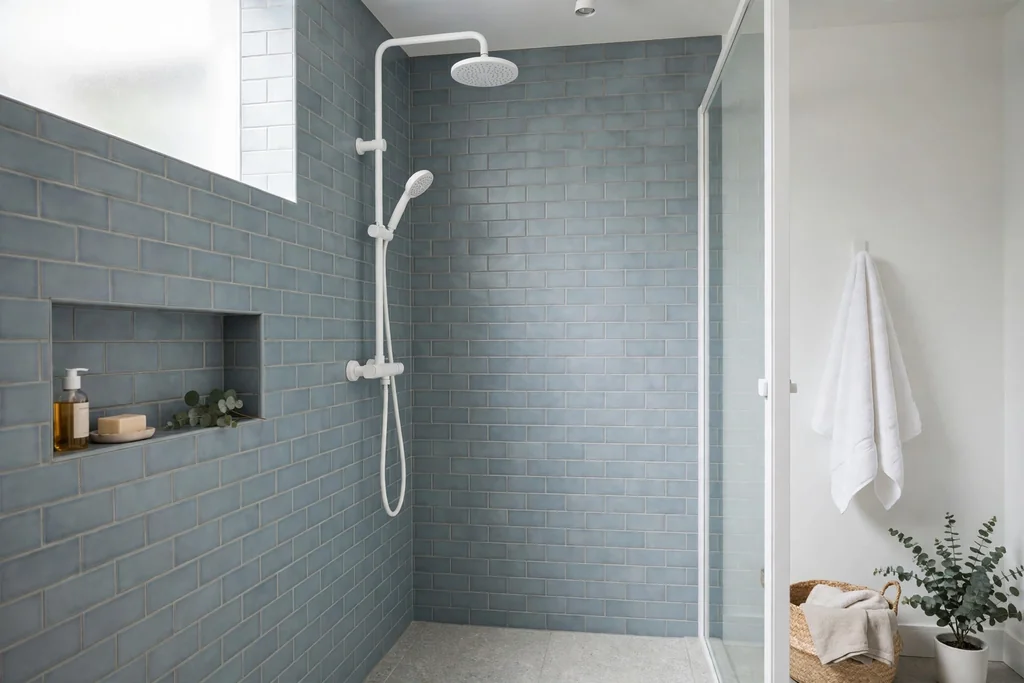
Line the shower walls with soft blue grey tile in a simple running bond pattern. The muted blue grey reads as calm water rather than a bold color statement, and it pairs well with white fixtures and pale grout. Subway tile is easy to clean, and the soft tone keeps a small shower from feeling busy.
Run the tile to the ceiling in a small shower so the eye travels upward, and keep the rest of the bathroom walls plain warm white. Use a matching blue grey tile on the shower floor in a smaller size for grip, or keep the floor white and let the walls carry the color. Seal the grout as the tile maker advises.
6. Rounded Arched Mirror With a Soft Frame
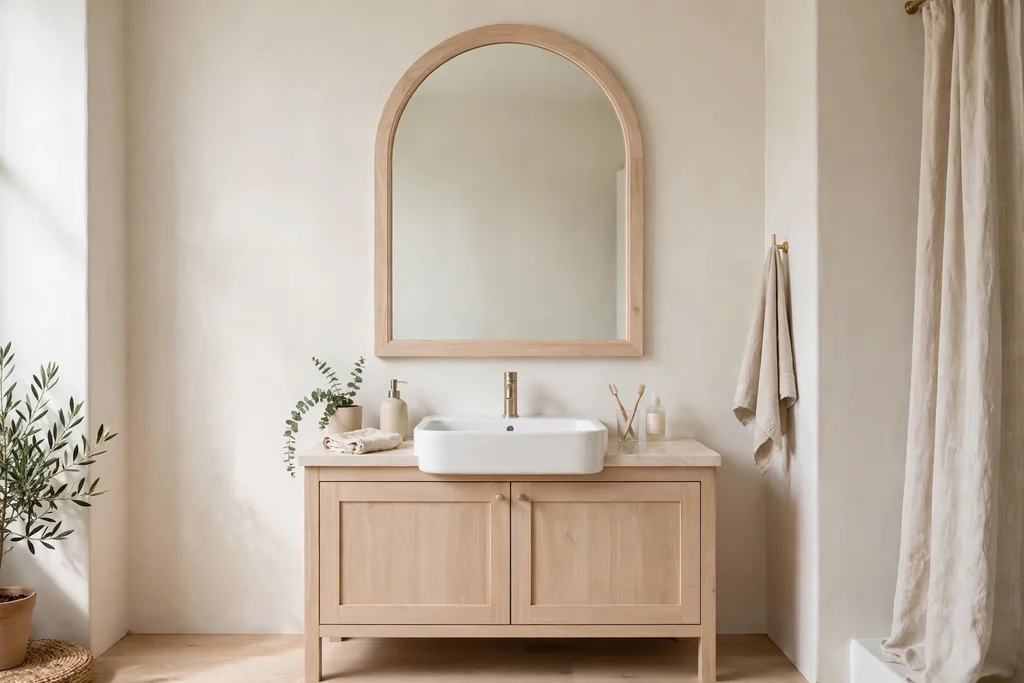
Hang an arched mirror with a pale wood or soft white frame above the vanity. The arch breaks up the rectangles of tile and cabinetry, draws the eye upward, and softens the hard lines of the room. A rounded shape suits a soft scheme better than a sharp, square mirror in a heavy frame.
Center the mirror over the sink at eye level, and keep its width a little narrower than the vanity so the edges do not crowd the light fixtures. If you paint a frame, use a moisture resistant paint and seal it well. Pair the arched mirror with one curved accessory nearby, such as a rounded soap dish, so the shape repeats once more.
7. Dimmable Warm Sconces Beside the Mirror
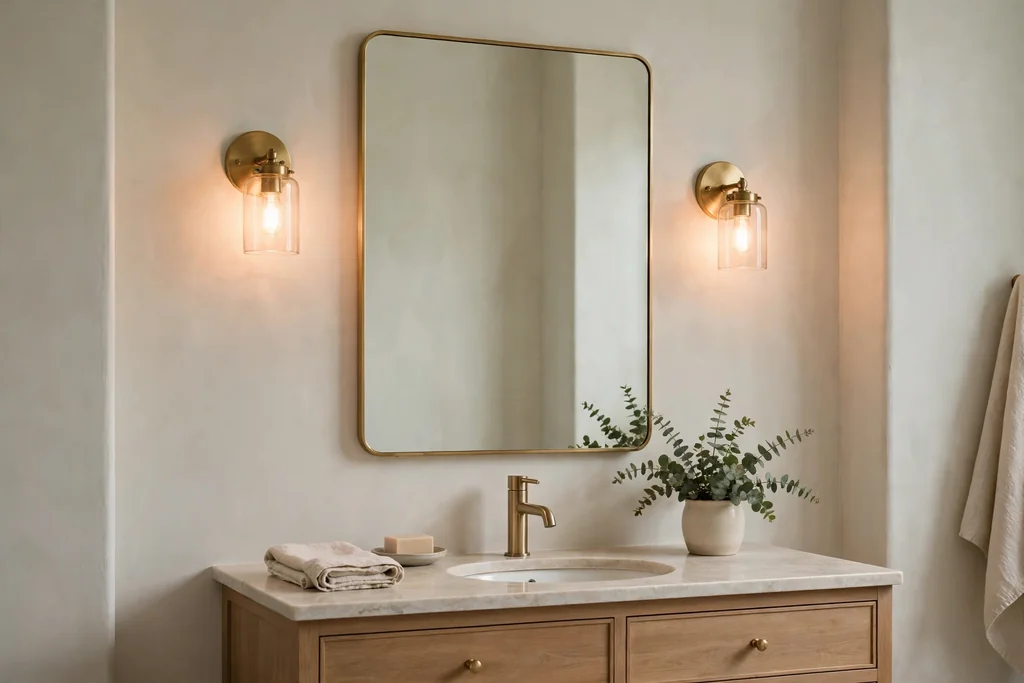
Hang warm sconces at eye level on either side of the mirror, and put them on a dimmer if your wiring allows. Light from the sides flatters faces far better than a single overhead fitting, and a dimmer lets the same room serve bright mornings and quiet evenings. Warm white bulbs keep the glow gentle rather than clinical.
Choose sconces rated for bathroom use, and keep them clear of direct shower spray. Pair them with a plain mirror and pale walls so the light itself becomes the feature. Renters who cannot change wiring can use a plug in wall light or a small rechargeable lamp on a shelf for a similar layered effect.
8. Backlit Mirror With a Warm Halo Glow
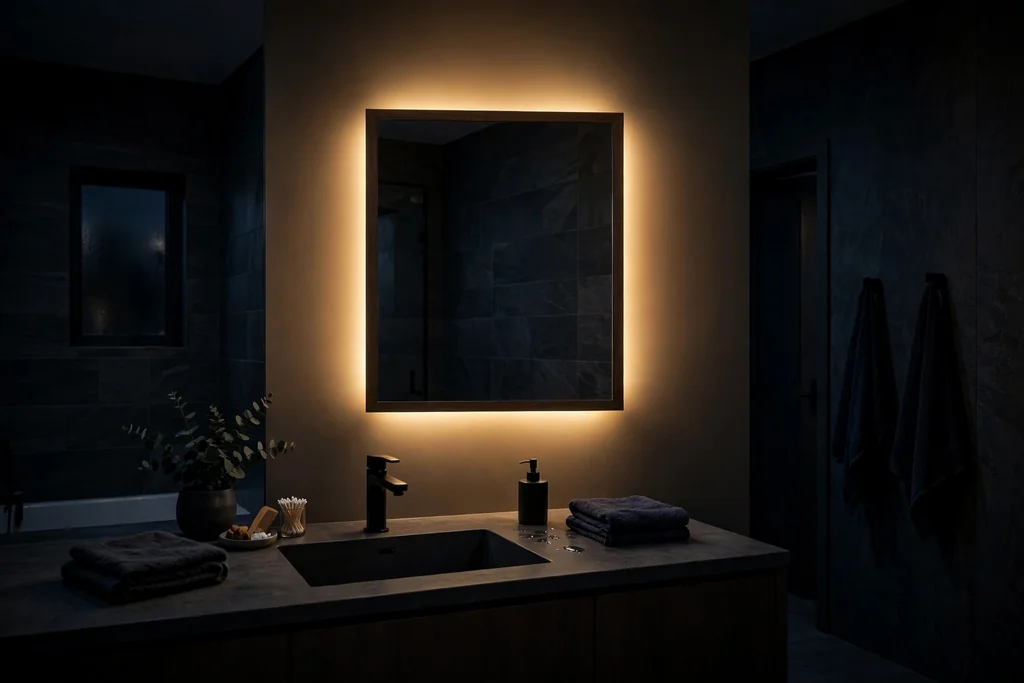
Fit a mirror with a warm LED strip behind it, so the light forms a soft halo around the frame. The halo glow flatters faces, makes night trips to the bathroom easier without switching on the main light, and adds a calm, spa like feel to a plain wall. It suits a modern bathroom with simple tile and a floating vanity.
Stick the strip to the back of the mirror frame, not to the wall, so you can take it with you if you move, and hide the battery pack or driver behind the frame edge. Choose a warm color temperature and a dimmable strip so the glow stays gentle rather than glaring. Keep the rest of the lighting low in the evening to let the halo lead.
9. Linen Look Shower Curtain
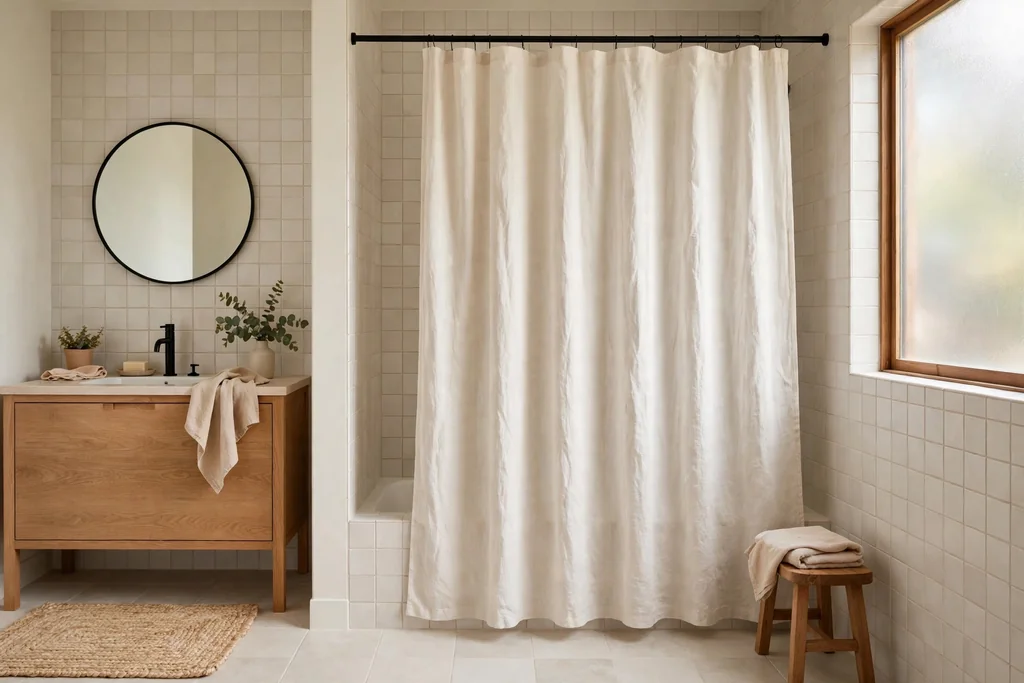
Hang a shower curtain in a linen look fabric, in warm white or pale stone, with a separate washable liner behind it. A fabric curtain hangs in soft folds, unlike a thin plastic curtain that clings and crackles, and it makes the whole room feel more like a bedroom than a wet room. The pale tone keeps a small bathroom bright.
Choose a fabric that copes with humidity, and wash the liner often so it stays fresh. Keep towels, mats, and walls plain when the curtain carries a subtle woven texture, so the room stays calm. A fabric outer curtain with a separate liner also lasts longer and hangs better than a plastic curtain on its own.
10. Thick Cotton Bath Mat and Runner Pair
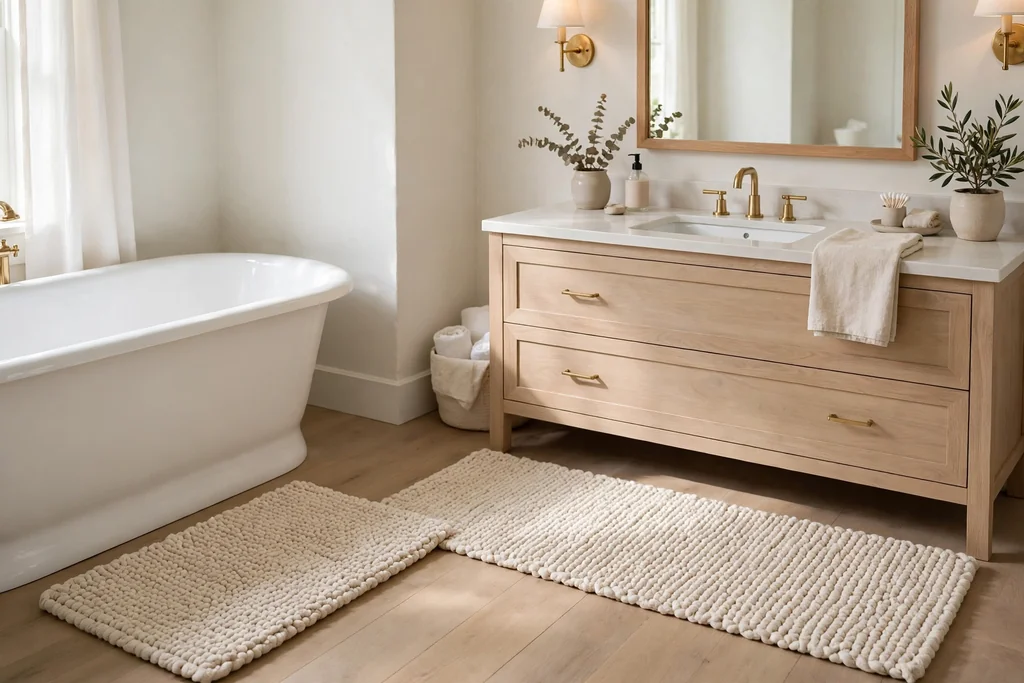
Use a thick cotton bath mat beside the tub and a matching runner in front of the vanity. Repeating the same soft rug in two places ties the room together, and the thick pile feels warm underfoot on cold tile. A washable cotton mat dries faster than a thick shag rug and can go in the laundry with the towels.
Keep a second set in rotation so the bathroom never sits bare on wash day. Choose mats with a non slip backing, and lift them to dry the floor after showers so damp does not sit under the rug. If the room is small, use one mat only and repeat the color in a towel instead.
11. Teak Bath Mat and Wood Stool
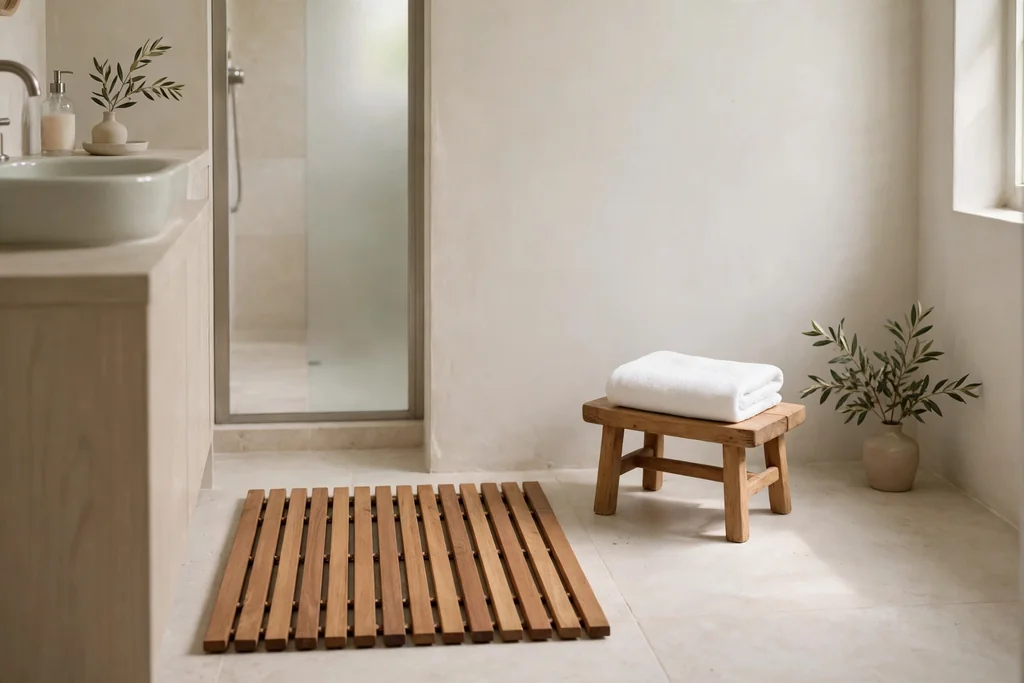
Warm the room with teak and other water tolerant woods: a teak bath mat underfoot, a small wooden stool beside the tub, and a wooden soap dish or tray on the vanity. Wood softens a room full of tile and chrome, and teak copes with wet conditions better than most woods. A stool also gives a place to set a towel, a book, or a change of clothes.
Leave teak to drain and dry between showers, and oil it as the maker advises if you want to keep its warm tone. If a full teak mat is more than you want to spend, start with one wooden accessory and see whether the warmth suits the room. Pair wood with white towels so the natural tone stands out.
12. Oval Freestanding Tub With Curved Lines
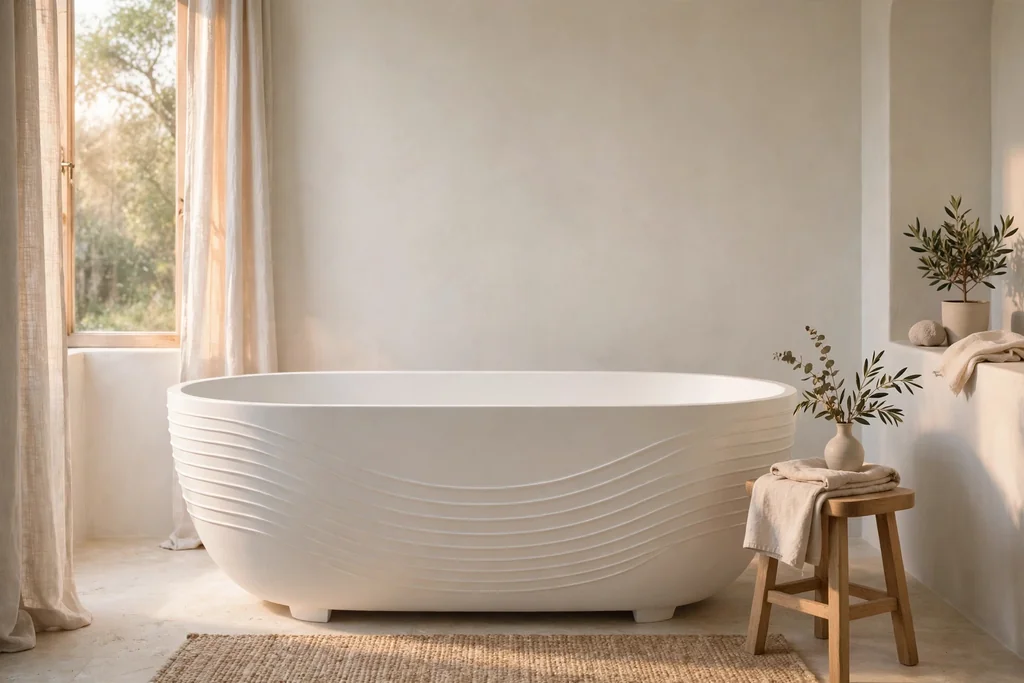
Choose an oval freestanding tub with soft, curved lines instead of a sharp rectangular tub. The oval shape invites a slower bath, and its curves echo the arched mirror and rounded accessories elsewhere in a soft scheme. A freestanding tub also becomes a clear focal point in a larger bathroom, with space to walk around it.
Check the floor loading and the plumbing route before you commit, since a freestanding tub needs a floor waste in the right place. Keep the walls behind the tub pale, add a wooden bath tray, and use soft white towels so the tub shape leads. In a small bathroom, a curved corner tub gives a similar soft line in less space.
13. Rainfall Showerhead With a Gentle Spray Setting
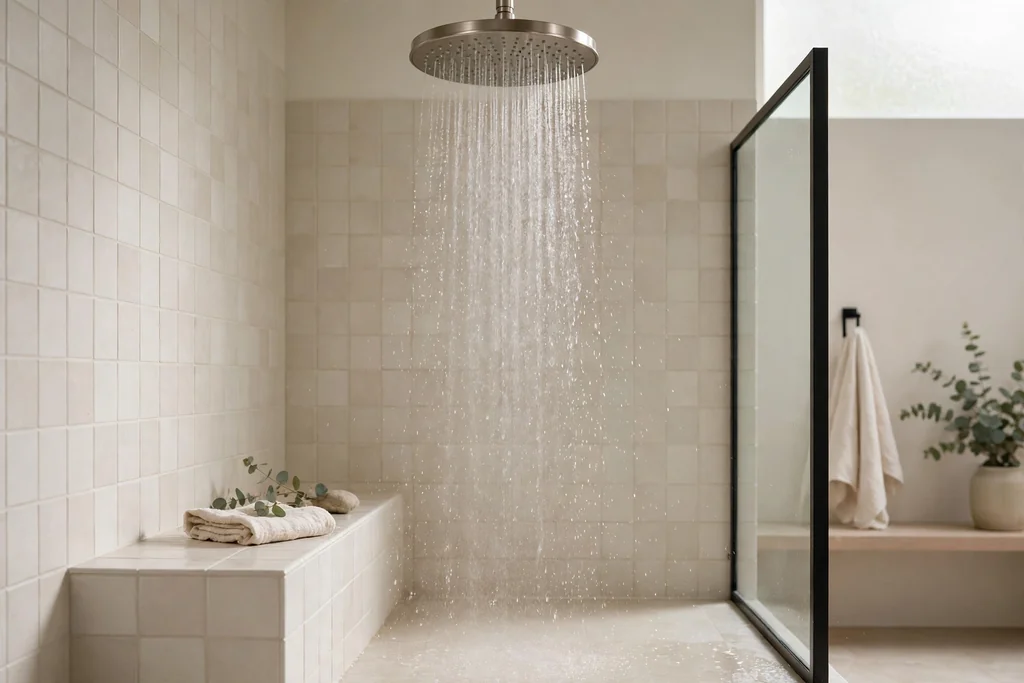
Fit a rainfall showerhead with a gentle spray setting, so the water falls softly rather than hitting hard. A wide, even spray feels calmer than a narrow jet, and it suits a soft bathroom where the shower should feel like a rinse, not a blast. Most models screw onto the existing shower arm with no tools beyond pliers and thread tape.
Check your water pressure first, since a very wide head can feel weak on a low pressure line, and choose a model with a flow setting or a smaller face plate if needed. Keep the original head in a labeled bag if you rent. For layout ideas around a calm shower, see these walk in shower ideas.
14. Matte Finish Stone Look Floor Tile
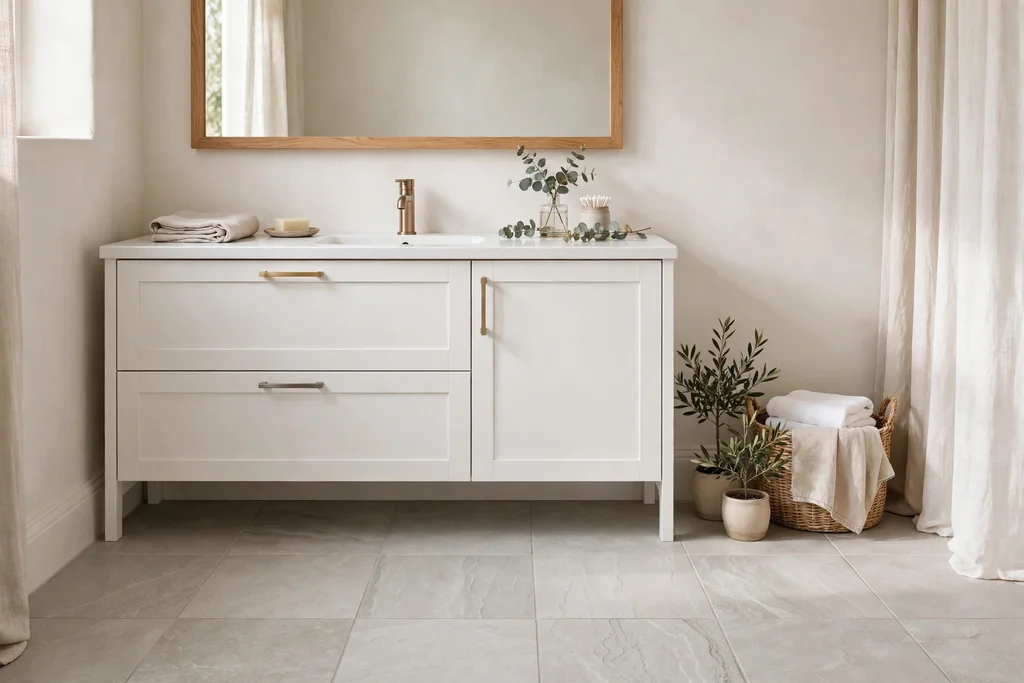
Lay matte finish, stone look floor tile in a pale warm grey or soft beige. A matte surface feels softer underfoot than glossy tile, shows fewer water spots, and gives better grip when wet. The stone look adds gentle variation without a busy pattern, so the floor grounds the room without shouting for attention.
Keep the wall tile plain and pale so the floor pattern leads quietly, and use a grout color close to the tile so the joints fade. Seal the tile as advised, and use a pale rug in front of the tub to soften the hard surface underfoot. A matte floor also hides dust better than a plain pale glossy floor.
15. Soft Curved Faucet in Brushed Nickel
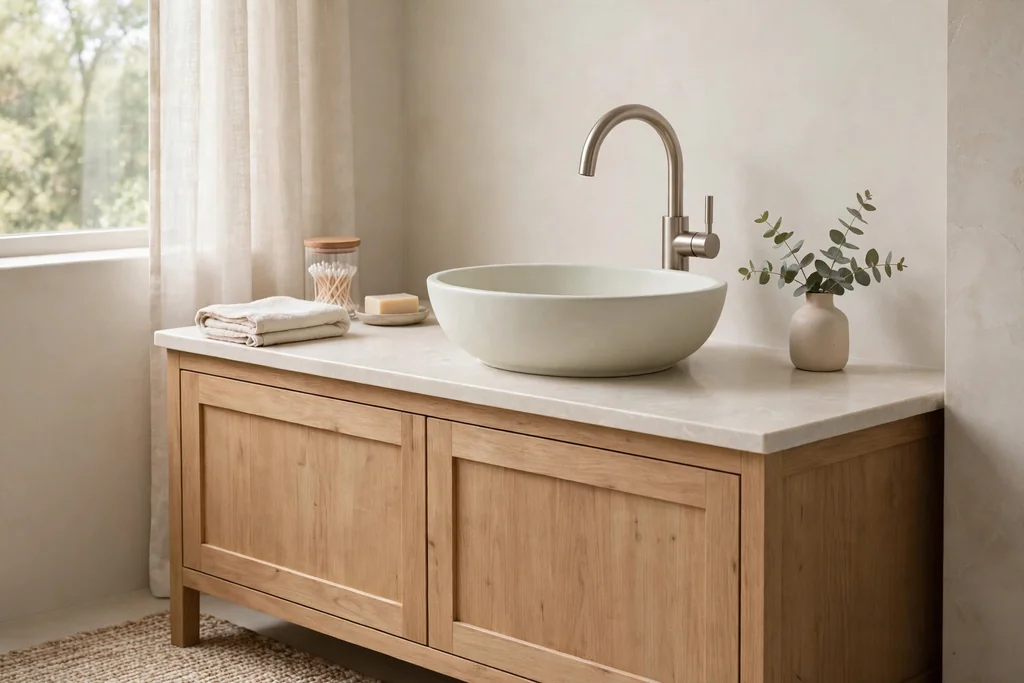
Choose a faucet with a soft, curved spout in brushed nickel, rather than a sharp angular fitting in bright chrome. The curved line repeats the oval tub and arched mirror, and brushed nickel reads warmer and quieter than polished chrome. One curved faucet can soften a whole vanity, even when the rest of the fittings stay simple.
Keep the finish consistent across the faucet, towel bar, and cabinet knobs, so the metal reads as one choice, not three. Save every original screw and fixture in a bag taped inside the vanity if you rent. Wipe the brushed finish with a soft cloth, since harsh cleaners can dull it over time.
16. Frosted Window Film for Soft Daylight
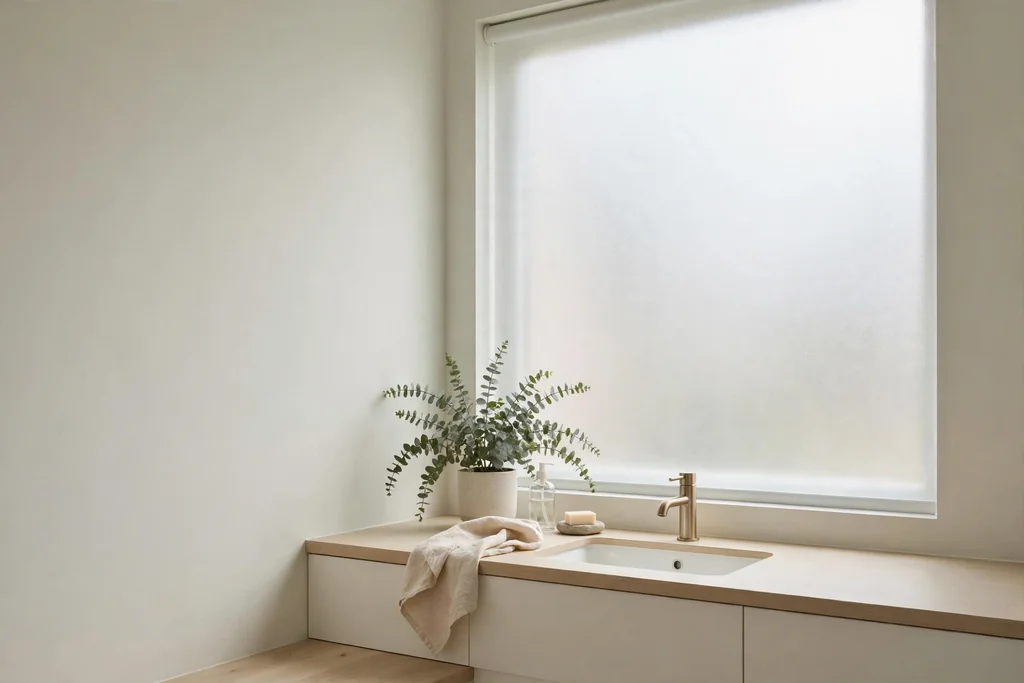
Apply frosted window film to the bathroom window, so daylight enters as a soft glow while privacy stays intact. Frosted film diffuses harsh sun into even light, which flatters skin tones and makes pale walls look warm rather than washed out. It suits a bathroom with a street facing window where a curtain would block too much light.
Clean the glass well before applying, measure twice, and smooth the film from the center outward to push out air. Choose a plain frosted film rather than a patterned one if the room already has tile pattern or wallpaper. The film peels off cleanly, which suits renters, and it costs far less than replacing the glass.
17. Sheer Cafe Curtain at the Bathroom Window
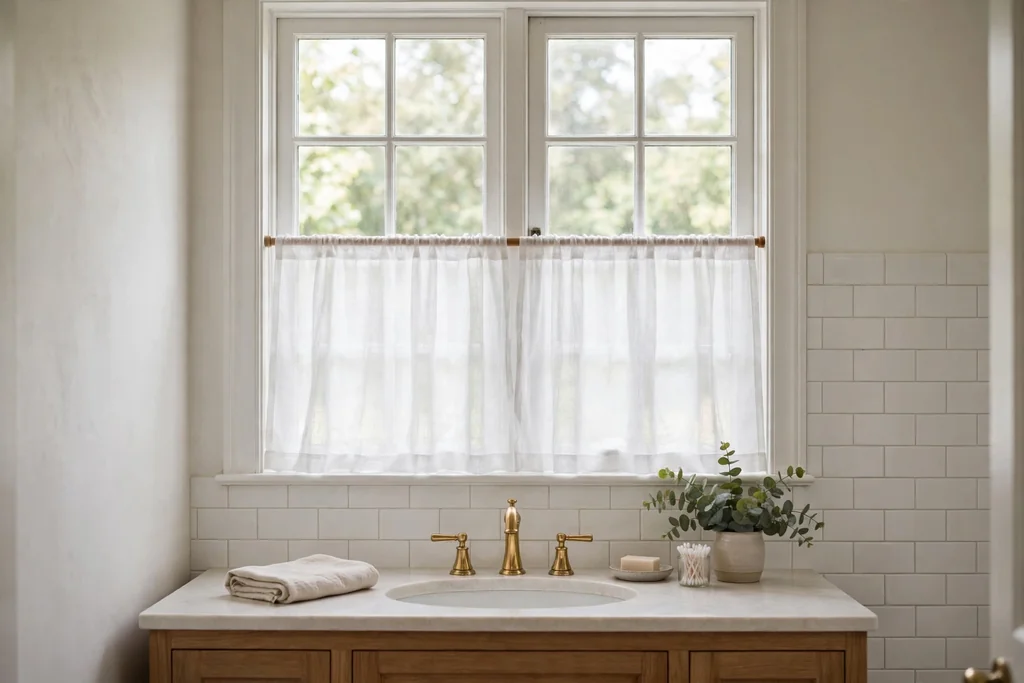
Hang a sheer cafe curtain across the lower half of the bathroom window, so the top half stays open to daylight while the lower half gives privacy. Sheer fabric softens the window edge, filters sun into a gentle glow, and suits a bathroom with a garden view or a high window. The curtain reads as a bedroom detail, which helps the bathroom feel less hard and tiled.
Choose a washable sheer fabric that copes with humidity, and keep the curtain clear of direct shower spray. Use a tension rod inside the frame if you rent, so no holes are needed. Pair the sheer curtain with a plain roller blind for evenings, when privacy matters more than daylight.
18. Candle and Diffuser Corner Away From Water
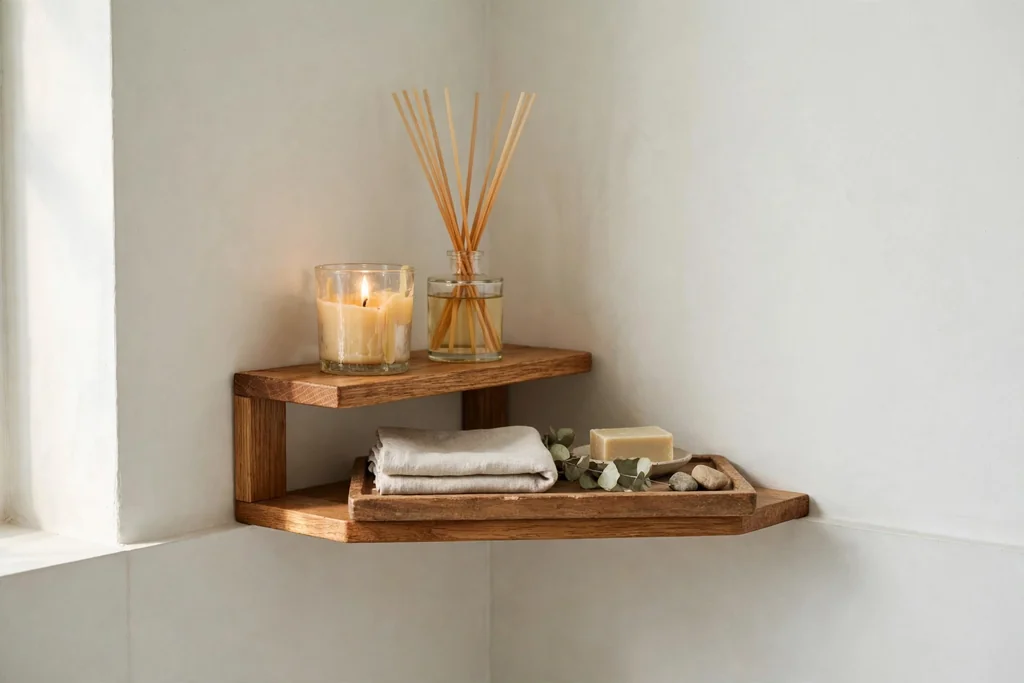
Set aside one dry corner, on a shelf or a stool well away from the tub and sink, for a candle and a reed diffuser. Scent is a soft detail that costs little and changes how the room feels on entry, and a dedicated corner keeps candles off wet surfaces. Choose a calm scent, such as lavender, cedar, or clean cotton, and keep it to one scent at a time.
Never leave a burning candle unattended, and keep flames clear of towels, curtains, and the diffuser reeds. Use a tray under both items to catch drips and to mark the corner as a styled spot. A diffuser suits households with children or pets better than an open flame, since it needs no heat.
19. Eucalyptus Bundle on the Showerhead
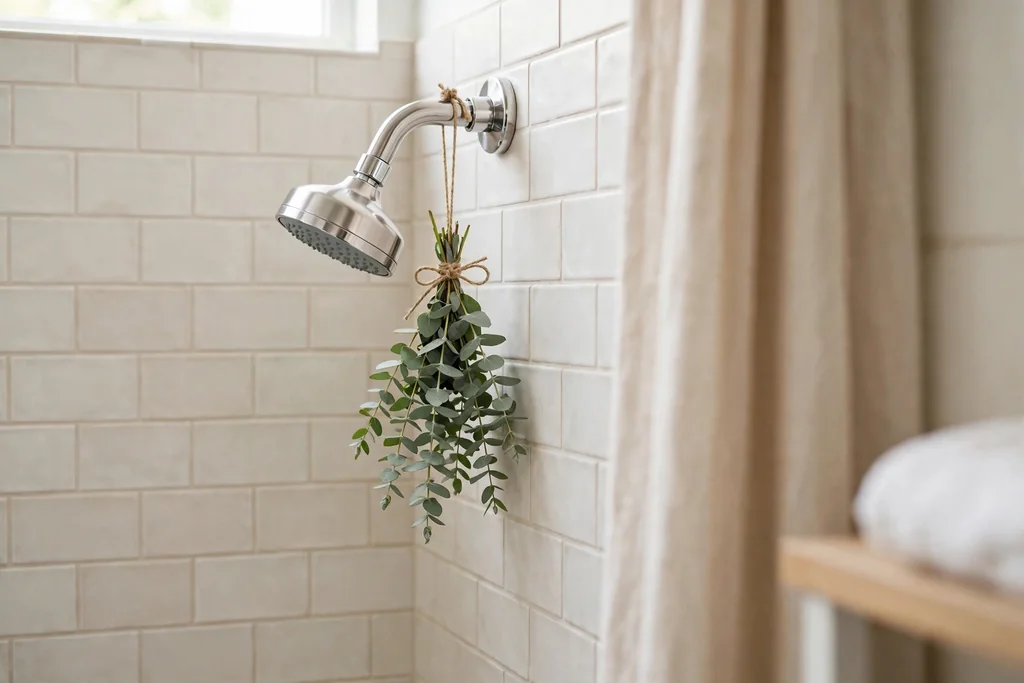
Tie a small bundle of fresh eucalyptus to the showerhead with twine, clear of the direct spray, so steam releases a gentle scent during a shower. This is a low cost, low effort soft touch that needs no new fitting and no wiring. It suits a bathroom that already has plants or a natural, wood led scheme.
Replace the bundle every two to three weeks, or sooner if it dries out, and keep it clear of the drain so leaves do not wash down. If anyone in the household is sensitive to strong scents, use a smaller bundle or skip this idea. Dry the twine between showers so it does not stay damp against the metal.
20. Humidity Loving Plants on a High Shelf
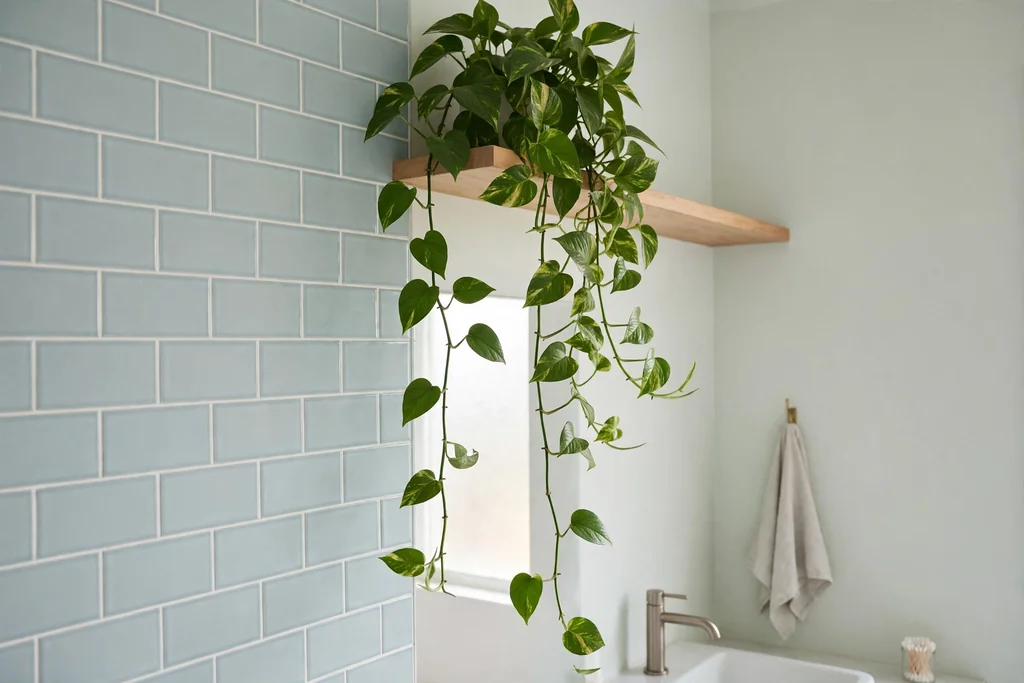
Grow humidity loving plants, such as pothos, ferns, and philodendron, on a high shelf away from splashes, letting vines trail down the wall. Plants soften hard tile with living green, and bathroom air suits them well, since they enjoy humidity and indirect light. One trailing plant usually looks better than a crowded collection in a small room.
Use pots with drainage holes and saucers, and check the soil before watering, since bathroom air already adds moisture. If your bathroom has no window, rotate the plant to a brighter room for a few days each week or choose a low light tolerant variety. Keep leaves clear of the shower spray so they do not stay wet.
21. Woven Baskets for Soft Storage
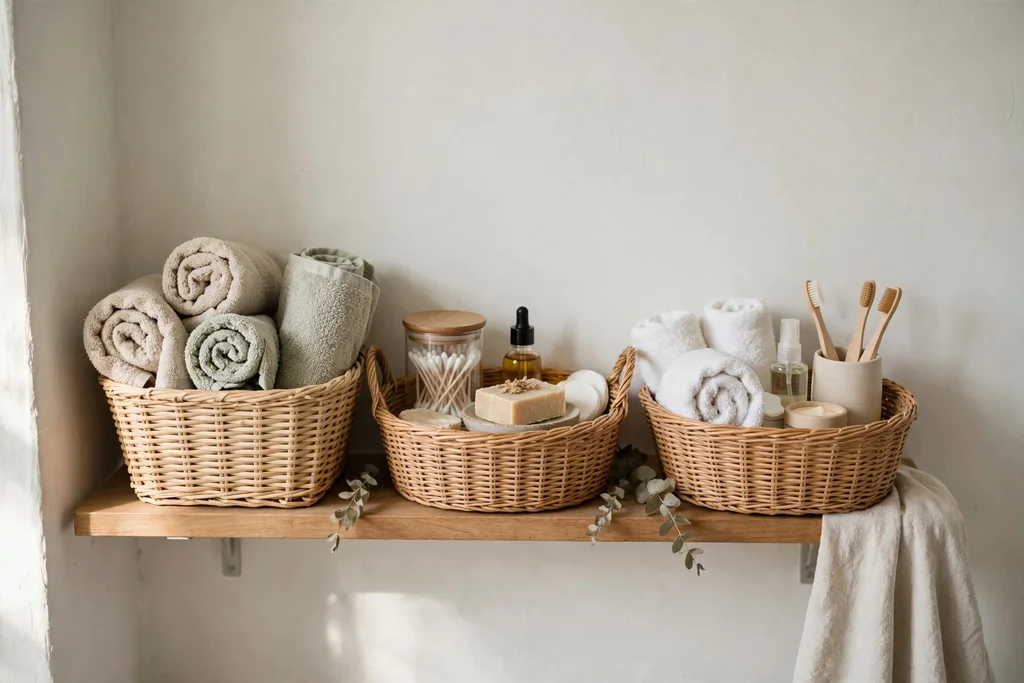
Sort toiletries into woven baskets in seagrass, cotton rope, or rattan, on shelves or on the floor beside the vanity. Baskets soften hard tile and porcelain while hiding the visual noise of bottles and tubes. Assign one basket per person or per job, such as hair care, skin care, and cleaning, and label the base if the baskets look alike.
Seagrass and cotton rope baskets cope well with bathroom humidity if they are kept off wet floors, so set them on a shelf or a stool rather than beside the tub. Once a month, empty each basket and return only what you actually used, since bathroom baskets quietly collect empty bottles. A basket with a lid suits items you would rather not see.
22. Fabric Covered Boxes Inside the Vanity
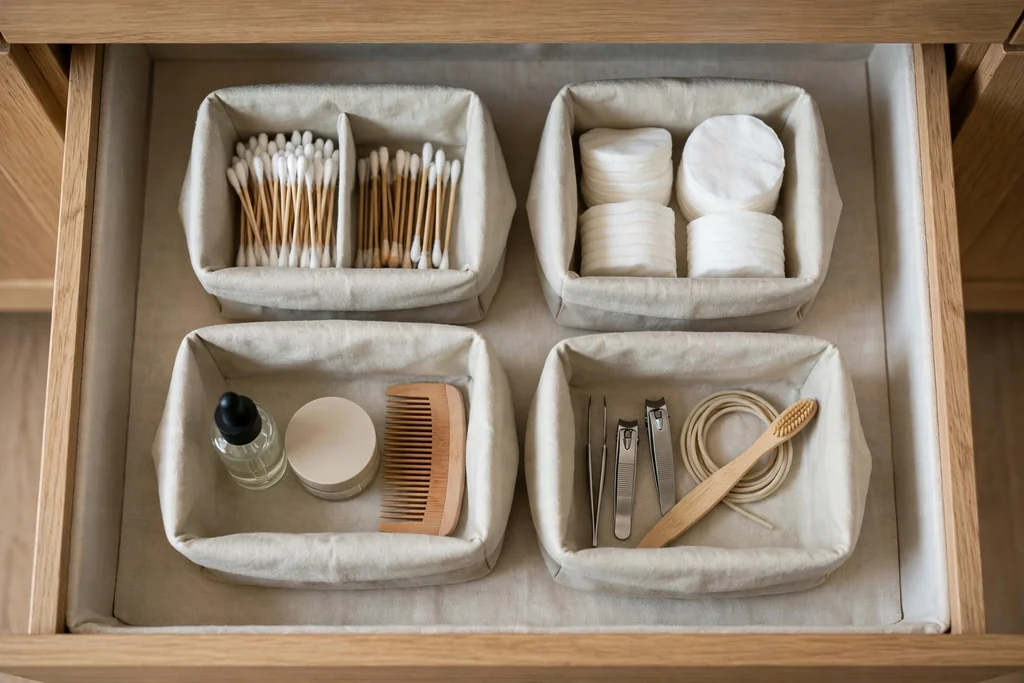
Line the vanity drawers or cabinet with fabric covered boxes in a pale linen tone, one box per job: daily skin care, hair tools, medicines, and spares. Fabric boxes stop bottles from sliding and rattling, make drawers feel finished when opened, and keep small items from getting lost behind larger ones. They suit a vanity with deep drawers where loose bottles tend to drift.
Measure each drawer before buying, and leave a finger gap at the front so boxes lift out easily. Choose washable or wipeable fabric, since spills happen in a bathroom. Label the boxes on the inside edge if several people share the vanity, so each person finds their own items fast.
23. Soft Close Drawers and Toilet Seat
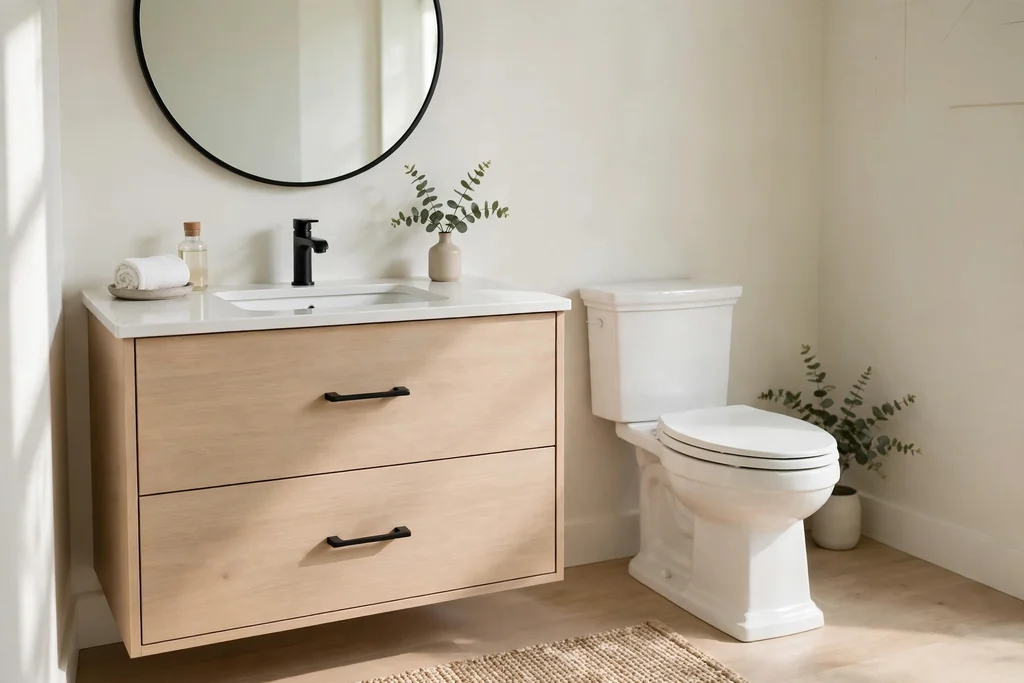
Fit soft close drawer runners and a soft close toilet seat, so nothing slams in a quiet house. Soft close fittings remove the sharp bang of a closing drawer or seat, which matters most at night and in a small home where the bathroom sits near bedrooms. They are a small, practical luxury that guests notice without knowing why the room feels calmer.
Check that the runners and seat fit your existing vanity and toilet before buying, and follow the maker instructions for the hinge type. Keep the original parts in a bag if you rent. Soft close fittings also protect the vanity and seat from wear, since they stop repeated hard impacts.
24. Heated Towel Rail for Warm Towels
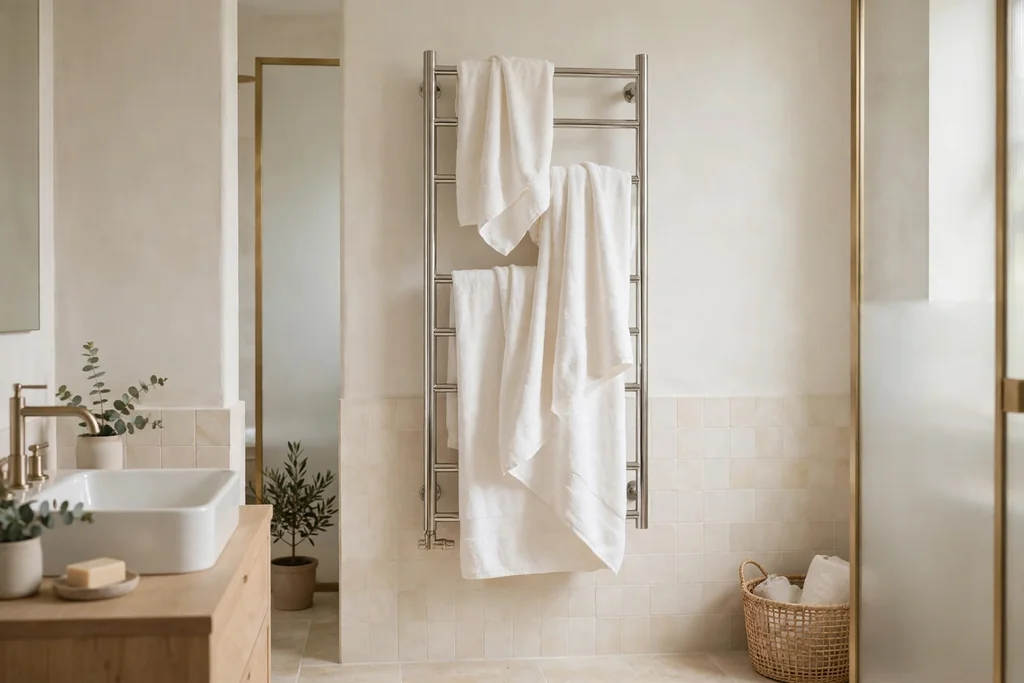
Fit a heated towel rail, or a plug in heated rail if plumbing changes are not possible, so towels come out warm and dry. A warm towel after a shower is one of the clearest soft touches in a bathroom, and a heated rail also helps towels dry faster between uses, which keeps the room fresher. It suits a main bathroom used daily more than a rarely used guest bathroom.
Keep the rail clear of the shower spray, and hang only one or two towels on it at a time so air can move around them. Check the power or plumbing route before you commit, and follow the maker guidance for bathroom zones. If a heated rail is not possible, warm towels briefly in a dryer before a bath for a similar feel.
25. Heated Floor Mat Under the Tile
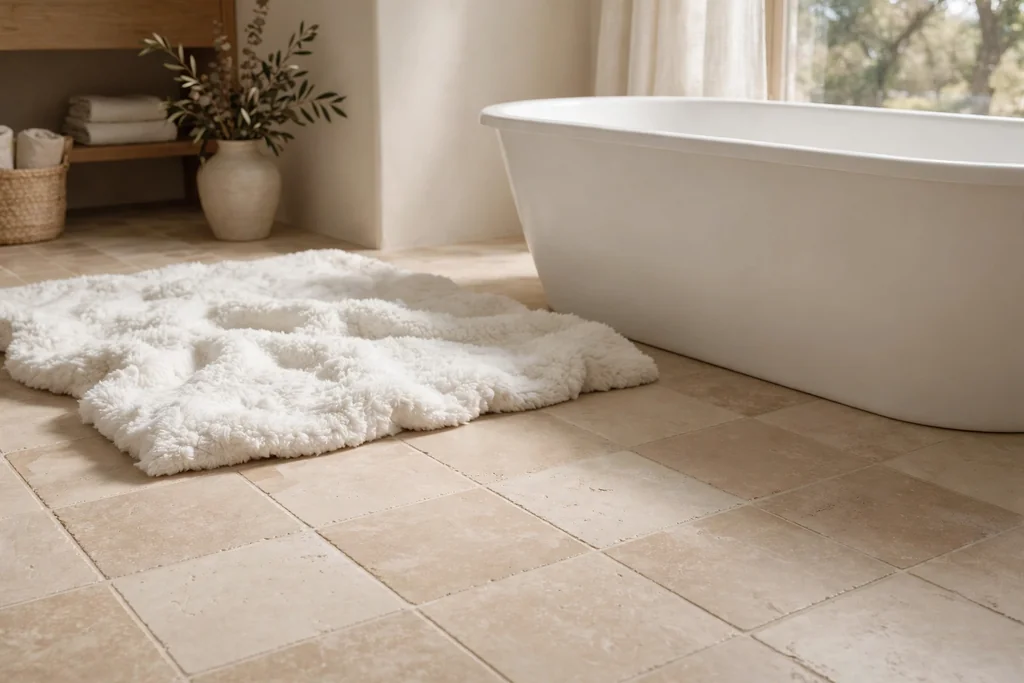
Plan a heated floor mat under the bathroom tile, with a timer set for morning showers, so the floor feels warm under bare feet. Warm floors make tile far more pleasant in colder months, help the floor dry faster after showers, and suit a soft scheme where every surface should feel kind to touch. This works best when planned before the tile is laid.
Keep the heating zone out of the area directly under a fixed vanity or tub, where heat is wasted, and follow the maker guidance for wet room use. Pair the mat with a timer so the floor is warm only when needed, which keeps running costs down. If a full heated floor is not possible, a thick rug by the tub gives a smaller version of the same comfort.
26. Plush Bathrobe Hook Station
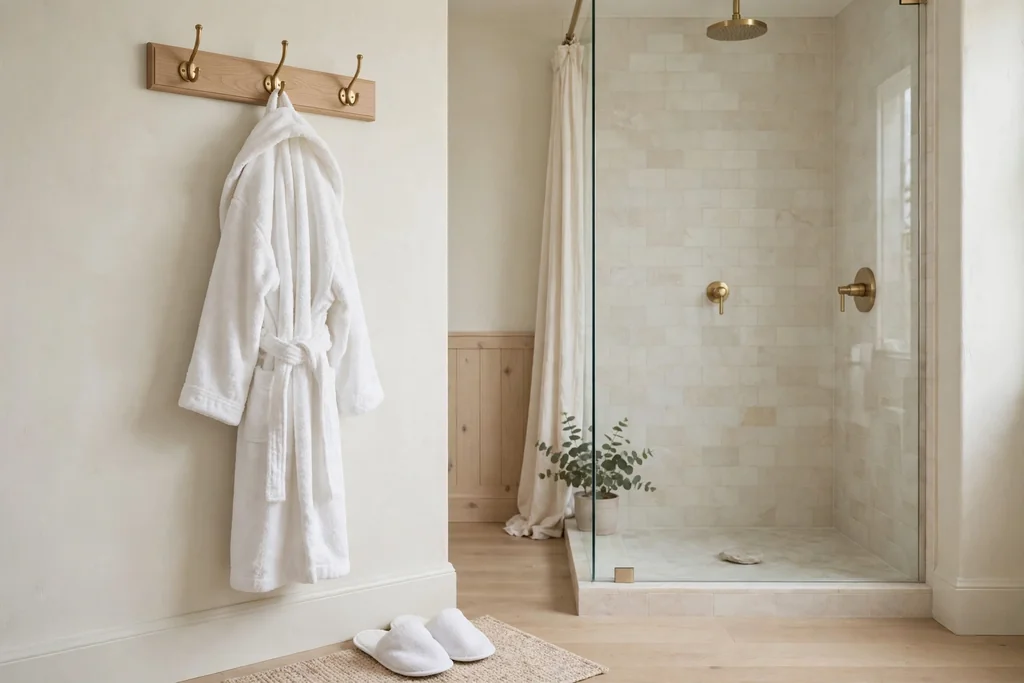
Set up a bathrobe station beside the shower or tub: two sturdy hooks at easy reach, one plush robe, and a small shelf for slippers. A robe station turns the step out of the shower into a warm moment, instead of a cold dash for a towel. It suits a main bathroom where the same person showers daily, and it keeps the robe off the floor and off the door.
Choose hooks rated for the weight of a wet robe, and fix them into studs or with fixings rated for your wall type. Keep the station clear of the shower spray so the robe stays dry. If two people share the bathroom, give each person their own hook and robe color, so the station stays tidy.
27. Wooden Bath Tray for Slow Baths
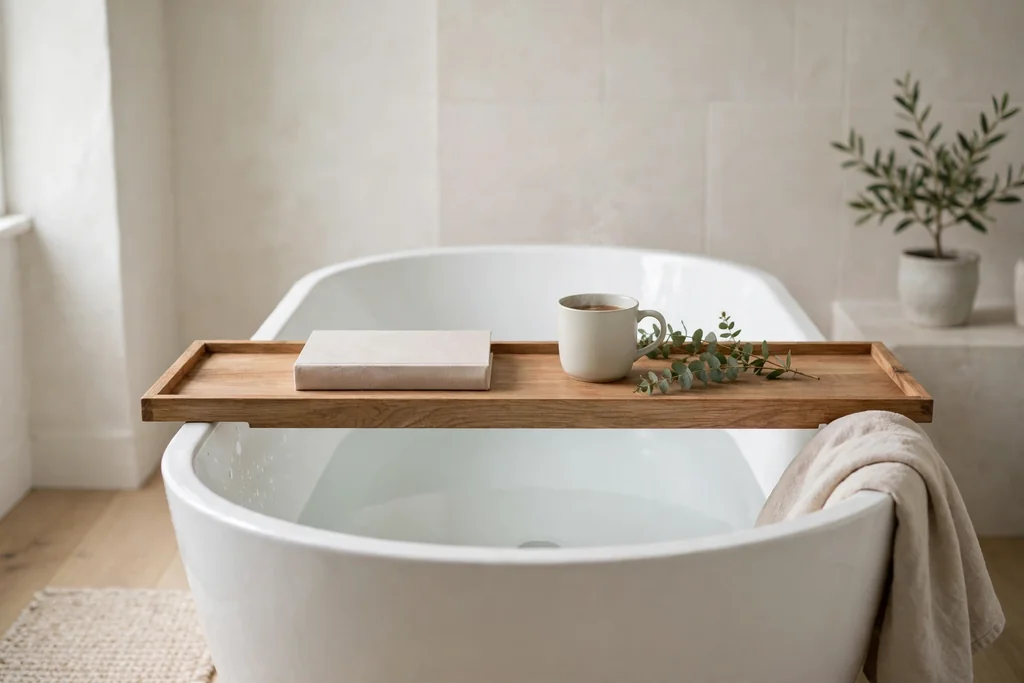
Rest a wooden bath tray across the tub, with slots for a book, a cup, and a candle kept safely away from the water. A tray turns a plain tub into a place to slow down, and wood adds the same warm material as the teak mat and stool elsewhere in the room. Choose a tray that spans your tub width with extendable sides, and look for a model with a phone ledge that keeps electronics out of splash range.
Dry wood trays after each use to avoid warping, while bamboo and coated metal versions cope better with steam. Store the tray upright behind the door when it is not in use so it does not become a permanent clutter spot. Keep candles on the tray only when you are in the bath and can watch them.
28. Soft Art Prints in Moisture Safe Frames
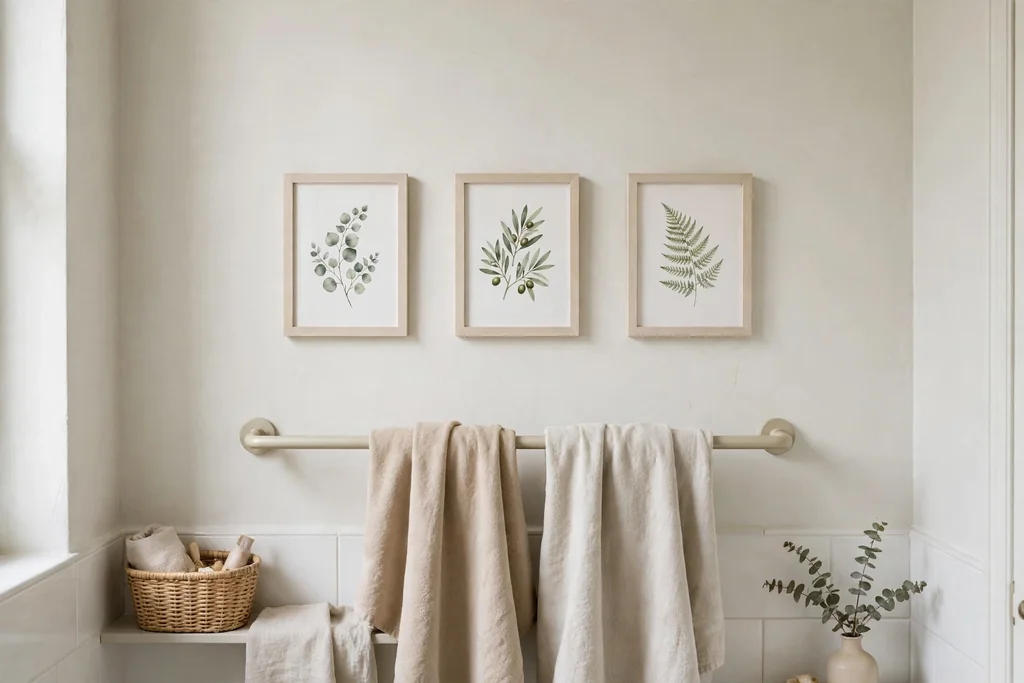
Hang a small group of three to five soft art prints, such as botanical prints, gentle abstracts, or pale landscapes, in moisture safe frames above the towel rail or beside the mirror. Art gives a bathroom personality without taking counter or floor space, and soft colors echo the pale walls and towels. One theme, kept consistent, reads as one arrangement rather than a random set.
Use frames with sealed backs or acrylic covers, and avoid hanging unprotected paper directly beside the shower, where steam will cockle it over time. Keep the spacing even, and use adhesive picture strips for light frames on tile and painted walls if you rent. For help pairing a soft color with a calmer one, see these stylish purple bathroom ideas for a gentle lilac accent option.
29. Pale Terrazzo Vanity Top
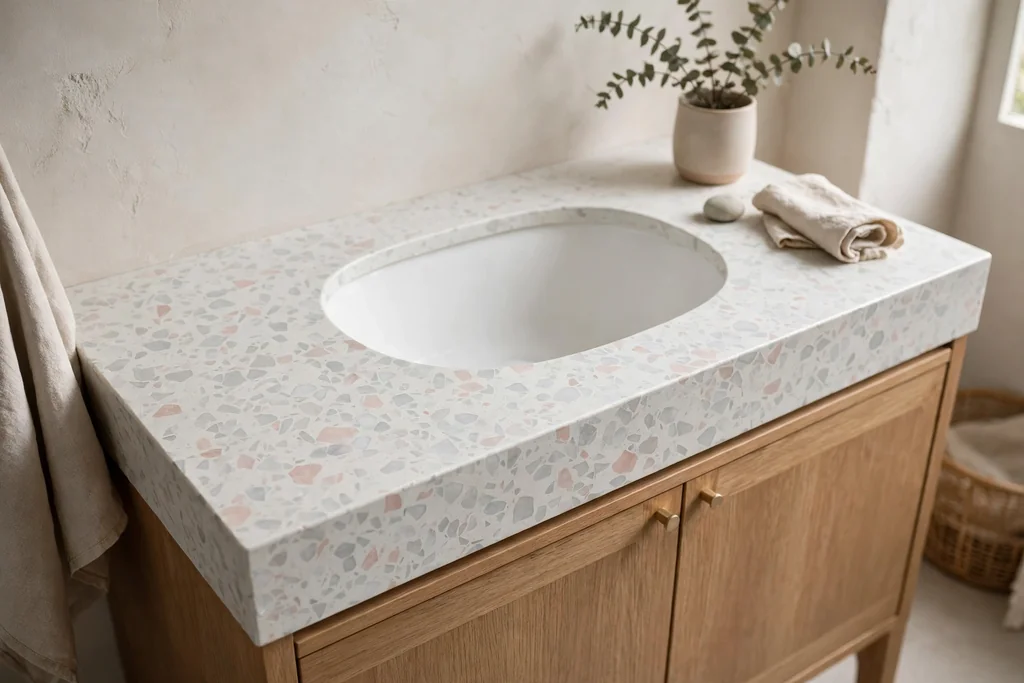
Choose a pale terrazzo vanity top, with small stone chips in soft grey, cream, and blush, instead of a plain white top. Terrazzo adds gentle speckled interest that reads as soft confetti rather than a bold pattern, and it copes well with daily water and cleaning. It suits a bathroom that needs a hard wearing top but still wants a soft, warm finish.
Keep the surrounding finishes simple, such as plain pale walls and one metal finish, so the speckle stays the feature. Seal the top as your supplier advises, and wipe spills promptly, since pale stone can mark. Pair the terrazzo top with a simple undermount basin so the top itself leads.
30. Rounded Pebble Tile Shower Floor
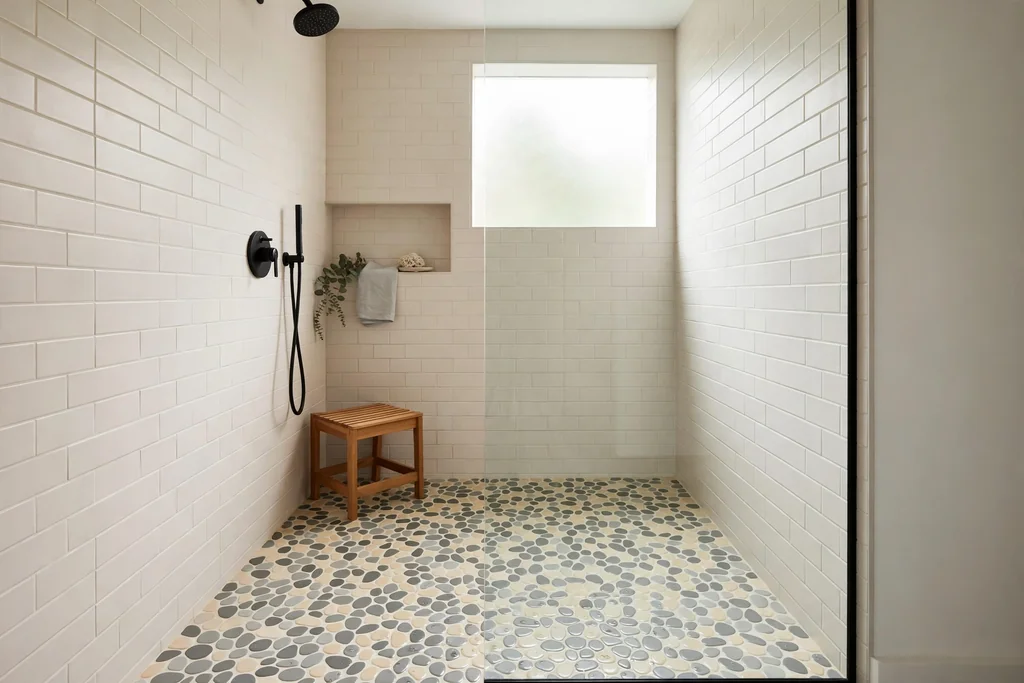
Lay a rounded pebble tile floor in the shower, in soft grey and cream stones set in grout, for gentle grip and a natural feel underfoot. Pebbles give slip resistance that flat tile cannot match, and their rounded shapes echo the oval tub and arched mirror in a soft scheme. The floor becomes a textured detail that you feel, not just see.
Check that the stones sit level and that the grout fills the gaps evenly, since uneven stones can feel uncomfortable to stand on. Keep the shower walls plain when the floor is busy, so the room stays calm. Seal the grout as advised, and rinse the floor after showers so soap does not build up between stones.
31. Low Evening Lamp Corner for Wind Down Baths
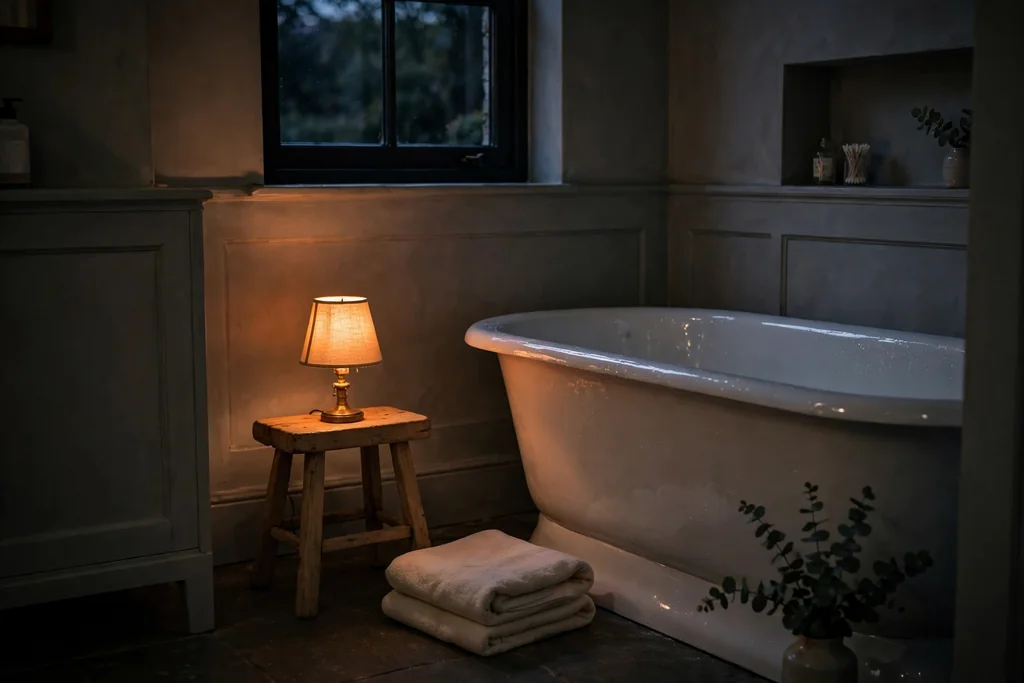
Create a low evening corner for wind down baths: a small rechargeable lamp on a stool, a folded towel, and a candle kept safely away from water, all on the dry side of the room. In the evening, switch off the main light and use only the low lamp, so the bathroom feels like a quiet retreat rather than a bright utility room. This is the simplest soft idea in the list, and it costs almost nothing.
Keep all plug in or rechargeable lights away from direct water spray, and choose a warm bulb so the glow stays gentle. Store the lamp on its stool between baths, so the corner stays ready. Pair the low light with the heated towel rail or a warm robe, so the whole evening routine feels soft from start to finish.
Conclusion
A soft bathroom comes from a few calm choices repeated well: one pale base color, soft textures where your body meets the room, warm light you can dim, and storage that keeps clutter out of sight. Start with towels, a mat, and a light swap, then add paint, tile, or a fixture only where the room still feels hard or cold. Work through this list in order, color first, then texture, then light, then storage, and adjust after a week of real use. For small rooms, the storage and surface ideas in these apartment bathroom ideas and the calm shower layouts in these walk in shower ideas pair well with the soft finishes above.
Keep this list handy for your next free hour at home, and build your soft bathroom one gentle change at a time: a towel set today, a mat this weekend, and a dimmer and a plant to finish the room.
FAQs
How do I make a bathroom feel soft without a remodel?
Start with towels, a thick bath mat, a fabric shower curtain, and warm dimmable light. Those four swaps change how the room feels to touch and to the eye, with no paint or tile work. Add a plant, a woven basket, and a wooden tray next, and only then consider paint or a vanity change if the room still feels hard.
What are the best soft bathroom colors?
Warm white, pale sage, blush pink, soft blue grey, and pale stone all work as soft bathroom colors, because they are pale, muted, and easy to pair with white tile and wood. Pick one as the lead color, repeat it in two or three places, and keep the rest of the room quiet. Test a large sample in morning light and evening lamplight before committing, since pale colors shift a lot between light sources.
How do I keep a soft bathroom from looking washed out?
Repeat one accent color in three or four places, such as towels, a rug, and a small accessory, and add one warm material, such as wood or woven baskets, for contrast. A matte tile floor or a terrazzo top also adds gentle variation without a bold pattern. Keep the ceiling and trim in a clean soft white so the room keeps its shape.
What soft bathroom ideas work in a small bathroom?
Use one pale color all over, a large mirror to bounce light, and soft textures that do not take floor space: plush towels on a shelf, a fabric curtain, and a thick mat. Choose a rounded mirror, a wall hung vanity, and baskets on shelves for storage, so the floor stays clear. Avoid busy patterns on more than one surface, since a small room shows clutter fast.
How do I make bathroom lighting softer in the evening?
Put sconces or a backlit mirror on a dimmer, and add a low rechargeable lamp for evening baths, so you can switch off the main ceiling light. Warm white bulbs, around the warm end of the range, keep the glow gentle rather than clinical. Keep plug in lights away from direct water spray, and use a timer or dimmer so the evening setting is easy to repeat.
How do I keep soft fabrics fresh in a humid bathroom?
Choose washable cotton towels and mats, keep a second set in rotation, and lift mats to dry the floor after showers. Wash shower curtains and liners often, keep baskets off wet floors, and run the extractor fan during and after showers so steam clears fast. Dry wood trays and stools between uses, and replace scent bundles and plants before they dry out or fade.