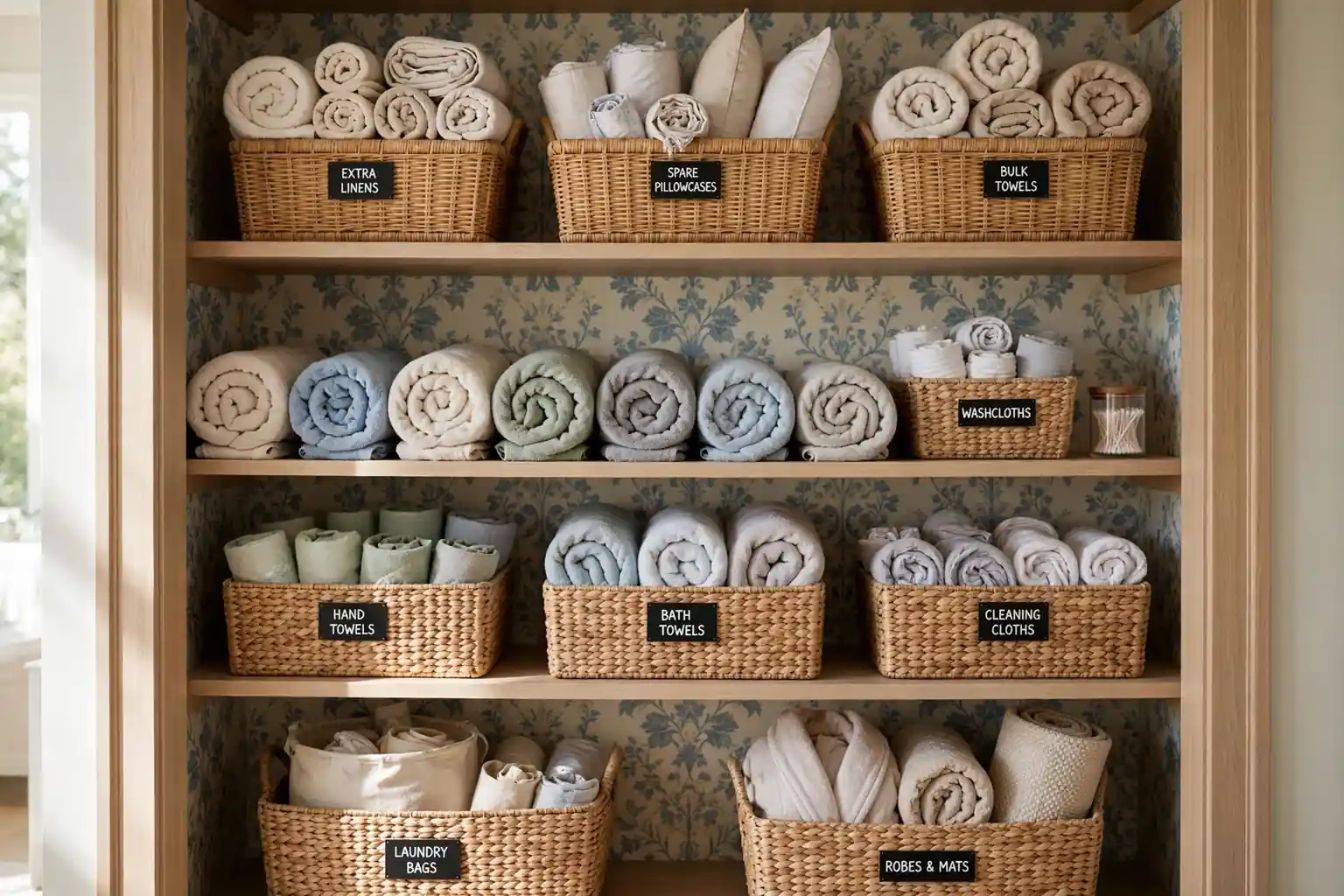
A bathroom closet holds more than towels. It holds spare toiletries, cleaning supplies, first aid items, and the extras you reach for when guests arrive, so a messy closet slows down every morning. These 12 bathroom closet organizer ideas give each group a clear home, from labelled bins on the top shelf to rolled towels, turntables, and hooks on the side wall. You can start with one shelf, add a finishing touch that shows your taste, and keep the rest plain until you are ready. For more small bathroom storage planning, see these apartment bathroom ideas.
Key Takeaways
- Empty the closet and sort everything into groups first, such as towels, daily toiletries, spares, cleaning supplies, and first aid, before you buy any bins.
- Put daily items at eye and hand level, spare and seasonal items up high, and heavy items low, so the closet is easy to use every day.
- Use one bin style and one label style across the closet, and repeat one accent color in two or three places, so the inside looks planned when the door opens.
- Roll or file-fold towels and washcloths instead of stacking them high, since tall stacks topple and hide what is at the bottom.
- Use the door and the side walls for small items, since those surfaces add storage without taking a single inch of shelf space.
- Add one personal finish, such as patterned paper on the back wall or a scented sachet, so the closet feels like part of your home rather than a cupboard.
1. Zone Shelves by Person and Job
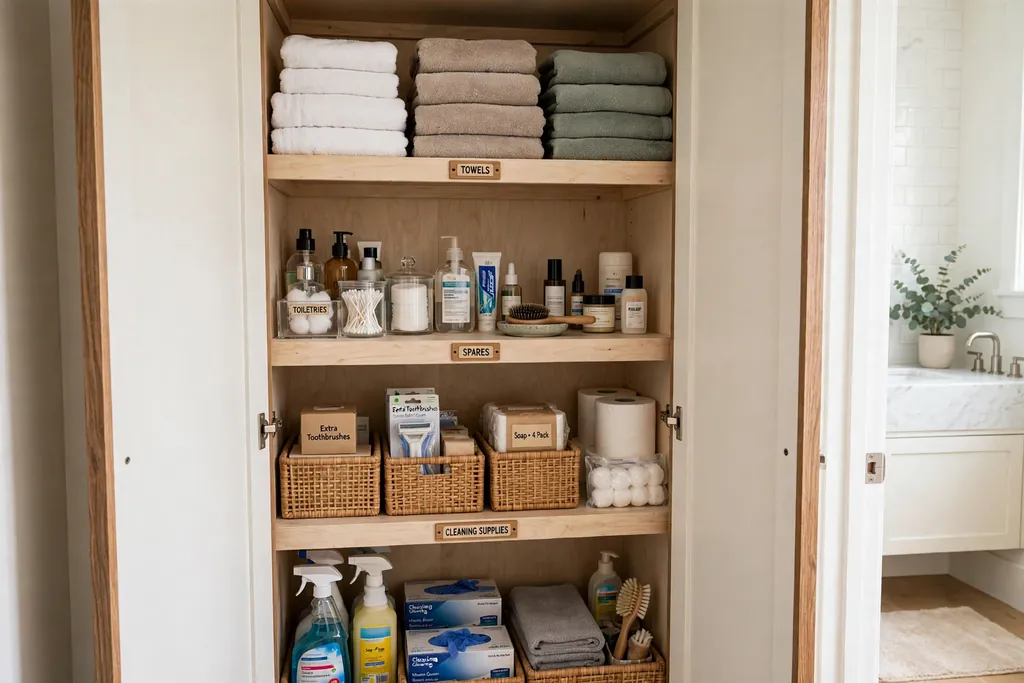
Divide the closet into zones by person and job before you add any bins. Put one shelf for daily towels, one for daily toiletries, one for spares and seasonal extras, and one for cleaning supplies, with a small first aid zone that everyone can find fast. Zoning stops the morning search through everything you own, since you only open the zone you need, and it makes it clear which zone is overfull when the closet starts to feel tight.
Keep the same order on each shelf every time, such as towels on the left and toiletries on the right, so your eye learns where things live. If you share the closet, give each person a labelled bin or a shelf section, and keep shared items in the middle where both of you can reach them. Review the zones once a season, and move out anything you did not use, since a zone that holds only one category stays tidy far longer than a shelf that collects everything.
2. Store Spares in Clear Labelled Bins Up Top
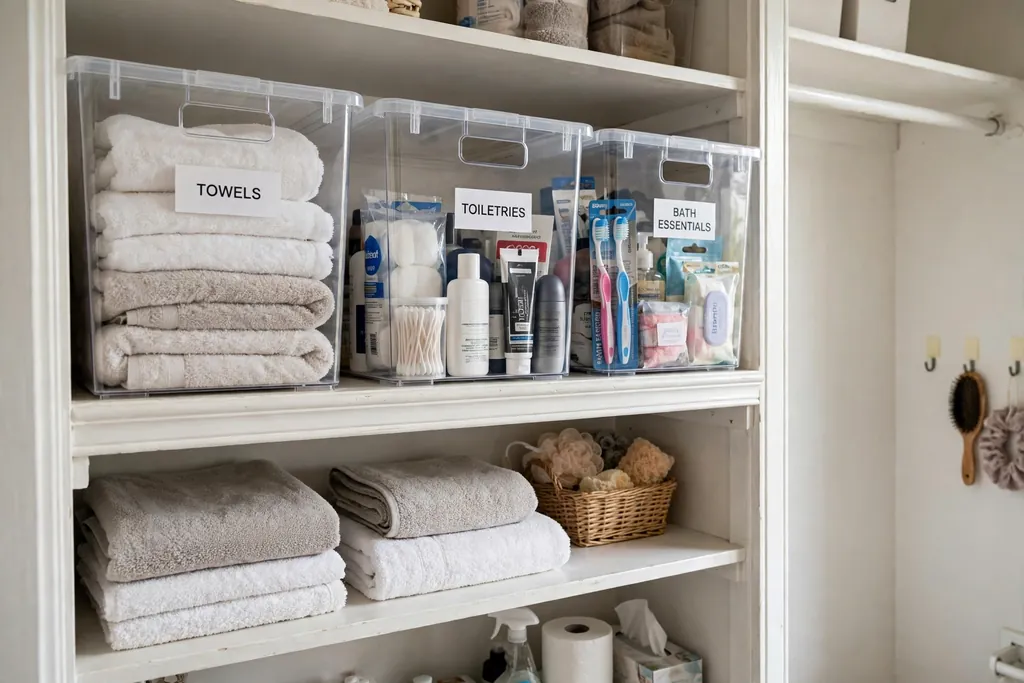
Store spare and seasonal items in clear bins on the top shelf, with a label on each bin. Clear sides let you see what is inside without pulling every box down, and labels save you from opening three bins to find one item. This works well for spare shampoo, guest towels, holiday toiletries, and bulk buys that you reach for only a few times a year.
Keep bins shallow enough to lift safely from a step stool, and avoid packing them so full that the lid will not close. Put a short list on the label, such as “guest towels, spare soap, cotton pads,” rather than a single vague word. Keep a small step stool nearby, since a shelf you cannot reach safely becomes a place where things are forgotten, and keep the weight light enough to lift down with one hand.
3. Roll Towels by Color for a Boutique Look
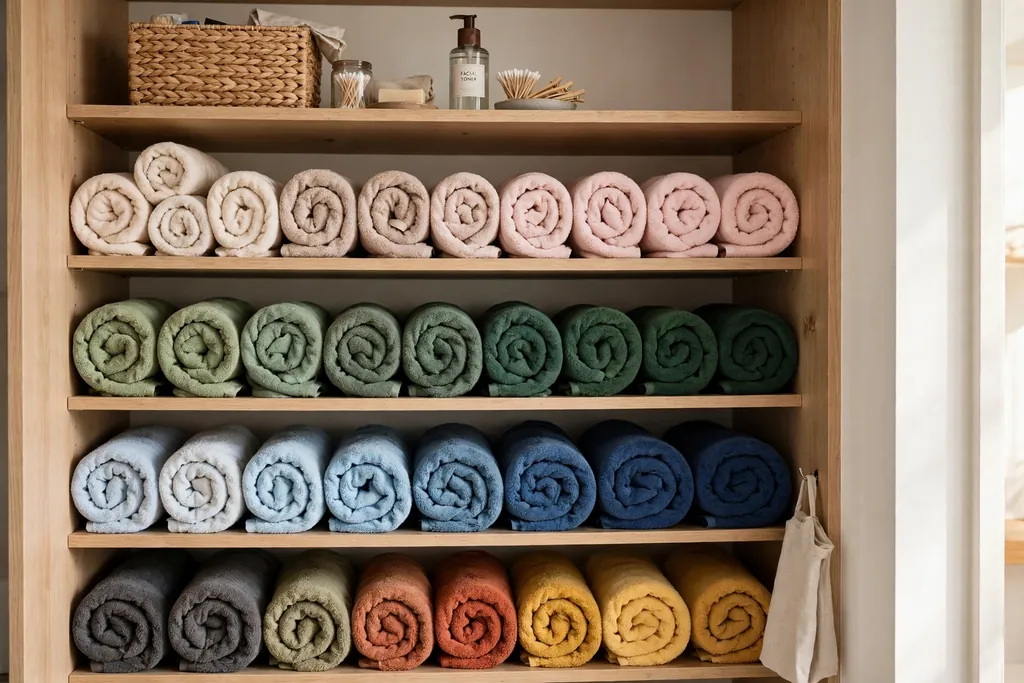
Roll bath towels, hand towels, and washcloths by color, and line the rolls up on one shelf like a small shop display. Rolling suits a linen closet because a roll shows its color and size at a glance, and you can pull one towel out without toppling a stack. Group the rolls by color, with white and cream together, then blues, greens, or warm tones, so the shelf reads as a planned color story rather than a pile of laundry.
This is also the fastest personality change in the closet, since towel color sets the mood every time the door opens. Choose one main towel color and one accent color, and repeat the accent in a bin, a label, or a washcloth stack. Keep the rolls snug but not squeezed, and place daily towels at the front and guest towels behind them, so the rolls you use most are the easiest to reach.
4. Add Shelf Dividers to Keep Stacks Upright
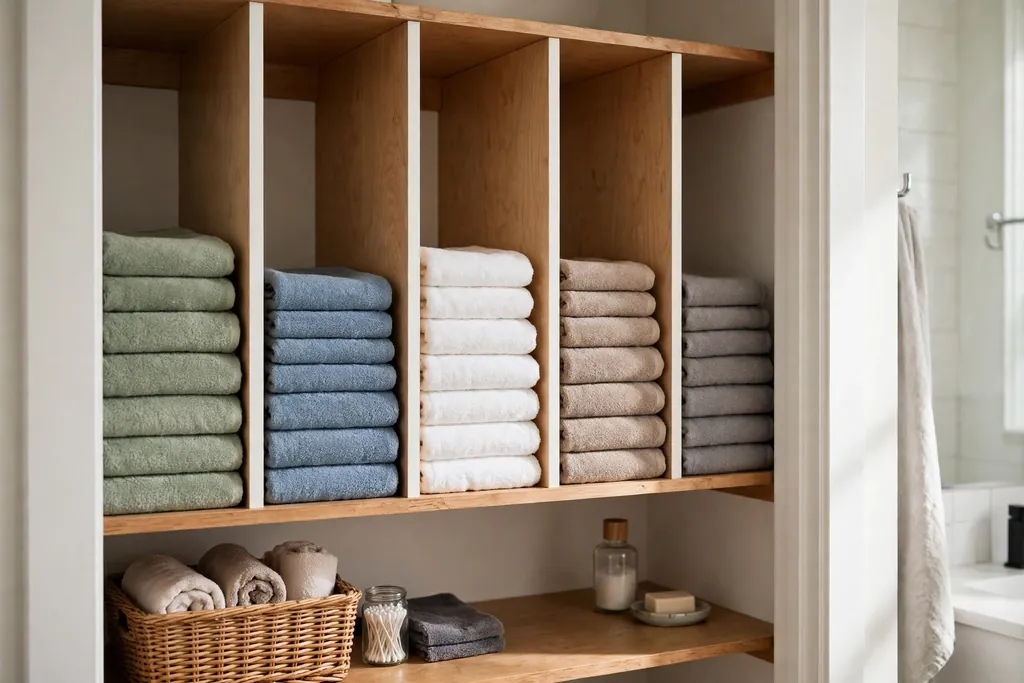
Add shelf dividers to keep folded stacks upright and separate, so one pulled towel does not topple the whole shelf. Folded clothes and towels slide and collapse without a boundary, and dividers give each stack its own slot, like books on a shelf. This works best for folded bath towels, hand towels, and bedding that you store on open shelves in the closet.
Fold items to the same width so stacks line up, and keep each stack to a height you can lift with one hand. Leave one slot empty for fresh laundry or new items, so a full shelf does not push overflow onto the floor. Wipe the shelf when you refold, since folded stacks collect lint at the edges, and check that the dividers fit the shelf depth, so they do not slide forward when you pull a towel out.
5. Fit Pull-Out Drawers at the Base
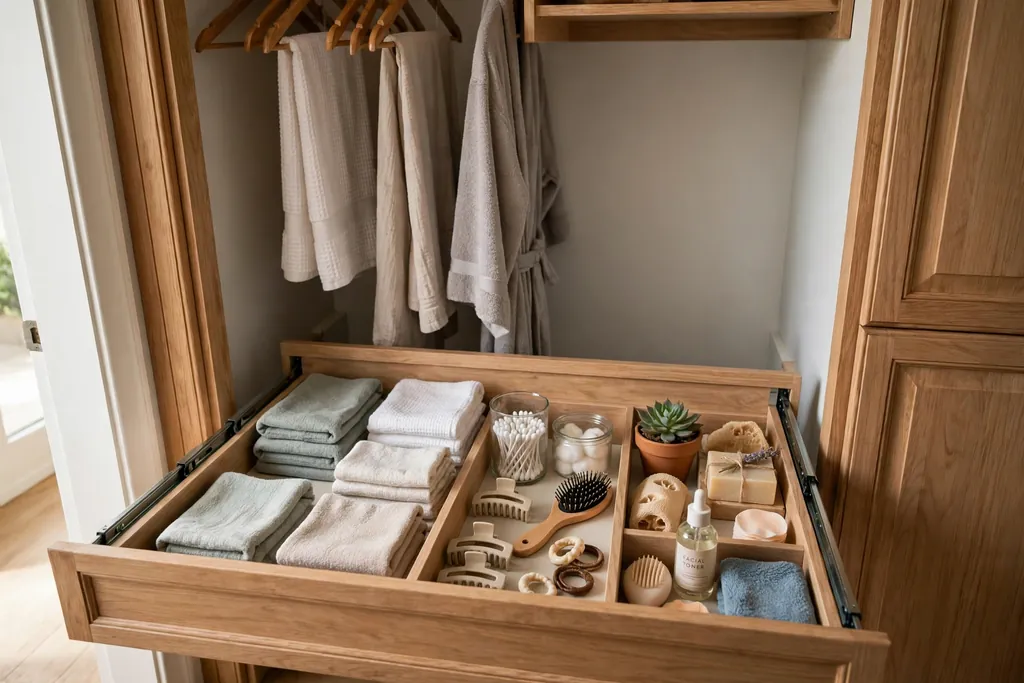
Fit a pull-out drawer unit or a set of stacking drawers at the base of the closet for folded items, underwear, and small accessories that do not suit open shelves. Drawers beat open piles because each drawer holds one category, and you can open one without disturbing the rest. A unit with three or four shallow drawers suits a reach-in closet better than one deep drawer that hides everything at the bottom.
Sort drawers by type, such as washcloths in one, hair tools in another, and first aid in a third, and add small dividers inside so items stay upright. Leave a little air above the top drawer so the shelf above it still clears hanging items, if any. If the closet has no floor space to spare, a hanging shelf unit with drawer inserts gives a similar result, and it needs no tools to fit.
6. Hang a Pocket Organizer on the Inside of the Door
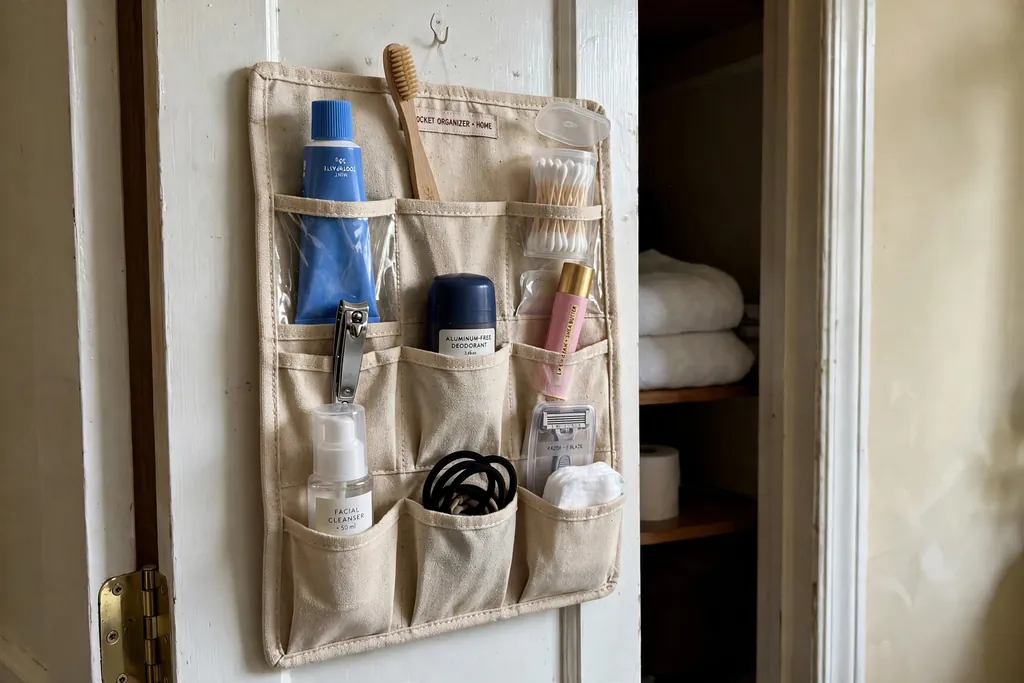
Hang a pocket organizer or a row of hooks on the inside of the closet door for small toiletries, hair tools, and cleaning sprays that otherwise fill shelves. The door is unused space in most closets, and a flat organizer adds storage without taking a single inch of rail or shelf. Clear pockets suit small bottles and accessories you want to see at a glance, while fabric pockets give a calmer look that hides the contents.
Keep heavy bottles low so the door still swings freely, and reserve the top pockets for light items such as headbands, spare washcloths, and cotton pads. If the door is used often, choose hooks with a soft backing to protect the door surface, and check that nothing rattles when the door moves. For more door storage planning, see these closet door ideas.
7. Use a Turntable for Daily Toiletries
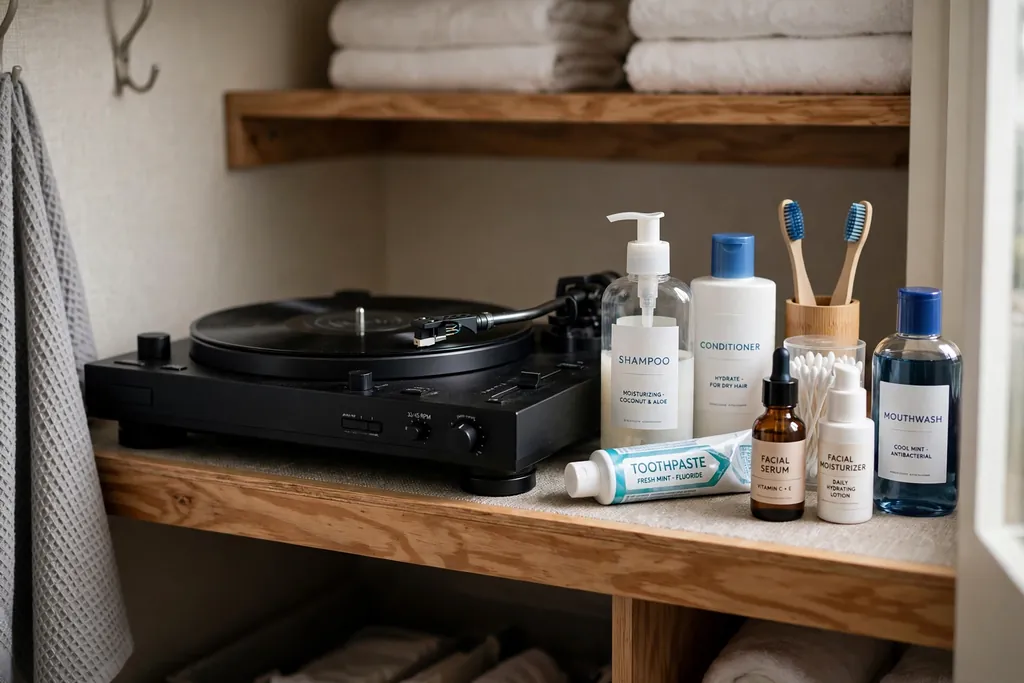
Place a turntable, also called a lazy Susan, on the shelf that holds daily toiletries, so nothing hides at the back. A turntable suits a deep closet shelf because you can spin it to reach shampoo, skin care, and medicine without pulling every bottle out. Choose a turntable with a low rim, so bottles do not slide off when you spin it, and keep it to one category per turntable, such as skin care on one and hair care on another.
Keep the tallest bottles in the middle and shorter items at the edge, so you can see each label as the turntable turns. Wipe the turntable when you clean the shelf, since bottles leave rings and drips, and check that it spins freely before you load it with glass bottles. If the shelf is narrow, use a half-round turntable against the back wall, which gives the same spin benefit in less depth.
8. Match Baskets in One Accent Color
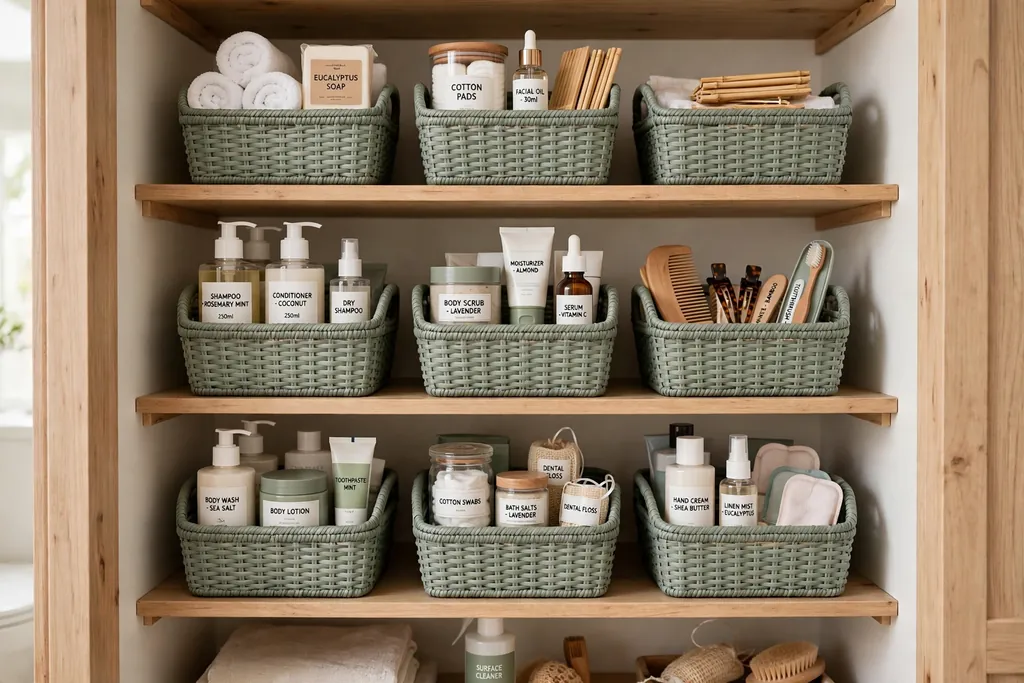
Use matching baskets in one accent color for the items you want hidden, one basket per category, such as hair care, skin care, cleaning, and first aid. Matching baskets give closed storage without doors, and one color keeps the closet calm even when the contents differ. Choose baskets that fit the shelf depth with a little air at the front, so you can pull each one out without moving the next basket.
Label the front of each basket, since baskets that look alike are easy to mix up, and keep the label style the same across the closet. Use washable baskets or baskets with a wipe-clean liner in a bathroom, since steam and drips mark plain fabric over time. Keep the baskets on shelves rather than on a wet floor, and empty each basket once a month, returning only what you actually used, since bathroom baskets quietly collect empty bottles.
9. File-Fold Washcloths in Shallow Bins
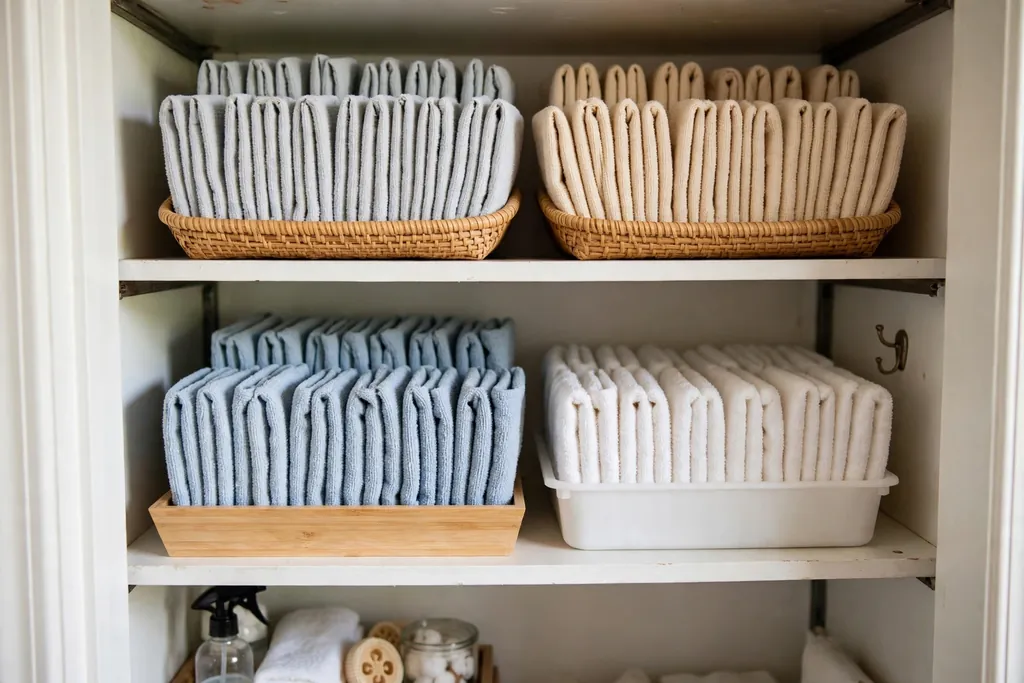
File-fold washcloths and hand towels in shallow bins, standing them upright in rows like files, instead of stacking them flat. File folding suits small items because you can see every washcloth at once, and you can pull one out without disturbing the rest. Use one shallow bin per color or per person, and fold each cloth to the same width so the rows line up.
This method also shows off a color story, since the folded edges form neat stripes across the bin. Place the bins at eye level if you use washcloths daily, and keep one bin for clean cloths and a small basket nearby for used ones, so clean and used items never mix. Wash the bins when you change the towels, since lint collects in the corners, and keep the bins shallow enough that the cloths stay upright rather than flopping forward.
10. Fix Hooks on the Side Wall for Robes and Bags
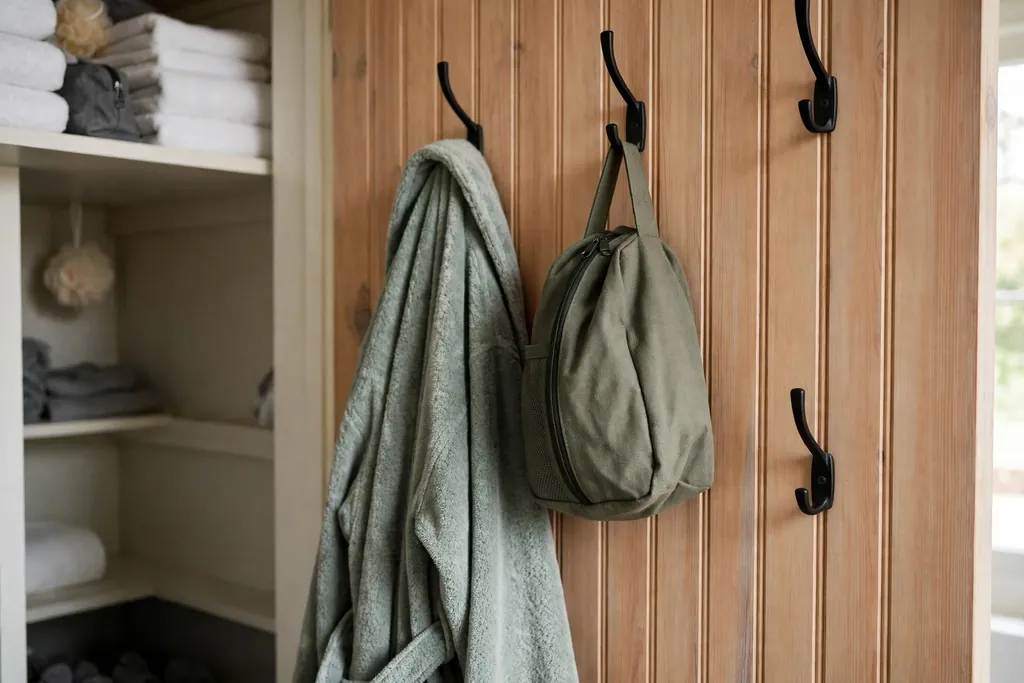
Fix a row of hooks on the closet side wall for robes, wash bags, and tomorrow’s outfit, since side walls are often bare yet sit at hand height. One hook per item keeps straps from tangling, and robes hung by their loop keep their shape better than robes folded in a pile. This suits a closet where shelves are full but the side wall still has free space, and it gives bulky items a home that does not crowd the towels.
Keep the heaviest bag on the lowest hook, and check that hooks are fixed into studs or with fixings rated for the load. Leave a gap between hooks so items do not press against each other and mark the fabric. If you rent, removable hooks give a similar result, but check their weight rating and test one hook before loading them all. For more small closet layouts, see these creative closet ideas for small spaces.
11. Add a Battery Light Strip Inside the Closet
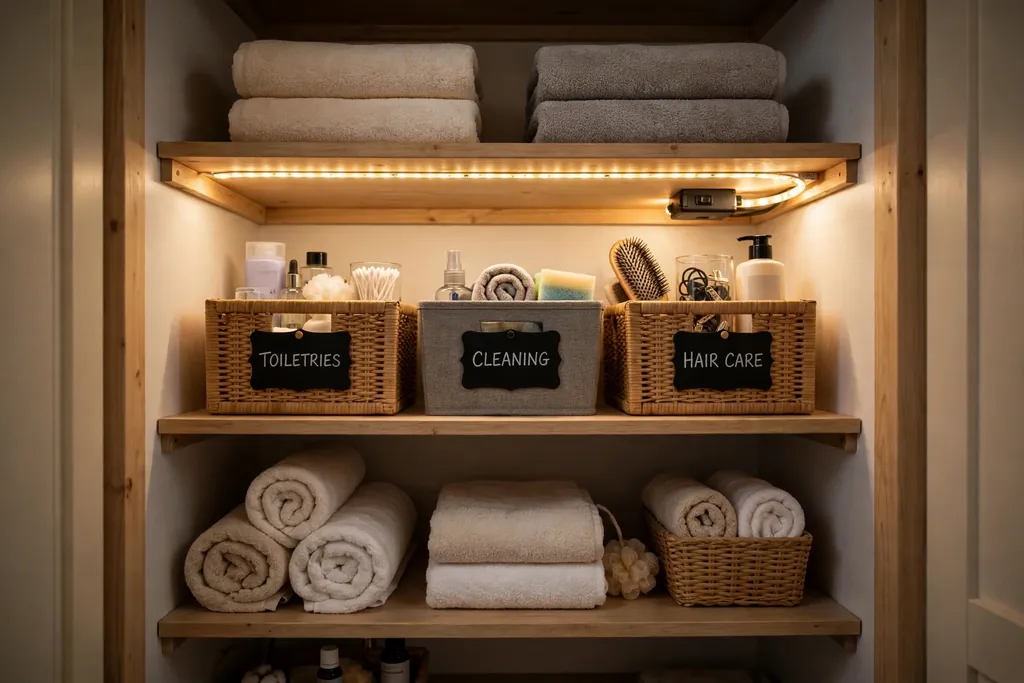
Add a battery light strip inside the closet, fixed under a shelf or along the door frame, so you can see labels, colors, and small bottles without a main bathroom light. A dark closet hides what you own and makes getting dressed slower, and a light strip solves that problem with no wiring. Battery strips with a remote suit renters, while plug-in versions give steadier brightness if you have a socket nearby.
Stick the strip to the underside of a shelf, not to the wall, so you can move it when you change the layout, and choose a warm white strip so towels and wood tones look soft rather than clinical. Keep the light away from direct water spray, and check the battery or the plug position before you load the shelf above it. A motion sensor strip is a good choice here, since it lights up when the door opens and switches off when the door closes.
12. Line the Back Wall and Add a Scented Finish
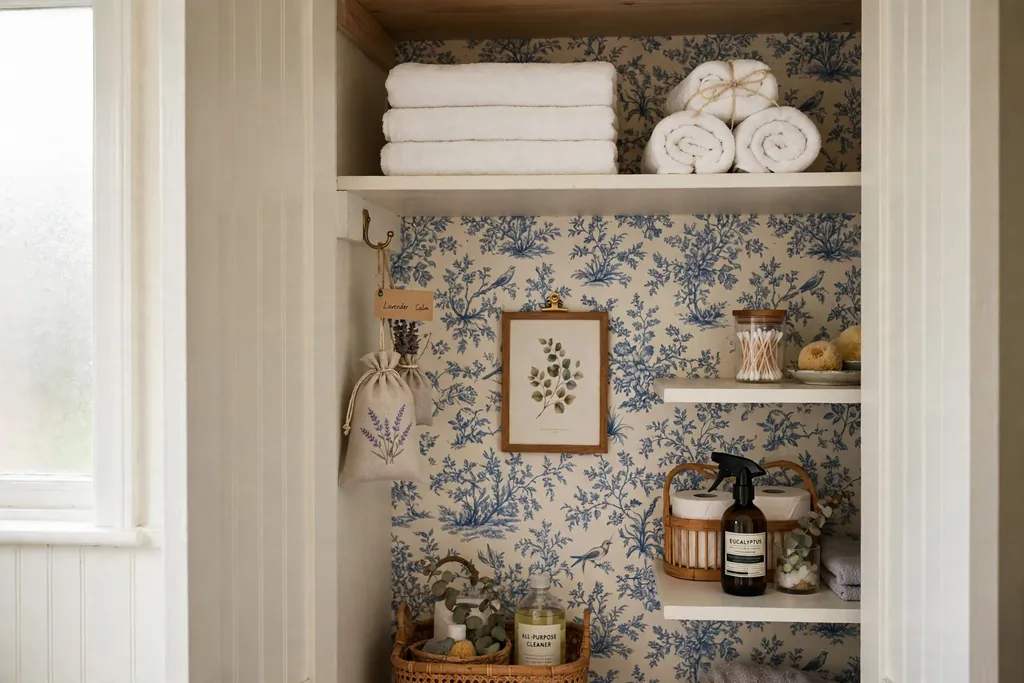
Line the back wall of the closet with patterned paper, and finish with a scented sachet and one small framed print, so the closet has personality even when it is only half open. Patterned paper on the back wall shows between bins and towels, and it sets the color palette for the whole closet in one move. Choose a small repeat pattern, such as a stripe, a botanical print, or a simple geometric shape, so it reads well in a tight space, and keep the paper off any wall that gets direct shower steam.
Place a lavender or cedar sachet on a shelf, away from towels you use on your face, and hang one small print in a moisture-safe frame where it will not be knocked by bins. This finishing touch suits a guest closet most of all, since guests notice the paper and the scent before they notice the bins. For more bathroom personality ideas, see these walk in shower ideas for how one strong finish can carry a plain room, and keep the rest of the closet quiet so the back wall stays the focus.
Conclusion
A bathroom closet works best when each group has a home, daily items sit at hand level, and one personal finish shows your taste. Start by emptying the closet and sorting into zones, then add clear bins up top, rolled or file-folded towels, a turntable for daily toiletries, and hooks on the door and side wall. Keep one bin style, one label style, and one accent color across the closet, and leave one shelf or slot partly empty, so fresh laundry has a place to land. With those basics in place, you can shift the look with the seasons, swapping a towel color or a sachet, without a full reorganization.
Save this list on Pinterest before you start, and work through it one idea at a time: zones and bins first for a quick tidy, then towels and hooks, then the patterned back wall when you have an hour to spare.
FAQs
How do I start organizing a bathroom closet?
Empty the closet fully, sort everything into groups such as towels, daily toiletries, spares, cleaning supplies, and first aid, and move out anything empty, expired, or unused. Clean the shelves, then put daily items at eye and hand level, spares up high, and heavy items low. Add bins only after the zones are set, so each bin holds one clear group rather than a mix of leftovers.
What bins work best in a bathroom closet?
Clear bins work best up top, since you can see spares without pulling each box down, while matching baskets in one accent color work best at eye level, where you want a calmer look. Use shallow bins for washcloths and small items, and deeper bins for spare towels and bulk buys. Label every bin on the side that faces out, and keep bins shallow enough to lift safely from a step stool.
How should I store towels so they stay tidy?
Roll bath towels by color on one shelf, or file-fold washcloths and hand towels upright in shallow bins, so you can see each item and pull one out without toppling a stack. Keep daily towels at the front and guest towels behind them, and keep each stack or row to a height you can lift with one hand. Leave one slot empty for fresh laundry, so a full shelf does not push overflow onto the floor.
Can I organize a bathroom closet in a rental without drilling?
Yes. Use a hanging pocket organizer on the door, a turntable on a shelf, matching baskets, and removable hooks on the side wall, all of which need no drilling. Battery light strips with adhesive backing also work without wiring, and patterned paper can be fixed with removable strips if your lease forbids paste. Keep the original shelves and doors as they are, so you can remove every organizer at move-out.
How do I stop a bathroom closet from smelling musty?
Keep air moving by leaving a small gap between bins and the back wall, and avoid packing the closet so full that air cannot circulate. Use a cedar or lavender sachet on a shelf, away from face towels, and check for leaks or damp spots before you add paper or fabric organizers. Wipe shelves when you change towels, and move out any bottle that has leaked, since one spill can scent the whole closet.
How often should I reorganize a bathroom closet?
Review the closet once a season, when you swap seasonal towels or guest supplies, and do a quick tidy once a month, emptying each basket and returning only what you actually used. A seasonal review catches expired medicines, empty bottles, and towels you no longer use, while a monthly tidy keeps the zones clear. If a zone keeps overflowing, it usually means that group needs its own bin or a smaller count, not a bigger closet.