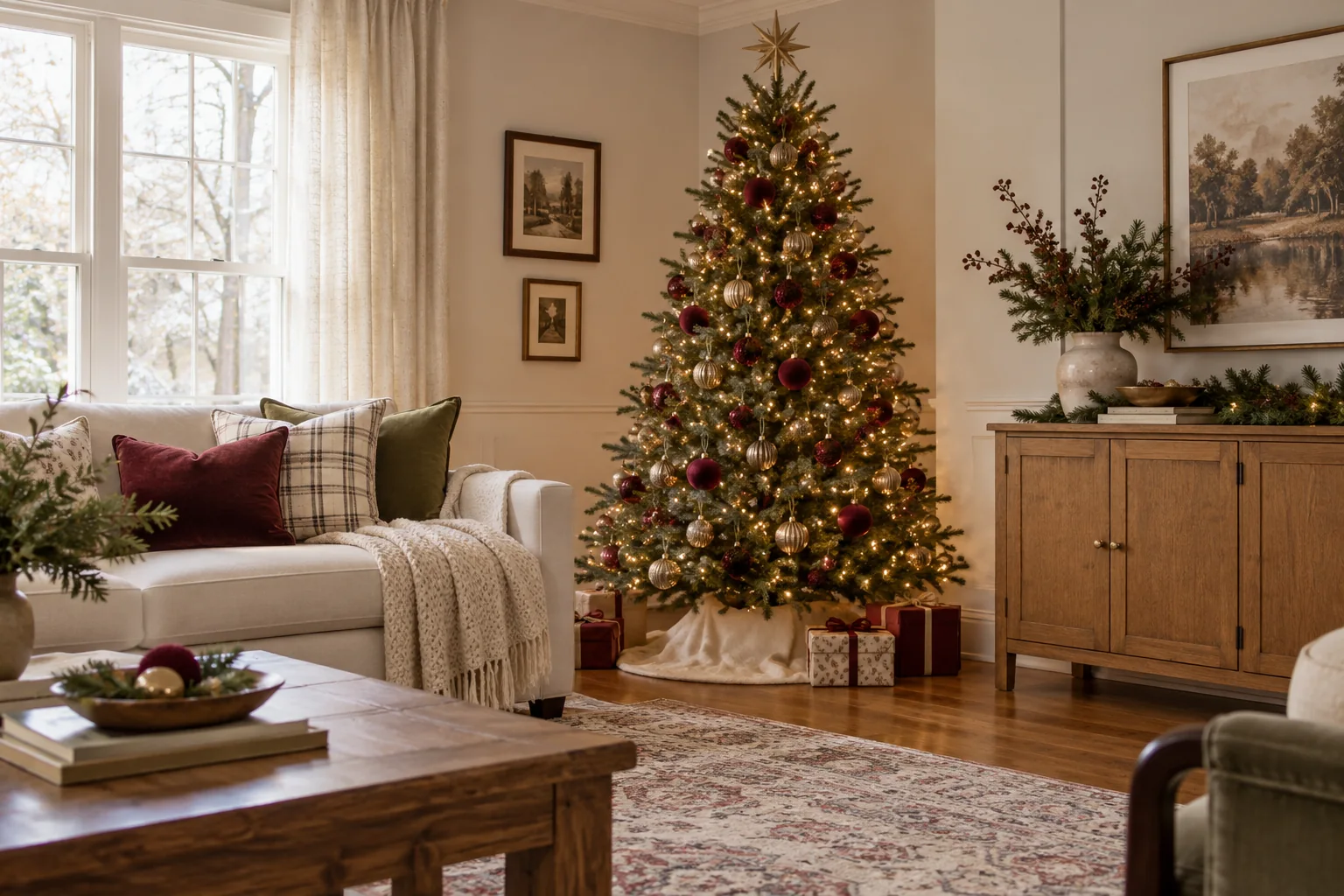
Christmas tree corner ideas work best when the tree fits the way you use the room. A corner beside the sofa needs a different shape from a shallow wall nook, and a bright window calls for different choices from a dark entry. These six setups cover traditional greenery, a tabletop display, and two branch-based alternatives. Pick the one that leaves your favorite seat, cabinet doors, and walking route easy to use, then borrow the colors already in your room.
Before decorating, measure the corner’s width, depth, and available height, including the topper. Mark the proposed footprint on the floor, then test the room with doors open and chairs pulled out. Our small living room layout guide can help you check the furniture arrangement.
Keep the tree out of exits and at least three feet from heat sources. Use appropriate tested lights and switch them off before leaving home or going to bed, following the NFPA’s Christmas tree safety guidance. A corner with a radiator may be better left undecorated.
1. Fit a Pencil Tree Beside the Sofa
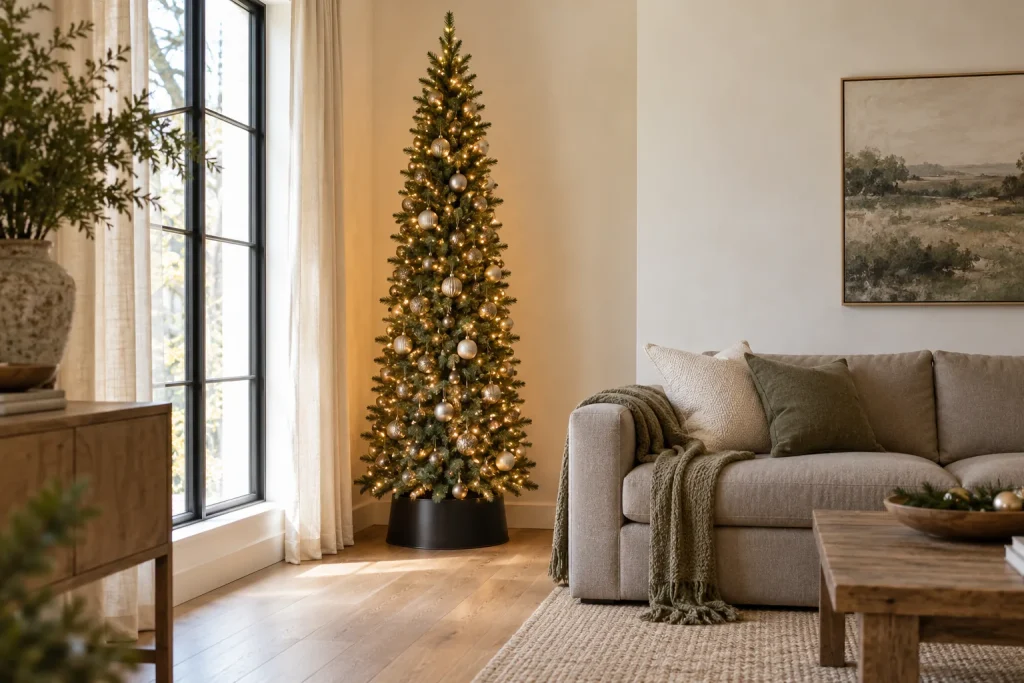
A pencil tree gives a narrow sofa-side corner the height of a larger Christmas display without the same spread of branches. The small champagne ornaments and dark collar shown here suit a room with soft upholstery and wood furniture. Repeat one existing accent color rather than introducing a whole new palette.
Check the tree’s assembled branch width and stand dimensions before choosing it. A narrow tree can still have feet that extend into your route past the sofa. Position the collar around the stand without changing how the stand supports the tree, and keep branches clear of curtains. If the lowest ornaments brush your legs when you pass, choose a smaller tree or a different corner. Leave presents within the tree’s footprint instead of spreading them across the walkway.
2. Put a Mini Tree on a Low Cabinet
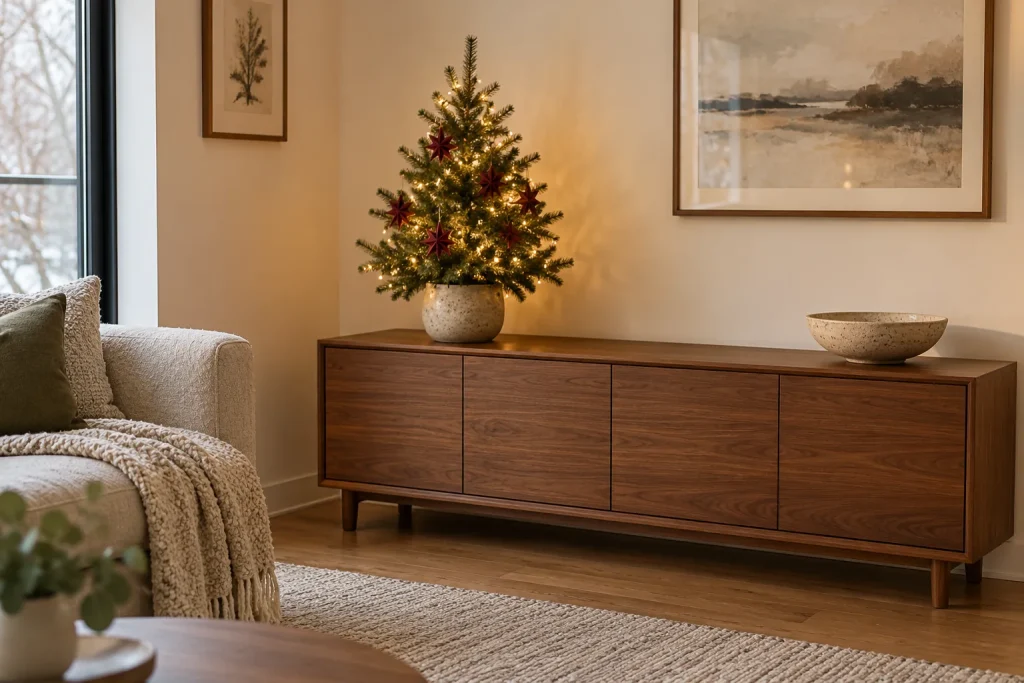
A tabletop tree lets an existing cabinet carry the holiday display, so you do not need another piece of furniture. This setup is useful when the room has no spare floor corner but does have a low cabinet against two joining walls. Burgundy paper stars give the little tree a clear theme without hiding its shape.
Choose a tree with a stable base that sits fully on the cabinet, with room around every edge. Check the furniture’s load limit, including the pot and decorations, and follow any anchoring instructions. Clear the surface first, then return just one small object, such as a bowl. Avoid balancing a tree on stacked books to gain height. The tree itself should provide the focal point. For more help editing the surrounding display, use our guide to styling shelves without clutter.
3. Choose a Flat-Back Tree for a Shallow Nook
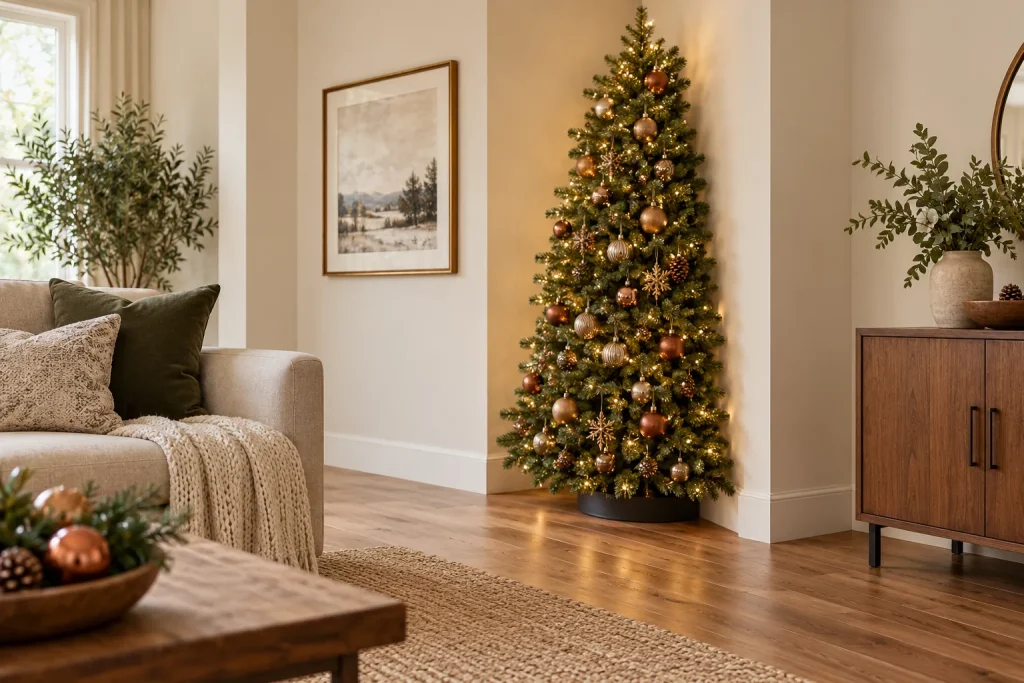
A flat-back or half-round artificial tree suits a corner where the available width is reasonable but the room cannot spare much depth. Its decorated front gives you a familiar evergreen shape while its rear is designed to sit closer to a wall. Copper ornaments and a few reflective baubles add detail to the front-facing branches.
Check the actual product shape carefully. Half-round, quarter-round, and pencil trees have different footprints, even when their photographs look similar. Measure the assembled depth from the rear of the stand to the longest front branch, and include any projecting topper. Do not try to make a full tree fit by crushing its rear branches against the wall. Decorate the visible front and sides, then stand in the doorway to check that the tree still looks balanced from the room’s main viewing angle.
4. Hang a Branch Tree Beside the Corner
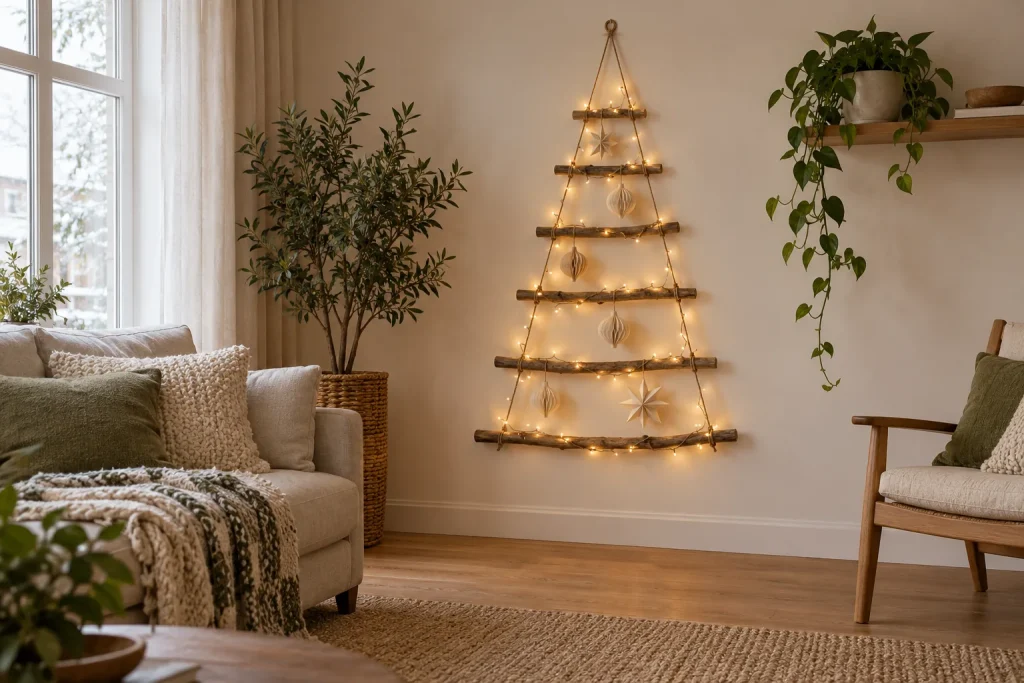
If every floor corner is already occupied, use a clear wall beside one instead. Graduated wooden branches tied into a triangle suggest a Christmas tree without a stand or spreading foliage. The open spaces between the branches keep the wall visible, which suits a simple room with natural wood and linen.
Lay the branches on the floor from shortest to longest, then connect them with sturdy cord on both sides. Check that the finished hanging stays level before adding lightweight paper ornaments. Use fixings suitable for the wall and the complete display’s weight. In a rental, check your lease and the mounting product’s surface restrictions; removable hooks are not suitable for every finish or load. Battery lights can avoid a trailing power cable, but secure the battery pack and keep it accessible. Choose a ready-made hanging if assembling one would be impractical.
5. Give a Potted Evergreen a Bright Window Corner
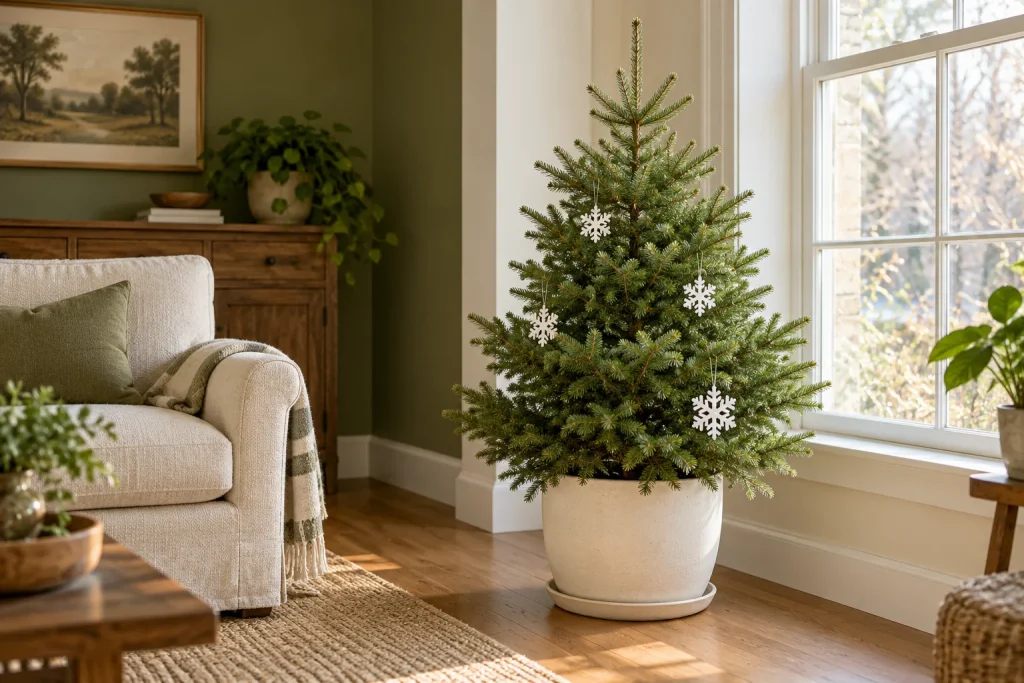
A small rooted evergreen brings natural texture to a window corner, with a few paper snowflakes doing most of the decorating. A plain planter keeps the focus on the foliage. This is a short holiday display for an outdoor tree, so choose it only if you can provide suitable care and a plan for the tree afterward.
Ask the nursery which species suits your climate and how to move it between outdoor and indoor conditions. Keep the nursery pot’s drainage working, protect the floor with a waterproof tray, and empty collected water rather than leaving the roots standing in it. UNH Extension recommends keeping living Christmas trees indoors for only seven to ten days in its living Christmas tree care guide. If you want the look throughout December, use a similar artificial potted tree instead.
6. Use a Bare Branch Tree for an Airy Display
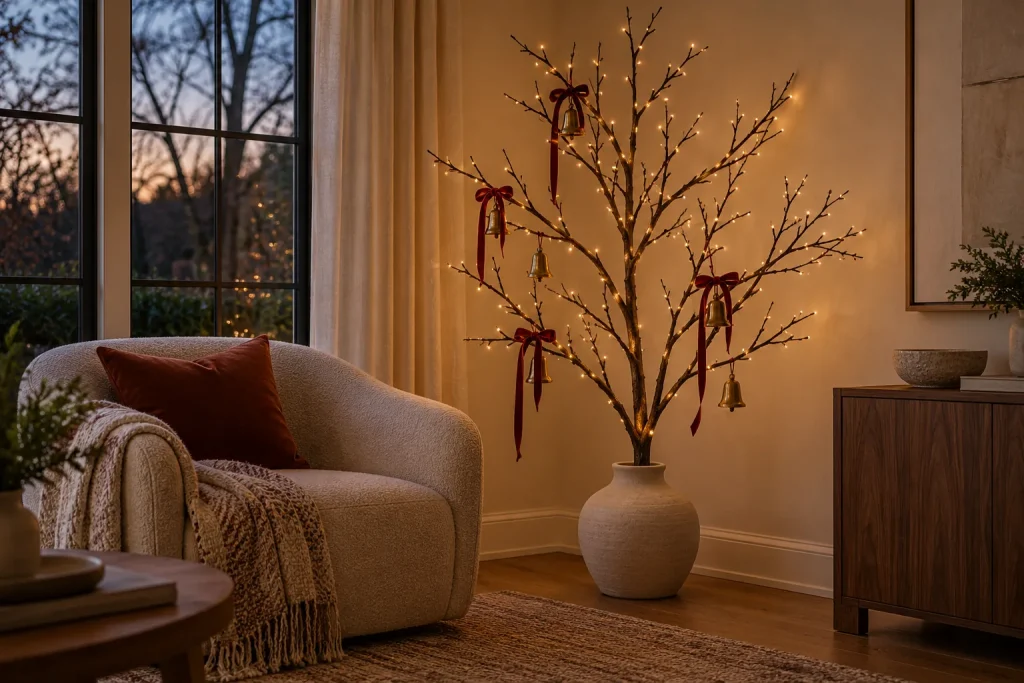
A branch tree offers a different silhouette from a dense evergreen. The wall remains visible between the limbs, and a handful of bells or ribbon bows can become the main decoration. This works well beside an armchair when you want a seasonal focal point without filling the corner with foliage.
Choose a purpose-made decorative tree with a stable base, then check its widest branches against the space. Bare branches can reach farther sideways than the trunk suggests. Hang light ornaments close to stronger branch junctions and stop before the limbs bend under their weight. Keep the display away from places where sleeves or bags could catch on it. Use lights only as the tree and light manufacturers allow. Once the holidays finish, remove the bells and bows and decide whether the simple branch shape still suits the room.
Start with the corner’s limits, then choose the tree shape. A pencil tree needs floor space, a cabinet tree needs a stable surface, and a wall tree needs suitable mounting. You only need one of these Christmas tree corner ideas to make the room feel festive. Save your favorite image to a Christmas decorating board on Pinterest, and keep your measurements with it so you can recreate the look at home.