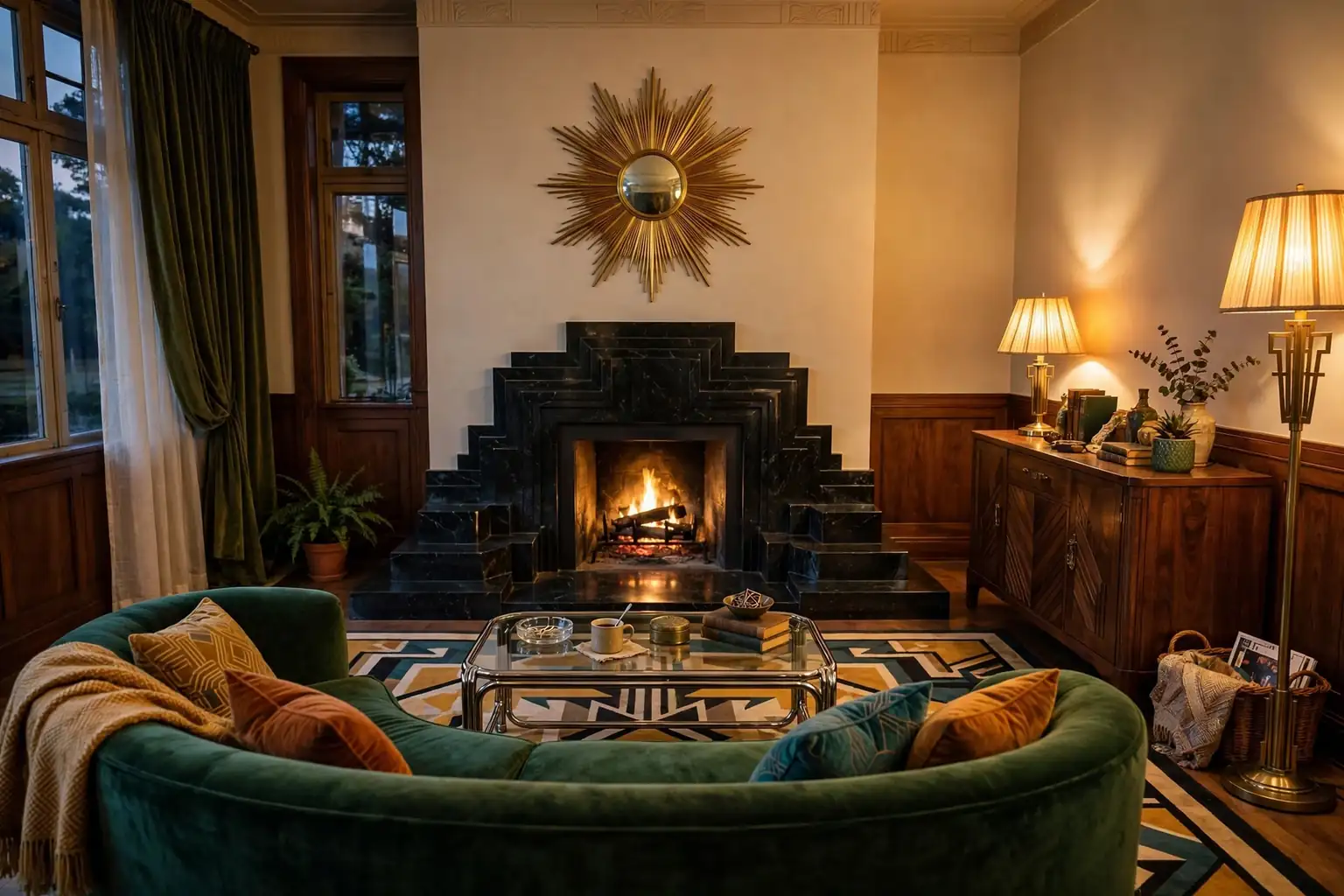
A 1930s living room earns its welcome from warm wood, soft velvet, and light bouncing off chrome and glass, not from a long list of period props. The decade mixed comfort with a new streamlined style: low rounded sofas, walnut veneer, geometric rugs, and lamps that glow rather than glare. These 22 1930s living room decor ideas cover fireplaces, seating, storage, lighting, and small styling touches, so you can add one piece or plan a fuller refresh. Start with the largest change your room needs, such as the sofa or the rug, then layer in smaller 1930s details. For more help with rug size and placement, see these living room rug ideas.
Key Takeaways
- Start with warm materials: walnut, velvet, and brass soften the clean lines of 1930s design and keep the room inviting.
- Use one strong geometric pattern, such as a fan rug or a wallpaper, and keep the rest of the room calmer so the pattern has room to breathe.
- Mix shine and softness: pair chrome, glass, and mirrors with velvet, wool, and wood so the room never feels cold.
- Keep seating low and rounded, arranged for conversation, since 1930s rooms were made for sitting together, not for display.
- Layer light at three levels: daylight through blinds or sheers, table lamps for evenings, and one tall floor lamp for reading corners.
- Let one or two genuine period pieces lead, such as a walnut sideboard or a drinks cabinet, and let newer pieces stay simple around them.
1. Stepped Art Deco Fireplace Surround
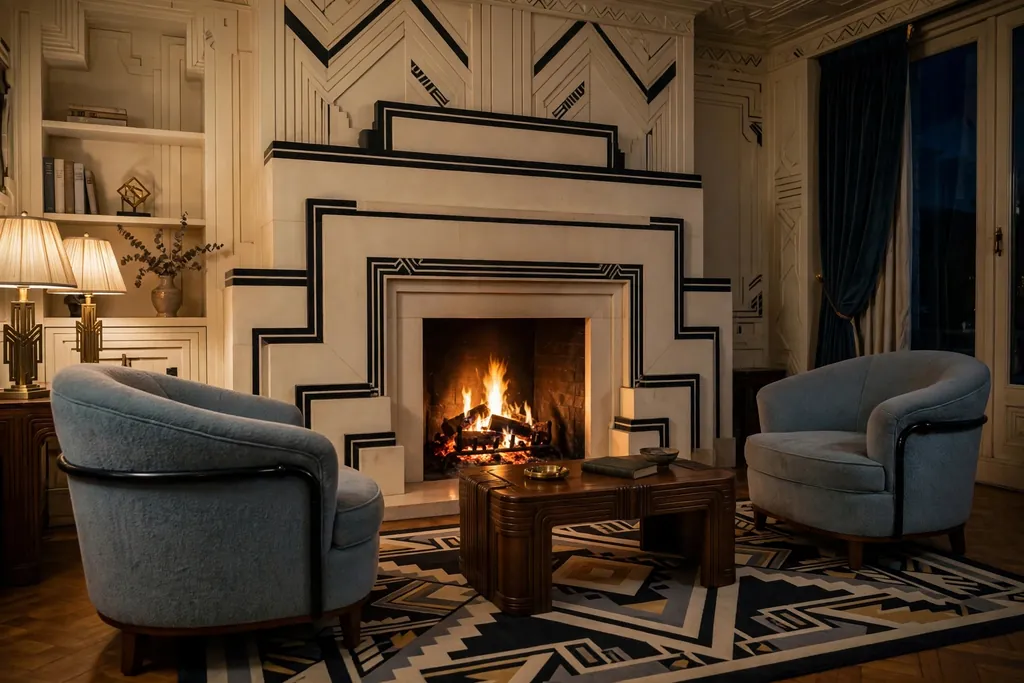
Give the fireplace a stepped surround in cream stone, painted wood, or tile with black trim, so the mantel rises in clean tiers like a small skyline. The stepped shape is the clearest 1930s signature in a living room, and it gives the whole wall a focal point without needing a large fire. Keep the mantel styling simple, with a mirror or one pair of lamps, so the steps stay visible.
If your fireplace is plain, a painted stepped surround or a tiled insert can suggest the same shape for far less work than rebuilding. Check that any paint or tile near the fire opening is heat safe, and keep throws and paper clear of the hearth. A stepped surround suits both working fires and rooms where the fireplace is decorative.
2. Low Rounded Sofa in Deep Velvet
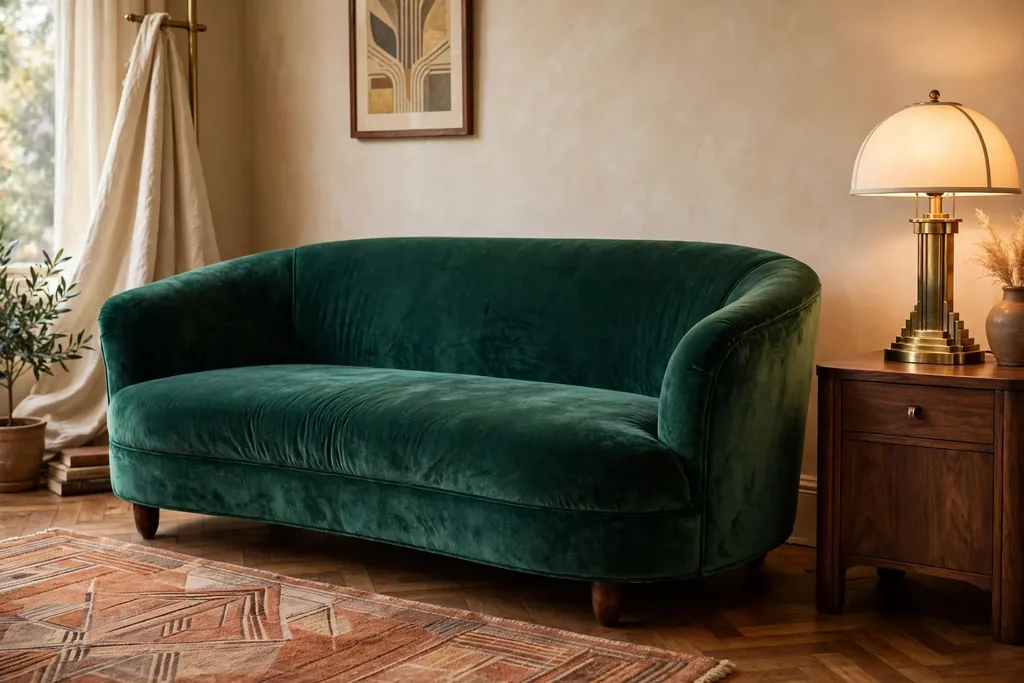
Choose a low sofa with rounded arms and a curved back, upholstered in deep velvet in emerald, burgundy, or navy. The 1930s sofa sat lower and softer than the tall, boxy sofas of earlier decades, and velvet gives it the plush look the decade favored. A two or three seat sofa, sized to the wall or rug zone, works better than an oversized sectional in a 1930s scheme.
Pick a velvet you can brush and spot clean, since a deep color shows dust and pet hair. Keep the cushions plain or lightly buttoned, and let one patterned throw add interest. If a new sofa is out of reach, a velvet slipcover or a pair of velvet cushions on a plain sofa can move the room in the same direction.
3. Walnut Veneer Sideboard
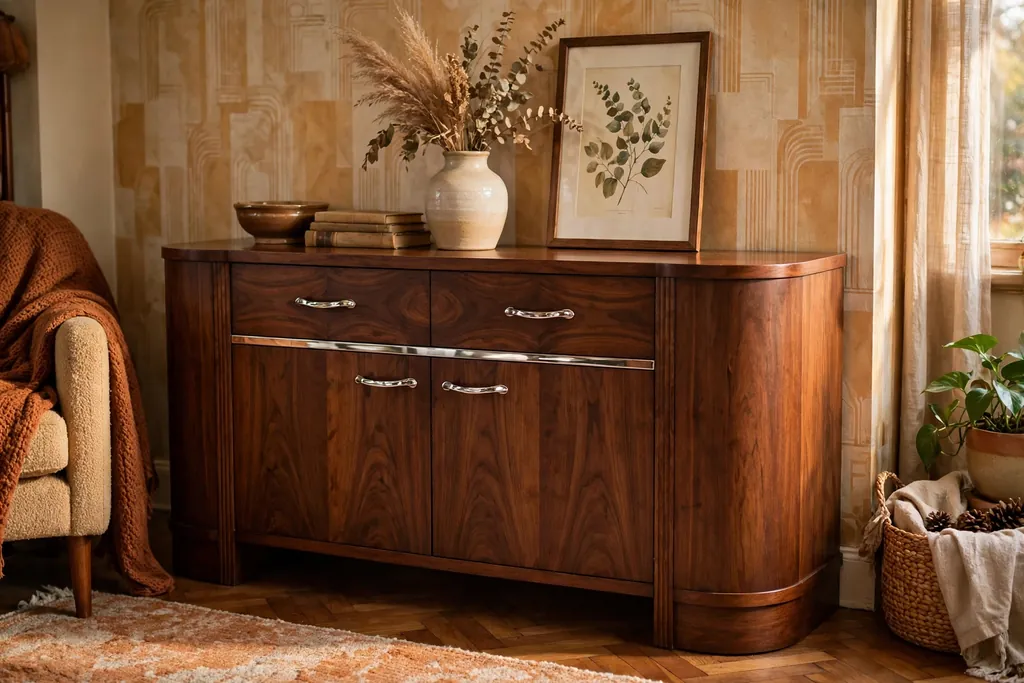
Add a walnut veneer sideboard with curved edges and slim chrome or brass handles, placed against the longest free wall. Walnut was the favored wood of the 1930s, and its warm brown grain suits velvet, cream walls, and brass alike. A sideboard also solves a practical problem, giving closed storage for games, chargers, and table linens that would otherwise clutter the room.
Style the top with restraint: a vase, a small stack of books, and one lamp are enough. Check secondhand shops for a sideboard with solid joints and a veneer that can be cleaned and waxed, since an older piece often suits this look better than a new copy. Keep the handles original where you can, since they carry much of the period detail.
4. Geometric Fan Pattern Rug
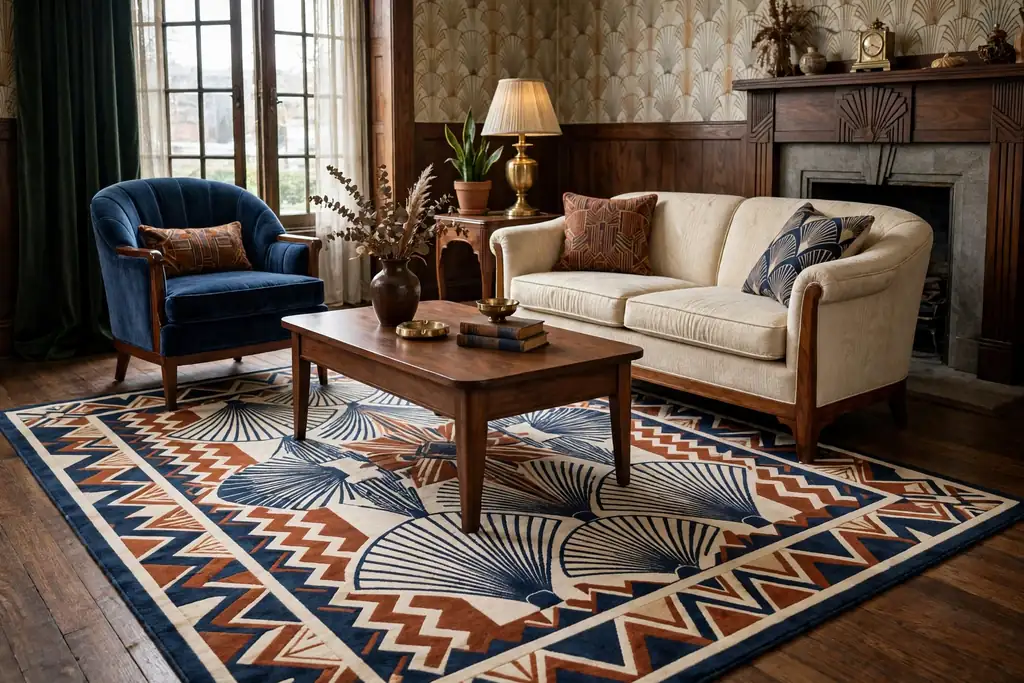
Lay a large rug with a fan, scallop, or zigzag pattern in rust, cream, navy, or gold under the seating group. Geometric rugs are the fastest way to set a 1930s mood, and the fan motif repeats across the decade in wallpaper, textiles, and metalwork. Size the rug so the front legs of the sofa and chairs rest on it, which links the seating into one group.
Keep the rest of the room calmer if the rug is bold, with plain cushions and simple curtains, so the pattern stays the main event. A low pile rug is easier to vacuum and to move chairs across, which matters in a room used daily. If a full patterned rug feels like too much, a smaller fan pattern rug under the coffee table gives the same note.
5. Chrome and Glass Coffee Table
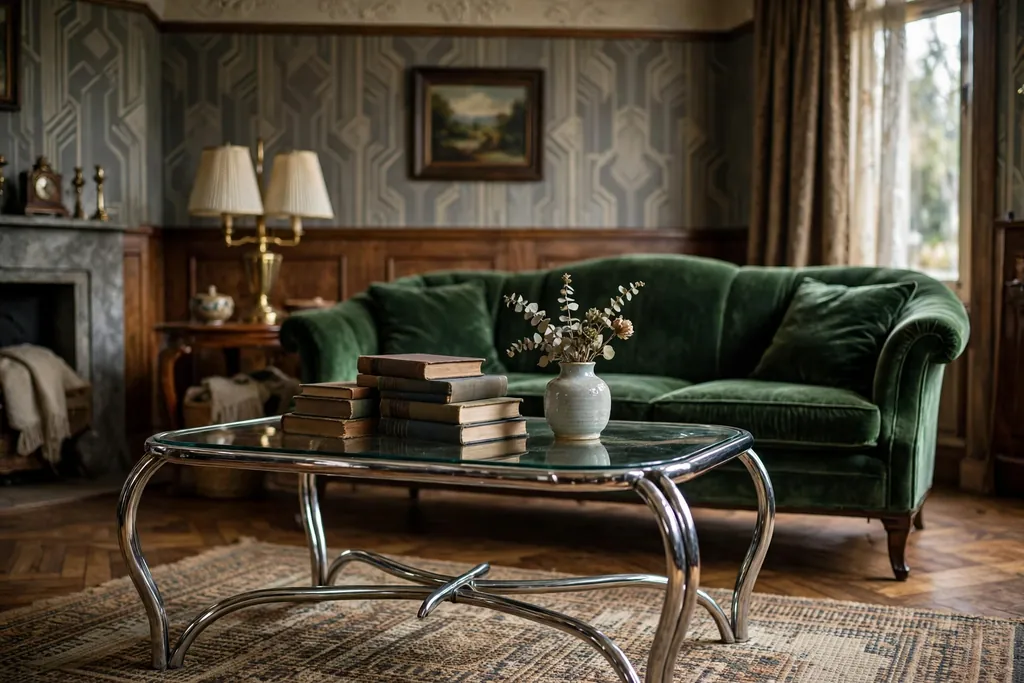
Pick a coffee table in chrome and glass with curved tubular legs, placed in front of the sofa at seat height. Chrome and glass were the modern materials of the 1930s, and a glass top keeps a small room feeling open because the rug and floor stay visible through it. A round top suits a room where people walk past the seating group often, while a rectangular top suits a long sofa.
Keep the top mostly clear, with one tray to gather a book and a cup, and wipe fingerprints from the glass as part of a weekly tidy. Check the weight rating if you plan to rest books or a tray on it, and use felt pads under heavy objects to protect the glass. A chrome frame also echoes the lamps and handles elsewhere in the room.
6. Sunburst Mirror Above the Mantel
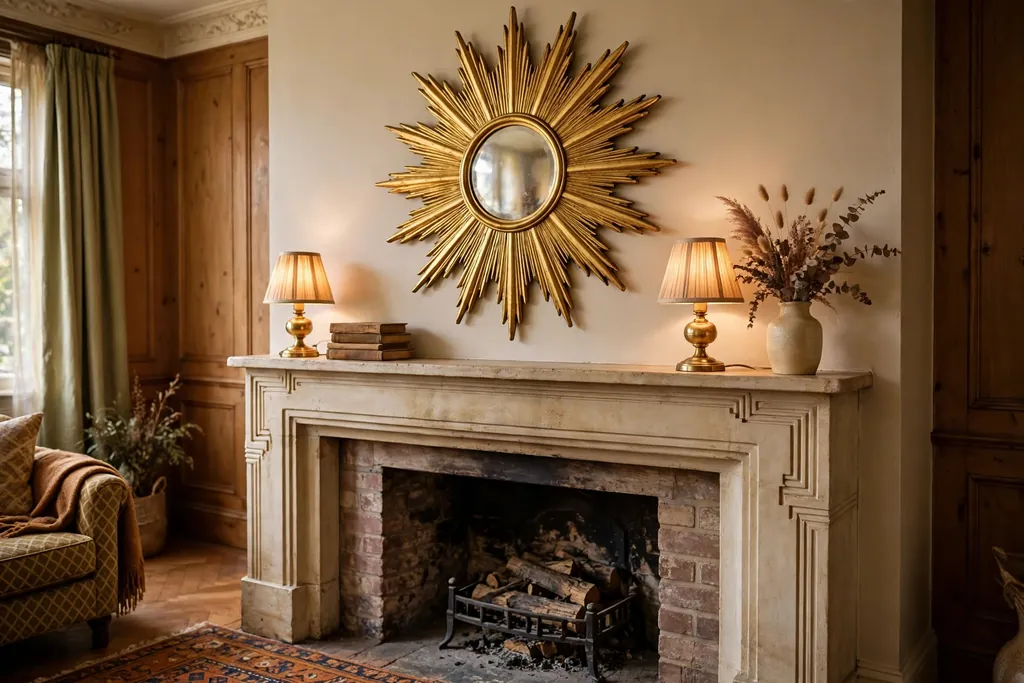
Hang a sunburst mirror above the mantel, with rays in gold, brass, or painted wood radiating from a round center. The sunburst is a classic 1930s wall piece, and it bounces light around the room while drawing the eye to the fireplace. Hang the center at eye level when standing, and keep the mantel below it simple so the rays stay the focus.
Fix the mirror into a stud or with fixings rated for its weight, since sunburst frames can be heavier than they look. If a sunburst feels too bold for your room, a round mirror with a slim brass frame gives a quieter version of the same idea. Either way, avoid hanging a mirror where it reflects clutter or a blank wall.
7. Pair of Rounded Armchairs for Conversation
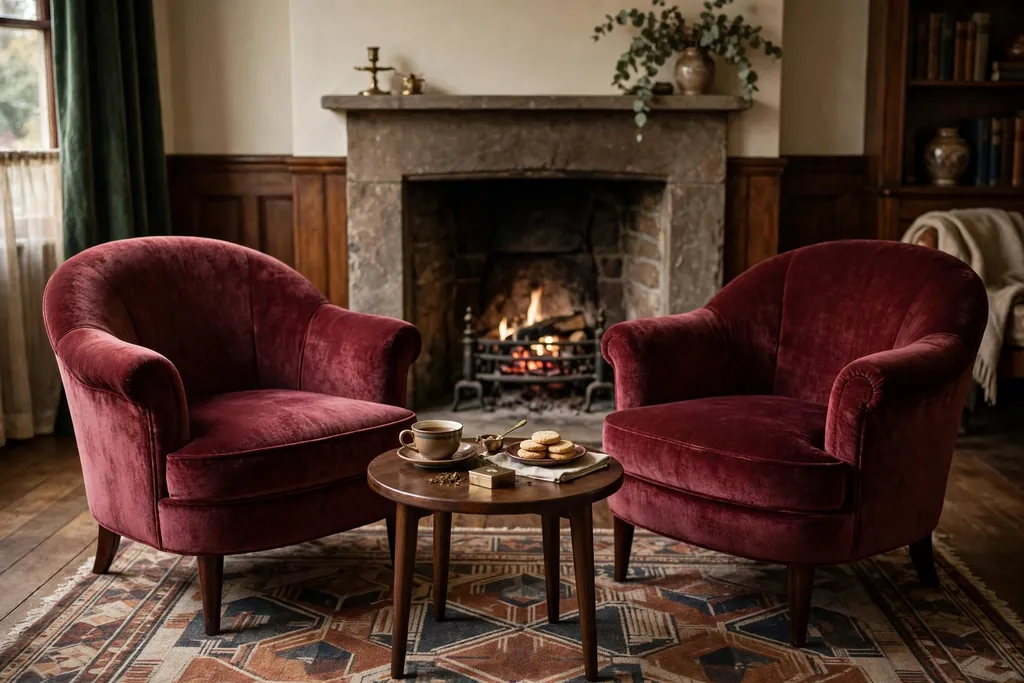
Place a pair of rounded armchairs facing each other, or angled toward the fireplace, with a small table between them. The 1930s living room was arranged for conversation, and a matched pair creates a natural talking corner even in a room that also holds a sofa. Rounded backs and short legs keep the chairs feeling soft rather than formal.
Give each chair a lamp or a shared side table, so both seats are usable for reading as well as talking. If space is tight, one armchair angled toward the sofa still creates the same conversational grouping. For a calmer base to build this pairing on, the pale wood and linen approach in these Swedish living room ideas shows how light walls and simple seating keep a room feeling open.
8. Brass and Bakelite Table Lamps
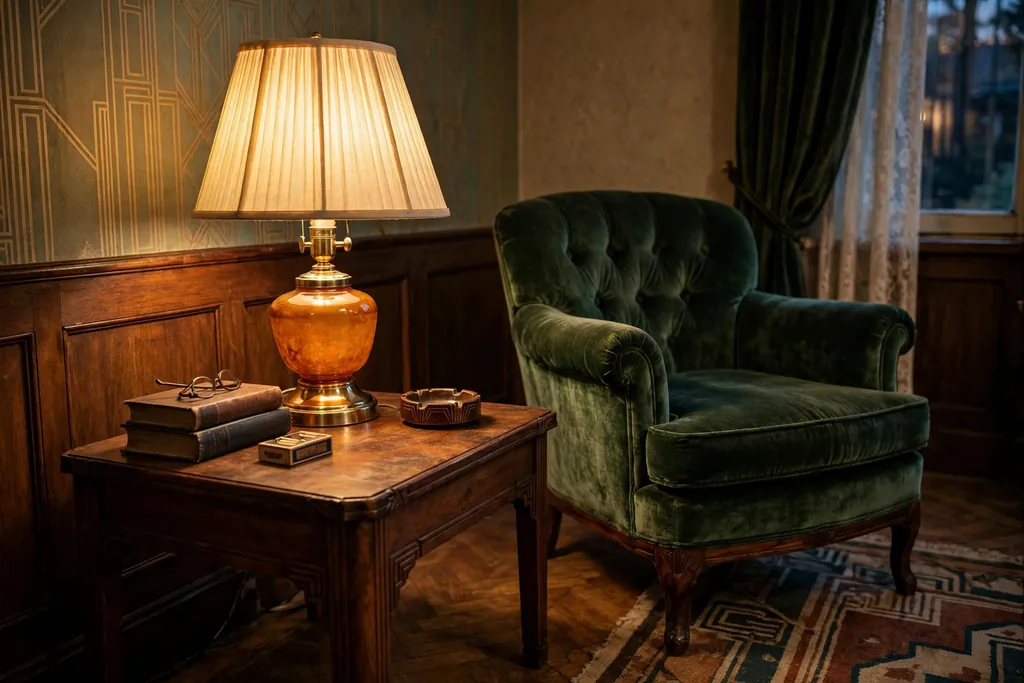
Set brass table lamps with amber Bakelite bases and cream shades on side tables or the sideboard, and use warm white bulbs. Bakelite, an early plastic in deep amber or black, is a small but telling 1930s detail, and brass keeps the lamp feeling warm rather than industrial. Two matching lamps, one at each end of a sofa, give the room balanced evening light.
Check old lamps for frayed cords and have them rewired if needed, since safety matters more than originality. Keep the shade in cream or ivory so the light stays soft, and place lamps where they light a seat rather than shining into eyes. If genuine Bakelite is hard to find, a brass lamp with a simple fabric shade carries the same warm note.
9. Corner Drinks Cabinet
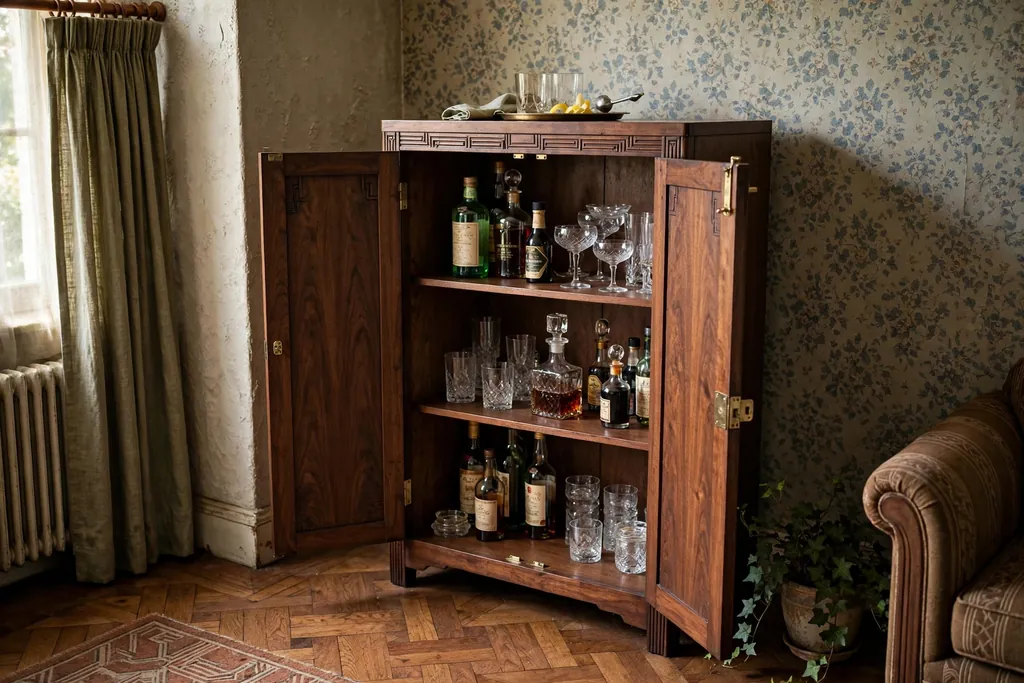
Fit a walnut drinks cabinet into a corner, with doors that open to reveal glassware, bottles, and a small tray. The drinks cabinet was a social centerpiece of 1930s homes, and it gives a corner a clear purpose without taking over the room. Keep the cabinet closed when not in use, so the room stays tidy, and open it only for serving.
Stock it with the glasses you actually use, plus a few special pieces for guests, rather than filling every shelf. Add a small tray on top for a jug and glasses, and keep the area around the cabinet clear so guests can stand there comfortably. If you do not drink alcohol, the same cabinet works for coffee, tea, or a collection of glasses and mixers.
10. Glass Fronted Built-In Bookcases
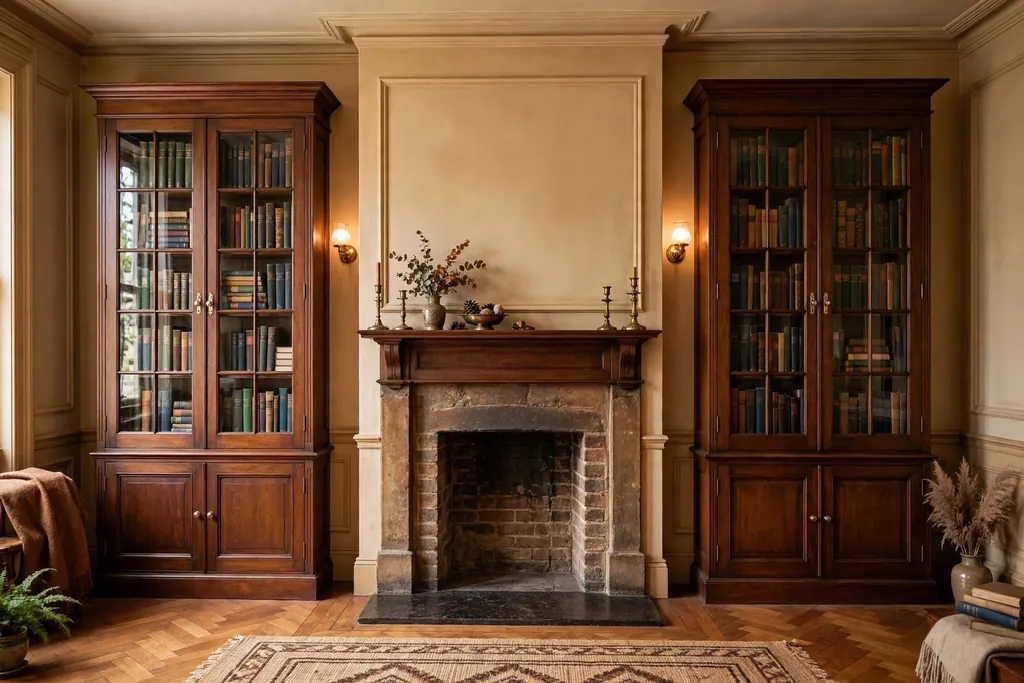
Use built-in bookcases with glass fronted doors, flanking the fireplace or filling one wall, for books, ceramics, and a few collected objects. Glass doors protect books from dust while keeping them visible, which suits a lived in room far better than closed cabinets. Paint the bookcases cream or keep them in walnut to match the rest of the furniture.
Group books by height, leave gaps between groups, and put heavier items low and lighter ceramics higher. Anchor tall bookcases to the wall, and check the shelf weight rating before loading them with books. A single run of glass fronted shelves on one wall is enough in most rooms, since spreading shelves around the room can make it feel busy.
11. Geometric Wallpaper on One Wall
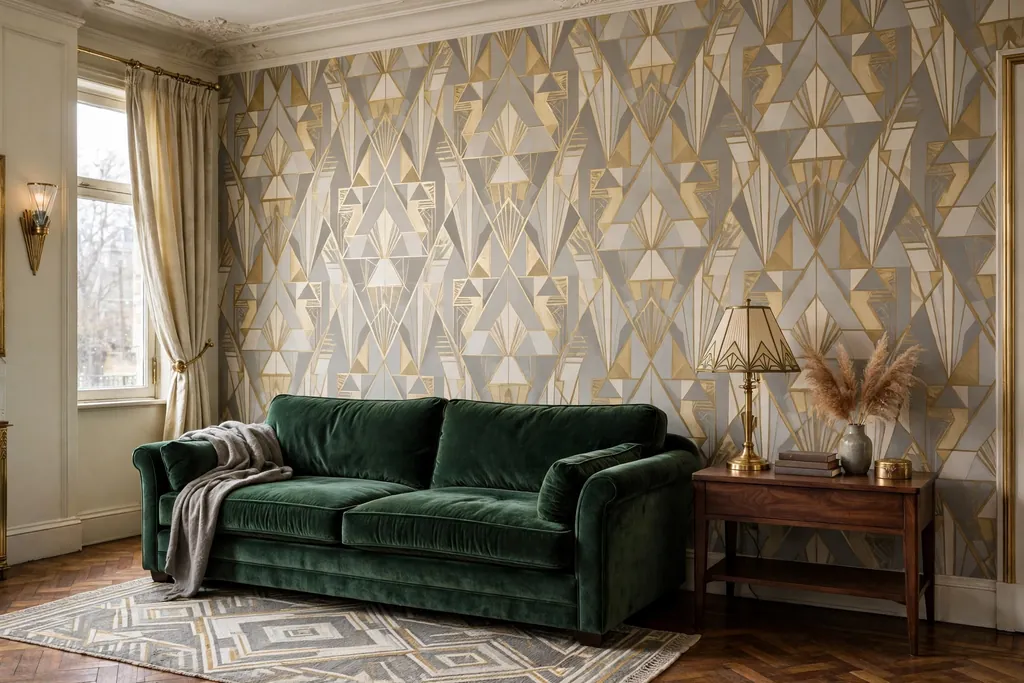
Paper one wall, usually behind the sofa, with a geometric wallpaper in muted gold, cream, grey, or teal. A 1930s pattern uses fans, diamonds, or stepped shapes in a regular repeat, and one wall gives the room a strong period note without overwhelming it. Keep the other walls plain and close in tone to the wallpaper background, so the pattern reads as a feature.
Order a sample first and check it in daylight and lamplight, since metallic papers shift a lot between the two. If wallpapering feels like a commitment, a large framed panel of the same paper, or a removable paper, gives a similar effect with less work. Pair the wall with plain cushions, since a patterned wall plus patterned cushions can compete.
12. Black Lacquer Accent Table
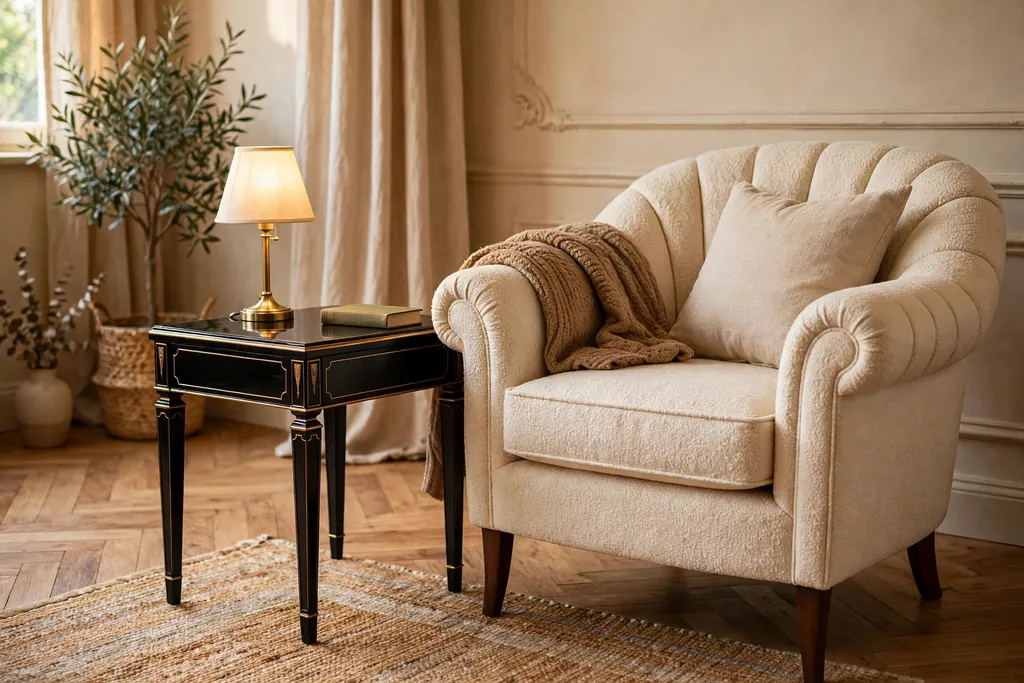
Add one black lacquer accent table, with slim gold trim or a brass handle, beside an armchair or at the end of the sofa. Black lacquer was a glamorous 1930s finish, and a single dark piece grounds a room of cream and walnut without making it feel heavy. Use it for a lamp, a book, or a cup, so it earns its place as furniture, not only as decoration.
Keep the table surface clear of clutter, since lacquer shows dust and rings. Wipe it with a soft cloth, and use a coaster under cups to protect the finish. One lacquer piece is enough in most rooms; a second can tip the balance from accent to theme, so let the rest of the side tables stay in wood or chrome.
13. Stepped Skyscraper Shelves
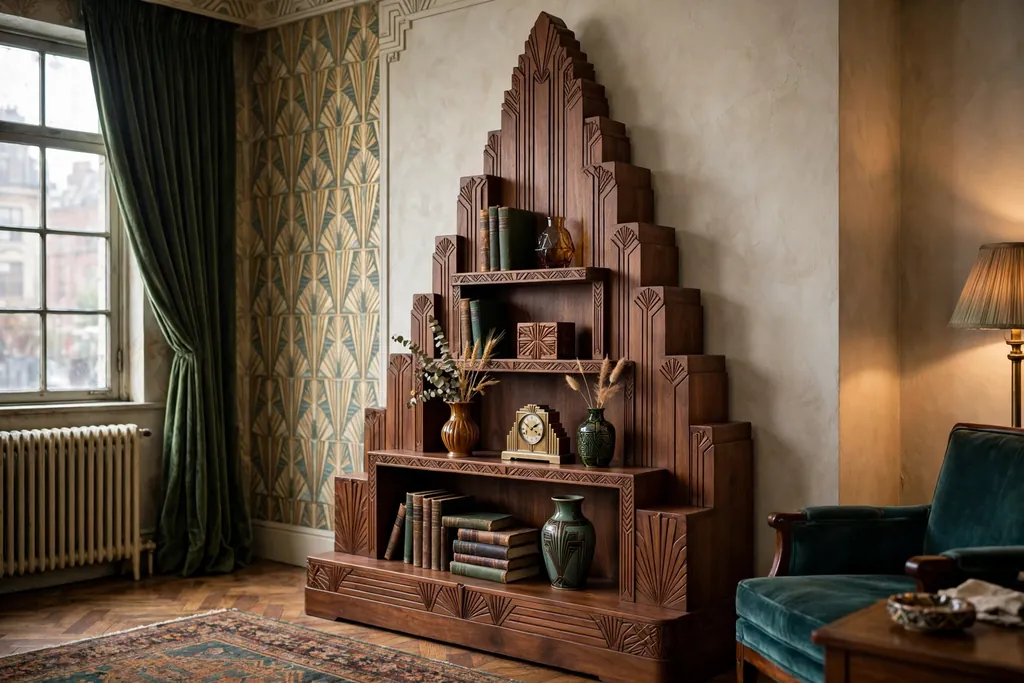
Fit stepped shelves shaped like a skyscraper silhouette, in walnut or painted wood, on a free wall for vases, books, and a small clock. The stepped skyline shape echoes 1930s architecture and gives display storage a clear period form, rather than a plain rectangle. Keep the objects on the shelves varied in height, with gaps between groups, so the steps stay visible.
Fix the shelves into studs or with fixings suited to your wall type, and put heavier items on the lower steps. A single stepped unit suits most rooms better than two, since the shape itself is strong. If wall shelves are not practical, a stepped side table or a small stepped bookcase gives the same silhouette at floor level.
14. Fan Motif Cushions and Throws
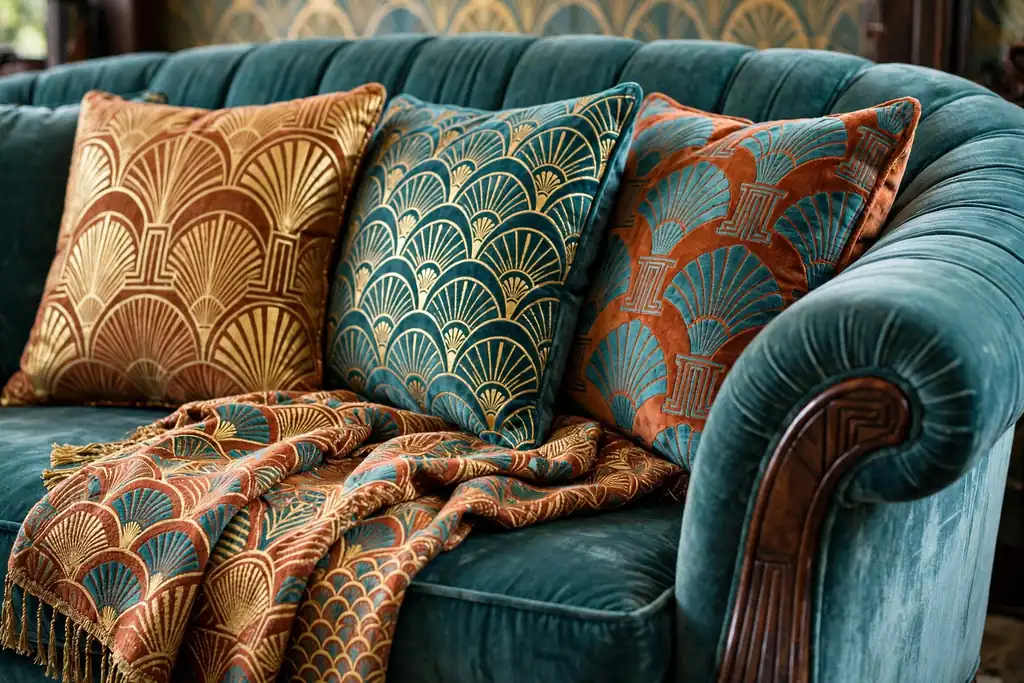
Dress the sofa with cushions and a throw in fan, scallop, or sunray motifs in gold, rust, and teal, mixed with plain velvet cushions. Textiles are the easiest way to add 1930s pattern, since they can be swapped with the seasons and cost far less than new furniture. Use two patterned cushions at most, with plain cushions beside them, so the pattern stays a note rather than a noise.
Choose washable covers where you can, since sofa textiles see daily use. Vary the texture as well as the pattern: one smooth velvet cushion, one woven cushion, and one knit throw give more interest than three identical pieces. Fold the throw over one sofa arm rather than draping it loosely, so the sofa still looks tidy when no one is sitting there.
15. Frosted Glass Torchiere Floor Lamp
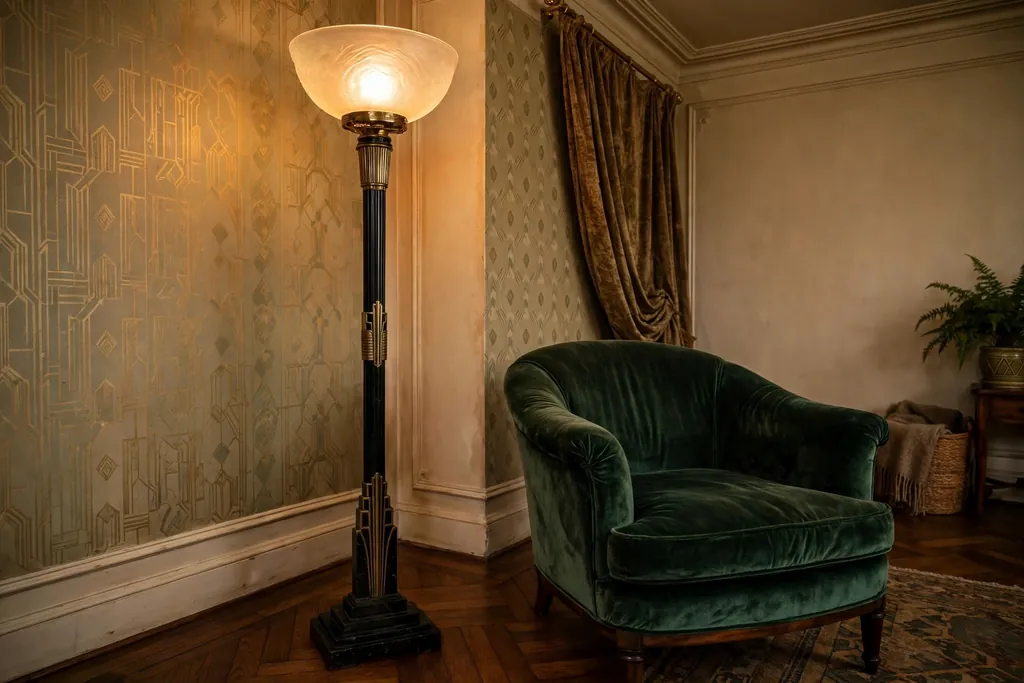
Stand a tall torchiere floor lamp with a frosted glass bowl shade in a reading corner, so light bounces off the ceiling and fills the room softly. The torchiere was a popular 1930s lamp shape, and its upward light suits low velvet seating and dark wood, which can otherwise feel dim. Place it behind one shoulder of a reading chair, not directly beside the television.
Use a warm white bulb and a dimmer if the lamp allows it, so the same lamp works for reading and for quiet evenings. Keep the base clear of walking routes, since tall lamps tip if brushed. A torchiere pairs well with the table lamps elsewhere in the room, giving light at two heights.
16. Herringbone Parquet Floor Left Visible
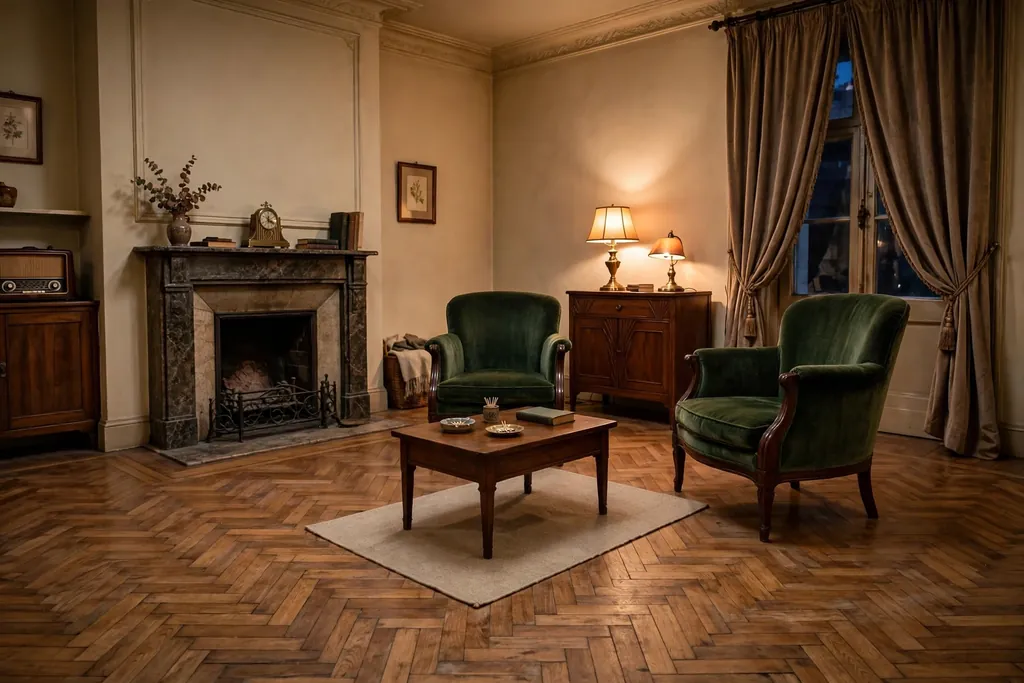
Let a herringbone parquet floor show, with rugs only where seating or walking needs softness, and a clear border of wood around each rug. Herringbone was a favored 1930s floor pattern, and the angled blocks add geometry to the room even before any furniture is added. Keep the floor clean with a method suited to its finish, and use felt pads under chair and table legs to limit scratches.
If your floor is not parquet, a herringbone pattern rug or a wood effect floor in a herringbone lay can suggest the same geometry. Keep the rug pattern plain where the floor already carries pattern, so the two do not compete. A visible wood floor also keeps a velvet heavy room from feeling too soft underfoot.
17. Gallery of Framed 1930s Travel Posters
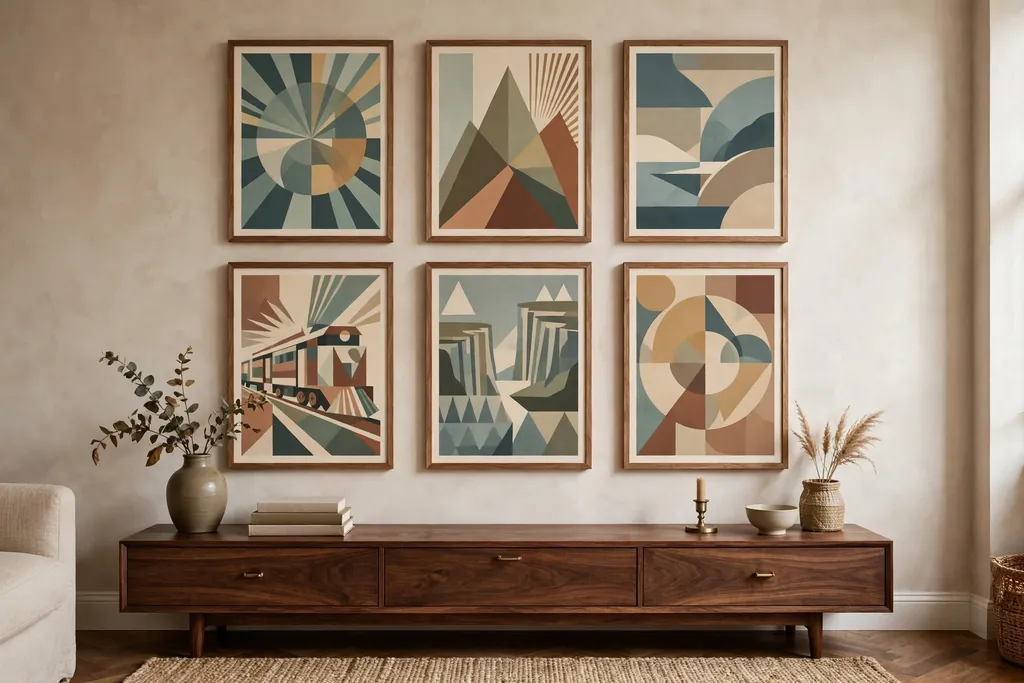
Hang a gallery of framed 1930s travel posters, in matching dark wood or brass frames, above a console or along one wall. Travel posters of the decade used bold shapes, flat color, and simple lettering, and they add color and history to a room without needing a large painting. Hang the center of the group at eye level when seated, and keep the outer edges inside the width of the furniture below.
Start with three or four posters and add over time, rather than filling the wall in one go. Use reproductions in muted tones that echo the room, such as a gold from the rug or a teal from a cushion, so the gallery feels planned. Picture ledges are a renter friendly option, since they let you lean frames and swap them without new holes each time.
18. Black and Cream Base with One Jewel Accent
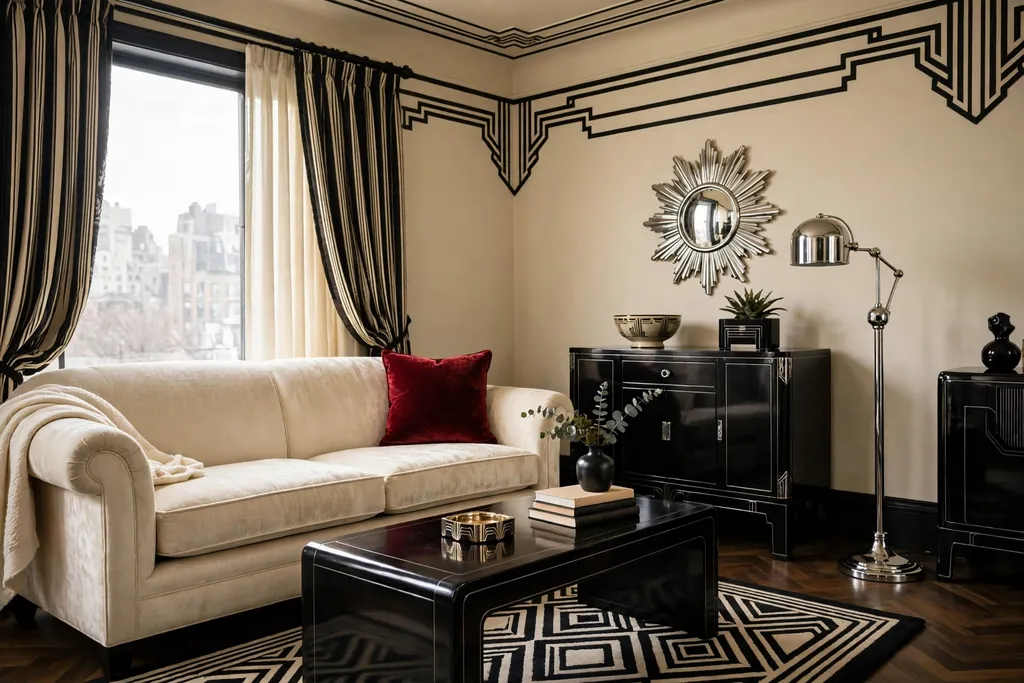
Build the room on a black and cream base, with cream walls and sofa, black lacquer or dark wood accents, and a single jewel accent such as emerald cushions or a burgundy throw. Black and cream was a defining 1930s palette, and one strong accent keeps it from feeling stark. Repeat the accent in three places, such as a cushion, a vase, and a book cover, so it reads as a plan.
Keep the black to furniture, frames, and small details, not to whole walls, since a black wall can shrink a room. Cream, rather than bright white, suits walnut and brass better and keeps the room warm. If the jewel accent starts to spread beyond three spots, pull it back to cushions and one throw, and let the black and cream base lead again.
19. Glass Brick Divider to the Dining Area
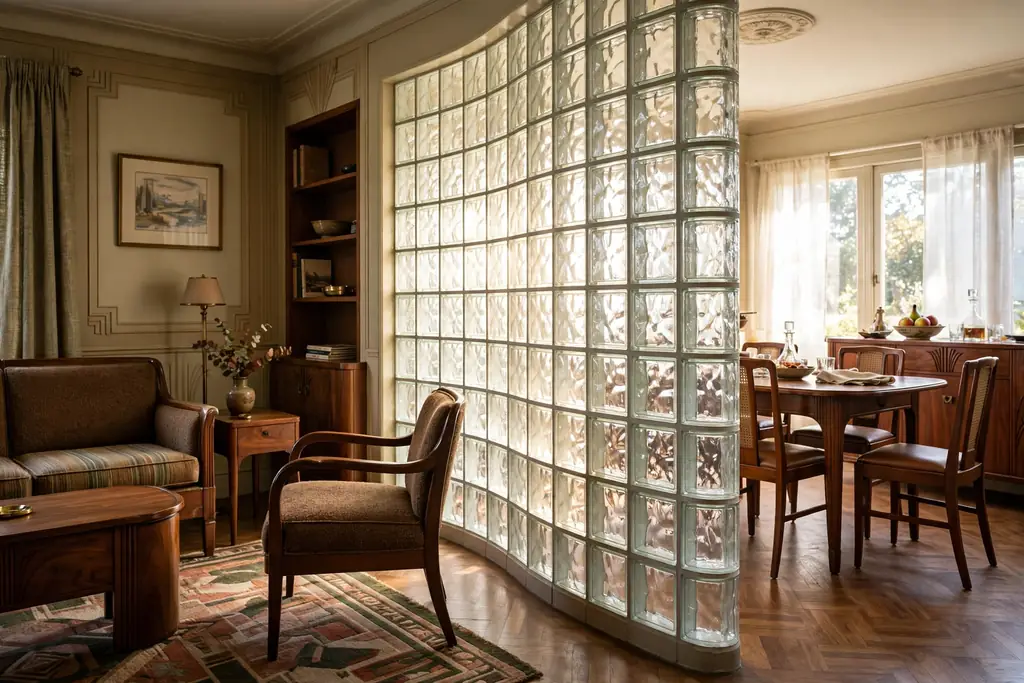
Use a curved glass brick partition between the living and dining areas, where a full wall would block light. Glass bricks were a modern 1930s material, and they divide a room while letting daylight through, which suits open plan homes and flats. Keep the divider low or partial, rather than floor to ceiling, so conversation still flows across it.
Check that the divider is stable and fixed properly, since glass bricks are heavy, and keep furniture clear of its base. If building a glass brick wall is too much work, a glass brick lamp base or a small glass brick panel beside a doorway gives a similar glowing note. Pair the divider with plain furniture on both sides, so the bricks stay the feature.
20. Record Listening Corner
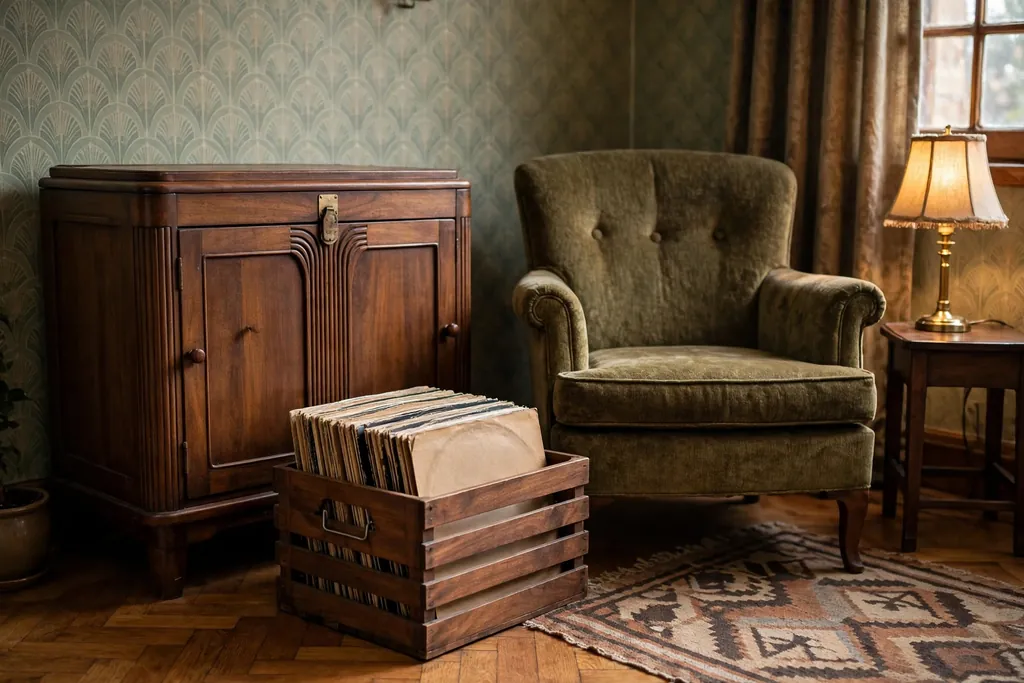
Make a listening corner with a wooden record player cabinet, records stored in a walnut crate or on low shelves, and an armchair with a lamp nearby. Music was a central pleasure of 1930s living rooms, first through the radio and the gramophone, and a listening corner gives that habit a proper home. Place the chair where the sound is clear, not tucked against a wall that muffles it.
Keep records upright, out of direct sun, and away from radiators, since heat and damp warp them. Add a small table for the record sleeve you are playing, and keep the crate or shelf within reach of the chair. If you stream music instead, the same corner works with a small speaker hidden on a shelf and the armchair kept as the listening seat.
21. Venetian Blinds with Sheer Side Curtains
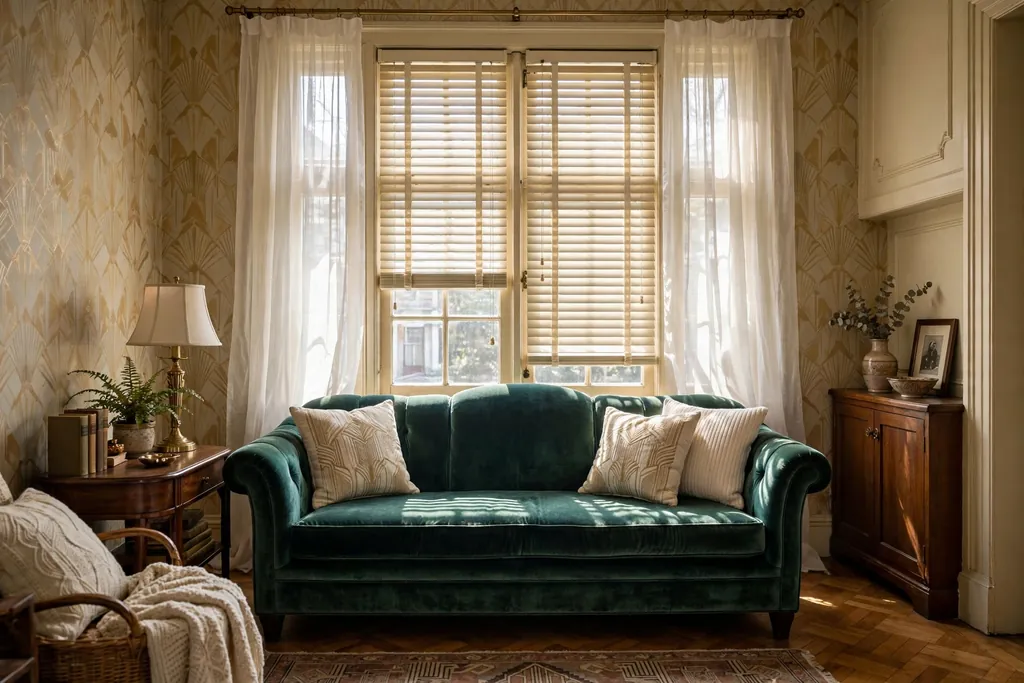
Dress windows with cream or white venetian blinds, plus sheer side curtains in linen or voile, so daylight filters in softly and privacy is easy to adjust. Venetian blinds were a practical 1930s window treatment, and the slats let you control glare without shutting out light. Hang the sheers from a simple rod in wood or brass, falling straight to the sill or floor.
Tilt the slats to bounce daylight onto the ceiling by day, and close them in the evening for privacy. Dust the slats regularly, since pale blinds show dust faster than a darker curtain. If your windows are small, blinds alone, without heavy curtains, keep the wall feeling open and the room brighter.
22. Bay Window Seat with Buttoned Cushions
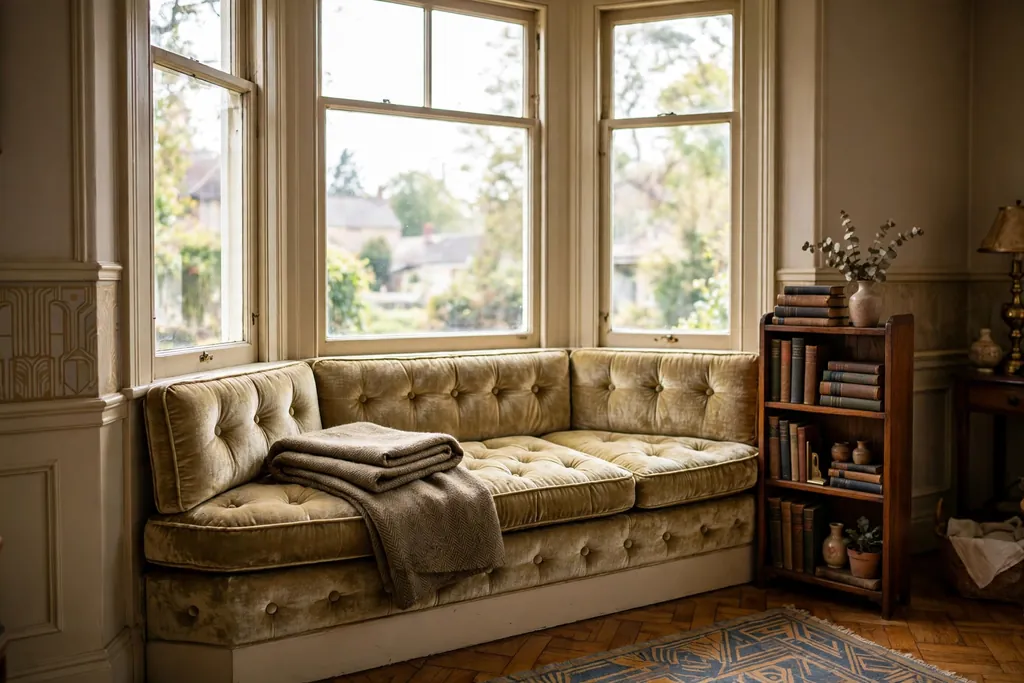
Build a bay window seat with buttoned cushions in muted gold or rust fabric, a folded throw, and a small shelf for books beside it. Many 1930s homes have bay windows, and a seat there turns an awkward corner into the most used spot in the room. Buttoned cushions suit the decade, and they stay in place better than loose cushions on a window seat.
Add storage under the seat for throws, games, or children’s toys, so the seat stays tidy. Keep the window seat clear of clutter, with one cushion stack and one throw, and check that the seat fabric fades slowly in direct sun or can be covered. A bay seat also gives guests an extra place to sit without adding another chair to the room.
Conclusion
A 1930s living room works best when warm materials, clean geometry, and soft light do the work together. Start with one strong piece, such as a walnut sideboard, a velvet sofa, or a geometric rug, then add smaller period notes in lighting, textiles, and wall art. Keep seating arranged for conversation, keep the palette to black, cream, walnut, and one jewel accent, and let the room stay easy to live in rather than perfect to look at. Pick the idea that fits your room today, whether that is a sunburst mirror, a drinks cabinet, or a bay window seat, and build from there. Save this guide on Pinterest to come back to when you are ready for the next change.
FAQs
1. What defines a 1930s living room?
A 1930s living room mixes streamlined Art Deco shapes with comfortable, lived in furniture. Look for low rounded sofas, walnut veneer, chrome and glass, geometric patterns such as fans and zigzags, mirrors, and warm layered lighting, rather than heavy Victorian furniture or stark modern minimalism.
2. How do I add 1930s style without buying all new furniture?
Start with textiles and lighting, which cost less than furniture. Add fan pattern cushions, a geometric rug, brass lamps, and a sunburst mirror, and keep your existing sofa and tables simple around them. One walnut or black lacquer piece, found secondhand, can anchor the look while the rest of the room stays as it is.
3. What colors suit a 1930s living room?
Cream, black, walnut brown, and muted gold form the classic base, with one jewel accent such as emerald, burgundy, navy, or teal. Keep the base calm and repeat the accent in three places, such as cushions, a vase, and a throw, so the room feels planned rather than colorful at random.
4. Is velvet practical for a 1930s sofa in a busy home?
Velvet suits a busy home better than many people expect, since it brushes clean and hides wear in its pile. Choose a velvet with a rub rating suited to daily seating, keep throws on the most used seats, and brush the sofa weekly to keep the pile even. Washable cushion covers help in homes with children or pets.
5. Can 1930s decor work in a small living room?
Yes, if you choose low, rounded pieces and light reflecting materials. A glass top coffee table, a sunburst mirror, and pale walls keep a small room feeling open, while a geometric rug defines the seating zone without adding bulk. Avoid tall, dark bookcases on every wall, and use one feature wall or one patterned rug instead of both.
6. How is 1930s style different from Art Deco style?
Art Deco is the decorative style of the 1920s and 1930s, known for bold geometry, glamour, and luxury materials. A 1930s living room uses Art Deco details, such as stepped shapes and fan motifs, but in a softer, more domestic form, with rounded seating, walnut wood, and practical storage that suits everyday family life.