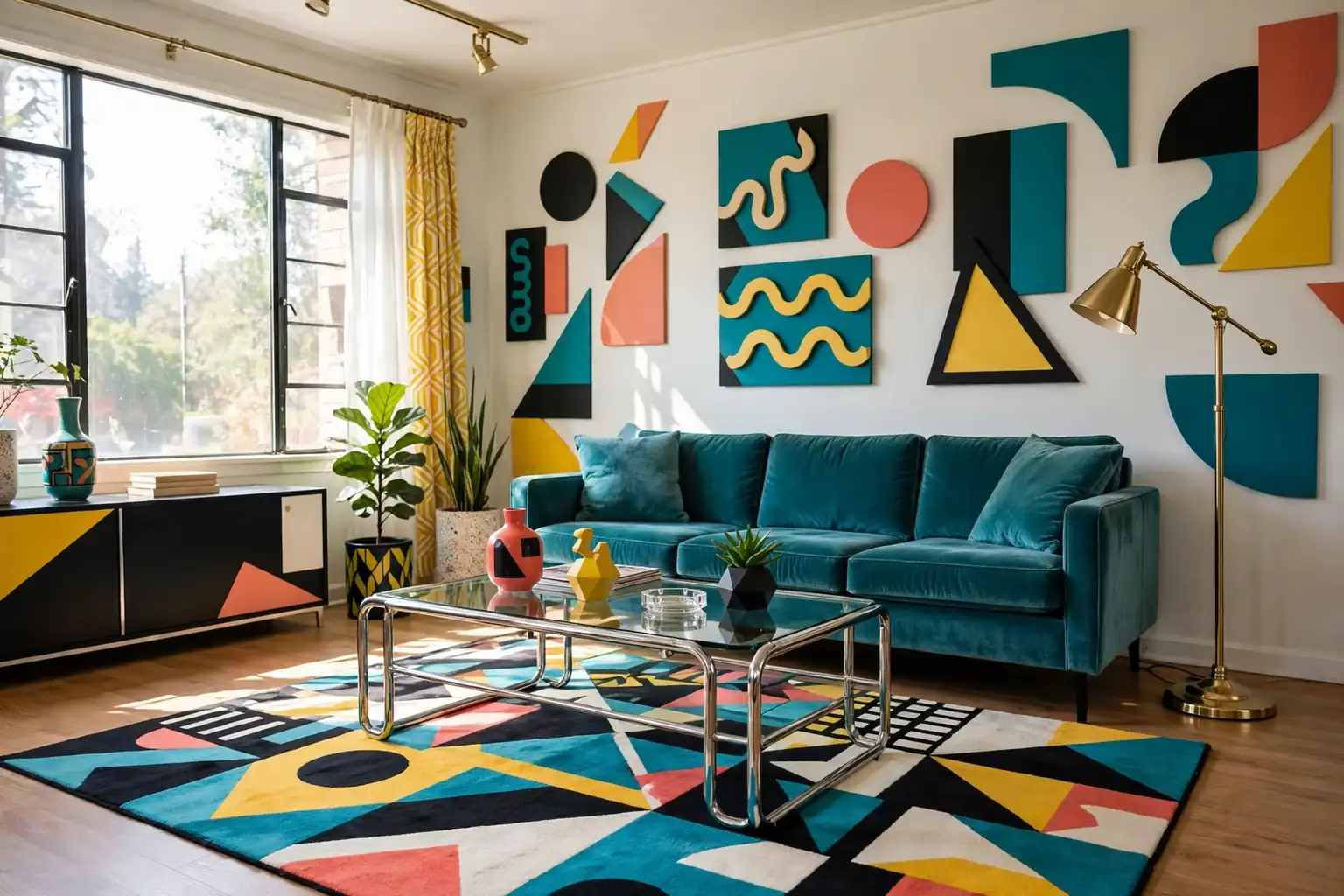
The 1980s living room was confident about color, shape, and shine. Memphis patterns sat next to chrome, pastel walls met black lacquer, and a neon glow could share a room with a rattan chair. That mix is why the decade still works today: it gives a room clear character without needing a full remodel. These 28 80s living room decor ideas pull out the pieces that still feel fresh, from glass block and geometric rugs to velvet sofas and arc lamps. Pick one strong retro move, keep the rest of the room calm, and let the decade show up in details you enjoy every day.
Key Takeaways
- Start with one strong 80s move, such as a Memphis wall, a chrome table, or a bold rug, and keep the rest of the room calm so the retro detail reads clearly.
- Balance shine with softness: pair chrome, glass, and lacquer with velvet, rattan, or a plush rug so the room feels lived in rather than hard.
- Use the 80s palette in doses: teal, mauve, peach, and black work best when one color leads and the others appear in cushions, art, or a throw.
- Let pattern do one job at a time: one geometric rug, one patterned wall, or one set of bold cushions is enough in a single seating group.
- Keep lighting layered: track lights or an arc lamp for general light, plus a neon accent or table lamps for evening mood.
- Choose retro pieces that still work hard, such as a bar cart, a media unit, or a sturdy rattan chair, rather than decoration with no job to do.
1. Memphis Style Geometric Accent Wall
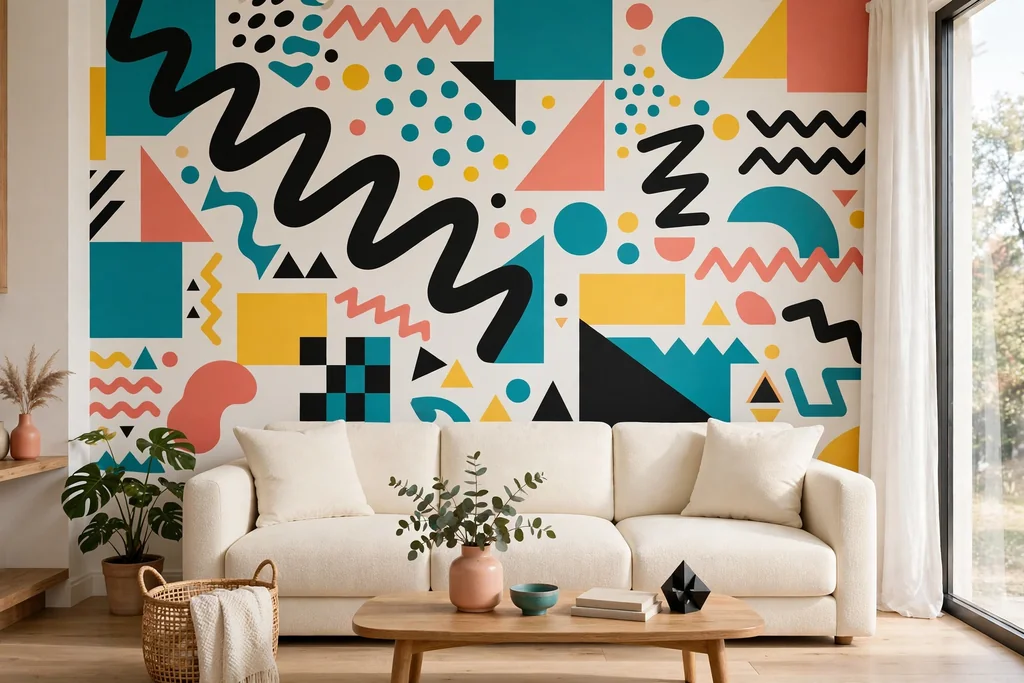
Paint or paper one wall with Memphis style shapes: squiggles, dots, triangles, and bold blocks of teal, black, yellow, and coral on a pale ground. The pattern gives the room an instant 80s identity, and because it stays on one wall, the rest of the room can stay simple. Keep the sofa and rug plain so the wall leads, and repeat one of its colors in a cushion or a vase.
Use removable wallpaper or painted panels if you want to test the look first, and keep the shapes large and spaced out so the wall reads as art rather than clutter. This suits a plain white room that needs a focal point, and it works best behind a sofa or a media unit where furniture grounds the pattern.
2. Color Block With Teal, Mauve, and Peach
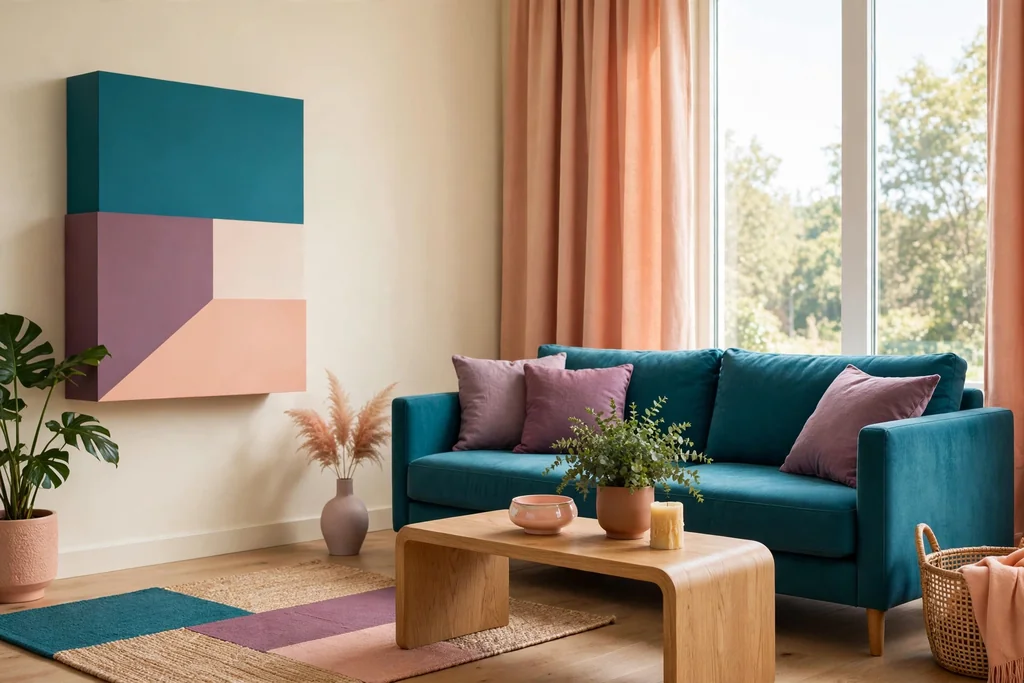
Color blocking is the fastest way to get an 80s palette without repainting the whole room. Pair a teal sofa or accent chair with mauve cushions and peach curtains, or paint one wall teal and bring mauve and peach in through art and throws. The three colors were a classic 80s trio, and together they feel warm, soft, and a little playful.
Keep the largest piece in the calmest tone of the three, and let the brighter color appear in smaller doses. If a full teal sofa feels like a big step, start with a neutral sofa and color block through cushions and a throw, using the same approach as the neutral sofa pairings in these grey couch living room ideas.
3. Glass Block Divider Wall
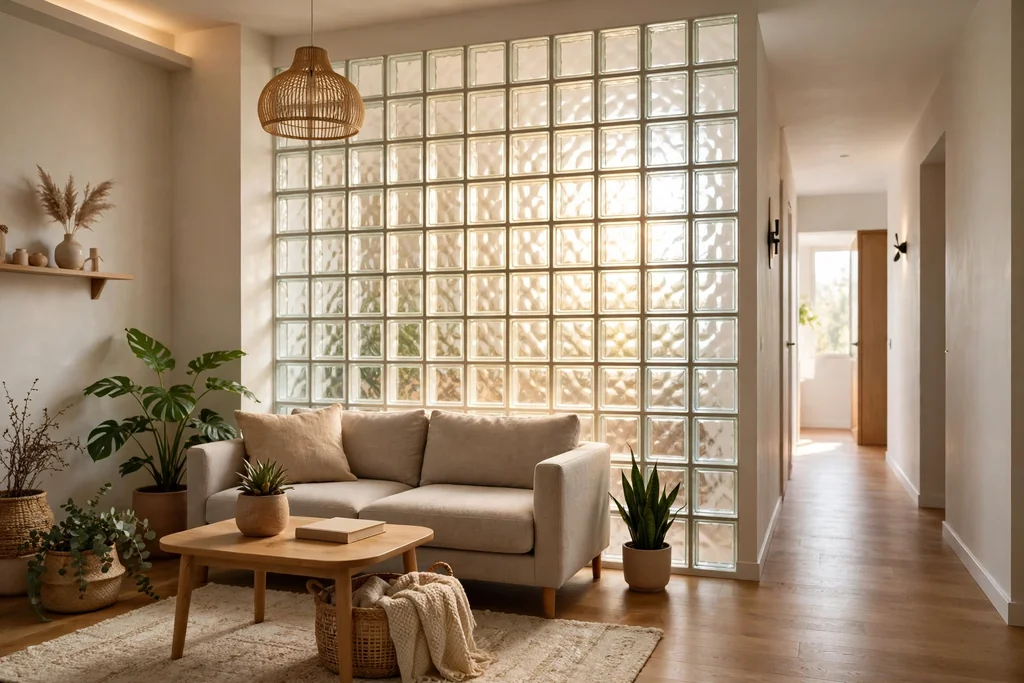
A glass block wall divides a living room from a hallway or dining area while still letting light through, which is exactly why it was so popular in the 80s. The blocks glow in daylight, give privacy without a solid wall, and add a grid pattern that suits both retro and modern rooms. Use a half height divider beside a seating group, or a full panel beside a front door.
Set the blocks in a simple straight grid and keep the frame slim and dark or chrome for a clean finish. For more ways to zone an open room without closing it off, see these small living room dining room combo ideas. Wipe the blocks often, since dust shows on glass, and keep furniture clear of the divider so light can pass.
4. Chrome and Glass Coffee Table
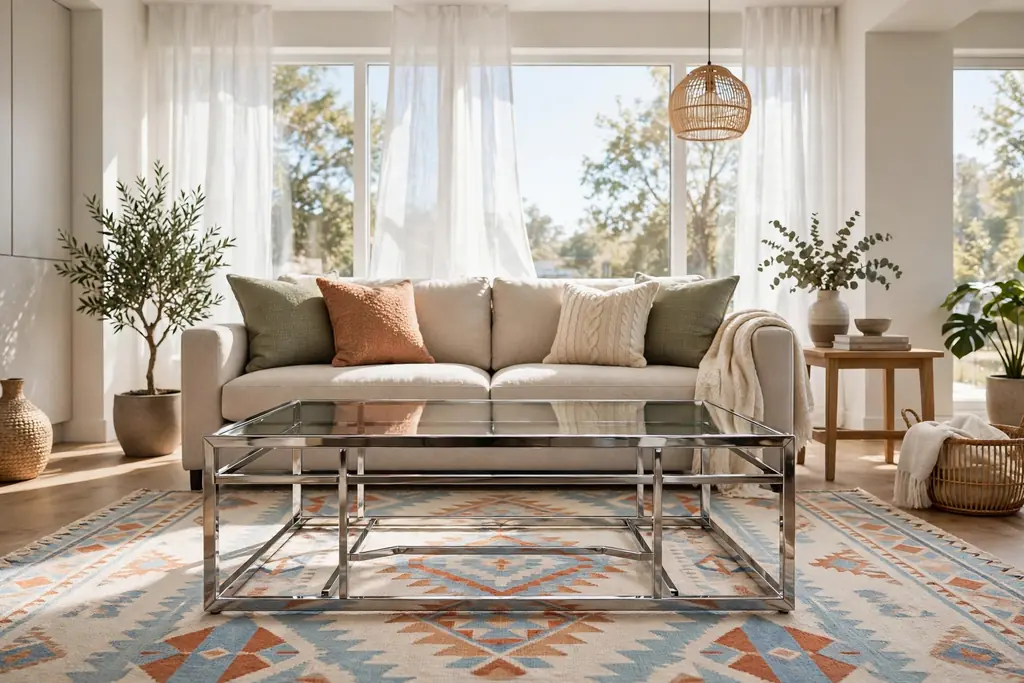
A chrome frame with a clear glass top is the signature 80s coffee table, and it still earns its place because it looks light in a small room. The glass top keeps the rug visible, the chrome adds shine, and the simple frame suits a bold sofa or a patterned rug without competing with either. Choose a rectangular table for a standard sofa, or a round one to soften a room full of straight lines.
Keep the tabletop mostly clear, with one book and one small tray, since clutter shows through glass. Clean the glass with a dry cloth before guests arrive, and use coasters under hot drinks to protect the surface. A chrome and glass table pairs well with black lacquer, brass, or rattan nearby.
5. Neon Sign as Evening Art
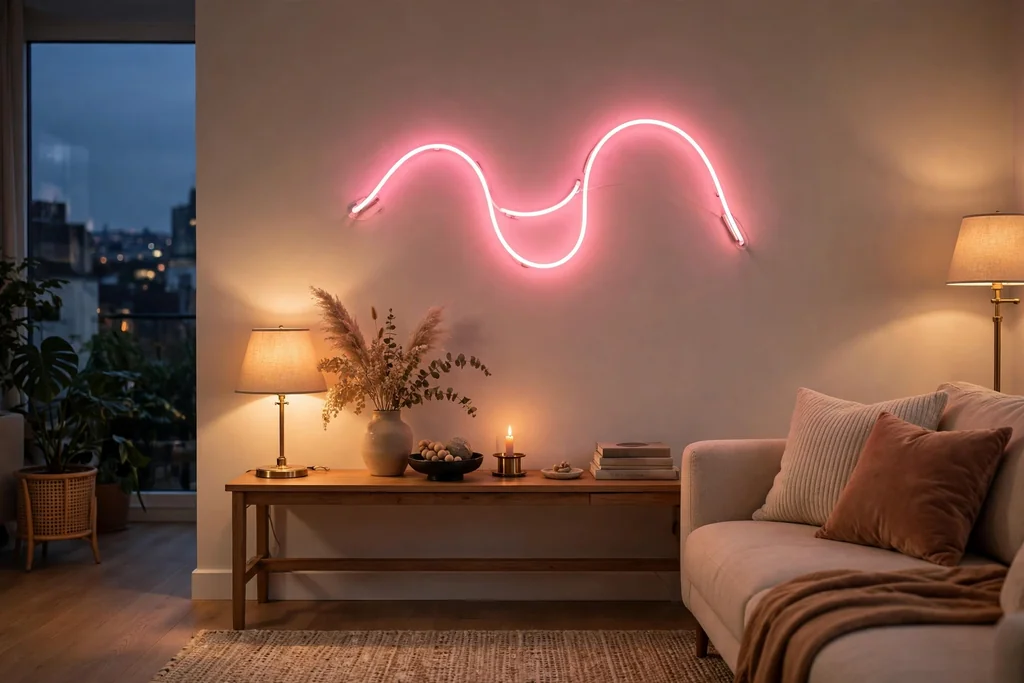
A neon sign in a single word or simple shape gives a living room its evening mood in one piece. Pink, teal, or warm white neon suits the 80s look, and it works best on a plain wall above a console or beside a bar cart, where it can glow without competing with other art. Choose a short word that means something to your household, rather than a generic phrase.
Hang the sign at eye level, keep cables tidy with clips, and put it on a dimmer or timer so it does not stay bright all night. Neon is an accent, not the main light, so keep table lamps or track lights for reading and general use. Check the sign is rated for home use and follow the maker guidance for mounting.
6. Pastel Peach and Mint Room
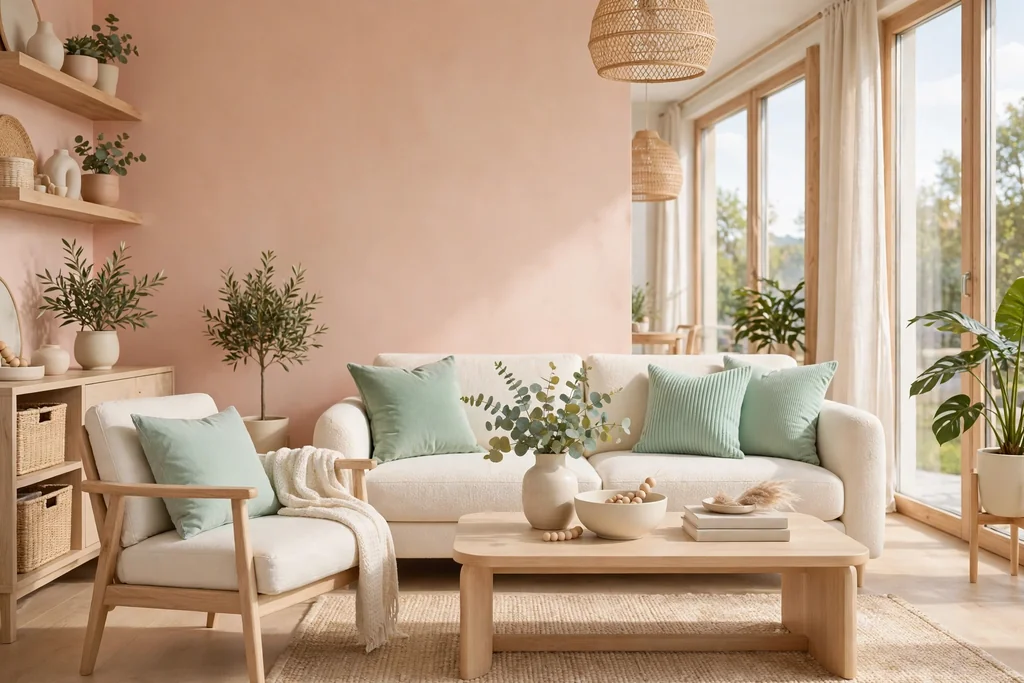
Peach walls, mint cushions, and cream furniture give a softer side of 80s style, and it suits rooms that need to feel light rather than loud. Paint the walls a warm peach or pale mint, then repeat the other pastel in cushions, curtains, and art. Cream or pale wood furniture keeps the pastels from looking sugary, and one darker piece, such as a black frame or a wood table, grounds the scheme.
Test pastel paint in daylight and lamplight before committing, since peach can turn orange under warm bulbs. Keep the pattern count low: one striped cushion or one geometric throw is enough. This palette suits a bright room with white trim, and it pairs well with rattan and light wood.
7. Bold Geometric Patterned Rug
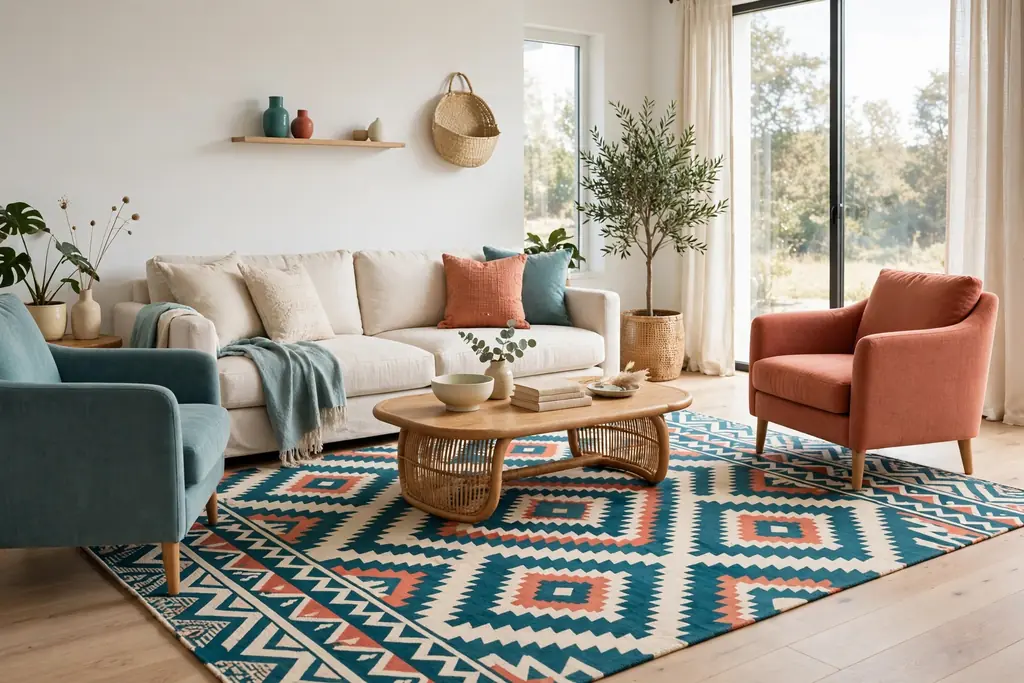
A rug in bold geometric shapes, such as diamonds, zigzags, or color blocked squares, anchors an 80s seating group and sets the color story for the whole room. Choose a rug large enough for the front legs of the sofa and chairs to sit on it, and pick one or two colors from the rug to repeat in cushions or art. The pattern should be the loudest piece in the group, with the sofa and curtains kept plain.
For sizing and placement first, these living room rug ideas cover how to fit a rug to a seating group. A flatweave rug suits a busy room, since it is easy to clean and chairs slide over it, while a thicker pile suits a quiet reading corner. Vacuum patterned rugs often, since dust dulls strong colors faster than plain ones.
8. Track Lighting Across the Ceiling
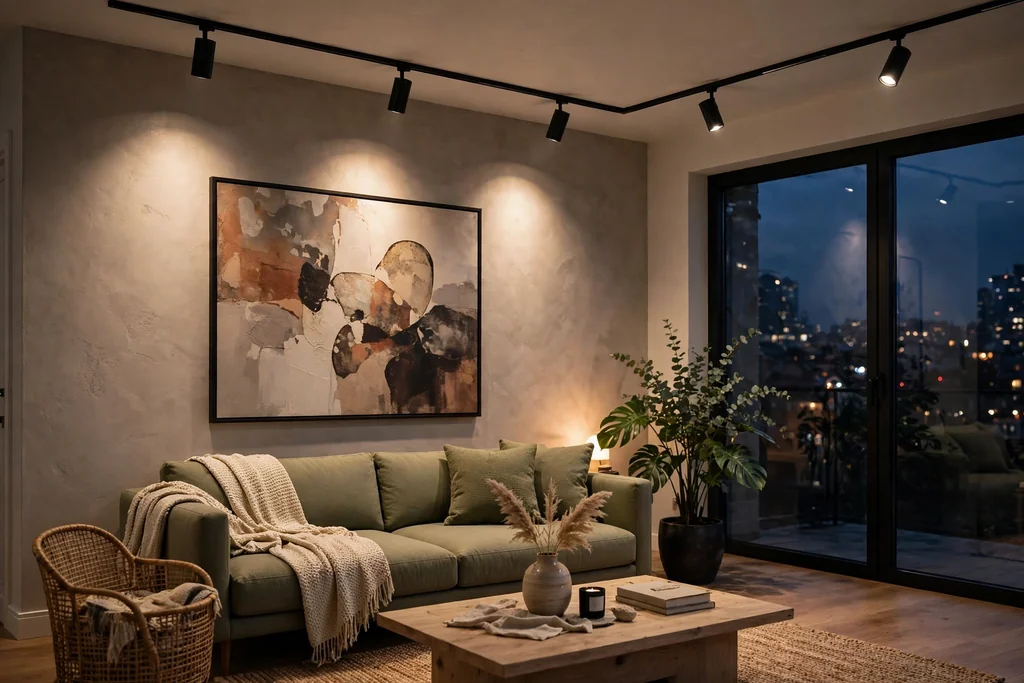
Track lighting was a practical 80s choice that still works: one track, several adjustable heads, and light aimed exactly where you need it. Run a straight track across the ceiling above the seating group, aim one head at the art, one at the sofa, and one at a plant or shelf, and the room gains both general light and clear focal points. Black or chrome tracks suit the retro look, and warm bulbs keep the light soft.
Fit a dimmer if your wiring allows it, so the same track can shift from bright daytime use to soft evening light. Keep the track straight and centered on the seating group, not pushed against a wall, and dust the heads now and then since they sit at eye level from a staircase or landing.
9. Mirrored Wall Panels
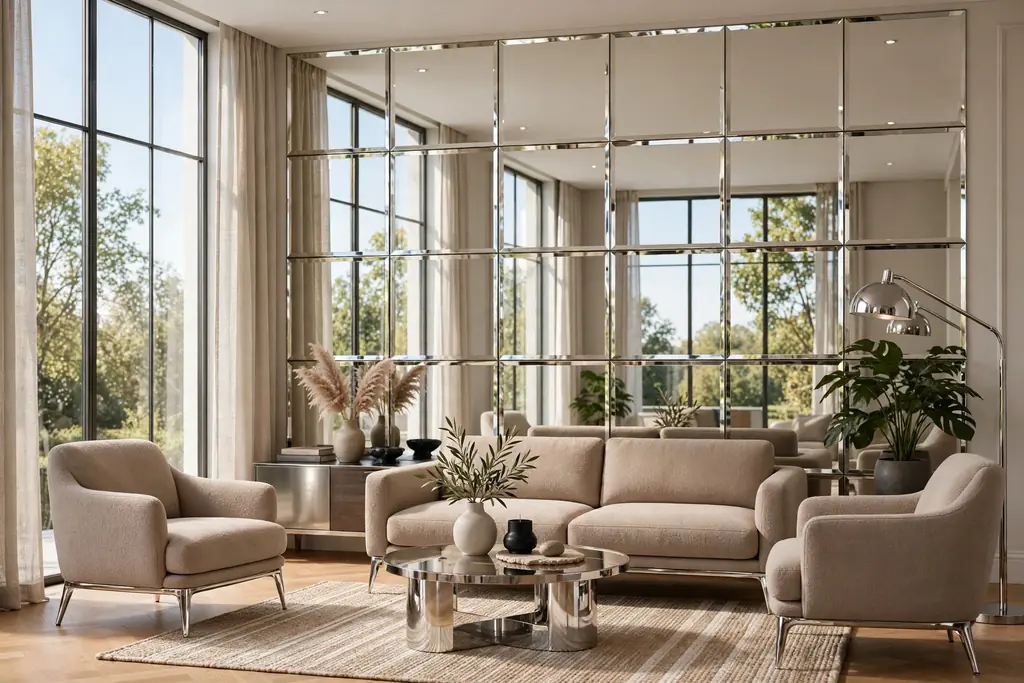
Mirrored panels on one wall make a living room feel larger and brighter, and they were a classic 80s way to add glamour without new furniture. Use a grid of square mirror tiles or a set of tall mirrored panels behind a sofa or beside a dining area, with slim chrome or brass strips between them. The mirrors bounce daylight and lamplight, and they reflect the rug and art so the room feels layered.
Hang mirrors where they reflect a window or a pleasant view, not a cluttered corner or a television screen. Keep the frame finish consistent with other metals in the room, and clean the panels with glass cleaner and a lint free cloth. Mirrored panels suit a smaller room most, where the extra sense of depth matters.
10. High Gloss Black Lacquer Media Unit
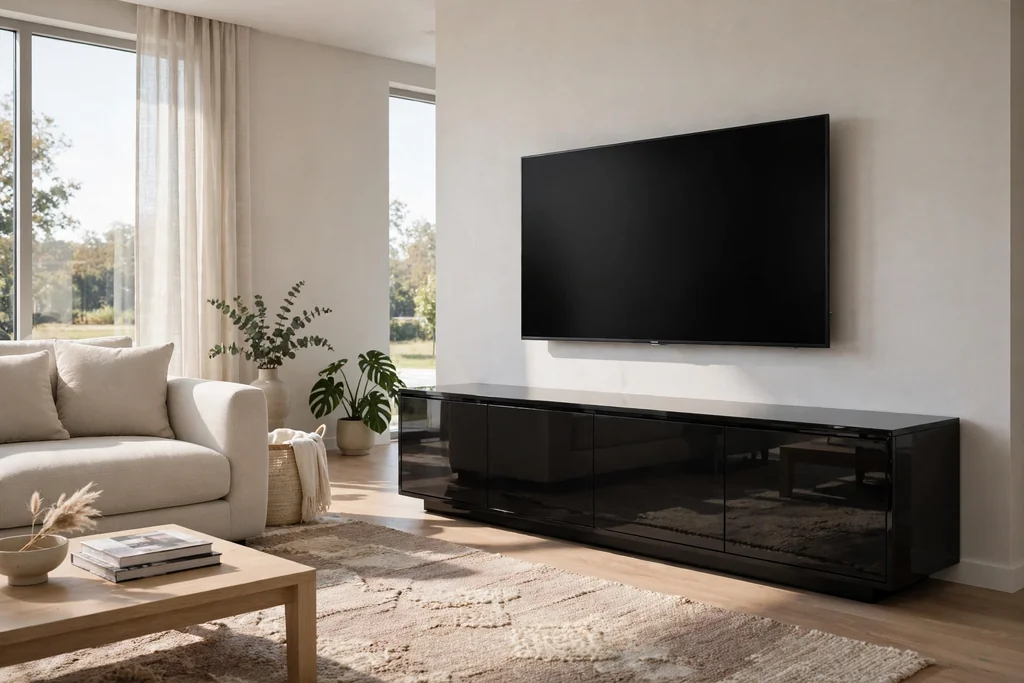
A low, high gloss black lacquer unit under the television gives a living room its 80s polish and hides cables, games, and media in one place. The shine suits chrome, glass, and brass nearby, and the dark color anchors a pale wall or a bold rug. Choose a unit long enough for the television plus a little spare width on each side, with doors or drawers rather than open shelves so clutter stays hidden.
Keep the top mostly clear, with one vase or one stack of books, since dust and fingerprints show on gloss black. Wipe it with a soft cloth, and leave ventilation gaps around any equipment that gets warm. A lacquer unit pairs well with a pastel wall or a Memphis accent, since the black gives the eye a rest.
11. Rattan Peacock Chair Corner
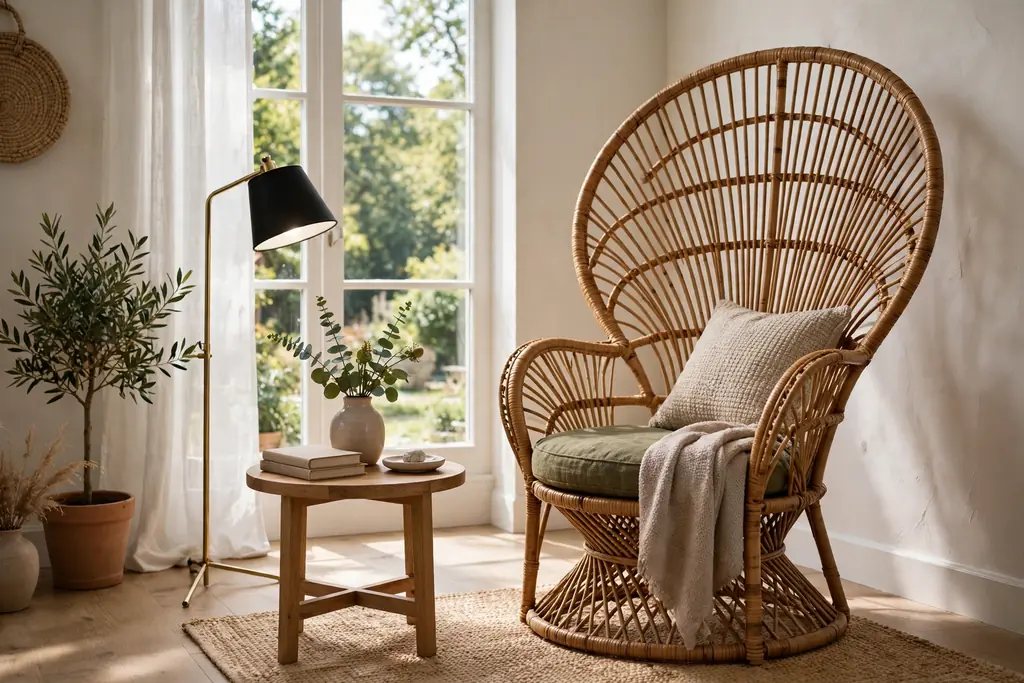
A rattan peacock chair, with its tall fanned back, makes a reading corner feel special with a single piece of furniture. Place it by a window with a small side table and a floor lamp, add one plain cushion for comfort, and the corner becomes a spot for reading, calls, and quiet coffee. The natural rattan softens the harder 80s materials, such as chrome and glass, and it suits both pastel and bold rooms.
Check the chair is sturdy before buying secondhand, since old rattan can dry out and crack. Keep it out of direct sun and damp, dust the weave with a soft brush, and use a plain cushion rather than a patterned one so the chair shape stays the focus. One peacock chair is enough; two can crowd a small room.
12. Warm Wood Panelled Feature Wall
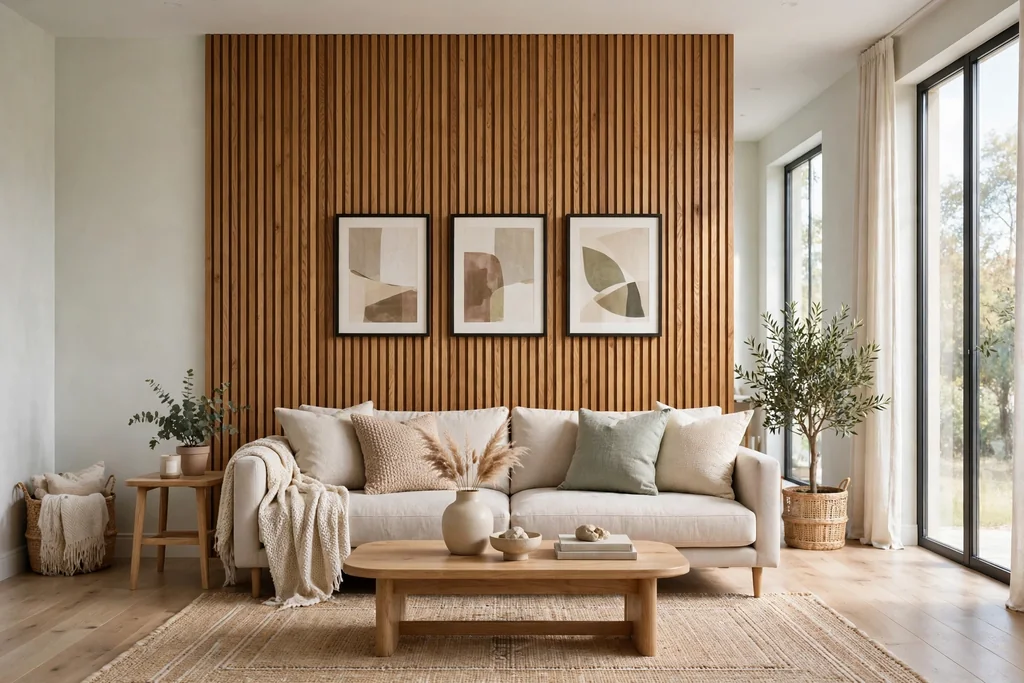
Wood panelling in a warm oak or walnut tone was a staple 80s backdrop, and it still adds warmth to a room full of chrome and glass. Panel one wall behind the sofa or television, using vertical slats or flat panels with a clear finish that shows the grain. The wood softens bold color and gives art and a mirror a rich background to sit against.
Keep the rest of the walls pale so the panelled wall stands out, and repeat the wood tone in one other piece, such as a coffee table or a shelf. Seal the panels as the maker directs, and dust the grooves with a dry cloth. This idea suits a room that feels cold or echoey, since wood adds both warmth and a little sound softening.
13. Brass and Gold Metallic Accents
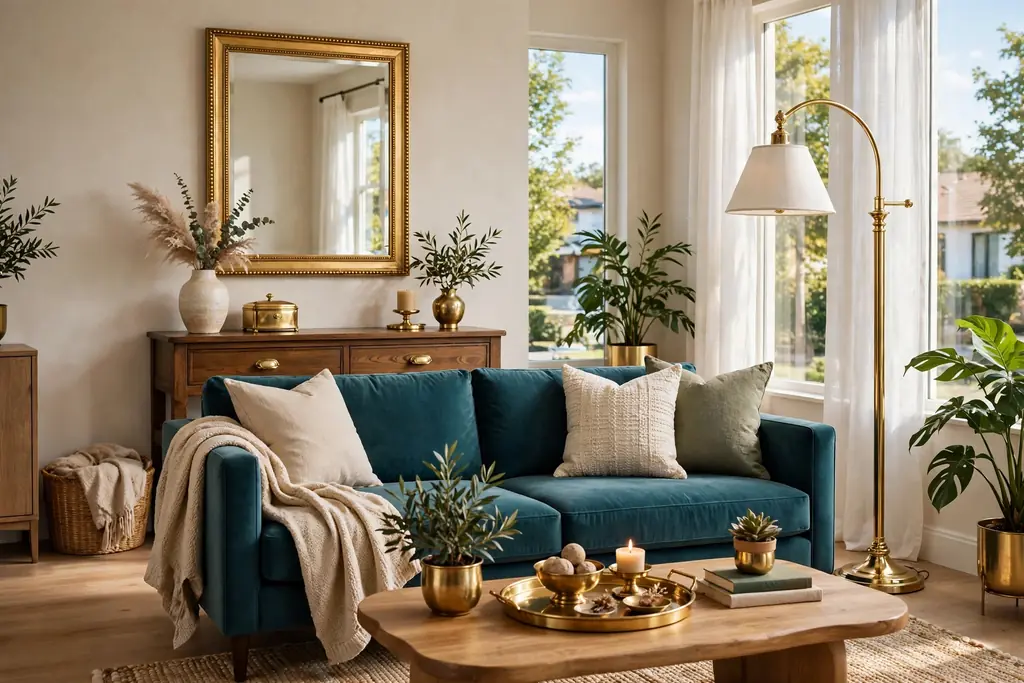
Brass and gold details, such as a floor lamp, picture frames, a mirror edge, and a tray, add the warm metallic shine that ran through 80s living rooms. Use the same metal finish across two or three pieces so the room looks planned, and keep the rest of the metals quiet: chrome for the coffee table frame is fine, but a third metal can make the room look busy. Brass suits teal, mauve, black, and cream alike.
Polish brass now and then, since fingerprints dull it fast, and keep lacquered brass away from harsh cleaners. A brass floor lamp beside the sofa, a gold framed mirror above a console, and a small brass tray on the coffee table are often enough. If the room already has a lot of pattern, keep the brass shapes simple.
14. Oversized Abstract Art
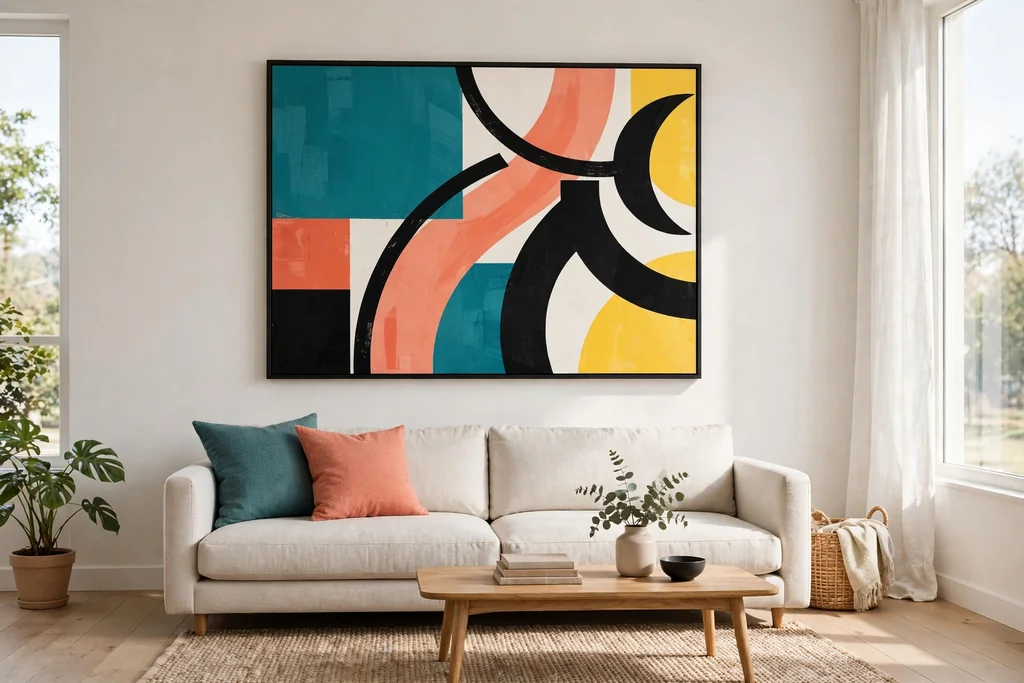
One large abstract print, with bold blocks, arcs, or brushstrokes in 80s colors, gives a living room a clear focal point without a gallery wall. Hang it above the sofa with its center at eye level when seated, and keep its outer edges inside the width of the sofa so the wall does not look wider than the seating. The art should pick up at least one color already in the room, such as a cushion or rug tone.
Choose a simple frame in black, white, or wood, since a busy frame competes with a bold print. One large piece suits a plain wall best; if the wall already has a Memphis pattern or wallpaper, keep the art smaller and simpler. Rotate art by season if you like change, and hang it with fixings suited to its weight.
15. Bold Patterned Wallpaper on One Wall
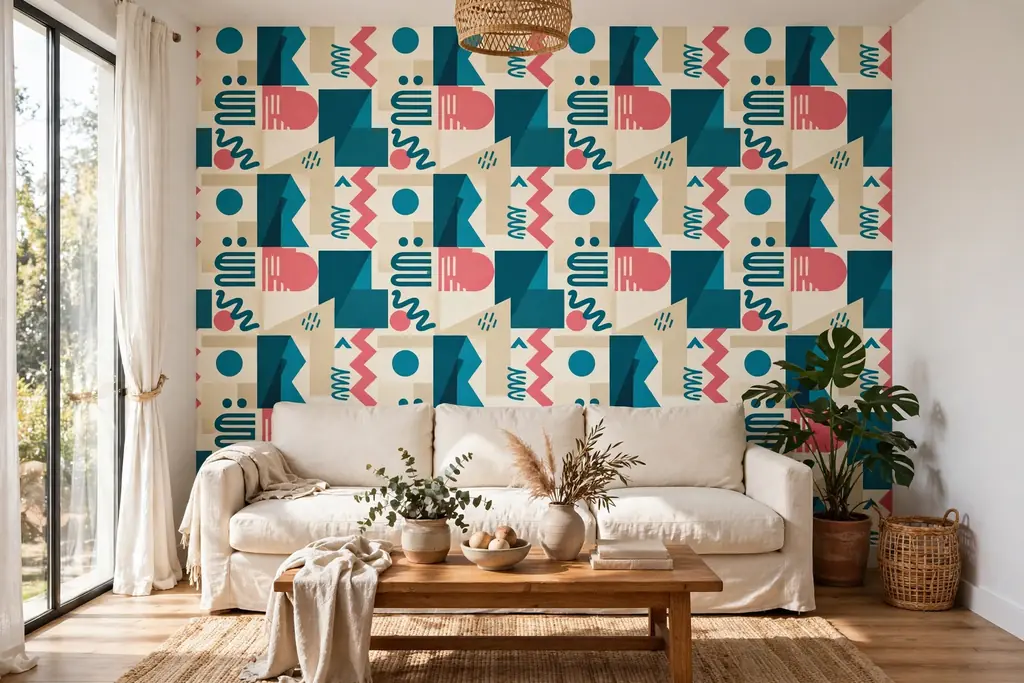
Bold 80s wallpaper, with large geometric repeats, arches, or palm shapes in teal, coral, and cream, brings the decade to a room in one wall. Paper the wall behind the sofa or the television, keep the other walls plain, and let the sofa and rug stay quiet so the pattern leads. Large scale patterns suit a larger wall, while a smaller repeat suits a narrow wall or an alcove.
Use paste the wall paper or removable paper if you want an easy change later, and match the pattern carefully at the seams. Keep art on a wallpapered wall to one simple piece, or none at all, since the paper already carries the detail. This idea suits a rental too, if you choose a removable paper and test a corner first.
16. Jewel Tone Velvet Sofa
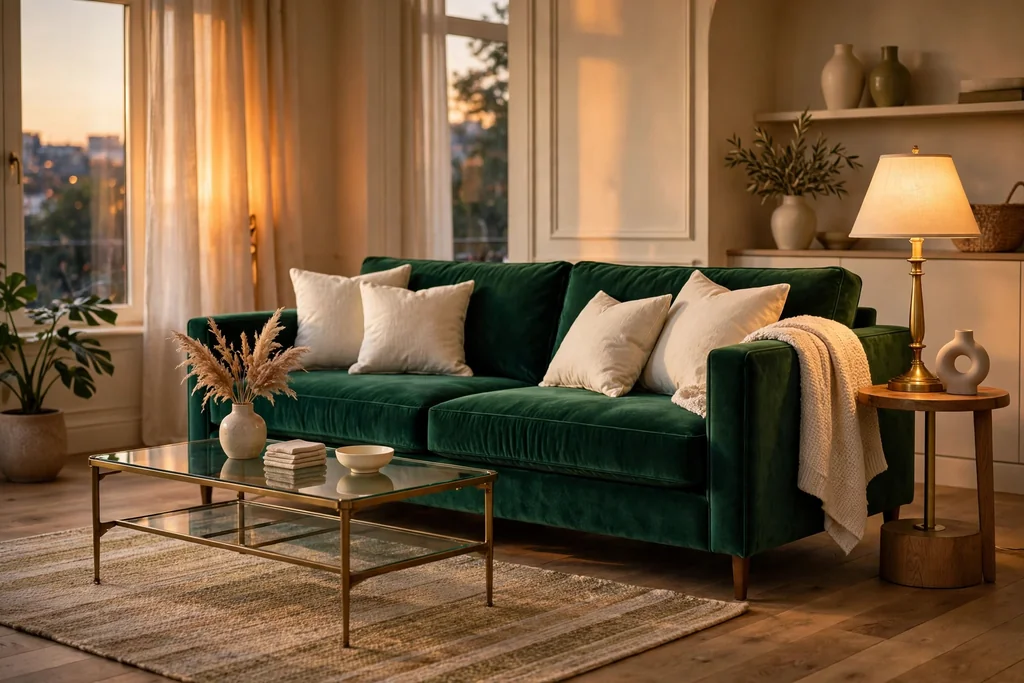
A velvet sofa in emerald, sapphire, or ruby is the plush center of an 80s living room, and it pairs well with brass, glass, and dark wood. The velvet catches lamplight in the evening, which makes the sofa look richer after dark, and the jewel tone gives a plain room a clear color story. Keep cushions in cream, gold, or a paler tone of the same color so the sofa stays the lead piece.
Brush velvet lightly to keep the pile even, and rotate cushions so pressure marks do not settle in one spot. Velvet suits a room used for hosting and quiet evenings more than a room with pets that climb on furniture, since claws and fur show on velvet. A jewel tone sofa plus a chrome table and a geometric rug is a full 80s group on its own.
17. Lucite Acrylic Side Tables
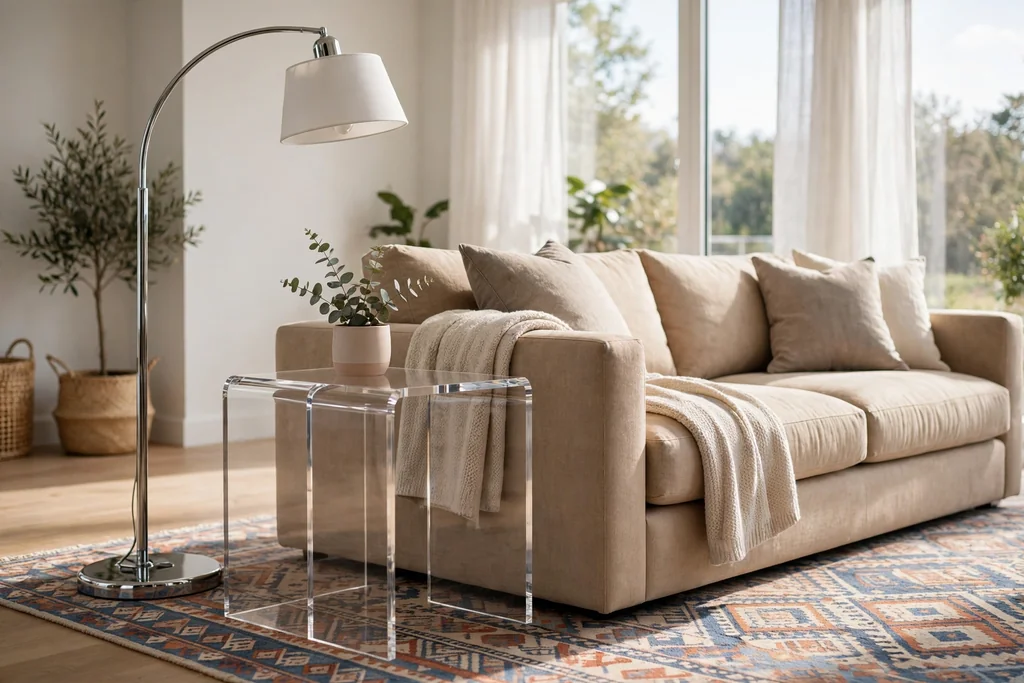
Clear acrylic side tables, sometimes called lucite tables, add 80s shine without visual weight, which makes them ideal beside a bold sofa or in a small room. The clear surface shows the rug and floor beneath, so the table almost disappears, while its clean shape still gives you a place for a lamp, a book, or a drink. Use one beside each end of the sofa, or a single nesting pair in a corner.
Wipe acrylic with a soft cloth and mild soap, since harsh cleaners can cloud it, and keep it out of direct sun where possible. A clear table suits a patterned rug best, since it does not hide the pattern, and it pairs well with chrome, brass, and glass. Avoid stacking heavy objects on a thin acrylic top.
18. Arc Floor Lamp Over the Seating
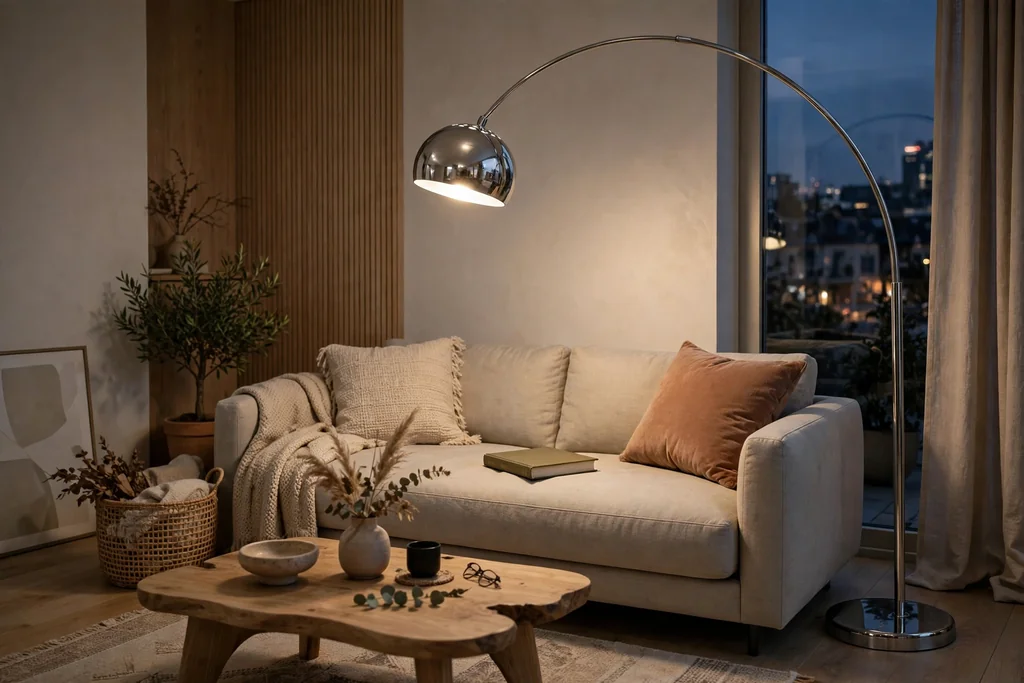
An arc floor lamp curves over the sofa or a reading chair, giving focused light without a ceiling fitting or a table lamp taking up surface space. The long curved arm is a sculptural piece in its own right, and a chrome or black arc suits the 80s look. Place the heavy base behind the sofa or beside a chair, and let the shade hang over the seat where you read.
Check the base weight and the arc reach before buying, since a light base can tip if the arm is pulled. Keep the lamp clear of door swings and tall plants, and use a warm bulb so the light feels soft in the evening. An arc lamp plus a neon accent gives a room both task light and mood light.
19. Terrazzo Side Table and Accents
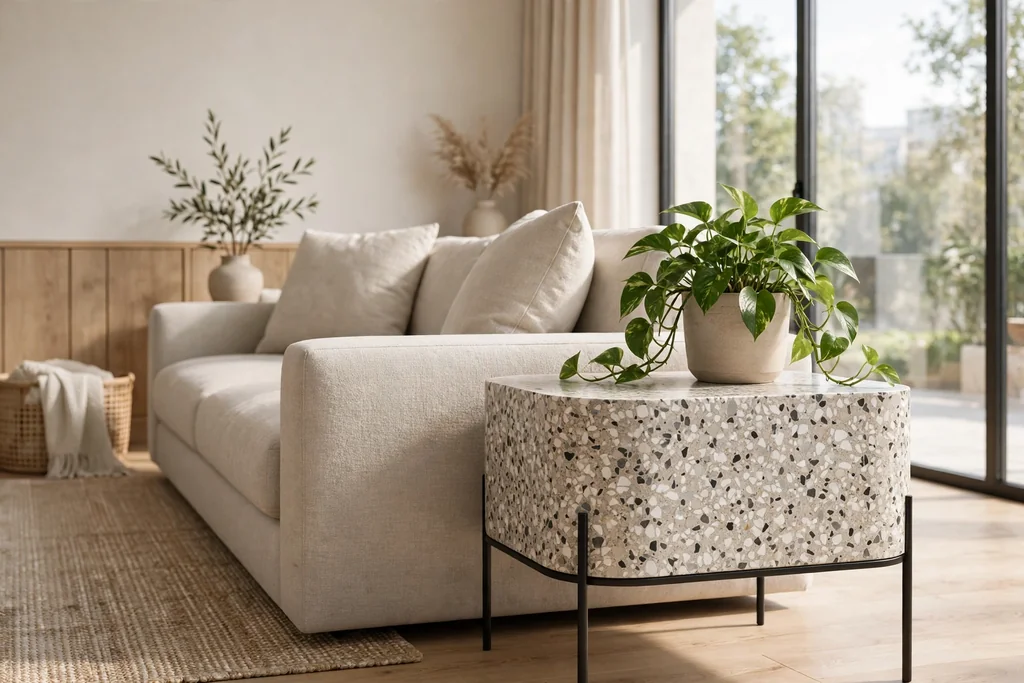
Terrazzo, with its speckled chips of stone in a pale or colored base, appeared in 80s tables, planters, and trays, and it adds texture without a strong pattern. A terrazzo side table beside the sofa, or a terrazzo tray and planters on a console, gives the room a speckled surface that sits well with chrome, velvet, and rattan. Choose one terrazzo piece as the lead, and keep other surfaces plain.
Seal terrazzo as the maker directs if it will hold drinks or plants, and wipe spills promptly so the base does not stain. Terrazzo suits a room that already has a lot of flat color, since the speckle breaks up solid blocks. Keep the chip colors close to the room palette, such as cream, grey, and one accent color.
20. Vertical Blinds and Bold Striped Drapes
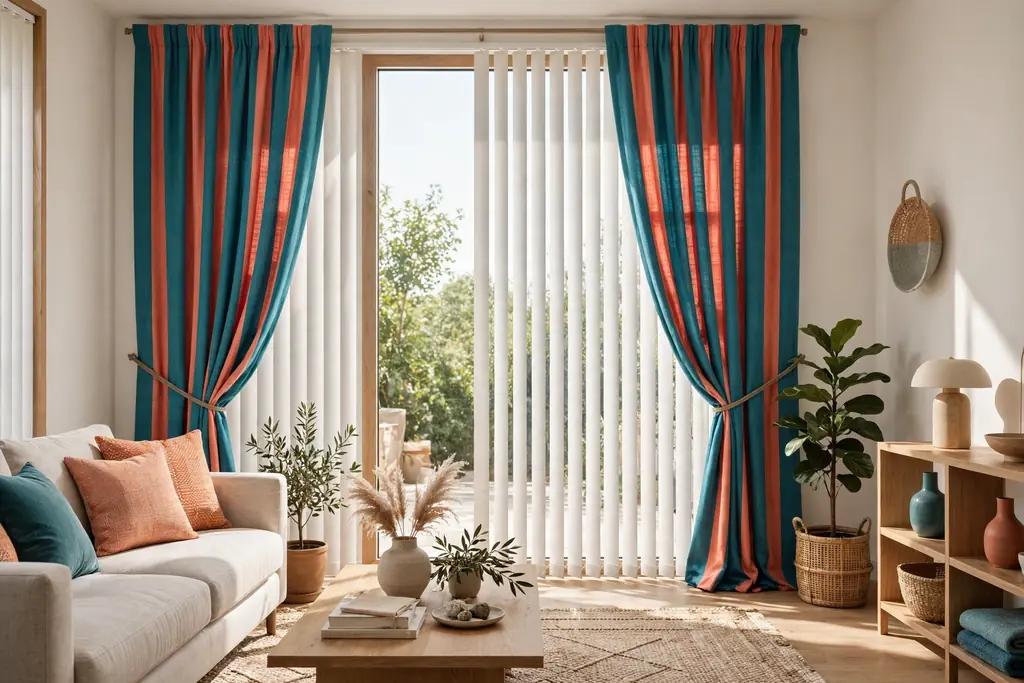
Vertical blinds in cream or grey, layered with bold striped drapes in teal and coral, give a living room its 80s window treatment and practical light control in one. The blinds handle glare and privacy during the day, while the drapes add color and softness at the edges. Hang the drapes from a rod close to the ceiling and let them fall to the floor, so the window looks taller.
Keep the stripe scale in proportion to the window: wide stripes suit a wide window, while narrower stripes suit a smaller one. Clean vertical blinds with a damp cloth, and wash or dry clean drapes as the fabric label directs. This treatment suits a room with a large window or sliding doors, where a single curtain would look thin.
21. Pop Art and Poster Gallery
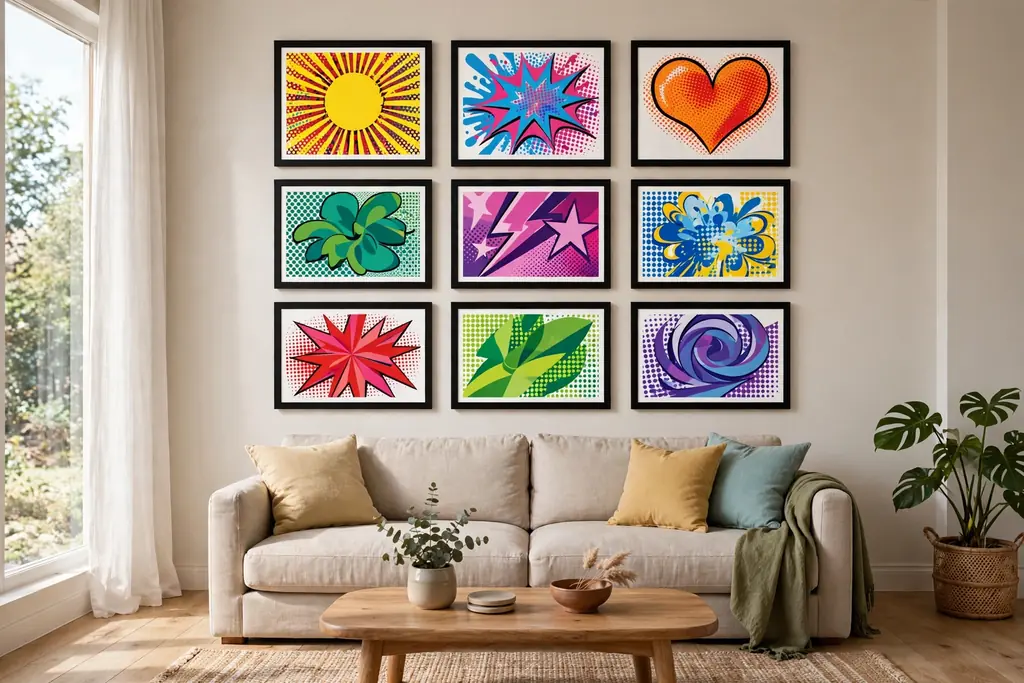
A gallery of pop art prints and framed posters, in matching black frames with even spacing, brings the 80s love of bold graphics to a hallway wall or a sofa wall. Mix one large poster with smaller prints, keep one frame color throughout, and hang the center of the display at eye level from a standing position. The repeated frames make mixed art look planned rather than random.
Leave one stretch of wall blank if you want room for a future print, and keep the gallery to one wall so it does not compete with a patterned wallpaper or a Memphis wall. Use fixings suited to the frame weight, and keep posters out of direct sun so colors do not fade. This idea suits a collector, a film lover, or a household that likes to change art often.
22. Statement Stereo and Vinyl Corner
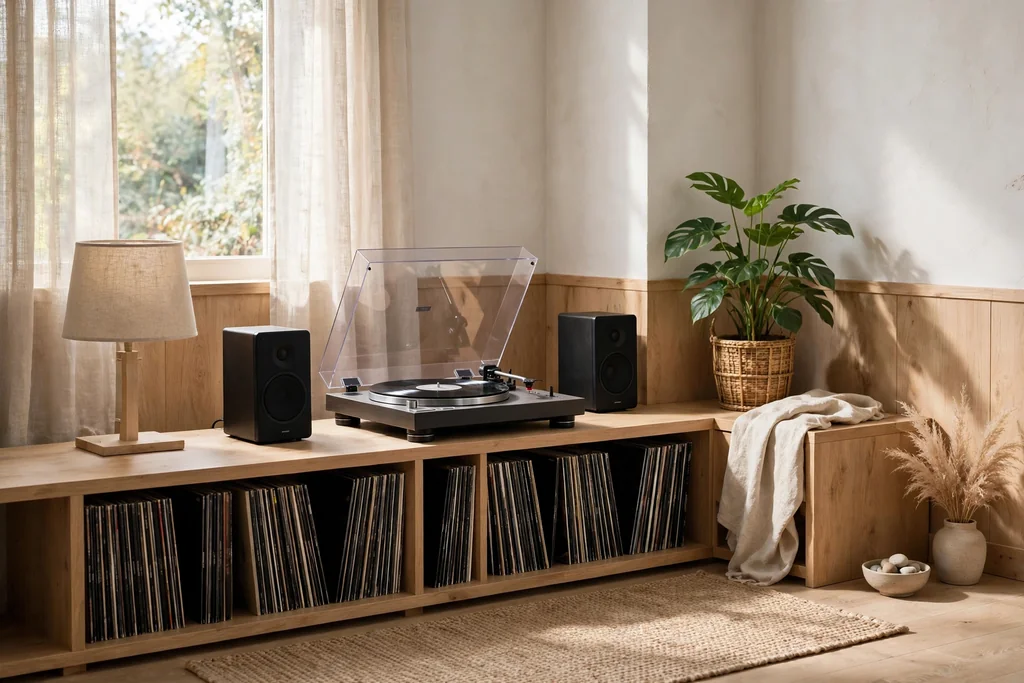
A low console with a turntable, speakers, and vinyl records on display turns music into living room decor, just as the stereo wall did in the 80s. Place the console against one wall, keep records upright in a crate or on a low shelf, and add one plant or lamp so the corner feels like part of the room rather than a storage spot. The console should sit at a height where records are easy to reach.
Keep speakers clear of walls by a small gap so sound is not muffled, and dust records and equipment with a dry cloth. This corner suits a household that listens daily, and it pairs well with a rattan chair or a velvet sofa nearby. If you use a modern speaker instead, the same console and record display still give the retro feel.
23. Plush Wall to Wall Carpet in a Warm Tone
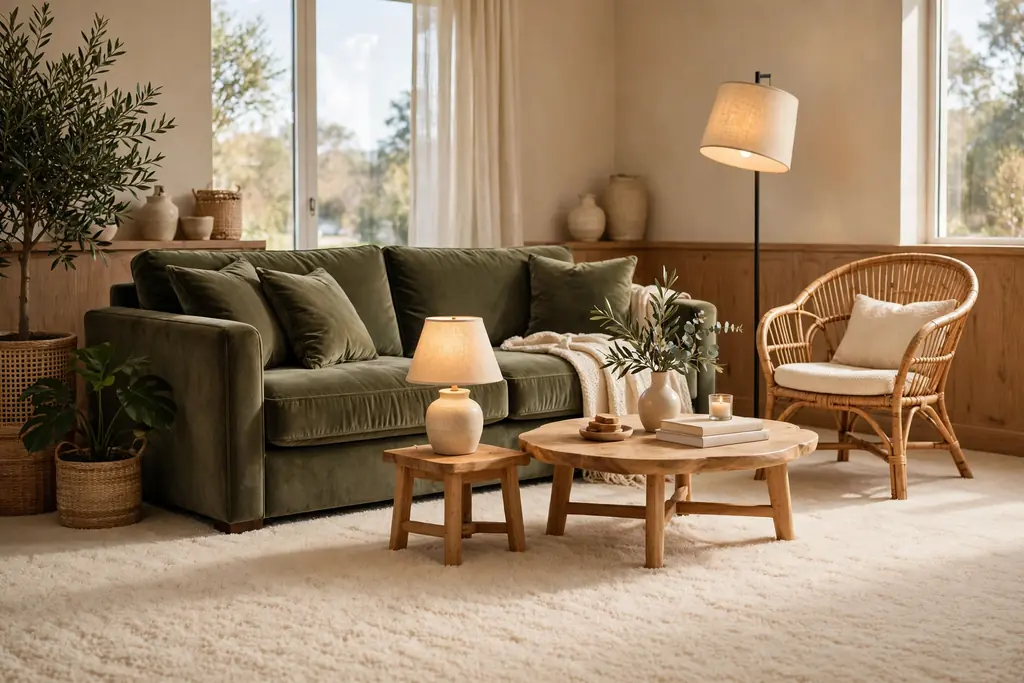
Wall to wall carpet in a warm cream, soft grey, or muted mauve gives an 80s living room its soft underfoot feel and quiets a hard floored room. The carpet makes the seating group feel cozy, suits a velvet sofa and a rattan chair, and lets a bold rug or patterned cushions carry the color. Choose a low to medium pile for a seating area, since high pile shows footprints and makes chairs hard to move.
Vacuum often, blot spills promptly rather than rubbing them, and keep a rug pad free zone clear near doors so the carpet does not bunch. Carpet suits a quiet room used for reading and conversation more than a room where food is eaten daily. If the room already has a bold geometric rug, keep the carpet plain so the rug leads.
24. Black and White Checkerboard Floor Accent
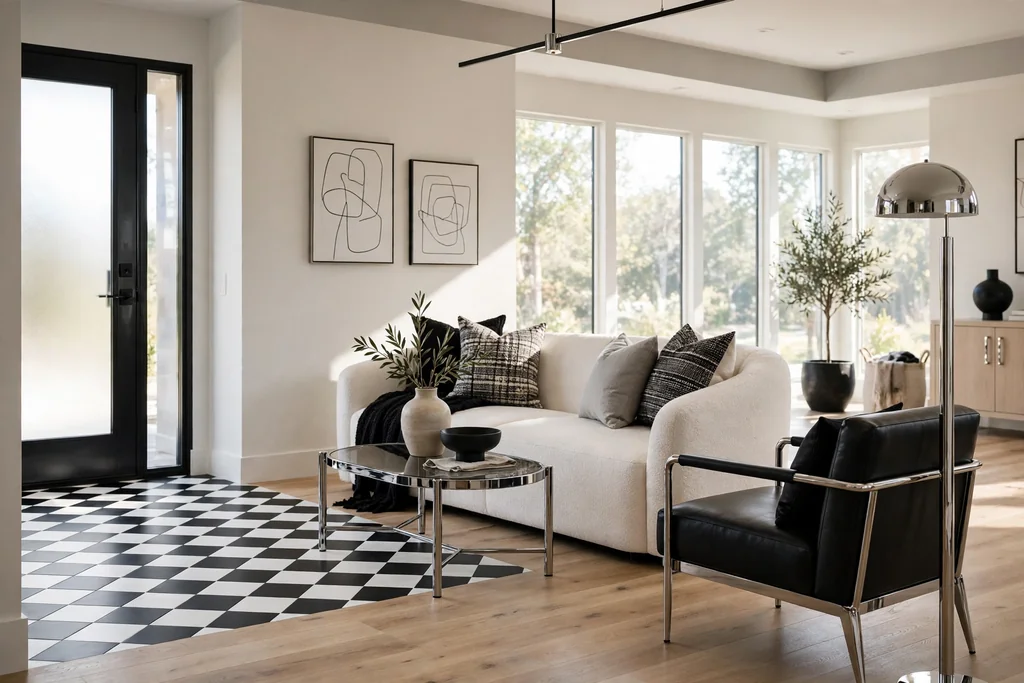
A black and white checkerboard floor, in tiles or a large flatweave rug laid at the room entry or under a coffee table group, adds graphic 80s contrast without painting a wall. The checker pattern reads clearly from the doorway, pairs with chrome, lacquer, and brass, and lets colorful cushions and art stand out against a monochrome base. Keep the checker scale large in a big room and smaller in a compact one.
Use tiles only where the floor suits them and grout can be kept clean, or choose a washable checker rug for an easier change. Keep the rest of the floor plain, and repeat black in one other piece, such as a frame or a lamp base, so the checker does not look isolated. This accent suits a room with plain walls and a bold sofa.
25. Smoked Glass and Brass Bar Cart
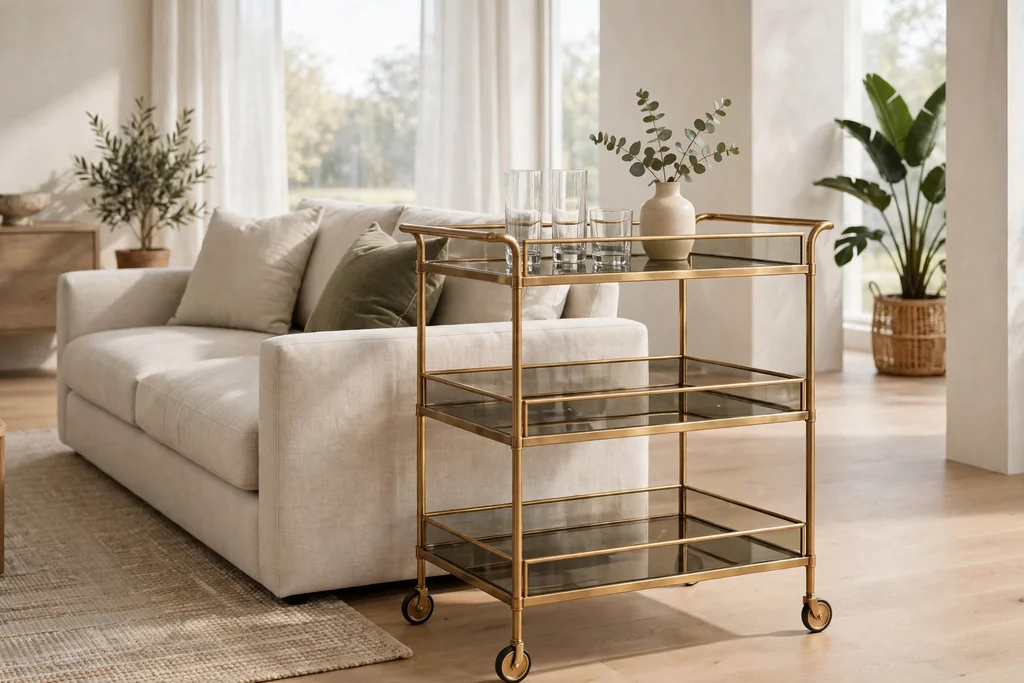
A bar cart with smoked glass shelves and a brass frame is a compact 80s piece that works as a drinks station, a plant stand, or a display shelf. Park it beside the sofa or against a wall near the seating group, style the top shelf with glasses and one small vase, and keep the lower shelf for books or a plant. The smoked glass softens the shine, so the cart suits both bold and pastel rooms.
Keep the cart tidy, since glass shelves show clutter, and lock the wheels if it will stay in one place. This piece suits a household that hosts often, and it pairs well with a neon sign or a brass lamp nearby. If you do not serve drinks, use the cart for tea, books, and a trailing plant instead.
26. Sculptural Postmodern Chairs
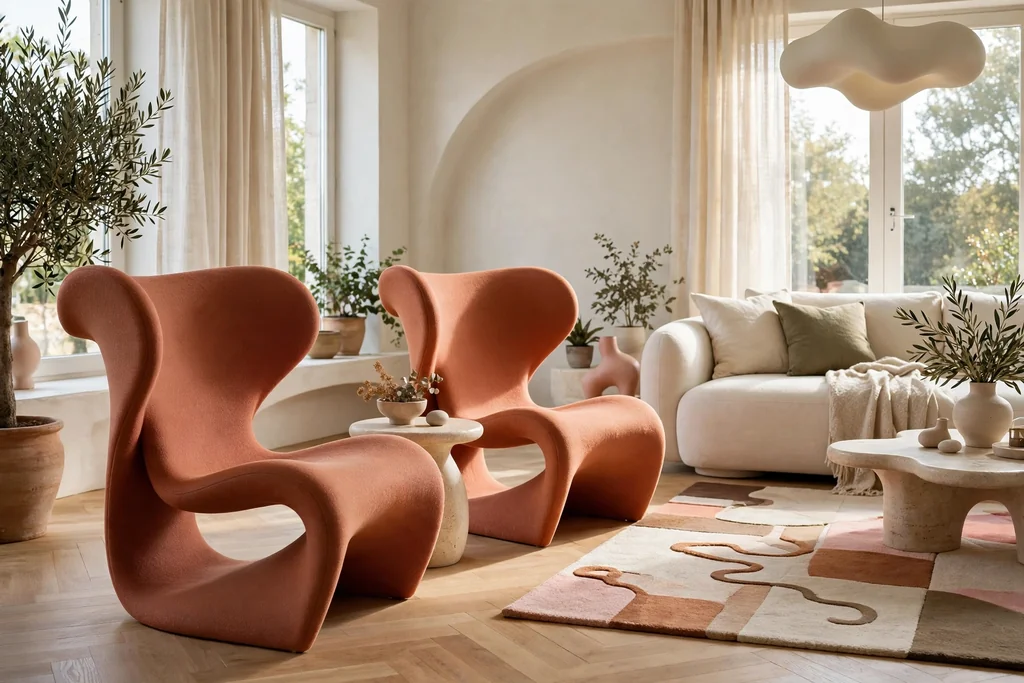
Sculptural postmodern chairs, with curved backs, squiggle arms, or unexpected angles in lacquer, chrome, or bold color, give a living room its conversation piece. Use one or two as accent chairs facing the sofa, with a small side table between them, and keep the rest of the seating plain so the chairs stand out. The unusual shape is the decoration, so cushions should stay simple.
Test the seat height and depth before buying, since sculptural chairs can look better than they sit. Keep a clear path around the chairs so their shape can be seen from more than one angle, and pair them with a plain rug and a simple coffee table. One sculptural chair suits a small room; a pair suits a larger seating group.
27. Bold Geometric Cushions and Throws
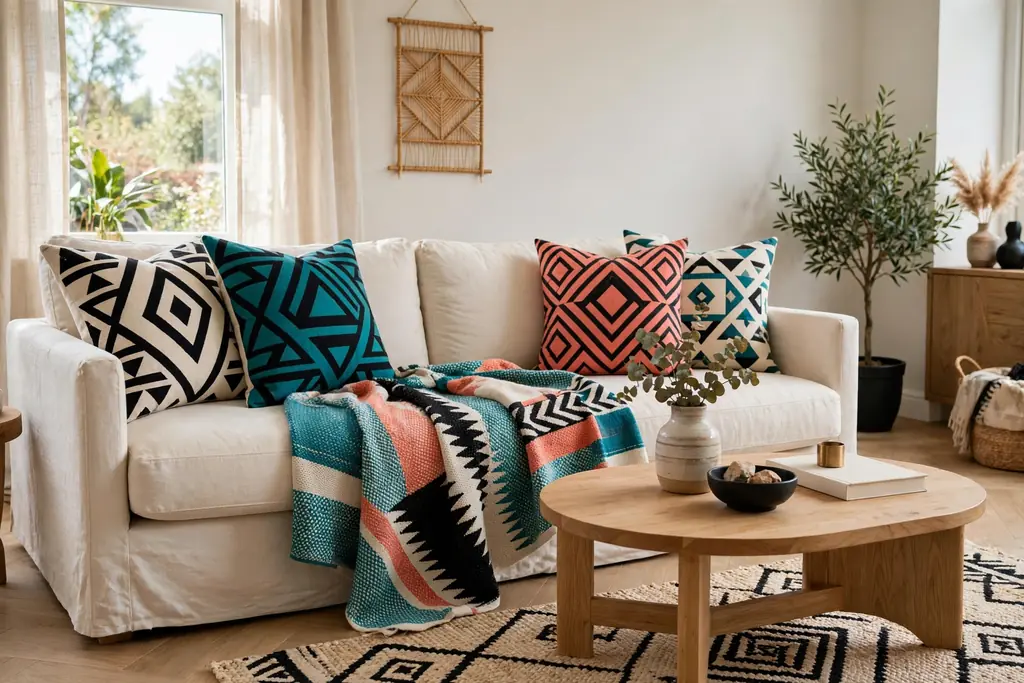
Bold geometric cushions and throws are the easiest 80s update, since they change a plain sofa in minutes and can be swapped by season. Mix zigzags, diamonds, and color blocks in teal, coral, black, and cream, but keep one pattern family dominant so the sofa does not look random. Two patterned cushions plus one plain cushion in a matching tone is a good balance for a three seat sofa.
Choose removable, washable covers for a sofa used daily, and fold a throw over one arm rather than draping it across the whole back. Geometric textiles suit a plain sofa and a plain rug best, since two strong patterns compete. Store spare covers in a basket near the sofa so a refresh takes minutes.
28. Retro Movie Night Corner With Media Shelf
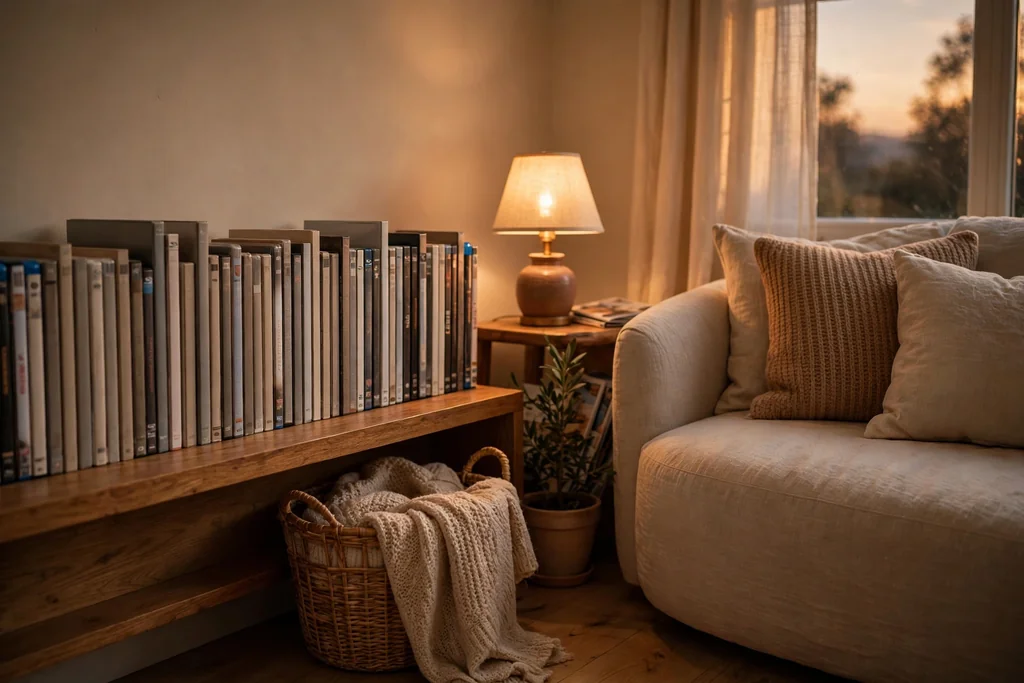
A movie night corner, with a low media shelf, a stack of films, a popcorn bowl, and a cozy throw, gives the 80s living room a job beyond looking good. Place the shelf beside the television or in a corner near the sofa, keep films upright and grouped by type, and add a small lamp so the corner works for browsing as well as watching. The shelf should sit at a height where titles are easy to read.
Keep the corner tidy by limiting it to one shelf and one basket for throws, since a sprawling media pile can take over the room. This corner suits a household that watches films together, and it pairs well with a velvet sofa, a chrome table, and dimmed track lights. A popcorn bowl and a throw are enough styling; the films themselves are the decoration.
Conclusion
An 80s living room works best when it borrows the decade with confidence and leaves room for daily life. Start with one strong piece, such as a Memphis wall, a chrome table, or a velvet sofa, then add color, pattern, and shine in small doses that you can live with. Keep the layout comfortable, the lighting layered, and the palette to a few colors that repeat through cushions, art, and rugs. With that balance, the room gains real character from the 80s without feeling dated, and it stays a place you enjoy sitting in every day.
FAQs
What are the key colors of an 80s living room?
The classic 80s palette mixes teal, mauve, peach, and coral with black, white, and cream, plus jewel tones such as emerald and sapphire for velvet and art. Use one color as the lead, one as a support, and one as an accent in cushions or art, and keep large pieces in the calmest tone so the room does not feel loud.
How do I add 80s style without making my living room look dated?
Pick one or two strong retro pieces, such as a chrome coffee table or a geometric rug, and keep the rest of the room current with plain walls, simple curtains, and modern lighting controls. Avoid using every 80s idea at once: a Memphis wall plus neon plus checkerboard plus bold wallpaper in one room will compete, while one lead idea plus quiet support pieces reads as a style choice.
What is Memphis style in 80s living room decor?
Memphis style uses bold geometric shapes, squiggles, dots, and bright color blocks, often in teal, black, yellow, and coral, on furniture, walls, and textiles. It came from a 1980s design group that mixed playful shapes with everyday furniture, and in a living room it usually appears as an accent wall, a rug, cushions, or a sculptural chair rather than a full room scheme.
Can 80s decor work in a small living room?
Yes, if you keep the retro moves compact: a geometric rug, a clear acrylic side table, a neon accent, and bold cushions add character without taking floor space. Avoid a full glass block wall, a large checkerboard floor, and a bulky media unit in a small room, and choose one focal piece plus small accents so walkways stay clear.
What furniture defines an 80s living room?
Chrome and glass coffee tables, black lacquer media units, rattan peacock chairs, velvet sofas, arc floor lamps, and bar carts are the defining pieces. Each one still works today because it has a clear job: a table for drinks, a unit for media, a chair for reading, and a lamp for light, with the retro shape as a bonus.
Is neon lighting safe and practical in a living room?
Modern neon style signs for home use are usually LED based, run cool, and plug into a standard outlet, which makes them practical as evening accent light. Hang the sign securely, keep cables tidy and clear of walkways, use a dimmer or timer, and follow the maker guidance for mounting and cleaning. Keep neon as an accent, with table lamps or track lights for reading and general light.