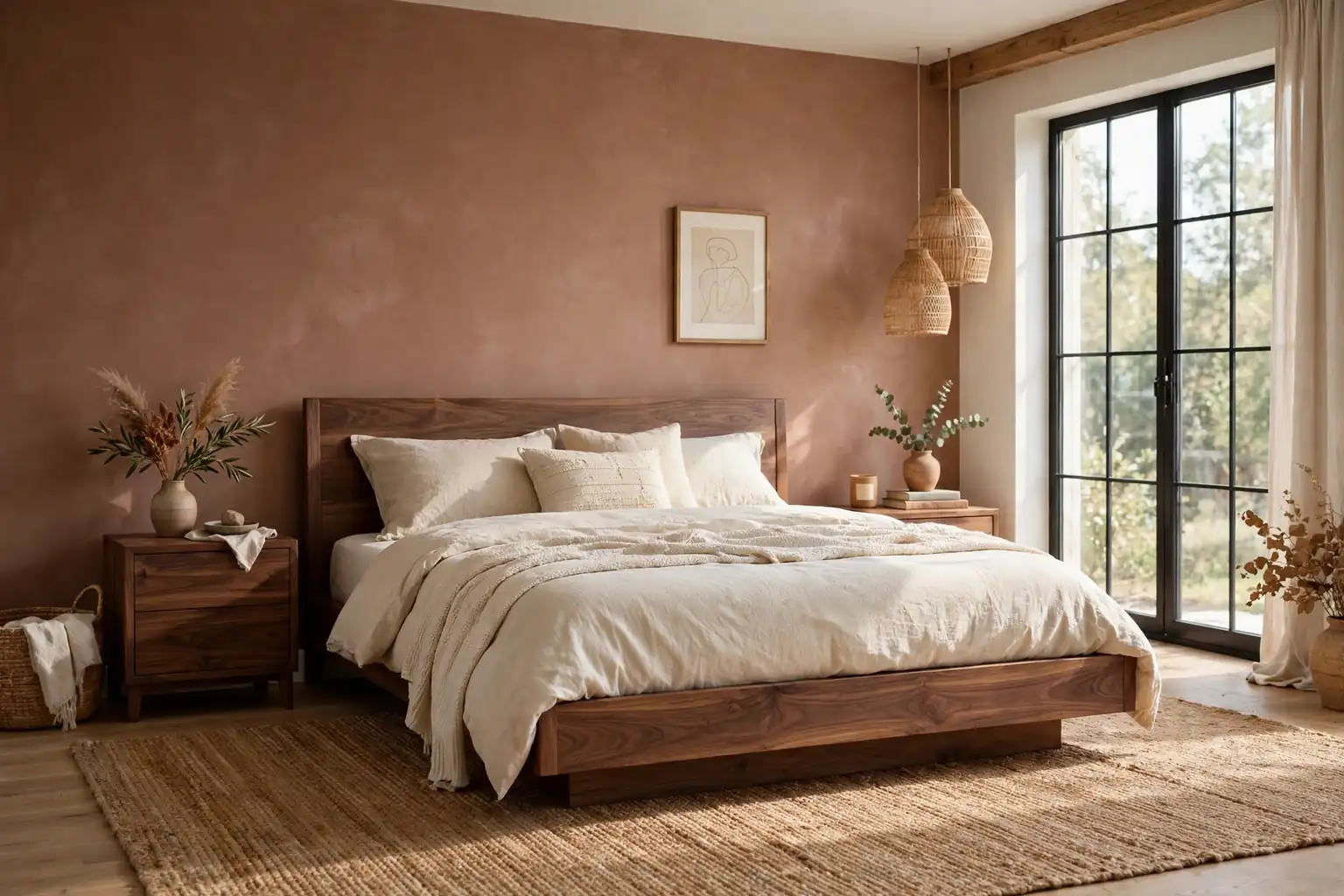
An earthy bedroom starts with colors pulled from soil, clay, sand, stone, and leaves. Terracotta, ochre, olive, taupe, and warm brown feel calm because they sit close to nature, and they pair well with wood, linen, wool, and woven texture. These 22 stylish bedroom ideas with earthy tones cover walls, bedding, furniture, rugs, curtains, storage, plants, and light, so you can plan a full room or pick one change at a time. Start with the layer you see first when you walk in, repeat each tone at least twice, and keep one darker accent for shape. For a warm neutral base to compare against these earth tones, see these beige bedroom ideas.
Key Takeaways
- Start with a warm neutral base of cream, sand, or soft taupe, then add two or three earth tones, such as terracotta, olive, and warm brown.
- Repeat each earth tone at least twice, for example terracotta on a wall and in a vase, so the room looks planned rather than random.
- Mix textures at every step: linen, wool, wood grain, rattan, jute, and stone keep a muted palette from looking flat.
- Use natural wood as the main furniture material, and keep metal finishes warm, such as brass or aged bronze.
- Change bedding, curtains, and cushions first for a quick refresh with no paint, and save walls and wardrobes for a weekend project.
- Keep light warm and low in the evening, since warm bulbs suit clay, wood, and ochre far better than cool white light.
1. Paint a Terracotta Accent Wall Behind the Bed
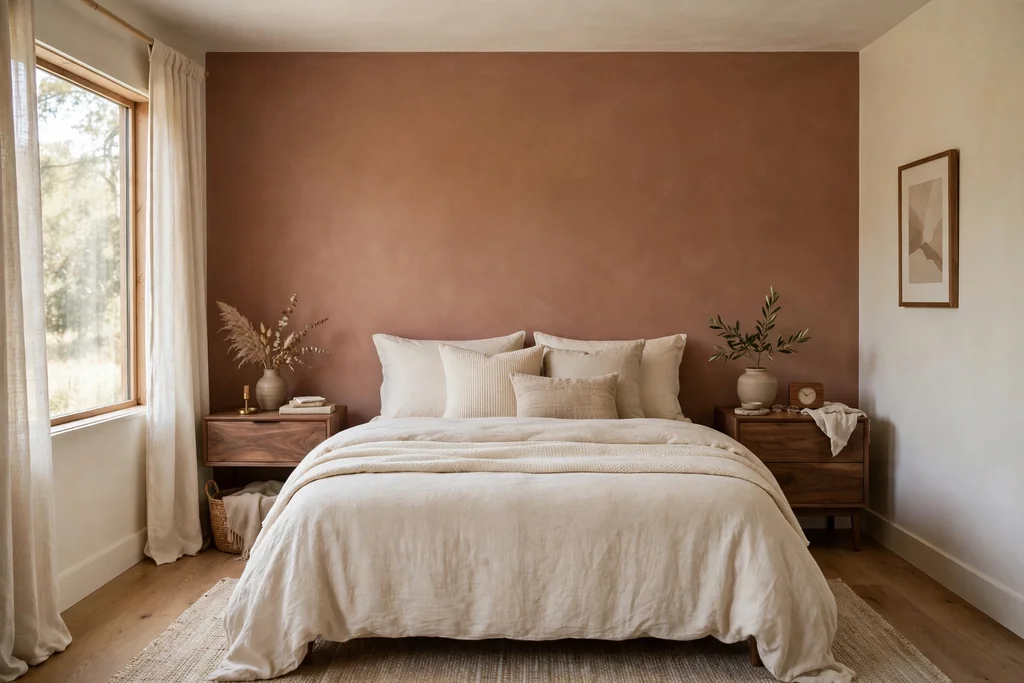
A terracotta accent wall behind the bed gives an earthy bedroom its clear focal point in one weekend step. Choose a muted clay red, closer to baked earth than to bright orange, and keep the other walls in warm cream or sand so the terracotta stays rich without closing the room in. The wall frames the bed the way a large piece of art would, and it suits a room where you want warmth but not a full repaint.
Keep bedding mostly cream, sand, and warm white, with one terracotta cushion or throw to link the bed to the wall. Use a matte finish so the wall does not shine under lamplight, and paint the trim in the same warm white as the other walls for a clean edge. Test a large swatch in morning and evening light first, since terracotta shifts a lot between cool daylight and warm lamps.
2. Layer Bedding in Sand, Clay, and Olive
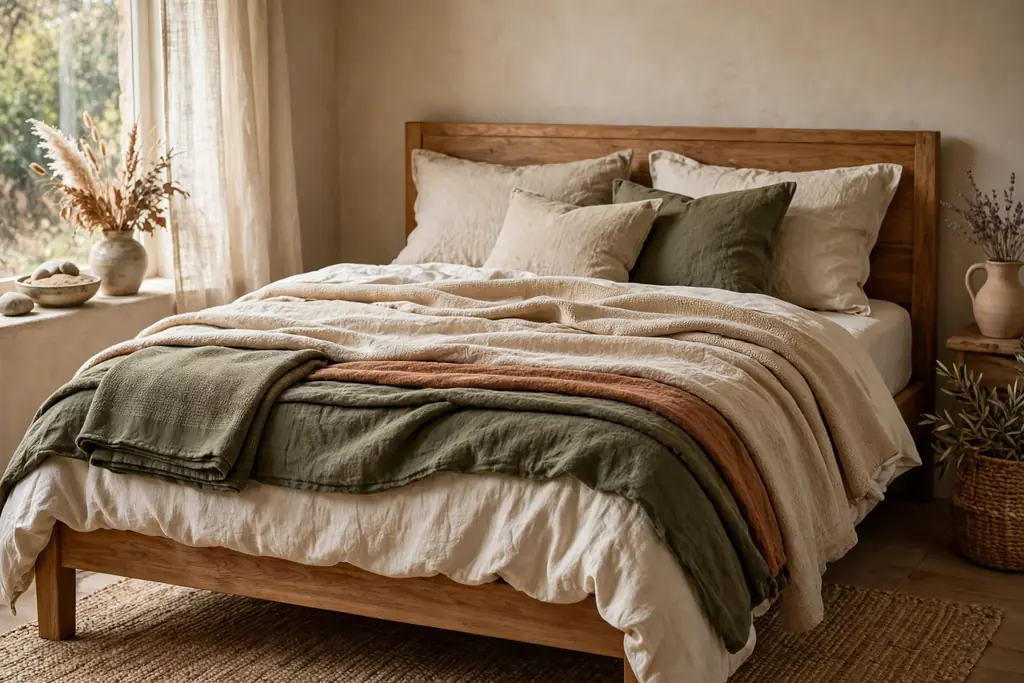
Layered bedding in sand, clay, and olive is the fastest earthy refresh, because the bed takes up the most visual space in the room. Start with cream or ivory sheets, add a sand colored quilt or coverlet, then fold a clay or olive throw across the foot of the bed. Finish with cushions in linen, cotton, and wool, so each layer feels different to the touch even though the colors stay close to nature.
This suits any bedroom, rented or owned, since it needs no paint or tools. Keep the palest shade closest to your face and the deepest earth tone at the foot, which gives the bed a natural sense of depth. Wash the throw and cushion covers on a regular cycle, since pale sand shows dust and marks sooner than darker tones.
3. Choose a Warm Walnut Bed Frame
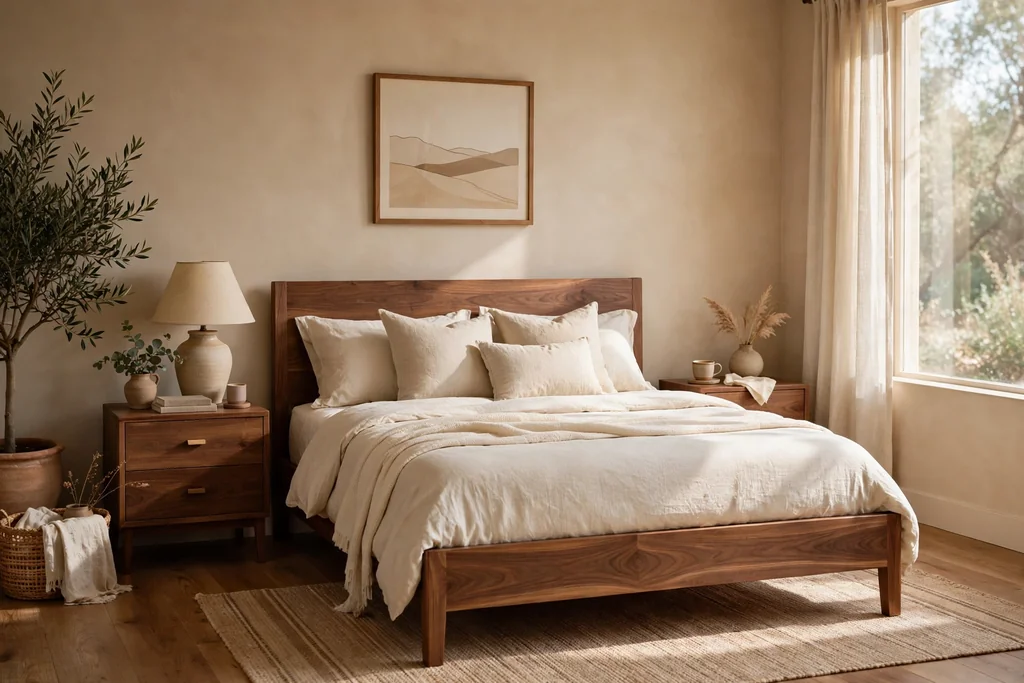
A warm walnut bed frame grounds an earthy bedroom, because dark wood adds depth that pale walls and linen cannot give on their own. Use a simple walnut frame with a plain headboard, add walnut nightstands in the same tone, and keep one wood tone across the main pieces so the room reads as calm rather than busy. A wooden bench at the foot of the bed can repeat the tone without adding more furniture.
This suits a bedroom with pale floors or cream walls, where wood stops the room from looking washed out. Match the wood to your floor if you can: warm walnut with warm sand, paler oak with cooler taupe. Keep the wood finish matte or satin rather than high gloss, which can look harsh next to soft linen and wool.
4. Add a Rattan Cane Headboard
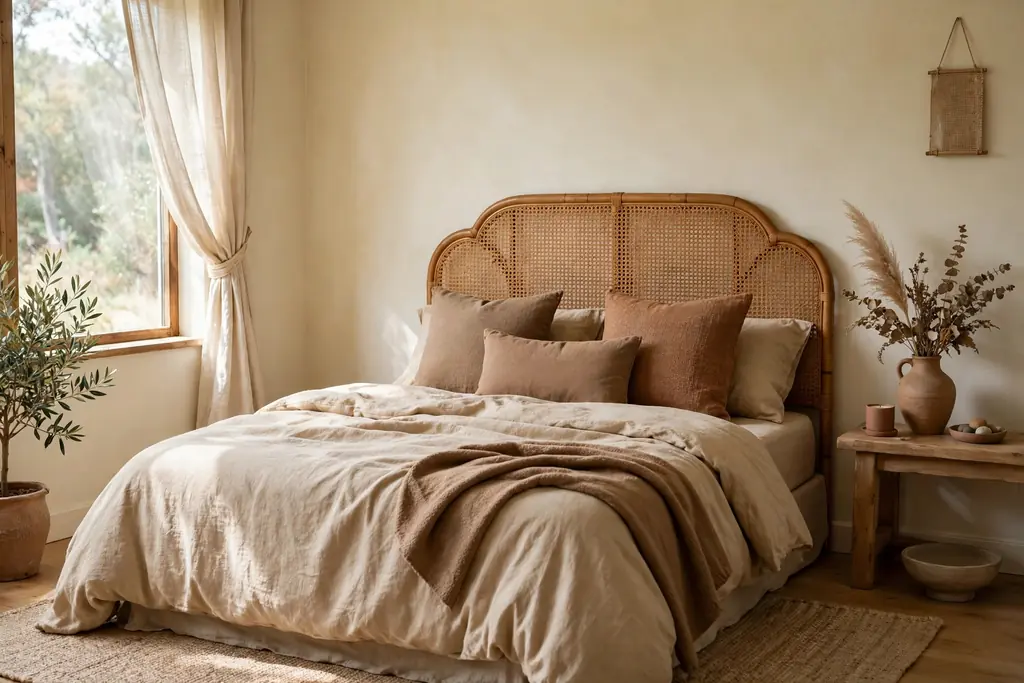
A rattan cane headboard adds a natural, relaxed layer to an earthy bedroom, and it works well with both wood and linen. The open cane weave lets light through, so the room keeps its airy feel, while the warm cane tone links to jute, baskets, and wood elsewhere in the room. Pair it with cream or sand bedding and one or two cushions in clay or olive, and keep the wall behind it plain so the texture stands out.
This suits a bedroom that leans casual, coastal, or bohemian, and it pairs well with warm cream walls. Measure the headboard width against the bed and the wall, since a headboard that is too narrow looks lost and one that is too wide crowds the nightstands. Dust woven cane with a dry cloth or a soft brush, and keep it out of damp corners, since cane can warp.
5. Lay a Large Jute Rug Under the Bed
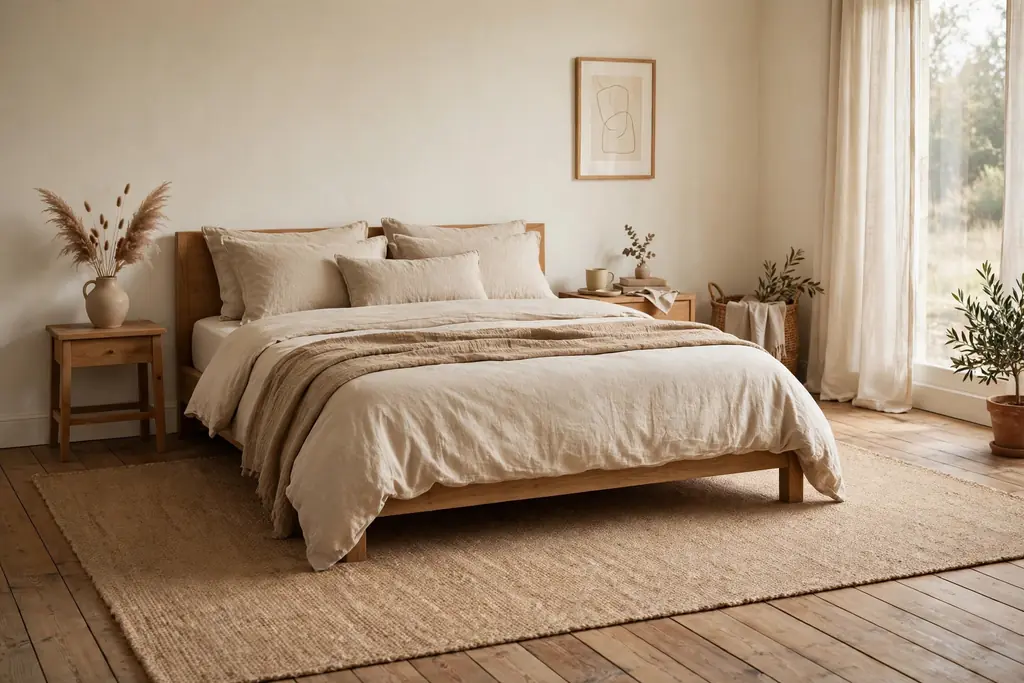
A large jute rug under the bed anchors an earthy bedroom and warms up a hard floor, which matters in a room where the palette could otherwise feel flat. Lay a rug large enough to extend well beyond each side of the bed, so your feet land on natural fiber in the morning, and use a rug pad underneath so it does not slip on smooth floors. The rough jute texture contrasts well with soft linen bedding above it.
This suits a bedroom with wood or laminate floors, and it works best when the rug stays plain, with a simple border at most, so the texture does the work. Keep the rug pile low near the door swing, and vacuum jute with a brush head, since jute sheds fibers at first. Shake the rug outside when you can, and spot clean marks early so they do not set.
6. Paint a Wardrobe in Soft Olive Green
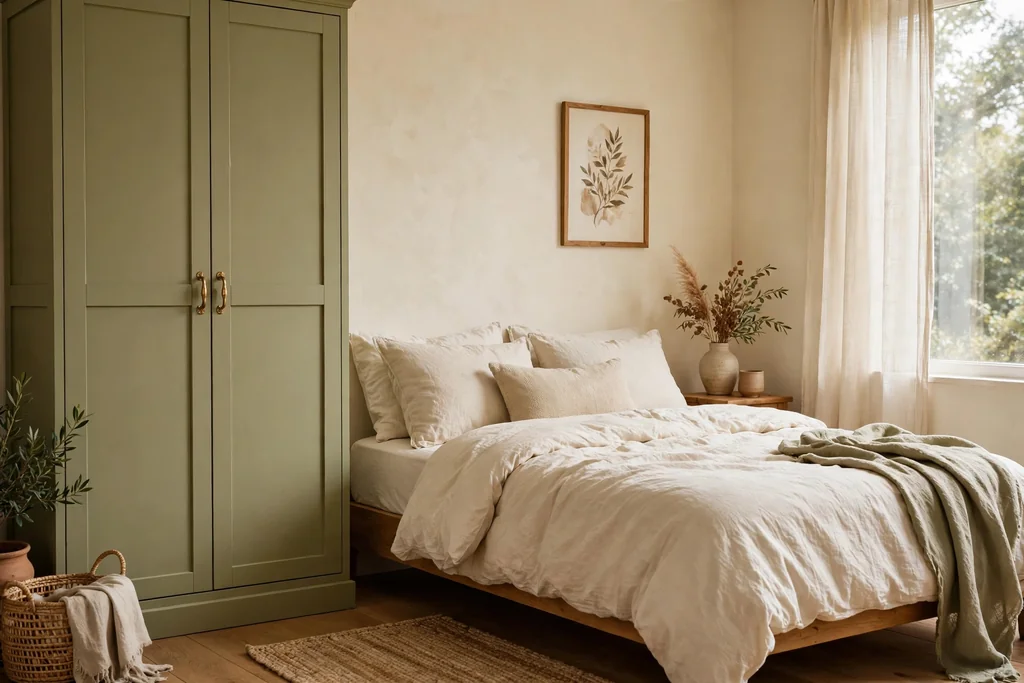
Painting a wardrobe in soft olive green turns storage into part of the earthy scheme, rather than a block of furniture that fights it. Use a muted, grey toned olive, with simple brass or wood handles, and keep the walls in warm cream so the olive reads as a calm natural note. A few open shelves at one end, for books and a plant, stop the wardrobe wall from feeling too solid.
This suits a bedroom with no built in closet, or a room where clothes and bedding need a proper home. Plan the interior before the doors: hanging space at one end, drawers in the middle, and high shelves for seasonal bedding. For more calm green bedroom planning, see these sage green bedroom ideas. Measure door swings and drawer pulls carefully, since a wardrobe that blocks a walkway will annoy you daily.
7. Hang Sand Linen Curtains High and Wide
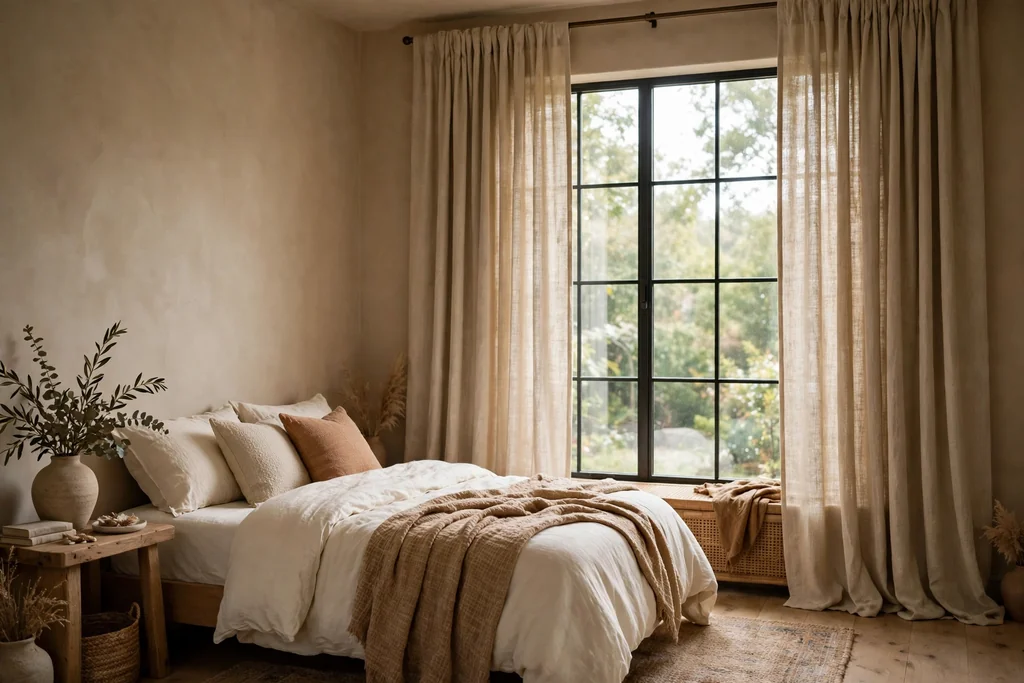
Sand linen curtains hung high and wide soften a bedroom window and make the ceiling feel higher, especially in a small room. Hang the rod close to the ceiling and wide enough that the curtains clear the window frame when open, so daylight still fills the room. Linen filters light softly, which suits earthy walls, since harsh light can make clay and ochre look washed out.
Choose a sand tone a shade deeper than the walls so the curtains read as a deliberate layer, not a match that disappears. For more hanging guidance, see these bedroom curtain ideas. Line the curtains if the room faces a street at night, and wash the linen panels before hanging, since washed linen softens and keeps its size after later washes.
8. Style Terracotta Pottery on the Dresser
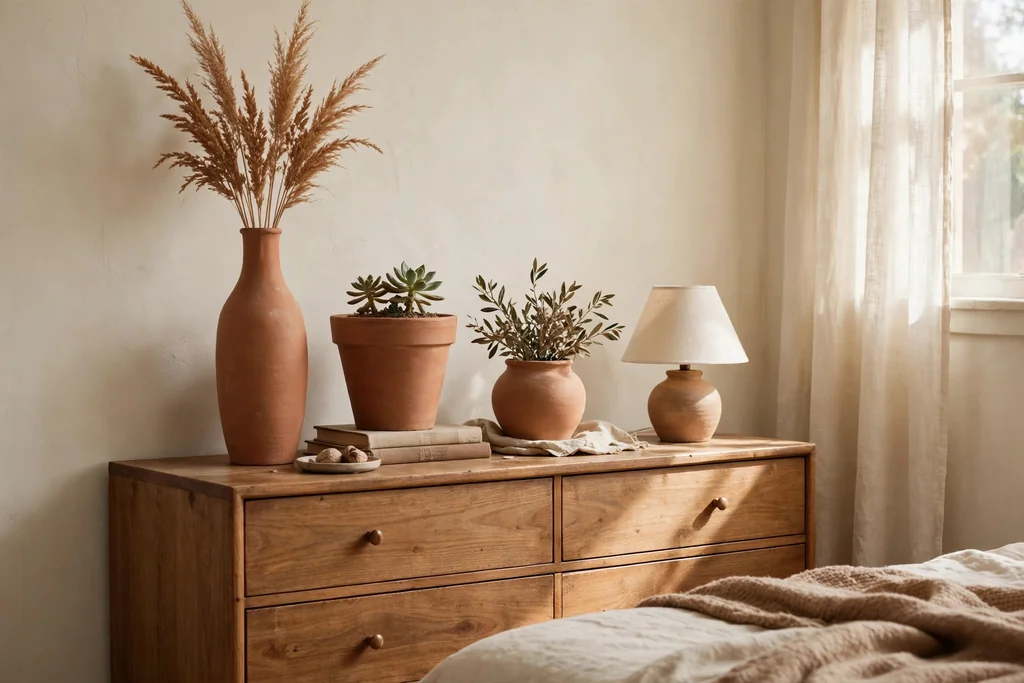
A small group of terracotta pottery on a dresser adds an earthy, handmade note in one easy step. Choose three pots or vases in different heights, in plain terracotta or a matte clay glaze, and group them at one end of the dresser with space around them, rather than lining them up in a row. Leave the rest of the dresser top mostly clear, with a lamp and a small tray, so the pottery stays the focus.
This suits a bedroom where the walls are already earthy and you want a matching detail at hand height. Use one pot for dried grasses, leave one empty, and use the third for small items such as a watch or keys, so the group looks useful as well as decorative. Dust unglazed terracotta with a dry cloth, since it marks easily when wet, and keep the pots away from the edge where they could be knocked.
9. Use Travertine Stone Bedside Lamps
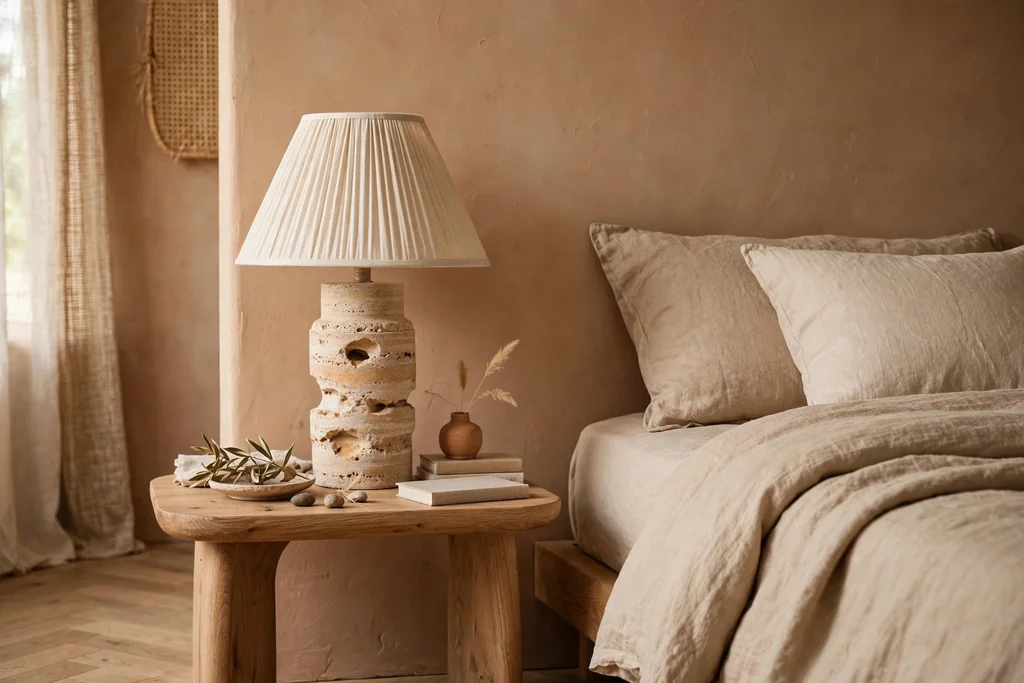
Travertine stone bedside lamps bring a quiet, natural weight to an earthy bedroom, and the pale stone veining suits sand, cream, and clay tones. Choose a pair of lamps with simple stone bases and plain linen shades in cream or warm white, and keep the lamp height close to the headboard height so the light falls well for reading. The stone adds a cool, solid contrast to soft bedding and woven texture.
This suits a bedroom where the furniture is mostly wood and fabric, and you want one harder material for balance. Keep the shades plain, since a patterned shade would fight the stone veining, and use warm white bulbs so the stone glows softly in the evening. Wipe the stone with a dry cloth, and avoid placing a lamp where a drink could spill onto the base.
10. Place a Cognac Leather Reading Chair
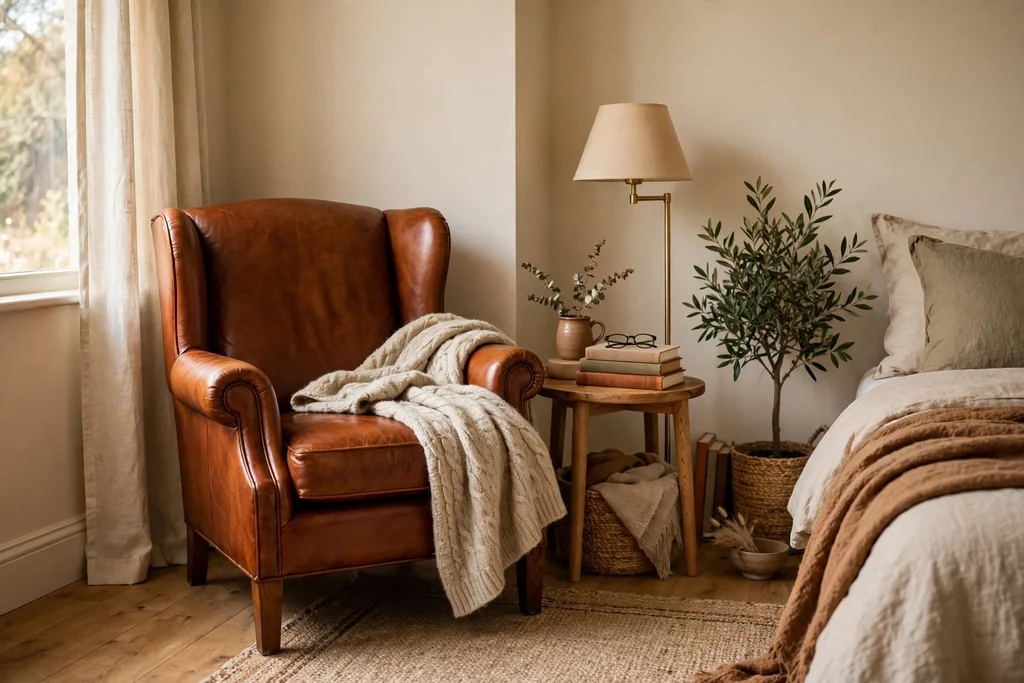
A cognac leather reading chair gives an earthy bedroom a warm, lived in seat for reading, dressing, and quiet moments. Place the chair in a corner near a small side table and a floor lamp, with a wool throw over one arm and a basket of books beside it. Cognac leather sits well with walnut wood, terracotta, and olive, and it gains character with use, so small marks become part of the look rather than flaws.
Check the chair frame and joints before daily use, and choose a seat deep enough to sit in for an hour, not a stiff accent chair that looks good but stays empty. Keep the seat height low enough that your feet rest flat on the floor, and add a footstool if they do not. A small side table for a book and a drink keeps everything within reach, so the corner becomes a real second use for the room.
11. Try Limewash Walls in a Soft Clay Tone
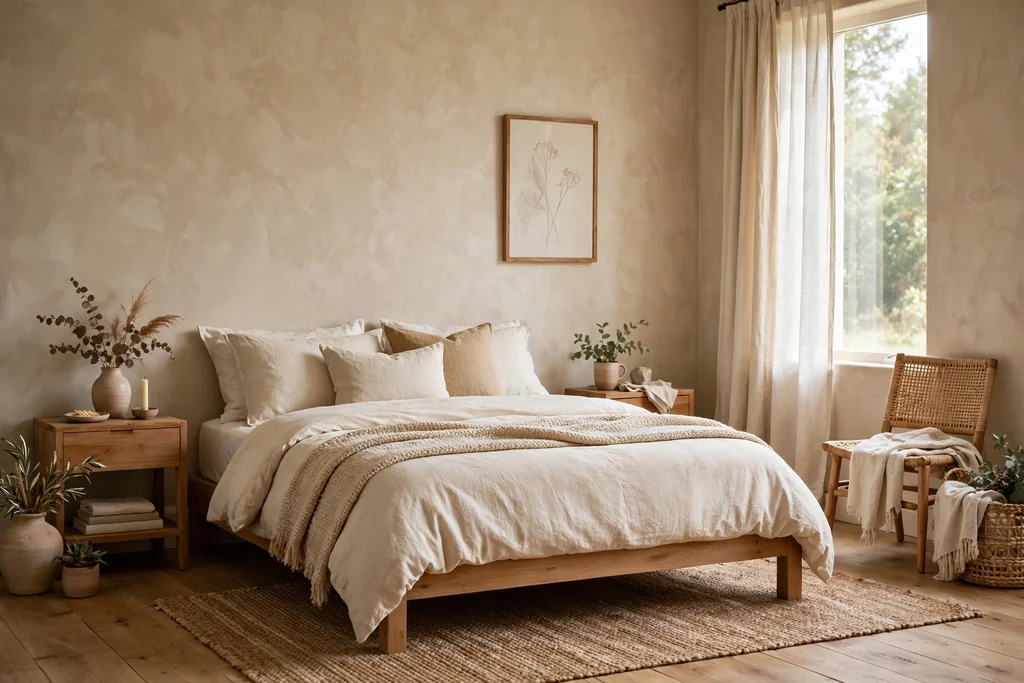
Limewash walls in a soft clay tone give an earthy bedroom texture that flat paint cannot give. The wash leaves gentle movement and depth across the wall, with lighter and darker patches that shift through the day, and a clay tone keeps the effect warm rather than grey. Use limewash on all four walls in a pale clay, or on the bed wall only with cream on the other walls, and keep bedding plain so the wall texture stays visible.
This suits a bedroom where a flat accent wall feels too plain but wallpaper feels too busy. Follow the limewash maker’s method for coats and drying time, and test a patch on a hidden wall first, since limewash looks different wet and dry. Keep the finish matte, pair it with wood and linen, and avoid a second strong pattern nearby, so the wall texture has room to breathe.
12. Fill a Tall Vase with Dried Grasses
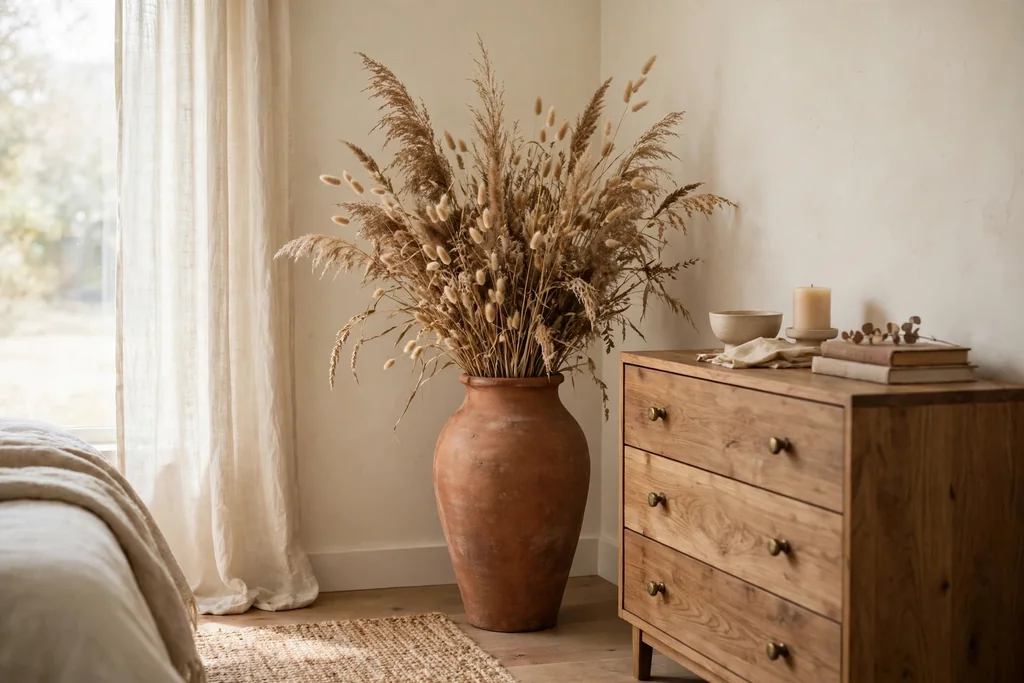
Dried grasses and branches in a tall vase bring an earthy, outdoor note indoors without the care a large plant needs. Choose a tall terracotta or stone vase, fill it with pampas, dried wheat, or bare branches in warm tan and gold tones, and place it in a corner or beside the dresser where it will not be brushed every time you walk past. The height draws the eye up and softens a plain wall.
Keep the vase on the floor, not on a high shelf, so it cannot fall, and keep dried stems away from heaters and open flames. Shake the grasses outside now and then to remove dust, and trim any stems that shed heavily. If the room already has a lot of texture, keep the grasses simple, with one type of stem rather than a mixed bunch, so the arrangement stays calm.
13. Store Bedding and Books in Woven Baskets
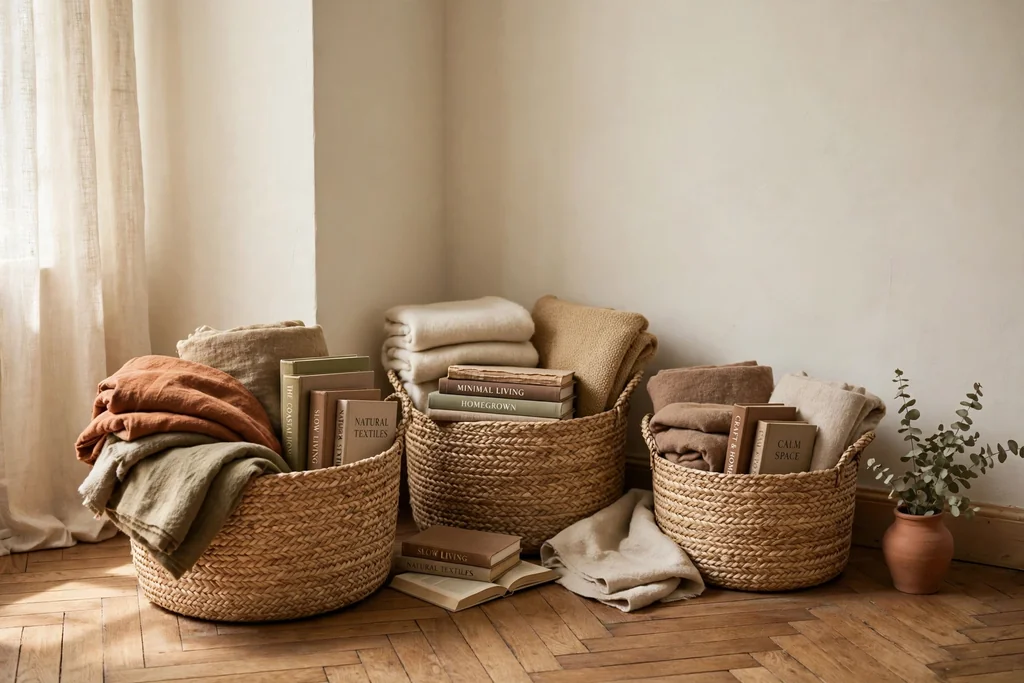
Woven baskets in seagrass, cotton rope, or wicker give an earthy bedroom soft, natural storage that fits the scheme. Use one large basket for spare blankets, one medium basket for books or magazines, and a small basket on the dresser for everyday items. Baskets with handles are easy to carry to the washing pile or to another room, and open tops let you see what is inside at a glance.
Keep baskets on the floor or on low shelves, never stacked high where they could topple, and check woven edges for sharp ends before use. A basket that holds only one category stays tidy far longer than a single large box that collects everything. Label baskets with a simple tag if you share the room, so each person knows where their things belong.
14. Hang an Earth Tone Landscape Gallery
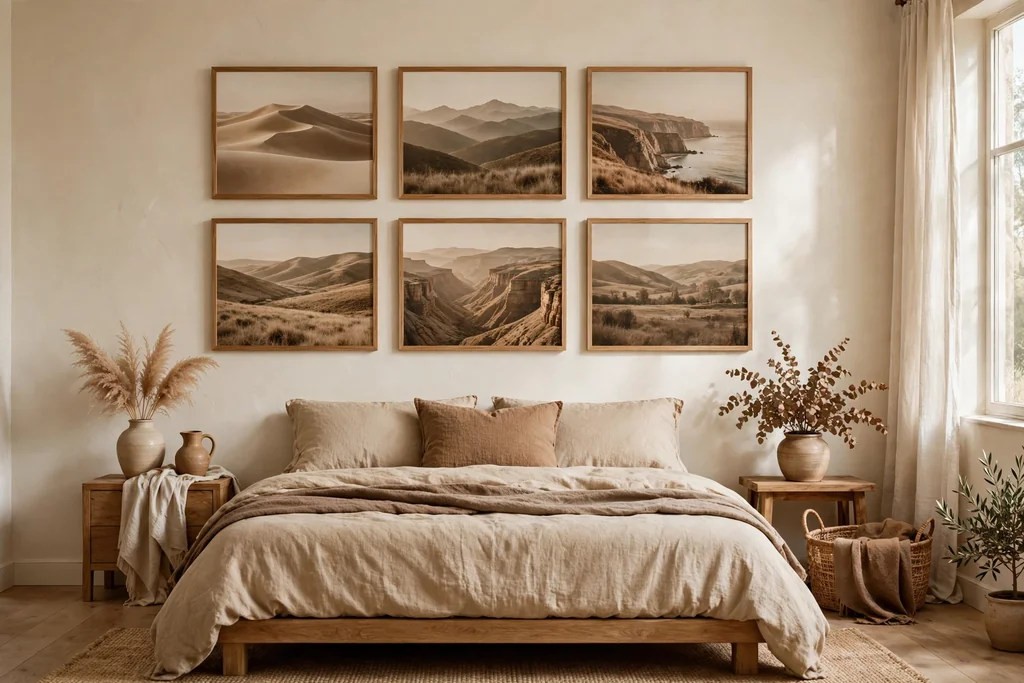
A gallery of landscape prints in earth tones adds personality to a bedroom without adding color that fights the scheme. Choose prints in terracotta, ochre, sage, and warm brown, with simple wood or black frames, and hang them in a loose grid above the bed or along one wall. Mix desert scenes, hills, and abstract earth shapes, but keep the palette tight so the wall feels calm.
This suits a bedroom with a large blank wall that needs interest but not a bold feature color. Lay the frames on the floor first and plan the spacing, leaving equal gaps between frames, then hang the middle frame at eye level. Use picture hanging strips if you rent, and keep the largest frame in the center so the arrangement feels balanced. Swap one print with the seasons if you want a small change without redecorating.
15. Fit a Vertical Wood Slat Feature Wall
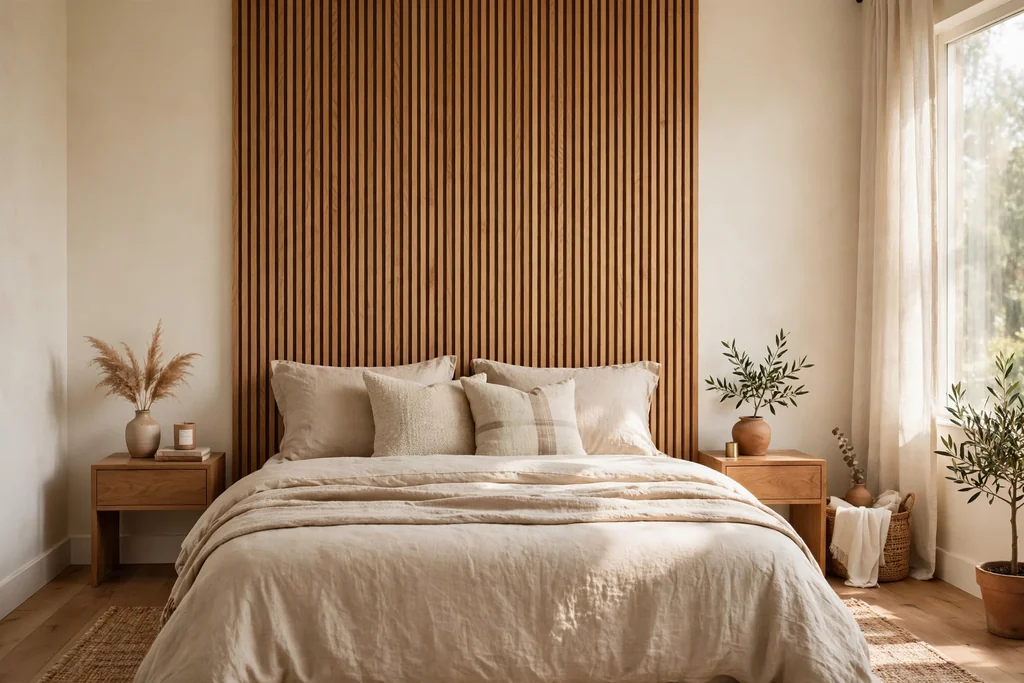
A vertical wood slat wall behind the bed adds warmth, rhythm, and shadow to an earthy bedroom, without a new color. Fit slim slats in warm oak or walnut, spaced evenly, from floor to ceiling or from the headboard up, and keep the wall behind the slats in a warm cream or sand so the gaps read as soft shadow. The wood grain and the repeated lines give a plain wall structure that suits modern and rustic rooms alike.
Measure the wall first and plan the slat widths on paper, so the outer slats match and the bed sits centered between them. Fix the slats firmly, and keep the headboard simple, since a busy headboard would fight the slat pattern. Dust the slats with a soft brush or a dry cloth, since dust collects in the gaps, and keep the rest of the wall plain so the slat wall stays the focus.
16. Mix Rust, Ochre, and Clay Cushions
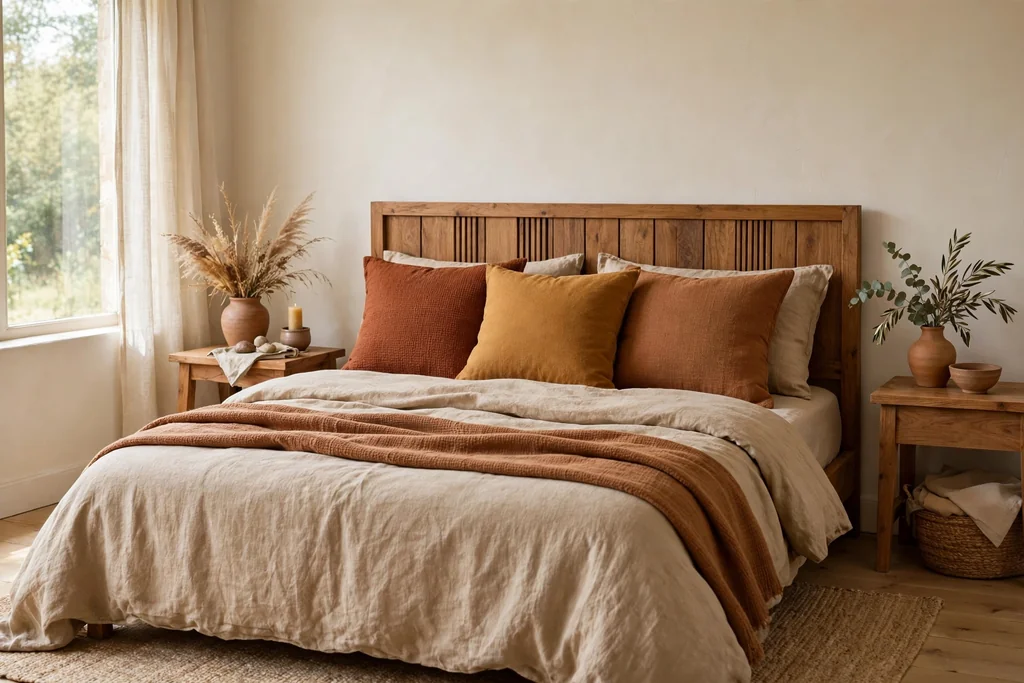
A cushion mix in rust, ochre, and clay gives the bed its earthy color story without repainting or buying new bedding. Start with two large cushions in plain sand or cream, add two medium cushions in rust and ochre, and finish with one small cushion in clay or a simple earth stripe. The mix works because the colors share a warm base, so they sit together even though no two cushions match exactly.
Keep the cushion fabrics varied, such as linen, cotton, and wool, so the bed feels soft to the touch as well as to the eye. Use washable covers where you can, since cushions near the head of the bed see daily use, and store spare covers in a basket so a seasonal swap takes minutes. If the bedding is already patterned, keep the cushions plain, so the bed does not gain two competing patterns at once.
17. Add Open Wood Shelving for Ceramics and Books
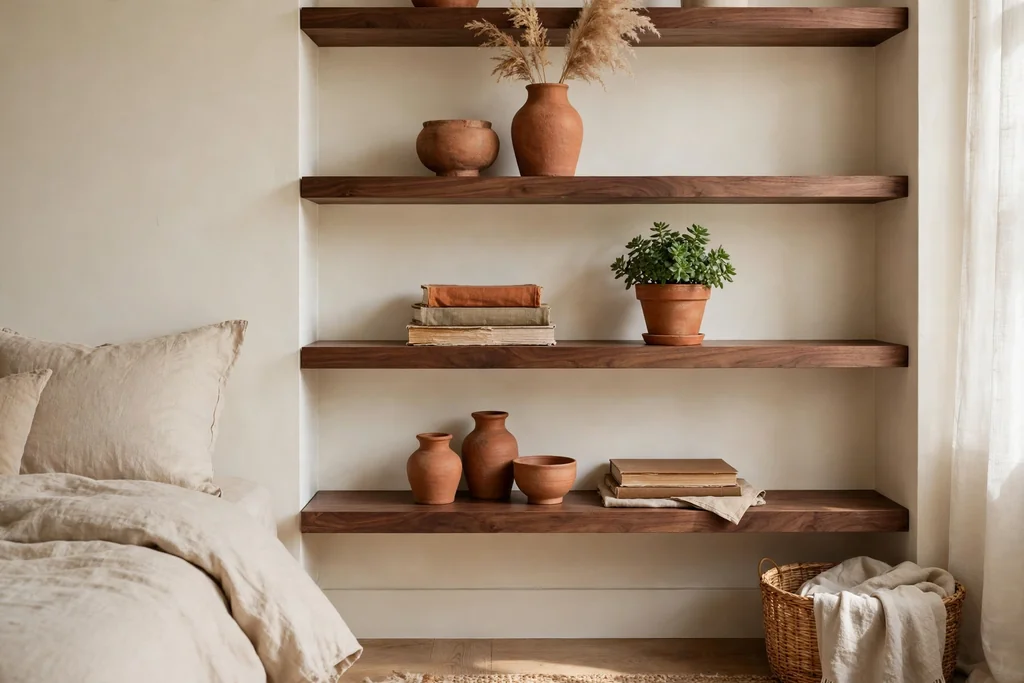
Open wood shelving in warm oak or walnut gives an earthy bedroom display space for ceramics, books, and plants, without a closed cabinet taking over the wall. Fit two or three shelves on one wall, with a picture ledge depth that holds books upright, and fill them with a small rotation of items: a terracotta pot, a stack of books, a stone object, and a trailing plant. Leave one shelf partly empty, so items can be moved without a struggle.
Fix the shelves firmly to the wall, since books and ceramics are heavy, and keep heavy items on the lowest shelf. Group items in odd numbers, and repeat one earth tone across the shelves, such as terracotta in a pot and a book spine, so the display looks planned. Dust open shelves regularly, since they collect dust faster than closed storage, and swap one or two items with the seasons to keep the display fresh.
18. Grow a Potted Olive Tree by the Window
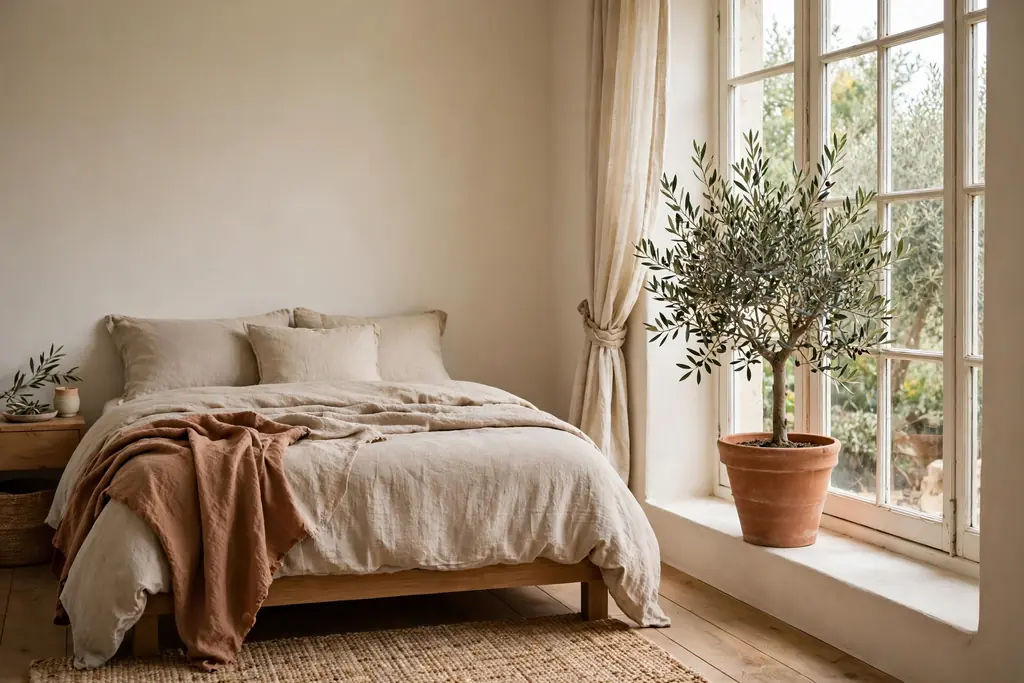
A potted olive tree by the window brings living green into an earthy bedroom and suits the Mediterranean side of the palette. Choose a young tree in a terracotta pot, place it where it gets bright daylight but stays clear of radiators and curtain cords, and keep the pot on a tray so watering does not mark the floor. The silvery green leaves sit well with sand walls, walnut wood, and clay pottery.
Check the light and water needs for your tree before you buy, since olive trees need bright light and soil that dries between waterings. Prune lightly to keep the shape compact, and rotate the pot now and then so the tree grows evenly toward the light. If the room gets little daylight, use a hardy indoor plant in the same terracotta pot instead, so the earthy styling stays even if the plant changes.
19. Set a Wood Bench at the Foot of the Bed
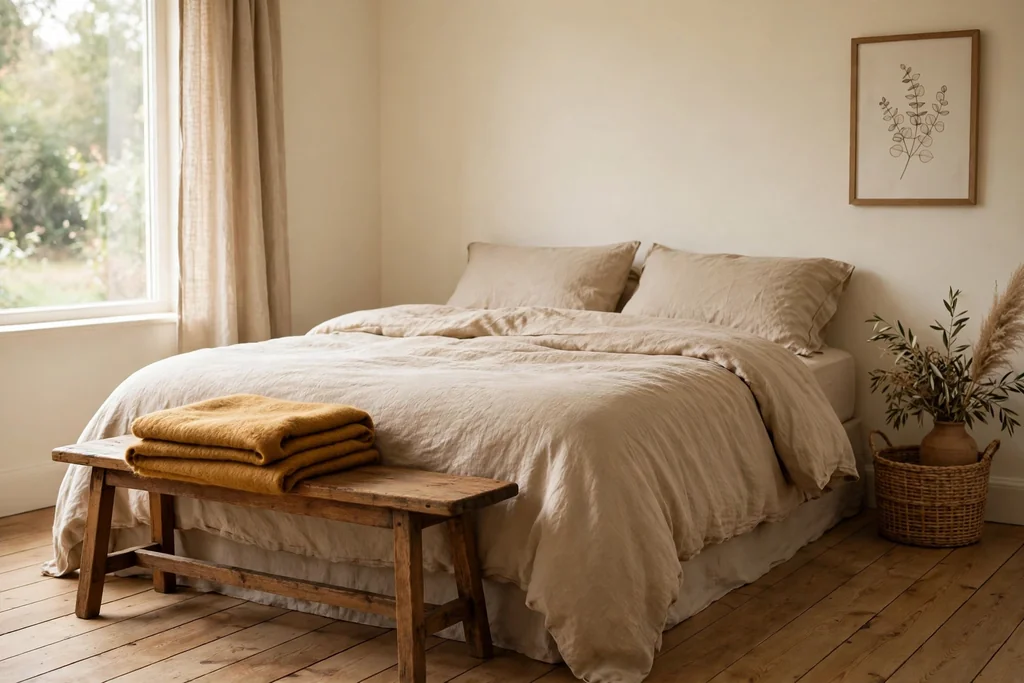
A wood bench at the foot of the bed gives an earthy bedroom a useful landing spot for folded throws, a bag, or tomorrow’s clothes. Choose a bench in walnut or warm oak to match the bed frame, with a simple slatted or solid top, and add a folded wool throw in ochre or clay across one end. The bench marks the end of the bed and keeps the room tidy, since items have a place other than the bed itself.
This suits a bedroom with enough floor space to walk around the bench without squeezing past it. Measure the bench length against the bed width, since a bench that is too long crowds the room and one that is too short looks lost. Keep the bench top mostly clear, with the throw and one small basket at most, so it stays useful rather than becoming a second storage pile.
20. Hang a Woven Rattan Pendant Light
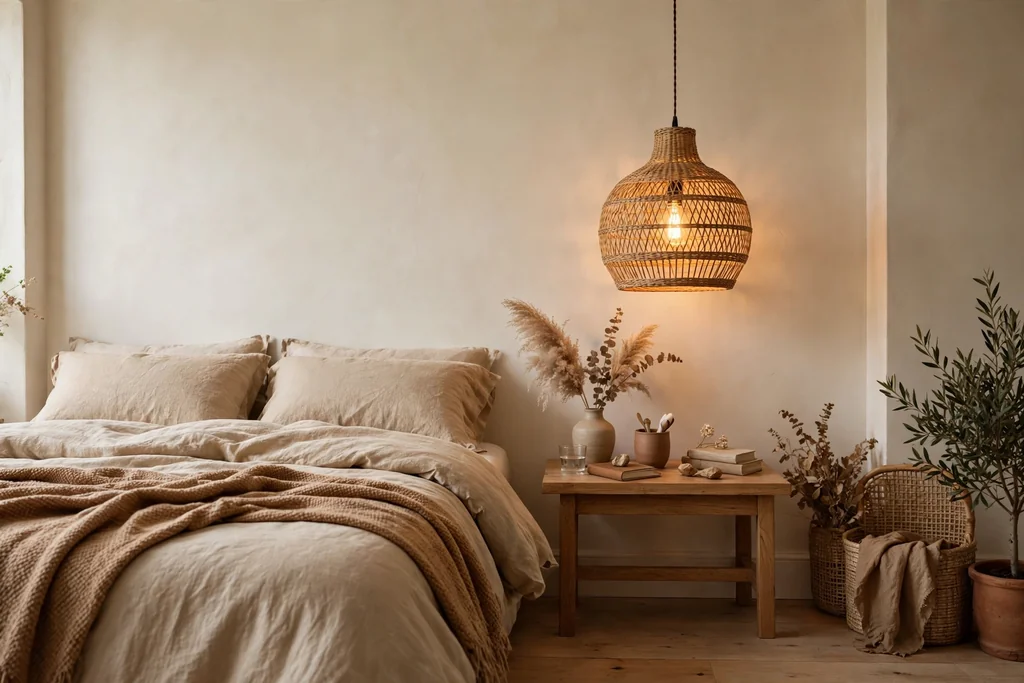
A woven rattan pendant light over a bedside table, a reading chair, or the center of the room adds a warm, natural glow to an earthy bedroom. The open weave throws soft patterned shadows in the evening, and the cane tone links to a rattan headboard, baskets, and jute elsewhere in the room. Choose a medium pendant with a warm bulb, hung high enough to clear heads and doors, and keep the rest of the ceiling plain.
Check the wiring and ceiling fixing before you hang any pendant, and have an electrician look at it if the wiring looks worn or the fitting is heavy. Pair the pendant with a small bedside lamp for reading, so you are not relying on the ceiling light alone. Dust the weave with a soft brush, since woven textures collect dust in the gaps, and keep the pendant away from curtain fabric.
21. Build an Earth Tone Window Seat Nook
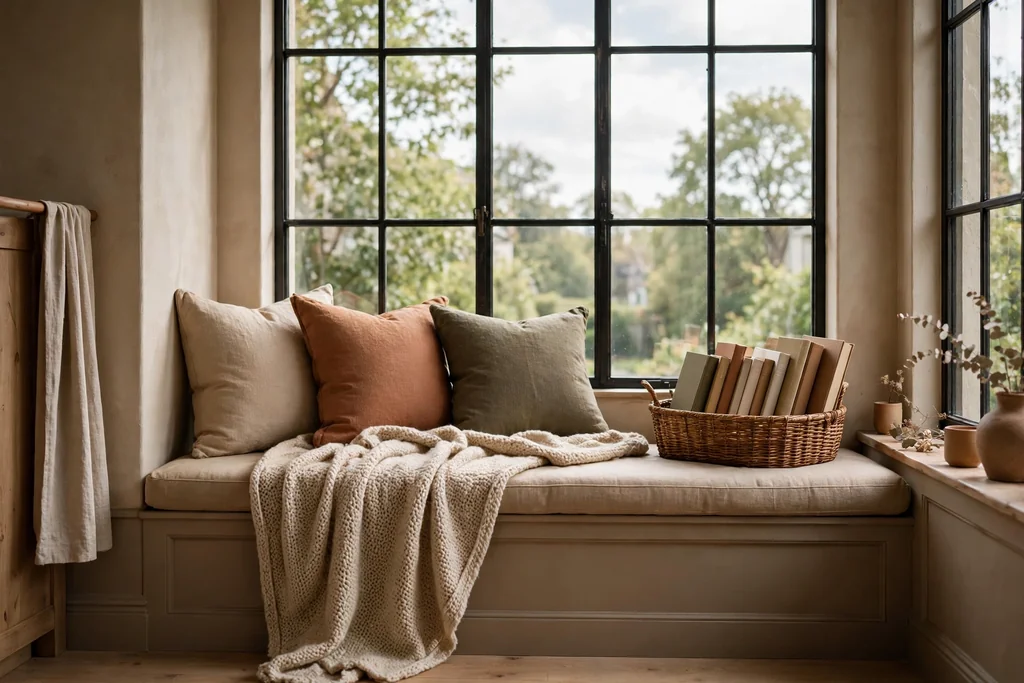
An earth tone window seat nook turns a bedroom window into a quiet sitting spot with cushions in sand, clay, and olive. Build or buy a low seat under the window, add a thick seat cushion in warm sand linen, then layer back cushions in clay and olive, with a wool throw folded at one end. A small basket of books beside the seat and a wall light above it make the nook usable in the evening as well as in daylight.
This suits a bedroom with a window wall that currently holds nothing but a radiator cover or an empty corner. Keep the seat depth generous enough to sit with legs up, and add a storage box under the seat for spare throws or books, so the nook stays tidy. If the window gets strong sun, use washable cushion covers, since sun and dust fade pale sand faster than darker earth tones.
22. Plan Tone on Tone from Sand to Chocolate
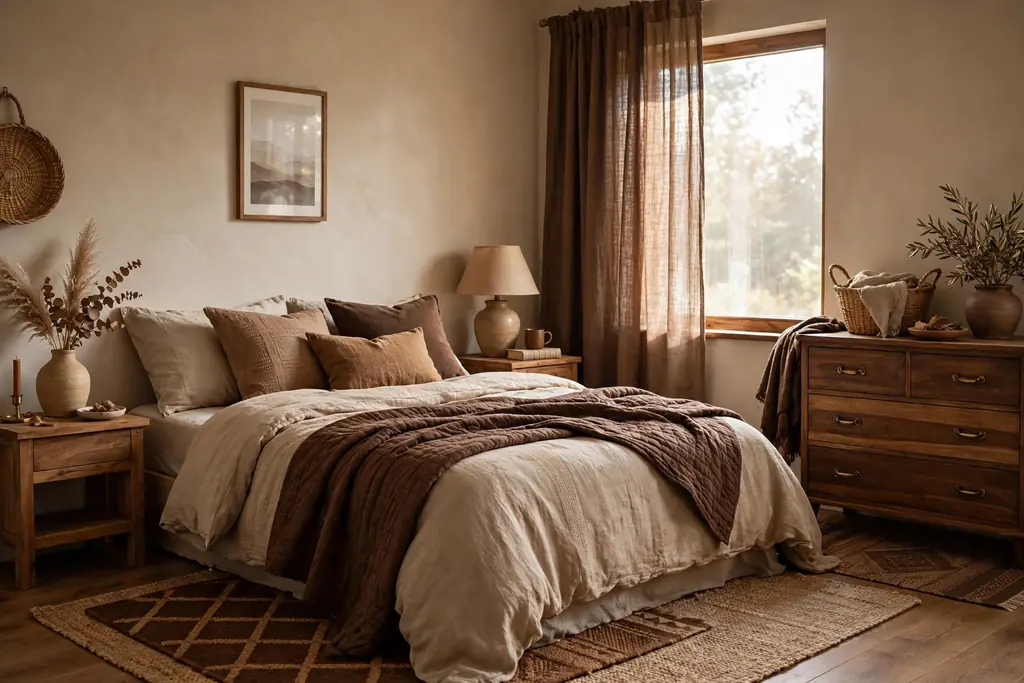
A tone on tone earthy bedroom uses shades from sand to chocolate across walls, bedding, curtains, and rugs, and it works because the small steps between shades create depth. Start with sand walls or bedding, move to warm taupe for the main furniture and curtains, and finish with chocolate cushions, a throw, and art frames. No single piece stands out sharply, but the room as a whole feels layered and finished.
This suits a bedroom where you want a calm, hotel like feel without a feature wall or a bright accent. The risk is flatness, so vary texture at every step: smooth cotton sheets, nubby wool, matte paint, woven baskets, and wood grain, all in earth tones. Stand back and check the room in daylight: if two shades blend into one, swap one item a shade darker or lighter. This is the most forgiving earthy scheme, since a new cushion or throw can shift the balance without a big change.
Conclusion
An earthy bedroom works best when the base stays warm and pale, the textures stay natural, and the earth tones stay limited to a few clear colors. Start with the bed wall and the bedding, since those two areas get seen every day, then add wood, jute, rattan, and pottery one layer at a time. Keep light warm, repeat each tone twice, and leave some plain space on the walls and the dresser, so the room feels restful rather than crowded. With those basics in place, you can shift the room with the seasons, swapping a throw or a cushion, without a full redecoration.
Save this list on Pinterest before you start, and work through it one idea at a time: bedding first for a quick refresh, then curtains and rugs, then walls and storage when you have a weekend to spare.
FAQs
What colors count as earthy tones for a bedroom?
Earthy tones are colors pulled from nature: sand, cream, taupe, terracotta, clay, ochre, warm brown, olive, and sage. Start with cream or sand on the large surfaces, add one stronger earth tone, such as terracotta or olive, on the bed wall or the bedding, and repeat that tone once in a cushion or a vase. Keep bright or neon colors out of large areas, so the room stays calm for sleep.
How do I keep an earthy bedroom from looking dull?
Mix textures at every step, since a muted palette needs texture for depth. Pair smooth cotton sheets with nubby wool, matte paint with wood grain, and soft linen with rough jute or woven rattan. Add one darker accent, such as walnut or chocolate, in a few small places, and let warm light do some work in the evening, since warm bulbs suit clay and wood far better than cool white light.
Can I create an earthy bedroom in a small room or a rental?
Yes. A small room suits an earthy palette, since pale sand walls, linen curtains, and a jute rug keep it feeling light. In a rental, use bedding, curtains, cushions, baskets, and pottery for the main changes, and skip paint or fixed shelving, so the changes are furniture and fabric rather than permanent work. Keep one main earth tone and one natural texture, and the room will read as earthy without a full renovation.
What is the easiest earthy bedroom change with no paint?
Change the bedding first, since the bed takes up the most visual space. Layer cream sheets, a sand quilt, and a clay or olive throw, then add cushions in rust and ochre. Add sand linen curtains and a jute rug next, then finish with terracotta pottery and woven baskets. Those four layers give a clear earthy look with no tools and no paint.
Which wood tones suit an earthy bedroom best?
Warm woods suit an earthy bedroom best: walnut, warm oak, and mid tone pine all sit well with sand, clay, and olive. Keep one wood tone across the main pieces, such as the bed and nightstands, so the room reads as settled rather than busy. Keep the finish matte or satin rather than high gloss, which can look harsh next to soft linen and wool.
How much earthy color should I use in a bedroom?
Use earth tones on about two or three layers, such as the bed wall, the bedding, and one accent, and keep the rest of the room in warm neutrals. Repeat each earth tone at least twice, for example terracotta on a wall and in a vase, so the color looks planned. If the room starts to feel heavy, swap one dark item for a paler sand version, and add a plant or a cream cushion to lift the palette.