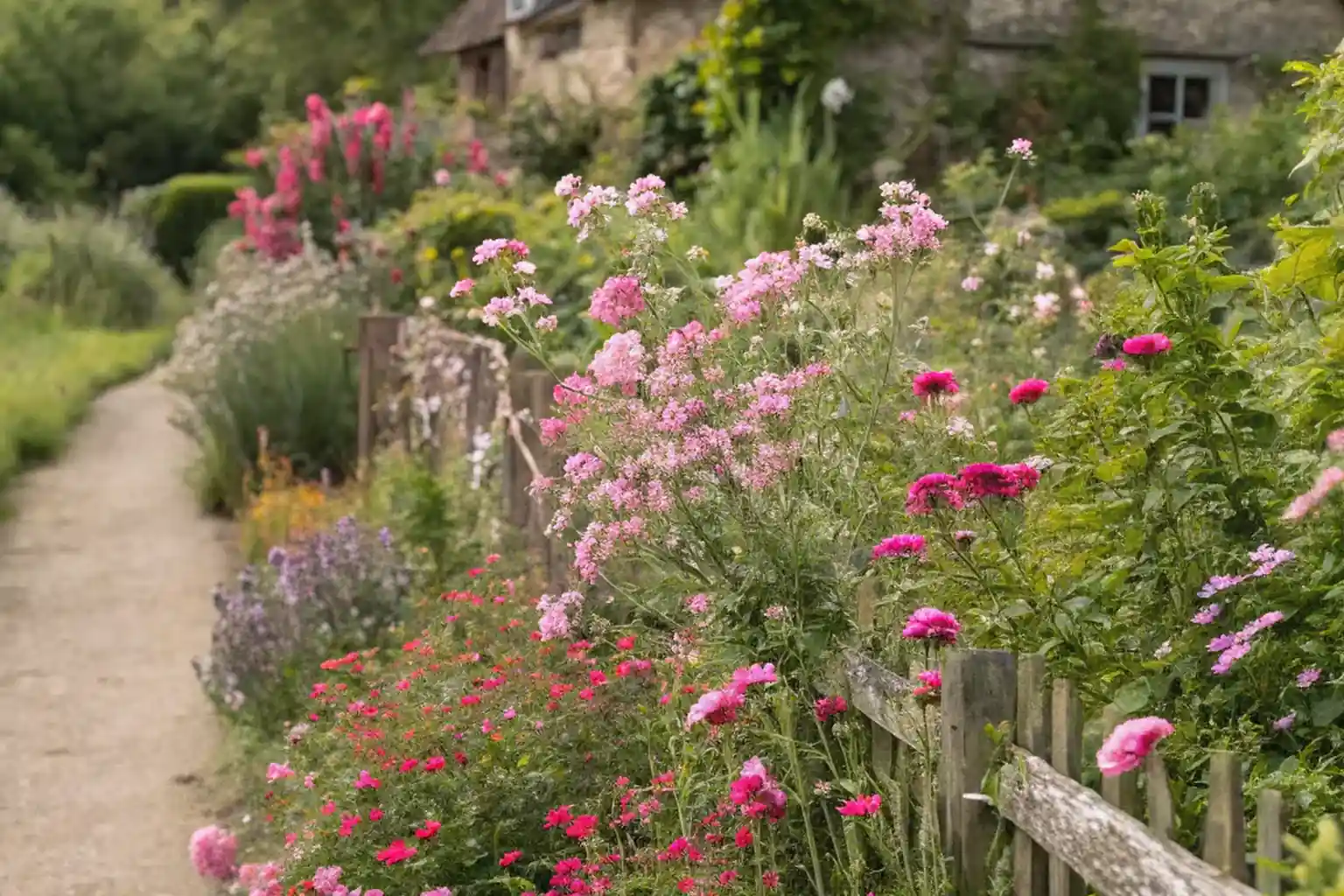
Pink flowers can carry a whole garden when you place them with a plan instead of scattering them one plant at a time. These 18 pink flower garden ideas range from a single window box to a rose border, a hydrangea hedge, and a small flowering cherry, so there is an option for a large yard, a narrow side bed, or a rented patio. Start with the spot you see most often, group plants in threes or drifts rather than singles, and repeat the same pink in two or three places so the garden reads as one design.
Key Takeaways
- Plant pink in groups and drifts, not single plants, so the color reads clearly from the house and the street.
- Spread the season: tulips and phlox in spring, roses and peonies in early summer, coneflowers and dahlias later on.
- Use pots, window boxes, and hanging baskets when bed space is limited or the garden is rented.
- Soften strong pink by pairing it with white flowers and green foliage.
- Check the plant label for sun, spacing, and your growing zone before you buy.
1. Line a Front Path With Pink Petunias
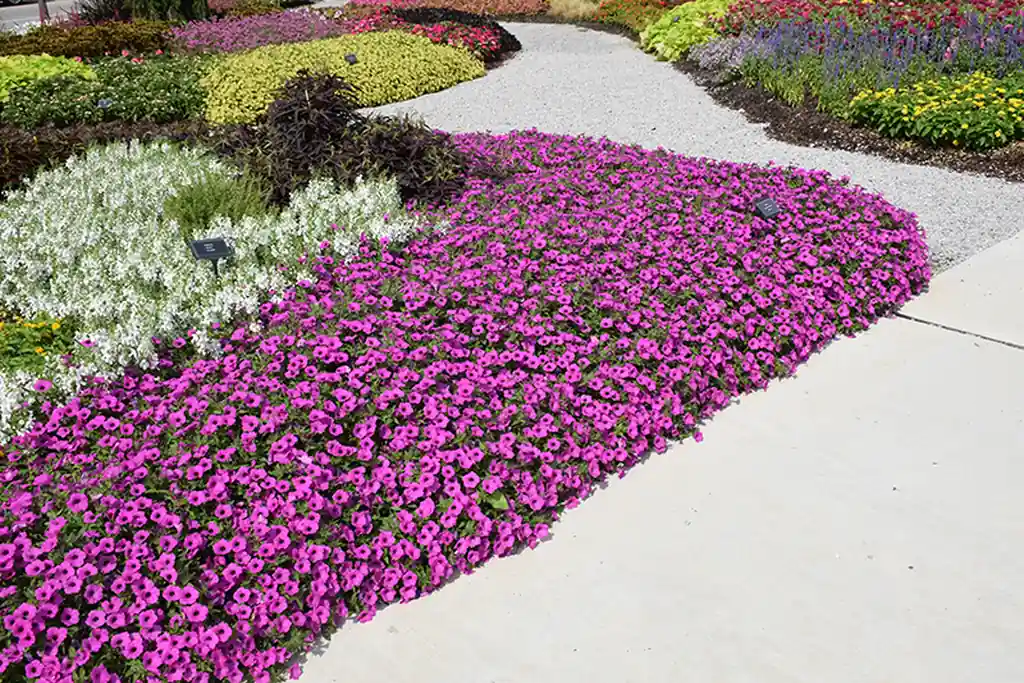
A low ribbon of pink petunias along a front path gives color from late spring until frost and takes very little space. Plant a single row about a hand span from the path edge, or a double row in a wider bed, and keep the variety the same along the whole run so the line looks deliberate. Trailing petunia types spill softly over paving, while compact types stay neater near a door. Water at the base, pinch off faded blooms when you pass, and replace the row each year, since petunias are grown as annuals in most gardens.
2. Grow a Pink Rose Border Along a Fence
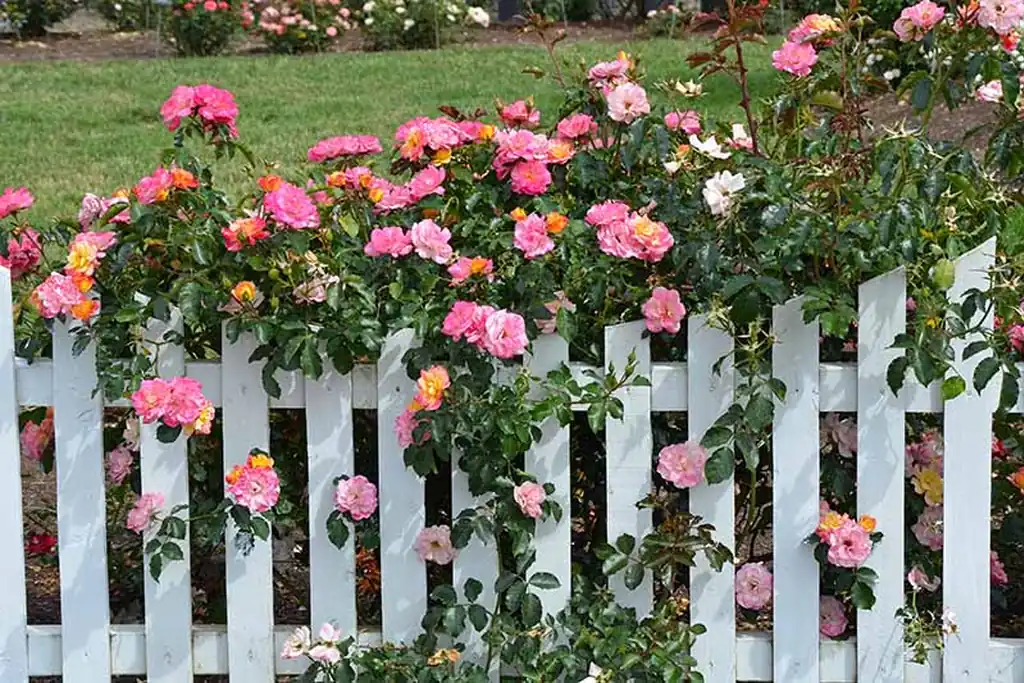
Pink shrub roses planted along a fence give height, repeat flowers, and a clear backdrop for shorter plants in front. Space the bushes according to the label, mulch the soil to hold moisture, and prune in late winter or early spring following the guidance for your rose type. A plain wood or white painted fence shows the color well. Before you buy, check flowering times and disease resistance for your area using a reference such as the RHS plant pages. If a full border is too much, three bushes grouped at a corner give a similar effect.
3. Plant Pink Tulips in Drifts for Spring
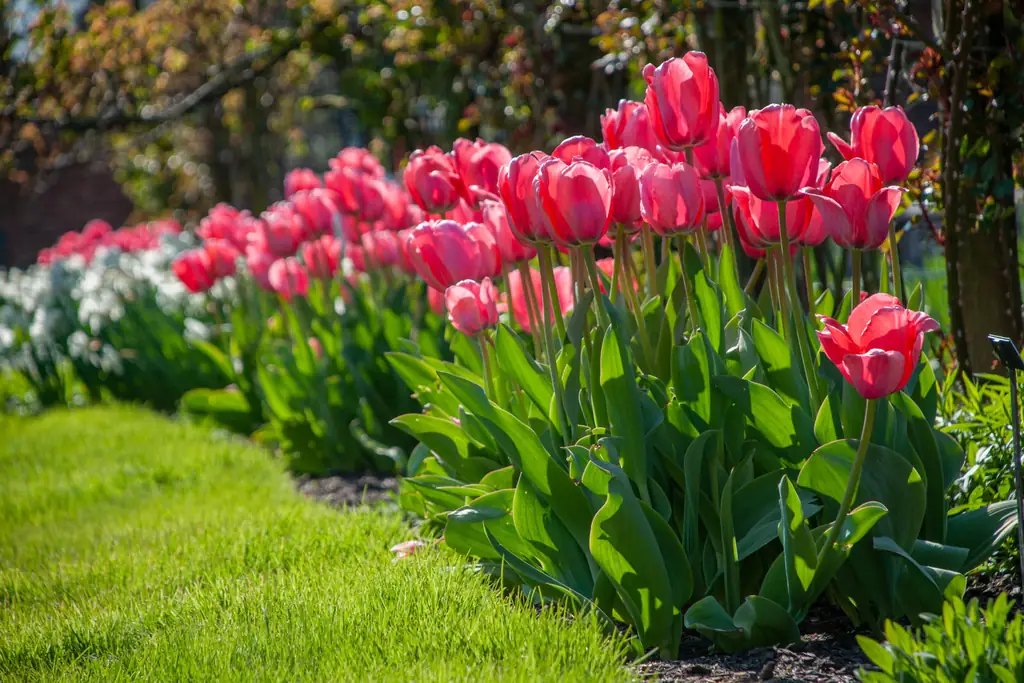
Tulips look best planted in loose drifts of nine or more bulbs of one variety rather than in straight single rows. Set bulbs in autumn, pointed end up, at about three times their own depth, in soil that drains freely so they do not rot over winter. Mix an early and a late pink variety to stretch the display, and let the foliage die back naturally after flowering so the bulbs feed for next year. In small beds, plant pink tulips between later perennials so their leaves hide the fading tulip foliage.
4. Build a Low Hedge From Pink Hydrangeas
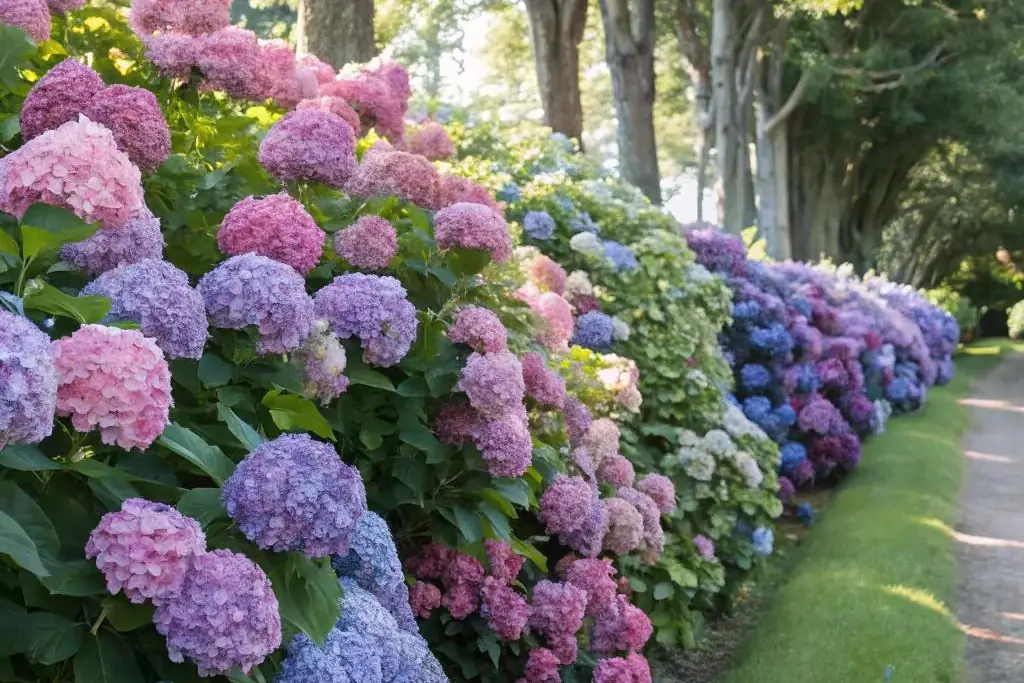
A short row of hydrangeas makes a soft hedge that flowers for weeks in summer and needs no clipping to stay tidy. Choose a compact bigleaf or panicle type, plant the row where it gets morning sun and some afternoon shade in hot areas, and keep the soil evenly moist in the first season. Note that on bigleaf hydrangeas, soil acidity can shift flowers between pink and blue, so if you want to keep them pink, follow the label advice for your soil. Leave the faded heads on over winter for structure, then tidy in spring.
5. Give Pink Peonies a Sunny Focal Spot
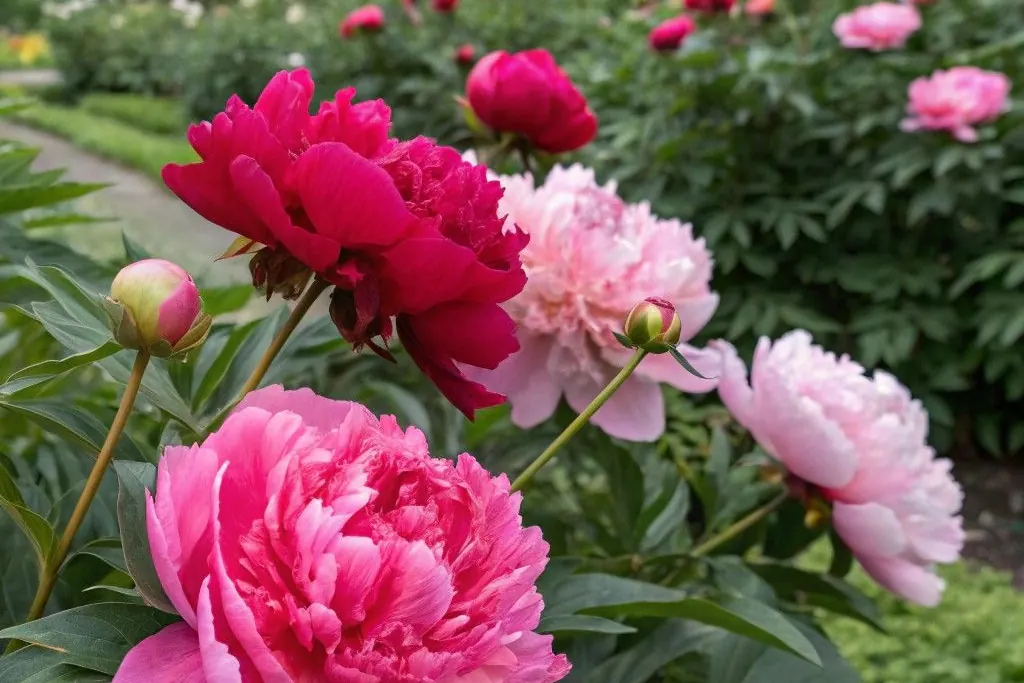
One group of pink peonies can anchor a whole border in late spring. Plant the roots in autumn or early spring with the buds just below the soil surface, since planting too deep is a common reason peonies fail to flower. Give them full sun, room for air to move around the leaves, and a support ring before the heavy blooms open. Peonies resent being moved, so choose the spot with care and expect the clump to improve each year. Ant activity on the buds is normal and does not need treatment.
6. Add Pink Coneflowers for Bees and Butterflies
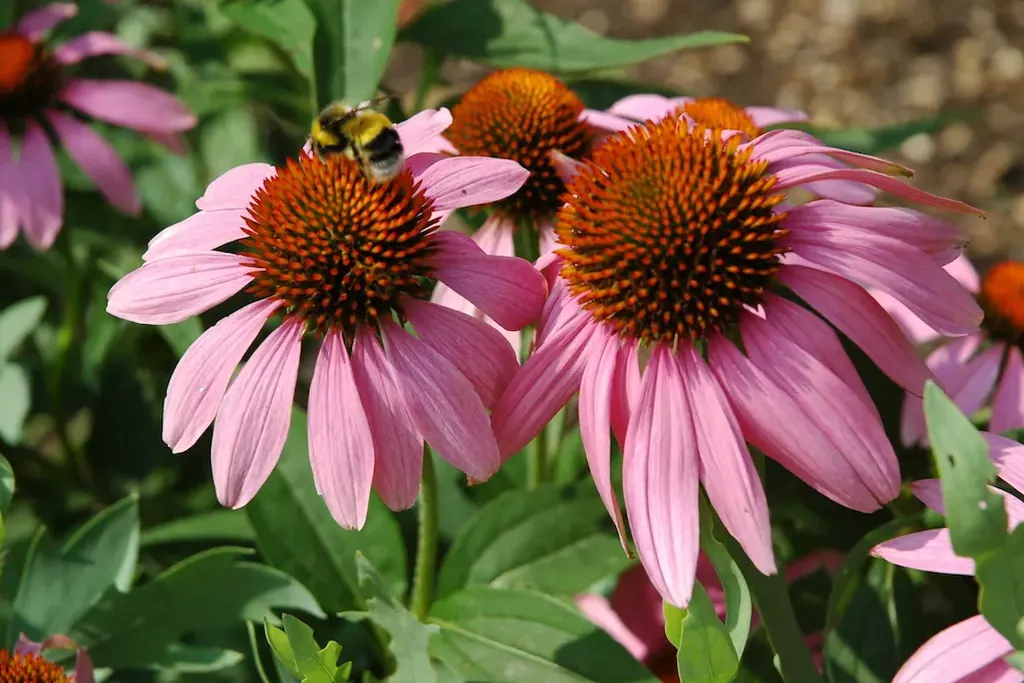
Pink coneflowers flower for a long stretch of summer and are visited steadily by bees and butterflies. Plant them in groups of three or five in full sun and well drained soil, and water only while they settle in, because established plants cope with dry spells better than many border flowers. Leave some seed heads standing in autumn for birds and winter shape, then cut the stems down in spring. Divide crowded clumps every few years to keep them flowering well. Coneflowers also hold up in a vase, so they pair well with the cutting bed in Idea 15.
7. Keep Color Going With Pink Dahlias
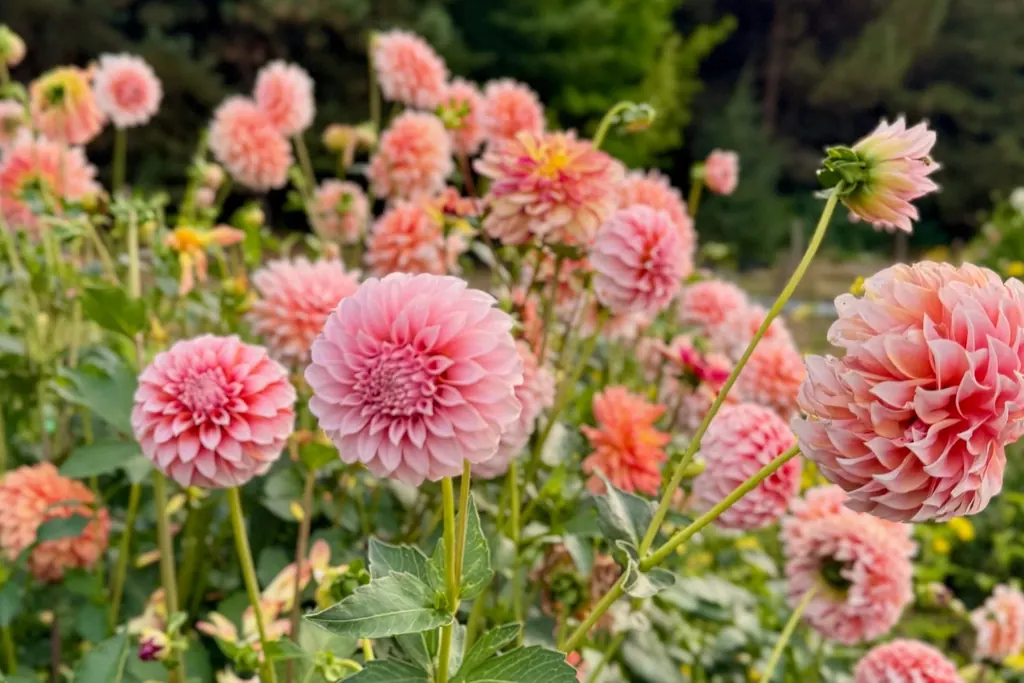
Dahlias fill the gap from midsummer until the first frost, when many pink perennials are finished. Start tubers in pots under cover or plant them out after frost risk has passed, in a sunny bed with rich soil. Stake tall types early, before the stems get heavy, and pick or deadhead often to keep new buds coming. A row of pink dahlias along a fence or at the back of a border gives a strong late show. In cold areas the tubers are usually lifted and stored dry over winter, so check the advice for your zone.
8. Fill Window Boxes With Pink Annuals
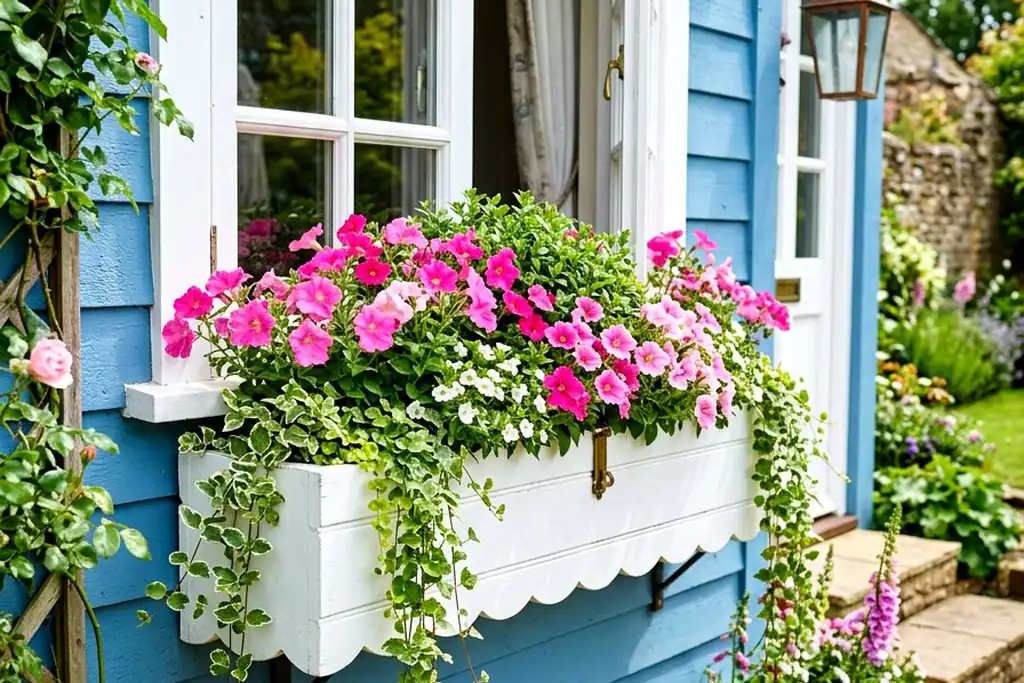
A window box is the fastest pink flower garden idea to finish, and it works where there is no bed at all. Use a box with drainage holes, fill it with fresh potting mix, and combine one upright pink flower, such as geraniums, with a trailing one, such as trailing petunias or verbena, so the box looks full from the street. Boxes dry out quickly in sun and wind, so expect to water daily in hot weather. Feed lightly through the season, swap tired plants out as needed, and refresh the whole box each spring.
9. Mix Hollyhocks and Foxgloves for a Cottage Border
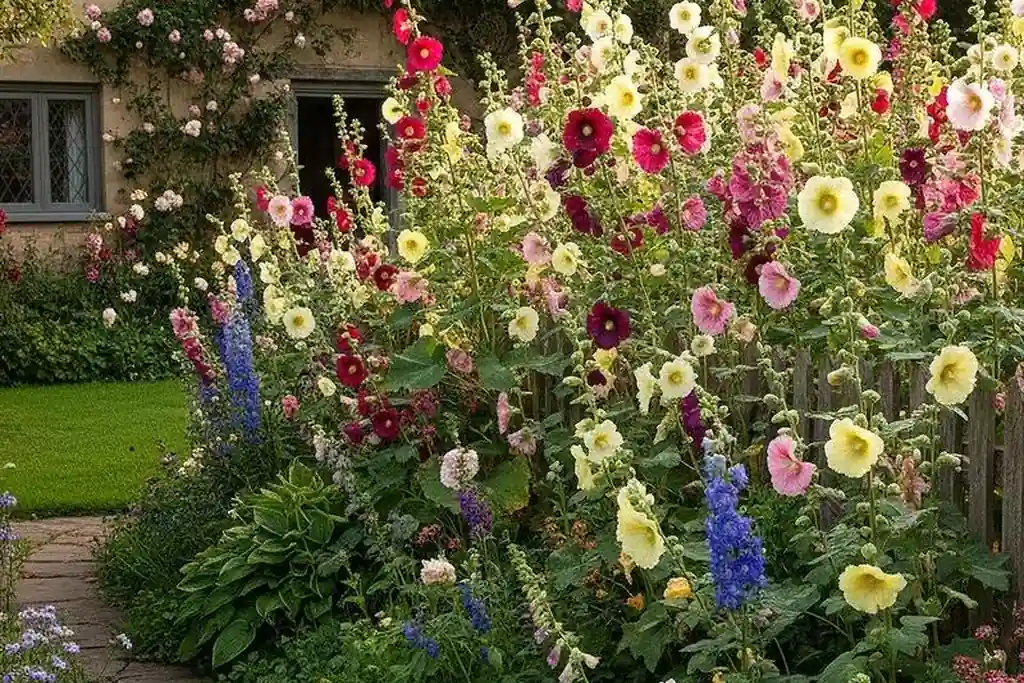
Tall spires give a pink garden height and a relaxed cottage feel. Sow or plant hollyhocks and foxgloves toward the back of a border, with lower pink flowers such as hardy geraniums in front to cover their base. Both plants often self seed, so once they settle you may get new plants each year without buying more, though the colors can shift over time. Stake hollyhocks in windy gardens, and note that foxgloves are biennial, flowering in their second year. Keep foxgloves away from areas where toddlers or pets might eat the leaves, as the plant is toxic if eaten.
10. Plant One Small Pink Flowering Cherry Tree
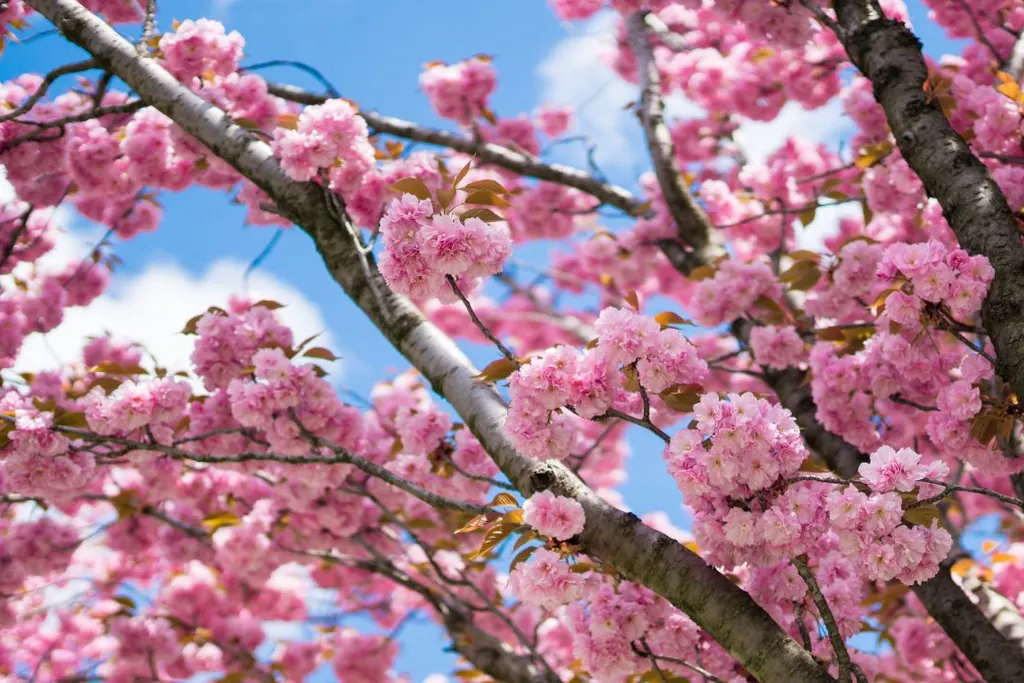
A single small flowering cherry gives a short, memorable burst of pink blossom in spring and a clear focal point for the rest of the year. Choose a variety sized for your space, since mature spread varies a lot between types, and plant it where falling petals will not be a problem, such as over lawn rather than over a car or a pond. Water well through the first dry season while the roots establish. Underplant the tree with spring bulbs or creeping phlox so the ground below it earns its place after the blossom ends.
11. Group Pink Geraniums in Terracotta Pots
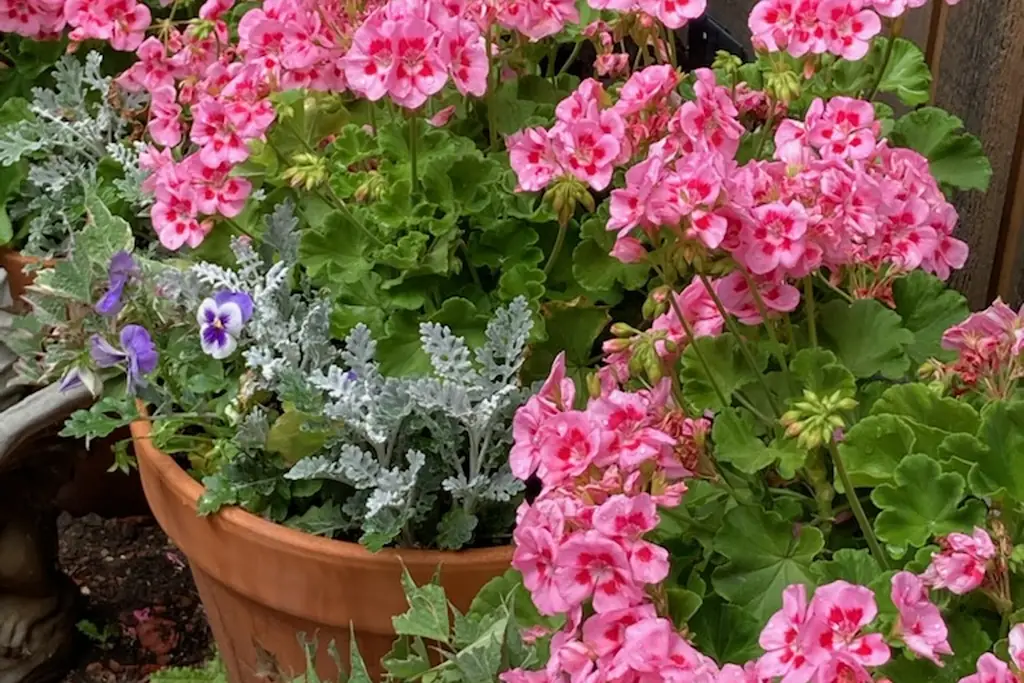
Pots let you place pink exactly where a bed is missing: on steps, beside a door, or along a sunny wall. Group three terracotta pots of pink geraniums in different sizes for a fuller look than one large pot alone. Terracotta dries out faster than plastic, so check the soil with a finger before watering, and choose a pot with a drainage hole plus a saucer on paving. Move the group as the season changes to follow the sun or to frame an entrance. In mild areas geraniums can be overwintered indoors on a bright sill.
12. Pair Pink Blooms With White for a Calmer Bed
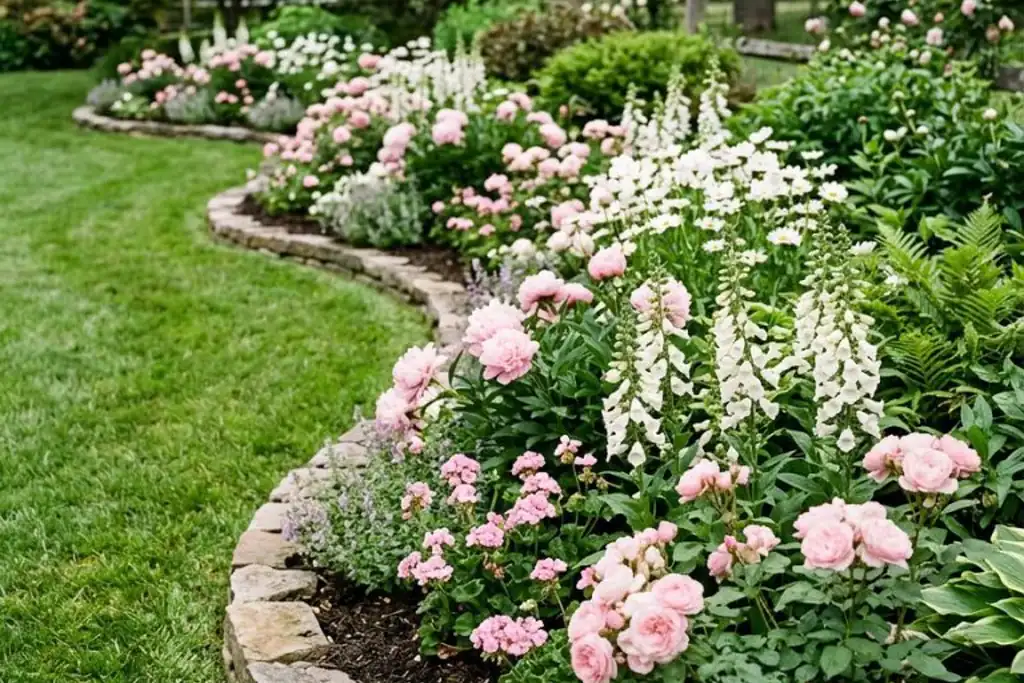
If a full pink bed feels like too much color, mix pink with white in roughly equal amounts. White roses, white cosmos, or white foxgloves between pink clumps rest the eye and make the pink look clearer rather than weaker. Keep the foliage mostly green and avoid adding a third strong color, so the bed stays calm. This pairing suits front gardens seen from the street and beds outside windows, where you look at the planting every day. Repeat the same pink and white pairing in a pot or box nearby to link the spaces.
13. Carpet a Sunny Slope With Creeping Phlox
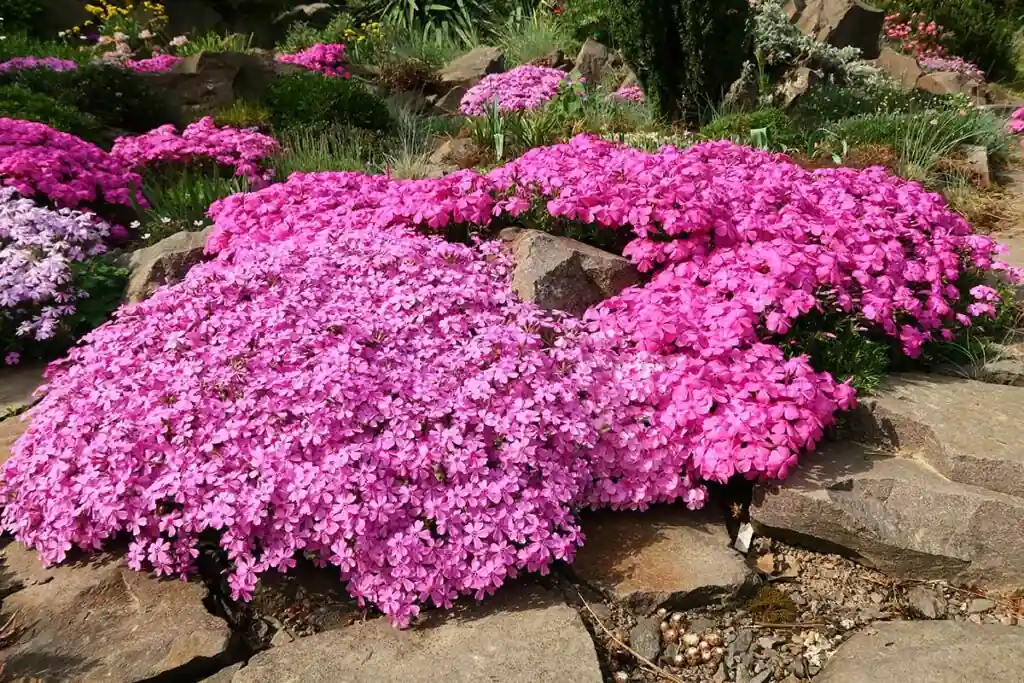
Creeping phlox covers banks, rock garden edges, and the front of borders with a mat of pink flowers in spring. Plant small divisions about a hand span apart on a sunny, well drained slope, water them through the first season, and they will knit together and spill over stones and edging. The evergreen mat also helps hold soil on a bank and leaves less room for weeds. Trim lightly after flowering to keep the mat dense. Where the slope is shaded or damp, choose a different ground cover, because phlox sulks without sun and drainage.
14. Train Sweet Peas Up a Trellis or Obelisk
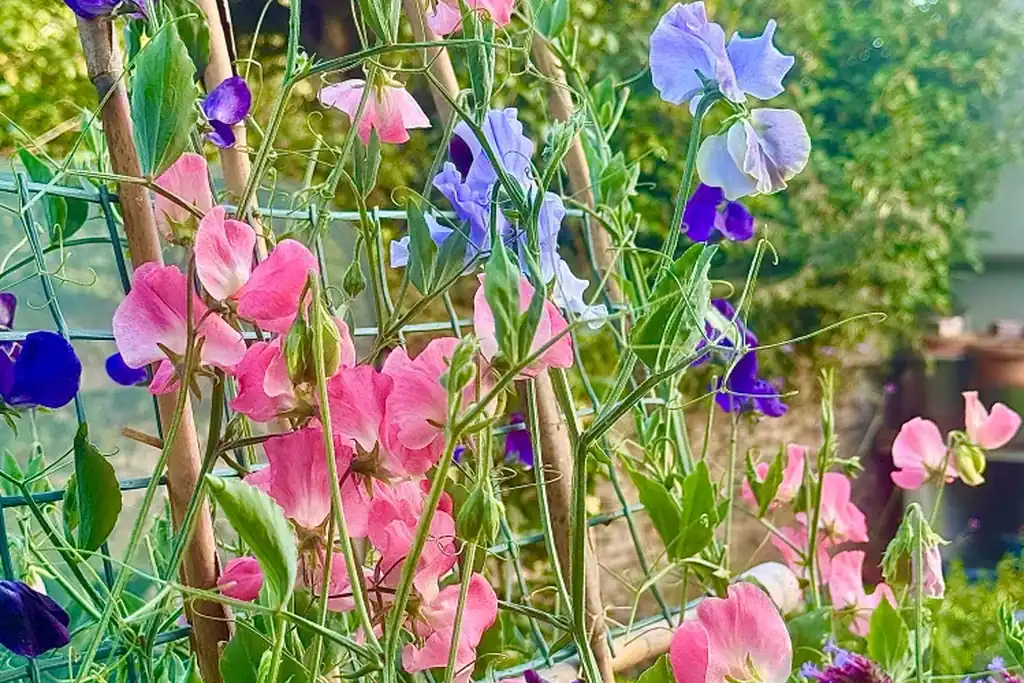
Sweet peas bring pink flowers and scent to a small footprint by growing upward. Sow seeds in pots or directly in the ground in spring, and give the seedlings a trellis, obelisk, or netting to climb from the start. Tie young stems in loosely as they grow, water at the base, and pick the flowers every few days, because regular picking is what keeps more buds coming. A wigwam of canes in a large pot works on a patio if you have no bed. Stop picking late in the season if you want to save seed for next year.
15. Set Aside a Small Pink Cutting Bed
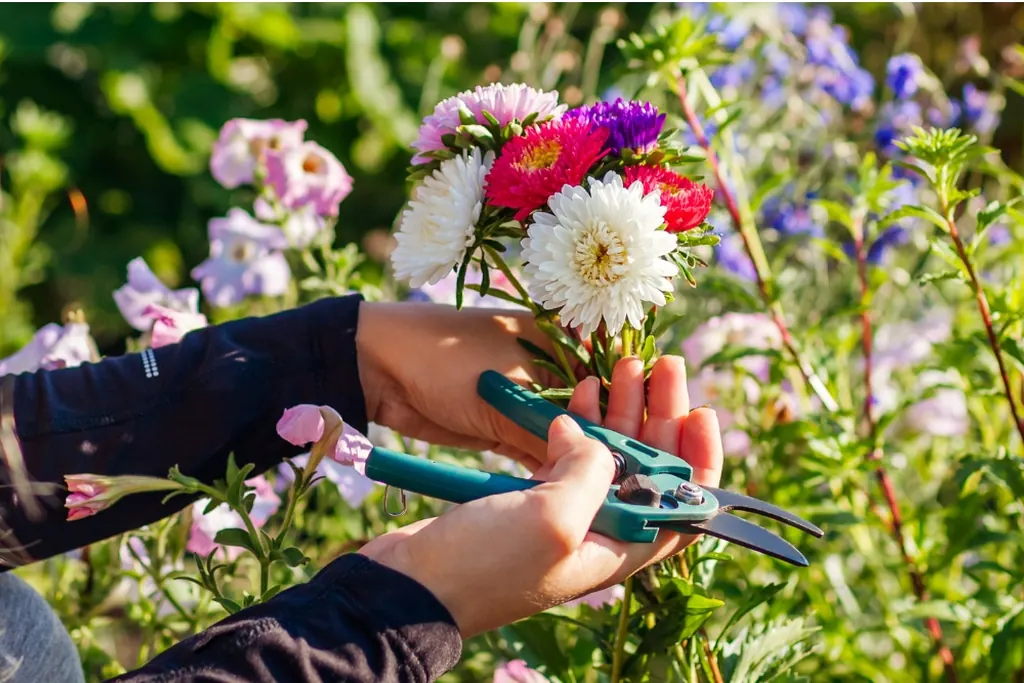
A narrow cutting bed, even a single row along a fence, keeps the display borders tidy while giving you pink flowers for the house. Grow rows of pink zinnias, cosmos, dahlias, and coneflowers spaced for picking rather than for looks, and cut in the morning into a bucket of water. Bringing your own pink stems indoors is an easy way to refresh everyday dining table decor without buying flowers. Keep the bed watered and fed more than the display borders, and re-sow fast annuals such as cosmos if gaps appear by midsummer.
16. Sow a Pink Wildflower Patch
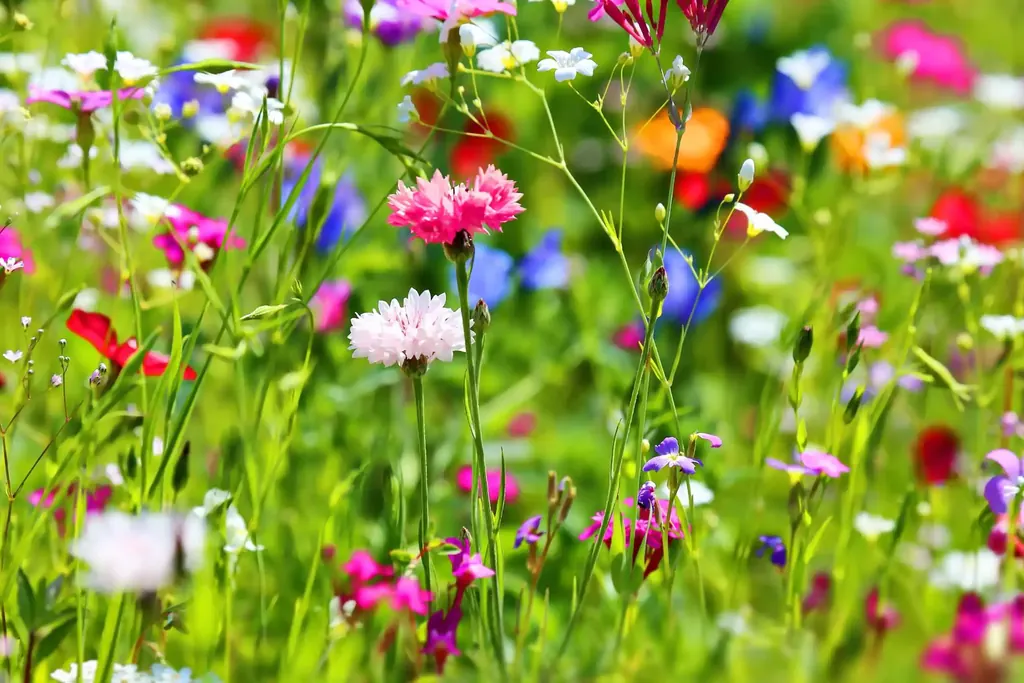
A small wildflower patch is the lowest effort way to get a loose, natural spread of pink. Choose a seed mix with pink cornflowers, cosmos, and poppies suited to your region, clear the patch of weeds first, and sow thinly on bare, raked soil in spring or autumn as the packet directs. The first year can look patchy while perennials establish, so set expectations and leave the patch uncut until late in the season to let plants self seed. Keep the patch away from formal beds if you prefer tidy edges, and add a simple mown or gravel edge so it reads as a choice, not neglect.
17. Surround a Garden Bench With Pink Planting
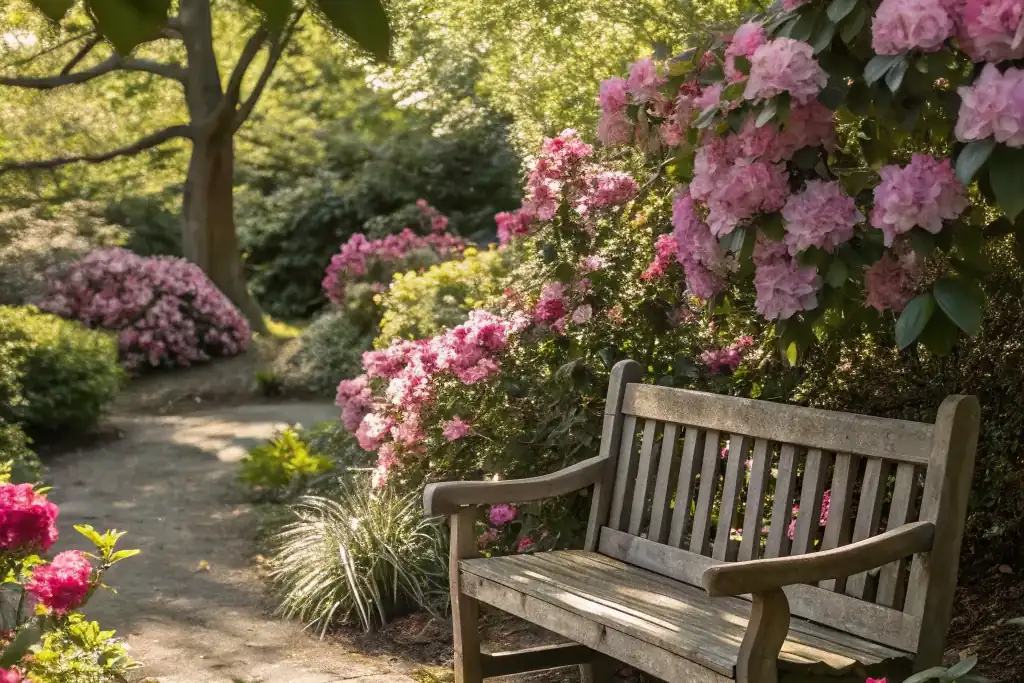
Planting pink flowers around a bench turns a seat into a destination and gives the color a purpose. Place low pink plants such as hardy geraniums and creeping phlox at the front, taller roses or hollyhocks behind the seat, and leave a clear step or two of paving at the bench feet. Scented pink roses or sweet peas nearby make the spot more inviting in the evening. For layout ideas for the seating itself, see these fireplace seating ideas, which translate well to a garden corner. Keep plants off the seat edges so the bench stays easy to use.
18. Hang Baskets of Pink Flowers by the Door
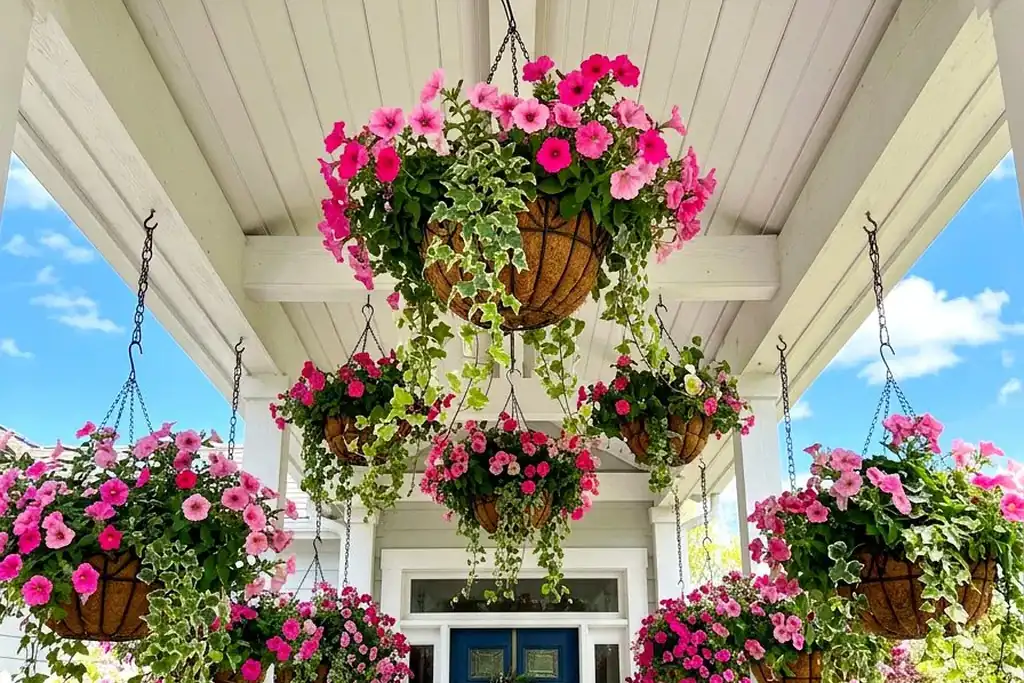
Hanging baskets put pink flowers at eye level and finish an entrance faster than any bed change. Line a basket, fill it with potting mix, and plant pink trailing petunias, fuchsias, or geraniums around one upright center plant. Hang the basket on a bracket rated for the weight of a watered basket, which is heavier than most people expect. Baskets dry out fast, so check them daily in summer and water until it runs from the base. Deadhead weekly and feed lightly, and bring baskets under cover if a hard frost is forecast early or late in the season.
Conclusion
A pink garden does not need every idea on this list. Pick one structure, such as a rose border, a hydrangea row, or a flowering cherry, then add two or three supporting pieces, such as pots by the door, a window box, and phlox at the front of the bed. Spread the flowering across spring, summer, and late season so the color does not arrive and leave in one month. When you bring cut pink stems inside, they link the garden to calmer indoor spaces, such as the rooms in these fall living room decor ideas.
Save this list on Pinterest before your next nursery trip, and work through it one area at a time: structure first, then seasonal fill, then pots and baskets.
FAQs
What are the easiest pink flowers for beginners?
Petunias, geraniums, and zinnias are forgiving choices. They flower for a long season, cope with basic care, and show quickly whether a spot suits them. Start them in pots or a window box if you are unsure, because you can move the container to better light. Coneflowers and creeping phlox are easy perennials once established, needing little beyond water in their first season and a tidy up once a year.
How do I keep pink flowers blooming across the whole season?
Plan by season rather than by plant alone. Tulips, phlox, and cherry blossom cover spring. Roses, peonies, and hydrangeas carry early and mid summer. Coneflowers, dahlias, and repeat annuals such as petunias and zinnias finish the year. Deadhead spent flowers where the label advises it, water during long dry spells, and feed container plants regularly, because pots run out of food faster than beds.
Which pink flowers grow well in part shade?
Hydrangeas are the most useful pink flower for part shade, and fuchsias in baskets also do well out of full sun. Foxgloves cope with light shade at the edge of trees. Most of the other ideas on this list, including roses, peonies, dahlias, and phlox, flower best with at least half a day of sun. If your garden is mostly shade, use pink in pots that you can place in the sunniest spots you have.
Can I use these ideas in a small garden or a rental?
Yes. Ideas 8, 11, 14, and 18 use window boxes, pots, a cane wigwam, and hanging baskets, none of which change the ground. A single flowering cherry in a large pot or one hydrangea in a half barrel gives structure without planting in the soil. Keep receipts for brackets and check your lease before fixing anything to walls or fences, and group containers so the space still looks planned rather than crowded.
Do pink flowers attract bees and butterflies?
Many do. Coneflowers, sweet peas, and wildflower mixes with cornflowers are all visited by pollinating insects through the season. Single, open flowers are easier for insects to use than very double blooms, so if wildlife matters to you, mix some single flowered varieties in with the doubles. Avoid spraying open flowers with insecticide, and leave some seed heads standing in autumn for birds.
When should I plant pink perennials and bulbs?
Plant tulip bulbs in autumn, at about three times their own depth, so they flower the following spring. Peonies and most hardy perennials go in during autumn or spring while the soil is workable. Dahlias wait until after the last frost in cold areas. Annuals such as petunias and zinnias go out after frost risk has passed. Always follow the label or packet for your own zone, because dates shift a lot between regions.