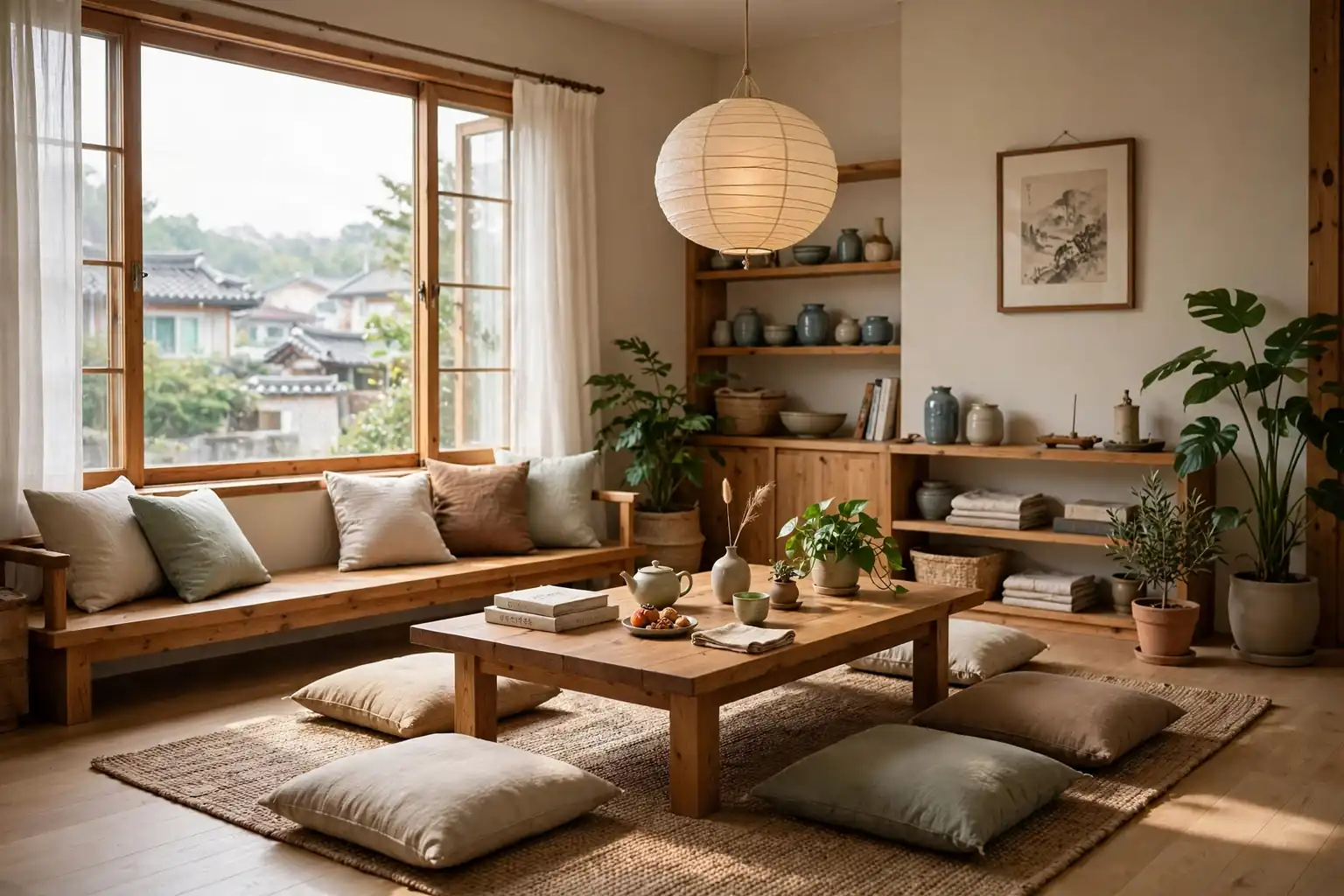
A Korean living room often feels calm at first glance, then personal on a closer look. Low seats, pale wood, and plain walls leave room for details that matter: a handmade cloth, a favorite bowl, a plant by the window, a book left open on a low table. These 18 Korean living room decor ideas borrow that balance, favoring comfort, natural materials, and objects with a story. Start with the floor and the light, then add color and personal pieces one at a time. For a related lesson in keeping a pale room warm and lived in, these Swedish living room ideas show how soft layers can carry a simple base.
Key Takeaways
- Keep the base simple: pale walls, warm wood floors, and low furniture give personal details room to show.
- Sit low when you can: floor cushions, a low sofa, and a low table make the room feel relaxed and close to the ground.
- Use soft, warm light: paper lamps, low lamps, and candles suit evening time better than one bright ceiling light.
- Add color through cloth and ceramics, not through many painted walls: bojagi patchwork, cushions, and bowls are easy to change.
- Let personal objects lead: books, photos, records, and handmade pieces give the room its character.
- Keep one surface clear and paths open, so a room full of loved things still feels calm and easy to tidy.
1. Build the Room Around Low Floor Seating
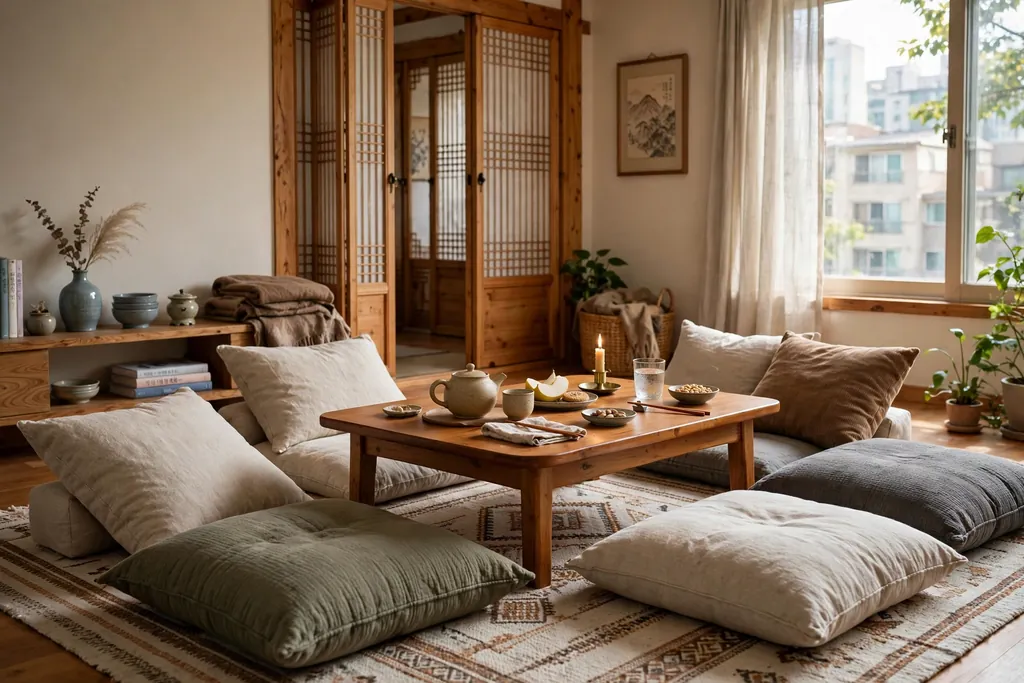
Set a low seating group at the center of the room, with thick floor cushions or a low platform sofa on a rug. Sitting low changes how a room feels: people sit closer, the ceiling feels higher, and the space suits tea, board games, and long talks. Choose cushions with firm filling and washable covers, since floor seats get daily use.
Place the cushions around a low table, with enough room to stretch legs and set down cups. Keep a basket of extra cushions nearby for guests, and add a thin backrest cushion against the wall or a low bench for anyone who needs back support. This layout works well in small rooms, where a tall sofa can crowd the space.
2. Hang a Hanji Paper Pendant for Soft Light
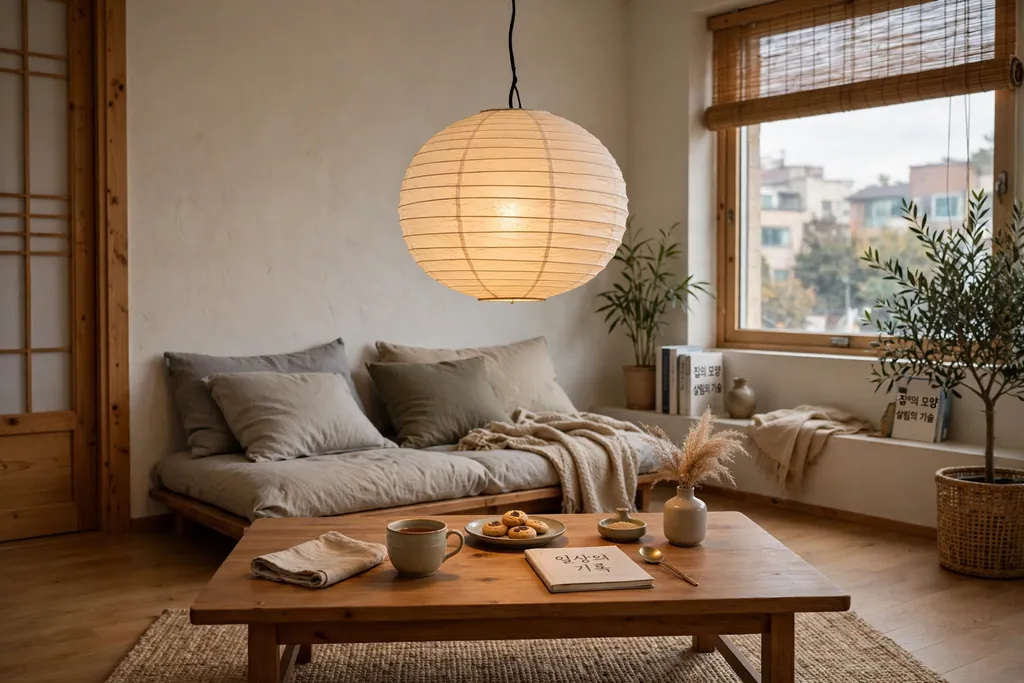
Hang a paper pendant lamp, in the style of traditional hanji paper lighting, over the coffee table or the center of the seating group. Paper shades spread light gently in all directions, so the room glows instead of glaring. Choose a plain white or warm cream shade in a simple round or drum shape.
Hang the pendant low enough to light the table, but high enough to see across it when seated. Pair it with a warm white bulb, and add a dimmer if you can, so evening light can go softer still. Keep the shade clear of shelves and tall plants, and dust it with a dry cloth so the paper stays bright.
3. Choose a Low Wooden Soban Style Table
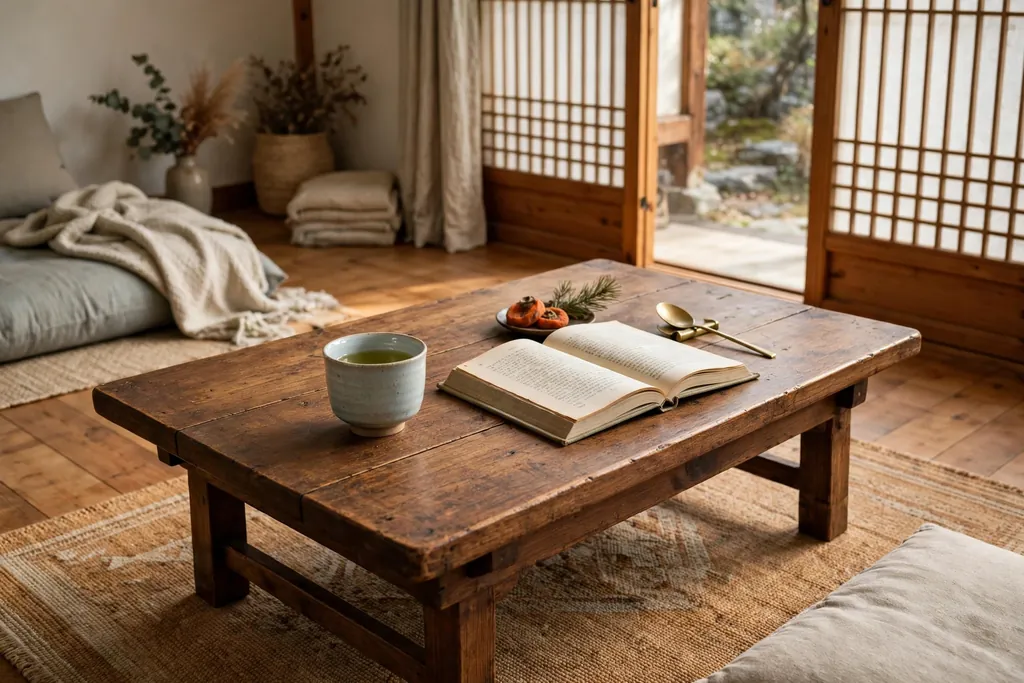
Use a low wooden table, similar in spirit to a traditional soban, as the coffee table. A low table suits floor seating, and its plain wood top gives cups, books, and a small vase a clear stage. Choose solid wood or a good wood veneer in oak, walnut, or a pale ash, with a simple shape and no heavy carving.
Keep the top mostly clear: one tray for cups, one book, and one small plant or bowl. A table with a lower shelf can hold a board game or a stack of magazines out of sight. Wipe the top after use, since wood shows rings, and use felt pads under any ceramic piece that might scratch it.
4. Add Bojagi Patchwork Color
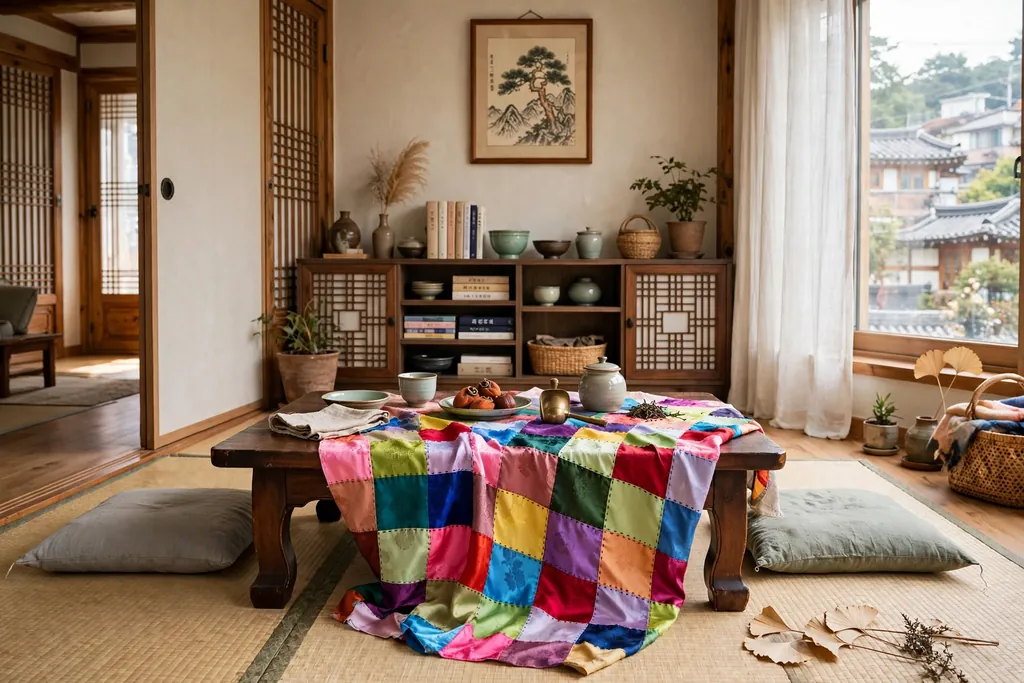
Bring in bojagi style patchwork through a table cloth, a cushion cover, or a wall hanging made from joined squares of cloth. Bojagi, the Korean tradition of wrapping cloths pieced from scraps, adds color in a handmade way, without needing a bold painted wall. Choose squares in muted tones, such as cream, soft blue, pale pink, and light grey, with one stronger color repeated.
Use one patchwork piece at a time in a small room, so the pattern reads as a feature, not as clutter. A patchwork cloth over a low table or a folded throw on a sofa works well. If you sew, small offcuts can become a cushion cover; if not, look for a ready made piece in a similar patchwork style and check the stitching before you buy.
5. Display White Porcelain and Celadon Ceramics
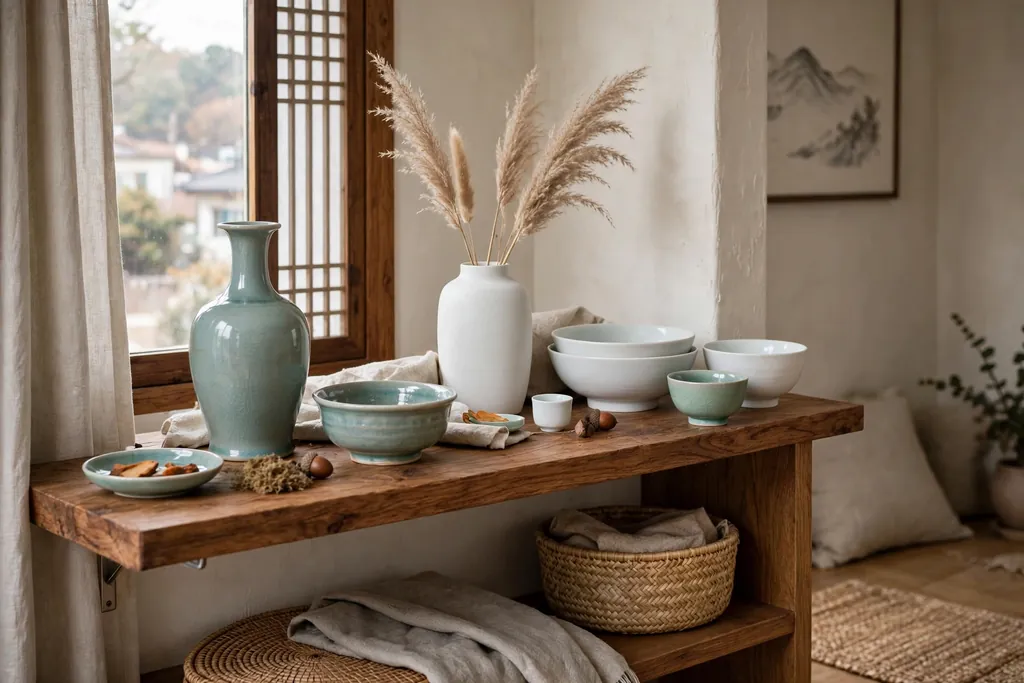
Group a few white porcelain or celadon pieces on a shelf, a sideboard, or the low table: a moon jar shape vase, a small bowl, a tea cup. Korean white porcelain has a calm, rounded form, while celadon carries a soft green grey glaze, and both sit well against wood and plain walls. Choose three or five pieces, in different heights, rather than a full shelf of matching items.
Give each piece space, and turn one piece slightly so its shape catches the light. Use one bowl for a real job, such as holding keys or a plant, so the display feels lived in rather than sealed away. Keep ceramics clear of door swings and the edge of a table where a sleeve could catch them.
6. Use a Lattice Screen to Shape the Space
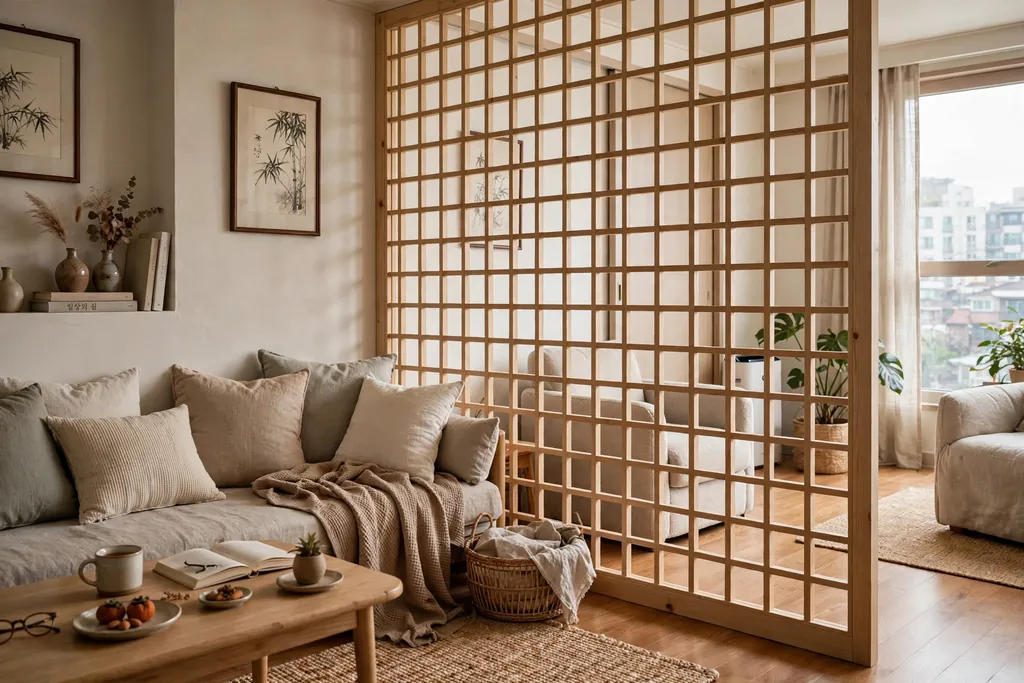
Stand a light wood lattice screen, in the manner of a traditional Korean lattice door panel, to divide a seating corner from a work corner or an entry path. A screen gives privacy and structure without building a wall, and its open pattern lets light pass through. Choose a screen in pale wood with a simple grid or diamond pattern.
Place the screen where it blocks a direct view of a desk or a storage corner, but leaves walking routes clear. A folding screen suits renters, since it moves with you, while a fixed panel suits a long term layout. Keep the screen stable on a flat floor, and avoid placing it where a child or pet could pull it over.
7. Keep Walls Pale and Wood Warm
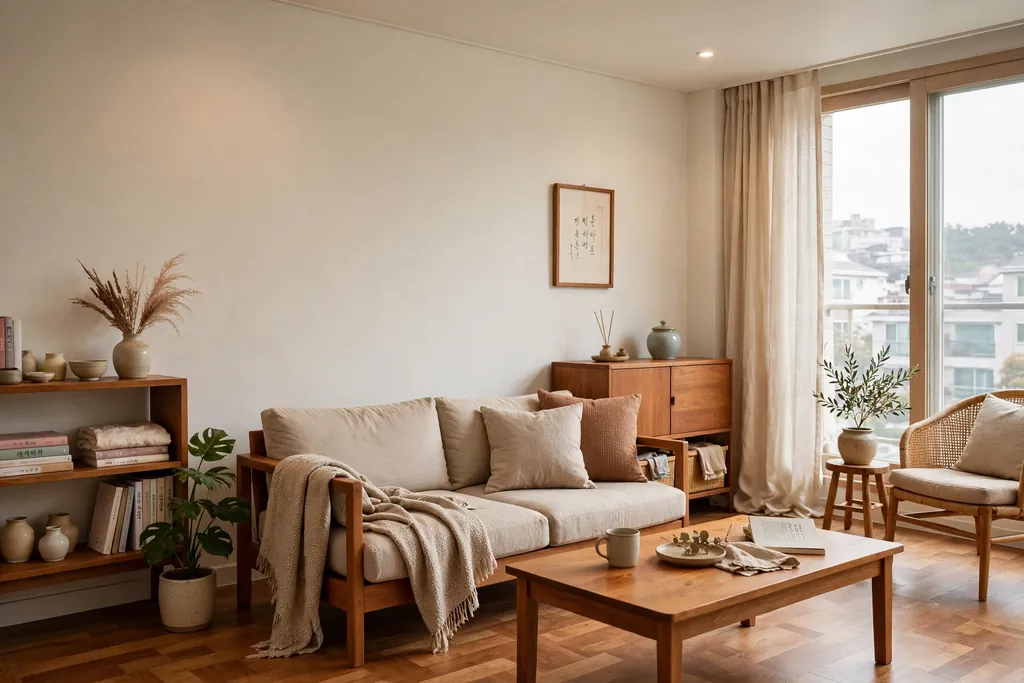
Paint the walls warm white or a very pale warm grey, and let wood floors, a wood table, and wood shelves carry the warmth. This pale base is common in modern Korean homes, where light matters and furniture stays low and simple. Test two or three warm white samples in daylight and lamplight before painting a whole room.
If you rent and cannot paint, pale curtains and a large light rug can soften a cooler wall color in a similar way. Keep the ceiling and trim in a matching pale tone, so the room reads as one calm space. The pale base also helps personal color, such as a patchwork cloth or a print, stand out without competing with the walls.
8. Grow One Large Potted Plant by the Window
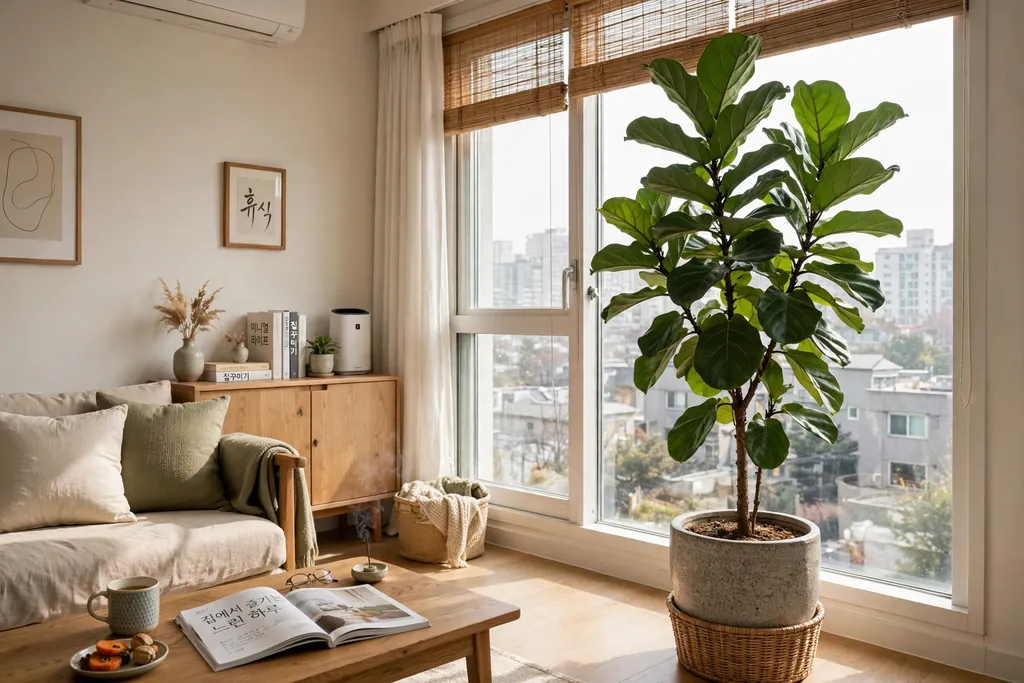
Place one large potted plant, such as a fiddle leaf fig, a monstera, or a rubber plant, by the brightest window. A single large plant gives a Korean living room a living focal point, and its leaves soften straight lines from shelves and screens. Choose a plant that suits your light level, and a plain pot in ceramic, clay, or woven fiber.
Water only when the top soil feels dry, and turn the pot a quarter turn each week so growth stays even. Keep the plant clear of radiators and cold drafts, and wipe large leaves with a damp cloth now and then. One large plant usually reads calmer than many small pots scattered around the room.
9. Hang Ink Wash Art and Calligraphy
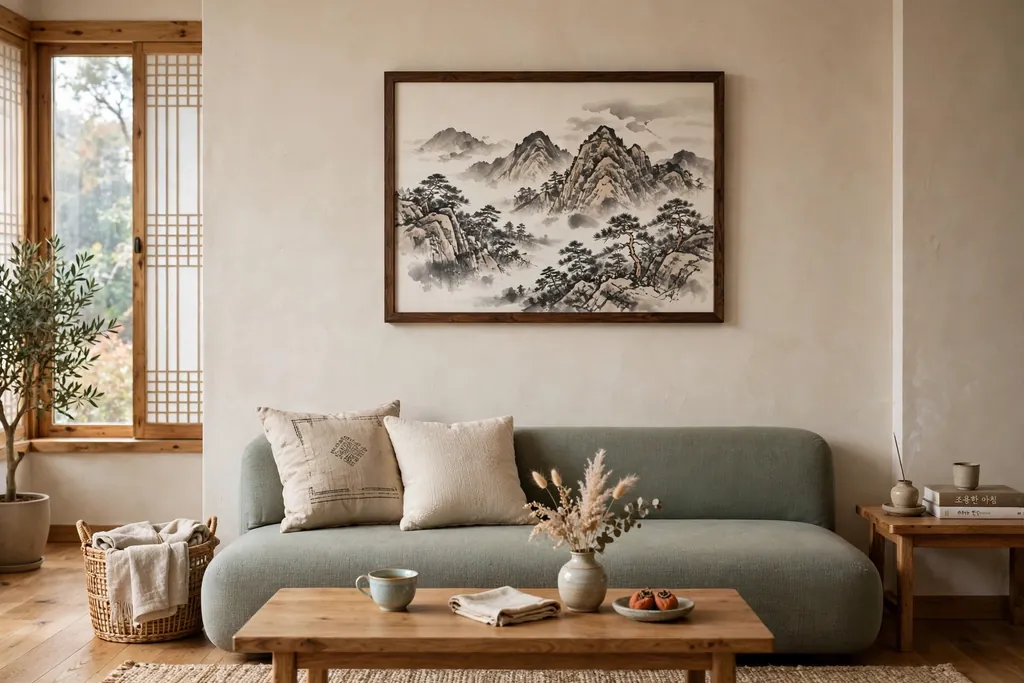
Hang one or two ink wash paintings or calligraphy prints on the main wall, in simple wood or black frames. Ink art, with its black brush marks and empty space, suits a pale room, and it adds a quiet, personal note that a mass produced poster often lacks. Choose a mountain scene, a bamboo study, or a single character print that means something to you.
Hang the center of the work at eye level when seated, and keep the frame style consistent if you hang two pieces together. Leave empty wall space around the art, so the brush marks have room to breathe. If you buy a print, check the paper tone in daylight, since a cold white print can clash with warm white walls.
10. Make a Low Reading Corner With a Floor Shelf
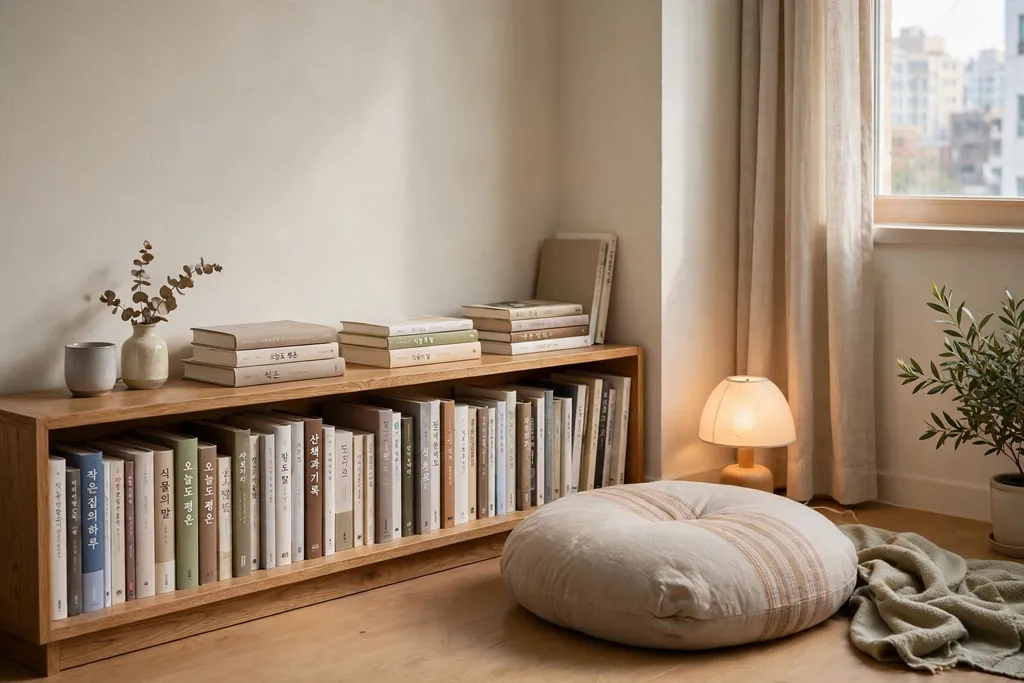
Build a reading corner with a low bookshelf, a floor cushion, and a small lamp, tucked beside a window or a wall. Low shelves suit a Korean living room because they keep books within reach from a floor seat, and they do not block light or views. Fill the shelf with books you actually read, plus one or two personal objects.
Sort books by size or by subject, and leave a gap on each shelf so the row does not look packed tight. Add a small basket for a current book and a pair of reading glasses. Keep the lamp low, at shoulder height when seated, so reading light falls on the page and not into your eyes.
11. Store Daily Things in Woven Baskets
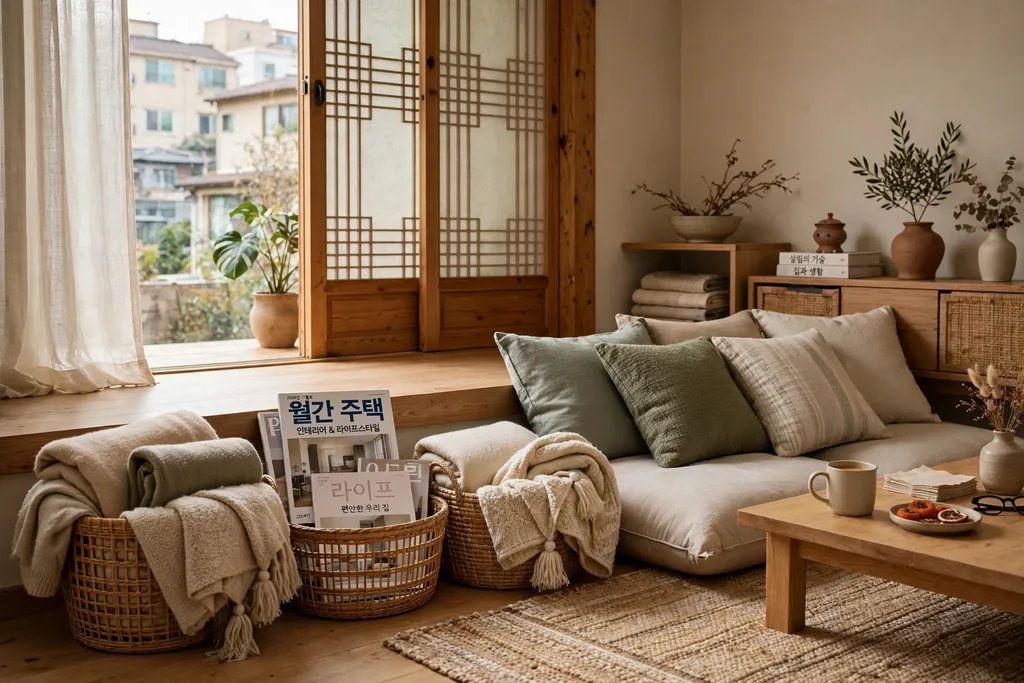
Use woven baskets in seagrass, rattan, or willow for throws, magazines, toys, and charging cables. Baskets add natural texture, hide everyday clutter, and suit a room where furniture stays low and simple. Place one large basket beside the seating group for throws, and one smaller basket near a chair for books.
Choose baskets with handles, so they can be carried for a quick tidy, and line a basket with cloth if the weave snags paper. Keep one basket empty on purpose, as a fast tidy basket before guests arrive. A basket under a low shelf or beside a low table keeps storage close without needing a tall cabinet.
12. Set a Tea Corner on the Low Table
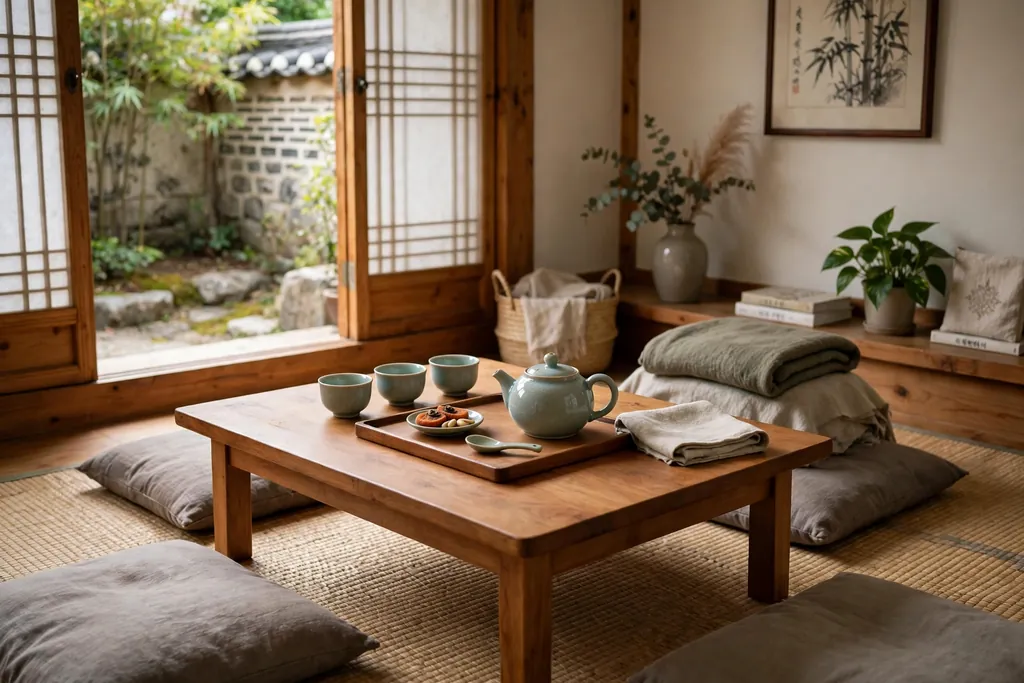
Keep a tea set ready on the low table or on a tray beside it: a small teapot, two or three cups, and a tin of loose leaf tea. Tea time is a daily ritual in many Korean homes, and a set left out invites a pause in the day. Choose a plain ceramic or stoneware set in white, cream, or soft green, rather than a fussy patterned set.
Store the tea tin nearby, out of direct sun, and keep a small cloth under the tray to catch drips. Offer tea to guests from the same set, so the corner feels like part of daily life, not a display. Wash cups by hand if the glaze maker advises it, and dry them before stacking.
13. Layer Muted Cushions in Korean Color Tones
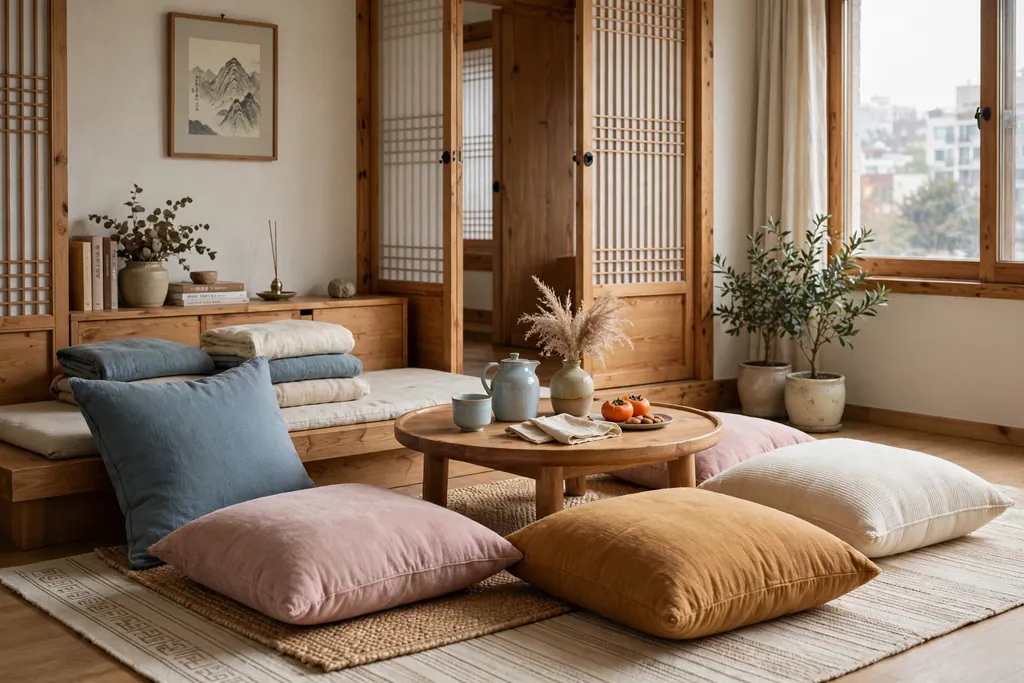
Layer cushions in muted tones drawn from traditional Korean color, such as soft blue, pale pink, warm ochre, light grey, and cream. These tones feel calm together, and they let one stronger cushion, in a deeper blue or a warm red, act as an accent. Choose linen or cotton covers with a plain weave, and mix one patterned cover with plain ones.
Place larger cushions at the back and smaller ones in front, so floor seats stay comfortable and the group still looks tidy. Wash covers when you can, and swap one or two covers with the seasons: warmer tones in winter, paler tones in summer. Keep the total cushion count modest, so seats stay usable and not buried.
14. Dress Windows With Sheer Linen Curtains
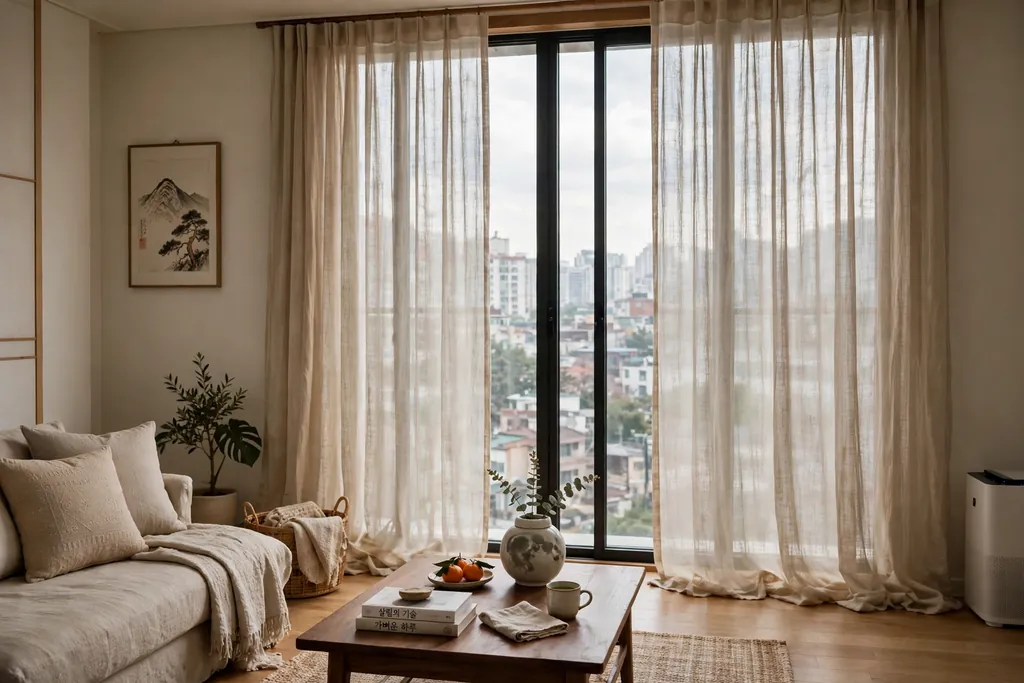
Hang sheer linen curtains from close to the ceiling to the floor, so daylight filters in softly and the window feels taller. Sheer linen suits a Korean living room because it gives daytime privacy without shutting out light, which matters in rooms that need every bit of sun. White, cream, or pale grey linen works best.
Use a simple rod in wood or black metal, and let the curtains fall straight rather than pooling heavily on the floor. Add a heavier pair at the sides only if the room gets cold drafts or needs evening privacy. Wash the sheers now and then, since pale linen shows dust faster than a darker curtain.
15. Show Personal Photos and Prints on a Ledge
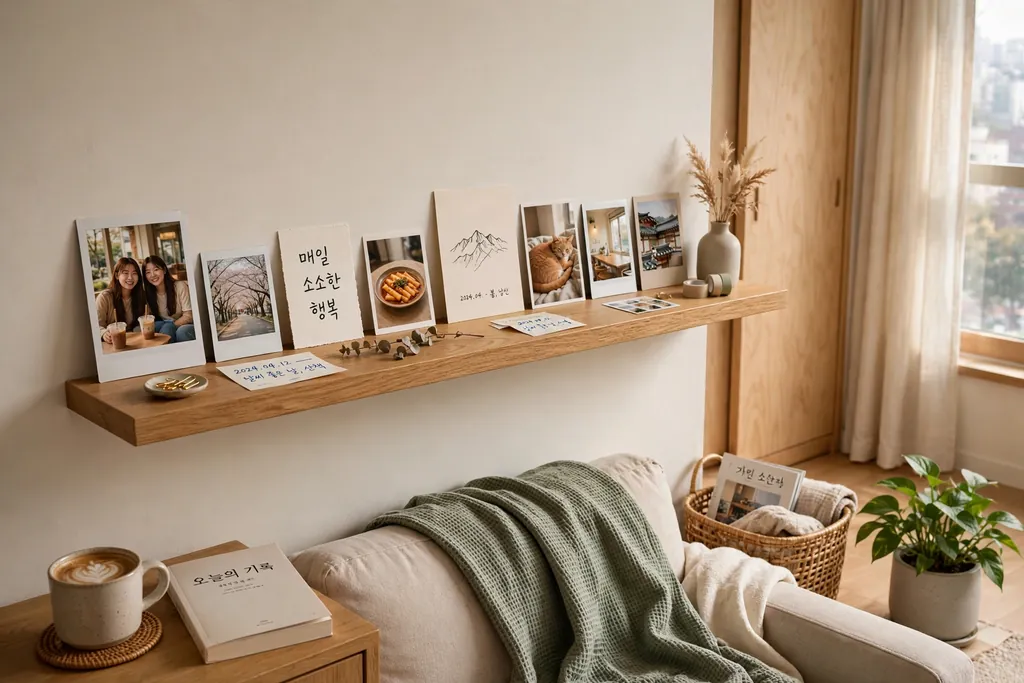
Fit a narrow picture ledge on one wall, and use it for personal photos, small prints, and postcards, leaned rather than hung. A ledge lets you change the display often, which suits a room built around personality: a holiday photo, a child’s drawing, a concert ticket print, a friend’s artwork. Keep the ledge at eye level when seated.
Start with three or four frames in matching wood or black, and add over time. Lean larger frames at the back and smaller ones in front, and leave a gap at one end so the ledge does not look crowded. Swap one piece each season, so the wall stays current with your life, not frozen at one moment.
16. Layer a Flatweave Rug Over Warm Wood
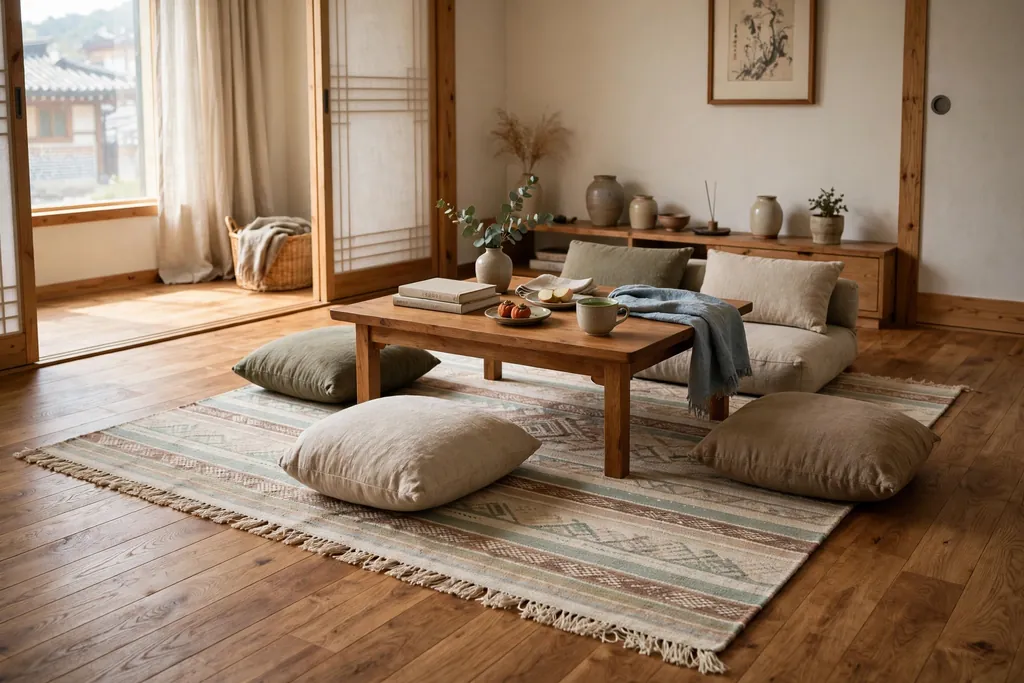
Lay a flatweave rug under the seating group, large enough for the front of the floor cushions and the low table to rest on it. A flatweave rug in cream, soft grey, or a muted stripe keeps the floor feeling light, and its low pile is easy to vacuum and to move cushions across. Leave a clear border of wood around the rug, so the floor stays part of the look.
Measure the seating zone before buying, and tape the rug outline on the floor to check walking routes and door swings. For more help with size and placement, see these living room rug ideas. Keep the rug pattern simple if cushions or a patchwork cloth already carry pattern, and use a rug pad underneath on a smooth wood floor.
17. Create a Music and Book Display Wall
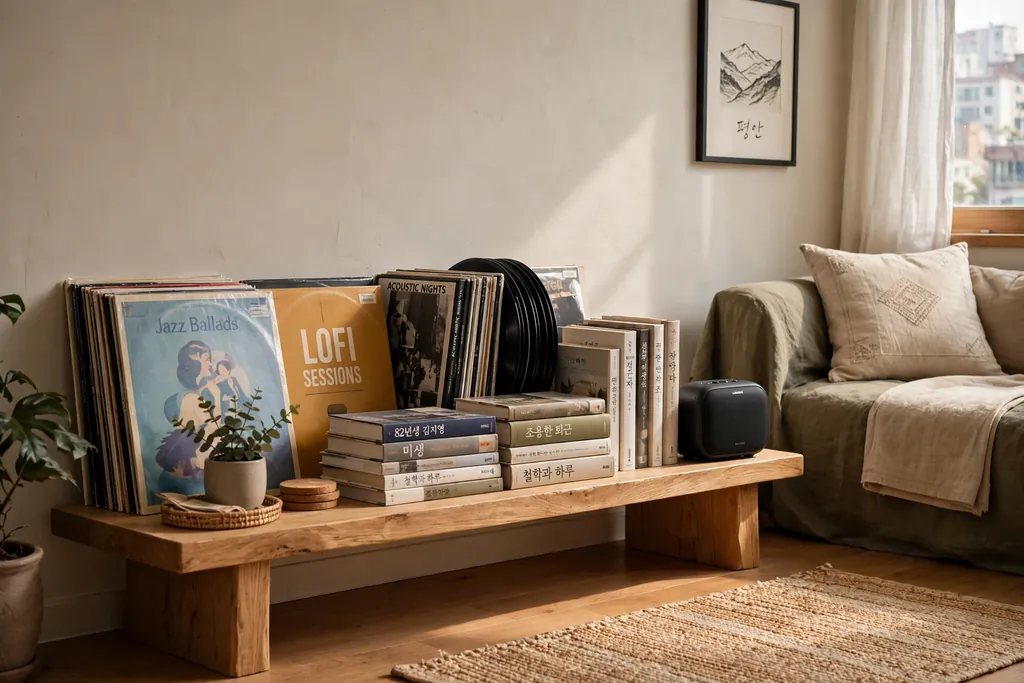
Give one wall or one low shelf to music and books you love: vinyl records, a small speaker, a stack of favorite novels, a photo book. A personal collection tells visitors what you care about, and it gives the room a reason to linger. Place records upright in a low crate or on a shelf, with the covers facing out for a few favorites.
Keep the speaker at ear height when seated, and run cables tidily behind the shelf. Rotate the displayed covers now and then, so the wall changes with what you are listening to or reading. This display works best on one wall only, so the rest of the room stays calm.
18. Refresh the Room With Seasonal Textiles and Dried Flowers
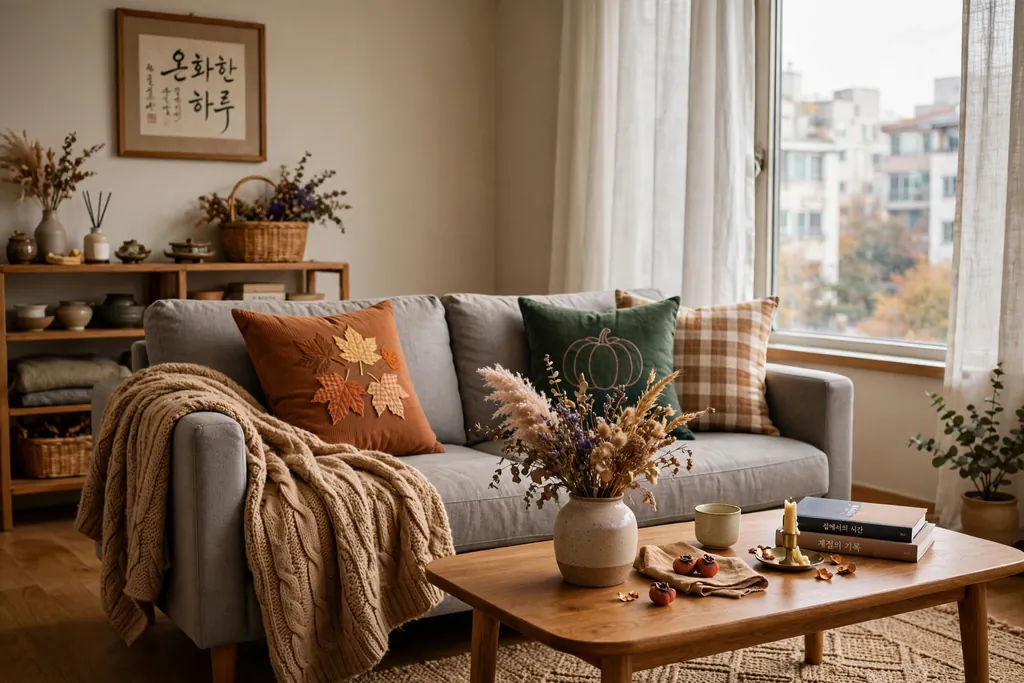
Change the room with the seasons using textiles and dried flowers, rather than new furniture. In spring, swap in pale cushion covers and a vase of fresh branches. In autumn, add a warmer throw, a dried flower bundle, and a deeper toned cushion. In winter, keep a soft blanket folded on the seating group and a candle group on the low table.
Store out of season covers in a labeled basket or a shelf box, so swaps take minutes, not a full day. Dried flowers suit this idea well, since they last for months and need no watering, but keep them clear of open flames and direct sun, which fades them fast. One seasonal change at a time keeps the room feeling fresh without a full redesign.
Conclusion
A Korean living room with personality starts with a calm base, then adds the things only you would choose. Sit low, light the room softly, keep wood warm and walls pale, and let cloth, ceramics, plants, and personal collections carry the color and the story. Pick one idea from this list first, perhaps the low seating group or the paper lamp, and live with it for a week before adding the next piece. Small, personal changes last longer than a room redone all at once, and they make the space feel like yours.
Save this list for your next room refresh, and work through it one corner at a time: floor and light first, then seating and storage, then the personal details that make the room yours.
FAQs
What is the core look of a Korean living room?
A Korean living room usually pairs a pale, calm base with low furniture, warm wood, and natural materials. Floor cushions or a low sofa, a low wood table, soft paper or lamp light, and a few personal objects, such as ceramics, books, or plants, give the room its character. The look favors comfort and daily use over formal display.
How do I sit low in a living room without hurting my back?
Use thick, firm floor cushions with a low backrest cushion against a wall or a bench, and take breaks to stand and stretch. A low platform sofa or a low armchair can give the same relaxed feel with more support. Try one floor seat for a week before replacing a full sofa, so you learn what support you actually need.
What colors work best in a Korean style living room?
Pale warm white walls, warm wood tones, and muted accents work best: soft blue, pale pink, warm ochre, light grey, and cream. Add one deeper tone, such as a warm red or a deep blue, in a cushion or a bowl, so the room has a focal point. Keep strong color to a few pieces, so the room stays calm.
Can I use Korean decor ideas in a small apartment living room?
Yes, many of these ideas suit small rooms well. Low furniture, a folding lattice screen, woven baskets, sheer curtains, and a picture ledge all work without building work or large pieces. Start with low seating, one rug, and soft light, and add personal pieces only where you have shelf or ledge space.
What is bojagi, and how do I use it at home?
Bojagi is the Korean tradition of patchwork wrapping cloths, pieced from squares of fabric. At home, use a bojagi style cloth as a table cover, a cushion cover, or a wall hanging. Choose muted tones with one stronger color, and use one patchwork piece at a time in a small room, so the handmade pattern stands out.
How do I keep a low, personal living room tidy?
Give every group a home: baskets for throws and magazines, a low shelf for books, a tray for cups, and a ledge for photos. Keep one table surface clear, and do a short tidy each evening, returning cushions and cups to their places. A room feels personal when its objects are chosen, not when every surface is covered.