
A pillow cover is the fastest way to dress a room for Christmas. The pillow inside stays the same, the sofa stays the same, and only the cover changes, yet the whole seating area reads as seasonal. That swap also makes storage simple: covers fold flat in January, while full pillows would fill a closet. These 32 Christmas pillow cover ideas cover classic colors, soft textures, printed motifs, and room by room placement, so you can build a set that suits your sofa, your budget, and the way you use the room. Start with one palette, add texture second, and keep one plain cover in the mix so the pattern has room to breathe.
Key Takeaways
- Pick one palette first, such as red and green, white and gold, or navy and silver, and repeat it in only two or three covers per sofa.
- Mix texture, not just color: pair a flat cotton print with velvet, knit, or faux fur so the group feels layered rather than flat.
- Keep one plain cover on each seat, so patterned covers stand out and the sofa still looks calm from across the room.
- Check the closure and the care label before you buy: a hidden zipper sits flatter, and a washable cover is worth more in a home with pets or children.
- Buy covers to fit the inserts you already own, and measure each insert before ordering, since a cover that is too loose will look soft and unfinished.
1. Start With Classic Red and Green Tartan

Red and green tartan is the most familiar Christmas pillow cover pattern, and it works because it reads as seasonal at once without needing any other decor. Use tartan on the two outer covers of a sofa, with plain cream or deep green covers between them, so the check is the clear lead pattern. Choose a tartan scale that suits the sofa: a large check suits a wide sofa, while a small check suits a chair or a narrow bench. Our traditional Christmas decor ideas use the same red and green pairing on trees and tables, so a tartan cover links the sofa to the rest of the room with no extra effort.
Keep the rest of the seating simple when tartan is in play. A plain throw in cream or green, a wooden coffee table, and warm white lights are enough. If the room already has a patterned rug, pick a tartan with fewer colors, or use tartan on one cover only, so two strong patterns do not compete. Wash tartan covers before the first use if the care label allows it, since dark red dye can rub onto pale upholstery when new.
2. Keep It Soft With White and Gold

White and gold covers suit a room that already feels pale, such as a room with cream walls, light wood, and a pale sofa. Use white as the base and gold as the detail, in a thin stripe, a small star, or a simple embroidered sprig, rather than a large gold print that can look harsh in daylight. A white cover with a gold trim also works on a dark sofa, where the pale fabric stands out and the gold catches lamplight in the evening.
Keep gold to one or two covers per seat, and pair them with plain white or cream covers. This keeps the look calm and avoids a metallic overload. Gold thread and gold print both need gentle washing, so check the label and wash these covers on a cool, gentle cycle, or spot clean them if the label advises it. Store them away from direct sun after the season, since strong light can fade gold print over time.
3. Try a Clean Black and White Scheme
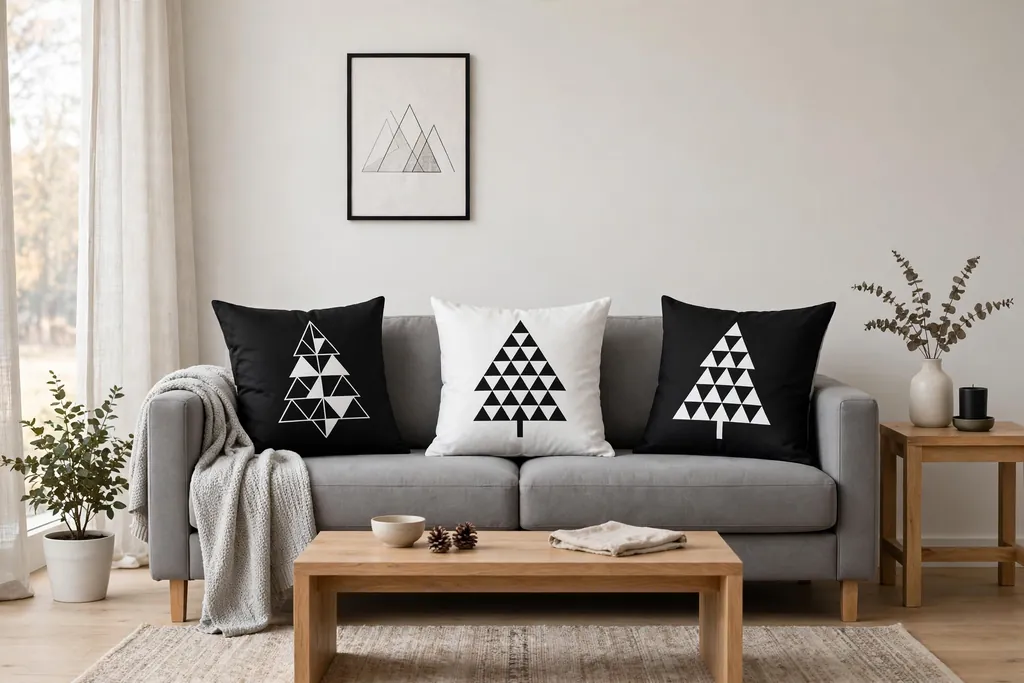
Black and white Christmas covers suit a modern room, a room with grey walls, or a home that does not use red and green elsewhere. A simple black tree print on white, a white snowflake on black, or a black and white stripe all read as Christmas when paired with greenery, lights, or a plain red throw nearby. The contrast also photographs well, which matters if you share the room online or want a crisp look for guests.
Balance is the key here. Use black and white covers in equal measure, not all black on one side and all white on the other, and add one plain cover in grey or cream to soften the contrast. Keep the rest of the room simple, since black and white already carries a strong graphic line. A black cover shows pale pet hair and lint, so keep a lint roller nearby through December.
4. Use Navy and Silver for a Winter Night Look

Navy and silver covers give a winter night feeling without the bright red that dominates most Christmas decor. Navy reads as deep and calm, silver adds light, and together they suit rooms with blue walls, grey sofas, or silver tree ornaments. A navy cover with a silver snowflake, a silver stripe, or a simple star print is enough: the palette does the work, so the motif can stay small.
Pair navy covers with plain silver grey or cream covers, and add a silver or white throw for evening light. This palette also works well in a bedroom, where navy bedding and a silver cover can carry the season without a full room change. Check the silver print after washing, since metallic prints can crack if washed hot or tumble dried on high heat.
5. Add Depth With Deep Velvet Covers

Velvet covers add depth that flat cotton cannot match, because the pile catches light differently as you move around the room. Deep green, burgundy, or navy velvet suits a living room used in the evening, when lamplight warms the fabric. Use velvet for the largest covers on the sofa, and pair them with a flat print cover so the group has both texture and pattern. Our Christmas mantel decor ideas show the same idea on a mantel: one rich material, used with restraint, carries more weight than many small pieces.
Velvet needs a little care in daily use. Brush it lightly to keep the pile even, and keep it away from a damp windowsill or a radiator, where heat and moisture can mark the fabric. A hidden zipper is worth seeking out on velvet, since a visible metal zipper can catch the pile. If a velvet cover gets a spill, blot it at once rather than rubbing, which can flatten the pile in one spot.
6. Choose Chunky Cable Knit for a Cozy Seat

Chunky cable knit covers feel like a sweater for the sofa, and they suit a family room, a reading chair, or a cabin style home. Cream, red, or forest green knit all work, and the raised cable pattern gives texture even in a single color. Use knit covers on the seats people use most, since the soft, stretchy fabric is comfortable to lean against for a long evening.
Knit covers stretch, so buy a size that matches the insert closely, or the cover will bag at the corners. Wash them gently and dry them flat if the label advises it, since heat can shrink knit fabric. Keep knit covers away from sharp tree branches or rough zippers on nearby cushions, which can snag a loop. A knit cover in cream pairs well with a plaid throw, which adds pattern without adding another texture.
7. Soften the Room With Faux Fur Covers
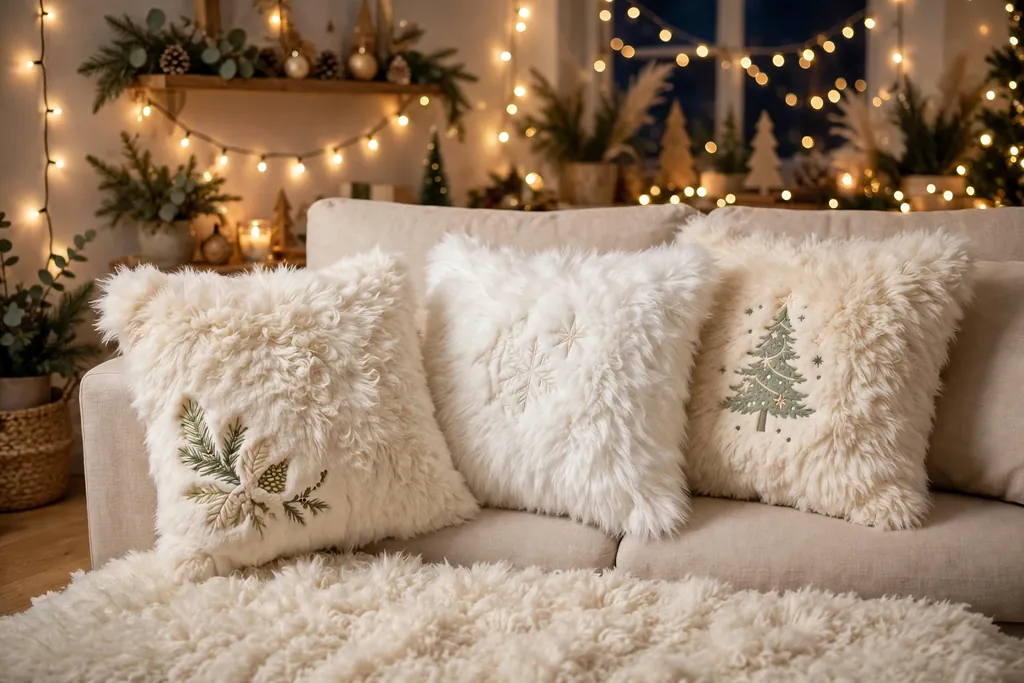
Faux fur covers in white, cream, or pale grey soften a room at once, and they suit a sofa that already has a lot of pattern elsewhere. Use faux fur as the plain cover in the group: one or two fur covers beside a tartan or tree print cover give the eye a rest. Faux fur also suits a bedroom, where a soft cover at the head of the bed feels good on a cold morning.
Brush faux fur lightly after washing to restore its softness, and wash it on a cool cycle so the fibers do not mat. Long pile fur can shed when new, so wash it once before placing it on a dark sofa. Keep faux fur covers away from open flame and hot radiators, and store them in a breathable bag after the season so the pile does not flatten under heavy items.
8. Go Natural With Linen and a Small Sprig
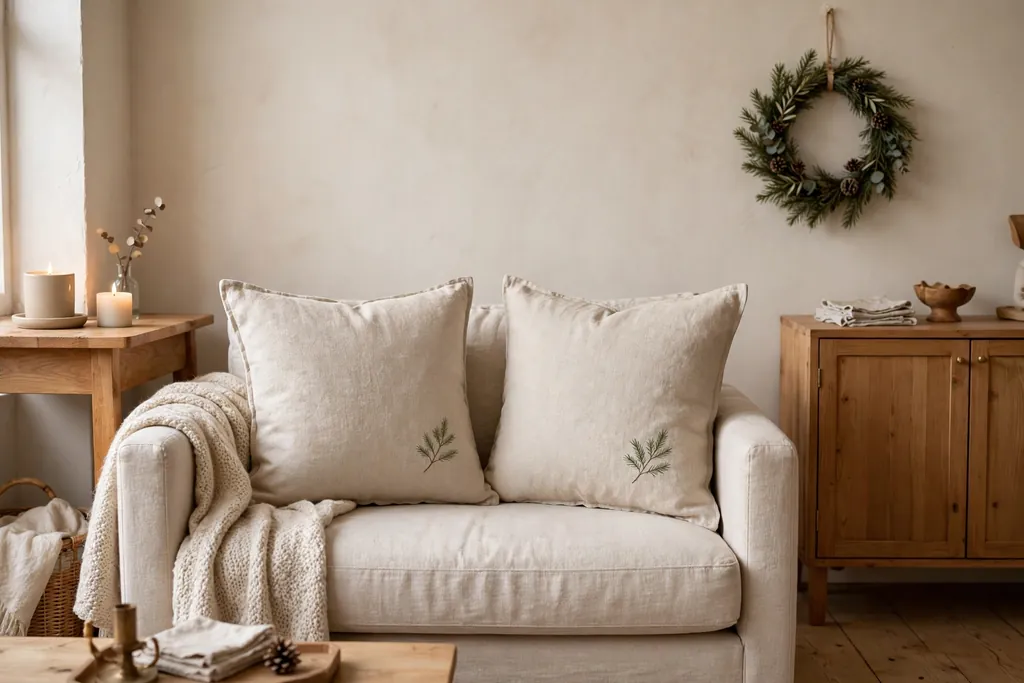
Natural linen covers in beige, oatmeal, or pale grey suit a home that favors plain materials and quiet color. A small embroidered pine sprig, a tiny star, or a single red berry stem is enough to make a linen cover seasonal, and the plain fabric keeps the room calm. Linen also suits a home with wood furniture, stone, or plants, since its matte texture sits well beside natural materials.
Linen creases, so accept a relaxed look or press covers lightly before guests arrive. Pre-washed linen is softer and less likely to shrink, so check the label before the first wash. Pair linen covers with a wool throw and a wooden tray, which repeat the natural theme without adding pattern. A linen cover in a pale tone shows marks, so keep it on a chair used less often if the sofa sees daily meals or pets.
9. Use a Reindeer Silhouette as the Motif

A reindeer silhouette on a cream or grey cover is a simple, graphic motif that suits both modern and rustic rooms. The single shape reads clearly from across the room, which makes it a good lead cover on a sofa or a chair. Use one reindeer cover per seat, with plain covers beside it, so the shape stays the focus. A brown silhouette on cream suits a warm room, while a white silhouette on deep green suits a darker room.
Keep the rest of the group plain when the reindeer is the lead motif. A tartan throw or a pine garland nearby can repeat the woodland theme, but a second animal print on the same sofa will compete. Check that the print is centered on the cover before you buy, since an off center silhouette looks like a mistake once the cover is on the insert. Wash printed covers inside out to protect the print.
10. Knit Snowflakes in Blue and White

Blue and white snowflake knit covers suit a room that leans cool, such as a room with grey walls, white trim, or a silver tree. The snowflake motif is clearly winter, yet it can stay out past Christmas into January, which makes these covers good value for a long season. Use snowflake covers on a sofa near a window, where daylight shows the knit pattern, and pair them with plain white or pale blue covers.
Choose a snowflake size that fits the cover: a large single snowflake suits a large square cover, while a small repeat pattern suits a smaller cover. Avoid mixing a large snowflake with a large tree print on the same seat, since both motifs fight for attention. Knit snowflake covers need gentle washing, as with other knits, and they pair well with a pale blue throw and silver ornaments on a nearby tree.
11. Print a Row of Christmas Trees

A row of small Christmas trees printed on cream or pale green fabric gives a cheerful, simple pattern that suits a family room or a kitchen nook. The repeat pattern is forgiving: it looks good even if the cover shifts on the insert, since no single tree has to sit in the center. Use tree print covers on chairs or a bench, where a repeat pattern reads better than a large single motif at close range.
Pair tree prints with plain covers in one color pulled from the print, such as deep green or cream, so the group looks planned. A tree print in green and red suits a classic room, while a tree print in a single color, such as navy on white, suits a calmer room. Wash printed covers on a cool cycle and avoid harsh bleach, which can fade the green first.
12. Add Gingerbread and Candy Cane Prints
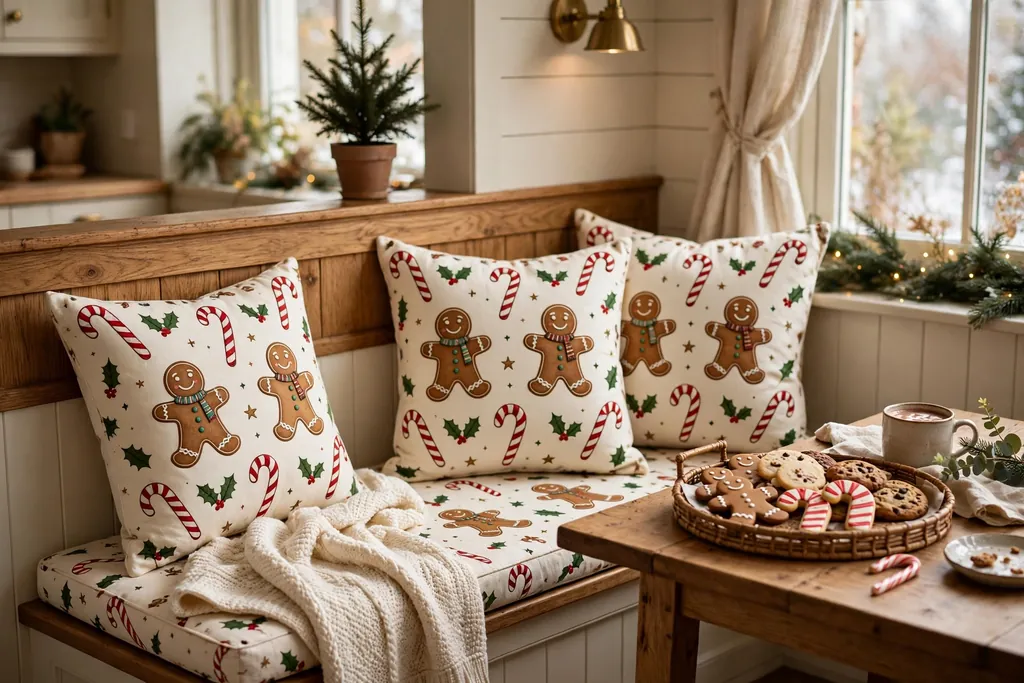
Gingerbread men, candy canes, and small cookies printed on cream fabric suit a kitchen nook, a breakfast bench, or a family room where children gather. The food motif is playful, and it links the sofa or bench to baking and cocoa in the kitchen. Use gingerbread covers on a bench or a single chair rather than the main sofa, so the playful print stays a detail, not the whole room.
Keep the colors simple: red and white candy canes with brown gingerbread on cream is enough, and adding green and gold as well can make the print feel busy. Pair these covers with a plain red or cream cover, and keep nearby decor simple, such as a plain tray and a jar of cookies. Wash these covers before use if children will lean on them, since food prints can hide marks that show later.
13. Line Up Nutcracker Covers

Nutcracker covers in red, green, and gold suit a room with a collection of nutcracker figures, a classic tree, or a formal living room. The tall, upright figure works well on a square cover, where the shape fills the space without crowding the edges. Use one nutcracker cover per seat, and pair it with plain covers in red or green pulled from the uniform colors.
Nutcracker prints are detailed, so check the print quality before you buy: a sharp print shows the uniform buttons and face, while a blurred print looks cheap at close range. Keep nutcracker covers away from a second detailed print on the same seat, such as a village scene, since both need space to read. Store these covers flat after the season, since folding across the face can crease the print.
14. Embroider Holly and Berries
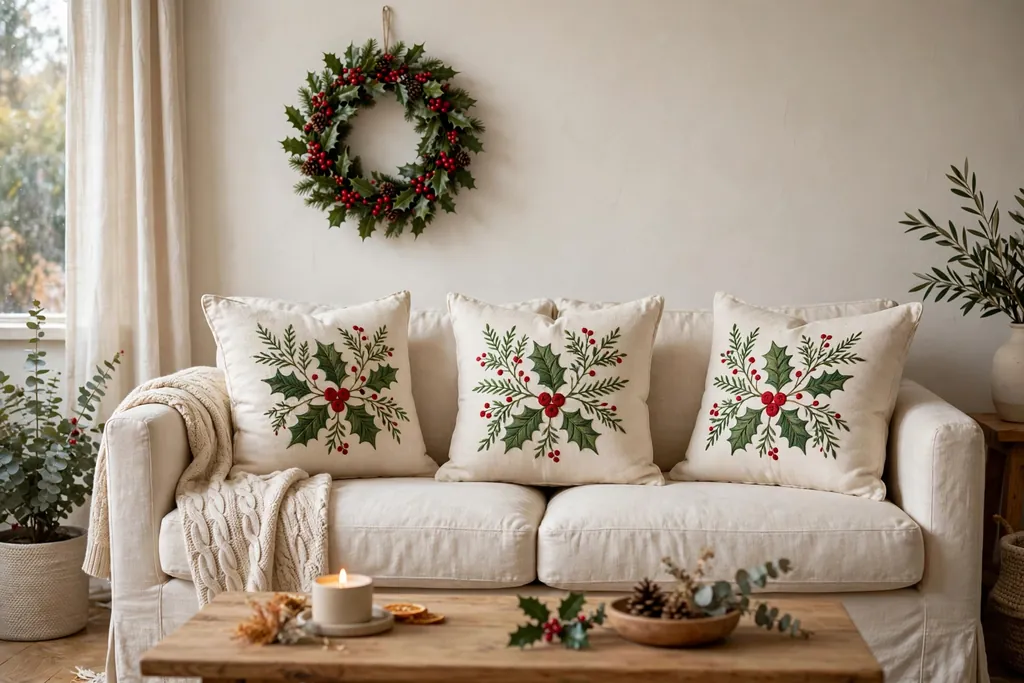
Holly leaves and red berries embroidered on cream linen give a quiet, handmade feeling that printed covers cannot match. Embroidery adds raised texture, so the motif shows in lamplight even from a distance. Use holly covers on a chair or at the ends of a sofa, where the detail can be seen up close, and pair them with plain linen or velvet covers.
Embroidery needs gentle care: wash these covers on a cool, gentle cycle, turn them inside out, and avoid ironing directly over the stitches. A holly cover suits a traditional room, a room with fresh greenery, or a home that already uses embroidered textiles elsewhere. Keep the berry color to a single red, rather than mixed reds, so the embroidery reads as one motif.
15. Use a Vintage Santa Print
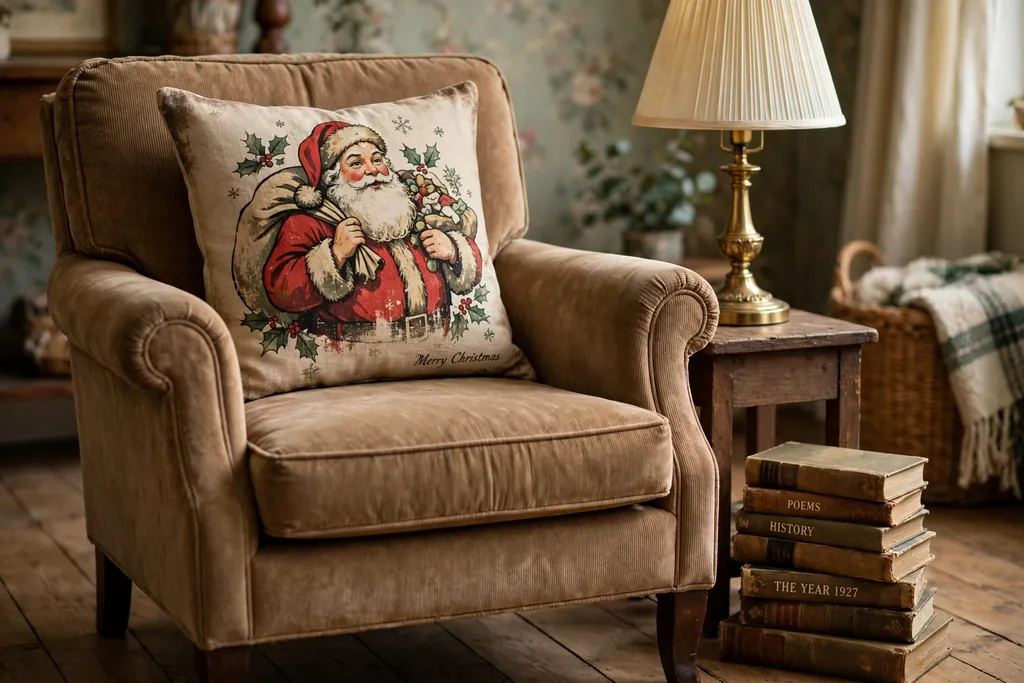
A vintage Santa print, with an old fashioned illustration rather than a cartoon, suits a room with old books, brass, or heirloom ornaments. The muted colors of a vintage print, such as faded red, cream, and soft green, sit well in a room that already has warm wood and low light. Use a vintage Santa cover as a single feature cover on a reading chair, where it can be enjoyed up close.
Pair vintage prints with plain covers in cream or deep green, and avoid bright, modern prints on the same seat, since the two styles clash. Check that the vintage print is not too faded to read from a normal seating distance, since a print that only works up close will look plain from across the room. Wash vintage style prints gently, since the faded look can wash out further with hot water.
16. Tell a Story With a Winter Village Scene

A winter village scene, with small houses, warm lit windows, and snow, turns a pillow cover into a small picture. This motif suits a large square cover on a sofa end, where the scene has room to breathe, and it pairs well with a village display on a mantel or a windowsill. Use one village cover per room, since two scenes on one sofa will compete.
Keep the rest of the group plain and pale, such as cream or soft grey, so the scene stands out. A village scene in blue and white suits a cool room, while a village scene in warm cream and gold suits a warm room. Check the scene for small details before buying, such as lit windows and snow on roofs, since those details make the scene feel complete rather than flat.
17. Choose Farmhouse Burlap With a Simple Tree
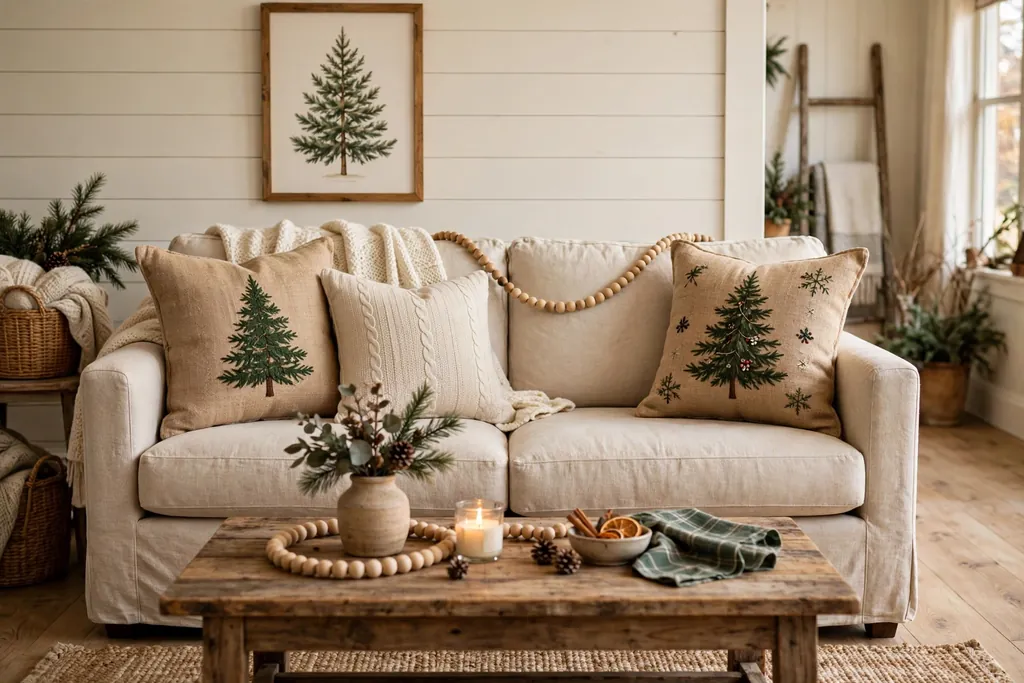
Burlap covers with a simple pine tree, a star, or a short seasonal word suit a farmhouse room, a room with wood beams, or a home with natural fibers. Burlap has a rough, open weave that adds texture, and its natural tan color warms a pale sofa. Use burlap covers on a sofa with a wood coffee table, a woven basket, and a plain evergreen garland, which repeat the farmhouse materials.
Burlap can feel rough against skin, so use these covers on a sofa end or a chair used less for leaning, or layer a soft throw over the same seat. Check the weave before buying, since loose burlap can snag and shed fibers. Wash burlap gently and dry it flat, since heat can stiffen the fabric. A burlap cover with a dark green tree print is the safest farmhouse choice, since it pairs with almost any other cover.
18. Keep It Minimal in Scandinavian Style

Scandinavian style Christmas covers use white, pale grey, and one accent, such as a small red star or a simple pine sprig, on plain fabric. The look relies on space and light, not pattern, so use fewer covers than usual: two or three per sofa, with plain covers between them. Pale wood furniture, white walls, and paper stars nearby complete the look without adding clutter.
Avoid mixing Scandinavian covers with bright, detailed prints on the same sofa, since the two styles pull in opposite directions. A single red accent cover among white and grey covers is enough to mark the season. Wash pale Scandinavian covers before the season, since white fabric shows storage marks, and store them in a clean, dry bag so they stay bright for next year.
19. Go Woodland With Pinecones and Branches
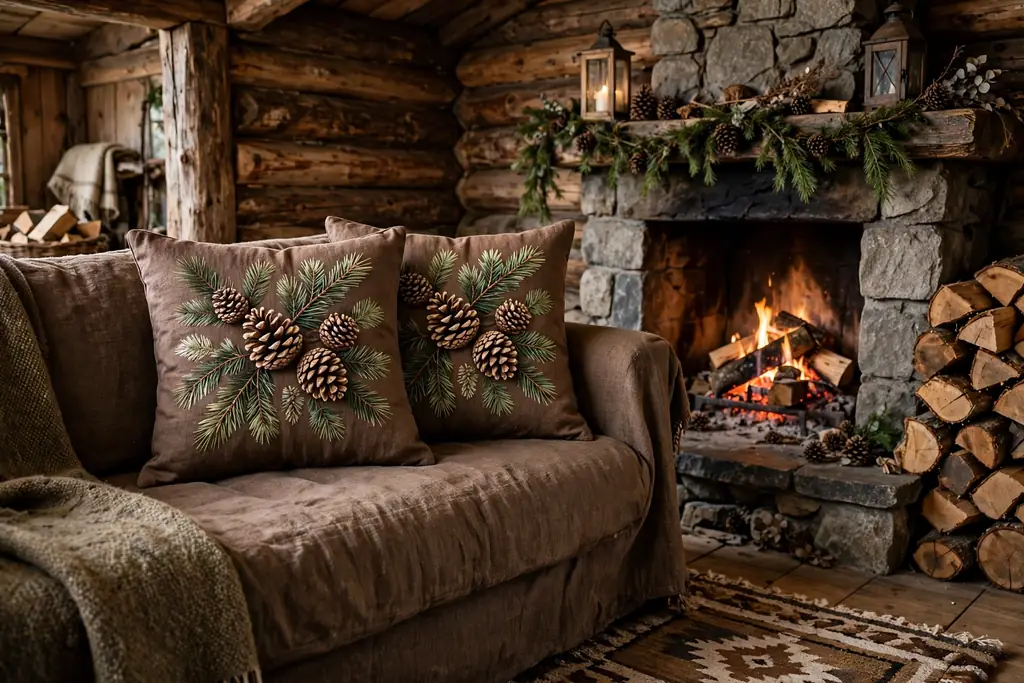
Woodland covers with pinecones, pine branches, and brown and green tones suit a cabin, a room with a stone fireplace, or a home with wood floors. The natural motif links the sofa to the tree and to greenery elsewhere in the room, without needing red or gold. Use woodland covers on a sofa near the fireplace, with a wool throw and a basket of logs nearby.
Keep the woodland palette to green, brown, and cream, and avoid adding bright red ornaments on the same seat, since they will pull the eye away from the natural tones. A pinecone print in a single brown on cream is calmer than a full color woodland scene, and it pairs better with plain covers. Check the print for clear pinecone shapes, since a blurred woodland print can look like a brown blur from a distance.
20. Try a Coastal White and Blue Christmas

Coastal Christmas covers in white, pale blue, and sand suit a beach house, a room with light walls, or a home that keeps a coastal look all year. A pale blue snowflake, a white star, or a simple coastal tree in blue and white marks the season without forcing a red and green scheme that does not fit the house. Use coastal covers on a sofa with light wood, white trim, and a simple wreath.
Keep red out of a coastal group if you want the coastal look to read clearly, and use silver or white ornaments on the tree instead. A coastal cover pairs well with a pale blue throw and a driftwood piece on a nearby table. Wash pale blue covers on a cool cycle, since strong blue dye can fade with hot water, and keep them away from a dark red throw that could transfer color when damp.
21. Use Vintage Colorful Retro Prints
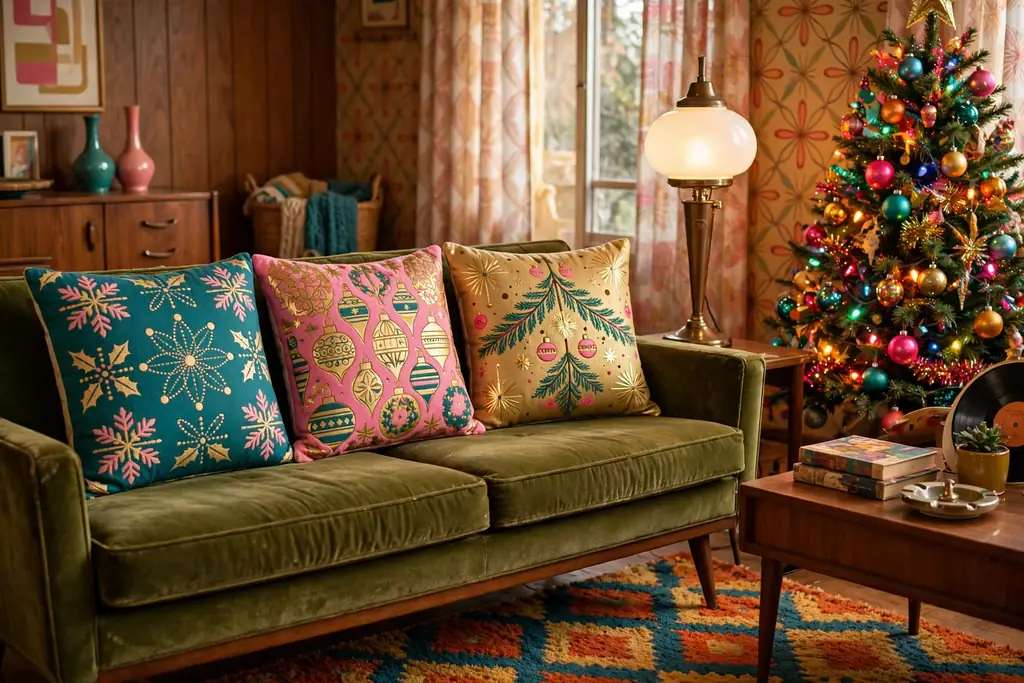
Vintage colorful retro prints, with teal, pink, mustard, and gold, suit a mid century room, a room with a colorful tree, or a home that favors bold color all year. The retro palette feels cheerful and a little playful, and it works best as a single feature cover among plain covers in one retro color, such as teal or mustard. Use retro covers on a sofa with a simple lamp and a plain rug, so the color has room to stand out.
Avoid mixing retro prints with classic tartan or vintage Santa prints on the same seat, since the two vintage styles come from different eras and will clash. Check that the retro colors match at least one other item in the room, such as a piece of art or a throw, so the cover looks planned rather than random. Wash bright retro prints on a cool cycle to keep the colors strong.
22. Add Boho Tassels and Pom Poms
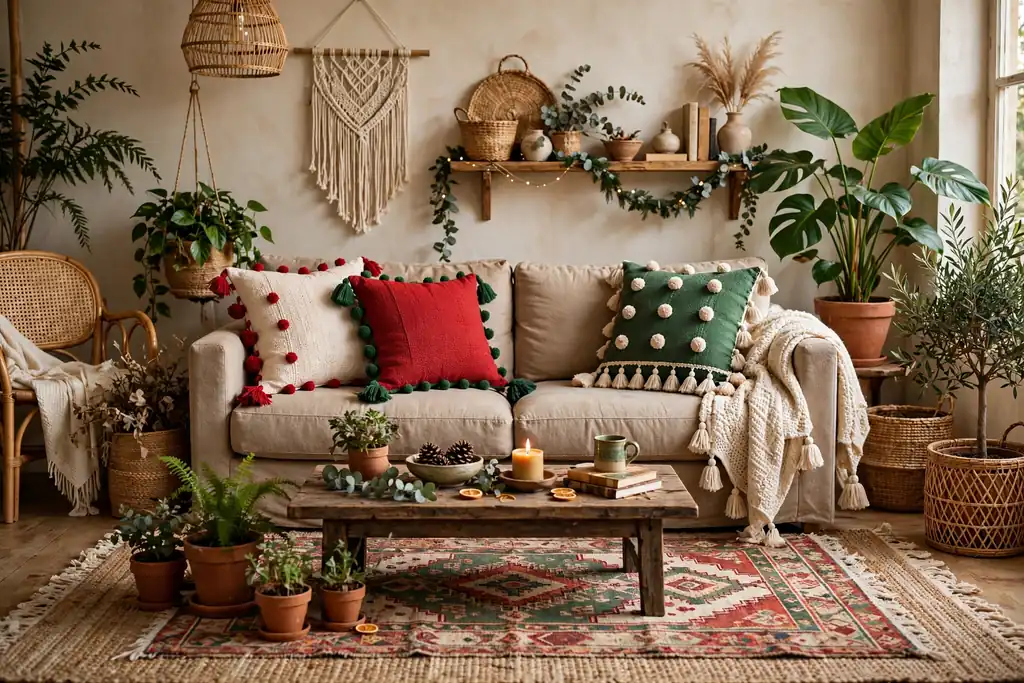
Boho covers with tassels, pom poms, or fringe around the edges add movement and a handmade feeling to a sofa. The trim is the feature, so the fabric itself can stay simple: cream, red, or green with a contrasting trim. Use boho covers on a sofa with layered rugs, plants, and woven baskets, where the trim repeats the relaxed, collected look of the room.
Tassels and pom poms need care in washing, since they can tangle or come loose. Wash these covers in a laundry bag on a gentle cycle, and check the trim after each wash. Keep boho covers away from pets that chew trim, and trim any loose threads at once so a small pull does not unravel the edge. A boho cover in cream with red tassels is the easiest to pair, since it suits both classic and relaxed rooms.
23. Mix Sizes: Large, Small, and Lumbar

Mixing sizes is a placement idea, not a pattern, and it changes how a sofa looks even with covers you already own. Place large square covers at the back corners, smaller square covers in front of them, and a lumbar cover in the center. This layered order gives depth, so the sofa looks styled rather than lined up in a row. Our living room rug ideas use the same sizing rule for rugs: size the pieces to the seating group, not to the floor, and the same rule works for covers.
Measure the sofa before you mix sizes: a large sofa can hold 22 inch covers at the back, while a small sofa needs 18 inch covers or the group will crowd the seat. Keep the palette to two or three colors across all sizes, so the size mix reads as planned, not random. A lumbar cover in the center can carry the strongest pattern, since it sits in front and draws the eye first.
24. Use a Lumbar Cover on a Bench or Window Seat

A long lumbar cover suits a bench, a window seat, or a narrow sofa where square covers would crowd the seat. The long shape fits the bench length, and it gives back support for reading or sitting by the window. Choose a lumbar cover in a stripe, a simple tree repeat, or a plain velvet, since a large single motif can look stretched on a long cover.
Measure the bench before ordering, since lumbar covers come in many lengths, and a cover that overhangs the bench ends will droop. Pair a lumbar cover with one or two small square covers at the ends, if the bench is wide enough, or use it alone on a narrow seat. A lumbar cover in red and cream stripes suits a window seat with a snowy view, and it stores flat after the season.
25. Personalize With a Monogram Cover
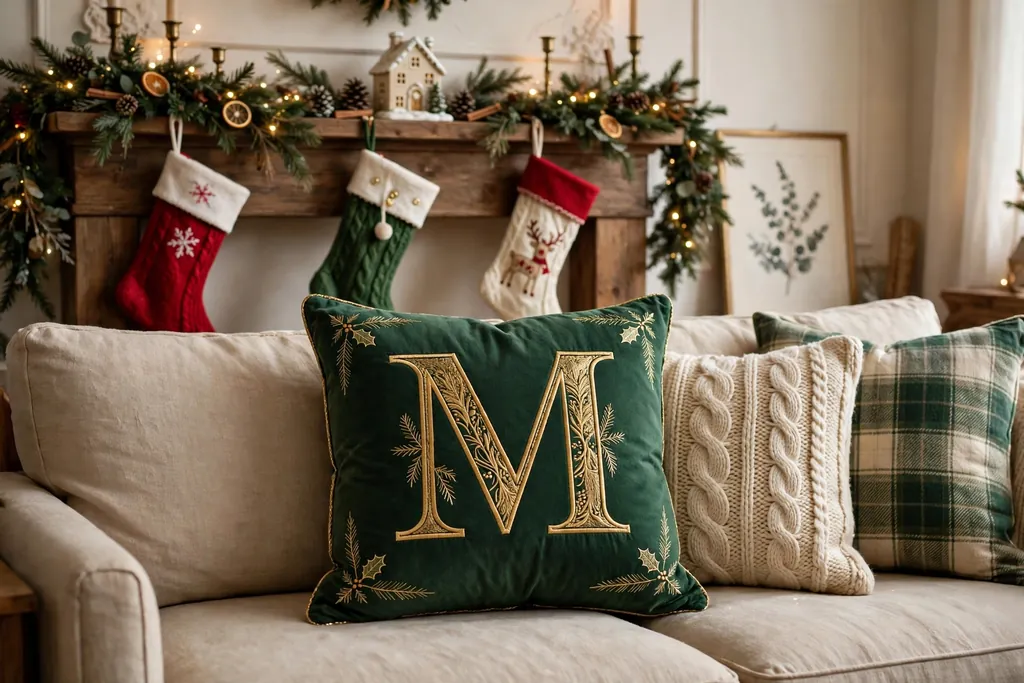
A monogram cover, with a single letter embroidered or printed in gold, cream, or red, adds a personal touch to a sofa or a chair. Use a family initial, or one cover per person with their own initial, on a chair or a bench where the letter can be read. A monogram in a simple serif letter on deep green or navy fabric looks classic, while a monogram in a script letter on cream looks softer.
Keep monogram covers to one or two per room, since a sofa full of letters looks like a classroom display. Pair a monogram cover with plain covers in the same fabric color, so the letter stands out without competing. Check the letter before ordering, since a monogram cannot be returned easily if the wrong letter arrives. Wash embroidered monograms gently, as with other embroidery.
26. Letter a Simple Seasonal Phrase

Lettered covers with a short phrase, such as Merry Christmas, Joy, or Peace, suit a sofa, a bench, or a porch chair where the words can be read at a glance. Keep the phrase short and the lettering simple, in black, red, or gold on cream or white, so the words read clearly from across the room. A single lettered cover per seat is enough, with plain covers beside it.
Avoid long phrases or small script lettering, which are hard to read once the cover is on a sofa and partly hidden by a throw. A lettered cover pairs well with a plain cover in the same color as the lettering, which ties the group together. Check the print quality, since cracked or peeling letters will show fast on a cover used daily. Wash lettered covers inside out on a cool cycle.
27. Add Sparkle With a Reversible Sequin Cover

A reversible sequin cover, with sequins that flip to change color when brushed, adds sparkle and a playful detail for guests and children. Red and gold, green and silver, or black and gold are common pairs, and the cover changes with a sweep of the hand. Use sequin covers as a single feature cover on a sofa, since a whole sofa of sequins will feel busy and can be uncomfortable to lean against for long.
Sequin covers need gentle care: wash them in a laundry bag on a cool cycle, or spot clean them, and never iron over sequins. Keep sequin covers away from small children who might pull sequins loose, and check the edges after washing. A sequin cover in red and gold suits an evening room with warm lights, where the sparkle shows best.
28. Sew or Buy a Quilted Patchwork Cover
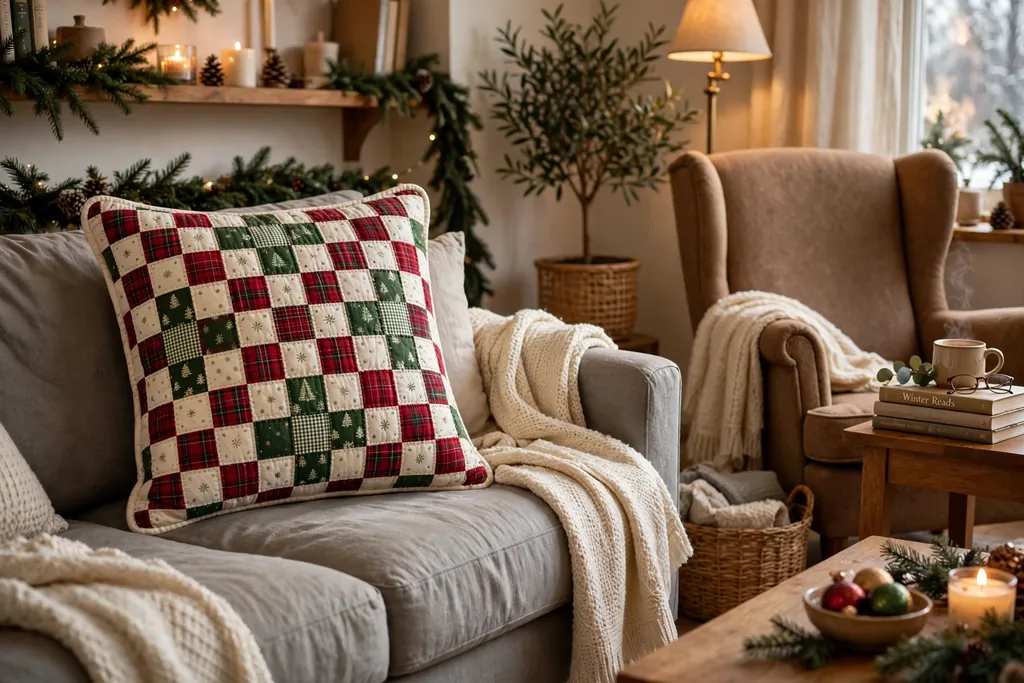
A quilted patchwork cover, made from small squares of red, green, cream, and gold fabric, adds a handmade, layered feeling to a sofa or a reading chair. The patchwork pattern is forgiving, since no single square has to be perfect, and it suits a room with quilts, woven throws, or vintage pieces. Use a patchwork cover on a chair or at the end of a sofa, where the detail can be seen up close.
Pair patchwork covers with plain covers in one color pulled from the squares, such as cream or deep green, so the group looks calm. Quilted covers are thicker than flat covers, so check that the insert still fits and the cover closes fully. Wash quilted covers gently and dry them flat if the label advises it, since thick layers dry slowly and can hold moisture.
29. Embroider Family Names for a Keepsake Set

Family name covers, with each name embroidered on its own cover, suit a family room where each person has a favorite seat. Use one name cover per chair, or a set of name covers lined up on a long bench, so each person can find their seat at a glance. A name in a simple font on cream, red, or green fabric reads clearly, while a script font suits a formal room.
Order name covers early, since personalized items take longer to make and cannot be returned if a name is spelled wrong, so double check each spelling before ordering. Pair name covers with plain covers in the same fabric, so the set looks planned. Wash embroidered name covers gently, as with other embroidery, and store them with a note of whose cover is whose, since names can be hard to match after a year in storage.
30. Dress the Porch With Outdoor Covers

Outdoor Christmas covers in red plaid, pine print, or a simple seasonal phrase suit a porch chair, a bench, or a rocking chair where guests sit before coming inside. Outdoor covers need a weather resistant fabric, such as a treated polyester, that can cope with damp air and light rain, unlike indoor cotton or velvet. Use outdoor covers only where the seat has some shelter, such as under a porch roof, since even outdoor fabric will soak in heavy rain.
Bring outdoor covers inside during storms and at night if frost is forecast, since frozen fabric can crack and damp covers can mildew. Check the care label, since many outdoor covers can be hosed down or wiped clean rather than machine washed. Pair outdoor covers with a plain outdoor cushion and a lantern, which together make the porch feel welcoming without needing a full porch display.
31. Layer Christmas Covers on the Bed
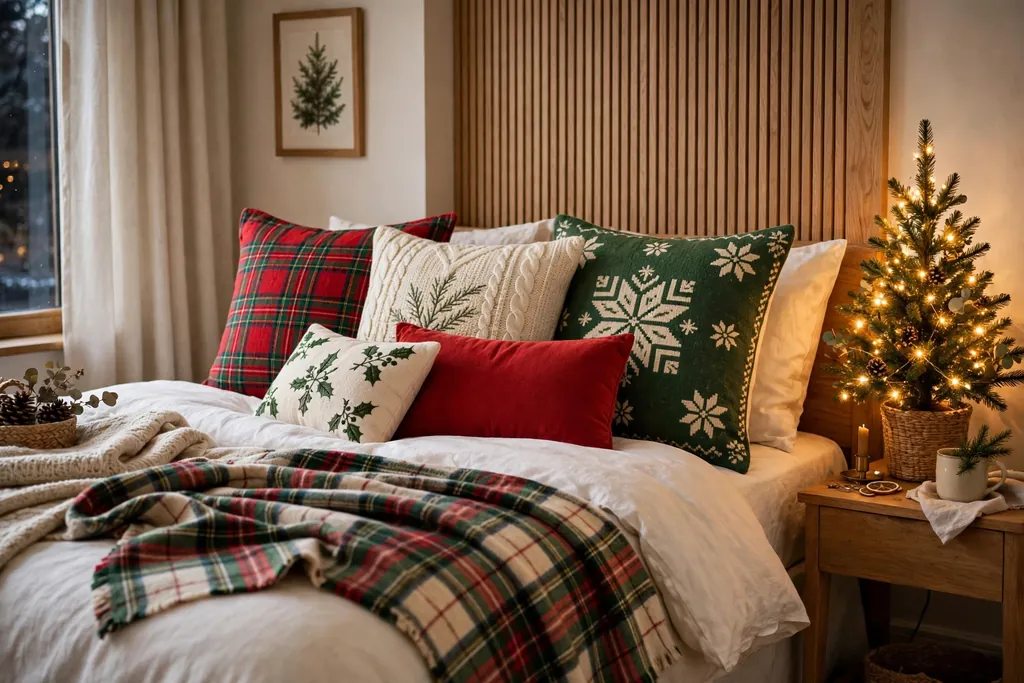
Christmas covers on a bed suit a guest room, a main bedroom, or a child’s room where the sofa already has its own set. Layer a Christmas cover in front of the sleeping pillows, with a plain cover behind it, so the seasonal cover shows without replacing the pillows used for sleep. A red, cream, and green group on a bed with a plaid throw carries the season into the bedroom with only two or three covers.
Keep bedroom covers soft and washable, since they sit near the face, and avoid sequin or rough burlap covers on a bed. A knit or velvet Christmas cover on a bed feels comfortable and looks seasonal, while a printed cover in a simple tree or snowflake pattern suits a child’s room. Wash bedroom covers before guests arrive, since stored covers can smell musty after a year in a box.
32. Keep One Base Set and Swap Covers by Season
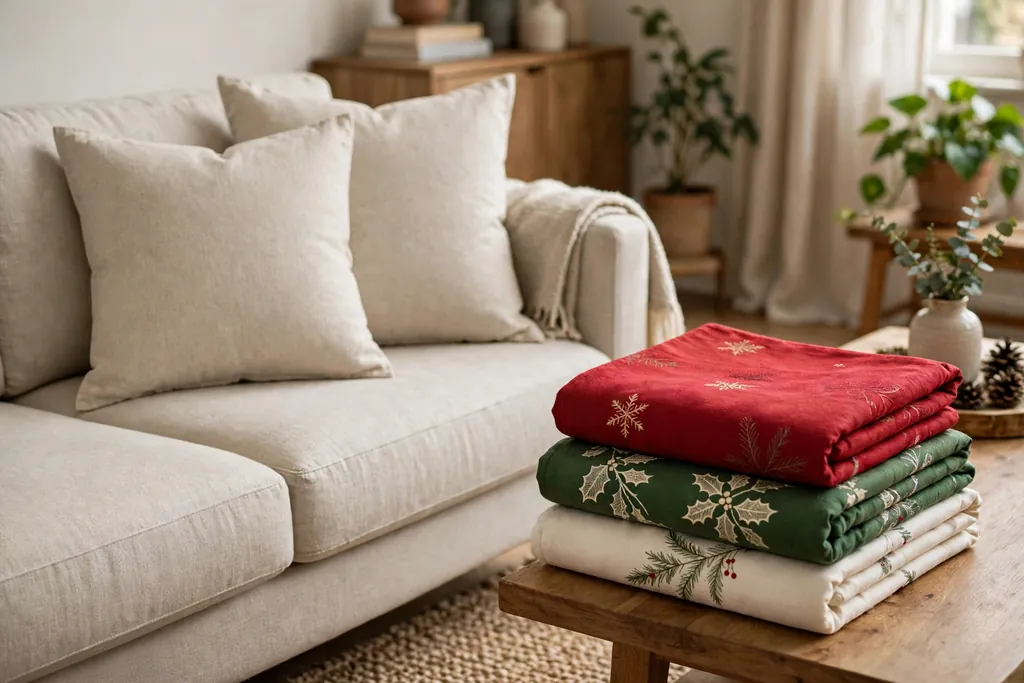
A swap system is the most practical idea in this list: keep one set of good inserts and plain base covers all year, then swap only the outer covers for Christmas, and swap them back in January. This saves money, since covers cost less than full pillows, and it saves storage, since covers fold flat in a labeled box. Start with inserts in two sizes that fit your sofa, then buy Christmas covers in those exact sizes.
Label the storage box by room and size, and keep a note of which cover goes where, so next December starts fast. Wash all Christmas covers before storing them, since a stain left for a year can set, and store them in a dry place away from direct sun. This system also makes it easy to try a new palette next year: buy only new covers, keep the same inserts, and the room changes for the cost of fabric alone.
Conclusion
Christmas pillow covers work best when you treat them as a small set, not a pile of single buys. Pick one palette, mix one flat print with one soft texture, keep one plain cover in the group, and measure the inserts before you order. That short plan covers most rooms, from a classic red and green sofa to a pale Scandinavian bench or a sheltered porch. Start with the sofa you use most, add a bench or a bed cover second, and store the set clean and labeled in January. Next December, the covers will be ready to swap in, and the room will feel seasonal in the time it takes to zip a cover closed.
Save this list on Pinterest before you shop, and work through it in order: palette first, then texture, then motif, then placement, so each cover you buy has a clear job in the room.
FAQs
How many Christmas pillow covers do I need for a sofa?
For a standard three seat sofa, five covers work well: two large square covers at the back corners, two smaller square covers in front of them, and one lumbar cover in the center. A two seat sofa needs three or four covers, while a single chair needs one or two. Keep at least one plain cover in each group, so patterned covers stand out and the sofa still looks calm.
What size Christmas pillow cover should I buy?
Buy a cover that matches the insert size, or one inch smaller for a fuller look, since a slightly snug cover fills out better than a loose one. Common square sizes are 18 inch and 20 inch, while lumbar covers are often 12 inch by 20 inch. Measure each insert before ordering, and check whether the size given is for the cover or the insert, since makers use both.
Are Christmas pillow covers washable?
Most cotton and polyester covers are machine washable on a cool, gentle cycle, but velvet, sequin, knit, and embroidered covers need gentler care. Always check the care label first, wash printed and lettered covers inside out, and wash sequin and tassel covers in a laundry bag. Dry covers flat or on low heat if the label advises it, since high heat can shrink knit and fade prints.
Should Christmas pillow covers match the tree and mantel?
They should share a palette with the tree and mantel, not match them exactly. If the tree is red and gold, use red and gold covers, but keep the motifs different, such as a tartan cover beside a plain tree, so the room feels linked rather than copied. If the mantel is green and white, use green and white covers with a different texture, such as velvet beside a garland.
Can I use Christmas pillow covers outdoors?
Yes, if the covers are made for outdoor use, with a weather resistant fabric and a zipper that can cope with damp air. Use them only under shelter, such as a porch roof, and bring them inside during heavy rain, storms, or frost. Indoor cotton, velvet, and knit covers will soak and mildew outdoors, so keep those covers inside.
How do I store Christmas pillow covers after the season?
Wash and dry all covers fully, fold them flat, and store them in a labeled box or a breathable bag, by room and size. Keep the box in a dry place away from direct sun and damp, and add a note of which cover goes where. Avoid storing covers in a plastic bag that traps moisture, since damp storage can cause mildew and musty smells over the year.