
Traditional Christmas decor works because it is familiar: evergreen, red berries, warm light, plaid, and pieces with a story behind them. The trick is restraint. Pick two or three classic colors, repeat them from room to room, and leave breathing space around each display so the home still feels calm. These 34 traditional Christmas decor ideas cover the tree, the mantel, the table, the porch, and the small corners guests notice most. Start with the tree and one garland, then add the rest a little at a time.
Key Takeaways
- Choose one classic palette, such as red, green, and gold, and repeat it through every room for a linked look.
- Start with the tree and the mantel, since those two displays carry most of the seasonal feeling in a home.
- Use fresh or faux greenery as the base, then add light, ribbon, and one personal piece per display.
- Keep walkways, cooking surfaces, and exits clear, and use flameless candles near greenery, paper, and fabric.
- Mix one heirloom or handmade piece into each display so the decor feels personal rather than bought all at once.
- Store each display in its own labeled box, so next December starts with the pieces you loved most this year.
1. Classic Red and Green Tree with Glass Ornaments

Decorate the tree in red and green first, with glass or matte baubles in both colors and a few gold pieces to catch the light. This is the palette most people picture at Christmas, and it suits wood furniture, cream walls, and patterned rugs without a fight. Hang larger ornaments deep in the branches and smaller ones near the tips, so the tree looks full from every angle.
Step back twice while you work: once from the doorway and once from your usual seat. Move any ornament that hides behind a branch, and keep the lowest branches clear of walkways. If you are fitting a tree into a tight corner, these christmas tree corner ideas help with shapes and placement for small or awkward spaces.
2. Plaid Ribbon Tree

Wrap wide plaid ribbon around the tree in loose loops, or tie it into bows at intervals down the branches. Plaid reads as traditional at once, and it links the tree to throws, runners, and cushions elsewhere in the room. Red and green plaid suits a classic tree, while black and cream plaid suits a quieter room.
Use wired ribbon if you can, since it holds its shape and is easy to adjust. Cut lengths rather than one long piece, so a single bow can be fixed without redoing the whole tree. Keep ribbon away from hot bulbs, and remove it before the tree is taken down so it can be reused next year.
3. Gold and Cream Tree

For a softer traditional tree, use gold and cream ornaments with warm white lights and a cream or gold ribbon. The look stays classic, but it feels lighter in a small room or a home with pale walls. Gold baubles in matte, shiny, and textured finishes keep the tree from looking flat.
Add a few natural pieces, such as pinecones or dried orange slices, to warm up the metallic palette. Keep the topper simple, a star or a bow, so the gold does not compete with itself. This palette also pairs well with cream candles and gold candlesticks on the mantel.
4. Warm White Lights Layered in the Branches

String warm white lights deep inside the branches first, then add a second, lighter layer near the tips. Lights placed inside the tree give it depth and a glow that shows through the foliage, rather than a bright outline on the surface. Warm white suits traditional decor better than cool white, which can look stark against red and gold.
Count your light strands before you start, and test each one. Work from the trunk outward, and keep cords tucked behind branches. Switch lights off when you leave the house or go to bed, and keep the tree at least three feet from radiators, heaters, and open flames.
5. Heirloom Ornaments Grouped by Story

Give family ornaments a place of honor by grouping them together on one section of the tree, or on a small tabletop tree of their own. Old baubles, handmade pieces from childhood, and ornaments picked up on trips tell a story that new sets cannot. Grouping them keeps them visible instead of lost among matching sets.
Hang fragile pieces higher, out of reach of pets and small hands, and use sturdy hooks. Write a short note for each piece, who made it or where it came from, and store the note with the ornament. That small record turns a box of decorations into a family history over time.
6. Fresh Evergreen Garland on the Mantel

Drape a fresh evergreen garland along the mantel, letting it dip slightly in the middle and at each end. Fresh greenery smells like Christmas and softens a plain fireplace, and it needs little else: a few pinecones, red berries, and a string of warm lights finish it. Mist it lightly if the room is dry, and keep it away from open flames.
If fresh garland sheds too much for your home, a good faux garland gives the same shape and stores flat. Fluff the branches before hanging, and fix the garland with hooks rather than nails where the mantel finish matters. Take it down before it dries out fully, since dry greenery near heat is a risk.
7. Stockings Hung from the Mantel

Hang one stocking per person from the mantel, in matching knit, velvet, or felt, with names added by hand or by a small tag. Matching stockings look planned, while different colors or patterns suit a home where each person picked their own. Space them evenly so the mantel does not look crowded at one end.
Use stocking holders that grip the mantel shelf, and test the weight before filling them. Keep stockings away from a lit fire, and hang them only when the fire is cold if the mantel sits above a working fireplace. Empty stockings look neater through December, so fill them on Christmas Eve.
8. Brass Candlesticks on the Mantel
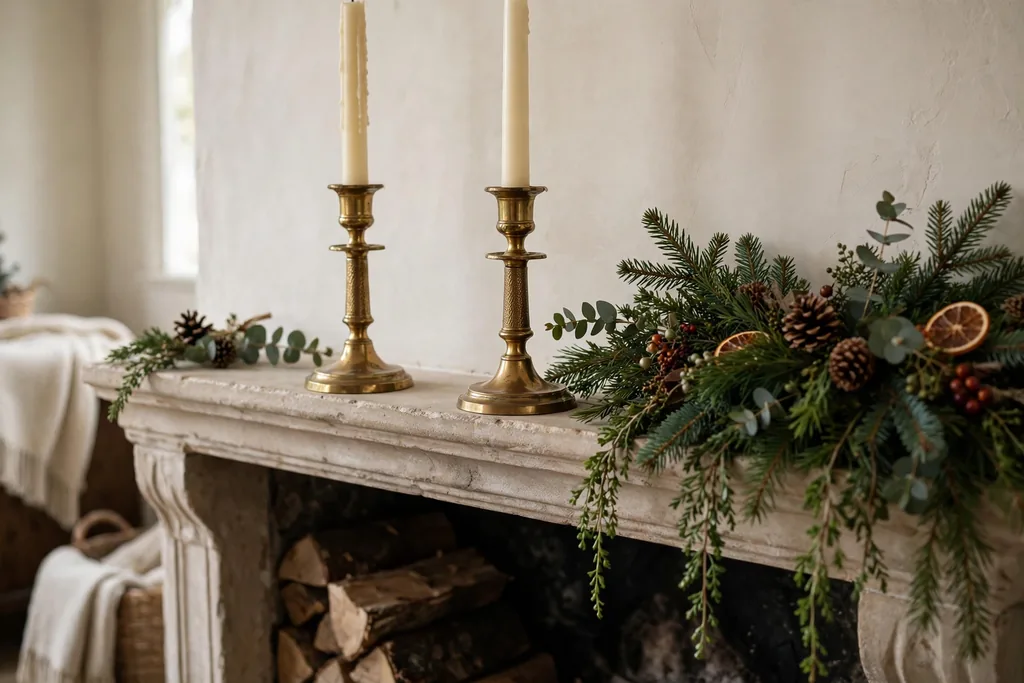
Set a pair of brass candlesticks on the mantel, flanking a mirror, a wreath, or a framed print. Brass is a traditional metal that warms up greenery and red berries, and candlesticks add height that a flat garland alone lacks. Use cream or red taper candles, and keep the heights slightly different for a natural look.
Use flameless tapers if the mantel is near greenery or if children can reach it. If you use real candles, never leave them burning unattended, and keep them clear of the garland and stockings. Polish the brass before December so the metal reads clearly against the green.
9. Nativity Scene on a Console Table
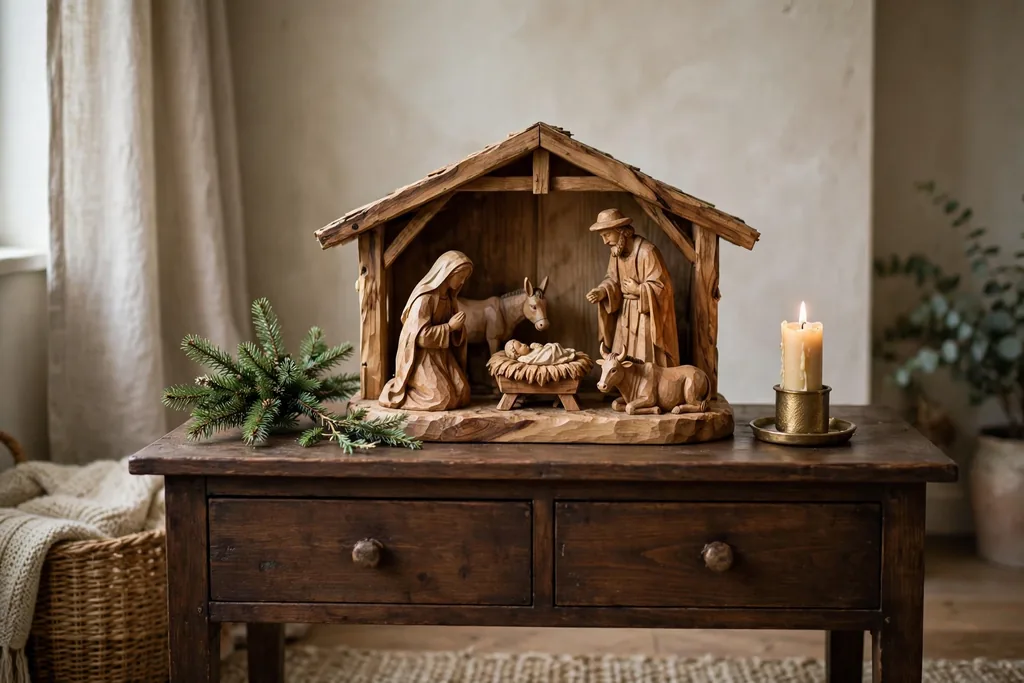
Set a nativity scene on a console table, a sideboard, or a low shelf where it can be seen without being knocked. A small set in wood, ceramic, or olive wood suits a traditional home, and placing it on its own surface gives it the quiet focus it deserves. Add a folded cloth underneath and a single candle or a small sprig of greenery beside it.
Keep the figures grouped, not spread across the whole table, and place the tallest piece at the back. If children like to rearrange the figures, let them: a nativity that gets handled becomes part of the season. Pack each figure wrapped separately, since small pieces chip easily in a shared box.
10. Nutcrackers Lined Up on the Stairs or Sill
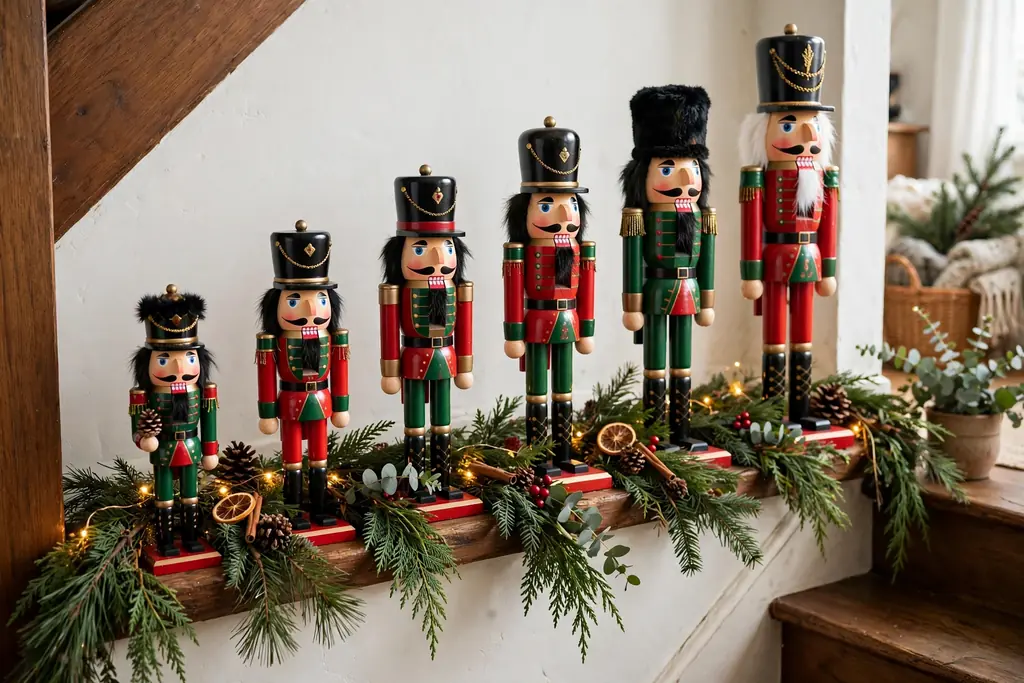
Line up nutcrackers along a stair ledge, a deep windowsill, or the top of a bookcase. A row of nutcrackers in red, green, and gold uniforms is a classic display that needs no other decor around it. Vary the heights so the row reads like a small parade rather than a shelf of identical pieces.
Keep the row away from edges where pieces can be knocked off, and dust them before display since painted figures show dust fast. If you collect one new nutcracker each year, the row grows into a record of past Christmases. Store them upright, wrapped, so paint and small parts stay intact.
11. Wreath on the Front Door with a Red Bow
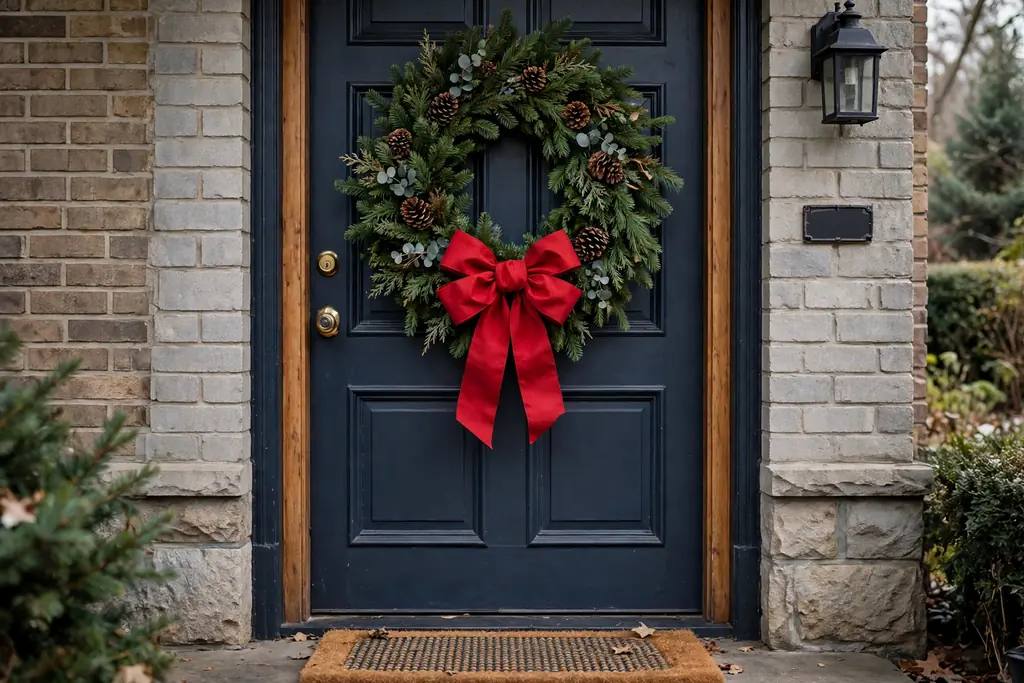
Hang a fresh or faux evergreen wreath on the front door, finished with a wide red bow at the top or bottom. The wreath is the first traditional piece guests see, and a simple bow keeps it classic without extra ornaments. Choose a wreath sized to the door: too small looks lost, too large crowds the handle and letterbox.
Hang it from a hook over the door or a suction hook rated for the weight, and check that the door still closes fully. Add a few pinecones or berries if the wreath looks bare, but stop before it looks busy. Take a photo of the finished door, since it helps you repeat the look next year.
12. Porch Lanterns and Door Garland
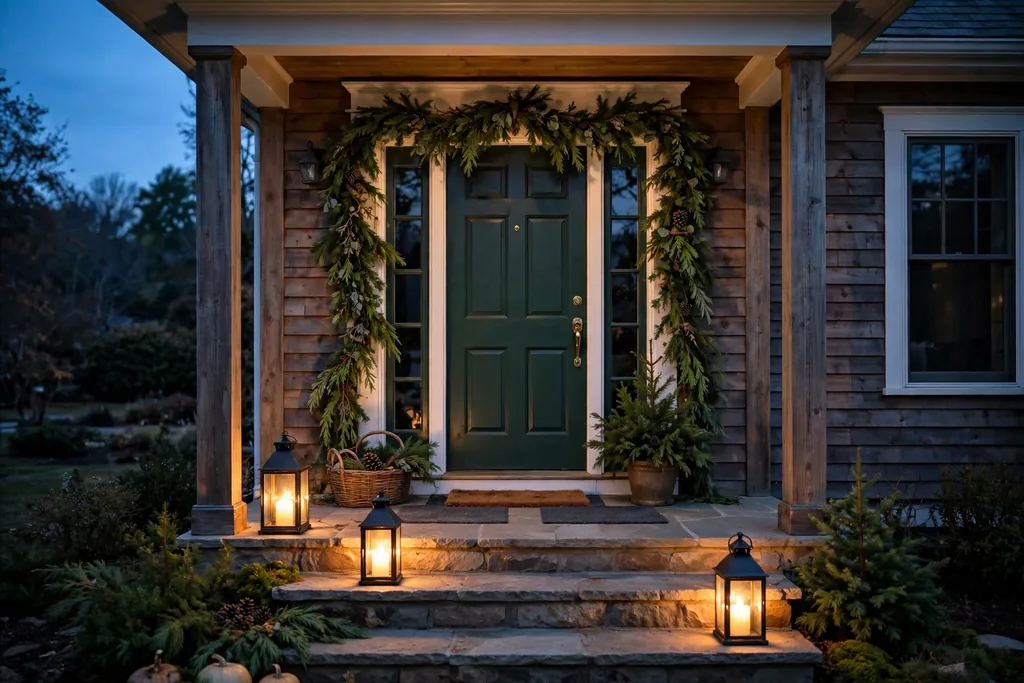
Frame the front door with a garland, and set lanterns with flameless candles on the porch steps or beside the door. The garland links the door to the wreath, and lanterns give a warm glow that welcomes guests after dark. Use two lanterns of different heights for balance, or a matching pair for a formal look.
Keep lanterns clear of the walking route and away from doormats that could catch. Battery candles with timers switch on at dusk on their own, which saves a daily trip outside. Bring real candles indoors in wind or rain, and store lantern glass wrapped so it does not chip.
13. Window Candles in Every Front Window
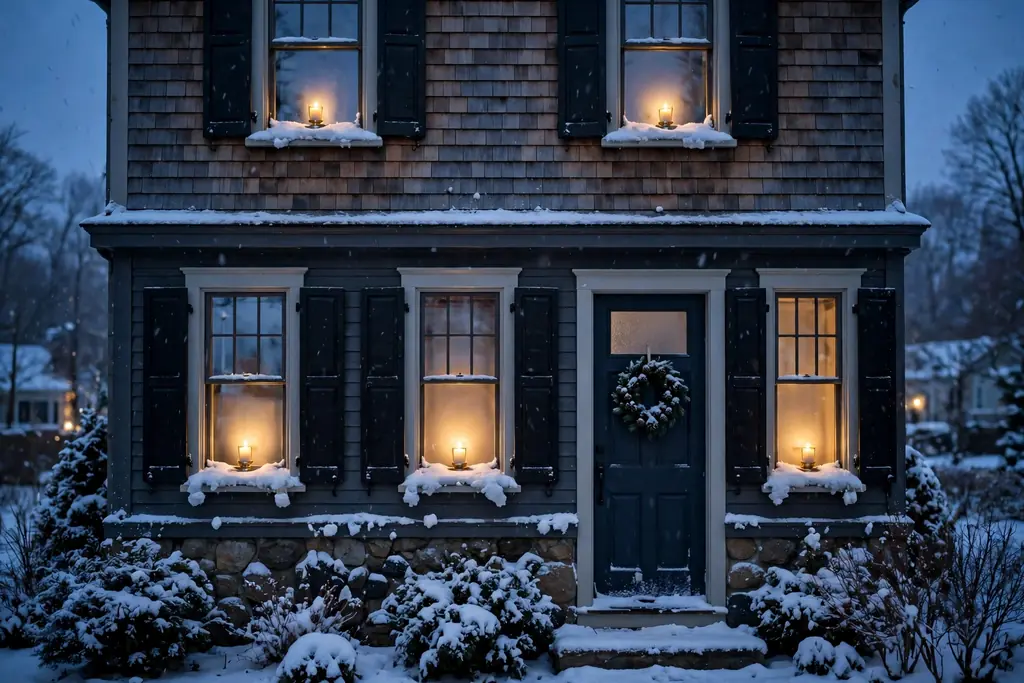
Place one electric candle in each front window, at the same height, for a traditional look that shows from the street. Window candles are a quiet classic, and a row of them makes a house look cared for without a large display. Choose warm white candles with a steady glow, and set them on a small plate or saucer to protect the sill.
Use candles with timers so the whole row lights at dusk together. Keep cords tucked and plugs clear of curtains, and keep real candles out of windows entirely, since curtains and drafts make them risky. One candle per window is enough: two per window starts to look cluttered from outside.
14. Poinsettias in Baskets by the Fireplace
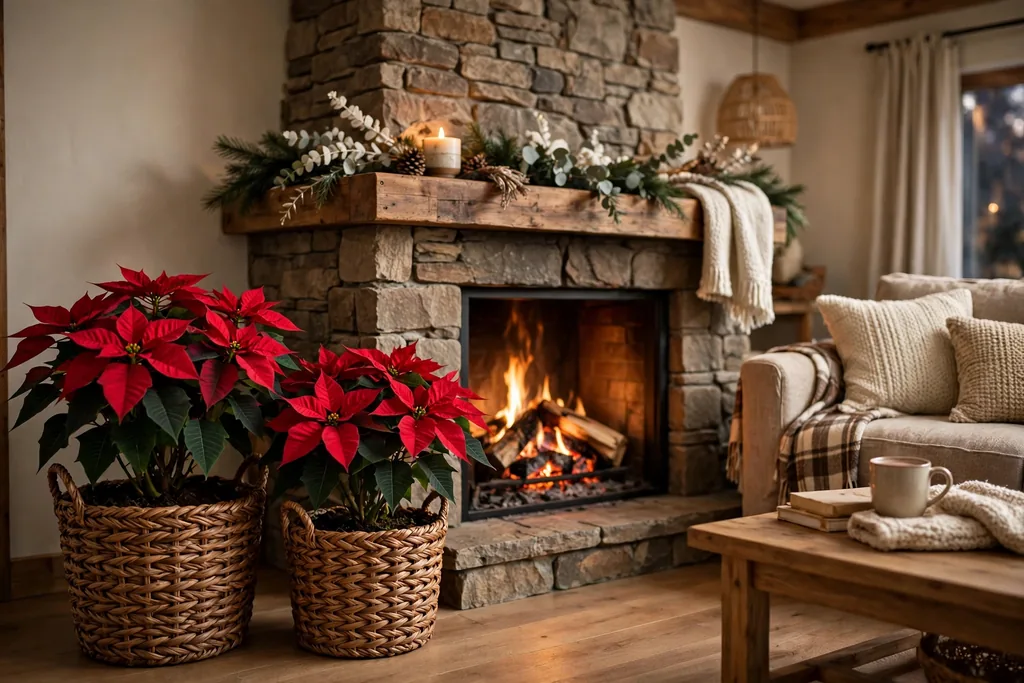
Set poinsettias in woven baskets or plain ceramic pots beside the fireplace, the entry console, or the stairs. Red poinsettias are the classic Christmas plant, and a basket softens the plastic pot they arrive in. Group two or three plants of different heights rather than lining up a row of identical pots.
Water sparingly and empty saucers, since poinsettias dislike wet roots. Keep them away from cold drafts and hot radiators, and keep leaves out of reach of pets that chew plants. When the season ends, compost plants that have faded rather than nursing a bare stem indoors.
15. Plaid Throws and Cushions in the Living Room

Swap in plaid throws and cushion covers for December, in red, green, or cream checks that match the tree. Textiles change a room fast, since they cover the largest surfaces after the walls, and they store flat in January. Fold one throw over the sofa arm and drape another over a chair, rather than covering every seat.
Choose washable fabrics, since throws collect crumbs, pet hair, and cocoa spills. Keep one plain cushion on each seat so the pattern does not overwhelm the room. If the tree already wears plaid ribbon, use a simpler check on the sofa so the two patterns do not compete.
16. Tartan Table Runner on the Dining Table
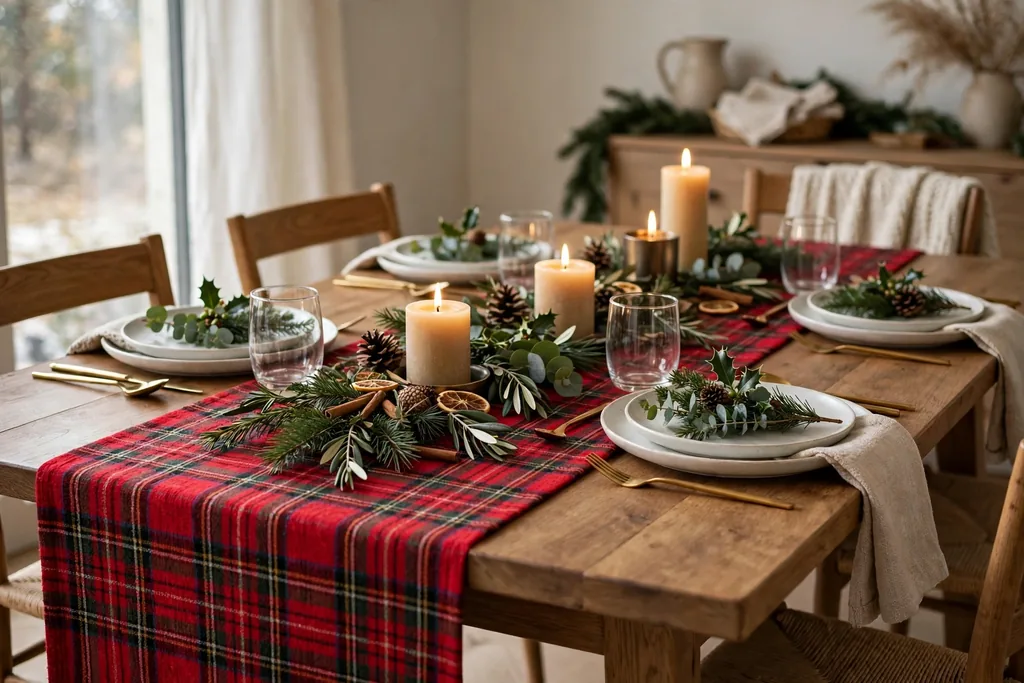
Lay a tartan or plaid runner down the dining table as the base for the whole table setting. The runner adds color and pattern without a full tablecloth, and it protects the table from hot dishes and candle wax. Red tartan suits a classic table, while green tartan suits a table with gold candles and cream napkins.
Keep the runner flat and centered, with equal overhang at each end. If the table is long, use two shorter runners end to end rather than one that bunches. Wash the runner before storing it, since food marks set over a year in storage.
17. Greenery and Taper Centerpiece
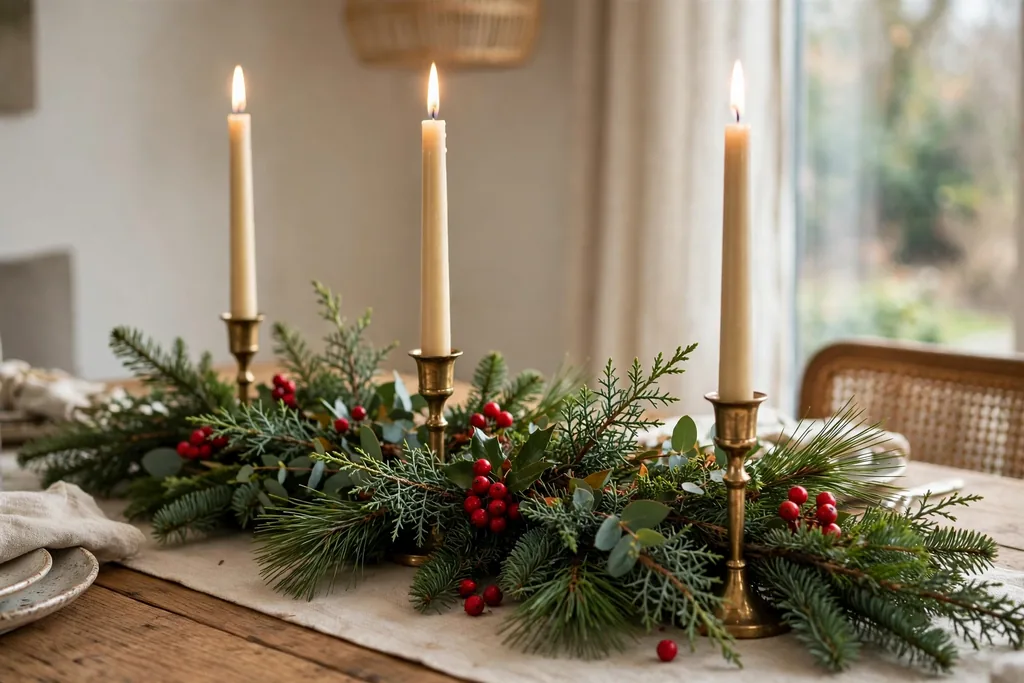
Build the dining centerpiece from a low garland or a row of evergreen sprigs, with taper candles in holders rising above it. A low centerpiece matters at a dining table, since guests need to see each other across it. Keep the greenery below eye level and the candle flames above the sprigs, clear of anything that could catch.
Use flameless tapers if children sit at the table or if the meal runs long. Set the centerpiece on a tray or a folded cloth so sap and needles do not mark the table. Add a few red berries or small gold baubles into the greenery, but keep the arrangement narrow so plates still fit.
18. Holiday China on Open Display
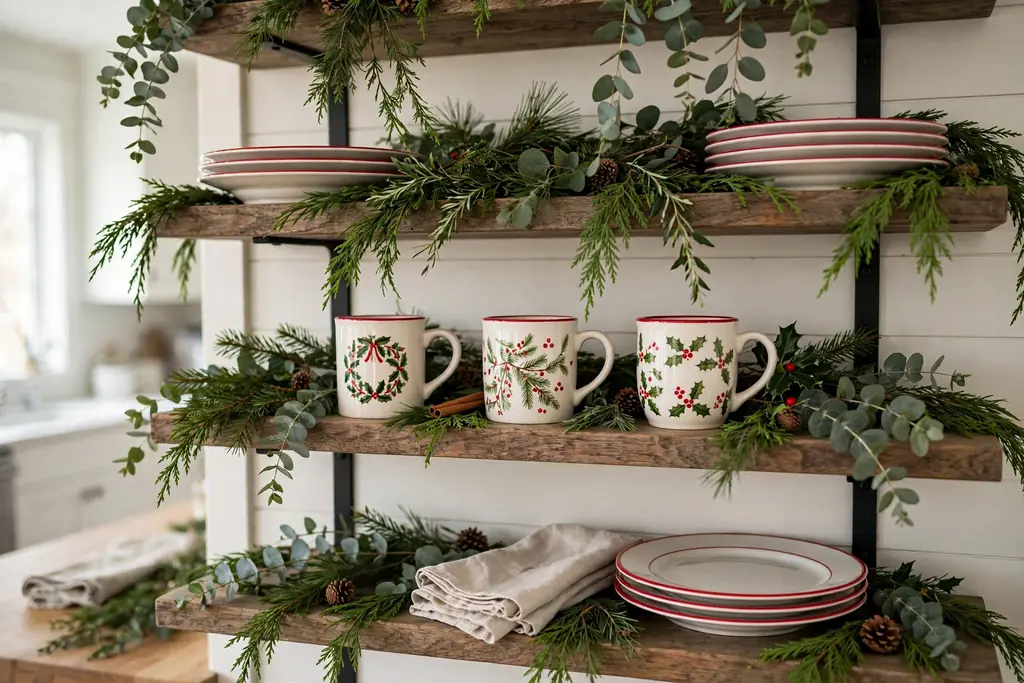
Bring out holiday china, even if it is only for display on open shelves or a dresser top. Red rimmed plates, a patterned serving bowl, or a set of Christmas mugs add tradition to a kitchen or dining room without a full table setting. Stack plates upright on a plate stand, and group mugs by color.
Wash the pieces before display, since stored china gathers dust. If the set is incomplete, mix in plain cream pieces: the holiday pattern still reads clearly. Keep everyday plates in their usual spot, and decorate only one shelf, so the kitchen still works the same all season.
19. Place Settings with a Sprig and a Name Card
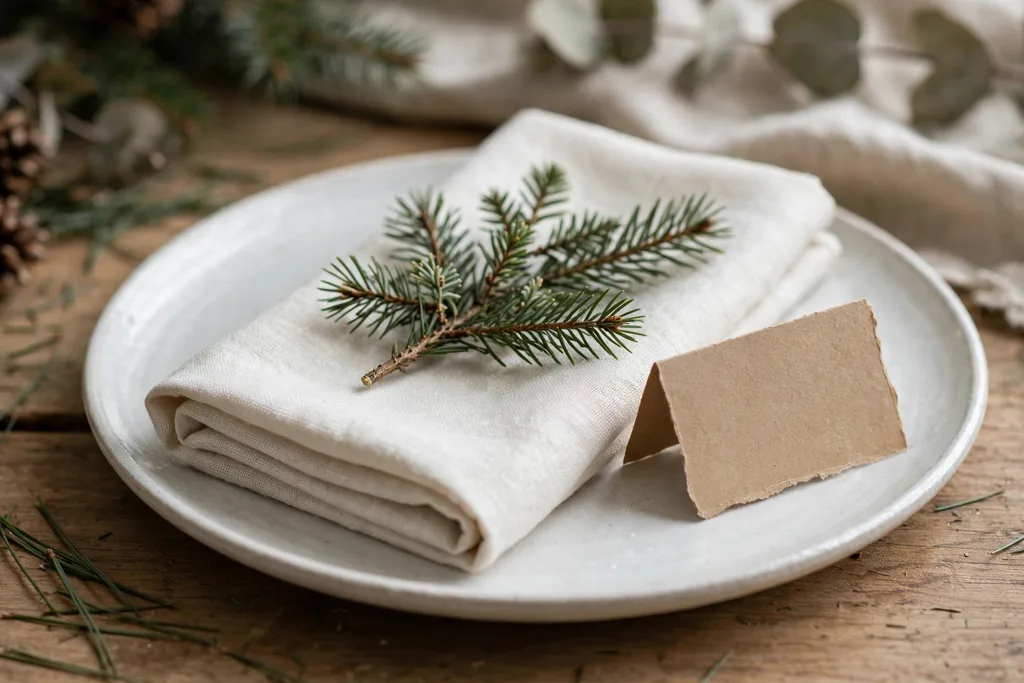
Set each place with a plain napkin, a small sprig of evergreen or rosemary, and a handwritten name card. This is a small touch with a large effect, since guests feel expected rather than just seated. The sprig adds scent and color for almost no cost, and the name card doubles as a keepsake.
Tie the sprig and card together with twine or thin ribbon, and lay the bundle across the plate or beside the fork. Keep the sprig short so it does not brush sleeves or glasses. If you seat children at the table, use a small ornament or a candy cane in place of the sprig.
20. Christmas Village on the Sideboard
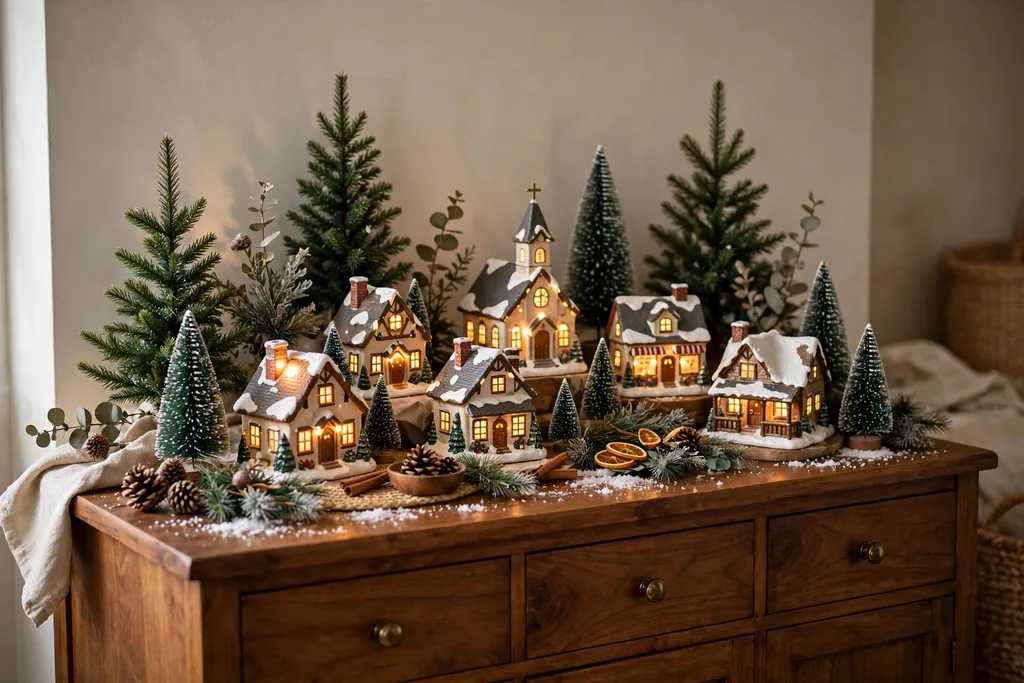
Set a Christmas village on a sideboard, a wide windowsill, or the top of a low bookcase, with houses, trees, and small figures grouped into a scene. A village works best as one display, not scattered pieces, so give it a clear base: a white cloth for snow, or a wooden board. Add battery lights inside a few houses for an evening glow.
Keep the village out of the main walkway, since small pieces fall easily. Build it in layers, with taller houses at the back and smaller pieces at the front, so the scene reads from across the room. Pack houses in their own boxes, with figures wrapped separately, to avoid chips.
21. Advent Calendar on the Hallway Wall
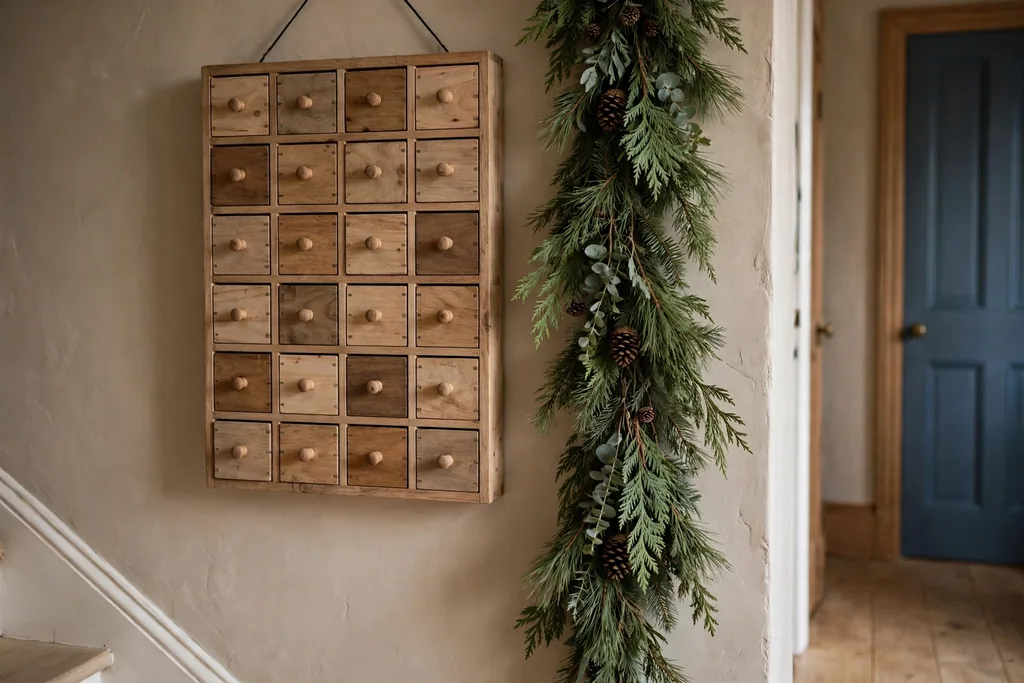
Hang an advent calendar in the hallway or kitchen, where the whole household passes it daily. A wooden calendar with small drawers, a fabric calendar with pockets, or a simple paper calendar all suit a traditional home. Fill drawers with small treats, notes, or a daily activity, not only sweets.
Hang it at a height children can reach if they open it, and fix it firmly so daily pulling does not loosen it. Refill it each evening or once a week, whichever you will actually keep up. After Christmas, store the treats out and the calendar flat, ready for next December.
22. Dried Orange and Cinnamon Garland
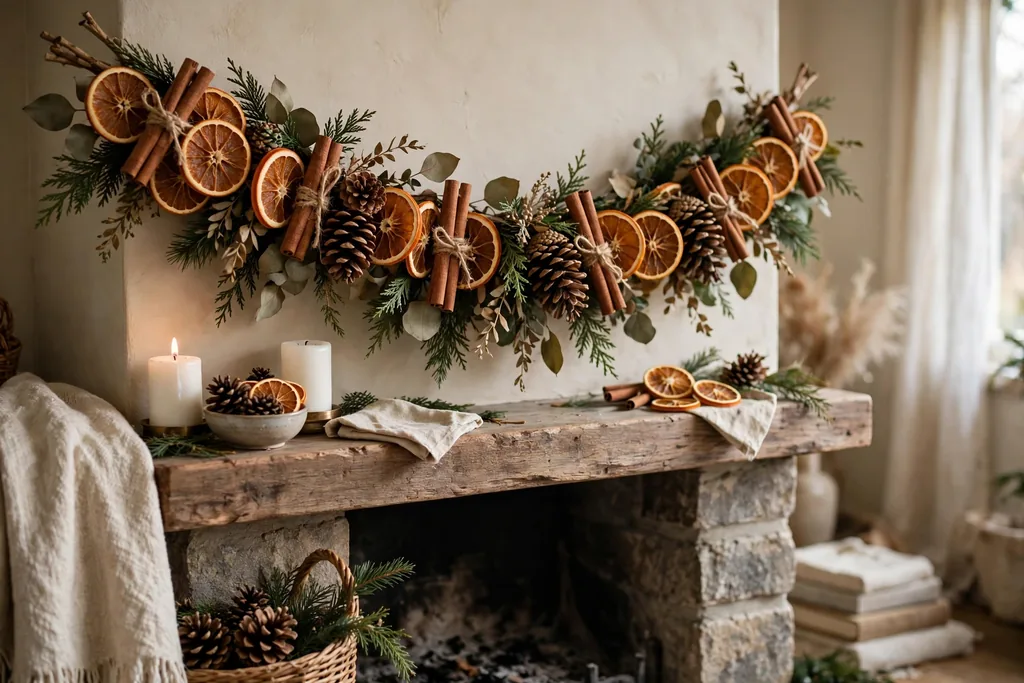
String dried orange slices with cinnamon sticks and small pinecones into a garland for the tree, the mantel, or a window. This is an old fashioned decoration that smells good, costs little, and suits a traditional home better than plastic garland. Dry the slices fully before stringing, so they do not soften or mark surfaces.
Thread them with twine and a large needle, spacing the slices evenly with a cinnamon stick or pinecone between each one. Keep the garland away from damp rooms, and compost it in January if it has faded. Make it a family project: children can thread the softer pieces while adults handle the needle.
23. Popcorn and Cranberry Garland on the Tree
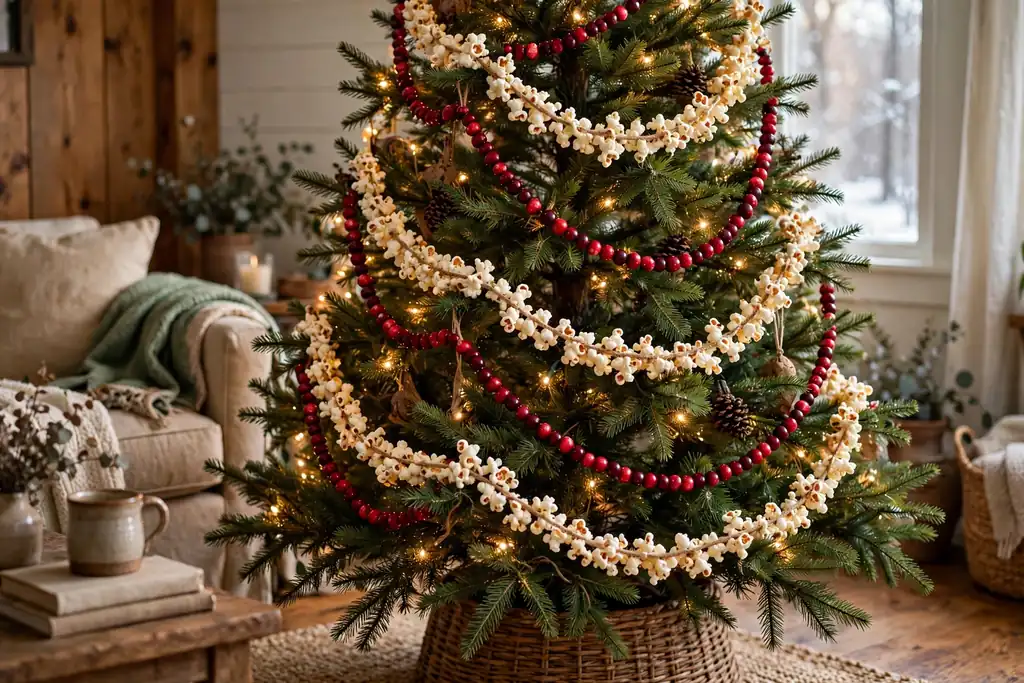
String popped popcorn and fresh cranberries on a long thread for a tree garland with a handmade feel. This is one of the oldest tree decorations, and it suits a family tree covered in heirloom ornaments and paper pieces. Pop the corn plain, without butter or salt, so it stays dry and does not stain branches.
Work in short lengths, joining them on the tree, since one very long strand tangles fast. Keep the garland high if pets can reach it, and compost it after the season rather than storing it. If fresh cranberries are hard to find, use dried cranberries or wooden beads in red for the same rhythm.
24. Bowls of Pinecones and Cinnamon

Fill wide bowls with pinecones, cinnamon sticks, and a few dried orange slices, and set them on coffee tables, side tables, and the entry console. A bowl of natural pieces is the easiest traditional display: it takes a minute to build, needs no power, and fills a bare surface. Mix large and small pinecones so the bowl looks gathered, not bought as a set.
Add a drop of cinnamon or pine scent only if the household likes it, since strong scent can overwhelm a small room. Dust the bowls weekly, and keep them out of reach of small children who may mouth small pieces. In January, store the pinecones in a bag and reuse them next year.
25. Gingerbread House as a Centerpiece
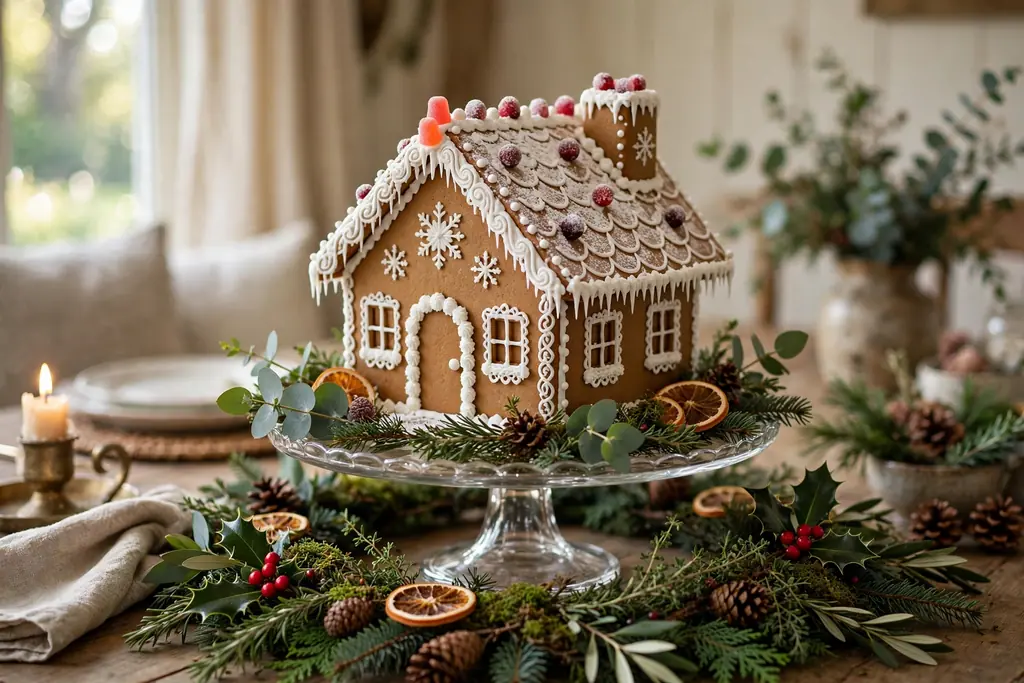
Set a gingerbread house, homemade, from a kit, or a ceramic version, on a board or cake stand at the center of a table or sideboard. A gingerbread house gives guests one clear focal point, so the rest of the surface can stay plain. Raise it slightly so it reads above bowls and plates, and keep it away from damp and direct heat.
Photograph it early in the season, since a real house softens and fades as December goes on. If children helped build it, place it where they can see it without reaching it. A ceramic house stores for reuse and suits a home that prefers decor without food waste.
26. Hot Cocoa Station at One End of the Counter
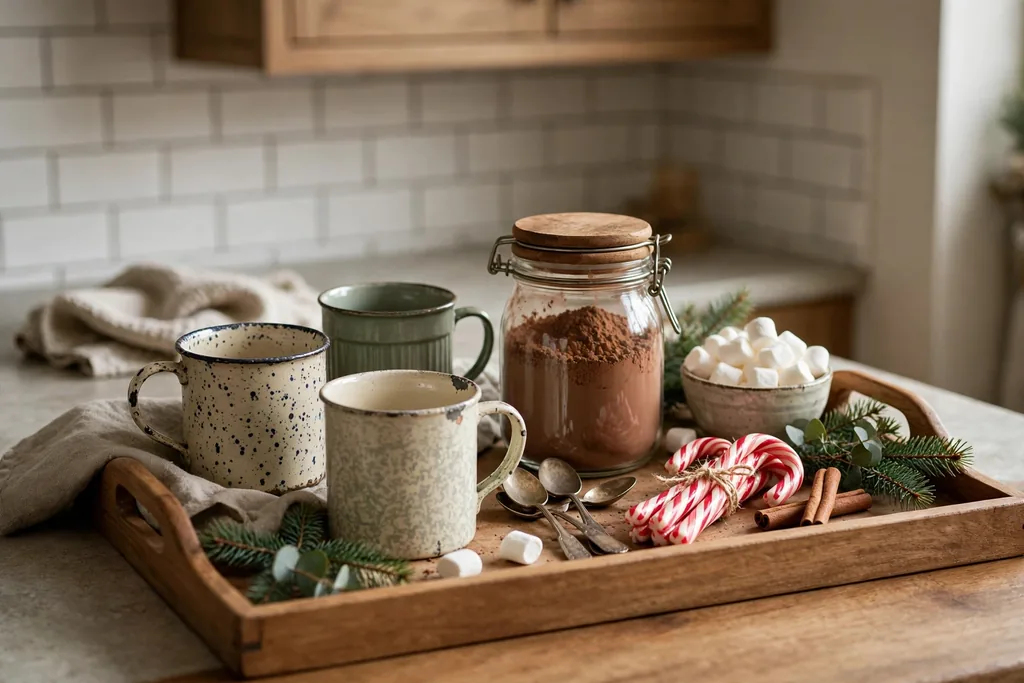
Set a hot cocoa station at one end of a counter or sideboard: a tray with mugs, a jar of cocoa mix, spoons, and one seasonal item such as candy canes or a small sign. Keeping everything on one tray stops the station spreading across the counter during gatherings. For more kitchen ideas that pair with this approach, see these christmas kitchen island decor ideas.
Set the station near the kettle or coffee maker to shorten the trip with hot water. Keep it away from the main prep zone, and wipe spills the same day so sugar does not mark the surface. Use vintage or mismatched mugs for a traditional feel, and keep one plain mug for guests who prefer tea.
27. Basket of Christmas Books by the Chair
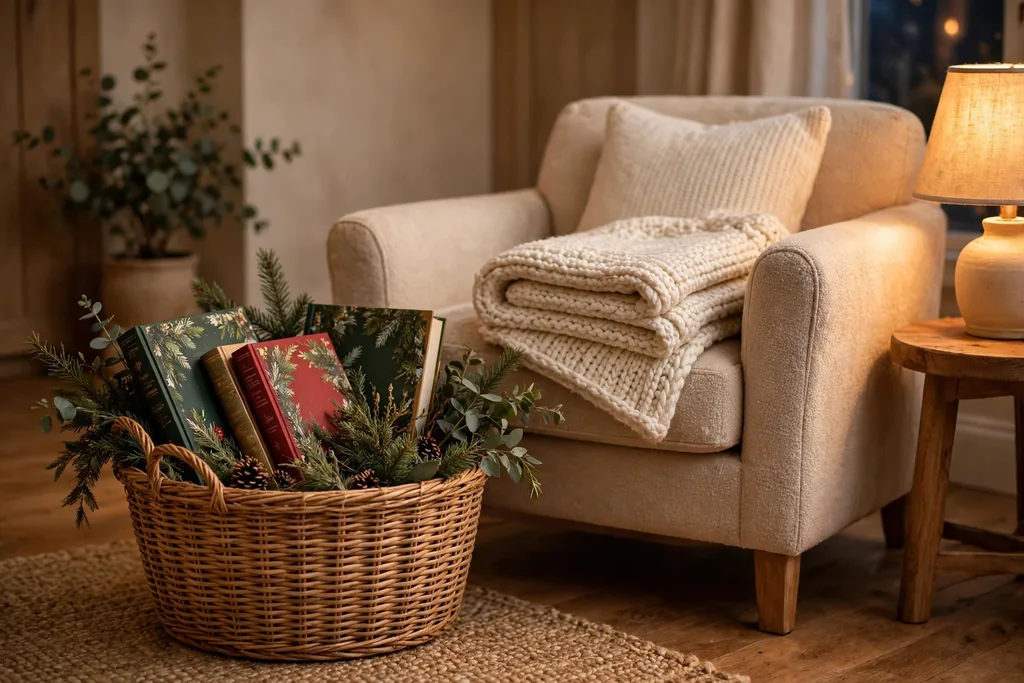
Fill a basket with Christmas books, carol sheets, and a few puzzle books, and set it beside a favorite chair. A book basket invites quiet evenings in a way that a screen does not, and it suits a traditional home where reading is part of the season. Add a small blanket to the basket handle, so the chair is ready for an evening sit down.
Rotate the books weekly so children find something new, and keep the basket where it will be used, not in a hallway. Include one book for adults and one for children if the household shares the chair. Pack the basket away in January with the books inside, so it is ready to bring out next year.
28. Festive Bedding Swap in the Bedroom
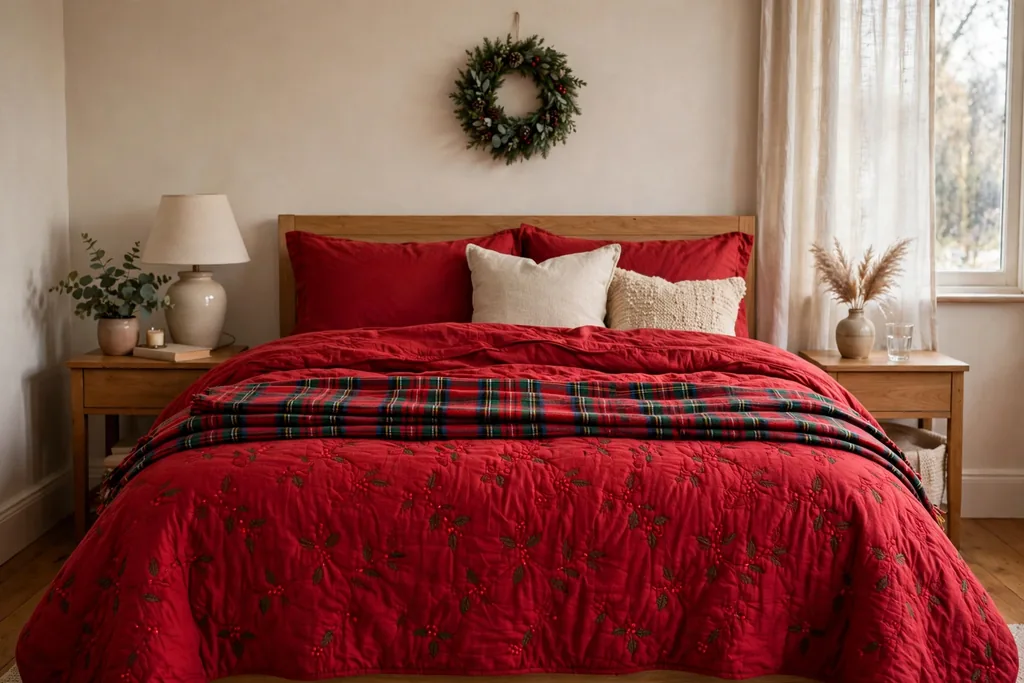
Swap the bedroom bedding for December: a red or deep green duvet cover, flannel sheets, and a folded plaid throw across the foot of the bed. Bedding is the largest surface in a bedroom, so one swap changes the whole room. Keep the pillowcases plain so the pattern does not overwhelm the bed.
Wash the summer cover before storing it, so the next swap is easy. Add one seasonal cushion, not a pile, since a bed still needs to be slept in. If the room is small, change only the throw and the cushion covers, and let the rest of the room stay as it is.
29. Small Tabletop Tree in the Bedroom
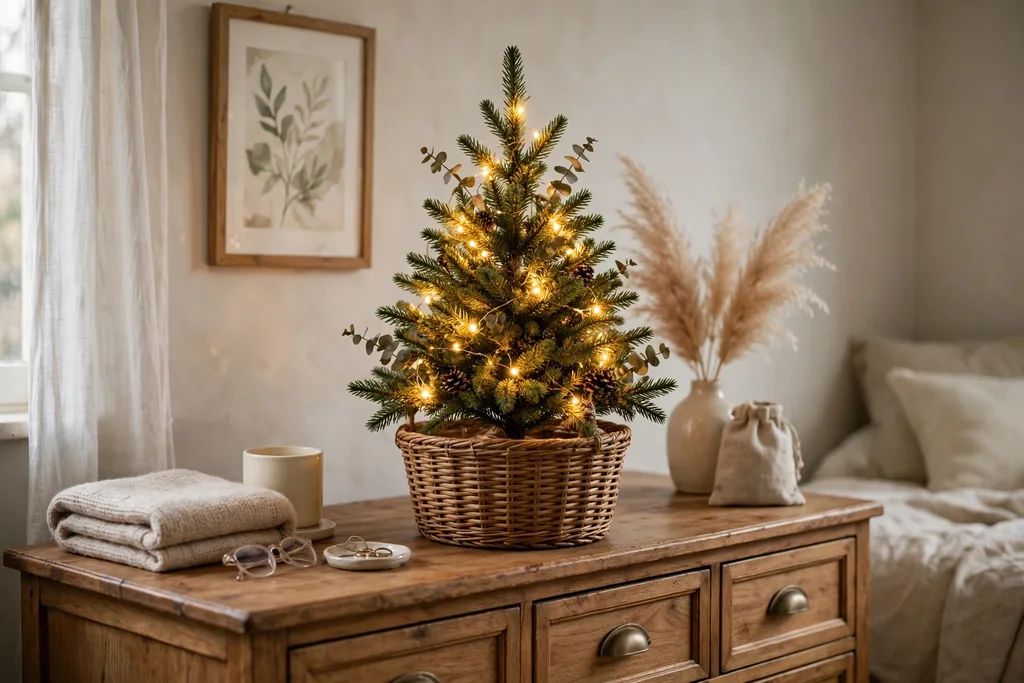
Set a small tabletop tree on a bedroom dresser or nightstand, in a pot, a basket, or a wrapped base. A bedroom tree makes the season feel personal, since it is seen first thing in the morning and last thing at night. Keep it simple: warm lights and a few small ornaments suit a small tree better than a full set.
Keep the tree clear of bedding and curtains, and use battery lights so no cord crosses the nightstand. A plain tree with no ornaments can stay through January as winter decor. If the dresser is crowded, a tiny tree on a wall shelf gives the same effect with no surface lost.
30. Seasonal Towels and a Sprig in the Guest Bath
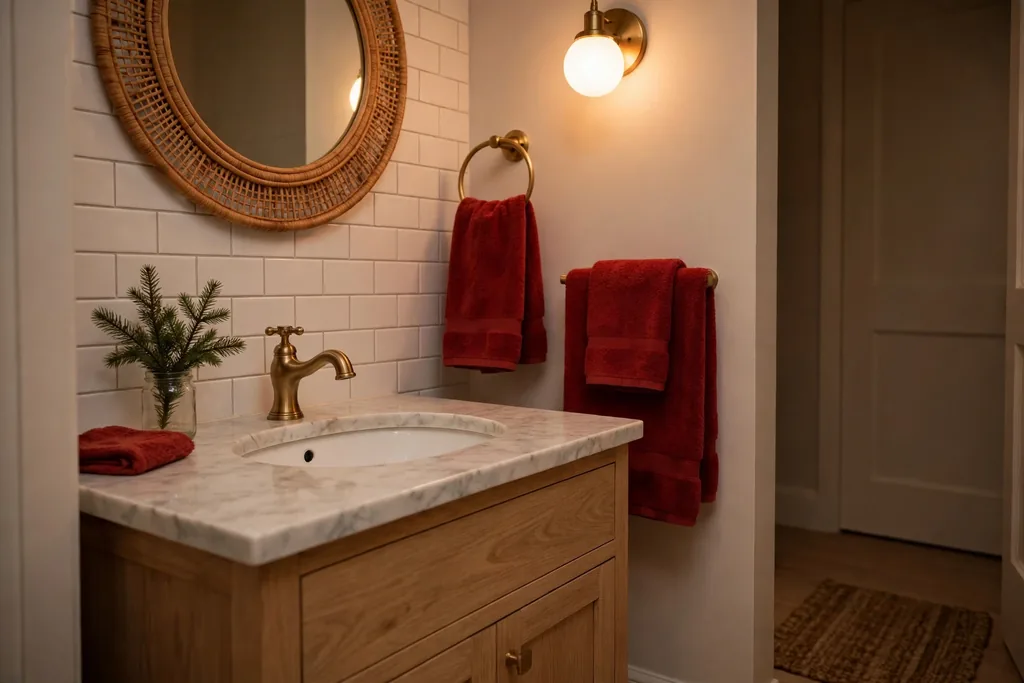
Hang seasonal hand towels in the guest bathroom, in red, green, or cream, with a small sprig of greenery in a jar by the sink. Guests notice a bathroom that has been thought about, and towels are an easy swap that washes with the normal laundry. Add a plain soap and a spare towel, so the seasonal set stays decorative.
Keep the sprig short and the jar stable, so it does not tip when the tap runs. Replace the greenery weekly if it fades. Keep spare plain towels nearby for heavy use days, and save the seasonal set for guests and weekends.
31. Stair Garland with Bows
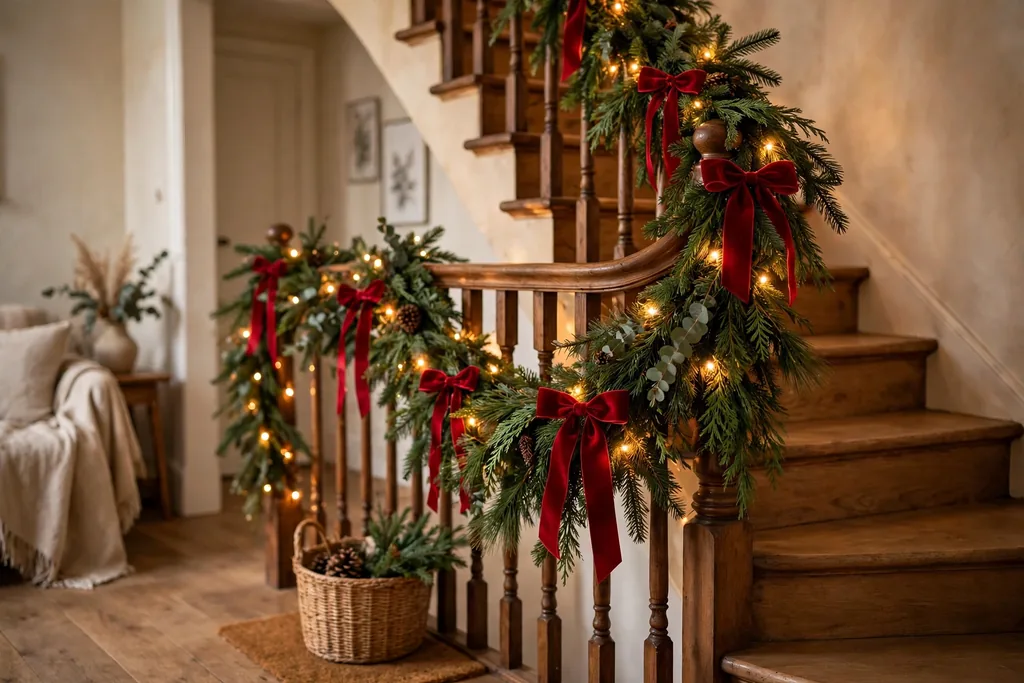
Drape a garland along the stair banister, fixing it at intervals with wide ribbon bows. A stair garland carries the Christmas feeling between floors, and it is seen every time someone goes upstairs. Use a faux garland on stairs if fresh greenery sheds onto carpet, and fix it with ribbon ties rather than wire that could mark the rail.
Keep the garland on the wall side of the rail where possible, so hands still grip the rail safely. Space the bows evenly, one at each newel post and one or two between, and keep the garland clear of the steps. Check the ties weekly, since a loose garland can slip onto a step.
32. String Lights Along the Porch Railing
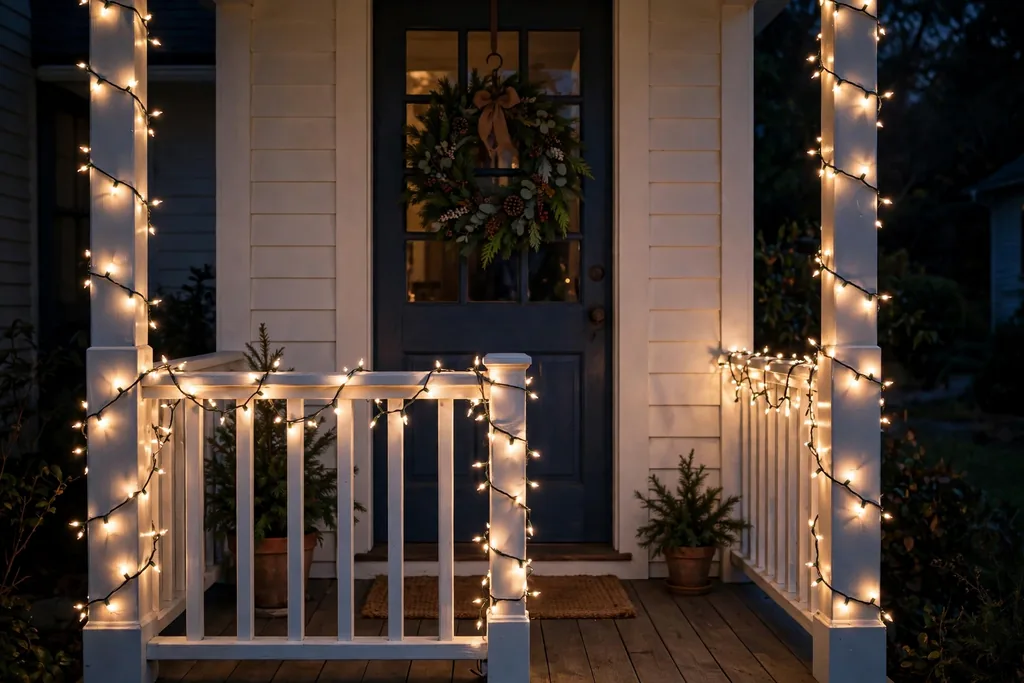
Run warm white string lights along the porch railing, tucked under the top rail so the bulbs glow without a visible cord. Railing lights frame the porch at night and link the door wreath to the rest of the house. Choose lights rated for outdoor use, and keep plugs sheltered from rain.
Test the full strand before hanging, and fix it with clips rather than nails that could split the rail. Use a timer so the lights switch on at dusk. Take the lights down in January before winter weather weathers the cord, and store them coiled, not tangled.
33. Wrapped Gifts Styled Under the Tree

Wrap gifts early in red, green, kraft, and cream paper, tied with ribbon, and arrange them under the tree as part of the display. Wrapped gifts fill the empty space under a tree and add color at floor level, where the tree itself has little detail. Use a limited palette of papers so the pile looks planned rather than random.
Keep large gifts at the back and small ones at the front, and leave a gap at the tree base for watering if the tree is real. Hold back gifts for children until Christmas Eve if early piles cause daily unwrapping requests. Photograph the arrangement, since a styled pile is easy to disturb and hard to rebuild.
34. Quiet Reading Nook with a Blanket and Lights

Make a quiet corner for December evenings: a chair, a warm blanket, a small side table, and a lamp or a string of warm lights. A reading nook gives the season a slow place, away from the tree and the table, and it suits a home where Christmas is about rest as much as gathering. Add a basket for the book basket from Idea 27, so the nook and the books work together.
Keep the nook near a window or a lamp, and clear the chair daily so it stays an invitation rather than a clothes pile. A soft lamp for evening reading helps the body wind down, and a washable blanket keeps the setup practical. This is the corner to sit in with cocoa after the house goes quiet.
Conclusion
Traditional Christmas decor does not need a large budget or a house full of new pieces. A red and green tree, a garland on the mantel, stockings in a row, and a candlelit table carry most of the season, and the smaller ideas in this list fill in the rooms around them. Pick the palette you already love, repeat it room to room, and add one personal piece to each display. Save your favorite idea from this list to a Christmas board on Pinterest, and start with the tree this weekend.
Frequently Asked Questions
What colors define traditional Christmas decor?
Red, green, and gold are the classic trio, with cream, white, and natural wood as supporting tones. Red and green carry the tree and the wreath, gold adds warmth through baubles and candlesticks, and cream keeps the look calm. Pick two main colors and one accent, then repeat them through every room.
How can traditional Christmas decor look current instead of dated?
Use restraint: one classic palette, plain surfaces around each display, and warm white lights rather than mixed colors. Leave breathing space around the tree and the mantel, and mix one modern piece, such as a simple brass holder or a plain linen runner, into each classic display. The tradition comes from the pieces, the current feel comes from the editing.
Is it better to use fresh or faux greenery?
Fresh greenery smells wonderful and suits a mantel or door wreath for a few weeks, but it sheds and dries out, so keep it away from heat and flames. Faux greenery suits stairs, kitchens, and homes with allergies, and it stores for reuse. Many homes use both: fresh on the door, faux on the stairs.
How do I decorate for Christmas on a small budget?
Start with greenery, ribbon, and paper: a garland, dried orange slices, popcorn garland, and wrapped gifts under the tree cost little and cover a lot of space. Use bowls of pinecones, plaid throws you already own, and one new piece per year, such as a wreath or a set of candlesticks, rather than buying a whole look at once.
How do I keep traditional decor safe around children and pets?
Hang fragile ornaments high, keep small pieces out of reach, and use flameless candles near greenery, fabric, and paper. Keep trees and garlands clear of walkways and heat sources, switch lights off overnight, and keep poinsettias and small ornaments away from pets that chew plants or decorations.
When should I put up and take down traditional Christmas decor?
Most homes decorate in late November or early December, once the tree and garland are available, and take decor down in early January. Fresh greenery should come down before it dries out fully. Pack each display in its own labeled box, with fragile pieces wrapped separately, so next December starts smoothly.