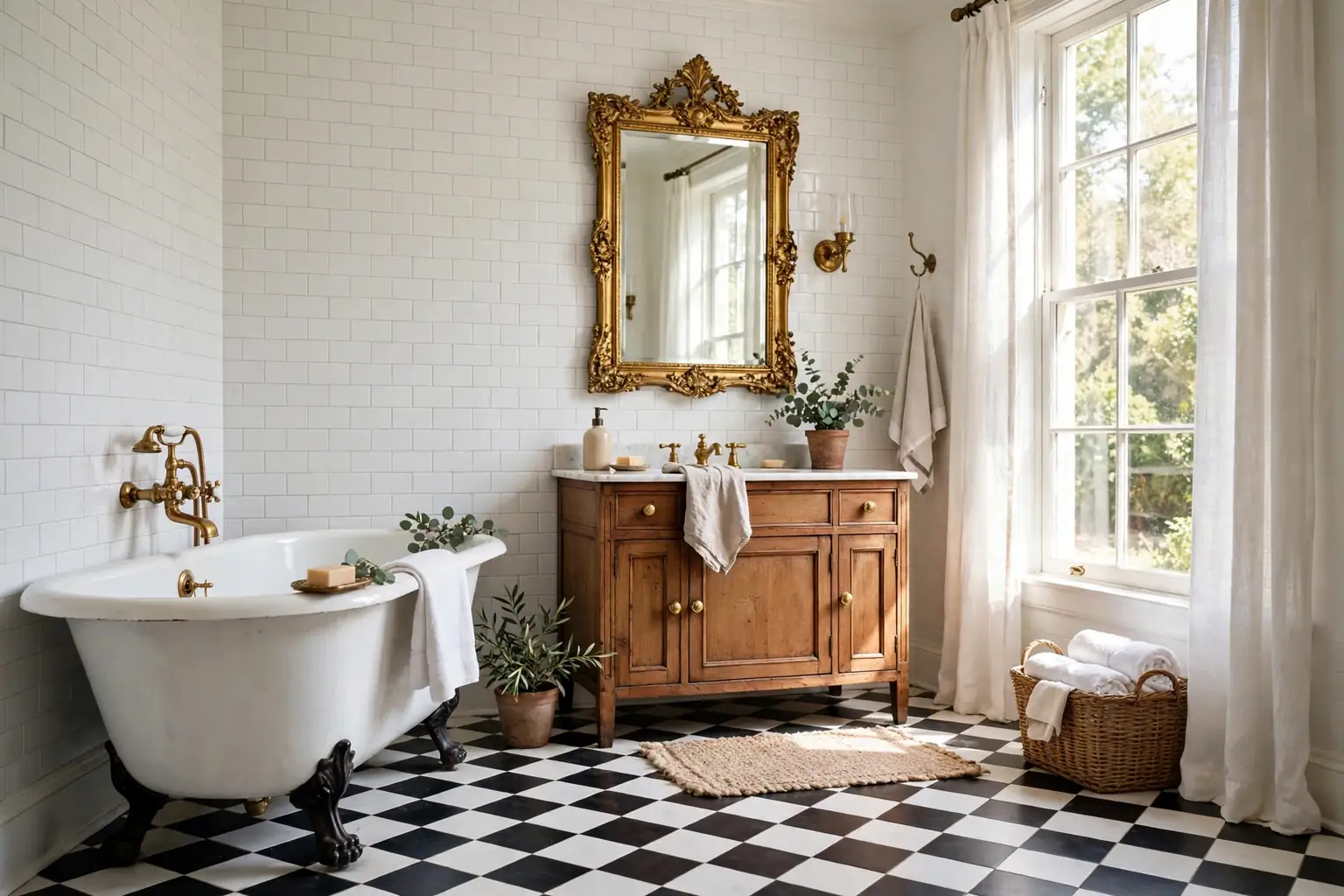
A vintage bathroom does not need to look like a museum. It needs a few pieces with age and weight: a tub with feet, a mirror with a real frame, tile with a pattern you can picture in an old house, and brass that has warmed with use. The best vintage rooms mix those older pieces with plain, practical surfaces, so the room still works for busy mornings. These 34 vintage bathroom decor ideas cover tubs, sinks, tile, floors, walls, storage, light, and small finishing touches. Pick one anchor piece first, then add the smaller details that suit your room, your budget, and the plumbing you already have.
Key Takeaways
- Start with one anchor, such as a clawfoot tub, a pedestal sink, or a checkerboard floor, and keep the rest of the room quieter so the anchor can carry the look.
- Repeat one metal finish, such as brass or aged nickel, in three or four places, including the faucet, mirror frame, and towel rail, for a planned feel.
- Pair vintage pieces with plain surfaces, such as white subway tile or pale painted walls, so the room reads as lived in rather than crowded.
- Choose water tolerant materials near the tub and shower, and save untreated wood, paper, and fabric for drier walls and corners.
- In a rented room, favor swaps that reverse cleanly: mirrors, hardware, shower curtains, rugs, baskets, and freestanding storage.
- Measure doorways, tub width, and vanity height before buying any large vintage piece, since older pieces often run larger than modern ones.
1. A Clawfoot Tub as the Centerpiece
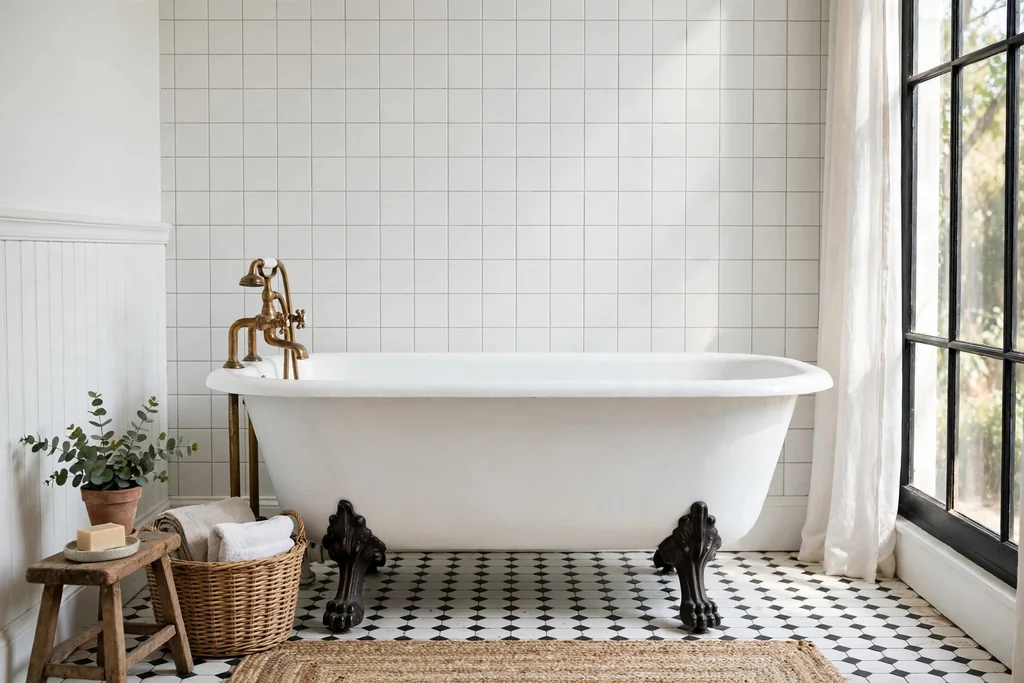
A clawfoot tub gives a vintage bathroom an instant center, because its feet, curved sides, and freestanding shape read as old house character at a glance. Place it where you can walk around at least one long side, and keep the wall behind it plain, in white tile or pale paint, so the tub shape stays the focus. A white tub with dark feet suits most rooms, while a painted exterior in deep green or navy can anchor a larger room.
Check the floor before you commit, since a filled cast iron tub is heavy, and confirm that your drain and supply lines can reach a freestanding position. Add a wooden bath tray and a small stool for a towel, and keep candles clear of fabric and water. If a full clawfoot tub is not practical, a freestanding oval tub with vintage style feet gives much of the same shape with simpler plumbing.
2. A Classic Pedestal Sink
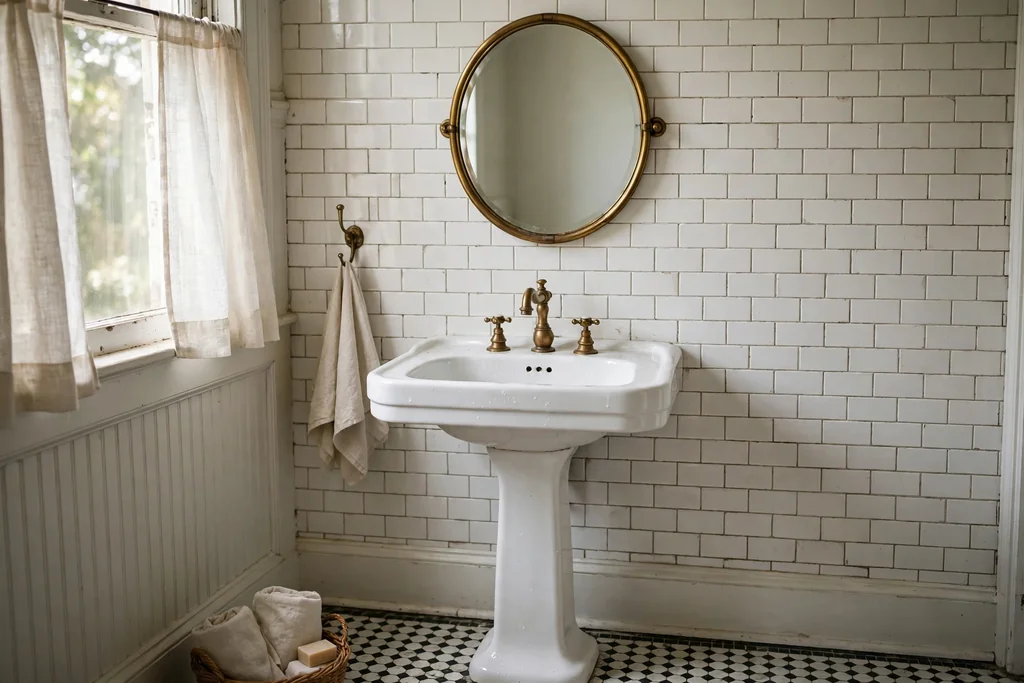
A pedestal sink suits a vintage bathroom because it shows its shape: a basin on a slim column, with no cabinet to hide it. It works well in a small room, where a vanity would crowd the floor, and it pairs naturally with a round or oval mirror and wall sconces. Choose a white porcelain basin with a simple rim, and keep the faucet in the same finish as the rest of the room.
The trade off is storage, since a pedestal sink offers no drawer. Solve that with a wall cabinet, a shelf above the toilet, or a small stool with a basket below. Check the plumbing, since the trap and supply lines stay visible, and choose neat, matching pipes or a simple cover. Wipe the base regularly, since dust and splashes collect where the column meets the floor.
3. Brass Fixtures Throughout the Room
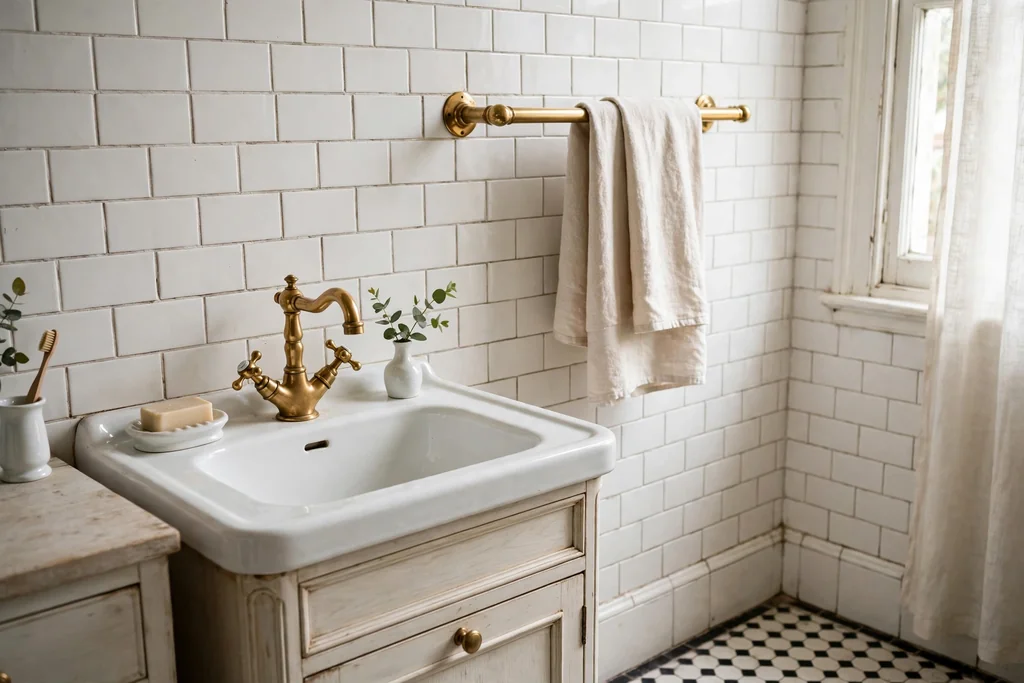
Brass fixtures, in faucets, shower fittings, towel rails, and cabinet knobs, warm up white tile and porcelain in a way chrome cannot. Use one brass tone across the room, such as unlacquered brass that ages, or a brushed brass that stays even, so the pieces read as a set rather than a mix. Start with the faucet and the towel rail, the two pieces you touch and see most.
Brass suits both pale rooms and dark painted rooms, and it pairs well with wood, marble look counters, and patterned tile. Wipe fittings dry after use in hard water areas, since water spots show more on warm metal. If you rent, keep the original fittings in a labeled bag, and swap only the pieces that unscrew cleanly, such as a showerhead or cabinet knobs.
4. An Ornate Gilt Mirror Over the Vanity
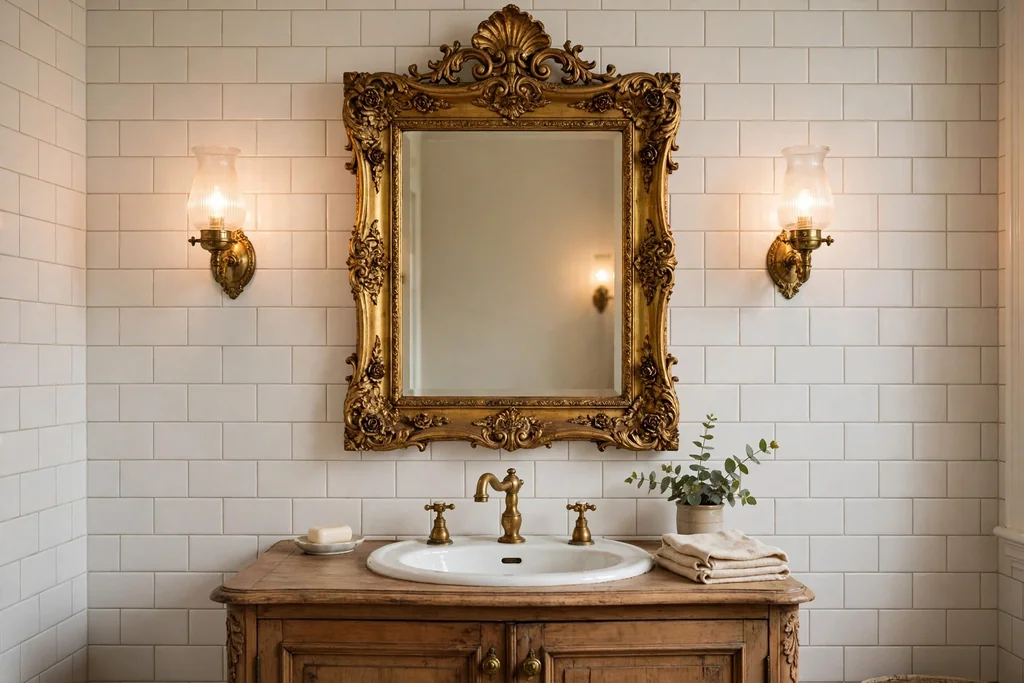
An ornate gilt mirror over the vanity brings vintage drama to a bathroom in a single piece. Look for a frame with carved or molded detail, in gold or aged gold, sized a little narrower than the vanity so it does not crowd the light fixtures. The mirror itself does the work of brightening the room, while the frame supplies the old house character.
Hang it centered over the sink at eye level, and keep sconces on either side if the room allows, since side light flatters faces better than a single overhead light. Seal or wipe the frame dry now and then, since steam can dull gilding over time, and avoid hanging a heavy gilt frame with adhesive strips alone. If gilt feels too formal, an aged gold frame with worn edges reads softer and suits a cottage style room.
5. White Subway Tile With Dark Grout
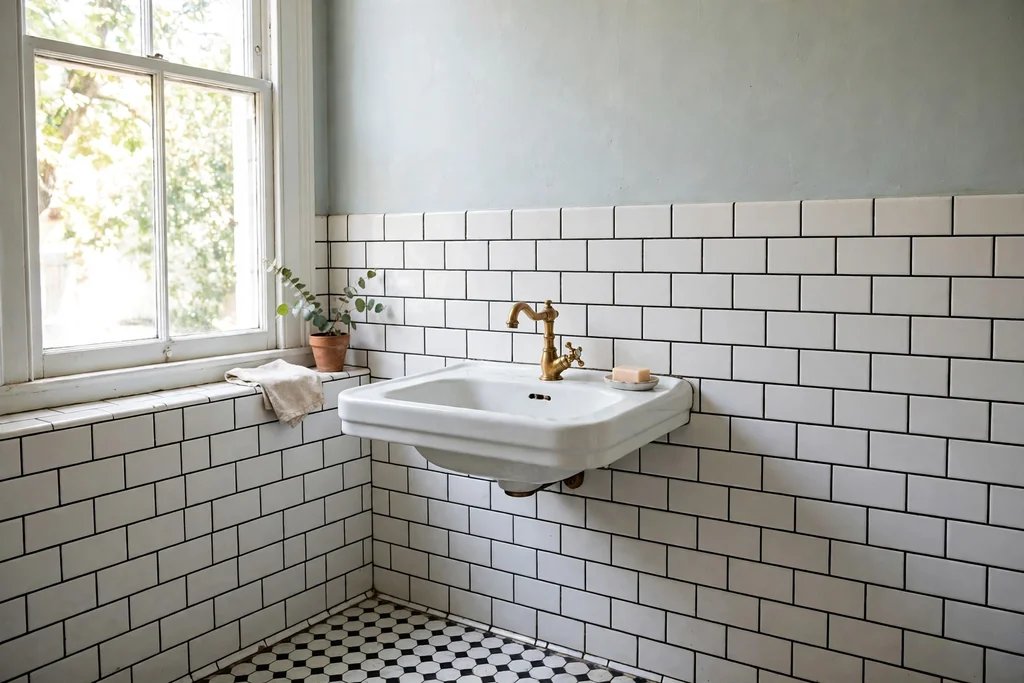
White subway tile with dark grout is a classic vintage bathroom wall, because the brick pattern is old, plain, and easy to live with. The dark grout lines make the pattern visible, so the wall reads as designed rather than blank, and they hide the daily marks that show on white grout. Run the tile to the ceiling in a shower, or to chair rail height with paint above in a drier part of the room.
Use a staggered brick layout for the most traditional look, and keep the tile size modest, since very large tiles lose the vintage scale. Seal the grout at install and reseal now and then in wet zones, and wipe splashes promptly near the sink. If dark grout feels too strong for a small room, use it on one wall only, and keep the other walls in plain white tile or pale paint.
6. A Black and White Checkerboard Floor
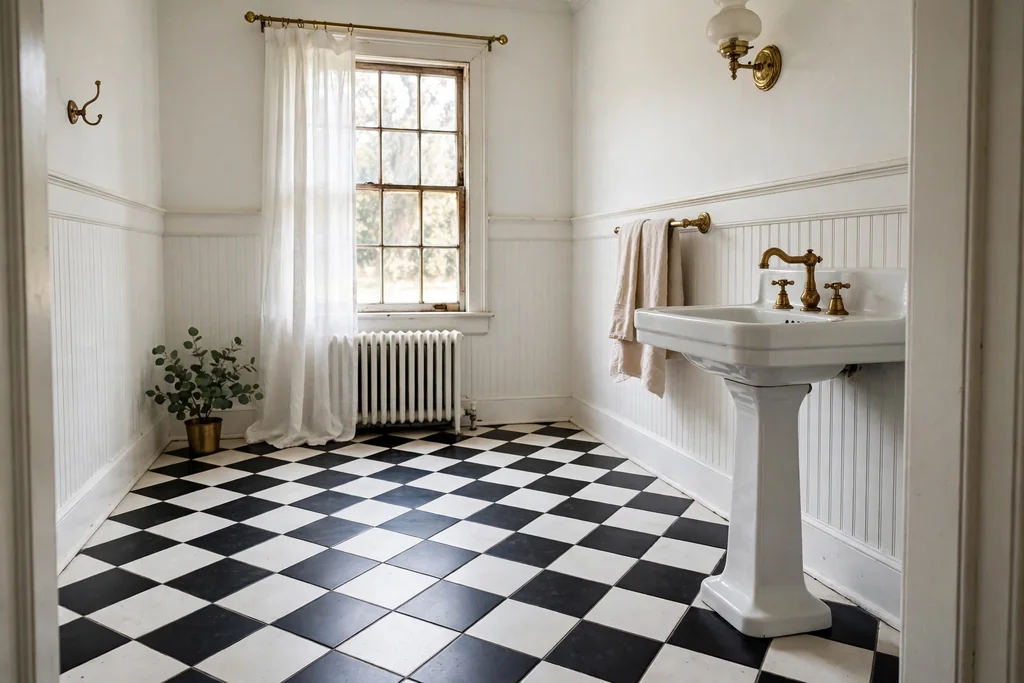
A black and white checkerboard floor is one of the clearest vintage bathroom signals, and it works in rooms of almost any size. Small squares suit a small room, while larger squares suit a larger room, and the pattern pairs with white walls, a pedestal sink, and brass fixtures without competing with them. Keep the walls plain when the floor is this bold, so the room stays calm.
Choose a slip resistant finish rated for wet rooms, and a grout color close to black or white depending on which tone you want to lead. Lay the pattern from the center of the room so cut tiles land evenly at the edges, and check the pattern at the doorway, since that is where the eye first lands. A checkerboard floor also suits a rented room in peel and stick form, as long as the old floor is clean, dry, and sound.
7. A Repurposed Dresser as a Vanity
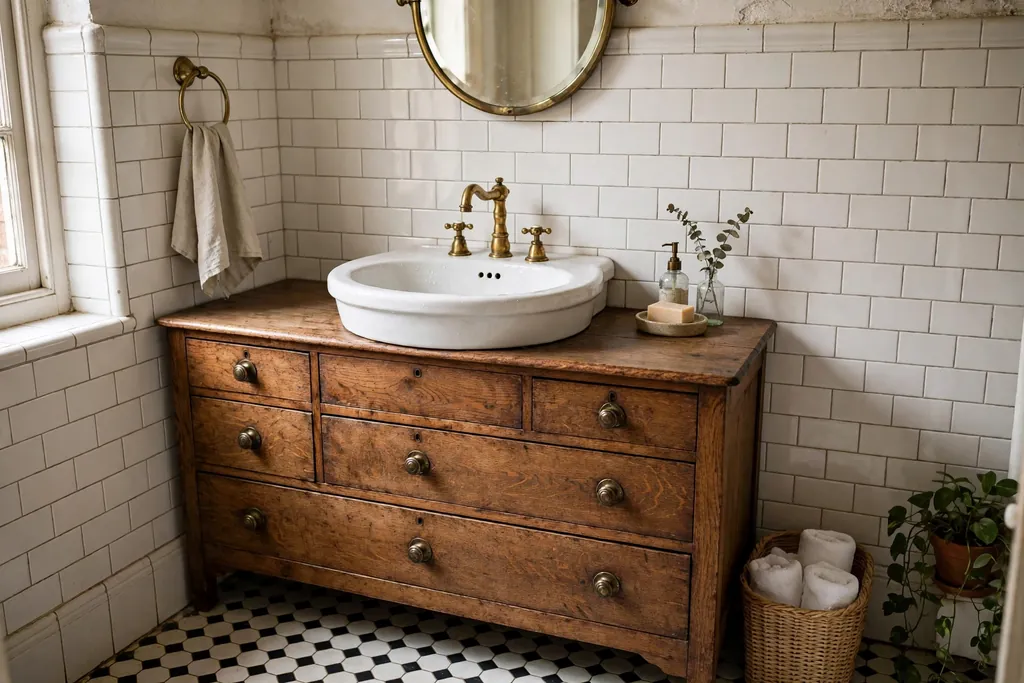
A repurposed dresser turned into a vanity gives a vintage bathroom furniture character that a standard cabinet cannot match. Look for a solid wood dresser with drawers you can adapt around the plumbing, and top it with a basin and a stone or wood counter. The drawers give real storage, and the furniture shape softens a room full of tile and porcelain.
Measure carefully, since dresser height and depth vary, and confirm that the basin and faucet sit at a comfortable height for daily use. Seal the wood top with a water resistant finish, and wipe splashes promptly, since standing water stains wood over time. Keep one drawer false or shortened around the trap, and leave the rest for towels and toiletries. For more small room storage ideas that pair with a furniture vanity, see these apartment bathroom ideas.
8. Glass Apothecary Jars for Storage
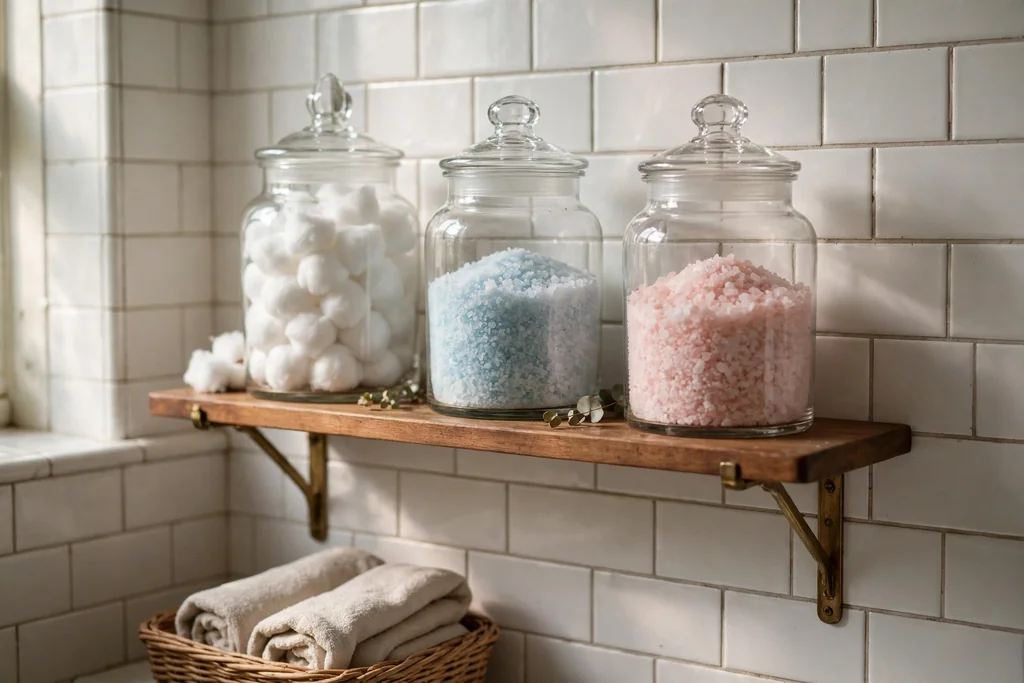
Glass apothecary jars on a shelf or a vanity tray turn everyday items into vintage style display. Use lidded jars for cotton balls, bath salts, hair pins, and small soaps, and group two or three jars of different heights rather than a long row of identical ones. Clear glass suits any color scheme, while amber or green glass adds a pharmacy feel.
Keep jars off wet counters where possible, and set them on a tray so they can be lifted as a group for cleaning. Label the base if several jars look alike, and keep heavy jars low so they cannot fall onto porcelain. This idea suits a bathroom with open shelving best, since closed cabinets hide the jars, and it costs little, since jars can be found secondhand and filled with items you already own.
9. A Wooden Ladder Towel Rack
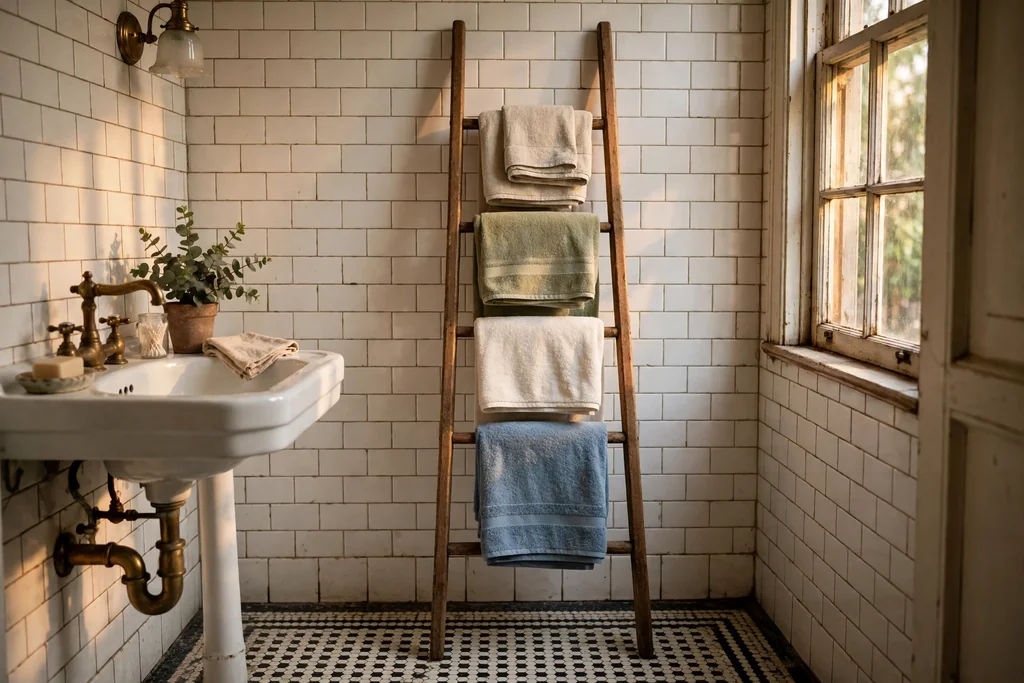
A wooden ladder rack leaning against a spare wall gives a vintage bathroom towel storage with no drilling and a small footprint. It suits a narrow wall beside the door or at the end of the tub, and it holds several towels on its rungs while taking up little floor space. Choose a wood tone that matches the vanity or mirror frame, so the ladder reads as part of the room.
Put heavier towels on the lower rungs and lighter items higher up, and add small pads under the feet so the ladder does not slide on tile. Check that the top cannot tip forward if a child or pet pulls on it, and anchor it if your household needs that safety. A ladder rack also works as a drying rack for hand washed items, and it suits a rented room since it leaves no holes behind.
10. Framed Vintage Botanical Prints
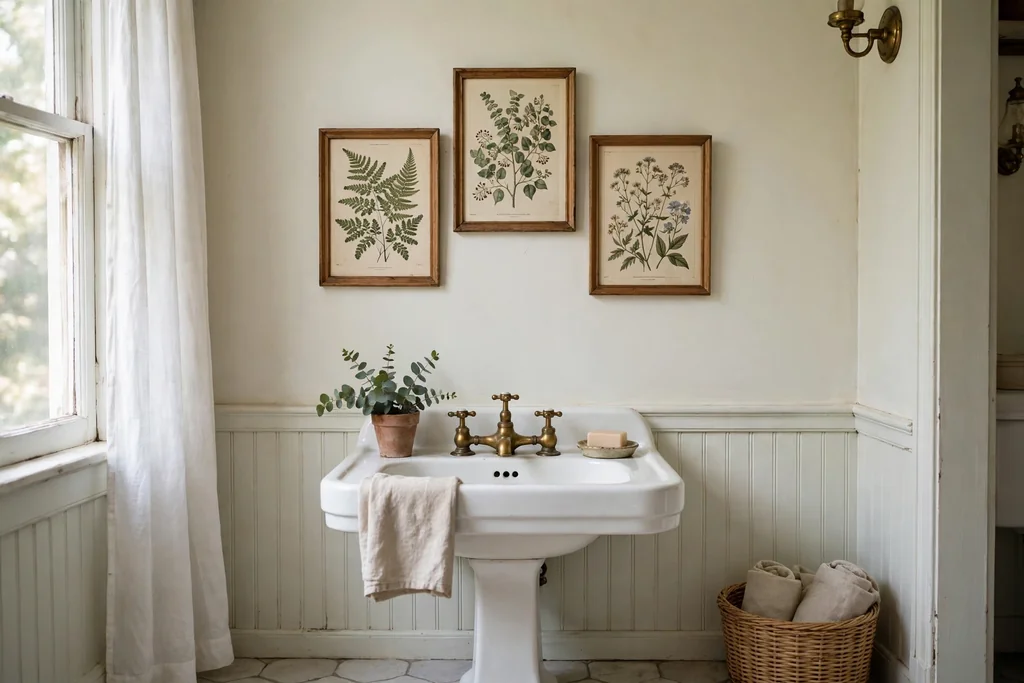
Framed vintage botanical prints on the driest wall of the bathroom bring old book character indoors without a remodel. Choose two or three prints with a shared theme, such as ferns, herbs, or wildflowers, in simple wood or dark frames, and hang them as a small group with even spacing. A small group reads as one arrangement, while a single large print can anchor a plain wall.
Use frames with sealed backs or acrylic covers, and avoid hanging unprotected paper directly beside the shower, where steam will cockle it over time. Adhesive strips hold light frames well on tile and painted walls and remove cleanly at move out, which suits renters. Keep the print theme consistent, and repeat one color from the prints in a towel or rug so the wall feels connected to the rest of the room.
11. A Milk Glass Soap Dispenser Set
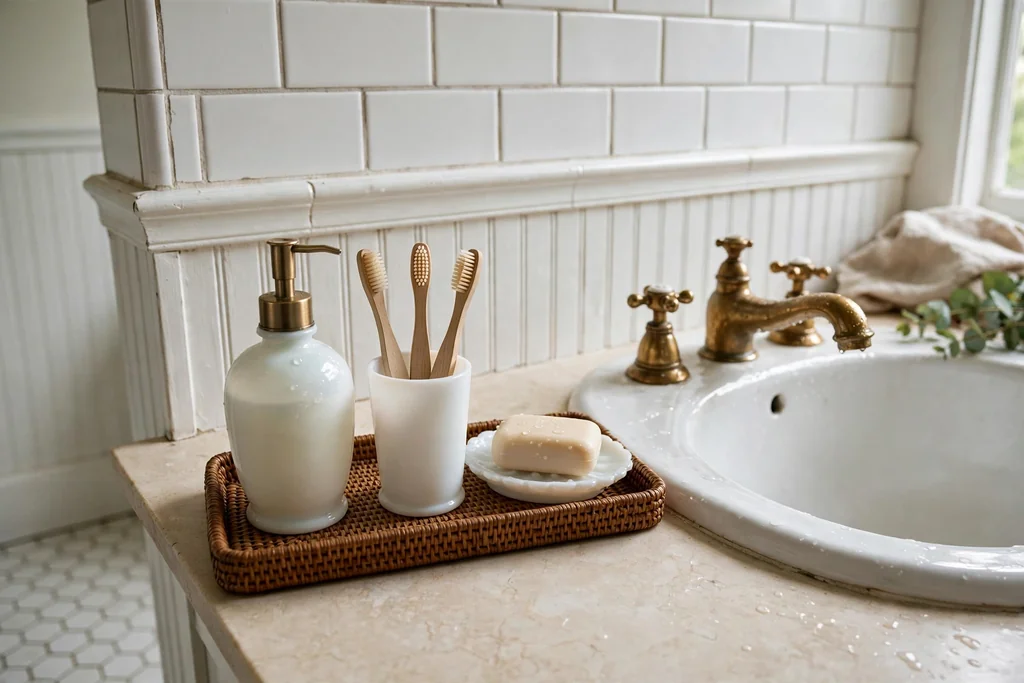
A milk glass soap dispenser, toothbrush cup, and soap dish set gives a vintage bathroom a matched sink group in soft white glass. Milk glass suits white tile, brass fixtures, and wood vanities, and its opaque surface hides soap residue better than clear glass. Choose a set with a simple shape, such as a ribbed or plain cylinder, rather than a heavily patterned one, so it stays calm beside daily items.
Keep the set on a small tray so drips stay contained, and rinse the soap dish regularly, since standing water clouds glass over time. If a full set is hard to find, a single milk glass dispenser beside a plain ceramic dish gives the same note for less. This is a good starting piece for a vintage look, since it changes the sink area in minutes with no tools.
12. Wicker Baskets for Towels and Toiletries
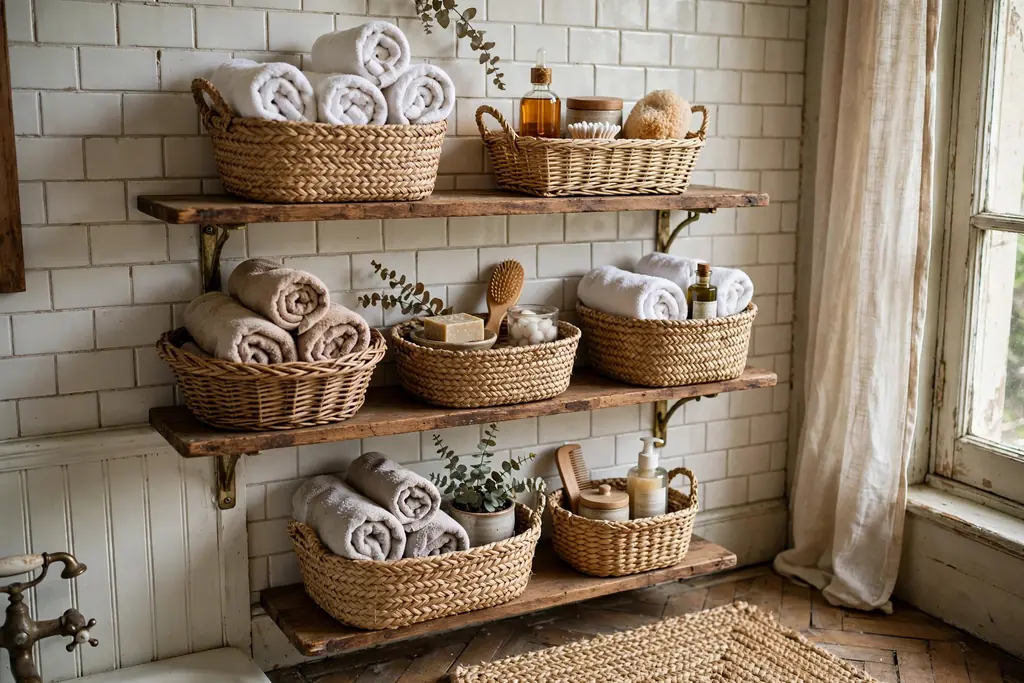
Wicker baskets soften hard tile and porcelain while hiding the visual noise of bottles and tubes. Assign one basket per job, such as towels, hair care, or cleaning, and set baskets on shelves, stools, or under a vanity rather than on wet floors. Seagrass, willow, and cotton rope baskets all suit a vintage room, and a basket with a lid suits items you would rather not see.
Empty each basket once a month and return only what you actually used, since bathroom baskets quietly collect empty bottles. Label the base if several baskets look alike, and keep one basket per person in a shared bathroom. If a basket sits near the tub, choose one with a wipe clean liner, and let it dry fully between uses so damp towels do not leave a musty smell.
13. A Vintage Patterned Rug Beside the Tub
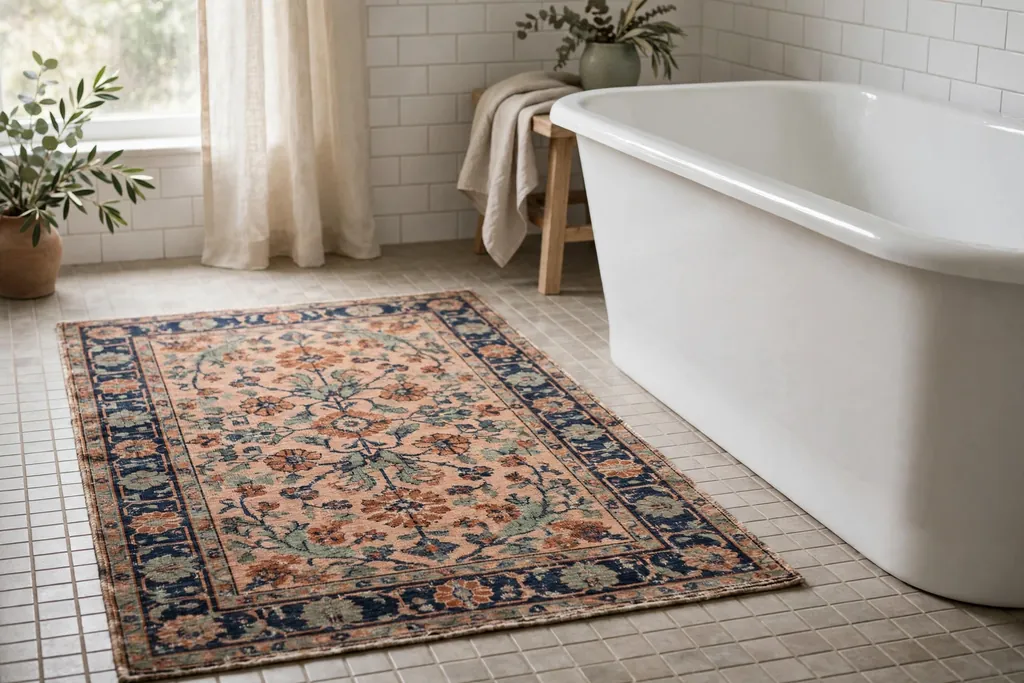
A vintage patterned rug beside the tub warms a tile floor and adds color in one move. Look for a low pile rug in a faded Persian or floral pattern, in tones that echo the room, such as rust, navy, or sage, and size it so it sits clear of the tub edge and the door swing. A rug with a flat weave dries faster than a thick pile rug, which matters in a bathroom.
Use a non slip pad under the rug, and hang the rug to dry after heavy splashes, since a damp rug on tile can trap moisture. Wash it on a gentle cycle when the maker allows, or shake it out and spot clean it between washes. If a full rug feels too much for a small room, a small vintage style runner in front of the vanity gives the same pattern in a smaller dose.
14. Beadboard Wainscoting on the Walls
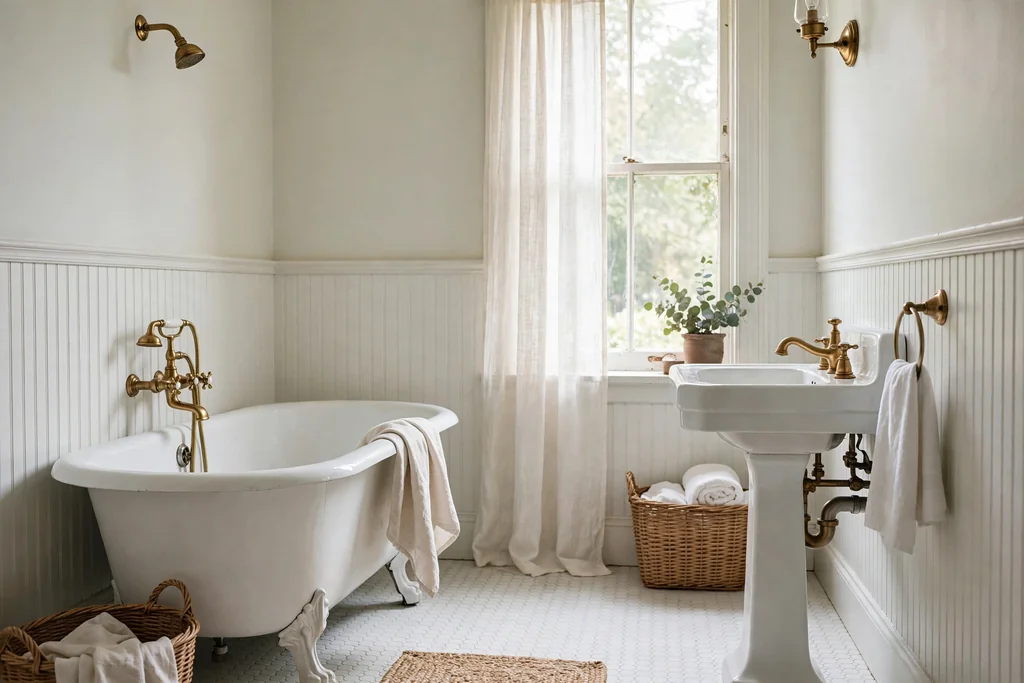
Beadboard wainscoting, vertical boards run to chair rail height with paint above, gives a vintage bathroom a cottage or farmhouse wall in a weekend. Paint the boards white or a soft sage, and keep the upper wall pale so the room stays bright. The vertical lines add texture that flat paint cannot, and they make a plain bathroom feel finished even before you add decor.
Use moisture resistant boards or a bathroom rated paint, and seal the joints near the shower so steam cannot creep behind them. Run the boards to the ceiling in a very small room to draw the eye up, or stop at chair rail height for a calmer finish. Add a simple cap rail on top of the boards, since that shelf line can hold a small plant or a candle kept clear of fabric.
15. An Antique Mirrored Medicine Cabinet
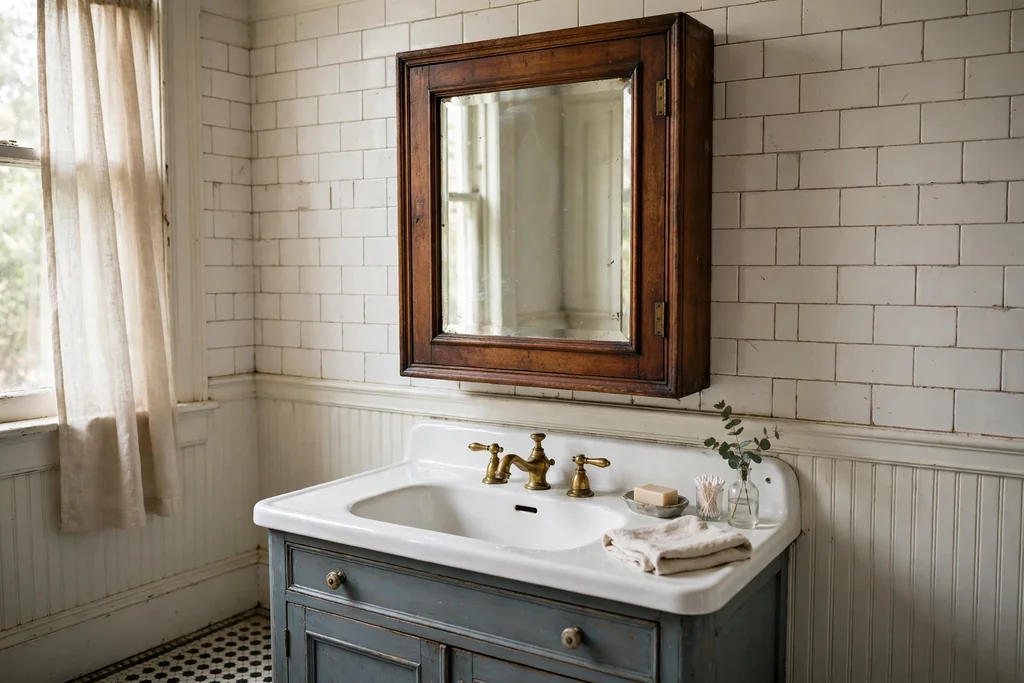
An antique mirrored medicine cabinet over the sink gives a vintage bathroom storage and a mirror in one piece. Look for a cabinet with a wood or brass frame, a beveled mirror front, and shelves deep enough for daily items, and hang it centered over the basin. The mirrored front keeps the wall light, while the frame supplies the vintage detail.
Check the depth before buying, since older cabinets can sit proud of the wall and crowd a small room, and confirm that the door opens fully without hitting a light fixture. Keep the most used items at eye level, and store less used items higher up. If a true antique is hard to find, a new cabinet with a vintage style frame and beveled glass gives the same look with simpler fixings.
16. Vintage Drawer Pulls and Knobs
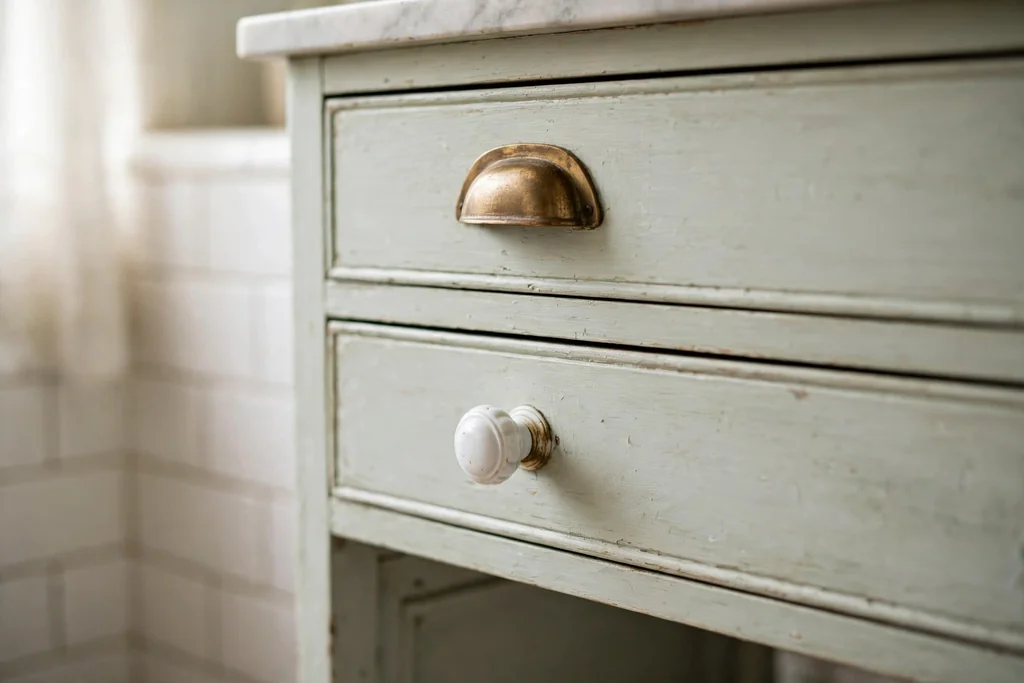
Swapping plain cabinet knobs for vintage drawer pulls and knobs is a small change with a large effect in a vintage bathroom. Choose one style, such as brass bin pulls, porcelain knobs, or aged bronze rings, and repeat it across the vanity and any wall cabinets so the room reads as planned. The hardware should match the faucet finish loosely, not necessarily exactly, as long as the tones sit in the same warm family.
Remove one old knob first and measure the screw spacing, since older pulls use different centers than modern ones, and fill or cover old holes if the new hardware does not match. Keep the original hardware in a labeled bag if you rent, so you can restore the room at move out. This swap takes under an hour for a single vanity, and it pairs well with a painted cabinet for a fuller vintage change.
17. A Wall Mounted Vintage Towel Rail
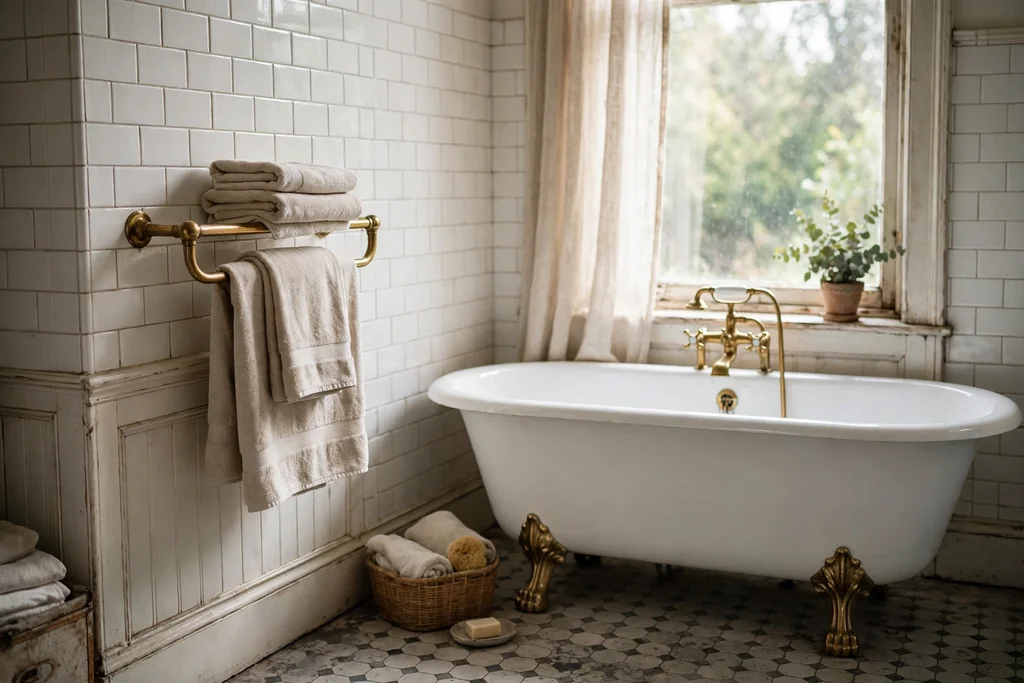
A wall mounted towel rail in brass or aged nickel gives a vintage bathroom a fixed, old house detail that a freestanding rack cannot match. Mount it on the wall beside the tub or near the door, at a height where towels hang clear of the floor and the toilet, and keep the finish consistent with the faucet and mirror frame. A single rail suits a small room, while a double rail suits a shared bathroom.
Use wall anchors rated for tile if you drill, and test the rail with a wet towel before trusting it with heavier items. Keep the rail clear of long curtains and laundry piles for safety, and wipe it dry after use in hard water areas. In a rented room, a rail that mounts with strong adhesive or over a door gives a similar look with no holes, though it will hold less weight.
18. Vintage Wall Sconces Beside the Mirror
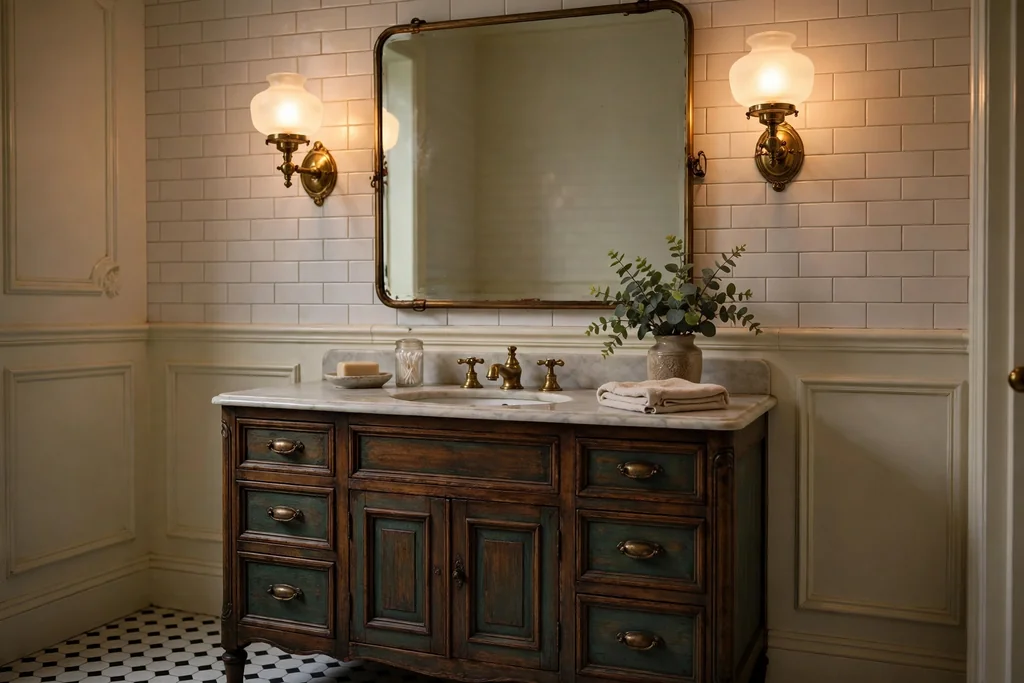
Vintage wall sconces beside the mirror give a bathroom softer, more flattering light than a single overhead fitting. Choose sconces with brass arms and frosted or opal glass shades, mounted at eye level on either side of the mirror, so light falls evenly on faces. This layout suits a single sink best, where each sconce can sit centered on its side of the mirror.
Check the wiring before you buy, since sconces need a wall point on each side, and choose warm white bulbs so the room feels calm rather than clinical. Renters who cannot change wiring can still layer light with a plug-in sconce or a battery picture light above the mirror, kept clear of direct water spray. Keep sconce shades clear of curtains and towels, and wipe glass shades now and then, since steam leaves a film.
19. Patterned Encaustic Look Floor Tiles
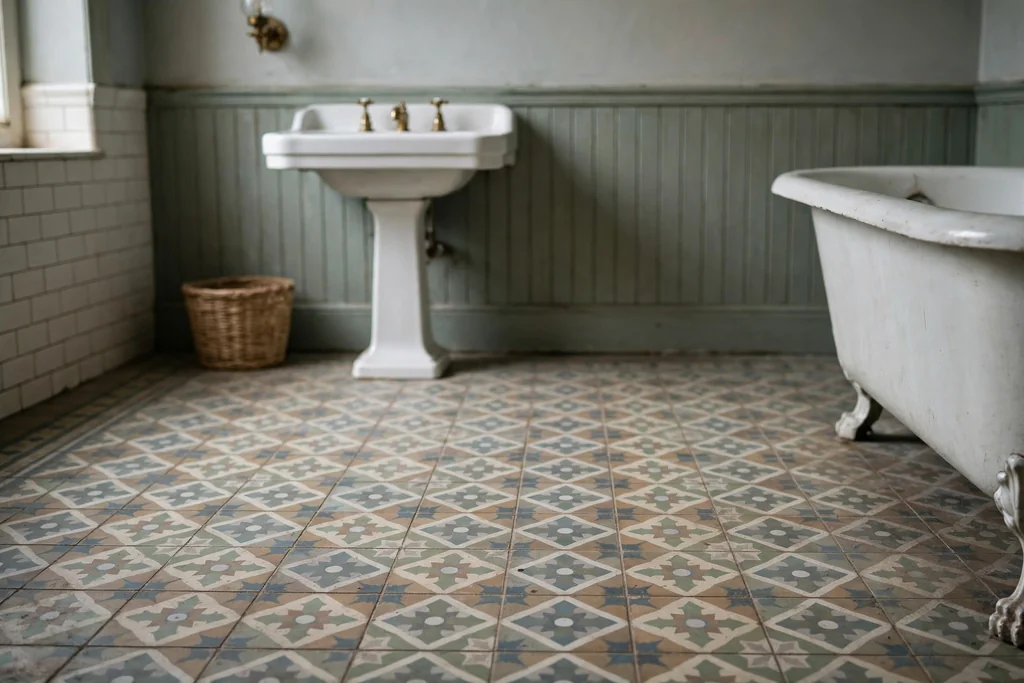
Patterned encaustic look floor tiles give a vintage bathroom a decorated floor with more color than a checkerboard. Choose a pattern with a small repeat, such as a star, a flower, or a geometric motif, in two or three muted tones, so the floor reads as vintage rather than loud. The pattern suits a room with plain walls and a simple tub, since the floor becomes the main decoration.
Use a slip resistant finish rated for wet rooms, and lay the pattern from the center of the room so cut tiles land evenly at the edges. Keep towels and rugs in plain tones that echo one color from the tile, rather than adding a second pattern. Seal the tiles and grout at install if the maker advises it, and mop with a gentle cleaner, since harsh cleaners can dull a patterned surface over time.
20. A Ring Shower Curtain for a Clawfoot Tub
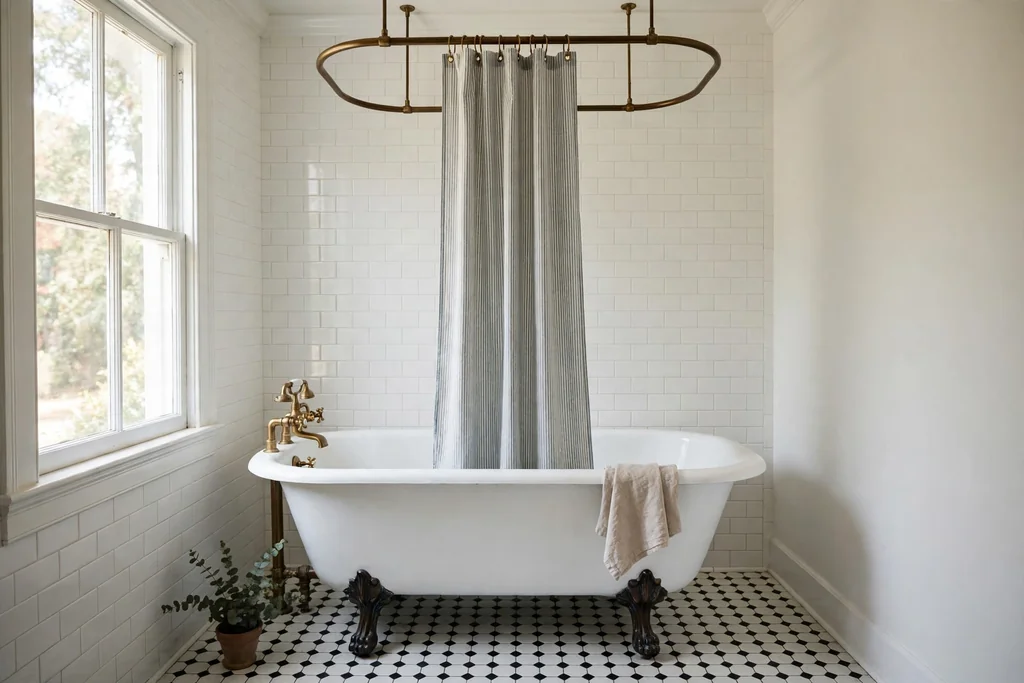
A ring shower curtain hung from a ceiling mounted oval or rectangular ring turns a clawfoot tub into a proper shower. The ring follows the tub shape, and a fabric outer curtain with a separate waterproof liner gives a softer look than a plain plastic curtain alone. Hang the ring high enough that the curtain falls just inside the tub edge, so water stays in the tub.
Choose a curtain in a plain or small vintage print, such as a ticking stripe or a small floral, and keep the rest of the room quiet when the curtain is patterned. Use a liner that can be washed or replaced, and let the curtain dry fully between showers so it does not hold damp. This idea suits a bathroom with a high ceiling best, since the ring and curtain need clear height above the tub.
21. A Salvaged Window Frame as Wall Decor
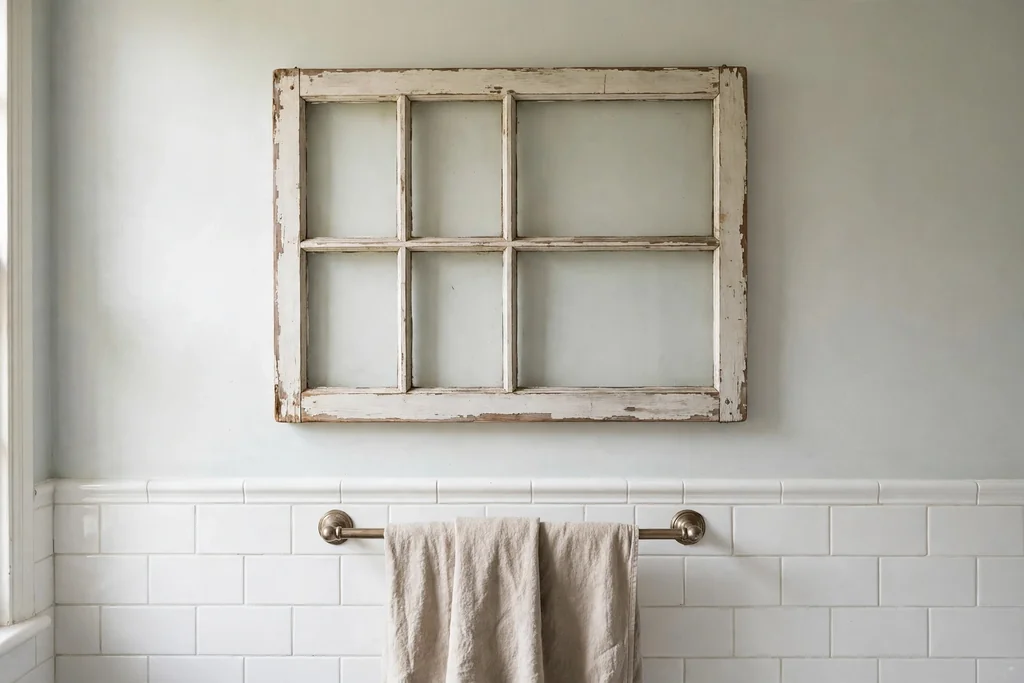
A salvaged window frame hung on a plain bathroom wall adds vintage architecture with no plumbing and no tile work. Look for a frame with its original panes or with the glass removed, in painted wood that suits the room, and hang it on the driest wall, away from direct shower spray. The frame shape breaks up a flat wall and echoes the room’s real window.
Check that the frame is clean, dry, and free of flaking paint before hanging it, and seal the wood if it will sit in a humid room. Hang it with fixings rated for its weight, since old wood and glass are heavier than they look, and keep the panes clear or fit a mirror behind them for extra light. If a full frame is too large, a single salvaged sash hung above a towel rail gives the same note in a smaller room.
22. A Vintage Perfume Tray on the Vanity
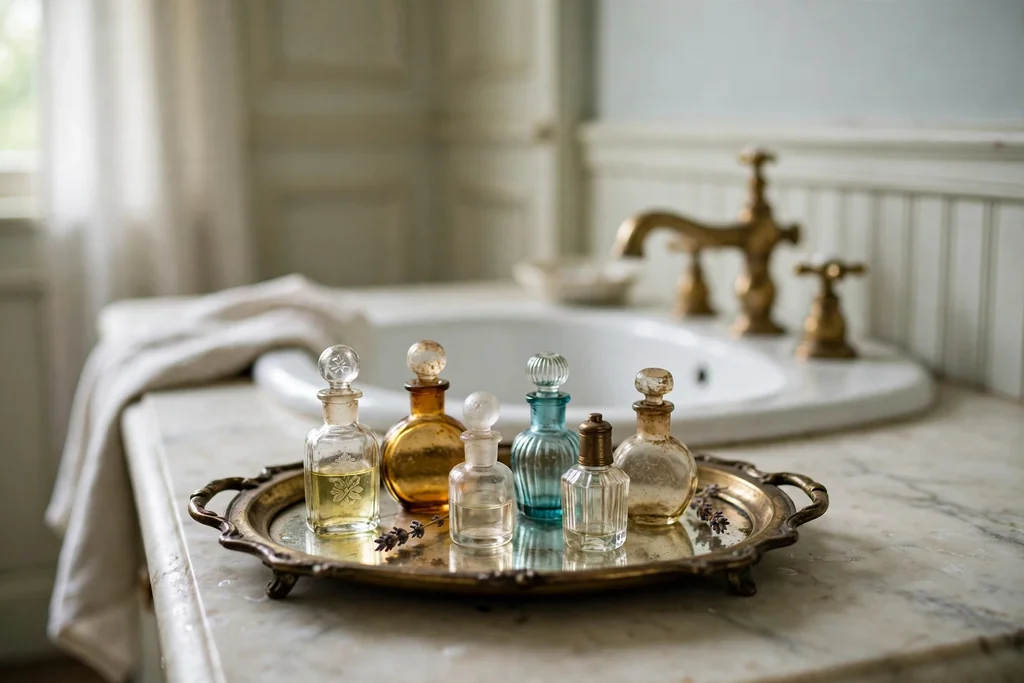
A vintage perfume tray on the vanity corrals small bottles, a candle, and a jewelry dish into one tidy group. Choose a tray in brass, silver plate, or mirrored glass, sized to fit the vanity without crowding the basin, and group three to five items on it rather than filling it edge to edge. The tray makes daily items look chosen, and it protects the counter from drips and rings.
Keep the tray on the drier side of the vanity, away from the faucet splash zone, and wipe it dry after use, since water spots show on metal and mirrored surfaces. If perfume bottles are not your style, the same tray can hold a soap dispenser, a small plant, and a hand towel ring. This is a renter friendly idea, since it needs no fixings and moves with you.
23. Cafe Curtains on the Lower Window
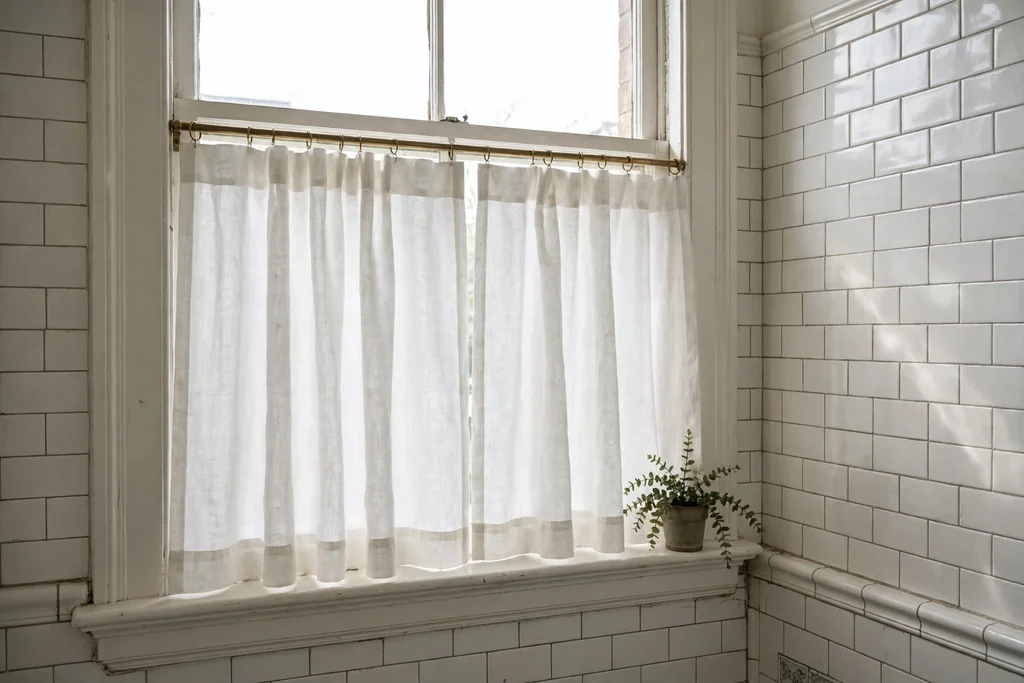
Cafe curtains hung on the lower half of a bathroom window give privacy while keeping daylight on the upper glass. Choose a simple fabric, such as white linen look cotton or a small gingham, on a tension rod or a short brass rod, so the curtain can be removed for washing. The half height keeps the room bright, which matters in a small bathroom with one window.
Hang the rod at the midpoint of the window, or just below eye level from outside, and let the curtain fall to the sill. Wash the curtain regularly, since bathroom humidity breeds mildew on fabric, and keep it clear of any nearby candle or heater. For a bathroom with a frosted window already, a cafe curtain still adds softness and a vintage note, and it suits a rented room since a tension rod leaves no holes.
24. A Wooden Step Stool Beside the Tub
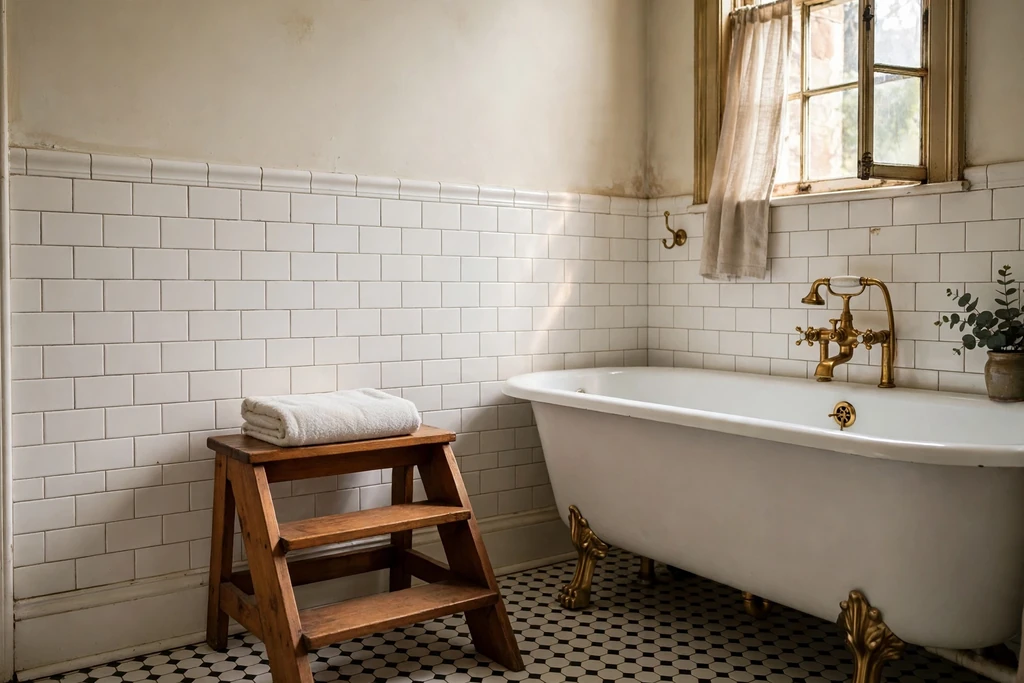
A wooden step stool beside the tub gives a vintage bathroom a practical perch for a towel, a book, or a foot while dressing. Choose a sturdy stool in a wood tone that matches the vanity or ladder rack, with a flat top wide enough for a folded towel. The stool also helps shorter users step into a tall clawfoot tub safely, as long as it sits on a non slip surface.
Check that the stool is stable on tile, and add non slip pads under its feet, since a wobbling stool beside a wet tub is a hazard. Keep the stool clear of the door swing, and wipe it dry after splashes, since standing water stains wood over time. A stool with a lower shelf gives extra storage for a spare towel or a basket, and it moves easily to another room if the bathroom layout changes.
25. A Hammered Copper Soaking Tub
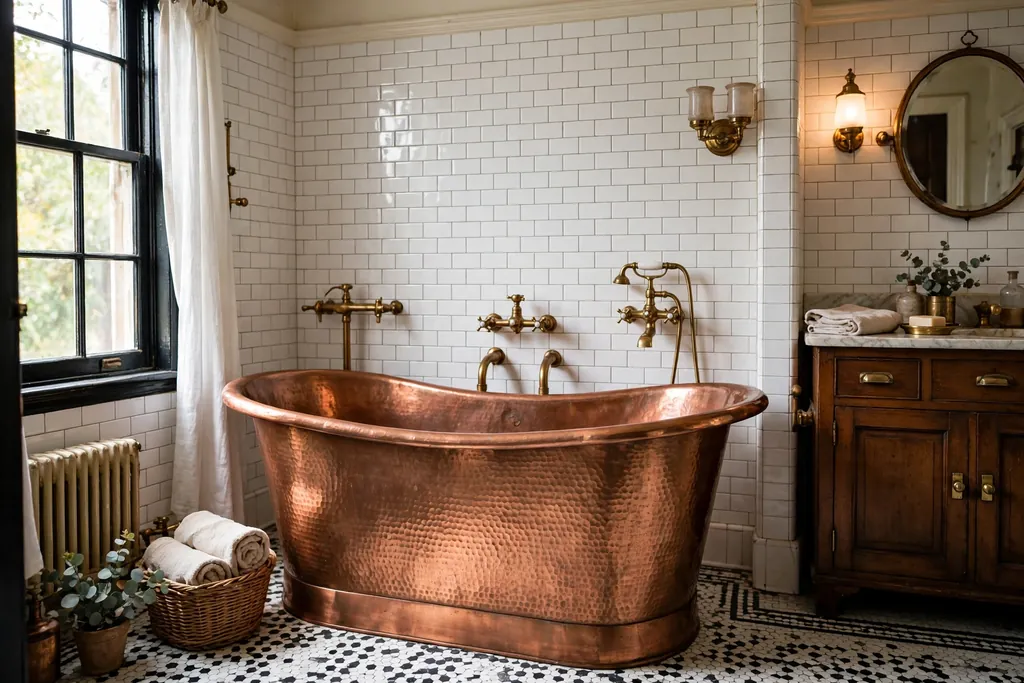
A hammered copper soaking tub gives a vintage bathroom a warm metal centerpiece that differs from a white clawfoot tub. The hammered surface catches light and hides water marks better than a smooth finish, and the copper tone pairs well with dark wood, white tile, and brass fixtures. Place the tub where it can be seen from the door, and keep the surrounding walls plain so the metal stays the focus.
Copper tubs are heavy and need a floor that can carry them, so check the structure before ordering, and confirm the drain position, since freestanding tubs need plumbing in the floor. Clean copper with a gentle cleaner made for the finish, and avoid harsh abrasives that can dull the hammering. If a full copper tub is beyond budget, a copper basin or a copper framed mirror brings the same warm metal into the room for less.
26. A Salvaged Wood Towel Hook Board
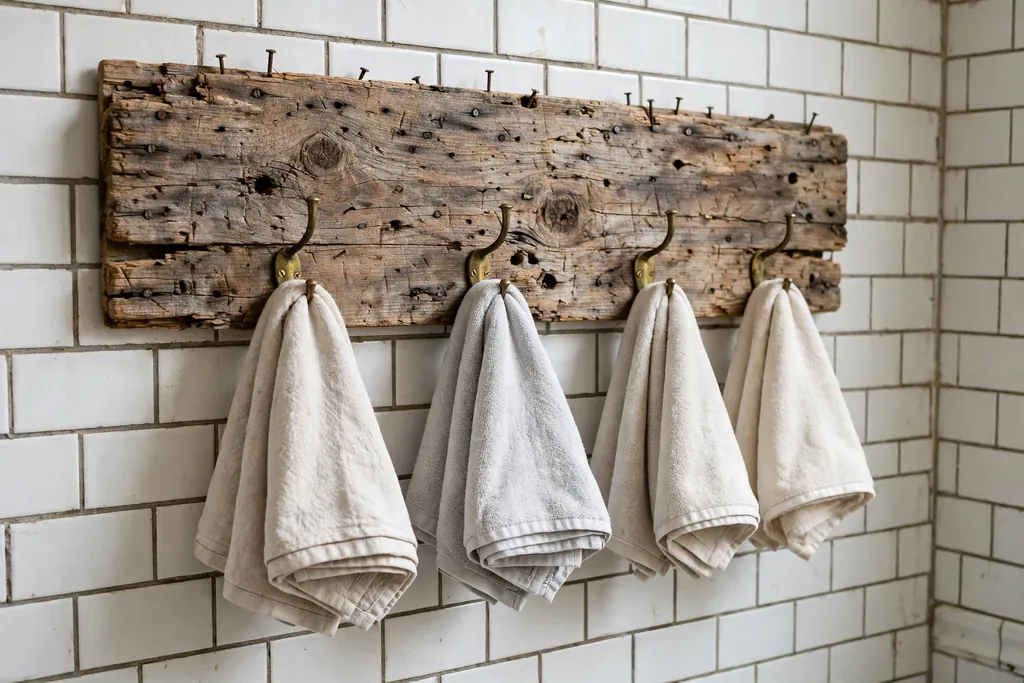
A salvaged wood towel hook board on a spare wall gives a vintage bathroom hanging storage with visible old wood character. Look for a board with knots, nail marks, or a weathered finish, fitted with three to five brass or iron hooks, and mount it at a height where towels hang clear of the floor. The board suits a wall beside the door or above a low bench, where a rail would not fit.
Use wall anchors rated for tile if you drill, and test each hook with a wet towel, since wet towels are heavier than dry ones. Keep the board on a drier wall, away from direct shower spray, so the wood does not stay damp. If salvaged wood is hard to find, a new board stained and lightly distressed gives a similar look, though it will lack the marks that make old wood convincing.
27. Open Shelving With Vintage Crocks
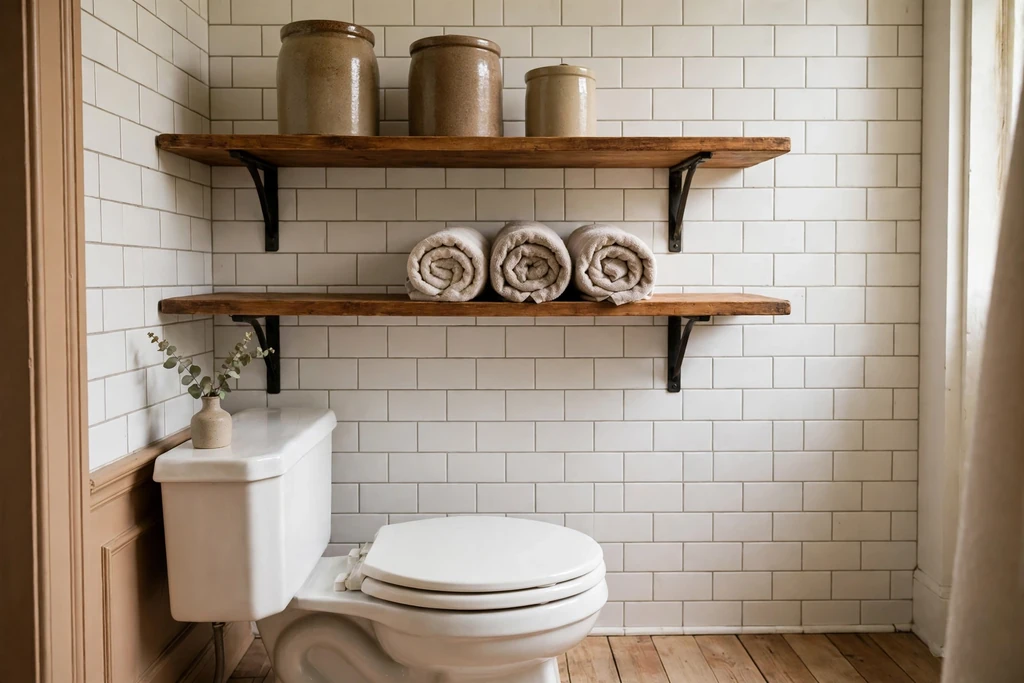
Open shelving with vintage crocks above the toilet or beside the vanity gives a vintage bathroom storage that also acts as display. Use two wooden shelves, in a tone that matches the vanity, and set stoneware crocks, small jars, and rolled towels on them, leaving breathing room between groups so the shelves look calm rather than crowded. Crocks suit cotton balls, hair tools, and spare toilet paper, since their wide mouths make items easy to reach.
Mount shelves high enough that no one bumps their head, and keep the lowest shelf for items you reach for daily. Use closed baskets on one shelf for anything you would rather not see, such as cleaning supplies. For ideas on grouping shelf items and leaving space, the open shelf approach in these Swedish bathroom ideas shows how pale wood shelves stay calm in a small room.
28. A Vintage Glass Shelf Above the Sink
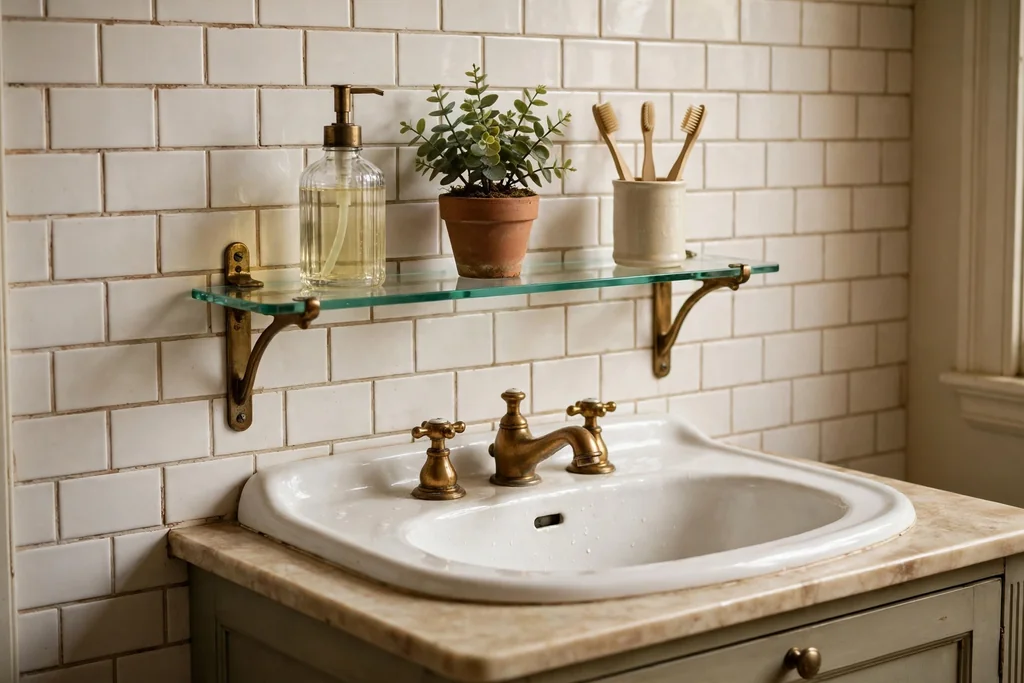
A vintage glass shelf above the sink, held by brass brackets, gives a bathroom a light display ledge for a soap dispenser, a small plant, and a toothbrush cup. The glass keeps the wall feeling open, while the brass brackets supply the vintage detail, and the shelf keeps daily items within reach without crowding the counter. Choose a shelf a little narrower than the vanity so drips fall into the basin, not onto the floor.
Use wall anchors rated for tile, and test the shelf with a full water glass before trusting it with anything breakable. Keep the shelf to three or four items, since a crowded glass shelf looks messy fast, and wipe the glass now and then, since steam leaves a film. This shelf suits a pedestal sink especially well, since it replaces the storage a vanity would have given.
29. A Decorative Tile Border Trim
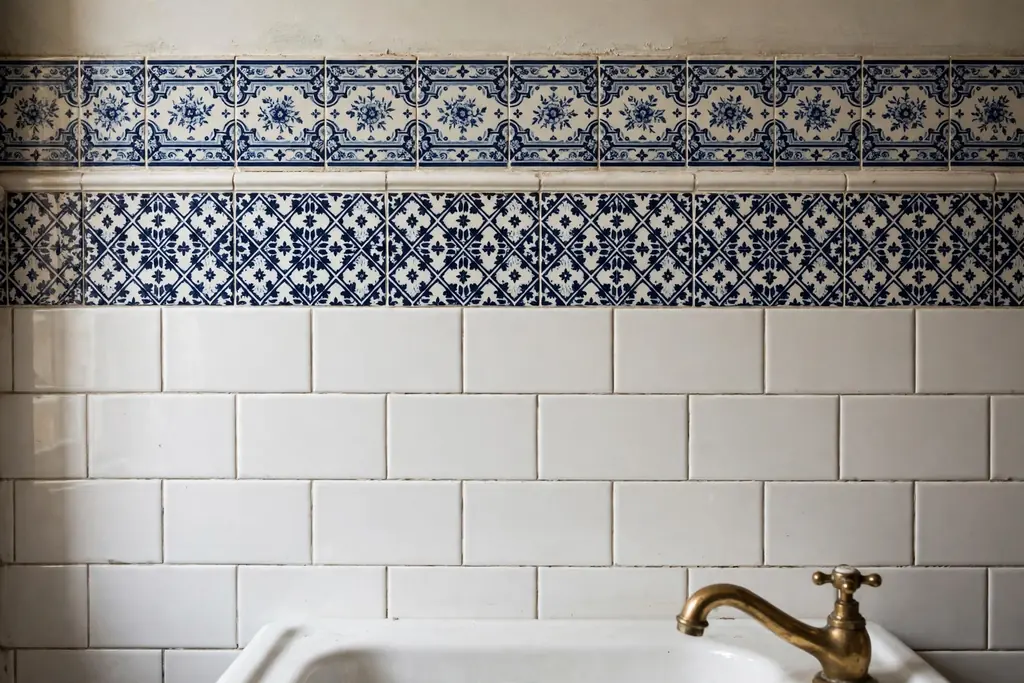
A decorative tile border trim, a single row of patterned or colored tile at chair rail height or above a plain tile field, gives a vintage bathroom a finished edge. Choose a border in a tone from the room, such as navy, sage, or a small floral pattern, and run it around the room at one consistent height, or around the shower only. The border breaks up a large plain tile wall without a full retiling job.
Keep the border at one height throughout the room, since a wandering border looks accidental, and match the grout to the main tile field so the border reads as a detail, not a patch. If retiling is not possible, a painted border or a tile look adhesive trim gives a similar line for a rented room, as long as it sits clear of constant water. Seal the border grout in wet zones, as with the main tile.
30. A Small Crystal Pendant Light
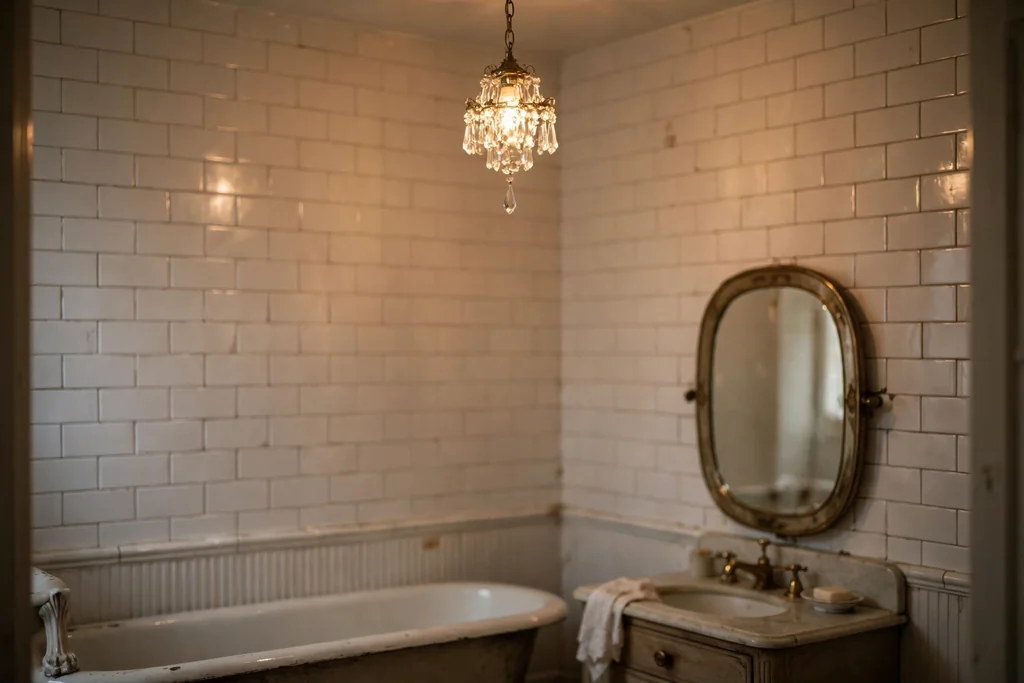
A small crystal pendant light hung over a vanity or in the center of a vintage bathroom adds sparkle without the weight of a full chandelier. Choose a pendant with a short drop, so it hangs clear of heads and mirrors, and a warm bulb, so the crystals cast a soft glow rather than a harsh one. The pendant suits a room with a high ceiling best, where it can hang low enough to be seen.
Check the ceiling fixing before buying, since older ceilings vary, and keep the pendant clear of shower spray and curtains. Wipe the crystals now and then, since steam leaves a film that dulls sparkle. If wiring a pendant is not possible, a plug-in or battery pendant style light near the mirror gives a similar glow, though it will not carry the same vintage weight as a wired fitting.
31. A Pitcher and Basin Washstand Set
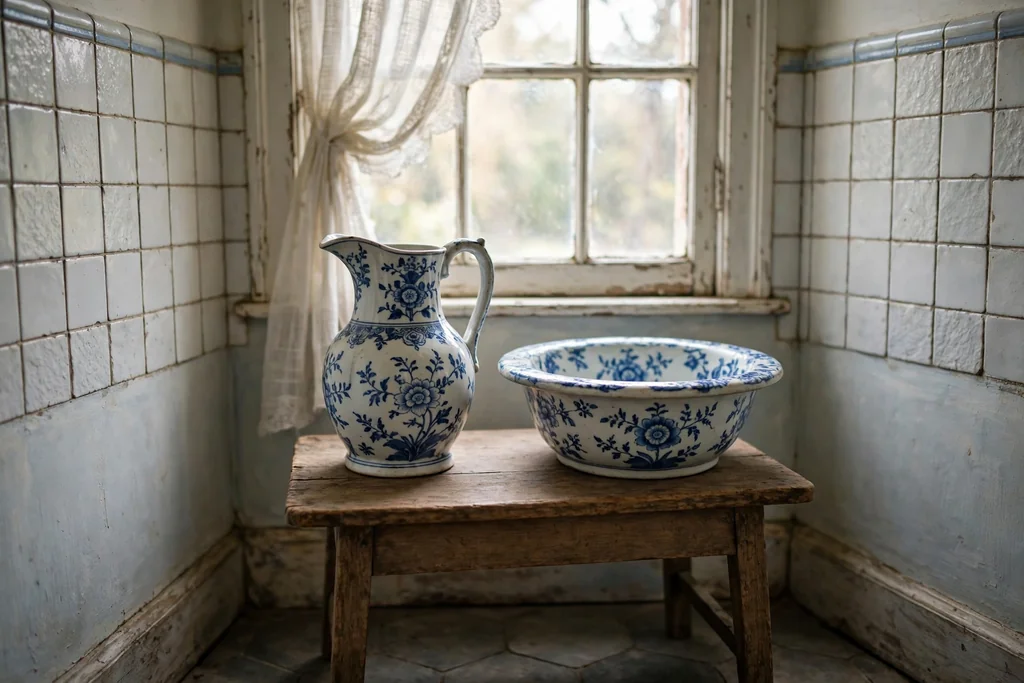
A pitcher and basin washstand set on a small table or a wall mounted stand gives a vintage bathroom a decorative nod to life before indoor plumbing. Choose a white or blue patterned porcelain set, with a pitcher tall enough to read from across the room, and set it on a dry corner table, a stool, or a dedicated washstand, not beside the shower. The set works as decor, not as a daily sink, so keep it out of the splash zone.
Dust the set regularly, and keep it clear of the door swing, since porcelain breaks easily if knocked. If you want the set to be useful, keep the basin for holding hand towels or small soaps, and keep the pitcher empty, so it does not become a source of standing water. This piece suits a larger bathroom or a guest bathroom best, where a corner can be spared for display.
32. An Antique Wooden Chair in the Corner
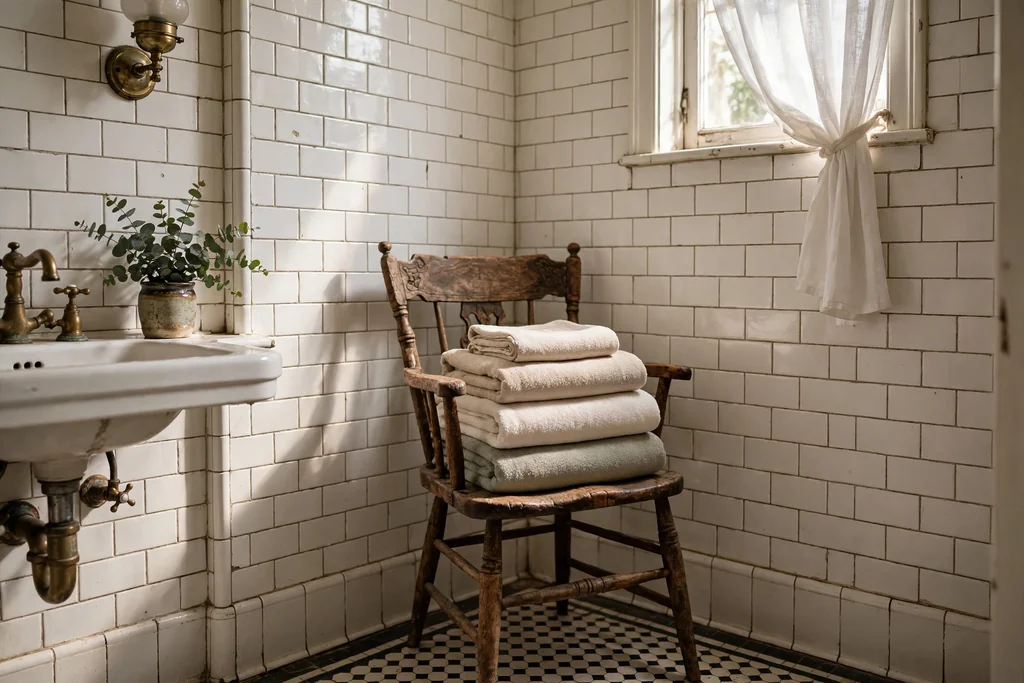
An antique wooden chair in a bathroom corner gives a vintage room a place to sit, stack towels, or lay out clothes while dressing. Choose a chair with a solid frame and a seat that can cope with humidity, such as a wood seat or a cane seat kept clear of direct spray, and place it on the driest corner, away from the shower. The chair shape softens a room full of hard surfaces, and it adds furniture character at low cost.
Check that the chair is stable on tile, and add pads under its feet so it does not slide or scratch the floor. Keep the chair for towels and clothes, not for wet items, and wipe it dry after splashes. If floor space is tight, a small stool or a folding chair that can be stored flat gives the same perch with less footprint, and it suits a rented room since it needs no fixings.
33. Vintage Floral Wallpaper on One Wall
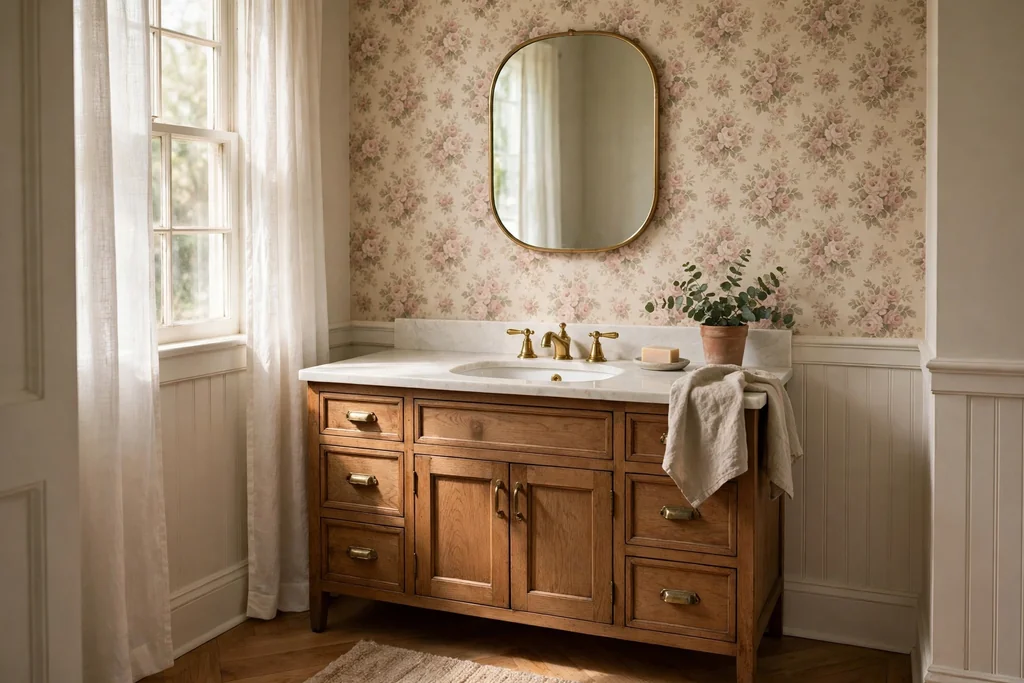
Vintage floral wallpaper on one wall, behind the vanity or on the wall opposite the mirror, gives a bathroom a patterned focal point without covering the whole room. Choose a pattern with a small repeat and muted tones, such as a damask or a small rose print, so it reads well in a tight space, and keep the other walls plain in a tone pulled from the paper. One wall keeps the pattern from overwhelming a small room.
Use a bathroom rated paper or a paste that copes with humidity, and keep the paper off the wall directly inside the shower, where constant steam can loosen the edges. Peel and stick wallpaper suits a rented room, since it removes cleanly, and it lets you test a bold pattern before committing to paste. Measure the wall, order one extra roll for matching, and smooth each strip from the center outward to push out air.
34. A Wooden Bath Caddy Tray Across the Tub
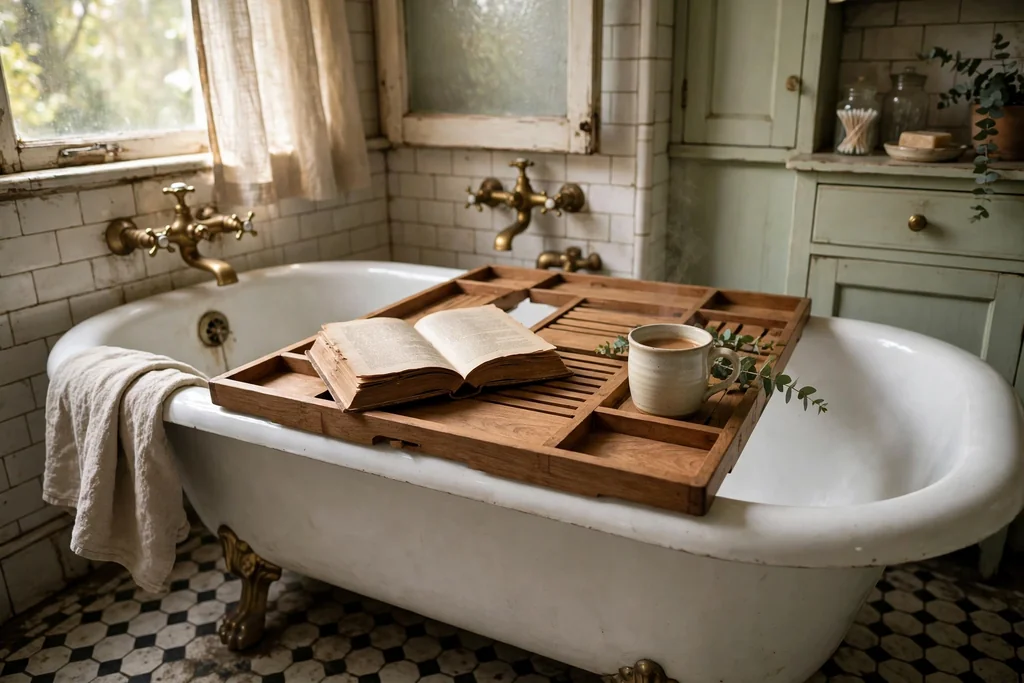
A wooden bath caddy tray across the tub turns a plain bath into a place to slow down, with slots for a book, a cup, and a candle kept safely away from the water. Choose a tray that spans your tub width with extendable sides, and look for a tray with a phone ledge that keeps electronics out of splash range. Wood trays need drying after each use to avoid warping, while bamboo and coated metal versions cope better with steam.
Store the tray upright behind the door when it is not in use, so it does not become a permanent clutter spot, and keep candles on the tray clear of towels and curtains. Measure the tub width before buying, since trays vary, and test the tray empty first, so you know it sits level before you trust it with a cup. This small piece pairs naturally with a clawfoot tub, and it suits any vintage bathroom, since it needs no fixings at all.
Conclusion
A vintage bathroom comes together one anchor at a time: a tub with feet, a floor with a pattern, a mirror with a frame, and brass that repeats across the room. Start with the piece that suits your plumbing and your budget, then add the smaller details, jars, baskets, hooks, and prints, only where the room still feels unfinished. Keep plain surfaces in the mix, protect wood and paper from constant water, and favor swaps you can reverse in a rented room. Save this list on Pinterest before your next bathroom change, and work through it one area at a time: tub first, then walls and floor, then storage and light.
FAQs
Can I get a vintage bathroom look without replacing the tub or toilet?
Yes. Swap the mirror, hardware, and light fixtures, add a patterned rug, a shower curtain in a vintage print, and wicker baskets, and the room will read as vintage even with modern plumbing. Keep one metal finish consistent across the new pieces, and keep the walls plain, so the small changes feel planned rather than patched.
What is the easiest vintage change for a rented bathroom?
Start with pieces that need no drilling: a leaning ladder rack, a freestanding stool, wicker baskets, a vintage rug, a cafe curtain on a tension rod, and a tray of apothecary jars. Keep the original mirror, hardware, and fixtures in labeled bags, so you can restore the room at move out, and check your lease before any change that needs a drill.
Does a clawfoot tub work in a small bathroom?
It can, if you measure first. A clawfoot tub needs room to walk around at least one long side, and a floor that can carry its filled weight, plus plumbing that can reach a freestanding position. In a very small room, a shorter freestanding tub, or a vintage style skirted tub against the wall, gives much of the same look with simpler plumbing and less floor space.
How do I keep brass fixtures looking good in a hard water area?
Wipe brass fittings dry after use, since water spots show more on warm metal than on chrome, and clean them with a gentle cleaner made for the finish. Avoid harsh abrasives, which can wear the finish, and keep one brass tone across the room, so any aging looks even rather than patchy. Unlacquered brass will age and darken over time, which many vintage rooms welcome.
Is wallpaper safe in a bathroom?
Wallpaper suits a bathroom if you keep it on drier walls, away from direct shower spray, and use a paper and paste rated for humidity, with good ventilation in the room. Peel and stick paper is a safer test in a rented room, since it removes cleanly. Avoid hanging unprotected paper inside the shower, where constant steam can loosen edges and cockle the surface.
How do I mix vintage pieces without the room looking cluttered?
Pick one anchor, such as the tub, floor, or mirror, and keep the rest of the room quieter, with plain walls and a limited palette. Repeat one metal finish and one accent color in three or four places, and leave breathing room on shelves and counters. If a new piece does not echo an existing color, material, or finish, it is a good candidate to leave out.