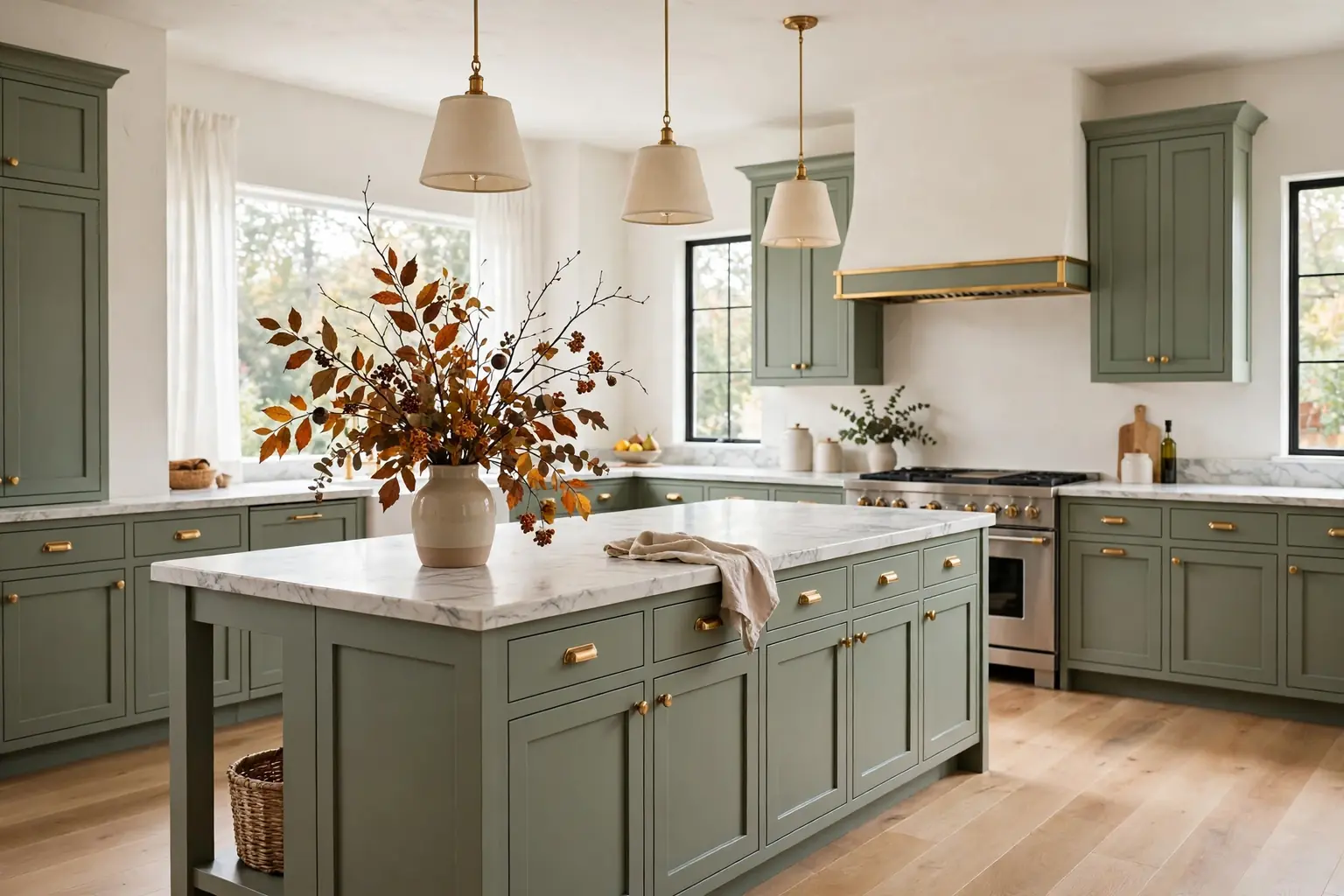
Sage green cabinets give a kitchen color without noise. The tone sits between green and grey, so it pairs with warm wood, cream, brass, and black, and it stays calm in both bright daylight and warm evening light. These 12 ideas cover full cabinet runs, two-tone layouts, islands, pantry walls, and small kitchens, plus the seasonal swaps that keep the same cabinets feeling fresh in autumn and winter. Start with the cabinet layout that suits how you cook, then add one warm material and one metal finish. For seasonal styling that keeps counters clear for cooking, these fall kitchen decor ideas use the same restrained approach.
Key Takeaways
- Start with one sage tone across the main cabinets, and repeat it once or twice in small items so the room reads as planned.
- Pair sage with warm white, cream, light oak, and one metal finish, brass or matte black, rather than mixing several metals.
- Test paint samples in morning and evening light, since sage shifts a lot between cool daylight and warm lamplight.
- Keep seasonal changes to textiles, towels, and one counter cluster, so the cabinets stay the calm base all year.
- In a small kitchen, run sage cabinets to the ceiling and keep counters and backsplash light to protect the sense of space.
- Match the idea to how you cook: open shelves suit everyday dishes, glass uppers suit display, and a pantry wall suits bulk storage.
1. Classic Shaker Cabinets with Brass Pulls
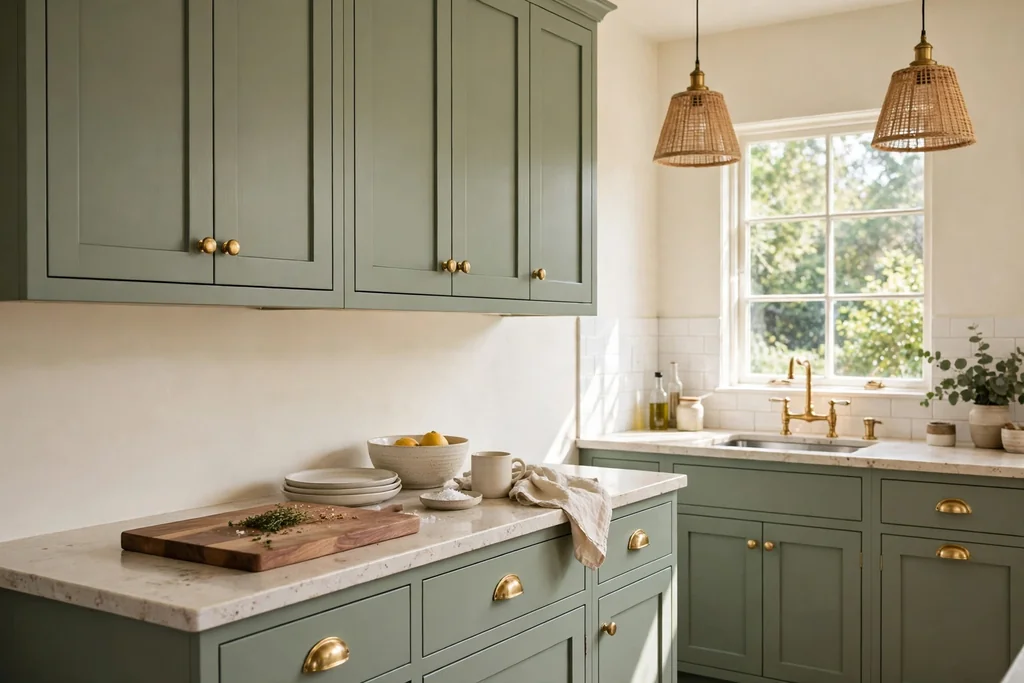
Run sage green shaker cabinets along the main wall, with simple brass knobs and pulls, for a kitchen that feels settled from day one. Shaker doors give just enough detail to catch light, while the muted sage keeps the run from feeling heavy. Brass warms the green in a way chrome cannot, and it links to a faucet, a kettle, or a light fitting if you repeat the finish once more.
Keep the walls warm white and the counter a pale stone or light wood, so the sage has room to breathe. Choose solid brass style pulls in one size for drawers and one for doors, and check the screw length against your door thickness before ordering. If brass feels too yellow beside your sage sample, pick a brushed or aged brass rather than a bright polished one.
2. Two-Tone Layout with Sage Lowers and Warm White Uppers
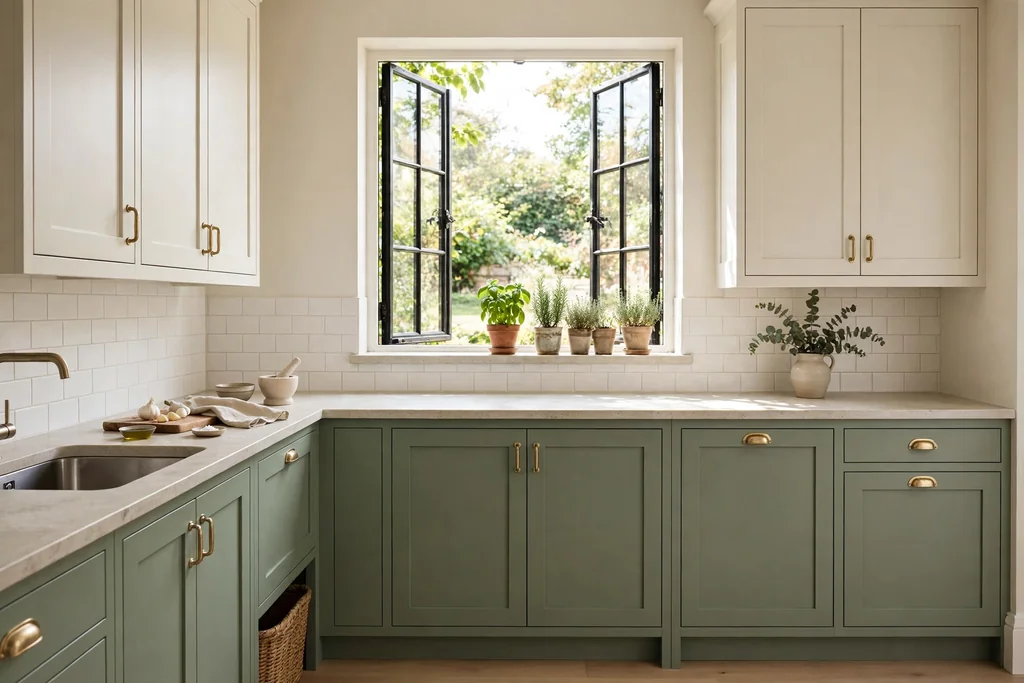
Paint the lower cabinets sage and keep the uppers warm white to lighten a kitchen that feels top heavy. The darker tone grounds the room at counter height, where you see it most while cooking, while the pale uppers keep the wall feeling open. This split also suits a kitchen with low ceilings, since the eye reads the upper wall as part of the room, not as more cabinetry.
Repeat the sage once above counter height, in a stool cushion, a towel, or a small plant pot, so the lower cabinets do not feel cut off. Keep the counter light and the backsplash simple, so the two tones stay the main story. If your uppers are already white, this is a lower cost change, since only the base cabinets and island need paint.
3. Sage Island with a Butcher Block Top
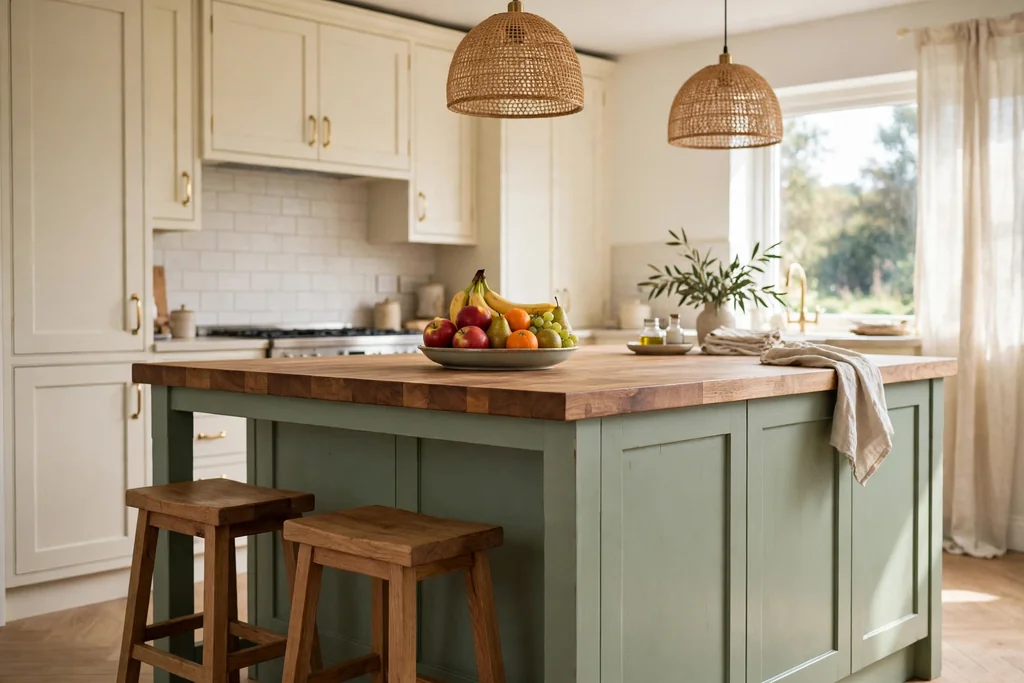
Make the island the sage piece and keep the perimeter cabinets warm white or light wood, so the room gains a clear focal point without a full repaint. A thick butcher block top warms the green, gives a forgiving surface for chopping and serving, and suits stools in wood or woven seats. The island also becomes the natural spot for a fruit bowl, a board, and a vase, which keeps the main counters clearer.
Size the island for the room: leave enough walkway on each side to open the dishwasher and pass with a hot pan. Seal the wood top as the maker advises, and oil it on a regular cycle if it is used for food prep. Keep the island sage in the same tone as any other sage item in the room, so it reads as part of the kitchen, not as a separate piece.
4. Sage Cabinets with Marble-Look Counters and a Gold Faucet
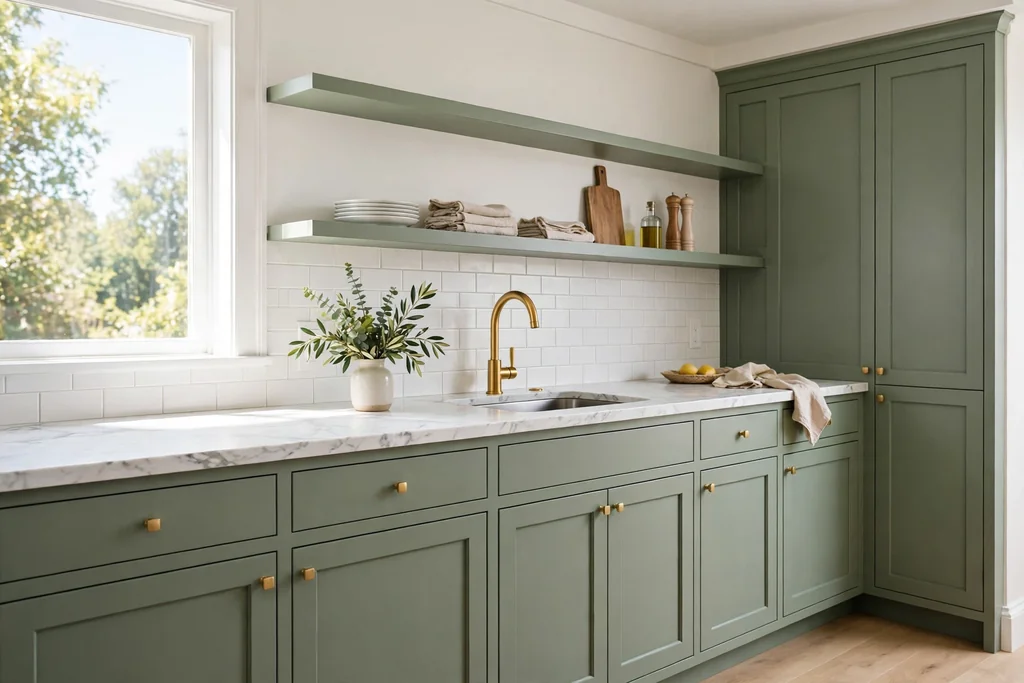
Pair sage cabinets with white marble-look counters and a gold faucet for a calm, slightly dressy kitchen that still works hard. The pale counter lifts the green, the soft veining adds movement without a pattern, and the gold faucet picks up the warmth in wood and brass handles. This pairing suits kitchens with good daylight, where the pale surfaces can reflect light back into the room.
Keep the backsplash plain, in cream or white tile, so the counter veining stays the main detail. Wipe stone-look surfaces after cooking, and choose a faucet finish that matches the cabinet hardware, since two gold tones side by side can clash. A small vase of greenery on the counter is enough decor here, since the materials already carry the room.
5. Glass-Front Sage Uppers for Seasonal Display
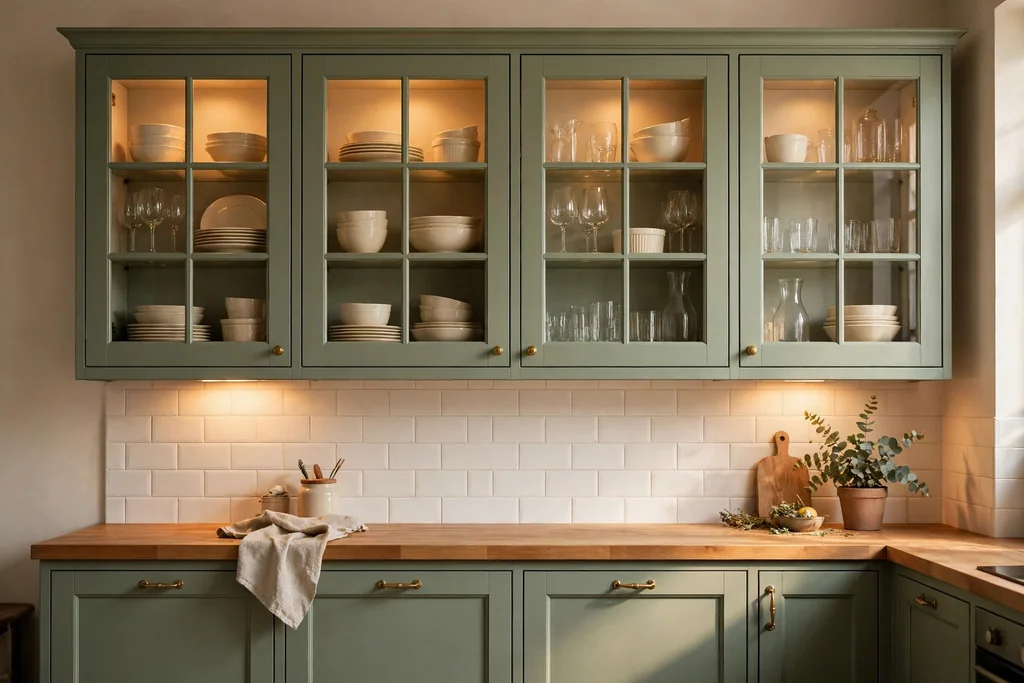
Fit glass-front doors on the sage upper cabinets to show cream dishes, glassware, and a few seasonal pieces, while keeping the lowers closed for everyday storage. Glass uppers suit a kitchen where you own dishes worth seeing, and they make a small room feel less boxed in, since the eye travels past the door front. Change only the top shelf display by season, with a pumpkin in autumn or a sprig of greenery in winter, and leave the rest as everyday ware.
Keep the inside of the cabinets tidy, since glass shows everything, and group items by color and size rather than filling every shelf. Use the same sage inside the cabinet or a warm white, and check that the glass is easy to clean after cooking steam. If glass feels too exposed, use reeded glass, which softens the view while still letting light through.
6. Sage Pantry Wall for Closed, Calm Storage
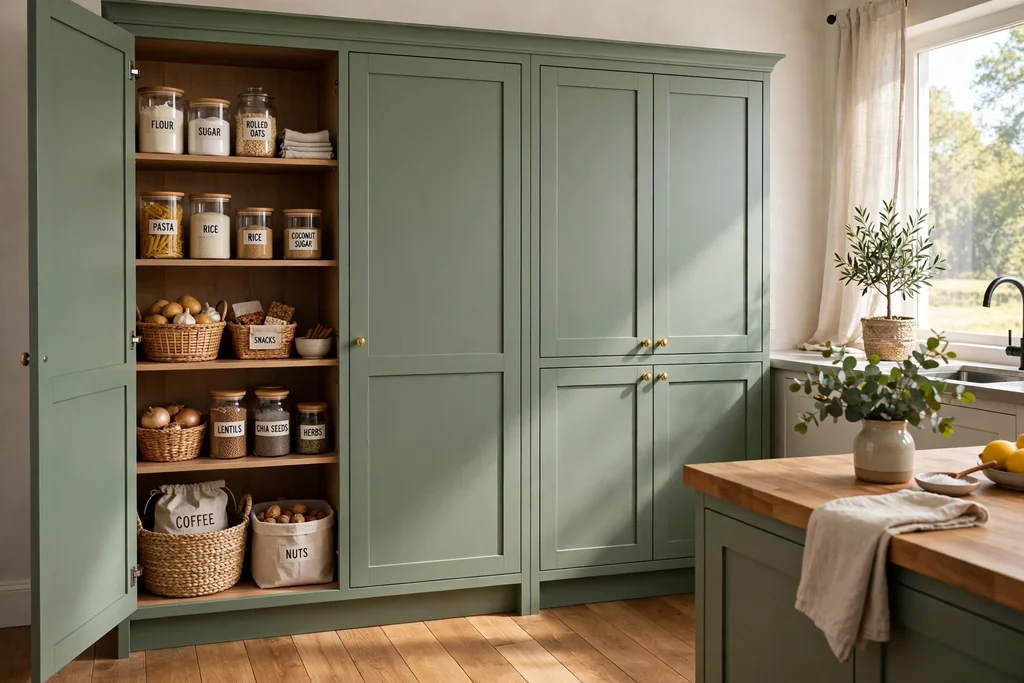
Build a full height sage pantry wall on one side of the kitchen to hide food, appliances, and cleaning gear behind closed doors. A pantry wall suits a kitchen with no separate pantry, and it keeps the main run calm, since tall doors read as wall paneling rather than as storage. Inside, plan before you fit the doors: tall space for brooms at one end, drawers in the middle, and shelves sized for the jars and boxes you actually buy.
Leave one section with a counter level shelf or a pull-out worktop if the wall allows it, so small appliances have a home that does not crowd the main counter. Keep door handles simple and matched, and check door swings against the fridge and the main walkway. Label the inside of one door with a short list of staples if that helps the household keep the pantry stocked.
7. Sage Cabinets Beside Light Oak Open Shelves
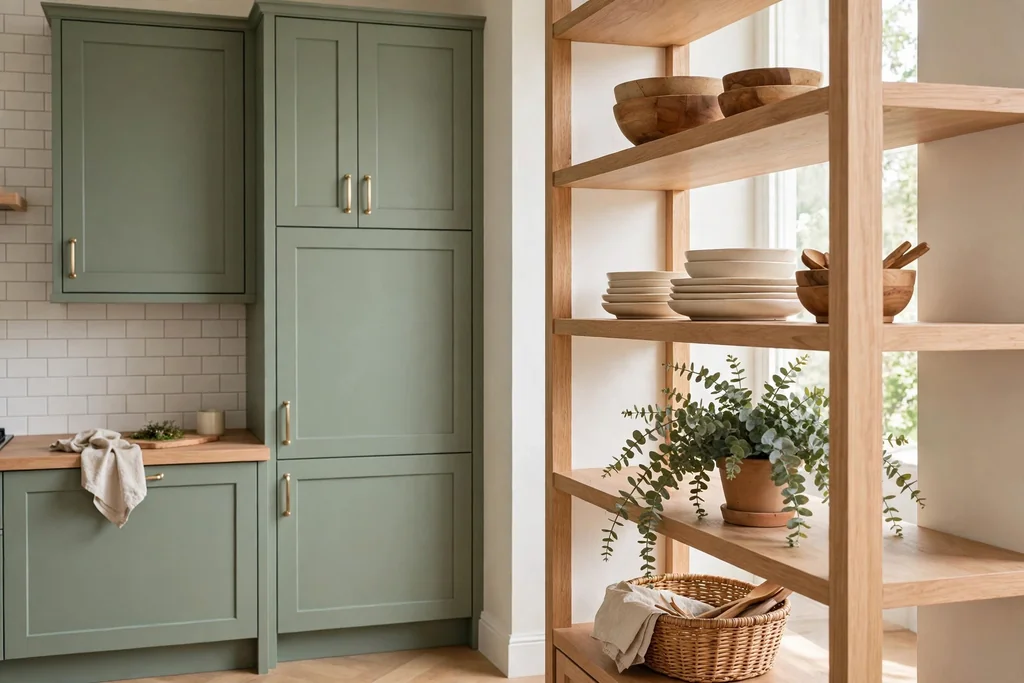
Place light oak open shelves beside sage cabinets to warm the green and give everyday dishes a home within reach. Oak adds grain and warmth that painted doors cannot, and open shelves suit plates, bowls, and mugs you use daily, since you can grab them without opening a door. Keep the shelf run short, one or two shelves, so it reads as an accent rather than as a replacement for closed storage.
Style each shelf with one material repeated, such as wood boards, cream dishes, and one plant, and leave gaps between groups so the shelf reads calm. Dust open shelves more often than closed cabinets, especially near the stove, and put the heaviest items at the ends or on the lower shelf. If open shelves feel too exposed for your whole kitchen, use them on one wall only and keep sage closed cabinets everywhere else.
8. Sage Cabinets with a Patterned Cream and Green Backsplash
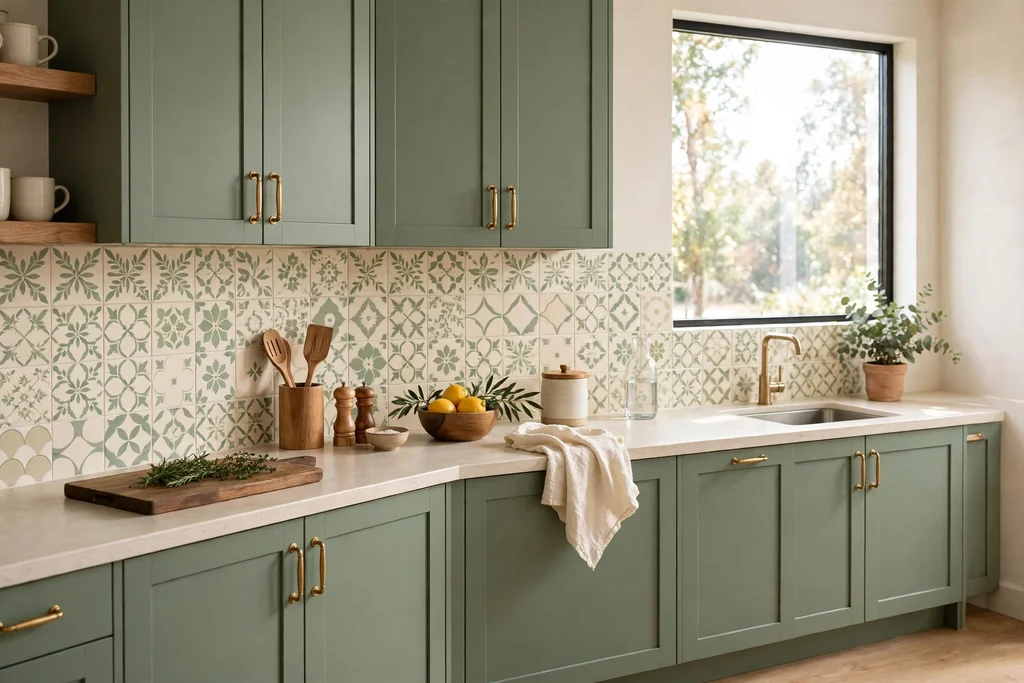
Set sage cabinets against a patterned tile backsplash in cream and soft green for a kitchen with pattern in one controlled place. The tile adds movement at eye level, where you stand to cook, while the cabinets stay quiet below it. Choose a pattern with plenty of cream in it, so the green in the tile echoes the cabinets without competing with them.
Keep the counter plain and the upper cabinets simple, since the backsplash is doing the decorative work. Order extra tiles for cuts and future repairs, since batches and patterns can vary, and seal grout as the tile maker advises. If a full patterned wall feels like a lot, run the pattern only behind the stove as a panel, and use plain cream tile on the rest of the run.
9. Full Room Palette with Sage, Cream Walls, and Warm Wood Floors
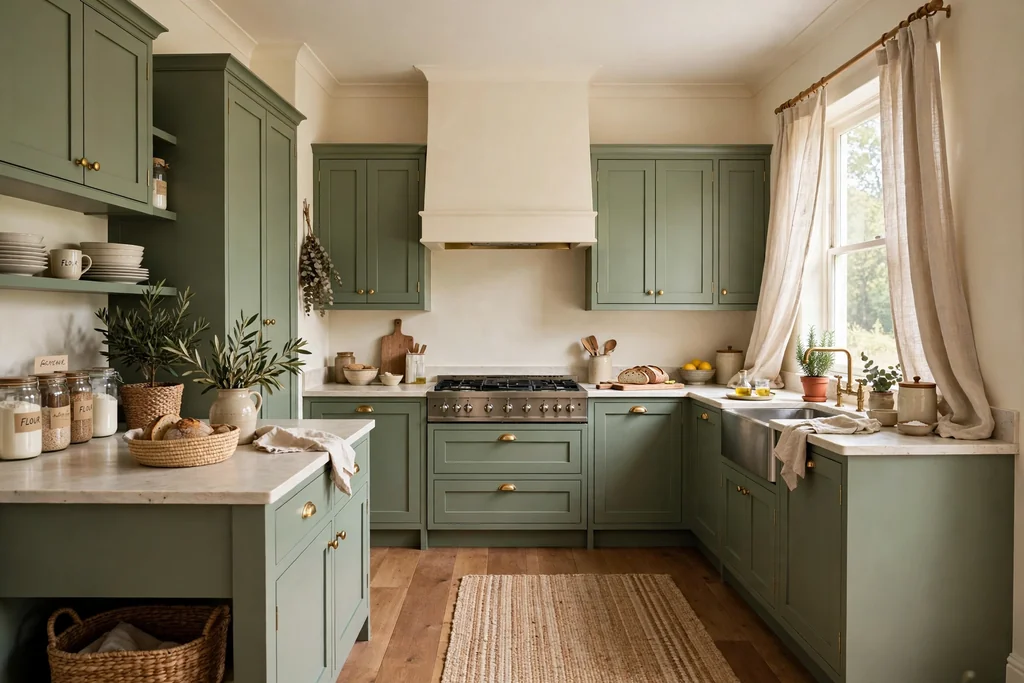
Build the whole room around sage cabinets, cream walls, and warm wood floors, so the kitchen feels calm from every angle. This palette suits open plan rooms, since the same tones can carry into the dining area without a hard break. Cream walls keep the room bright, wood floors add warmth underfoot, and the sage cabinets supply the color, so no single surface has to work too hard.
Repeat each tone at least twice: sage in the cabinets and a towel or stool cushion, cream in the walls and dishes, wood in the floor and a board or shelves. The same calm sage approach works beyond the kitchen, and these sage green bedroom ideas show how the color behaves with cream and wood in a restful room. Keep window treatments light, in linen or cotton, so daylight still fills the room.
10. Seasonal Swaps on the Same Sage Cabinets
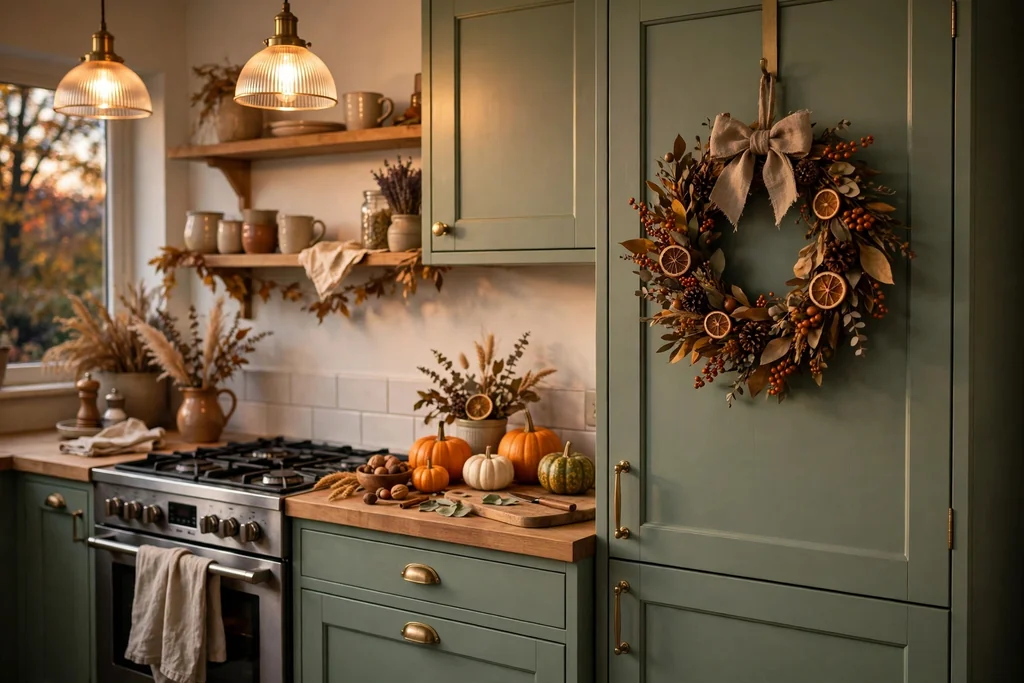
Keep the cabinets as they are and change the season with towels, a wreath on a cabinet end panel, and one counter cluster, so the kitchen feels current without any paint. In autumn, add a linen towel in rust or cream, a small pumpkin or two on a tray, and a wreath on a door that does not block a handle. In winter, swap to a plain green wreath, a cream runner on the table, and warm light in the evening.
Keep every seasonal item off the main prep runs, and choose one spot per surface at most, so cooking stays easy. Store the seasonal set together in one box, washed and folded, so the next swap is a short job. Keep dried stems and wreaths well away from the stove and any open flame, and use flameless candles near counters.
11. Sage Cabinets Run to the Ceiling in a Small Kitchen
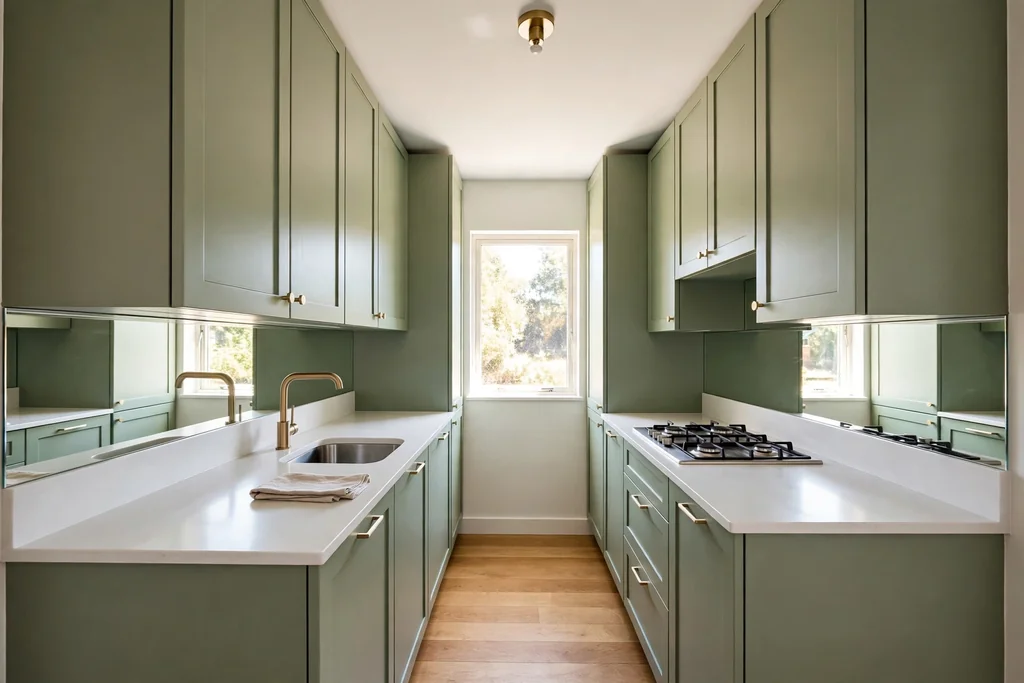
In a small kitchen, run sage cabinets up to the ceiling and keep the counter, backsplash, and floor light, so storage grows without the room feeling closed in. Tall cabinets use the wall space that often goes unused, and they give rarely used items a proper home above daily reach. A pale sage, close to grey green, works better here than a deep green, since a strong color over a full wall can feel heavy in a tight room.
Keep the top cabinets for light, rarely used items, and add a sturdy step stool stored nearby. Leave the glass mostly clear at the window, and use the sill for one plant or a small tray, since daylight is the best tool for making a small kitchen feel larger. For window treatments that protect light in a small room, these kitchen window decor ideas cover cafe curtains, film, and sill styling.
12. Sage Cabinets with Matte Black Hardware and Warm Evening Light
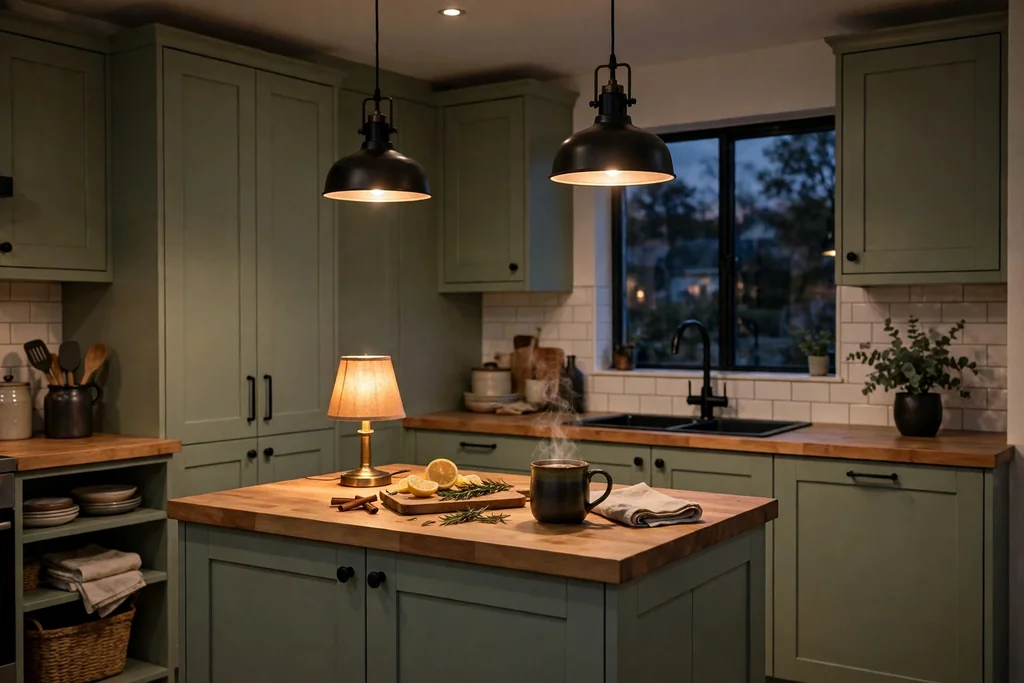
Finish sage cabinets with matte black pulls, black pendant lights, and warm white bulbs for a kitchen that feels cozy after dark. Black gives the soft green a clear edge, and it suits kitchens with black appliances, a black faucet, or dark window frames, since the finish then repeats across the room. In the evening, warm light softens the contrast, so the black reads as a quiet frame rather than as a harsh line.
Repeat the black once or twice only, in hardware and one light fitting, and keep the rest of the room warm, with wood, cream, and linen. Choose warm white bulbs that suit your fittings, and add a small counter lamp or under cabinet light if the main light leaves corners dark. In winter, this is the easiest seasonal change of all: no new decor, just warmer light and a mug on the counter.
Conclusion
A serene sage kitchen starts with the cabinets and stays calm because the rest of the room repeats the same few tones. Choose the layout that fits how you cook, whether that is a full shaker run, a two-tone split, a sage island, or a pantry wall, then add one warm material and one metal finish. Keep seasonal changes small, in towels, one tray, and one wreath, so the cabinets stay the steady base through autumn and winter. Test your sage sample in your own light, keep counters clear for cooking, and let the green do its quiet work.
Save this list on Pinterest for your next kitchen refresh, and start with one idea: the cabinet layout first, then the hardware, then the seasonal swap.
FAQs
What colors pair best with sage green kitchen cabinets?
Warm white, cream, light oak, and pale stone pair best, since they keep the room bright and let the sage stay the main color. Brass or gold adds warmth, while matte black adds a clear edge; pick one metal finish and repeat it, rather than mixing several. Avoid a second strong wall color, since sage needs quiet neighbors to read as calm.
Should I paint all my kitchen cabinets sage, or only some?
It depends on the room size and light. A full sage run suits a bright kitchen with pale counters and walls, while a two-tone layout, sage lowers and warm white uppers, suits a smaller or darker kitchen. A sage island alone is a good first step if you want to test the color before committing to a full repaint.
Does sage green work in a small kitchen?
Yes, if you keep the tone pale and the surrounding surfaces light. Run cabinets to the ceiling for storage, keep the counter and backsplash in cream or white, and leave the window mostly clear for daylight. Avoid a deep sage over a full wall in a tight room, since a strong green can feel heavy when it covers every surface.
How do I update sage cabinets for autumn without repainting?
Change textiles and one counter cluster only: a linen towel in rust or cream, a small pumpkin or two on a tray, and a wreath on a cabinet end panel. Keep seasonal items off the prep runs beside the stove and sink, and store the set together so the next swap is quick. Warm white bulbs in the evening finish the seasonal feel with no new decor.
What hardware finish suits sage green cabinets?
Brass suits a warm, traditional kitchen, since it warms the green and links to wood and cream. Matte black suits a kitchen with black appliances or dark window frames, since it gives the soft green a clear edge. Choose one finish for pulls, knobs, and the faucet if possible, and pick brushed or aged brass if bright brass feels too yellow beside your sage sample.
How do I keep sage cabinets looking clean?
Wipe painted doors with a soft, damp cloth and a mild cleaner, and dry them after, since sage shows grease film and marks sooner than white. Keep the area near the stove wiped often, and touch up chips promptly with the same paint, stored and labeled. Avoid harsh scrub pads, which can dull a matte or eggshell finish over time.