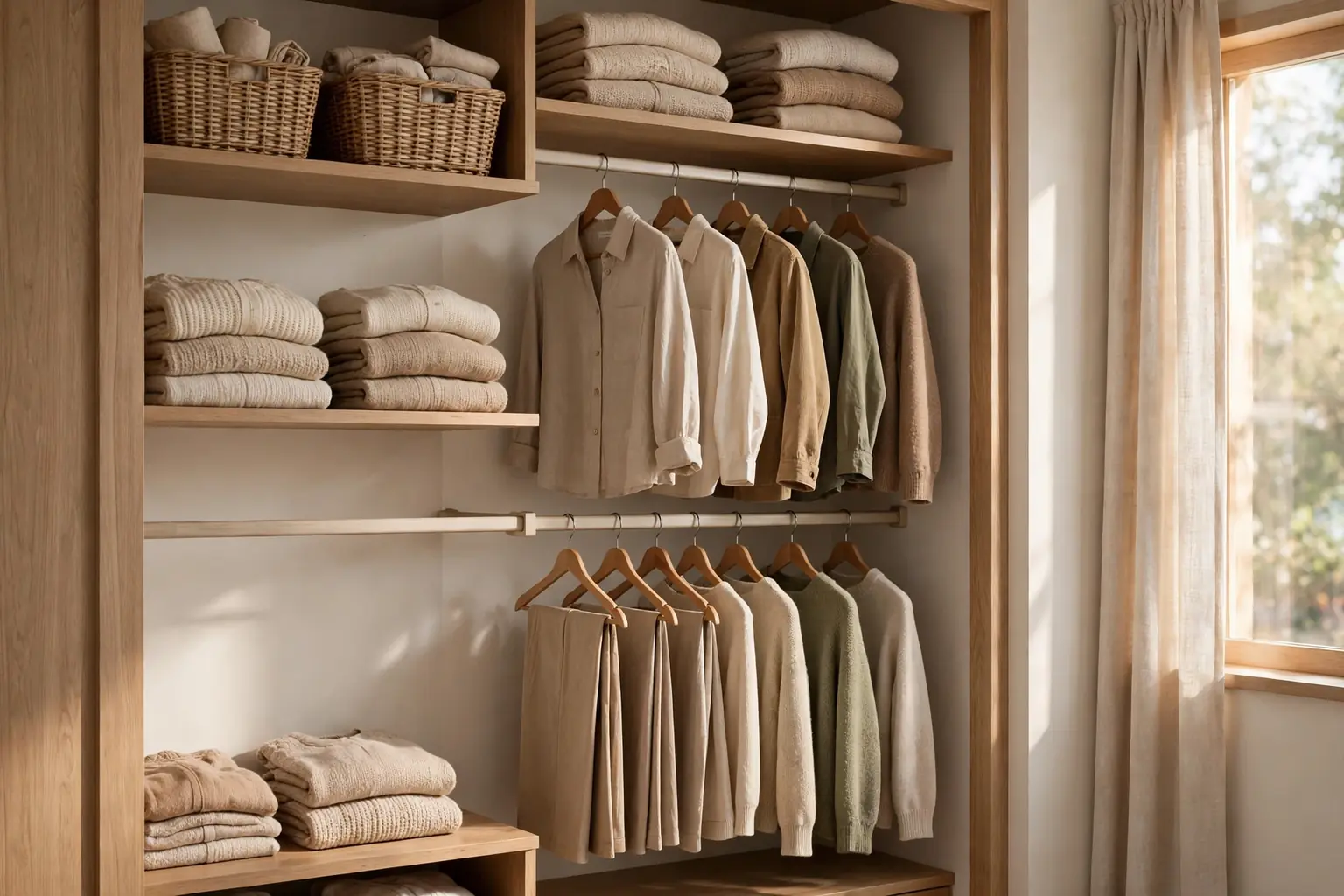
A small closet can still hold a lot when every inch has a job. The trick is not a bigger closet, but a better layout: rails at two heights, shelves that reach the ceiling, and small tools that keep shoes, bags, and accessories visible instead of buried. These 26 creative closet ideas for small spaces cover reach-in closets, corners, entry closets, and rooms with no closet at all, with renter friendly options alongside built-in ones. Start by emptying the closet and sorting what you wear, then pick the ideas that fit your width, height, and door type. For the wider storage picture, these bedroom storage ideas show how a closet can share the load with the rest of the room.
Key Takeaways
- Measure width, depth, and height before buying anything, since a few inches decide whether a rail, drawer, or shoe shelf fits.
- Hang short clothes on two rails to double hanging space, and reserve one tall section for coats and long dresses.
- Put daily items at eye and hand level, seasonal items up high, and rarely worn pieces at the back or in boxes.
- Use slim, matching hangers and shelf dividers, since mixed hangers and collapsing stacks waste more space than they save.
- Give shoes, bags, and accessories their own homes, so they stop landing on the closet floor.
- Add light inside the closet, since a dark closet hides what you own and makes getting dressed slower.
1. Double Hanging Rails for Short Clothes
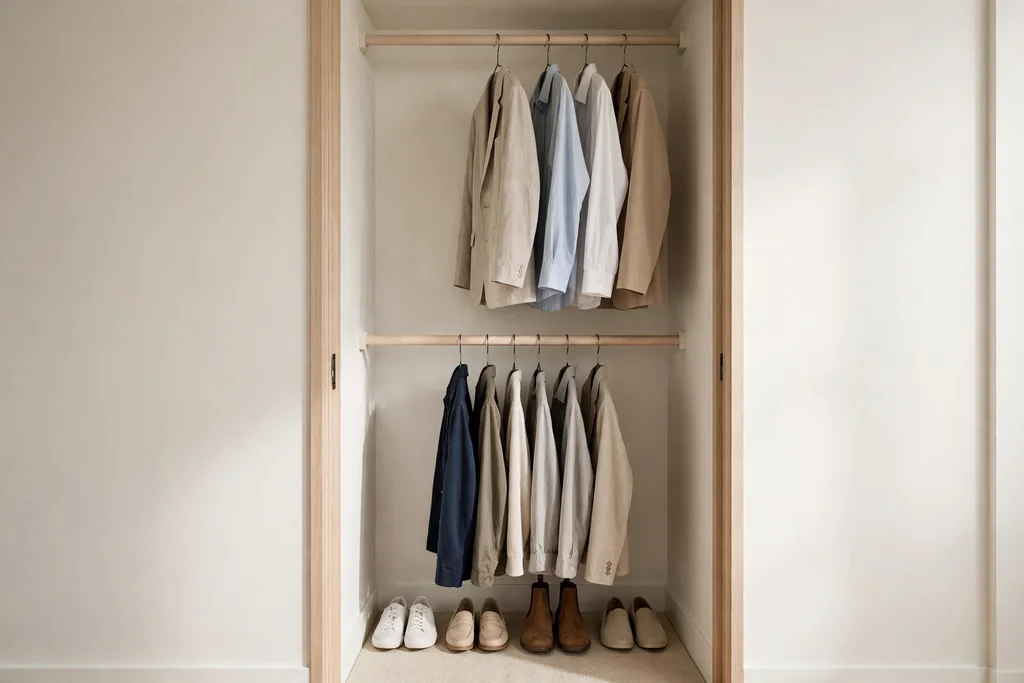
Fit two rails, one above the other, in the section that holds shirts, jackets, and folded trousers. Short clothes need far less height than a single long rail allows, so a second rail turns dead air below the first rail into a full row of hanging space. This is the single biggest gain in most small closets, and it suits both built-in systems and freestanding rail kits.
Measure your longest shirt first, then set the lower rail so shirts clear the floor or a shoe shelf below. Keep one section of the closet at full height for coats and long dresses, so nothing gets folded that should hang. Use the same hanger style on both rails, since mixed hangers crowd the rail and make clothes hard to slide.
2. A Shelf That Reaches the Ceiling
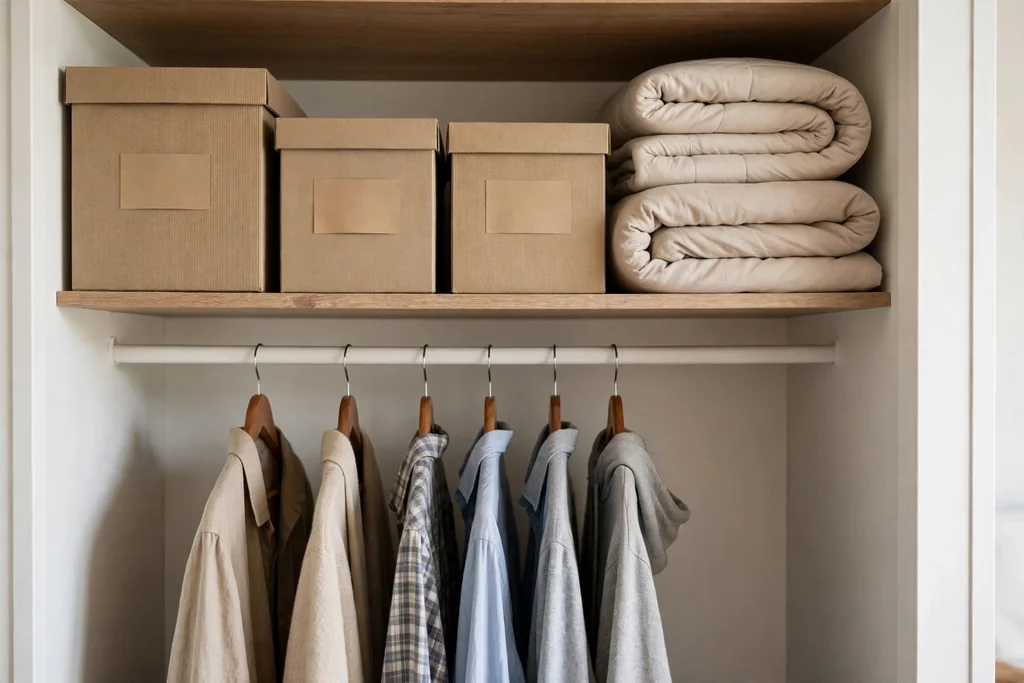
Run a shelf close to the ceiling for items you reach for a few times a year, such as spare bedding, holiday clothes, or luggage. The top of a closet is often empty because the standard shelf sits too low, leaving a gap that collects dust and nothing else. A high shelf claims that gap for real storage.
Keep a small step stool nearby, since a shelf you cannot reach safely becomes a place where things are forgotten. Use closed boxes or bins on the high shelf, so the top row looks tidy from below and dust stays off the contents. Label each box on the side that faces out, and keep the weight light enough to lift down with one hand.
3. Slim Matching Hangers
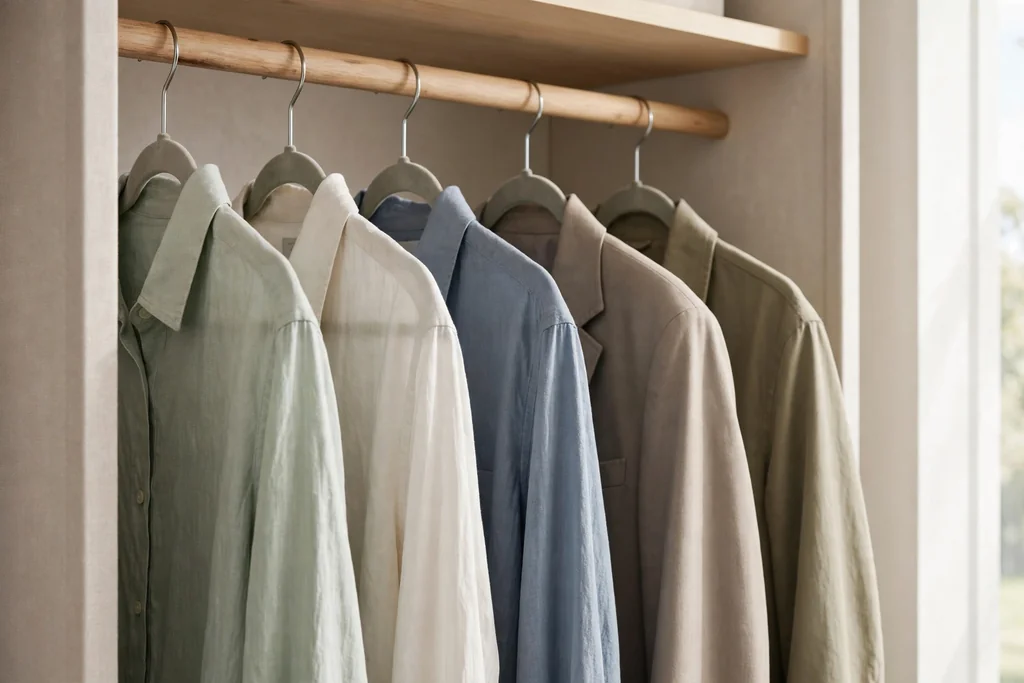
Swap bulky hangers for slim, matching ones, and watch a crowded rail breathe. Thick wooden and plastic hangers each take more width than the garment on them, and mixed shapes catch on each other when you pull one item out. Slim hangers line up neatly and let clothes slide freely.
Choose one hanger type for the whole closet, with clips for trousers and skirts if you hang those items. Keep a small count of sturdy hangers for heavy coats, since slim hangers can bend under a winter coat. When the rail fills again, the hanger count is a useful signal: if you need more hangers, it may be time to pass on clothes you no longer wear.
4. A Drawer Unit at the Base
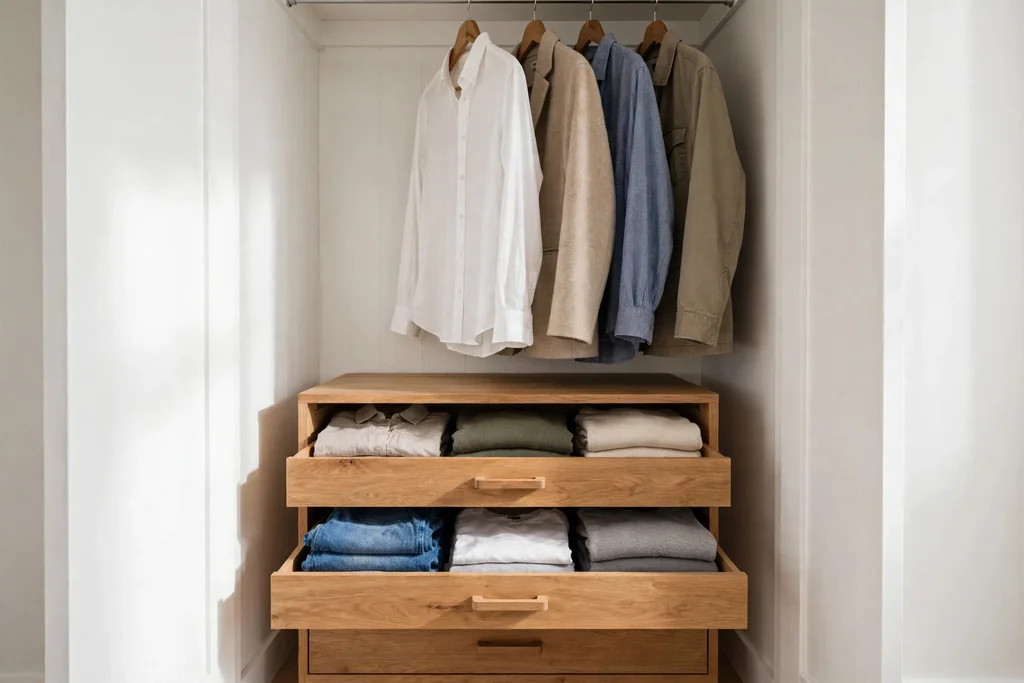
Place a small drawer unit or a set of stacking drawers on the closet floor for folded items, underwear, and accessories. Drawers beat open piles because each drawer holds one category, and you can open one without disturbing the rest. A unit with three or four shallow drawers suits a reach-in closet better than one deep drawer.
Sort drawers by type, such as tops in one, sleepwear in another, and gym clothes in a third, and add small dividers inside so stacks stay upright. Leave a little air above the top drawer so the rail above it still clears hanging clothes. If the closet has no floor space to spare, a hanging shelf unit with drawer inserts gives a similar result.
5. Slanted Shoe Shelves
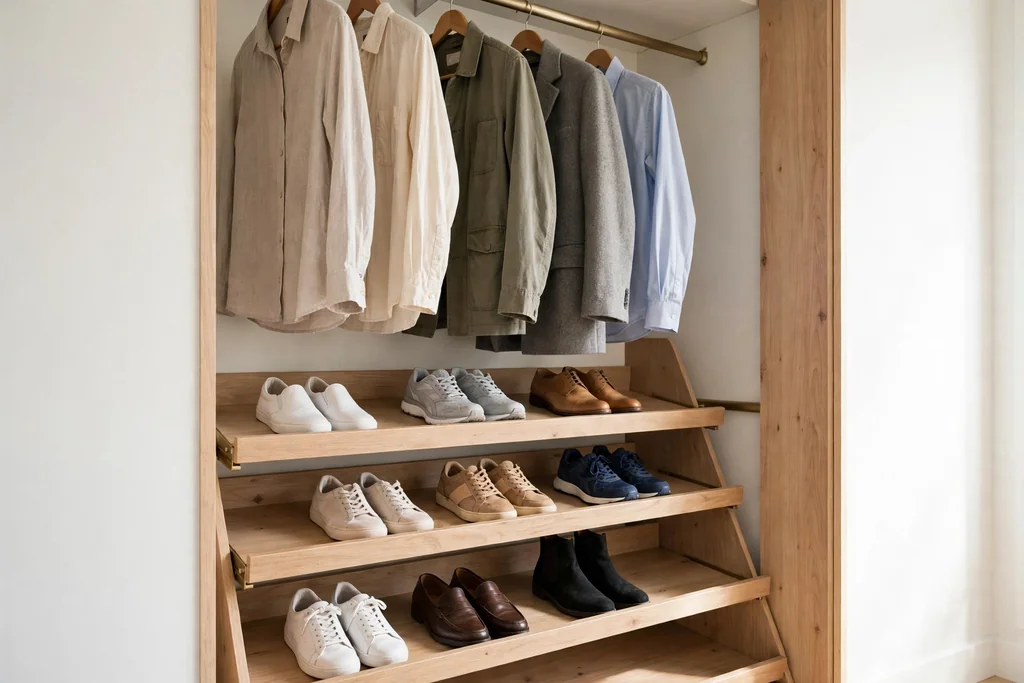
Fit slanted shelves at the base of the closet so shoes sit at an angle, visible at a glance, instead of stacked in a dark pile. A slant shows each pair, which makes it easier to pick shoes in the morning and harder to forget pairs at the back. Two or three low shelves hold a surprising number of pairs in a narrow footprint.
Keep tall boots off slanted shelves, since they slide, and store boots upright on the floor beside the shelves or in tall boot holders. Wipe shoes before putting them away, so dirt does not build up on the shelf below. If you buy shoes often, leave one shelf partly empty, since a full shoe shelf is the first place overflow lands on the floor.
6. Labelled Clear Bins Up Top
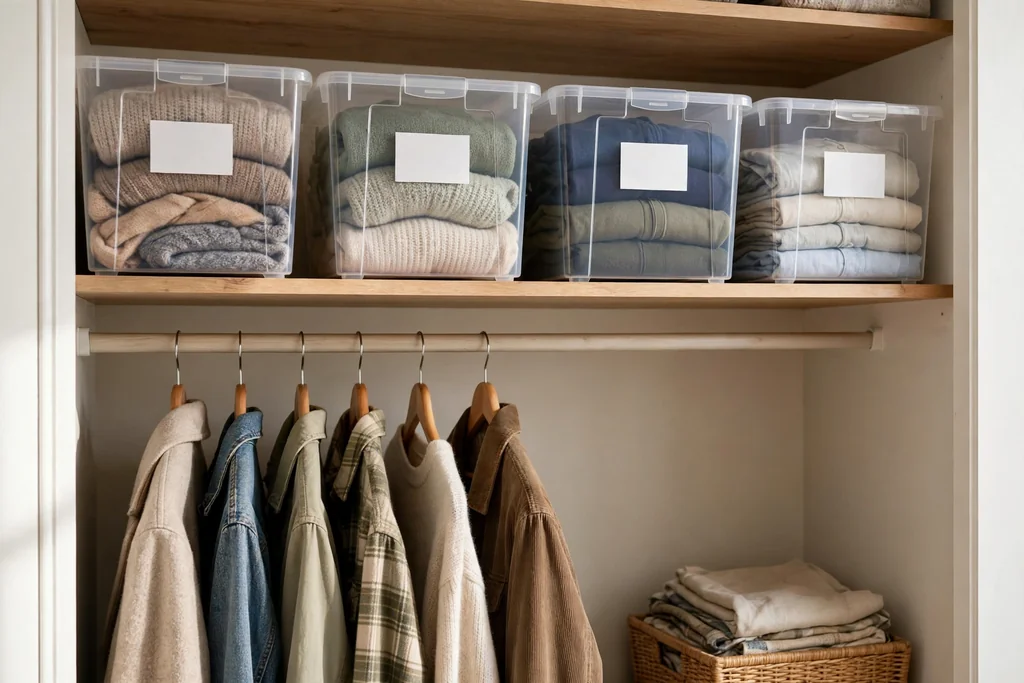
Store seasonal clothes and rarely used items in clear bins on the top shelf, with a label on each bin. Clear sides let you see what is inside without pulling every box down, and labels save you from opening three bins to find one item. This works well for swimwear in winter, heavy knitwear in summer, and occasion clothes.
Keep bins shallow enough to lift safely from a step stool, and avoid packing them so full that the lid will not close. Put a short list on the label, such as “winter hats, gloves, scarves,” rather than a single vague word. Review the bins each season when you swap clothes, and move out anything you did not wear during its season.
7. An Organizer on the Inside of the Door
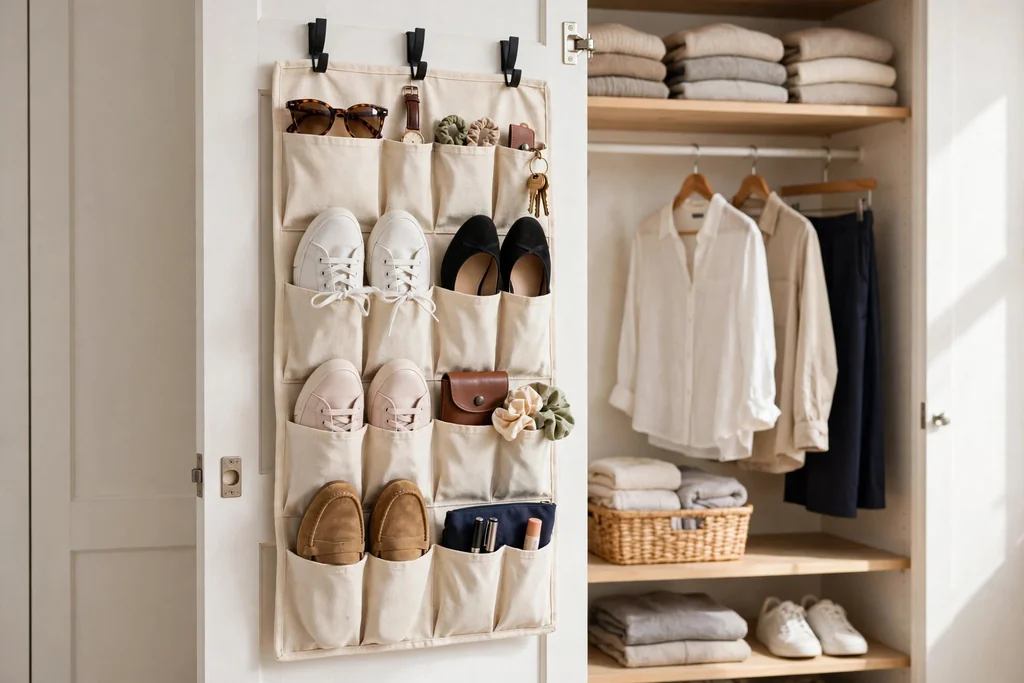
Hang a pocket organizer or a row of hooks on the inside of the closet door for shoes, accessories, and small items that otherwise fill shelves. The door is unused space in most closets, and a flat organizer adds storage without taking a single inch of rail or shelf. Clear pockets suit shoes and small accessories, while fabric pockets give a calmer look.
Keep heavy items off a hanging organizer, since weight can pull it off the door or stop the door closing fully. Sort pockets by use, such as daily shoes at eye level and occasion pairs higher up. If the door is used often, choose hooks with a soft backing to protect the door surface, and check that nothing rattles when the door moves.
8. Mirrored Sliding Doors
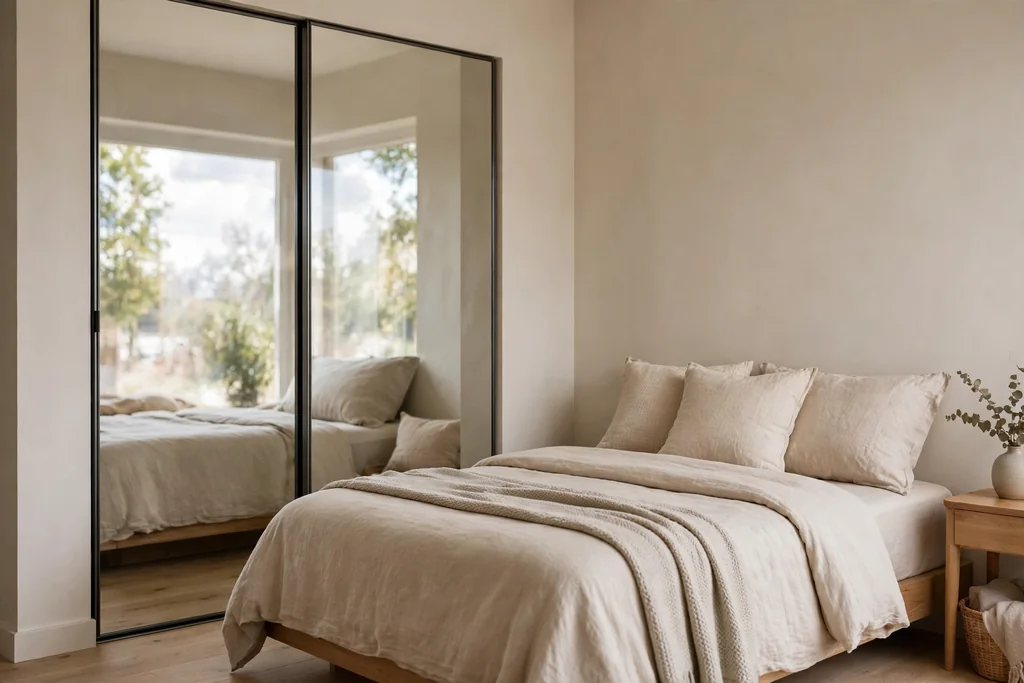
Replace hinged doors with mirrored sliding doors to save swing space and bounce light around the room. A hinged door needs clear floor in front of it, which a small bedroom may not have, while a sliding door moves along the wall instead. The mirror also gives you a full length view for dressing without a separate mirror taking wall space.
Check what the mirror reflects before fitting it, since a mirror facing a messy corner doubles the mess. Keep the track clean, since dust in the track makes sliding doors stick. If sliding doors are not possible, a mirror fixed to the inside of a hinged door gives the same dressing view without changing the door type.
9. A Curtain in Place of Doors
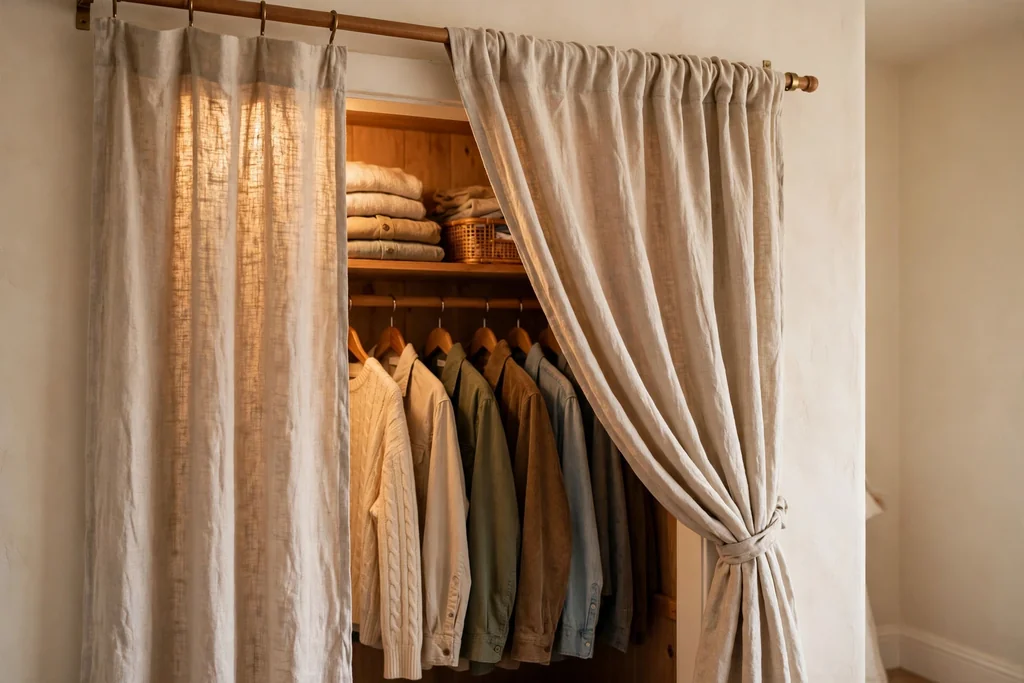
Hang a curtain in place of closet doors for a soft, flexible front that costs little and needs no swing space. A curtain suits a closet in a tight corner or a room where a door would hit the bed, and it hides the closet contents when closed while opening fully for access. Choose a washable fabric, since closet curtains collect dust.
Hang the curtain as close to the ceiling as the opening allows, so the closet looks taller, and extend the rod past the opening so the curtain stacks neatly to one side. Pick a fabric heavy enough to hide the contents but light enough to slide with one hand. If you like an open look, tie the curtain back during the day and close it at night.
10. An Open Closet With Matching Baskets
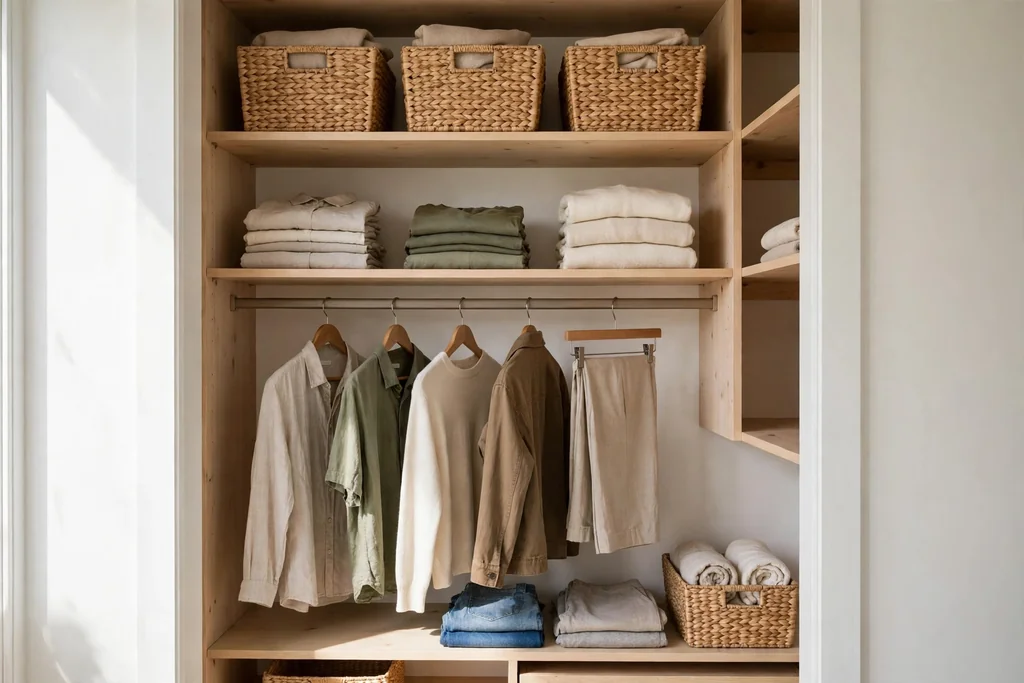
Remove the doors and style the closet as open storage with matching baskets for the items you want hidden. An open closet works well in a small room because there is no door to work around, and it forces a tidy habit, since everything is visible. Baskets give closed storage without doors, one basket per category.
Use baskets of one material and no more than two sizes, and label the front of each one, so the open closet reads as planned rather than patched together. Keep daily clothes on the rails and folded stacks neat, since an open closet shows every pile. Dust the open shelves weekly, since open storage collects lint faster than closed storage.
11. L-Shaped Shelving in a Corner Closet
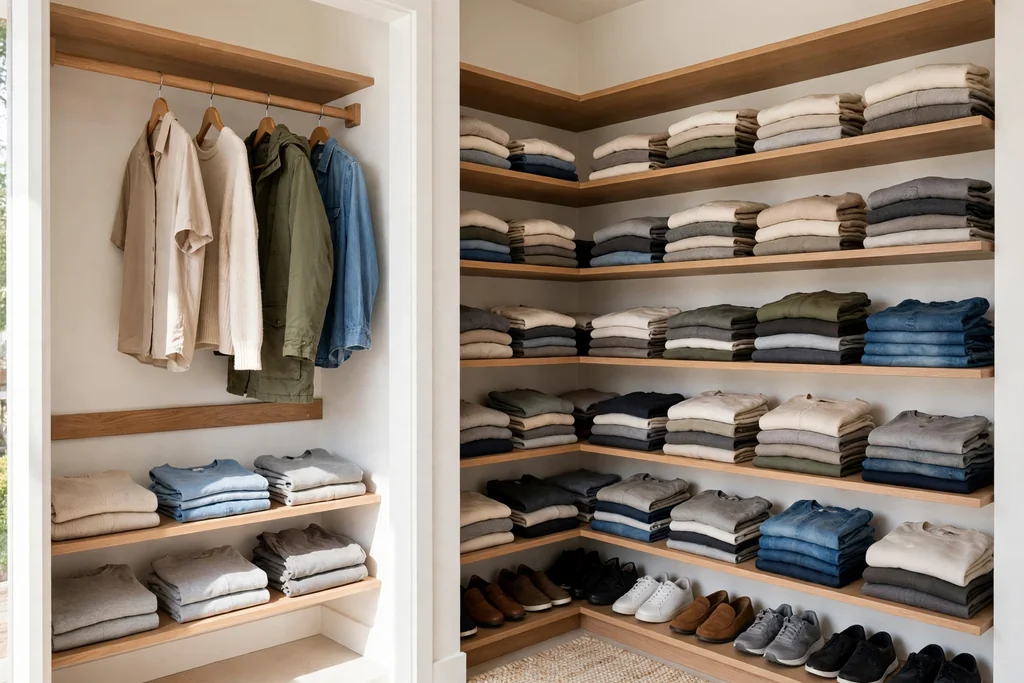
Wrap shelves around the corner in an L shape to use both walls of a corner closet instead of only the front wall. Corner closets often waste one side, since a single straight rail leaves the return wall empty. L-shaped shelves turn that return wall into folded clothes storage, shoe shelves, or accessory space.
Keep the deepest corner for rarely used items, since reaching into a corner is awkward, and put daily items on the easy side. A small turntable in the corner section helps for accessories or shoes, so nothing hides at the back. Leave the middle of the closet clear for hanging, so the corner shelves do not block access to the rail.
12. Zones by Use: Daily, Work, and Occasion
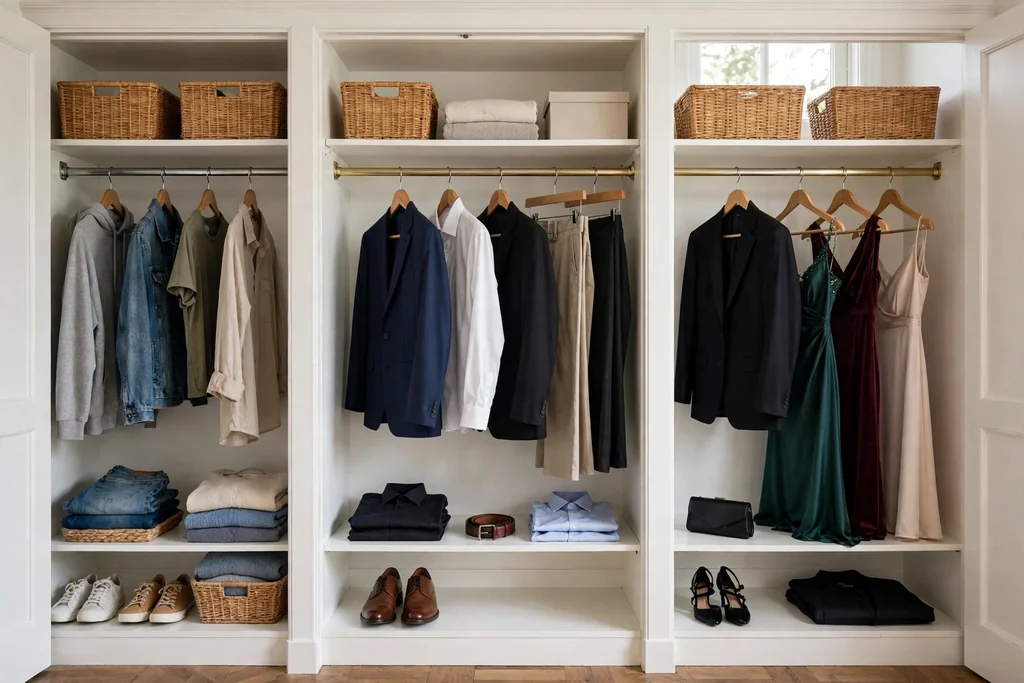
Divide the closet into zones by use, with daily clothes at the front, work clothes together, and occasion clothes at the back or up high. Zoning stops the morning search through everything you own, since you only open the zone you need. It also makes it clear which zone is overfull when the closet starts to feel tight.
Hang each zone in the same order every time, such as tops, then trousers, then jackets, so the eye learns where things live. Keep a small gap between zones, even if it is only one empty hanger, so the sections stay distinct. Review the occasion zone once a year, since clothes kept for rare events are the ones most likely to stay unworn.
13. Shelf Dividers for Folded Stacks
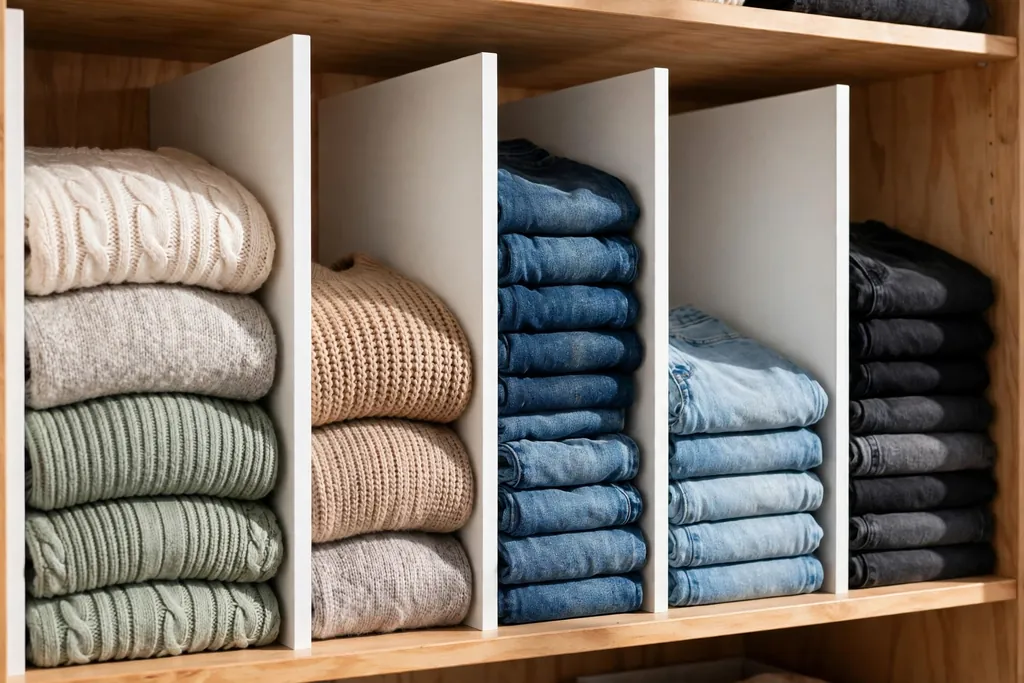
Add shelf dividers to keep folded stacks upright and separate, so one pulled jumper does not topple the whole shelf. Folded clothes slide and collapse without a boundary, and dividers give each stack its own slot, like books on a shelf. This works best for knitwear, jeans, and T-shirts stored on open shelves.
Fold clothes to the same width so stacks line up, and file them in rows rather than tall piles where you can. Keep each stack to a height you can lift with one hand, and leave one slot empty for new items or laundry in progress. Wipe the shelf when you refold, since folded stacks collect lint at the edges.
14. Hooks and Rings for Scarves, Belts, and Ties
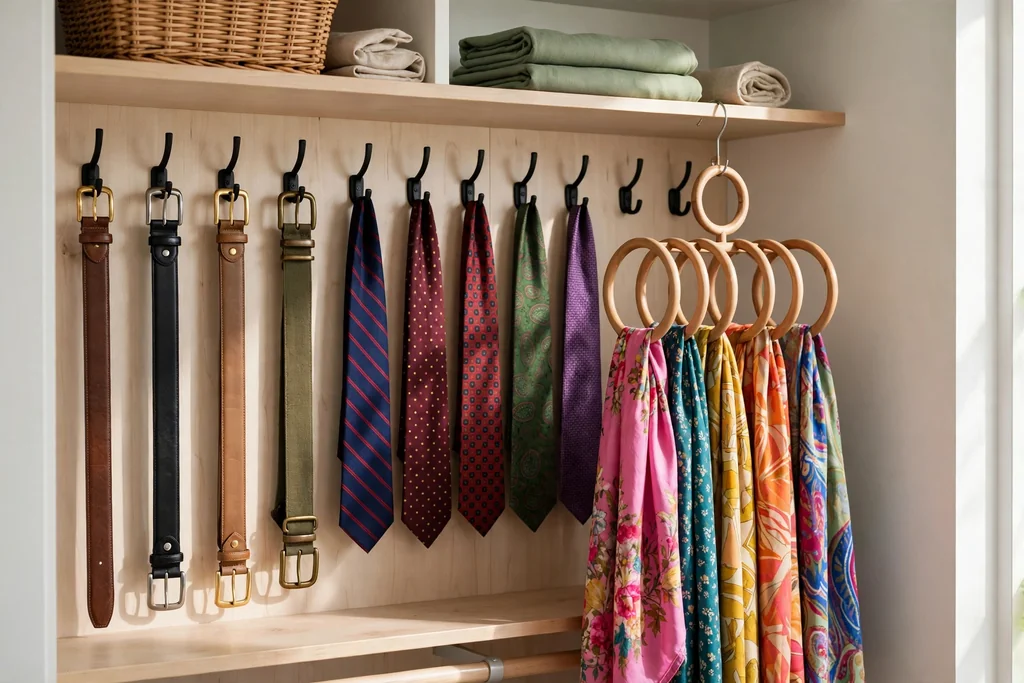
Hang scarves, belts, and ties on hooks, rings, or a multi-loop hanger instead of folding them into a drawer. Small accessories tangle in drawers and disappear at the bottom of piles, while hanging keeps each one visible and ready to grab. A single ring hanger can hold many scarves in the width of one garment.
Sort by color or by season on the hanger, so you can find a match without pulling everything off. Keep heavy belts on a hook rather than a ring, since weight can stretch a fabric loop. If you own very few accessories, a row of small hooks on the closet side wall does the same job with less hardware.
15. Side-Wall Hooks for Bags and Hats
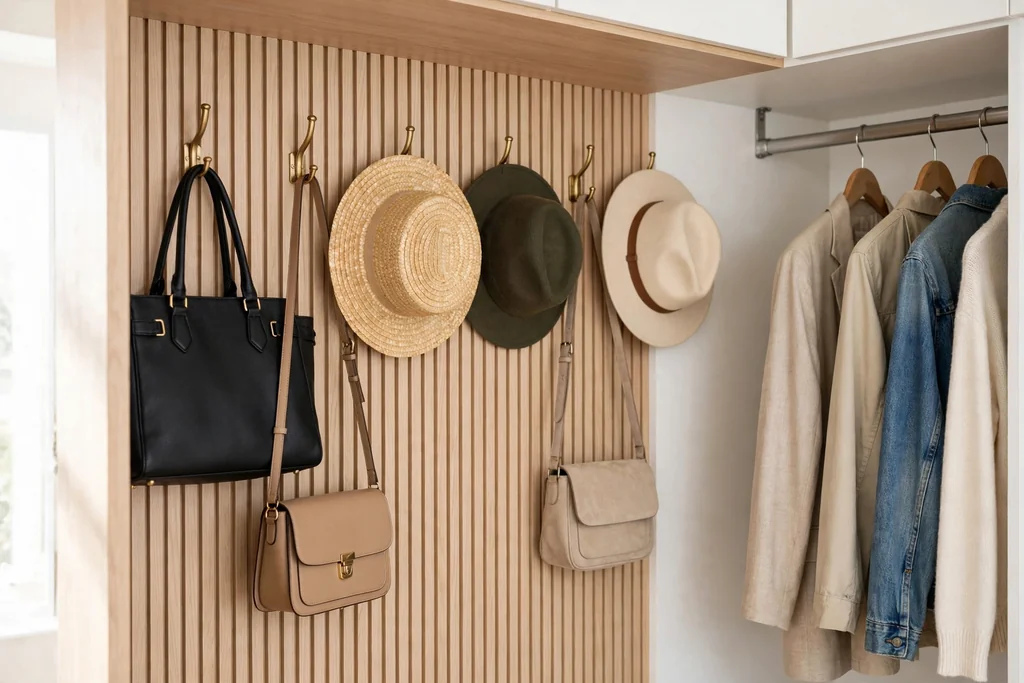
Fix a row of hooks on the closet side wall for bags, hats, and tomorrow’s outfit. Side walls are often bare, yet they sit at hand height and hold items that otherwise land on the floor or on a chair. One hook per bag keeps straps from tangling, and hats hung by their inner band keep their shape better than hats stacked in a pile.
Keep the heaviest bag on the lowest hook, and check that hooks are fixed into studs or with fixings rated for the load. Leave a gap between hooks so bags do not press against each other and mark the leather or fabric. If you rent, removable hooks give a similar result, but check their weight rating and test one hook before loading them all.
16. A Pull-Out Valet Rod
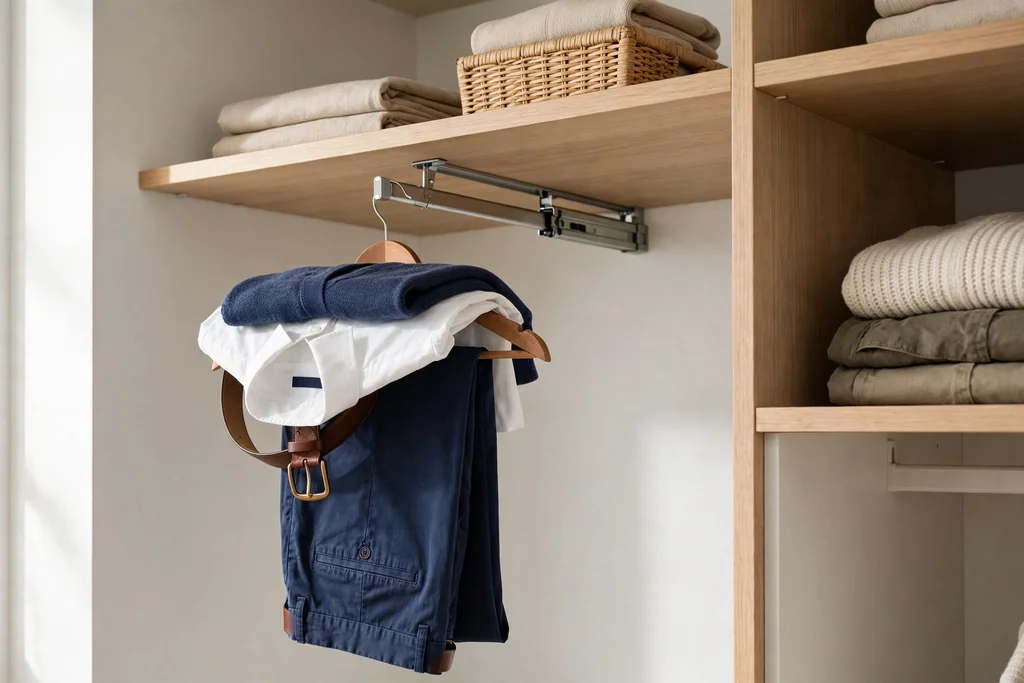
Fit a pull-out valet rod under a shelf for a temporary hanging spot while you plan an outfit or unpack laundry. A valet rod pulls out when you need it and pushes back flush when you do not, so it takes no permanent space. It suits small closets because it gives you a staging area without a chair or a hook on the door.
Use the rod for one outfit at a time, such as tomorrow’s clothes or items that need steaming, and clear it daily so it does not become a second rail. Fix it near the front of the closet, where it is easy to reach, and check that it clears the door when pulled out. A valet rod also helps when steaming, since you can hang the garment where you can work around it.
17. A Pull-Down Rail for High Closets
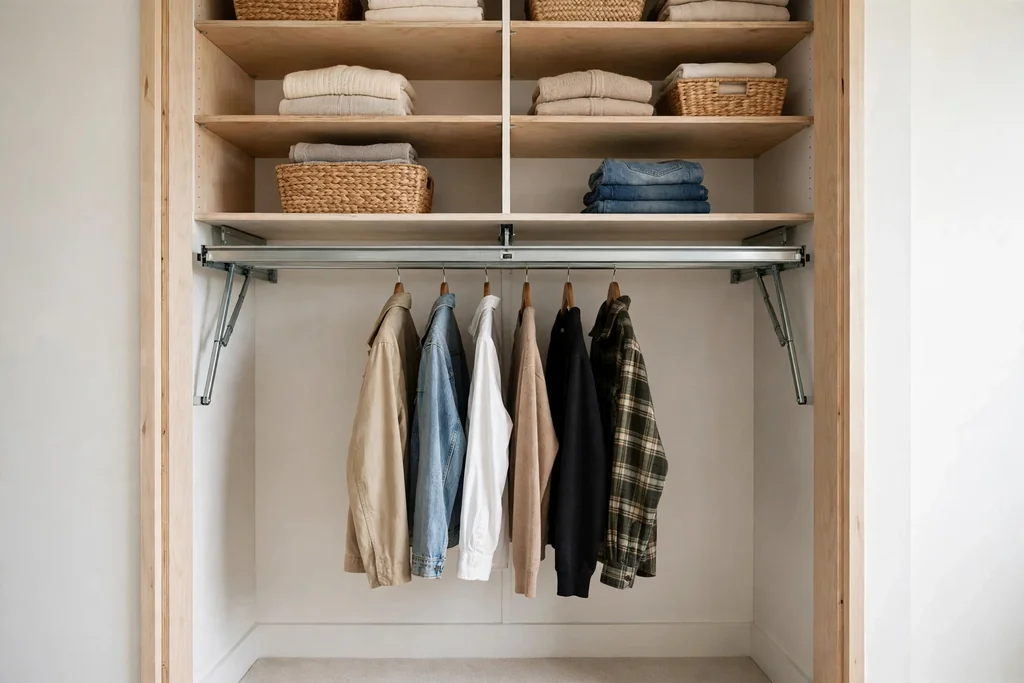
Fit a pull-down rail in a tall closet so high hanging space is usable without a step stool every day. A pull-down rail lowers clothes to hand height with a handle, then lifts them back up, which makes the top half of a tall closet as useful as the bottom half. This suits rooms with high ceilings where the upper rail would otherwise sit empty.
Check the weight rating before loading it, and keep heavy coats on the lower rail, since a loaded pull-down rail is harder to lift. Follow the maker instructions closely, since the rail carries weight above your head. If a pull-down rail is out of reach, a high shelf with labelled bins is a simpler use of the same space.
18. Battery Light Inside the Closet
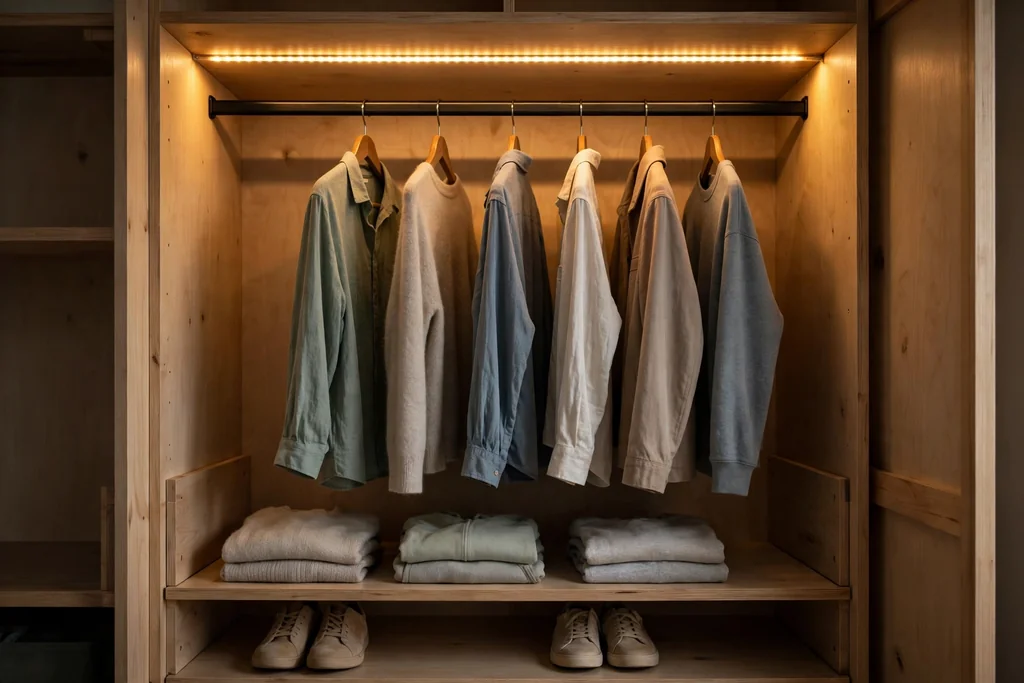
Add a battery light or a motion sensor strip inside the closet so you can see colors and details without room light alone. Closets are often dark, especially with sliding doors, and poor light leads to mismatched clothes and forgotten items at the back. A strip along the top or a small light under each shelf makes a clear difference.
Choose a warm white light so colors look true, and place it where it lights the clothes rather than your eyes. Rechargeable strips suit renters, since they stick on and need no wiring, but check the battery or charge level monthly. If the closet has a power point nearby, a plug-in strip gives steadier light, but keep cables away from hanging clothes.
19. A Turntable for Deep Corners
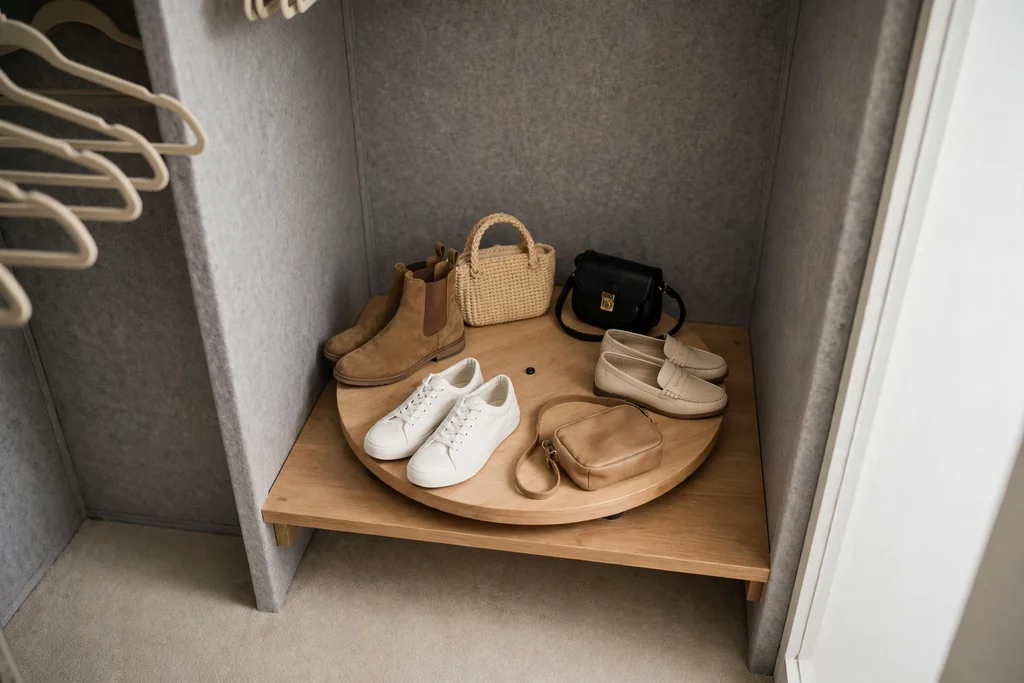
Place a turntable in a deep corner section for shoes, bags, or accessories that would otherwise hide at the back. Deep closet corners are hard to reach, and items pushed to the back tend to stay there. A turntable brings the back to the front with one spin, so every item stays in rotation.
Keep the turntable light enough to spin with one hand, and group similar items on it, such as shoes on one and small bags on another. Avoid stacking items on a turntable, since a tall stack topples when it spins. If the corner is very deep, a turntable on a low shelf works better than one on the floor, where it is harder to see.
20. A Rolling Cart for Accessories
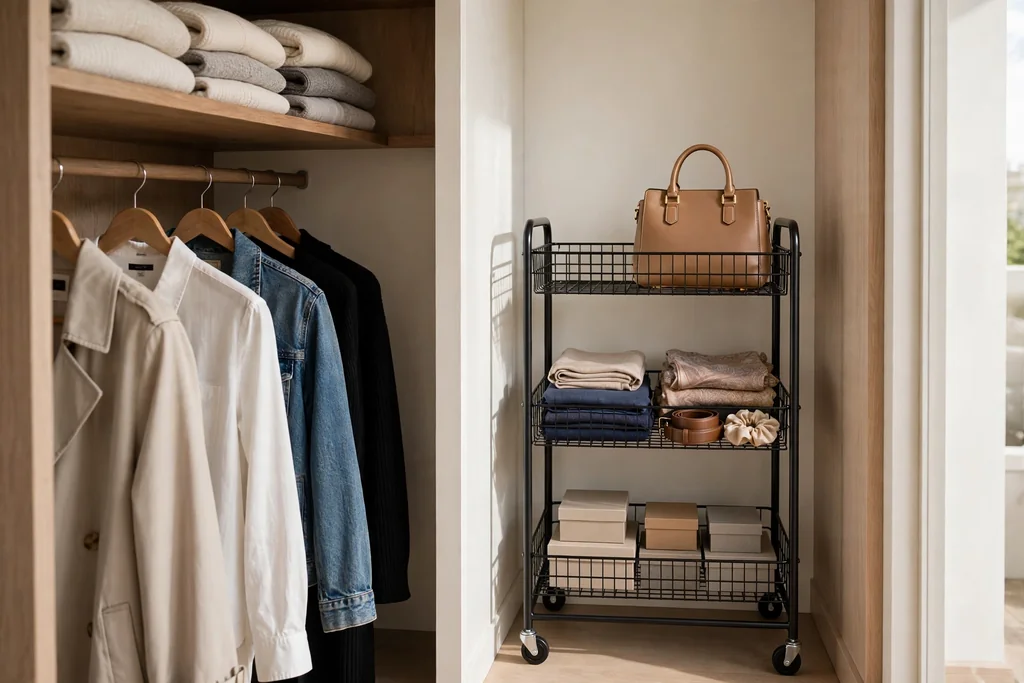
Keep a slim rolling cart in the closet for accessories, underwear, or laundry in progress, and roll it out when you need it. A cart suits a narrow gap beside the hanging section, and it moves to the mirror or the bed when you are choosing accessories. Tiers keep categories separate, with daily items on top and spares below.
Choose a cart with wheels that lock, so it does not drift when you pull a drawer or a tier. Keep the cart to one routine, such as accessories and jewelry, rather than general overflow, since a cart filled with mixed items becomes a second closet floor. Wipe the tiers regularly, since small accessories shed lint and dust.
21. Seasonal Swap Boxes
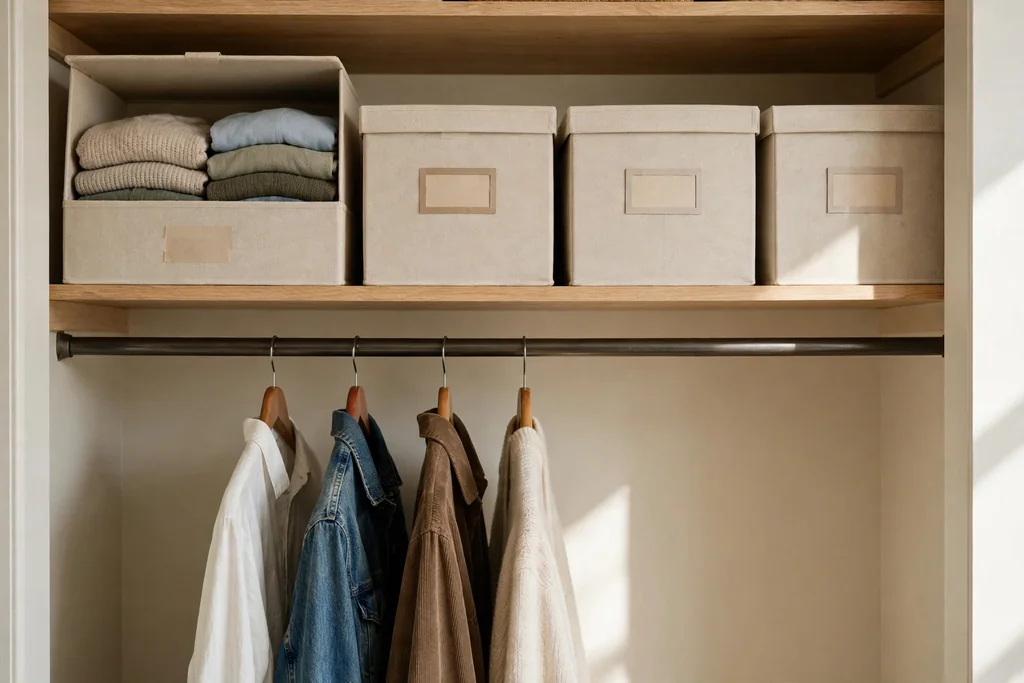
Rotate clothes by season using labelled swap boxes, so only the current season hangs in the main closet. A small closet cannot hold every season at once without crowding, and swapping twice a year frees a full rail for the clothes you actually wear now. Keep the out-of-season box on the top shelf or in another room.
Wash and fold clothes before packing them away, and add a short list to the box lid so you know what is inside without opening it. When the season changes, swap the boxes in one session and review each item as you hang it back up. Anything you did not wear last season is a good candidate to pass on before it goes back in the box.
22. A Low Double Rail for Kids
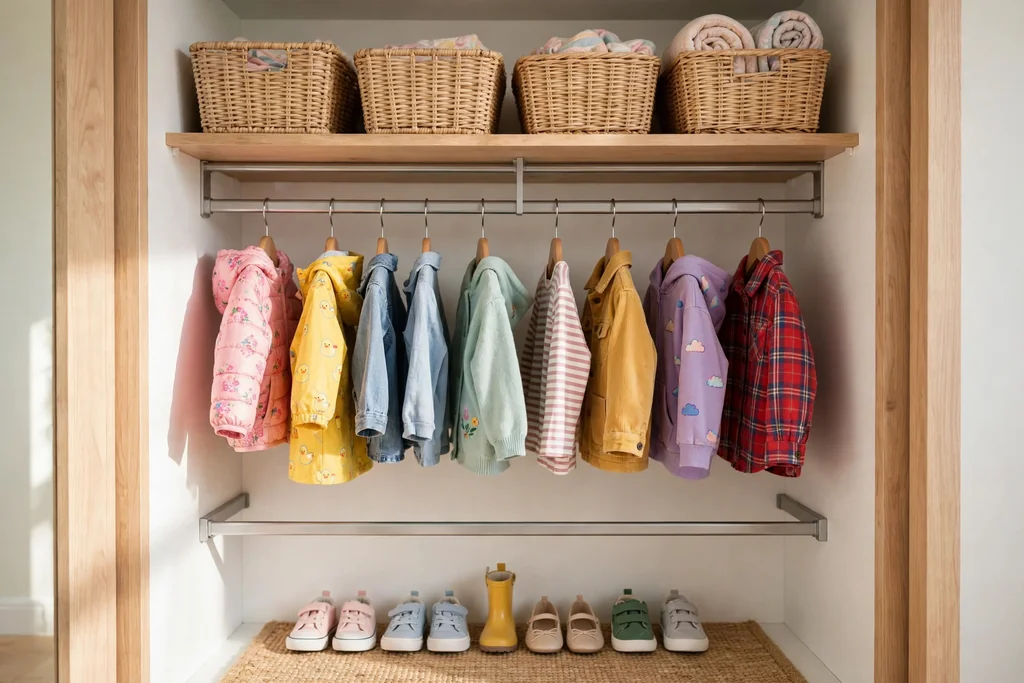
Set a low double rail in a child’s closet so small clothes hang at a height kids can reach. Children’s clothes are short, so two low rails fit easily, and a rail at child height lets kids choose and hang up their own clothes. This builds a tidy habit early, since putting clothes away is simple when the rail is within reach.
Place daily clothes on the lower rail and occasion or next-size clothes on the upper rail, and label the sections with pictures for younger children. Keep the floor below clear for shoes and a small basket for laundry, so the closet stays easy to use. As the child grows, raise the rails, so the same closet grows with them.
23. An Entry Closet as a Mudroom Station
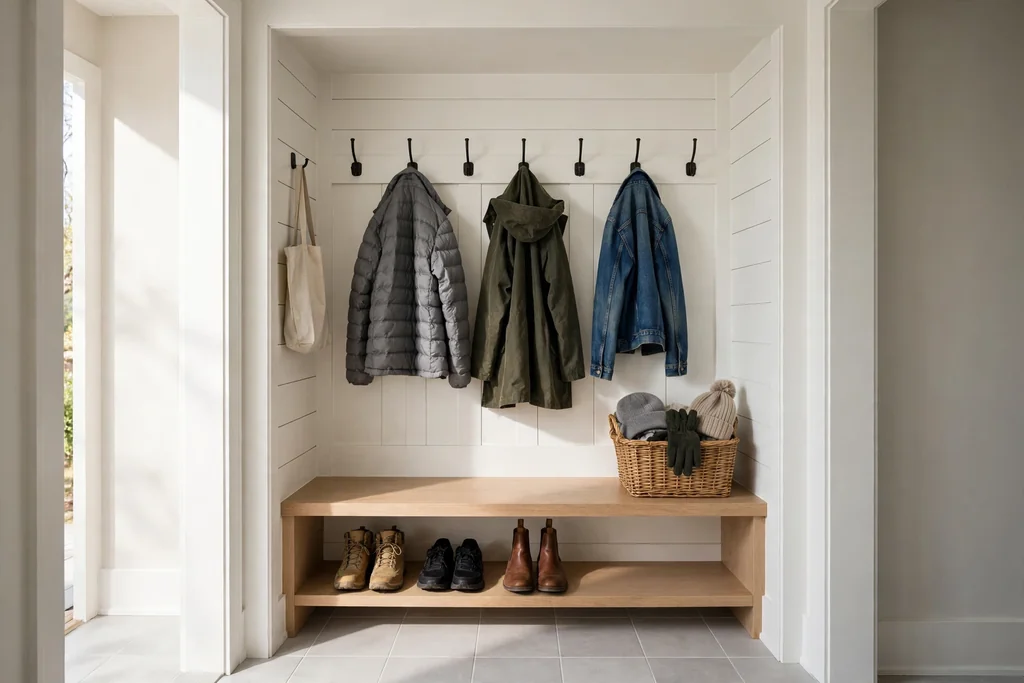
Turn the entry closet into a mudroom station with hooks for coats, a shoe shelf below, and a basket for hats, gloves, and keys. Entry closets often hold a mix of coats and random household items, which makes the front door area messy. Giving the entry closet one clear job keeps coats, shoes, and bags by the door instead of spread through the house.
Hang one hook per person at a height each person can reach, and keep a tray or a low shelf for wet shoes so the floor stays dry. Add a small basket for each person if space allows, so gloves and scarves have a home. Clear the entry closet each season, since coats and gear change with the weather and old items pile up fast.
24. A Spare Closet as a Mini Office
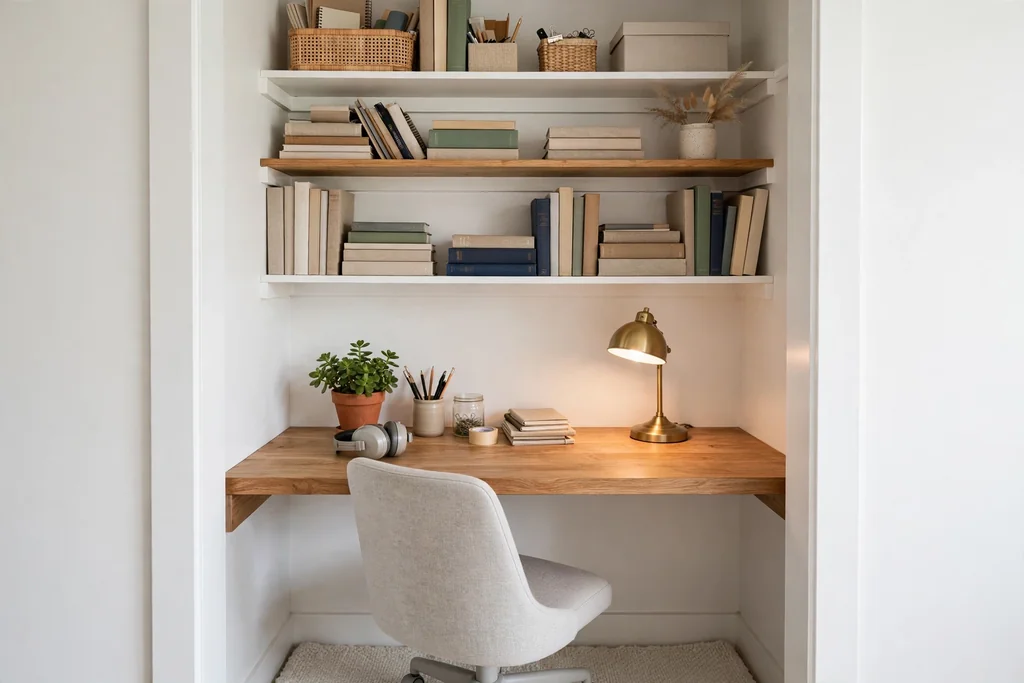
Convert a spare closet into a mini office when clothes can move elsewhere, with a desk board at sitting height, shelves above, and a light under the top shelf. A closet office suits a small home with no spare room, since the closet already has walls, a power point nearby in many homes, and a door that can close the work away. Remove the doors or keep them for closing time at the end of the day.
Fit the desk board firmly into studs or with brackets rated for the load, and keep cables tidy with clips along the wall. Use the upper shelves for books and supplies, and leave the desk surface clear for daily work. If the closet must still hold some clothes, hang a short rail on one side and keep the desk on the other, so both jobs share the space.
25. A Sliding Door That Saves Swing Space
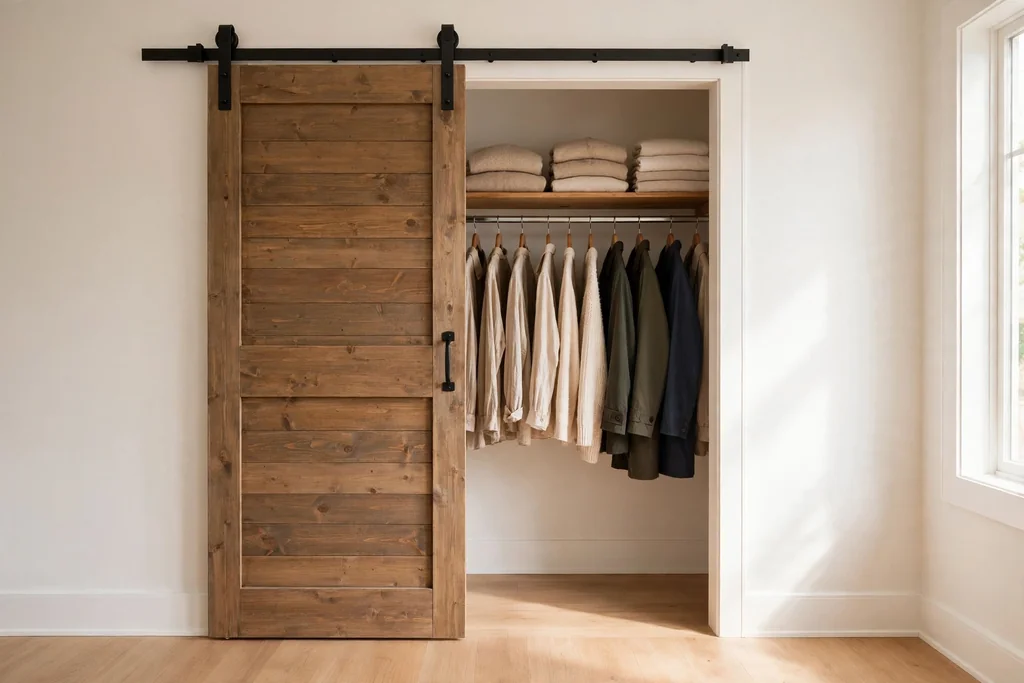
Swap a hinged closet door for a pocket door or a barn style sliding door to free the floor space the door swing used to need. In a small bedroom, the swing of a hinged door can block a bed, a dresser, or a walkway, while a sliding door moves along the wall. This change alone can make a tight room feel easier to move around in.
Check the wall beside the closet for switches, vents, and light fittings before choosing a barn door, since the door needs a clear track. A pocket door needs wall space inside the wall, so it suits a remodel more than a quick swap, and it needs a builder to fit it well. For a simpler change, removing the door and hanging a curtain, as in Idea 9, gives most of the same floor gain. The zoning advice in these studio apartment decorating ideas helps when a closet without a hinged door sits in a room that also serves as a living area.
26. A Front Capsule Rail for the Week
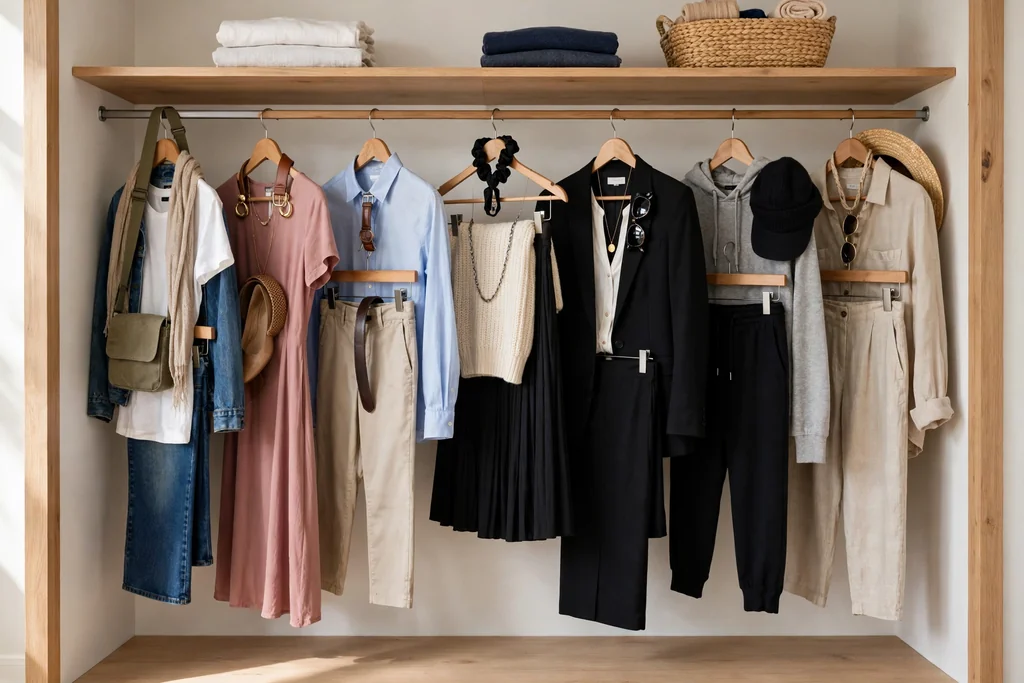
Keep a short rail or a few hangers at the front of the closet for the week’s outfits, chosen in one session. A capsule rail stops the daily search through the whole closet, since the week’s clothes are already picked and visible. It also shows at a glance whether the week needs laundry, ironing, or a fresh choice.
Pick outfits on a quiet evening, and hang them in day order from left to right, with accessories on the same hangers where possible. Keep the capsule rail to five or seven outfits, so it stays a short, useful row rather than a second full closet. At the end of the week, return unworn items to their zones and pick the next set, so the system resets cleanly.
Conclusion
A small closet works best when it has a clear layout, not more stuff in it. Double rails, high shelves, slim hangers, and a home for shoes and accessories cover most of the gain, and small additions such as a light, a valet rod, or a door organizer make the closet easier to use every day. Start with one change, such as the double rail or the shelf dividers, and live with it for a week before adding another, so each addition earns its place. The storage ideas in these bedroom storage ideas and the zoning tips in these studio apartment decorating ideas pair well with this guide when the closet shares a room with sleeping or living space. Pick the ideas that fit your closet, your lease, and your routine, and save this guide to Pinterest so you can find your favorite setup again.
FAQs
How do I organize a very small reach-in closet?
Start by emptying the closet and sorting clothes into keep, seasonal, and pass on piles. Then measure the width, depth, and height, fit double rails for short clothes, add a drawer unit or shoe shelves at the base, and use the top shelf for labelled bins. Keep daily items at eye level and seasonal items up high, and review the closet each season so it does not fill up again.
What is the best way to double hanging space in a small closet?
Fit a second rail below the first for shirts, jackets, and trousers, and keep one full height section for coats and long dresses. Use slim, matching hangers so clothes slide freely and take less width. This combination usually adds more usable space than any other single change in a reach-in closet.
How can renters improve a small closet without drilling?
Use freestanding rail kits, hanging shelf units, over door organizers, removable hooks, and battery lights, all of which need no drilling. A rolling cart and matching baskets also add storage without fixing anything to the wall. Check your lease before using removable hooks on painted surfaces, and test one hook first.
How do I keep shoes tidy in a small closet?
Give shoes their own shelves, such as slanted shelves at the base of the closet or a door organizer for flat pairs, and keep boots upright on the floor. Sort daily shoes at eye or hand level and occasion shoes higher up. Leave one shelf partly empty, since a full shoe shelf pushes overflow onto the floor.
Should I remove closet doors in a small room?
Removing doors can help when a hinged door blocks a bed or a walkway, and a curtain or sliding door gives most of the same floor gain with a tidier front. An open closet suits you if you keep clothes neat, since everything stays visible. If you prefer hidden storage, sliding doors or a curtain hide the contents without needing swing space.
How often should I rotate and review a small closet?
Swap seasonal clothes twice a year, and review the whole closet at the same time, checking each item as you hang it back up. A quick monthly check of the shoe shelf, the top bins, and the door organizer stops small piles from becoming clutter. Pass on anything you did not wear during its season, so the closet keeps room for what you wear now.